Posts tagged ‘nuclear power plant’

23/09/2016

A glowing future | The Economist

UPON learning (via a terse government statement) that their bustling port city in eastern China had been tipped as the likely site of a plant to recycle used nuclear fuel, residents of Lianyungang took to the streets last month in their thousands. Police, whose warnings against demonstrations were ignored, deployed with riot gear in large numbers but only scuffled with the protesters, who rallied, chanted and waved banners in the city centre for several days. “No one consulted us about this,” says one woman who participated in the protests. “We love our city. We have very little pollution and we don’t want a nuclear-fuel plant anywhere near us. The government says it is totally safe, but how can they be sure? How can we believe them?” she asks.

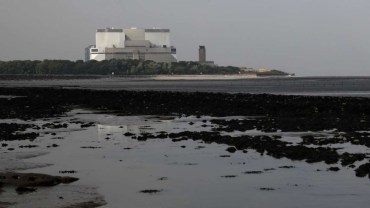
Such scepticism is shared by many in Lianyungang, which already hosts a nuclear-power plant (pictured), and elsewhere in China, where the government plans to expand nuclear power massively. China started its first nuclear plant in 1994. There are now 36 reactors in operation, and another 20 under construction (see map). A further four have been approved, and many more are in the planning stages. Only one new plant has been built in America, in contrast, since 1994; four more are under construction. By 2030 China is projected to get 9% of its power from nuclear, up from 2% in 2012. In absolute terms, its nuclear generation capacity will have increased eightfold over the same period, to 750 billion kilowatt-hours a year, roughly America’s current level.

After disaster struck Japan’s Fukushima nuclear power station in 2011, the Chinese authorities briefly halted this pell-mell rush toward the nuclear future, announcing a moratorium on the construction of new plants, urgent safety checks on existing ones and a prolonged policy review to decide whether nuclear power would remain a part of China’s energy strategy. The following year, however, the government resolved to carry on with its nuclear-energy programme.

The need is clear. Despite slowing economic growth, energy consumption per person is projected to rise dramatically, with no plateau in sight before 2030. Pollution from coal-fired power plants, China’s main source of electricity, causes widespread respiratory disease and many premature deaths each year, a source of persistent public anger. China has also made ambitious promises to reduce greenhouse-gas emissions. If it hopes to meet such targets, it will need to embrace nuclear, “because the only other truly reliable 24/7 source of electric power is coal,” says Zha Daojiong of Peking University.China’s utilities are also keen. The state-owned firms that run all the country’s nuclear plants are thought to earn a good return on their investment (their accounts are too murky to be certain), in part because their official backing allows them to finance new reactors very cheaply, and in part because regulators have fixed power tariffs in a favourable manner. One estimate put the return on nuclear assets between 2002 and 2012 at 7% a year, compared with 3% for coal- and gas-fired plants.

China even harbours ambitions to export its growing expertise in nuclear power. After relying first on Russian designs, and more recently importing American and French ones, China has also developed indigenous nuclear reactors. A recently approved deal with Britain, valued at $23 billion, will see China help finance a French-designed nuclear-power station and possibly build one of its own design later.

But China’s nuclear push has its critics. These include those who live near proposed nuclear facilities. Many, like the protesters in Lianyungang, are happy to have the power they need to run their air-conditioners but want to keep the unpleasant parts of the operation far from their doorsteps. Chinese now has a word for NIMBY: linbi, a fusion of the words for “adjacent” and “shun”. The government has repeatedly backed down in the face of public demonstrations, twice agreeing to relocate a uranium-enrichment plant, for example. It has also put the decision about the reprocessing plant in Lianyungang on hold.

Yet attitudes to nuclear power may be less hostile than in many Western countries. A study published in 2013 found an even split between supporters and opponents of expanding China’s nuclear-power industry. Compared with their counterparts in the rich world, Chinese citizens showed much greater “trust and confidence in the government” as the manager of nuclear policy and operations, the emergency responder in case of accidents and the provider of reliable information about the industry. The lead researcher for that study, He Guizhen of the Chinese Academy of Sciences, says that even protesters like those in Lianyungang are not implacably opposed. “Their message is not really that you can’t build these things no matter what, but that we are concerned about safety, especially after Fukushima, and we demand that you take safety seriously,” she says.

It appears this message is getting through. Early this year the government acknowledged in a white paper that its system for responding to a nuclear accident had “certain inadequacies”. In April officials revealed plans to draft a national nuclear-safety law. In May officials announced 600m yuan ($91m) in funding for six new nuclear-emergency squads, which would be ready for action by 2018. In August—on the same day that protesters marched in Lianyungang—China conducted its first “comprehensive nuclear-security emergency drill”. This week the government said officials must consult locals before settling the location of new nuclear facilities.

Deborah Seligsohn of the University of California, San Diego, says that because China’s nuclear-power industry is centrally run and limited to a handful of companies, authorities are able to keep tight control over safety standards, and that they have not hesitated to slow projects down when seeing signs of strain. Supervision, however, falls to several different agencies and levels of the bureaucracy. The burden of inspecting and managing the growing number of plants, she says, could be better handled by a more independent regulator in charge of its own budget.

In July China Energy News, a newspaper, reported that “quality problems” with domestically manufactured pump-valves were forcing some plants to shut down unexpectedly. (Most plants have since switched to imported valves.) More alarmingly, regulators this month revealed that a radiation-monitoring system at the Daya Bay nuclear-power station, which is within 50km of the huge cities of Shenzhen and Hong Kong, had been turned off inadvertently for three months before anyone noticed. Since no radiation leaked, the government deemed the oversight an event of “no safety significance”—one of several such lapses this year. The residents of Shenzhen and Hong Kong, presumably, would not see it in quite the same way.

Source: A glowing future | The Economist
15/09/2016

Britain approves China-backed Hinkley Point nuclear plant deal after review of scheme | South China Morning Post

The British government said on Thursday it was giving the green light to a controversial new nuclear project at Hinkley Point after Prime Minister Theresa May ordered a review.

“Having thoroughly reviewed the proposals for Hinkley Point C, we will introduce a series of measures to enhance security and will ensure Hinkley cannot change hands without the government’s agreement,” Business Secretary Greg Clark said in a statement.

Beijing calls for British nuclear project financially backed by China to proceed.

“Consequently, we have decided to proceed with the first new nuclear power station for a generation.”

The board of French state-owned power company EDF approved its participation in the project in southwest England on July 28, only for Britain’s new government under May to announce hours later that it wanted to review it.China has a one-third stake in Hinkley Point and analysts have warned that Britain would have risked its relations with the world’s second-largest economy if it cancelled the costly deal.

Source: Britain approves China-backed Hinkley Point nuclear plant deal after review of scheme | South China Morning Post

24/02/2016

China Inc.’s Nuclear-Power Push – China Real Time Report – WSJ

China wants to shift from customer to competitor in the global nuclear industry as it seeks to roll out its first advanced reactor for export, a move that adds new competition for already struggling global firms.

As WSJ’s Brian Spegele reports:

  • Two state-owned firms teamed up to design the advanced indigenous Hualong One reactor with plans to sell overseas. On Tuesday, one of them, China General Nuclear Power Group, hosted dozens of business executives from Kenya, Russia, Indonesia and elsewhere, as well as diplomats and journalists, at its Daya Bay nuclear-power station to promote the Hualong One for export.
  • Asked how much of the global market share for new nuclear reactors CGN wants Hualong One to win, Zheng Dongshan, CGN’s deputy general manager in charge of international business, said: “The more the better.”
  • The move marks a turnaround for China and the nuclear-power industry. For three decades, China served as a big market for nuclear giants including U.S.-based, Japanese-owned Westinghouse Electric Co. and France’s Areva SA. More than 30 reactors have been built across China since the 1990s with reliance on foreign design and technology.

Source: China Inc.’s Nuclear-Power Push – China Real Time Report – WSJ

05/03/2015

China’s nuclear plant plans get new momentum – Business – Chinadaily.com.cn

State Council gives green light for two reactors at Hongyan River in Liaoning

China's nuclear plant plans get new momentum

China’s nuclear energy development plans got a fresh impetus on Wednesday after the State Council gave the green light for new reactors at the Hongyan River nuclear power plant.

According to industry sources, units 5 and 6 of the Hongyan River nuclear plant in the northeastern Liaoning province got construction approval from the State Council before the Lunar New Year.

“It is a big step forward for China to revive the industry and more nuclear projects are expected to start construction this year. However, the official documents are yet to be finalized,” a source in a State-owned nuclear company told China Daily.

New nuclear projects are also in the pipeline, the source said, adding that the moves would help optimize China’s energy mix amid mounting pressure from air pollution.

Tang Bo, an official at the National Nuclear Safety Administration, said earlier that the regulatory body has been working on the environmental impact assessment and safety inspection of nuclear projects including the Hongyan River nuclear project, the Shidao Bay nuclear demonstration project in Shandong province and units 5 and 6 of the Fuqing nuclear power plant in Fujian province.

“We have drawn up a draft list of new projects for final approval,” he told China Daily earlier. “Our job is to clear the potential risks and help with the technical preparation of the nuclear sites before the government’s final approval,” he said.

Following the Hongyan River nuclear project, units 5 and 6 of the Fuqing nuclear power plant are the next possible candidates for approval, experts said.

“The Fuqing nuclear project will possibly get the nod from the government in April at the earliest,” the source said.

The equipment purchase order for units 5 and 6 of the Fujing nuclear power plant, which uses the Hualong One reactor design, known as the third-generation nuclear technology, is nearly complete, the source said.

China, with the world’s largest number of nuclear power plants under construction, is now pushing ahead to embark on a program of new nuclear projects to reduce the proportion of fossil fuels in its primary energy consumption.

Last year, the State Council rolled out an energy plan to have a more efficient, self-sufficient, green and innovative energy production and consumption mechanism.

The plan targets to have 58 gigawatts of nuclear power in operation by 2020 and at least 30 gW under construction. To meet that target, China needs to add at least another 10 gW of installed capacity with approval of six to eight reactors each year, according to estimates from industry experts.

After the Fukushima Daiichi nuclear disaster in Japan in 2011, China suspended approval for nuclear plants in order to revise its safety standards. However, it lifted the ban on new nuclear power stations at the end of 2012, and said it would only approve projects proposed for coastal areas within 2015.

via China’s nuclear plant plans get new momentum – Business – Chinadaily.com.cn.

11/12/2014

The Vladimir Putin and Narendra Modi Agreements in Full – India Real Time – WSJ

Indian Prime Minister Narendra Modi and Russian Prime Minister Vladimir Putin announced that their countries had signed 20 bi-lateral agreements including memorandums of understanding and commercial contracts on Thursday.

View image on Twitter

During Mr. Putin’s visit to India’s capital, the Russian leader said in a news conference that the documents placed an emphasis on trade and economic issues.

Eight of the agreements signed relate to nuclear power and energy production including a roadmap for bilateral cooperation in the civil nuclear energy sector over the next 20 years. Russia also agreed to supply “major equipment” to the Kudankulam nuclear power plant in Tamil Nadu.

India agreed to identify a second site apart from Kudankulam for Russian-designed nuclear power plants.

Mr. Modi said that they had “outlined an ambitious vision for nuclear energy” and would have “the highest standards of safety in the world.”

A list of the agreements signed is below as provided by India’s Ministry of External Affairs.

via The Vladimir Putin and Narendra Modi Agreements in Full – India Real Time – WSJ.

23/04/2014

Energy-Hungry China Plans to Accelerate Approvals for New Nuclear Reactors – Businessweek

China slowed down the approval process for new nuclear power plants in the wake of Japan’s 2011 Fukushima disaster. Now it intends to speed things up again.

The construction site of the No. 2 reactor at the Changjiang Nuclear Power Plant on Hainan Island, China, on Sept. 25, 2012

On Friday, China’s State Energy Commission met in Beijing to review energy forecasts and discuss safety considerations regarding nuclear power. According to a statement released on the commission’s website on Sunday, it now intends to expedite the approval process for new reactors in China.

In 2013, China approved the construction of just two new nuclear reactors, with a combined generating capacity of 2.1 gigawatts. This year, it intends to green-light another 8.6 GW of nuclear energy, according to an article in Monday’s state-run China Daily newspaper.

via Energy-Hungry China Plans to Accelerate Approvals for New Nuclear Reactors – Businessweek.

Enhanced by Zemanta
20/10/2013

Osborne agrees to China investing in UK nuclear plants – BBC News

The Chancellor, George Osborne, has announced that the UK will allow Chinese companies to take a stake in British nuclear power plants.

The announcement also said that Chinese firms might eventually be allowed to take majority stakes in British nuclear plants.

Mr Osborne made the announcement on the last day of a trade visit to China.

The first China deal could be as early as next week, with the go ahead for a new £14bn plant at the Hinkley C site.

Also on Thursday, a report commissioned for the prime minister warned of a growing risk of power shortages over the next few years.

The Royal Academy of Engineering said the closure of older power plants and the slow progress in building news ones was likely to stretch the system “close to its limits”.

Supply is expected to come under strain in the winter of 2014-15.

Most existing coal-fired plants are expected to be closed in 2015 to meet European Union pollution directives, while many gas-fired power plants are not being used at the moment because gas is so expensive.

These would take time and money to bring back on stream.

via BBC News – Osborne agrees to China investing in UK nuclear plants.

06/05/2013

* Indian Supreme Court gives nod to Kudankulam nuclear plant, says it is safe

Thank goodness.  India needs all the power it can generate.

Times of India: “In a relief for the Centre and the Tamil Nadu government, the Supreme Court on Monday approved the commissioning of the controversial Kudankulam nuclear plant.

English: Construction site of the Koodankulam ...

English: Construction site of the Koodankulam Nuclear Power Plant Deutsch: Baustelle des Kernkraftwerks Kudankulam (Photo credit: Wikipedia)

Kudankulam plant is safe and secure and it is necessary for larger public interest and economic growth of the country, the SC said.

“Nuclear power plants are needed in the country for the present and future generations,” observed the apex bench.

The apex court said that the Kudankulam N-plant has been set up by the government for the welfare of the people.

A bench of justices K S Radhakrishnan and Dipak Misra, which had reserved the verdict following marathon arguments in the last three months, delivered the judgement.

A batch of petitions was filed by anti-nuclear activists challenging the project on the ground that safety measures recommended for the plant by an expert body have not been put in place.

They also raised various questions pertaining to the disposal of nuclear waste, the plant’s impact on the environment and the safety of people living nearby, besides other issues linked to the controversial plant.

The Centre, Tamil Nadu government and Nuclear Power Corporation of India Ltd, which operates the plant, had refuted all the allegations on safety and security aspects.

They had submitted that the plant is completely safe and can withstand any kind of natural disaster and external terrorist attack.”

via SC gives nod to Kudankulam nuclear plant, says it is safe – The Times of India.

25/02/2012

* Indian government action ref nuclear plants

The Hindu: “Close on the heels of the publication of Prime Minister Manmohan Singh’s assertion in an interview in the latest issue of journal Science that some United States-based NGOs are behind the agitation against the Kudankulam nuclear power plant, the Centre on Friday announced the revocation of the licences of three NGOs.

MESSAGE TO MOSCOW

Simultaneously, India told Russia, which is collaborating with India in the 2,000-MW plant, that the government was engaged in consultations with all stakeholders and appreciated Moscow’s patience.

At ‘Comprehensive Foreign Office Consultations,’ Foreign Secretary Ranjan Mathai told Russia’s First Deputy Foreign Minister Andrei Denisov on Thursday that India was consulting various domestic constituencies and working on the opening of the first 1,000 MW unit, a process that would pave the way for operationalising the second unit six months later.

The Centre has offered half of the electricity to be produced to Tamil Nadu, where four more units have been planned.”

Law of Unintended Consequences

continuously updated blog about China & India

ChiaHou's Book Reviews

continuously updated blog about China & India

What's wrong with the world; and its economy

continuously updated blog about China & India