Posts tagged ‘science’

18/03/2013

* Indian startup aims for the moon – and $30 million

Reuters: “Rahul Narayan, who describes himself as a serial entrepreneur, is the founder of Team Indus. It is the only Indian team in a race to the moon by privately funded groups competing for the largest international incentive prize of all time – the Google Lunar X Prize.

Google is offering $30 million in prizes to the first privately funded teams to safely land a robot on the Moon, including a grand prize and other bonus prizes.

In a conversation with Reuters, Narayan talks about Team Indus’ prospects, timing, his struggle to be taken seriously by investors and why he would not be too disappointed if someone else wins.”

via Indian startup aims for the moon – and $30 million | India Insight.

02/03/2013

* China targets 15 pc of satellite launch market

SCMP: “China is looking to increase its share of the global commercial satellite launching business, targeting a 15 per cent share by 2020.

chinasat.jpg

China has just 3 per cent of the market now, but the goal laid out on Saturday by a leading space programme official points to its ambitions to be a major player in space.

The deputy head of the China Academy of Launch Vehicle Technology, Liang Xiaohong, told the official Xinhua News Agency that China hopes to accomplish that by establishing strategic alliances with major launch services providers and satellite manufacturers, along with developing its own technology.

China’s main competition in the launch market comes from Europe and the US

Liang said China’s first solid-fuel rocket that could be launched on short notice would make its first flight by 2016.”

via China targets 15 pc of satellite launch market | South China Morning Post.

10/02/2013

* China targets $287b resource recycling industry

China Daily: “China will boost the annual output value of its resource recycling industry to 1.8 trillion yuan (287 billion US dollars) by 2015 as part of the country’s bid to develop a circular economy.

The government will also increase the resource productivity, or economic output per unit of resource use, by 15 percent as of the end of 2015, according to the National Development and Reform Commission (NDRC), China’s top economic planner.

The goals were written in a national plan on spurring the development of a circular economy recently released by the State Council, or China’s cabinet, the NDRC said in a statement on its website.

Major tasks listed in the plan include building nationwide industrial and agricultural systems that are cleaner and allow more recycling of renewable resources and promoting green consumption.

It’s imperative for China to speed up developing the circular economy as the country sees continuously growing energy and resource demand, piling waste and rising pressure in tackling climate changes, the statement quoted an unnamed NDRC official as saying.

China pins hopes on circular economy, an economy highly efficient and recyclable in resource use, to shift its growth pattern to a more sustainable and greener one.”

via China targets $287b resource recycling industry |Economy |chinadaily.com.cn.

22/01/2013

* China Pushes Industry Consolidation

WSJ: “China’s industry ministry on Tuesday set an aggressive goal of forging global giants in the electronics sector within the next two years through mergers and alliances, and reiterated a longstanding push for Chinese companies to explore overseas acquisitions.

The target for the electronics sector is part of a wider plan to consolidate China’s fragmented major industries, including steel, shipping, automotives, cement and aluminum. Overcapacity in heavy industries has been blamed for amplifying a sharp slowdown in growth in the last two years.”

via China Pushes Industry Consolidation – WSJ.com.

20/01/2013

* China’s R&D expenditure expected to top 1 trln yuan

Xinhua: “China’s spending on research and development (R&D) in 2012 is expected to surpass 1 trillion yuan (160.8 billion U.S. dollars) as the country has been pushing for a more innovation-driven economy, according to official statistics released Saturday.

The expenditure will bring the proportion of R&D funds in the country’s gross domestic output (GDP) to 2 percent, Minister of Science and Technology Wan Gang said at a national science and technology work conference.

Businesses invested the most in R&D, accounting for 74 percent of the total, according to official statistics.

Wan said that China’s innovation capability has been greatly boosted in the past five years, with scientific progress contributing 51.7 percent to the nation’s economic growth in 2011, compared with 48.8 percent in 2008.”

via China’s R&D expenditure expected to top 1 trln yuan – Xinhua | English.news.cn.

30/12/2012

* Chengdu aims to be world’s next Silicon Valley

SCMP: “Entrepreneurs in China’s southwest are dreaming of turning the city of Chengdu into the world’s next Silicon Valley as the government encourages more investment outside the booming coastal regions.

applechengdu.jpg

Small start-ups as well as big-name western companies have flocked to the metropolis of 14 million people, attracted by cheap labour costs and favourable government investment policies and hoping to tap into China’s rapidly expanding consumer market.

And the Silicon Valley dream is becoming reality as the city, already a hi-tech manufacturing hub, seeks increasingly to become a magnet for software development and innovation.

Between one-third to one-half of the iPads sold worldwide are assembled in Chengdu, while computer giant Intel makes up to half of its chips in the city.

Far from the booming coastal regions, Chengdu can offer perks through the government’s “Go West” development programme, with incentives for start-ups such as one-year interest-free loans.

So far it has attracted about 29,000 companies to its 130-square-kilometre “hi-tech development zone”, including about 1,000 foreign enterprises.

Chengdu is also developing a nearby “Software Park” as the city aims to go beyond manufacturing and become a centre of innovation.”

via Chengdu aims to be world’s next Silicon Valley | South China Morning Post.

30/12/2012

* Xinhua unveils top 10 domestic events of 2012

Xinhua News Agency on Saturday unveiled its list of the year’s 10 most attention-grabbing events in China.

“The events are as follows, in chronological order:

01 China cuts 2012 GDP growth target

At its annual session in March, the National People’s Congress, China’s parliament, adopted the government work report, in whichgrowth - Ind vs Ch the country lowered its GDP growth target to 7.5 percent this year after keeping it at around 8 percent for seven consecutive years. The change was made in the face of global turbulence and pressing domestic demand for economic restructuring.

02 Medical reform meets three-year target

The State Council in March issued an implementation plan for reforms in the health and medical care sector in the next three years. According to official statistics, as of the end of 2011 the basic medicare insurance system covered over 1.3 billion people in China, more than 95 percent of the total population, marking the realization of the previous three-year target for the 2009-2011 period to form a universal medicare system.


03 Bo Xilai under investigation; Wang Lijun convicted

The Central Committee of the Communist Party of China (CPC) on April 10 decided to suspend Bo Xilai’s membership in the CPC Bo & GuCentral Committee Political Bureau and the CPC Central Committee, as he was suspected of being involved in serious discipline violations in the cases of Wang Lijun and Bogu Kailai. The CPC Central Commission for Discipline Inspection put him under investigation. Bo was later expelled from the CPC and public office and the case was turned over to prosecutors for investigation.
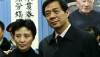
In August, Bogu Kailai was sentenced to death with a two-year reprieve for intentional homicide by the Hefei City Intermediate People’s Court in Anhui Province.

In September, Wang Lijun was sentenced to 15 years in prison for bending the law to selfish ends, defection, abuse of power and bribe-taking by the Chengdu City Intermediate People’s Court.

04 China vigorously protects maritime rights

SoChinaSeaIn response to some foreign countries’ actions infringing upon China’s maritime rights and interests in the South China Sea and East China Sea, China has vigorously launched campaigns to protect its legitimate rights.

Since April, China has dispatched government ships and planes to monitor Huangyan Island in the South China Sea.

Five months later, the Chinese government announced the base points and baselines of the territorial waters of the Diaoyu Islands and their affiliated islets and started continuous patrols in waters around the Diaoyu Islands.

In December, China reiterated its claims in the East China Sea by presenting to the UN Secretariat its Partial Submission Concerning the Outer Limits of the Continental Shelf beyond 200 Nautical Miles in the East China Sea.

05 China’s first female astronaut participates in successful manned space docking mission

In June, China sent three astronauts, including the country’s first female astronaut, Liu Yang, into space for the nation’s manned Liu Yang, China's first female astronaut, waves during a departure ceremony at Jiuquan Satellite Launch Center, Gansu province, June 16space docking mission.

The three astronauts successfully completed an automatic and a manual docking between the Shenzhou-9 spacecraft and the orbiting Tiangong-1 lab module in space before making a safe return to Earth.

06 Manned submersible sets new national dive record

Chinese submersible breaks 7,000m mark Also in June, China’s manned submersible, the Jiaolong, set a new national dive record after reaching 7,062 meters below sea level during its fifth dive in the Mariana Trench in the Pacific Ocean.


07 First aircraft carrier commissioned

In September, China’s first aircraft carrier, the Liaoning, was delivered to the People’s Liberation Army Navy and put into commission after years of refitting and sea trials. Last month, the country successfully conducted flight landing exercises on the aircraft carrier, where the home-grown J-15 fighter jet made its debut in a landing and take-off exercise.
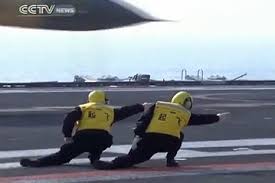
08 New CPC leadership and new targets

Xi & LiThe CPC convened its 18th National Congress between Nov. 8 and 14, when the Party’s new leadership was elected, including Xi Jinping, who was elected general secretary of the CPC Central Committee. The congress also set new targets for the country such as efforts to complete the building of a moderately prosperous society in all respects.

09 Full coverage of pension scheme

The Ministry of Human Resources and Social Security announced in November that China’s urban and rural pension insurance systems covered 459 million people at the end of October and that as many as 125 million elderly people receive monthly pensions. The State Council had previously decided to make pension insurance available for everyone in urban and rural areas.

10 New CPC leadership rejects extravagance, bureaucracy
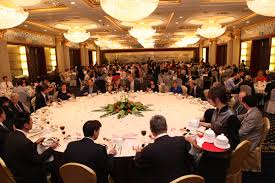
The newly-elected leadership of China’s ruling party has pledged to reject extravagance and reduce bureaucratic visits and meetings, in a bid to win the people’s trust and support.

In a meeting of the Political Bureau of the CPC Central Committee on Dec. 4, members vowed to shorten meetings and documents, reject bureaucratism in domestic and overseas visits, reduce road closures for official activities and support more practical content in news reports. The leaders also promised to take the lead in putting these requirements into practice.”

via Xinhua unveils top 10 domestic events of 2012 – Xinhua | English.news.cn.

22/12/2012

* TATAY RIVER, Cambodia: China is top dam builder, going where others won’t

Miami Herald: “Up a sweeping jungle valley in a remote corner of Cambodia, Chinese engineers and workers are raising a 100-meter- (330-foot-) high dam over the protests of villagers and activists. Only Chinese companies are willing to tame the Tatay and other rivers of Koh Kong province, one of Southeast Asia’s last great wilderness areas.

It’s a scenario that is hardly unique. China’s giant state enterprises and banks have completed, are working on or are proposing some 300 dams from Algeria to Myanmar.

Poor countries contend the dams are crucial to bringing electricity to tens of millions who live without it and boosting living standards. Environmental activists and other opponents counter that China, the world’s No. 1 dam builder, is willing and able to go where most Western companies, the World Bank and others won’t tread any more because of environmental, social, political or financing concerns.

“China is the one financier able to provide money for projects that don’t meet international standards,” said Ian Baird, an assistant professor of geography at the University of Wisconsin who has worked in Southeast Asia for decades. “You go to China if you want to have them financed.”

The consequence, critics say, is a rollback to an era of ill-conceived, destructive mega-dams that many thought had passed. The most recent trend is to dam entire rivers with a cascade of barriers, as China’s state-owned Sinohydro has proposed on Colombia’s Magdalene River and the Nam Ou in Laos, where contracts for seven dams have been signed.

Viewed by some in the developing world as essential icons of progress, dams in countries as far apart as Ecuador, Myanmar and Zambia have spearheaded or reinforced China’s rising economic might around the world. They are tied to or put up in tandem with other infrastructure projects and businesses, and power generation equipment ranks as China’s second-largest export earner after electrical machinery and equipment.

In energy-starved Cambodia, trade with China has risen to 19 percent of GDP from 10 percent five years ago, according to an Associated Press analysis of International Monetary Fund data.

The year-old $280 million Kamchay Dam in Cambodia’s Kampot province was the largest ever foreign investment when approved as well as a political flag-carrier for Beijing. It has been hailed by both governments as a “symbol of close Chinese-Cambodian ties.”

Cambodia’s electricity demand grew more than 16 percent a year from 2002 to 2011, with shortfalls largely met through costly oil imports, said Bun Narith, a deputy director general in the Ministry of Industry, Mines and Energy. Only 14 percent of rural homes have electricity, one of the lowest levels in Southeast Asia.

“We have no choice,” Bun Narith said. “Hydropower is the priority, and the Chinese have the initiative and capability, both financial and technical.”

The 20 hydro dams built, being constructed or under study in Cambodia, the bulk of them by the Chinese, would lift Cambodia out of literal darkness and make it energy self-sufficient, he said. “We should have a win-win policy, a balance between environment and energy. After all, electricity is also a basic human need.””

via TATAY RIVER, Cambodia: China is top dam builder, going where others won’t – World Wires – MiamiHerald.com.


06/12/2012

* Xi unveils foreign policy direction

China Daily: “For German chemist Katharina Kohse-Hoinghaus, it was a huge surprise to get an invitation to a key meeting from newly-elected leader Xi Jinping just 20 days after he assumed his new role.

Xi unveils foreign policy direction

She was even more surprised on Wednesday to find that she was among the first group of foreigners Xi met as leader of the Party.

She was one of 20 foreigners from 16 countries invited to a face-to-face discussion with Xi on China’s development. Kohse-Hoinghaus, a world-renowned specialist in industrial combustion who has worked for about 10 years in China, said the meeting “demonstrates how serious you take the process of transformation and innovation in cooperation with other countries”.

It was the first time that Xi, the newly elected head of the Communist Party of China, met foreigners in this capacity.

Analysts said the meeting conveyed the new leadership’s foreign policy blueprint, and sent a strong signal that China cherishes its ties with foreign countries and people, and will continue on its road of opening up and cooperation with the outside world.

“We are open to the world and we want to learn from the world … We have learned from the past and realize we cannot succeed in our development behind closed doors,” Xi said at the meeting.

Foreigners with expertise in their fields have contributed immensely to national development and are called foreign experts in China. They also bridge China and the outside world.

The number of foreign experts has risen from less than 10,000 at the end of the 1980s to around 530,000 by the end of 2011.”

via Xi unveils foreign policy direction[1]|chinadaily.com.cn.

07/10/2012

* India poised for giant leap in space science, 56% jump in collaboration with US, France, Russia

India is in an undeclared space race with China. The difference is that China is doing it alone whereas India is doing it collaboratively with several other countries. Both are making substantial progress.

Times of India: “India may have taken a giant leap into the hallowed club of space research, with leaders like the United States and Russia, increasingly joining hands with Indian space scientists in quest for the unknown. Latest data on India’s international collaboration in space sciences has shown an almost 56% increase between 2001-05 and 2006-10.

Between 2001 and 2005, 629 publications were internationally co-authored between Indian and international space scientists. The output increased to almost 980 publications by 2006-10 — a growth of 55.8% in raw volume.

These internationally co-authored publications, which contributed to 45.2% of India’s total research output in 2001-05 increased to 47.1% by 2006-10.

The analysis, done by Thomson Reuters and submitted to the ministry of science and technology, says these levels of international cooperation are the highest among all the fields under analysis. The US was India’s most frequent collaborating partner in this field with American researchers co-authoring 465 publications with their Indian counterparts — 22.3% of India’s total research output in space science.

France was the second most important collaborating partner with India, co-authoring 206 publications with Indian researchers in 2006-10. France accounted for 9.9% of India’s total research output in this field, an increase of 1.7% since 2001-05.

Collaborating in space science as percentage of India’s total research output in this field also increased with the UK (+0.8%) and Germany (+1.4%), Russia (+1.9%), Spain (+1.4%), Australia (+0.7%) and the Netherlands (+0.7%). Collaboration has increased substantially across the board with all major countries.

Consider the case of Russia. Indian and Russian space scientists co-authored 29 papers between 2001 and 2005, and the output increased to 82 papers between 2005 and 2010. Ditto for Germany. As against 98 papers co-authored in 2001-05, the output rose to 175 in 2006-10.

via India poised for giant leap in space science, 56% jump in collaboration with US, France, Russia – The Times of India.

Law of Unintended Consequences

continuously updated blog about China & India

ChiaHou's Book Reviews

continuously updated blog about China & India

What's wrong with the world; and its economy

continuously updated blog about China & India