Posts tagged ‘Tamil Nadu’

01/05/2014

Explosions on Train in Chennai Kill One – India Real Time – WSJ

Two explosions on a train in the Indian city of Chennai killed one person and injured nine others Thursday.

Authorities believe two bombs were planted in two separate coaches of the Bangalore to Guwahati express train and blew up as it sat at the Chennai railway station in southern India.

“The police are already on the job, they are investigating what kind of bomb it was and what was the purpose,” Chennai Central station General Manager R.K. Mishra told reporters.

One of the bombs killed a 20-something woman that was sitting on the seat under which it was placed, Mr. Mishra said.

Two of the nine injured were hospitalized for serious injuries. Police and bomb squads have checked the train for more explosive devices, said Mr. Mishra.

“Initial investigation reveals that the blasts were low intensity,” said an official with the Indian Railways.

There was no immediate claim of responsibility for the blast in a region of India which is rarely a target of these sorts of attacks.

The explosions came despite heightened security as India votes in its massive, rolling general election. In Srinagar in the northern state of Kashimir two explosions targeting election rallies injured 14 people this week.

On April 12, a suspected landmine blew up a bus carrying poll workers in Chattisgarh, killing 14.

via Explosions on Train in Chennai Kill One – India Real Time – WSJ.

Enhanced by Zemanta
16/04/2014

Promises and more promises: India’s parties pitch their visions | India Insight

Campaign season in India means it’s also promise season, and political parties aren’t short on pledges for what they would do if they come to power after election results come out in May. From the Tamil Nadu-based MDMK party’s pledge to rename the country “The United States of India” to the Odisha-based BJD‘s promise to “guarantee” development projects, there are plenty of promises floating around to help parties capture, retain or regain power.

There has been plenty of coverage of the manifestos from the biggest national parties, Congress and the Bharatiya Janata Party, so here are some highlights from the others.

Lok Satta Party: This Andhra Pradesh-based party has promised to nationalise the sale of liquor and to limit the number of stores where people can buy it. Families of liquor “victims,“ meanwhile, would get pensions.

BJD: In power for more than 10 years, the Biju Janata Dal of Odisha has promised to guarantee primary infrastructure needs in the state. It will also make it mandatory for industry to provide shares in projects to people whose land they buy for their projects.

DMK: The former ally of the ruling Congress party will oppose reservation, the setting aside of government jobs for members of groups recognized by the government as disadvantaged, based on economic criteria. It would, however, support caste-based reservation in the private sector. It also proposes that only qualified Tamil people be appointed as India’s envoys to the nations where Tamils live in considerable numbers. The party has also included not “bashing” other parties in their pitch.

AIADMK: Tamil Nadu’s ruling party says it would stop the sale and privatisation of state-owned companies. To stabilise the rupee, the AIADMK says it would not encourage short-term capital flows and will support long-term foreign direct investment.

CPI-Marxist: This Leftist party favours the production of goods for mass consumption rather than “unsustainable” luxury goods. It also would enforce a code of conduct for all elected representatives against sexist language. CPI-M favours revising the India-U.S. nuclear deal and will seek removal of nuclear weapons from the U.S. military base in Diego Garcia in the Indian Ocean.

TMC: West Bengal’s ruling party, the Trinamool Congress, has promised it will provide a stipend and medical insurance to artists and folk performers. It has also promised to form a court to try human rights violations.

TRS: With the new state of Telangana to be carved out of Andhra Pradesh, the Telangana Rashtra Samiti says it will give a special “Telangana increment” to government employees to celebrate the state’s formation later this year.

JD(U): The Janata Dal (United) manifesto has promised legislation for the safety and security of migrant workers in India. It wants a commission to study the socio-economic condition of poor upper caste people to draft welfare measures for them.

MDMK: An ally of the BJP in Tamil Nadu, MDMK promises to rename the country “United States of India” to put emphasis on the federal structure. It wants to lift the ban on the LTTE, the Tamil separatists in Sri Lanka.

AAP: The Aam Aadmi Party, or common man party, is interested in animal welfare as well as human. It wants to protect the dignity of animals used in industries “for food, clothing and entertainment.” To encourage young people to join politics, it favours allowing 21-year-olds to run for office (the current minimum age is 25). Apart from laws to deal with violence against women, it promises long-term public education programmes to end the culture of gender-based discrimination. It has some provisions to regulate media as well.

BSP: The Bahujan Samaj Party of Uttar Pradesh, which counts millions of Dalits among its supporters, did not release any election pitch. “We do not release manifestos as we believe more in doing real development work for the people rather than making hollow claims which are never realised,” party chief and former UP Chief Minister Mayawati declared at a rally.

via Promises and more promises: India’s parties pitch their visions | India Insight.

Enhanced by Zemanta
11/04/2014

India’s election: Seasons of abundance | The Economist

LICK your lips: mangoes are coming into season in Andhra Pradesh, piled up on roadside fruit stalls. Hyderabadis claim theirs are the country’s sweetest. So too are the bribes paid by the state’s politicians to get people to vote. Since early March state police have seized more money from politicians aiming to buy votes—590m rupees ($10m)—than the rest of India combined. An excited local paper talks of “rampant cash movement”, reporting that police do not know where to store the bundles of notes, bags of gold and silver, cricket kits, saris and lorry-loads of booze.

Andhra Pradesh, India’s fifth most populous state, is due to hold an impressive series of polls in the next few weeks—municipal elections and then both state-assembly and national ones. Many politicians keep up old habits by paying voters, especially rural ones, to turn out. A villager can stand to pocket a handy 3,000 rupees per vote. Economists predict a mini-boom in consumer goods.

If this is the lamentable face of Indian politicking, the hopeful side is that, increasingly, skulduggery is being pursued. A worker with the Bharatiya Janata Party (BJP) in Hyderabad says police looking for illicit cash stopped and searched her car five times in a single drive one day last week.

This may be because in Andhra Pradesh, unusually, politicians are not currently running the show. The state is under “president’s rule”, with bureaucrats in charge, ahead of its breaking into two on June 2nd. Then, a new state, Telangana, will emerge to become India’s 29th, covering much of the territory once ruled by the Nizams of Hyderabad, the fabulously wealthy Muslim dynasty whose reign India’s army ended in 1948. A rump coastal state gets to keep the name Andhra Pradesh. For a decade Hyderabad will serve as joint capital.

The split will have a bearing on the national election. In 2009 the ruling coalition, the United Progressive Alliance, led by Congress, returned to national office on the back of two whopping southern victories. Congress scooped 33 seats in Andhra Pradesh, more than in any other state. Its ally next door in Tamil Nadu, the Dravida Munnetra Kazhagam (DMK), got 18 seats. Both now face heavy defeats. “The south’s biggest impact nationally will be negative, in not voting for Congress”, says K.C. Suri of Hyderabad University.

via India’s election: Seasons of abundance | The Economist.

Enhanced by Zemanta
01/04/2014

Dharavi’s once-booming leather industry losing its edge | India Insight

A busy street in Asia’s largest slum Dharavi leads to a quiet lane where Anita Leathers operates its colouring unit. As children play near shops that sell everything from mobile phones and garments to raw meat and sweets, the mood at the leather unit is sombre.

The leather business is one of the biggest contributors to the Mumbai slum’s informal economy, estimated to have an annual turnover of more than $500 million. About 15,000 small-scale industries, spread over an area of 500 acres, deal in businesses such as pottery, plastic recycling and garment manufacturing.

But the leather trade has been hit hard by increasing competition, an influx of cheap Chinese goods, rising raw material costs and labour shortages in recent years, leading to a decline in demand and dimming prospects of the once-flourishing business.

At Anita Leathers, which has been colouring and supplying leather sheets to merchants in Mumbai for more than three decades, annual sales fell from 5 million rupees ($83,000) in 2007 to 500,000 rupees ($8,300) last year. This has forced its owner Babu Rao to put some workers on paid leave.

“In every season our sales are falling, there is no business,” said Rao as he chewed tobacco in his Dharavi office where samples of coloured leather were displayed on the wall. “Even retailers are suffering. If customers come, they will buy bags; if bags are not sold, who will buy leather from us?”

Dharavi has earned its distinction among slums because of the entrepreneurial skills of its estimated 1 million residents. While no official statistics are available for the slum, census data shows India’s slum population grew by a quarter to 65 million between 2001 and 2011. Critics have disputed these numbers.

Leather production was one of the first industries to be established in Dharavi when Muslim tanners migrated from Tamil Nadu to Mumbai in the 19th century. But they had to move to the outskirts because the manufacturing process was considered unsuitable for the growing business centre in south Mumbai, according to a 2010 book RE-Interpreting, Imagining, Developing Dharavi.

Leather manufacturing, polishing, colouring and retail became dominant after tanneries were banned in 1996 because of pollution concerns. Still, most of these businesses are struggling.

Also affecting trade is India’s slowing economic growth, rising interest rates and high inflation, which have weakened consumer sentiment in Asia’s third-largest economy.

via Dharavi’s once-booming leather industry losing its edge | India Insight.

Enhanced by Zemanta
06/03/2014

20 Clever Inventions Given to Us by the Incredible Indians!

annetbell's avatarTalesAlongTheWay

20 Clever Inventions You Probably Didn’t Know Were Made By Indians

FOLLOW @STORYPICKER

FEBRUARY 20, 2014

indian-inventions-cover
Indian inventions and discoveries have been instrumental in shaping the face of the current modern world. We picked up 20 such interesting findings out of a whole bunch that will make you go, “I didn’t know that”.

1. Buttons

buttons

image sources 12

Buttons were first used in Mohenjo-daro for ornamental purpose rather than for fastening. They were first used in the Indus Valley Civilization by 2000 BCE.

2. Chess

chess

image sources 12

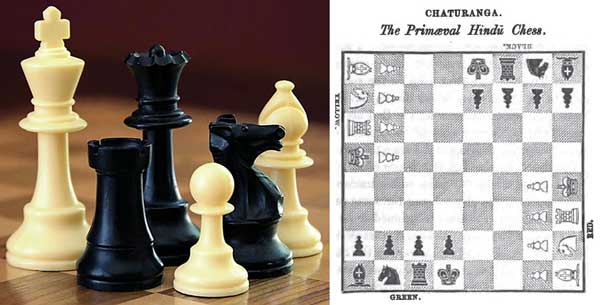
Chess developed out of Chaturanga, which is an ancient strategy board game developed during the Gupta Empire in India around the 6th century AD. Now you know why Vishwanathan Anand is…

View original post 825 more words

12/02/2014

Election season in India comes with freebies – Businessweek

Just before village council elections, Southern Tamil Nadu state Chief Minister J. Jayalalitha went all out to gain favor with rural voters. Schoolgirls received laptops. Farm workers got cows and goats. Homemakers were given spice grinders and fans.

The price tag for the giveaway, which started in 2011 and continues today: 20 billion rupees ($322 million) in a state of about 70 million people.

Freebies are a fact of life in Indian politics, and items like livestock are only part of it. All three parties seen as the front-runners in upcoming elections have enticed voters with subsidies on electricity, cooking gas or grain.

via Election season in India comes with freebies – Businessweek.

Enhanced by Zemanta
25/01/2014

Modi more popular than party, says Jaitley – The Hindu

The Bharatiya Janata Party on Friday accepted that its prime ministerial nominee Narendra Modi is more popular than the party itself. Commenting on the projections made by recent opinion polls, Leader of Opposition in Rajya Sabha, Arun Jaitley said the results of at least two such polls show a surge in Mr. Modi’s popularity and acceptability as prime minister after the 2014 general elections.

Mr Modi with Mr Jaitley. File photo

“The most significant factor in these opinion polls has been that Narendra Modi\’s acceptability as prime ministerial candidate is about 15 to 20 per cent higher than the BJP vote in each state. His ability to pull the party up in strong areas and contribute to its vote percentage in the non-strong areas is evident. How else can we justify the projected 17 per cent vote share in Tamil Nadu and 25 per cent in Odisha,” he said in a statement.

via Modi more popular than party, says Jaitley – The Hindu.

Enhanced by Zemanta
04/01/2014

Tiny Loans for Tiny Homes – India Real Time – WSJ

From what began as a small experiment helping slum dwellers buy homes in Mumbai, Micro Housing Finance Corporation Ltd. has grown into a multi-million dollar business making loans across the country.

The Mumbai-based company, which gives low-income households loans to buy homes, now operates in more than 15 cities, with Coimbatore, in the southern state of Tamil Nadu, being the most recent addition just last month.

“Housing finance companies focus on serving the top 3% to 5% of the population because it’s easier and cheaper,” to give big loans to rich people, said Madhusudhan Menon, chairman of Micro Housing Finance. “No one wants [low income] customers who don’t have documentation of their income.”

The lack of home loans to those most in need of them is one of the main reasons more than 90% of India’s acute housing shortage of around 19 million units falls on the urban poor, according to a report released by real-estate consultancy Jones Lang LaSalle.

For most of the urban poor, owning an apartment with reliable electricity or even a water connection is out of reach even if they have a regular income because banks refuse to give the poor housing loans.

More than 41% of the population of the megacity of Mumbai lives in slums, defined as residential areas unfit for human habitation due to dilapidation, over-crowding, poor ventilation and lack of sanitation facilities, according to government estimates. That figure could be brought down sharply if builders constructed affordable housing for the city’s hardworking poor and housing finance companies gave them long-term home loans.

via Tiny Loans for Tiny Homes – India Real Time – WSJ.

Enhanced by Zemanta
02/01/2014

Cradle Baby scheme hopes to end female infanticide | Reuters

Unwanted infant girls in the sterile, sparsely furnished nursery rooms of the Life Line Trust orphanage in Tamil Nadu are considered the lucky ones.

A baby girl is seen lying in a cradle inside the Life Line Trust orphanage in Salem in Tamil Nadu June 20, 2013. Thomson Reuters Foundation-Mansi Thapliyal-Files

They are India\’s \”Cradle Babies\” – products of a government project that permits parents to give unwanted baby girls anonymously to the state, saving them from possible death in a region where daughters are seen as a burden and where their murder is a common reality.

\”Often babies are found in ditches and garbage pits. Some are alive, others are dead,\” said A. Devaki, a government child protection officer in the Salem district, one of the worst-afflicted areas.

\”Just last week, we found a newborn baby girl barely breathing in a dustbin at the local bus stand.\”

She added that a lack of education, the low status of girls and widespread poverty were the main factors why girl babies were killed or dumped with little chance of survival.

\”One girl is okay, but a second or third will likely end up being killed. That\’s why we introduced the Cradle Baby Scheme.\”

But while the project has been praised for potentially saving the lives of thousands of Indian girls, human rights activists have criticised it, accusing authorities of encouraging the abandonment of girls and promoting the low status of women in this largely patriarchal society.

via Cradle Baby scheme hopes to end female infanticide | Reuters.

07/09/2012

* Indian Caste affirmative action – controversy

Reuters: “Passions are running high in parliament and the stakes are huge. The contentious issue of reservation is back to haunt Indian politics and it may well decide who runs the next government in the world’s largest democracy. Sparks were seen flying in the upper house on Wednesday when two MPs from rival parties came to blows during the tabling of a bill to amend the Constitution, providing for reservations in promotions at work for backward castes.

Photo

The issue, however, is nothing new. Reservation is a recurring theme in India’s democracy. And Prime Minister Manmohan Singh’s embattled government seems to be returning to identity politics at a time when it is badly cornered, thanks to a string of corruption scandals, a ballooning fiscal deficit and low investor sentiment.

The move comes after the Supreme Court in April struck down former Uttar Pradesh chief minister Mayawati’s policy of a promotion quota in government service.

It also comes at a time India is seeing something of an upsurge in communal tensions that seem to have been stoked by political parties — witness the Bodo-Muslim violence in the northeast, which the BJP has linked to illegal immigration, a favourite fallback of politicians around the world when they are short on ideas and achievements. At the other end of the country, in Tamil Nadu, Chief Minister J Jayalalithaa has been stirring sentiment against Sri Lankans.

While affirmative action is recognised in several countries and even gender quotas for woman have been debated in Europe, the multiplicity of religious, cultural, caste and class identities in the world’s second most populous country make it a complex issue.

Reservation in jobs and educational institutions for the underprivileged in a country where the caste system reduced millions to the status of untouchables for centuries is much needed. And almost all opposition to reservation comes from the so-called higher castes who believe it isn’t fair to them.

A promotion quota is, however, a different ball game. After getting a job, shouldn’t all employees be given an equal opportunity to learn, prove themselves and move high up the organisational ladder? As it is, the practice of promoting employees on the basis of seniority — the case with almost all government service promotions — is an archaic idea. Add to it the reservation in promotions and it becomes a heady cocktail of low productivity and mismanagement.”

via India Insight.

Law of Unintended Consequences

continuously updated blog about China & India

ChiaHou's Book Reviews

continuously updated blog about China & India

What's wrong with the world; and its economy

continuously updated blog about China & India