Posts tagged ‘Xi JinPing’

01/02/2016

Another Type of Factory-Gate Indicator: Dumpling Sales – China Real Time Report – WSJ

Whether it is the cold drizzle, factory economics or the annual exodus of migrant laborers ahead of Lunar New Year, Lin Xinge is selling fewer dumplings.
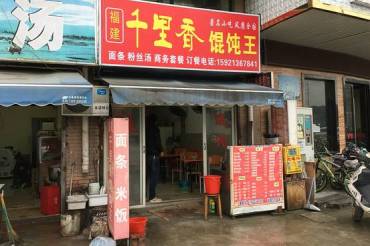
Ms. Lin is chief dumpling wrapper, waitress, cashier and dishwasher for Fujian One Thousand Li Fragrant, a tiny restaurant she owns with her husband in an industrial zone of Shanghai. Just over a fence, her neighbors include iPhone maker Foxconn Technology Group and other giant industrial groups that employ legions of workers she counts as customers.

“The workers earn less salary so fewer people come here and our restaurant isn’t doing well,” says Ms. Lin. She says that during the three years she has run One Thousand Li Fragrant, she’s had periods when every seat at her eight tables has been filled. Not lately.

Like her customers who come for $1.50 bowls of noodles and dumplings, Ms. Lin is a migrant worker. On a recent day she was sitting on an orange chair in the restaurant gripping a hand-warmer and thinking of her native Fujian province, where as a young woman she sang opera in the local dialect.

“Our Putian is more comfortable,” she says referring to the ancient city in Fujian where she was born. Though only 34 years old, Ms. Lin said singing in a traveling opera troupe is for the young and made less sense for someone like her, a mother of two.

In the Shanghai factory zone called Songjiang, One Thousand Li Fragrant was among the few restaurants that remained open ahead of the Feb. 8 Lunar New Year. Wind and cold rain whipped across tables placed on the sidewalk that would have been inviting in balmier times. Ms. Lin said the other dozen or so restaurants, also run by migrants and for migrants, had shut a few days before, as their owners departed for the holidays.

China’s mass people movement for Lunar New Year officially began a week ago. Beijing predicts 2.91 billion trips between January 24 and March 3. Ms. Lin’s family will join the throng in coming days.

Economists will be watching how China’s slowdown affects the mass migration. During past years of economic boom in China, until the mid-2000s, cash-rich factory workers returned to interior villages for the holidays, but quickly flooded back to the industrialized east, often along with family members willing to work for low pay. But in more recent years, the monotony of factory work has proved less of a draw, leaving employers to scramble to hold workers, with higher salaries or benefits. This year, jobs themselves are the concern.

Migrants interviewed outside factories in southern Shanghai and northern Zhejiang province this past week provided a mixed picture. Some suggested the economic slowdown is hitting factories. Some noted that workers were sometimes being encouraged to leave for holidays earlier this year while some factories shut outright. Truck traffic in the zones appeared light and some facilities were shut.

Speaking outside some factories, many veteran workers used the word for nothing special, “chabuduo,” to dismiss any suggestion they see dramatic changes this holiday season.

As heavy rain fell in the Zhejiang province industrial city Jiaxing on Friday, a group jostled and pushed an assortment of fancy suitcases, canvas bags and industrial buckets into the hold of a bus. The group was embarking on a 10-hour drive back home to the Henan province city of Nanyang. The mood was upbeat.

One woman, who works in a garment factory, said she was toting gifts for her family, including 100 rice balls. A worker, who said he drives on a construction site, reported he had a pretty good year. They said bonuses had been paid as usual.

Source: Another Type of Factory-Gate Indicator: Dumpling Sales – China Real Time Report – WSJ
28/01/2016

George Soros in China’s Crosshairs After Predicting Tough Economic Times Ahead – China Real Time Report – WSJ

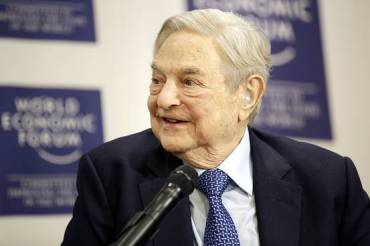
China is putting a face on the economic pessimism it accuses of helping weaken the yuan and the economy: billionaire investor George Soros.

A front-page commentary published in some editions of People’s Daily on Tuesday appeared to warn Mr. Soros would lose any bets he made based on a recent prediction that hard economic times for China are “unavoidable.”

Other state media followed suit. Denouncing “radical speculators,” China’s official Xinhua News Agency dismissed the famed currency trader’s view as “the same prediction several times.” The Global Times, in its English edition, asked, “So why are so many Western pundits and media outlets so intent on talking China down?”

The rhetorical shots come as China is making broader efforts with market interventions and rule adjustments to offset the impact of its slowest growth rate in a quarter century, shore up grinding stock markets and stem surging capital outflows. China’s state-run media regularly note concerns the economy is cooling, but they tend to highlight positive aspects of what the government describes as a broad economic restructuring.

The uniformity and prominent placement in government-run media of the challenges to foreign critics, including economists quoted by Western newspapers, appear to suggest growing concern in Beijing that negative sentiment is spreading.

State media warnings directed at private individuals like Mr. Soros are rare. But his legend as an investor stems from a career making profitable currency bets – both real and rumored – that are widely studied in China. It comes just as China’s central bank is taking steps to limit flight from the Chinese yuan by its huge middle class.

Suspicion in China that Mr. Soros is now placing bets against the yuan follow comments he made last week at the World Economic Forum in Switzerland. “A hard-landing is practically unavoidable,” Mr. Soros told Bloomberg Television. “I’m not expecting it, I’m observing it.”

“Declaring war on China’s currency? Ha,” said the People’s Daily commentary, which appeared in the overseas edition, a newspaper aimed at Chinese living outside China. The paper serves as the official purveyor of Communist Party views, and the commentary was authored by a researcher at China’s Commerce Ministry. It wasn’t published in the domestic editions, though it did appear online.

Source: George Soros in China’s Crosshairs After Predicting Tough Economic Times Ahead – China Real Time Report – WSJ

24/01/2016

Well-wishing | The Economist

SINCE he took over as China’s leader in 2012, Xi Jinping has been a busy globetrotter. Last year he visited more countries than Barack Obama, America’s president (14 against 11).

Heedless of whether his hosts are powerful, puny or pariahs, he has flown everywhere from America to the Maldives and Zimbabwe. Mr Xi wants to project China’s rising power—and his role in promoting that—to foreign and domestic audiences. But until this week, he had not set a presidential foot in the Middle East.

The trip, under way as The Economist went to press, began in Saudi Arabia (whose king, Salman bin Abdul Aziz, is pictured with Mr Xi). He then visited Egypt and was due to finish his tour in Iran. No Chinese president had toured the region since 2009. China’s leaders had worried about getting embroiled in the region’s intractable disputes. But China has a big stake in the Middle East. It is the world’s largest oil importer and gets more than half of its crude from the region (see chart). Mr Xi’s much ballyhooed “new Silk Route”, aimed at linking China and Europe with the help of Chinese-funded infrastructure, runs across the Middle East. Chinese companies are already building expressways and harbours there. In this section Divorce: a love story Well-wishing Reprints Related topics Middle East Politics Government and politics World politics Asia-Pacific politics

The timing of Mr Xi’s tour is tricky. Tensions between Saudi Arabia and Iran are particularly high after Saudi Arabia executed a Shia cleric earlier this month and angry Iranians responded by storming the Saudi embassy in Tehran. But the lifting of Western sanctions on Iran on January 16th (see article) allowed Mr Xi to display even-handedness by visiting both countries, without upsetting Western powers. Mr Xi, like his predecessors, likes to present China as a non-interfering champion of peace. (Xinhua, China’s state-run news agency, said this week that the West’s “meddling hands” were “more of a mortal poison than of a magic potion” in the Middle East.) But Mr Xi is not keen to play a central role as peacemaker. China’s first “Arab Policy Paper”, released on January 13th, is a vague, waffly document. It talks of “building a new type of international relations”, but is devoid of new ideas.

Zhang Ming, a vice-foreign minister, said this week that economic development was the “ultimate way out” of conflict in the region. By expanding its trade and investment links with the Middle East, China hopes discontent and conflict there will gradually dissipate. In addition to crushing dissent, it is trying a similar approach in Xinjiang, a province in western China with a large Muslim population—so far without success.

In the long run, China may find it hard to avoid taking sides. To some extent it has already done so in Syria: it talks to representatives from both the Syrian government and the opposition, but by vetoing UN resolutions on intervention it tilts, in effect, in the government’s favour. The presence of a growing number of Chinese citizens in the Middle East may challenge China’s non-interventionist approach. After a Chinese national was executed by Islamic State in November, China promised to strengthen protection of its citizens abroad. Its new rules of Middle Eastern diplomacy could end up resembling familiar Western meddling

Source: Well-wishing | The Economist

22/01/2016

Chinese president offers remedies for Mideast predicaments, aid to Arab development – Xinhua | English.news.cn

Out-of-the box thinking.  Hope other major powers start to subscribe to this point of view. The current ones  of taking sides and partisan fighting isn’t working.

“Visiting Chinese President Xi Jinping on Thursday prescribed his remedies to restore peace in the Middle East and promote development in the Arab world.

EGYPT-CAIRO-CHINA-XI JINPING-VISIT

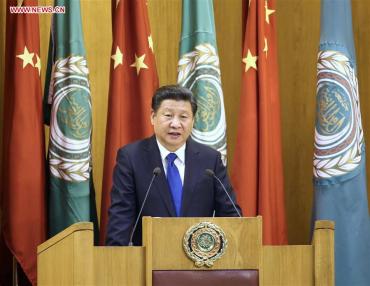
While delivering a speech at the headquarters of the Arab League, Xi described the Middle East region, which in many’s eyes is almost an equivalent to wars and tumult, as a “land of abundance.”

PATH TO PEACE

The Chinese leader concluded in the remarks that dialogues and development are the key factors that can help bring peace and stability back in this part of the world.

He said use of force offers no solution to problems, neither will zero-sum mentality bring enduring peace, adding that for the success of talks, there is need for utmost patience and flexibility.

Speaking of the Syrian crisis, he said there will be no winner out of a conflict, and to address the hot-spots, what is the most urgent, is to bring about cease-fire and start political talks.

Xi also believed that turmoil in the Middle East stems from the lack of development, while the ultimate solution will depend on development, saying that only when young people are able to live a fulfilled life with dignity can hope prevail in their heart. Only then will they voluntarily reject violence, extremist ideologies and terrorism.

Mahmoud Allam, former Egyptian ambassador to China, admitted that many of the deep-rooted problems the Arab world is grappling with have been the result of failures to achieve a successful development model, saying development is no doubt the most viable path of mobilizing people toward achieving their common interests and overcoming disagreements.

TANGIBLE HELP

Also in his speech, the Chinese president introduced a host of fresh moves including loans, financial aid and common investment fund to help improve livelihood, fight terrorism and promote development in the Arab world.

The Chinese government has decided to pledge 50 million RMB (7.53 million U.S. dollars) to help improve the lives of the Palestinians and 230 million RMB (about 35 million dollars) for Syria, Jordan, Lebanon, Libya and Yemen as humanitarian assistance, said Xi.

Beijing also wants to promote the industrialization in the Middle East. To achieve that end, China is going to hand out a number of loan programs, including a 15-billion exclusive loan, a 10-billion business lending, and 10 billion concessional loans so as to facilitate production capacity cooperation between China and the regional countries, according to the president.

Meanwhile, China also prepares to work with the United Arab Emirates and Qatar to set up a common investment fund worth 20 billion dollars that focuses on traditional sources of energy in the Middle East, infrastructure, and high-end manufacturing.

Xi also offered in his speech 300 million dollars for law enforcement cooperation, police training so as to help build up the abilities of the regional countries to maintain stability.China also planned to provide 1,000 training opportunities for young Arab leaders, and strengthen exchanges among their think tanks, experts and scholars.

CHINA’S DOS AND DON’TS IN MIDEAST

The Chinese leader also said his country will neither look for proxies nor try to fill any “vacuum” in the Middle East, adding that Beijing has no intention of building any sphere of influence in the region.

“Instead of looking for a proxy in the Middle East, we promote peace talks; instead of seeking any sphere of influence, we call on all parties to join the circle of friends for the Belt and Road Initiative; instead of attempting to fill the ‘vacuum’, we build a cooperative partnership network for win-win outcomes,” he said.

Meanwhile, Xi promised that China will not link terrorism with any specific ethnic group or religion, as doing so will only create ethnic and religious tensions, adding that there should be no double standards in battling terrorism.

Also, he said the Middle East is the meeting place of ancient human civilizations and home to diverse and splendid cultures. China will continue to unswervingly support Middle East and Arab states in preserving their ethnic and cultural traditions, and oppose all forms of discrimination and prejudice against specific ethnic group and religion.”

Source: Chinese president offers remedies for Mideast predicaments, aid to Arab development – Xinhua | English.news.cn

14/01/2016

Xi’s new model army – The Economist

Xi Jinping reforms China’s armed forces—to his own advantage

CHINA’S biggest military shake-up in a generation began with a deliberate echo of Mao Zedong.

Late in 2014 President Xi Jinping went to Gutian, a small town in the south where, 85 years before, Mao had first laid down the doctrine that the People’s Liberation Army (PLA) is the armed force not of the government or the country but of the Communist Party. Mr Xi stressed the same law to the assembled brass: the PLA is still the party’s army; it must uphold its “revolutionary traditions” and maintain absolute loyalty to its political masters. His words were a prelude to sweeping reforms in the PLA that have unfolded in the past month, touching almost every military institution.

The aim of these changes is twofold—to strengthen Mr Xi’s grip on the 2.3m-strong armed forces, which are embarrassingly corrupt at the highest level, and to make the PLA a more effective fighting force, with a leadership structure capable of breaking down the barriers between rival commands that have long hampered its modernisation efforts. It has taken a long time since the meeting in Gutian for these reforms to unfold; but that reflects both their importance and their difficulty.

The PLA itself has long admitted that it is lagging behind. It may have plenty of new weapons—it has just started to build a second aircraft-carrier, for instance—but it is failing to make effective use of them because of outdated systems of command and control. Before any substantial change in this area, however, Mr Xi felt it necessary to strengthen the party’s control over the PLA, lest it resist his reforms and sink back into a morass of money-grubbing.

The reforms therefore begin with the main instrument of party control, the Central Military Commission (CMC), which is chaired by Mr Xi. On January 11th the CMC announced that the PLA’s four headquarters—the organisations responsible for recruiting troops, procuring weapons, providing logistics and ensuring political supervision—had been split up, slimmed down and absorbed into the commission. Once these were among the most powerful organisations in the PLA, operating almost as separate fiefs. Now they have become CMC departments.

Power to the party

The political headquarters was the body through which the party kept an eye on the ranks and ensured they were up to speed on Maoist texts and the party’s latest demands. The loss of its autonomous status may suggest that the party’s role is being downgraded. Far from it. Now the party’s CMC (there is also a state one, which exists only in name) will be better able to keep watch. The body’s 15 new departments will include not only departments for politics but also for logistics, personnel management and fighting corruption. Mr Xi has already turned his guns on graft, imprisoning dozens of generals.

The second reform has been to put the various services on a more equal footing. The land forces have hitherto reigned supreme. That may have been fine when the PLA’s main job was to defend the country against an invasion across its land borders (until the 1980s the Soviet Union was considered the biggest threat). But now China has military ambitions in the South China Sea and beyond, and wants the ability to challenge American naval and air power in the western Pacific. A recent editorial in the Liberation Army Daily, a PLA mouthpiece, berated the armed forces for their “army-centric mindset”.
In addition to those for the navy and air force, a separate command has now been created for the army, which had previously run everything. On December 31st the CMC also announced the formation of a command responsible for space and cyberwarfare, as well as one for ballistic and cruise missiles (previously known as the Second Artillery Force, part of the army). There is also a new joint command with overall control of the various services, a little like America’s joint chiefs of staff.

Big changes are also afoot in regional command structures. China used to be divided into seven military regions. These were powerful and relatively self-contained; sharing or swapping troops and equipment was rare. Now, according to reports in the South China Morning Post, a newspaper in Hong Kong, the number will be reduced to five. Troops will be recruited and trained by the various services before regional deployment. This will ensure greater central control over the regions.

China has been talking about military reform for decades, but change has been glacial. Opposition within the armed forces has been intense. “If [reform] is not done properly,” wrote Sun Kejia and Han Xiao of the PLA National Defence University last month, “it could affect the stability of the armed forces or even all of society.” (The article was promptly removed from the Liberation Army Daily website.) Demobbed soldiers could make trouble—Mr Xi wants the number of troops to be cut by 300,000. State firms have been ordered to reserve 5% of jobs for laid-off veterans.

The recent reforms are more extensive than most Western observers had expected after the Gutian conference. But even so, they are incomplete. The army still holds sway over some appointments (all five chiefs of the new regional commands are army generals, for instance). The PLA has traditionally given higher status to combat units than to those providing communications, logistics, transport and the like, a misplaced emphasis in an age when information and communications are crucial in warfare. The reforms do little to correct that bias. Moreover, many details about them remain unclear. No one knows, for example, where the troop cuts will come from or what units will go into the new space and cyberwarfare command.

The first result of the reforms is likely to be confusion in the ranks, until the new system settles down. Dennis Blasko, an American observer of the PLA, says no one can be sure of the results until they are tested in battle. Amid the murk, only one man clearly seems to have got his way: Mr Xi.

From: http://www.economist.com/news/china/21688424-xi-jinping-reforms-chinas-armed-forcesto-his-own-advantage-xis-new-model-army

08/01/2016

Three political questions looming over China’s leadership in 2016 – WSJ China Real Time

From: http://blogs.wsj.com/chinarealtime/2016/01/08/three-political-questions-looming-over-chinas-leadership-in-2016/?mod=djemChinaRTR_h

Last year saw more attention to Chinese President Xi Jinping as China’s paramount leader, including what many observers have seen as a cult of personality. The economy may eclipse politics as a concern for Beijing in 2016, but in China the two are always closely intertwined. Here are the three major political questions that will loom over the Xi leadership in the months to come.

  1. Is it time for thelong-running anticorruption campaignto shift its focus?

In laying out a vision for his anti-corruption drive in 2013, Xi Jinping vowed to go after both high-ranking “tigers” and low-level “flies.” So far the campaign has been fueled by the takedowns of a procession of big cats – but there are signs that a change is in the offing.

There’s upside to an increased focus on local cadres and others at the insect level. For one, it would send a signal to doubters that the anti-graft campaign is genuine, not just a way to purge Xi’s political enemies. It would also help Xi score points with regular citizens and reform-minded officials outraged at the pervasiveness of corruption in China.

But there’s also a political risk. Already, the current crusade has compelled many officials to hunker down and sit on their hands to avoid attracting attention – a phenomenon that has slowed policymaking. Likewise, many developers remain wary of starting new projects that might aid an ailing economy because they’re still not sure what’s permissible in the new environment.

Broadening the anti-graft campaign could handcuff policymaking even further, because cadres will spend time looking over their shoulders, and entrepreneurs, wondering about political support, will wait until the dust settles before embarking on new commercial initiatives.

  1. What sort of politics does China want to practice?

Xi Jinping and Chinese Premier Li Keqiang agree on a great deal, but they have distinctive notions about how to build a better China.

Xi believes that China’s political future rests on a reassertion of the party’s rule, preventing potential challenges from social groups, and convincing citizens and cadres alike that the government stands for something more than just nationalism — that socialism is still relevant but needs to be recast in ways that appeal to society.

Li appears to see his political mission differently. In his eyes, ideological renovation is far less crucial to the country than administrative restructuring and being a more efficient and approachable government. It’s innovation, not rectification, Li argues, that will secure the Party’s legitimacy. From experimenting with new ways to measure China’s actual economic performance to making bureaucratic requirements easier for citizens to meet, Li has created a profile for himself that challenges the prevailing political course being set by Xi.

While Xi wants more control over society, Li argues for less oversight and regulation in China’s economy and bureaucracy–making it easier for businesses to start up and succeed as a way of preventing social pressure from becoming a political threat.

Thus far, the policy divide between Xi and Li hasn’t resulted in political warfare. But some lower-level cadres are increasingly perplexed about which template to follow: They’ve been quietly pressing for clarification about whether they should be focusing on being better Communists, or on building a more efficient and responsive government. It’s not clear how they can accomplish both, especially when they’re under the anticorruption microscope.

The economy could catalyze conflict here. If slower growth turns into a tailspin, Li and his allies will surely press to have their agenda for change adopted more widely, and argue that the current strategy of “politics before economics” championed by Xi isn’t working. Xi and his comrades won’t concede the political high-ground they currently occupy without a fight.

Xi and Li have been doing a fine job of sharing responsibility up to now, but the divide in their approaches is getting wider, and the challenges China faces will very likely compel one model to be adopted at the expense of the other.

  1. What happens if resistance to Xi’s reforms becomes active political opposition?

Xi’s efforts to centralize party control over the economy and society have been ruthless. Even the hint of organized opposition to party policies has brought out the truncheon swingers, with censorship or jail awaiting those who propose an alternative political path for China.

Observers who see Xi’s main opposition as coming from the Chinese street are looking down a now-empty avenue. They should be paying attention to disquiet within the ranks of officialdom.

The boldness and breadth of Xi’s reforms have led some in the party ranks to wonder privately about—and even openly question—whether his handling of China’s challenges has always been correct. For example, there are some who contend that the anticorruption campaign has placed too much power in the hands of discipline inspectors and unnecessarily disrupted the status quo (in Chinese).

Some of that scrutiny concerns Xi’s efforts to reinsert the Party more fully into economic and social life, a move that risks stoking discontent in a populace that has grown used to a certain level of leeway in recent decades. There are also those within the political apparatus who see Xi’s recent restructuring of China’s military as courageous but more aimed at quelling dissent from the armed forces than rejuvenating strategy and doctrine. Even Xi himself has noted in a recently released collection of internal speeches (in Chinese) that not everything he has been doing has been met with universal acclaim within the Communist party. Murmurs of discord have reached a level in recent months where a number of officials have been punished for “improper discussion” of Party policies.

Thus far, the angst, anxiety and antagonism within the government to Xi’s reforms remain unorganized. That’s because no one has proposed an alternative strategy for dealing with the nation’s many challenges that would unify the disaffected to act against Beijing. Social activists have little political support from above; annoyed cadres are afraid that any move to form a coalition could plunge the country into civil unrest.

Xi and his allies have been as determined as they’ve been daring in following their own reform path—and their success in getting their way politically has been remarkable thus far. The most pressing question for this new year is whether what has worked thus far will continue to do so—or whether the disaffected in China start believing that their leadership may have begun to run out of answers.


01/01/2016

‘The Miraculous History of China’s Two Palace Museums’ – China Real Time Report – WSJ

In late 1948 and early 1949, toward the end of the Chinese civil war, Nationalist leader Chiang Kai-shek transported across the Taiwan Strait hundreds of thousands of valuable Chinese artifacts which are now stored in Taipei’s National Palace Museum. Along with its Palace Museum counterpart in Beijing – more famous as the Forbidden City – the museums serve as one of the most poignant reminders of the division of China.

Beijing’s Palace Museum, which celebrated its 90th anniversary in October, was established shortly after the last Chinese emperor, Pu Yi, was forced from his palace, where he had been allowed to stay even after the Chinese republic was founded in 1911.

Intellectuals at the time wanted to set up a Chinese museum along the lines of the great museums in Europe.

Today, millions visit both museums each year, crowding around artifacts such as the Jadeite Cabbage and the Meat-Shaped Stone in Taipei.

Among the visitors are huge tour groups of mainland Chinese tourists, as the Taipei government continues to liberalize travel policies for its neighbor amid a broader detente.

This week, a branch of the National Palace Museum housing exhibits from around Asia was inaugurated in the southern Taiwanese city of Chiayi.

In his book “The Miraculous History of China’s Two Palace Museums,” Hong Kong-based writer Mark O’Neill details the treacherous history of how some of China’s most precious artifacts were rescued from the invading Japanese imperial army in the 1930s and later transported to Taiwan, and the powerful symbolism of the museums.

Source: Writing China: Mark O’Neill, ‘The Miraculous History of China’s Two Palace Museums’ – China Real Time Report – WSJ

31/12/2015

2015 Chinese diplomacy: Reaching farther and wider – Xinhua | English.news.cn

2015 has been a productive year not only for China, but for its partners all over the world. The world’s second largest economy reached out farther and wider, through initiatives such as the “Belt and Road” and the “AIIB“. And President Xi Jinping led the way.


President Xi Jinping’s official state visit to the UK was full of pomp and pageantry and the occasional imbibing. Footage of President Xi and Prime Minister David Cameron enjoying a pint and some banter in an English pub went viral in China. And the rest is history. The consumer power of the world’s second largest economy has been felt fully by the British beer company. Just this time, it started with President Xi himself.

And in the year 2015, it’s been a recurring story. Wherever the Chinese president travels, Chinese investment and consumer power are his companions. From projects worth in the billions. There’s Chinese investment in the UK infrastructure and energy sector.

Chinese financing of Russian and Central Asian natural gas projects and China’s pledge of 60 billion dollars of development funds to African nations.

To a more personal touch, a visit, in the case of Boeing, by the President of the world’s largest airplane market, means shored up confidence for some 160-thousand employees, against the backdrop of a wobbly global economy, The president also brought Ping Pong diplomacy to a high school in Washington State while students there returned the favor by showing the well-known football fan, a different kind of football. And this viral photo of President Xi brought forward cutting edge research at the Imperial College London.

2015 has been a year when Chinese initiatives were taking root and taking shape on a global scale from the Belt and road initiative. To the AIIB, and the south-south cooperation fund. Economies reshaped and lives transformed or in the case of Greene King, a centuries old British beer finding a new Chinese following.

Source: 2015 Chinese diplomacy: Reaching farther and wider – Xinhua | English.news.cn

30/12/2015

Historian praises China’s global infrastructure building, criticizes West’s destructive methods – Xinhua | English.news.cn

China, with its impressive international infrastructure initiatives, has injected impetus into global growth, a U.S.-German historian has said, while criticizing Washington’s hawkish attitude, as reported by Sputnik.

China is “leading an economic renaissance of a scale not seen in more than a century,” said F. William Engdahl, a historian and economic researcher, in his recent article for New Eastern Outlook. “Beijing is, with customary Chinese speed, linking its economy by land and by sea lanes to all Eurasia,” the historian wrote, previously saying that China is “moving forward with an impressive array of major international infrastructure projects” in various regions. “For my side, I infinitely prefer the peaceful building projects to the destroying ones,” Engdahl said.

During the Johannesburg Summit of the Forum on China-Africa Cooperation (FOCAC) in early December in South Africa, Chinese President Xi Jinping unveiled the 60-billion-U.S.-dollar aid package for Africa in the next three years. The package seeks to help Africa to industrialize, modernize its agricultural production, boost the skills of its workers, build infrastructure and improve its health care.

“Unlike NATO’s endless wars, construction of infrastructure — railways, water navigation, electric power grids, lifts people up and enhances peace and stability,” Engdahl said, pointing out that Xi’s offer benefits both Africa and China.

China is also establishing a more amicable, vibrant neighborhood and is deepening economic ties with European countries through its Belt and Road initiative. The Belt and Road initiative, comprising the Silk Road Economic Belt and the 21st Century Maritime Silk Road, was brought up by Xi in 2013, with the aim of building a trade and infrastructure network connecting Asia with Europe and Africa along the ancient Silk Road routes.

The initiative creates a “golden opportunity” for the countries of Central and Eastern Europe that are facing economic difficulties, linking the East and the West of the Eurasian continent through a vast network of high-speed railways and maritime routes, Engdahl said.

“China is the world address in rail infrastructure today, while the West, led by the pathetic rail construction record of the USA, falls farther and farther behind,” Engdahl said, referring to China’s planned construction of a Hungary-Serbia high-speed railway. The railway linking the capitals of Hungary and Serbia, Budapest and Belgrade, has a total length of 350 km, with 184 km in Serbia. It is designed for electric passenger and cargo trains with a maximum speed of 200 km per hour. Once complete, it will help create a fast lane for importing and exporting products between China and Europe.

Besides recognizing the export of “Chinese rail technology” to Europe, the researcher also mentioned Beijing’s intentions to invest in constructing and upgrading port facilities in the Baltic, Adriatic, and Black Seas.

Source: Historian praises China’s global infrastructure building, criticizes West’s destructive methods – Xinhua | English.news.cn

10/12/2015

China to introduce tough emissions controls for ships | Reuters

China will introduce tough controls on ship emissions at three key port areas from January to reduce sulfur dioxide which results in acid rain, causing respiratory difficulties and sometimes premature death, said the Ministry of Transport.

Shipping containers are seen on a ship docked at a port in Rizhao, Shandong province, China, December 6, 2015. REUTERS/Stringer

If strictly implemented the move would force oil suppliers to increase the supply of cleaner marine fuel, industry experts said. The ministry gave no details on how the new emissions rules would be enforced or penalties for non-compliance.

The new rules will apply to merchant ships navigating or anchoring in the waters of Pearl River Delta, Yangtze River Delta and the Bohai Bay rim, with a goal to cut sulfur dioxide by 65 percent by 2020 from the 2015 level, according to a document issued by the Ministry of Transport.

Similar emissions control areas exist in the North Sea and the north American coast.

Ships berthed at ports within the three Chinese emissions control zones will start using bunker fuel with a maximum sulfur dioxide (SO2) content of 0.5 percent from January 2016, the ministry said.

Hong Kong made it mandatory in July for merchant ships to switch to fuel with a SO2 content of 0.5 percent from high sulfur fuel. Neighboring Shenzhen port launched a voluntary fuel switching scheme in July this year that is expected to cost 200 million yuan ($31.07 million) in subsidies over three years.

Enforcement of the new emission measures will initially be up to individual ports, but the controls will be toughened in 2017 to cover all key ports in the three control areas.

They will be tightened further from the start of 2019, when ships entering control zones, not just berthed or anchored, will have to use 0.5 percent SO2 bunker fuel or below. Fishing, sports and military vessels will be exempt, said the ministry.

Oil consultancy ICIS estimated that majority of fuel use in China’s shipping sector is currently using fuel with 1-2 percent SO2 content.

The International Maritime Organization (IMO), a U.N. body which regulates merchant shipping, plans to introduce a global cap on ship emissions in either 2020 or 2025.

The IMO will carry out a review in 2018 that will include an assessment of the availability of low-sulfur fuel that will be used to decide the actual implementation date.

Source: China to introduce tough emissions controls for ships | Reuters

Law of Unintended Consequences

continuously updated blog about China & India

ChiaHou's Book Reviews

continuously updated blog about China & India

What's wrong with the world; and its economy

continuously updated blog about China & India