19/08/2019
LONDON (Reuters) – Crude oil prices rose on Monday following a weekend attack on a Saudi oil facility by Yemeni separatists and as traders looked for signs that U.S.-China trade tensions could ease.
Price gains were, however, capped to some degree by an unusually downbeat OPEC report that stoked concerns about growth in oil demand.
Brent crude LCOc1, the international benchmark for oil prices, was up 65 cents, or about 1.1%, at $59.29 a barrel at 1024 GMT,
U.S. West Texas Intermediate (WTI) crude futures CLc1 were up 61 cents, or 1.1%, at $55.48 a barrel.
A drone attack by Yemen’s Houthi group on an oilfield in eastern Saudi Arabia on Saturday caused a fire at a gas plant, adding to Middle East tensions, but state-run Saudi Aramco said oil production was not affected.
“The oil market seems to be pricing in again a geopolitical risk premium following the weekend drone attacks on Saudi Arabia, but the premium might not sustain if it does not result in any supply disruptions,” said Giovanni Staunovo, oil analyst for UBS.
Tensions around Iran appeared to ease after Gibraltar released an Iranian tanker it seized in July though Tehran warned the United States against any new attempt to seize the tanker in open seas.
Concerns about a recession also limited crude price gains, as traders looked for signs of progress in U.S.-China trade talks.
Meanwhile, China’s announcement of key interest rate reforms over the weekend has fueled expectations of an imminent reduction in corporate borrowing costs in the struggling economy, boosting share prices on Monday.
U.S. energy firms this week increased the number of oil rigs operating for the first time in seven weeks despite plans by most producers to cut spending on new drilling this year.
“WTI in recent weeks has performed relatively better than Brent… Pipeline start ups in the United States have been supportive for WTI, while the ongoing trade war has had more of an impact on Brent,” said Warren Patterson, head of commodities strategy at Dutch bank ING.
The Organization of the Petroleum Exporting Countries (OPEC) cut its forecast for global oil demand growth in 2019 by 40,000 barrels per day (bpd) to 1.10 million bpd and indicated the market would be in slight surplus in 2020.
It is rare for OPEC to give a bearish forward view on the market outlook.
“Such a bearish prognosis will heap more pressure on OPEC to take further measures to support the market,” said Stephen Brennock of oil broker PVM.
Source: Reuters
Posted in Brent Crude, China alert, drone attack, Gibraltar, Houthi group, Iranian tanker, Middle East tensions, Oil, oil facility, OPEC report, Organization of the Petroleum Exporting Countries (OPEC), rises, Saudi Arabia, Saudi Aramco, Saudi field, Tehran, U.S. West Texas Intermediate (WTI), U.S.-China trade tensions, UBS AG., Uncategorized, United States, Yemeni separatists |
Leave a Comment »
19/08/2019
SRINAGAR, India (Reuters) – Schools reopened in Indian Kashmir’s main city on Monday but most classrooms were empty as parents kept their children home, fearing unrest over the government’s decision two weeks ago to revoke the region’s autonomy.
Some 190 primary schools were set open in Srinagar as a sign of normalcy returning to Muslim majority Jammu and Kashmir as authorities ease a clampdown aimed at preventing mass protests.
Parents said their children would stay home until cellular networks are restored and they can be in contact with them.
“How can we risk the lives of our children?” said Gulzar Ahmad, a father of two who are enrolled in a school in the city’s Batamallo district where protests have occurred.
“Troops have arrested minor children in the last two weeks and several children were injured in clashes,” he said. “Our children are safe inside their homes. If they go to school who can guarantee their safety?”
Authorities were not immediately available for comment, but have previously denied reports of mass arrests.
Protests began after the Aug. 5 decision by Prime Minister Narendra Modi’s government to withdraw Kashmir’s special status and integrate it fully into India, with equal rights for all Indians to buy property there and compete for government jobs.
Critics said the decision will alienate many Kashmiris and add fuel to a 30-year armed revolt in the Himalayan territory that Pakistan also lays claim to.
On the weekend, residents of Srinagar – the hotbed of the separatist revolt – threw stones and clashed with police. Dozens of people were injured, two senior officials and witnesses said.
Reuters journalists visited two dozen schools in Srinagar on Monday. Some schools were lightly staffed and classrooms deserted. Gates at other schools were locked.
Only one student showed up at Presentation Convent Higher Secondary School, which has an enrolment of 1,000 pupils, and went home, said a school official.
A handful of teachers but no students turned up at the barricaded Burn Hall school in one of the city’s high security zones.
“How can students come to classes in such a volatile situation? The government is turning these little children into cannon fodder,” a teacher said, adding that schools should stay closed until the situation is normal.
CROSS BORDER FIRING
New Delhi’s decision on Kashmir has heightened tensions with its neighbour and rival nuclear power, Pakistan, and triggered cross-border exchanges of fire.
In the latest incident, two civilians were killed in Pakistan-controlled Kashmir by Indian soldiers firing across the disputed border, Pakistan’s foreign ministry said, adding that it had summoned India’s deputy commissioner in Islamabad to protest.
“The ceasefire violations by India are a threat to regional peace and security and may lead to a strategic miscalculation,” the foreign ministry said.
There was no immediate comment from India which has previously accused Pakistan of trying to whip up tensions to draw global attention.
More than 50,000 people have died in the revolt that erupted against Indian rule in Kashmir in 1989. India blames Pakistan for giving material support to the militants and helping them cross into its part of the mountainous region.
Pakistan denies the allegation and says it only gives moral and diplomatic support to the Kashmiri people in their struggle for self determination.
Source: Reuters
Posted in Burn Hall school, ceasefire violations, deserted, diplomatic support, fear, global attention, Himalayan territory, India alert, Indian Kashmir, Jammu and Kashmir, militants, Muslim-majority, neighbour, Nuclear power, Pakistan, parents, Presentation Convent Higher Secondary School, Prime Minister Narendra Modi, rival, schools, self determination, Srinagar, Uncategorized, unrest |
Leave a Comment »
18/08/2019
- Adult consumers are fuelling a boom in China’s toy collectibles market
- Men are spending thousands of dollars on figurines to express their identity, boost their street cred, and indulge their inner kid
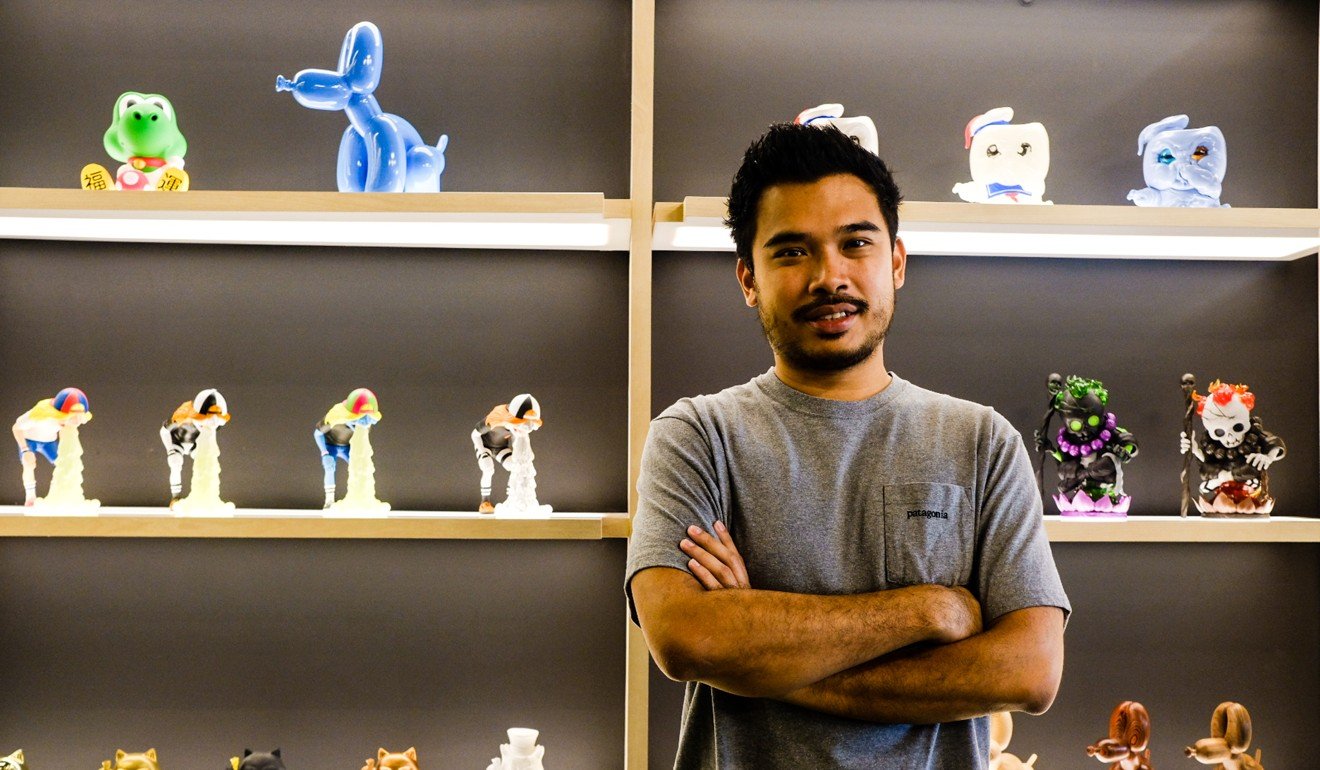
Chinese collector Don Tang with artist Jason Freeny at the Jason Freeny X-Soul Station exhibition in Shanghai. Photo: Don Tang
Don Tang is proud of his toys. So much so that the Shanghai resident, 32, puts them on display both in his home and in the office of the company he runs.
And there are plenty to display. Tang, 32, has some 100 collectibles and the number is growing all the time. Each month he sets aside 2,000 yuan (US$280) to buy the top trending toys, newest releases, or one-of-a-kind items – either from physical stores, online or at toy conventions in China.
But the toys are not connected to his work as the CEO of a firm in the intellectual property sphere. They are simply a hobby, albeit one Tang takes seriously. The crowning jewel of his collection? A 6,000 yuan KAWS action figure bought in Tokyo, Japan.
“When I return home from work each day, I get to see [my toys] and it puts me in a good mood,” says Tang, who realises some people might not get the appeal of his hobby, but says it is an “addictive” pursuit and a way of appreciating designs and craftsmanship. Whether it’s SpongeBob SquarePants, Hello Kitty or Sesame Street, each toy has its own distinct, “lovable, cute, and personalised” identity, he says.
Remind you of someone? Hambuddha is a designer figurine made by Mighty Jaxx of Singapore that is aimed at the adult market. Photo: Mighty Jaxx
“When you look back at the toys that you collected at different times, you realise how your own aesthetic, tastes, and preferences have changed over time,” adds Tang, who would never dream of selling his precious collection.
Tang’s toy story is far from unique. Sales of toys and games in China – which produces 80 per cent of all the world’s toys – soared to 324 billion yuan in 2018, up from 135 billion yuan in 2013, according to market research company Euromonitor. Fuelling these sales is a growing army of toy connoisseurs just like Tang.
Mighty Jaxx, a Singapore-based urban culture company that designs and manufactures collectibles and lifestyle products, is among the many companies benefiting from this surge in demand.
Its Chinese customer base accounts for 25 per cent of its projected revenue of S$10 million (US$7.21 million) for 2019 – and this proportion is expected to hit 40 per cent over the next few years, according to Mighty Jaxx’s founder and CEO, Jackson Aw, 30.
Smearing cannabis on your face: the latest Asian beauty craze
An avid toy collector himself, Aw first mused over the idea of turning his hobby into a viable business back in 2012. He ventured to Shenzhen in China for one month, knocking on factory doors just for a behind-the-scenes glimpse of the toy production process.
Being one of his first times to China, the mammoth scale of the industry came as a major “culture shock” to Aw.
Mighty Jaxx founder and CEO Jackson Aw. Photo: Toh Ee Ming
“I had always thought that it was just one giant machine that spits out parts and that was it. But there were rows and rows of hundreds of people printing, hand painting, assembling and using different skills just to produce one toy,” the Singaporean says.
Describing the visit as his “greatest education”, Aw was inspired to launch Mighty Jaxx from his bedroom with start-up capital of S$20,000 loaned from a bank through his parents.
Fast forward to today and his online business has worked with major brands such as Warner Brothers, DC Comics, Cartoon Network, MTV and New Balance, and shipped millions of products to collectors in over 50 countries. It is best known for its XXRAY figures, developed in partnership with artist Jason Freeny, which feature dissected Justice League characters such as Batman, Superman and Wonder Woman.
Hong Kong toy makers hope Asia’s largest toy fair will help boost flagging sales
But in its early days, the China market had intimidated Aw as a “big anomaly” that was still largely closed off. Aw had found it difficult to navigate the cultural norms and familiarise himself with unfamiliar business models.
Still, sensing China’s potential, his firm embarked on wide-ranging creative collaborations to tailor its offerings to the Chinese market – from creating yin-and-yang themed toys, celestial chicken fairy deities and the “Hambuddha” (a Buddha holding a pearl-shaped hamburger while on a lotus throne).
It also partnered with Chinese artist Chen Wei (who goes by the alias Cacooca) to develop a new Panda Ink collection, which depicts a panda in the midst of an everyday activity or hobby, such as hiking, playing video games or cuddling with cats.
Mighty Jaxx’s ‘Flow by 18 Uppercut’ has a yin and yang theme with white and black halves. Photo: Mighty Jaxx
It has also collaborated with other big-name artists and celebrities trending among Chinese consumers – such as Los Angeles-based dance crew Kinjaz, who found fame in China appearing on dance shows, and ABS, a leading graffiti crew based in Beijing’s 798 Art District – and has an upcoming collaboration with Taiwanese singer Show Luo.
But it is the comic and toy conventions that provide its biggest fans, typically men in their 20s to 40s who flock in from Beijing, Shanghai and Guangzhou.
Aw says these collectors have a huge appetite to splurge on high-end collectibles, which can range in cost from anywhere between US$10 to US$2,000.
Singapore sex toy sales buzzing thanks to ‘healthy’ branding
To these collectors, price is of little concern as they are looking for “tangible products to buy and show off their personality” and build their street cred among their friends, though they still prefer to stay under-the-radar about their collection to the general public, Aw says.
Today, Mighty Jaxx’s products are manufactured in nearly 20 different factories in Shenzhen and Guangzhou. It set up its first overseas office in Shanghai last year and is planning to open its second one in Suzhou by the end of 2019, according to Aw.
Besides growing Chinese affluence, Aw credits his company’s success to a greater exposure to Western influences and China’s own unique brand of pop culture taking off domestically.
He points to one of China’s biggest blockbusters Monster Hunt, a fantasy martial arts film of how monsters live among humans.
Mighty Jaxx’s celestial chicken fairy deity is aimed at the Hong Kong and mainland China market. Photo: Mighty Jaxx
“Outside China, you wouldn’t know what the hell it’s about. But the Chinese are creating their own unique narrative and developing their own intellectual property … That’s when we know the demand for original creation in different forms is truly there,” Aw says.
Likewise, consumers live in an age of a “mishmash of pop cultures and crossovers” and “subcultures becoming mainstream”, he says.
Citing how the business has teamed up with Team Hero, a China e-sports team comprising professional computer gamers, to roll out new figurines, Aw says: “It doesn’t mean that tattoo artists, skateboarders don’t buy toys … What seems to be separate demographics are converging to become a multibillion-dollar market.”
Aw says the company is planning to expand from its current business model based on direct selling to collectors, to e-commerce distribution channels like Taobao and Tmall by the end of 2019.
He hopes eventually to set up the firm’s first retail store in Shanghai, as he believes the future lies in experiential retail.
“China has been cultivating that openness in recent decades, and we’re still very curious and excited for new things to happen [in this market],” Aw says. ■
Source: SCMP
Posted in ABS, adult male consumers, Batman, Beijing, cannabis, Cartoon Network, celestial chicken fairy deity, Chinese toys boom, collectibles, consumers, crossovers, cuddling with cats, DC Comics, demographics, Euromonitor, everyday activity, figurines, fuelled by, Guangzhou, Hambuddha, hand painting, Hello Kitty, hiking, hobby, Hong Kong, humans, inner kid, Intellectual property, Jason Freeny X-Soul Station exhibition, Justice League characters, Kinjaz, Mainland China, mainstream, market, martial arts film, Mighty Jaxx, mishmash, Monster Hunt, monsters, MTV, New Balance, original creation, Panda Ink, playing video games, pop cultures, Printing, retail store, Sesame Street, sex toy sales, Shanghai, Shenzhen, Singapore, Singaporean, skateboarders, SpongeBob SquarePants, street cred, subcultures, Superman, Taobao, tattoo artists, Team Hero, Tmall, toys, Uncategorized, Warner Brothers, white and black halves, Wonder Woman, XXRAY figures, yin and yang theme |
Leave a Comment »
18/08/2019
Students carry school bags with panda images during the ceremony for the 2019 Panda Pack donation and the 4th anniversary of China Foundation for Poverty Alleviation (CFPA) Myanmar Office in Yangon, Myanmar, Aug. 17, 2019. China Foundation for Poverty Alleviation (CFPA) Myanmar Office donated 100,000 school bags and stationeries to Myanmar students under Panda Pack Project for 2019-2020 academic year in Yangon on Saturday. (Xinhua/U Aung)
YANGON, Aug. 17 (Xinhua) — China Foundation for Poverty Alleviation (CFPA) Myanmar Office donated 100,000 school bags and stationeries to Myanmar students under Panda Pack Project for 2019-2020 academic year in Yangon on Saturday.
Under the Panda Pack project, Saturday’s donation of school bags which include stationeries called panda packs covers 15 townships in Myanmar’s states and regions.
Since 2017, panda packs have been donated to 37,760 primary school students in six states and regions including Shan, Rakhine, Kachin states, Yangon, Bago and Sagaing regions.
“CFPA, the first Chinese non-governmental organization registered in Myanmar, has done many contributions in collaboration with Myanmar’s Education Ministry for education sector development in four years since when its Myanmar Office was opened in 2016,” said Counselor Yang Shouzheng of Chinese Embassy in Myanmar, expressing belief that such cooperation could benefit Myanmar people and promote bilateral friendship between the two countries.
CFPA’s panda packs donation really support Myanmar students’ academic life, said Thet Su Htwe, a representative teacher from schools.
“Internationally, we help children on six sustainable development goals — no poverty, zero hunger, good health and well-being, quality education, clean water and sanitation and decent work and economic growth,” said Wang Xingzui, executive vice president of CFPA.
For Myanmar’s education sector, CFPA has launched projects including Paukphaw scholarship, Panda Pack, Computer Lab, China-Myanmar Friendship Scholarship, School infrastructure and others which cover 12 states and regions.
Source: Xinhua
Posted in Bago, China alert, China Foundation for Poverty Alleviation (CFPA) Myanmar Office, China-Myanmar Friendship Scholarship, Chinese embassy, Computer Lab, donates, Education Ministry for education sector development, Kachin, Myanmar, Myanmar students, Panda Pack Projec, Panda Pack Project, Paukphaw scholarship, Rakhine, Sagaing, school bags, School infrastructure, Shan, stationeries, Uncategorized, YANGON |
Leave a Comment »
18/08/2019
BEIJING, Aug. 17 (Xinhua) — The central government has offered financial support of 920 million yuan (about 131 million U.S. dollars) to local governments to help counter typhoon, flood control and drought relief.
An emergency relief fund of 600 million yuan has been offered to 11 provincial regions including Henan, Sichuan and Gansu to help them control flood and deal with drought, according to the Ministry of Finance and the Ministry of Emergency Management.
Another fund worth 320 million yuan was used to support Hebei, Liaoning, Jilin and Heilongjiang provinces in flood control and typhoon relief.
Typhoon Lekima landed in east China’s Zhejiang on Aug. 10, wreaking havoc as a super typhoon. About 13 provincial regions have been affected by the typhoon.
China announced the second-highest level in China’s four-level typhoon emergency response system to deal with Typhoon Lekima and minimize casualties and losses.
Source: Xinhua
Posted in Beijing, Central government, China alert, control flood, drought, emergency relief fund, financial support, flood, flood control, Gansu Province, Hebei province, Heilongjiang province, Henan province, Jilin, Liaoning province, local governments, Ministry of Emergency Management, Ministry of Emergency Management (MEM), Ministry of Finance, sichuan province, Typhoon, Typhoon Lekima, typhoon relief, Uncategorized, wreaking havoc, zhejiang province |
Leave a Comment »
18/08/2019
People from all walks of life take part in a rally to voice their opposition to violence and call for restoring social order, expressing the people’s common will to protect and save the city at Tamar Park in south China’s Hong Kong, Aug. 17, 2019. (Xinhua/Lui Siu Wai)
HONG KONG, Aug. 17 (Xinhua) — “Anti-violence!”, “Save Hong Kong!” Over 470,000 people gathered on Saturday in a rally held at Tamar Park, Admiralty of Hong Kong, to voice out their demand for peace and stability in Hong Kong.
At around 4 p.m. local time, the metro station near Tamar Park was swarming with people. An hour later, the rally started as the Chinese national anthem was ringing out.
Waving the Chinese national flag and the flag of the Hong Kong Special Administrative Region (HKSAR) and holding signs written with slogans including “Stop Riots”, “Anti-violence” and “Save Hong Kong”, the crowd was enthusiastic and impassioned despite the rain. They chanted the slogans to express their views.
At the beginning of the rally, a video was played, featuring a recording of a policeman’s wife who spoke, choking back sobs, of how violent protesters stormed the police stations and attacked the police. She appealed to the public to support the police and Hong Kong during this difficult time. “Police, keep it up!”, “Save Hong Kong!” the crowd cried out at the end of the video.
Tam Yiu-chung, a member of the Standing Committee of China’s National People’s Congress, called upon people from all walks of life to firmly oppose violence.
The national flag and emblem represent the dignity of the country, and those who insult the national flag and emblem are turning themselves into enemies of the people in the whole country, Tam added.
Rebuking the recent illegal assemblies and violent acts at Hong Kong International Airport as “the ugliest riot in the world”, Maria Tam Wai-chu deputy director of the National People’s Congress Standing Committee Basic Law Committee from Hong Kong, stressed that everyone should respect the freedoms of others and the exercise of freedom does not include wanton destruction of public properties or obstruction of public transport.
Wong Kam-leung, chairman of Hong Kong Federation of Education Workers, said that the violence in Hong Kong has been escalating over the past two months and he was distressed to see young people using force and violating laws.
He called on the young people to “stop and think twice” before engaging in violent or illegal acts.
A 57-year-old gardener surnamed Chan said sometimes she could not go to work because radical demonstrators disrupted the traffic, “which was very annoying.”
“Hong Kong has always been a peaceful society. I hope the extremist radicals stop violent acts so that people can return to peaceful life,” she said.
A finance professional surnamed Lee said his business has been badly hit by the illegal demonstrations since many of his clients are too concerned to invest in Hong Kong.
“The common aspiration of the overwhelming majority of people in Hong Kong is that the violence and chaos will stop soon. Our community has been torn apart and can not afford any more of it,” he said. “We urge the demonstrators and mobs to stop it immediately; otherwise, the whole community has to pay for the consequences.”
A local resident, Wendy, a mother of a young boy, told the reporter that her life was largely affected by the violent protests going on in the recent two months.
“For the sake of our future generations and Hong Kong getting back on track, we refuse to be in silence, we must let the world hear our voice,” she said firmly.
The assembly ended at around 6 p.m. local time, with the participants singing the chorus Below the Lion Rock, a famous song in Hong Kong that represents the spirit of unity and hard-working.
Source: Xinhua
Posted in Admiralty, Anti-violence, Below the Lion Rock, Chinese national anthem, flag, Hong Kong, Hong Kong Federation of Education Workers, Hong Kong International Airport, Hong Kong Special Administrative Region (HKSAR), national flag, National People's Congress Standing Committee Basic Law Committee, obstruction, Over 470,000 people, peace and stability, public properties, public transport, Save Hong Kong, say "no", Standing Committee of China's National People's Congress, Stop Riots, Tamar Park, Uncategorized, Violence, wanton destruction |
Leave a Comment »
18/08/2019
- Beijing will be watching as leaders of African nations and international organisations gather for development summit in Yokohama later this month
- Tokyo is expected to use the conference to articulate how its approach to aid and infrastructure is different from Chinese projects
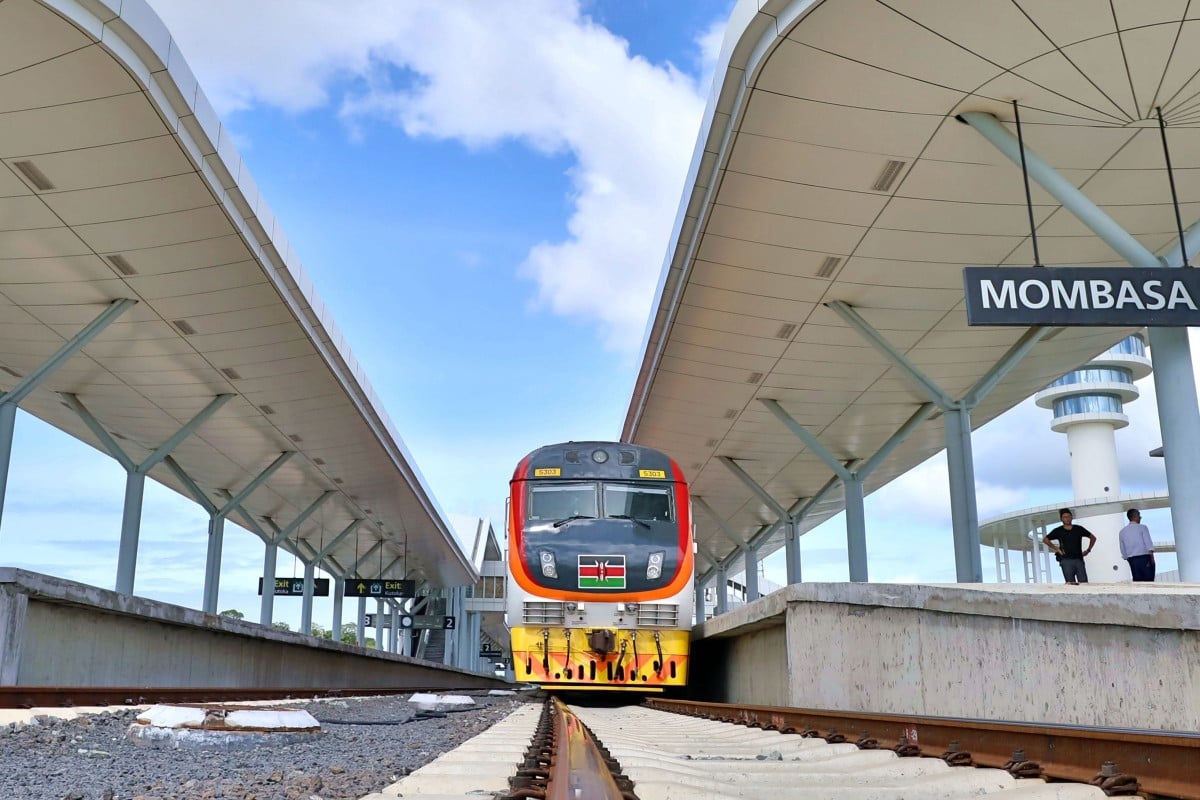
The Mombasa-Nairobi Standard Gauge Railway, funded by China, opened in 2017. Japan has criticised Chinese lending practices in Africa. Photo: Xinhua
The long rivalry between China and Japan is again playing out in Africa, with Tokyo planning to pour more aid into the continent and invest in infrastructure projects there.
Beijing – which has for decades funnelled money into the continent – will be watching as the leaders of 54 African countries and international organisations descend on Yokohama later this month for the seventh Tokyo International Conference on African Development (TICAD).
Japan reportedly plans to pledge more than 300 billion yen (US$2.83 billion) in aid to Africa during the conference. While that might not be enough to alarm China – which in recent years has been on a spending spree in the continent – it will be paying close attention.
Japan has in the past used the meetings to criticise Chinese lending practices in Africa, saying it was worried about the “unrealistic” level of debt incurred by African countries – concerns that China has dismissed.
This year, analysts expect Tokyo will use the conference to articulate how its approach to African development is substantively different from that of the Chinese.
“So, look for the words ‘quality’, ‘transparency’ and ‘sustainability’ to be used a lot throughout the event,” said Eric Olander, managing editor of the non-partisan China Africa Project.
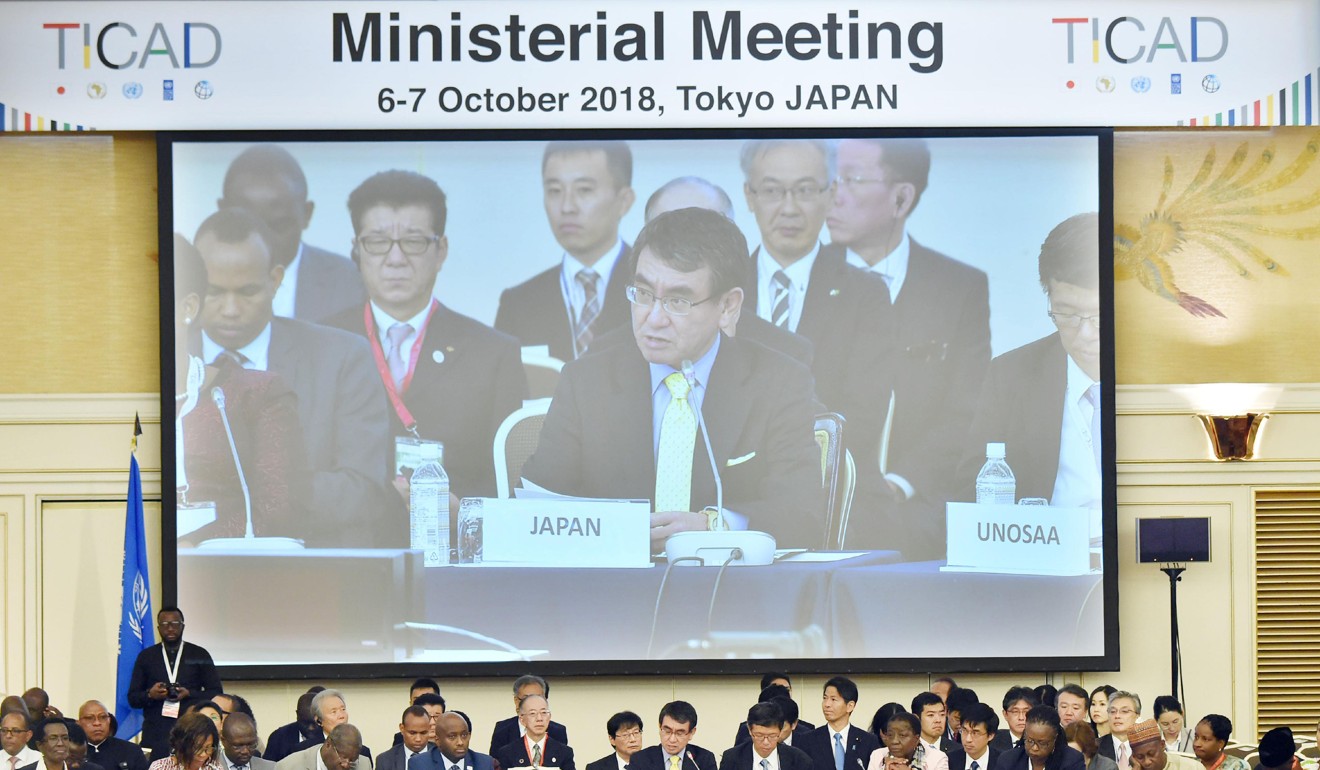
Japanese Foreign Minister Taro Kono gives a speech at the TICAD in Tokyo in October. Japan will reportedly pledge US$2.83 billion in aid to Africa this year. Photo: The Yomiuri Shimbun
Olander said Japan often sought to position its aid and development programmes as an alternative to China’s by emphasising more transparency in loan deals, higher-quality infrastructure projects and avoiding saddling countries with too much debt.
“In some ways, the Japanese position is very similar to that of the US where they express many of the same criticisms of China’s engagement strategy in Africa,” Olander said.
But the rivalry between China and Japan had little to do with Africa, according to Seifudein Adem, a professor at Doshisha University in Kyoto, Japan.
“It is a spillover effect of their contest for supremacy in East Asia,” said Adem, who is from Ethiopia.
“Japan’s trade with Africa, compared to China’s trade with Africa, is not only relatively small but it is even shrinking. It is a result of the acceleration of China’s engagement with Africa.”
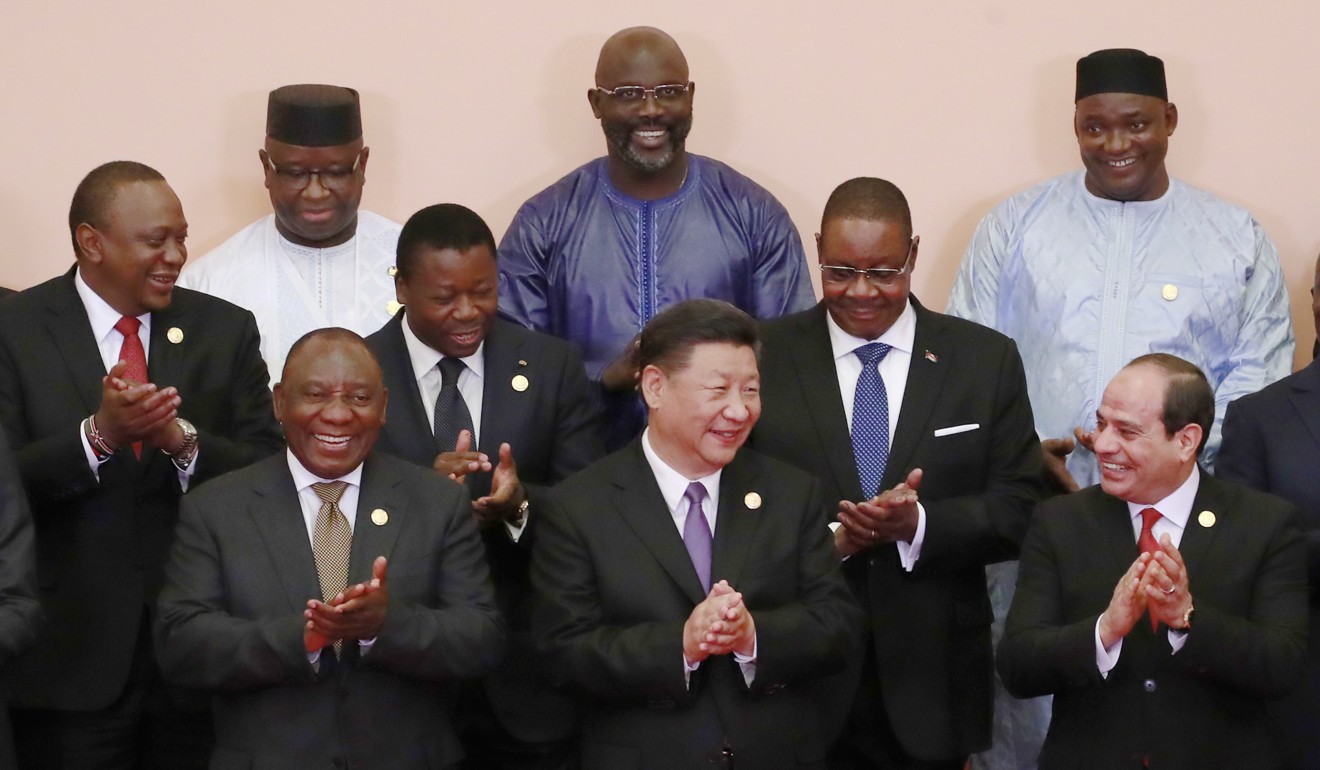
Chinese President Xi Jinping attends a group photo session with African leaders during the Forum on China-Africa Cooperation in Beijing last year. Photo: AP
Japan launched the TICAD in 1993, to revive interest in the continent and find raw materials for its industries and markets for products. About a decade later, China began holding a rival event, the Forum on China-Africa Cooperation.
It is at heart an ideological rivalry unfolding on the continent, according to Martin Rupiya, head of innovation and training at the African Centre for the Constructive Resolution of Disputes in Durban, South Africa.
“China cast Japan as its former colonial interloper – and not necessarily master – until about 1949. Thereafter, China’s Mao [Zedong] developed close relations, mostly liberation linkages with several African nationalist movements,” Rupiya said.
Beijing had continued to invoke those traditional and historical ties, which Japan did not have, he said.
“Furthermore, Japan does not command the type of resources – call it largesse – that China has and occasionally makes available to Africa,” Rupiya said.
Although both Asian giants have made inroads in Africa, the scale is vastly different.
While Japan turned inward as it sought to rebuild its struggling economy amid a slowdown, China was ramping up trade with African countries at a time of rapid growth on the continent.
That saw trade between China and Africa growing twentyfold in the last two decades. The value of their trade reached US$204.2 billion last year, up 20 per cent from 2017, according to Chinese customs data. Exports from Africa to China stood at US$99 billion last year, the highest level since the 1990s. Meanwhile, through its Belt and Road Initiative that aims to revive the Silk Road to connect Asia with Europe and Africa, China is funding and building Kenya’s Standard Gauge Railway and the Addis Ababa-Djibouti Railway. Beijing is also building major infrastructure projects in Zambia, Angola and Nigeria.
Japan’s trade with Africa is just a small fraction of Africa’s trade with China. In 2017, Japan’s exports to the continent totalled US$7.8 billion, while imports were US$8.7 billion, according to trade data compiled by the Massachusetts Institute of Technology.
How speaking with one voice could help Africa get a better deal from China
But Japan now appears eager to get back in the game and expand its presence in Africa, and analysts say this year’s TICAD will be critical – both in terms of the amount of money Tokyo commits to African development and how it positions itself as an alternative to the Chinese model.
Ryo Hinata-Yamaguchi, a visiting professor at Pusan National University in South Korea, said the continent was “economically vital to Japan, both in trade and investments”.
“Moreover, Japan has established some strong links with African states through foreign aid,” Hinata-Yamaguchi said.
“Japan’s move is driven by both economic and political interests. Economically, Japan needs to secure and maintain its presence in, and linkages with, the African states while opening new markets and opportunities,” he said.
To counter China’s belt and road strategy, Japan has launched the Asia-Africa Growth Corridor project, an economic cooperation deal, with India and African countries.
Tokyo meanwhile pledged about US$30 billion in public-private development assistance to Africa over three years at the 2016 TICAD, in Nairobi. But China offered to double that amount last year, during its Forum on China-Africa Cooperation in Beijing.
Still, Japan continues to push forward infrastructure projects on the continent. It is building the Mombasa Port on the Kenyan coast, while Ngong Road, a major artery in Nairobi, is being converted into a dual carriageway with a grant from Tokyo.
Japan is also funding the construction of the Kampala Metropolitan transmission line, which draws power from Karuma dam in Uganda. In Tanzania, it provided funding for the Tanzania-Zambia Railway Authority (Tazara) flyover. And through the Japan International Cooperation Agency, Tokyo also helps African countries improve their rice yields using Japanese technology.
There are nearly 1,000 Japanese companies – including carmakers like Nissan and Toyota – operating in Africa, but that is just one-tenth the number of Chinese businesses on the continent.
Are Chinese loans putting Africa on the debt-trap express?
Olander said Japan’s construction companies were among the best in the world, albeit not necessarily the cheapest, and that Tokyo was pushing its message about “high-quality” construction.
XN Iraki, an associate professor at the University of Nairobi School of Business, said Japan wanted to change its approach to Africa on trade, which had long been dominated by cars and electronics.
“[It has] no big deals like China’s Standard Gauge Railway. But after China’s entry with a bang – including teaching Mandarin through Confucius Institutes – Japan has realised its market was under threat and hence the importance of the TICAD, which should remind us that Japan is also there.”
Source: SCMP
Posted in Addis Ababa-Djibouti railway, africa, African Centre for the Constructive Resolution of Disputes, aid and infrastructure, alternative, Angola, Asia, Beijing, Belt and Road Initiative, Belt and Road Initiative (BRI), best in the world, carmakers, cars, cheapest, China Africa Project, China alert, Chinese President Xi Jinping, Chinese projects, colonial interloper, Confucius Institutes, construction companies, continent, counter, debt-trap express, development summit, different, Doshisha University in Kyoto, dual carriageway, Durban, East Asia, Electronics, Ethiopia, Europe, flyover, Forum on China-Africa Cooperation, Forum on China-Africa Cooperation (FOCAC), Forum on China–Africa Cooperation, high-quality development, ideological rivalry, Japan, Japanese Foreign Minister, Japanese technology, Kampala Metropolitan transmission line, Karuma dam, Kenya’s Standard Gauge Railway, Kenyan coast, largesse, leaders of African nations organisations, leaders of international organisations, Mandarin, Mao Zedong, Massachusetts Institute of Technology, master, Mombasa Port, Mombasa-Nairobi Standard Gauge Railway, Nairobi, Nigeria, Nissan, Pusan National University, quality, resources, rice yields, rivalry, seeks, Silk Road, South Africa, South Korea, Standard Gauge Railway, Sustainability, Tanzania, Tanzania-Zambia Railway Authority (Tazara), Taro Kono, TICAD, Tokyo, Tokyo International Conference on African Development (TICAD), Toyota, Transparency, Uganda, Uncategorized, University of Nairobi School of Business, watching, Yokohama, Yomiuri Shimbun, Zambia |
Leave a Comment »
17/08/2019
- Beijing has lent billions of dollars to countries on the continent to build railways, highways and airports but critics say the borrowings are unsustainable
- Chinese officials say the projects will pay off in the long run and host nations are well aware of their limits and needs
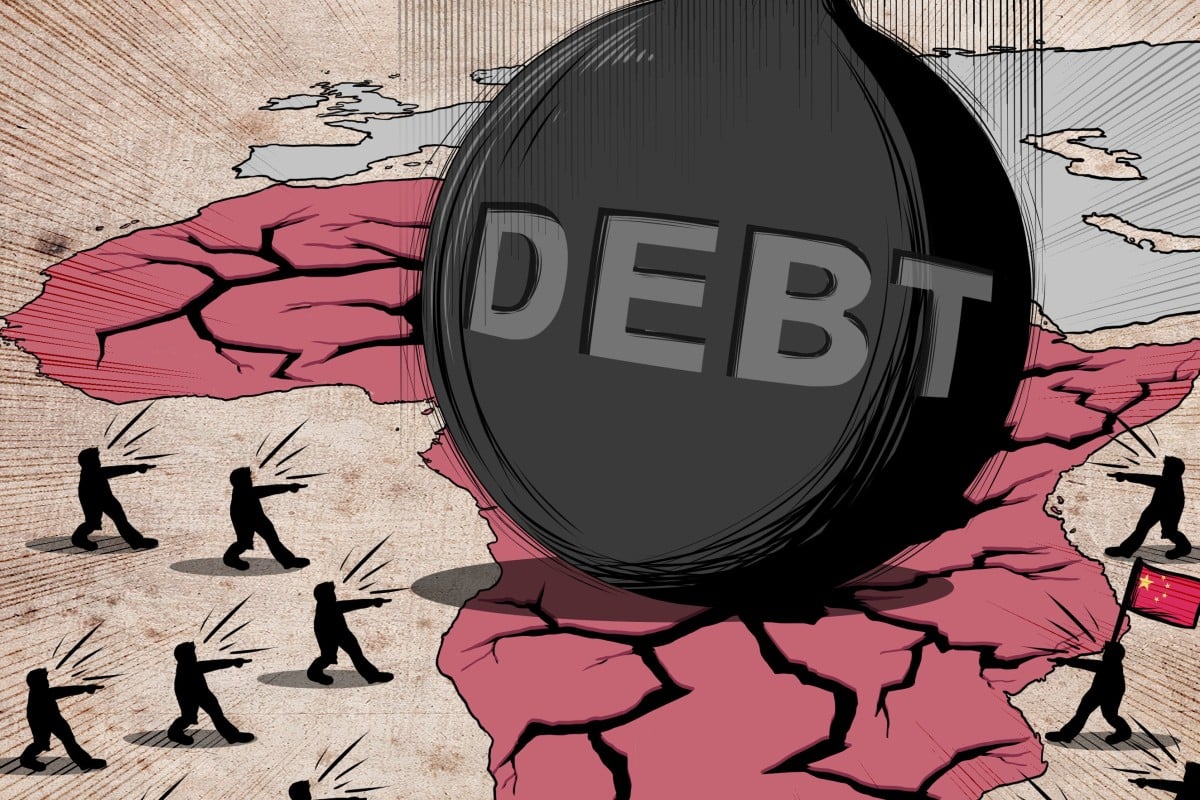
Illustration: Lau Kakuen
When Clement Mouamba went to Beijing last year, he had two main tasks.
The prime minister of the Republic of Congo needed to find out exactly how much his country owed to China, a number the struggling, oil-rich central African nation had until then not been able to provide the International Monetary Fund (IMF) to qualify for a bailout. He also needed to convince Beijing to restructure its debt to ensure sustainability.
The IMF had put talks for further loans on hold until Mouamba’s administration could say exactly how much it had to repay to the country’s external creditors, including China – the republic’s single largest bilateral lender – and oil multinationals such as Glencore and Trafigura.
The country, which heavily depends on oil revenue, turned to China and private oil majors for funding to run the government when in 2014 oil prices fell from a high of US$100 per barrel to as low as US$30.
The Republic of Congo has since restructured its borrowings from China, which holds about a third, or US$2.5 billion, of the Congolese debt, by extending the repayment period by an additional 15 years.
A number of other African countries struggling to service their loans from Beijing have also pursued concessions. Ethiopia has had part of its Chinese debt written off and terms relaxed for the US$3.3 billion loan it took to build its railway, while Zambia is seeking similar adjustments for its borrowings used to build airports and highways.
Critics say countries on the continent are being burdened with unrealistic levels of debt for inviable infrastructure backed and built by China without adequate transparency and scrutiny.
The biggest concern is that several African countries will be left with huge debts and grandiose infrastructure that they cannot maintain and run profitably. I liken it to borrowing money to buy a Tesla when you don’t have adequate access to electricity: Obert Hodzi of the University of Helsinki in Finland
But Chinese observers say the West must take some of the blame for the countries’ debt problems and that the support China offers will benefit the host countries in the long run.
In the early 1990s, when China began to embrace Africa again after years of isolation from the outside world, the aspiring manufacturer was at a serious disadvantage in the race for raw materials and markets for its industrial goods.
The former colonial powers of the West had already sewn up deals for many of the continent’s most lucrative and readily exploitable reserves, from fossil fuels to minerals.
China needed new strategies to convince African governments to allow it access raw materials for its industries and markets for its products to a largely unfamiliar partner.
China also wanted to challenge the dominance of the US in global trade and politics so it courted allies in Africa to help it push for political legitimacy in international institutions.
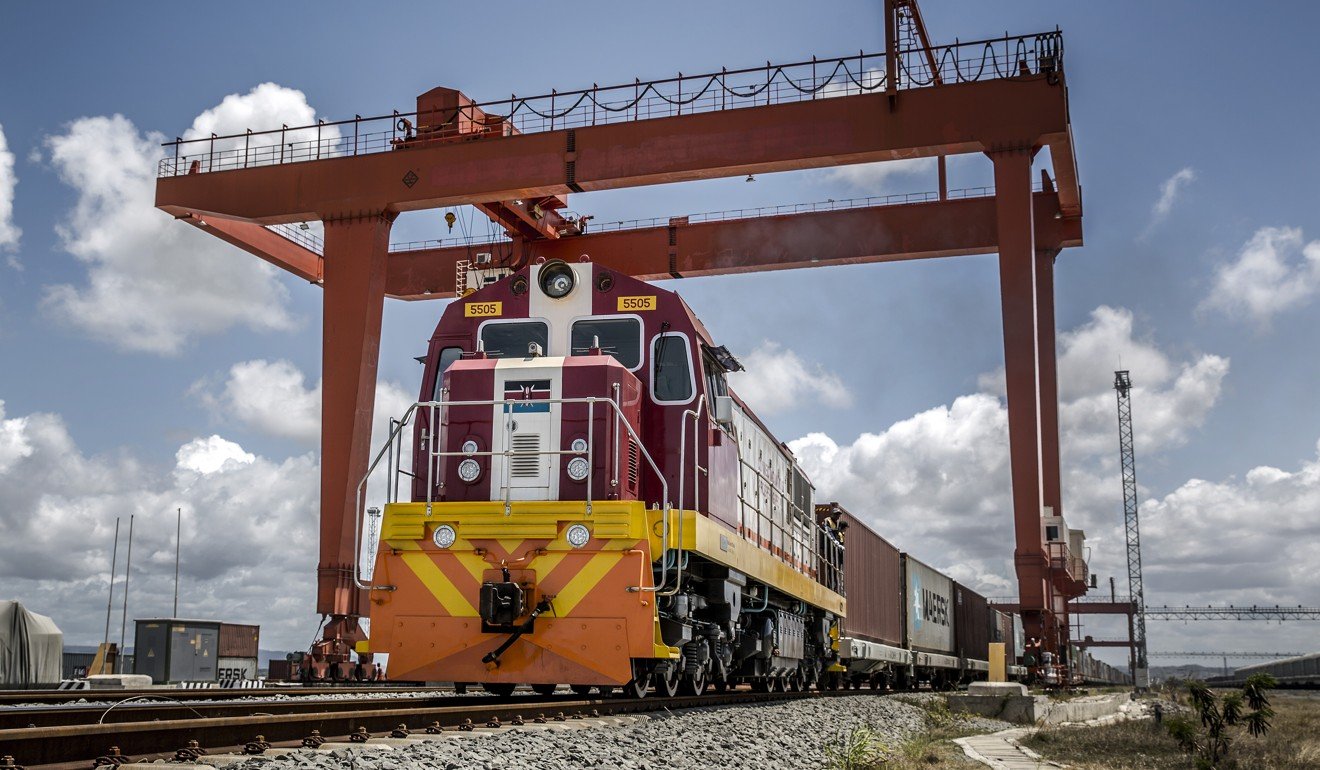
A Kenya Railways freight train leaves the port station on the Mombasa-Nairobi railway in Mombasa, Kenya, a huge project backed by China. Photo: Bloomberg
At the time, many African leaders were under fire to liberalise their economies. China’s approach was to promise not to meddle in individual country’s internal affairs and assure African countries that they could get billions in exchange for future delivery of minerals through resource-backed deals.
Beijing sold its policies that it had no conditions attached to its development finance. In the drive to drum up business, China promised affordable loans for African countries to build roads, bridges, highways, airports and power dams.
Is Kenya’s Chinese-built railway a massive white elephant?
But Beijing also pursued tied finance, ensuring that countries borrowing from China used Chinese contractors to implement the projects rather than open them up to outside bids.
In addition, many of the deals were built on weak financial, technical and environmental conditions, with Chinese state firms conducting the technical feasibility, environmental impact assessment and financial viability studies for free for projects that they also build.
For example, in Kenya, the China Road and Bridge Corporation conducted a free feasibility study that was used in the construction of the railway.
The same company was handed the contract to implement the project and is operating both the passenger and cargo train service for a fee.
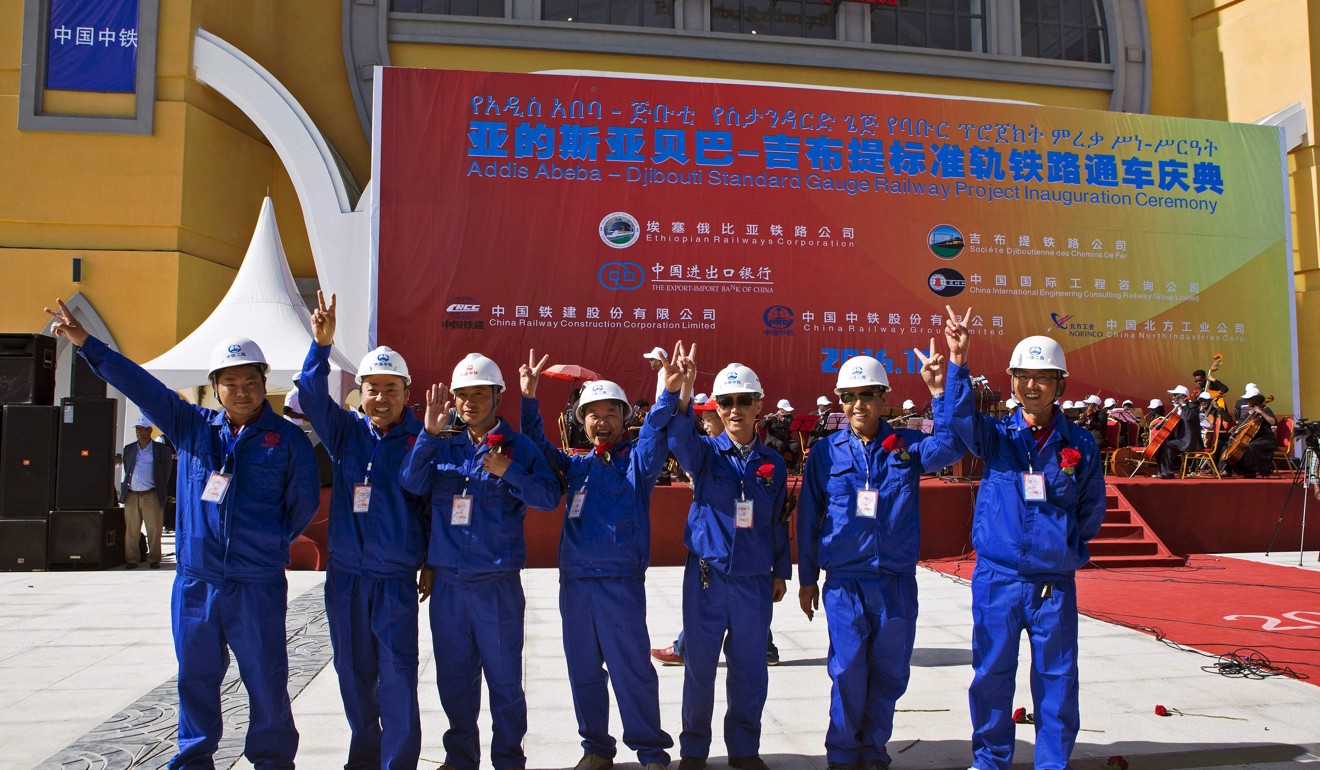
Chinese companies were responsible for the construction of a rail line between Addis Ababa and Djibouti. Photo: AFP
In contrast, the World Bank and its partner institution, the IMF, demand that such studies be done by an independent consultant and not by the company that implements the project.
According to data compiled by the China-Africa Research Initiative, at the Johns Hopkins University School of Advanced International Studies, Beijing has advanced loans worth US$143 billion to African countries since 2000, levels that some critics say are unsustainable for the borrowers.
China meets resistance over Kenya coal plant, in test of its African ambitions
For many of China’s new African partners, these arrangements – from easy lending terms, to non-competitive bidding and opaque contract details – have led to new problems – problems that corrupt or poorly managed governments now share substantial responsibility.
Some critics, both in the West and in host countries, suggest there is a “debt-trap strategy” at the heart of Beijing’s push for international business and influence, but there is no evidence that China deliberately pushes other countries into debt to seize their assets or gain sway.
However, the drive for overseas contracts and big business has led some countries into difficulties with new debts, and there are question marks over the viability of many of the projects the money is funding.
Obert Hodzi, an international relations expert at the University of Helsinki in Finland, said the Addis Ababa-Djibouti railway and the Mombasa-Nairobi railway were good examples of huge projects that were financed by easy borrowing terms from China but were not sustainable and that had in turn forced the African partners to seek further Chinese help.
“The biggest concern is that several African countries will be left with huge debts and grandiose infrastructure that they cannot maintain and run profitably,” Hodzi said. “I liken it to borrowing money to buy a Tesla when you don’t have adequate access to electricity.”
Ken Opalo, a Kenyan scholar at Georgetown University in Washington, said the key issue was the inability of African countries to design projects that were actually needed for the local economies.
A road is not just a means of transport but an economic belt or corridor that will catalyse the development of the whole region: Huang Xueqing, spokeswoman for the Chinese embassy in Nairobi
“Most African countries have been willing to accept projects designed, financed, and implemented by Chinese firms,” Opalo said.
“It would be better to decouple the feasibility studies and design phases of projects from the financing. That way African governments can ensure that they are truly getting value for money.”
But Chinese officials said Beijing had invested in infrastructure largely at the request of the host countries, adding that it could take time to yield returns on the projects.
Huang Xueqing, spokeswoman for the Chinese embassy in Nairobi, said the projects were valid assets with value that would grow in time.
“So, in the long run, it is beneficial to the host countries. Just like when young people buy a house with a mortgage, they may take some debts, but they have a place to live in and have their own assets,” Huang said.
“Underdeveloped infrastructure is the bottleneck that has been holding back Africa’s development. Up to today, many African countries, although in the same continent, are not connected with direct flights, railways or even roads. You have to fly to Paris or Zurich in order to get to some African countries.
“A road is not just a means of transport but an economic belt or corridor that will catalyse the development of the whole region.”
Huang said Beijing had advised the countries to act within their means and not to overstretch themselves when they considered projects that might not be in line with local conditions.
“When making investment decisions, the Chinese side, along with the recipient countries, carry out rigorous feasibility studies and evaluations. We do things according to our ability,” she said.
China’s leadership has also said it is paying close attention to the fiscal and financial difficulties faced by some African countries.
“As a good friend and good brother … the Chinese side is willing to lend a helping hand when needed by the African people to help them overcome temporary difficulties,” State Councillor and Foreign Minister Wang Yi said in January while on a trip to Ethiopia, adding that the debt situation in Africa is also a legacy issue.
China must allay any debt-trap fears in its dealings with Africa
“The African debt issue does not come up today, still less is it caused by the Chinese side. The African people know who are the initiators of African debt.”
The West should take a lot of the blame for worsening debt problems in some African countries, according to Li Anshan, from Peking University’s Centre for African Studies.
He cited the cases of Liberia and the Democratic Republic of Congo, two countries that have had close relations with the West for many years but remain ravaged by war and poverty despite immense natural resources.
“China-Africa relations have been going on for quite some time. Is there any African country which has got poorer because of its deal with China?” Li said.
Gyude Moore, a former Liberian minister of public works whose department oversaw construction and maintenance of various public infrastructure funded and built by China, said it would be difficult to imagine that China would knowingly ensnare its partners in debt.
“China attempts to differentiate itself from Western donors by limiting non loan-related conditionality. China also practices non-interference, so how a country manages its resources, treats its people or deploy its finances were considered ‘internal’,” he said.
“So, Chinese loans are negotiated faster and place less emphasis on public financial management.”
Moore, now a visiting fellow at the Centre for Global Development, said there were trade-offs in such situations.
China focuses on sustainable projects to dismiss fears of African debt trap
“If the loans are going to be fast – the due diligence will not be as rigorous. Chinese project selection mixes political with economic considerations. So, while a project may not make as much economic sense, it may pay political dividends,” he said.
He said non-transparent processes would invite abuse, be they Chinese, Western or African.
Other observers say the question of opacity is more directly related to China’s own economic system.
Howard French, author of China’s Second Continent: How a Million Migrants are Building a New Empire in Africa, said China has very limited transparency and public accountability in its own domestic processes.
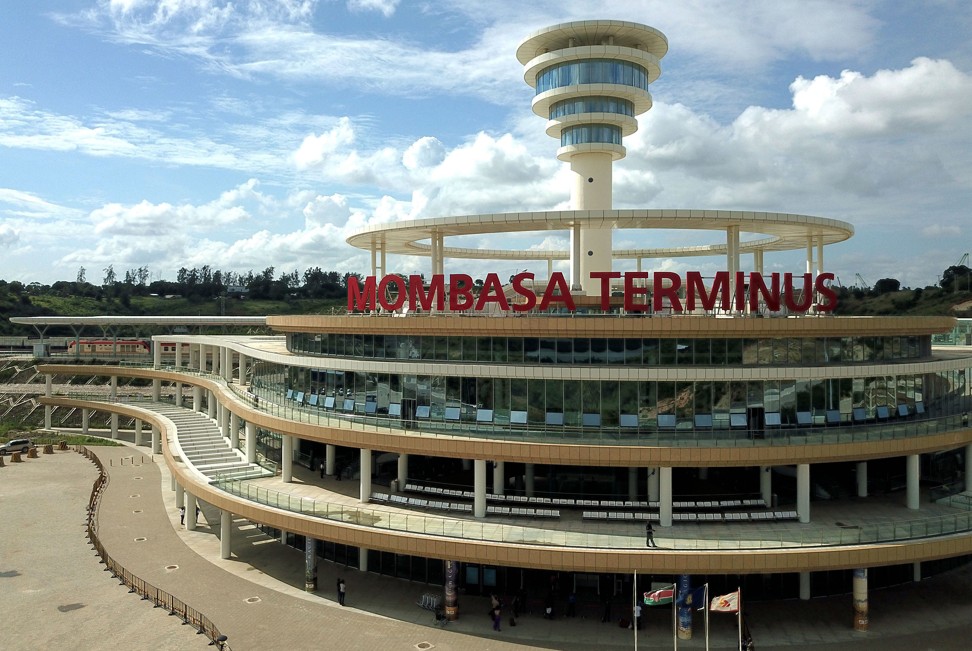
The Mombasa railway station is seen in Mombasa, Kenya, in 2018. Photo: Xinhua
“So it would be unusual to expect that China would introduce greater transparency and accountability in its dealings with African countries than it is used to at home – that is, unless African governments insist on it,” French said.
“And this is where African governance comes in. African states should insist on contract transparency but often don’t do so because that offers leaders plentiful opportunities for graft.”
David Shinn, professor of international relations at George Washington University in Washington, agreed that China’s lack of loan transparency was a huge problem and increased the risk of corruption on both the African and Chinese sides. But he also said that in some cases, African governments might have negotiated poorly.
“This is, however, the responsibility of the African government. I don’t think China is purposely trying to encourage African debts in order to gain leverage,” Shinn said.
“In fact, China is becoming more careful about its lending because it is concerned it has made too much credit available to some African countries.”
China ‘ready to talk’ about trade deal with East Africa bloc
Huang Hongxiang, director of China House, a Nairobi-based consultancy that helps Chinese in Africa integrate better, agreed, saying the Chinese government needs to communicate more about projects in Africa but African countries also have a bigger part to play in ensuring better deals.
“On commercial viability, accountability, transparency and governance, I believe the responsibility does not lie with China, the US or the West but in the hands of African countries,” he said.
Wherever the fault lies, one thing is clear when money is wasted on ill-designed projects that have little to no economic return, according to Opalo.
“The lack of planning and transparency creates default risks … [and] African taxpayers will be left holding the bag.”
This article is the third in a series examining the local impact of Chinese investment and infrastructure projects in Africa. Read part one here and part two
The next report will examine whether African countries can speak with one voice in relations with China.
Source: SCMP
Posted in Addis Ababa, Addis Ababa-Djibouti railway, africa, airports, bailout, Beijing, borrowings, bottleneck, build, cargo train service, Centre for Global Development, China House, China Road and Bridge Corporation, China-Africa relations, China-Africa Research Initiative, China’s Second Continent: How a Million Migrants are Building a New Empire in Africa, Chinese embassy, Chinese foreign minister Wang Yi, Chinese infrastructure loans, coal plant, Construction, continent, Contract, debt-trap express, direct flights, Djibouti, due diligence, East Africa bloc, economic belt or corridor, Ethiopia, Fee, Finland, freight train, George Washington University, Georgetown University, Glencore, good friend and good brother, Highways, IMF, International Monetary Fund (IMF), Johns Hopkins University, Kenya, Kenya Railways, lent, Liberian minister of public works, Mombasa, Mombasa railway station, Mombasa-Nairobi railway, Nairobi, oil revenue, Paris, passenger train service, planning, Prime minister, project, railways, Republic of Congo, roads, same continent, School of Advanced International Studies, situations, State Councillor and Foreign Minister Wang Yi, sustainable projects, taxpayers, trade-offs, Trafigura, Transparency, Transport, Uncategorized, Underdeveloped infrastructure, University of Helsinki, unsustainable, Wang Yi, Washington, West, Western donors, white elephant, World Bank, Zambia, Zurich |
Leave a Comment »
17/08/2019
- Chinese government advisers say Beijing has not reached direct intervention point but that could change if the violence continues
- Military action would trigger international backlash, observers say, as US expresses concern over reported paramilitary movements and ‘erosion of Hong Kong’s autonomy’
Footage of trucks from the paramilitary People’s Armed Police in Shenzhen has circulated online. Photo: Handout
The unrest in Hong Kong does not yet warrant direct intervention by Beijing despite hardening public sentiment and calls for tougher action in mainland China, according to Chinese government advisers.
Shi Yinhong, an international relations expert at Renmin University and an adviser to the State Council – China’s cabinet – said China would risk damaging its ties with the United States and other major foreign powers, upsetting its own development and losing Hong Kong’s special status if it took the matter directly into its hands.
“I don’t think we need to use troops. Hong Kong police will gradually escalate their action and they haven’t exhausted their means,” Shi said, expressing a view shared by other mainland government advisers and academics.
But he warned that if the violence and chaos continued, it “won’t be too far away from reaching that point”.
A US State Department spokeswoman said the United States was “deeply concerned” about reports of paramilitary movements along the Hong Kong border and reiterated a US call for all sides to refrain from violence.
She said it was important for the Hong Kong government to respect “freedoms of speech and peaceful assembly” and for Beijing to adhere to its commitments to allow a high degree of autonomy for Hong Kong.
She said the protests reflected “broad and legitimate concerns about the erosion of Hong Kong’s autonomy”.
brought the city’s air traffic to a halt and triggered
a huge backlash on the mainland
, where the public feel they have been wrongly targeted by the increasingly violent protesters. Many demanded the central government take action to end the chaos.
The tension deepened after US President Donald Trump, citing intelligence sources,
to the border with Hong Kong. Trump described the situation in the city as “tricky” and called on all sides to remain “calm and safe”.
Footage of trucks from the paramilitary People’s Armed Police rolling into Shenzhen began circulating online on Saturday.
Beijing ‘unlikely to intervene’ in Hong Kong as pressure mounts on police
But Shi and others said direct intervention would be too costly to China and would only be used when all other methods had been exhausted.
“As the trade war with the US goes on, Hong Kong’s importance to our financial system is getting bigger,” Shi said. “If Beijing intervenes with too much assertiveness, the US might revoke the preferential status of Hong Kong.”
He was referring to the US’ 1992 Hong Kong Policy Act which gives the city a special status. In June, American lawmakers introduced a bipartisan bill requiring the US government to examine Hong Kong’s autonomy annually to decide whether to extend the arrangement.
Losing that status could cripple the operations of many businesses based in Hong Kong, said Shen Dingli, a Shanghai-based international affairs expert.
A satellite image appears to show a close-up of Chinese military vehicles at Shenzhen Bay Sports Centre in Shenzhen. Photo: Maxar Technologies
Wang Yong, another specialist on international political economy with Peking University, agreed.
“There would be a lot of opposition from interest groups in the US. Hong Kong is the bridgehead for many multinational corporations and investors from Wall Street to get into the Chinese market,” said Wang, who also teaches at an academy affiliated with China’s Ministry of Foreign Affairs.
“Hong Kong and the Chinese government will need to handle this with extra care, so as not to give any ammunition to hawks in the United States.
“If Hong Kong is not handled properly, it could add tensions to the bilateral ties and ruin any prospect of a trade deal.”
China rejects requests for US warships to visit Hong Kong amid protests Pang Zhongying, an international relations specialist at Ocean University of China in Qingdao, said direct intervention could also damage China’s ties with other countries.
“The whole world is watching. Beijing has exercised restraint for two months and still hasn’t taken any clear action because this is not an easy choice,” said Pang, who is also a member of the Beijing-based Pangoal Institution, a think tank that advises several ministerial offices.
While some observers said Beijing was under political pressure to end the protests in Hong Kong before October 1 – the 70th anniversary of the founding of the People’s Republic, Shi said the central government would not lose patience so easily.
“National Day [on October 1] is an important time, but the Chinese government is not naive to believe there has to be peace under all heaven then,” he said.
“It’s only a bit more than a month from now, we can almost say for sure the trade war will still be on by then and a major turning point in Hong Kong is not likely to happen. But the celebration must go on.”
Source: SCMP
Posted in 70th anniversary, American, autonomy, backlash, Beijing, bipartisan bill, celebration, China alert, China's cabinet, China-US trade war, China’s State Council, concern, direct intervention, financial system, foreign powers, Hong Kong, international, lawmakers, Mainland China, military action, Ministry of Foreign Affairs, Ministry of Foreign Affairs (MFA), National Day, Ocean University of China, Pangoal Institution, paramilitary, peace under all heaven, People's Armed Police, People’s Republic, preferential status, Qingdao, quell, Renmin University, Risks, Risks still too big, send in troops, Shenzhen, Shenzhen Bay Sports Centre, trade war, trigger, Uncategorized, United States, unrest, US, US President Donald Trump, US warships, US’ 1992 Hong Kong Policy Act |
Leave a Comment »
16/08/2019
Photo taken on April 20, 2017 shows Chengdu railway container center station in the Qingbaijiang railway port of China (Sichuan) pilot free trade zone in Chengdu, southwest China’s Sichuan Province. China has released an overall plan about the country’s new western sea-land transportation channel to deepen the sea-land two-way opening-up and the development of western China, according to the National Development and Reform Commission. The plan covers the period from 2019 to 2025 with an outlook extended to 2035. (Xinhua/Xue Yubin)
BEIJING, Aug. 15 (Xinhua) — China has released an overall plan about the country’s new western sea-land transportation channel to deepen the sea-land two-way opening-up and the development of western China, according to the National Development and Reform Commission.
The plan covers the period from 2019 to 2025 with an outlook extended to 2035.
The new western sea-land transportation channel is located in the hinterlands of the western regions, connecting the Silk Road Economic Belt from the north, the 21st Century Maritime Silk Road from the south and the Yangtze River economic belt.
According to the plan, the new western sea-land transportation channel is strategically positioned to support the country’s western regions in participating in international economic cooperation and promote the deep integration of transportation, logistics and the economy.
Source: Xinhua
Posted in 21st Century Maritime Silk Road,, channel, China alert, economy, hinterlands, international economic cooperation, logistics, National Development and Reform Commission, new, North, overall plan, releases, sea-land, Silk Road Economic Belt, South, transportation, Uncategorized, Western, Western China, Yangtze River Economic Belt |
Leave a Comment »










 CHINDIA ALERT: You'll be living in their world, very soon