Chindia Alert: You’ll be Living in their World Very Soon
aims to alert you to the threats and opportunities that China and India present. China and India require serious attention; case of ‘hidden dragon and crouching tiger’.
Without this attention, governments, businesses and, indeed, individuals may find themselves at a great disadvantage sooner rather than later.
The POSTs (front webpages) are mainly 'cuttings' from reliable sources, updated continuously.
The PAGEs (see Tabs, above) attempt to make the information more meaningful by putting some structure to the information we have researched and assembled since 2006.
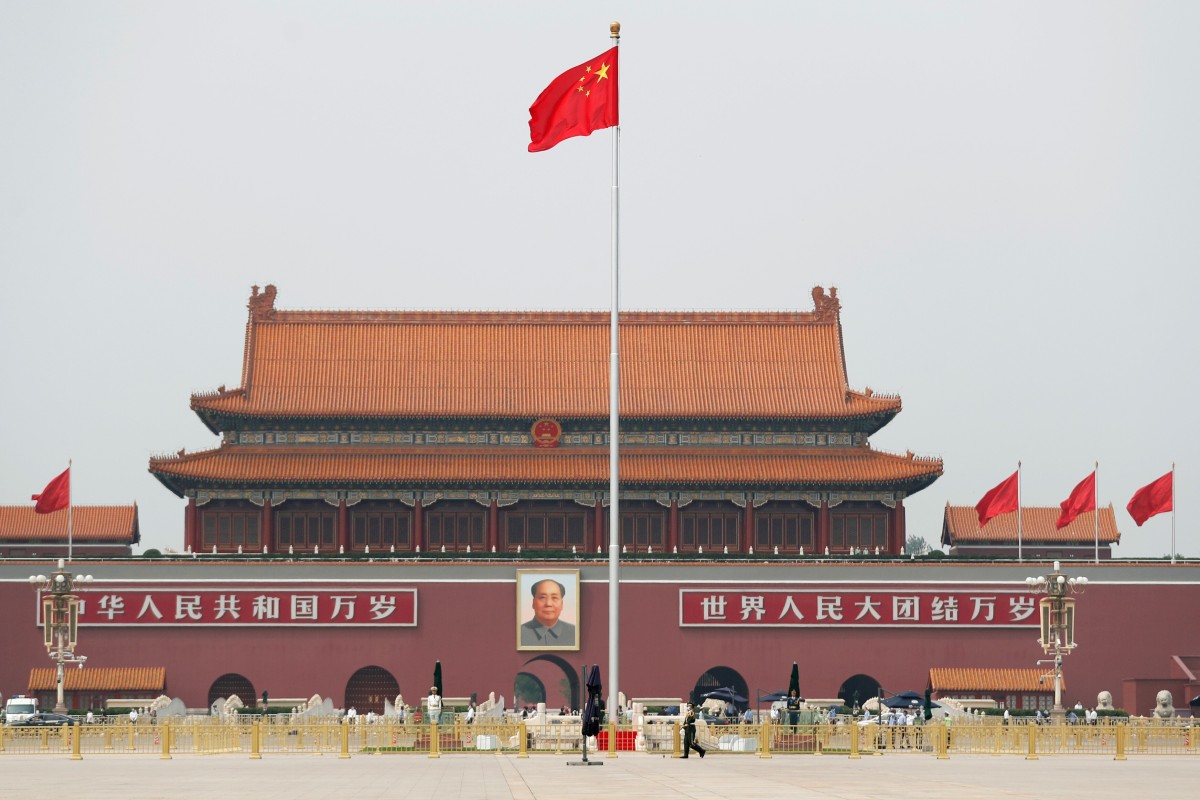
Embassy in France removes ‘false image’ on Twitter in latest online controversy amid accusations of spreading disinformation
After months of aggressive anti-US posts by Chinese diplomats Beijing is cracking down on ‘smear campaigns’ at home
Beijing’s ‘Wolf Warrior’ diplomacy has coincided with a rise of nationalist content on Chinese social media. Photo: Reuters
Beijing is battling allegations that it is running a disinformation campaign on social media, as robust posts by its diplomats in Western countries promoting nationalist sentiment have escalated into a spat between China and other countries, especially the United States.
In the latest in a series of online controversies, the Chinese embassy in France claimed its official Twitter account had been hacked after it featured a cartoon depicting the US as Death, knocking on a door marked Hong Kong after leaving a trail of blood outside doors marked Iraq, Libya, Syria, Ukraine and Venezuela. The inclusion in the image of a Star of David on the scythe also prompted accusations of anti-Semitism.
Top China diplomats call for ‘Wolf Warrior’ army in foreign relations
25 May 2020
“Someone posted a false image on our official Twitter account by posting a cartoon entitled ‘Who is Next?’. The embassy would like to condemn it and always abides by the principles of truthfulness, objectivity and rationality of information,” it said on Monday.
The rise of China’s aggressive “Wolf Warrior” diplomacy has been regarded by analysts as primarily aimed at building support for the government at home but the latest incident is seen as an attempt by Beijing to take back control of the nationalist narrative it has unleashed.
Florian Schneider, director of the Leiden Asia Centre in the Netherlands, said the removal of the embassy’s tweet reflected a constant concern in Beijing about the range of people – including ordinary citizens – who were involved in spreading nationalistic material online.
“The state insists that its nationalism is ‘rational’, meaning it is meant to inspire domestic unity through patriotism but without impacting national interests or endangering social stability,” he said.
“This makes nationalism a mixed blessing for the authorities … if nationalist stories demonise the US or Japan or some other potential enemy, then any Chinese leader dealing diplomatically with those perceived enemies ends up looking weak.
“Trying to guide nationalist sentiment in ways that further the leadership’s interests is a difficult balancing act and I suspect this is partly the reason why the authorities are currently trying to clamp down on unauthorised, nationalist conspiracy theories.”
Too soon: Chinese advisers tell ‘Wolf Warrior’ diplomats to tone it down
The report came after months of social media posts – including by Chinese diplomats – defending China against accusations it had mishandled the coronavirus pandemic and attacking the US and other perceived enemies.
In March, Chinese foreign ministry spokesman Zhao Lijian promoted a conspiracy theory on Twitter suggesting the virus had originated in the US and was brought to China by the US Army. His comments were later downplayed, with China’s ambassador to the US Cui Tiankai saying questions about the origin of the virus should be answered by scientists.
Schneider said this showed that the state-backed nationalistic propaganda online was at risk of backfiring diplomatically.
“The authorities have to constantly worry that they might lose control of the nationalist narrative they unleashed, especially considering how many people produce content on the internet, how fast ideas spread, and how strongly commercial rationales drive misinformation online,” he said.
Last month, a series of widely shared social media articles about people in different countries “yearning to be part of China” resulted in a diplomatic backlash against Beijing. Kazakhstan’s foreign ministry summoned the Chinese ambassador in April to lodge a formal protest against the article.
Following the incident, the Cyberspace Administration of China, the country’s internet regulator which manages the “firewall” and censors material online, announced a two-month long “internet cleansing” to clear privately owned accounts which engage in “smear campaigns”.
The article had at least 100,000 readers, with 753 people donating money to support the account. According to Xigua Data, a firm that monitors traffic on Chinese social media, the account garnered more than 1.7 million page views for 17 articles in April.
According to a statement from WeChat, the account was closed for fabricating facts, stoking xenophobia and misleading the public.
A journalism professor at the University of Hong Kong said this case differed from the Chinese embassy’s tweet, despite both featuring anti-US sentiment.
Masato Kajimoto, who leads research on news literacy and the misinformation ecosystem, said the closure of the WeChat account seemed to be more about Chinese authorities feeling the need to regulate producers of media content whose motivations were often financial rather than political.
“I would think the government doesn’t like some random misinformation going wild and popular, which affects the overall storylines they would like to push, disseminate and control,” he said.
One way for China to respond to the situation was to fact-check social media and to position itself as a protector facts and defender of the integrity of public information, he said.
“In the age of social media, both fake news and fact-checking are being weaponised by people who try to influence or manipulate the narrative in one way or another,” Kajimoto said.
“Not only China but also many other authoritarian states in Asia are now fact-checking social media. Governments in Singapore, Thailand, Indonesia and other countries all do that.
“Such initiatives benefit them because they can decide what is true and what is not.”
SRINAGAR, India (Reuters) – Indian police have released a pigeon belonging to a Pakistani fisherman after a probe found that the bird, which had flown across the contentious border between the nuclear-armed nations, was not a spy, two officials said on Friday.
“The pigeon was set free yesterday (May 28) after nothing suspicious was found,” said Shailendra Mishra, a senior police official in Indian-administered Kashmir. It was unclear where the bird was released and whether it flew back to its owner.
The Pakistani owner of the pigeon had urged India to return his bird, which Indian villagers turned over to police after discovering it.
“It’s just an innocent bird,” Habibullah, the owner of the bird, who goes by just one name, told Reuters on Friday.
He rejected allegations that the numbers inscribed on a ring on the pigeon’s leg were codes meant for militant groups operating in the disputed region of Kashmir.
Habibullah, who lives in a village near the Kashmir border, one of the most militarised zones in the world, said the bird had participated in a pigeon racing contest and the digits on the bird’s leg were his mobile phone number.
The sport is especially popular in the border villages, said Yasir Khalid of the Shakar Garh Pigeon Club, adding such races are held in India too, and it is not unusual to lose a bird on either side. Owners identify their birds with stamps on the wings, paint and rings on the feet.
“We had to take the bird into our custody to probe if it was being using for spying,” a senior Indian border security officer said requesting anonymity, while explaining this was part of the drill given border sensitivities.
In 2016, a pigeon was taken into Indian custody after it was found with a note threatening Indian Prime Minister Narendra Modi.
NEW YORK/SAN FRANCISCO (Reuters) – Amazon.com Inc (AMZN.O) has bought cameras to take temperatures of workers during the coronavirus pandemic from a firm the United States blacklisted over allegations it helped China detain and monitor the Uighurs and other Muslim minorities, three people familiar with the matter told Reuters.
China’s Zhejiang Dahua Technology Co Ltd (002236.SZ) shipped 1,500 cameras to Amazon this month in a deal valued close to $10 million, one of the people said. At least 500 systems from Dahua – the blacklisted firm – are for Amazon’s use in the United States, another person said.
The Amazon procurement, which has not been previously reported, is legal because the rules control U.S. government contract awards and exports to blacklisted firms, but they do not stop sales to the private sector.
However, the United States “considers that transactions of any nature with listed entities carry a ‘red flag’ and recommends that U.S. companies proceed with caution,” according to the Bureau of Industry and Security’s website. Dahua has disputed the designation.
The deal comes as the U.S. Food and Drug Administration warned of a shortage of temperature-reading devices and said it wouldn’t halt certain pandemic uses of thermal cameras that lack the agency’s regulatory approval. Top U.S.-based maker FLIR Systems Inc (FLIR.O) has faced an up to weeks-long order backlog, forcing it to prioritize products for hospitals and other critical facilities.
Amazon declined to confirm its purchase from Dahua, but said its hardware complied with national, state and local law, and its temperature checks were to “support the health and safety of our employees, who continue to provide a critical service in our communities.”
The company added it was implementing thermal imagers from “multiple” manufacturers, which it declined to name. These vendors include Infrared Cameras Inc, which Reuters previously reported, and FLIR, according to employees at Amazon-owned Whole Foods who saw the deployment. FLIR declined to comment on its customers.
Dahua, one of the biggest surveillance camera manufacturers globally, said it does not discuss customer engagements and it adheres to applicable laws. Dahua is committed “to mitigate the spread of the COVID-19” through technology that detects “abnormal elevated skin temperature — with high accuracy,” it said in a statement.
The U.S. Department of Commerce, which maintains the blacklist, declined comment. The FDA said it would use discretion when enforcing regulations during the public health crisis as long as thermal systems lacking compliance posed no “undue risk” and secondary evaluations confirmed fevers.
Dahua’s thermal cameras have been used in hospitals, airports, train stations, government offices and factories during the pandemic. International Business Machines Corp (IBM.N) placed an order for 100 units, and the automaker Chrysler placed an order for 10, one of the sources said. In addition to selling thermal technology, Dahua makes white-label security cameras resold under dozens of other brands such as Honeywell, according to research and reporting firm IPVM.
Honeywell said some but not all its cameras are manufactured by Dahua, and it holds products to its cybersecurity and compliance standards. IBM and Chrysler’s parent Fiat Chrysler Automobiles NV (FCHA.MI) did not comment.
The Trump Administration added Dahua and seven other tech firms last year to the blacklist for acting against U.S. foreign policy interests, saying they were “implicated” in “China’s campaign of repression, mass arbitrary detention, and high-technology surveillance against Uighurs, Kazakhs, and other members of Muslim minority groups.”
More than one million people have been sent to camps in the Xinjiang region as part of China’s campaign to root out terrorism, the United Nations has estimated.
Dahua has said the U.S. decision lacked “any factual basis.” Beijing has denied mistreatment of minorities in Xinjiang and urged the United States to remove the companies from the list.
A provision of U.S. law, which is scheduled to take effect in August, will also bar the federal government from starting or renewing contracts with a company using “any equipment, system, or service” from firms including Dahua “as a substantial or essential component of any system.”
Amazon’s cloud unit is a major contractor with the U.S. intelligence community, and it has been battling Microsoft Corp (MSFT.O) for an up to $10 billion deal with the Pentagon.
Top industry associations have asked Congress for a year-long delay because they say the law would reduce supplies to the government dramatically, and U.S. Secretary of State Mike Pompeo said last week that policies clarifying the implementation of the law were forthcoming.
FACE DETECTION & PRIVACY
The coronavirus has infected staff from dozens of Amazon warehouses, ignited small protests over allegedly unsafe conditions and prompted unions to demand site closures. Temperature checks help Amazon stay operational, and the cameras – a faster, socially distant alternative to forehead thermometers – can speed up lines to enter its buildings. Amazon said the type of temperature reader it uses varies by building.
To see if someone has a fever, Dahua’s camera compares a person’s radiation to a separate infrared calibration device. It uses face detection technology to track subjects walking by and make sure it is looking for heat in the right place.
An additional recording device keeps snapshots of faces the camera has spotted and their temperatures, according to a demonstration of the technology in San Francisco. Optional facial recognition software can fetch images of the same subject across time to determine, for instance, who a virus patient may have been near in a line for temperature checks.
Amazon said it is not using facial recognition on any of its thermal cameras. Civil liberties groups have warned the software could strip people of privacy and lead to arbitrary apprehensions if relied on by police. U.S. authorities have also worried that equipment makers like Dahua could hide a technical “back door” to Chinese government agents seeking intelligence.
In response to questions about the thermal systems, Amazon said in a statement, “None of this equipment has network connectivity, and no personal identifiable information will be visible, collected, or stored.”
Dahua made the decision to market its technology in the United States before the FDA issued the guidance on thermal cameras in the pandemic. Its supply is attracting many U.S. customers not deterred by the blacklist, according to Evan Steiner, who sells surveillance equipment from a range of manufacturers in California through his firm EnterActive Networks LLC.
“You’re seeing a lot of companies doing everything that they possibly can preemptively to prepare for their workforce coming back,” he said.
Iranian news outlet quotes military official as saying exercise will be held soon, but Chinese media silent on reported manoeuvres
An Iranian news source says China, Russia and Iran are planning a joint naval exercise soon. Photo: Xinhua
China, Russia and Iran are planning a joint naval drill in the Sea of Oman and northern Indian Ocean “soon” a semi-official Iranian news outlet reported on Saturday, just days after the United States blamed Iran for a drone attack on Saudi Arabian oil facilities.
General Ghadir Nezami Pour, head of international affairs and defence diplomacy of the Iranian Armed Forces General Staff, said the drill would take place in international waters, Iran Press news agency reported.
“The exercises have different goals including the exchange of tactical and military experiences and sometimes they seek political goals which show a kind of convergence between participants,” he was quoted as saying.
“Officials at the level of defence minister, chief of staff of the armed forces and commanders of the armed forces will come to Iran in the near future and these actions reflect Iran’s active defence diplomacy.”
The comments came in the aftermath of the September 14 missile strikes on Saudi Arabia’s Abqaiq and Khurais oil facilities.
Washington accused Tehran of masterminding the attacks, allegations that Iran denied.
Tehran warned that any military action by the United States or Saudi Arabia would result in “all-out war”.
US Secretary of State Mike Pompeo initially condemned the attacks on the oil facilities as an “act of war” but later said the US was seeking a peaceful solution to the crisis.
On Friday, Chinese President Xi Jinping condemned the attacks during a phone conversation with Saudi Arabia’s King Salman, adding that he hoped the incident would receive a full and fair investigation.
There was no report of the joint drill plan in Chinese media.
Analysts said the exercise was possible as China might want to show support for Iran.
“The timing of the joint exercise might be a bit sensitive and some might take it as a show of China’s support for Iran should there be any military conflicts between countries,” Beijing-based naval expert Li Jie said.
“But it might well be a regular military exchange between the countries if it is held in international waters and without targeting another country.”
China calls for calm in aftermath of drone strikes on Saudi oil facilities
Ni Lexiong, a military specialist and professor at Shanghai University of Political Science and Law, said the drill was to send the message that China would side with Iran “in extreme scenarios”.
“I don’t see things will go that far, but the navy drill is to send the intimidating message,” Ni said.
Two years ago China and Iran conducted a joint naval exercise near the Strait of Hormuz in the Persian Gulf after Washington accused Tehran of sending fast attack boats to harass US warships passing through the area.
Major General Mohammad Baqeri, Chief of Staff of the Iranian Armed Forces, was in Beijing for a three-day visit earlier this month and agreed that the two countries would have more visits with senior military officials and advance cooperation in training.
China still accounts for more than half of Iran’s oil exports, according to the United States, complicating Washington’s efforts to economically isolate Tehran in its “maximum pressure campaign”.
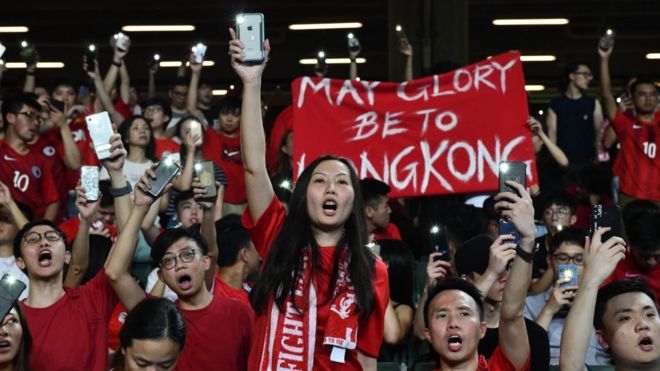
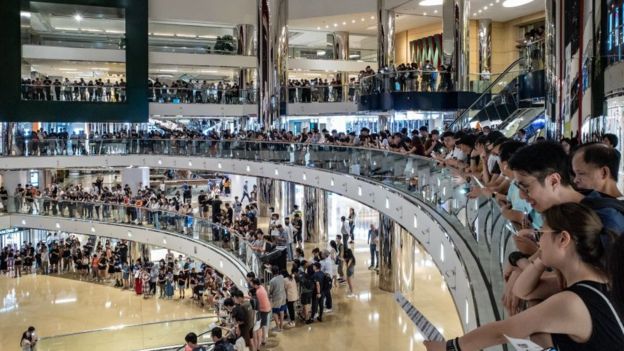
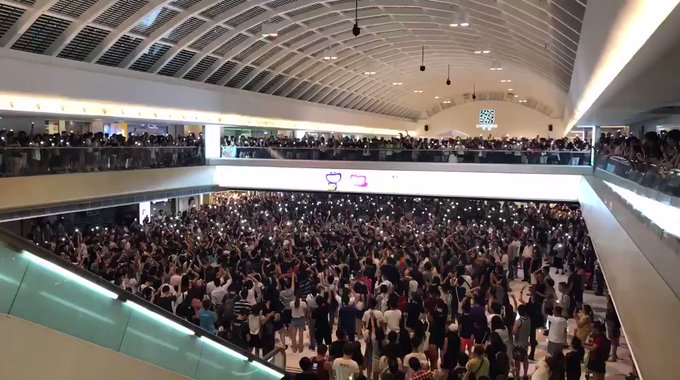
On Tuesday night, thousands of protesters gathered in shopping malls across Hong Kong chanting slogans and singing Glory to Hong Kong.
Image copyright GETTY IMAGESImage caption Many protesters flooded shopping malls
In the popular shopping district of Mongkok, a sea of protesters dressed in black were seen congregating across the different levels of one mall.
Jason Y. Ng
✔@jasonyng
Hundreds of shoppers spontaneously assembled at a mall atrium and broke into song. They sang “Glory to Hong Kong,” an ersatz national anthem (coz we aren’t a national and haven’t the right to an anthem). People ask what Communist China is most afraid of—the answer is right here.
Another video showed protesters chanting “Go Hong Kong” – a phrase that has been used frequently as a sign of encouragement.
Shopping malls have been the scene of clashes in recent weeks, with one incident in July seeing riot police fight battles with protesters inside a mall in the district of Sha Tin.
Without true democracy, HKer shall never surrender! This video shows citizens are gathered in a mall and cheering each other up after singing the song of #HKprotest “Glory to Hong Kong”.
The new rallying cry has joined other popular songs used by the protest movement, including Do You Hear the People Sing? from musical Les Miserables and the Christian hymn Sing Hallelujah to the Lord.
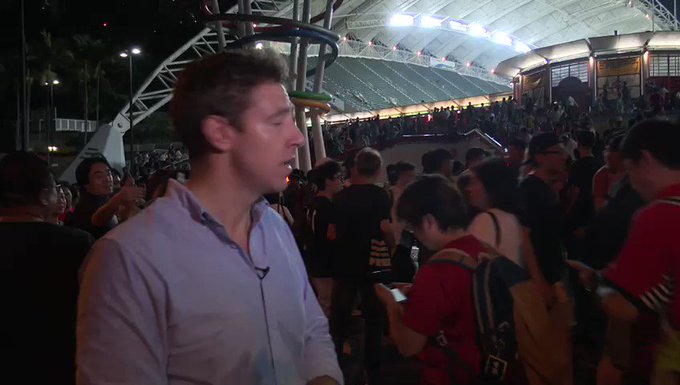
It was also heard at the Hong Kong v Iran football match on Tuesday at Hong Kong Stadium.
#Hongkong soccer fans booing the #Chinese national anthem tonight. Footy fans also have their backs to the field. Carrie Lam’s administration had been planning to introduce tough new penalties for booing the anthem but this can’t be easy to bring in in the city’s current climate. https://twitter.com/SCMPHongKong/status/1171411414801534977 …
The 2022 Fifa World Cup qualifier saw thousands of protesting booing when the Chinese national anthem played before the start of the game.
The jeering, which could be heard from outside the stadium, was intended as a clear “message” to Beijing that they do not want to be part of China in the future, says the BBC’s Nick Beake who was at the game.
Nick Beake
✔@Beaking_News
VIDEO: The moment #HongKong football fans began booing #China national anthem before the start of their @FIFAWorldCup qualifier against #Iran. #CarrieLam ‘s govt has delayed (another) controversial new law that could give 3 year prison term for disrespecting anthem. @BBCWorld
Hong Kong, formerly a British colony, returned to Chinese rule in 1997.
Under the “one country, two systems” rule, the city is granted a high level of autonomy, an independent judiciary and rights such as freedom of speech.
But those freedoms – the Basic Law – expire in 2047 and it is not clear what Hong Kong’s status will then be.
There has been growing anti-mainland sentiment in recent years, and anger at what many feel is increasing mainland interference in Hong Kong affairs.
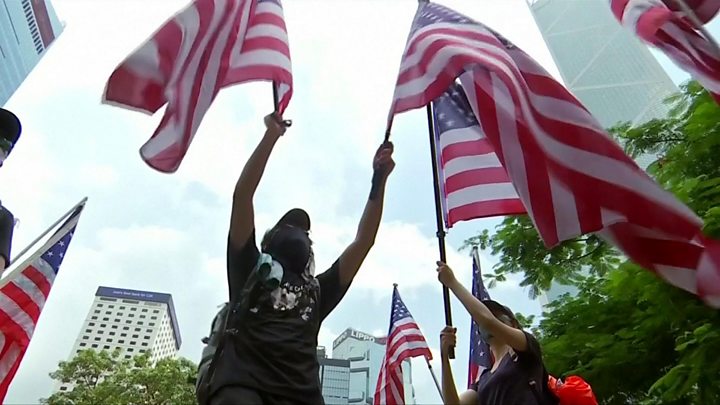
Media caption Protesters sang the US anthem outside the consulate
This reached a tipping point when the Hong Kong parliament proposed a new law that would have enabled suspects in Hong Kong to be extradited to China.
Hundreds of thousands of people marched on the streets in protest of the law, demanding that it be abandoned. The government initially suspended in June, and then finally dropped earlier this week – almost three months after protests first begun.
But protesters have said this is “too little, too late”, and their demands have evolved into calls for a much wider set of reforms, including a call for universal suffrage.
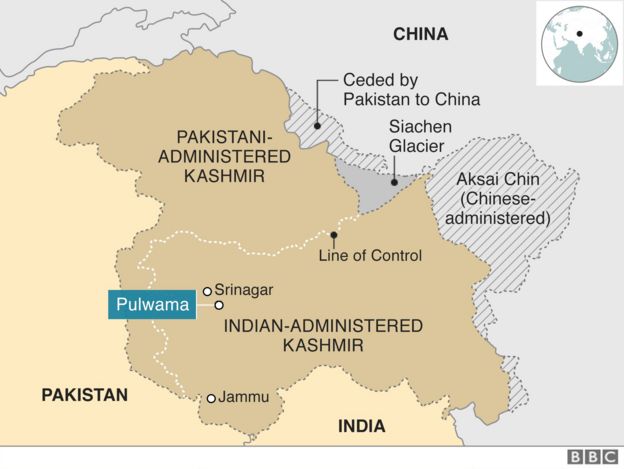
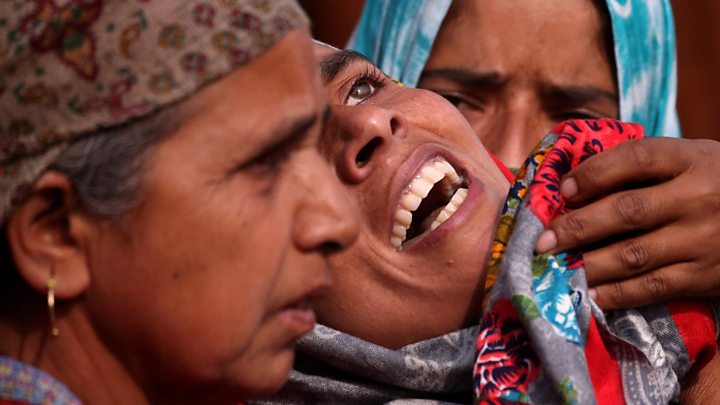
India has said it will ensure the “complete isolation” of Pakistan after a suicide bomber killed 46 soldiers in Indian-administered Kashmir.
Federal Minister Arun Jaitley said India would take “all possible diplomatic steps” to cut Pakistan off from the international community.
India accuses Pakistan of failing to act against the militant group which said it carried out the attack.
This is the deadliest attack to hit the disputed region in decades.
Both India and Pakistan claim all of Muslim-majority Kashmir but only control parts of it.
An insurgency has been ongoing in Indian-administered Kashmir since the late 1980s and there has been an uptick in violence in recent years.
How will India ‘punish’ Pakistan?
India says that Jaish-e-Mohammad, the group behind the attack, has long had sanctuary in Pakistan and accuses its neighbour of failing to crack down on it.
It has called for global sanctions against the group and has said it wants its leader, Masood Azhar, to be listed as a terrorist by the UN security council.
Although India has tried to do this several times in the past, its attempts were repeatedly blocked by China, an ally of Pakistan.
Mr Jaitley set out India’s determination to hold Pakistan to account when speaking to reporters after attending a security meeting early on Friday.
He also confirmed that India would revoke Most Favoured Nation status from Pakistan, a special trading privilege granted in 1996.
Pakistan said it was gravely concerned by the bombing but rejected allegations that it was in any way responsible.
But after Prime Minister Narendra Modi said in a speech that those behind the attack would pay a “heavy price”, many analysts expect more action from Delhi.
After a 2016 attack on an Indian army base that killed 19 soldiers, Delhi said it carried out a campaign of “surgical strikes” in Pakistan-administered Kashmir, across the de facto border. But a BBC investigation found little evidence militants had been hit.
However analysts say that even if the Indian government wants to go further this time, at the moment its options appear limited due to heavy snow across the region.
How did the attack unfold?
The bomber used a vehicle packed with explosives to ram into a convoy of 78 buses carrying Indian security forces on the heavily guarded Srinagar-Jammu highway about 20km (12 miles) from the capital, Srinagar.
“A car overtook the convoy and rammed into a bus,” a senior police official told BBC Urdu.
It stands as the deadliest militant attack on Indian forces in Kashmir since the insurgency began in 1989.
The bomber is reported to be Adil Dar, a high school dropout who left home in March 2018. He is believed to be between the ages of 19 and 21.
Soon after the attack Jaish-e-Mohammad released a video, which was then aired on the India Today TV channel. In it, a young man identified as Adil Dar spoke about what he described as atrocities against Kashmiri Muslims. He said he joined the banned group in 2018 and was eventually “assigned” the task of carrying out the attack in Pulwama.
He also said that by the time the video was released he would be in jannat (heaven).
Dar is one of many young Kashmiri men who have been radicalised in recent years. On Thursday, main opposition leader Rahul Gandhi said that the number of Kashmiri men joining militancy had risen from 88 in 2016 to 191 in 2018.
India has been accused of using brutal tactics to put down protests in Kashmir – with thousands of people sustaining eye injuries from pellet guns used by security forces.
What’s the reaction?
“We will give a befitting reply, our neighbour will not be allowed to de-stabilise us,” said Prime Minister Modi.
Mr Gandhi and two former Indian chief ministers of Jammu and Kashmir all condemned the attack and expressed their condolences.
The attack has also been widely condemned around the world, including by the US and the UN Secretary General.
The White House called on Pakistan to “end immediately the support and safe haven provided to all terrorist groups operating on its soil”.
Pakistan said it strongly rejected any attempts “to link the attack to Pakistan without investigations”.
What’s the background?
There have been at least 10 suicide attacks since 1989 but this is only the second suicide attack to use a car.
Prior to Thursday’s bombing, the deadliest attack on Indian security forces in Kashmir this century came in 2002, when militants killed at least 31 people at an army base in Kaluchak near Jammu, most of them civilians and relatives of soldiers.
The latest attack also follows a spike in violence in Kashmir that came about after Indian forces killed a popular militant, 22-year-old Burhan Wani, in 2016.
More than 500 people were killed in 2018 – including civilians, security forces and militants – the highest such toll in a decade.
India and Pakistan have fought three wars and a limited conflict since independence from Britain in 1947 – all but one were over Kashmir.
Who are Jaish-e-Mohammad?
Started by cleric Masood Azhar in 2000, the group has been blamed for attacks on Indian soil in the past, including one in 2001 on the parliament in Delhi which took India and Pakistan to the brink of war.
Most recently, the group was blamed for attacking an Indian air force base in 2016 near the border in Punjab state. Seven Indian security personnel and six militants were killed.
It has been designated a “terrorist” organisation by India, the UK, US and UN and has been banned in Pakistan since 2002.
However Masood Azhar remains at large and is reportedly based in the Bahawalpur area in Pakistan’s Punjab province.
India has demanded his extradition from Pakistan but Islamabad has refused, citing a lack of proof.










 CHINDIA ALERT: You'll be living in their world, very soon