Chindia Alert: You’ll be Living in their World Very Soon
aims to alert you to the threats and opportunities that China and India present. China and India require serious attention; case of ‘hidden dragon and crouching tiger’.
Without this attention, governments, businesses and, indeed, individuals may find themselves at a great disadvantage sooner rather than later.
The POSTs (front webpages) are mainly 'cuttings' from reliable sources, updated continuously.
The PAGEs (see Tabs, above) attempt to make the information more meaningful by putting some structure to the information we have researched and assembled since 2006.
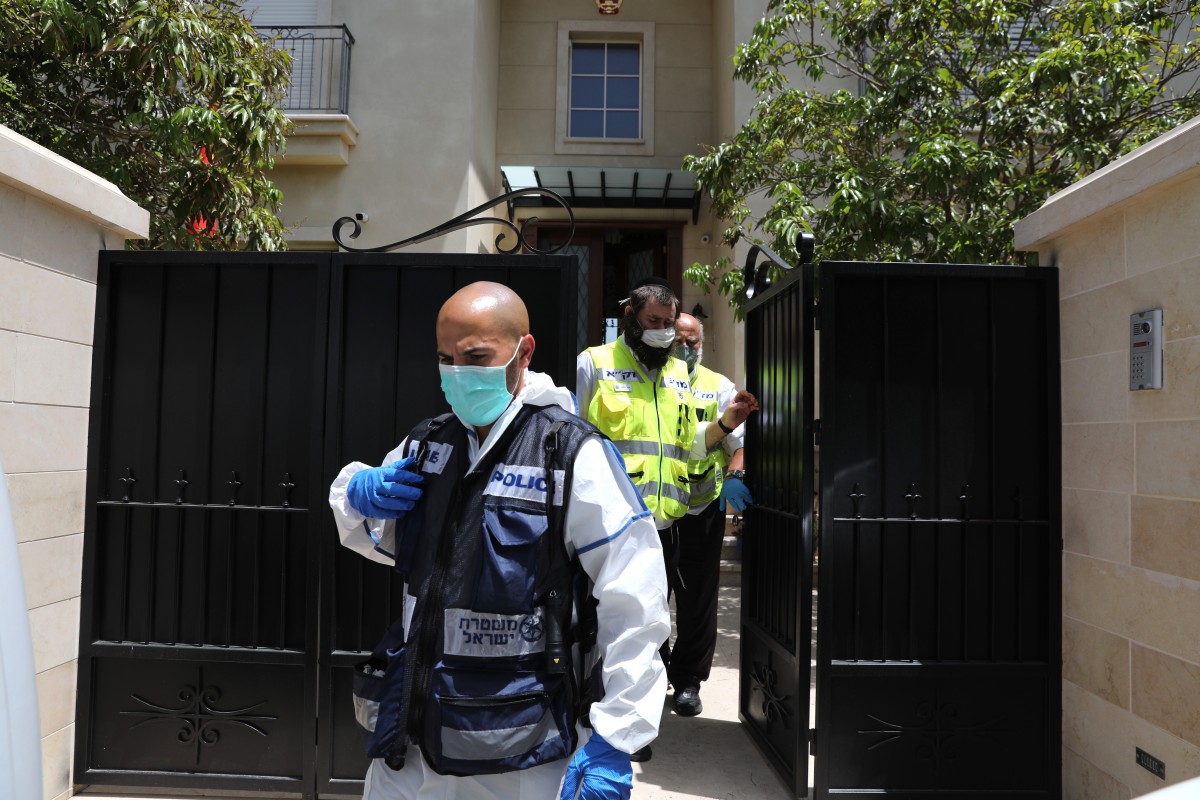
The team, accompanied by a member of Du’s family, was due to travel on Monday, and will handle arrangements for the remains, as well as conducting its own internal investigation, according to Israeli newspaper Haaretz.
Israel’s foreign ministry said its director general Yuval Rotem had spoken with deputy ambassador Dai Yuming to express his condolences. Local police are continuing to investigate at Du’s residence in a suburb of Herzliya, near Tel Aviv.
Details from the Chinese side have been scant. China’s foreign ministry provided a statement to AFP on Sunday which said the preliminary verdict was that Du, 57, had died unexpectedly for health reasons, and details awaited further confirmation. AFP also reported that Du’s wife and son were not with him in Tel Aviv.
“As far as I know, China’s ambassador to Israel Du Wei passed away in ambassador’s residence in Tel Aviv this morning for physical reasons. It happened abruptly,” said Hu Xijin, editor-in-chief of state media tabloid Global Times in a tweet late on Sunday night.
Du was last seen in public on Tuesday in a video conference with an official from Israel’s foreign affairs ministry, according to the embassy website.
James Dorsey, senior fellow at the S. Rajaratnam School of International Studies in Singapore, said Du’s untimely death should be seen as a personal, rather than a political, tragedy for the growing relationship between China and Israel, but he said it came at an important moment for the two countries because of rising US-China tensions.
Dorsey said Israel’s increasing hi-tech cooperation with China, as well as continuing US hostility to Iran – which has close ties with China – were potentially problematic for relations between the two countries.
“I’m not sure that the China-Israel relationship can be seen as independent of the Israel-US relationship. One could argue that the Chinese may be well advised to very quickly replace him soon,” Dorsey said. “Israel could find itself on the fault line of deepening US-China decoupling,” he added.
Israel’s ambassador to China in quarantine after ‘infected’ flight to Seoul
28 Feb 2020
Following a brief trip to Jerusalem on Wednesday – his first foreign visit since March – US Secretary of State Mike Pompeo renewed warnings about China-Israel ties in an interview with Israeli state-owned media outlet Kan News.
“We do not want the Chinese Communist Party to have access to Israeli infrastructure, Israeli communication systems, all of the things that put Israeli citizens at risk,” he said.
China’s embassy in Tel Aviv blasted Pompeo’s comments as “absurd” and “ill-intentioned”. However, the embassy statement was not written by Du, but by a spokesperson.
Du had only served in Israel since February. Just before his arrival, the Chinese embassy had to issue an apology after then-acting ambassador Dai denounced Israel’s tightened restrictions on Chinese visitors by comparing them to the Holocaust.
During his brief tenure, Du gave frequent interviews to local media, speaking mainly about China’s virus control measures, US-China tensions, and friendship between China and the Jewish people.
Du had worked as a career diplomat since entering China’s foreign service in 1989. Before his appointment in Tel Aviv, he served as China’s ambassador to Ukraine from 2016-2019.
JOHANNESBURG (Reuters) – African ambassadors in China have written to the country’s foreign minister over what they call discrimination against Africans as the country seeks to prevent a resurgence of the coronavirus.
Several African countries have separately also demanded that China address their concerns that Africans, in particular in the southern city of Guangzhou, are being mistreated and harassed.
Having brought under control the original outbreak centred on the city of Wuhan, China is now concerned about imported cases and is stepping up scrutiny of foreigners coming into the country and tightening border controls. It has denied any discrimination.
In recent days Africans in Guangzhou have reported being ejected from their apartments by their landlords, being tested for coronavirus several times without being given results and being shunned and discriminated against in public. Such complaints have been made in local media, and on social media.
The ambassadors’ note said such “stigmatisation and discrimination” created the false impression that the virus was being spread by Africans.
“The Group of African Ambassadors in Beijing immediately demands the cessation of forceful testing, quarantine and other inhuman treatments meted out to Africans,” it said.
The note was sent to China’s top diplomat, Wang Yi, copying the chair of the African Union, South African President Cyril Ramaphosa and all African foreign ministers.
The Chinese foreign ministry’s International Press Centre did not immediately respond to a request for comment on the note, sent outside of business hours.
The Chinese embassy in South Africa also did not respond.
Foreign affairs official Liu Baochun told a news conference on Sunday that Guangzhou is enforcing anti-virus measures on anyone who enters the city from across the national border, regardless of nationality, race or gender.
The Chinese embassy in Zimbabwe on Saturday dismissed the accusation that Africans were being deliberately targeted.
“It is harmful to sensationalize isolated incidents,” it said in a tweeted statement. “China treats all individuals in the country, Chinese and foreign alike, as equals.”
DISAPPOINTMENT
The ambassadors’ note highlighted a number of reported incidents, including that Africans were being ejected from hotels in the middle of the night, the seizure of passports, and threats of visa revocation, arrest or deportation.
On Saturday, Ghana’s foreign minister of affairs Shirley Ayorkor Botchwey said she had summoned the Chinese ambassador to express her disappointment and demand action.
Kenya’s foreign ministry has also “officially expressed concern”, adding the government is working with Chinese authorities to address the matter.
On Friday, Nigerian legislator Akinola Alabi tweeted a video of a meeting between the leader of Nigeria’s lower house of parliament, Femi Gbajabiamila, and Chinese Ambassador Zhou Pingjian. In it, Gbajabiamila demanded an explanation from the diplomat after showing Zhou a video of a Nigerian complaining about mistreatment in China.
The ambassador said in response to the questions from the house leader that he took the complaints “very seriously” and promised to convey them to the authorities back home.
GENEVA, July 27 (Xinhua) — Ambassadors from 50 countries to the United Nations Office at Geneva (UNOG) have co-signed a letter to the President of the UN Human Rights Council (HRC) and the High Commissioner for Human Rights to voice their support for China’s position on issues related to its Xinjiang Uygur Autonomous Region.
Earlier on July 12, a number of ambassadors in Geneva sent the joint letter to show their support for China, and as of Friday evening, more ambassadors had joined, the Chinese Mission to the UNOG revealed.
In a statement issued on Friday night, the Chinese mission said that some other countries had also expressed their support in separate letters or press statements.
In the joint letter, the ambassadors commend China for its economic and social progress, effective counter-terrorism and de-radicalization measures, and strong guarantee of human rights.
They appreciate the opportunities provided by China for diplomatic envoys, officials of international organizations, and media professionals to visit Xinjiang, and point to the contrast between Xinjiang in the eyes of those who have visited it and the one portrayed by some western media.
The ambassadors also urge a certain group of countries to stop using uncorroborated information to make unfounded accusations against China.
“I was surprised that some people call these vocational training and education centers concentration or internment camps,” Vadim Pisarevich, deputy permanent representative of Belarus to the UNOG, told Xinhua.
“They’re nothing of the kind. They look like ordinary educational facilities and even I said that they are more than this because they provide life skills training to the students,” Pisarevich said.
They are “very useful institutions for addressing the problems of terrorism, extremism and separatism,” he said.
“Terrorism and extremism are an intractable challenge across the world. In the face of its grave threat, Xinjiang Uygur Autonomous Region responded with a number of lawful steps, including setting up vocational education and training centers, to prevent and combat terrorism and extremism,” the Chinese Mission to the UNOG said in its statement.
“Facts speak louder than words, and justice cannot be overshadowed. The great diversity of countries co-signing the letter — from Asia, Africa, Latin America, and Europe, especially the OIC (Organization of Islamic Cooperation) — makes it clear that the international community has drawn a fair conclusion about Xinjiang’s human rights achievement and counter-terrorism and de-radicalization outcome,” the statement said.
“Those that seek to use human rights as an excuse to slander and pressure China have only themselves to deceive,” it added.
“We oppose any attempt to use human rights issues as a cover for interference in a country’s internal affairs. We urge those who are doing so to change course, refrain from politicization and double standards, and stop interfering in the internal affairs of other countries under the pretext of human rights,” it said.
At a press conference on Friday, China’s Ambassador to the UNOG Chen Xu also rebuked some Western nations for slandering China over Xinjiang, noting that China doesn’t accept these “groundless accusations.”
Jamshed Khamidov, head of Tajikistan’s mission in Geneva, said his government opposes any attempts to use the Human Rights Council for particular political purposes, and efforts should be made to avoid any politicization of the Human Rights Council.
“We know the situation in the Xinjiang region. We know how much the government of China is doing … and what kind of measures were implemented in this region to support its peace, security and development,” he said.
In visits to the vocational training and education centers in Xinjiang’s Urumqi and Kashi, Zenon Mukongo Ngay, head of the Democratic Republic of Congo’s mission in Geneva, said he was impressed with the “level of development” in Xinjiang and how the people in the centers receive education for getting a job.
The Chinese mission also said that together with all parties, China is committed to promoting the healthy development of the international human rights cause by encouraging multilateral human rights institutions to stick to the purpose and principles of the UN Charter, handle human rights issues in an objective, impartial and non-selective manner, and engage in constructive dialogues and cooperation.
Four soldiers have been killed in Indian-administered Kashmir in a gun battle with militants, police say.
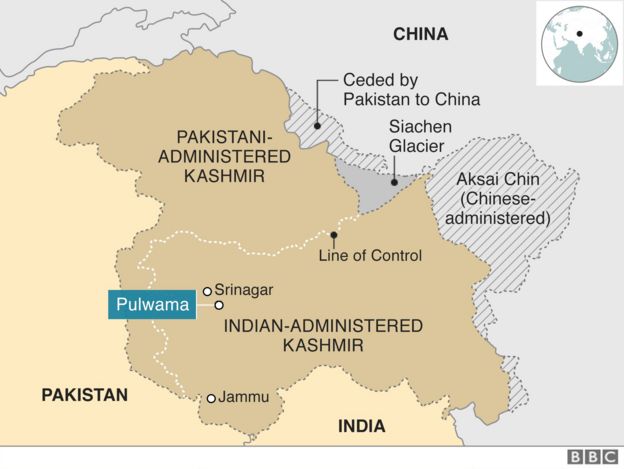
The clash occurred in Pulwama district, where more than 40 Indian paramilitary police were killed in a suicide attack on Thursday, raising tensions between nuclear-armed India and Pakistan.
A civilian and two alleged militants were also killed as Indian troops searched for suspects.
Meanwhile Pakistan recalled its ambassador for consultations.
India had already recalled its top diplomat from Pakistan in the wake of Thursday’s attack – in which it said the Pakistani state was complicit.
Pakistan denies any role in the bombing, which was claimed by a group based on its soil – Jaish-e-Mohammad (JeM)
What’s happening in Pulwama?
Police say two militants who were trapped in Pinglena village were killed in Monday’s operation. Both are JeM members and one is a Pakistani national, authorities said.
Heavy gunfire has been heard, and Indian security officials are appealing to villagers to stay indoors.
Police told BBC Urdu that when they fired “warning shots” at the house where the alleged militants were hiding, they fired back. One officer critically injured was taken to hospital.
The owner of the house was killed during the exchange of fire, police added.
Indian security forces have been hunting for militants with suspected links to JeM following Thursday’s bombing, which saw a vehicle packed with explosives ram a convoy of 78 buses carrying Indian security forces.
The suicide bomber was identified as a local Kashmiri aged between 19 and 21.
More than 20 people were detained on Sunday, according to police.
How high are tensions?
Kashmir has been a flashpoint between India and Pakistan since independence.
Both countries claim all of Muslim-majority Kashmir but control only parts of it. They have fought two wars and a limited conflict in the region.
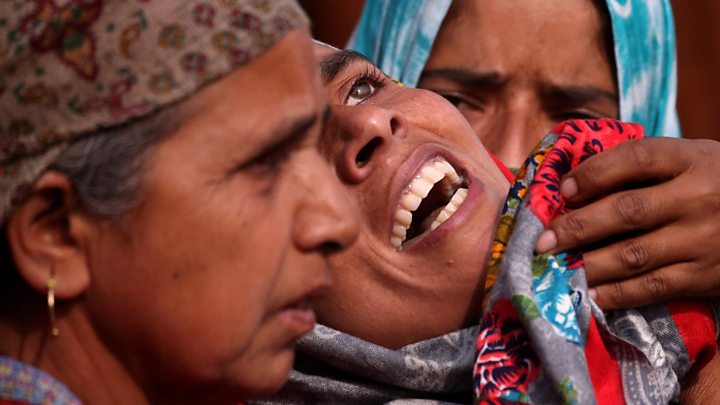
Thursday’s attack was the deadliest attack against Indian forces since an Islamist-led insurgency began in 1989. It sparked anti-Pakistan protests in some Indian cities and angry mobs targeted Kashmiri students and businessmen.
Mobile internet services in Indian-administered Kashmir were cut over the weekend and the Indian government has pulled security normally provided to at least five Kashmiri separatist leaders.
Isolated incidents of students from Kashmir being beaten up or evicted from their accommodation in northern Indian states have also been reported.
India’s Central Reserve Police Force (CRPF) offered help to students in need, but also warned of false reports.
In broader terms, there has has been a spike in violence in Indian-administered Kashmir since Indian forces killed a popular militant in 2016. Significant numbers of young men have joined the insurgency in recent years and the funerals of well-known militants draw huge crowds who want to pay respects to “martyrs”.
India has been accused of using excessive force to control protests with thousands of people suffering eye injuries or being blinded by pellet guns.
How might India retaliate?
Indian Prime Minister Narendra Modi, who is facing an election later this year, has vowed a strong response and says he will give the military free rein.
This time analysts say heavy snow in the region could make that kind of limited ground response impossible. But there are fears that going further, for example with air strikes, could lead to Pakistani retaliation and a significant escalation.
So far India has focused on retaliation by economic and diplomatic means. It has revoked Pakistan’s Most Favoured Nation trading status, raised customs duties to 200% and vowed to isolate it in the international community.
Despite tensions Pakistan is calm
By Secunder Kermani, BBC Pakistan correspondent
The threat of Indian military action has not provoked widespread concern amongst the general public in Pakistan. Previous attacks by militants like JeM, believed to have close links to the intelligence services, have been seen as attempts by the Pakistani military to prevent the civilian government developing too friendly a relationship with India.
However, since Imran Khan was elected as prime minister here, many have begun to believe both the army and his administration were united in wanting to improve cross border ties.
Whether Pakistan was involved in the attack or not, it seems unlikely concerted action will now be taken against JeM. Its leader has been in “protective custody” since another attack in 2016, but still regularly releases audio messages to followers.
The group has in the past been a useful tool for Pakistan’s intelligence services wanting to foment unrest across the border, and authorities may now be reluctant to confront them, in case they turn against the Pakistani state as some of their members have done in the past.
UNITED NATIONS, Feb. 13 (Xinhua) — A Chinese envoy on Wednesday underscored the importance of political settlement to the Iraq issue while addressing a United Nations Security Council meeting on the situation in Iraq.
“We should continue to adhere to the general direction of political settlement to the Iraq issue,” Ma Zhaoxu, China’s permanent representative to the UN, said at the meeting.
“Achieving inclusive reconciliation and harmonious coexistence among the Iraqi parties is in line with the fundamental interests and the development needs of all Iraqi people,” Ma added.
Noting that Iraq is “at a critical stage” in promoting peace, stability and reconstruction, the Chinese envoy called on the international community to earnestly respect Iraqi sovereignty, independence, unity and territory Integrity, “support the good offices of the UN” and provide constructive assistance for an inclusive political settlement.
“We should continue to support Iraq in its fight against terrorism,” said Ma, noting that “the threats posed by terrorist remnants remain.”
“All parties concerned should strengthen counter-terrorism cooperation, unify standards, crack down on all terrorist organizations listed by the Security Council, consolidate the achievements of counter-terrorism efforts, and resolutely curb the return and spread of terrorist forces and terrorist activities,” Ma added.
“The international community should support Iraq in bringing terrorists to justice in accordance with relevant domestic laws,” the ambassador added.
Noting that the UN Assistance Mission for Iraq (UNAMI) “has played an important role” in supporting the Iraqi Government in promoting inclusive political dialogue, national reconciliation and national reconstruction, Ma said that China supports the efforts by UNAMI in its active work in accordance with its mandate.
“In recent years, the Chinese Government has provided Iraq with multiple batches of humanitarian supplies and economic assistance, some of which have been used in areas affected by terrorism,” said the ambassador.
In addition, the Chinese Red Cross also provided medical assistance to the Iraqi Red Crescent Society, which was used to alleviate the difficulties faced by the people of Iraq, he said.
Referring to the current political situation in the country, Ma said that China welcomes the progress in government formation in Iraq and commends the efforts by leaders of Iraq to resolve differences through consultations and dialogue, continuously promoting economic development, improving people’s living standards and accelerating the reconstruction process.
“China will, as always, support any efforts that help the political settlement process in Iraq and fight against terrorism, actively participate in the reconstruction of Iraq, of Iraqi economy, and will continue to provide assistance within our means,” the Chinese ambassador noted.
STOCKHOLM (Reuters) – Sweden said on Thursday it had replaced its ambassador to China after her “incorrect” handling of unauthorized meetings intended to help free dissident bookseller Gui Minhai.
The Hong Kong-based, Swedish publisher of books critical of China’s communist leaders was abducted in Thailand in 2015 and later appeared in custody in mainland China.
His daughter Angela Gui said this week she had met ambassador Anna Lindstedt and two businessmen in Stockholm in January, where she was advised to keep quiet about her father’s case while negotiations were proceeding.
Sweden’s Foreign Ministry said that was not an official meeting, and Lindstedt had now returned to Sweden with an interim envoy sent to Beijing during an inquiry.
“Neither the Foreign Ministry nor the Foreign Minister were informed until after the event,” ministry spokesman Rasmus Eljanskog said in an emailed statement.
“As a consequence of the incorrect manner in which the said meetings were handled, we are now conducting an internal investigation.”
Gui, 54, became a Swedish citizen after studying there in the 1980s. After the abduction, he was released in October 2017, but his whereabouts were unclear until January last year when his daughter said he was seized by Chinese agents on a Beijing-bound train in the presence of Swedish diplomats.
China later confirmed it had detained him again.
In her blog, Angela Gui said Lindstedt invited her to Stockholm to meet two businessmen who could help secure her father’s release.
“OUTRAGEOUS SCANDAL”
“The businessman said, ‘you care about Anna (Lindstedt), right? If you keep talking to the media it’ll damage her career. You don’t want her to come to any harm, do you?’”, she said in the post on blog portal Medium.
“In order for this to happen (negotiations), I was told I needed to be quiet. I wasn’t to tell anyone about this, or say anything publicly about the case,” she added.
“I’m not going to be quiet in exchange for … an arbitrary promise that my father ‘might’ be released. Threats, verbal abuse, bribes, or flattery won’t change that.”
China’s Foreign Ministry declined comment, with spokeswoman Hua Chunying saying she knew nothing about Gui’s latest situation. On its website, China’s embassy in Stockholm said it had not authorized anyone to “engage” with Gui’s daughter.
“The Chinese side handles the Gui Minhai case in accordance with law and legal procedure,” it said.
Gui’s original abduction – along with four others in the Hong Kong book trade – fed worries about interference from Beijing despite guarantees of wide-ranging freedoms for the former British colony which returned to Chinese rule in 1997.
The four others have since returned to Hong Kong. The United States and European Union have urged Gui’s release.
Sweden said it was continuing to seek Gui’s freedom, as Lindstedt faced scathing criticism for what the leader of Sweden’s Left Party called an “outrageous scandal”.
“A Swedish ambassador has done the bidding of a dictatorship and tried to silence the daughter of a Swedish political prisoner in China,” Jonas Sjostedt told local TV.
“I don’t think we have seen a worse scandal in Swedish foreign administration for decades.”
Lindstedt could not immediately be reached for comment.
LONDON, Feb. 12 (Xinhua) — China and UK should keep the long-term interests and larger picture in mind, look at each other’s development as opportunities, respect each other’s sovereignty, security and right to development, handle our differences properly and enhance strategic mutual trust, Chinese Ambassador to Britain Liu Xiaoming has said.
The Chinese diplomat made the remarks while attending the Chinese New Year Dinner by the Cities of London and Westminster Conservative Association on Monday night.
“If we compare China-UK relations to a building, it could not stand tall without a solid foundation. This foundation is the mutual confidence between our two countries,” he said.
Recalling that the world economy is under downward pressure, with surging protectionism and unilateralism making things doubly difficult. Against this situation, Liu said it is all the more important that China and the UK advocate free trade, oppose protectionism and promote open cooperation.
“We hope that the UK would continue to provide a fair, transparent and non-discriminatory business environment for Chinese companies. We hope you will make successful Chinese companies such as Huawei feel welcome here in Britain, and convince them that the UK is a trustworthy place to put their money,” said the Chinese ambassador.
Liu said both China and the UK are known for their profound cultural heritage and important contribution to the progress of human civilization.
“I hope that in the new year our two countries will continue to enhance cultural and people-to-people exchanges, and deepen mutual understanding and strengthen friendship.”
The ambassador also hoped that people from all walks of life in both China and UK will join hands to cement the foundation for a solid and magnificent edifice of bilateral relations.
British Prime Minister Theresa May sent a congratulatory message to the event, saying that it is an important moment to recognize the contribution of the Chinese community in London and across the whole of the United Kingdom.
“The Chinese community’s expanding business expertise, scientific inquiry and cultural heritage and traditions are of immense value to our country – not least here in London, where the vibrancy of Chinatown stands as a strong beacon for the Chinese community and a reminder of all that they have contributed to our society,” she said.
China’s Ambassador to Iraq Chen Weiqing gives visa to an applicant at the Chinese embassy in Baghdad, Iraq, Feb. 3, 2019. China’s Ambassador to Iraq Chen Weiqing welcomed on Sunday Iraqi visa applicants at the Chinese embassy in Baghdad, ahead of Chinese Spring Festival, saying that China is keen to strengthen ties with Iraq. (Xinhua/Khalil Dawood)
BAGHDAD, Feb. 3 (Xinhua) — China’s Ambassador to Iraq Chen Weiqing welcomed on Sunday Iraqi visa applicants at the Chinese embassy in Baghdad, ahead of Chinese Spring Festival, saying that China is keen to strengthen ties with Iraq.
“Iraq is at a transition point heading to the rebuilding stage. We are keen to strengthen ties between China and Iraq, and at the Chinese embassy, we will facilitate your visa process,” Chen said.
Annually, as the Chinese New Year approaches, embassies of China around the world hold cultural events and ceremonies, but because of the precarious security situation in Iraq, the ambassador had to make a short speech.
“This is the last workday for the embassy before the Spring Festival. Last year, we celebrated the 60th anniversary of the establishment of diplomatic relations with Iraq,” Chen told Xinhua.
“At present, relations between Iraq and China have developed very well, especially after China proposed the Belt and Road Initiative, in which Iraq was among the first Arab nations to join,” Chen added.
The Chinese embassy lies in Baghdad’s upscale neighborhood of al-Arasat, which is a relatively safe area. But like most foreign embassies in Iraq, high security measures are necessary.
Dozens of Iraqi visa applicants, if not hundreds at peak days, flock into the embassy every day, as China has become a favorable destination to many for business or study.
Inside the embassy, a small room was decorated with traditional Chinese red lanterns and paper cuttings, while Chinese landscapes and images of cultural life in China were hanged on the walls.
Two Chinese diplomats and two local employees handled the visa applications. Applicants described the procedures as smooth.
“This is going to be my first visit to China. I am going to study Chinese language at Shandong University, and then I aspire to be a pilot and work in China,” Zeyad Ismael, 23, told Xinhua as he waited in the queue.
“My expectations are high. I have looked for images of Shandong province on the internet and I like it. I expect good opportunities and a beautiful life,” Ismael added.
Last year, the Chinese embassy received close to 20,000 visa applications, most of which were for business reasons.
In recent years, China has become a source for many goods imported to Iraq such as smartphones, electronics and automobiles.
Iraqi English teacher, Muqdad Salih, 38, speaks fluent Chinese as he studied the language in China in 2007. Now, he is on the way to China to work as an English teacher in China’s Jiangxi province.
“Chinese New Year celebrations were beautiful and I was surprised by the atmosphere and friendliness of the Chinese people,” Salih said.
MANILA, Jan. 29 (Xinhua) — Chinese Ambassador to the Philippines Zhao Jianhua said Tuesday that China will give its “firm support” to the Filipinos and the Philippine government in the fight against violent extremism after twin blasts hit a cathedral in the southern Philippines.
In a speech at the Chinese New Year reception, Zhao said the Chinese government expressed its deepest condolences and sympathies to the families of those who were killed and injured in Sunday’s blasts in Jolo city of Sulu province.
“Chinese government once again will give its firm support to the Philippine people and Philippine government for fighting against all barbaric violence including terrorism,” he said.
Bombings hit a cathedral in Sulu province of the southern Philippines last Sunday, killing 21 people and wounding more than 100 others.
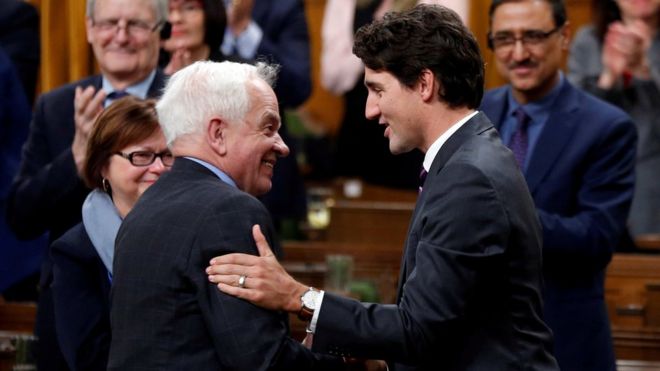
In a statement, the Canadian prime minister said: “Last night I asked for and accepted John McCallum’s resignation as Canada’s ambassador to China.”
The veteran diplomat, Mr Trudeau added, had served Canadians honourably and with distinction with many positions in cabinet.
He also thanked the diplomat and his family for their service.
What about the ambassador’s remarks?
Mr McCallum caused controversy on Tuesday when he publicly argued that the US extradition request for Ms Meng was seriously flawed.
The next day he issued a statement saying that he “misspoke” and regretted that his comments had created “confusion”.
But on Friday he was quoted as saying it would be “great for Canada” if the US dropped the request.
Mr McCallum was appointed Canada’s ambassador to China in 2017, stepping down as the immigration minister.
Canadian media say he was eager to take over the posting because of his strong personal connection to China.
Mr McCallum’s wife is ethnically Chinese, and he had a large Chinese-Canadian population in his former constituency in Ontario.
Mr McCallum also served as Canada’s defence minister in 2002-03.
What’s the latest on Meng Wanzhou’s case?
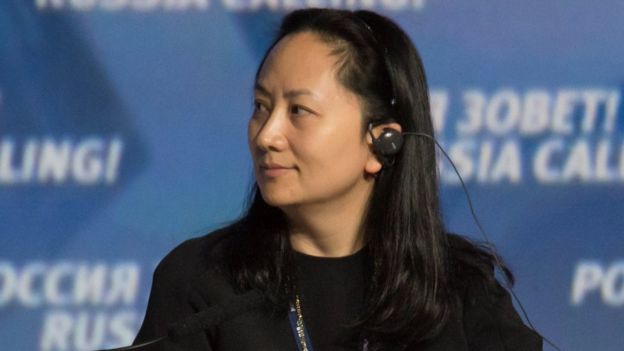
She was arrested on 1 December in Canada’s western city of Vancouver at the request of the US.
She was later granted a C$10m (£5.7m; $7.6m) bail by a local court. But she is under surveillance 24 hours a day and must wear an electronic ankle tag.
Image copyrightREUTERSImage captionMeng Wanzhou denies all the allegations against her
Earlier this month, US officials confirmed they planned to pursue the extradition of Ms Wanzhou.
Washington has 60 days to file a formal demand for extradition, a deadline that will be reached 30 January.





 CHINDIA ALERT: You'll be living in their world, very soon