27/04/2020
- Pupils given headwear modelled on a style worn by officials a thousand years ago to reinforce the message that they must stay a metre away from each other
- One legend says the hats were given long extensions to stop courtiers whispering among themselves when meeting the emperor
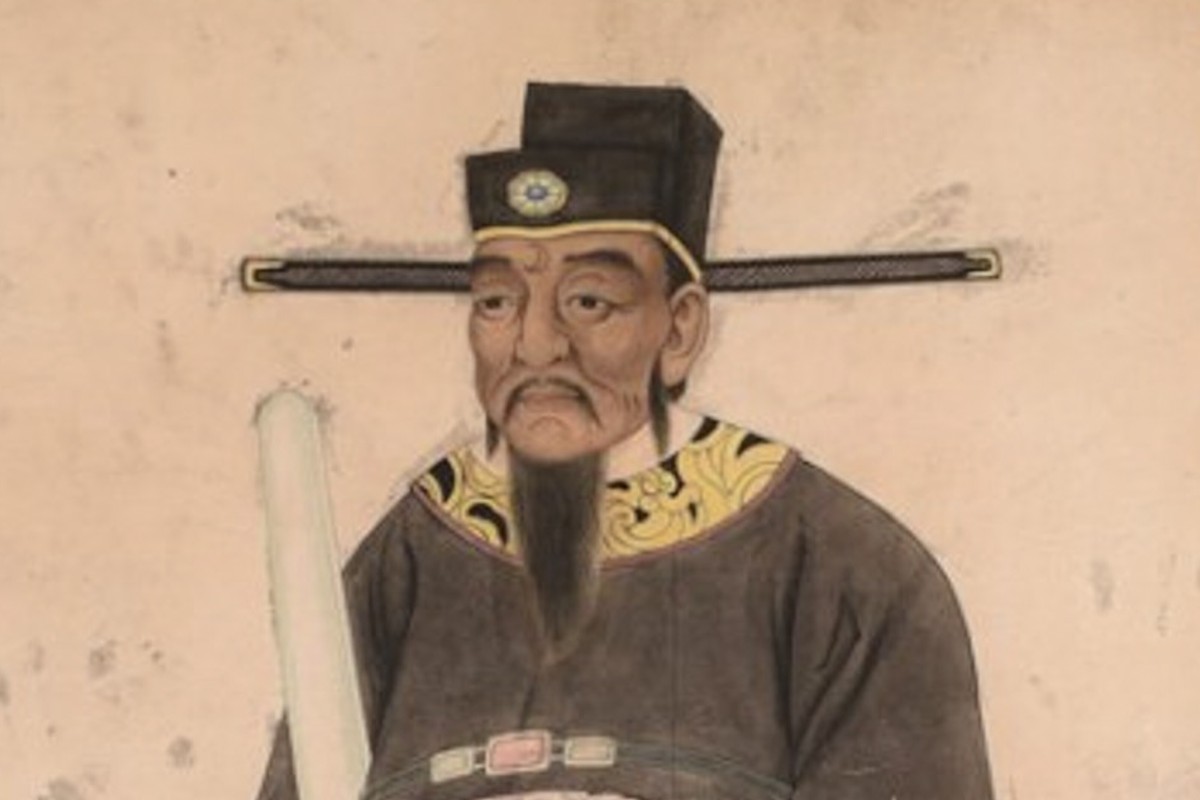
Hats with long extensions were worn by officials during the Song dynasty. Photo: Handout
An ancient Chinese hat has joined face masks and hand sanitisers as one of the weapons in the fight against
Covid-19.
A primary school in Hangzhou in the east of the country took inspiration from the headgear worn by officials in the Song dynasty, which ruled China between 960 and 1279, to reinforce lessons on social distancing.
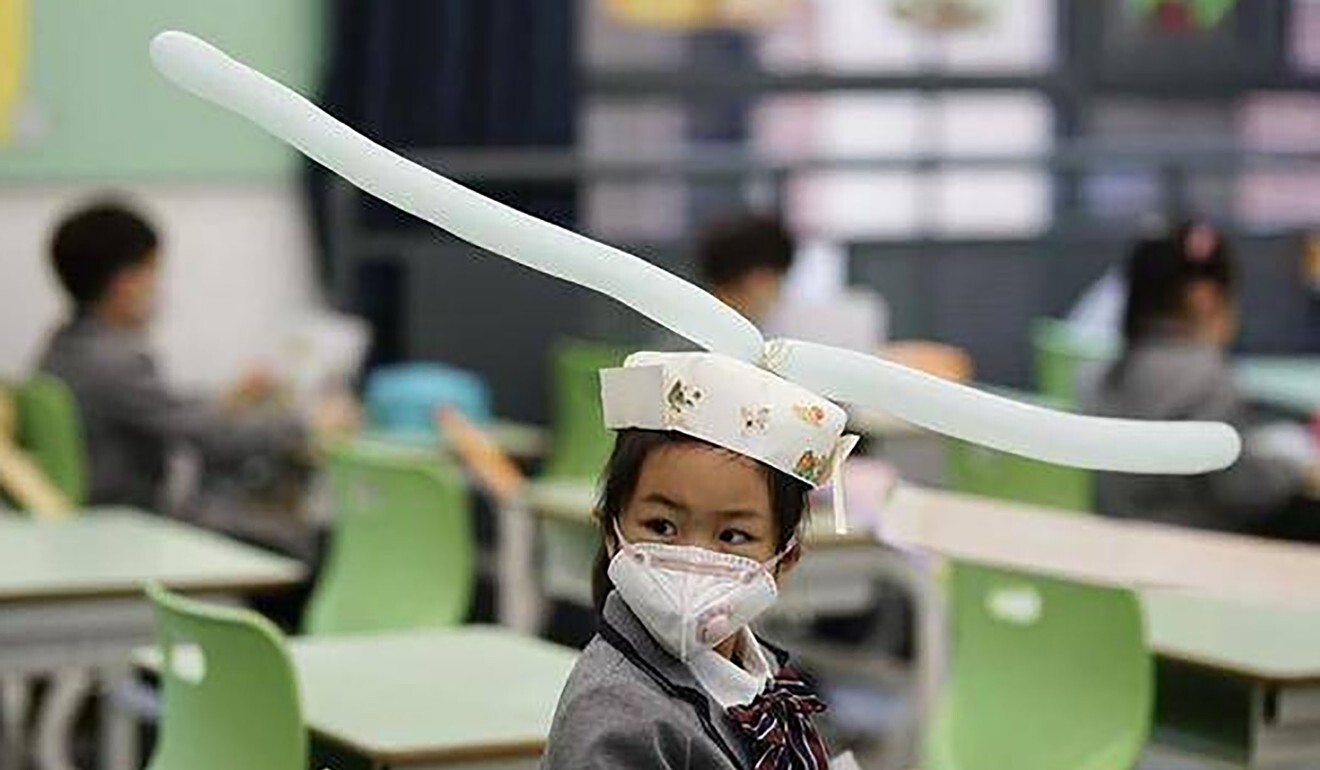
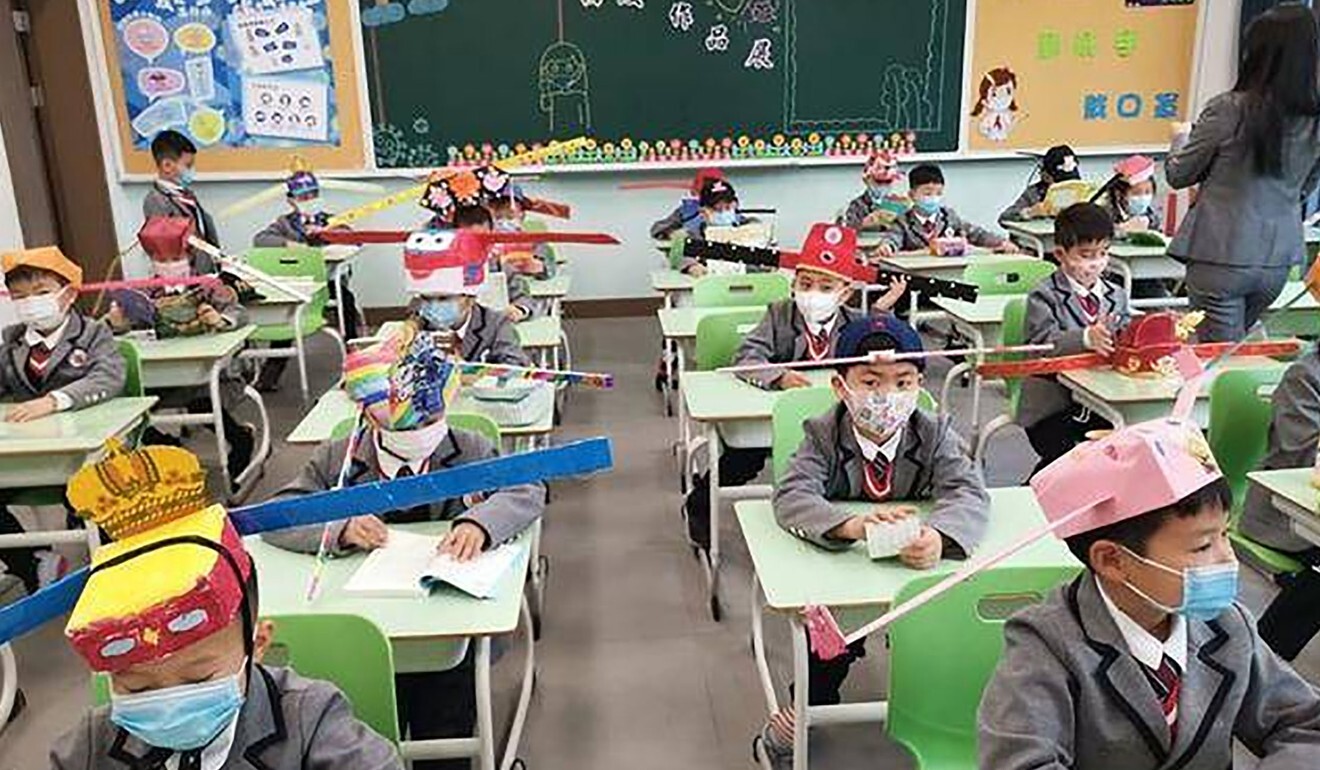
Pupils at the school wore their own handmade versions of the hats, which have long extensions, or wings, to keep them at least a metre (3ft) apart when they returned to school on Monday, state news agency Xinhua reported.
One legend says that the first Song emperor ordered his ministers to wear hats with two long wings on the sides so that they could not chitchat in court assemblies without being overheard, according to Tsui Lik-hang, a historian at City University of Hong Kong.
Pupils at a school in Hangzhou made their own versions of the hats. Photo: Weibo
However, he warned that this story came from a much later source, adding: “The Song emperors, in fact, were also depicted to have worn this kind of headwear with wing-like flaps.”
The World Health Organisation recommends that people stay at least a metre apart to curb the spread of the coronavirus that causes Covid-19.
Coronavirus droplets may travel further than personal distancing guidelines, study finds
“If you are too close, you can breathe in the droplets, including the Covid-19 virus if the person coughing has the disease,” the global health body advises.
An early childhood education specialist said the hats were a good way to explain the concept of social distancing to young children, who find it difficult to understand abstract concepts.
The pupil’s head gear is designed to drive home the social distancing message. Photo: Weibo
“As children can see and feel these hats, and when the ‘wings’ hit one another, they may be more able to understand the expectations and remember to keep their physical distance,” said Ian Lam Chun-bun, associate head of the department of early childhood
Using pictures of footprints to indicate the right distance to keep when queuing, standing, and even talking to schoolmates was also helpful, said Lam, who recommended visual aids and aids that stimulate other senses, such as hearing and touch.
“We can use sharp colours or special textures, like tactile paving,” he added.
Source: SCMP
Posted in 1279, 3ft, 960, abstract concepts, according, among, ancient, apart, assemblies, at least, away from, between, breathe, causes, Chinese hat, Chinese school, chitchat, City University of Hong Kong, coronavirus, coughing, Country, court, courtiers, COVID-19, curb, depicted, Disease, distance, droplets, each other, East, emperor, EXPECTATIONS, extensions, face masks, fight, further, given, gives, guidelines, hand sanitisers, handmade versions, Hangzhou, hat tip, hats, headgear, headwear, historian, how to, inspiration, keep, legend, Lessons, long, long wings, meeting, message, metre, modelled, Monday, must stay, officials, overheard, People, person, personal distancing, primary school, pupils, recommends, reinforce, remember, reported, returned, ruled, school, sides, Social distancing, Song Dynasty, Song emperors, spread, state news agency, stay, stop, style, their, themselves, thousand, to teach, travel, two, Uncategorized, weapons, when, whispering, wing-like flaps, wings, without, World Health Organisation, worn by, Xinhua, years ago |
Leave a Comment »
19/04/2020
A farmer works in a field in Fanjiatai Village of Difang Town, Pingyi County, Linyi City, east China’s Shandong Province, April 18, 2020. The upcoming Guyu, literally meaning “Rain of Millet”, is the sixth of the 24 solar terms created by ancient Chinese to carry out agricultural activities. For the year 2020, the day of Guyu falls on April 19. (Photo by Wu Jiquan/Xinhua)
Source: Xinhua
Posted in "Rain of Millet", 19, 2020, 24, agricultural activities, ancient, April, busy, carry out, Chinese, comes, created, day, Difang Town, east China's, falls, Fanjiatai Village, farmers, field, Guyu, Linyi City, literally, meaning, Pingyi County,, shandong province, sixth, Solar Terms, Uncategorized, upcoming, working, works, year |
Leave a Comment »
19/11/2019
VIENTIANE, Nov. 18 (Xinhua) — Chinese top political advisor Wang Yang on Monday inspected the construction of the China-Laos Railway at ancient Lao capital Luang Prabang, some 220 km north of Vientiane.
Wang, chairman of the National Committee of the Chinese People’s Political Consultative Conference, inspected the construction of a major bridge crossing the Mekong River, which is an important node of the 414.3-km railway.
He was also briefed on the construction of the China-Laos Railway, met with representatives from the company that constructs the railway and delivered a speech.
On behalf of the Central Committee of the Communist Party of China (CPC) and the Chinese people, Wang expressed warm greetings to the staff participating in the construction of the China-Laos Railway and sent his heartfelt thanks to those who cared and supported the construction of the railway.
Wang said the railway is a major project of the China-Laos Economic Corridor and an important platform and carrier of the implementation on building a community with a shared future for China and Laos.
Hailing the railway’s important significance in improving Laos’ infrastructure and boosting local economic and social development, Wang said top leaders of the two countries have attached great importance to the railway and have made explicit requirements of the construction on different occasions.
Wang called on builders of the railway to note the importance of the railway from the overall and strategic height, uphold the principle of quality and safety first, enhance project management, fulfill social responsibilities and work on to build a model, competitive and clean project, so as to contribute to the China-Laos friendship.
The China-Laos Railway is a strategic docking project between the China-proposed Belt and Road Initiative and Laos’ strategy to convert from a landlocked country to a land-linked hub.
The railway, with 198-km tunnels and 62-km bridges, will run from Boten border gate in northern Laos, bordering China, to Vientiane with an operating speed of 160 km per hour.
The project started in December 2016 and is scheduled to be completed and opened to traffic in December 2021.
Source: Xinhua
Posted in ancient, Belt and Road Initiative, Belt and Road Initiative (BRI), Boten border gate, Central Committee of the Communist Party of China (CPC), chairman of the National Committee of the Chinese People's Political Consultative Conference (CPPCC), China-Laos Economic Corridor, China-Laos friendship, China-Laos railway, Chinese top political advisor Wang Yang, Construction, Country, inspected, land-linked hub, landlocked, Lao capital, Laos' strategy, Luang Prabang, major bridge crossing, Mekong River, Uncategorized, Vientiane |
Leave a Comment »
12/12/2018
- The 3,000-year-old relic was sold at auction in Britain for US$515,000 in April but the buyer decided to donate it to the Chinese government
- It was taken by a British Royal Marines captain and had been in the possession of his descendants. Now it’s on display at a museum in Beijing
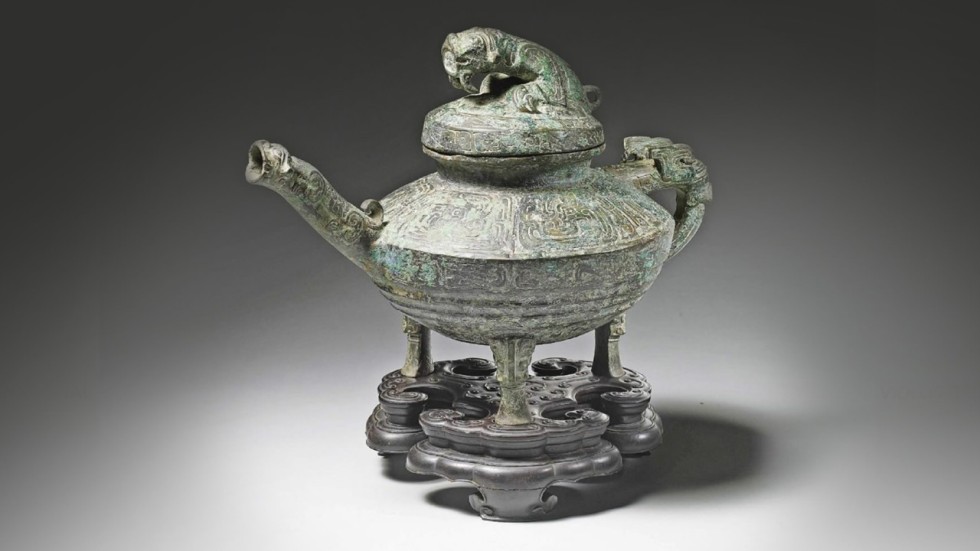
A 3,000-year-old bronze vessel that was taken from the Old Summer Palace in Beijing has been returned to China after more than a century overseas, according to the State Administration of Cultural Heritage.
On Tuesday, it was formally placed on display at the National Museum of China in the capital, where it is now part of the permanent collection.
The ancient relic was sold at auction in Britain for £410,000 (US$515,000) on April 11, but was donated to the Chinese government with no strings attached on April 28 after the unknown buyer had a change of heart.
A representative from Canterbury Auction Galleries, which sold and helped to return the item, told news site Thepaper.cn the buyer had recognised the deep significance of lost artefacts for Chinese.
After it was donated, the vessel was kept at the Chinese embassy in London before it was formally handed back to the cultural heritage administration on September 21.
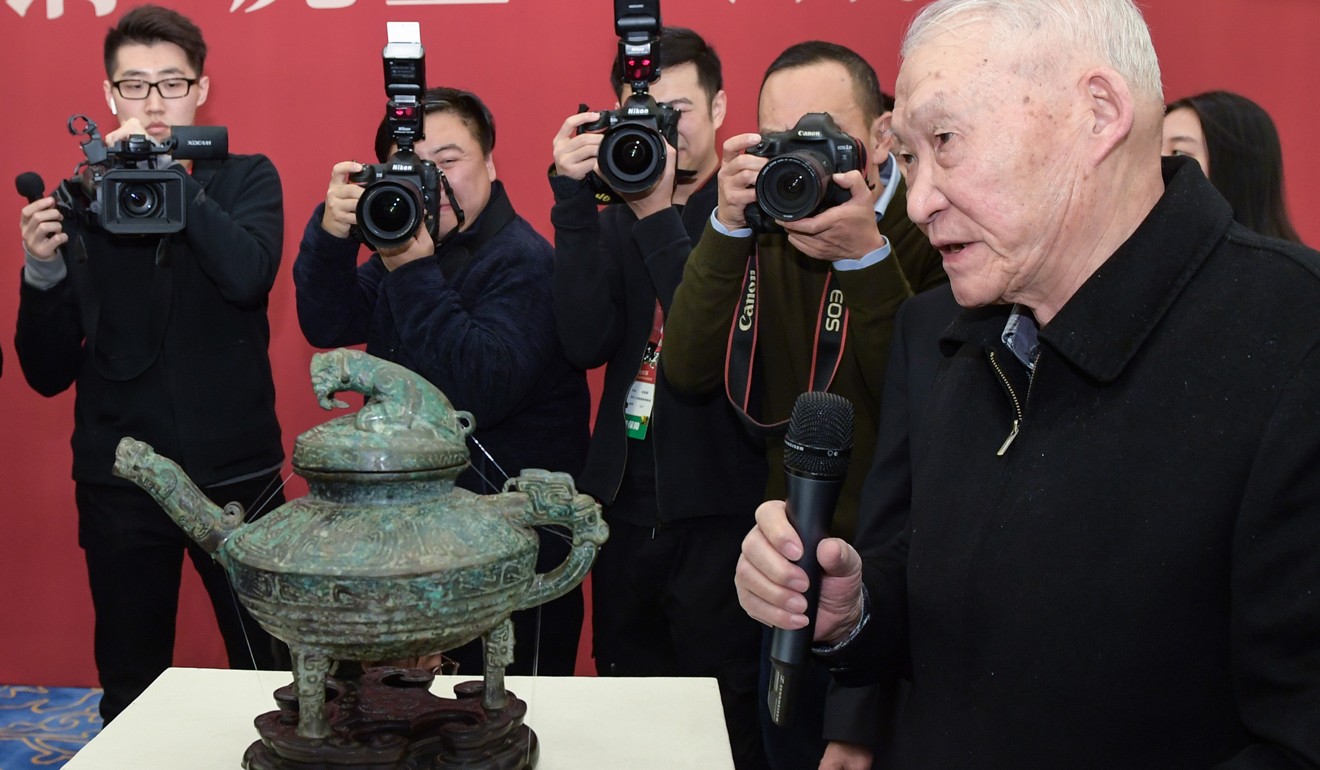
The ceremonial vessel dates back to the Western Zhou Dynasty (1046-771BC) and is decorated with miniature tigers on its spout, handle and lid. It is believed to be one of only seven such vessels, five of which are held in museums.
It was taken by British Royal Marines captain Harry Evans during the ransacking of the Old Summer Palace by Anglo-French troops in 1860, and had been in the possession of his descendants before it was auctioned.
The auction of the rare artefact was strongly opposed by the Chinese government, which had been working to get it returned to China, but Canterbury Auction Galleries went ahead with the sale.
Unveiling the new museum exhibit, Liu Yuzhu, head of the administration, said Chinese historical artefacts lost overseas were an important part of China’s cultural heritage.
China views the loss of these relics as a potent source of national humiliation and as a reminder of the destruction inflicted by foreign armies. The government estimates that more than 10 million historical items were taken from China during its so-called century of humiliation between 1849 and 1949, when the country was repeatedly invaded by foreign powers.
In recent years, Beijing has led numerous high-profile campaigns aiming to get its stolen artefacts returned from overseas, as a symbol of the country’s growing economic and political clout.
Many objects remain in the world’s most prestigious museums, including the British Museum and the Palace of Fontainebleau in France, as well as in private collections.
But billionaire Chinese collectors have snapped up many items in recent years, including a porcelain “chicken cup” that was bought for US$36.3 million at an auction in Hong Kong in 2014.
Posted in 1860, ancient, bronze vessel, China alert, looted, Summer Palace, Uncategorized |
Leave a Comment »





 CHINDIA ALERT: You'll be living in their world, very soon