29/04/2020
BEIJING, April 28 (Xinhua) — China has achieved much progress in environmental protection and taken the lead in green development in recent years.
The efforts have exemplified Chinese President Xi Jinping’s proposal of “working together for a green and better future for all” made a year ago in his speech at the opening ceremony of the International Horticultural Exhibition 2019 Beijing.
In the keynote speech, Xi proposed a five-point initiative on promoting green development, namely pursuing harmony between man and nature, pursuing the prosperity based on green development, fostering a passion for nature-caring lifestyle, pursuing a scientific spirit in ecological governance, and joining hands to tackle environmental challenges.
China’s hard work on environment protection has paid off.
The ecological environment has improved significantly. People are enjoying more days of blue sky, cleaner water, and fertile land.
China has achieved the goal of zero growth of desertified land by 2030 set by the United Nations ahead of time. Besides, forest stock volume increased by 4.56 billion cubic meters compared with that of 2005.
Carbon dioxide emissions per unit of GDP in 2018 fell by 45.8 percent compared with that of 2005, exceeding the target set for the year.
After more than 30 years of hard work, the seventh largest desert in China, the Kubuqi Desert in Inner Mongolia Autonomous Region, once known as the “sea of death” difficult for birds to fly across, has turned into a green valley.
In January 2020, in a letter in reply to the student representatives of the Global Alliance of Universities on Climate, the Chinese president mentioned his thoughts about ecological civilization in his youth.
“Over four decades ago, I lived and worked for many years in a small village on the Loess Plateau in western China. Back then, the ecology and environment there was seriously damaged due to over-development and the local people were trapped in poverty as a result,” Xi wrote.
“This experience taught me that man and nature are a community of life and that the damage done to nature will ultimately hurt mankind,” said Xi.
China’s progress and achievements are recognized worldwide.
The ecological civilization and green development advocated by China are actually an endeavor to find a way to balance economic development and environmental protection, said John Cobb, Jr., the founding president of the Institute for Postmodern Development of China and member of the American Academy of Arts and Sciences.
Noting that the endeavor is a remarkable exploration, he expressed his hope that it will succeed.
China is on the right path in dealing with global climate change and achieving sustainable development, said Borge Brende, president of the World Economic Forum.
In addition to making efforts at home, China has also rolled out a series of measures to support the global combat against climate change.
In September 2015, ahead of the Paris climate change conference, Xi pledged a 20-billion-yuan (3-billion-U.S. dollars) China South-South Climate Cooperation Fund, which was dedicated to help other developing countries combat climate change.
China has also been fulfilling the obligations of the United Nations Framework Convention on Climate Change and the Paris Agreement, and achieved the goal of its intended nationally determined contributions submitted to the secretariat of the Climate Change Convention as scheduled.
UN Secretary-General Antonio Guterres expressed his appreciation for China’s important contributions to addressing the climate change and building a green “Belt and Road,” and said he expects China to continue to play a leading role in addressing the climate change and other issues.
“Lucid waters and lush mountains are invaluable assets,” a concept put forward by Xi in 2005 when he visited Yucun Village in southeast China’s Zhejiang Province as the party chief of the province, has become the motto of the Lao Ministry of Natural Resources and Environment.
In March 2020, when Xi returned to Yucun, he said that economic development should not be achieved at the expense of the ecological environment. To protect the ecological environment is to develop the productive forces, he said.
The history of civilizations shows that the rise or fall of a civilization is closely tied to its relationship with nature, Xi said at the International Horticultural Exhibition last year.
Only by joining hands can the humankind advance a global ecological civilization and march towards the bright future of building a community with a shared future for mankind.
Source: Xinhua
Posted in "lucid waters and lush mountains are invaluable assets.", "sea of death", "working together for a green and better future for all", 2005, 2015, 2018, 2019, 2020, 2030, 30, achieved, addressing, advance, ago, ahead of time, American Academy of Arts and Sciences, appreciation, Beijing, Belt and Road, Besides, between, billion cubic meters, blue sky, bright future, Building, carbon dioxide emissions, China, China South-South Climate Cooperation Fund, Chinese president, Chinese President Xi Jinping's, civilization, cleaner water, climate change, Climate Change Convention, closely tied, combat climate change, community, community of life, compared, concept, concrete actio, damaged, decades, dedicated, desertified land, developing countries, difficult, ecological civilization, ecological environment, ecological governance, Ecology, Economic development, efforts, enjoying, Environment, environmental challenges, Environmental protection, exceeding, exemplified, expense, experience, fell by, fertile land, five-point initiative, for birds to fly across, forest stock volum, fostering, four, GDP, global, Global Alliance of Universities on Climate, global combat, global ecological civilization, goal, green development, green valley, hard work, has improved, history of civilizations, humankind, hurt, important contributions, increased, inner mongolia autonomous region, Institute for Postmodern Development of China, International Horticultural Exhibition, January, joining hands, keynote speech, Kubuqi Desert, Lao Ministry of Natural Resources and Environment., last year, leads, lived, local people, Loess Plateau, man and nature, mankind, many years, March, mentioned, more days, motto, nature, nature-caring lifestyle, opening ceremony, over-development, Paris Agreement, Paris climate change conference, party chief, passion, People, per unit, percent, pledged, poverty, progress, proposal, prosperity, province, pursuing, pursuing harmony, put forward, recent years, relationship, result, rise or fall, scheduled, scientific spirit, September, seriously, seventh largest desert, shared future, significantly, small village, southeast China's, speech, taught, thoughts, to help, to tackle, trapped, turned into, ultimately, Uncategorized, United Nations, United Nations Framework Convention on Climate Change, Western China, with, worked, World Economic Forum, Xi, year ago, years, Youth, Yucun, zero growth, zhejiang province |
Leave a Comment »
29/09/2019
- Millions of Chinese children are raised by their grandparents but some seniors are demanding compensation
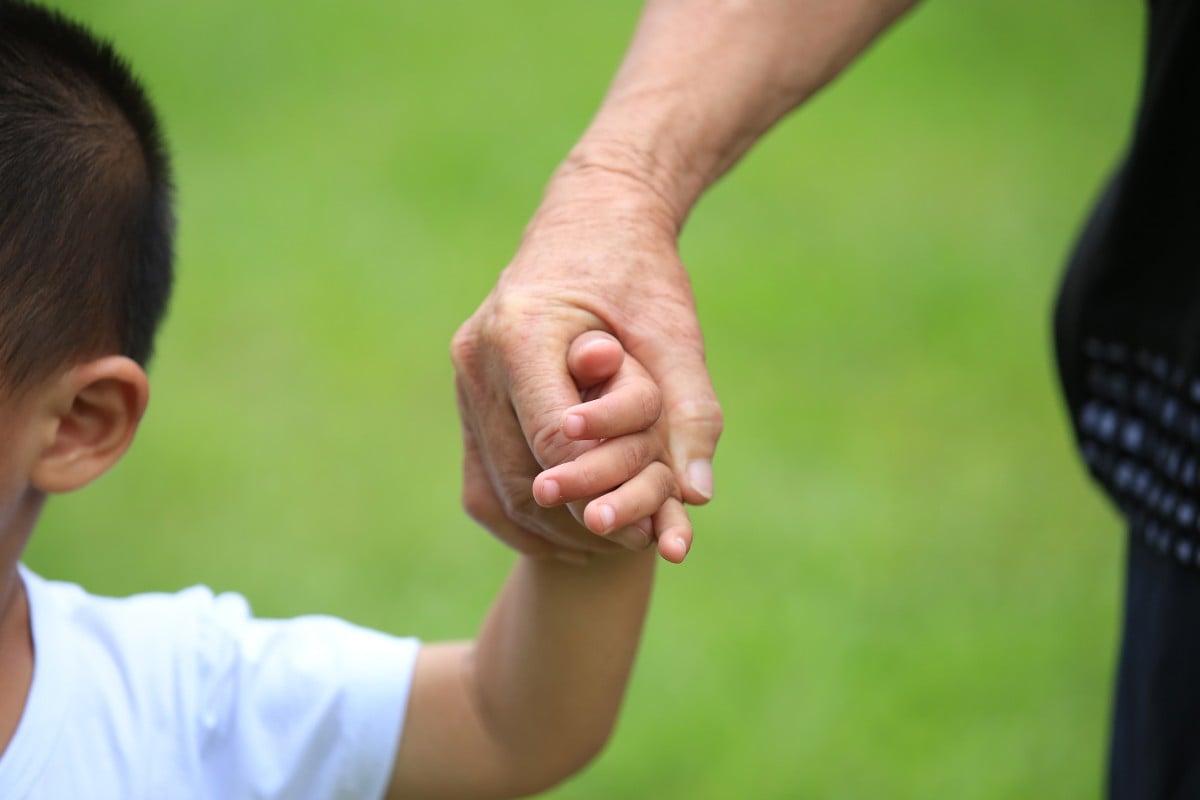
For generations in China grandparents have provided childcare, but some are no longer willing to do so for free. Photo: Shutterstock
The traditional role of grandparents in caring for China’s children has been called into question with two recent lawsuits sparking debate about whether seniors should be paid for their efforts.
Two grandmothers took their demands for compensation to court in separate cases which have highlighted the reliance of Chinese workers on their parents to provide childcare while they pursue professional advancement.
A woman in Mianyang, in the southwestern province of Sichuan, was awarded more than 68,000 yuan (US$9,500) by a local court after she sued her son and daughter-in-law for the costs of raising her nine-year-old grandchild, according to Red Star News.
The woman, identified only by her surname Wang, had been the child’s full-time carer for eight years after his parents left home to seek better-paid jobs elsewhere. Wang said she had taken care of most of her grandson’s living expenses and had decided to seek compensation when his parents said they were considering a divorce.
They should respect our contribution. Grandmother Wang, Sichuan province
“I only want to let them know through this lawsuit that it’s their obligation to raise their children,” she was reported as saying. “The young ones should not take it for granted that old people ought to look after their grandchildren. They should respect our contribution.”
Despite winning the case, she has not received a penny and the boy still lives with her.
In another case, three months ago, a Beijing court supported a woman’s demand for compensation for helping to raise her granddaughter since her birth in 2002.
The stories of the two women generated a public reflection on the Chinese way of childcare which, for generations, has involved leaving most – if not all – of the burden on grandparents.
One of 60 million: life as a ‘left-behind’ child in China
From a cultural perspective, it has been a matter of course in a country with a long history of several generations living under one roof, for grandparents to participate in child rearing, according to Xu Anqi, a researcher specialising in family studies at the Shanghai Academy of Social Sciences.
“Today, as people face fierce competition and great pressure from work, it’s still common to rely on their old parents to look after their children,” she said.
While rapid urbanisation in recent decades has broken up multi-generational households, Chinese elderly still take an active role in child rearing, with many relocating to their children’s cities to take on the job.
Millions more families do it the other way round – with parents leaving children in their hometown with the grandparents while they seek better paying jobs in the cities. In August last year, according to the Ministry of Civil Affairs, China had nearly 7 million “left behind kids”, as they are known.
My little granddaughter is adorable, and generally I enjoy doing all this.Li Xiujuan, grandmother
“Many grandmothers like me would joke that we are ‘unpaid nannies’, but at the same time we feel it’s our responsibility to help them out – they would be in financial stress if one of them quit or they hired a nanny,” said Li Xiujuan, who relocated from her hometown in the central province of Henan to Shanghai two years ago to help look after her granddaughter.
“I’m a 24-hour nanny for my grandkid. I prepare food for her, wash her clothes, attend early childhood classes with her, take her for a walk in the park twice a day, sleep beside her at noon and night …” she said.
“I never cared for my daughter when she was little like I do her daughter now. You know, it was also her grandmother who mainly took care of her daily life when she was young,” Li said, laughing.
“My little granddaughter is adorable, and generally I enjoy doing all this. The hard part is that I miss my friends and relatives back home. We don’t have friends here. I have plenty of things to do at home, but here, nothing but babysitting. People are polite, but it’s difficult to make new friends,” she said.
‘Left behind’ sisters cry when parents leave home to go to work
In a 2017 study of about 3,600 households in six major cities including Beijing and Guangzhou, the Chinese Society of Education found almost 80 per cent of surveyed households had at least one grandparent as carer before children began primary school.
The study also showed that 60 per cent of parents still relied on help from grandparents after children were old enough for primary school at the age of six.
Whether grandparents should be compensated for their efforts split a poll of 49,000 users conducted by social media platform Weibo in late June, with half believing that the older generation should be paid for raising their grandchildren. Only 2.3 per cent said babysitting grandchildren was “an unalterable principle” for the elderly.
“This arrangement could be well managed and improve blood ties if children reward the elderly in their own ways, such as sending gifts on holidays and taking them on trips,” Shanghai researcher Xu said.
I think what they need more is words of appreciation, which many of us have neglected. David Dai, Beijing parent
Grandmother Li agreed: “I think regular payment is a little awkward, but I do expect some kind of reward, like cash gifts on festivals and daily necessities as presents.”
David Dai, a 30-year-old white collar worker in Beijing, said how to reward grandparents for their contribution depended on the financial situation of each household.
“My parents are farmers – they are in good shape and not so old – in their late 50s, and if they didn’t come all the way from my hometown in Anhui to Beijing to look after my son, they would still be taking some odd jobs,” he said.
“Therefore, besides covering their living costs at my place, I give them cash gifts on their birthdays, the Spring Festival and other important occasions, because babysitting their grandchild means they lose the opportunity to work,” he added.
“In some families, the grandparents might have retired and have a good pension. They don’t lack money and enjoy spending time with their grandkids. I don’t think they need to be paid. I think what they need more is words of appreciation, which many of us have neglected,” Dai said.
China boosts childcare and maternal health services in bid to lift birth rate
But for those who never show any gratitude, their parents have every reason not to offer child rearing help or to demand payment, Xu said.
Zhang Tao, a lawyer at the Hiways Law Firm in Shanghai, noted that as long as at least one parent of a child was living, the grandparents had no obligation to help with childcare.
“The grandparents should be compensated for the money they have paid for the child’s education, medical fees, and accommodation from the beneficiary,” he said.
But whether they should be paid has become the latest controversy as more grandparents find it a burden.
Source: SCMP
Posted in 'left-behind’ child, accommodation, adorable, an unalterable principle, Anhui province, appreciation, awarded, babysitting, Beijing, beneficiary, better-paid jobs, blood ties, burden, cash gifts, child rearing help, childcare, childcare services, China’s grandparents, Chinese Society of Education, compensation, controversy, court, daily necessities, daughter-in-law, demand payment, demanding, Divorce, education, elderly, farmers, festivals, financial situation, free childcare, friends, generations, good shape, granddaughter, grandparents, gratitude, Henan province, Hiways Law Firm, holidays, hometown, Household, Lawyer, living expenses, local court, maternal health services, medical fees, Mianyang, Ministry of Civil Affairs, neglected, pension, presents, primary school, raised, rapid urbanisation, reaching, regular payment, relatives, retired, reward, sending gifts, seniors, Shanghai, Shanghai Academy of Social Sciences, sichuan province, son, Spring Festival, sued, taking them on trips, their limits, Uncategorized, unpaid nannies, Weibo, white collar worker |
Leave a Comment »



 CHINDIA ALERT: You'll be living in their world, very soon