28/09/2019
- Legal process under way, Beijing says after Foreign Minister Wang Yi tells United Nations China is committed to defending multilateralism
- Any unilateral move to leave weapons control pact will have a ‘negative impact in various areas’, minister says in thinly veiled swipe at United States
China, the world’s fifth-largest weapons supplier, has signed up to a global arms control treaty. Photo: Simon Song
China said it has begun preparations to join an international arms control treaty that the United States has threatened to abandon, while also warning Washington against deploying missiles in the Asia-Pacific region.
Speaking at the United Nations General Assembly in New York on Friday, Chinese Foreign Minister Wang Yi said that signing up to the Arms Trade Treaty (ATT) was further evidence of Beijing’s commitment to defending multilateralism.
said in April that he intended to withdraw from the pact, which regulates the US$70 billion global trade in conventional arms.
The White House said at the time that the ATT “will only constrain responsible countries while allowing the irresponsible arms trade to continue”, as major arms exporters like Russia and China were not part of it.
Wang said on Friday that any unilateral move to leave the treaty would have a “negative impact in various areas”. He stopped short of naming the United States or its president.
China’s foreign ministry said in a statement on Saturday that it had begun the legal process of joining the treaty, adding that it attached great importance to the issues caused by the illegal sale and misuse of arms, and supported the aims of the ATT in seeking to regulate the international weapons trade.
Wang also spoke out against the possible deployment of ground-launched missiles in the Asia-Pacific region.
After withdrawing from the
Intermediate-Range Nuclear Forces Treaty in August, the US said it was planning to deploy such weapons in Asia to counter any possible threat from China or Russia.
“[We] urge the country with the largest nuclear weapons to fulfil its special and prior responsibilities on nuclear disarmament,” Wang said, adding that “China will continue to participate in the international arms control process”.
Wang Yi spoke out against the possible deployment of ground-launched missiles in the Asia-Pacific region at the UN General Assembly in New York on Friday. Photo: AFP
According to figures released in May by the Stockholm International Peace Research Institute, the United States is the world’s largest arms exporter, supplying weapons worth 58 per cent more than those of its nearest competitor, Russia.
Together with France, Germany and China, the five nations accounted for 75 per cent of all weapons sold around the world between 2014 and last year, the institute said.
Although China is among the world’s big five arms suppliers, its sales – most of which go to Asia and Oceania – are dwarfed by those of the US, accounting for just 5.2 per cent of the 2014-18 total, compared to America’s 36 per cent.
Several major arms importers, including India, Australia, South Korea and Vietnam, refuse to buy arms from China for political reasons.
Beijing’s decision to join the ATT is in keeping with the image it has sought to present of China as a defender of multilateralism. The stance is also in sharp contrast to the US’ position under Trump, who has repeatedly scrapped multilateral trade agreements in favour of bilateral deals.
Since taking office in 2016, he has withdrawn the US from the Paris climate accord, the Iran nuclear deal and the Trans-Pacific Partnership.
Military observers said Beijing might seek to pressure on Washington to stay in the deal to try to maintain the strategic and military balance in the region.
Song Zhongping, a Hong Kong-based military affairs commentator, said Beijing might be trying to avoid misuse of conventional weapons.
“Beijing may want to press big exporters, such as the US and Russia, to join the deal because without proper regulations, the risk of illegal trade and misuse of conventional weapons could be running high,” he said.
“This could also threaten regional stability or even trigger unnecessary arms races.”
Adam Ni, a China specialist at Sydney’s Macquarie University, said the treaty would put some limits on the arms trade “but it would not mean that China would not be able to do deals. It will still be able to do [most deals]”.
Retired PLA colonel Yue Gang said the strategy could also improve China’s international reputation.
Source: SCMP
Posted in abandon, arms importers, Arms Trade Treaty, Asia, Asia-Pacific region, Australia, Beijing, China alert, deploying, dwarfed, Foreign Minister Wang Yi, France, General Assembly, Germany, global arms control treaty, India alert, Intermediate-Range Nuclear Forces Treaty, Iran nuclear deal, join, largest nuclear weapons, Macquarie University, military affairs commentator, Military observers, missiles, New York, Paris climate accord, political reasons, President Donald Trump, Russia, South Korea, Sydney, threatened, Trans-Pacific Partnership (TPP), Uncategorized, United Nations, United States, Vietnam, Washington, White House |
Leave a Comment »
22/09/2019
- October 1 event is intended to be a showcase for military’s progress under Xi Jinping, with J-20 stealth fighters set to take pride of place
- Domestically developed weapons are main focus of event despite long-standing problems in building aircraft engines
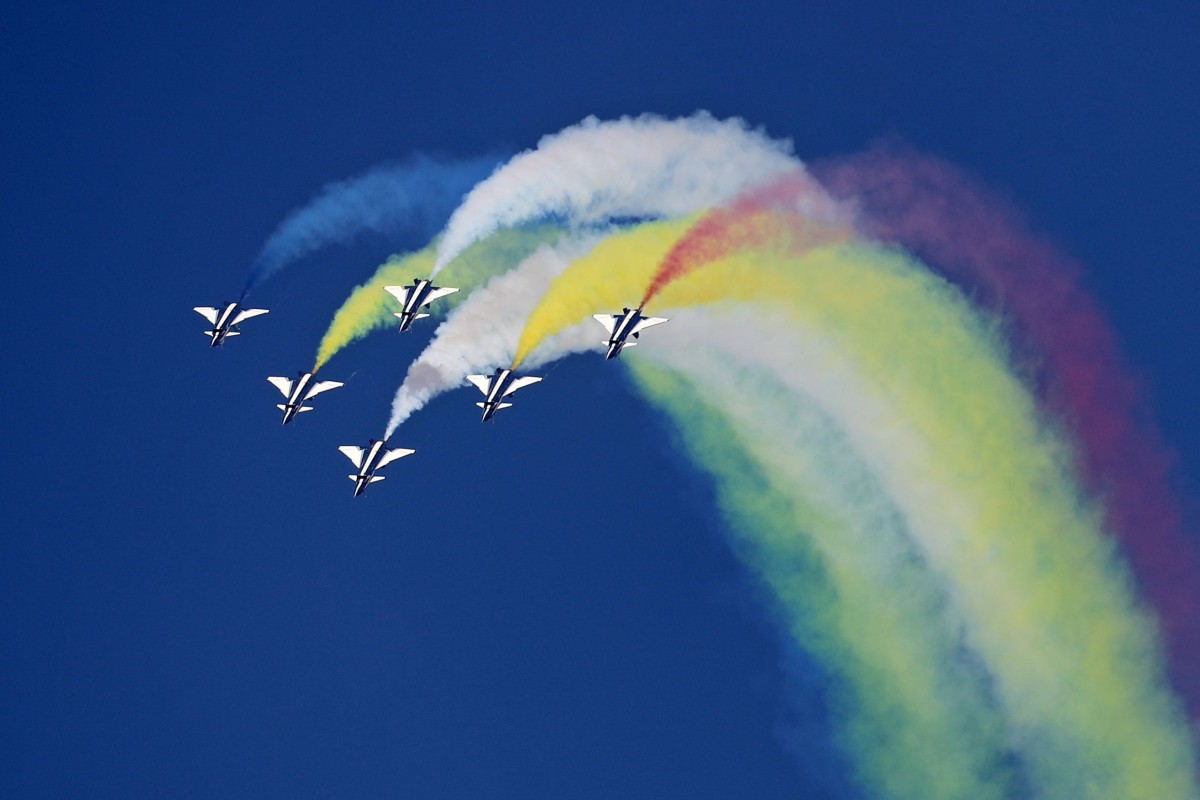
Chinese J-10 jets perform at the Dubai air show in 2017. Photo: AFP
China has stepped up intensive rehearsals for the upcoming National Day parade, which military insiders say is designed to showcase the achievements of Chinese President Xi Jinping’s modernisation drive.
The parade on October 1 will mark the 70th anniversary of the founding of the People’s Republic and will focus on weapons developed since Xi came to power in late 2012, despite long-standing problems in aircraft engine development.
Video clips circulating on mainland social media in recent days have shown at least seven types of aircraft – including the KJ-2000 airborne early warning and control aircraft and J-10 and J-11B fighter jets – taking part in rehearsals over the countryside around Beijing.
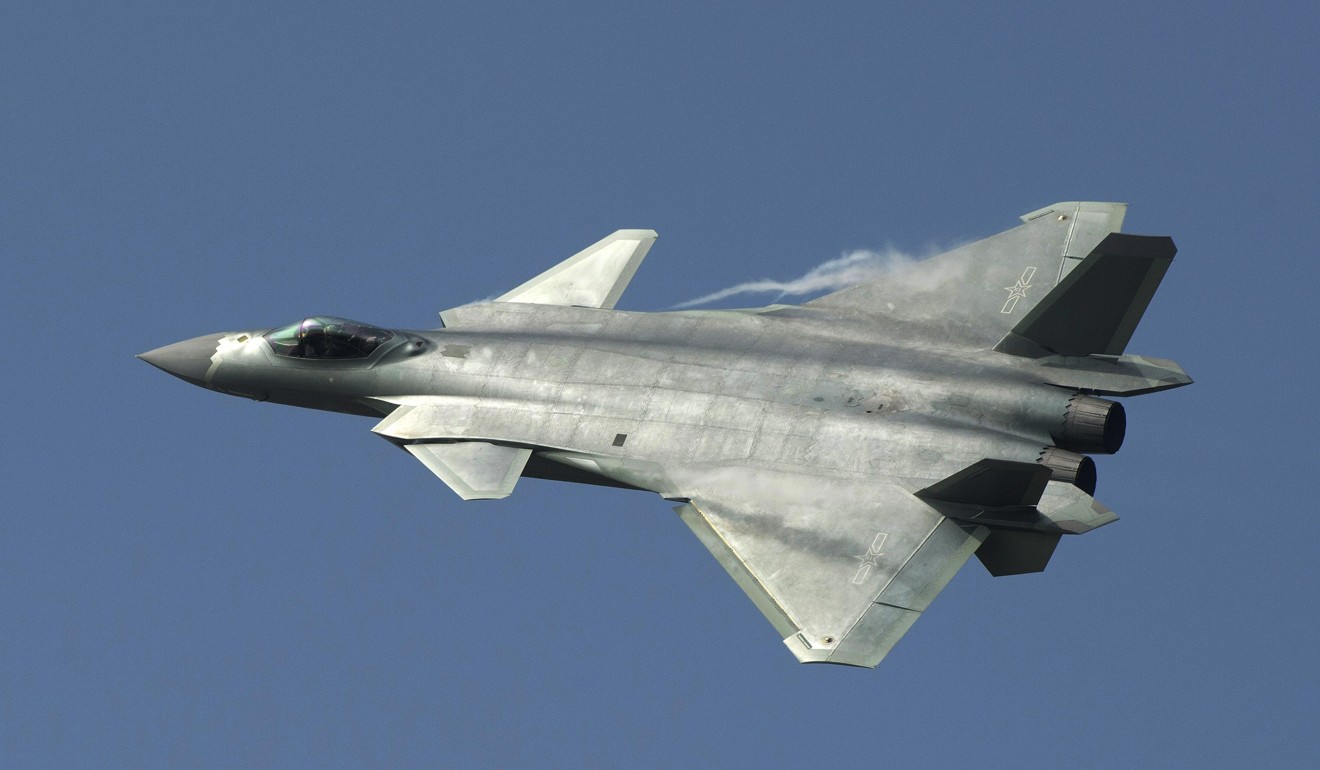
A military insider said the country’s first stealth fighter jet, the J-20, had been rehearsing over the western suburbs of the capital since April.
“There will be up to seven J-20 displayed in the military parade, which is the largest formation since its formal deployment to the Chinese air force in 2017,” the military insider said.
“The J-20 has entered mass production. So far at least 70 J-20s have been made, even though all of them are still equipped with Russian AL-31 engines.”
Earlier this month, the People’s Liberation Army Air Force released a video of a flight of seven J-20s, the largest formation seen so far, suggesting that the fifth-generation warplane has gone into mass production as an arms race with the United States mounts in the region.
The second-largest J-20 formation was shown in an air force video for PLA Day on August 1, when five of the jets were shown.
China has been forced to deploy the J-20 ahead of its schedule since the US has increased the deployment of its fifth-generation stealth fighter jets like the F-22 and F-35s in the Asia-Pacific region.
The US and its allies, including Japan and South Korea, will have more than 200 F-35s by 2025, which means China also needs a similar number of stealth fighters.
To meet demand, China has been working on the development of a purpose-built thrust engine for its stealth fighter since the early 2000s, but has yet to achieve international quality control standards due to problems that include single-crystal turbine blade technology.
China’s air force spreads its wings in 70th anniversary video
Hong Kong-based military commentator Song Zhongping said aircraft engine development had been a long-standing shortcoming but it would not affect the practical fighting capacity of the J-20, which currently uses Russian engines.
“The J-20 hasn’t used the domestic engines so far because it wants a better one, and it still has time,” Song said.
“Other [Chinese-developed] warplanes like the J-10, J-11 and multipurpose attack helicopters are all modified and advanced types, indicating comprehensive achievements amid China’s military modernisation over the past years.”
A Chinese J-20 stealth fighter has entered mass production. Photo: EPA-EFE
Besides the domestically developed aircraft, Beijing is going to display its strategic nuclear missiles, such as the DF-41 intercontinental ballistic missile and the JL-2 submarine-launched ballistic missile, as centrepieces of its National Day military parade, according to a Beijing-based military source.
Xi, who also chairs the powerful Central Military Commission, inspected the country’s biggest military parade at the Zhurihe Combined Tactics Training Base in Inner Mongolia in 2017 to celebrate the 90th anniversary of the PLA, but the source said the weapons displayed in Zhurihe had been developed under the leadership of Xi’s predecessor, Hu Jintao.
“Xi needs to highlight his personal achievements in his era, that’s why this year’s parade has political aims more than military significance,” the source said.
The source also highlighted the significance of the People’s Republic marking its 70th anniversary because the Soviet Union did not survive for that length of time.
“Xi is attempting to tell the outside world that Chinese communist regime has been consolidated under his leadership.”
Source: SCMP
Posted in 70th anniversary, 90th anniversary, Air show, aircraft engines, AL-31 engines, allies, Asia-Pacific region, Beijing, Central Military Commission, Central Military Commission (CMC), China’s air force, Chinese communist regime, Chinese fighter jet, countryside, domestically developed aircraft, Dubai, event, F-22, F-35, founding of the People’s Republic, Hong Kong, Hu Jintao, Inner Mongolia, J-11B fighter jets, J-20 stealth fighter, J-20 stealth fighters, Japan, KJ-2000 airborne early warning and control aircraft, Korea, military parade, multipurpose attack helicopters, National Day, National Day parade, October 1, People’s Liberation Army Air Force, PLA, preparations, pride of place, Russian, seen, single-crystal turbine blade technology, skies, Soviet Union, step up, strategic nuclear missiles, submarine-launched ballistic missile, Uncategorized, US, Xi JinPing, Zhurihe, Zhurihe Combined Tactics Training Base |
Leave a Comment »
10/06/2019
- With a defence budget second only to the US, China is amassing a navy that can circle the globe and developing state-of-the-art autonomous drones
- The build-up is motivating surrounding countries to bolster their own armed forces, even if some big-ticket military equipment is of dubious necessity
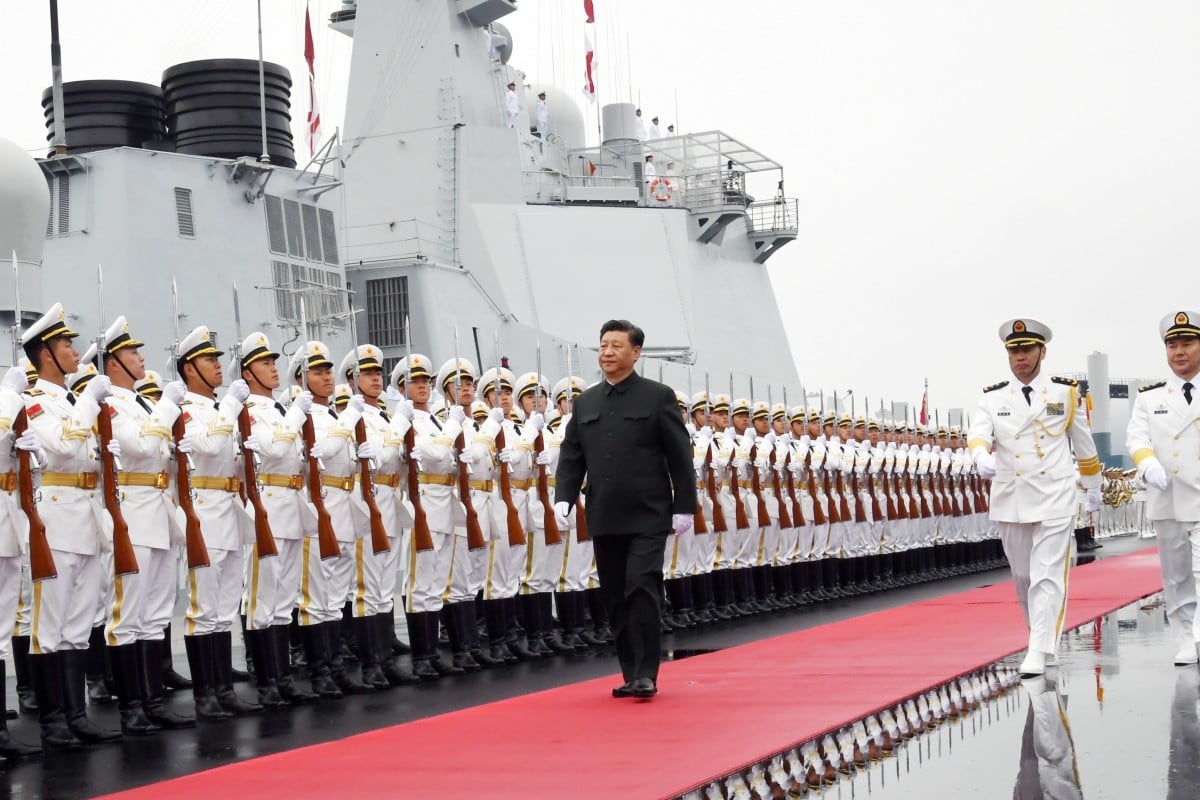
Chinese President Xi Jinping reviews an honour guards before a naval parade in Qingdao. Photo: Xinhua
The Asia-Pacific region is one of the fastest-growing markets for arms dealers, with economic growth, territorial disputes and long-sought military modernisation propelling a 52 per cent increase in defence spending over the last decade to US$392 billion in 2018, according to the Stockholm International Peace Research Institute.
The region accounts for more than one-fifth of the global defence budget and is expected to grow. That was underscored last week by news of
’s bid to strike a
to purchase US tanks and missiles.
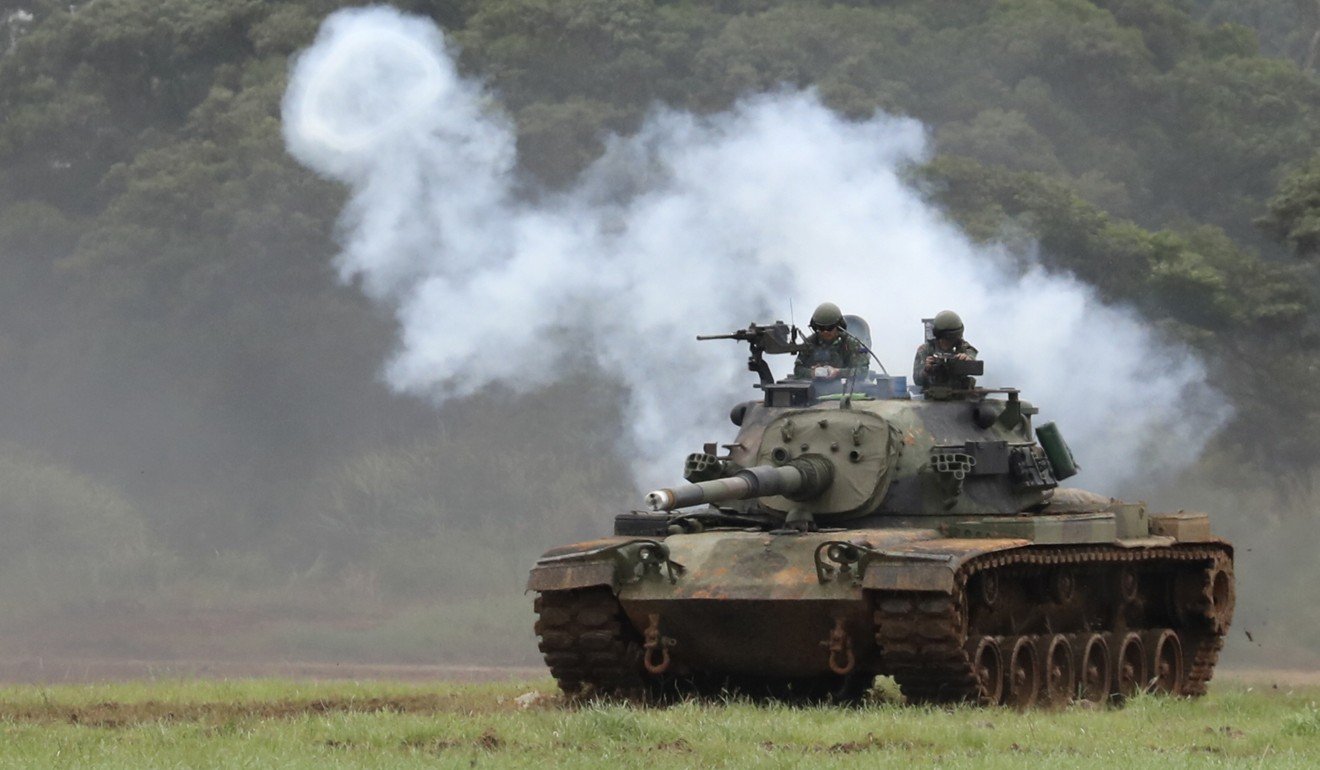
Taiwanese Soldiers on a CM11 battle tank, jointly developed with US arms manufacturer General Dynamics. Photo: EPA
The biggest driver in arms purchases, however, is
– responsible for 64 per cent of military
spending in the region. With a defence budget that is second only to the
, China is amassing a navy that can circle the globe and developing state-of-the-art autonomous drones. The build-up is motivating surrounding countries to bolster their armed forces too – good news for purveyors of submarines, unmanned vehicles and warplanes.
It is no coincidence that the recent
in
, a security conference attended by
chiefs, was sponsored by military contractors including Raytheon,
and
.
Opinion: How the Shangri-La Dialogue turned into a diplomatic coup for China
Kelvin Wong, a Singapore-based analyst for Jane’s, a trade publication that has been covering the defence industry for 121 years, has developed a niche in infiltrating China’s opaque defence industry by attending obscure trade shows that are rarely advertised outside the country.
He said the US is eager to train allies in Asia and sell them arms, while also stepping up its “freedom of navigation” naval operations in contested waters in the
and Taiwan Strait. It has lifted a ban on working with
’s special forces over atrocities committed in
. And it is considering restarting arms sales to the
.
In his speech at the Shangri-La Dialogue, acting US Defence Secretary Patrick Shanahan touted American advancements in technology “critical to deterring and defeating the threats of the future” and said any partner could choose to win access to that technology by joining the US defence network.
Wong said the message was clear: “Buy American.”
Analysts say Chinese soldiers have less training, motivation and lower morale than their Western counterparts. Photo: Reuters
The analyst said there is a growing admission among the Chinese leadership that the
has an Achilles’ heel: its own personnel.
He said one executive at a Chinese defence firm told him: “The individual Chinese soldier, in terms of morale, training, education and motivation, (cannot match) Western counterparts. So the only way to level up is through the use of unmanned platforms and
To that end, China has developed one of the world’s most sophisticated drone programmes, complete with custom-built weapon systems. By comparison, Wong said,
US drones rely on weapons originally developed for helicopters.
Wong got to see one of the Chinese drones in action two years ago after cultivating a relationship with its builder, the state-owned China Aerospace Science & Technology Corporation. He viewed a demonstration of a 28-foot-long CH-4 drone launching missiles at a target with uncanny ease and precision.
“Everyone knew they had this,” Wong said. “But how effective it was, nobody knew. I could personally vouch they got it down pat.”
China unveils its answer to US Reaper drone – how does it compare?
That is what Bernard Loo Fook Weng, a military expert at Singapore’s S. Rajaratnam School of International Studies, told the author Robert Kaplan for his 2014 book, Asia’s Cauldron, about simmering tensions in the South China Sea.
He was describing the competition for big-ticket military equipment of dubious necessity.
is littered with examples of such purchases.
owns an aircraft carrier without any aircraft. Indonesia dedicated about one-sixth of its military budget to the purchase of 11
Su-35 fighter jets. And
splurged on two
submarines it could not figure out how to submerge.
“It’s keeping up with the Joneses,” Wong said. “There’s an element of prestige to having these systems.”
Submarines remain one of the more debatable purchases, Wong said. The vessels aren’t ideal for the South China Sea, with its narrow shipping lanes hemmed in by shallow waters and coral reefs. Yet they provide smaller countries with a powerful deterrence by enabling sneak attacks on large ships.
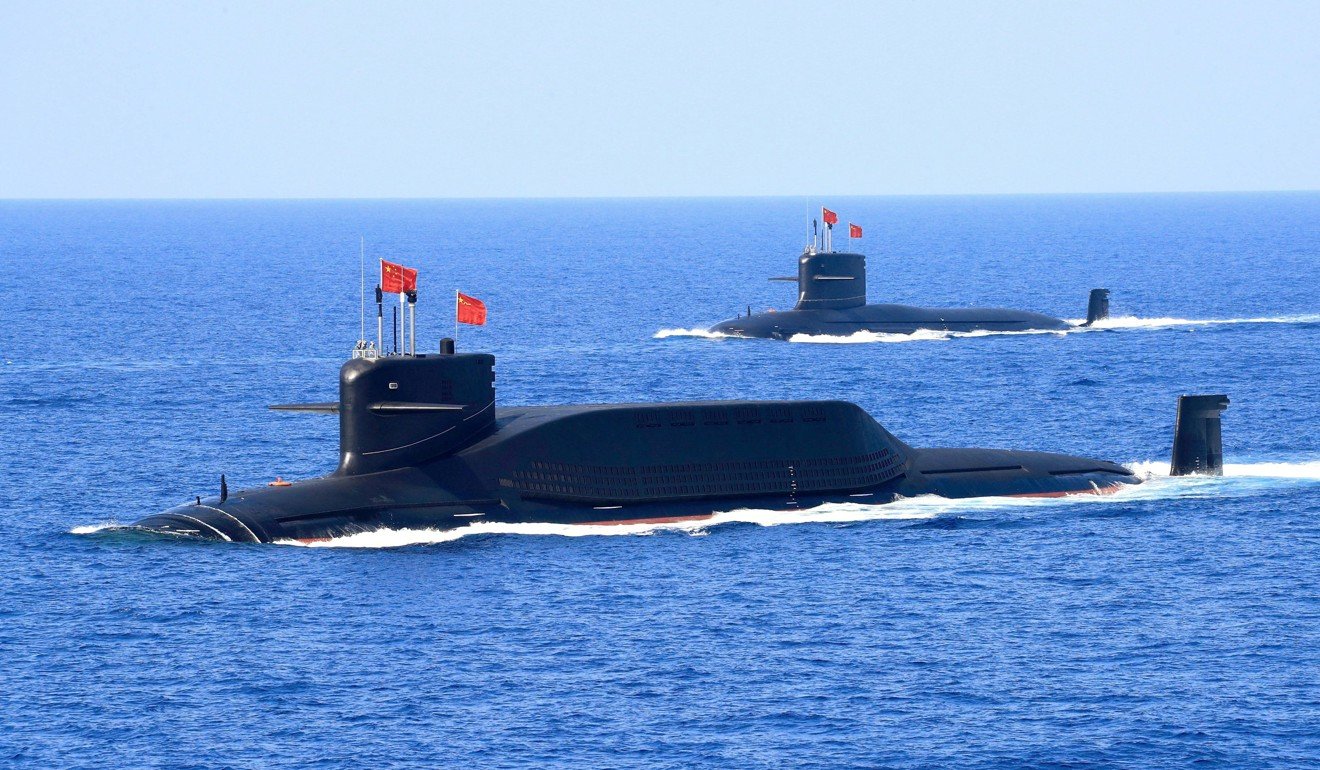
Nuclear-powered PLA Navy ballistic missile submarines in the South China Sea. Photo: Reuters
Asia and
are home to 245 submarines, or 45 per cent of the global fleet, according to the US-based naval market intelligence firm AMI International.
The Philippines remains one of the last coastal nations in the region without a sub – though it is in talks with Russian builders to acquire some.
Singapore recently received the first of four advanced
Type 218 submarines with propulsion systems that negate the need to surface more frequently. If the crew did not need to eat, the submarine could stay under water for prolonged periods. Wong said the craft were specially built for Asian crews.
“The older subs were designed for larger Europeans so the ergonomics were totally off,” he said.
Singapore, China deepen defence ties, plan larger military exercises
Tiny Singapore plays a crucial role securing the vital sea lanes linking the Strait of Malacca with the South China Sea. According to the
the country dedicates 3.3 per cent of its gross domestic product to defence, a rate higher than that of the United States.
State-of-the-art equipment defines the Singapore Armed Forces. Automation is now at the centre of the country’s military strategy, as available manpower is shrinking because of a rapidly ageing population.
Wong said Singapore is investing in autonomous systems and can operate frigates with 100 crew members – 50 fewer than they were originally designed for.
“We always have to punch above our weight,” he said.
Source: SCMP
Posted in artificial intelligence (AI), Asia, Asia-Pacific region, Australia, autonomous drones, BAE Systems, China Aerospace Science & Technology Corporation, East Timor, French, frigates, German, Indonesia, Lockheed Martin, Malaysia, military spending, naval parade, navy, People’s Liberation Army, President Xi Jinping, Qingdao, Raytheon Co, ripple effect, Russian, Shangri-La Dialogue, Singapore, Singapore Armed Forces, South China Sea, Southeast Asia, Stockholm International Peace Research Institute, Strait of Malacca, submarines, Taiwan Strait, Thailand, the Philippines, Uncategorized, unmanned vehicles, US Reaper drone, warplanes, World Bank |
Leave a Comment »



 CHINDIA ALERT: You'll be living in their world, very soon
China set to join Arms Trade Treaty that Donald Trump threatened to abandon
China said it has begun preparations to join an international arms control treaty that the United States has threatened to abandon, while also warning Washington against deploying missiles in the Asia-Pacific region.
Speaking at the United Nations General Assembly in New York on Friday, Chinese Foreign Minister Wang Yi said that signing up to the Arms Trade Treaty (ATT) was further evidence of Beijing’s commitment to defending multilateralism.
said in April that he intended to withdraw from the pact, which regulates the US$70 billion global trade in conventional arms.
The White House said at the time that the ATT “will only constrain responsible countries while allowing the irresponsible arms trade to continue”, as major arms exporters like Russia and China were not part of it.
Wang said on Friday that any unilateral move to leave the treaty would have a “negative impact in various areas”. He stopped short of naming the United States or its president.
China’s foreign ministry said in a statement on Saturday that it had begun the legal process of joining the treaty, adding that it attached great importance to the issues caused by the illegal sale and misuse of arms, and supported the aims of the ATT in seeking to regulate the international weapons trade.
Wang also spoke out against the possible deployment of ground-launched missiles in the Asia-Pacific region.
According to figures released in May by the Stockholm International Peace Research Institute, the United States is the world’s largest arms exporter, supplying weapons worth 58 per cent more than those of its nearest competitor, Russia.
Together with France, Germany and China, the five nations accounted for 75 per cent of all weapons sold around the world between 2014 and last year, the institute said.
Although China is among the world’s big five arms suppliers, its sales – most of which go to Asia and Oceania – are dwarfed by those of the US, accounting for just 5.2 per cent of the 2014-18 total, compared to America’s 36 per cent.
Several major arms importers, including India, Australia, South Korea and Vietnam, refuse to buy arms from China for political reasons.
Beijing’s decision to join the ATT is in keeping with the image it has sought to present of China as a defender of multilateralism. The stance is also in sharp contrast to the US’ position under Trump, who has repeatedly scrapped multilateral trade agreements in favour of bilateral deals.
Since taking office in 2016, he has withdrawn the US from the Paris climate accord, the Iran nuclear deal and the Trans-Pacific Partnership.
Military observers said Beijing might seek to pressure on Washington to stay in the deal to try to maintain the strategic and military balance in the region.
Song Zhongping, a Hong Kong-based military affairs commentator, said Beijing might be trying to avoid misuse of conventional weapons.
“Beijing may want to press big exporters, such as the US and Russia, to join the deal because without proper regulations, the risk of illegal trade and misuse of conventional weapons could be running high,” he said.
“This could also threaten regional stability or even trigger unnecessary arms races.”
Adam Ni, a China specialist at Sydney’s Macquarie University, said the treaty would put some limits on the arms trade “but it would not mean that China would not be able to do deals. It will still be able to do [most deals]”.
Retired PLA colonel Yue Gang said the strategy could also improve China’s international reputation.
Source: SCMP
Posted in abandon, arms importers, Arms Trade Treaty, Asia, Asia-Pacific region, Australia, Beijing, China alert, deploying, dwarfed, Foreign Minister Wang Yi, France, General Assembly, Germany, global arms control treaty, India alert, Intermediate-Range Nuclear Forces Treaty, Iran nuclear deal, join, largest nuclear weapons, Macquarie University, military affairs commentator, Military observers, missiles, New York, Paris climate accord, political reasons, President Donald Trump, Russia, South Korea, Sydney, threatened, Trans-Pacific Partnership (TPP), Uncategorized, United Nations, United States, Vietnam, Washington, White House | Leave a Comment »