Archive for ‘Azerbaijan’

22/09/2019

Spotlight: China, Azerbaijan pledge to strengthen cooperation

AZERBAIJAN-BAKU-LI ZHANSHU-VISIT

Li Zhanshu (L), chairman of the Standing Committee of the National People’s Congress of China, meets with Azerbaijani President Ilham Aliyev in Baku, Azerbaijan, Sept. 19, 2019. Li paid an official goodwill visit to Azerbaijan from Sept. 19 to 21 at the invitation of Ogtay Asadov, speaker of the National Assembly of Azerbaijan. (Xinhua/Pang Xinglei)

BAKU, Sept. 21 (Xinhua) — Li Zhanshu, chairman of the Standing Committee of the National People’s Congress (NPC) of China, and top Azerbaijani officials have agreed here to strengthen bilateral cooperation in various areas.

During an official goodwill visit from Thursday to Saturday, Li met with Azerbaijani President Ilham Aliyev and conveyed Chinese President Xi Jinping’s cordial greetings to him.

Li briefed Aliyev on the great achievements of the People’s Republic of China since its founding 70 years ago, saying that the Communist Party of China is forging ahead on the road of socialism with Chinese characteristics in line with China’s national conditions.

The socialism with Chinese characteristics has now entered a new era, and China under the leadership of Xi is striving to achieve its “two centenary goals” and realize the Chinese dream of the great rejuvenation of the Chinese nation, Li told Aliyev.

China deems Azerbaijan as an important partner in Eurasia and is ready to implement the blueprint made by Xi and Aliyev on the development of bilateral ties, further cement political mutual trust, strengthen practical cooperation in various areas, and jointly safeguard the two countries’ security and development interests, Li said.

Aliyev asked Li to convey his best wishes to Xi and said he had witnessed the great changes in China with his own eyes during his repeated trips to the country and that he admired such achievements.

Azerbaijan-China relations are developing rapidly with a rosy future, he said, adding that his country firmly adheres to the one-China principle, and intends to combat jointly with China the “three forces” of terrorism, separatism and extremism, and improve their coordination and cooperation on international and regional issues.

LEGISLATIVE EXCHANGES

During a meeting with Ogtay Asadov, speaker of the National Assembly of Azerbaijan, Li said his visit was aimed at strengthening cooperation between the two legislatures and implementing the important consensuses reached by the two heads of state.

The Chinese top legislator suggested both sides increase interactions at various levels, exchange experience on governing the countries, and provide legal assurance for bilateral practical cooperation.

Every country has a unique history, national situation and culture, so different civilizations should coexist harmoniously and learn from each other, Li said.

The NPC of China is willing to work with the National Assembly of Azerbaijan to promote cultural and people-to-people exchanges between the two countries, learn from each other, and cement public support for bilateral relations, he said.

Asadov said Li was the first top Chinese legislator to visit Azerbaijan in 19 years and that the trip has injected new vitality into the development of bilateral relations and the interactions between the two legislatures.

Azerbaijan and China have signed many cooperation deals and the two legislatures should help to deliver on the agreements, Asadov said.

An increasing number of Azerbaijani people are interested in Chinese culture and there is a need to promote educational, cultural and youth exchanges, he said.

ECONOMIC COOPERATION

At a meeting with Azerbaijani Prime Minister Novruz Mammadov, Li said Azerbaijan is located at the junction of Europe and Asia and is an important country along the Belt and Road.

Li said China is ready to boost economic and trade exchanges with Azerbaijan and enhance cooperation with the country in jointly building the Belt and Road and achieve more cooperation outcomes in such fields as energy, agriculture, transportation, logistics, tourism and informatization.

He welcomed Azerbaijan to the second China International Import Expo to be held in early November in Shanghai.

Mammadov said his country was among the earliest participants in the Belt and Road Initiative and is ready to expand cooperation with China in various areas.

He welcomed more Chinese investments in Azerbaijan and expected cooperation with China on the construction of a Trans-Caspian International Transport Corridor so that more Chinese goods can hit the Eurasian market via Azerbaijan.

During his stay in Baku, Li also visited the Heydar Aliyev Center and a carpet museum, and laid a wreath at the tomb of former President Heydar Aliyev and the Eternal Flame.

Source: Xinhua
21/09/2019

Interview: China, Azerbaijan enjoy promising prospects in co-building B&R, says Chinese ambassador

BAKU, Sept. 21 (Xinhua) — China and Azerbaijan enjoy promising prospects in co-building the Belt and Road, Chinese Ambassador to Azerbaijan Guo Min said in a recent exclusive interview with Xinhua.

With a sound and steady development of bilateral relations, Guo praised the advantages of the China-proposed Belt and Road Initiative (BRI) for both sides, emphasizing Azerbaijan’s full support for and involvement in the construction of the Belt and Road.

She said Azerbaijan sees the development of relationship with China as a diplomatic priority. “China and Azerbaijan have exchanged frequent high-level visits since the beginning of this year, with mutual political trust deepening even further.”

Azerbaijani President Ilham Aliyev attended the second Belt and Road Forum for International Cooperation held in Beijing in April, said Guo, adding “the leaders of the two countries reached important consensus to further develop bilateral relations and practical cooperation in various fields.”

“Cooperation in trade, energy, transportation, humanities and other fields has yielded fruits,” she said, noting bilateral trade reached 1.5 billion U.S. dollars from January to August, an increase of 104 percent from the same period last year.

“In recent years, the two nations have been promoting cooperation in a number of areas, including education, culture, health, sports and tourism on a continuous basis,” said the ambassador.

The two countries “have exchanged the visits of culture and art figures and held a wide range of film festivals, art exhibitions and other activities to actively promote unity, mutual understanding and friendly exchanges between the people,” according to Guo.

“At the next stage, the two nations should capitalize on the existing potential and focus on more points of interest,” the ambassador said.

She described the deep traditional friendship, high-level mutual political trust and the highly complementary practical cooperation as key foundations and effective guarantees for the stability and improvement of bilateral relations.

“China is willing to work together with Azerbaijan to push Sino-Azerbaijani friendship and cooperation to a new level and benefit the two countries and their peoples,” the ambassador added.

Source: Xinhua

07/07/2019

Ancient Chinese city ruins become country’s latest Unesco World Heritage Site

  • Five thousand-year-old ruins in Zhejiang province are the earliest known example of Chinese civilisation
  • Country passes Italy to become home to the largest number of World Heritage Sites
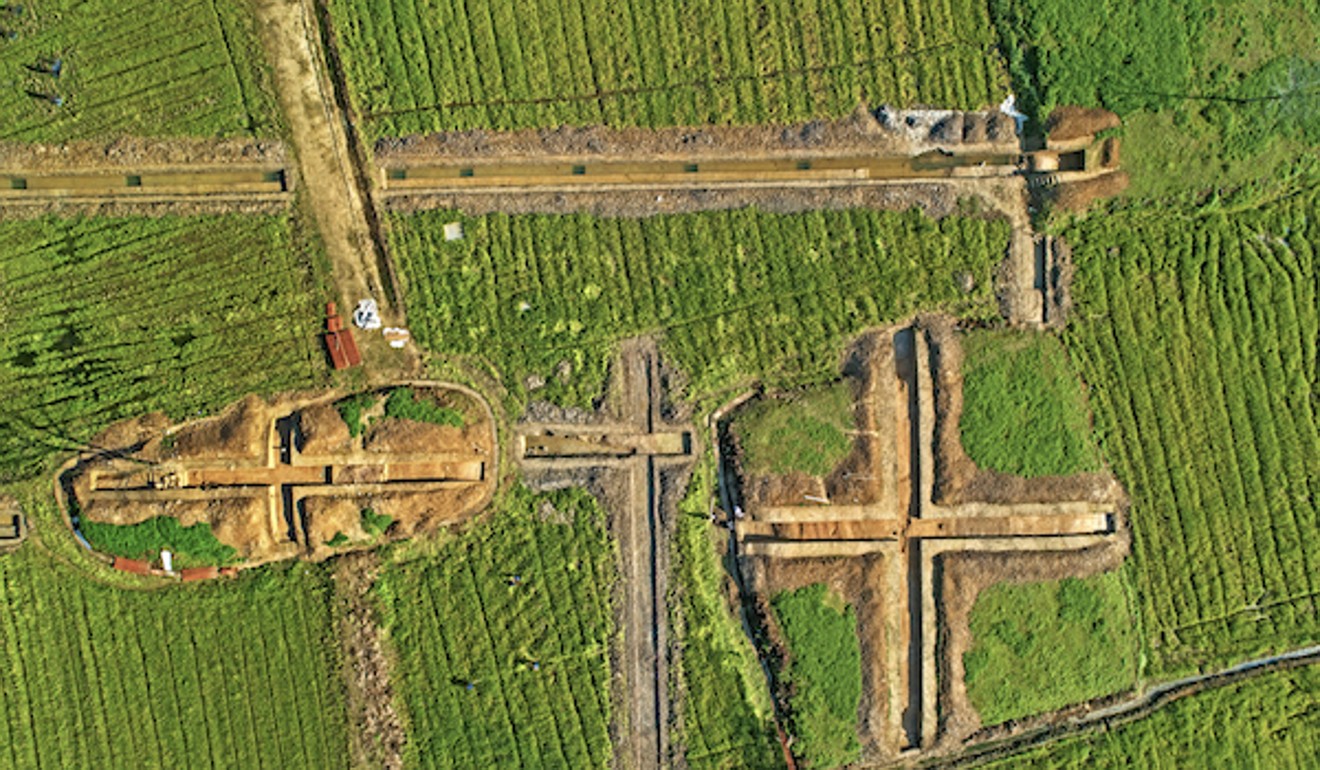
The Liangzhu site in Zhejiang dates back to 3,500BC. Photo: Thepaper.cn
A 5,300-year old Chinese city that provides the earliest example of civilisation in the country has been named as the country’s latest Unesco World Heritage Site.
The Liangzhu Archaeological Site in Zhejiang province was designated a “cultural site” at the latest Unesco meeting in Azerbaijan, bringing the total number of Chinese heritage sites to 55 – passing Italy as the country with the largest number in the world.
The ruins, located on the outskirts of the modern city of Hangzhou, sits on the plain of river networks in the basin of the Yangtze River and date back to 3,300BC.
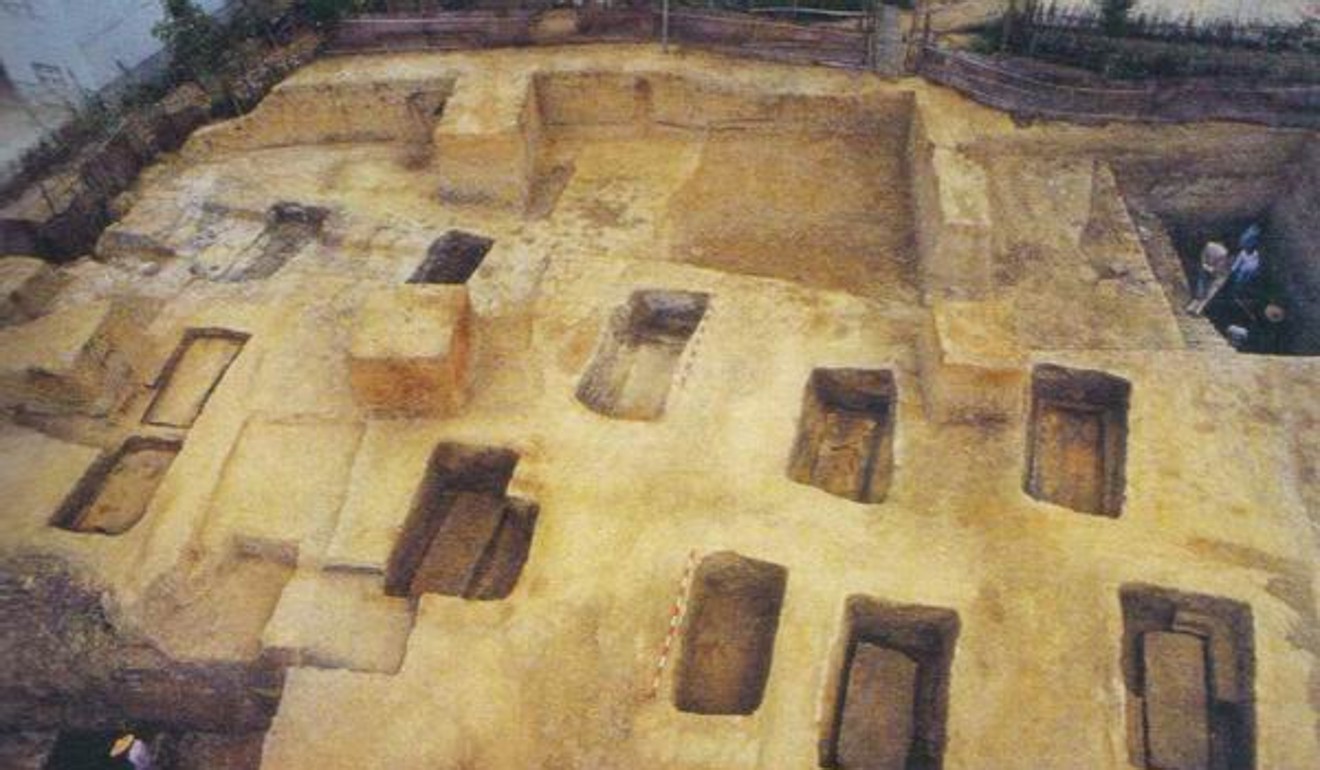
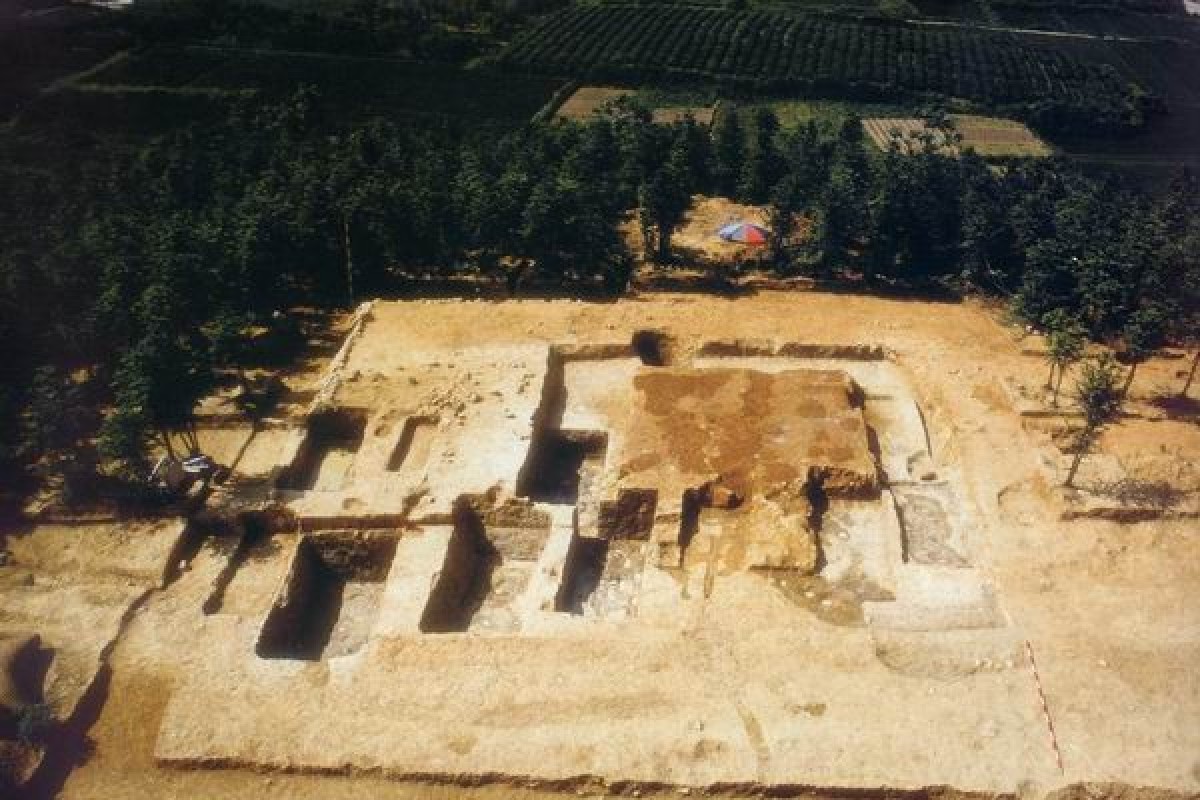
The site covers an area of 14.3 square kilometres, and mainly consists relics of 11 dams, cemetery sites, water conservancy system and walls that gives evidence to an early Chinese urban civilisation, with rice cultivation as the economic foundation.
An aerial view of the site. Photo: Thepaper.cn

The discovery of the site was of “primary importance” as it provides evidence of compelling evidence that Chinese civilisation started 5,000 years ago, 1,000 years earlier than previously thought, Colin Renfrew, a retired professor of archaeology at University of Cambridge, told state news agency Xinhua.

“So when we are talking of the origins of state society in China, we can think of the Liangzhu … instead of the Shang civilisation around 1,500BC.

The site was first discovered in 1936 when a team of archaeologists unearthed some pottery and began searching for further evidence

Liangzhu is China’s 55th Unesco World Heritage Site. Photo: Thepaper.cn

A breakthrough came in 1986 when a burial site with around 1,200 artefacts made from jade, pottery and ivory was uncovered.

The walls of the city were discovered in 2007 and the surrounding water conservancy system was unearthed in 2015.

Archaeologists estimate that it would have taken 4,000 people working for a decade to build the system, according to Xinhua.

The decision to add the site to the Unesco list is the culmination of more than two decades’ work, with preliminary work starting in 1994.

The site is now open to tourists, but a maximum number allowed to visit the site is limited to 3,000 a day and bookings must be made online.

Source: SCMP

06/07/2019

China claims 55 of UNESCO world heritages with elected new sit

AZERBAIJAN-BAKU-CHINA-LIANGZHU-WORLD HERITAGE

The Chinese delegation celebrate during the 43rd session of the UNESCO World Heritage Committee in Baku, Azerbaijan, July 6, 2019. The United Nations Educational, Scientific and Cultural Organization (UNESCO) World Heritage Committee inscribed China’s Archaeological Ruins of Liangzhu City on the World Heritage List as a cultural site here on Saturday, bringing the total number of World Heritage Sites in China to 55, the highest in the world. (Xinhua/Tofik Babayev)

BAKU, July 6 (Xinhua) — China’s Archaeological Ruins of Liangzhu City was on Saturday inscribed to the UNESCO World Heritage List as a cultural site, bringing the total number of the Asian country’s sites on the list to 55.

The decision to add the Chinese cultural site, located in the eastern Chinese city of Hangzhou, to the United Nations Educational, Scientific and Cultural Organization’s (UNESCO) World Heritage List was approved by the World Heritage Committee at its ongoing 43rd session in the Azerbaijani capital of Baku.

“It is considered to be a supreme achievement of prehistoric rice-cultivating civilization of China and East Asia over 5,000 years ago and an outstanding example of early urban civilization,” said a report by the International Council on Monuments and Sites (ICOMOS), the committee’s official advisory body.

Sitting on a plain crossed by river networks in the Yangtze River Basin, the nominated property of Archaeological Ruins of Liangzhu City includes the archaeological remains of Liangzhu City (3300 BC-2300 BC), which was once the center of power and belief of an early regional state in the lower reaches of the Yangtze River during the Late Neolithic China period.

The property testifies to the existence of a regional state with a unified belief system and supported by a rice-cultivating agriculture in late Neolithic China. It also represents an early urban civilization with complex functions and structures.

“Archaeological Ruins of Liangzhu City is a major archaeological discovery of China in the 20th century and an important cultural site that witnessed the 5,000-year civilization of the country,” said Liu Yuzhu, head of China’s National Cultural Heritage Administration, at the committee session.

“We are proud that after 25 years of preparation, our efforts have finally led to the successful inscription of this exceptionally important property, which is the most concrete testimony of 5,000 years of Chinese civilization,” said Shen Yang, ambassador and permanent delegate of China to the UNESCO, following the announcement of the decision.

“We are keenly aware that the inscription also entails an enormous responsibility for conserving this heritage of humanity,” he added.

Zhou Jiangyong, Hangzhou’s municipal committee secretary of the Communist Party of China, said the Chinese city will spare no effort to “protect and make proper use of the enormous cultural heritage before passing it on to the the future generations.”

The Chinese side also pledged continued efforts and strengthened international cooperation in the protection and management of the world heritages in China.

The 43rd convention of the World Heritage Committee, held from June 30 to July 10, started on Friday to examine world heritage nominations. According to its agenda, it will also review the state of conservation of 166 sites on the World Heritage List, 54 of which are also on the List of World Heritage in Danger.

On Friday, China’s Migratory Bird Sanctuaries along the Coast of the Yellow Sea-Bohai Gulf (Phase I) was inscribed to the World Heritage List as a natural site.

At present, China has 55 world heritage sites, including 37 cultural sites, 14 natural sites, and 4 cultural and natural heritages.

Source: Xinhua

25/04/2019

China’s top political advisor meets Azerbaijani president

(BRF)CHINA-BEIJING-BELT AND ROAD FORUM-WANG YANG-AZERBAIJANI PRESIDENT-MEETING (CN)

Wang Yang (R), chairman of the Chinese People’s Political Consultative Conference National Committee, meets with Azerbaijani President Ilham Aliyev ahead of the Second Belt and Road Forum for International Cooperation in Beijing, capital of China, April 24, 2019. (Xinhua/Gao Jie)

BEIJING, April 24 (Xinhua) — China’s top political advisor Wang Yang on Wednesday met with Azerbaijani President Ilham Aliyev ahead of the Second Belt and Road Forum for International Cooperation to be held from April 25 to 27 in Beijing.

Hailing the long-term friendship between China and Azerbaijan, Wang, a member of the Standing Committee of the Political Bureau of the Communist Party of China Central Committee and chairman of the Chinese People’s Political Consultative Conference National Committee, said that the two countries have continued to strengthen their mutual political trust and promoted cooperation in various fields in recent years.

“Azerbaijan was one of the first countries to respond to the Belt and Road Initiative, and cooperation between the two countries in various fields has seen a series of early harvest,” said Wang, adding that China is willing to work with Azerbaijan to seize the great opportunity of jointly building the Belt and Road and deepen bilateral ties and cooperation in various areas to benefit the two countries and the peoples.

Aliyev also expressed the willingness of the Azerbaijani side to contribute to the implementation of the Belt and Road Initiative and promote the continuous development of bilateral relations.

Source: Xinhua

20/04/2019

Xi to address Belt and Road forum next week: FM

CHINA-BEIJING-BRF-PRESS BRIEFING (CN)

Chinese State Councilor and Foreign Minister Wang Yi (C) speaks during a press briefing for the second Belt and Road Forum for International Cooperation (BRF) in Beijing, capital of China, April 19, 2019. The second Belt and Road Forum for International Cooperation will be held from April 25 to 27 in Beijing, Wang Yi announced Friday. (Xinhua/Zhai Jianlan)

BEIJING, April 19 (Xinhua) — Chinese President Xi Jinping will deliver a keynote speech at the second Belt and Road Forum for International Cooperation (BRF) to be held from April 25 to 27 in Beijing, State Councilor and Foreign Minister Wang Yi announced Friday.

Leaders including heads of state and government from 37 countries will attend the forum’s roundtable summit, Wang told a press briefing.

Wang said 12 thematic forums and a CEO conference would be held on April 25, the opening ceremony and a high-level meeting on April 26, and the leaders’ roundtable on April 27.

Xi will attend the opening ceremony and deliver a keynote speech. He will also chair the leaders’ roundtable and brief media from home and abroad about the outcomes after the roundtable, Wang said, adding that Xi and his wife Peng Liyuan will also hold a welcoming banquet for the leaders and representatives.

According to Wang, the 37 countries are Austria, Azerbaijan, Belarus, Brunei, Cambodia, Chile, Cyprus, Czech Republic, Djibouti, Egypt, Ethiopia, Greece, Hungary, Indonesia, Italy, Kazakhstan, Kenya, Kyrgyzstan, Laos, Malaysia, Mongolia, Mozambique, Myanmar, Nepal, Pakistan, Papua New Guinea, the Philippines, Portugal, Russia, Serbia, Singapore, Switzerland, Tajikistan, Thailand, the United Arab Emirates, Uzbekistan and Vietnam.

The secretary-general of the United Nations and the managing director of the International Monetary Fund will attend the forum, Wang said, adding that senior representatives of France, Germany, Britain, Spain, Japan, the Republic of Korea and the European Union will also participate.

Noting that the BRF is the top-level platform for international cooperation under the framework of the Belt and Road Initiative, Wang said the conference next week would be of landmark significance.

The theme of the second BRF is “Belt and Road Cooperation, Shaping a Brighter Shared Future.” Wang said the main purpose is to promote the high-quality development of Belt and Road cooperation, which is the common aspiration of countries participating in the initiative.

Speaking highly of the fruitful results yielded since the initiative was launched in 2013, Wang said the second BRF was greatly welcomed worldwide with some 5,000 participants from more than 150 countries and 90 international organizations having confirmed their attendance, covering areas from five continents and different walks of life such as government, civil society, business and academia.

According to Wang, this year’s forum will have 12 thematic forums, twice of that during the first forum in 2017, and the CEO conference will be held for the first time. A joint communique will be released after the leaders’ roundtable and other consensus reached during the forum will be issued in a report.

The Belt and Road Initiative, proposed by Xi in 2013, aims at enhancing all-around connectivity through infrastructure construction, exploring new driving force for the world economic growth, and building a new platform for world economic cooperation, according to Wang.

Stressing that Xi and leaders from other countries blueprinted the initiative in 2017, Wang said the progress in the past two years shows that the initiative conforms to the trend of the times featuring peace, development, cooperation and win-win and accords with the common aspiration of openness and joint development of all countries.

“As the host country, we will maintain close communication and coordination with all parties to prepare for the forum with openness, inclusiveness and transparency, upholding the principle of consultation and cooperation for shared benefits,” Wang said.

He said the forum would voice the firm support for multilateralism and an open world economy, enrich the principles of cooperation of the Belt and Road Initiative, build a network of partnership, and establish more mechanisms for high-quality development.

Bilateral, trilateral and multilateral cooperation has been reinforcing each other under the initiative, laying a solid foundation for a closer and more wide-ranging partnership, he said.

Wang said China will showcase the outcomes and introduce the measures of its reform and opening-up to the world, adding that this will allow China to share the dividends of its economic growth, promote the Belt and Road Initiative, and bring more opportunities to the development of all countries as well as the building of the Belt and Road.

“I believe that the forum will inject stronger impetus into the world economy, open even broader horizon for the development of the countries, and contribute to the building of a community with a shared future for humanity, ” said Wang.

Source: Xinhua

Law of Unintended Consequences

continuously updated blog about China & India

ChiaHou's Book Reviews

continuously updated blog about China & India

What's wrong with the world; and its economy

continuously updated blog about China & India