CHINDIA ALERT: You'll be living in their world, very soon

continuously updated blog about China & India

  • Home
    • HOME: Why Chindia?
    • Chindia sources
  • Historical Perspectives
    • 4,000 years of records
    • Before the Raj
    • China’s first-half 20C Timeline
    • India’s first-half 20C Timeline
    • 70 years from Liberation
    • 70 years from Independence
  • Social & Cultural Factors
    • India’s British influence
    • China is homogeneous
    • India is diverse
    • Very different mindsets
    • Chinese mindset
    • Indian mindset
    • Chinese body, mind and spirit
    • Indian body, mind and spirit
    • Uncanny similarities
    • Major events or changes in China – Social & Cultural 2013:
    • Major events or changes in India – Social & Cultural 2013
  • Economic Factors
    • Major Chinese Economic events or changes: 2013 – 2019
    • Major Indian economic events or changes: 2013 – 2017
    • Chinese overseas acquisitions / investments
    • China needs to rebalance her economy
    • China’s infrastructure
    • ‘Greening’ of China
    • China’s manufacturing
    • India changes gear in 1991
    • India’s services
    • Consumerism blossoms
    • Information Technology
  • Political Factors
    • Major Chinese Political events or changes: 2013 – 2017
    • Major Indian Political events or changes: 2013 – 2017
    • Intrinsic uncertainty and instability – China
    • Intrinsic uncertainty and instability – India
    • Geopolitics: Chinese
    • 2014 is a year of bumper harvest for China’s diplomacy, FM says
    • Geopolitics: Indian
  • Prognosis?
    • Will China be a superpower by 2038?
    • How close will India be in 2038?
    • China’s relationship with the Rest of the World
    • Chinese challenges?
    • Indian challenges?
    • How well will China and India innovate – to 2017?
  • In Closing
    • Eight ways China is changing your world
    • Ten forces forging China’s future
    • Reimagining India: Unlocking the Potential of Asia’s Next Superpower
  • ABOUT / Contact us
  • Chindia Alert: You’ll be Living in their World Very Soon

    aims to alert you to the threats and opportunities that China and India present. China and India require serious attention; case of ‘hidden dragon and crouching tiger’.

    Without this attention, governments, businesses and, indeed, individuals may find themselves at a great disadvantage sooner rather than later.

    The POSTs (front webpages) are mainly 'cuttings' from reliable sources, updated continuously.

    The PAGEs (see Tabs, above) attempt to make the information more meaningful by putting some structure to the information we have researched and assembled since 2006.

  • Follow CHINDIA ALERT: You'll be living in their world, very soon on WordPress.com
  • If you wish to read the material on the PAGES in an eBook format; here it is

    You will be living in their world, very soon

  • If you wish to read the material on China on the PAGES in a paperback format; here it is

    Beware the Waking Dragon

  • Categories

  • Beijing China China alert Chindia Alert Chinese President Xi Jinping coronavirus corruption COVID-19 Diplomacy Economics GeoPolitics Good news History Hong Kong India alert Internal politics Japan Manufacturing Military Neighbour conflict Pakistan Politics Pollution Shanghai Social & cultural Technology Uncategorized United States Washington Wuhan
  • Since July 21, 2012 free counters
  • Blogs I Follow

    • CCChang
    • Law of Unintended Consequences
    • ChiaHou's Book Reviews
    • What's wrong with the world; and its economy

Archive for ‘Beijing’

« Older Entries  |   Newer Entries »
05/04/2019

Campaign to promote paying tribute to revolutionary martyrs kicks off in China

CHINA-BEIJING-QINGMING FESTIVAL-CAMPAIGN (CN)

Students lay flowers to pay tribute to revolutionary martyrs during a campaign at the Museum of the War of Chinese People’s Resistance Against Japanese Aggression in Beijing, capital of China, April 4, 2019. China has kicked off a campaign to promote paying tribute to revolutionary martyrs as Tomb-sweeping Day draws near. The campaign is aimed at combining educational activities with paying tribute. Tomb-sweeping Day, also known as Qingming Festival, falls on April 5 this year. It is a traditional Chinese holiday where people pay tribute to deceased family and friends. (Xinhua/Zhang Chenlin)

Source: Xinhua

Posted in Beijing, campaign, China alert, kicks off, Museum of the War of Chinese People's Resistance Against Japanese Aggression, Qingming Festival, revolutionary martyrs, Tomb-sweeping Day, Uncategorized | Leave a Comment »

04/04/2019

Manila accuses Beijing of violating its sovereignty as South China Sea dispute rages on

  • Philippines’ foreign ministry weighs in on controversy over presence of Chinese fleet near contested Thitu Island
  • Manila has ‘consistently manifested its … objections or concerns over illegal, tension-raising or coercive activities’, statement says
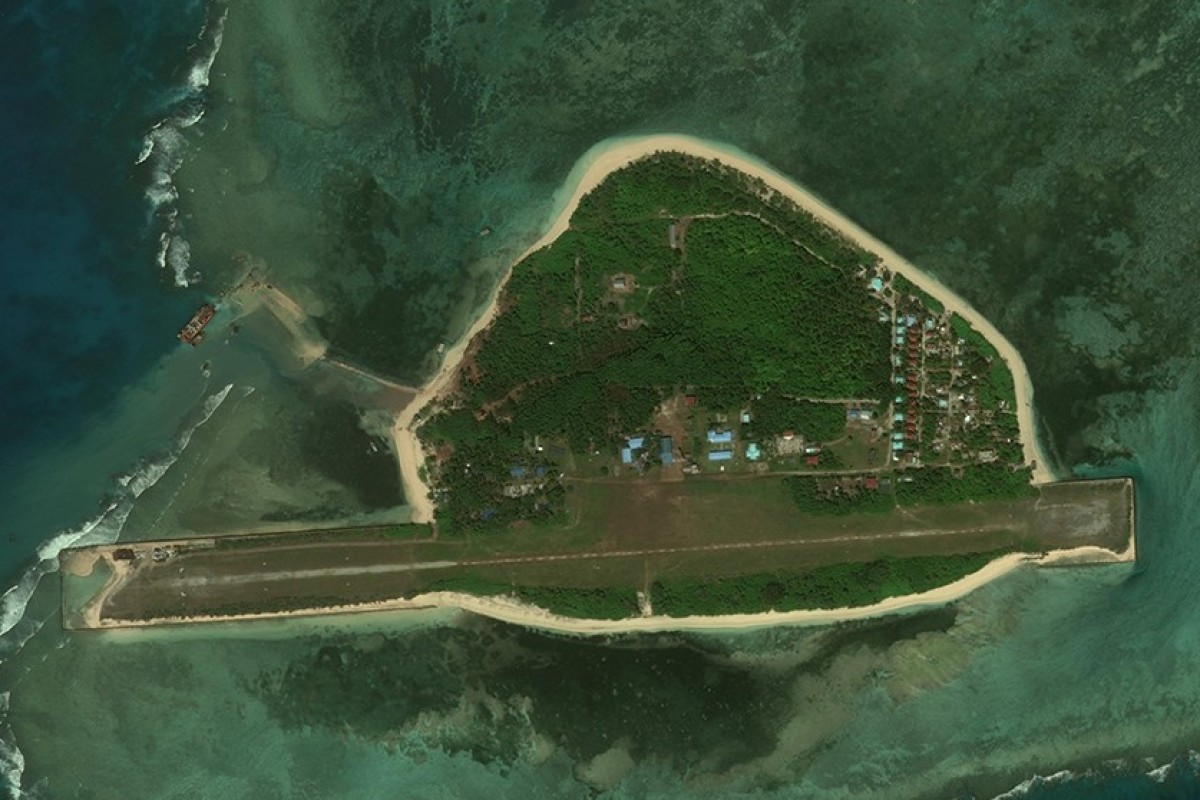
The Philippines is angry about the presence of a Chinese fleet close to Thitu Island in the South China Sea. Photo: AMTI
The Philippines’ foreign ministry on Thursday accused Beijing of violating its sovereignty and jurisdiction by allowing hundreds of vessels to sail close to an island claimed by Manila in the South China Sea.
The statement came just three days after Philippine Defence Minister Delfin Lorenzana
described China’s growing presence in the disputed waters as “very concerning”, saying on a trip to Washington that it was encroaching on the Philippines’ exclusive economic zone.
The conflict relates to the presence of up to 
200 Chinese vessels near Thitu Island

, which Manila calls Pag-asa, in the disputed Spratly Islands.

The Department of Foreign Affairs in Manila said the Philippines “has consistently manifested its position on Pag-asa … and its objections or concerns over illegal, tension-raising or coercive activities, through diplomatic actions … and in meetings with the Chinese side”.
The statement said Thitu is part of the Kalayaan island group – the local name for the Spratlys – and an integral part of the Philippines, over which it has sovereignty and jurisdiction.

“The presence of Chinese vessels near and around Pag-asa and other maritime features in the KIG is illegal,” it said.

US, Philippines in talks on rocket system to deter Beijing

“Such actions when not repudiated by the Chinese government are deemed to have been adopted by it,” it said. “The presence of Chinese vessels within the KIG, whether military, fishing or other such will thus continue to be the subject of appropriate action by the Philippines”.

The foreign ministry said earlier it had filed a diplomatic protest about the presence of more than 200 Chinese vessels near Thitu between January and March.

Satellite images captured in February by the Asia Maritime Transparency Initiative under the Washington-based Centre for Strategic and International Studies show almost 100 Chinese ships apparently hampering Philippine construction work on Thitu.

The fleet, dispatched from the nearby Subi Reef, includes naval and coastguard vessels, as well as dozens of fishing boats.

Manila was planning to upgrade its military facilities on Thitu, including the construction of an airstrip, but the project was suspended because of the Chinese interference.

The defence chiefs of the US and the Philippines reaffirmed their security alliance on Monday in Washington. As well as agreeing to boost cooperation, the US promised to increase its support for Manila’s military modernisation – a move seen as a response to Beijing’s increasingly assertive posturing in the South China Sea.

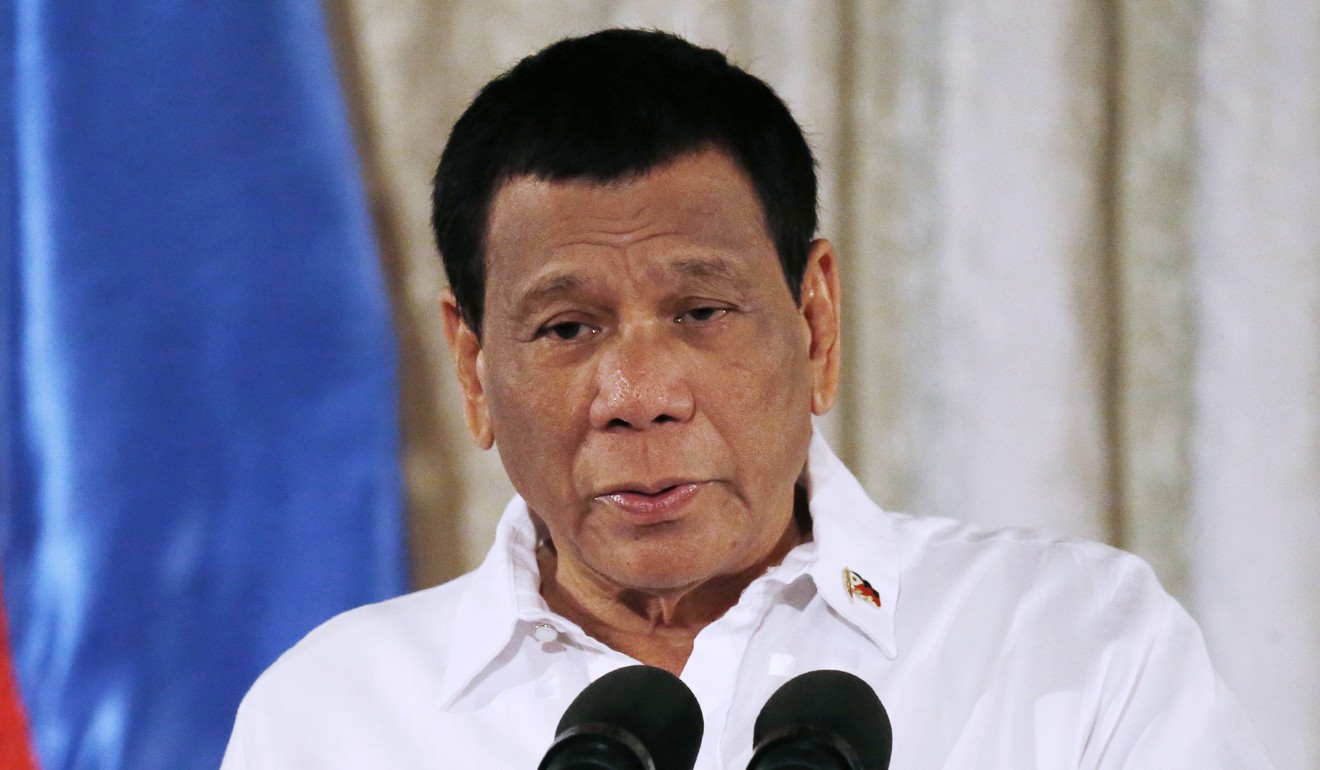
Philippine President Rodrigo Duterte says he will not confront China over the South China Sea dispute as doing so would end in war. Photo: AP
Despite the statements from his ministries,

Philippine President Rodrigo Duterte

said on Wednesday that Beijing wanted to be friends with Manila and that he would not confront China over their competing claims in the South China Sea because it would end in war.

The foreign affairs department in Manila also sought to sound a positive note in its statement, saying the maritime dispute was not the “sum total” of Philippines-China relations, and should not exclude mutually beneficial cooperation in other fields.
US more likely than Philippines to end up in ‘shooting war’
A day after the two nations wrapped up their latest meeting on the South China Sea, Chinese foreign ministry spokesman Geng Shuang said on Thursday the two sides had reaffirmed their differences but would continue to seek a resolution.
“China looks forward to working with the Philippines to make active efforts to safeguard the overall interests of China-Philippines cooperation and peace and stability in the South China Sea,” he said.
Hong Kong-based military expert Song Zhongping said the presence of the Chinese vessels near Thitu was a clear statement of Beijing’s intent.

“Beijing believes Thitu Island is Chinese territory, so any work there should be done by China, not the Philippines,” he said.

It also wanted to stop Manila “opening the door to dangerous people” he said, referring to the Southeast Asian nation’s announcement about allowing the US access to five more of its military bases.

Source: SCMP

Posted in accuses, Beijing, China alert, maritime disputes, Philippines, South China Sea, sovereignty, Uncategorized, violating | Leave a Comment »

02/04/2019

China, New Zealand agree to deepen comprehensive strategic partnership

CHINA-BEIJING-XI JINPING-NEW ZEALAND-JACINDA ARDERN-MEETING (CN)

Chinese President Xi Jinping (R) meets with New Zealand Prime Minister Jacinda Ardern at the Great Hall of the People in Beijing, capital of China, April 1, 2019. (Xinhua/Rao Aimin)

BEIJING, April 1 (Xinhua) — Chinese President Xi Jinping met with New Zealand Prime Minister Jacinda Ardern in Beijing Monday. They agreed to continuously enrich the China-New Zealand comprehensive strategic partnership based on the principles of mutual trust and mutual benefit.

During their meeting at the Great Hall of the People, Xi first expressed sincere condolences to New Zealand for the deadly shootings in Christchurch two weeks ago, saying that Ardern’s visit to China at a moment that her country was facing a special important agenda showed the great importance she and the New Zealand government attached to bilateral ties.

China has always viewed New Zealand as a sincere friend and partner, Xi said, adding that China-New Zealand ties, established 47 years ago, had always been at the forefront among relationships between China and Western countries.

He called on both countries to continue to deepen the bilateral comprehensive strategic partnership based on the principles of mutual trust and mutual benefit.

China stands ready to work with New Zealand to maintain the bilateral ties as a “front-runner” in relations between China and Western countries, Xi said.

Under the new circumstances, the two countries need to further deepen mutual understanding and trust and respect each other’s core interests and major concerns in the spirit of openness, inclusiveness and seeking common grounds while reserving differences, he said.

Xi called on both sides to expand substantial cooperation.

China will support capable enterprises to invest in New Zealand, while New Zealand needs to provide a fair, just and unbiased business environment for Chinese enterprises, he said.

He also called for the speeding up of negotiations on the upgrade of the bilateral free trade agreement.

China welcomes New Zealand to participate in the Belt and Road construction, Xi said, encouraging both countries to enhance cooperation in international affairs, jointly strive for an open world economy and uphold multilateralism and multilateral trading.

China attaches importance to climate change and is willing to work with New Zealand to promote the sustainable development of Pacific island countries, the president said.

He also encouraged both countries to enhance exchanges in areas including education, culture, youth and science and technology, and to host a successful China-New Zealand Year of Tourism in 2019.

Ardern thanked Xi for extending condolences over the deadly shooting incident, and expressed condolences for the loss of life in a chemical plant blast in Jiangsu Province in late March.

Noting the long history of friendship between New Zealand and China, Ardern said her country attached great importance to ties with China and was proud that the country led in many areas in developing ties with China.

Ardern said she agreed with Xi’s comments on the relations between the two countries, and looked forward to strengthening the New Zealand-China comprehensive strategic partnership and deepening bilateral economic and trade cooperation and people-to-people exchanges after this visit.

She reiterated New Zealand’s adherence to the one-China policy.

New Zealand pursues an independent foreign policy and firmly supports multilateralism and free trade, Ardern said, adding that the country had long supported the Belt and Road Initiative and participated in the Asian Infrastructure Investment Bank.

She said New Zealand would send a high-level delegation to the second Belt and Road Forum for International Cooperation to be held later this month in Beijing.

New Zealand is ready to enhance cooperation and coordination with China on major international issues including climate change, the prime minister said.

Ardern arrived in Beijing on Sunday for a two-day visit to China. This is her first official visit to China since becoming New Zealand’s prime minister in October 2017.

Source: China Daily

Posted in Beijing, China alert, Chinese President Xi Jinping, comprehensive strategic partnership, New Zealand, Prime Minister Jacinda Ardern, Uncategorized | Leave a Comment »

21/03/2019

President Xi meets Harvard president

CHINA-BEIJING-XI JINPING-HARVARD PRESIDENT-MEETING (CN)

Chinese President Xi Jinping (R) meets with president of Harvard University Lawrence Bacow at the Great Hall of the People in Beijing, capital of China, March 20, 2019. (Xinhua/Li Tao)

BEIJING, March 20 (Xinhua) — Chinese President Xi Jinping met with president of Harvard University Lawrence Bacow in Beijing Wednesday and expressed the hope that Sino-U.S. cultural and people-to-people exchanges could produce more positive results.

Noting that this is Bacow first overseas visit after taking office, Xi said the tour showcases the importance attached by Bacow to Sino-U.S. education exchanges.

Xi said education exchanges and cooperation are an important part of Sino-U.S. relations and help enhance the public opinion of the bilateral friendship. China advocates mutual learning, encourages Chinese students to study abroad and supports education exchanges and cooperation with other countries.

Xi said that he felt very happy that U.S. President Donald Trump also expressed support for bilateral cultural and people-to-people exchanges and cooperation in their meeting in Argentina at the end of last year.

Xi stressed that over the past 40 years of reform and opening up, China’s rapid development has also benefited from the improvement of education. China is committed to advancing the modernization of education and making its education system satisfying for its people.

“We will expand the opening up of education, strengthen exchanges and experiences sharing with countries around the world, and jointly promote the development of education,” said Xi, expressing the willingness to conduct more extensive exchanges and cooperation with U.S. educational and research institutions such as Harvard University.

Bacow said he is visiting not only as the president of Harvard University but also as a representative of U.S. universities to promote education exchanges with China.

He said maintaining and deepening exchanges and cooperation between the two countries’ education and cultural institutions is crucial to promoting U.S.-China relations in the long run. Hailing the popularity of the Chinese language at Harvard, Bacow boasted that Harvard has a large number of Chinese students.

Bacow said it is admirable that the Chinese government attaches great importance to higher education and makes huge efforts in this regard, noting that Harvard will continue to promote exchanges and cooperation with Chinese educational and scientific research institutions.

Source: Xinhua

Posted in Beijing, China alert, Harvard president, Lawrence Bacow, President Xi, Uncategorized | Leave a Comment »

19/03/2019

Exclusive: Metro kicks off China unit sale, likely to fetch $2 billion valuation – sources

HONG KONG (Reuters) – German wholesaler Metro AG has kicked off the sale of its China operations by calling for bids, in a deal that would value the business at between $1.5 billion (1.1 billion pounds) and $2 billion, two people with direct knowledge of the deal said.

Metro, which owns 95 stores in China and real estate assets in major cities such as Beijing and Shanghai, is planning to offload a majority stake in its China business, said the people.

The sale move is part of a global reorganisation of the wholesaler and comes as China’s wholesale and retail sectors are experiencing disruption from e-commerce players.

Metro’s China business could yet be valued at up to $3 billion, said two separate sources with direct knowledge of the matter.

Potential bidders include electronics retailer Suning Holdings Group, supermarket chain operators Wumart Stores Inc and Yonghui Superstores, according to three of the people.

Private equity firms such as Hillhouse Capital Group and Bain Capital are also studying a potential deal, they added.

Property makes up the bulk of the value in Metro’s China business, the people said, cautioning, however, that there is a large gap between price expectations among buyers and the seller.

A Metro spokeswoman in Germany said the company is in talks with potential partners concerning the further development of its China business but declined to comment on details of its exchanges with potential partners or the sale process.

Bain and Suning declined to comment. Yonghui and Hillhouse did not immediately respond to requests for comment. Calls to Wumart went unanswered.

First-round, non-binding bids are due in the second week of April, said two of the people. Citigroup and JPMorgan are advising Metro, the people said. The banks declined to comment.

Source: Reuters

Posted in Beijing, China alert, kicks off, Metro, Shanghai, Uncategorized, valuation | Leave a Comment »

18/03/2019

Cash-strapped Chinese regions seek support from Beijing to meet costs of environmental clean-up

  • Delegates to recent National People’s Congress asked for more help from central government and warn of cost of fighting pollution
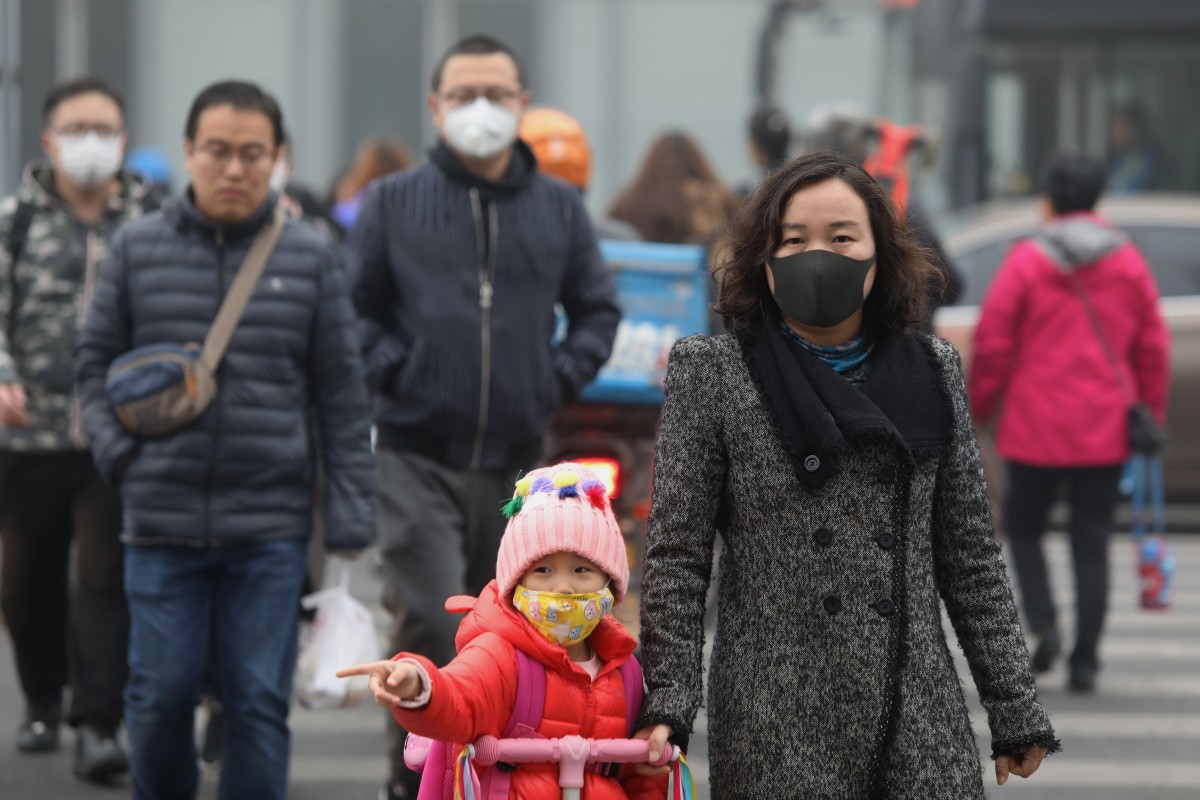
Beijing residents wearing masks on a smoggy day last year. Photo: Simon Song

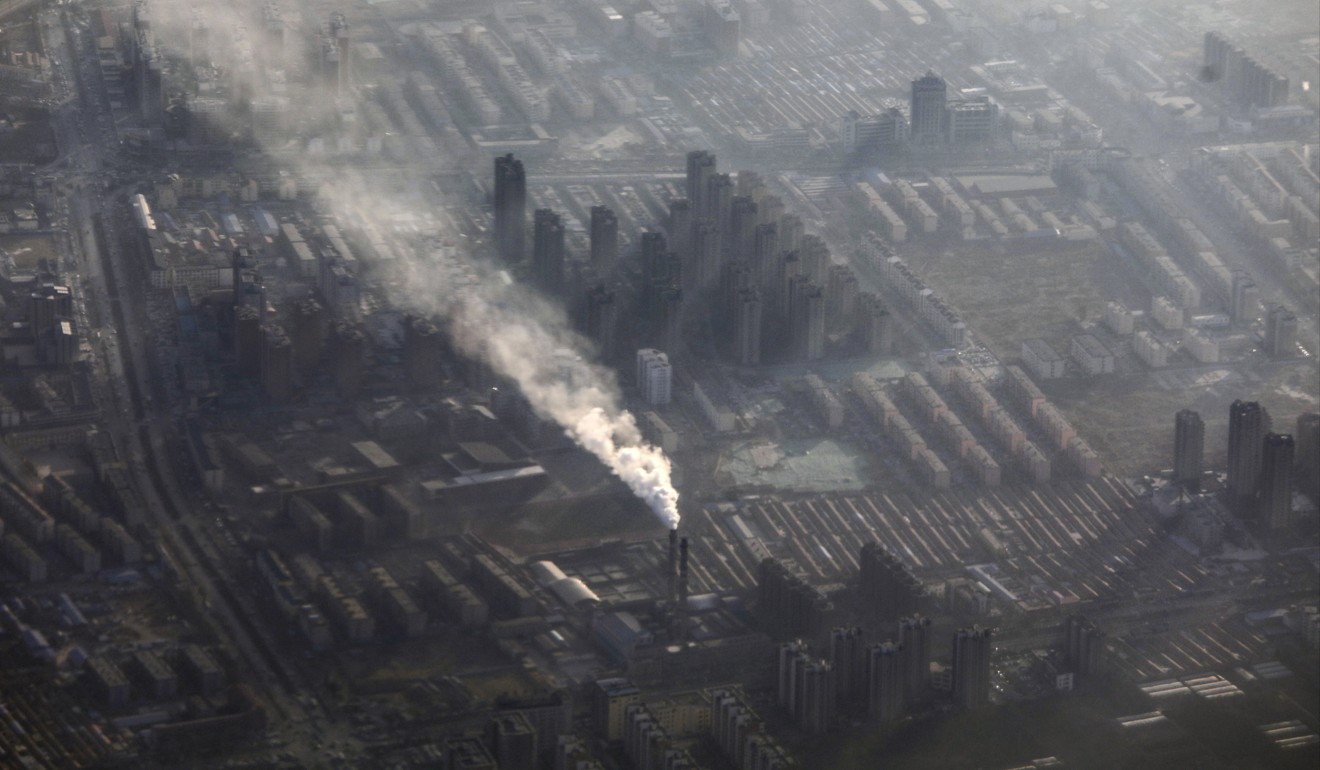
China’s cash-strapped regions are lobbying Beijing to loosen its purse strings to help fight pollution, saying they do not have the funds to follow state policies aimed at fixing the damage done by decades of unrestricted development.

The cost of environmental compliance was a major theme at this month’s annual session of the National People’s Congress, where thousands of non-binding recommendations submitted by delegates give an insight into the major preoccupations of legislators.

Beijing has been at pains to stress it will not ease up in the “war on pollution” launched five years ago by Premier Li Keqiang, even though the economy grew at its slowest rate since 1990 last year.

But with resources tight and controlling debt a priority, many parliamentary delegates called for more spending support from Beijing and a more “coordinated” approach to keeping pollution in check and the economy on track.

“We cannot stop or hinder economic development in order to pursue environmental protection,” said delegate Pei Chunliang from central China’s Henan province, which has struggled to find new sources of growth.

Provinces have been given a set of targets by central government to reduce emissions. Photo: Simon Song

“In some regions the rules of economic development have not been respected,” Pei warned in a proposal calling for more support for environmentally friendly firms.

For regions under pressure to meet smog targets or resolve long-standing environmental problems while trying to meet growth targets, immediate relief is seen as essential.

“There is a big gap between fiscal revenues and expenditure,” said Zhang Leiming, mayor of the city of Pingdingshan in Henan, blaming the economic slowdown and the city’s dependence on coal.
Zhang said his city had spent hundreds of billions of yuan to tackle problems like land subsidence, but it was “far from enough”, and the state needed to establish a giant fund to help resource-dependent cities meet their goals.
China pollution pledge: Beijing to cut 60pc of power sector emissions by 2020

Many regions called for state aid to rectify such long-standing pollution problems, with delegates from coal-producing regions like Shanxi lobbying for tax and debt relief.

Other regions are also struggling to implement new directives to prevent agricultural pollution and clean up rivers.

“Due to insufficient local financial resources and historical debts, it is difficult to meet the funding requirements,” said delegate Yu Huiwen, head of the environment bureau in Sichuan province, which is responsible for protecting the upstream area of the Yangtze.

The finance ministry said in its report to parliament this month that it will allocate 25 billion yuan (US$3.7 billion) to a smog prevention fund this year, a 25 per cent increase on 2018, and 30 billion yuan to treat water pollution, up 45 per cent.

Environment Minister Li Ganjie, who acknowledged earlier this year that some regions were struggling with the “historical burdens” of polluting industries, also told a briefing during the parliamentary session that China would provide more support for local governments.

The government was “currently studying and preparing to adopt new measures”, he said, but added it wasn’t just about money, but also policies and technical guidance.

“Whatever the difficulties, we will help them find a reasonable solution,” he said.

Source: SCMP

Posted in Beijing, China alert, Chinese regions, environmental clean-up, Uncategorized | Leave a Comment »

14/03/2019

China Focus: Tibetan Buddhism well respected, preserved: political advisors

BEIJING, March 13 (Xinhua) — Chinese religious figures serving as political advisors at this year’s “two sessions” are pleased with the country’s protection of Tibetan Buddhism in southwest China’s Tibet Autonomous Region.

Political advisor Lhapa from Jokhang Temple is among the over 2,000 members of the National Committee of the Chinese People’s Political Consultative Conference (CPPCC), who gathered in Beijing for this year’s session that started on March 3 and concluded Wednesday.

Jokhang Temple, in downtown Lhasa, the regional capital of Tibet, is a must for visitors to Tibet and a sacred site for Tibetan Buddhists. It attracts about 800,000 tourists and receives over three million Buddhist followers each year.

Built in the 7th century in the Tang Dynasty (618-907), Jokhang Temple is home to plenty of historical relics and typical Tibetan architecture. It was included in the UNESCO World Heritage List in 2000.

The Chinese government has attached great importance to the protection and preservation of the temple, said Lhapa, executive deputy director of the management committee of Jokhang Temple. Five years ago, for example, the government invested over 60 million yuan (8.94 million U.S. dollars) in gilding the five golden roofs of the temple.

The Buddha figures, Thangka and murals in the temple have also been well preserved. To better protect these precious cultural relics, a database for Buddha statues and Thangka in both Mandarin and Tibetan languages, launched in 2015, will be completed next year, he added.

Experts from Beijing and Xi’an have been invited to help build the database. More than 6,000 Buddha statues and over 600 Thangka have been included in the database, according to Lhapa.

“The government has invested 100 million yuan in protecting the cultural relics,” Lhapa said. “I’m really satisfied with the government’s role in protecting the temple, a treasure of the country.”

As a political advisor from the religious circles, Lhapa said he must serve all the people, including tourists, believers and researchers who visit the temple.

“We have personnel working 24/7 in the halls of the temple, including monks, firefighters and police officers to prevent the cultural heritage from being destroyed or stolen, and to ensure tourists’ safety,” Lhapa said.

The monks in Jokhang Temple usually spend about nine hours every day conducting religious activities such as chanting sutra and learning Buddhist doctrine, Lhapa said.

“Anyone who comes to Jokhang Temple will see worshippers crowd the square in front of the main hall throughout the year,” Lhapa said.

Every Tibetan New Year, Jokhang Temple opens for 24 hours to provide convenience for believers and tourists.

“On the Lamp Festival, we have Dharma assembly here and the butter lamps are lit on top of the temple. Believers come to pray for happiness and health,” he said.

Similar to Jokhang Temple, almost all the temples and monasteries in Tibet are under national or regional protection, according to Lhapa.

Living Buddha Drigung Khyungtsang echoed Lhapa’s ideas, saying today’s Tibet observes many traditional folk and religious activities. The Shoton festival at Zhaibung Monastery and the worship activities at Sera Monastery are among the most popular ones.

“Tibetan Buddhists, young and old, would sway their praying wheels and chant sutras when significant activities are launched,” said Drigung Khyungtsang.

As vice chairman of the Tibet branch of the Buddhist Association of China, Drigung Khyungtsang is in charge of the Kangyur printing. The precious wooden templates of the Kangyur have been well preserved and printing is suspended in winter because cold weather may cause damage to the templates.

Political advisor Lodro Gyatso, a senior monk from the Sakya Monastery, the earliest monastery of the Sakya Sect of the Tibetan Buddhism, in Xigaze Prefecture, told Xinhua that the monastery has two Buddhist colleges, offering various classes including Tibetan language, Tibetan calligraphy, Buddhist texts, astronomy, calendrical calculation and philosophy to monks and lamas.

Thanks to a digital archive project launched in 2017 in the monastery, the original sutra books and archives have been preserved while their digital versions are available online.

Living Buddha Jewon Koondhor has a story different from other political advisors. He had spent most of his life outside and returned to his hometown, the city of Qamdo in Tibet, when he was 60 in 2011.

“My hometown Qamdo has changed a lot and is continually improving. The traffic there today is much more convenient. I’m happy to be back,” he said.

Source: Xinhua

Posted in astronomy, Beijing, Buddha statues, Buddhist Association of China, Buddhist doctrine, calendrical calculation, China alert, Dharma assembly, Drigung Khyungtsang, Jewon Koondhor, Jokhang Temple, Kangyur printing, Lamp Festival, Lhapa, Lhasa, Living Buddha, Lodro Gyatso, Mandarin, monks and lamas, National Committee of the Chinese People's Political Consultative Conference (CPPCC), philosophy, Political advisor, praying wheels, Qamdo, Sakya Sect, Sera Monastery, Shoton festival, sutras, Tang Dynasty, Thangka, Tibet Autonomous Region, Tibetan Buddhism, Tibetan calligraphy, Tibetan language, Tibetan New Year, Uncategorized, unesco world heritage, vice chairman, Xi'an, Xigaze Prefecture, Zhaibung Monastery | Leave a Comment »

14/03/2019

New Delhi feels betrayed by China on Masood Azhar; bilateral ties could suffer

The bonhomie witnessed between India and China over the last one year after the informal summit between Prime Minister Narendra Modi and Chinese President Xi Jinping in Wuhan April last year has clearly evaporated following the Chinese action

Even as China asserted on Thursday that the ‘Wuhan Spirit’ was still on, there is a sense of betrayal in New Delhi over Beijing’s decision to stand by its ‘all-weather friend’ Pakistan by blocking the designation of JeM chief Masood Azhar as a global terrorist by the UN Security Council.
The bonhomie witnessed between India and China over the last one year after the informal summit between Prime Minister Narendra Modi and Chinese President Xi Jinping in Wuhan April last year has clearly evaporated following the Chinese action.
Amid the growing clamour in India for boycotting China after it used its veto power to block listing of Masood Azhar as a global terrorist, New Delhi has expressed disappointment over Beijing’s move while reaffirming its determination to pursue all avenues to bring the JeM chief to justice for terror attacks in different parts of India.
A number of reasons, including the significant role Pakistan plays in China’s ties with the Islamic world and Beijing’s anxiety over spill-over effect of a ban on Azhar in China’s own restive Muslim-dominated Xinjiang region, could have played a role in Beijing deciding to yet again stonewall any action by the UNSC against the JeM chief, observers say.
Despite its burgeoning trade relationship with India, China has never hidden the fact that it needed Pakistan more than any other country for achieving its geo-strategic goals in the region. Pakistan’s importance for China has increased manifold in recent years in view of the heavy economic and manpower investments it has made in the China-Pakistan Economic Corridor (CPEC) as part of President Xi’s signature Belt and Road Initiative (BRI).
Sources said it was quite clear to New Delhi over the past few days that China was adopting double standards in the global fight against terrorism only to shield Pakistan. China, they said, could no longer take shelter under ‘lame excuses’ like India had not provided any ‘updated material’ on Azhar’s terrorist activities in India which could compel Beijing to reconsider its position on the JeM chief.
Sources pointed out that India had submitted to China and other key nations ‘clinching and irrefutable’ evidence linking JeM to terror attacks in India, including the Pulwama attack. All other members of the UNSC, including those in the non-permanent category, solidly backed India’s effort to get the JeM chief banned but China put a spanner in their works yet again, they regretted.
The US, meanwhile, said responsible UNSC members might be forced to other actions at the Security Council if Beijing continued to block Masood’s designation.
China’s veto against banning Masood Azhar has once again highlighted the deep-rooted suspicion and mistrust between India and China on strategic issues, particularly the fight against terrorism. Despite pledging to work with India in combating terror, China has done precious little to assuage India’s concerns over terrorism emanating from Pakistan.
China has, in fact, praised Pakistan on many occasions for its role in the global war against terrorism. Beijing’s contention has been that Pakistan itself has been one of the main victims of terrorism and it must be supported in combating the menace.
There is also a feeling in Chinese circles that the situation in Jammu and Kashmir is the prime reason for terrorism in India. The argument being advanced by them is that while Kashmir is a disputed territory, Xinjiang is a province of China and, therefore, a comparison can not be drawn between the two regions.
Read More
Source: The Statesman

Posted in Beijing, Belt and Road Initiative (BRI), betrayed, bilateral ties, bonhomie, boycotting China, China alert, China-Pakistan Economic Corridor (CPEC), Chinese President Xi Jinping, global terrorist, India alert, Islamic world, Jammu and Kashmir, JeM chief, Masood Azhar, New Delhi, Pakistan, Prime Minister Narendra Modi, trade relationship, UN Security Council, Uncategorized, UNSC, Wuhan, Wuhan Spirit, Xinjiang | Leave a Comment »

13/03/2019

China’s coastal province Shandong unveils bln-dollar infrastructure plan

JINAN, March 13 (Xinhua) — Transport authorities in east China’s Shandong Province announced that it plans to invest 162.2 billion yuan (about 24.2 billion U.S. dollars) on roads, railways, ports and airports this year.

The investment is aimed at building an integrated infrastructure network in the province, said Jiang Cheng, head of the provincial transport department.

Last year, fixed asset investment in Shandong’s transportation sector reached 160 billion yuan, among which 115.8 billion yuan was spent on roads, highways and waterways, up 28 percent year on year.

This year, 61 percent of the investment will be on roads, Jiang said.

Shandong has set a target for its expressway mileage to reach 7,400 km by 2020. By the end of this year, the total will hit 6,400 km, he said.

More roads, bridges, and stations will be built in rural areas, he added.

About 10 railway projects are under construction in the province this year, with a total planned investment of 32 billion yuan (4.7 billion dollars). Upon completion, the province will be better connected with big cities such as Beijing, Shanghai and Tianjin.

Shandong had a permanent population of 100.4 million at the end of 2018. It is one of the most populous provinces in China. An improved infrastructure network will better meet economic and social needs.

Source: Xinhua

Posted in airports, Beijing, bridges, China alert, head of the provincial transport department, Highways, infrastructure plan, Jiang Cheng, ports, railways, roads, rural areas, shandong province, Shanghai, stations, Tianjin, Transport authorities, Uncategorized, waterways, yuan | Leave a Comment »

10/03/2019

Xi stresses implementation of rural revitalization strategy

(TWO SESSIONS)CHINA-BEIJING-XI JINPING-NPC-DELIBERATION (CN)

Chinese President Xi Jinping, also general secretary of the Communist Party of China (CPC) Central Committee and chairman of the Central Military Commission, joins deliberation with deputies from central China’s Henan Province at the second session of the 13th National People’s Congress in Beijing, capital of China, March 8, 2019. (Xinhua/Xie Huanchi)

BEIJING, March 8 (Xinhua) — Chinese President Xi Jinping on Friday called for more efforts to implement the rural revitalization strategy with the chief goal to modernize agriculture and rural areas.

“The top task for implementing the rural revitalization strategy is to ensure supply of important farm produce, grain in particular,” said Xi, also general secretary of the Communist Party of China Central Committee and chairman of the Central Military Commission.

He made the remarks when joining deliberation with deputies from Henan Province at the second session of the 13th National People’s Congress, China’s national legislature.

Efforts should be made to promote the supply-side structural reform in the agricultural sector to achieve food security while building a modern and efficient agriculture, Xi added.

Xi also called for enhanced protection of agriculture ecological environment and prevention and treatment of pollution in rural areas.

Xi stressed strict penalties on crimes involving food safety so as to ensure safe farm produce for the public.

Efforts should be made to strengthen the leadership of grassroots Party units in the rural areas, Xi said, noting that the practices of rural residents’ self-governance should be further explored.

Xi also called for measures to promote two-way flow and equal exchange of factors, including human resources, lands and capital, between urban and rural areas.

“The task to eradicate extreme poverty must be fulfilled by 2020,” Xi stressed.

Implementation of the rural revitalization strategy and seeking progress in work related with agriculture, rural areas and farmers should be taken into consideration and promoted in the overall economic and social development, Xi said.

Li Keqiang, Wang Huning and Han Zheng — members of the Standing Committee of the Political Bureau of the CPC Central Committee — on Friday also separately joined deliberation with NPC deputies.

Premier Li Keqiang stressed building a business environment that is fair and convenient for enterprises under all forms of ownership, when joining a deliberation with deputies from Hubei Province.

He called for efforts to fully carry out the reforms of tax and fee cuts and further stimulate the market vitality.

Wang Huning, a member of the Secretariat of the CPC Central Committee, asked deputies from central China’s Hunan Province to take bigger steps in pushing forward high-quality development.

He also called for taking a people-centered approach to further live up to people’s new expectations for their cultural lives.

Joining the deliberation of the Beijing delegation, Vice Premier Han Zheng underlined deepening the coordinated development of the Beijing-Tianjin-Hebei region to further relieve Beijing of functions nonessential to its role as the capital.

Source: Xinhua

Posted in Beijing, Beijing-Tianjin-Hebei region, business environment, capital, Chairman of the Central Military Commission, China alert, China's national legislature, Chinese President Xi Jinping, cultural lives, delegation, general secretary of the Communist Party of China Central Committee, Han Zheng, Henan province, high-quality development, Hunan Province, implementation, Li Keqiang, National People's Congress, ownership, people-centered approach, rural revitalization strategy, Secretariat of the CPC Central Committee, Standing Committee of the Political Bureau of the CPC Central Committee, Uncategorized, Wang Huning | Leave a Comment »

« Older Entries  |   Newer Entries »

Tags

air pollution Asia Barack Obama Beijing Bharatiya Janata Party Business China Chinese language climate Communist Party communist party of china Delhi Economic growth economy Economy of the People's Republic of China environment European Union Government Gross domestic product Hong Kong Hu Jintao India Japan Li Keqiang manmohan singh Mao Zedong Modi mumbai Narendra Modi New Delhi Pakistan politics President of the People's Republic of China prime minister of india Russia Shanghai Sina Weibo South China Sea South Korea State Council of the People's Republic of China technology transportation United States Xi JinPing Xinjiang

Creative Commons

Chindia Alert: forewarned is forearmed by Chindia Alert Unlimited is licensed under a Creative Commons Attribution-NonCommercial-ShareAlike 3.0 Unported License.

Archives

  • October 2023
  • June 2022
  • May 2022
  • April 2022
  • March 2022
  • June 2021
  • September 2020
  • August 2020
  • July 2020
  • June 2020
  • May 2020
  • April 2020
  • March 2020
  • February 2020
  • January 2020
  • December 2019
  • November 2019
  • October 2019
  • September 2019
  • August 2019
  • July 2019
  • June 2019
  • May 2019
  • April 2019
  • March 2019
  • February 2019
  • January 2019
  • December 2018
  • February 2018
  • January 2018
  • December 2017
  • November 2017
  • October 2017
  • September 2017
  • August 2017
  • July 2017
  • June 2017
  • May 2017
  • April 2017
  • March 2017
  • February 2017
  • January 2017
  • December 2016
  • November 2016
  • October 2016
  • September 2016
  • August 2016
  • July 2016
  • June 2016
  • May 2016
  • April 2016
  • March 2016
  • February 2016
  • January 2016
  • December 2015
  • November 2015
  • October 2015
  • September 2015
  • August 2015
  • July 2015
  • June 2015
  • May 2015
  • April 2015
  • March 2015
  • February 2015
  • January 2015
  • December 2014
  • November 2014
  • October 2014
  • September 2014
  • August 2014
  • July 2014
  • June 2014
  • May 2014
  • April 2014
  • March 2014
  • February 2014
  • January 2014
  • December 2013
  • November 2013
  • October 2013
  • September 2013
  • August 2013
  • July 2013
  • June 2013
  • May 2013
  • April 2013
  • March 2013
  • February 2013
  • January 2013
  • December 2012
  • November 2012
  • October 2012
  • September 2012
  • August 2012
  • July 2012
  • June 2012
  • May 2012
  • April 2012
  • March 2012
  • February 2012
  • January 2012

Meta

  • Create account
  • Log in
  • Entries feed
  • Comments feed
  • WordPress.com

Blog Stats

  • 253,654 hits
Create a free website or blog at WordPress.com.
CCChang

Law of Unintended Consequences

continuously updated blog about China & India

ChiaHou's Book Reviews

continuously updated blog about China & India

What's wrong with the world; and its economy

continuously updated blog about China & India

Privacy & Cookies: This site uses cookies. By continuing to use this website, you agree to their use.
To find out more, including how to control cookies, see here: Cookie Policy
  • Subscribe Subscribed
    • CHINDIA ALERT: You'll be living in their world, very soon
    • Join 846 other subscribers
    • Already have a WordPress.com account? Log in now.
    • CHINDIA ALERT: You'll be living in their world, very soon
    • Subscribe Subscribed
    • Sign up
    • Log in
    • Report this content
    • View site in Reader
    • Manage subscriptions
    • Collapse this bar