Archive for ‘Beijing’

23/02/2019

Australia seeks clarification on China coal import ‘block’

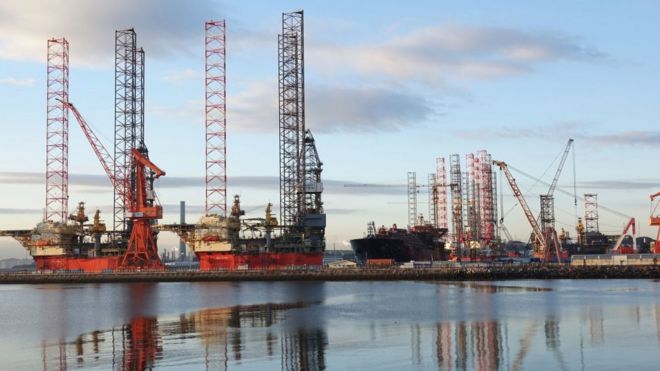
Ships and containers at a port in Dalian, ChinaImage copyrightGETTY IMAGES
Image captionOne of China’s biggest ports is reported to have halted Australian coal imports

The Australian government says it is seeking an “urgent” clarification from Beijing over reports that a major Chinese port has halted imports of Australian coal.

Australia is a top supplier of coal to China, its biggest export market.

Beijing has not confirmed the reported halt in the port of Dalian, but called changes in such arrangements “normal”.

Canberra sought to play down speculation on Friday that the matter may be linked to bilateral tensions.

Australian officials said there was “confusion” over the situation, and they were consulting their Chinese counterparts.

“I wouldn’t jump to conclusions. The Australia-China trading relationship is exceptionally strong,” Treasurer Josh Frydenberg told the Australian Broadcasting Corporation.

Fears about the issue have prompted a fall in the Australian dollar.

What has happened?

On Thursday, Reuters reported that China’s Dalian port region would not allow Australian coal to pass through customs.

The news agency quoted officials as saying that only Australian coal had been affected, with no limits placed on Indonesian and Russian shipments.

It said other Chinese ports had delayed Australian coal shipments in recent months.

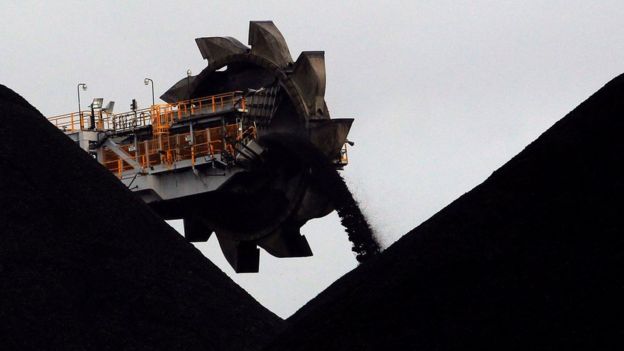
A machine places coal in stockpiles at a coal port in Newcastle, AustraliaImage copyrightREUTERS
Image captionCoal is Australia’s biggest export commodity

Australian trade officials said they had been notified of recent industry concerns about market access.

When asked about the reported halt, Chinese Foreign Ministry spokesman Geng Shuang offered general comments that authorities sought “to safeguard the rights and interests of Chinese importers and protect the environment”.

What else is being debated?

Some security analysts in Australia have suggested it could be a tit-for-tat move by China, after Australia blocked tech giant Huawei from providing 5G technology.

“The banning of those coal shipments is a form of coercion against Australia. It’s punishment against states that resist China’s pressure,” said Dr Malcolm Davis, from the Australian Strategic Policy Institute.

Other recent tensions have emerged over allegations – denied by Beijing – of Chinese interference in Australian politics and society.

However others, including the head of the Reserve Bank of Australia, have suggested that China’s concerns about its own coal industry may be behind any such halts.

Blocking “a couple of months of coal exports” would not hurt the Australian economy, said Philip Lowe.

“If it were to be the sign of a deterioration in the underlying political relationship between Australia and China then that would be more concerning,” he said.

Mr Frydenberg said: “We can see these occasional interruptions to the smooth flow but that doesn’t necessarily translate to some of the consequences that aspects of the media might seek to leap to.”

Source: The BBC

23/02/2019

Trump says he’s inclined to extend China trade deadline and meet Xi soon

WASHINGTON (Reuters) – President Donald Trump said on Friday there was “a very good chance” the United States would strike a deal with China to end their trade war and that he was inclined to extend his March 1 tariff deadline and meet soon with Chinese President Xi Jinping.

“I think that we both feel there’s a very good chance a deal will happen,” Trump said.

Liu agreed there had been “great progress”.

“From China, we believe that (it) is very likely that it will happen and we hope that ultimately we’ll have a deal. And the Chinese side is ready to make our utmost effort,” he said at the White House.

The Republican president said he probably would meet with Xi in March in Florida to decide on the most important terms of a trade deal.


Optimism that the two sides will find a way to end the trade war lifted stocks, especially technology shares. The S&P 500 stock index reached its highest closing level since Nov. 8. Oil prices rose to their highest since mid-November, with Brent crude reaching a high of $67.73 a barrel. [.N] [O/R]

CURRENCY AGREEMENT

Trump and Treasury Secretary Steven Mnuchin said the two sides had reached an agreement on currency. Trump declined to provide details, but U.S. officials long have expressed concerns that China’s yuan is undervalued, giving China a trade advantage and partly offsetting U.S. tariffs.

Announcement of a pact aimed at limiting yuan depreciation was putting “the currency cart before the trade horse,” but would likely be positive for Asian emerging market currencies, said Alan Ruskin, global head of currency strategy at Deutsche Bank in New York.

“How can you agree to avoid excessive Chinese yuan depreciation or volatility if you have not made an agreement on trade that could have huge FX implications?” Ruskin asked in a note to clients.

In a letter to Trump read aloud by an aide to Liu at the White House, Xi called on negotiators to work hard to strike a deal that benefits both country.

Trump said a deal with China may extend beyond trade to encompass Chinese telecommunications companies Huawei Technologies and ZTE Corp.

The Justice Department has accused Huawei of conspiring to violate U.S. sanctions on Iran and of stealing robotic technology from T-Mobile US Inc.

Chinese peer ZTE was last year prevented from buying essential components from U.S. firms after pleading guilty to similar charges, crippling its operations.

MEMORANDUMS NO MORE

Trump appeared at odds with his top negotiator, U.S. Trade Representative Robert Lighthizer, on the preliminary terms that his team is outlining in memorandums of understanding for a deal with China. Trump said he did not like MOUs because they are short term, and he wanted a long-term deal.

“I don’t like MOUs because they don’t mean anything,” Trump said. “Either you are going to make a deal or you’re not.”

Lighthizer responded testily that MOUs were binding, but that he would never use the term again.

Reuters reported exclusively on Wednesday that the two sides were drafting the language for six MOUs covering the most difficult issues in the trade talks that would require structural economic change in China.

Negotiators have struggled this week to agree on specific language within those memorandums to address tough U.S. demands, according to sources familiar with the talks. The six memorandums include cyber theft, intellectual property rights, services, agriculture and non-tariff barriers to trade, including subsidies.

An industry source briefed on the talks said both sides have narrowed differences on intellectual property rights, market access and narrowing a nearly $400 billion U.S. trade deficit with China. But bigger differences remain on changes to China’s treatment of state-owned enterprises, subsidies, forced technology transfers and cyber theft of U.S. trade secrets.

Lighthizer pushed back when questioned on forced technology transfers, saying the two sides made “a lot of progress” on the issue, but did not elaborate.

The United States has said foreign firms in China are often coerced to transfer their technology to Chinese firms if they want to operate there. China denies this.

The U.S. Chamber of Commerce on Friday urged the U.S. government to ensure the deal was comprehensive and addressed core issues, rather than one based on more Chinese short-term purchases of goods.

China has pledged to increase purchases of agricultural produce, energy, semiconductors and industrial goods to reduce its trade surplus with the United States.

China committed to buying an additional 10 million tonnes of U.S. soybeans on Friday, U.S. Agriculture Secretary Sonny Perdue said on Twitter. China bought about 32 million tonnes of U.S. soybeans in 2017. The commitments are a “show of good faith by the Chinese” and “indications of more good news to come,” Perdue wrote.

China was the top buyer of U.S. soybeans before the trade war, but Beijing’s retaliatory tariffs on U.S. soybeans slashed business that had been worth $12 billion annually.

Source: Reuters

22/02/2019

China’s social credit system report shows that richest provinces are home to the most dodgy firms

  • Firms in Jiangsu and Guangdong provinces top the list of new additions to blacklist in 2018
  • Bogus advertising, illegal activities in property industry, substandard health care products and P2P lending fraud are typical cases

Social credit system: China’s richest regions are also home to the most blacklisted firms

22 Feb 2019

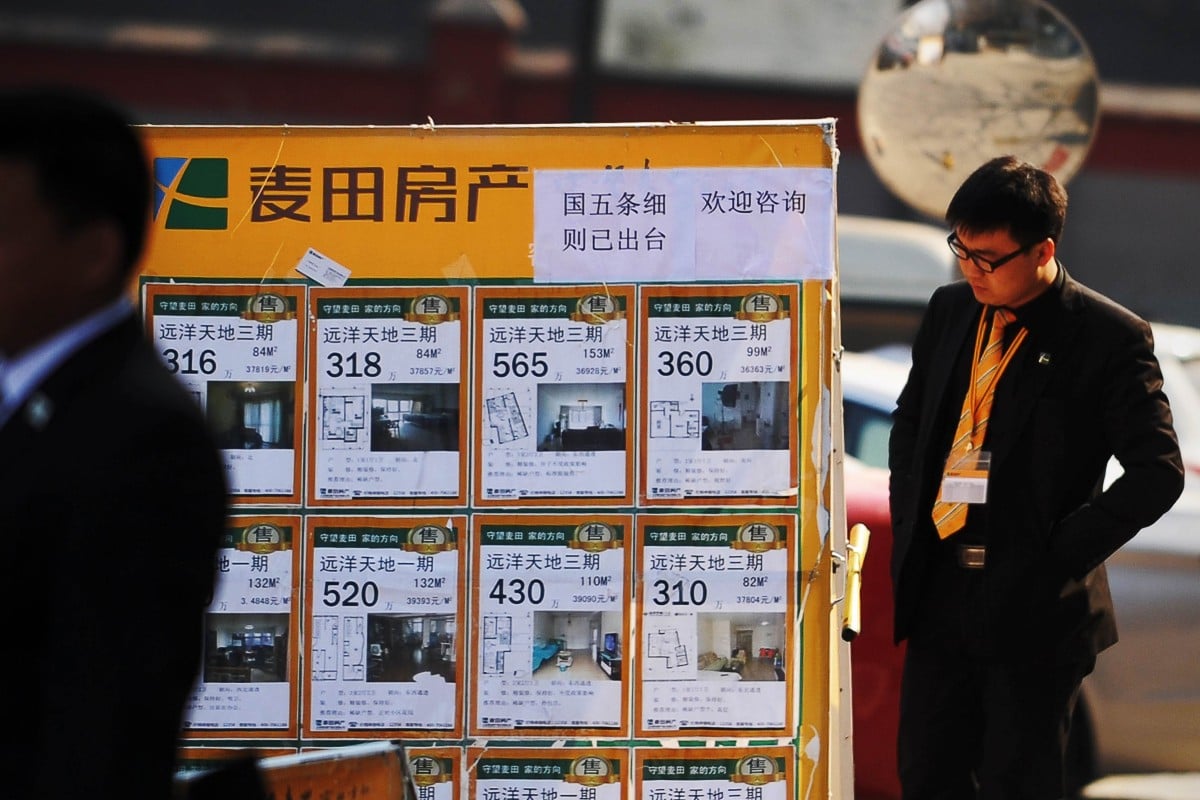
A real property agent checks a property advertising board in Beijing. According to a report by the Chinese government, property brokerages are among the country’s least scrupulous group of firms. Photo: Agence France-Presse

A real property agent checks a property advertising board in Beijing. According to a report by the Chinese government, property brokerages are among the country’s least scrupulous group of firms. Photo: Agence France-Presse

China’s wealthiest regions also have the largest number of untrustworthy businesses, according to the government’s social credit system, which rates citizens and companies based on their behaviour.

Jiangsu, the country’s second largest provincial economy – 9.26 trillion yuan (US$1.37 trillion) – accounted for 16.7 per cent of the discredited businesses that were added to the national blacklist last year, more than any other region.

According to a report compiled by the National Public Credit Information Centre that is backed by China’s state planner, the National Development and Reform Commission, Guangdong is next in line.

Guangdong is China’s most prosperous province, Guangdong, but is also home to 12.77 per cent of the total 3.59 million blacklisted firms. The southern province had a gross domestic product of 9.73 trillion yuan last year.

In third spot was Zhejiang, the prosperous province just south of Shanghai, while the capital city of Beijing was ranked fifth. These places together contributed slightly more than 30 per cent of China’s gross domestic product (GDP) last year.

By naming and shaming the millions of Chinese businesses and individuals on the annual blacklist, Beijing hopes to boost “trustworthiness” in Chinese society. Under the system, each of its 1.4 billion citizens is expected to receive a personal trustworthiness score.

“In more developed coastal provinces, businesses have long operated in the grey area between emerging China and established Hong Kong,” said Brock Silvers, managing director of Kaiyuan Capital, a Shanghai-based financial advisory firm.

Silvers said the situation evoked the Chinese saying: “Heaven is high and the Emperor is far away”, which alludes to local officials’ tendency to disregard central government’s directives.

While it was previously not such a faux pas to engage in “untrustworthy” behaviour in attaining economic development, things are now different.

China’s social credit system shows its teeth, banning millions from taking flights, trains

“The ability to cut corners in search of profit isn’t as prized in China’s modern economy, and many of those old traits can now lead companies to be added to Beijing’s blacklist,” Silvers said.

Among the firms named in the hall of shame is Chuangyue Energy Group, from northwest Xinjiang, which topped the list of new cases involving at least 500 million yuan in fraudulent activity.

Chuangyue and its legal representative Qin Yong were reprimanded by the Shenzhen Stock Exchange in 2016 for failing to disclose transactions on time. The transaction involved changes to the shareholding structure of a listed firm in which Chuangyue held interest in, state media reported.

Also on the list was property developer Zhonghong Holding, which was delisted from the Shenzhen exchange late-last year after its shares fell below the par value of 1 yuan for 20 consecutive days.

Zhonghong had posted massive losses, failed to repay loans and halted development projects during 2018.

A typical area of fraud cited in the report was bogus advertising, with the biggest number of discredited companies located Shanghai, China’s most commercial city.

Property brokerage was a hotbed industry for fraudsters. The report named and shamed two agents in Wuhan, An Yi Real Estate Brokerage and Hong Run De Real Estate Brokerage, which Chinese netizens described as “black brokers”.

In one case, Hong Run De subdivided one flat to lease without the owner’s knowledge and consent. To terminate the contract, the owner had to pay “compensation” of 30,000 yuan before they could reclaim the flat.

Other dodgy sectors were health care product makers and peer-to-peer (P2P) lending platforms.

Quanjian Group, a maker of herbal medicines, was accused of making false marketing claims about the benefits of a product that a four-year-old cancer patient drank.

Health care companies are among the worst performing in China, according to a report on the country’s social credit index. Photo: Agence France-Presse

Changsheng Bio-Technology, the major Chinese manufacturer of rabies vaccines, was fined US$1.3 billion in October after it was found to have fabricated records.

A total of 1,282 P2P operators, more than half located in Zhejiang, Guangdong and Shanghai, were placed on the blacklist because they could not repay investors, or were involved in illegal fundraising.

While more individuals and companies were added to the blacklist, others were also removed – 2.17 million. Those removed had paid taxes owed or fines imposed.

Source: SCMP

22/02/2019

Australia seeks clarification on China coal import ‘block’

Ships and containers at a port in Dalian, ChinaImage copyrightGETTY IMAGES
Image captionOne of China’s biggest ports is reported to have halted Australian coal imports

The Australian government says it is seeking an “urgent” clarification from Beijing over reports that a major Chinese port has halted imports of Australian coal.

Australia is a top supplier of coal to China, its biggest export market.

Beijing has not confirmed the reported halt in the port of Dalian, but called changes in such arrangements “normal”.

Canberra sought to play down speculation on Friday that the matter may be linked to bilateral tensions.

Australian officials said there was “confusion” over the situation, and they were consulting their Chinese counterparts.

“I wouldn’t jump to conclusions. The Australia-China trading relationship is exceptionally strong,” Treasurer Josh Frydenberg told the Australian Broadcasting Corporation.

Fears about the issue have prompted a fall in the Australian dollar.

What has happened?

On Thursday, Reuters reported that China’s Dalian port region would not allow Australian coal to pass through customs.

The news agency quoted officials as saying that only Australian coal had been affected, with no limits placed on Indonesian and Russian shipments.

It said other Chinese ports had delayed Australian coal shipments in recent months.

A machine places coal in stockpiles at a coal port in Newcastle, AustraliaImage copyrightREUTERS
Image captionCoal is Australia’s biggest export commodity

Australian trade officials said they had been notified of recent industry concerns about market access.

When asked about the reported halt, Chinese Foreign Ministry spokesman Geng Shuang offered general comments that authorities sought “to safeguard the rights and interests of Chinese importers and protect the environment”.

What else is being debated?

Some security analysts in Australia have suggested it could be a tit-for-tat move by China, after Australia blocked tech giant Huawei from providing 5G technology.

“The banning of those coal shipments is a form of coercion against Australia. It’s punishment against states that resist China’s pressure,” said Dr Malcolm Davis, from the Australian Strategic Policy Institute.

Other recent tensions have emerged over allegations – denied by Beijing – of Chinese interference in Australian politics and society.

However others, including the head of the Reserve Bank of Australia, have suggested that China’s concerns about its own coal industry may be behind any such halts.

Blocking “a couple of months of coal exports” would not hurt the Australian economy, said Philip Lowe.

“If it were to be the sign of a deterioration in the underlying political relationship between Australia and China then that would be more concerning,” he said.

Mr Frydenberg said: “We can see these occasional interruptions to the smooth flow but that doesn’t necessarily translate to some of the consequences that aspects of the media might seek to leap to.”

Source: The BBC

22/02/2019

‘Does not represent a judgement’: China on mention of JeM in UNSC statement

China has been repeatedly blocking India and several other countries’ efforts to bring about a global ban on JeM chief Masood Azhar in the UN’s anti-terror 1267 committee.

WORLD Updated: Feb 22, 2019 16:35 IST

Press Trust of India
Beijing
Jaish-e-Muhammad,Pulwama terror attack,UN Security Council
Lethpora: Security agencies inspect the site of suicide bomb attack at Lethpora area, in Pulwama district of south Kashmir, Friday, Feb. 15, 2019. At least 37 CRPF personnel were killed yesterday in one of the deadliest terror attacks in Jammu and Kashmir when a Jaish suicide bomber rammed a vehicle carrying over 100 kg of explosives into their bus in Pulwama district. (PTI Photo/S Irfan)(PTI2_15_2019_000037B)(AP)

China, a permanent member of the UN Security Council, Friday sought to downplay the scathing statement issued by the powerful organ of the world body naming Jaish-e-Muhammad in the Pulwama terror attack, saying the mention of the Pakistan-based outfit was only in “general terms” and “does not represent a judgement”.

Forty Central Reserve Police Force personnel were killed in a suicide attack by Pakistan-based Jaish-e-Mohammed (JeM) in Jammu and Kashmir’s Pulwama district on February 14, sparking outrage in the country.

The powerful UN Security Council (UNSC) on Thursday strongly condemned the “heinous and cowardly” terror attack.

“The members of the Security Council condemned in the strongest terms the heinous and cowardly suicide bombing in Jammu and Kashmir, which left 40 Indian paramilitary forces dead and dozens wounded on February 14, 2019, for which Jaish-e-Mohammed has claimed responsibility,” it said in a statement.

Asked about the statement highlighting the role of JeM claiming the responsibility of the Pulwama attack, China’s foreign ministry spokesman Geng Shuang told reporters that Beijing was closely following the developments related to the terror incident.

“Yesterday, the UN Security Council issued a press statement that mentioned that a particular organisation but only in general terms. It does not represent a judgment on the attack,” Geng said.

His remarks were seen as an attempt by China, without whose endorsement the UNSC statement could not have been released, aimed at placating its close ally Pakistan and play down the indictment of the JeM.

China has been repeatedly blocking India and several other countries’ efforts to bring about a global ban on JeM chief Masood Azhar in the UN’s anti-terror 1267 committee.

While China’s endorsement of the UNSC statement was reflection of wariness on the part of Beijing to repeatedly defend JeM in the UN body, which casts a shadow on its relations with India, observers say it is to be seen what stand Beijing would take when France moves its resolution seeking to list Azhar as a global terrorist in the UN.

France, also member of the permanent five of the UNSC, has officially announced that it would move a resolution soon in the 1267 committee seeking Azhar’s listing.

Since 2016, China has consistently blocked moves first by India and later by the US, the UK and France to designate Azhar as a global terrorist by putting repeated technical holds.

In his response on Friday Geng said that “China also noted that the Pakistani government showed readiness to cooperate with India on the investigation and that it is also ready to resolve differences with India through dialogue”.

“China hopes all parties will work to find the truth about this attack. We hope Pakistan and India will engage in dialogue to jointly safeguard regional peace and stability,” he said.

The UN statement also underlined the need to hold perpetrators, organisers, financiers and sponsors of these “reprehensible acts of terrorism” accountable and bring them to justice”.

The UN condemnation came a day after Pakistan’s Permanent Representative to the UN Maleeha Lodhi met top UN leaders including with Secretary-General Antonio Guterres to brief them about the escalating tensions in the region in the wake of the Pulwama attack.

Source: hindustan Times

21/02/2019

Xi meets Chang’e-4 mission representatives

CHINA-BEIJING-XI JINPING-CHANG'E-4 MISSION-REPRESENTATIVES-MEETING (CN)

Chinese President Xi Jinping, also general secretary of the Communist Party of China Central Committee and chairman of the Central Military Commission, delivers a speech as he meets representatives of space scientists and engineers who participated in the research and development of the Chang’e-4 mission at the Great Hall of the People in Beijing, capital of China, Feb. 20, 2019. (Xinhua/Ju Peng)

BEIJING, Feb. 20 (Xinhua) — Chinese President Xi Jinping met representatives of space scientists and engineers who participated in the research and development of the Chang’e-4 mission at the Great Hall of the People in Beijing Wednesday afternoon.

Xi, also general secretary of the Communist Party of China (CPC) Central Committee and chairman of the Central Military Commission, noted that there is no end for space exploration.

Xi called on science and technology workers and space engineers in China to ride on the wave of the Chang’e-4 mission to achieve the general goal of China’s lunar project, make more efforts to push forward the international aerospace cause and bring more Chinese wisdom, solutions and force to the peaceful use of space and the building of a community with a shared future for humanity.

Members of the Standing Committee of the Political Bureau of the CPC Central Committee Li Keqiang, Li Zhanshu, Wang Yang, Wang Huning, Zhao Leji and Han Zheng also attended the meeting.

Xi shook hands with the scientists and engineers, inquired about their work and life and took pictures with them.

In a speech addressing the meeting, Xi first extended his sincere regards to all those who have made historic contributions to the country’s space undertakings and expressed warm congratulations to all those who have contributed to the Chang’e-4 mission eminently.

“Your outstanding feats achieved in mounting the science and technology peak and exploring the universe’s mysteries have set a model for the whole Party, the whole armed forces and people of all ethnic groups in China to strive for a new era and start a new journey, for which our country and people thank you,” Xi said.

“Five years ago, we celebrated the success of the Chang’e-3 mission. Five years later, we are here to celebrate the success of the Chang’e-4 mission,” he said.

He pointed out that the Chang’e-4 mission, by adhering to independent, collaborative and open innovations, has realized the first-ever patrol and exploration on the far side of the moon by a human spacecraft and engraved Chinese “footprints” there for the first time.

“It is another vivid practice of exploring to establish a new institution that can pool the resources of the whole country,” Xi said.

“Experience tells us that great undertakings begin with dreams, and dreams are the source of vitality. China is a nation that pursues dreams bravely. The CPC Central Committee’s decision to implement the lunar exploration project is to pursue the nation’s unyielding dream of flying into the sky and reaching for the moon,” he noted.

Each bold idea and its successful implementation in lunar exploration is a full demonstration of the human capacity to gain knowledge of and utilize a celestial body, he said.

“In the journey of building a great modern socialist country and realizing the great rejuvenation of the Chinese nation, every industry and every person should dream and strive courageously and fulfill their dreams with arduous and continuous efforts, step by step and baton by baton just like in a relay race,” he emphasized.

“Experience tells us that great undertakings are based on innovation, and innovation determines the future. It won’t be a smooth path to build a leading nation in science and technology, and only innovation can help gain advantages,” he said.

“The mission has made multiple innovations come true and filled a series of international and domestic gaps, which has fully displayed the innovative spirit just as making the first move in chess or taking the initiative in battle,” he added.

China should have a grasp of the general trend of the science and technology development in the world, foster respect for science and focus on strategic, basic and pioneering sectors, said Xi.

China should shore up its weakness in certain areas, keep pace with the leaders in some areas, and strive to lead in other areas, aim for significant breakthroughs in core and key technologies, improve the overall efficiency of the national innovation system, boost science and technology strength and innovation ability, in a bid to earn itself a spot in the global hi-tech sector, he said.

“Experience tells us that great undertakings succeed in solid work,” Xi noted. He said China need to encourage more prominent scientists, leading talent, young scientists and innovation teams to lead the trend and work hard to realize the value of life by contributing to the nation’s great undertakings.

Xi pointed out that exploring the vast universe is a common dream of all humankind. China has been actively advancing international space cooperation and carried out productive cooperation with multiple countries and international organizations. The complete success of the Chang’e-4 mission, for instance, includes contributions of many countries.

China is willing to work with countries around the world and follow the principle of achieving shared growth through discussion and collaboration, so as to deepen the international exchanges on basic scientific research, boost big science projects and step up opening-up and cooperation to enhance innovation ability and push forward the development of science.

The Chang’e-4 mission had two launches. The relay satellite, named Queqiao, meaning Magpie Bridge, was launched on May 21, 2018. The Chang’e-4 probe, launched from the Xichang Satellite Launch Center in southwest China on Dec. 8, 2018, touched down on the far side of the moon on Jan. 3.

Scientific research involving multiple countries and international organizations has been carried out.

The complete success of Chang’e-4 mission marks the first-ever international organizations, patrol and exploration on the far side of the moon by a spacecraft, the first communication link between Earth and the far side of the moon and the first footprints there in the history of lunar exploration, which unveils its mysteries and opens a new chapter in mankind’s exploration of the universe.

Source: Xinhua

20/02/2019

Wei Fenghe meets Vietnam’s deputy minister of national defense

BEIJING, Feb. 19 (Xinhua) — Chinese State Councilor and Minister of National Defense Wei Fenghe on Tuesday met with Vietnam’s Deputy Minister of National Defense Nguyen Chi Vinh in Beijing.

“With shared ideals and convictions, the friendship between China and Vietnam is deeply rooted and of special importance,” Wei said. “The two countries are a community of shared future with strategic significance.”

He said the Chinese military is willing to work with the Vietnamese military to implement the important consensus reached at the high level between the two parties and the two countries, strengthen strategic communication and coordination, and deepen exchanges and cooperation in various fields.

The Chinese military also stands ready to properly handle differences, push military-to-military relations to a new level and contribute to safeguarding the fundamental interests of the two countries and regional security and stability, he said.

Vinh said that the Central Committee of the Communist Party of Vietnam and the Central Military Commission cherish the traditional friendship between the two countries and are willing and have confidence to push relations between the two countries and two militaries to a higher level and bring more benefits to the two peoples.

Source: Xinhua

20/02/2019

China to deepen reforms of agriculture sector to boost rural areas

  • Policy statement outlines broad goals including plan to revive domestic soybean production
A farmer picks tea leaves in Mianxian county, Shaanxi province. Beijing’s policy document reiterated a strategy to improve income levels and living standards in China’s countryside. Photo: Xinhua
China will deepen reforms of its agriculture sector to promote its rural economy, the government said in its first policy statement of 2019, as it seeks to bolster growth and offset trade challenges.

Beijing’s statement, released late on Tuesday, comes after the world’s second-largest economy saw its weakest growth in 28 years in 2018 and remains entangled in a trade war with Washington.

“Under the complicated situation of increasing downward pressure on the economy and profound changes in the external environment, it is of special importance to do a good job in agriculture and rural areas,” the government said in the document issued by the State Council and published by official news agency Xinhua.

The biggest winners in Shenzhen, ‘China’s Silicon Valley’? Pig and chicken farmers

Known as the “No 1 document”, this year’s policy reiterated a rural rejuvenation strategy first laid out in 2017 to improve income levels and living standards in China’s countryside.

It also highlighted a plan to boost domestic soybean production but did not offer further details.

Chinese President Xi Jinping visits a farm in northeastern Heilongjiang province during an inspection tour in September. Photo: Xinhua via AP

Industry analysts said on Wednesday they were eagerly awaiting further details to assess the impact of the plan, which had already been flagged by Agriculture Minister Han Changfu earlier this month.

China has been overhauling its crop structure in recent years, reducing support for corn after stocks ballooned, and seeking to promote more planting of oilseeds that it mostly imports.

That goal has become increasingly important since a trade war with the United States, which led China to slap tariffs on soybean imports, tightening domestic supplies.

Han has previously urged authorities in China’s northeast to support soybean production through subsidies and called for rotating of soybeans with other crops including corn and wheat.

Beijing also aims to support the production of rapeseed in the Yangtze River Basin, according to the document.

The garlic case that foreshadowed the US-China trade war

As in previous years, it also called for stable grain production, but also an increase in imports of agriculture products where there are shortages in the domestic market.

“The focus now is on retaining production capacity, in the form of high quality farmland, and using the international market to make up production shortfalls,” said Even Rogers Pay, an agriculture analyst at China Policy, a Beijing-based consultancy.

The reference to imports is positive for trade partners like the United States, said Cherry Zhang, analyst with Shanghai JC Intelligence, who said it raised the likelihood that China will buy more US agriculture products.

China’s DJI turns its eye to enterprise uses like agriculture after conquering global commercial drone market

Shares of Chinese livestock companies, along with pig and poultry breeders, rose on Wednesday following the release of the policy paper.

The document also outlines plans to accelerate development of a new farm subsidy policy system and further crack down on the smuggling of agriculture products.

Additionally, the government said it plans to strengthen the monitoring and control of African swine fever outbreaks, after more than 100 cases were reported in China since August.

Other plans include continuing to tackle rural pollution and promoting recycling of agricultural waste such as manure and agricultural film.

Source: SCMP

19/02/2019

Chinese vice premier lays out goals for Beijing 2022 athletes

CHONGLI, Hebei Province, Feb. 18 (Xinhua) — Chinese vice premier Sun Chunlan spoke of the need for solid training, a sense of honor and above all for confidence from China’s winter sport athletes during her inspection in the Beijing 2022 snow events zone here on Monday.

The athletes are currently undergoing training here in the mountains of Chongli, north of Beijing. Sun observed the construction of venues, listened to a report of the current state of Beijing 2022 competition preparations, inspected the training of national skiing teams and talked with athletes in this district of Zhangjiakou in Hebei province, situated 200 kilometers northwest of Beijing, which will stage most of the skiing events of the 2022 Winter Olympic Games.

“To organize the Beijing 2022 Olympic Games successfully is one of the priorities for China. I hope everyone can promote a positive sporting spirit and the Olympic spirit, aim for our target and work hard,” said Sun.

“Everyone needs to try hard to improve our competition skills, make efforts for better results, display the outstanding morals, win glory for the motherland and add lustre to life.”

Sun called for tightly-knit, painstaking work in the competition preparations.

“You need to find the weak links and mend them, stick to scientific training, and strengthen research on rules for various events,” said Sun, stressing the importance of accumulating and analyzing past experience in competitions, training management, on-site commanding, Games organization, sporting science and new technologies.

Sun also called to continue the fight against doping.

“Zero tolerance for doping in the national teams is a basic requirement. Our goal is to safeguard the cleanness of Beijing 2022 and ensure that ice and snow sports can be as pure as ice and snow,” said Sun.

Sun also called on relevant departments to take full advantage of the opportunities provided by Beijing 2022 to promote ice and snow sports among the public, to improve sport fitness facilities, to push forward the coordinated development of mass sports, competitive sports and the wider sports industry.

Source: Xinhua

18/02/2019

China applauds ‘positive’ Donald Trump tweet, hopes for US trade war deal ahead of Washington talks

    • Opinion piece in major state media outlets is seen to be part of Beijing’s efforts to reassure its citizens that the tariff war with the United States will soon be over
    • A Chinese delegation led by Vice-Premier Liu He is expected to leave on Tuesday for the American capital after last week’s trade talks in Beijing produced ‘progress’

    China applauds ‘positive’ Donald Trump tweet ahead of Washington talks

    18 Feb 2019

    China and US make ‘progress’ but talks to head to Washington next week

    16 Feb 2019

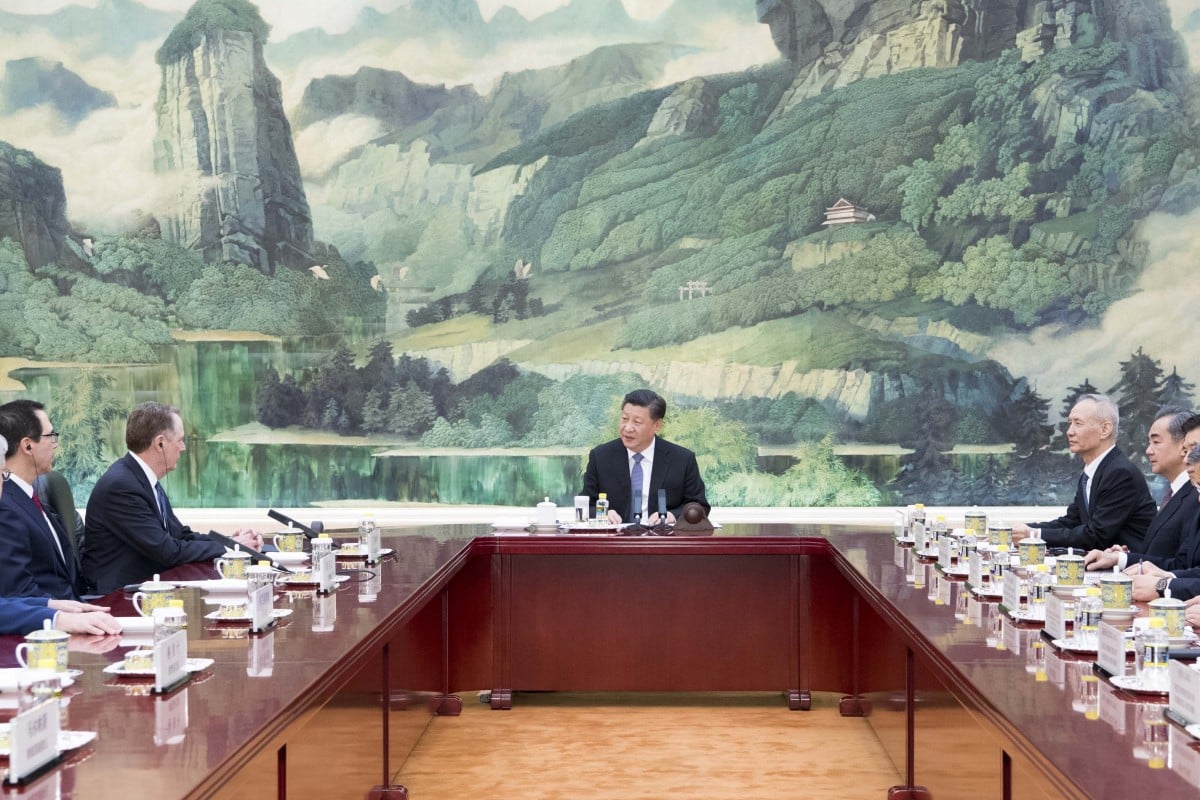
    Chinese President Xi Jinping urged for a “mutually beneficial” trade deal in this week’s talks when he met US trade representative Robert Lighthizer and US Treasury Secretary Steven Mnuchin in Beijing on Friday, according to Xinhua. Photo: Xinhua
    Chinese President Xi Jinping urged for a “mutually beneficial” trade deal in this week’s talks when he met US trade representative Robert Lighthizer and US Treasury Secretary Steven Mnuchin in Beijing on Friday, according to Xinhua. Photo: Xinhua

    A tweet by US President Donald Trump on the ongoing trade war is a “positive” signal, brightening prospects of a deal from this week’s talks in Washington, according to an opinion piece published by China’s major state media outlets on Monday.

    Monday’s opinion piece was published the day before a Chinese delegation led by Vice-Premier Liu He is expected to leave for talks in Washington.

    In the tweet on Sunday, Trump said: “Important meetings and calls on China trade deal, and more, today with my staff. Big progress being made on soooo many different fronts! Our country has such fantastic potential for future growth and greatness on an even higher level!”

    The opinion piece, which was published by the official Xinhua news agency, the People’s Daily and the Global Times under the pseudonym Niu Tanqin, is seen to be part of Beijing’s efforts to reassure its citizens that the trade war with the United States will soon be over.

    It did contrast previous columns on Trump by the same author, who in March last year argued that China dislikes the American president for his “insatiable demands, greediness and lack of trust worthiness”.

    Last week’s trade talks in Beijing produced “progress” ahead of the March 1 deadline, which could see tariffs on US$200 billion worth of Chinese products increased from 10 per cent to 25 per cent if the world’s two largest economies fail to reach a deal.

    The outcome of the talks in Washington, which are likely to be the last before March 1, will largely decide whether China and the United States can reach a pact, likely in the form of a memorandum of understanding, to suspend the tariff battle that has been roiling global markets and clouding growth prospects since last year.

    According to the opinion piece, Trump’s use of “soooo” instead of “so” indicated that the US president was excited when he heard reports from his trade envoys following the talks in Beijing, which Chinese President Xi Jinping attend on Friday.

    Donald J. Trump

    @realDonaldTrump

    Important meetings and calls on China Trade Deal, and more, today with my staff. Big progress being made on soooo many different fronts! Our Country has such fantastic potential for future growth and greatness on an even higher level!

    “The US side is attaching great importance [to the trade talks]. Although Trump is on vacation, he listened to relevant reports and he definitely will make specific instructions,” it added.

    Trump has been upbeat about the prospects of reaching a trade deal with China, and said on Friday at the White House: “It’s going extremely well.”

    Chinese President Xi urged for a “mutually beneficial” trade deal in this week’s talks when he met US trade representative Robert Lighthizer and US Treasury Secretary Steven Mnuchin in Beijing on Friday, according to Xinhua.

    Stocks in China and Hong Kong surged on Monday, partly bolstered by the increased likelihood of a trade deal between China and the United States.

    Monday’s opinion piece fits into the latest official line that an agreement is very likely to end the tariff war after the Global Times said over the weekend that the bilateral trade talks are “sprinting” towards a positive end.

    Donald Trump’s demands ‘good for China’, says economist Jin Keyu

    Meanwhile, reports in China suggest differences between Beijing and Washington still remain over forced technology transfer, intellectual property rights, cyber theft as well as a verification system to ensure China keeps its promises.

    Xi told the US trade envoys that China is willing to “cooperate” but “cooperation has principals”, a statement showing that Beijing will not entertain US demands if it finds such demands violate China’s principals.

    A White House statement on Friday said that “much work remains”, showing gaps still exist.

    Source: SCMP

Law of Unintended Consequences

continuously updated blog about China & India

ChiaHou's Book Reviews

continuously updated blog about China & India

What's wrong with the world; and its economy

continuously updated blog about China & India