Archive for ‘Beijing’

02/02/2019

China Focus: Xi visits cadres, residents in Beijing ahead of Spring Festival

CHINA-BEIJING-XI JINPING-LUNAR NEW YEAR-VISIT (CN)

Chinese President Xi Jinping, also general secretary of the Communist Party of China Central Committee and chairman of the Central Military Commission, visits residents’ homes in Qianmen area in central Beijing, capital of China, Feb. 1, 2019. President Xi Jinping on Friday visited residents and primary-level officials in Beijing and extended Lunar New Year greetings to Chinese people of all ethnic groups. (Xinhua/Ju Peng)

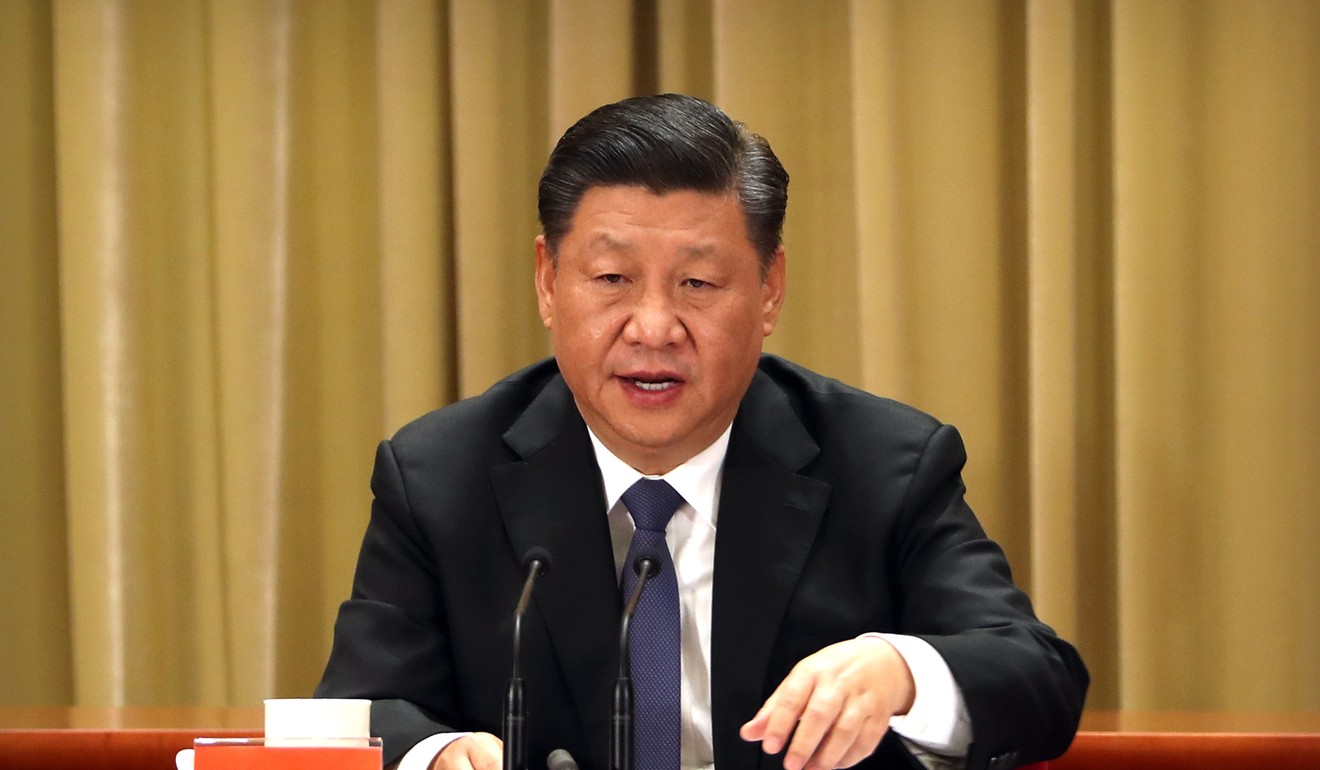
BEIJING, Feb. 1 (Xinhua) — President Xi Jinping on Friday visited Beijing’s primary-level cadres and residents in downtown neighborhoods ahead of the Spring Festival and extended Lunar New Year greetings to Chinese people of all ethnic groups.

Xi, also general secretary of the Communist Party of China (CPC) Central Committee and chairman of the Central Military Commission, also inspected the preparation work for the Beijing 2022 Olympic and Paralympic Winter Games.

When inspecting the Beijing Municipal Public Security Bureau, Xi stressed the city’s glorious mission and weighty responsibility to safeguard the social stability of the national capital as 2019 marks the 70th anniversary of the founding of the People’s Republic of China.

Xi asked for coordinated efforts to promote work in all fields with resolve to complete the mission.

Touring a “hutong,” or traditional alley, in central Beijing’s Qianmen area, Xi ordered the efforts to protect cultural heritage sites and conserve traditional culture while renovating the city’s old areas.

He called for both improving local residents’ living conditions and protecting historical and cultural deposits, so that history and modernity will perfectly blend. He stressed specific measures to maintain the original features of hutong areas.

Xi dropped into two courtyards along the hutong, inquiring about the living conditions of local residents after the renovation projects in the neighborhood.

“What the CPC pursues is to make the people’s life better,” he told the residents, gladly chatting and making dumplings with them.

Noting close attention from the CPC Central Committee to the renovation of old towns and shanty areas, Xi said that the Party aims to create a more comfortable and better living environment for the people and solve problems they care about most so that they can enjoy modern life even in old hutong areas.

After chatting with residents, Xi went to a property service center to visit staff and community workers.

On the way back, Xi dropped in on a restaurant, chatted with the owner and some customers and wished them good luck.

Xi also called on a nearby express delivery station and visited the deliverymen who were on duty, stressing that priority should be given to solving employment problems and creating more jobs.

At 3:30 p.m., Xi arrived at the Shougang Park in Shijingshan District, the seat of the Beijing Organizing Committee for the 2022 Olympic and Paralympic Winter Games, to learn about the preparation for the Games and the planning and construction of the venues and infrastructure.

Xi stressed the need to stay committed to hosting the Games in a green, sharing, open and clean manner, and to complete all preparation tasks with high standards.

The venue construction must meet the Olympic standards and be completed on time, Xi said.

Stressing that the features of technology, intelligence, greenness and frugality should be highlighted, Xi said advanced technological approaches should be applied, energy-saving and environmental friendly requirements should be strictly enforced, the environment and cultural relics should be well protected, and Chinese styles should be on full display.

Xi visited the office building of the Beijing Organizing Committee, meeting with some of the staff and volunteers there.

Noting that Beijing will become the world’s only host of both the Summer and Winter Olympics, he stressed that China must fulfill the solemn commitments it made to the world.

“Hosting the 2022 Winter Olympics is an important support to the coordinated development of the Beijing-Tianjin-Hebei region,” Xi said, adding that Hebei Province must develop together with Beijing.

During his visit to the national winter sports training center, Xi stressed promoting sportsmanship with Chinese characteristics, boosting coordinated development of mass sports, competitive sports and the sports industry, and speeding up building China into a country strong on sports.

Vice Premier Han Zheng, also a member of the Standing Committee of the Political Bureau of the CPC Central Committee, accompanied Xi on the inspection tour of the preparation work for the Beijing 2022 Olympic and Paralympic Winter Games.

Source: Xinhua

25/01/2019

China holds reception for ethnic groups in Beijing ahead of Spring Festival

BEIJING, Jan. 24 (Xinhua) — A reception was held Thursday for ethnic groups in Beijing ahead of the Spring Festival, the Chinese New Year.

Bater, vice chairman of the National Committee of the Chinese People’s Political Consultative Conference (CPPCC) and an ethnic Mongolian, delivered a speech at the event, which was presided over by Cao Jianmin, vice chairman of the National People’s Congress (NPC) Standing Committee.

While guaranteeing China’s national unification and ethnic unity, Bater said it is imperative to foster a strong sense of community for the Chinese nation, increase exchange and communication among people of ethnic groups and further efforts to lift areas inhabited by ethnic minorities out of poverty and help build them into moderately prosperous regions, in order to make new contribution to realizing Chinese Dream of national rejuvenation.

The event was jointly held by the United Front Work Department of the Communist Party of China, the ethnic affairs committee of the NPC, the National Ethnic Affairs Commission, the ethnic and religious affairs committee of the CPPCC National Committee and the Beijing municipal government.

The Chinese Lunar New Year falls on Feb. 5 this year. And the public holiday in association with it lasts from Feb. 4 to 10.

17/01/2019

Beijing builds cybersecurity industrial park

BEIJING, Jan. 16 (Xinhua) — Beijing is building a national-level cybersecurity industrial park to boost the industry and tap into the potential of domestic tech companies.

Over 10 companies specialized in internet security have signed a contract to move into the park, which has two branches respectively in Haidian district and Tongzhou district, according to the Beijing Municipal Bureau of Economy and Information Technology.

Construction on the park started at the end of 2017. By 2020, the industrial output is expected to reach 100 billion yuan (about 14.5 billion U.S. dollars).

“We are actively advancing the project. Leading firms in cybersecurity from home and abroad will establish their headquarters in the park,” said Jiang Guangzhi, an official with the bureau.

As smart cities’ initiatives using information technology are rolling out in many cities in China, the demand for internet security infrastructure is high.

“The fact that many agencies and organizations are exploring digitization and information technology without sufficient security creates a lot of risks,” said Qi Xiangdong, a member of the Beijing municipal committee of the Chinese People’s Political Consultative Conference. The committee is currently holding its annual session.

“Beijing is the center for political activity, culture, international exchange and technological innovation, but it is also a big target for cyber attacks,” said Qi.

The 360 Enterprise Security Group said it found security loopholes in over half of the one million websites in Beijing. On a daily basis, over 9.55 million malware are detected and blocked from PC users.

The global average of security spending in IT is about 3.7 percent of the total IT spending, but the Chinese average is only 1.1 percent, Qi said.

Insufficient investment in cybersecurity may lead to serious consequences, said Tong Liqiang, also a member of the committee and former director of the Beijing cyber information office.

“A full-fledged internet security shield is still not yet in place, but it is needed to service the development of the IT industry, tackle the security challenges and meet the public demand,” said Tong.

Source: Xinhua

14/01/2019

Rare sight of robin in Beijing causes stir and Brexit jokes

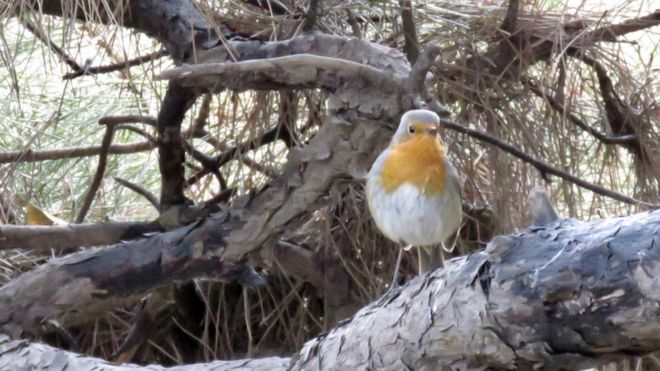
Photo of robin spotted in BeijingImage copyrightTERRY TOWNSHEND
Image captionThis is the bird that caused masses to flock to Beijing Zoo

The rare appearance of a European robin in Beijing has caused a stir among Chinese nature fans.

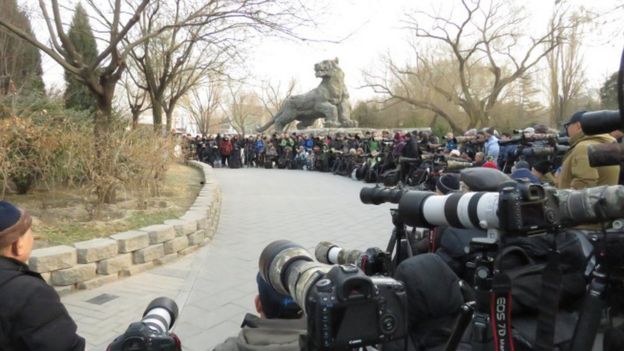
Hundreds of bird-watching photographers flocked to the Beijing Zoo last Friday after word spread that a European robin had been spotted there.

The red-breasted bird is common across Europe but is rarely seen in Beijing – it’s only the third time one has been recorded in the capital.

Some birdwatchers have joked the robin might be a “Brexit refugee”.

“It’s very rare to see [the European robin] in Beijing,” Terry Townshend, founder of Birding Beijing told the BBC.

“Almost 200 photographers camped out for it. I think a lot of people want to [capture it] because it’s a very photogenic bird and it has that sort of exotic feel.”

Birds in odd places

Mr Townshend was among the 200 photographers who camped out at Beijing Zoo last Friday.

200 photographers camped outImage copyrightTERRY TOWNSHEND
Image captionHundreds of photographers camped out for a chance to catch the bird

He said he found out about the sighting through bird watching groups on WeChat – a messaging app in China.

“A lot of people associate the bird with Britain… [so] someone in the WeChat group called the bird a ‘Brexit refugee’ because [they joked that it was] escaping the political chaos in the UK,” said Mr Townshend.

“Then the name kind of just caught on really.”

It is not common for robins to migrate and it is unclear how this one might have landed so far away from home.

“It normally lives in Europe [and] Beijing is at least 1,500 miles of where it should normally be,” said Mr Townshend. “But it’s likely that this bird is from the eastern part of Europe and not Britain.”

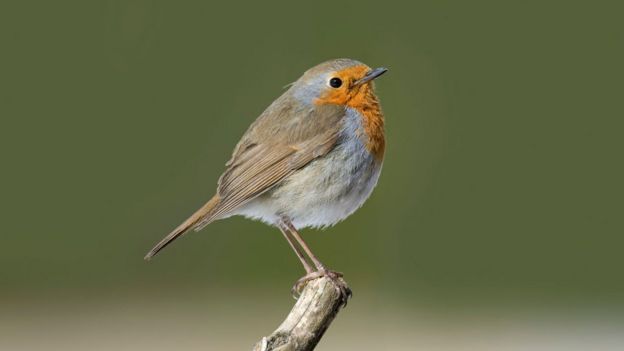
European robin perched on branch in winter.Image copyrightGETTY IMAGES
Image captionThe European robin is, as its name suggests, normally only found in Europe

“We don’t really know why birds sometimes turn up in odd places, it might be related to weather, when they are migrating they could be blown by strong winds.”

However it got there, the European robin is expected to stay in Beijing for some weeks to come.

Mr Townshend said a robin would normally only leave for home at the end of winter.

“So we would expect it to stay in Beijing for the rest of winter and it would probably disappear in March.”

The European robin was in 2015 chosen as UK’s first national bird in a poll of more than 200,000 people.

14/01/2019

Beijing’s new airport to be surrounded by forest

BEIJING, Jan. 13 (Xinhua) — Beijing’s new international airport, which is set to be operational this year, will be an airport in the forest, district officials said Sunday.

The Beijing Daxing International Airport is located 46 km south of downtown Beijing. It sits at the junction of Beijing’s Daxing District and Langfang, a city in neighboring Hebei Province.

Forest will cover 17,866 hectares of surrounding areas of the new airport, officials said at the on-going Daxing district people’s congress.

Decoration work is under way for the interior of the hub. Highways leading to and out of the airport are under construction.

The airport is expected to handle 45 million passengers annually by 2021 and 72 million by 2025, the Civil Aviation Administration of China (CAAC) said.

The new airport is aimed at taking pressure off the overcrowded Beijing Capital International Airport in the northeastern suburbs, which handled over 100 million passengers last year, the world’s second busiest airport in passenger traffic.

China Eastern Airlines and China Southern Airlines will be the main carriers at the new airport. Overseas airlines can choose which airport to use or operate in both airports, according to the CAAC.

09/01/2019

Beijing school attacker injures 20 children

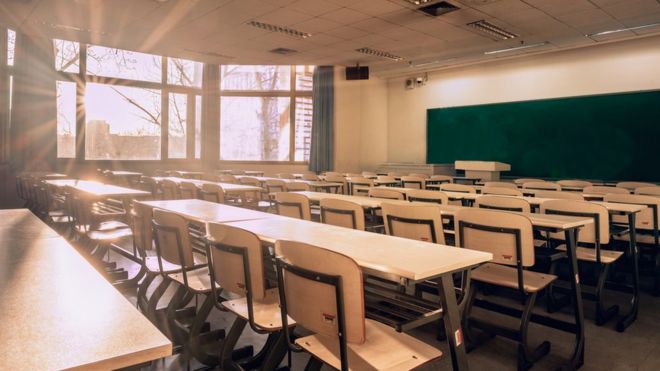
File photo of a schoolImage copyrightISTOCK
Image captionThe attack took place in a school in Beijing (not pictured)

Twenty primary school students in Beijing have been injured in an attack at their school by a hammer-wielding man, say officials in China.

The attack took place at around 11:00 local time (03:00 GMT) said Beijing’s Xicheng district in a statement on social media site Weibo.

Three children were reported to be seriously injured but stable.

The alleged attacker has been arrested. It is not clear what motive the suspect might have had.

Some reports say he was a former maintenance worker at the school.

The attack took place at the Beijing No.1 Affiliated Elementary School of Xuanwu Normal School, according to state-media outlet the Global Times.

The Xicheng district said it would work together with other government authorities to carry out a full investigation.

The attack comes after a Chinese man was executed on Friday for injuring 12 children in a knife attack at a nursery in China.

Violent crime is rare in China but there have been several attacks on school children in recent years.

07/01/2019

US warship sails near disputed Paracels in South China Sea as trade talks under way in Beijing

  • USS McCampbell sailed within 12 nautical miles of the island chain ‘to challenge excessive maritime claims’
  • But Pacific Fleet say ‘freedom of navigation’ operation was not about any one country or to make political statement
PUBLISHED : Monday, 07 January, 2019, 3:58pm
UPDATED : Monday, 07 January, 2019, 4:17pm
Reuters

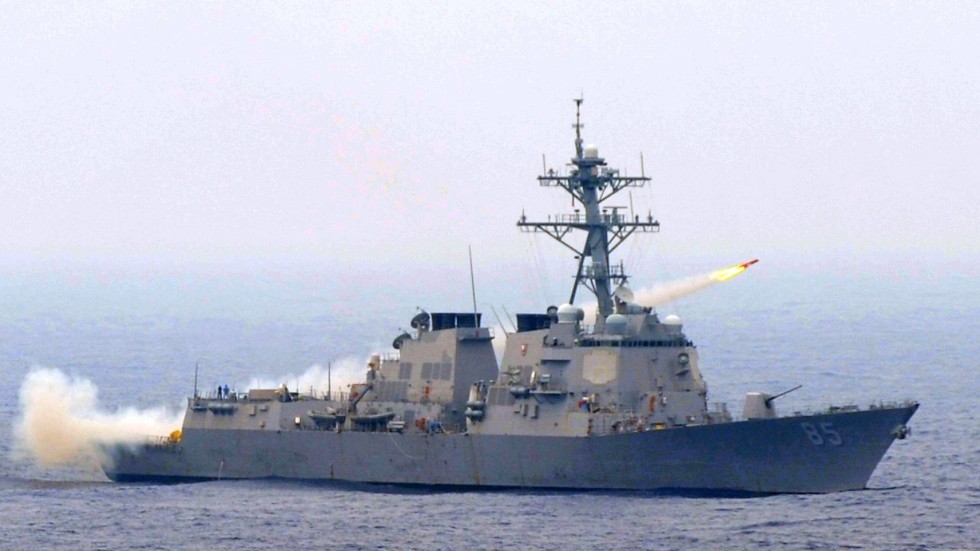
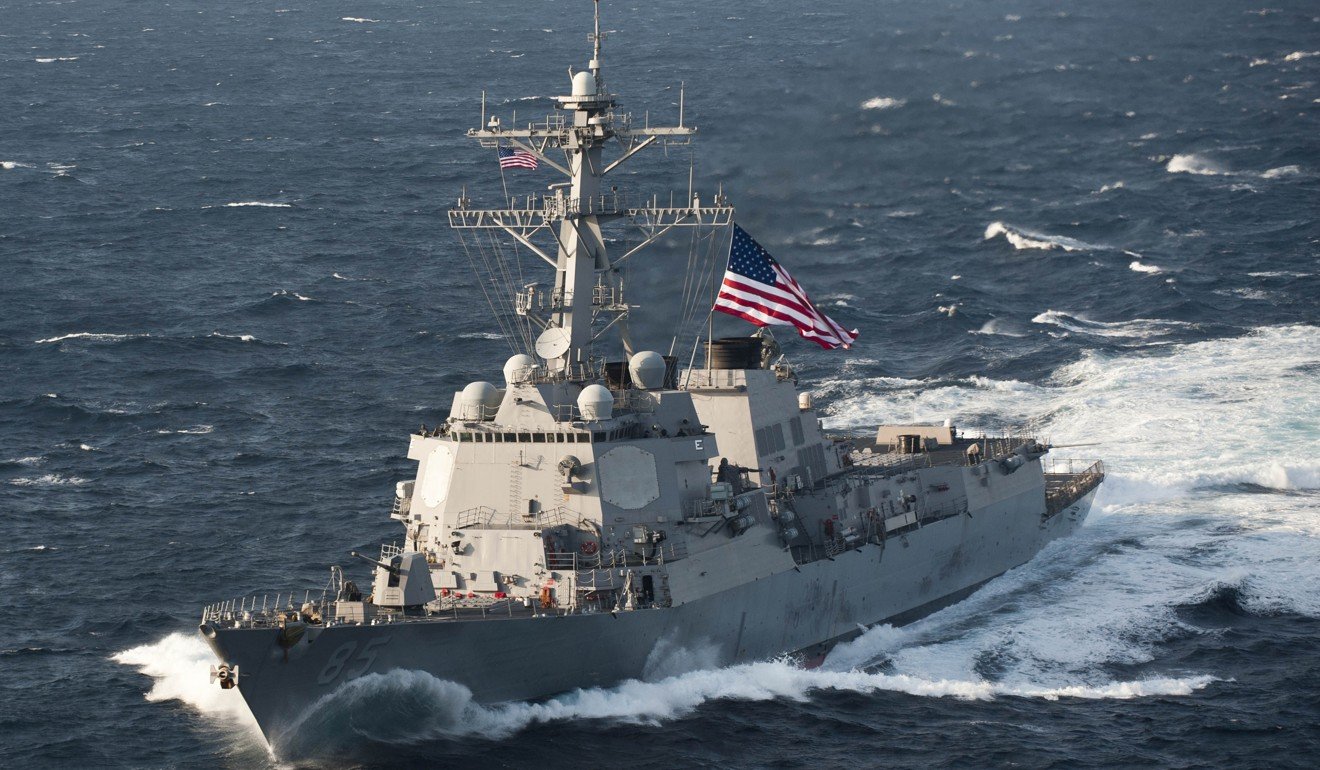
A US guided-missile destroyer sailed near the disputed Paracel Islands in the South China Sea claimed by China as US officials join talks in Beijing during a truce in a bitter trade war.

The USS McCampbell carried out a “freedom of navigation” operation, sailing within 12 nautical miles of the Paracel Island chain, “to challenge excessive maritime claims”, Pacific Fleet spokeswoman Rachel McMarr said in a statement.

The operation was not about any one country or to make a political statement, McMarr said.

China lodged “stern representations” with the United States over the action, its foreign ministry said on Monday.

Ministry spokesman Lu Kang told a regular briefing that the US operation in the region violated China’s law and urged the United States to stop such actions.

It comes as trade talks between China and the United States are under way in Beijing, the first round of face-to-face discussions since both sides agreed to a 90-day truce in a trade war that has roiled international markets.

China claims almost all of the strategic waters, and frequently lambasts the United States and its allies for freedom of navigation naval operations near Chinese-occupied islands.

Vietnam, the Philippines, Brunei, Malaysia, Indonesia and Taiwan have competing claims in the region.

US President Donald Trump and Chinese President Xi Jinping in December agreed to put on hold a spiralling trade dispute of tit-for-tat import tariffs on hundreds of billions worth of goods.

Trump has imposed tariffs to pressure Beijing to change its practices on issues ranging from corporate espionage to market access and industrial subsidies. China has retaliated with tariffs of its own.

Fears have grown in recent months that the dispute is just one vector in a bilateral relationship that is fast cooling across the board, with top administration officials sharply criticising Beijing for everything from human rights abuses and its influence operations in the United States.

The two countries are also at odds over regional security issues, including Washington’s overtures to the self-ruled island of Taiwan, which Beijing claims as its own.

China and the United States have in the past repeatedly traded barbs over what Washington says is Beijing’s militarisation of the South China Sea by building military installations on artificial islands and reefs.

China defends its construction as necessary for self-defence and says that it is rather Washington that is responsible for ratcheting up tensions in the region by sending warships and military plans close to islands Beijing claims.

05/01/2019

Taiwan President Tsai Ing-wen open to cross-strait talks, but has some demands for Beijing first

  • Leader explains her rejection of Xi Jinping’s proposal to start talks on unification based on ‘one country, two systems’
PUBLISHED : Saturday, 05 January, 2019, 5:00pm
UPDATED : Saturday, 05 January, 2019, 6:13pm

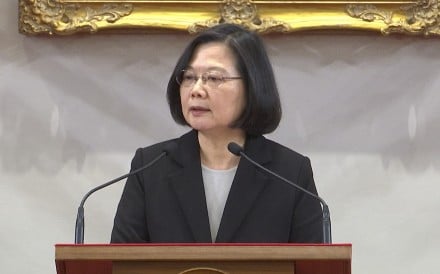
Taiwan’s President Tsai Ing-wen said on Saturday she was open to talks with the mainland if Beijing was willing to promote democracy and renounce the use of force against the self-ruled island.

Tsai’s comments came two days after she rejected Chinese President Xi Jinping’s proposal for the two sides to start talks on unification based on the “one country, two systems” model which applied in Hong Kong.

“As the democratically elected president, I have to defend our democracy, freedom, and way of life,” she told foreign journalists in Taipei to explain her rejection of Xi’s proposal, made in a speech on Wednesday to mark 40 years since the end of military confrontation across the Taiwan Strait.

Tsai said Xi’s statement highlighted two fundamental dangers posed by Beijing to freedom and democracy in Taiwan.

“First, by emphasising ‘one China’ and ‘one country, two systems,’ particularly in the context of the so-called 1992 consensus, China has made clear their political intentions towards Taiwan and their steps for unification.

“This is a major disregard for the fact that the Republic of China, Taiwan does exist, and is in full operation like all other democratic countries,” she said.

“Second, China’s plan to engage in political consultation with the political parties instead of the democratically elected government of Taiwan, is a continuation of its deliberate campaign to undermine and subvert our democratic process and create division in our society.”

The 1992 consensus refers to an understanding that there is only one China, though each side may have its own interpretation of what constitutes “China”.

In his speech, Xi rephrased the consensus as an understanding that “the two sides of the Taiwan Strait belong to one China, jointly seeking to achieve cross-strait unification”.

Beijing suspended official talks and exchanges with Taiwan when Tsai was elected president in 2016 and refused to accept the consensus.

Since then Beijing, which considers Taiwan a wayward province awaiting unification by force if necessary, has staged a series of war games to intimidate the island and poached five of Taiwan’s diplomatic allies to try to pressure Tsai into accepting the consensus.

“As a democracy, cross-strait interaction must follow the rules and oversight of the people of Taiwan, and therefore any discussions must be between governments that are representative of the people on both sides,” Tsai said on Saturday.

She identified a lack of mutual trust as the key problem keeping the two sides from consulting on a possible way of dealing with each other.

“The lack of democracy and protection of human rights, as well as the military threats from China are the major reasons [that people here do not trust Beijing],” Tsai said.

This was why majority opinion in Taiwan opposed cross-strait unification, as people there did not want to live in a system without democracy and human rights, she said.

Asked if the Tsai administration would want talks with Beijing, Tsai said her government did not oppose talks, but Beijing must “move towards democracy, protect human rights and renounce the use of force against us”.

“Only when the two sides step up efforts to accumulate adequate trust will the room for [negotiation] be widened and options [for talks] increased,” she said.

Tsai said Taiwan had long adhered to the principle of refraining from provoking Beijing and had done all it could to maintain stability in the region.

On the contrary, she said, Beijing had tried to suppress Taiwan and refused to cooperate with the island, even on health issues like the outbreak of African swine fever which threatened the well-being of the public in Taiwan.

Tsai added that she had also sought international support to defend the self-ruled island’s democracy and way of life, as well as Taiwan’s refusal to accept the one country, two systems approach offered by Xi for unification talks, given Beijing’s snubbing of democracy and human rights.

She asked Beijing to take note of the democratic mindset of Taiwanee.

28/12/2018

Peking University students clash with campus guards over control of Marxist Society

  • Witnesses say some protesters were injured as they were forced to go inside science building
  • University announced new committee will run the group after its chairman was detained and warned over Mao Zedong anniversary event
PUBLISHED : Friday, 28 December, 2018, 9:30pm
UPDATED : Friday, 28 December, 2018, 10:18pm

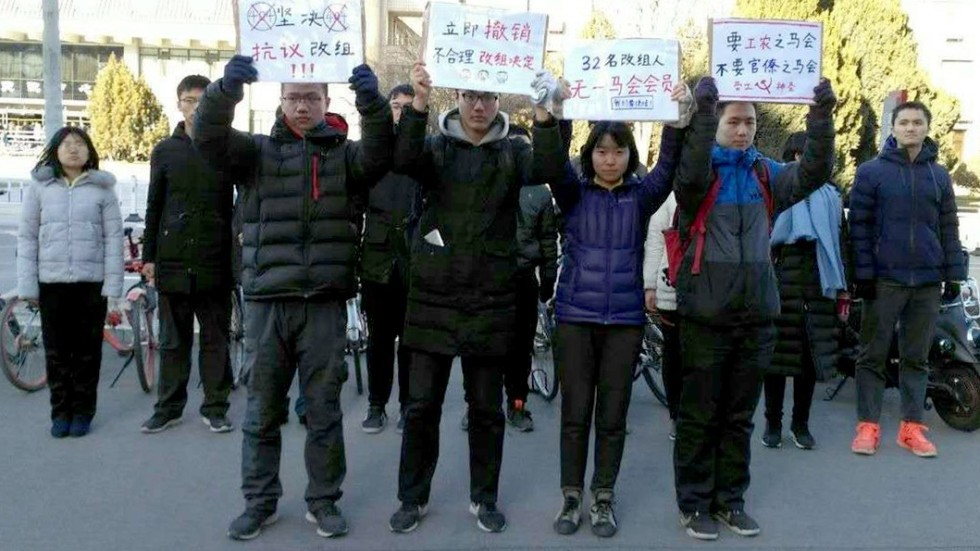
A dozen Peking University students clashed with guards on Friday as they protested over a change to the Marxist Society that was imposed after it organised an event to mark the 125th anniversary of Mao Zedong’s birth.

Witnesses said the students held placards near a science building at the campus in Beijing as they protested against the decision to install a new committee to run the society.

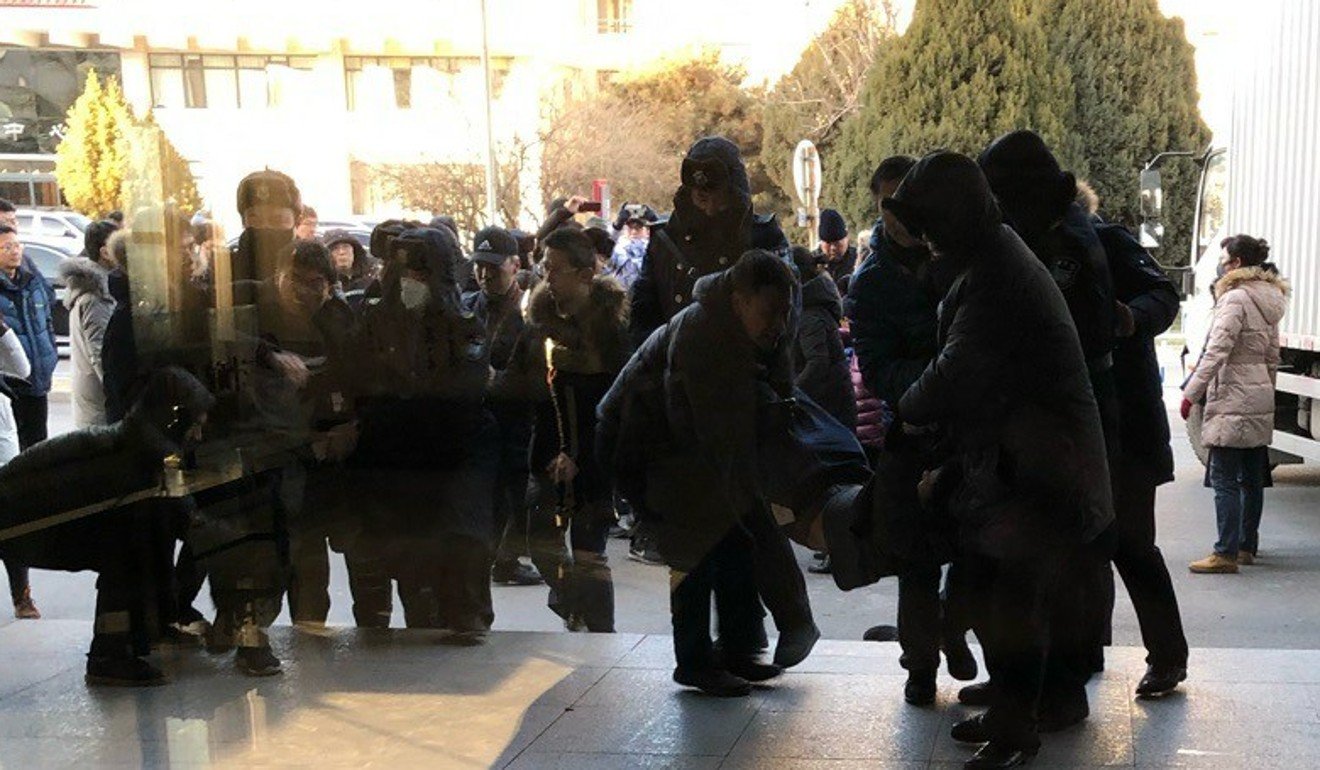
They said the students had locked arms during the peaceful protest but some were injured when security guards forced them to go into the building, manhandling and in some cases carrying them inside.

“Several of them were pushed to the ground and suffered cuts to their hands and some had their glasses broken in the struggle,” according to one witness.

At least eight of the students were still inside the building on Friday evening, according to a source.

Among the protesters taken inside by guards was Qiu Zhanxuan, chairman of the society. Qiu was not reachable on Friday night.

On Wednesday, Qiu was taken away by plain-clothes police ahead of an event he had arranged to commemorate the Mao anniversary. He was released the following day with a warning.

But a notice also appeared on the university’s online bulletin board on Thursday announcing that a new 32-member committee had been put in place to run the student Marxist Society.

The notice was issued by the university’s extracurricular activities office on behalf of Sun Guoxi, the academic in charge of the society.

It said the reshuffle was needed because society members had “severely deviated” from promises made when they registered and had repeatedly organised activities that violated regulations. It added that Qiu was “not qualified to lead [the society]”.

The young protesters have vowed to fight the change, which they said would force them underground.

“We are deeply shocked and angered by such an absurd scene happening on the campus of Peking University,” read a petition letter posted online on Friday and signed by about 30 students.

“This is a clear move to place the Marxist Society under the control of campus bureaucrats.”

Ning Yue, a PhD student majoring in Marxism, will lead the society as director general, with Ma Ning, a postgraduate Marxism student, as director, according to the notice.

But the protesters said both Ning and Ma were new to the society.

The university’s campus security could not be reached for comment on Friday.

In the past six months, authorities have widened a crackdown against nascent grass-roots activism on university campuses led by young Marxists.

Last month, more than 20 labour activists and young Marxists who were recent graduates from top universities were arrested. Their actions, which began in July in Shenzhen, were limited in scale but were seen by China watchers as a sign of rising left-leaning social activism in China.

In recent years, Marxism has inspired a growing number of young activists appalled by China’s poor protection of workers, rampant corruption and widening wealth gap. These activists have taken steps to speak up on social issues such as labour and farmers’ rights as well as income inequality.

13/12/2018

Can South China Sea conflict between Washington and Beijing be avoided?

This story is part of an ongoing series on US-China relations produced jointly by theSouth China Morning Post and POLITICO, with reporting from Asia and the United States.

Rising tensions over Beijing’s accelerating military build-up in the South China Sea are stoking fears of a major-power clash between China and the United States – fuelling urgent calls for new security talks before the two nations stumble into a shooting war.

But the worries come amid a dearth of official dialogue between two of the world’s largest militaries, and as US leaders espouse an increasingly harder line against China’s actions.

The US and its allies have stepped up naval and air patrols over the sea and cancelled joint exercises with Beijing, while China is considering requiring all aircraft flying over the area to first identify themselves – a step that many nations would consider threatening.

Military experts say the showdown could easily spin out of control.

“Chinese colleagues have said to me explicitly that if the US continues to sail through and overfly what they see as their waters, China will eventually shoot down the offending aircraft,” said Matthew Kroenig, a former CIA analyst and Pentagon strategist.

“Maybe that’s just a bluff, but if China shot down a US plane, that would be a scenario ripe for escalation. It’s hard to see President Trump or any other US leader backing down from that.”

US military leaders insist they’re determined to avoid that. Navy Admiral Phil Davidson, the US commander of the Indo-Pacific Command, told POLITICO he’s eager to open a new dialogue with his Chinese counterparts, contending that “a military-to-military relationship is quite important.”

“I have yet to meet the [chief of defence] or the minister of defence in China,” he said. “I hope to visit early next year.”

Marine General Joseph Dunford, the chairman of the US Joint Chiefs of Staff, says establishing more channels for the militaries to avoid conflict is one of his top priorities as Washington and Beijing also tussle over issues such as trade and North Korea’s nuclear program. “Competition does not necessarily lead to conflict,” he said at a recent security forum in Canada.

On the other hand, the US is trying to send Chinese leaders a pointed message by sending an increased number of military patrols through the disputed waters, Dunford said in an interview with POLITICO.

“What we are doing is preserving the principle of open access to the global commons,” Dunford said. And he said nations “violating international norms, standards and the law” should know they are “going to pay a cost that is higher than whatever they hope to gain.”

Similarly, Beijing’s leaders are not backing down from their military expansion in the vast South China Sea, which stretches more than 1.3 million square miles with trillions of dollars worth of trade transiting annually. Those waters near the Spratly Islands chain where China seized reefs and began building artificial islands during the second term of the Obama administration.

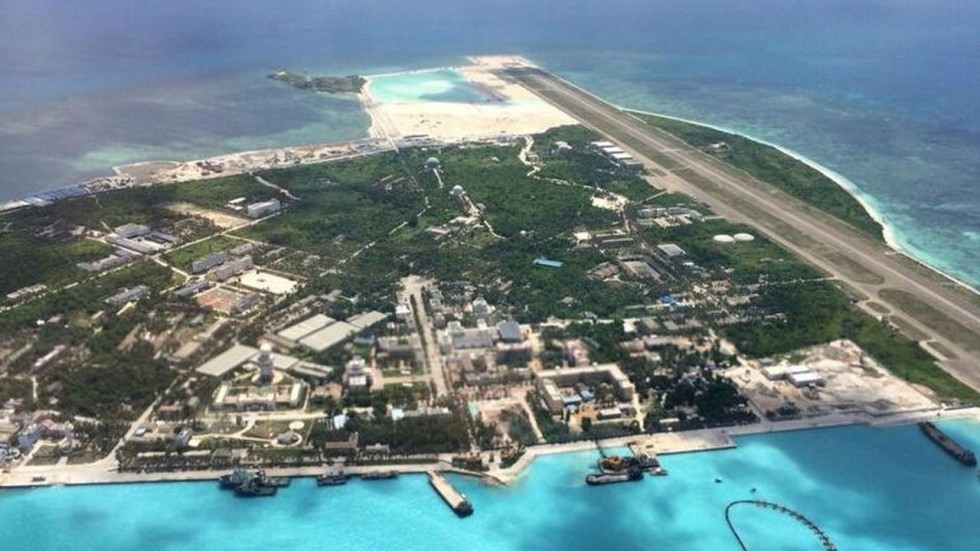
Despite public assurances from President Xi Jinping that the features would not be militarised, China recently deployed surface-to-air missiles and other weapons and equipment. Earlier this year, satellite images showed that Beijing has built at least four airstrips suitable for military aircraft on Woody Island, as well as the reefs in the archipelago known as Fiery Cross, Mischief and Subi.

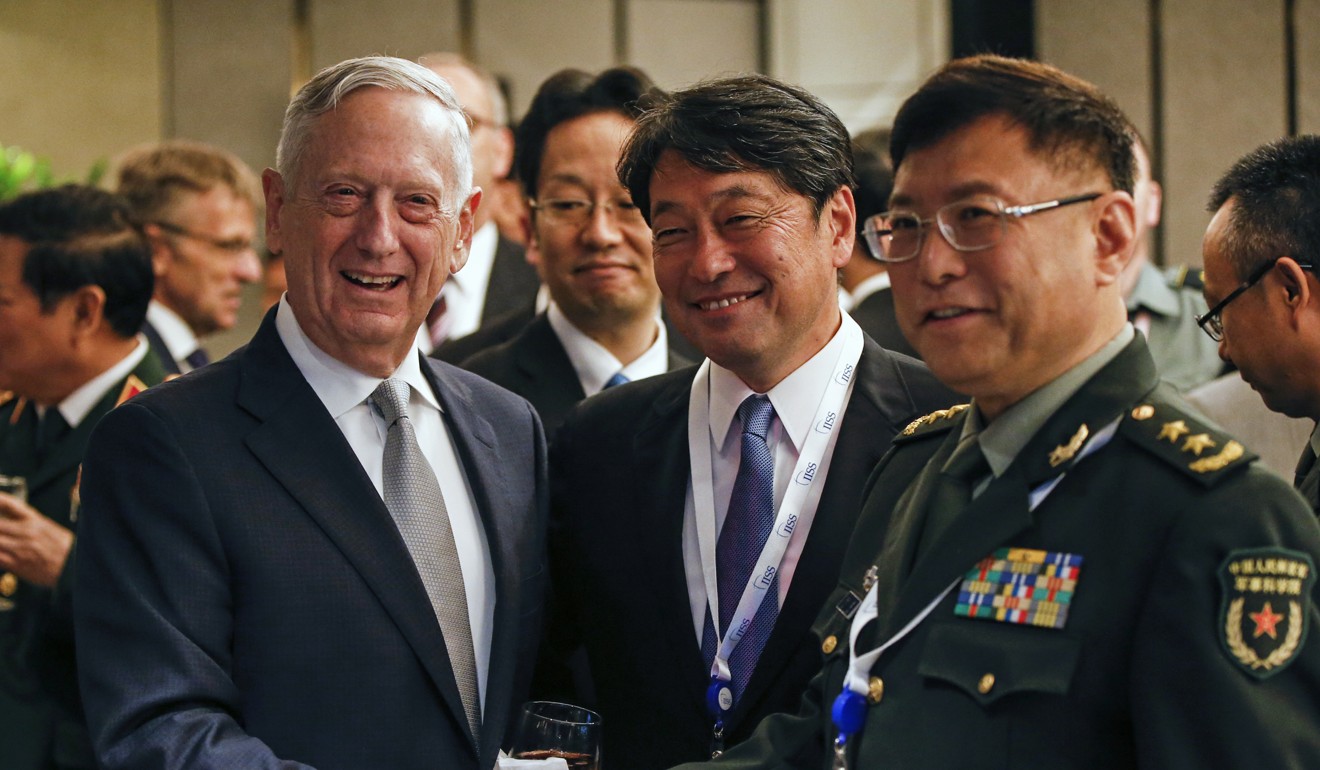
China has telegraphed steps to further solidify its claims in the waters. In June, Chinese Lieutenant General He Lei acknowledged during the Shangri-La defence summit in Singapore that China is deploying troops and weapons on both natural and man-made islands in the Paracel and Spratly archipelagos.

Chinese military sources from a state-owned firm specialising in radar systems to detect stealth aircraft for the PLA said the People’s Liberation Army’s Air Force and Strategic Support Force have also placed sophisticated radar systems in the South China Sea.

“Since the US has kept sending spy aircraft to do the close-in reconnaissance activities near China’s territory waters in the South China Sea, it’s necessary to deploy a sophisticated radar system to the artificial islands to detect the US aircraft,” one of the sources from the firm said.

Lieutenant General He Lei, who led the Chinese military delegation to the Shanghai-La Dialogue, said that “deploying troops and weapons on islands in the South China Sea is within China’s sovereign right to do and allowed by international law.”
The US and other countries have condemned the expansion as a violation of international law. And, in recent months, top American military officials have dropped some of their usual diplomatic language.

US Defence Secretary James Mattis revoked China’s invitation to participate in an annual military exercise this fall, then cancelled a trip to Beijing planned for October.

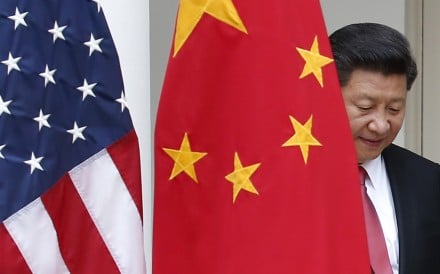
“If you’d asked me two months ago, I’d have said we are still attempting to maintain a cooperative stance,” the retired four-star general said at the Shangri-La summit. “But then you look at what President Xi said in the Rose Garden of the White House in 2015, that they would not militarise the Spratlys, and then we watched what happened four weeks ago, it was time to say there’s a consequence to this.”

During his trip to Vietnam in October, Mattis said Washington was highly concerned about China’s “predatory” behaviour and militarisation of the South China Sea.

“We remain highly concerned with the continued militarisation of features in the South China Sea,” he said, saying that this continued to happen despite a pledge by President Xi Jinping not to do so.

Davidson, the top American commander in the Asia-Pacific, expressed alarm recently at China’s “secretly deployed anti-ship missiles, electronic jammers and surface-to-air missiles.”

“So what was a great wall of sand just three years ago,” Davidson added, “is now a great wall of SAMs in the South China Sea, giving [the People’s Republic of China] the potential to exert national control over international waters in the South China Sea.”

The US and its allies have also launched “freedom of navigation” operations in the region. In September, two pairs of US Air Force B-52 bombers flew over the disputed area – one pair over the South China Sea and one over the East China Sea. A week later, the destroyer USS Decatur came within 12 nautical miles of two of the disputed reefs, prompting manoeuvres by a Chinese destroyer that the Pentagon called “unsafe” and “unprofessional.”

Australia, Japan, France, Canada and New Zealand are among the allies taking part in the patrols.

But the growing prominence of those other military forces has caused China to “push back more, and that heightens the risk that you could have an inadvertent crisis,” said Lindsey Ford of the Asia Society, who is also a former senior adviser to the US assistant secretary of Defence for Asian and Pacific security affairs.

China’s interest is not simply to exert political or economic influence in the region, said Kroenig, the former CIA analyst. Its activities are also defensive in nature, he believes.

China, like the Soviet Union during the cold war, is not confident that its nuclear ballistic missile submarines could survive in the open ocean during a conflict with the United States, he said – because waters closer to Chinese territory are too shallow. So it hopes to use the South China Sea as an operating area for its subs.

“That’s a strategic military purpose on top of the political purpose,” said Kroenig. “I’ve had a Chinese colleague say to me: ‘You guys don’t really care about these territorial claims in the South China Sea. You’re trying to deny our nuclear deterrent.’”

Now, Chinese military experts say, Beijing is considering establishing an “air defence identification zone”, which would require all aircraft over the area to declare their identity and destination.

The rationale is ostensibly peaceful in nature: Chinese officials maintain it would help prevent disasters such as the 2014 disappearance of Malaysia Airlines flight MH370.

But a zone Beijing established in the East China Sea in 2013 drew a joint rebuke from Japan and the Association of Southeast Asian Nations, which considered it threatening.

The resistance from other nations “implied that such a move constituted a security challenge”, said Collin Koh Swee Lean, an analyst at the S. Rajaratnam School of International Studies in Singapore.

Koh warned that the air traffic proposal could derail regional talks about establishing a code of conduct to avoid confrontations in the area. He also predicted that the US might feel compelled to ramp up its military presence in response – a view echoed by Zhou Chenming, a military expert based in Beijing.

Further fuelling tensions in the South China Sea is the growing role of China’s so-called Maritime Militia, a naval paramilitary force that operates disguised as fishing or other civilian vessels. Vice-President Mike Pence recently criticised the forces as extra-legal, and the rules for approaching them are ill-defined.

“Should we treat them as military vessels and expect them to behave that way?” asked the Asia Society’s Ford. “China is exploiting a loophole. Pence’s recent remarks calling out the Maritime Militia explicitly suggest the US is refining its thinking about how to approach that loophole.”

For now, senior American military leaders are expressing confidence that US forces can continue to aggressively promote their freedom of navigation mission without sparking a violent confrontation.

“I think one of the unfortunate things is the focus on two destroyers passing in the daylight,” Davidson told POLITICO. “That is not what the issue is about in the South China Sea. It is about trade, commerce, financial markets moving their information around the globe – every airline that flies over the top.”

Others worry that the longer the United States and China up the ante the more likely things could spin out of control.

Law of Unintended Consequences

continuously updated blog about China & India

ChiaHou's Book Reviews

continuously updated blog about China & India

What's wrong with the world; and its economy

continuously updated blog about China & India