29/10/2019
BEIJING, Oct. 28 (Xinhua) — Premier Li Keqiang’s upcoming trip to Uzbekistan and Thailand is of great importance to cementing cooperation among both SCO members and East Asian states, as well as solidifying Chinese relations with Uzbekistan and Thailand, senior officials said at a press briefing Monday.
Premier Li is scheduled to attend the 18th meeting of the Council of Heads of Government (Prime Ministers) of the Shanghai Cooperation Organization (SCO) in the Uzbek capital Tashkent, pay an official visit to Uzbekistan, and attend the 22nd China-ASEAN (10+1) leaders’ meeting, the 22nd ASEAN-China, Japan and Republic of Korea (10+3) leaders’ meeting and the 14th East Asia Summit (EAS) in the Thai capital Bangkok before paying an official visit to Thailand, from Nov. 1 to 5.
During the SCO heads of government meeting, Li will explain Xi Jinping Thought on Socialism with Chinese Characteristics for a New Era and share the successful construction experience of the People’s Republic of China in the past 70 years, according to Assistant Foreign Minister Chen Xiaodong.
“Li will exchange in-depth views with the leaders of the participating countries on enhancing solidarity and mutual trust among member states, building the Belt and Road Initiative and cooperation in such fields as economy and trade, industrial capacity, connectivity, finance, investment and people-to-people exchanges,” Chen said.
Noting it will be Li’s first official visit to Uzbekistan, Chen said the premier will exchange views with the Uzbek side on implementing the important consensus of the two heads of state, promoting the development of bilateral relations and international and regional issues of common concern. The two sides will sign a series of cooperation agreements covering economy and trade, investment, science and technology, customs and other fields.
Regarding the East Asian leaders’ meeting on cooperation, Chen said the premier will expound on China’s policy proposals for East Asian cooperation and propose more than 20 new initiatives for deepening cooperation under various mechanisms.
The East Asian leaders’ meeting this year will strengthen consensus, deepen cooperation, improve regional economic integration, promote regional common prosperity and development, and send out a positive signal of adhering to multilateralism and free trade, building an open world economy, according to Assistant Minister of Commerce Li Chenggang.
Calling Thailand a traditional friendly neighbor and important partner for the Belt and Road cooperation, Chen said Premier Li’s official visit to Thailand is the second visit by the premier in six years.
During the visit, the premier will exchange in-depth views with the leaders of the Thai side on bilateral relations and cooperation. The two sides will issue a joint press statement between the two governments and sign cooperation documents in such fields as technology and e-commerce.
Source: Xinhua
Posted in 14th East Asia Summit (EAS), 22nd ASEAN-China, Japan and Republic of Korea (10+3) leaders' meeting, 22nd China-ASEAN (10+1) leaders' meeting, Bangkok, Belt and Road Cooperation, Belt and Road Initiative, Belt and Road Initiative (BRI), Chinese premier Li Keqiang, Council of Heads of Government (Prime Ministers), customs, E-commerce, East Asian leaders' meeting, East Asian states, economy, People's Republic of China, People's Republic of China (PRC), science and technology, SCO members, Shanghai Cooperation Organization (SCO), Socialism with Chinese Characteristics for a New Era, Tashkent, Technology, Thai capital, Thailand, Trade, Uncategorized, Uzbek capital, Uzbekistan, Xi Jinping Thought |
Leave a Comment »
23/10/2019
Photo taken on Oct. 22, 2019 shows the construction site of Kuwait New Refinery Project in Al Ahmadi Governorate, Kuwait. The sixth set of oil-refining equipment for the Kuwait New Refinery Project (NRP), constructed by China Petrochemical Corporation (Sinopec), was handed over to its general contractor on Tuesday. (Xinhua/Nie Yunpeng)
KUWAIT CITY, Oct. 22 (Xinhua) — The sixth set of oil-refining equipment for the Kuwait New Refinery Project (NRP), constructed by China Petrochemical Corporation (Sinopec), was handed over to its general contractor on Tuesday.
The successful handover of all the six sets of equipment marked the ending of the project undertaken by Sinopec Fifth Construction Company, NRP’s sub-contractor.
At the handover ceremony, Cheng Yongru, economic and commercial counselor at the Chinese embassy in Kuwait, said that the project is a model for cooperation between China’s Belt and Road Initiative (BRI) and Kuwait Vision 2035.
He expressed the hope that more Chinese companies would continue strengthening cooperation with the Kuwaiti side for more achievements.
In the past three years, Sinopec Fifth Construction Company has installed on the project a total of 22,400 tons of steel structures, welded 2.4 million-inch pipes, installed 1026 units of equipment, and laid 3,700 km of cables, Wang Zhiwei, the project manager of the company.
Mustafa Abdul-Hamid Al Sane, the Kuwaiti representative on the project and president of Al Manafa Group, hailed the successful handover of the refinery project.
It is a huge achievement, he said, noting that “we are very impressed to see this done in a short time.”
Under the contract, the Chinese company is responsible for installing six sets of oil-refining equipment for the NRP with contract value of 519 million U.S. dollars.
Wang said that the project is currently the largest refinery in the Middle East.
Sourcer: Xinhua
Posted in Al Manafa Group, Belt and Road Initiative (BRI), China Petrochemical Corporation (Sinopec), Chinese, contractor, hands over, KUWAIT CITY, Kuwait New Refinery Project (NRP), Kuwait Vision 2035, Kuwaiti, last set, Middle East, oil giant, oil-refining equipment, Uncategorized |
Leave a Comment »
19/10/2019
- Vice-Premier Hu Chunhua will lead delegation at two-day summit that is expected to be attended by 400 officials and 200 businesspeople
- Observers say it is Beijing’s latest effort to regain momentum in the region and will be closely watched in the US
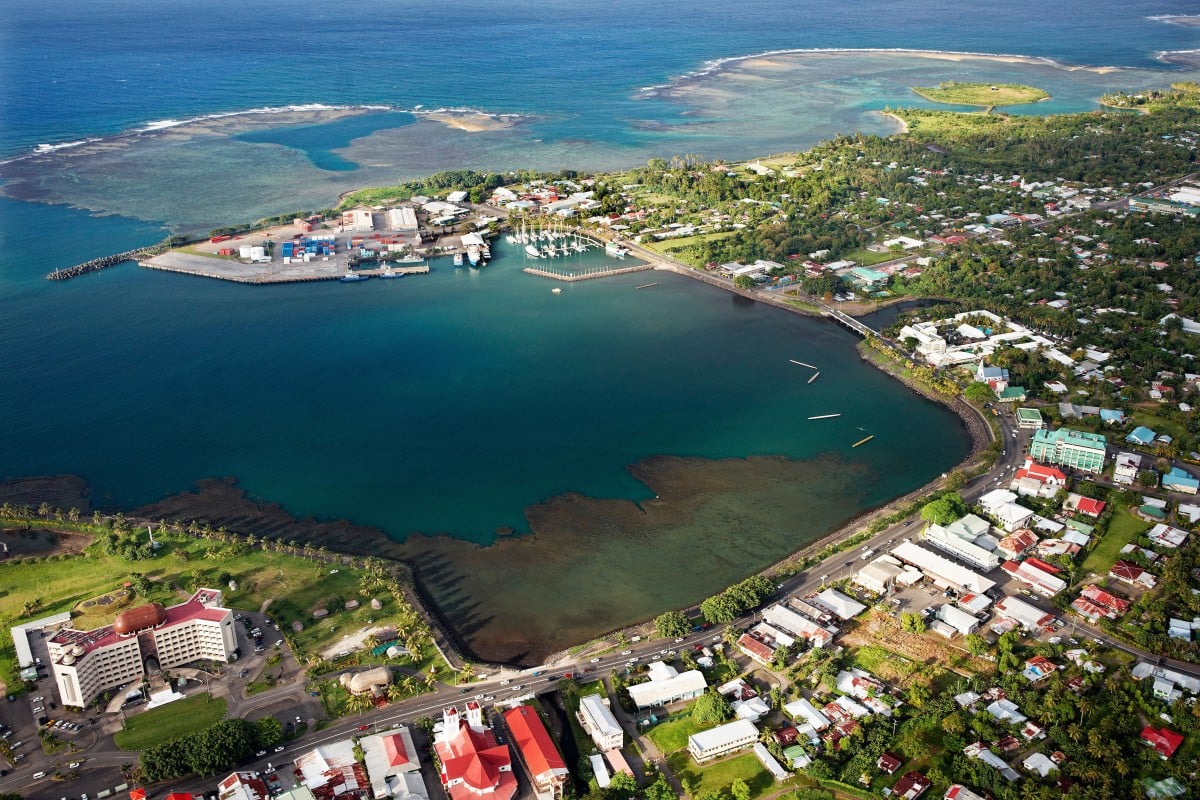
Samoan capital Apia will host the third China-Pacific Island Countries Economic Development Cooperation Forum, which begins on Sunday. Photo: Alamy
China will seek to expand its economic and diplomatic influence in the South Pacific at a forum this weekend, amid growing concern from the US and its allies over Beijing’s push in the strategically important region.
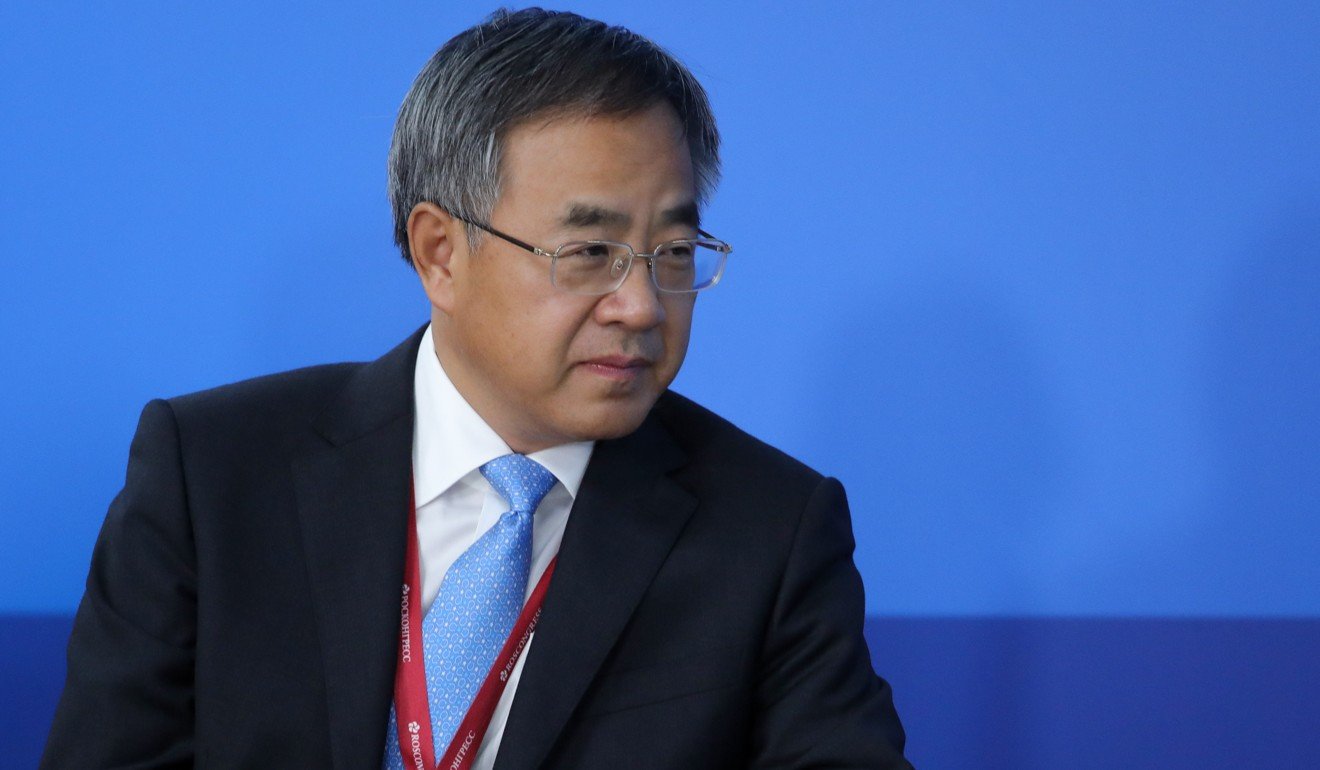
Vice-Premier Hu Chunhua will lead the Chinese delegation at the third China-Pacific Island Countries Economic Development Cooperation Forum in the Samoan capital Apia, which begins on Sunday. It is expected to be attended by 400 officials and more than 200 businesspeople.
Hu, the former Communist Party chief of China’s manufacturing powerhouse Guangdong who now overseas commercial and agricultural affairs, is expected to deliver a keynote speech at the opening ceremony.
Beijing sees the two-day forum as “timely” and “a good opportunity to deepen mutually beneficial cooperation between China and the Pacific”, a commerce ministry spokesperson told the official Economic Daily newspaper.
Trade, agriculture and fisheries, as well as tourism, infrastructure and climate change were at the top of the agenda for the forum, the spokesperson said.
Leaders of all the Pacific nations – except the four that do not have formal diplomatic ties with Beijing – are expected to attend the forum. Australia, which has “observer status” at the summit, will send Ewen McDonald, deputy secretary of the Department of Foreign Affairs and Trade and the head of its Pacific office.
Vice-Premier Hu Chunhua will lead the Chinese delegation at the forum. Photo: EPA-EFE
The forum comes after China hailed a “new breakthrough” in the region following the decision last month by the Solomon Islands and then Kiribati – despite warnings from the US – to cut diplomatic ties with Taipei and switch to Beijing.
They are the latest of Taipei’s allies to be
poached by Beijing as it ramps up pressure on the self-ruled island that it sees as a renegade province to be reunited with the mainland, by force if necessary.
Observers said this weekend’s forum was Beijing’s latest effort to regain momentum in the Pacific.
“Having one of China’s top 25 officials visit the region so soon after [Chinese President] Xi Jinping spent close to three days in Papua New Guinea last November is certainly significant,” said Jonathan Pryke, director of the Pacific Islands programme at the Lowy Institute in Sydney, referring to Hu’s position in the 25-member Politburo.
“It shows clearly China’s attempt to recapture momentum after the West, and in particular Australia, have redoubled their efforts in maintaining and building relationships in the Pacific,” he said.
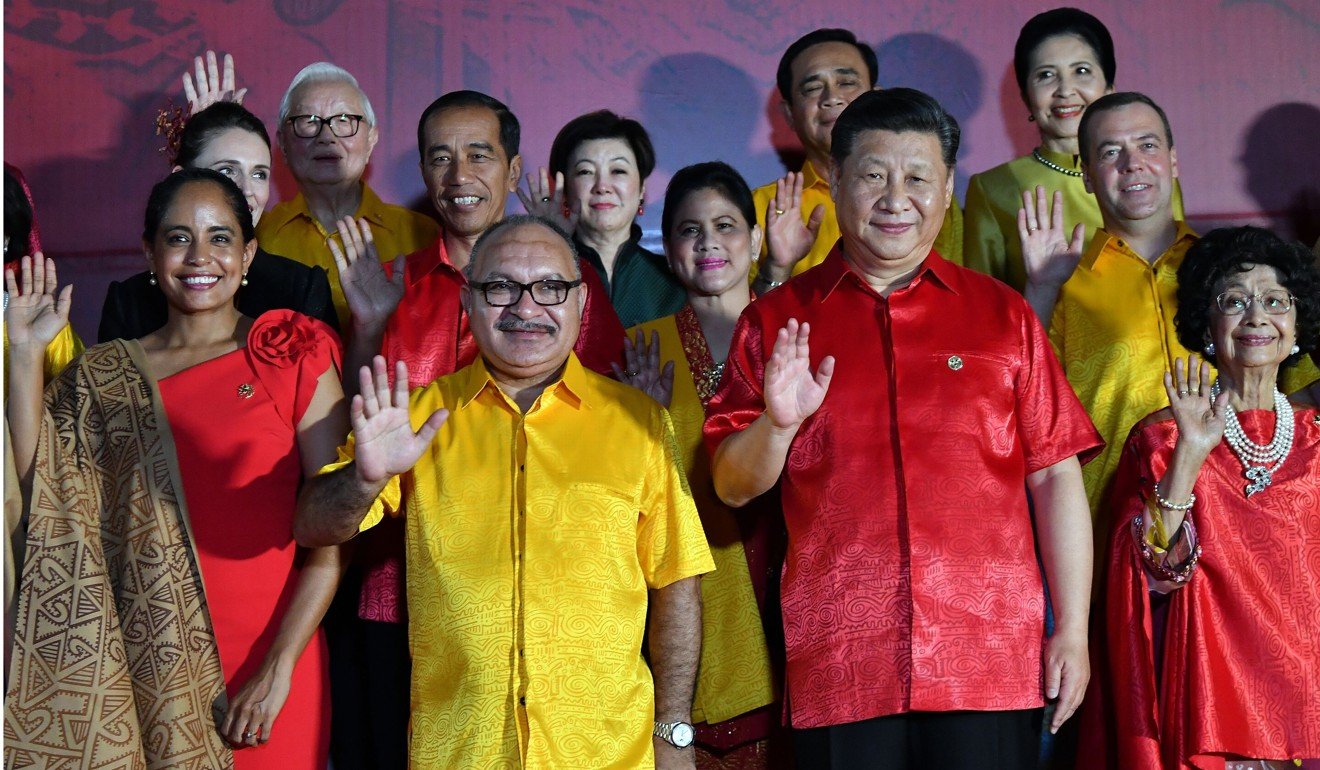
Papua New Guinea’s Prime Minister Peter O’Neill (second from left) and Chinese President Xi Jinping (second from right) pose for a photo during Xi’s visit in November. Photo: AFP
First held in Fiji in 2006, the forum is part of China’s efforts to expand its reach in the resource-rich region.
Back then, premier Wen Jiabao announced 3 billion yuan of concessional loans to Pacific nations and promised to facilitate more trade, medical aid and tourism with the countries. Chinese capital has been pouring into the region – particularly from the mining and fisheries sectors – ever since.
Of note was a 440 million yuan investment, supported by loans from the Export-Import Bank of China, to build a central business centre at Nuku’alofa, the capital of Tonga.
US and allies sideline China in PNG’s Bougainville by helping fund independence vote
As China’s influence grows, the South Pacific – a region traditionally under US hegemony, and on Australia’s doorstep – has “increasingly become a major power that cannot be neglected” and “an important part of China’s greater strategic landscape”, according to Shi Chunlin, an associate professor at Dalian Maritime University.
Trade has increased between China and the eight Pacific nations that have diplomatic ties with Beijing, rising to a combined US$4.32 billion last year – up 25 per cent from 2017.
China has also become the largest trading partner of new ally the Solomons, the second-largest to Papua New Guinea and Fiji, and the third-largest to Samoa.
China’s direct investment in the region has also jumped, reaching US$4.53 billion last year, a more than fourfold increase from the US$900 million of 2013.
Pryke said Beijing was expected to offer new support and loans to the Pacific nations.
“But the Pacific are much more picky about how they want to engage with all partners than they were a decade ago,” he added.
Returning from a trip to China earlier this month, Solomon Islands Prime Minister Manasseh Sogavare confirmed Beijing would provide a US$74 million grant to build a new stadium for the 2023 Pacific Games in the capital Honiara – something its former ally Taipei had committed to fund.
China Sam Group also reportedly signed an agreement on September 22 to lease the island of Tulagi in the Solomons, the site of a former Japanese naval base. The agreement mentioned the development of a refinery on the island, but critics said it could also potentially be used as a military base.
China is now the second-largest donor in the region, only after Australia, which has viewed Beijing’s financial largesse with suspicion.
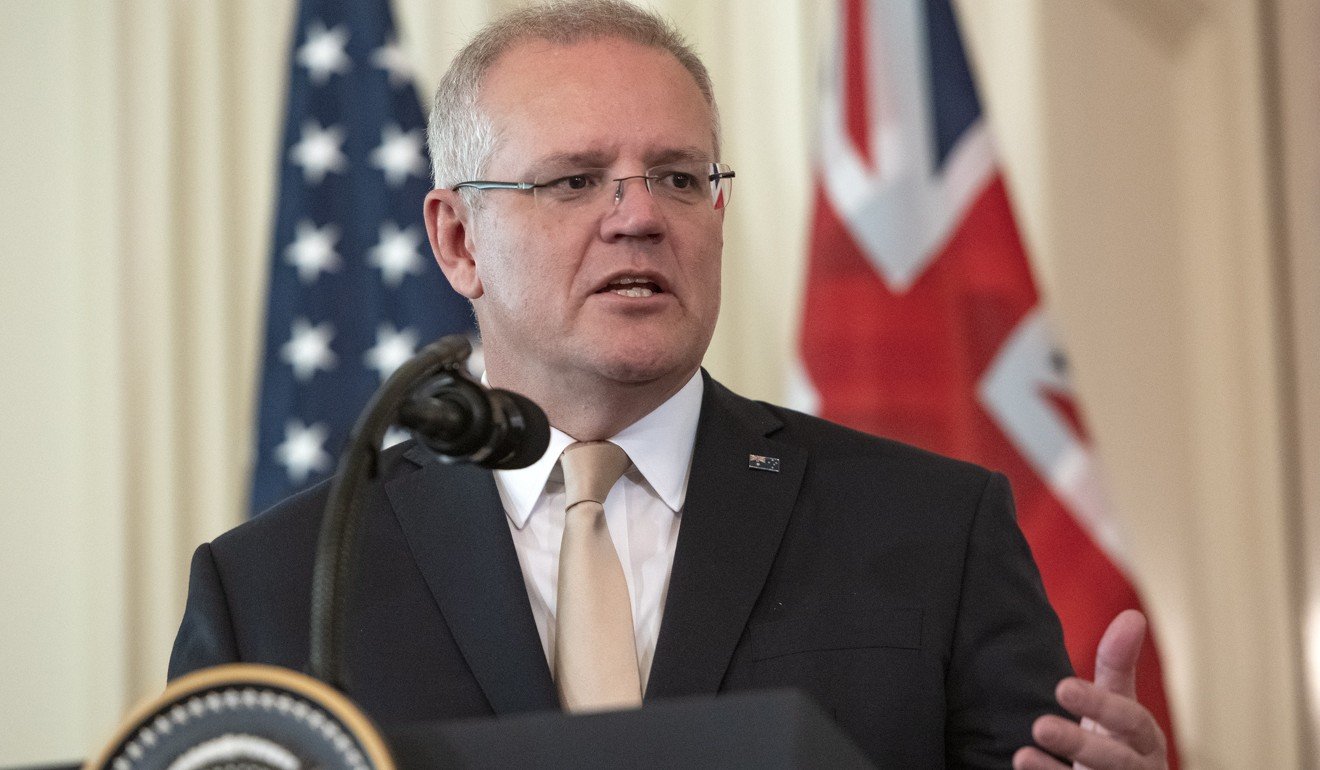
Last year, in an apparent effort to counter China’s rising influence in the region, Australian Prime Minister Scott Morrison announced that Pacific countries would be offered up to US$2.18 billion in grants and cheap loans to build infrastructure.
Australian Prime Minister Scott Morrison last year announced up to US$2.18 billion in grants and cheap loans for infrastructure in Pacific nations. Photo: EPA-EFE
The US, meanwhile, has also been wary of China’s push in the Pacific, amid an escalating geopolitical competition between the world’s two largest economies across many fronts – from trade to tech supremacy and security. The US has long maintained exclusive defence access in the region through its Guam military base and security pacts with the Federated States of Micronesia, the Marshall Islands and Palau.
Derek Grossman, a senior defence analyst with the US-based Rand Corporation, said this year’s forum in Samoa was likely to be higher profile than previous years after Beijing lured away two more diplomatic allies from Taipei.
He said it would be “closely watched in the US for how Beijing continues to leverage sweet economic deals via its Belt and Road Initiative to potentially entice others to switch”.
“The US, along with close friends Australia, Japan and New Zealand, are becoming increasingly concerned over the prospects for China to one day curry enough influence in these small island states to gain port access that could be used for new naval bases,” he said.
The most important issue at the forum, he said, would be “whether the West assesses that China is making further inroads with these states”.
“The likely answer will be that it is, suggesting that the US and its partners will have to compete with China in this region to ensure that it remains ‘free and open’, per the US Indo-Pacific strategy,” he said.
Source: SCMP
Posted in agriculture, Apia, Australia, Beijing, Beijing’s, Belt and Road Initiative, Belt and Road Initiative (BRI), China alert, China-Pacific Island Countries Economic Development Cooperation Forum, Chinese Vice-Premier Hu Chunhua, climate change, commercial and agricultural affairs, Dalian Maritime University, delegation, Department of Foreign Affairs and Trade, Economic Daily, economic forum, expected, Export-Import Bank of China, Federated States of Micronesia, Fiji, fisheries, Guam, guangdong province, Infrastructure, Japan, Japanese naval base, Kiribati, mainland, Marshall Islands, New Zealand, Nuku’alofa, Pacific Games, Palau, Papua New Guinea, Papua New Guinea (PNG), Prime Minister Manasseh Sogavare, Prime Minister Peter O’Neill, ramp up, RAND Corporation, refinery, renegade province, reunited, Samoa, self-ruled island, Solomon Islands, South Pacific push, Sydney, Taipei, Tonga, Tourism, Trade, Tulagi, Uncategorized, US, US Indo-Pacific strategy |
Leave a Comment »
17/10/2019
Vice Premier Han Zheng, also a member of the Standing Committee of the Political Bureau of the Communist Party of China Central Committee, learns about applications of smart robot and 5G technology in fields like remote driving, education and tourism, at an experience park in southwest China’s Chongqing Municipality, Oct. 15, 2019. Han made a research trip to Chongqing on Monday and Tuesday. (Xinhua/Liu Weibing)
CHONGQING, Oct. 16 (Xinhua) — Vice Premier Han Zheng has called on southwest China’s Chongqing Municipality to promote high-quality development and continue to break new ground in all areas.
Han, also a member of the Standing Committee of the Political Bureau of the Communist Party of China Central Committee, made the remarks during a research trip to Chongqing on Monday and Tuesday.
Chongqing should play a key role in advancing the large-scale development of the western region, promoting the joint construction of the Belt and Road Initiative and the green development of the Yangtze River Economic Belt.
During his visit to an auto research and development center and a new-energy vehicle (NEV) manufacturer, Han stressed more input in research to make breakthroughs in key auto parts, and called for the building of homegrown auto brands, wider application of NEVs in urban public transport and the sustainable development of the industry.
Efforts should be made to foster intelligent industries, popularize intelligent technologies and knowledge, and develop intelligent economy, he added.
In his visit to a semi-conductor firm, Han encouraged local companies to enhance their competitiveness and asked local authorities to further improve the business environment.
Source: Xinhua
Posted in auto research and development center, Belt and Road Initiative, Belt and Road Initiative (BRI), business environment, Chinese Vice Premier Han Zheng, Chongqing Municipality, competitiveness, green development, high-quality development, intelligent economy, intelligent industries, intelligent technologies and knowledge, NEVs, new-energy vehicle (NEV) manufacturer, semi-conductor firm, Standing Committee of the Political Bureau of the Communist Party of China Central Committee, Uncategorized, urban public transport, Vice Premier Han Zheng, Yangtze River Economic Belt |
Leave a Comment »
16/10/2019
Chinese Vice Premier Han Zheng, also a member of the Standing Committee of the Political Bureau of the Communist Party of China Central Committee, meets with Singaporean Deputy Prime Minister Heng Swee Keat in southwest China’s Chongqing, Oct. 15, 2019. (Xinhua/Liu Weibing)
CHONGQING, Oct. 15 (Xinhua) — China and Singapore on Tuesday announced that the upgraded version of the China-Singapore Free Trade Agreement will take effect on Oct. 16.
The two sides made the announcement after four bilateral cooperation mechanism meetings co-chaired by Chinese Vice Premier Han Zheng and Singaporean Deputy Prime Minister Heng Swee Keat in Chongqing.
The four meetings were the 15th China-Singapore Joint Council for Bilateral Cooperation Meeting, the 20th China-Singapore Suzhou Industrial Park Joint Steering Council Meeting, the 11th China-Singapore Tianjin Eco-City Joint Steering Council Meeting and the third China-Singapore (Chongqing) Demonstration Initiative on Strategic Connectivity Joint Steering Council Meeting.
During the meetings, the two sides comprehensively reviewed the implementation of the high-level consensus and the process of practical cooperation.
The two sides exchanged views on the high-quality joint construction of the Belt and Road, promoting regional development and cooperation, and upholding multilateralism and free trade, and made plans for the direction and focus of their cooperation in the future.
The two sides agreed to enhance connectivity, financial support, third-party cooperation, law and judicial cooperation under the framework of the Belt and Road Initiative, increase investment in the new land-sea corridor and promote upgrading of major cooperation projects.
The two sides agreed to improve regional free trade arrangements, promote regional integration, enhance multilateral economic and trade cooperation, and push forward the building of an open world economic system.
Prior to the four meetings, Han met with Heng.
Commending the positive development momentum of bilateral relations, Han, also a member of the Standing Committee of the Political Bureau of the Communist Party of China Central Committee, called on the two sides to implement the important consensus reached by the leaders of the two countries that have established strategic guidance of the development of bilateral relations. The two countries should make good use of the mechanism meetings to deepen cooperation in various fields, Han said.
“China’s reform will not stop, but will only accelerate. China’s door of opening-up will not be closed, but will only open wider,” said Han, adding that China welcomes Singapore to participate in its process of reform and opening-up in a larger scope, wider areas and at a deeper level.
Han said China and Singapore must work with each other to guard against the headwinds of unilateralism and protectionism, and resolutely safeguard the international system based on multilateralism and international laws, with the UN as its core.
Heng extended congratulations on the 70th anniversary of the founding of the People’s Republic of China and spoke highly of China’s great development achievements.
He said the friendship between Singapore and China has remained unshakable and become increasingly stronger over the years.
Heng said Singapore attaches great importance to the building of cooperation mechanisms and is ready to work with China to promote cooperation to a new height and to upgrade bilateral relations to a new level. Singapore stands ready to work with China to jointly safeguard the rules-based multilateral trading system and address global challenges.
After the mechanism meetings, Han and Heng witnessed the signing of a series of cooperation documents covering exchanges and training, technological innovation, smart city and intellectual property.
Source: Xinhua
Posted in 70th anniversary of the founding of the People's Republic of China (PRC), Belt and Road (B&R), Belt and Road Initiative, Belt and Road Initiative (BRI), China alert, China-Singapore (Chongqing) Demonstration Initiative on Strategic Connectivity Joint Steering Council Meeting, China-Singapore Free Trade Agreement, China-Singapore Joint Council for Bilateral Cooperation Meeting, China-Singapore Suzhou Industrial Park Joint Steering Council Meeting, China-Singapore Tianjin Eco-City Joint Steering Council Meeting, Chinese Vice Premier Han Zheng, Chongqing, exchanges and training, Intellectual property, new land-sea corridor, Singapore, Singaporean Deputy Prime Minister Heng Swee Keat, smart city, Standing Committee of the Political Bureau of the Communist Party of China Central Committee, technological innovation, Uncategorized |
Leave a Comment »
13/10/2019
- The leaders agreed to set up a mechanism to boost economic ties and tackle India’s trade deficit with China after their second informal summit
- As 2020 is the 70th anniversary of diplomatic ties between both countries, India and China will hold 70 events next year to promote relations
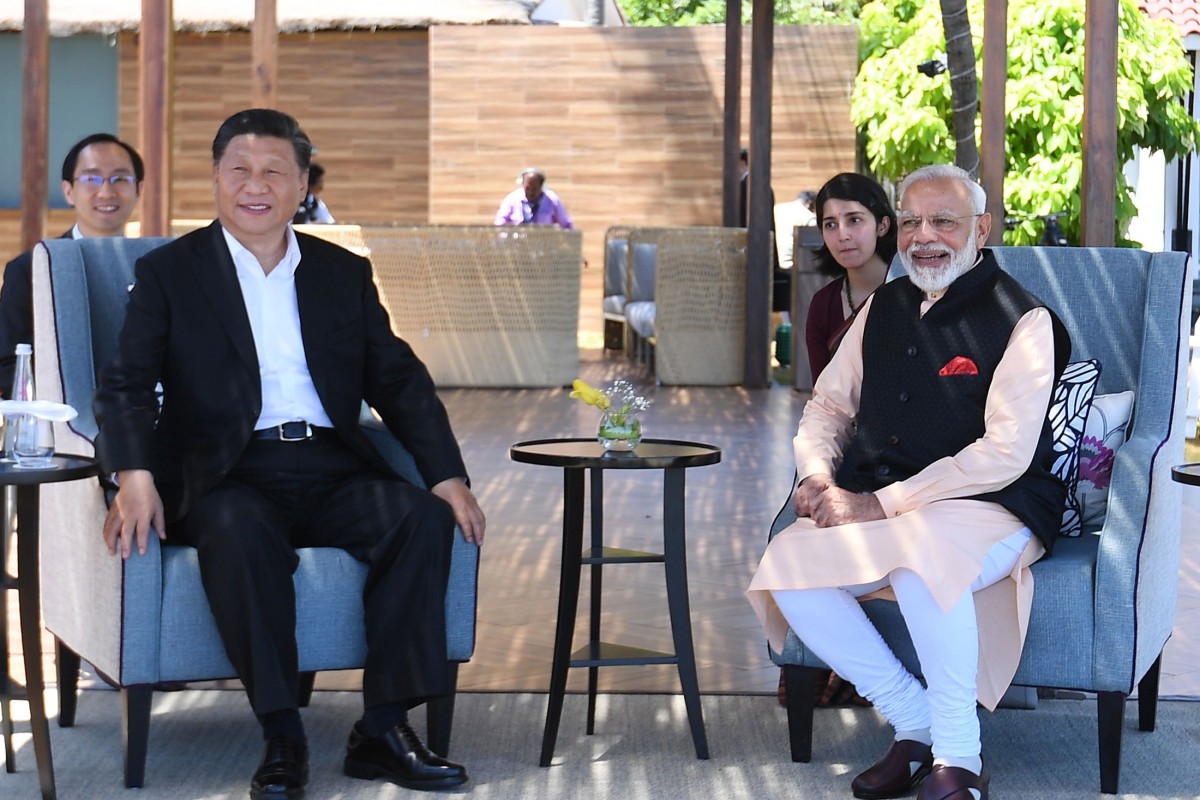
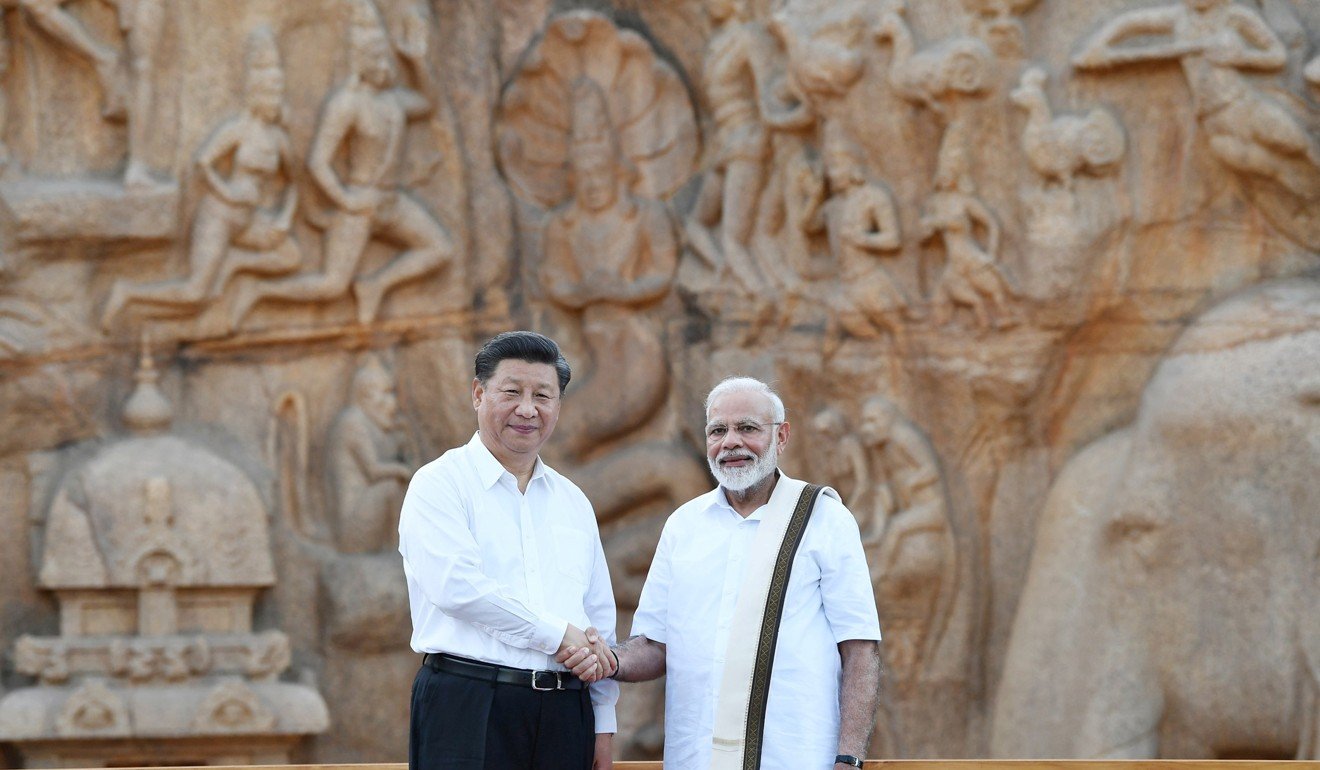
Indian Prime Minister Narendra Modi and Chinese President Xi Jinping during their meeting in Mamallapuram, Chennai. Photo: EPA
Chinese President
Xi Jinping and Indian Prime Minster
Narendra Modi concluded their second informal summit on Saturday by pledging to overcome trade differences and appreciate “each other’s autonomous foreign policies”, signalling an effort to focus on mutual interests rather than on long-standing contentious issues.
Modi remarked that both sides had agreed to be “sensitive” to each other’s concerns and not let differences escalate into disputes, while Xi called for communication to “alleviate suspicions” and for India and China to enhance strategic mutual trust, according to state news broadcaster CCTV.
Their desire to look beyond irritants in diplomatic ties, including a decades-long border row and China’s close military ties with India’s arch rival, Pakistan, comes as Beijing is embroiled in a tariff war with Washington that has rocked the global economy.
In a sign of China’s willingness to address India’s trade deficit with it, the leaders agreed to launch a “High Level Economic and Trade Dialogue”.
As Xi meets Modi, Chinese in Chennai hope to witness the ‘Wuhan spirit’
Chinese Vice-Premier Hu Chunhua and Indian Finance Minister Nirmala Sitharaman will meet regularly to discuss ways to boost two-way trade and investments, Indian foreign secretary Vijay Gokhale said in a media briefing.
India has a US$53 billion trade deficit with China, which makes up almost a third of its total trade deficit. It is also facing pressure to decide if it will commit to the China-led
(RCEP), which aims to create the world’s largest trading bloc involving 16 countries before the end of the year.
Narendra Modi exchanges gifts with Xi Jinping. Photo: AFP
Negotiations are ongoing with talks taking place in Bangkok this week, but India’s domestic producers have opposed the agreement over fears of a flood of Chinese imports. On Friday, the Indian government rejected clauses in the agreement related to e-commerce, according to reports.
Gokhale told the media briefing that both leaders, who met in the coastal town of Mamallapuram about 50km away from Chennai, briefly discussed the RCEP.
“PM Modi said India was looking forward to the RCEP but it is important that RCEP is balanced, that a balance is maintained in trade in goods, trade in services and investments,” he said, adding that Xi agreed to further discussions of India’s concerns on the issue.
Narendra Modi with Xi Jinping in Mamallapuram. Photo: EPA
CCTV said Xi had six suggestions for how China and India could further improve ties, including assessing each other correctly and stepping up cooperation between their militaries. Besides economic and trade dialogue, China welcomed Indian pharmaceutical and IT companies to invest there, he said.
“We should look at disputes with a correct mind, and not let disputes affect cooperation.
“Both sides should properly and fairly get a solution for border disputes that are acceptable to each other … [and] cautiously handle each other’s core interests, and take proper measures to control issues that cannot be resolved immediately,” the president reportedly said.
Gokhale told reporters that both countries had agreed to pursue, through special representatives, an ongoing dialogue on their disputed border. China and India have held more than 20 rounds of talks to resolve their boundary dispute, over which they went to war in 1962. Different mechanisms have been set up to maintain peace along the 4,000-kilometre (2,485-mile) so-called Line of Actual Control.
Xi and Modi bank on chemistry as they talk trade and terrorism
Gokhale confirmed that the leaders – who met for a total of seven hours over Friday and Saturday, with the bulk of their time spent in one-on-one talks – did not discuss
, a region that is currently divided between India and Pakistan but which both nuclear-armed rivals claim in full.
Since India revoked the autonomy of the area it controls in August and imposed a lockdown,
has lobbied its allies – including its all-weather friend China – to support its opposition to the move. New Delhi had reacted sharply to Beijing’s move to take the matter to the United Nations, insisting that it was a purely bilateral issue. Two days before the summit, Xi had hosted Pakistan Prime Minister Imran Khan and had assured him of China’s support on all core issues, a statement that had irked India.
Gokhale said both leaders “emphasised the importance of having independent and autonomous foreign policies”.
“President Xi said that the two countries needed to have more extensive dialogue in order to understand each other’s perspectives on major global and regional issues,” he added.
Narendra Modi exchanges gifts with Xi Jinping. Photo: AFP
The leaders also discussed terrorism, with a statement issued later by New Delhi saying both sides would make efforts to ensure the international community strengthened its framework “against training, financing and supporting terrorist groups throughout the world and on a non-discriminatory basis”.
The China-led multilateral Financial Action Task Force, which has been investigating Pakistan’s efforts to stamp out the financing of terrorism, is expected to decide soon if it would add Islamabad to its blacklist along with Iran and North Korea, a move that could invite stringent economic sanctions and drive away international financial institutions, both of which could affect Pakistan’s already-indebted economy adversely.
Gokhale added that as 2020 is the 70th anniversary of diplomatic ties between both countries, India and China will hold 70 events next year to promote people-to-people ties, with Modi accepting an invitation by Xi for the next informal summit to be held in China.
Both leaders had struck positive notes on the summit – with Xi describing their discussions as “candid” and between friends and Modi hailing the “Chennai Connect” meeting as marking a new era of cooperation between both countries.
War games, Kashmir and a US$57b question: the issues as Xi meets Modi
But analysts said they would be looking to see how the newly-announced high-level mechanism on trade panned out.
Narayani Basu, a New Delhi-based author, foreign policy analyst and China watcher felt the summit had achieved its purpose of bagging small wins for both sides.
“Discussing contentious issues would have defeated the purpose of the summit. The idea behind such a summit must be that despite the overarching posturing on different divergent issues, the two countries can achieve the easily-achievable wins. That is what the summit seems to have tried doing.”
But in terms of actual outcomes, she said she remained sceptical.
“I don’t think there has been much progress in the ties between the two countries since the last summit in Wuhan. Hence, this time, there is a lot more caution and scepticism towards such a summit,” she said, referring to the first summit last year in the Chinese city of Wuhan.
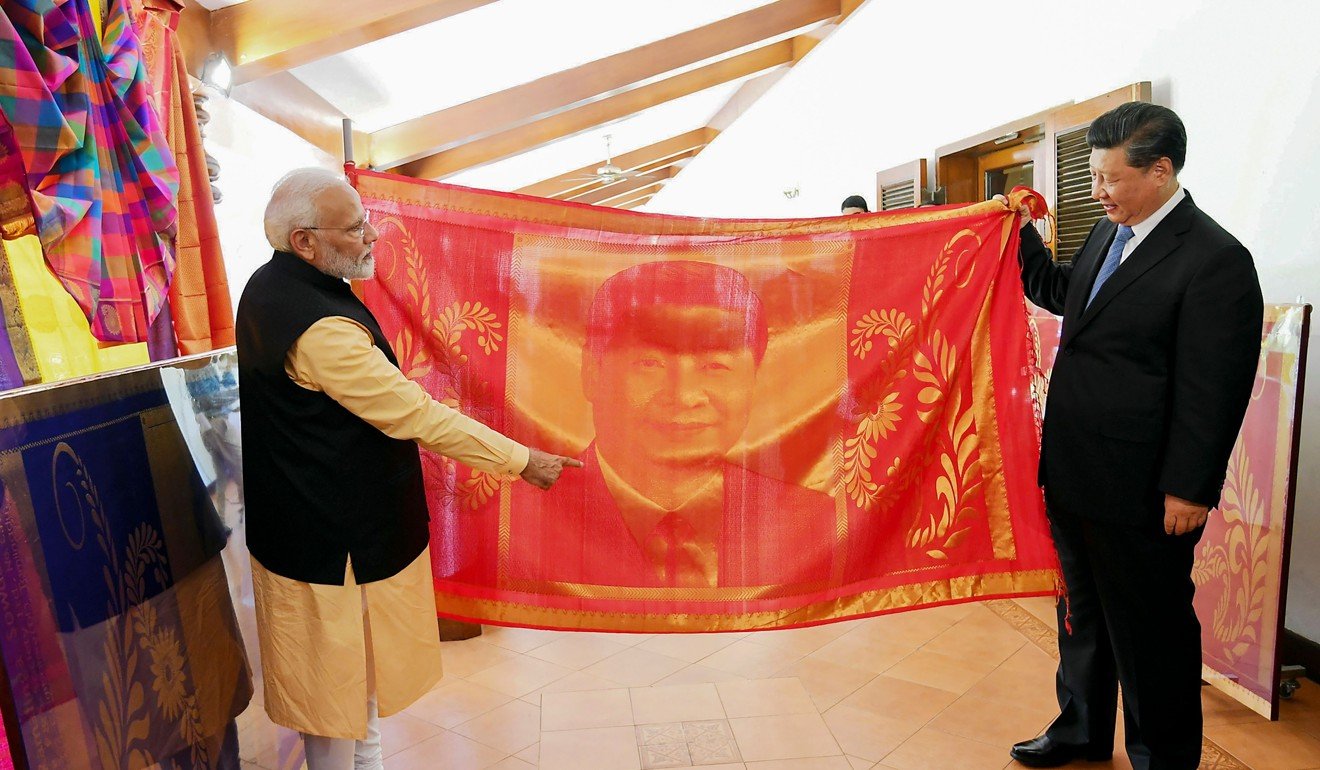
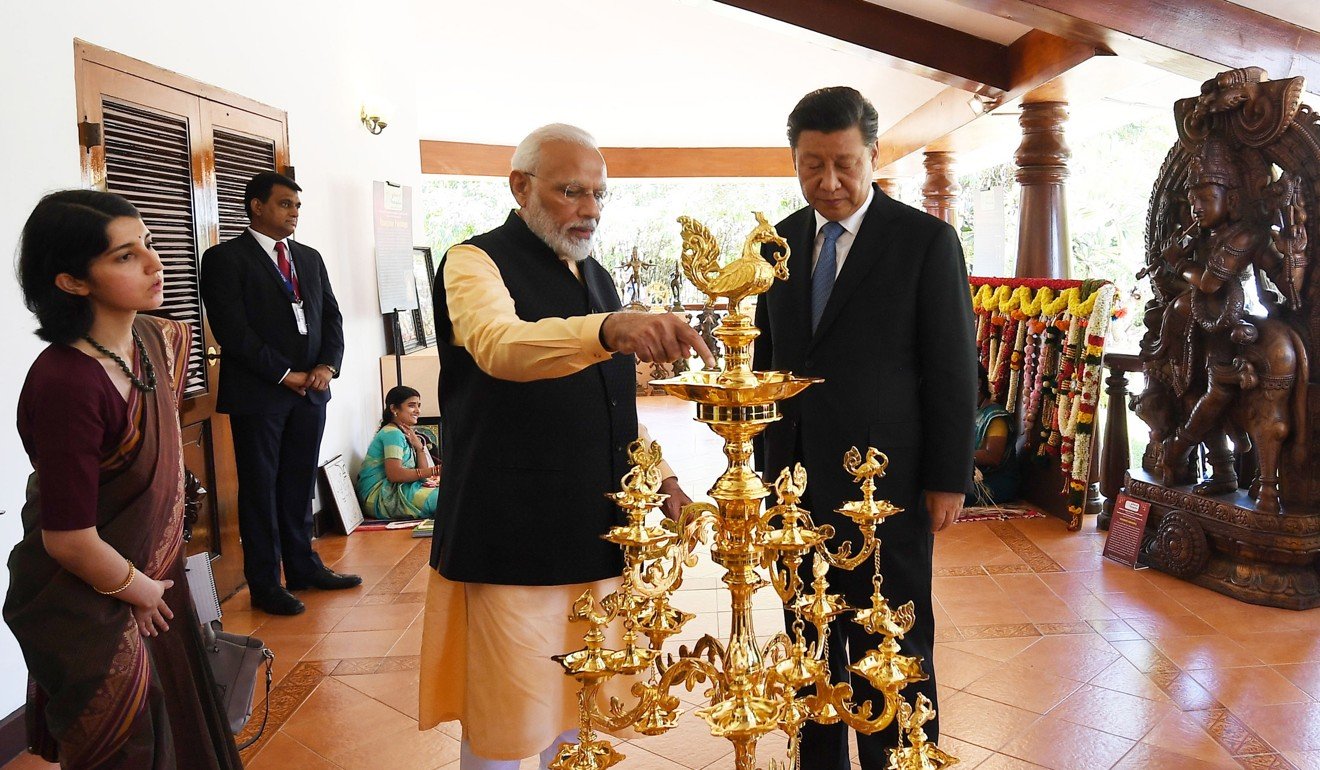
During Xi’s visit to southern India, which lasted 24 hours in all, Modi took him on a personal tour of temple monuments dating back to the seventh and eighth century in Mamallapuram when regional leaders had trade ties with Chinese provinces. He was also shown local artisan handicrafts and art forms, and gifted a handwoven silk portrait, a lamp and a painting.
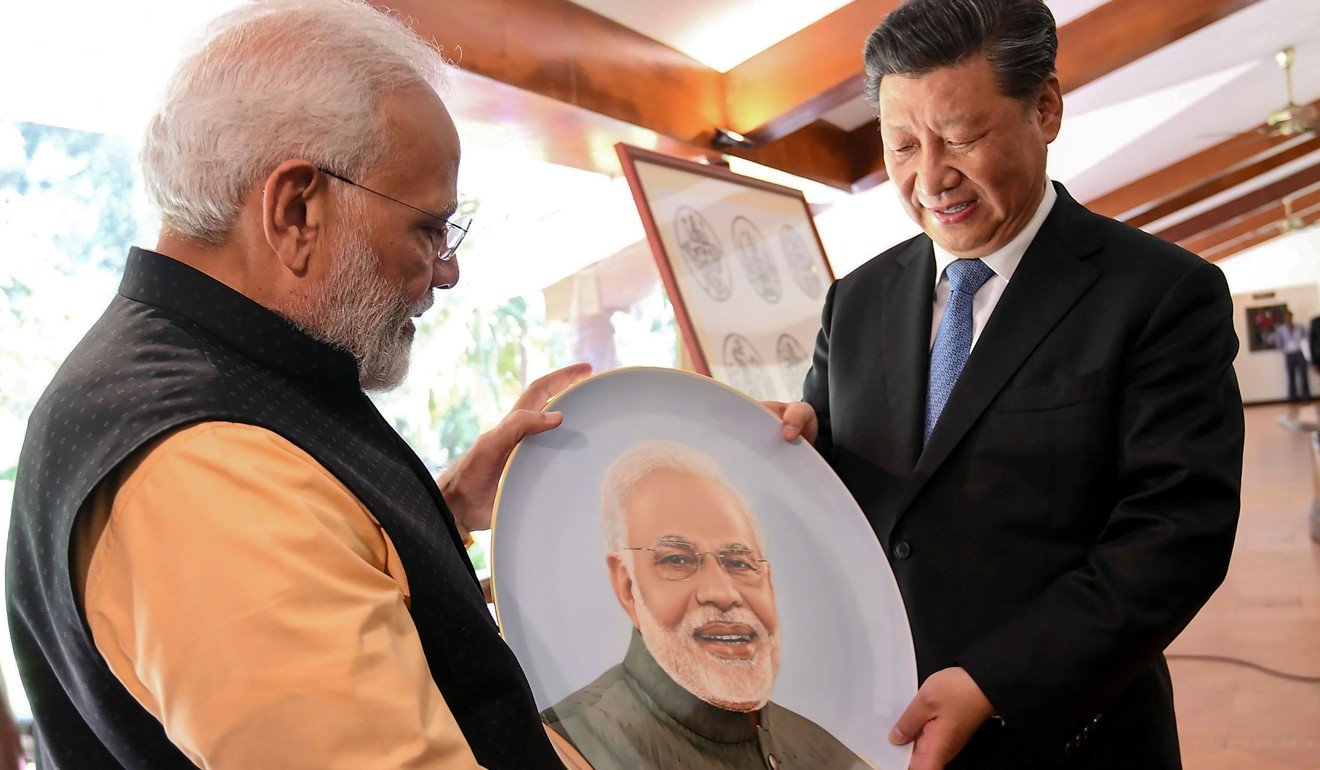
Xi gave Modi a porcelain plate with the image of the prime minister’s face printed on it.
Xi Jinping with Narendra Modi in Mamallapuram. Photo: Reuters
On Friday, New Delhi announced that visa rules for Chinese nationals visiting India would be relaxed, with multiple-entry visas with a validity period of five years available from this month onwards. At present, most visas are single-entry and usually for between 30 and 60 days. Visa fees would also be reduced, the government said, with the multiple-entry visa costing US$80.
This was aimed at further enhancing “people-to-people exchanges between the two countries and [encouraging] more Chinese tourists to choose India as a destination for tourism purposes,” it said in a statement.
Xi left Chennai on Saturday afternoon and arrived in Nepal, which lies in between India and China. He will be the first Chinese president to visit Nepal in 22 years and is expected to sign a slew of deals with Nepal’s Prime Minister K.P. Sharma Oli, including the planned extension of the rail link from remote, mountainous Tibet to Nepal’s capital, Kathmandu.
The link will be part of Beijing’s ambitious infrastructure project to boost trade, the
(BRI), that Nepal joined two years ago.
More than 120 countries have signed on to the BRI, including Pakistan, where a series of projects worth US$46 billion are being constructed under the China-Pakistan Economic Corridor (CPEC). India has snubbed the BRI and questioned the transparency of funding agreements.
Source: SCMP
Posted in 70th anniversary, ambitious infrastructure project, autonomous foreign policies, “High Level Economic and Trade Dialogue”, Bangkok, Beijing, Belt and Road Initiative (BRI), BRI, CCTV, chemistry, Chennai, China-Pakistan Economic Corridor (CPEC), Chinese President Xi Jinping, Chinese Vice-Premier, Chinese Vice-Premier Hu Chunhua, diplomatic ties, economic and trade dialogue, Financial Action Task Force, global economy, Imran Khan, India alert, India’s trade deficit, Indian Finance Minister, Indian Foreign Secretary, Indian Prime Minister Narendra Modi, informal summit, iran, IT companies, Kashmir, Kathmandu, major global and regional issues, Mamallapuram, Nepal, Nepal’s Prime Minister, New Delhi, Nirmala Sitharaman, North Korea, Pakistan, Pakistan Prime Minister, pharmaceutical companies, Prime Minister Imran Khan, Prime Minister K.P. Sharma Oli, rail link from remote, mountainous Tibet, Regional Comprehensive Economic Partnership, Regional Comprehensive Economic Partnership (RCEP), seventh and eighth century, tariff war, temple monuments, terrorism, trade and terrorism, Uncategorized, United Nations, Vijay Gokhale, Washington, Wuhan Spirit |
Leave a Comment »
09/10/2019
Chinese President Xi Jinping meets with Pakistani Prime Minister Imran Khan at the Diaoyutai State Guesthouse in Beijing, capital of China, Oct. 9, 2019. (Xinhua/Liu Weibing)
BEIJING, Oct. 9 (Xinhua) — Chinese President Xi Jinping on Wednesday met with Pakistani Prime Minister Imran Khan, vowing to work jointly to strengthen strategic coordination and pragmatic cooperation so as to forge a closer China-Pakistan community of shared future in the new era.
Noting the two countries as all-weather strategic cooperative partners, Xi said no matter how the international and regional situation changes, the friendship between China and Pakistan has always been unbreakable and rock-solid, and China-Pakistan cooperation has always maintained strong vitality with continuous expansion.
China has always viewed relations with Pakistan as a diplomatic priority and will continue to firmly support Pakistan on issues concerning its core interests and of major concern to it, Xi said.
This year marks the 70th anniversary of the founding of the People’s Republic of China.
“We have held a series of celebration activities, which is an opportunity for intensive patriotic education. Chinese people, nearly 1.4 billion in number, have forged a cohesive force with unprecedented patriotism, consolidating our confidence and determination to continue down the path of socialism with Chinese characteristics against all odds, run our own affairs, and stand firm in the community of nations,” Xi said.
In the past, Pakistan selflessly provided help to China in difficult times, and now that China has developed, it sincerely hopes to help Pakistan for better development, Xi said.
He called on the two sides to maintain close high-level exchanges, step up strategic communication and coordinate positions on major issues in a timely fashion.
On the China-Pakistan Economic Corridor (CPEC), Xi said the two sides should adopt a high standard, build and effectively run the existing energy projects, transport infrastructure, industrial parks and projects concerning people’s livelihoods, and make the CPEC a model for jointly building the Belt and Road Initiative.
China highly appreciates and firmly supports Pakistan’s efforts in fighting terrorism, Xi said, calling on the two sides to beef up communication and cooperation within the United Nations, the Shanghai Cooperation Organization and other multilateral mechanisms so as to jointly safeguard regional peace and stability.
Imran Khan offered his congratulations for the 70th anniversary of the founding of the People’s Republic of China.
Pakistan is delighted to see China’s remarkable development achievements and is grateful to China for always adhering to principles and upholding justice and for its firm support and selfless help to Pakistan, Khan said.
“Facts have shown that China is Pakistan’s all-weather strategic cooperative partner and the two countries’ friendship enjoys popular support,” he said, hoping to continue strengthening exchanges, coordination and cooperation with China, and advancing the construction of the CPEC so as to make it a paradigm of the Belt and Road Initiative.
He also pledged to continue to firmly advance counter-terrorism efforts so as to safeguard security and stability.
Khan briefed Xi on Pakistan’s views on the Kashmir situation, hoping to avoid deterioration of the situation, saying that Pakistan values and appreciates China’s objective and unbiased position.
Xi told Khan that China is paying close attention to the Kashmir situation and the facts are clear.
“China supports Pakistan to safeguard its own legitimate rights and hopes that the relevant parties can solve their disputes through peaceful dialogue,” Xi said.
Source: Xinhua
Posted in 70th anniversary of the founding of the PRC, Belt and Road Initiative, Belt and Road Initiative (BRI), China-Pakistan community of shared future, China-Pakistan Economic Corridor (CPEC), Chinese President Xi Jinping, Imran Khan, Kashmir, Pakistan, Pakistani Prime Minister, Prime Minister Imran Khan, Shanghai Cooperation Organization, Socialism with Chinese characteristics, Uncategorized, United Nations |
Leave a Comment »
06/10/2019
BEIJING, Oct. 4 (Xinhua) — Chinese President Xi Jinping and his Guinean counterpart Alpha Conde on Friday exchanged congratulatory messages on the 60th anniversary of the establishment of the two countries’ diplomatic ties.
Noting that Guinea was the first sub-Saharan African country to establish diplomatic relations with the People’s Republic of China, Xi said in his message that over the past 60 years, the two countries have always maintained sincerity, friendship and mutual support no matter how the international situation changed, setting an example of unity and cooperation for China-Africa relations.
Xi said he attaches great importance to the development of China-Guinea relations, and values the traditional friendship between the two countries.
He said he is willing to work together with Conde, taking the 60th anniversary of bilateral diplomatic relations as a new starting point, to grasp the historical opportunity of jointly building the Belt and Road and the flourishing development of China-Africa cooperation, cement friendship and mutual trust, and deepen practical cooperation.
The two sides should continue to promote the development of China-Guinea comprehensive strategic cooperative partnership, so as to benefit both countries and peoples, and further contribute to building an even stronger China-Africa community with a shared future, said the Chinese leader.
Conde, for his part, said that the establishment of Guinea-China diplomatic relations has great significance to the development of Africa-China ties. For a long time, the two countries have maintained special, friendly relations, representing an epitome of Africa-China friendly cooperation.
Guinea highly appreciates the Belt and Road Initiative, and is willing to work together with the Chinese side to cement their traditional friendship, carry out the outcomes of the Beijing Summit of the Forum on China-Africa Cooperation, and promote continuous and in-depth development of China-Guinea comprehensive strategic cooperative partnership, Conde added.
Source: Xinhua
Posted in 60th anniversary, Alpha Conde, Beijing Summit of the Forum on China-Africa Cooperation, Belt and Road Initiative, Belt and Road Initiative (BRI), China-Africa relations, China-Guinea comprehensive strategic cooperative partnership, Chinese president, Chinese President Xi Jinping, congratulations, diplomatic ties, exchange, Guinea, Guinean presidents, People's Republic of China, sub-Saharan African country, Uncategorized |
Leave a Comment »
05/10/2019
BEIJING, Oct. 4 (Xinhua) — Chinese President Xi Jinping’s speech during Tuesday’s National Day celebrations was warmly embraced across the globe, with politicians and experts in different parts of the world expressing support for China’s social and economic development.
“China’s yesterday has been inscribed in human history while China’s today is being created in the hands of hundreds of millions of Chinese people,” Xi said. “China will surely have an even brighter future.”
Marcelo Abi-Ramia Caetano, secretary general of the International Social Security Association, said Xi’s speech briefly summarized the “remarkable socio-economic progress” achieved by the People’s Republic of China (PRC) over the past 70 years.
“In terms of social protection, China serves as an excellent example in extending social security coverage and improving social security administration, and has much to share with the rest of the world,” he added.
The “overarching theme” of China’s National Day celebrations is “a comprehensive and integrated vision of why China’s system works so well for China, and how, at the same time, it benefits the world,” said Robert Kuhn, a leading U.S. expert on China.
China’s goal is “to improve the standards of living of all its citizens, and then to share the fruits of such development with the world in various forms,” added Kuhn, also chairman of the Kuhn Foundation.
“China’s role in the world has increased and (the) PRC has been making an important contribution to global governance and its needed reforms,” said Fabio Massimo Parenti, an Italian scholar of international studies at the International Institute Lorenzo de’ Medici.
The China-proposed Belt and Road Initiative is “for the entire world” and has received support from countries across the globe, he added.
Mahmoud Raya, director of the Lebanese website “China in Arab Eyes,” said Xi’s speech reflected strength and hope.
The strength comes from the glorious history of the Chinese nation and the confidence of the younger generation in their future, he added.
Xi’s speech showed “solid confidence that China has,” and revealed “future directions that China will follow,” said Do Tien Sam, former director of the Institute of Chinese Studies under the Vietnam Academy of Social Sciences.
Spurce: Xinhua
Posted in 70 years, across the globe, Belt and Road Initiative, Belt and Road Initiative (BRI), China in Arab Eyes, Citizens, entire world, experts, Institute of Chinese Studies, International Institute Lorenzo de' Medici, International Social Security Association, Kuhn Foundation, National Day celebrations, People's Republic of China (PRC), politicians, remarkable socio-economic progress, social and economic development, speech, standards of living, Uncategorized, Vietnam Academy of Social Sciences, warmly embraced |
Leave a Comment »
05/10/2019
Maha Prasad Adhikari, Chief Executive Officer (CEO) of Nepal Investment Board (IBN) speaks during a signing ceremony of the construction of China-Nepal Friendship Industrial Park, in Kathmandu, Nepal, Oct. 3, 2019. Damak Clean Industrial Park, a China-invested company, has signed a Memorandum of Understanding with Nepal Investment Board (IBN) for the China-Nepal Friendship Industrial Park in Nepal’s eastern Jhapa district. (Photo by Sunil Sharma/Xinhua)
KATHMANDU, Oct. 4 (Xinhua) — Damak Clean Industrial Park, a China-invested company, has signed a Memorandum of Understanding with Nepal Investment Board (IBN) for the China-Nepal Friendship Industrial Park in Nepal’s eastern Jhapa district.
Damak Clean Industrial Park President Govinda Thapa and IBN Chief Executive Officer Maha Prasad Adhikari signed the MoU at a function on Thursday evening in Kathmandu.
Lhasa Economic and Technological Development Zone Investment Development Company Limited is investing in the project which aims to develop a complete industrial infrastructure for industries to come in and operate there.
“Industries related to food products, home appliances, transport equipment electrical and communication equipment will be brought inside the park,” Zhou Chengjie, chairman of Lhasa Economic and Technological Development Zone Investment Development Company Limited, said during the signing ceremony.
The location is the hometown of Nepali Prime Minister KP Sharma Oli.
The IBN, a government body focused on promoting large scale investment, approved Foreign Direct Investment (FDI) of 586 million U.S. dollar from the Chinese company in August.
“This investment is for the first phase of the works under which industrial park will be developed in 484.81 hectares of land out of planned development in 1,600 hectares,” Zhou said.
According to him, the project will be developed in four phases and his company has aimed to invest 1 billion U.S. dollar for the entire development. It will be one of the largest FDI to Nepal from China in recent years.
IBN CEO Adhikari said the China-Nepal Friendship Park would be milestone for industrial infrastructure development in Nepal as industrial infrastructure in the Himalayan country has remained poor.
“This will also help Nepal to utilize the economic opportunity offered by the Belt and Road Initiative,” he said.
Source: Xinhua
Posted in Belt and Road Initiative, Belt and Road Initiative (BRI), China-Nepal Friendship Industrial Park, Damak Clean Industrial Park, Foreign Direct Investment (FDI), Kathmandu, KP Sharma Oli, Lhasa Economic and Technological Development Zone Investment Development Company Limited, Memorandum of understanding, Memorandum of Understanding (MOU), Nepal, Nepal Investment Board (IBN), Nepali Prime Minister, Uncategorized |
Leave a Comment »






 CHINDIA ALERT: You'll be living in their world, very soon