Archive for ‘Belt and Road Initiative’

14/12/2019

Xi holds talks with Micronesian president

CHINA-BEIJING-XI JINPING-FEDERATED STATES OF MICRONESIA-PRESIDENT-TALKS (CN)

 Chinese President Xi Jinping holds a welcome ceremony for President of the Federated States of Micronesia David W. Panuelo before their talks at the Great Hall of the People in Beijing, capital of China, Dec. 13, 2019. (Xinhua/Wang Ye)

BEIJING, Dec. 13 (Xinhua) — Chinese President Xi Jinping on Friday held talks with visiting President of the Federated States of Micronesia David W. Panuelo, calling for joint efforts to advance bilateral ties and better benefit the two peoples.

The two sides should maintain exchanges at all levels, expand communication and exchanges between governmental departments and legislatures, and enhance mutual political trust, Xi said.

Xi welcomed Panuelo’s visit to China as the two countries celebrate their 30th anniversary of the establishment of diplomatic ties, and spoke highly of Panuelo’s commitment to developing bilateral ties and firmly upholding the one-China principle.

China sticks to the path of peaceful development, maintains that all countries, no matter big or small, are always equal, firmly opposes unilateralism and hegemony, and advocates that all countries should work jointly to build a community with a shared future for humanity, he said.

For the past 30 years since the establishment of diplomatic ties, the two countries have respected, trusted and supported each other, and carried out pragmatic cooperation on the basis of equality and mutual benefit, advancing bilateral ties and bringing tangible benefits to the two peoples, Xi noted.

China respects the Micronesian side’s right to take the development path that best suits its national conditions and supports Micronesia’s efforts in maintaining national independence and boosting development, Xi said.

He called on the two sides to complement each others’ advantages and further expand cooperation in such fields as trade, investment, agriculture, fisheries, infrastructure construction and tourism under the framework of the Belt and Road Initiative.

He also welcomed Micronesia to export more products with competitive advantages like tuna to China, make full use of the policies and measures China has announced on cooperation with and support for island countries, and carry out more pragmatic cooperation projects benefiting people’s livelihoods.

“China is willing to offer economic and technical assistance to Micronesia within its own capacity,” he said.

The two sides should take the signing of the visa exemption deal for those holding diplomatic and service passports as well as passports for public affairs as an opportunity to enhance people-to-people exchanges, deepen traditional friendship, and achieve more practical results on local cooperation, Xi said.

He also called on the two sides to strengthen communication and continue to step up coordination on major issues including climate change and marine affairs.

Panuelo said the Micronesian side spoke highly of Xi’s proposal of building a community with a shared future for humanity, which would play an important role in promoting world peace and stability.

Micronesia, as a small country, is appreciative of the equal treatment and respect offered by China, he said, noting that China was the first country to provide support to Micronesia’s national independence and liberation movement as well as assistance to its national development.

He reiterated Micronesia’s stance on abiding by the one-China principle and maintained that Hong Kong, Xinjiang and Tibet affairs are China’s internal affairs and brook no outside interference.

“I have had a personal experience of China’s time-honored history and remarkable development achievement during my visit,” he said, expressing his delight over China’s achievements and confidence in China’s bright future.

Hailing the two countries’ cooperation for the past 30 years, Panuelo pledged to further expand cooperation in economy and trade, infrastructure construction, agriculture, education, and jointly build the Belt and Road.

The Micronesian side spoke highly of China’s important role in global issues like tackling climate change, Panuelo said, hoping to continue strengthening coordination and cooperation with China and playing an active role in promoting ties between China and Pacific island countries.

The two heads of state witnessed the signing of several bilateral cooperation deals after their talks.

Panuelo is on a state visit to China from Dec. 11 to 18.

Source: Xinhua

09/12/2019

China Focus: Xinjiang, an emerging investment hotspot

URUMQI, Dec. 8 (Xinhua) — Rich in resources but remote, Xinjiang in China’s far west has become a magnet for investors for its unique position on the Silk Road.

In a workshop of the Amer International Group in Urumqi, capital of Xinjiang Uygur Autonomous Region, workers are busy adjusting and packing laptops.

Recently, Amer sent the first batch of 2,000 laptops it produced for the German company TrekStor to the European market via China-Europe freight trains.

Headquartered in the southern Chinese city of Shenzhen, Amer invested 20 billion yuan (around 2.8 billion U.S. dollars) to build an industrial park in Xinjiang in 2018. So far, the industrial park has produced and exported around 1.5 million mobile phones, according to Wang Wenyin, the founder and chairman of Amer International Group.

“We saw Xinjiang’s geographical advantages, so we established the industrial park and cooperated with our counterparts in South and Central Asia in the fields of smartphones and IT high-end manufacturing,” Wang said.

Amer International Group is among a growing number of enterprises that have been attracted by Xinjiang in recent years, as trains and planes have made Xinjiang better connected than ever before.

As China’s key trade gateway to Central and West Asia, the remote region’s position as the heart of the Belt and Road Initiative is unmistakable. In 2013, China proposed the BRI, which opened up new space for the world economy, spurring trade and economic growth and stimulating investment and creating jobs worldwide.

Urumqi Customs saw the number of China-Europe freight trains skyrocket to 5,743 in the first 10 months this year, up 53.68 percent year on year, outnumbering the total of 2018.

To attract more investors, the local government has gone to great lengths creating a more friendly business environment, such as cutting the time required for starting a business and lowering the entry threshold for products.

Up to now, Xinjiang has had more than 1.8 million market entities including 359,000 enterprises, up 18 percent year on year.

Foreign and domestic business giants including German chemical giant BASF and China’s real estate conglomerates Wanda Group have also invested in the region.

Lai Naixiang, head of Kashgar Oumeisheng Energy Technology, a home appliance manufacturer, moved his business from Shenzhen to Kashgar in southern Xinjiang in 2017.

“We chose to settle in Kashgar because of the great market potential in adjacent Central Asian countries as well as Xinjiang’s lower electricity prices and preferential tax policy,” he said.

Last year, the company exported electric kettles worth more than 16 million yuan to Kyrgyzstan and Tajikistan.

Foreign trade in Xinjiang has seen booming growth. The region recorded around 131.5 billion yuan in imports and exports in the first 10 months of this year, up 28 percent year on year.

In the first 10 months, Kazakhstan topped the list of Xinjiang’s major trade partners, with trade volume between the two growing by 28.2 percent to 60.2 billion yuan.

Xinjiang’s trade with Kyrgyzstan, Australia, Pakistan, Britain, Argentina and Vietnam also showed fast growth, according to the local customs authorities.

“With further Belt and Road construction, Xinjiang will get more impetus in economic and social development. I see great potential in the region,” Wang said.

Source: Xnhua

06/12/2019

“One country, two systems” principle proves feasible, achievable, popular in Macao SAR: liaison office director in Macao

MACAO, Dec. 6 (Xinhua) — The “one country, two systems” principle has proved to be feasible, achievable and popular in the Macao Special Administrative Region (SAR) since Macao returned to the motherland in 1999, said Fu Ziying, director of the Liaison Office of the Central People’s Government in the Macao SAR.

Fu told Xinhua in a recent interview that the Macao SAR government, along with all walks of life, has comprehensively and precisely understood and implemented the “one country, two systems” principle and strictly abided by China’s Constitution and the Basic Law of the Macao SAR since Macao’s return to the motherland.

The Macao SAR government has ensured the steady and practical implementation of the “one country, two systems” principle by devoting to developing economy, improving people’s wellbeing, upholding inclusiveness and mutual support and promoting the unity of the compatriots in Macao under the banner of loving both the motherland and the region, thus opening a new horizon in practicing the “one country, two systems” with Macao characteristics.

Fu eulogized Macao’s success in implementing the “one country, two systems” principle in three aspects.

Firstly, for the past 20 years, the authority of China’s Constitution and the Basic Law has been firmly safeguarded in Macao and the executive-led system has been running smoothly.

The Macao SAR government and all walks of life have always firmly safeguarded the authority of China’s Constitution and the Basic Law by holistically combining upholding the principle of “one country” with respecting the differences of the “two systems,” and maintaining the power of the central government with ensuring the high degree of autonomy of the Macao SAR, ushering in a new era of good political situation in Macao.

The national sovereignty, security and interests are well safeguarded and the capability and level of law-based governance has been significantly promoted in Macao, Fu said.

Secondly, Macao has witnessed rapid economic development and continued improvement of people’s livelihood, with people feeling more satisfied and happier, Fu said.

Macao, by making good use of the advantages of the “one country, two systems” principle, has achieved a leaping development in economy, Fu said.

Over the past 20 years, Macao has witnessed the fastest development in its history, with outstanding performance in various macroeconomic sectors, Fu said.

With the full efforts from the SAR government in building long-term efficient mechanisms in social security, housing, education, health, human resources and disaster prevention and reduction, the social welfare and people’s livelihood have been greatly improved since Macao’s return to the motherland, said Fu,

Thirdly, Macao’s success could be seen in its harmony and inclusiveness in society, where both loving the motherland and the region has become the mainstream value, according to Fu.

He said education on the country’s Constitution and the Basic Law is deep-rooted in the society, as the “one country, two systems,” “Macao people governing Macao” and the high degree of autonomy are well-accepted by residents in Macao.

Fu said Macao has attached great importance to cultivating patriotism among the youth, with patriotic education legalized in Macao in 2006.

The development of the socialism with Chinese characteristics had entered a new era, so is the cause of the “one country, two systems,” said Fu.

Under the leadership of Chinese President Xi Jinping, the practice of “one country, two systems” is included in the Chinese Dream.

In the future, Macao should further exploit the advantages of “one country, two systems” principle, seize the opportunities brought about by the Belt and Road Initiative and the construction of the Guangdong-Hong Kong-Macao Greater Bay Area.

“We will always comprehensively and precisely understand and implement the principle of ‘one country, two systems’,” said Fu.

Fu called on Macao to participate in the country’s reform and opening-up cause more actively so as to help boost the country’s people-to-people exchanges with other countries.

He highlighted the importance of the construction of the Greater Bay Area, hoping that Macao would, by participating in the development, further expand its industries and promote people’s livelihood so as to maintain the economic and social stability.

“Remain true to the original aspiration of the principle of ‘one country, two systems,’ Macao, the land of lotus, will for ever glisten,” Fu added.

Source: Xinhua

28/11/2019

Chinese State Councilor meets Vietnamese senior diplomat

CHINA-BEIJING-WANG YI-VIETNAM-DIPLOMACY-MEETING (CN)

Chinese State Councilor and Foreign Minister Wang Yi meets with Vietnamese Deputy Minister of Foreign Affairs Le Hoai Trung in Beijing, capital of China, Nov. 27, 2019. (Xinhua/Zhang Ling)

BEIJING, Nov. 27 (Xinhua) — State Councilor and Foreign Minister Wang Yi met with Vietnamese Deputy Minister of Foreign Affairs Le Hoai Trung Wednesday in Beijing.

Wang extended his congratulations for the expected results of the meeting between the Chinese and Vietnamese heads of Governmental Delegation on Border Negotiation and consultation between the vice foreign ministers of both sides.

Noting that the next year marks the 70th anniversary of the establishment of diplomatic relations between China and Vietnam, Wang said both sides should carry forward the traditional friendship and keep the strategic position of the bilateral ties in mind.

He called on both sides to abide by the important consensus reached by the two heads of states, enhance mutual trust and cooperation, handle differences properly and take the 70th anniversary as an opportunity to push the China-Vietnam comprehensive strategic partnership to a new level.

Le Hoai Trung said the Vietnamese side was willing to maintain the momentum of high-level exchanges of the two countries, push forward to align the Belt and Road Initiative with the Two Corridors and One Belt and promote the bilateral relations.

Source: Xinhua

19/11/2019

Chinese top political advisor inspects construction of China-Laos railway

VIENTIANE, Nov. 18 (Xinhua) — Chinese top political advisor Wang Yang on Monday inspected the construction of the China-Laos Railway at ancient Lao capital Luang Prabang, some 220 km north of Vientiane.

Wang, chairman of the National Committee of the Chinese People’s Political Consultative Conference, inspected the construction of a major bridge crossing the Mekong River, which is an important node of the 414.3-km railway.

He was also briefed on the construction of the China-Laos Railway, met with representatives from the company that constructs the railway and delivered a speech.

On behalf of the Central Committee of the Communist Party of China (CPC) and the Chinese people, Wang expressed warm greetings to the staff participating in the construction of the China-Laos Railway and sent his heartfelt thanks to those who cared and supported the construction of the railway.

Wang said the railway is a major project of the China-Laos Economic Corridor and an important platform and carrier of the implementation on building a community with a shared future for China and Laos.

Hailing the railway’s important significance in improving Laos’ infrastructure and boosting local economic and social development, Wang said top leaders of the two countries have attached great importance to the railway and have made explicit requirements of the construction on different occasions.

Wang called on builders of the railway to note the importance of the railway from the overall and strategic height, uphold the principle of quality and safety first, enhance project management, fulfill social responsibilities and work on to build a model, competitive and clean project, so as to contribute to the China-Laos friendship.

The China-Laos Railway is a strategic docking project between the China-proposed Belt and Road Initiative and Laos’ strategy to convert from a landlocked country to a land-linked hub.

The railway, with 198-km tunnels and 62-km bridges, will run from Boten border gate in northern Laos, bordering China, to Vientiane with an operating speed of 160 km per hour.

The project started in December 2016 and is scheduled to be completed and opened to traffic in December 2021.

Source: Xinhua

29/10/2019

Chinese Premier’s trip to Uzbekistan, Thailand to cement ties, all-round cooperation among SCO, East Asia

BEIJING, Oct. 28 (Xinhua) — Premier Li Keqiang’s upcoming trip to Uzbekistan and Thailand is of great importance to cementing cooperation among both SCO members and East Asian states, as well as solidifying Chinese relations with Uzbekistan and Thailand, senior officials said at a press briefing Monday.

Premier Li is scheduled to attend the 18th meeting of the Council of Heads of Government (Prime Ministers) of the Shanghai Cooperation Organization (SCO) in the Uzbek capital Tashkent, pay an official visit to Uzbekistan, and attend the 22nd China-ASEAN (10+1) leaders’ meeting, the 22nd ASEAN-China, Japan and Republic of Korea (10+3) leaders’ meeting and the 14th East Asia Summit (EAS) in the Thai capital Bangkok before paying an official visit to Thailand, from Nov. 1 to 5.

During the SCO heads of government meeting, Li will explain Xi Jinping Thought on Socialism with Chinese Characteristics for a New Era and share the successful construction experience of the People’s Republic of China in the past 70 years, according to Assistant Foreign Minister Chen Xiaodong.

“Li will exchange in-depth views with the leaders of the participating countries on enhancing solidarity and mutual trust among member states, building the Belt and Road Initiative and cooperation in such fields as economy and trade, industrial capacity, connectivity, finance, investment and people-to-people exchanges,” Chen said.

Noting it will be Li’s first official visit to Uzbekistan, Chen said the premier will exchange views with the Uzbek side on implementing the important consensus of the two heads of state, promoting the development of bilateral relations and international and regional issues of common concern. The two sides will sign a series of cooperation agreements covering economy and trade, investment, science and technology, customs and other fields.

Regarding the East Asian leaders’ meeting on cooperation, Chen said the premier will expound on China’s policy proposals for East Asian cooperation and propose more than 20 new initiatives for deepening cooperation under various mechanisms.

The East Asian leaders’ meeting this year will strengthen consensus, deepen cooperation, improve regional economic integration, promote regional common prosperity and development, and send out a positive signal of adhering to multilateralism and free trade, building an open world economy, according to Assistant Minister of Commerce Li Chenggang.

Calling Thailand a traditional friendly neighbor and important partner for the Belt and Road cooperation, Chen said Premier Li’s official visit to Thailand is the second visit by the premier in six years.

During the visit, the premier will exchange in-depth views with the leaders of the Thai side on bilateral relations and cooperation. The two sides will issue a joint press statement between the two governments and sign cooperation documents in such fields as technology and e-commerce.

Source: Xinhua

19/10/2019

China expected to ramp up South Pacific push at economic forum in Samoa

  • Vice-Premier Hu Chunhua will lead delegation at two-day summit that is expected to be attended by 400 officials and 200 businesspeople
  • Observers say it is Beijing’s latest effort to regain momentum in the region and will be closely watched in the US
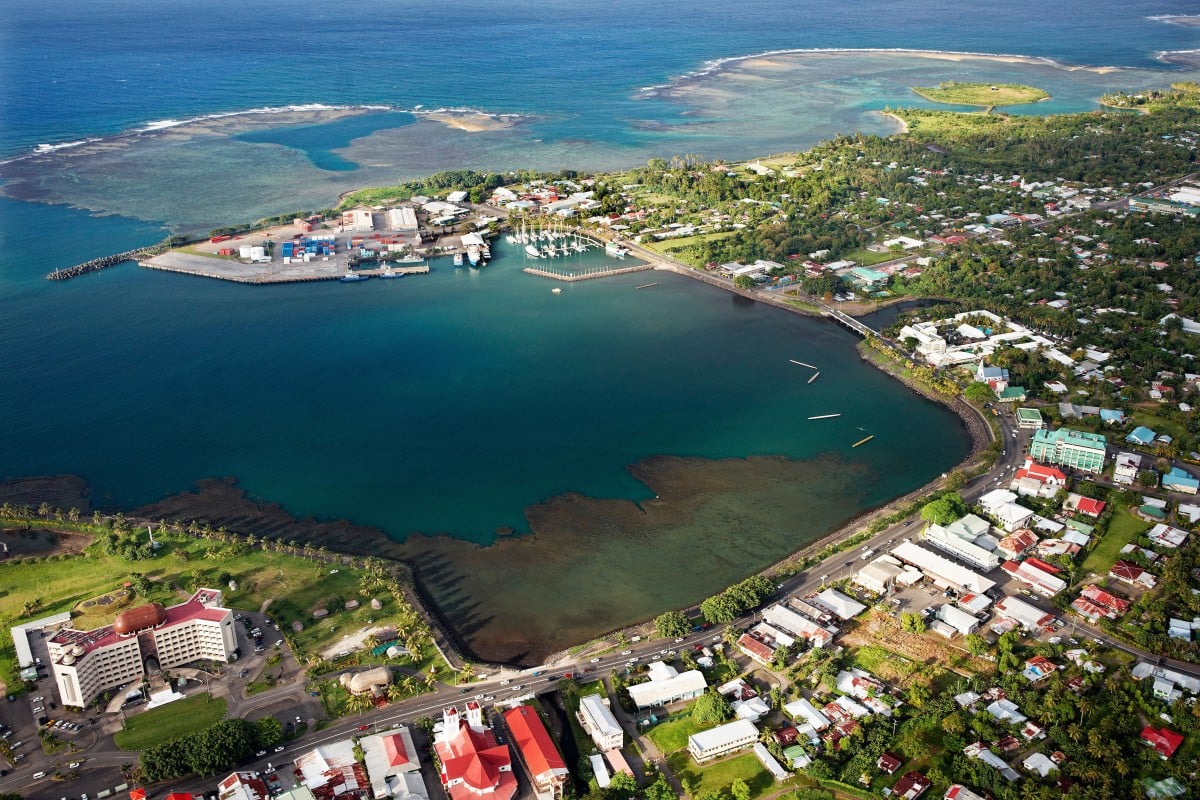
Samoan capital Apia will host the third China-Pacific Island Countries Economic Development Cooperation Forum, which begins on Sunday. Photo: Alamy

China will seek to expand its economic and diplomatic influence in the South Pacific at a forum this weekend, amid growing concern from the US and its allies over Beijing’s push in the strategically important region.

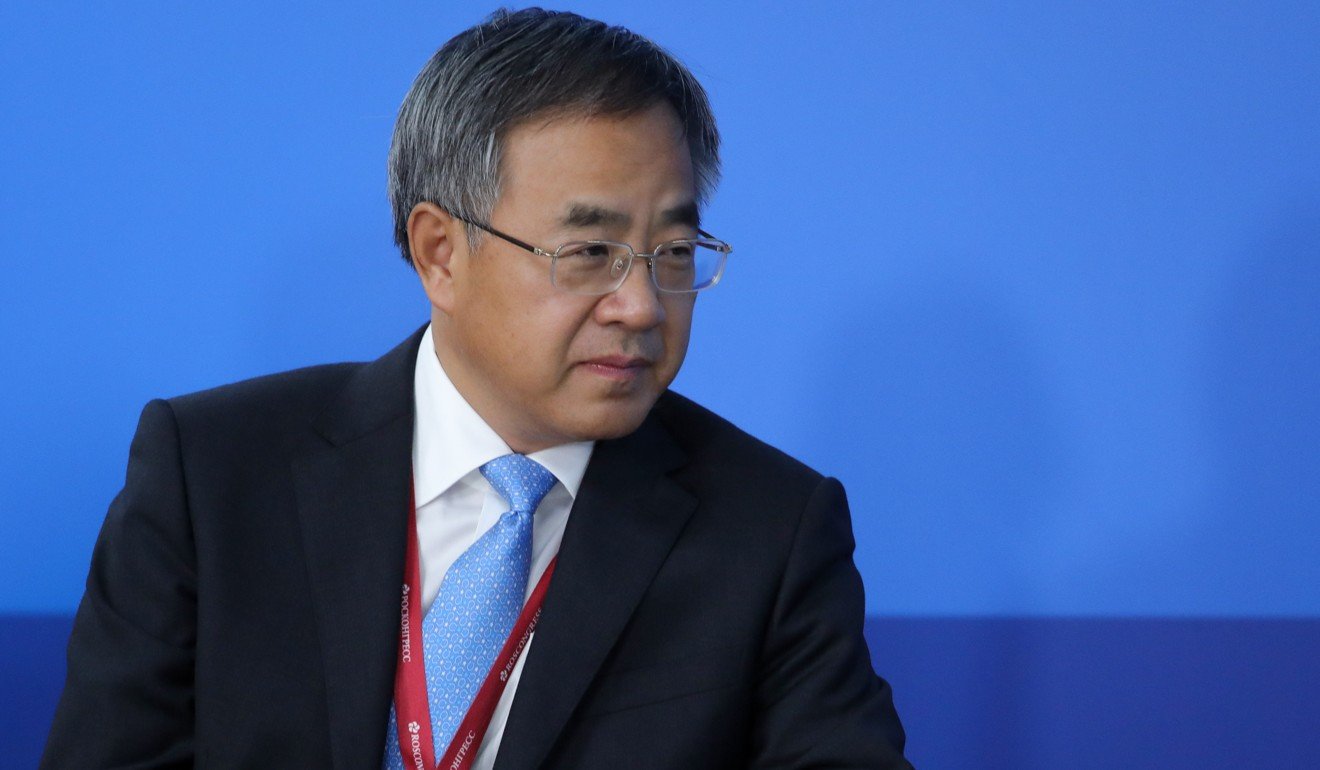
Vice-Premier Hu Chunhua will lead the Chinese delegation at the third China-Pacific Island Countries Economic Development Cooperation Forum in the Samoan capital Apia, which begins on Sunday. It is expected to be attended by 400 officials and more than 200 businesspeople.

Hu, the former Communist Party chief of China’s manufacturing powerhouse Guangdong who now overseas commercial and agricultural affairs, is expected to deliver a keynote speech at the opening ceremony.

Beijing sees the two-day forum as “timely” and “a good opportunity to deepen mutually beneficial cooperation between China and the Pacific”, a commerce ministry spokesperson told the official Economic Daily newspaper.

Trade, agriculture and fisheries, as well as tourism, infrastructure and climate change were at the top of the agenda for the forum, the spokesperson said.

Leaders of all the Pacific nations – except the four that do not have formal diplomatic ties with Beijing – are expected to attend the forum. Australia, which has “observer status” at the summit, will send Ewen McDonald, deputy secretary of the Department of Foreign Affairs and Trade and the head of its Pacific office.

Vice-Premier Hu Chunhua will lead the Chinese delegation at the forum. Photo: EPA-EFE

The forum comes after China hailed a “new breakthrough” in the region following the decision last month by the Solomon Islands and then Kiribati – despite warnings from the US – to cut diplomatic ties with Taipei and switch to Beijing.

They are the latest of Taipei’s allies to be poached by Beijing as it ramps up pressure on the self-ruled island that it sees as a renegade province to be reunited with the mainland, by force if necessary.
Observers said this weekend’s forum was Beijing’s latest effort to regain momentum in the Pacific.

“Having one of China’s top 25 officials visit the region so soon after [Chinese President] Xi Jinping spent close to three days in Papua New Guinea last November is certainly significant,” said Jonathan Pryke, director of the Pacific Islands programme at the Lowy Institute in Sydney, referring to Hu’s position in the 25-member Politburo.

“It shows clearly China’s attempt to recapture momentum after the West, and in particular Australia, have redoubled their efforts in maintaining and building relationships in the Pacific,” he said.

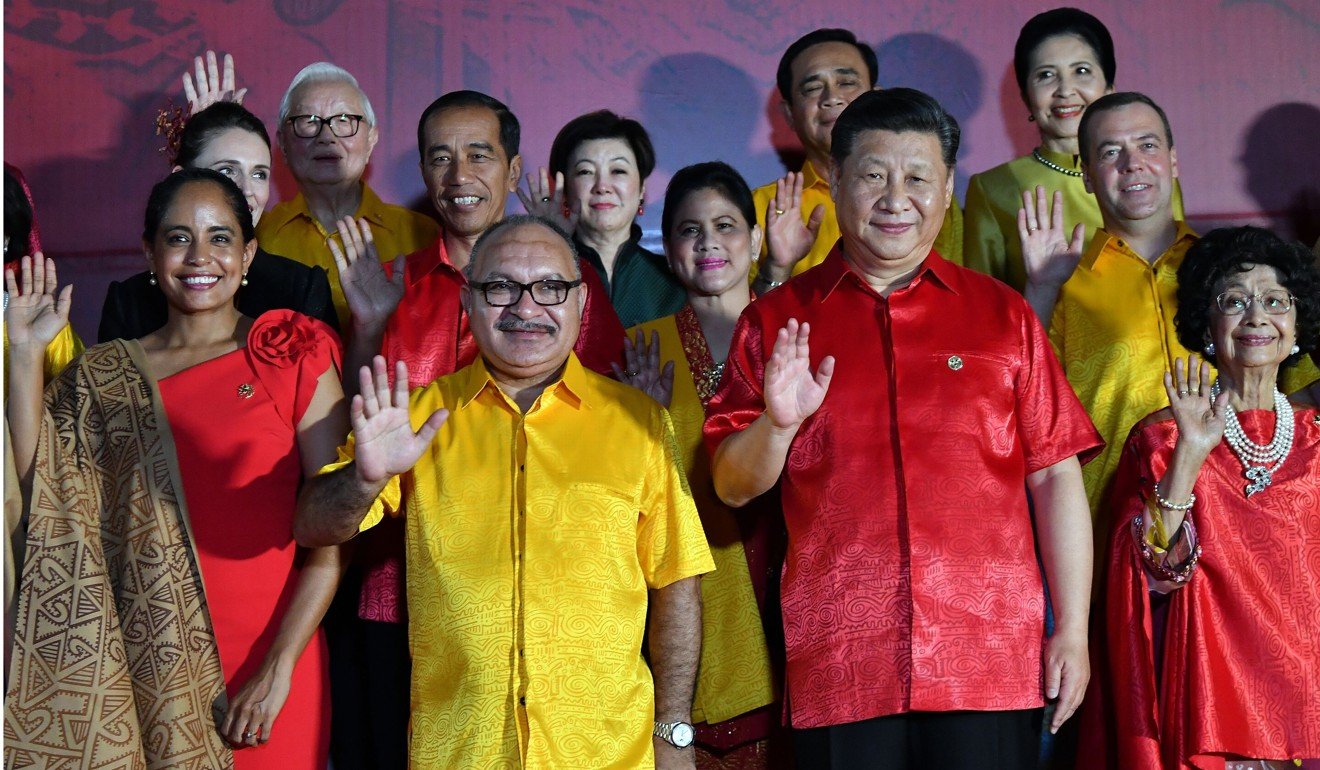
Papua New Guinea’s Prime Minister Peter O’Neill (second from left) and Chinese President Xi Jinping (second from right) pose for a photo during Xi’s visit in November. Photo: AFP

First held in Fiji in 2006, the forum is part of China’s efforts to expand its reach in the resource-rich region.

Back then, premier Wen Jiabao announced 3 billion yuan of concessional loans to Pacific nations and promised to facilitate more trade, medical aid and tourism with the countries. Chinese capital has been pouring into the region – particularly from the mining and fisheries sectors – ever since.

Of note was a 440 million yuan investment, supported by loans from the Export-Import Bank of China, to build a central business centre at Nuku’alofa, the capital of Tonga.

US and allies sideline China in PNG’s Bougainville by helping fund independence vote

As China’s influence grows, the South Pacific – a region traditionally under US hegemony, and on Australia’s doorstep – has “increasingly become a major power that cannot be neglected” and “an important part of China’s greater strategic landscape”, according to Shi Chunlin, an associate professor at Dalian Maritime University.

Trade has increased between China and the eight Pacific nations that have diplomatic ties with Beijing, rising to a combined US$4.32 billion last year – up 25 per cent from 2017.

China has also become the largest trading partner of new ally the Solomons, the second-largest to Papua New Guinea and Fiji, and the third-largest to Samoa.

China’s direct investment in the region has also jumped, reaching US$4.53 billion last year, a more than fourfold increase from the US$900 million of 2013.

Pryke said Beijing was expected to offer new support and loans to the Pacific nations.

“But the Pacific are much more picky about how they want to engage with all partners than they were a decade ago,” he added.

Returning from a trip to China earlier this month, Solomon Islands Prime Minister Manasseh Sogavare confirmed Beijing would provide a US$74 million grant to build a new stadium for the 2023 Pacific Games in the capital Honiara – something its former ally Taipei had committed to fund.

China Sam Group also reportedly signed an agreement on September 22 to lease the island of Tulagi in the Solomons, the site of a former Japanese naval base. The agreement mentioned the development of a refinery on the island, but critics said it could also potentially be used as a military base.

China is now the second-largest donor in the region, only after Australia, which has viewed Beijing’s financial largesse with suspicion.

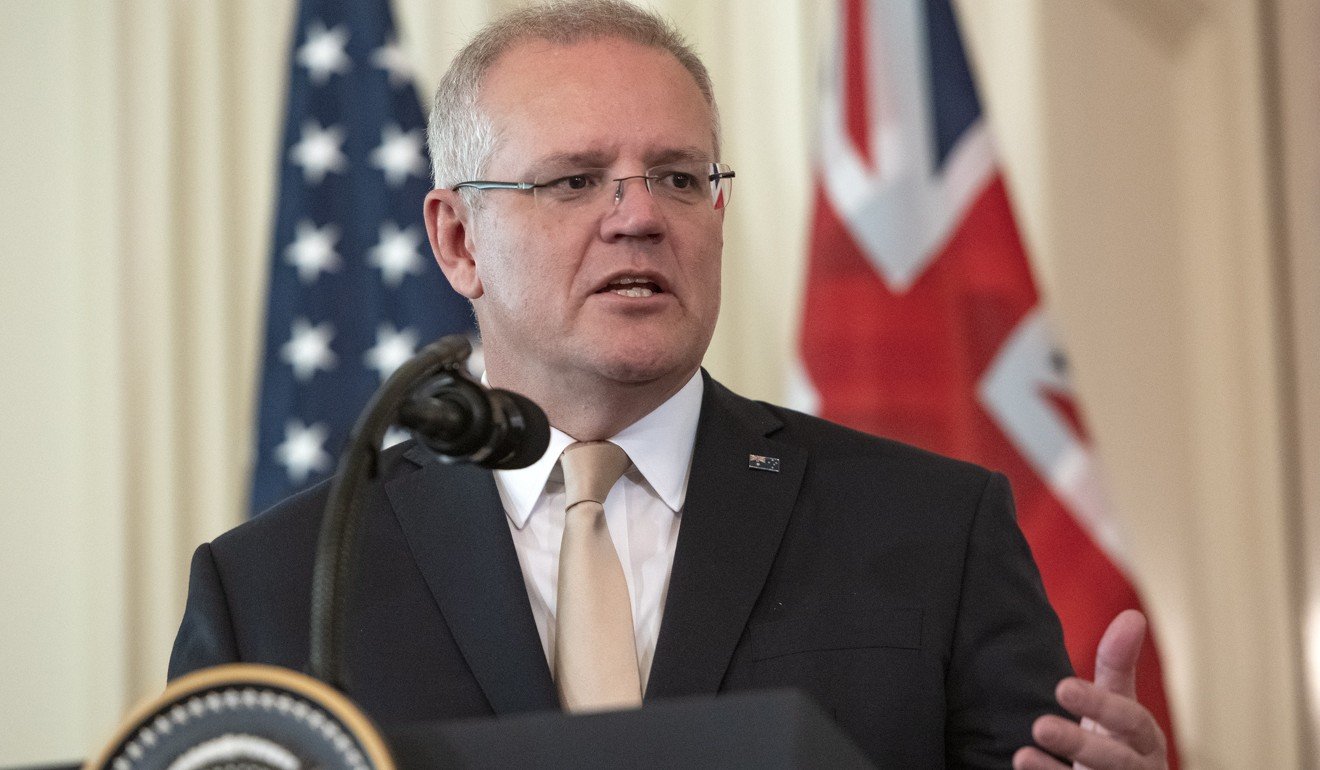
Last year, in an apparent effort to counter China’s rising influence in the region, Australian Prime Minister Scott Morrison announced that Pacific countries would be offered up to US$2.18 billion in grants and cheap loans to build infrastructure.

Australian Prime Minister Scott Morrison last year announced up to US$2.18 billion in grants and cheap loans for infrastructure in Pacific nations. Photo: EPA-EFE

The US, meanwhile, has also been wary of China’s push in the Pacific, amid an escalating geopolitical competition between the world’s two largest economies across many fronts – from trade to tech supremacy and security. The US has long maintained exclusive defence access in the region through its Guam military base and security pacts with the Federated States of Micronesia, the Marshall Islands and Palau.

Derek Grossman, a senior defence analyst with the US-based Rand Corporation, said this year’s forum in Samoa was likely to be higher profile than previous years after Beijing lured away two more diplomatic allies from Taipei.

He said it would be “closely watched in the US for how Beijing continues to leverage sweet economic deals via its Belt and Road Initiative to potentially entice others to switch”.

“The US, along with close friends Australia, Japan and New Zealand, are becoming increasingly concerned over the prospects for China to one day curry enough influence in these small island states to gain port access that could be used for new naval bases,” he said.

The most important issue at the forum, he said, would be “whether the West assesses that China is making further inroads with these states”.

“The likely answer will be that it is, suggesting that the US and its partners will have to compete with China in this region to ensure that it remains ‘free and open’, per the US Indo-Pacific strategy,” he said.

Source: SCMP

17/10/2019

Vice premier calls for high-quality development in Chongqing

CHINA-CHONGQING-HAN ZHENG-RESEARCH TRIP(CN)

Vice Premier Han Zheng, also a member of the Standing Committee of the Political Bureau of the Communist Party of China Central Committee, learns about applications of smart robot and 5G technology in fields like remote driving, education and tourism, at an experience park in southwest China’s Chongqing Municipality, Oct. 15, 2019. Han made a research trip to Chongqing on Monday and Tuesday. (Xinhua/Liu Weibing)

CHONGQING, Oct. 16 (Xinhua) — Vice Premier Han Zheng has called on southwest China’s Chongqing Municipality to promote high-quality development and continue to break new ground in all areas.

Han, also a member of the Standing Committee of the Political Bureau of the Communist Party of China Central Committee, made the remarks during a research trip to Chongqing on Monday and Tuesday.

Chongqing should play a key role in advancing the large-scale development of the western region, promoting the joint construction of the Belt and Road Initiative and the green development of the Yangtze River Economic Belt.

During his visit to an auto research and development center and a new-energy vehicle (NEV) manufacturer, Han stressed more input in research to make breakthroughs in key auto parts, and called for the building of homegrown auto brands, wider application of NEVs in urban public transport and the sustainable development of the industry.

Efforts should be made to foster intelligent industries, popularize intelligent technologies and knowledge, and develop intelligent economy, he added.

In his visit to a semi-conductor firm, Han encouraged local companies to enhance their competitiveness and asked local authorities to further improve the business environment.

Source: Xinhua

16/10/2019

China, Singapore agree to enhance BRI, trade cooperation

CHINA-CHONGQING-HAN ZHENG-SINGAPORE-BILATERAL COOPERATION (CN)

Chinese Vice Premier Han Zheng, also a member of the Standing Committee of the Political Bureau of the Communist Party of China Central Committee, meets with Singaporean Deputy Prime Minister Heng Swee Keat in southwest China’s Chongqing, Oct. 15, 2019. (Xinhua/Liu Weibing)

CHONGQING, Oct. 15 (Xinhua) — China and Singapore on Tuesday announced that the upgraded version of the China-Singapore Free Trade Agreement will take effect on Oct. 16.

The two sides made the announcement after four bilateral cooperation mechanism meetings co-chaired by Chinese Vice Premier Han Zheng and Singaporean Deputy Prime Minister Heng Swee Keat in Chongqing.

The four meetings were the 15th China-Singapore Joint Council for Bilateral Cooperation Meeting, the 20th China-Singapore Suzhou Industrial Park Joint Steering Council Meeting, the 11th China-Singapore Tianjin Eco-City Joint Steering Council Meeting and the third China-Singapore (Chongqing) Demonstration Initiative on Strategic Connectivity Joint Steering Council Meeting.

During the meetings, the two sides comprehensively reviewed the implementation of the high-level consensus and the process of practical cooperation.

The two sides exchanged views on the high-quality joint construction of the Belt and Road, promoting regional development and cooperation, and upholding multilateralism and free trade, and made plans for the direction and focus of their cooperation in the future.

The two sides agreed to enhance connectivity, financial support, third-party cooperation, law and judicial cooperation under the framework of the Belt and Road Initiative, increase investment in the new land-sea corridor and promote upgrading of major cooperation projects.

The two sides agreed to improve regional free trade arrangements, promote regional integration, enhance multilateral economic and trade cooperation, and push forward the building of an open world economic system.

Prior to the four meetings, Han met with Heng.

Commending the positive development momentum of bilateral relations, Han, also a member of the Standing Committee of the Political Bureau of the Communist Party of China Central Committee, called on the two sides to implement the important consensus reached by the leaders of the two countries that have established strategic guidance of the development of bilateral relations. The two countries should make good use of the mechanism meetings to deepen cooperation in various fields, Han said.

“China’s reform will not stop, but will only accelerate. China’s door of opening-up will not be closed, but will only open wider,” said Han, adding that China welcomes Singapore to participate in its process of reform and opening-up in a larger scope, wider areas and at a deeper level.

Han said China and Singapore must work with each other to guard against the headwinds of unilateralism and protectionism, and resolutely safeguard the international system based on multilateralism and international laws, with the UN as its core.

Heng extended congratulations on the 70th anniversary of the founding of the People’s Republic of China and spoke highly of China’s great development achievements.

He said the friendship between Singapore and China has remained unshakable and become increasingly stronger over the years.

Heng said Singapore attaches great importance to the building of cooperation mechanisms and is ready to work with China to promote cooperation to a new height and to upgrade bilateral relations to a new level. Singapore stands ready to work with China to jointly safeguard the rules-based multilateral trading system and address global challenges.

After the mechanism meetings, Han and Heng witnessed the signing of a series of cooperation documents covering exchanges and training, technological innovation, smart city and intellectual property.

Source: Xinhua

09/10/2019

Xi meets Pakistani PM, calls for forging closer community of shared future

CHINA-BEIJING-XI JINPING-PAKISTANI PM-MEETING (CN)

Chinese President Xi Jinping meets with Pakistani Prime Minister Imran Khan at the Diaoyutai State Guesthouse in Beijing, capital of China, Oct. 9, 2019. (Xinhua/Liu Weibing)

BEIJING, Oct. 9 (Xinhua) — Chinese President Xi Jinping on Wednesday met with Pakistani Prime Minister Imran Khan, vowing to work jointly to strengthen strategic coordination and pragmatic cooperation so as to forge a closer China-Pakistan community of shared future in the new era.

Noting the two countries as all-weather strategic cooperative partners, Xi said no matter how the international and regional situation changes, the friendship between China and Pakistan has always been unbreakable and rock-solid, and China-Pakistan cooperation has always maintained strong vitality with continuous expansion.

China has always viewed relations with Pakistan as a diplomatic priority and will continue to firmly support Pakistan on issues concerning its core interests and of major concern to it, Xi said.

This year marks the 70th anniversary of the founding of the People’s Republic of China.

“We have held a series of celebration activities, which is an opportunity for intensive patriotic education. Chinese people, nearly 1.4 billion in number, have forged a cohesive force with unprecedented patriotism, consolidating our confidence and determination to continue down the path of socialism with Chinese characteristics against all odds, run our own affairs, and stand firm in the community of nations,” Xi said.

In the past, Pakistan selflessly provided help to China in difficult times, and now that China has developed, it sincerely hopes to help Pakistan for better development, Xi said.

He called on the two sides to maintain close high-level exchanges, step up strategic communication and coordinate positions on major issues in a timely fashion.

On the China-Pakistan Economic Corridor (CPEC), Xi said the two sides should adopt a high standard, build and effectively run the existing energy projects, transport infrastructure, industrial parks and projects concerning people’s livelihoods, and make the CPEC a model for jointly building the Belt and Road Initiative.

China highly appreciates and firmly supports Pakistan’s efforts in fighting terrorism, Xi said, calling on the two sides to beef up communication and cooperation within the United Nations, the Shanghai Cooperation Organization and other multilateral mechanisms so as to jointly safeguard regional peace and stability.

Imran Khan offered his congratulations for the 70th anniversary of the founding of the People’s Republic of China.

Pakistan is delighted to see China’s remarkable development achievements and is grateful to China for always adhering to principles and upholding justice and for its firm support and selfless help to Pakistan, Khan said.

“Facts have shown that China is Pakistan’s all-weather strategic cooperative partner and the two countries’ friendship enjoys popular support,” he said, hoping to continue strengthening exchanges, coordination and cooperation with China, and advancing the construction of the CPEC so as to make it a paradigm of the Belt and Road Initiative.

He also pledged to continue to firmly advance counter-terrorism efforts so as to safeguard security and stability.

Khan briefed Xi on Pakistan’s views on the Kashmir situation, hoping to avoid deterioration of the situation, saying that Pakistan values and appreciates China’s objective and unbiased position.

Xi told Khan that China is paying close attention to the Kashmir situation and the facts are clear.

“China supports Pakistan to safeguard its own legitimate rights and hopes that the relevant parties can solve their disputes through peaceful dialogue,” Xi said.

Source: Xinhua

Law of Unintended Consequences

continuously updated blog about China & India

ChiaHou's Book Reviews

continuously updated blog about China & India

What's wrong with the world; and its economy

continuously updated blog about China & India