Chindia Alert: You’ll be Living in their World Very Soon
aims to alert you to the threats and opportunities that China and India present. China and India require serious attention; case of ‘hidden dragon and crouching tiger’.
Without this attention, governments, businesses and, indeed, individuals may find themselves at a great disadvantage sooner rather than later.
The POSTs (front webpages) are mainly 'cuttings' from reliable sources, updated continuously.
The PAGEs (see Tabs, above) attempt to make the information more meaningful by putting some structure to the information we have researched and assembled since 2006.
Image copyright AFPImage caption Embankments have been washed away in Bangladesh
Millions of people across Bangladesh and eastern India are taking stock of the devastation left by Cyclone Amphan.
A massive clean-up operation has begun after the storm left 84 dead and flattened homes, uprooted trees and left cities without power.
India’s Prime Minister Narendra Modi has arrived in West Bengal state to conduct an aerial survey.
Authorities in both countries had evacuated millions of people before the storm struck.
Covid-19 and social-distancing measures made mass evacuations more difficult, with shelters unable to be used to full capacity.
Officials also said people were afraid and reluctant to move to shelters for fear of contracting the virus.
The cyclone arrived with winds gusting up to 185km/h (115mph) and waves as high as 15ft.
Image copyright REUTERSImage caption Roads have been blocked by falling trees in BangladeshImage copyright AFPImage caption Many people have been injured in wall collapses in Bengal
It is the first super cyclone to form in the Bay of Bengal since 1999. Though its winds had weakened by the time it struck, it was still classified as a very severe cyclone.
Three districts in India’s West Bengal – South and North 24 Parganas and East Midnapore – were very badly hit.
In Bangladesh, there are reports of tens of thousands of homes damaged or destroyed and many villages submerged by storm surges in low-lying coastal areas like Khulna and Satkhira.
The affected areas include the Sunderbans, mangroves spread over an area of more than 10,000 square kilometres that spans both India and Bangladesh – the swampy islands are home to more than four million of the world’s poorest people.
Image copyright MUKTIImage caption Many homes, built of brick and mud, have been washed away
Those in the Sunderbans say it is too early to estimate casualties in the area, which is now cut-off from the mainland by the storm.
“There are houses which have collapsed and people could be trapped in them but we don’t know yet,” Debabrat Halder, who runs an NGO in one of the villages, told the BBC.
He recalls cyclone Bulbul in November 2019, which was followed by a huge incidence of fever, diarrhoea and flu, and is afraid that that the same may happen again.
And worse, he adds, is that the flooding from contaminated sea water, has likely destroyed the soil.
“Nothing will grow in this soil,” he says, adding that it will likely take years to convert it into fertile land again.
Image copyright MUKTIImage caption The Sunderbans delta is frequently hit by severe stormsImage copyright MUKTIImage caption Crops have all been destroyed by the flooding
Kolkata, the capital of West Bengal, and one of India’s biggest cities has been devastated. Its roads are flooded and the city was without power for more than 14 hours.
The state’s chief minister, Mamata Banerjee, said the devastation in Kolkata was “a bigger disaster than Covid-19”.
But assessment of the damage is being hampered by blocked roads and flooding in all these areas.
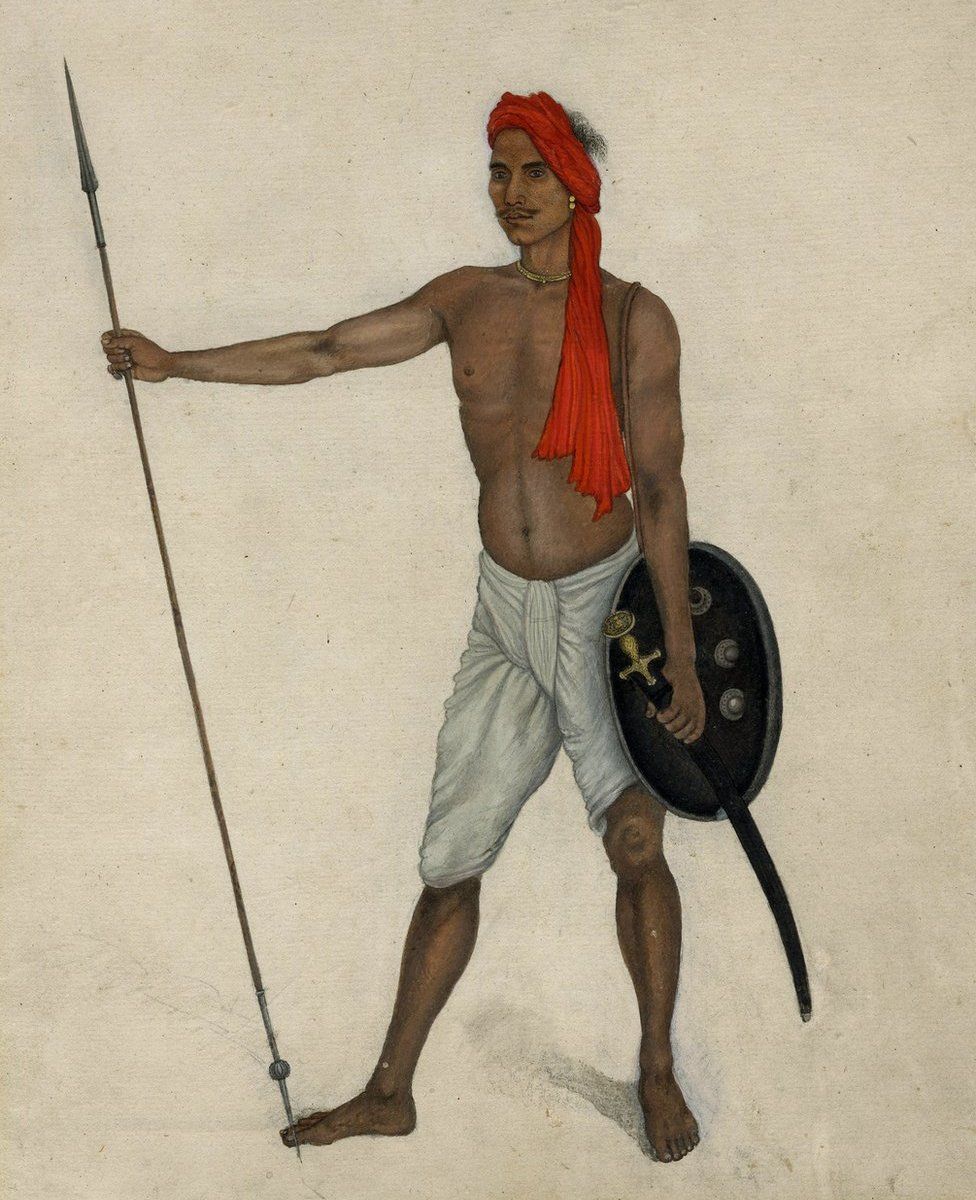
Image copyright PEMILLE KLEMPImage caption A group of Indian troopers who fought for the English, Ghulam Ali Khan, 1815-16
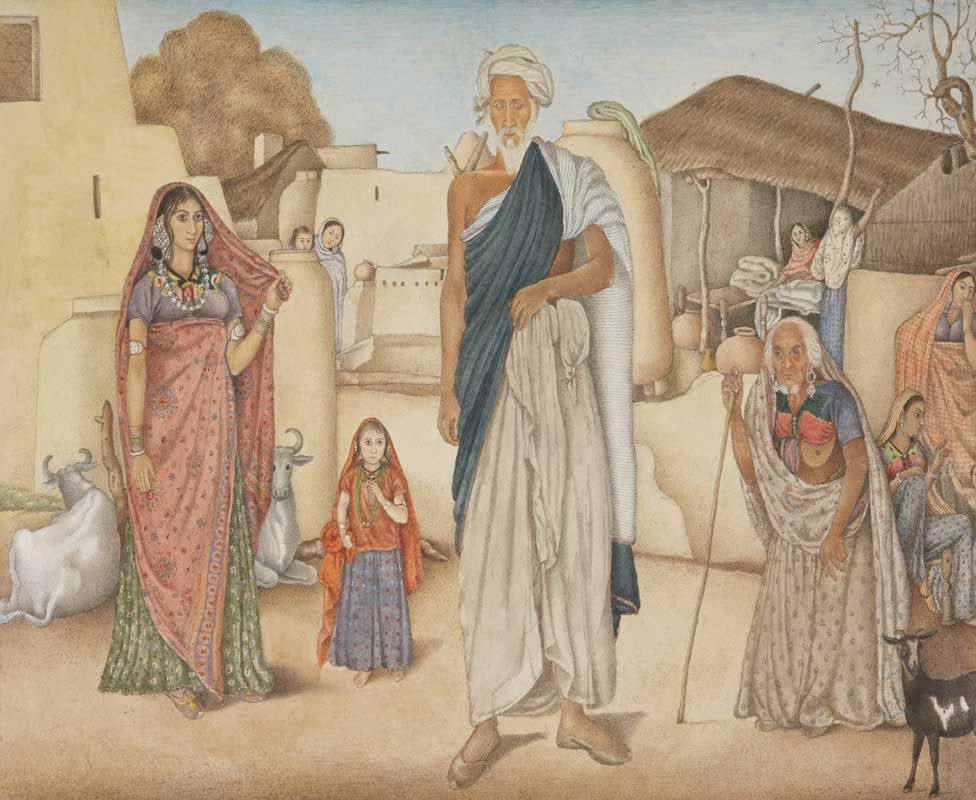
The English East India Company, founded in 1600, was established for trading. But as the powerful multinational corporation expanded its control over India in the late 18th Century, it commissioned many remarkable artworks from Indian painters who had previously worked for the Mughals. Writer and historian William Dalrymple writes about these hybrid paintings which explore life and nature.
Calcutta in the late 1770s was Asia’s biggest boom town: known as the City of Palaces, the East India Company’s bridgehead in Bengal had doubled in size to 400,000 inhabitants in a decade.
It was now unquestionably the richest and largest colonial city in the East – though certainly not the most orderly.
“It would have been so easy to turn it into one of the most beautiful cities in the world,” wrote the Count de Modave, a friend of Voltaire who passed through at this time. “One cannot fathom why the English allowed everyone the freedom to build in the most bizarre taste, with the most outlandish planning.”
Nor were visitors much taken by its English inhabitants. Most had come East with just one idea: to amass a fortune in the quickest possible time.
Image caption An Indian trooper who fought for the English, Ghulam Ali Khan, 1819Calcutta (now Kolkata) was a city where great wealth could be accumulated in a matter of months, then lost in minutes in a wager or at the whist table. Death, from disease or excess, was a commonplace, and the constant presence of mortality made men hard and callous.
Rising with Olympian detachment above the mercantile bawdiness of his contemporaries was the rotund figure of the chief justice of the new Supreme Court, Sir Elijah Impey.
A portrait of him by Johan Zoffany still hangs, a little lopsidedly, in the Kolkata High Court. It shows him pale and plump, ermine gowned and dustily bewigged.
Impey was, however, a serious scholar and unusual in taking a serious interest in the land to which he had been posted.
Image copyright PEMILLE KLEMPImage caption Indian villagers by Ghulam Ali Khan, 1815-16
On the journey out to India, a munshi (administrator) had accompanied him to teach him Bengali and Urdu, and on arrival the new chief justice began to learn Persian and collect Indian paintings. His house became a meeting place where the more cultured elements of Calcutta society could discuss history and literature.
Impey and his wife Mary were also greatly interested in natural history and began to collect a menagerie of rare Indian animals.
At some stage in the mid-1770s, the Impeys decided to bring a group of leading Mughal artists – Sheikh Zain ud-Din, Bhawani Das and Ram Das – to paint their private zoo.
It was probably not the first commission of Indian artists by British patrons. “The Study of Botany is of late Years become a very general Amusement,” noted one enthusiast, and we know that the Scottish nurseryman James Kerr was sending Indian-painted botanical drawings back to Edinburgh as early as 1773.
But the Impeys’ albums of natural history painting remain among the most dazzlingly successful of all such commissions: today, a single page usually reaches prices of more than £330,000 ($387,000) at auctions, and the 197 images from the Impey Album are now widely recognised as among the very greatest glories of Indian painting.
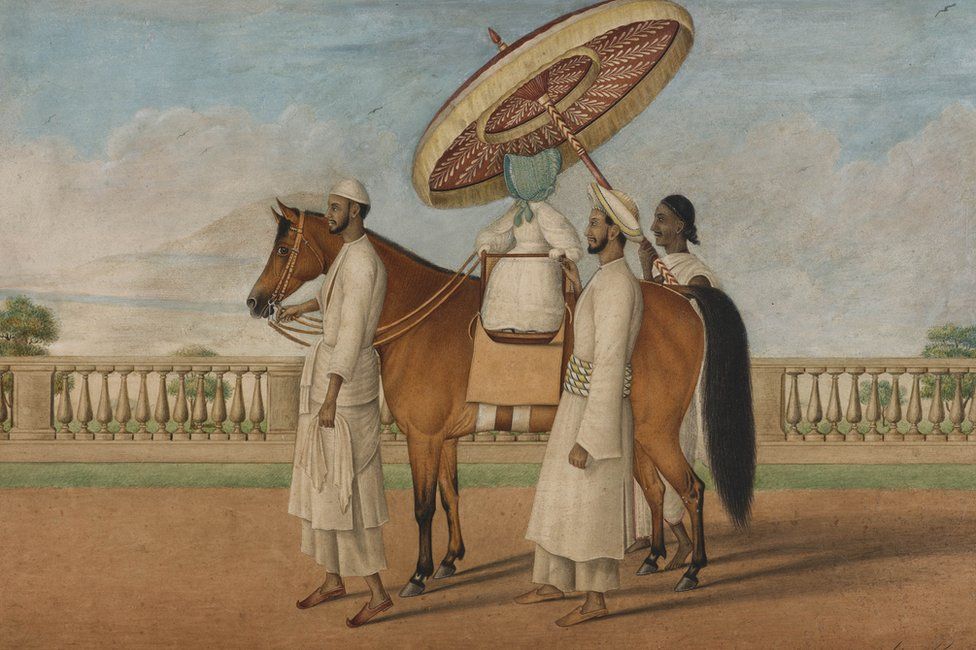
Image copyright FRANCIS WAREImage caption English child seated on a pony and surrounded by three Indian servants by Shaikh Muhammad Amir
This month, for the first time since the Impey Album was split up in the 18th Century, around 30 of its pages will be reassembled for a major exhibition in the Wallace Collection in London.
Forgotten Masters: Indian Painting for the East India Company celebrates some of the extraordinary work which resulted from commissions made by East India Company patrons from master Indian artists between the 1770s and 1840s.
It will be a unique chance to see some of the finest Indian paintings which are now scattered in private collections around the world.
The three artists who Impey summoned to his fine classical house in Middleton Street were all from Patna, 200 miles (320km) up the Ganges.
The most prolific was a Muslim, Shaikh Zain-al-Din, while his two colleagues, Bhawani Das and Ram Das, were both Hindus.
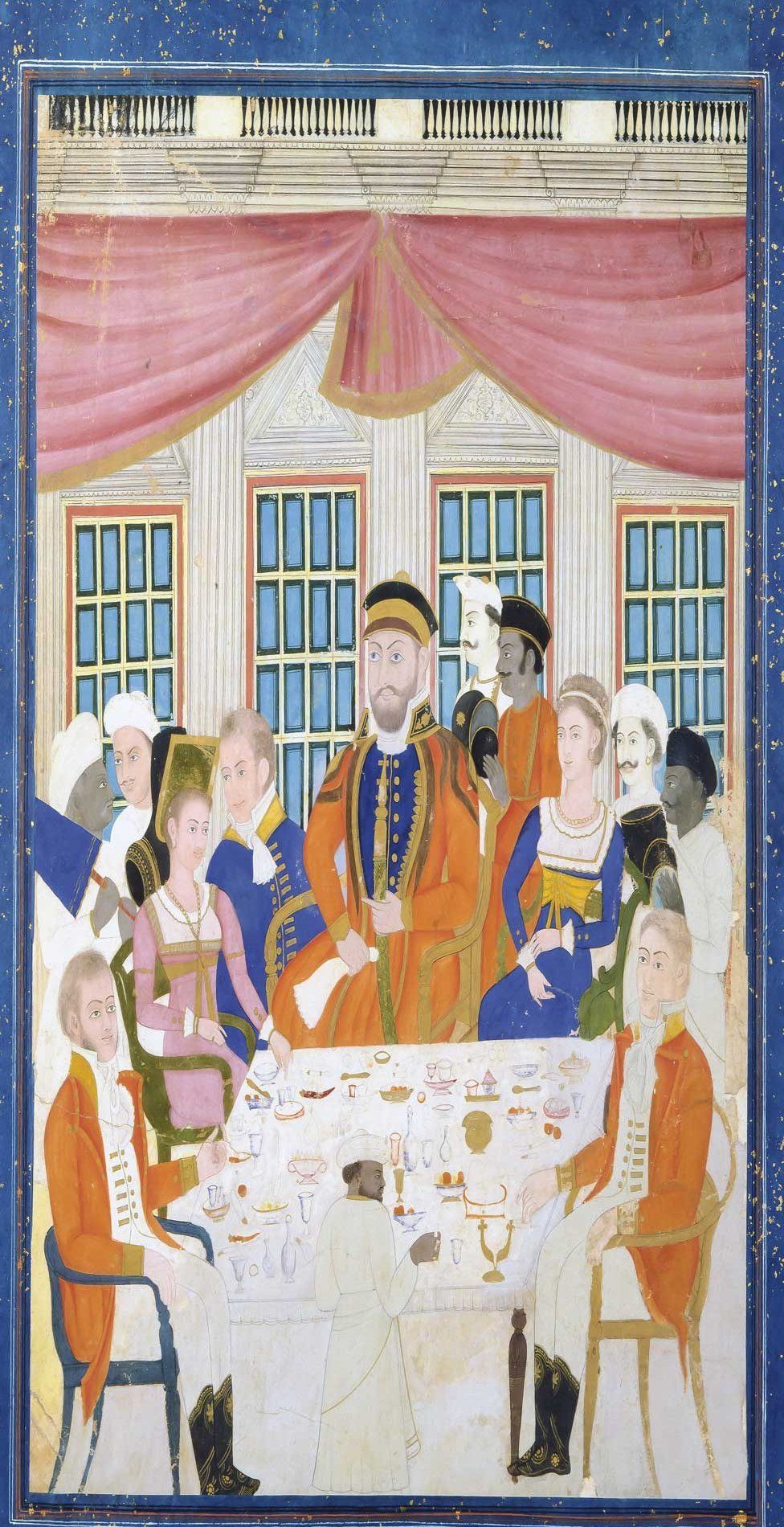
Image caption A finely painted miniature depicting four British officers with their wives taking refreshments at a table, artist unknown
Trained in the late Mughal style and patronised by the Nawabs of Murshidabad and Patna, they quickly learned to use English watercolours on English Watman watercolour paper, and take English botanical still lives as their models. In this way an extraordinary fusion of English and Mughal artistic impulses took place.
Zain ud-Din’s best works reveal a superb synthesis between a coldly scientific European natural history specimen illustration, warmed with a profoundly Indian sensibility and vital feeling for nature.
At his best – whether by instinct or inherited knowledge and training – he channels the outstanding Mughal achievement in natural history painting of 150 years earlier, when the great Mughal artist Mansur painted animals and birds for the Emperor Jahangir.
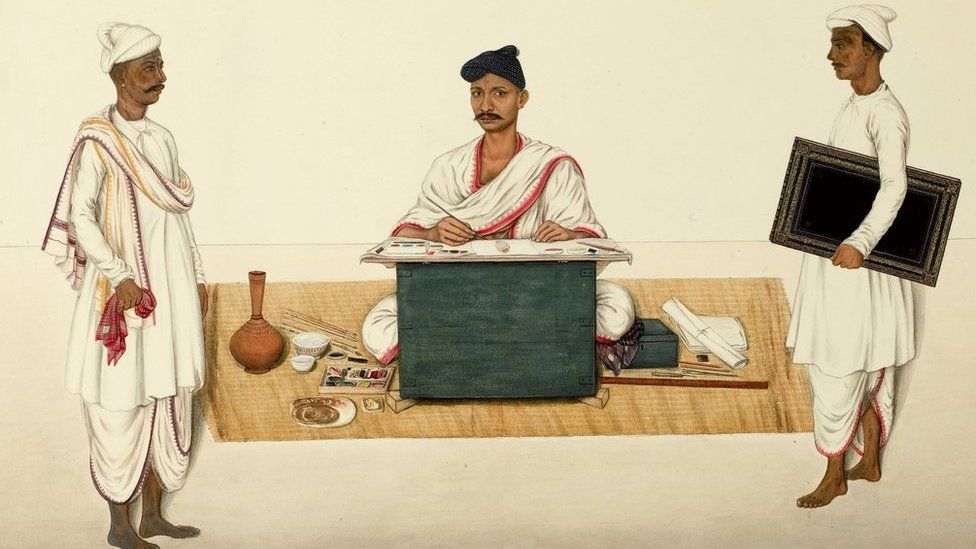
Image caption Portrait of a Mughal artist, by Yellapah Of Vellore, 1832-1835
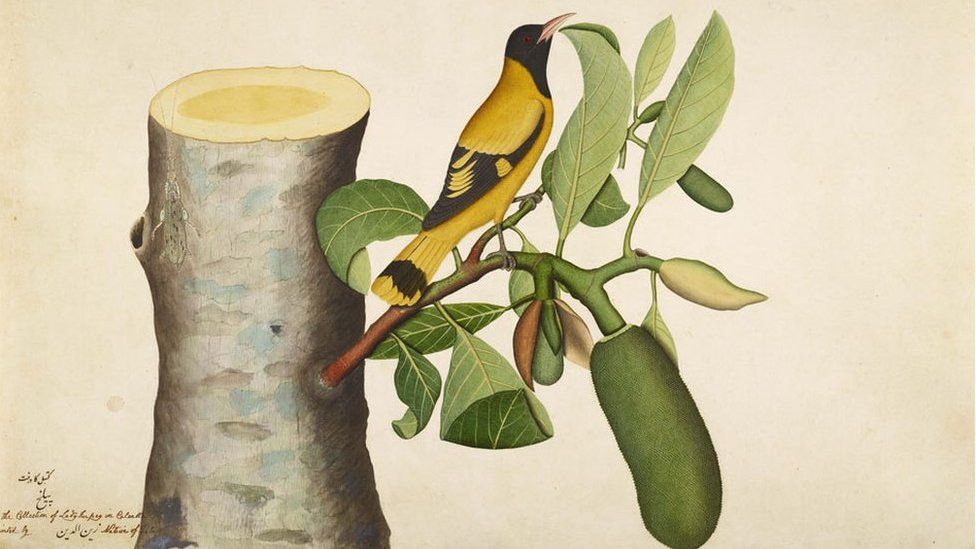
Nowhere are the merits of Company Painting better illustrated than in Zain ud-Din’s astonishing portrait of a Black Headed Oriole (No. 27).
At first glance, it could pass for a remarkably skilful English natural history painting. Only gradually does its hybrid origins become manifest.
The brilliance and simplicity of the colours, the meticulous attention to detail, the gem-like highlights, the way the picture seems to glow, all these point unmistakably towards Zain ud-Din’s Mughal training.
Image caption Portrait of a black headed oriole by Zain ud-Din
An idiosyncratic approach to perspective also hints at this background: the tree trunk is rounded, yet the grasshopper which sits on it is as flat as a pressed flower, with only a hint of outline shading to give it depth – the same technique used by Mansur.
Yet no artist working in a normal Mughal atelier would have placed his bird detached from a landscape against a white background, with the jackfruit tree on which its sits cut into a perfect, scientific cross-section.
Equally no English artist would have thought of painting the bark of that cross section the same brilliant yellow as the oriole; the tentative washes of a memsahib’s watercolour are a world away.
The two traditions have met head on, and from that blinding impact an inspirational new fusion has taken place.
Bhawani Das, who seems to have started off as an assistant to Zain ud-Din, is almost as fine an artist as Zain ud-Din.
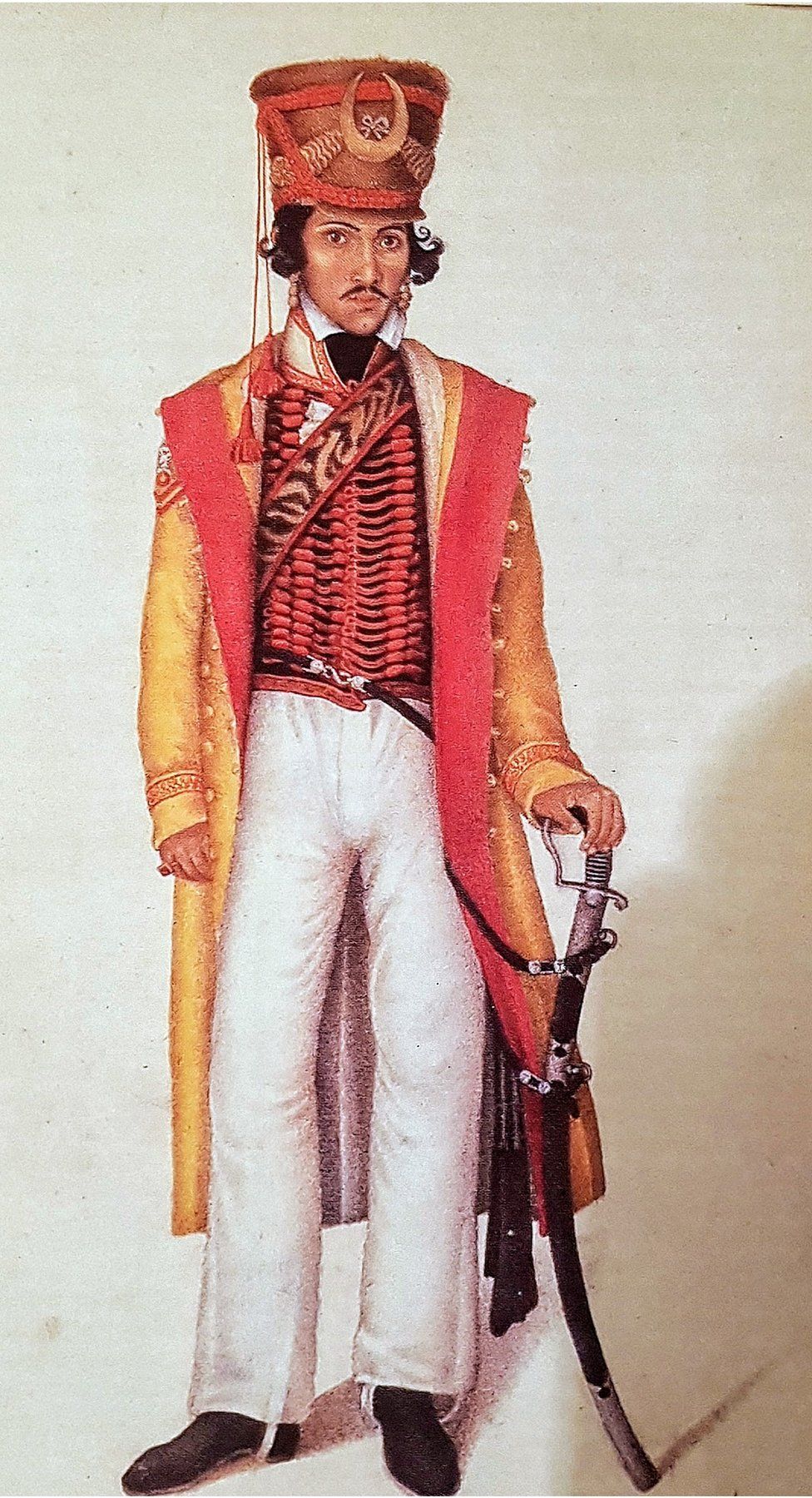
Image caption Indian trooper holding a spear by Ghulam Ali Khan, 1815-186
He is acutely sensitive to shape, texture and expression, as for example in his celebrated study of a great fruit bat with the contrast between its soft, furry body with the angular precision of its blackly outstretched wings, as if it were some caped Commendatore ushering a woman into a Venetian opera rather than a creature in a colonial menagerie.
Now, for the first time, the work of these great Indian artists painting in this brilliantly hybrid Anglo-Indian style are beginning to get the attention they deserve.
The first-ever museum show of this work in the UK aims to highlight and showcase the work of a series of extraordinary Indian artists, each with their own style and tastes and agency. Indeed the greatest among them – such as Zain ud-Din- deserve to be remembered as among the most remarkable Indian artists of all time.
William Dalrymple is the author, most recently, of The Anarchy: The Relentless Rise of the East India Company and Forgotten Masters: Indian Painting for the East India Company (Bloomsbury)
NEW DELHI (Reuters) – India’s ruling Bharatiya Janata Party (BJP) is preparing to meet coalition partners to discuss a new government, two BJP sources said on Monday, after exit polls predicted a better-than-expected result for it in a general election.
The talks would most likely be held on Tuesday afternoon, the two sources in the BJP said. They declined to be identified as they are not authorised to speak about the meeting.
Nalin Kohli, a spokesman for the BJP, declined to comment.
India’s seven-phase general election, billed as the world’s biggest democratic exercise, began on April 11 and ended on Sunday. Votes will be counted on Thursday and results are likely the same day.
Prime Minister Narendra Modi’s BJP-led National Democratic Alliance is projected to win anything between 339-365 seats in the 545-member lower house of parliament with the Congress-led opposition alliance getting only 77 to 108, an exit poll from India Today Axis showed on Sunday.
A party needs 272 seats to command a majority.
Indian stock markets and the rupee were sharply higher on expectation the business-friendly Modi would stay on at the helm.
The benchmark NSE share index was up 2.8%, its best single day since March 2016.
“I expect another 2-3% rally in the market in the next three to four days based on the cue,” said Samrat Dasgupta, a fund manager at Esquire Capital Investment Advisors.
Congress spokesman Sanjay Jha cast doubt on the exit polls, saying on Twitter he believed they were wrong.
“If the exit poll figures are true then my dog is a nuclear scientist,” Jha said, adding he expected the next prime minister would come from outside the BJP alliance.
Modi and his BJP faced criticism in the run-up to the election over unemployment, in particular for failing to provide opportunities to young people coming onto the job market, and for weak farm prices.
But Modi rallied his Hindu nationalist base and made national security a central theme of the campaign after a surge in tension with Pakistan in February following a suicide bomb attack in Indian-controlled Kashmir by Pakistan based militants.
Modi ordered air strikes on a suspected militant camp in Pakistan, which led to a surge in tension between the nuclear-armed neighbours.
But many Indians applauded Modi’s tough stand and he was able to attack the opposition for being soft on security.
Ram Madhav, a senior leader in the BJP, told Reuters partner ANI the results would be even better for the party than the exit polls were suggesting, particularly in West Bengal state.
West Bengal has the third largest number of members of parliament and has been hotly contested between the BJP and the Trinamool Congress, one of the most powerful parties in the coalition trying to unseat Modi.
“Bengal will surprise all the pollsters, we are hoping to do extremely well there,” Madhav said. “Everyone has seen the tremendous support for PM Modi and the BJP in Bengal.”
The seventh and the last phase of Lok Sabha election in West Bengal was hit by vandalism and rigging on Sunday amid polling in nine parliamentary constituencies with the ruling Trinamool Congress and the BJP locked in a bitter battle for power.
LOK SABHA ELECTIONSUpdated: May 19, 2019 11:19 IST
HT Correspondent
Hindustan Times, Kolkata
Kolkata Police personnel leaving for polling booth on the eve of final phase of Lok Shabha election from a Polling distribution center in Kolkata on Saturday . (ANI photo for representation)
Crude bombs were hurled at two places on Sunday in West Bengal, where polling is underway in nine constituencies in the last phase of polling of the Lok Sabha election amid reports of vandalism and malfunctioning EVMs.
Reports of bombs thrown in Gilaberia area in Deganga of North 24 Parganas district under Barasat constituency and in Raidighi of South 24 Parganas district under Mathurapur constituency came in as voters queued up in polling booths.
There were allegations that BJP supporters were beaten up and its camp office vandalised allegedly by TMC workers in Kultoli in Jaynagar Lok Sabha constituency as 14.17% polling was recorded till 9am from across the state.
Sayantan Basu, the BJP’s candidate for Basirhat constituency, alleged rigging in several areas and said police was doing nothing to stop it.
“People have queued up from as early as 4:30am to vote. But there are a lot of allegations of muscle flexing and rigging in areas such as Sandeshkhali, Hingalganj and Baduria. The inspector-in-charge of Shashan police station is virtually helping to rig in favour of the TMC,” Basu said.
“About 150 complaints were lodged with the EC (Election Commission) in the first three hours. I have not seen effective steps of the poll panel so far,” Basu, also the general secretary of the Bengal unit of the BJP, alleged.
Mala Roy, the TMC’s candidate in Kolkata South constituency, alleged that central force personnel did not allow her to enter booth number 72 in a polling station in Mudiali under her constituency. Roy said she went after learning that polling was stopped for 45 minutes. She said she will lodge a complaint with the poll watchdog.
Trinamool Congress’ Rajya Sabha member Sukhendu Sekhar Ray alleged Electronic Voting Machines in all the parliamentary constituencies were not working as he questioned the EC over the EVMs.
“Hundreds of EVMs found to be dysfunctional from the very start of poll in various booths of the 9 Parliamentary Constituencies Of West Bengal where elections are being held today,” Ray wrote on Facebook.
“Rs 3,173 crores sanctioned by the Government in April 2017 for purchase of 16 Lakh new EVMs. It seems that old and junk machines have been put on service in these 9 constituencies with the evil design to delay the process of voting,” he said.
“Because if the voters after waiting for hours together fail to cast their votes will leave the polling stations in disgust, which will affect percentage of polling severely. Shame Election Commission,” Ray said.
Widespread violence
Before this, the state witnessed numerous incidents of violence in the last six rounds of polling, which included vandalism, attacks on candidates, party workers, security officials and the media, and those of stopping voters from voting.
Sporadic incidents of booth capture, smashing and malfunctioning of electronic voting machines (EVM), intimidation of voters have also been reported from West Bengal in all these phases. Several workers of both the parties have also been killed in violence reported from across the state.
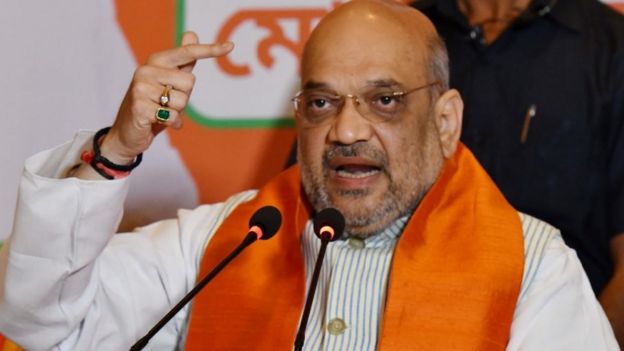
The past week also saw a high-pitched battle between the Bharatiya Janata Party and the TMC, during and in the immediate aftermath of BJP president Amit Shah’s roadshow in Kolkata, which included the vandalising of a bust of 19th century Bengali icon Ishwar Chandra Vidyasagar in an educational institute.
This led to the Election Commission bringing forward the campaign period by 19 hours, a move that received all-round criticism from opposition leaders.
The eastern state is important for both the TMC and the BJP as 42 seats are on offer — the third highest after Uttar Pradesh and Maharashtra — which the ruling party at the Centre is eyeing to offset possible losses in northern India, and which are crucial for chief minister Mamata Banerjee’s national political ambitions.
Candidates, as well as party workers, of both the TMC and BJP have accused each other of violence throughout the six phases of polling in the state.
During the sixth phase on May 12, the BJP’s candidate from Ghatal constituency Bharati Ghosh alleged she was heckled at a polling booth and pushed by some women supporters of the Trinamool Congress. The former Indian Police Service (IPS) officer, once considered close to chief minister Mamata Banerjee, also said stones were thrown at her convoy and that crude bombs were hurled at her car.
In Barrackpore parliamentary constituency, the BJP’s candidate Arjun Singh alleged he was “attacked by goondas” of the Trinamool Congress in the fifth phase on May 6. On the same day, at Bongaon Lok Sabha seat, one TMC worker and one cop were injured in the violence.
In Hooghly district, which borders Kolkata, the rented accommodation of BJP’s women’s wing chief Locket Chatterjee, an actor-turned-politician who is also the party’s candidate from the Hooghly Lok Sabha constituency, was allegedly vandalised on May 6 by TMC workers.
A complaint was also filed against Chatterjee for allegedly threatening a presiding officer at a poll booth in Hooghly constituency during the same phase.
Sporadic clashes were reported in West Bengal, especially from Asansol, in the fourth phase of the general election. The BJP’s sitting member of Parliament and candidate Babul Supriyo’s car was vandalised in Asansol allegedly by stone-throwing Trinamool Congress supporters. The minister escaped unharmed with only the rear glass of the vehicle being damaged.
On April 18, the second phase of polling, the Communist Party of India (Marxist) candidate and Raiganj sitting MP Mohammed Salim’s car was attacked when he went to a polling booth on Islampur. Reports of sporadic violence came from Darjeeling constituency as well.
Places such as Nalhati (Birbhum), Nanoor (Bolpur), Barabani (Asansol) and Suri (Birbhum) saw pitched battles between political workers involving knives and long sticks.
Crude bombs were hurled by unidentified men outside polling stations at Tiktikipara in Domkal, Murshidabad, and Kaliachawk in Malda South.
The Election Commission has deployed hundreds of security personnel forces to cover the booths in the battleground eastern state to ensure free and fair polling.
Image copyright GETTY IMAGESImage caption Mr Modi said he will not forgive Pragya Thakur
India is in full election mode: voting began on 11 April, and the final ballot will be cast on 19 May with results out on 23 May. Every day, the BBC will be bringing you all the latest updates on the twists and turns of the world’s largest democracy.
What happened?
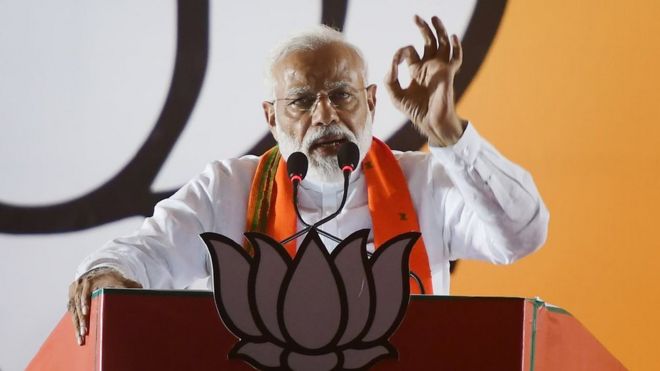
Indian Prime Minister Narendra Modi has attended first ever press conference at the Bharatiya Janata Party (BJP) head office in Delhi – days before Indians take part in the final stage of voting.
But journalists were left disappointed as he did not take any questions, and instead largely talked about his government’s achievements.
“I have come to thank the country for blessing me. I have seen a lot of ups and downs but the country stayed with me,” he said.
Mr Modi also spoke of his pride in India’s democratic process and said he needs to show the world “how diverse our democracy is”.
Mr Modi was seated next to party president Amit Shah. He said he would not take questions because the press conference was Mr Shah’s.
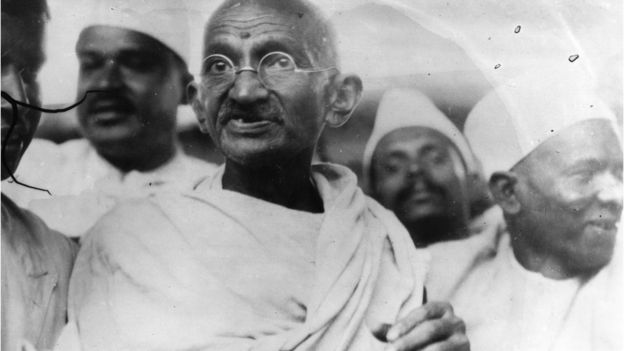
Earlier, the prime minister said he would “never be able to forgive” those who have “insulted” Mahatma Gandhi.
Mr Modi’s statement comes after controversial Bharatiya Janata Party (BJP) politician Pragya Thakur called Nathuram Godse – the man who assassinated Mahatma Gandhi – a “patriot”.
Ms Thakur apologised after several leaders, including those from the BJP, criticised her.
“Such statements should be condemned. There is no place in society for such comments. She [Ms Thakur] may have apologised, but I will never be able to forgive her,” he said in an interview to News24 TV channel.
Why does this matter?
This is the first time Mr Modi has attended a press conference as prime minister while in India. Most of his press conferences have been on state visits to other countries and often involved little more than reading out an official statement.
He has given some one-on-one interviews to Indian media, though critics say that these have largely been tightly controlled and given to journalists seen as sympathetic to him. However in recent weeks he has given a flurry of interviews to several leading publications and television channels, including those that have been critical of him.
But if people were expecting a complete about-turn in his media policy this time, they would have been disappointed.
This caused some frustration among journalists on Twitter.
Also on Friday, a BJP candidate apologised for calling Gandhi’s killer a patriot
Image copyright GETTY IMAGES
What is happening?
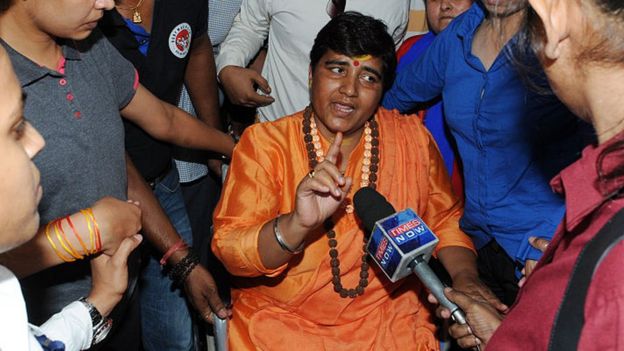
Bharatiya Janata Party (BJP) politician Pragya Thakur has apologised after calling Nathuram Godse – the man who assassinated Mahatma Gandhi – a “patriot”.
Several political parties had criticised her comment and her own party demanded that she should publicly apologise.
“It was my personal opinion. My intention was not to hurt anyone’s sentiments. If I’ve hurt anyone, I do apologise. What Gandhi Ji has done for the country cannot be forgotten. My statement has been twisted by the media,” Ms Thakur said on Thursday evening.
She made the comment after actor-turned politician Kamal Haasan said Godse was India’s first Hindu “extremist” earlier this week.
Why does this matter?
The BJP as well as opposition parties immediately reacted to her comment, which also caused a storm on social media.
BJP spokesperson GVL Narasimha Rao said that the party does not agree with her statement, and asked her to publicly apologise.
The main opposition Congress party demanded an apology from Prime Minister Narendra Modi and said that the BJP should take “punitive action” against Ms Thakur.
Congress spokesperson Randeep Surjewala said that “insulting martyrs is in the BJP DNA” and that the “soul of the nation” has been hurt by her remarks.
Congress party leader Priyanka Gandhi also lashed out at the BJP.
Political analysts also say that her comments have put the BJP in a tough spot, since Mr Modi and BJP president Amit Shah defended their decision to field her as a candidate despite terror charges against her.
Her candidature caused outrage as she is an accused of involvement in a blast that killed seven people and injured 100 others. Ms Thakur denies all charges against her.
However, Ms Thakur’s comments do reflect the views of some right-wing Hindus who support the BJP and have long seen Gandhi as too moderate.
Godse, who shot Gandhi in the chest three times at point-blank range on 30 January 1948, was also an activist with nationalist right-wing groups, including those closely associated with the BJP.
Hindu hardliners in India accuse Gandhi of having betrayed Hindus by being too pro-Muslim, and even for the division of India and the bloodshed that marked Partition, which saw India and Pakistan created after independence from Britain in 1947.
On Thursday, a ruling party candidate called Gandhi’s killer a patriot
What happened?
Controversial Bharatiya Janata Party (BJP) politician Pragya Thakur made headlines again. This time it was for calling Nathuram Godse – the man who assassinated Mahatma Gandhi – a “patriot”.
Her comment was made in response to a statement by southern actor-turned politician Kamal Haasan who had said India’s first “extremist” was a Hindu”, referring to Godse.
His statement, made on Monday, was heavily criticised by the BJP, which accused him of indulging in “divisive politics” and filed a complaint against him with the Election Commission of India.
Why does this matter?
The BJP responded by criticising Ms Thakur and asking her to publicly apologise.
“BJP does not agree with this statement, we condemn it. Party will ask her for clarification, she should apologise publicly for this statement,” party spokesperson GVL Narasimha Rao told reporters.
Image copyright GETTY IMAGES
Ms Thakur has seen her fair share of controversy. Her candidature caused outrage as she is an accused of involvement in a blast that killed seven people and injured 100 others. On 18 April, she said that police officer Hemant Karkare had died in the November 2008 Mumbai terror attacks because she had “cursed” him. She was then banned from campaigning for 72 hours as a result.
A team led by Mr Karkare had arrested her for questioning in connection with the Malegaon blast.
During her campaign, she also said she was “proud” of her part in the demolition of the 16th Century Babri mosque. In 1992, right-wing Hindu mobs razed the mosque to the ground, claiming it was built on the site of a temple destroyed by Muslim rulers. The site, which is in the city of Ayodhya, has been a religious flashpoint for Hindus and Muslims for decades.
Campaigning ended in West Bengal a day before deadline
What happened?
The Election Commission (EC) told political parties to end their campaigning in West Bengal state, a day before the deadline in the wake of poll-related violence.
The campaign will end on Thursday at 10pm local time, and voting will be held on Sunday.
The decision comes after clashes broke out between the Bharatiya Janata Party (BJP) workers and protesters believed to be from the ruling Trinamool Congress (TMC) in Kolkata (formerly Calcutta) on Tuesday.
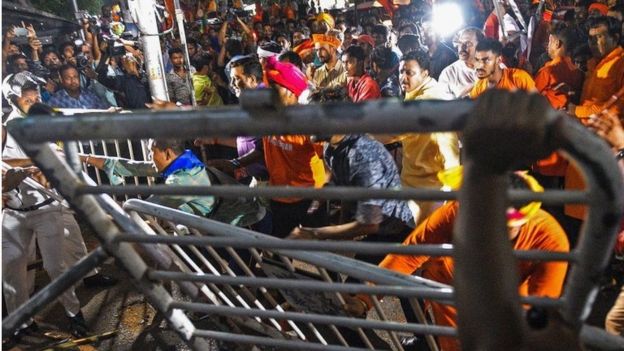
It happened during a roadshow of BJP chief Amit Shah. Several people were injured and vehicles were set on fire. A statue of renowned Bengali reformer Iswarchandra Vidyasagar was also vandalised in the clashes.
Both parties have accused each other of starting the violence.
Why does this matter?
Image copyright GETTY IMAGESImage caption Violence took place during BJP chief Amit Shah’s rally in Kolkata on Tuesday
The BJP welcomed the decision, saying it validated their argument that the state had “descended into anarchy” under the leadership of chief minister Mamata Banerjee.
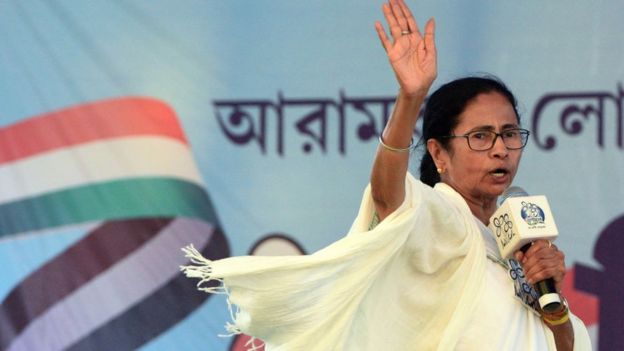
Ms Banerjee said that the move was “undemocratic” and “it had insulted the people of Bengal”.
“Tomorrow, [Prime Minister Narendra] Modi has two meetings in Bengal. When he finishes, the campaigning also ends… Instead of punishing Amit Shah, the Election Commission has given a gift to the BJP,” she said.
Image copyright AFPImage caption Several people were injured and vehicles were set on fire during the violence
Both parties are locked into a fierce election battle to win most out West Bengal’s 42 seats. Ms Banerjee has ambitions of becoming the prime minister in case a nationwide coalition of regional parties wins enough seats.
The state has also become crucial for the BJP as it’s trying to expand its reach in the eastern state. It won only two seats in the 2014 election.
The BJP performed well in northern states like Uttar Pradesh and Rajasthan in 2014, but this time it’s expected to suffer loses against a coalition of regional parties and the main opposition Congress.
So the party is trying to make up for the losses in West Bengal.
On Wednesday, the TMC and the BJP accused each other of poll violence
Image copyright GETTY IMAGES
What happened?
The war of words between West Bengal state chief minister Mamata Banerjee and the governing Bharatiya Janata Party (BJP) intensified ahead of voting on Sunday.
The latest verbal duel comes after violence was reported during BJP chief Amit Shah’s roadshow in Kolkata (formerly Calcutta) on Tuesday.
Clashes broke out between BJP supporters and protesters who were holding “Amit Shah go back” posters.
Some people suffered minor injuries and a few vehicles were set on fire.
The BJP said the protest was “orchestrated” and called it an “attempt to strangulate democracy”.
Why does this matter?
The eastern state has become politically crucial for the BJP as it has intensified campaigning in the past few days.
And that has sparked a feverish electoral battle between the BJP and Ms Banerjee’s Trinamool Congress (TMC).
“What does Amit Shah think of himself? Is he above everything? Is he god that no one can protest against him?” Ms Banerjee said.
In reply, Mr Shah accused the TMC of not following democratic norms during elections.
“Have faith in the people of Bengal that they’d face the TMC goons,” he said.
Prime Minister Narendra Modi is scheduled to hold more rallies in the coming days, so one can expect more verbal fireworks from the two leaders.
On Tuesday, the saga of the morphed Mamata meme continued
What happened?
India’s top court stepped in to release an activist belonging to India’s governing Bharatiya Janata Party (BJP) who was sent to prison for sharing a doctored image of West Bengal Chief Minister Mamata Banerjee.
Priyanka Sharma was sentenced to two weeks in prison on 10 May after she shared a picture of Bollywood star Priyanka Chopra and her husband Nick Jonas at the Met Gala – but with Ms Banerjee’s head superimposed on to Chopra’s body.
Earlier the court had said Ms Sharma could be released only if she apologised to Ms Banerjee, but later waived this condition.
Why does this matter?
The battle for West Bengal in this general election has been absolutely bruising.
The BJP, led by Prime Minister Narendra Modi himself, has been campaigning hard for votes in the state. This has brought them toe-to-toe with the state’s feisty chief minister. The fact that voting for West Bengal’s 42 seats has been split across all nine phases of voting has meant that the battle has been long and drawn-out.
And with just one phase to go before voting finally ends, the gloves are well and truly off. The two parties have traded insults on the campaign stage, their workers have attacked each other, and the violence on the ground has intensified. And now the battle has spread to cyberspace as well.
The country’s finance minister Arun Jaitley jumped at news of Ms Sharma’s release to call Ms Banerjee a dictator.
Analysts say that this political row is so bitter because the BJP has clearly identified West Bengal as one of the states where they may be able to make gains this election. This becomes more important for the party in the context of their fight in the politically crucial state of Uttar Pradesh, which sends the most number of MPs (80) to parliament.
They are up against a powerful coalition of regional parties there, and many expect them to lose seats as a result.
And PM Modi said Rahul Gandhi should be ashamed of 1984 riots
What happened?
Prime Minister Narendra Modi said that main opposition Congress party chief Rahul Gandhi should be “ashamed of himself” over his colleague’s remark on the 1984 anti-Sikh riots.
Mr Modi was replying to a controversial statement made by Sam Pitroda, who is a strategist of the Congress party.
In his reply to a question about the Congress’ role in the riots, Mr Pitroda had said “so what?”.
“I don’t think so, this is also another lie, and what about 1984? You speak about what you [Mr Modi] have done in five years. It [the riots] happened in 1984, so what?” he said.
Mr Gandhi said he was “ashamed” of Mr Pitroda’s statement, and asked him to apologise.
Mr Pitroda later said his statement was “twisted” and he did not mean to hurt sentiments.
But Mr Modi said the Congress chief “must apologise”.
“I was watching that naamdar [the dynast] told his guru that he should be ashamed of what he said. I want to ask naamdar, you pretended to scold your mentor for what? Because he exposed what was always in the Congress’s heart, and in the discussions of the naamdar family? Because he made public a family secret? Naamdar, it is you who should be ashamed,” Mr Modi said.
Why does this matter?
The controversy matters because it comes days ahead of voting for the 13 seats in the northern state of Punjab.
The BJP, which has formed a coalition with regional Shiromani Akali Dal, is locked in a bitter electoral battle with the ruling Congress in the state.
Sikhs are a majority in the state and the 1984 riots is still an emotional issue for many of them.
More than 3,000 Sikhs were killed in 1984 after the assassination of former prime minister Indira Gandhi by her Sikh bodyguards.
They were angry at her decision to send the army into the Golden Temple – Sikhism’s holiest shrine – to flush out militants earlier in the year.
The killing of Mrs Gandhi, who belonged to the Congress, saw mobs attack and murder members of the Sikh community across the country.
And both parties appear to be trying to come across as pro-Sikh ahead of the vote on 19 May.
On Sunday, Delhi voted but not enthusiastically
Image copyright GETTY IMAGESImage caption Delhi’s voter turnout was lower than in 2014
What happened?
Sunday saw India’s capital Delhi vote along with several other states in the polls – the penultimate phase of the country’s mammoth general election.
Voters turned out to vote, but in fewer numbers than they did in 2014. The election commission said that around 60% of the capital’s registered voters had actually cast ballots, which was about a five percent drop from 2014.
Delhi Chief Electoral Officer Ranbir Singh expressed disappointment, saying that the turnout did not match expectations.
Why does this matter?
The election commission is right to be disappointed – it had run a series of campaigns in the city, encouraging more people to vote.
But it was not as though polling in Delhi was an entirely smooth process. Some voters complained that their names were missing from electoral lists even though they had all the necessary documents. There were also reports that around 1,200 Electronic Voting Machines (EVMs) had malfunctioned across the city, delaying the polling process.
The fact that Delhi became a three-cornered contest after the main opposition Congress and the Aam Aadmi Party (AAP), which controls the Delhi state assembly, failed to stitch up an alliance may also have put voters off. Many analysts believe that this failure will only split voters who were against prime minister Narendra Modi’s Bharatiya Janata Party (BJP) and effectively hand them victory.
So they may have decided to just stay home, and not bother queuing up in the blistering heat – it touched 40C on Sunday.
Earlier in the day, West Bengal Chief Minister Mamata Banerjee lashed out at Yogi Adityanath asking him to take care of Uttar Pradesh first.
SNS Web | New Delhi | February 5, 2019 4:33 pm
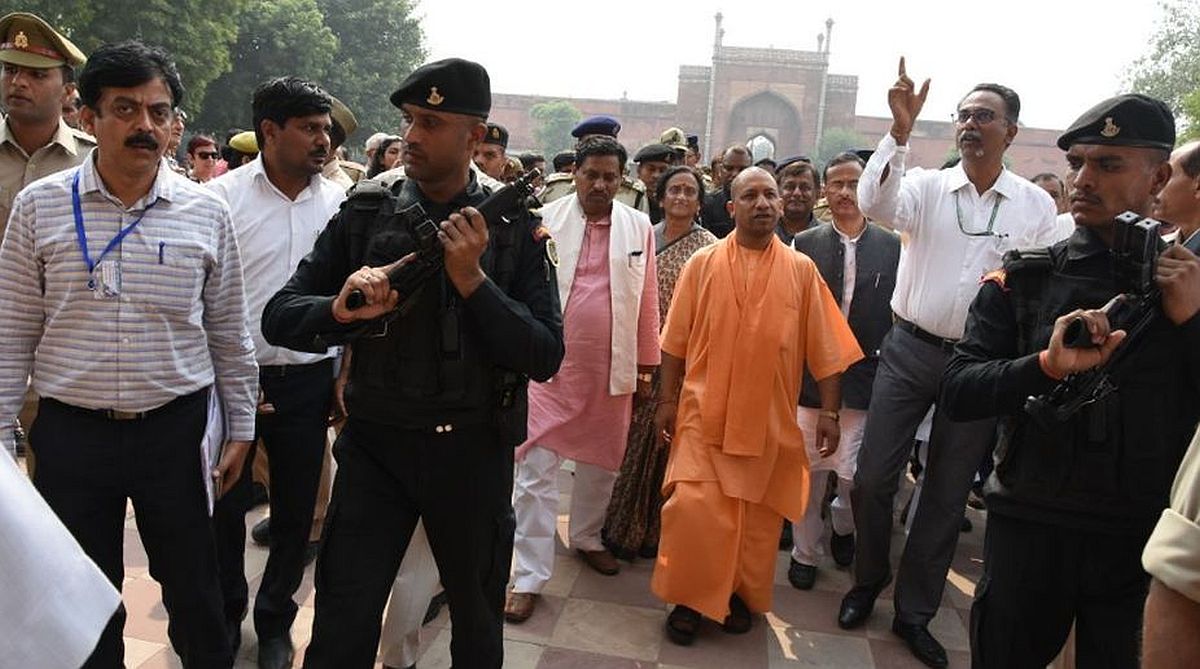
Uttar Pradesh Chief Minister Yogi Adityanath (File Photo: Twitter)
Amid simmering tensions between the BJP and the Trinamool Congress with the West Bengal government denying permission to Yogi Adityanath’s chopper to land in the state, the Uttar Pradesh Chief Minister touched down in Jharkhand’s Bokaro on Tuesday and is headed to West Bengal’s Purulia by road to address a public rally there.
No permission has been granted to Yogi’s rally with the paperwork still not in order. However, the BJP is confident of conducting the event.
Earlier in the day, West Bengal Chief Minister Mamata Banerjee lashed out at the BJP poster boy asking him to take care of Uttar Pradesh first.
Referring to the rising number of fake encounters and cop killings in Uttar Pradesh, Mamata said, “So many people have been killed, even police were murdered, so many people were lynched; he himself will lose if he contests elections. He doesn’t have a place to stand in UP, that’s why he is roaming around in Bengal”.
Earlier on Sunday, Yogi’s chopper was not allowed to land in the state to let him address two scheduled rallies.
Adityanath addressed the rallies there telephonically and lashed out at the “anti-people” Trinamool Congress (TMC) government in the state, saying the days of Chief Minister Mamata Banerjee’s rule are “numbered”.
The UP chief minister and state BJP president Dilip Ghosh were scheduled to address “Ganatantra Bacaho Rallies” at Balurghat in South Dinajpur district and Raiganj in North Dinajpur district.
Though the BJP had been allowed to organise the rallies, the district administration denied permission for Adityanath’s chopper to land at both the places, party leaders said.
Following the denial of permission to land his chopper, Adityanath decided not to attend either of the rallies and instead addressed them telephonically.
Addressing both the rallies through an audio link, the Uttar Pradesh chief minister said, “The TMC government didn’t allow me to come and meet you all. That is why I had to resort to the Digital India of Modi Ji to address you.”
Lashing out at the Mamata Banerjee government, the UP chief minister said, “This TMC government is anti-people and anti-democratic and has compromised with the national security.”
Alleging that the Banerjee government had tried to stop Durga Puja in West Bengal to pursue its appeasement policy, Adityanath urged BJP workers to fight vigorously and ensure that the party forms the next government in the state.
The BJP has complained to the Election Commission that the Mamata Banerjee government, instead of following democratic processes, was setting hurdles for every programme of the party in the state.
Earlier, permission was denied for BJP chief Amit Shah’s chopper landing in Malda.
The Prime Minister also batted for the Hindu Bangladeshi migrants in a bid to woo the voters ahead of the Lok Sabha polls that are due this May.
SNS Web | New Delhi | February 2, 2019 4:01 pm
Addressing his second rally in West Bengal on Saturday, Prime Minister Narendra Modi criticised the Mamata government for its “anti-development approach”.
Addressing a rally in Durgapur, PM Modi said the ruling Trinamool Congress was not bothered about the development of the state with major projects stuck for over a long period of time.
“Projects worth Rs 90,000 crore are moving at snail’s pace because of the attitude of the state government. They are not cooperating with the Centre, they have an anti-development approach,” PM Modi said while referring to infrastructure development in West Bengal.
He said while the state government is busy crushing the dreams of the poor and the middle class, the Central government is trying to deliver a new flight to those dreams.
He said the people of Bengal will oust and uproot the government led by Mamata Banerjee, which does not care about the dignity of democracy.
The PM further said the Mamata government has strangled democracy adding that the people of Bengal will no longer tolerate anarchy.
“Ruling TMC is certain to go, I can see clearly that Bengal will usher in parivartan (change),” he said.
Referring to clashes on Friday night in Durgapur, PM Modi said TMC has no respect for the law.
Clashes erupted between workers of the Bharatiya Janata Party (BJP) and the Trinamool Congress late on Friday in Durgapur.
The clashes erupted after TMC workers allegedly attacked a BJP cadre and pulled down hoardings and banners announcing PM Modi’s visit.
Lauding the BJP workers in Bengal, he said their efforts and sacrifice would not go in vain.
“Your fervour is giving Didi sleepless nights, and that’s why she is adopting the ways of the Left,” PM added.
Lauding the Interim budget 2019, PM Modi said the budget illustrates “Sabka Sath Sabka Vikas”, adding that it was just a trailer.
“The budget after the elections will portray the contours of a New India,” he said.
The Prime Minister also batted for the Hindu Bangladeshi migrants in a bid to woo the voters ahead of the Lok Sabha polls that are due this May.
Earlier in the day, PM Modi kicked off the Bharatiya Janata Party’s campaign in West Bengal for the upcoming Lok Sabha elections with a public rally in Thakurnagar.
In a bid to woo the people, the Prime Minister said the people will not be required to pay any ‘syndicate tax’ and the money to the farmers will be directly paid to their bank accounts.
The rallies are being held at a time when the ruling Trinamool Congress in West Bengal has upped the ante against the BJP-headed government at the Centre and has given the call to oust the PM Modi government in the next General Election.
Apart from PM Modi, Union Home Minister Rajnath Singh, Uttar Pradesh Chief Minister Yogi Adityanath and many other top leaders are also expected to attend several ‘Ganatantra Bachao’ rallies across the state.
East Bengal share the Salt Lake Stadium with rivals Mohun Bagan
Most people would assume an Indian sporting fixture that regularly attracts more than 100,000 people could only be one thing: a game of cricket.
But tell that to the people of Kolkata, who on Sunday gathered at the city’s Salt Lake Stadium for the latest instalment of the ‘Boro Derby’, as East Bengal took on Mohun Bagan in what might well be the most well-attended, fiercely competitive and historically significant derby you’ve never heard of.
This was the 366th meeting of the sides – it has been played 134 more times than the Merseyside derby – and consumes the city, which is regarded as the game’s spiritual home in a country of 1.3bn people.
Here, we take you inside a match steeped in tradition, watched by ‘ultras’ and regarded as a battleground for identity in India’s third-biggest city.
A game with its place in history – and the record books
Mohun Bagan, founded in 1889, are one of the oldest football clubs in Asia. Their landmark victory while playing barefoot over the East Yorkshire Regiment in 1911 was the first time a local club had defeated a European one, ending years of British dominance in the early stages of the game in India.
This victory is considered a key event in India’s fight for independence, so much so that the anniversary of the game on 29 July is recognised annually as ‘Mohun Bagan Day’.
The rivalry was born in 1920, when East Bengal were founded by a frustrated chief executive of Mohun Bagan. Complaining that his team chose not to select a star player for a big game, he decided to start a rival club in the same city, taking the player with him and forming East Bengal.
Like so many classic city rivalries, the derby’s lasting significance is rooted in the battle lines drawn off the pitch between the sides since their first meeting in 1925. The city’s native population has tended to follow Mohun Bagan, with its immigrant communities from the eastern side (modern-day Bangladesh) opting for East Bengal.
This social and political rivalry is at the derby’s heart, dividing the Bengali football population into either the green and maroon of Mohun Bagan or the yellow and red of East Bengal.
Ninety seven years later, the ‘Boro derby’ (‘boro’ meaning ‘big’ in Bengali) has created its fair share of history. Most notably, it holds the record for the highest attended sports fixture in India, with more than 130,000 people watching the 1997 derby, a 4-1 win for East Bengal.
Bhaichung Bhutia, still the only Indian to have played football in England, scored a hat-trick that day. He is the top scorer in the history of the derby with 19 goals, and has notoriously played for both teams during his career.
Bhaichung Bhutia, pictured in action for East Bengal in 2004, joined Bury in 1999
‘Today there are no good words, only bad ones’
Mohun Bagan and East Bengal play in India’s I-League, the older and more traditional of the nation’s two top-flight football divisions. With both teams in the bottom half of the table, this particular meeting was all about local pride.
“I didn’t sleep a minute last night – I never can the night before the derby,” said one of the co-founders of the East Bengal Ultras group.
“All week we’ve been preparing and planning and on the day of the game, hour by hour, it gets more and more tense. If we don’t win the derby, it’s turmoil for us.”
The Ultras unveiled their ‘Tifo’ – “we’ve been making this for the past three days and nights” – strapping the giant rolled-up banner to the roof of a car to be delivered to the stadium.
The Tifo reads: ‘need I say more?’ or ‘do you understand sir?’ and it depicts a Bengali comedian plus sugar, milk and tea. It refers to a classic jibe between the two sides.
“It’s a kind of playful insult to the Mohun Bagan fans,” he continued. “You’ll see for yourselves later on the reaction it gets.”
The derby presents the chance for the fans to compete as well as the players, with the historic identity and class differences taking centre stage.
“People are lovely here usually but on matchdays it’s different,” stated one of the fans, only half jokingly.
“Swearing and insults are part of the Bengali football culture sometimes. Today there are no good words, only bad ones.”
Another fan spoke of how important this game is not just to the Kolkatans, but to the whole identity of the game across the country.
Kolkata is a city of 4.5m people, but its footballing reach spreads across India. There are fan groups for these clubs in states around the nation, and people travel thousands of miles for the derby, not to mention the millions that tune in to live television coverage.
“These two teams are the backbone of Indian football historically, and these games still get more headlines and media coverage than anything else,” he said.
“More people care about this result than about the national team, or pretty much all of the other clubs put together.”
Kolkata becomes a sea of colour on derby day
Fans fill the streets, bringing an unplanned halt to drivers’ progress
Streets closed, insults thrown, riot police watch on
As kick-off drew nearer, the colours of the two teams became increasingly visible, flags held aloft by groups of supporters or fluttered from car windows.
It was a classic pre-match scene but everything was louder, brighter and busier. Street traders painted faces and sold replica shirts as fans shuffled towards the colossal Salt Lake Stadium, the cost of entering a modest 300 Rupees (equivalent to £3.33). Not bad for the biggest derby on the continent.
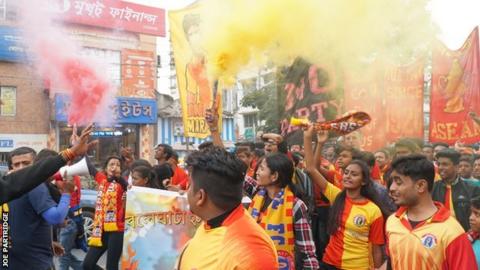
East Bengal’s Ultras completed their signature ‘Corteo’ (procession), with hundreds of fans marching down the main road in a haze of smoke and drums. The streets became unofficially closed, traffic stopping and residents gathering to witness the colourful display.
Countless flatbed trucks and jeeps cruised towards the stadium, full to the brim with standing supporters, waving flags and chanting into loudhalers.
Vehicles full of rival fans found themselves toe to toe in the traffic, exchanging songs and insults as the noise levels grew.
Hordes of riot police watched on, but the mood was one of excitement and anticipation, despite occasional tensions.
‘Who cares about the league? We’ve won the derby!’
Inside the gigantic oval stadium, East Bengal’s ‘Tifo’ drew screeches from the disapproving Mohun Bagan contingent. Everywhere you looked, there were greens, reds and yellows stuck to every surface.
A tense beginning to the game was ended by Mohun Bagan’s opening goal, a well-worked cross leaving an easy tap in for the Mariners. Their half of the ground erupted as the Bengal side fell silent, but they sought revenge swiftly, equalising from a flowing move four minutes later.
The momentum was with the Bengals as the game progressed, and their 44th-minute strike (a sublime scissor-kick finish) saw the red-and-yellow half of the stadium happier as the whistle blew, with the score 2-1 to East Bengal.
Half time was a whirlwind, a trip to the concourse offering a range of pop-up food and drink options, ranging from a blend of Indian snacks to American-style sports refreshments, not to mention replica jerseys for 500 Rupees (just over £5).
There was plenty of food but not a beer in sight as fans buzzed around beneath the stands during the break
The second half was equally frenetic, a combination of beautiful passing moves and scrappy route-one football. A skilful nutmeg from an East Bengal striker led to a scything tackle from Bagan’s captain, already on a yellow card, leaving the Mariners down to 10 men and sending the crowd into a frenzy. When East Bengal scored from the resulting free-kick, the yellow-and-red half of the stadium erupted yet again.
Despite a spirited Mohun Bagan fightback – and a second goal that ensured a nervy final 15 minutes – East Bengal held on for a 3-2 win. It was their first triumph in seven derby matches (spanning 33 months, a fan reliably informed me), and the celebrations that followed lasted long into the Kolkata night.
As the vast Salt Lake Stadium emptied, there were groups clad in red and yellow dancing, singing and embracing one another. Despite the occasional moment of tension (the presence of the police or Mohun Bagan fans often flaring tempers), it was a joyous end to a dramatic and emotional derby day.
“This is what it’s all about,” concluded one of the Ultras group. “For years this game has been the battleground for identity in this city, through times of occupation, independence, war and immigration. It gives us a chance to validate our place here.
“Football is the way we bond, and the way we fight. Who cares about the league or where we finish, because we’ve won the derby again.”
East Bengal’s win took them up to fifth in the I-League, six points adrift of leaders Chennai City
Victory gave East Bengal’s fans a rare chance to celebrate at their rivals’ expense


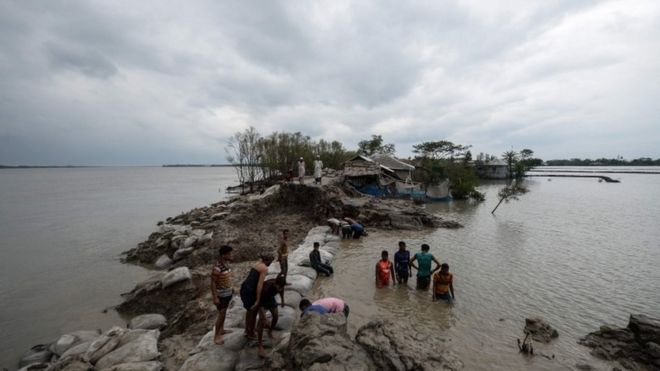 Image copyright AFP
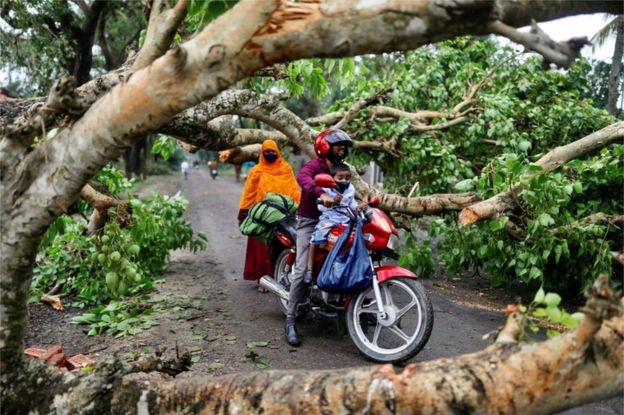 Image copyright REUTERS
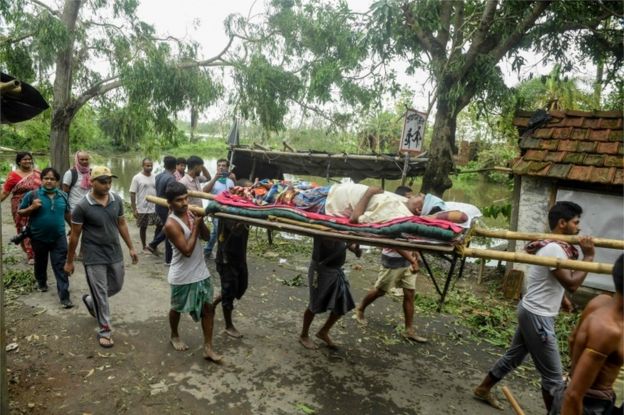 Image copyright AFP
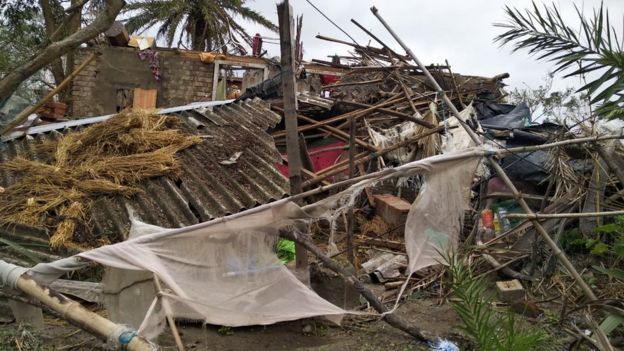 Image copyright MUKTI
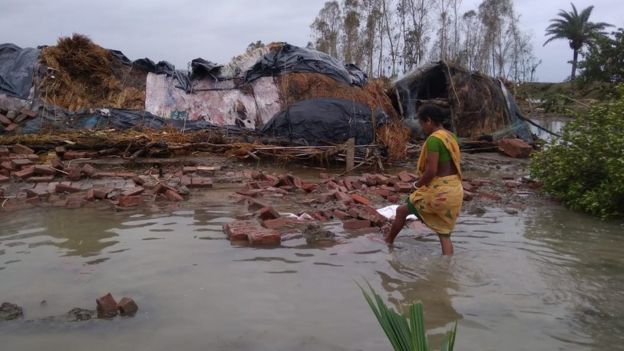 Image copyright MUKTI
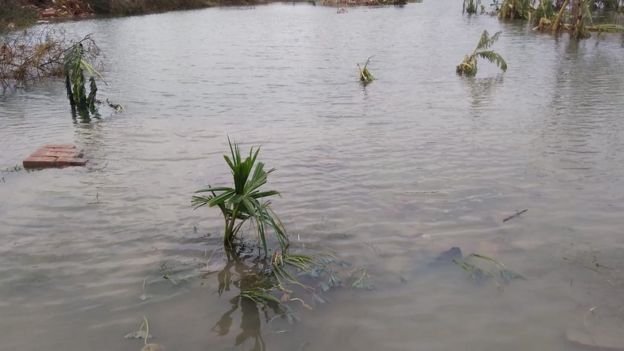 Image copyright MUKTI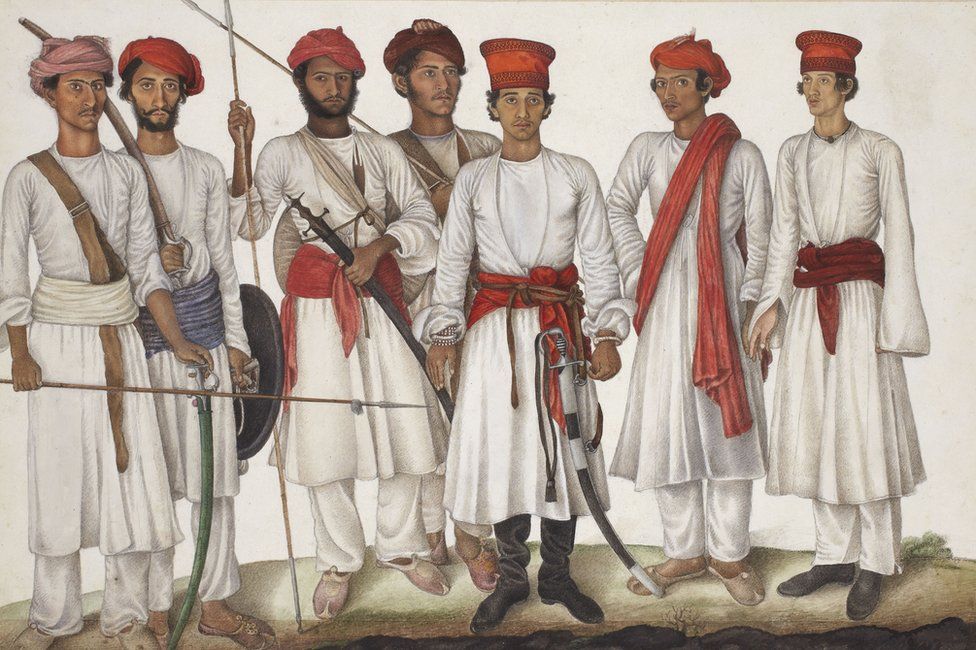






 CHINDIA ALERT: You'll be living in their world, very soon