CHINDIA ALERT: You'll be living in their world, very soon

continuously updated blog about China & India

  • Home
    • HOME: Why Chindia?
    • Chindia sources
  • Historical Perspectives
    • 4,000 years of records
    • Before the Raj
    • China’s first-half 20C Timeline
    • India’s first-half 20C Timeline
    • 70 years from Liberation
    • 70 years from Independence
  • Social & Cultural Factors
    • India’s British influence
    • China is homogeneous
    • India is diverse
    • Very different mindsets
    • Chinese mindset
    • Indian mindset
    • Chinese body, mind and spirit
    • Indian body, mind and spirit
    • Uncanny similarities
    • Major events or changes in China – Social & Cultural 2013:
    • Major events or changes in India – Social & Cultural 2013
  • Economic Factors
    • Major Chinese Economic events or changes: 2013 – 2019
    • Major Indian economic events or changes: 2013 – 2017
    • Chinese overseas acquisitions / investments
    • China needs to rebalance her economy
    • China’s infrastructure
    • ‘Greening’ of China
    • China’s manufacturing
    • India changes gear in 1991
    • India’s services
    • Consumerism blossoms
    • Information Technology
  • Political Factors
    • Major Chinese Political events or changes: 2013 – 2017
    • Major Indian Political events or changes: 2013 – 2017
    • Intrinsic uncertainty and instability – China
    • Intrinsic uncertainty and instability – India
    • Geopolitics: Chinese
    • 2014 is a year of bumper harvest for China’s diplomacy, FM says
    • Geopolitics: Indian
  • Prognosis?
    • Will China be a superpower by 2038?
    • How close will India be in 2038?
    • China’s relationship with the Rest of the World
    • Chinese challenges?
    • Indian challenges?
    • How well will China and India innovate – to 2017?
  • In Closing
    • Eight ways China is changing your world
    • Ten forces forging China’s future
    • Reimagining India: Unlocking the Potential of Asia’s Next Superpower
  • ABOUT / Contact us
  • Chindia Alert: You’ll be Living in their World Very Soon

    aims to alert you to the threats and opportunities that China and India present. China and India require serious attention; case of ‘hidden dragon and crouching tiger’.

    Without this attention, governments, businesses and, indeed, individuals may find themselves at a great disadvantage sooner rather than later.

    The POSTs (front webpages) are mainly 'cuttings' from reliable sources, updated continuously.

    The PAGEs (see Tabs, above) attempt to make the information more meaningful by putting some structure to the information we have researched and assembled since 2006.

  • Follow CHINDIA ALERT: You'll be living in their world, very soon on WordPress.com
  • If you wish to read the material on the PAGES in an eBook format; here it is

    You will be living in their world, very soon

  • If you wish to read the material on China on the PAGES in a paperback format; here it is

    Beware the Waking Dragon

  • Categories

  • Beijing China China alert Chindia Alert Chinese President Xi Jinping coronavirus corruption COVID-19 Diplomacy Economics GeoPolitics Good news History Hong Kong India alert Internal politics Japan Manufacturing Military Neighbour conflict Pakistan Politics Pollution Shanghai Social & cultural Technology Uncategorized United States Washington Wuhan
  • Since July 21, 2012 free counters
  • Blogs I Follow

    • CCChang
    • Law of Unintended Consequences
    • ChiaHou's Book Reviews
    • What's wrong with the world; and its economy

Archive for ‘Bihar’

  |  
31/05/2020

India coronavirus: Why is India reopening amid a spike in cases?

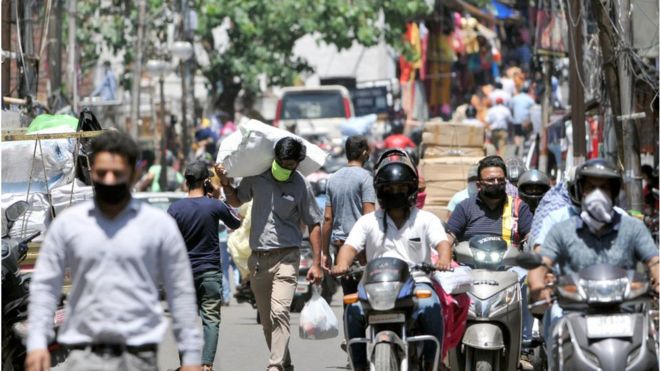
A rush of people and motorists in a marketplace area as shops start opening in the city under specific guidelines, on May 20, 2020 in Jammu, IndiaImage copyright GETTY IMAGES
Image caption Within a week of reopening, India has seen a sharp spike in cases

India is roaring – rather than inching – back to life amid a record spike in Covid-19 infections. The BBC’s Aparna Alluri finds out why.

On Saturday, India’s government announced plans to end a national lockdown that began on 25 March.

This was expected – the roads, and even the skies, have been busy for the last 10 days since restrictions started to ease for the first time in two months. Many businesses and workplaces are already open, construction has re-started, markets are crowded and parks are filling up. Soon, hotels, restaurants, malls, places of worship, schools and colleges will also reopen.

But the pandemic continues to rage. When India went into lockdown, it had reported 519 confirmed cases and 10 deaths. Now, its case tally has crossed 173,000, with 4,971 deaths. It added nearly 8,000 new cases on Saturday alone – the latest in a slew of record single-day spikes.

A worker cleans the mascot of fast-food company McDonald's for the reopening of the outlet in Hyderabad on May 20.Image copyright GETTY IMAGES
Image caption Fast food chains like McDonald’s have begun reopening outlets in parts of India.

So, why the rush to reopen?

The lockdown is simply unaffordable

“It’s certainly time to lift the lockdown,” says Gautam Menon, a professor and researcher on models of infectious diseases.

“Beyond a point, it’s hard to sustain a lockdown that has gone on for so long – economically, socially and psychologically.”

  • Will coronavirus lockdown cause food shortages in India?
  • The India migrants dying to get home
  • How India’s behemoth railways are joining the fight against Covid-19

From day one, India’s lockdown came at a huge cost, especially since so many of its people live on a daily wage or close to it. It put food supply chains at risk, cost millions their livelihood, and throttled every kind of business – from car manufacturers to high-end fashion to the corner shop selling tobacco. As the economy sputtered and unemployment rose, India’s growth forecast tumbled to a 30-year-low.

Raghuram Rajan, an economist and former central bank governor, said at the end of April that the country needed to open up quickly, and any further lockdowns would be “devastating”.

The opinion is shared by global consultant Mckinsey, whose report from earlier this month said India’s economy must be “managed alongside persistent infection risks”.
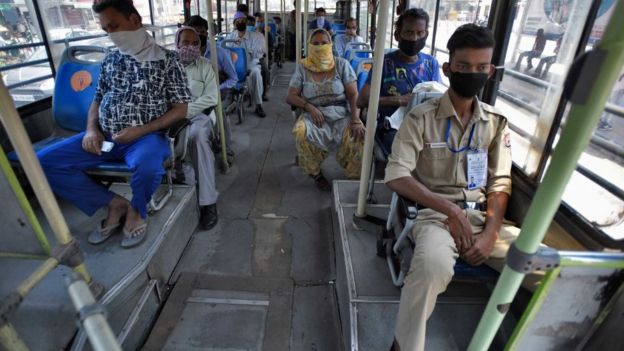
Passengers maintaining social distance as they are on board in a DTC Bus after government eased lockdown restriction, at AIIMS on May 20, 2020 in New Delhi, India.Image copyright GETTY IMAGES
Image caption As restrictions ease, Indians are slowly getting used to the new normal

“The original purpose of the lockdowns was to delay the spike so we can put health services and systems in place, so we are able handle the spike [when it comes],” says Dr N Devadasan, a public health expert. “That objective, to a large extent, has been met.”

In the last two months, India has turned stadia, schools and even train coaches into quarantine centres, added and expanded Covid-19 wards in hospitals, and ramped up testing as well as production of protective gear. While grave challenges remain and shortages persist, the consensus seems to be that the government has bought as much time as possible.

“We have used the lockdown period to prepare ourselves… Now is the time to revive the economy,” Delhi Chief Minister Arvind Kejriwal said last week.

The silver lining

For weeks, India’s relatively low Covid-19 numbers baffled experts everywhere. Despite the dense population, disease burden and underfunded public hospitals, there was no deluge of infections or fatalities. Low testing rates explain the former, but not the latter.

In fact, India made global headlines not for its caseload but for its botched handling of the lockdown – millions of informal workers, largely migrants, were left jobless overnight. Scared and unsure, many tried to return home, often desperate enough to walk, cycle or hitchhike across hundreds of kilometres.

Perhaps the choice – between a virus that didn’t appear to be wreaking havoc yet, and a lockdown that certainly was – seemed obvious to the government.

But that is changing quickly as cases shoot up. “I suspect we will keep finding more and more cases, but they will mostly be asymptomatic or will have mild symptoms,” Dr Devadasan says.

The hope – which is also encouraging the government to reopen – is that most of India’s undetected infections are not severe enough to require hospitalisation. And so far, except in Mumbai city, there has been no dearth of hospital beds.

India’s Covid-19 data is spotty and sparse, but what it does have suggests that it hasn’t been as badly hit by the virus as some other countries.

The government, for instance, has been touting India’s mortality rate as a silver lining – at nearly 3%, it’s among the lowest in the world.

But some are unconvinced by that. Dr Jacob John, a prominent virologist, says India has never had, and still doesn’t have, a robust system for recording deaths – in his view, the government is certainly missing Covid-19 deaths because they have no way of knowing of every fatality.
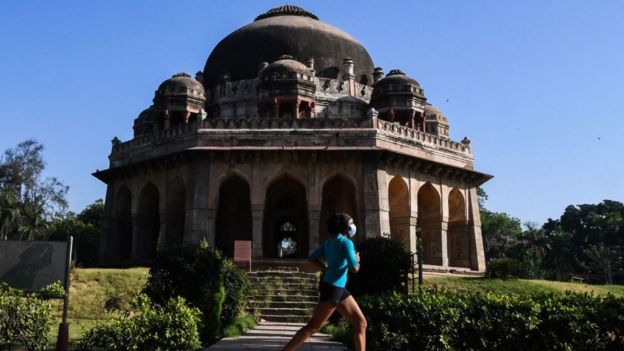
A woman jogs at Lodhi Garden after the local government eased restrictions imposed as a preventive measure against the spread of the COVID-19 coronavirus in New Delhi on May 21, 2020.Image copyright GETTY IMAGES
Image caption Indians are venturing out again but it’s unclear how many of them are asymptomatic.

And, he says, “what we must aim for is flattening the mortality curve, not necessarily the epidemic curve”.

Dr John, like several other experts, also predicts a peak in July or August, and believes the country is reopening so quickly because the “government realised the futility of such leaky lockdowns”.

A shift in strategy

So is the government gearing up for another lockdown when the peak comes?

While Dr Menon believes the lockdown was well-timed, he says it was too focused on cases coming from abroad.

“There was a hope that by controlling that, we could prevent epidemic spread, but how effective was our screening [at airports]?”

Now, he adds, is the time for “localised lockdowns”.
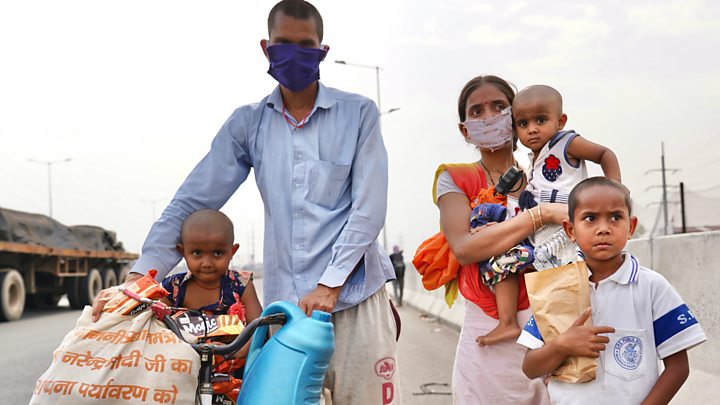
Media caption Coronavirus: Death and despair for migrants on Indian roads

The federal government has left it to states to decide where, how and to what extent to lift the lockdown as the virus’ progression varies wildly across India.

Maharashtra alone accounts for more than a third of India’s active cases. Add Tamil Nadu, Gujarat and Delhi, and that makes up 67% of the national total.

But other states – such as Bihar – are already seeing a sharp uptick as migrant workers return home.

“Initially, most of your cases were in the cities,” Dr Devadasan says. “But we kept the migrant workers in cities and didn’t allow them to go home. Now, we are sending them back. We have facilitated transporting the virus from urban areas to rural areas.”

While the government has said how many infections have been avoided – up to 300,000 – and lives saved – up to 71,000 – by the lockdown, there is no indication of what lies ahead.

There is only advice: The day the government began to ease restrictions, Mr Kejriwal tweeted, urging people to “follow discipline and control the coronavirus disease” as it was their “responsibility”.
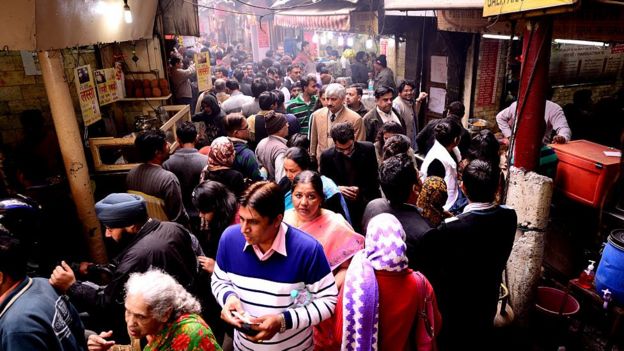
The famous Paranthe wali gali (bylane of fried bread) in Chandni Chowk, on August 20, 2014 in New Delhi, India.Image copyright GETTY IMAGES
Image caption Social distancing will prove to be India’s biggest post-lockdown challenge

Because the alternative – of curfews and constant policing – is unsustainable.

“My worry is more the circumstances of people – it’s not as though they have an option to practise social distancing,” Dr Menon says.

And they don’t – not in joint family homes or one-room hovels packed together in slums, not in crowded markets or busy streets where jostling is second nature, or in temples, mosques, weddings or religious processions where more is always merrier.

The overwhelming message is that the virus is here to stay, and we have to learn to live with it – and the only way to do that, it appears, is to let people live with it.

Source: The BBC
Posted in airports, amid, announced, Arvind Kejriwal, at risk, back to life, Bihar, businesses, busy streets, car manufacturers, cases, central bank governor, challenges, Chief Minister, choice, colleges, confirmed cases, consensus, Construction, corner shop, coronavirus, Covid-19 infections, Covid-19 wards, crowded, crowded markets, cycle, daily wage, dearth, deaths, decide, delay, Delhi, desperate, devastating, economically, economist, economy, expected, expert, fast-food chains, federal government, filling up, first time, food supply chains, global consultant, global headlines, Government, growth forecast, Gujarat, health services, high-end fashion, hitchhike, hospitalisation, hospitals, hotels, how, hundreds, inching, India, India's, infectious diseases, informal workers, jobless, joint family homes, jostling, kilometres, large extent, livelihood, lockdown, Maharashtra, malls, markets, McDonald's, McKinsey, migrants, millions, months, more is always merrier, mosques, mumbai, national lockdown, national total, objective, one-room hovels, open, opinion, original purpose, outlets, overnight, overwhelming message, packed together, pandemic, parks, plans, production, protective gear, psychologically, Public health, quarantine centres, rage, ramped up, re-started, record, religious processions, reopen, reopening, restaurants, restrictions, return home, roads, roaring, robust system, rose, Scared, schools, second nature, selling, shared, shortages, silver lining, skies, slums, Social distancing, socially, spike, sputtered, stadia, states, strategy, Tamil Nadu, temples, testing, throttled, to ease, Tobacco, train coaches, tumbled, unaffordable, Uncategorized, unemployment, unsure, virologist, Virus, walk, Weddings, where, workplaces | Leave a Comment »

30/09/2019

Floods kill 113 in north India in late monsoon burst, jail, hospital submerged

LUCKNOW, India (Reuters) – Heavy rains have killed at least 113 people in India’s Uttar Pradesh and Bihar states over the past three days, officials said on Monday, as flood waters swamped a major city, inundated hospital wards and forced the evacuation of inmates from a jail.

India’s monsoon season that begins in June usually starts to retreat by early September, but heavy rains have continued across parts of the country this year, triggering floods.

An official said that at least 93 people had died in most populous Uttar Pradesh since Friday after its eastern areas were lashed by intense monsoon showers.

Rising water levels forced authorities to shift 900 inmates from a prison in eastern Ballia district, police officer Santosh Verma said.

In neighbouring Bihar, an impoverished agrarian region that was hit by floods earlier this year, the death toll from the latest bout of rain had reached 20 on Monday, a state government official said.

Bihar’s capital city of Patna, home to around 2 million, has been badly hit, with waist-deep flood waters across many streets, and entering homes, shops, and even the wards of a major hospital. In some parts, authorities deployed boats to rescue residents.

“The rains have stopped but there is waterlogging in many areas,” Bihar’s Additional Secretary in the Disaster Relief Department Amod Kumar Sharan said.

In its bulletin on Monday, India’s Meteorological Department said the intensity of rainfall over Bihar was very likely to reduce. Showers in Uttar Pradesh are also expected to abate this week.

Weather department officials said this month that monsoon rains were likely to be above average for the first time in six years. [nL3N26B1MD]

Source: Reuters

Posted in Bihar, Bihar state, Disaster Relief Department, evacuation, flood waters, floods, Heavy rains, Hospital, hospital wards, India Meteorological Department, inundated, jail, kill, late monsoon burst, Lucknow, major city, Meteorological Department, monsoon season, North India, Patna, submerged, swamped, Uncategorized, Uttar Pradesh | Leave a Comment »

21/07/2019

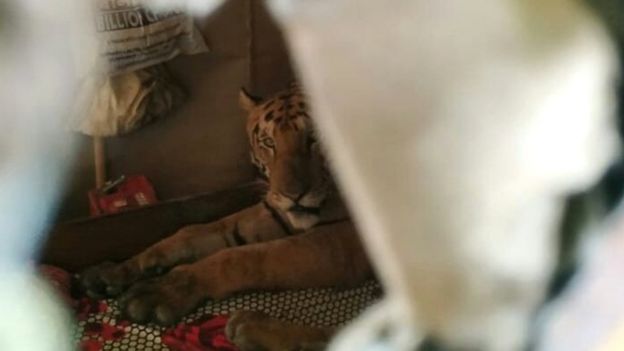
India floods: Tired tiger takes nap in resident’s bed

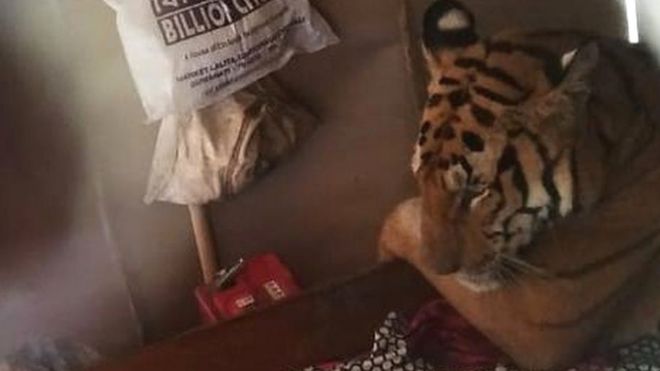
A tiger lying on a bed in Assam stateImage copyright WTI
Image caption The tiger was seen relaxing in a bed in Assam state

A female tiger which fled a wildlife park in India’s flood-ravaged state of Assam was found relaxing on a bed inside a local resident’s house.

She is believed to have fled the Kaziranga National Park, where 92 animals have died in recent days amid heavy flooding.

Officials from a wildlife conservation group arrived at the house and created a safe escape route for her.

She was guided in the direction of the jungle.

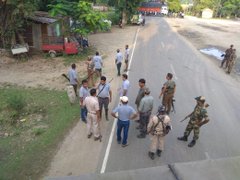
According to the Wildlife Trust of India (WTI), the tigress was first spotted next to a highway on Thursday morning, some 200 metres away from the national park.

She was likely to have been disturbed by the busy road and ended up seeking refuge in the house, which is located near the highway, it said.

Tiger in residence's houseImage copyright WTI
Image caption The house owner fled as soon as he saw the tiger

Rathin Barman, who led the rescue operation, said the tigress entered the house – which is next to a shop – at 07:30 local time (02:00 GMT) and slept throughout the day.

“She was very exhausted and had a nice day-long nap,” he told the BBC.

The house owner, Motilal, who also owns the adjoining shop, fled the house along with his family members as soon as they saw the tiger walking in.

“The great thing was that nobody disturbed her so she could rest. There’s a lot of respect for wildlife in this region,” Mr Barman said.

“[Motilal] says he will preserve the bed sheet and pillow on which the tiger rested.”

WTI officials were later called to the scene and began preparing a safe escape route for her.

Skip Twitter post by @wti_org_india

Wildlife Trust India@wti_org_india
Replying to @wti_org_india

As the sun goes down, our team with @kaziranga_ prepares to block the highway and clear the area to provide a safe passage to the tiger. Fingers crossed! #AssamFloods #Kaziranga @vivek4wild @action4ifaw

View image on TwitterView image on TwitterView image on Twitter

329

1:03 PM – Jul 18, 2019
Twitter Ads info and privacy

They blocked traffic on the highway for an hour and set off firecrackers to wake the animal up. She eventually left the house at 17:30 local time, crossed the highway and went in the direction of the forest.

Media caption Floods cause death and destruction in north India

Mr Barman said it was not clear if she had actually entered the forest or if she had just “walked off into an adjoining area”.

The Unesco-recognised Kaziranga National Park is home to 110 tigers, but none of them have died in the flooding.

Animals killed in the park include 54 hog deer, seven rhinos, six wild boars and one elephant.

  • Floods kill dozens and displace millions in India
  • The river politics behind South Asia’s floods
  • Is India’s weather becoming more extreme?

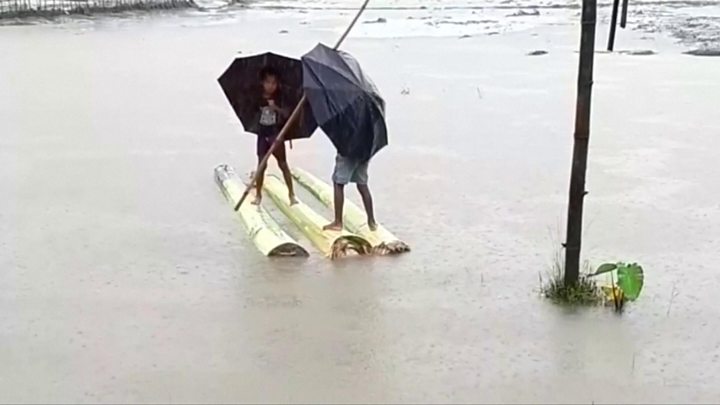
Monsoon floods have devastated the eastern states of Bihar and Assam, killing more than 100 people and displacing millions.

The monsoon season, which lasts from June to September, has also wreaked havoc in Nepal and Bangladesh.

Source: The BBC

Posted in Assam, Bangladesh, Bihar, firecrackers, Forest, havoc, Highway, India floods, June, Kaziranga National Park, monsoon, Nepal, resident's bed, September, takes nap, tigress, Tired tiger, traffic, Uncategorized, UNESCO, Wildlife Trust of India (WTI) | Leave a Comment »

28/06/2019

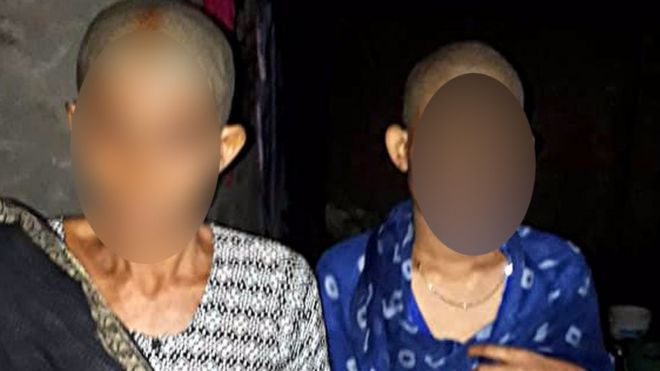
India arrests after women’s heads shaved for resisting rape

The two women had their heads forcibly shavedImage copyright ANI

Two people have been arrested in India’s Bihar state after a group of men shaved the heads of two women as “punishment” for resisting rape.

The group, which included a local official, ambushed the mother and daughter in their home with the intent of raping them, police said.

When the women resisted, they assaulted them, shaved their heads and paraded them through the village.

Police say they are searching for five others involved in the incident.

“We were beaten with sticks very badly. I have injuries all over my body and my daughter also has some injuries,” the mother told the ANI news agency.

The women also said that their heads were shaved in front of the entire village.

“Some men entered the victims’ home and tried to molest the daughter,” a police officer told local media, adding that her mother helped her fight off the men.

  • India woman en route to police set on fire by ‘molesters’
  • Why India’s rape crisis shows no signs of abating

The state’s women commission has also condemned the incident, saying that “further action” will be taken.

This is not the first time such an incident has occurred in the state.

In April, a teenage girl was attacked with acid for resisting an attempted gang rape.

Public outrage over sexual violence in India rose dramatically after the 2012 gang rape and murder of a student on a Delhi bus.

The issue became a political flashpoint again in 2018, after a string of high-profile attacks against children.

However incidents of rape and violence against women continue to be reported from across the country.

Source: The BBC

Posted in Arrests, Bihar, India alert, punishment, resisting rape, Uncategorized, women's heads | Leave a Comment »

12/03/2019

Two dead after Chinese navy plane crashes

  • No other injuries reported following accident on southern island of Hainan
  • Military is currently intensifying training for pilots as it looks to strengthen capabilities

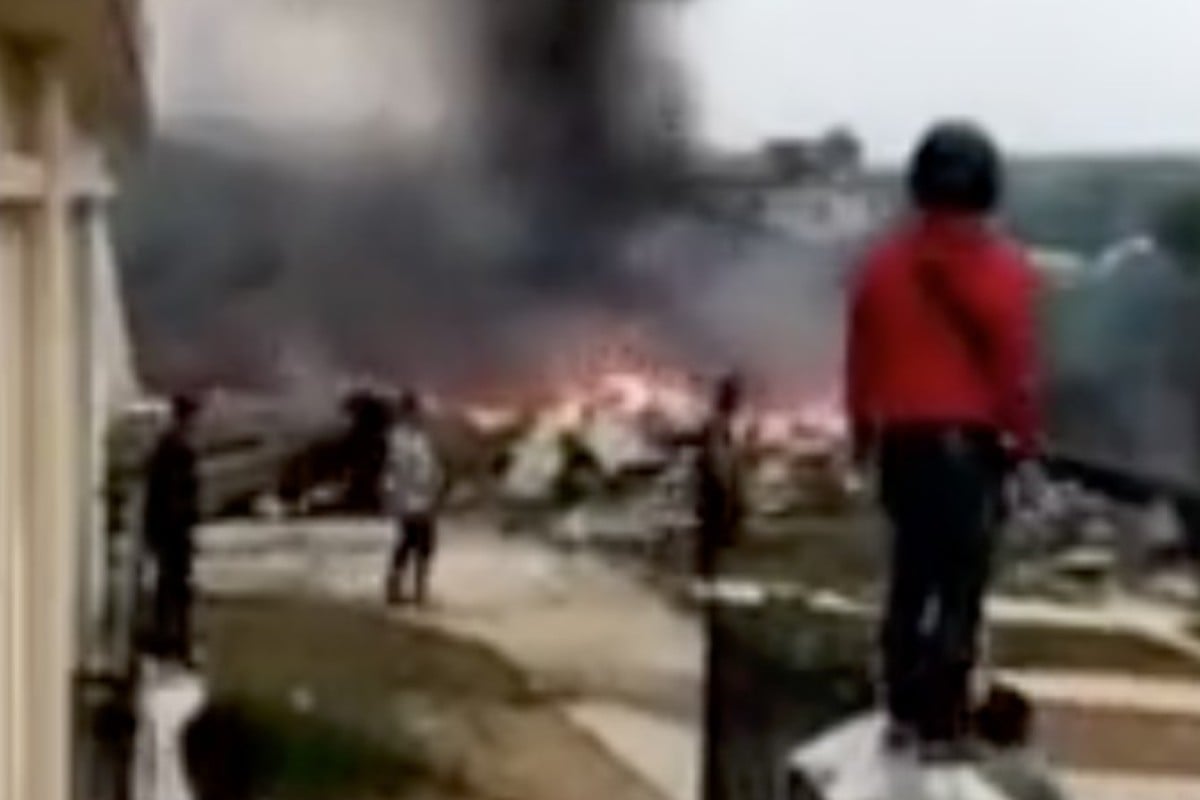
Mobile phone footage believed to be taken from the crash site. Photo: Handout
A Chinese navy plane crashed in Hainan province on Tuesday killing two crew members, the military said.
A short statement said the crash happened during a training exercise over rural Ledong county in the southern island province.
No one else was reported to have been injured after the plane hit the ground and the cause of the incident is being investigated.
Footage that purported to be taken from the crash site started circulating on social media after the accident.
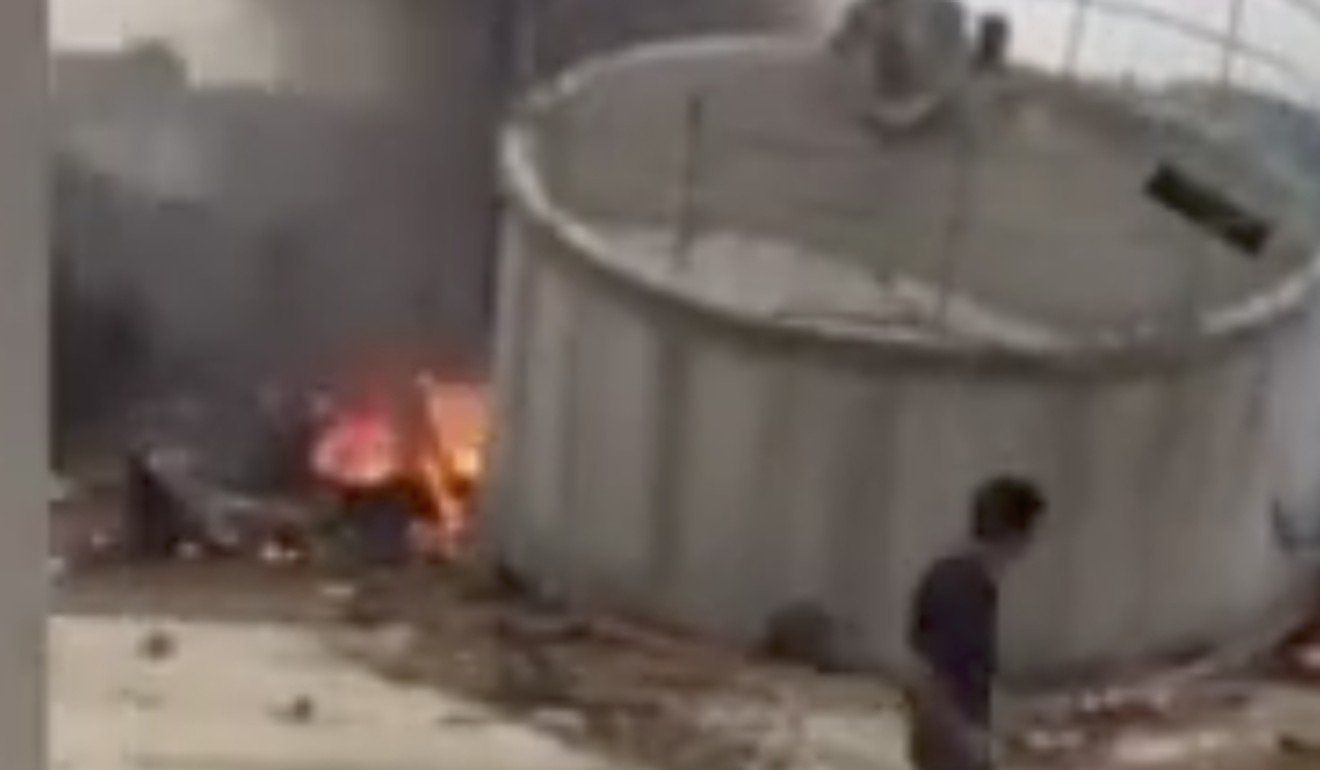
The mobile phone footage, which news portal 163.com said was taken in Hainan, showed smoke rising from piles of wreckage next to a damaged water tower as bystanders gathered at the site.
Footage apparently taken at the crash site. Photo: Handout
The person who uploaded the footage said the plane had hit the water tower before crashing into the ground.

The PLA’s official statement did not specify the type plane that crashed, although unverified witness account online said it was a twin-seat Xian JH-7 “Flying Leopard”.

The JH-7, which entered service with the navy and air force in the 1990s, has been involved in a number of fatal accidents over the years.

Former Chinese navy sailor looks after parents of friend who ‘died a hero’

The country’s worst military air accident in recent years happened in January 2018. At least 12 crew members died when a PLA Air Force plane, believed to be an electronic reconnaissance aircraft, crashed in Guizhou in the southwest of the country.

Between 2016 and 2017, there were at least four accidents involving the navy’s J-15 “Flying Sharks”, one of them resulting in the death of the pilot.

Military commentators have previously said that China’s drive to improve its combat readiness, which includes the building of new aircraft carriers and warplanes, has resulted in a serious shortage of qualified pilots.

To fill the vacancies the Chinese military has started a major recruitment drive and intensive training programme for pilot pilots.

One unverified report said the plane that crashed was a JH-7 “Flying Leopard”. Photo. Xinhua

Currently China has one aircraft carrier, the Liaoning, in service, which can carry a maximum of 24 J-15s as well as other aircraft.

Meanwhile, the new home-grown carrier Type 001A will soon be commissioned, which is designed to accommodate to carry eight more fighters.

In addition, construction is believed to have started on another carrier that will be able to carry heavier and more advanced warplanes.

Chinese navy veteran warns training, not hardware is key to military preparedness
According to figures from the end of 2016, there were only 25 pilots qualified to fly the J-15 while 12 others were in training.
Most of the Chinese navy’s pilots have been redeployed from the air force, which is itself in need of more trained pilots.
This year the navy for the first time began a nation-wide programme to scout out potential pilots.
Speaking on the sidelines of the ongoing legislative meeting in Beijing Feng Wei, a PLA pilot from the Western Theatre, said the military was currently intensifying its pilots’ training as increasing amounts of new equipment entered service.
“Personnel quality is the key to everything,” he added.
Source: SCMP

Posted in Aam Aadmi Party (AAP), Andaman & Nicobar, Andhra Pradesh, Ankur Jain, Arunachal Pradesh, Arvind Kejriwal, Assam, Bahujan Samaj Party (BSP), BBC Gujarati's editor, Bharatiya Janata Party (BJP), Bihar, Chandigarh, Chhattisgarh, China alert, Chinese navy plane, Congress, crashes, Dadar and Nagar, Dalit, Daman and Diu, Delhi, DMK and AIADMK, Electronic Voting Machines (EVMs), Feng Wei, Flying Leopard, Flying Sharks, Gandhi, Guizhou, Gujarat, Hainan, Hardik Patel, Haryana, Haveli, Himachal Pradesh, India alert, Jammu & Kashmir, Karnataka, Kerala, Lakshadweep, Lalu Prasad Yadav, Ledong county, Lok Sabha election, Madhya Pradesh, Mahagathbandhan, Maharashtra, Mayawati, Meghalaya, Mizoram, Nagaland, Narendra Modi, Nationalist Congress Party, Odisha, Patidar caste, PLA, PLA Air Force, Prime Minister Modi, Prime Minister Narendra Modi, Priyanka Gandhi,, Puducherry, Punjab, rahul gandhi, Rajasthan, Rashtriya Janata Dal (RJD), Samajwadi Party (SP), Sharad Pawar, Sikkim, social activist, Tamil Nadu, Telangana, The BBC, Trinamool Congress, Tripura, TRS, Uncategorized, Uttar Pradesh, Uttarakhand, West Bengal, Xian JH-7 | Leave a Comment »

07/03/2019

Days after Pulwama, 1 killed, 29 injured in grenade blast inside bus in Jammu

The incident comes less than a month after over 44 CRPF personnel were killed and many injured on February 14 in Jammu and Kashmir’s Pulwama.

SNS Web | New Delhi | March 7, 2019 12:47 pm

Security personnel carry out investigation at the site where a blast took place after a grenade attack by militants at the busy main bus terminus in Jammu and Kashmir, on March 7, 2019. (Photo: IANS)

One person was killed and 29, including a woman injured in a blast after a grenade was tossed at a bus in the general bus stand in the heart of Jammu on Thursday. The condition of five injured is said to be serious.
The killed youth has been identified as a 17-year-old Mohammad Sharik of Haridwar in Uttrakhand.
Minister of State for Defence Subhash Bhamre said a local investigation has been initiated into the incident. He further said the government has given complete liberty to the forces to take all necessary steps.
The Jammu and Kashmir Police has been rushed to the site of the blast.
The Chinese grenade exploded in the bus at about 12 noon. The driver and conductor were among the injured rushed to the Government Medical College, Jammu. The injured include passengers belonging to Bihar, Punjab, Haryana, Uttrakhand, Jammu and the Kashmir valley.
Visuals from the blast site showed the damaged bus of the J&K Road Transport Corporation (JKSRTC) in which the grenade exploded.
The area has been cordoned off by the security personnel. Nature and the cause is being ascertained, police said.
Fifteen suspects have been rounded up for interrogation.
The grenade attack has coincided with the shifting of detained separatist Yasin Malik to the Jammu’s Kot-Bhalwal jail.
Police suspected the JeM outfit behind the attack. Some radicals had threatened of revenge during the recent communal tension here when about six cars were burnt.
K Vijay Kumar and KK Sharma,  both advisors to the Governor, visited the spot to take stock of the situation. The divisional commissioner, deputy commissioner and senior police and civil officers also visited the spot.
This is the third grenade attack in the bus stand during the past few months.
The blast comes at a time when Jammu and Kashmir is on a high alert following the heightened tensions between India and Pakistan in the wake of the Pulwama terror attack.
Former chief minister Mehbooba Mufti condemned the incident and called for unity to defeat terror elements in the state.
“I condemn this act of terror in the strongest possible terms. My prayers for speedy recovery of those injured. The perpetrators are out there to inflict pain and divide us. Our unity has to be our tool to defeat them,” Mufti tweeted.
The provincial president of National Conference, Devender Rana, visited the hospital to inquire about the wellbeing of injured persons.
The incident comes less than a month after over 44 CRPF personnel were killed and many injured on February 14 in one of the deadliest terror strikes in Jammu-Kashmir when a Jaish-e-Mohammad (JeM) suicide bomber blew up an explosive-laden vehicle near their bus in Pulwama district.
The bus was part of a convoy of 78 vehicles carrying around 2500 CRPF personnel from Jammu to Srinagar.
Read More
Source; The Statesman

Posted in advisors to the Governor, Bihar, Chief Minister, CRPF, deputy commissioner, Devender Rana, divisional commissioner, explosive-laden vehicle, Government Medical College, grenade blast, Haridwar, Haryana, Hospital, India alert, injured, inside bus, investigation, J&K Road Transport Corporation (JKSRTC), Jaish-e-Mohammad (JeM), Jammu, Jammu and Kashmir, Jammu and Kashmir Police, JeM, K Vijay Kumar, killed, KK Sharma, Kot-Bhalwal jail, main bus terminus, Mehbooba Mufti, Minister of State for Defence, Mohammad Sharik, national conference, Pakistan, provincial president, Pulwama, Punjab, radicals, revenge, security personnel, senior police and civil officers, Srinagar, Subhash Bhamre, suicide bomber, Uncategorized, Uttarkhand, Uttrakhand | Leave a Comment »

13/02/2019

‘Sit in one corner’: India’s Supreme Court tells former top police officer

NEW DELHI (Reuters) – In a putdown rare even for India’s sometimes dramatic court proceedings, the country’s Supreme Court told the former chief of federal police on Tuesday to “sit in one corner” and fined him 100,000 rupees for disobeying the court.

M Nageswara Rao, former chief of the Central Bureau of Investigation (CBI), was given the instruction after being found guilty of violating an earlier order that mandated seeking court permission before taking an investigating officer off a case.

“Please go and sit in one corner till the rising of the court. Fine to be deposited in one week,” Ranjan Gogoi, the court’s chief justice, told him after the court found him guilty of contempt of court.

Rao proceeded to sit in a corner and appeared to be avoiding eye contact with anyone, a Reuters witness said.


Bizarre orders and courtroom drama are fairly common in Indian courts, but lawyers and court officials said such a direction towards a senior CBI official in the Supreme Court was unprecedented.

Rao, now an additional director in the CBI, had ordered the transfer of a CBI officer investigating a sexual exploitation case at a shelter home in the eastern state of Bihar.

Source: Reuters

Posted in Bihar, CBI, Central Bureau of Investigation, chief of federal police, disobeying, India alert, M Nageswara Rao, Police officer, sexual exploitation, shelter home, sit in one corner, Supreme Court, Uncategorized | Leave a Comment »

  |  

Tags

air pollution Asia Barack Obama Beijing Bharatiya Janata Party Business China Chinese language climate Communist Party communist party of china Delhi Economic growth economy Economy of the People's Republic of China environment European Union Government Gross domestic product Hong Kong Hu Jintao India Japan Li Keqiang manmohan singh Mao Zedong Modi mumbai Narendra Modi New Delhi Pakistan politics President of the People's Republic of China prime minister of india Russia Shanghai Sina Weibo South China Sea South Korea State Council of the People's Republic of China technology transportation United States Xi JinPing Xinjiang

Creative Commons

Chindia Alert: forewarned is forearmed by Chindia Alert Unlimited is licensed under a Creative Commons Attribution-NonCommercial-ShareAlike 3.0 Unported License.

Archives

  • October 2023
  • June 2022
  • May 2022
  • April 2022
  • March 2022
  • June 2021
  • September 2020
  • August 2020
  • July 2020
  • June 2020
  • May 2020
  • April 2020
  • March 2020
  • February 2020
  • January 2020
  • December 2019
  • November 2019
  • October 2019
  • September 2019
  • August 2019
  • July 2019
  • June 2019
  • May 2019
  • April 2019
  • March 2019
  • February 2019
  • January 2019
  • December 2018
  • February 2018
  • January 2018
  • December 2017
  • November 2017
  • October 2017
  • September 2017
  • August 2017
  • July 2017
  • June 2017
  • May 2017
  • April 2017
  • March 2017
  • February 2017
  • January 2017
  • December 2016
  • November 2016
  • October 2016
  • September 2016
  • August 2016
  • July 2016
  • June 2016
  • May 2016
  • April 2016
  • March 2016
  • February 2016
  • January 2016
  • December 2015
  • November 2015
  • October 2015
  • September 2015
  • August 2015
  • July 2015
  • June 2015
  • May 2015
  • April 2015
  • March 2015
  • February 2015
  • January 2015
  • December 2014
  • November 2014
  • October 2014
  • September 2014
  • August 2014
  • July 2014
  • June 2014
  • May 2014
  • April 2014
  • March 2014
  • February 2014
  • January 2014
  • December 2013
  • November 2013
  • October 2013
  • September 2013
  • August 2013
  • July 2013
  • June 2013
  • May 2013
  • April 2013
  • March 2013
  • February 2013
  • January 2013
  • December 2012
  • November 2012
  • October 2012
  • September 2012
  • August 2012
  • July 2012
  • June 2012
  • May 2012
  • April 2012
  • March 2012
  • February 2012
  • January 2012

Meta

  • Create account
  • Log in
  • Entries feed
  • Comments feed
  • WordPress.com

Blog Stats

  • 240,352 hits
Create a free website or blog at WordPress.com.
CCChang

Law of Unintended Consequences

continuously updated blog about China & India

ChiaHou's Book Reviews

continuously updated blog about China & India

What's wrong with the world; and its economy

continuously updated blog about China & India

Privacy & Cookies: This site uses cookies. By continuing to use this website, you agree to their use.
To find out more, including how to control cookies, see here: Cookie Policy
  • Subscribe Subscribed
    • CHINDIA ALERT: You'll be living in their world, very soon
    • Join 846 other subscribers
    • Already have a WordPress.com account? Log in now.
    • CHINDIA ALERT: You'll be living in their world, very soon
    • Subscribe Subscribed
    • Sign up
    • Log in
    • Report this content
    • View site in Reader
    • Manage subscriptions
    • Collapse this bar