21/07/2019
- Islam was forced on ethnic group ‘by religious wars and the ruling class’, Beijing says in latest report defending its actions in far western region
- Uygurs’ ancestors were enslaved by the Turks, document says
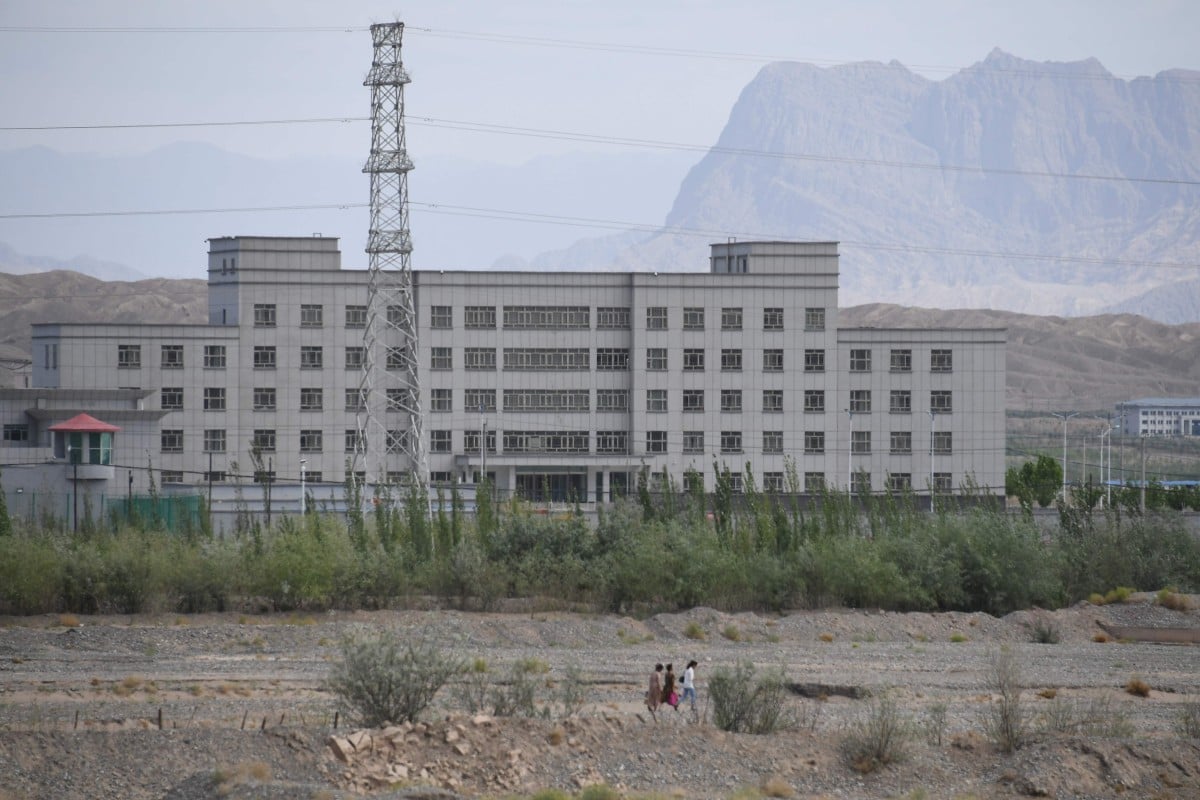
Beijing has issued a white paper seemingly designed to defend its actions in Xinjiang where as least 1 million Uygurs are being held in detention centres. Photo: AFP
Uygurs became Muslims not by choice but by force, and Islam is not their only religion, Beijing said in a white paper published on Sunday, as it continued its propaganda campaign to justify its controversial policies in the far western province of
.
“The Uygur people adopted Islam not of their own volition … but had it forced upon them by religious wars and the ruling class,” according to the document released by the State Council Information Office.
Islamic beliefs were forced on the Uygurs during the expansion of Arabic states. This is a historical fact, the report said, though that did not undermine the Uygurs’ religious rights now.
The report said also that there are Uygurs who hold to faiths other than Islam, and others who do not practise any religion at all.
The paper also took aim at the Uygurs’s historic links with Turkey.
“Historically, the Uygurs’ ancestors were enslaved by the Turks,” it said, citing a history of conflicts between the two groups dating back to the 8th century.
China promotes Xinjiang as tourist idyll
The white paper was issued amid a campaign by Beijing to justify its policies in the restive region, which is home to more than 10 million Uygurs, most whom are Muslim.
Earlier this month, the ambassadors of 22 countries signed a letter calling on Beijing to halt its mass detention of Uygurs in Xinjiang, the first such joint move on the issue at the UN Human Rights Council.
The signatories included envoys from Britain, France, Germany, Australia, Canada, Japan and Switzerland. The United States, which quit the forum a year ago, did not sign the letter.
China responded by issuing a letter signed by the ambassadors of 37 countries, including several Muslim majority states like Saudi Arabia and Pakistan, backing its policies in the region.
Beijing said the show of support was “a powerful response to the groundless accusations made against China by a small number of Western countries”.
UN experts and activists say at least 1 million Uygurs and other Muslims are currently being held in detention centres in Xinjiang. China describes the facilities as training and education centres that aim to stamp out religious extremism and provide people with useful skills. It has never said how many people are being detained in them.
The United States has repeatedly criticised Beijing over its policies in Xinjiang.
On Wednesday, US President Donald Trump met victims of religious persecution from around the world, including Jewher Ilham, a Uygur woman whose father Ilham Tohti was sentenced to life imprisonment in 2014 after being found guilty of promoting separatism.
“That’s tough stuff,” Trump said after hearing Ilham’s account of her father’s ordeal.
China describes the detention camps in Xinjiang as training and education centres. Photo: AFP
In January, US lawmakers nominated the imprisoned economist, writer and former professor at Minzu University in Beijing, for the 2019
Nobel Peace Prize in a bid to pressure China to stop its crackdown on the minority group.
Sunday’s white paper is the latest in a string of similar documents published recently by Beijing as it seeks to defend the legitimacy of its policies in Xinjiang. In a document issued in March, it said that over the past five years it had arrested nearly 13,000 “terrorists” in the region.
Xinjiang camps defended at UN human rights forum
Neither the March report nor Sunday’s white paper mentioned Beijing’s other controversial policies in the region, such as the collection of DNA samples and extensive surveillance on local people.
“Xinjiang has borrowed from international experiences, combined them with local realities, and taken resolute measures against terrorism and extremism,” it said.
The measures have been effective, it said, though did not elaborate.
Over the past year, China has increased its efforts to defend the camps, including organising strictly controlled visits by selected diplomats and journalists to see the people who live in them.
State media has also released videos showing seemingly happy and healthy people inside the camps in a bid to counter accounts of harsh conditions and abuse published by the Western media.
Source: SCMP
Posted in Arabic states, Australia, Beijing, Britain, canada, ethnic groups, forum, France, Germany, islam, Japan, Minzu University, Muslims, Nobel Peace Prize, Pakistan, Saudi Arabia, State Council Information Office, Switzerland, Turkey, Turks, UN human rights forum, Uncategorized, United States, US President Donald Trump, Uygurs, Xinjiang |
Leave a Comment »
04/07/2019
BEIJING/LONDON (Reuters) – China told Britain to keep its hands off Hong Kong on Wednesday while London called for Beijing to honour the agreements made when the city was handed over in 1997, escalating a diplomatic spat over the former British colony.
Beijing denounced British Foreign Secretary Jeremy Hunt as “shameless” and said it had made a diplomatic complaint to London after he warned of consequences if China neglected its commitments to guarantee basic freedoms.
“In the minds of some people, they regard Hong Kong as still under British rule. They forget … that Hong Kong has now returned to the embrace of the Motherland,” China’s ambassador to London, Liu Xiaoming, said.
“I tell them: hands off Hong Kong and show respect. This colonial mindset is still haunting the minds of some officials or politicians,” Liu told reporters.
The growing war of words between China and Britain follows mass protests in Hong Kong against a now suspended bill that would allow extradition to mainland China.
Hundreds of protesters in the former British colony besieged and broke into the legislature on Monday after a demonstration marking the anniversary of return to Chinese rule.
China called the violence an “undisguised challenge” to the “one country, two systems” model under which Hong Kong has been ruled for 22 years.
On Tuesday, Hunt warned of consequences if China did not abide by the Sino-British Joint Declaration in 1984 on the terms of the return of Hong Kong, which allows freedoms not enjoyed in mainland China, including the right to protest.
“We can make it clear we stand behind the people of Hong Kong in defence of the freedoms that we negotiated for them when we agreed to the handover in 1997 and we can remind everyone that we expect all countries to honour their international obligations,” Hunt told Reuters.
Hunt is one of two contenders vying to replace Theresa May as British prime minister and his rival Boris Johnson told Reuters on Wednesday that he also backed the people of Hong Kong “every inch of the way”.
The comments clearly irked Beijing. China’s London envoy scolded Britain and said meddling in Hong Kong would cause a “problem in the relationship” between them.
“The UK government chose to stand on the wrong side: it has made inappropriate remarks not only to interfere in internal affairs of Hong Kong but also to back up the violent law-breakers,” Liu said.
‘SHAMELESS’
Earlier, Foreign Ministry spokesman Geng Shuang chided Hunt, saying that only after Hong Kong’s return to China did its people get an “unprecedented” guarantee about democracy and freedom.
“To say that the freedoms of Hong Kong residents is something Britain strived for is simply shameless,” he told a news briefing. “I would like to ask Mr. Hunt, during the British colonial era in Hong Kong, was there any democracy to speak of? Hong Kongers didn’t even have the right to protest.”
China had lodged “stern representations” with Britain both in Beijing and London about Hunt’s remarks, he added.
Britain said it had summoned Liu to the foreign office following his “unacceptable” comments, a government source said.
“Message to Chinese govt: good relations between countries are based on mutual respect and honouring the legally binding agreements between them,” Hunt said on Twitter after Liu’s media briefing.
“That is the best way to preserve the great relationship between the UK and China.”
RESETTING TIES
The turbulence in Hong Kong was triggered by an extradition bill opponents say will undermine Hong Kong’s much-cherished rule of law and give Beijing powers to prosecute activists in mainland courts, which are controlled by the Communist Party.
Hong Kong’s Beijing-backed leader Carrie Lam had strongly promoted the bill, but suspended it on June 15 in the face of public protests against it. Critics have called on her to officially kill the bill, but she has resisted.
Britain and China had been seeking to reset ties after a row over the disputed South China Sea last year, with Chinese Vice Premier Hu Chunhua visiting London last month to oversee the start of a link between its stock exchange and that of Shanghai.
Confrontation and lawlessness in Hong Kong could damage its reputation as an international business hub and seriously hurt its economy, China’s top newspaper, the People’s Daily, said in an editorial.
“It will not only serve no purpose, but will also severely hinder economic and social development,” the ruling Communist Party’s official paper said, denouncing what it called artificially created division and opposition.
China has blamed Western countries, particularly the United States and Britain, for offering succour to the protests.
In an editorial, the official China Daily, an English-language newspaper Beijing often uses to send its message to the world, condemned “outside agitations”.
“What has also been notable is the hypocrisy of some Western governments – the United States and United Kingdom most prominently – which have called for a stop to the violence, as if they have had nothing to do with it,” the paper said.
“But, looking back at the whole protest saga, they have been deeply involved in fuelling it since its inception.”
Source: Reuters
Posted in 'colonial' hands, “one country, two systems” model, boris johnson, Britain, British Foreign Secretary, China Daily, China to Britain, chinese foreign ministry spokesman, Chinese Vice Premier, Communist Party, Jeremy Hunt, motherland, off Hong Kong, People’s Daily, Sino-British Joint Declaration, South China Sea, Theresa May, Uncategorized, United States |
Leave a Comment »
04/06/2019
NEW DELHI (Reuters) – Five bodies were spotted high on a mountain in the Indian Himalayas on Monday during an aerial search for eight climbers feared swept away in an avalanche last week, a government official said.
The climbers – four from Britain, two from the United States, and one each from Australia and India – were reported missing by colleagues on Friday after they failed to return to their base camp near Nanda Devi, India’s second highest mountain.
An air force helicopter spotted the five bodies on a flight over the area where they went missing, Vijay Kumar Jogdande, the top government official in the nearby Pithoragarh district.
“Four bodies can be seen together and a fifth slightly away from the others,” he said.
The search mission was now working on the assumption that all eight climbers had been killed, he said.
“We are trying to retrieve the bodies. We believe the other three will be nearby,” he said.
The climbers was attempting to climb an unnamed, previously unclimbed 6,477 metre (21,250 feet) peak near Nanda Devi when their route was hit by a “sizeable avalanche”, said the company that organised the expedition, Moran Mountain.
Jogdande, said the bodies were above 5,000 metres and the possibility of a second avalanche would make accessing the site difficult. It had not been decided whether a team would go in by air or on foot, he said.
“We’re considering both alternatives. Since the bodies are at high altitude it is inaccessible, it is still unstable terrain that could lead to a secondary avalanche. We’re working out a plan.”
“It has always been a dangerous place to go. Mount Everest is easier to climb,” he said.
A team would take at least a week to reach the area, Sanjay Gunjiyal, a senior police official involved in the mission, told Reuters.
Four climbers in the group had turned back and later raised the alarm about their missing colleagues. They were evacuated from their base camp by helicopter and were “fine and healthy”, said Tripti Bhatt, an official of the Uttarakhand State Disaster Response Force.
DEADLY SEASON
It has been one of the deadliest climbing seasons in the Himalayas for several years. More than 20 people have been killed in the mountains, including 11 on Mount Everest, the world’s highest peak that has been plagued by poor weather, inexperienced climbers and overcrowding.
Nanda Devi, at 7,816 metres (25,643 feet), and its sister mountain, Nanda Devi East, are among the world’s most challenging peaks and only a handful of people have climbed them.
The leader of the missing group, Martin Moran, was the first person to summit Changuch, another peak in the area, and was known as a “godfather” of guiding in the Himalayas, according to a video diary of Rob Jarvis, who accompanied him on that expedition in 2009.
“He was very well versed with the area, but the route they were taking is not usually travelled,” Gunjiyal said.
Many of the other missing climbers are veterans but with little experience of Nanda Devi and its surrounding peaks, he said.
Indian authorities have identified the eight missing as Moran, John McLaren, Rupert Whewell and Richard Payne, all from Britain, Anthony Sudekum and Ronald Beimel from the United States, Ruth McCance from Australia, and liaison officer Chetan Pandey from the Indian Mountaineering Foundation.
Source: Reuters
Posted in Australia, avalanche, Britain, Changuch, climbers, Five bodies, India alert, Indian Himalayas, Indian Mountaineering Foundation, Martin Moran, missing, Moran Mountain, Mount Everest, Nanda Devi, Pithoragarh district, search, spotted, State Disaster Response Force, Uncategorized, United States, Uttarakhand |
Leave a Comment »
30/04/2019
- Notice says holidaymaker found his wallet and mobile phone missing after being asked for directions by an attractive woman on the Champs-Élysées
- Warnings come just days after Beijing withdraws invitation to join navy’s anniversary parade for French frigate that sailed through Taiwan Strait
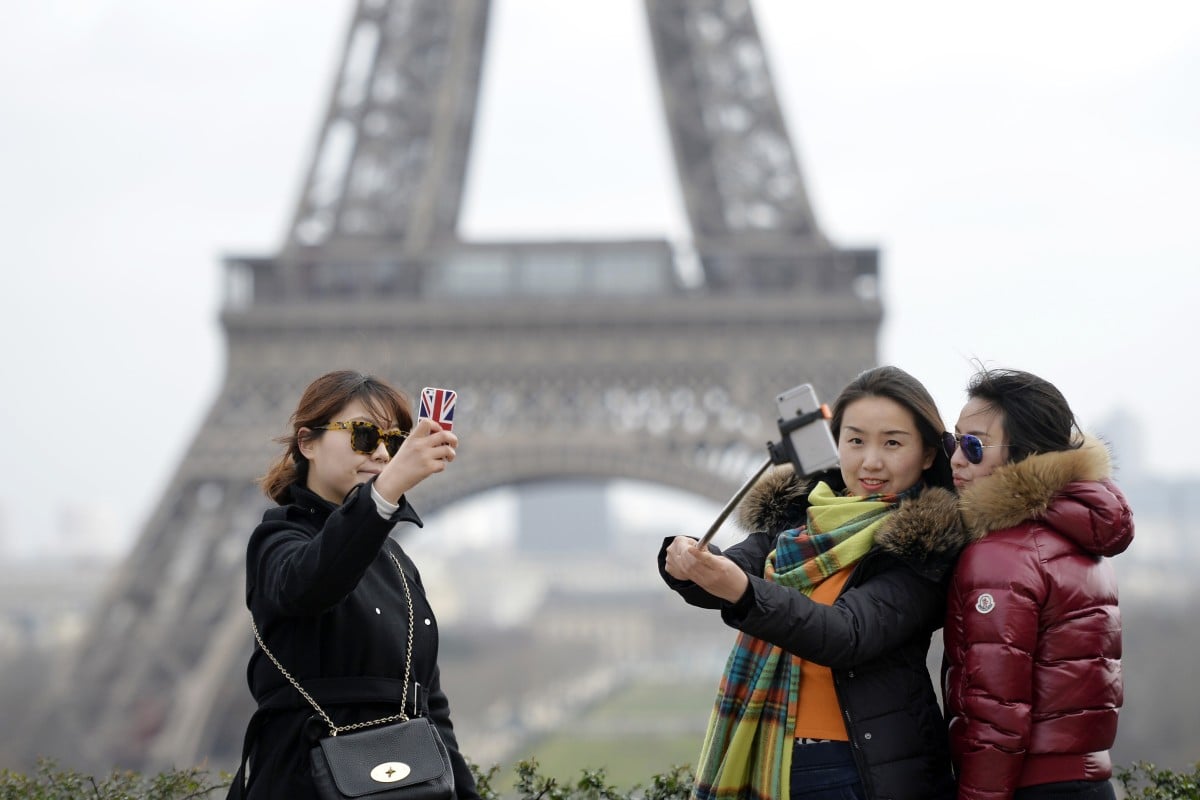
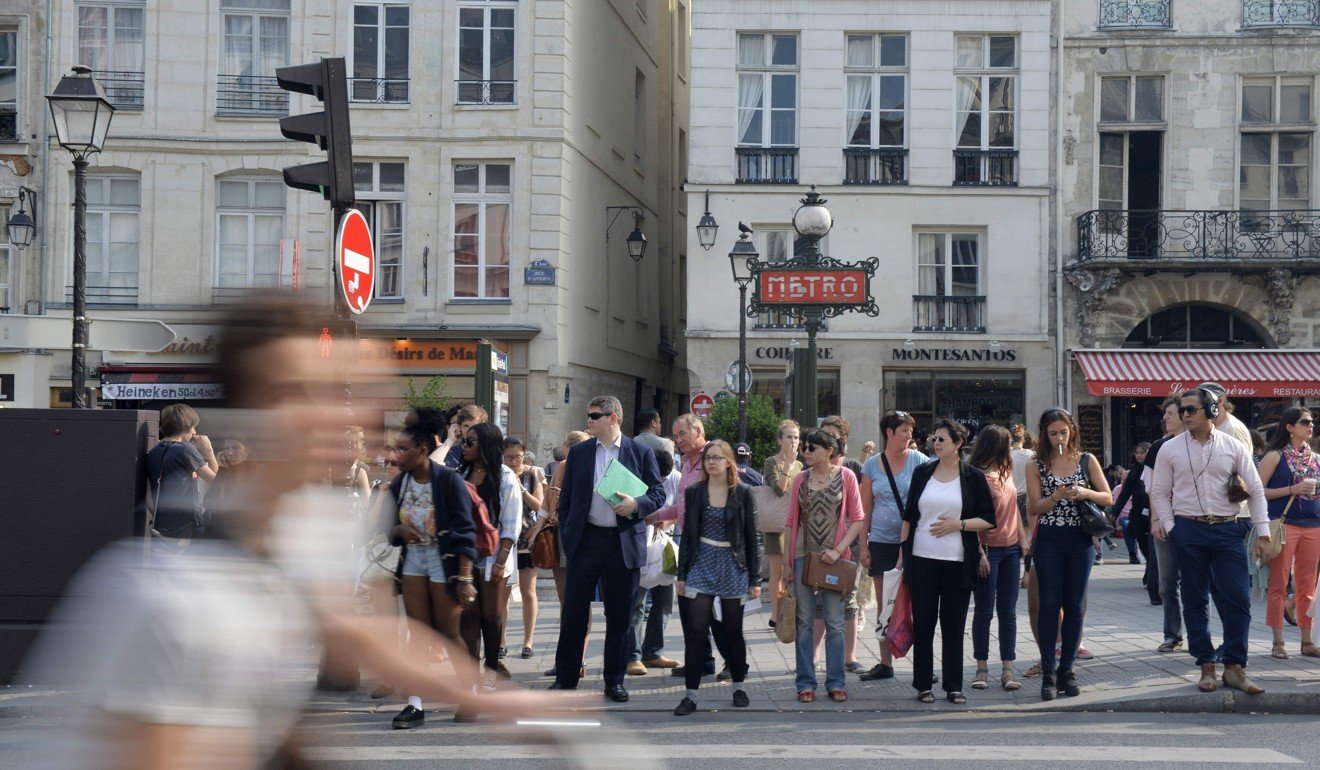
Chinese tourists have been warned to be on their guard when visiting France. Photo: AFP
Chinese visitors to Paris have been warned to be on the look out for a bewitching blonde who preys on the good nature and naivety of tourists to relieve them of their valuables.
According to a series of notices posted on the website of the Chinese embassy in the French capital, the alluring larcenist is just one of a number of con artists and crooks that prowl the city in search of easy targets.
Holidaymaker “Shen” became their latest victim earlier this month, the mission said.
“On April 1, a Chinese citizen surnamed Shen was appreciating the beautiful scenery at Avenue des Champs-Élysées, when a blonde approached him and asked for directions,” according to one of the notices posted on the site on Thursday.
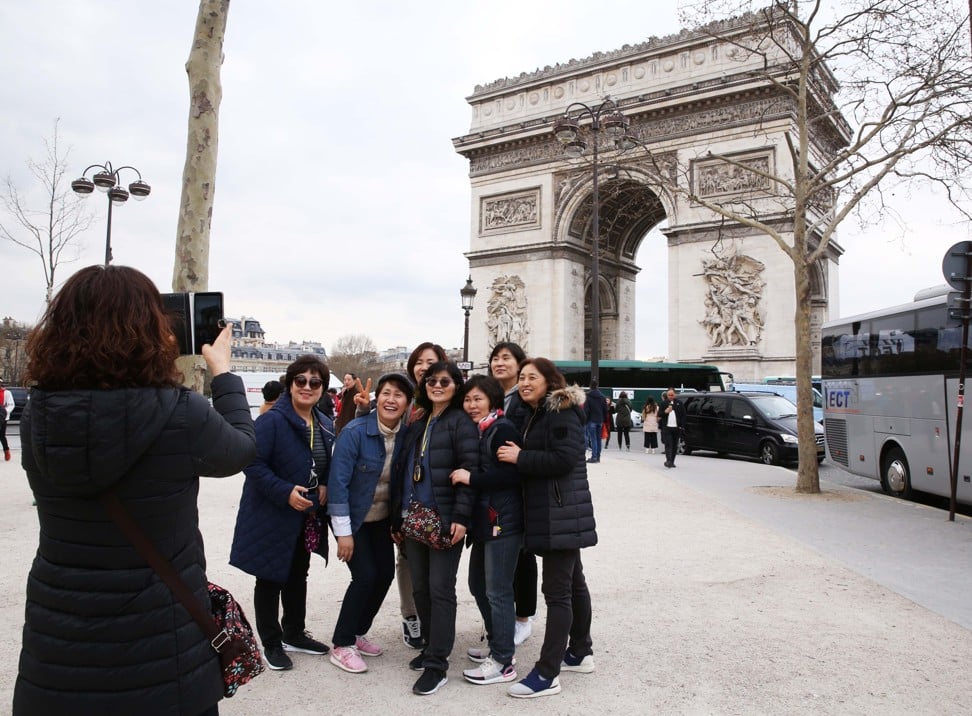
The Arc de Triomphe stands at the western end of the Champs-Élysées, where a Chinese tourist identified only as “Shen” was allegedly robbed on April 1. Photo: Xinhua
“Although Shen was curious why the blonde would chose a foreigner like him for directions, he still replied as he had made some travel preparations.”
It was only after the woman had walked away that Shen realised his mobile phone and wallet were missing, it said.
Cherish the love: China and France should disrupting ties, Beijing says
Pickpockets and sneak thieves are a threat to all visitors to France, but the Chinese are often regarded as prime targets because of the belief they carry lots of cash and valuables, the embassy said.
As well as the Champs-Élysées, tourists were warned to take extra care when visiting attractions like the Palace of Versailles and Sacré-Coeur, and when travelling on the subway.
“Be aware of strangers in public places and on public transport, and always pay attention to your belongings,” the embassy said.
The notice about Shen did not say if he had reported the suspected theft to the local police.
Pickpockets and sneak thieves are a threat to all visitors to France, but the Chinese are often regarded as prime targets, the embassy said. Photo: AFP
According to the Paris Region Tourism Board, China accounts for the third largest number of visitors to France after the United States and Britain. Chinese tourists made 1.1 million trips to the country in 2017 and the figure is forecast to grow to 2 million by 2022.
While most experience trouble-free trips, there have been reports of Chinese visitors to France being robbed or even assaulted in recent years.
In November 2017, a group of
in the car park of their hotel in the Val-de-Marne suburb of Paris after returning from a shopping trip. Their four assailants made off with nine bags filled with luxury goods.
A year earlier, 27 Chinese tourists were attacked by a group of six Frenchmen as they boarded a bus that was about to take them to the airport.
Source: SCMP
Posted in Airport, Arc de Triomphe, attractive woman, beautiful bandit, beware, boarded a bus, Britain, Champs-Élysées, Cherish the love, China alert, Chinese embassy, French frigate, Holidaymaker “Shen”, lots of cash and valuables, luxury goods, missing, navy’s anniversary parade, Palace of Versailles, Paris, Paris Region Tourism Board, Pickpockets, public places, public transport, Sacré-Coeur, sneak thieves, subway train, Taiwan Strait, Uncategorized, United States, Val-de-Marne suburb, wallet and mobile phone, warns tourists |
Leave a Comment »
19/04/2019
- China’s Ambassador to the UK Liu Xiaoming cites ‘rule-making’ as an area for bilateral cooperation with the UK
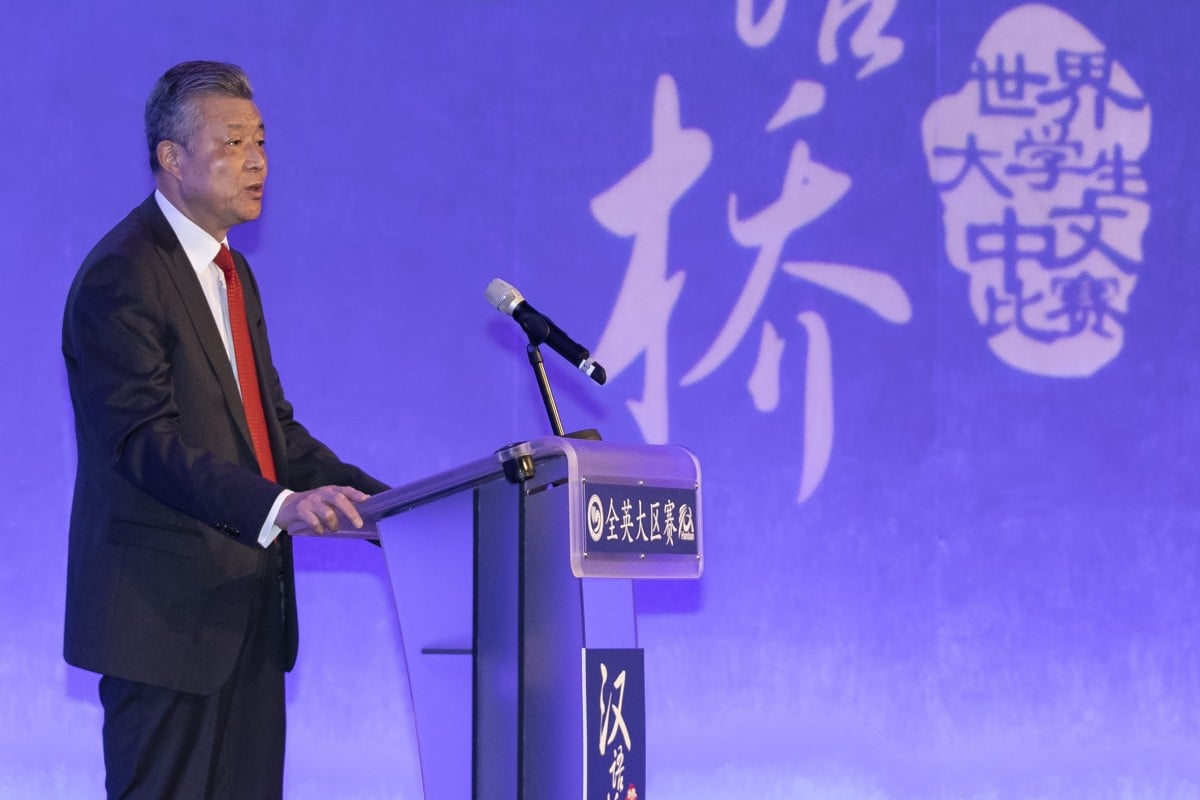
Chinese Ambassador to the UK Liu Xiaoming gives a keynote speech during the ‘Chinese Bridge’ Chinese Proficiency Competition for Foreign College Students UK Regional Final in London. Photo: Xinhua
China has asked Britain for help to offset claims its “Belt and Road Initiative” investments are opaque and justify its overseas spending to critics.
It made the move days before UK Chancellor Phillip Hammond was expected to head to the belt and road forum in Beijing.
In an article in London’s Evening Standard on Wednesday, China’s Ambassador to the UK Liu Xiaoming cited “rule-making” as an area for bilateral cooperation.
“Britain has played a leading role in the establishment and management of the Asian Infrastructure Investment Bank,” Liu said. “In [belt and road] development, Britain could have a big role to play in ensuring that the projects are of higher quality, at a higher standard, with higher return.”
Four years ago the UK defied the US and joined the AIIB.
Liu’s comments followed news the UK’s Department for International Development (DFID) was asked to join a new initiative aimed at improving China’s international accounting and transparency standards.
China is thought to see DFID as a model for its new aid outfit, China International Development Cooperation Agency (CIDCA), which was established last year to oversee Beijing’s foreign aid.
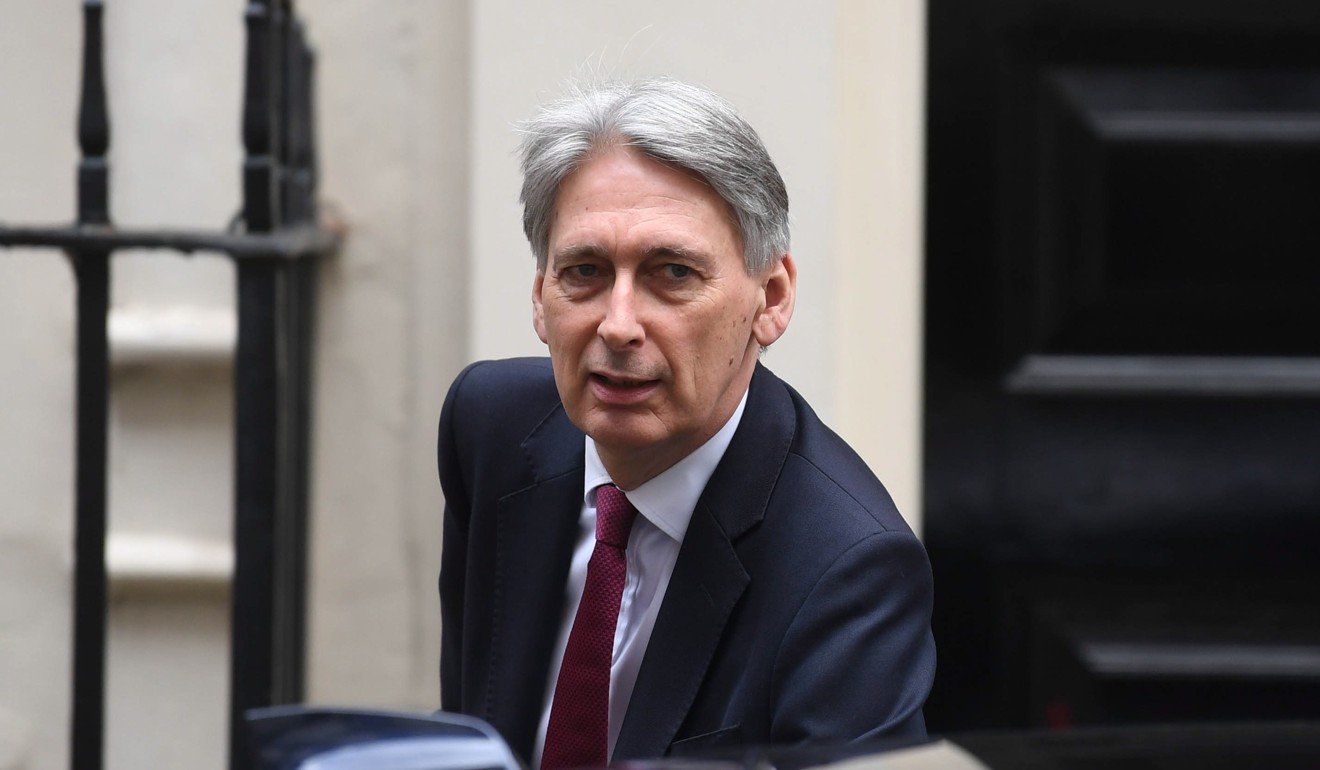
Britain’s Chancellor of the Exchequer Phillip Hammond. Photo: EPA-EFE
Share:
The DFID was the third most transparent donor in the world after the Asian Development Bank and UNDP, according to the aid data-crunching website Publish What You Find. China was the least.
Critics say part of the problem is Beijing prefers to deliver loans and other investments through local elites. There are also often several government departments involved, each directed by their own rules and priorities, making financial reporting more complex.
“I think the Chinese are instead playing by a different set of rules, not all of them in conflict with the West’s … but most definitely not fully aligned with what the West wants or expects”, said Eric Olander, managing editor of Shanghai-based The China Africa Project. “Therefore, I would not expect to see the kind of meaningful change in its accounting and financial standards in the near term.”
‘Cooperate or stop criticising’, China’s foreign minister Wang Yi says as belt and road summit nears
The MOU proposed by China is more a statement of intent than a plan of action but the UK welcomed it as a positive sign
“China’s proposal to set up a ‘Multilateral Cooperation Centre for Development Finance’ has real potential to ensure its huge investments in developing countries meet the key international standards that matter to all of us – on debt, transparency, environment and social safeguards,” UK International Development Secretary Penny Mordaunt said at the World Bank Spring Meeting recently.
A source at DFID told the SCMP that the UK has not signed the MOU yet but said while other countries are aware of the proposal, it is the only country so far to be formally invited to participate by China.
France and Germany were two possible future signatories, and MCCDF has been discussed in EU member state meetings in Beijing.
“[China] is clearly frustrated that it feels misunderstood by the international community,” said Olander.
“I have attended one seminar after another where African stakeholders ask the Chinese for more transparency and the Chinese respond with a sympathetic smile that says ‘I’d love to but I’m not sure how we can do that given our political culture and the current political realities’.”
With the Chinese economy slowing at home and the losses abroad in places like Venezuela starting to mount, there are indications that the Chinese policy banks are becoming far more risk-averse in places like Africa and the Americas.
Even so according to figures released on Thursday, the Export Import Bank of China provided more than a trillion yuan (US$149 billion) to more than 1,800 Belt and Road projects since 2013. China Development Bank (CDB) said in March it had provided US$190 billion in the same period.
“The UK is very concerned by rising debt levels, particularly in emerging market economies and in low-income countries,” Mordaut told the World Bank.
“Unsustainable debt levels are a real risk that can undermine or reverse development gains.”
The IMF said recently 24 out of 60 of the poorest countries are either in debt distress or at a high risk of falling into it.
China is also looking to the UK to help manage the BRI projects and organise part of the financing, something the City of London and the government are keen to do, Liu said.
Describing it as “third-party involvement in BRI development” he said: “The UK, with its unique strengths in professional services, project-management and financing, could tap into this potential.”
China is keen for the UK to sign a BRI MOU like Italy, and soon Switzerland, but so far it has resisted. A report released earlier this month by the parliament’s Foreign Affairs Committee called for a rebranding of the “golden era” started by the former chancellor George Osborne, now the editor of the London Evening Standard.
Britain is keen to cement closer ties with Beijing as the world’s fifth largest economy looks to reinvent itself as a global trading nation if and when it leaves the European Union.
Source: SCMP
Posted in African stakeholders, AIIB, Asian Development Bank and UNDP, ‘Chinese Bridge’ Chinese Proficiency Competition for Foreign College Students UK Regional Final, ‘Multilateral Cooperation Centre for Development Finance’, Beijing, Belt and Road Initiative (BRI), Britain, China alert, China Development Bank (CDB), China International Development Cooperation Agency (CIDCA), China’s Ambassador to the UK, Chinese foreign minister, Department for International Development (DFID), Eric Olander, Evening Standard, France, george osborne, Germany, Italy, Liu Xiaoming, London Evening Standard, managing editor of Shanghai-based The China Africa Project., MCCDF, Penny Mordaunt, Phillip Hammond, Switzerland, UK Chancellor, UK International Development Secretary, Uncategorized, Wang Yi, World Bank |
Leave a Comment »
15/04/2019
A foreign job seeker attends a job fair during the 17th Conference on International Exchange of Professionals (CIEP) in Shenzhen, south China’s Guangdong Province on April 14, 2019. The conference kicked off in Shenzhen on Sunday, attracting about 4,000 agencies and organizations from more than 50 countries and regions, as well as 40,000 government representatives, experts and high talented people. (Xinhua/Mao Siqian)
SHENZHEN, April 14 (Xinhua) — The 17th Conference on International Exchange of Professionals (CIEP) opened in south China’s tech hub Shenzhen on Sunday.
The two-day event, featuring a series of forums and recruitment fairs, attracted more than 4,000 professional institutions and organizations as well as over 40,000 government officials, experts and high-end talents from more than 50 countries and regions.
Over 1,500 enterprises will provide 30,000 jobs at the recruitment fairs.
A variety of activities were held in Britain, the guest of honor of this year’s CIEP, before the conference’s opening to attract more innovative overseas talent to start their business in China.
Created in 2001, CIEP has become one of China’s top events for international talent exchange.
Source: Xinhua
Posted in Britain, China alert, International Exchange of Professionals (CIEP), Shenzhen, tech hub, Uncategorized |
Leave a Comment »
07/04/2019
BRUSSELS, April 6 (Xinhua) — China-European Union (EU) relations in tourism get a boost as the 2018 EU-China Tourism Year has scored a success, an official recently said.
During the tourism year, China and the EU held more than 100 promotional activities. It “has been extremely successful,” said Eduardo Santander, executive director of the European Travel Commission (ETC).
There was a 5.1-percent year-on-year increase in Chinese arrivals in EU destinations in 2018, and among the top ones in terms of the volume of Chinese arrivals were Britain, Germany and France, according to the latest figures from the ETC and the air travel analysis agency ForwardKeys.
“We continue to see the benefits in 2019,” Santander added. “The growth in Chinese travellers has been solid, and the near future, judging by current bookings, will see the EU continuing to increase its share of this valuable market, not just to traditional destinations, but lesser-known and emerging ones as well.”
Chinese bookings to the EU for the first four months of 2019 are 16.9 percent ahead of where they were at the end of 2017, said the ETC, adding that this compares very favorably to the global trend, which is 9.3 percent ahead.
According to a recent report by China Tourism Academy and China’s online travel agency Ctrip, 70 percent of Chinese tourists in 2018 chose “package tours” when traveling in Europe, due to language, visa, culture and other factors.
Nevertheless, the proportion of independent and customized travel continues to rise. In 2018, the demand for customized European tours booked by the travel website increased by 127 percent over the past year, far higher than the growth rate of the overall market, said the report.
In addition, a number of new routes were launched between China and Europe in 2018, including direct flights from Fuzhou to Moscow, Changsha to London, Jinan to Paris, and Shenzhen to Brussels. In 2018, there were more than 600 flights a week between China and Europe, according to the report.
Ctrip in 2018 forecast that consumption of each tourist in Europe will exceed 25,000 yuan (about 3,721 U.S. dollars) in two years, with the total annual consumption to reach 150 billion yuan (about 22.3 billion dollars).
“Our findings confirm what a concerted effort to boost tourism can achieve. It also appears to have lasting effects, as we can see in the forward booking figures,” said Olivier Jager, CEO of ForwardKeys.
China’s domestic travel agencies are also deepening the cooperation with Europe. For example, the SkyScanner, Ctrip’s online travel search platform, set up its first overseas calling service center in Edinburgh in April 2018.
Source: Xinhua
Posted in air travel analysis agency, Britain, Brussels, Changsha, China alert, China Tourism Academy, Edinburgh, Eduardo Santander, EU, executive director of the European Travel Commission (ETC), ForwardKeys, France, Fuzhou, Germany, Jinan international airport, London, Moscow, online travel agency Ctrip, Paris, Shenzhen, SkyScanner, Tourism, Uncategorized |
Leave a Comment »
07/03/2019
ISLAMABAD (Reuters) – Pakistan intensified its crackdown against Islamist militants on Thursday, with the government announcing it had taken control of 182 religious schools and detained more than 100 people as part of its push against banned groups.
The move represents Pakistan’s biggest move against banned organisations in years and appears to be targeting Islamic welfare organisations that the United States says are a front for militant activities.
Pakistan is facing pressure from global powers to act against groups carrying out attacks in India, including Jaish-e-Mohammed (JeM), which claimed responsibility for the Feb. 14 attack that killed at least 40 Indian paramilitary police.
The escalating tension in the wake of the bombing led to a major confrontation between the nuclear-armed rivals, with both countries carrying out aerial bombing missions and even engaging in a brief dogfight that prompted fears of a war.
Pakistani officials say the crackdown is part of a long-planned drive and not a response to Indian anger over what New Delhi calls Islamabad’s failure to rein in militant groups operating on Pakistani soil.
Previous large-scale crackdowns against anti-India militants have broadly been cosmetic, with the proscribed groups able to survive and continue operations.
The interior ministry said law enforcement agencies had placed 121 people in “preventive detention” as part of the crackdown that began this week.
“Provincial governments have taken in their control management and administration of 182 seminaries (madaris)”, the ministry said in a statement, referring to religious schools.
What to do with madrasas is a thorny issue in Pakistan, a deeply conservative Muslim nation where religious schools are often blamed for radicalisation of youngsters but are the only education available to millions of poor children.
The interior ministry said other institutions from different groups had been taken over, including 34 schools or colleges, 163 dispensaries, 184 ambulances, five hospitals and eight offices of banned organisations.
Many banned groups such as JeM run seminaries, which counter-terrorism officials say are used as recruiting grounds for militant outfits
Jamaat-ud-Dawa (JuD), which operates hospitals and a fleet of ambulances, is estimated to run about 300 madrasas across the country. Pakistan’s government banned the group this week.
JuD calls itself a humanitarian charity but the U.S. State Department has designated it a “foreign terrorist organisation” and calls it a front for Lashkar-e-Taiba (LET), a Pakistan-based group accused of orchestrating attacks in India, including the 2008 Mumbai attack that killed 166 people.
An image casts doubt on India airstrike claims
JuD called the crackdown unfair and said it would seek to counter the government action in courts.
“The whole nation is asking that what message the government wants to send by sealing welfare organisations and kicking students out,” said JuD spokesman Yahya Mujahid.
Pakistan has long used Islamist groups to pursue its aims in the region, but it has denied New Delhi’s accusations it actively supports militants fighting Indian forces in India’s part of Muslim-majority Kashmir.
The South Asian neighbours have fought three wars since independence from Britain in 1947, two of them over Kashmir which they both claim in whole but rule in part.
Source: Reuters
Posted in 1947, aerial bombing missions, ambulances, banned organisations, Britain, counter-terrorism officials, crackdown, dispensaries, dogfight, foreign terrorist organisation, hospitals, humanitarian charity, independence, Indian forces, interior ministry, Islamabad, Islamic welfare organisations, Jaish-e-Mohammed (JeM), Jamaat-ud-Dawa (JuD), JeM run seminaries, Kashmir, Lashkar-e-Taiba (LeT), madrasas, militant outfits, militants, mumbai, Muslim nation, Muslim-majority Kashmir, New Delhi, nuclear-armed rivals, Pakistan, paramilitary police, proscribed groups, provincial governments, recruiting ground, religious schools, schools or colleges,, seminaries (madaris), South Asian neighbours, U.S. State Department, Uncategorized, United States |
Leave a Comment »
02/03/2019
MUZAFFARABAD, Pakistan/SRINAGAR, India (Reuters) – A flare up between arch-foes India and Pakistan appeared to be easing on Saturday after Islamabad handed back a captured Indian pilot, but tensions continued to simmer amid efforts by global powers to prevent a war between the nuclear-armed neighbours
Wing Commander Abhinandan Varthaman, who became the face and symbol of the biggest clash between India and Pakistan in many years, walked across the border just before 9 p.m. (1600 GMT) on Friday in a high-profile handover shown on live television.
Shelling across the Line of Control (LoC) that acts as a de facto border in the disputed Kashmir region, a frequent feature in recent weeks, continued on Saturday.
Pakistan’s military said on Saturday its air force and navy “continue to be alert and vigilant”, while two of its soldiers were killed after exchanging fire with Indian troops along the Line of Control. India’s military said on Saturday that Pakistan was firing mortar shells across the LoC.
Pakistan touted Abhinandan’s return as “as a goodwill gesture aimed at de-escalating rising tensions with India” after weeks of unease that threatened to spiral into war after both countries used jets for bombing missions this week.
Global powers, including China and the United States, have urged restraint to prevent another conflict between the neighbours who have fought three wars since independence from Britain in 1947.
Tensions escalated rapidly following a suicide car bombing on Feb. 14 that killed at least 40 Indian paramilitary police in Indian-controlled Kashmir.
India accused Pakistan of harbouring the Jaish-e Mohammad group behind the attack, which Islamabad denied, and Prime Minister Narendra Modi promised a strong response.
Indian warplanes carried out air strikes on Tuesday inside Pakistan on what New Delhi called militant camps. Islamabad denied any such camps existed, as did local villagers in the area, but Pakistan retaliated on Wednesday with its own aerial mission, that led to both sides claiming to have shot down jets.
The stand off came at a critical time for Modi, who faces a general election that must be held by May and who had been expected to benefit from nationalist pride unleashed by the standoff.
Pakistani leaders say the ball is now in India’s court to de-escalate the tensions, though the Pakistani army chief told top military leaders of the United States, Britain and Australia on Friday that his country would “surely respond to any aggression in self-defence”.
“COLLIDE HEAD-ON”
The Indian pilot’s ordeal since being shot down on Wednesday had made him the focal point of the crisis and he returned to his homeland to a hero’s welcome, with crowds thronging the Wagah border crossing and waving Indian flags.
Before his release, Pakistani television stations broadcast video of Abhinandan in which he thanked the Pakistani army for saving him from an angry crowd who chased him after seeing him parachute to safety.
Pakistan frees Indian pilot as crisis thaws
“The Pakistani army is a very professional service,” he said. “I have spent time with the Pakistan army. I am very impressed.”
On Friday, four Indian troops and one civilian were killed in a clash with militants in the Indian-administered Kashmir, where a further three people were killed and one wounded from Pakistani shelling.
Pakistan’s military said two civilians were killed and two wounded since Friday afternoon on Pakistan’s side of Kashmir from a barrage of Indian shelling.
In a sign of the unease, residents say they are afraid another conflagration is likely.
“The way situation is developing along the LoC makes me feel that both sides may collide head-on anytime now,” said Chaudhry Jahangir , a Pakistani resident of the Samahni sector in Kashmir.
Source: Reuters
Posted in 1947, air force and navy, Britain, Chaudhry Jahangir, China alert, global powers, independence, India alert, Islamabad, Jaish-e-Mohammad, Kashmir, Line of Control (LoC), New Delhi, nuclear-armed neighbours, Pakistan, Pakistani Army, paramilitary police, Prime Minister Narendra Modi, Samahni, suicide car bombing, Uncategorized, United States, Wagah, Wg Cdr Abhinandan Varthaman, Wing Commander Abhinandan Varthaman |
Leave a Comment »
24/02/2019
- Military watchers can expect ‘something new’ at this year’s National Day parade in October, Professor Jin Canrong tells forum in Hong Kong
- As tensions rise over Taiwan, Beijing is building a naval and missile force as powerful as any in the world, he says
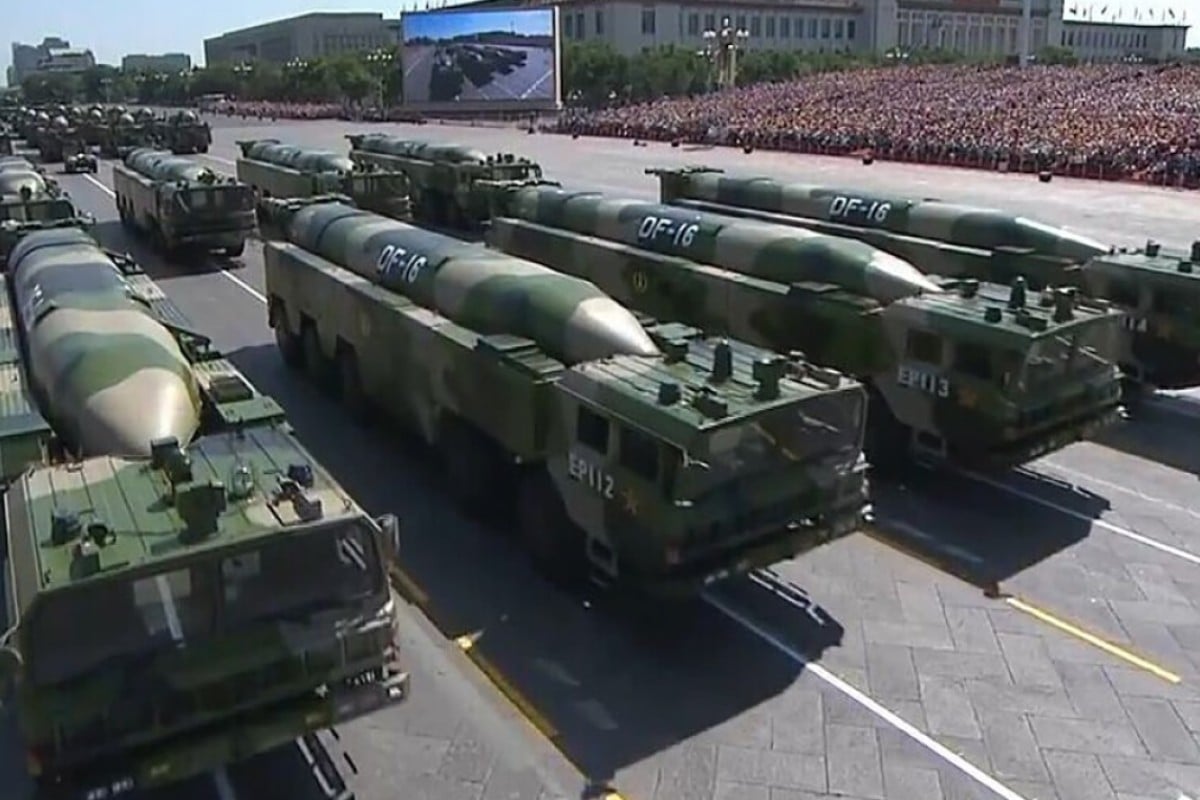
Military vehicles carrying DF-16 ballistic missiles take part in China’s National Day parade. Taiwan says Beijing has such missiles trained on the self-ruled island. Photo: Handout
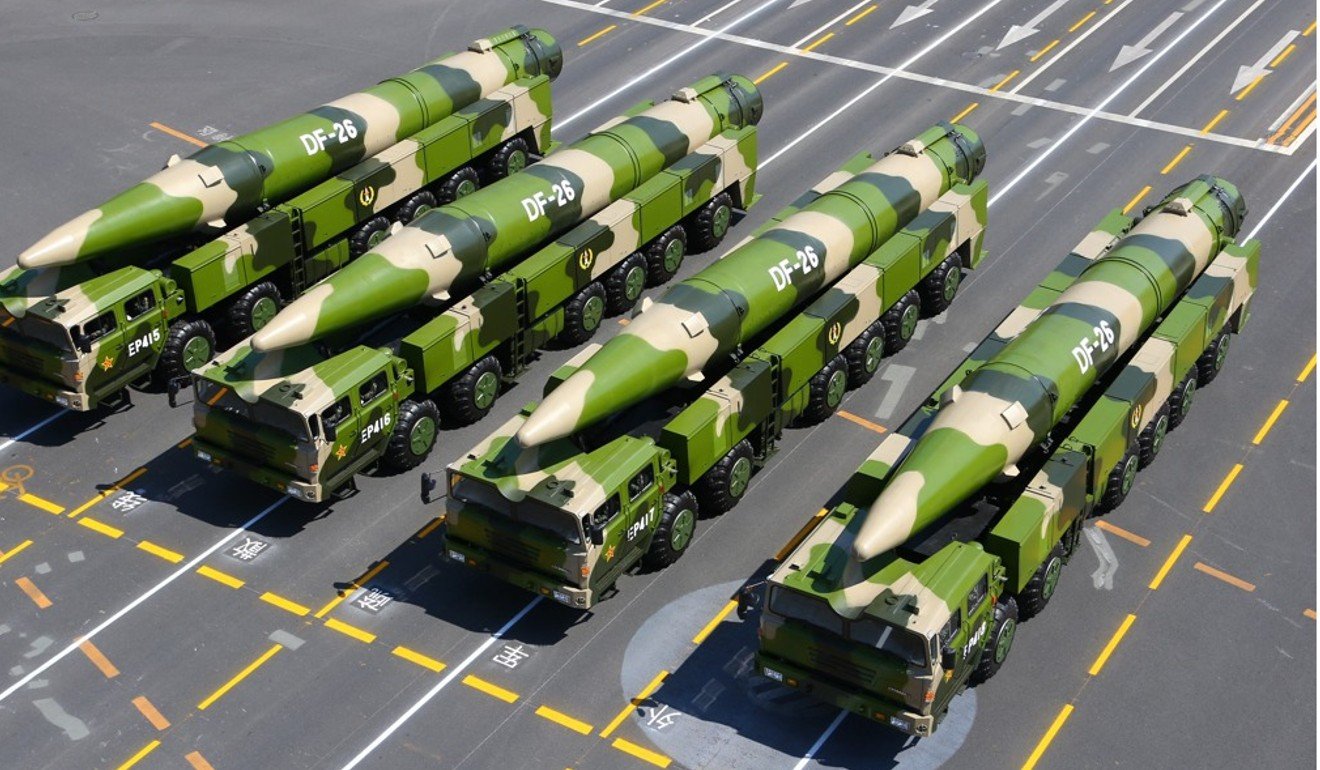
Beijing will show the world “something new” when it rolls out its arsenal of short- to medium-range ballistic missiles at its National Day military parade in October, according to a Chinese expert on international relations.
Speaking at a seminar at the University of Hong Kong on Saturday, Professor Jin Canrong, associate dean of the school of international studies at Renmin University in Beijing, said China had made great strides in expanding its military capability, but there was a lot more to come.
US commander pushes for more funding to counter China’s influence in Indo-Pacific
While he did not elaborate on what the “something new” might be, he said the country was gearing up for a possible conflict over Taiwan, the self-ruled island that Beijing regards as a wayward province awaiting reunification.
Over the next five or 10 years, Taiwan could provide the “biggest uncertainty” for Beijing, he said, especially if the United States decided to “ignite” the situation.
Known for being outspoken on sensitive issues, Jin said that while Beijing wanted a peaceful reunification, it was wary of “pro-independence factions [on the island] and right-wing American [politicians] creating trouble”.
In a speech on January 2 to mark the 40th anniversary of Beijing’s call to end military confrontation across the Taiwan Strait, Chinese President Xi Jinping said that “the political division across the strait … cannot be passed on from generation to generation”, apparently signalling his determination to bring it to an end.
Xi said China would not abandon the use of force in reunifying Taiwan, but stressed the military would target only external elements and those seeking independence for the island.
In 2017, Taipei said that it had detected the deployment of DF-16 ballistic missiles on the mainland that were aimed at Taiwan.
Jin said China was rapidly expanding its missile capabilities. The People’s Liberation Army had already stockpiled about 3,000 short- and medium-range missiles, he said, even though it had been using just 15 per cent of its production capacity.
“Just imagine if we were running at 100 per cent,” he said.
Beijing will show the world “something new” when it rolls out its ballistic missiles at its National Day military parade in October, an expert says. Photo: Xinhua
Share:
Under its plan for military modernisation China had achieved “great advancements in space, electronics and cyberwarfare”, the academic said, but its achievements to date were only the beginning.
As well as the expansion of its missile force, Beijing was investing heavily in its navy, he said.
Is China about to abandon its ‘no first use’ nuclear weapons policy?
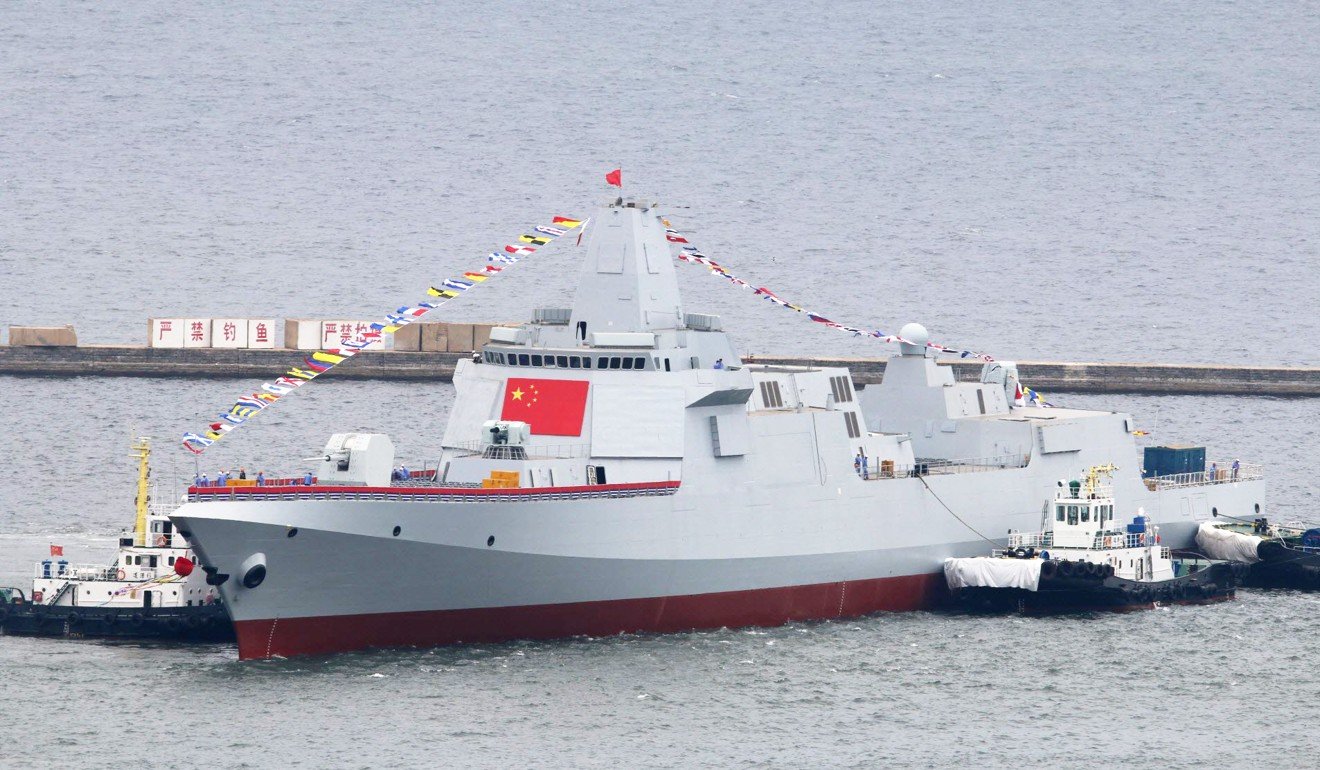
With the deployment of the new Type 055 guided-missile destroyer – which some Chinese military experts have said is as good as anything in the US Navy – the balance of power was shifting, he said.
“For the first time in 500 years, the East has combat equipment that is at least as good as the West’s.”
With the deployment of the new Type 055 guided-missile destroyer, the balance of power between China and the US is shifting, according to Jin Canrong. Photo: Handout
Share:
And as the navy continued to modernise and expand, the US might be forced to rethink its position in the region, he said.
“When we have dozens of destroyers and four or five [aircraft] carriers the US will not be able to meddle in Taiwan.”
China’s first aircraft carrier may become test bed for electromagnetic warplane launcher
Jin said that China would also soon have all the scientific, academic and research personnel it needed to achieve its military ambitions.
“China had nearly 30 million university students in 2018, which is twice as many as the US. More than half of them are studying science or engineering,” he said.
“Every year we produce about 4 million science and engineering graduates, while America produces just 440,000.”
Professor Jin Canrong speaks at a forum in Hong Kong. Photo: Handout
Share:
Beijing also had the money to support its plans, Jin said. Based on his own calculations, he said China allocated about 1.4 per cent of its gross domestic product to military spending, which was lower than “Germany’s 1.5 per cent”, and less than half the “3 per cent in Britain and France”.
“The tax paid by Chinese smokers is more than enough to cover [the country’s] military expenses,” Jin said.
According to figures from Nato, Britain spent 2.1 of its GDP on defence in 2017, France 1.8 per cent and Germany 1.2 per cent. Both the World Bank and the United Nations put China’s military spending in 2017 at 1.9 per cent of its GDP.
Source: SCMP
Posted in Aircraft carrier, Beijing, Britain, China alert, Chinese President Xi Jinping, combat equipment, dean of the school of international studies, destroyers, DF-16 ballistic missiles, experts, France, GDP, Germany, Hong Kong, Indo-Pacific, Jin Canrong, military build-up, National Day parade, NATO, naval and missile force, People's Liberation Army, Professor Jin Canrong, Renmin University, science and engineering graduates, submarine, Taipei, Taiwan, Taiwan Strait, Type 055 guided-missile destroyer, Uncategorized, United Nations, University of Hong Kong, World Bank |
Leave a Comment »






 CHINDIA ALERT: You'll be living in their world, very soon