Archive for ‘Center for Strategic and International Studies (CSIS)’

19/03/2020

Coronavirus: China and the virus that threatens everything By John Sudworth

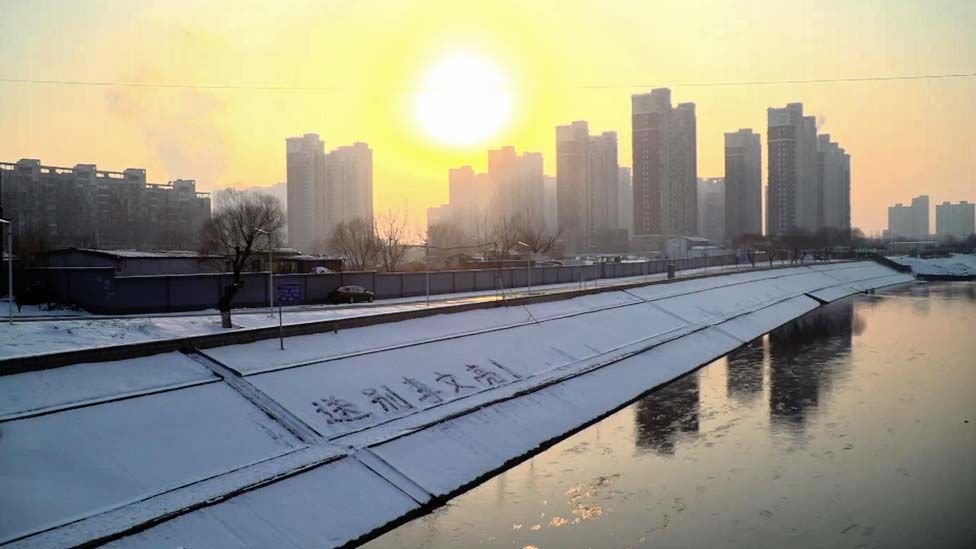
Chinese characters in the snow on the banks of the Tonghui river in Beijing read "Goodbye Li Wenliang!"
Image caption A message written in the snow alongside the Tonghui river reads “Goodbye Li Wenliang!”

On a cold Beijing morning, on an uninspiring, urban stretch of the Tonghui river, a lone figure could be seen writing giant Chinese characters in the snow.

The message taking shape on the sloping concrete embankment was to a dead doctor.

“Goodbye Li Wenliang!” it read, with the author using their own body to make the imprint of that final exclamation mark.

Five weeks earlier, Dr Li had been punished by the police for trying to warn colleagues about the dangers of a strange new virus infecting patients in his hospital in the Chinese city of Wuhan.

Now he’d succumbed to the illness himself and pictures of that frozen tribute spread fast on the Chinese internet, capturing in physical form a deep moment of national shock and anger.
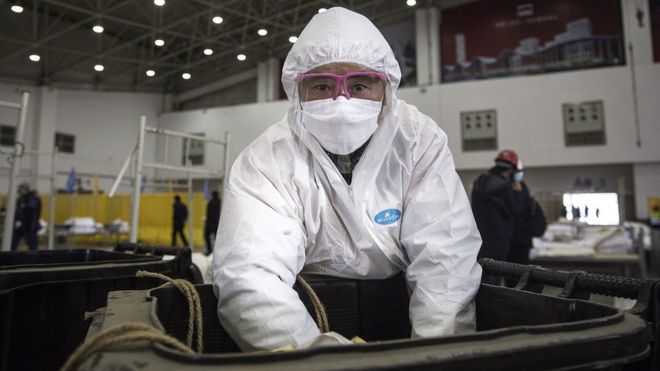
A worker wears a protective mask while cleaning construction waste at WuhanKeting on February 4th.2020 in Wuhan.Hubei Province,China.Image copyright GETTY IMAGES
Image caption A worker in a Chinese factory wears a protective mask

There’s still a great deal we don’t know about Covid-19, to give the disease caused by the virus its official name. Before it took its final fatal leap across the species barrier to infect its first human, it is likely to have been lurking inside the biochemistry of an – as yet unidentified – animal. That animal, probably infected after the virus made an earlier zoological jump from a bat, is thought to have been kept in a Wuhan market, where wildlife was traded illegally.

Beyond that, the scientists trying to map its deadly trajectory from origin to epidemic can say little more with any certainty.

But while they continue their urgent, vital work to determine the speed at which it spreads and the risks it poses, one thing is beyond doubt. A month or so on from its discovery, Covid-19 has shaken Chinese society and politics to the core.

That tiny piece of genetic material, measured in ten-thousandths of a millimetre, has set in train a humanitarian and economic catastrophe counted in more than 1,000 Chinese lives and tens of billions of Chinese yuan. It has closed off whole cities, placing an estimated 70 million residents in effective quarantine, shutting down transport links and restricting their ability to leave their homes. And it has exposed the limits of a political system for which social control is the highest value, breaching the rigid layers of censorship with a tsunami of grief and rage.

The risk for the ruling elite is obvious.

It can be seen in their response, ordering into action the military, the media and every level of government from the very top to the lowliest village committee.
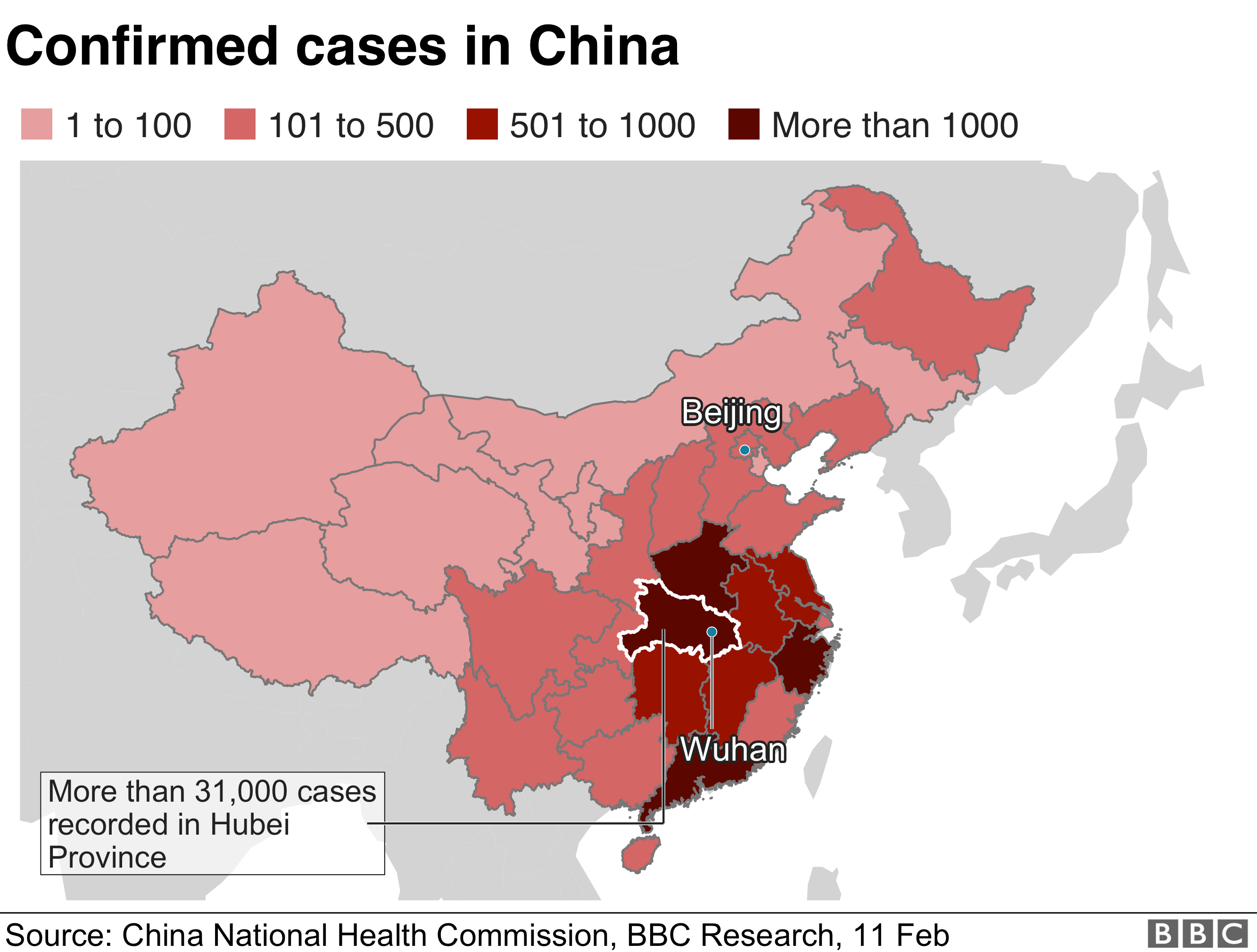
Map showing confirmed cases in China

The consequences are now entirely dependent on questions no one knows the answers to; can they pull off the complex task of bringing a runaway epidemic under control, and if so, how long might it take?

Across the world, people seem unsure how to respond to the small number of cases being detected in their own countries. The public mood can swing between panic – driven by the pictures of medical workers in hazmat suits – to complacency, brought on by headlines that suggest the risk is no worse than flu. The evidence from China suggests that both responses are misguided. Seasonal flu may well have a low fatality rate, measured in fractions of 1%, but it’s a problem because it affects so many people around the world.

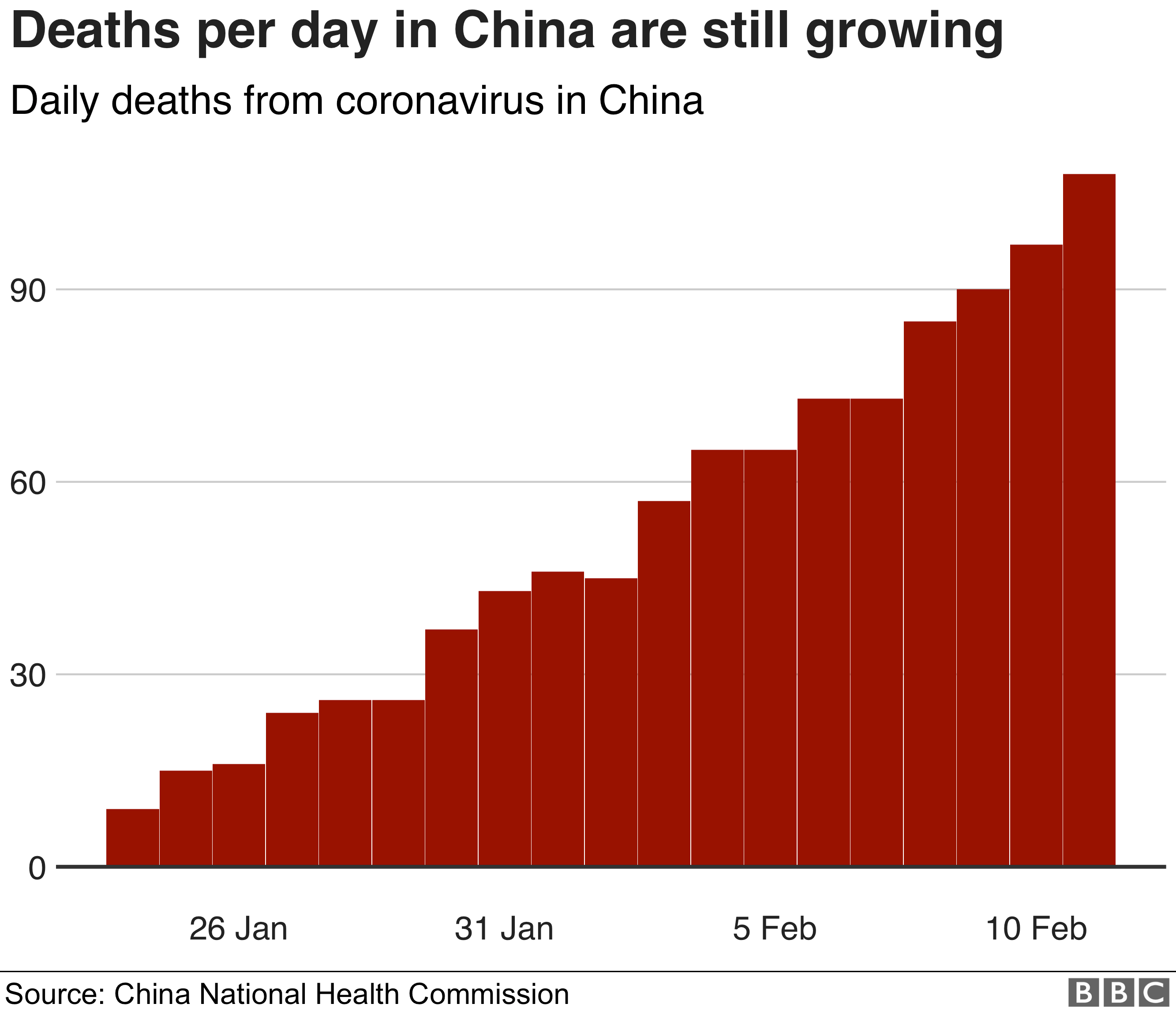
Graphic showing rising number of coronavirus deaths in China

The tiny proportion killed out of the many, many millions who catch it each year still numbers in the hundreds of thousands – individually tragic, collectively a major healthcare burden.

Very early estimates suggested the new virus may be at least as deadly as flu – precisely why so much effort is now going into stopping it becoming another global pandemic. But one new estimate suggests it could prove even deadlier yet, killing as many as 1% of those who contract it. For any individual, that risk is still relatively small, although it’s worth noting such estimates are averages – just like flu, the risks fall more heavily on the elderly and already infirm.
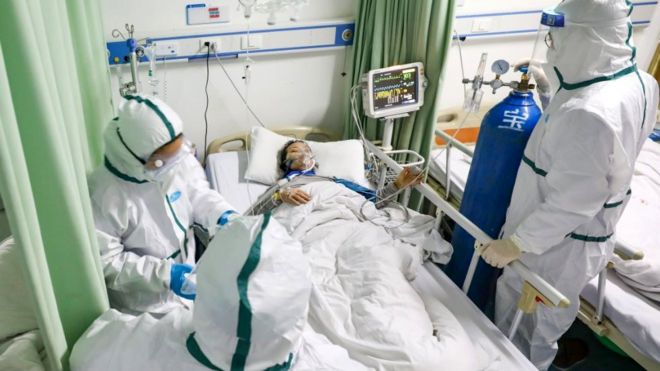
Patient in hospital bed in WuhanImage copyright REUTERS
Image caption Despite the death toll, an increasing number of patients are recovering

But China’s experience of this epidemic demonstrates two things. Firstly, it offers a terrifying glimpse of the potential effect on a healthcare system when you scale up infections of this kind of virus across massive populations. Two new hospitals have had to be built in Wuhan in a matter of days, with beds for 2,600 patients, and giant stadiums and hotels are being used as quarantine centres, for almost 10,000 more.

Despite these efforts, many have still struggled to find treatment, with reports of people dying at home, unregistered in the official figures. Secondly, it highlights the importance of taking the task of containing outbreaks of new viruses extremely seriously. The best approach, most experts agree, is one based on transparency and trust, with good public information and proportionate, timely government action.

But in an authoritarian system, with strict censorship and an emphasis on political stability above all else, transparency and trust are in short supply.
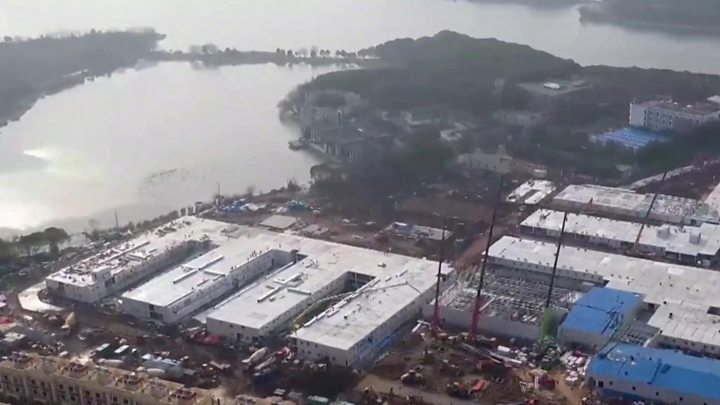
Media caption Aerial time-lapse shows Wuhan hospital construction

China’s response may have sometimes looked like panic – with what’s been called the “biggest quarantine in history” and harsh enforcement against those who disobey.

But those measures have become necessary only because its initial response looked like the very definition of complacency.

There’s ample evidence that the warning signs were missed by the authorities, and worse, ignored. By late December, medical staff in Wuhan were beginning to notice unusual symptoms of viral pneumonia, with a cluster linked to the market trading in illegal wildlife. On 30 December, Dr Li Wenliang, an ophthalmologist working in Wuhan’s Central Hospital, posted his concerns in a private medical chat group, advising colleagues to take measures to protect themselves. He’d seen seven patients who appeared to be suffering with an illness similar to Sars – another coronavirus that began in an illegal Chinese wildlife market in 2002 and went on to kill 774 people worldwide.

A few days later, he was summoned by the police.

Dr Li was made to sign a confession, denouncing the messages he’d posted as “illegal behaviour”.

The case received national media attention, with a high-profile state-run TV report announcing that in total, eight people in Wuhan were being investigated for “spreading rumours”. The authorities, though, were well aware of the outbreak of illness. The day after Dr Li posted his message, China notified the World Health Organization, and the day after that, the suspected source – the market – was closed down.

But despite the multiplying cases and the concerns among medics that human-to-human transmission was taking place, the authorities did little to protect the public. Doctors were already setting up quarantine rooms and anticipating extra admissions when Wuhan held its important annual political gathering, the city’s People’s Congress.

In their speeches, the Communist Party leaders made no mention of the virus. China’s National Health Commission continued to report that the number of infections was limited and that there was no clear evidence that the disease could spread between humans.

And on 18 January the Wuhan authorities allowed a massive community banquet to take place, involving more than 40,000 families. The aim was to set a record for the most dishes served at an event. Two days later, China finally confirmed that human-to-human transmission was indeed taking place.
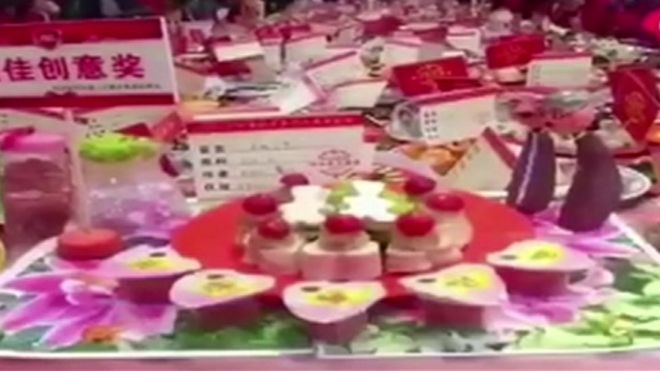
Delicacies from Wuhan banquet
Image caption Images from Chinese state TV show the large banquet in Wuhan

Most remarkable of all perhaps, the following day, Wuhan held a Lunar New Year dance performance, attended by senior officials from across the surrounding province of Hubei. A state media report of the event, since hurriedly deleted but captured here, says the performers, some with runny noses and feeling unwell, “overcame the fear of pneumonia… winning praise from the leaders”.

By the time the national authorities had woken up to the impending disaster, and closed the city down on 23 January, it was too late – the epidemic was out of control. Before Wuhan’s transport links were cut, an estimated five million people had left the city for the Lunar New Year break, travelling across China and the world.

Some have begun calling the disaster “China’s Chernobyl”.

The parallels in failures to pass bad news up the chain of command and the incentives to put the short-term interests of political stability ahead of public safety, seem all too apparent. Li Wenliang, who’d gone back to work after being warned to keep quiet, soon discovered he’d also been infected.

He died earlier this month, leaving a five-year-old son and a pregnant wife.

Anger was already simmering over the authorities’ failure to issue timely warnings, with the crisis now being aired in full view. Wuhan’s politicians were blaming senior officials for failing to authorise the release of the information; senior officials appeared to be preparing to hang Wuhan’s politicians out to dry.

But the death of a man, silenced for simply trying to protect his colleagues, burst open the dam with a wave of online fury directed not just at individuals, but at the system itself. So great was the public outrage, China’s censors appeared unsure what to censor and what to let through. The hashtag #Iwantfreedomofspeech was viewed almost two million times before it was blocked. Aware of the tide of emotion, the Party began paying its own tributes to Dr Li.

It quickly hailed him a national hero.
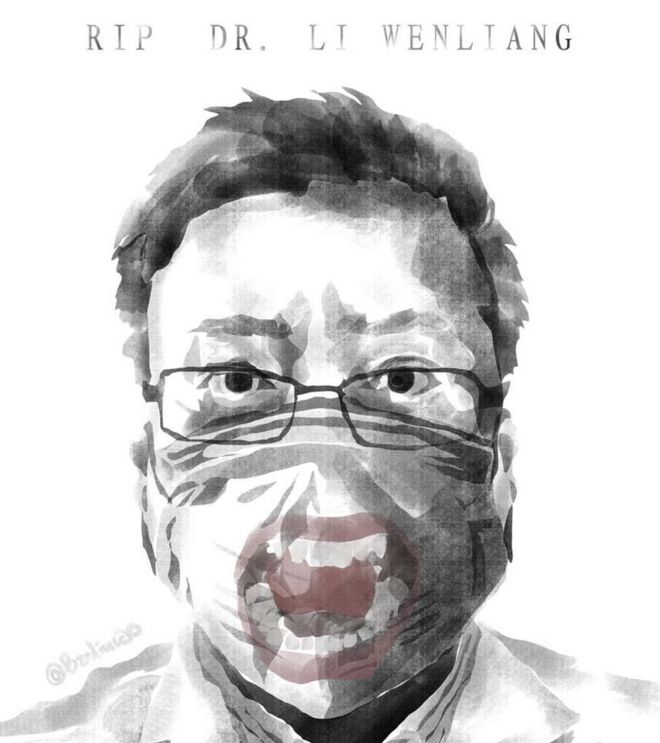
Doctor Li Wenliang tried to warn authorities about the new virus and died after contracting itImage copyright COURTESY BADIUCAO
Image caption Doctor Li Wenliang tried to warn authorities about the new virus and died after contracting it

China’s rulers, untroubled by the inconveniences of the ballot box, have far deeper and older fears of what might sweep them from office. The wars, famines and diseases that shook the dynasties of old have given them their inheritance; an acute historical sense of the danger of the unforeseen crisis. They will also know well what Chernobyl did for the legitimacy of the ruling Communist Party in the former USSR.

“It’s impossible to know if Li Wenliang’s death will serve as the catalyst for something bigger,” Jude Blanchette, an expert on Chinese politics at the Center for Strategic and International Studies in Washington, tells me. “But the raw emotion that surged when news of his condition broke indicates deep levels of frustration and anger exist within the country.”

Precisely because it feels the weight of history, however, the Communist Party has made holding onto power a living obsession, and it has an ever more formidable domestic security apparatus to help it to do so. Over the past few decades it has proven nothing if not resilient, enduring through political chaos, devastating earthquakes and man-made disasters.

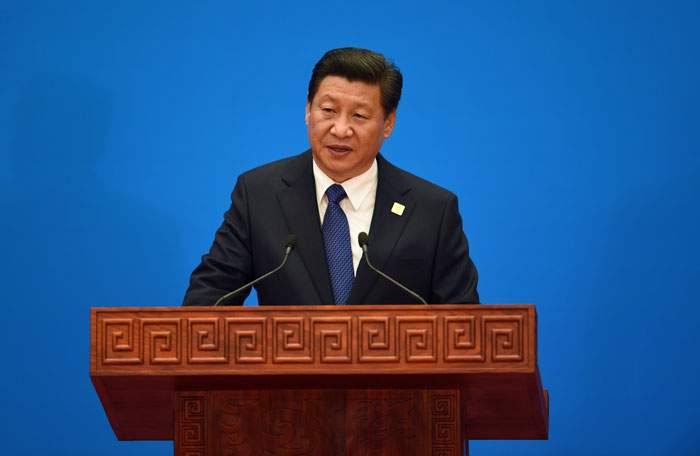
But one sign that might hint at an awareness of just how great the current risks are comes in the role being played by China’s President Xi Jinping. This week – for the first time since the crisis began – he ventured out to meet health workers involved in the fight, visiting a hospital and a virus control centre in Beijing.

In contrast, his premier, Li Keqiang, has been sent to the front lines in Wuhan and appointed head of a special working group to tackle the epidemic.

While it is common for the premier to be the face of reassurance during national disasters, some observers see another reason why Mr Xi might be wise to be seen to delegate.
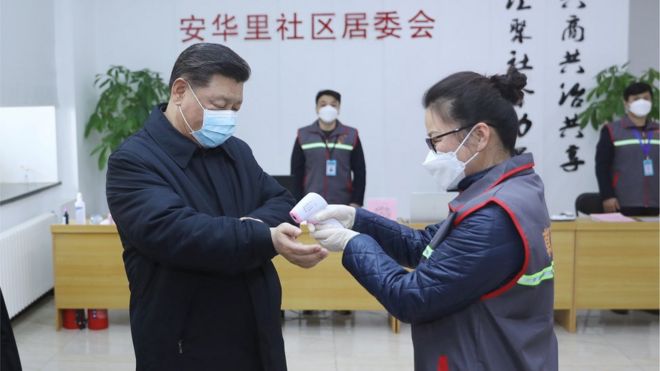
Chinese president Xi Jinping has his temperature recorded during a trip to a hospital in Beijing (10 February)Image copyright EPA
Image caption China’s president has kept a low profile since the outbreak began

“Xi’s absence from this crisis is yet another demonstration that he doesn’t so much lead as he does command,” Mr Blanchette says. “He’s clearly worried that this crisis will blow up in his face, and so he’s pushed out underlings to be the public face of the CCP’s response.”

Already there are signs that the censorship is being ratcheted up once again, with Mr Xi ordering senior officials to “strengthen the control over online media”.

A few days ago, I spoke by phone to the lawyer and blogger, Chen Qiushi, who’d travelled to Wuhan in an attempt to provide independent reporting about the situation. Videos from Mr Chen, and a fellow activist, Fang Bin, have been widely watched, showing not the ranks of patriotic soldier-medics and the building of hospitals that fill state media coverage, but overcrowded waiting rooms and body bags.

He told me he was unsure how long he’d be able to carry on. “The censorship is very strict and people’s accounts are being closed down if they share my content,” he said.

Mr Chen has since gone missing.

Friends and family believe he’s been forced into Wuhan’s quarantine system, in an attempt to silence him.

China’s leaders now find their fate linked to the daily charts of infection rates, published city by city, province by province. There are some signs that the extraordinary quarantine measures may be having an effect – outside of Hubei Province, the worst affected area, the number of new daily infections is falling.

But with the need to try to restart the economy – all but frozen now for over a week – the country has begun a slow return to work.
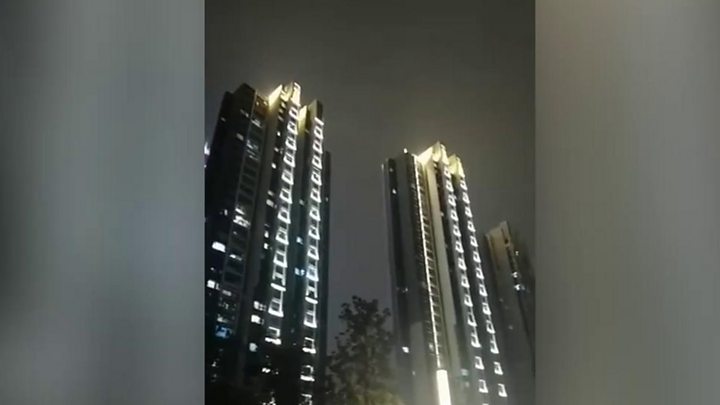
Media caption “Wuhan, add oil!”: Watch residents shouting to boost morale in quarantined city

Strict quarantine measures will remain in force in the worst affected areas, but workers from other parts of the country are trickling back to the cities, with the task of monitoring and managing their movements being handed to local neighbourhood committees.

It will be a difficult balancing act.

Too tough an approach risks further choking off business activity, commerce and travel in a consumer environment already suffocating under the deep psychological fear of contagion. Too lax, and any one of the many potential reservoirs of infection, now scattered across the country, could explode into another, separate epidemic.

That would require further harsh action, knocking domestic confidence and prolonging the international border closures and flight restrictions put in place at such enormous economic cost.

China is insisting that it is a fight well on the way to being won with “unconquerable will” and that lessons have been learned and “shortcomings in preparedness” identified.

Questions about the systemic failings behind the disaster are dismissed as foreign “prejudice”, as the propaganda machine cranks into overdrive, channelling the narrative and muting the criticisms.

But the devastating scale and scope of China’s world-threatening catastrophe have already revealed something important. The thousands who have lost family members, the millions living under the quarantine measures and the workers and businesses bearing the financial costs have been asking those difficult questions too.
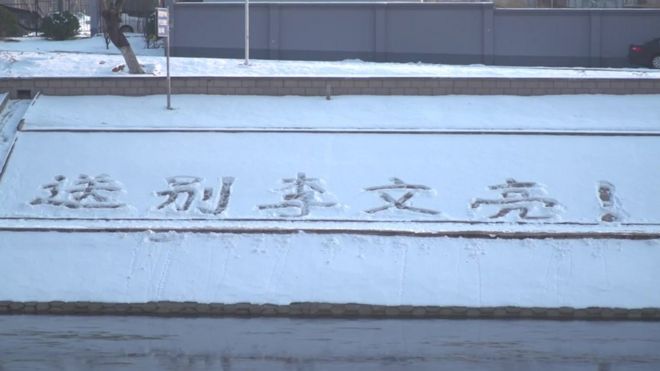
Chinese characters in the snow on the banks of the Tonghui river in Beijing read "Goodbye Li Wenliang!"
Image caption A tribute in snow to doctor Li Wenliang

On the snowy banks of the Tonghui river, the giant tribute to Li Wenliang remains intact. When we visited, a few locals were taking photos and talking quietly to each other.

A police car crawled slowly by.

Soon, with the warming weather, the characters will be gone.

Source: The BBC
13/11/2019

Xinjiang cotton sparks concern over ‘forced labour’ claims

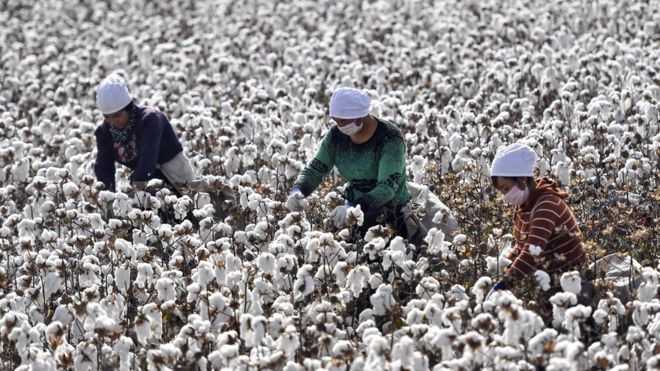
Farmers pick cotton during the harvest on October 21, 2019 in Shaya County, Xinjiang Uygur Autonomous Region of China.Image copyright GETTY IMAGES

Global retailers are facing scrutiny over cotton supplies sourced from Xinjiang, a Chinese region plagued by allegations of human rights abuses.

China is one of the world’s top cotton producers and most of its crop is grown in Xinjiang.

Rights groups say Xinjiang’s Uighur minority are being persecuted and recruited for forced labour.

Many brands are thought to indirectly source cotton products from the Xinjiang region in China’s far west.

Japanese retailers Muji and Uniqlo attracted attention recently after a report highlighted the brands used the Xinjiang-origin of their cotton as a selling point in advertisements.

H&M, Esprit and Adidas are among the firms said to be at the end of supply chains involving cotton products from Xinjiang, according to a Wall Street Journal investigation.

“You can’t be sure that you don’t have coerced labour in your supply chain if you do cotton business in China,” said Nathan Ruser, researcher at the Australian Strategic Policy Institute.

“Xinjiang labour and what is almost certainly coerced labour is very deeply entrenched into the supply chain that exists in Xinjiang.”

What is happening in Xinjiang?

UN experts and human rights groups say China is holding more than a million Uighurs and other ethnic minorities in vast detention camps.

Rights groups also say people in camps are made to learn Mandarin Chinese, swear loyalty to President Xi Jinping, and criticise or renounce their faith.

China says those people are attending “vocational training centres” which are giving them jobs and helping them integrate into Chinese society, in the name of preventing terrorism.

What is produced in Xinjiang?

The Xinjiang region is a key hub of Chinese cotton production.

China produces about 22% of global cotton supplies, according to a report by the Center for Strategic and International Studies (CSIS).

Last year, 84% of Chinese cotton came from Xinjiang, the report said.

That has raised concerns over whether forced labour has been used in the production of cotton from the region.

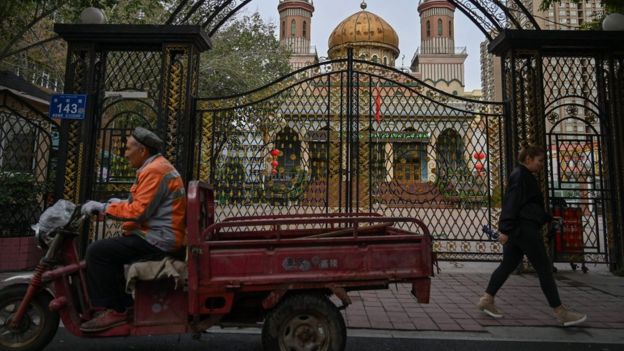
This photo taken on September 11, 2019 shows people walking past a mosque in Urumqi, the regional capital of Xinjiang.Image copyright GETTY IMAGES
Image caption The Uighurs are mostly Muslims, and number about 11 million in China’s Xinjiang region

Nury Turkel, chairman of the Uighur Human Rights Project in Washington, said the Uighurs were being “detained and tormented” and “swept into a vast system of forced labor” in Xinjiang.

In testimony to US congress, he said it was becoming “increasingly hard to ignore the fact” that the goods manufactured in the region have “a high likelihood” of being produced with forced labour.

Which brands use Xinjiang cotton?

Amy Lehr, director of CSIS Human Rights Initiative, said in many cases Western companies aren’t buying directly from factories in Xinjiang.

“Rather, the products may go through several stages of transformation after leaving Xinjiang before they are sent to large Western brands,” she said.

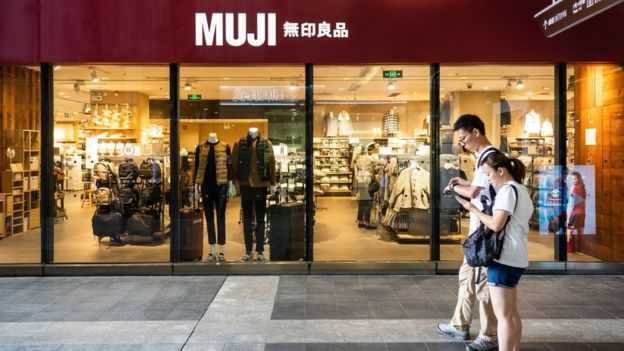
Some, like Muji, are very open about sourcing material from Xinjiang.

The Japanese retail chain launched a new Xinjiang Cotton collection earlier this year.

One of its advertisements boasts “soft and breathable” men’s shirts made from organic cotton “delicately and wholly handpicked in Xinjiang”.

Another Japanese fashion brand Uniqlo had also touted the Xinjiang region in an advertisement advertisment for men’s shirts.

In the fine print of the shirt description, the advert said the shirts were made from Xinjiang cotton, “famous for its superb quality”.

That reference was later removed from the advertisement “given the complexity of this issue”, according to a spokesperson for Uniqlo.

“Uniqlo does not have any production partners located in the Xinjiang region. Moreover, Uniqlo production partners must commit to our strict company code of conduct.

“To the best of our knowledge, this means our cotton comes only from ethical sources,” the spokesperson told the BBC.

Pedestrians walk past a Japanese household and consumer goods retailer, Muji store in ShenzhenImage copyright GETTY IMAGES

According to the Wall Street Journal report which focused on workers at a mill operated by Huafu Fashion in Aksu, Xinjiang, yarn made in the region was present in the supply chains of several international retailers including H&M, Esprit and Adidas.

Many of the companies looked into the allegations, including those without clear links to the Huafu mill.

In a statement to the BBC, Adidas said: “While we do not have a contractual relationship with Huafu Fashion Co., or any direct leverage with this business entity or its subsidiary, we are currently investigating these claims.”

“We advised our material suppliers to place no orders with Huafu until we have completed those investigations,” the Adidas spokesperson said.

Esprit, which also does not source cotton directly from Xinjiang, said it had made several inquiries earlier this year.

“We concluded that a very small amount of cotton from a Huafu factory in Xinjiang was used in a limited number of Esprit garments,” the firm said in a statement.

The company has instructed all suppliers to not source Huafu yarn from Aksu, the statement said.

H&M said it does not have “a direct or indirect business relationship” with any garment manufacturer in the Xinjiang region.

“We have an indirect business relationship with Huafu’s spinning unit in Shanyu, which is not located in the Xinjiang region, and according to our data, the vast majority of the yarn used for our garment manufacturing comes from this spinning unit,” a spokesperson for H&M said.

“Since we have an indirect business relationship with the yarn supplier Huafu, we also asked for access to their spinning facilities in Aksu. Our investigations showed no evidence of forced labor.”

Source: The BBC

28/07/2019

Vietnam renews demand for ‘immediate withdrawal’ of Chinese ship in disputed South China Sea

  • Hanoi says it has sent several messages to Beijing that a Chinese survey ship vacate the waters located in its exclusive economic zone
  • ‘Vietnam resolutely and persistently protects our sovereign rights … by peaceful means on the basis of international laws,’ a foreign ministry spokesperson said
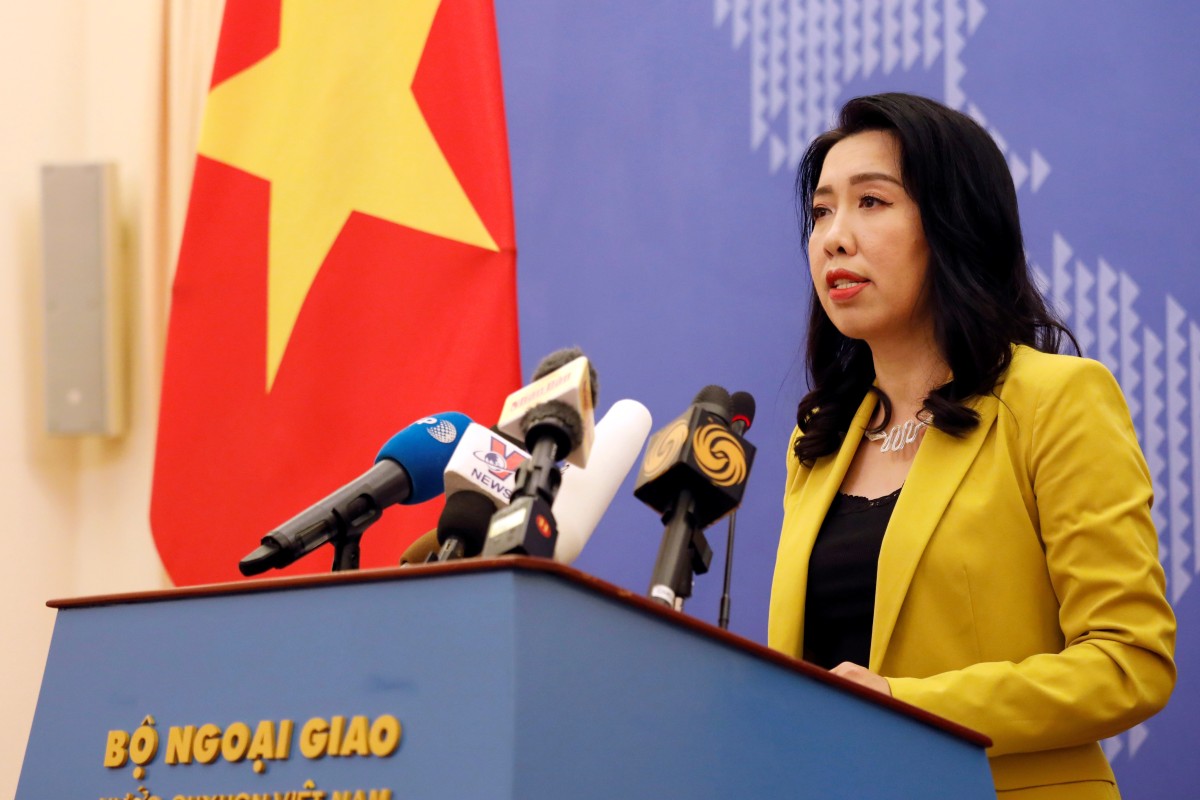
Vietnamese foreign ministry spokeswoman Le Thi Thu Hang. Photo: Reuters
Vietnam on Thursday called for the “immediate withdrawal” of a Chinese ship in the 
South China Sea

, as the stand-off over the disputed waters intensified.

Beijing last week issued a new call for Hanoi to respect its claims to the resource-rich region – which has historically been contested by Vietnam, as well as Taiwan, the Philippines, Malaysia and Brunei.
Hanoi responded by saying it had sent several messages to Beijing insisting that a Chinese survey ship vacate its waters, and doubled down on Thursday with new demands for the vessel’s removal.
“Vietnam has had several appropriate diplomatic exchanges … requesting immediate withdrawal from Vietnam’s exclusive economic zone,” a foreign ministry spokesperson told reporters, while refusing to disclose the ship’s precise location.
“Vietnam resolutely and persistently protects our sovereign rights … by peaceful means on the basis of international laws,” Le Thi Thu Hang added.
The ship, owned by the government-run China Geological Survey, begun research around the contested Spratly Islands on July 3, according to the US-based Center for Strategic and International Studies (CSIS).

Before it was spotted, a Chinese coastguard vessel also patrolled near Vietnamese supply ships in a “threatening manner”, CSIS said.

China has not confirmed the presence of its ships in the area.

China’s neighbours boost coastguards as tensions rise in South China Sea

Beijing invokes its so-called nine-dash line to justify its claim to historic rights to the waterway, and has previously built up artificial islands as well as installed airstrips and military equipment in the region.

The line runs as far as 2,000km (1,240 miles) from the Chinese mainland to within a few hundred kilometres of the Philippines, Malaysia and Vietnam.

In 2014 Beijing moved an oil rig into waters claimed by Hanoi, sparking deadly anti-China protests across Vietnam.

The latest stand-off in the sea prompted a swift rebuke from the United States over the weekend, calling for an end to China’s “bullying behaviour”.

US accuses China of acting like a bully in the South China Sea

“China’s repeated provocative actions aimed at the offshore oil and gas development of other claimant states threaten regional energy security,” the US State Department said Saturday.

The US has long called for freedom of navigation in the South China Sea, and on Thursday said it sailed a warship through the Taiwan Strait

.
Source: SCMP
17/07/2019

Vietnam, China embroiled in South China Sea standoff

HANOI (Reuters) – Vietnamese and Chinese ships have been embroiled in a weeks-long standoff near an offshore oil block in disputed waters of the South China Sea, which fall within Vietnam’s exclusive economic zone, two Washington-based think-tanks said on Wednesday.

China’s U-shaped “nine-dash line” marks a vast expanse of the South China Sea that it claims, including large swathes of Vietnam’s continental shelf where it has awarded oil concessions.

The Haiyang Dizhi 8, a ship operated by the China Geological Survey, on Monday completed a 12-day survey of waters near the disputed Spratly Islands, according to separate reports by the Center for Strategic and International Studies (CSIS) and the Center for Advanced Defense Studies (C4ADS)

One of the oil blocks it surveyed is licensed by Vietnam to Spanish energy firm Repsol, which was forced last year and in 2017 to cease operations in Vietnamese waters because of pressure from China.

As the Haiyang Dizhi 8 conducted its survey, nine Vietnamese vessels closely followed it. The Chinese ship was escorted by three China Coast Guard vessels, according to data from Winward Maritime, compiled by C4ADS.

In a separate incident days earlier, the China Coast Guard ship Haijing 35111 manoeuvred in what CSIS described as a “threatening manner” towards Vietnamese vessels servicing a Japanese-owned oil rig, the Hakuryu-5, leased by Russian state oil firm Rosneft in Vietnam’s Block 06.1, 370 km (230 miles) southeast of Vietnam.

That block is within the area outlined by China’s “nine-dash line”. A series of dashes on Chinese maps, the line is not continuous, making China’s claims often ambiguous.

Last year, Reuters exclusively reported that Rosneft Vietnam BV, a unit of Rosneft, was concerned that its drilling in Block 06.1 would upset China.
“On July 2 the vessels were leaving the Hakuryu-5 when the 35111 manoeuvred between them at high speed, passing within 100 metres of each ship and less than half a nautical mile from the rig,” CSIS said in its report.
It was not clear on Wednesday if any Chinese ships were still challenging the Rosneft rig.
In 2014, tension between Vietnam and China rose to its highest levels in decades when a Chinese oil rig started drilling in Vietnamese waters. The incident triggered boat rammings by both sides and anti-China riots in Vietnam.

‘READY TO FIGHT’

In response to reports of this month’s standoff, which first emerged on social media, Chinese foreign ministry spokesman Geng Shuang said on July 12 that China’s position on the South China Sea was “clear and consistent”.

“China resolutely safeguards its sovereignty in the South China Sea and maritime rights, and at the same time upholds controlling disputes with relevant countries via negotiations and consultations,” Geng said, without elaborating.

On Tuesday, Vietnam’s foreign ministry released a statement in response to unspecified “recent developments” in the South China Sea.

“Without Vietnam’s permission, all actions undertaken by foreign parties in Vietnamese waters have no legal effect, and constitute encroachments in Vietnamese waters, and violations of international law,” foreign ministry spokeswoman Le Thi Thu Hang said.

Neither statements confirmed or elaborated on the standoff.

Neither Rosneft nor Repsol immediately responded to an emailed request from Reuters for comment.

In a new statement on Wednesday, China’s foreign ministry spokesman Geng acknowledged that there had been an incident with Vietnam.

“We hope the Vietnam side can earnestly respect China’s sovereignty, rights, and jurisdiction over the relevant waters, and not take any actions that could complicate the situation,” Geng told a regular news conference.

On July 11, as China was conducting its survey of the blocks, Vietnam’s prime minister, Nguyen Xuan Phuc, visited the headquarters of the Vietnam Coast Guard in Hanoi.

State media did not mention the incident, but showed Phuc speaking to sailors on board vessels via a video link.

Phuc told the sailors to “stay vigilant and ready to fight” and to be aware of “unpredictable developments”, the Vietnam Coast Guard said in a statement on its website.

On the same day, Vietnam’s national assembly chairwoman, Nguyen Thi Kim Ngan, met her Chinese counterpart, Li Zhanshu, in Beijing, China’s Xinhua news agency reported.

The two officials agreed to “jointly safeguard peace and stability at sea”, Xinhua said.

Source: Reuters

06/03/2019

Huawei: The story of a controversial company

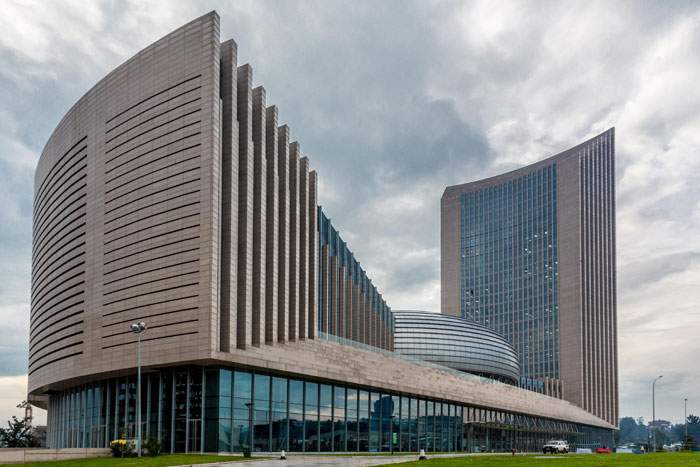
The African Union headquarters in Addis Ababa is a shiny spaceship-like structure that glistens in the afternoon sun.

With its accompanying skyscraper, it stands out in the Ethiopian capital.

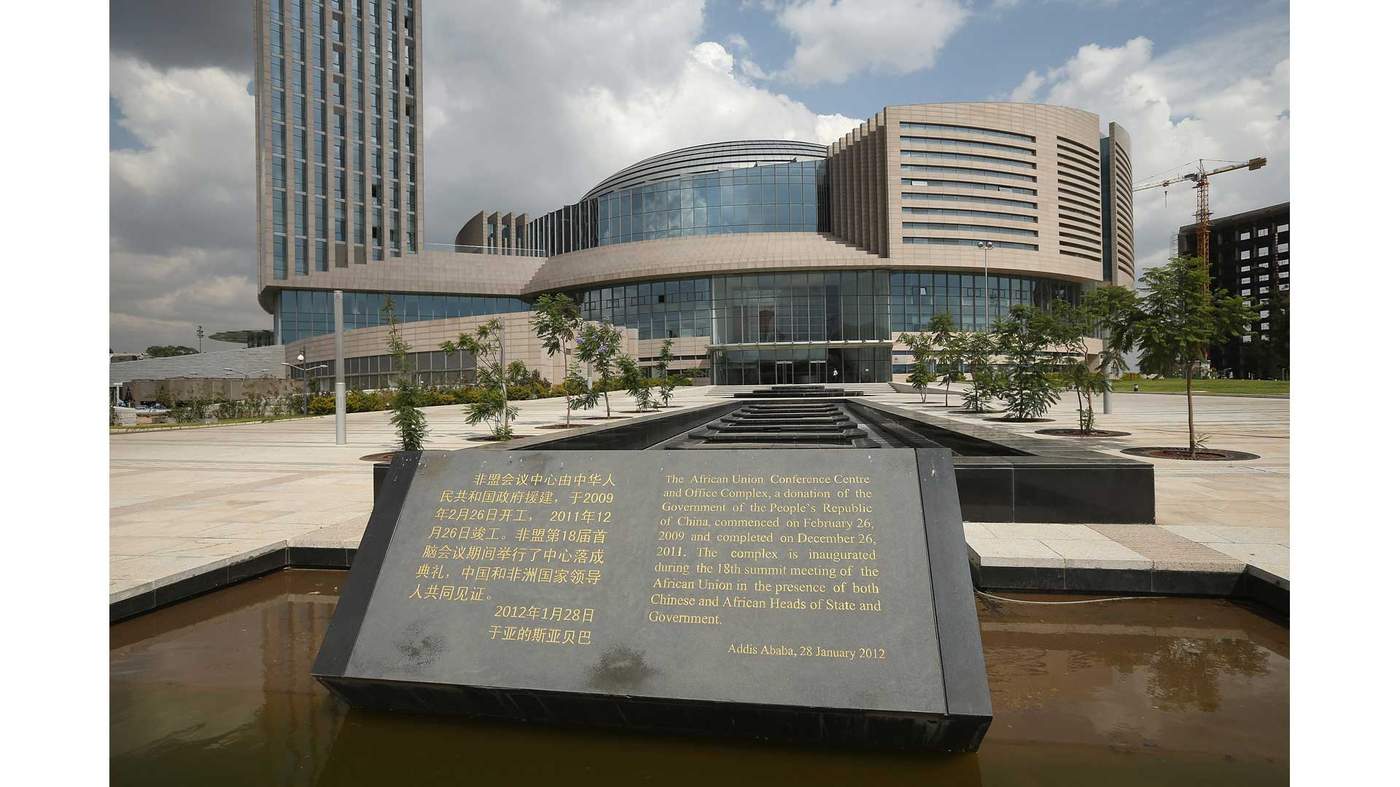
Greetings in Mandarin welcome visitors as they enter the lifts, and the plastic palm trees bear the logos of the China Development Bank.

African Union HQ, Addis Ababa

African Union HQ, Addis Ababa


Everywhere, there are small indications that the building was made possible through Chinese financial aid.

In 2006, Beijing pledged $200m to build the headquarters. Completed in 2012, everything was custom-built by the Chinese – including a state-of-the-art computer system.

For several years, the building stood as a proud testament to ever-closer ties between China and Africa. Trade has rocketed over the past two decades, growing by about 20% a year, according to international consultancy McKinsey. China is Africa’s largest economic partner.

But in January 2018, French newspaper Le Monde Afrique dropped a bombshell.

It reported that the AU’s computer system had been compromised.

The newspaper, citing multiple sources, said that for five years, between the hours of midnight and 0200, data from the AU’s servers was transferred more than 8,000km away – to servers in Shanghai.

This had allegedly continued for 1,825 days in a row.

Le Monde Afrique reported that it had come to light in 2017, when a conscientious scientist working for the AU recorded an unusually high amount of computer activity on its servers during hours when the offices would have been deserted.

It was also reported that microphones and listening devices had been discovered in the walls and desks of the building, following a sweep for bugs.

The reaction was swift.

Both AU and Chinese officials publicly condemned the report as false and sensationalist – an attempt by the Western media to damage relations between a more assertive China and an increasingly independent Africa.

But Le Monde Afrique said that AU officials had privately expressed concerns about just how dependent they were on Chinese aid – and what the consequences of that could be.

In the midst of all of this, one fact remained largely unreported.

The main supplier of information and communication technology systems to the AU headquarters was China’s best-known telecoms equipment company – Huawei.

The company says it had “nothing” to do with any alleged breach.

Huawei “served as the key ICT provider inside the AU’s headquarters”, said Danielle Cave of the Australian Strategic Policy Institute, in a review of the alleged incident.

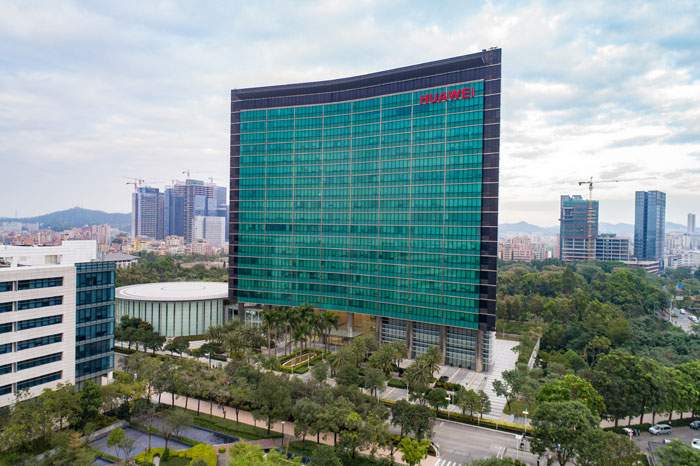
Huawei headquarters in Shenzhen, China

Huawei headquarters in Shenzhen, China

“This doesn’t mean the company was complicit in any theft of data. But… it’s hard to see how – given Huawei’s role in providing equipment and key ICT services to the AU building and specifically to the AU’s data centre – the company could have remained completely unaware of the apparent theft of large amounts of data, every day, for five years.”

There is no evidence to indicate that Huawei’s telecoms network equipment was ever used by the Chinese government – or anyone else – to gain access to the data of their customers.

Indeed, no-one has ever gone on record to confirm that the AU system was compromised in the first place.

But these reports played into years of suspicions about Huawei – that a large Chinese company might find itself unduly influenced by the Chinese government.

Ren and the rise of Huawei

“When I first started out 30 years ago… we didn’t really have any telephones. The only phones we had were those hand-cranked phones that you see in old World War II films. We were pretty undeveloped then.”

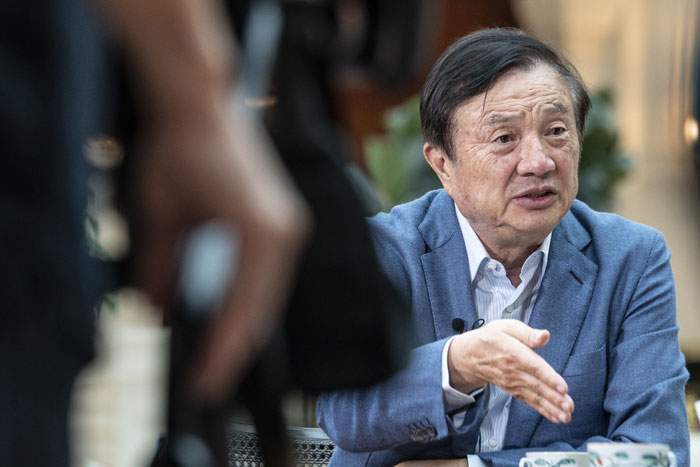
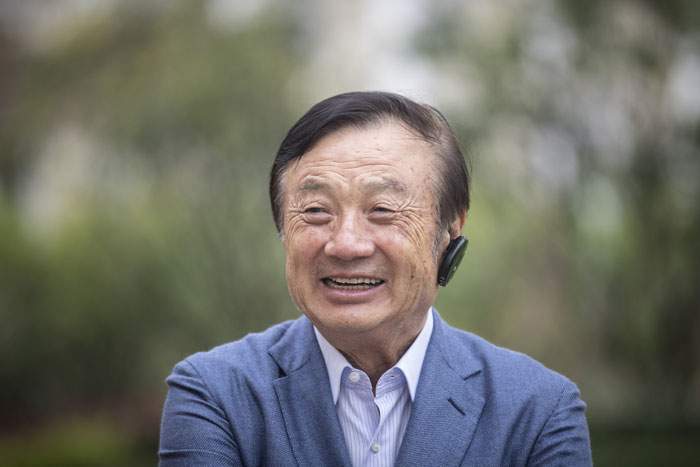
Huawei’s founder and chairman Ren Zhengfei is reminiscing to the BBC about the origins of the world’s second-biggest smartphone firm, while sitting in the Huawei headquarters in Shenzhen – a symbol of the success that he’s worked his whole lifetime for.

A long marbled staircase, covered in plush red carpet, greets you as you first walk in.

At the top of the stairs, a giant painting depicts a traditional Chinese New Year scene.

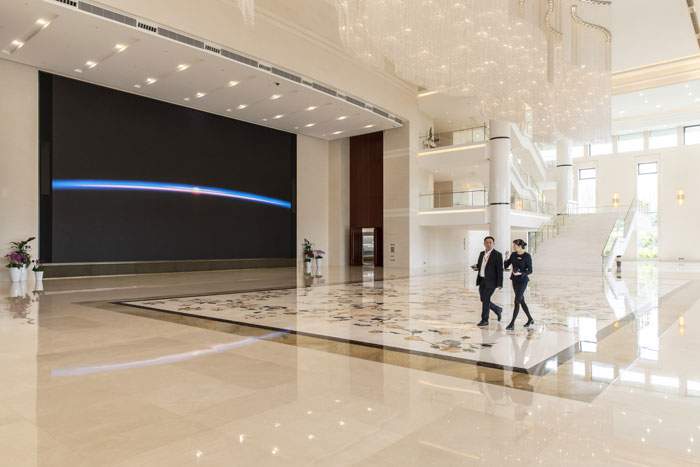
Inside Huawei's Shenzhen HQ

Inside Huawei’s Shenzhen HQ

A few kilometres away in Dongguan, Huawei’s latest campus is even more eye-catching.

The site – designed to accommodate the company’s 25,000 R&D staff – comprises 12 “villages”, each of which recreates the architecture of a different European city, among them Paris, Bologna and Granada.

It’s as if Silicon Valley had been re-imagined by Walt Disney. Long corridors of Roman pillars and picturesque French cafes adorn the campus, with a train connecting the different areas, running through manicured gardens and past an artificial lake.

It’s a world away from the environment that Mr Ren found himself in when he first started the company in 1987. “I founded Huawei when China began to implement its reform and opening up policy,” he says. “At that time, China was shifting from a planned economy to a market economy. Not only people like myself, but even the most senior government officials, did not have the vaguest idea of what a market economy was. It seemed it was hard to survive.”

Ren was born in 1944 in Southern China – a tumultuous, chaotic place, one of the poorest regions in an already destitute country.

For a long time, hardship was all he ever knew.

He was from a family of seven children. “They were very poor,” says David De Cremer, who has co-written a book on Ren and Huawei.

“I think hardship is something that you can see throughout his life, and which he keeps emphasising himself.”

To escape that life of poverty and drudgery, Ren did what many young Chinese men of that era did. He joined the army.

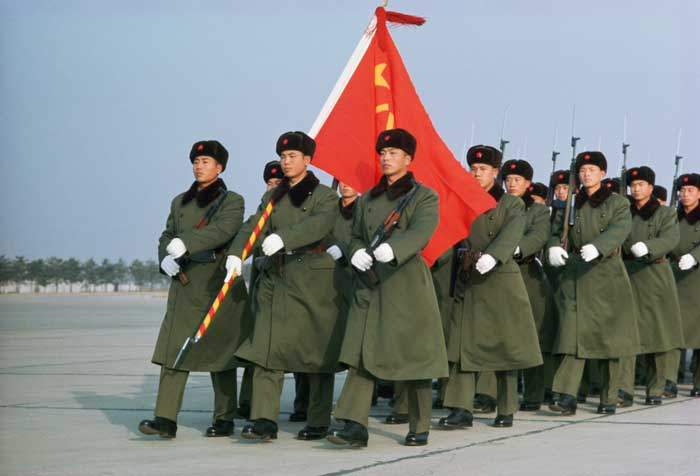
Soldiers from the People's Liberation Army, 1972

Soldiers from the People’s Liberation Army, 1972

“I was a very low-ranking officer in the People’s Liberation Army,” he says. “I served in an ordinary construction project, not a field unit. At the time, I was a technician of a company in the military, and then I became an engineer.”

He left the military in 1983 when China began to downsize its forces, and went into the electronics business.

By his own admission, he wasn’t a great businessman at first.

“I was someone who had been in the military all my life at the time, used to doing what I was told,” he says. “Suddenly, I began to work in a market economy. I was at a total loss. So I too suffered losses, I too was deceived, and I was cheated.”

But he was quick to learn, and was a keen student of Western business practices and European history.

“I did research on what exactly a market economy was all about,” he says. “I read books on laws, including those about European and US laws. At that time, there were very few books on Chinese laws, and I had to read those on European and US laws.”

Five years later, he founded Huawei – the name can be translated as “splendid achievement” or “China is able” – to sell simple telecoms equipment to the rural Chinese market. Within a few years, Huawei was developing and producing the equipment itself.

Sometime in the early 90s, Huawei won a government contract to provide telecoms equipment for the People’s Liberation Army.

By 1995, the company was generating sales of around US$220,000, mainly from selling to the rural market.

The following year Huawei was given the status of a Chinese “national champion”. In practice, this meant the government closed the market to foreign competition.

At a time when China’s economy was growing by an average of 10% per year, this was no small advantage. But it was only when Huawei started to expand overseas in 2000, that it really saw its sales soar.

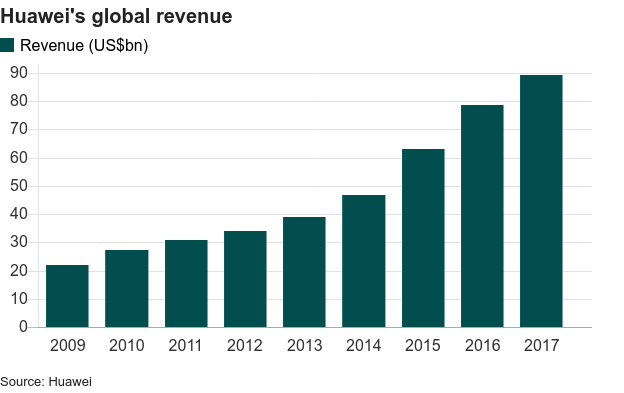
In 2002, Huawei made US$552m from its international market sales. By 2005 its international market contracts exceeded its domestic business for the first time.

Ren’s early days in business instilled in him a desire to protect his company from the whims and fancies of the stock market. Huawei is privately held and employee-owned. This gave Ren the power to plough more money back into research and development. Each year, Huawei spends US$20bn on R&D – one of the biggest such budgets in the world.

“Publicly listed companies have to pay a lot of attention to their balance sheets,” he says. “They can’t invest too much, otherwise profits will drop and so will their share prices. At Huawei, we fight for our ideals. We know that if we fertilise our ‘soil’ it will become more bountiful. That’s how we’ve managed to pull ahead and succeed.”

One story from the early days of the company tells how Ren was cooking for his staff (he loves to cook, or so the story goes). Suddenly he rushed out of the kitchen and announced to the room: “Huawei will be a top three player in the global communications market 20 years from now!”

And that’s exactly what happened. In fact, those ambitions were surpassed.

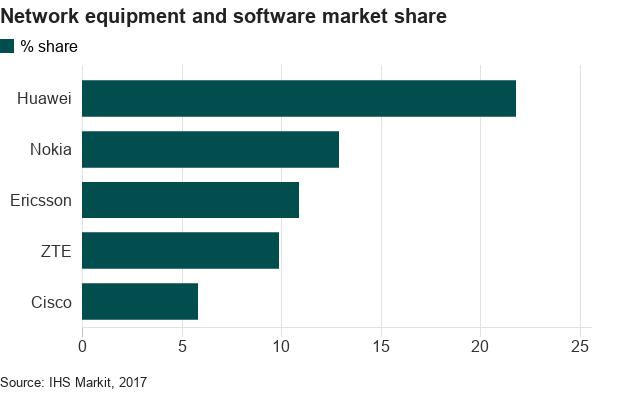
Today, Huawei is the world’s biggest seller of network telecommunications equipment.

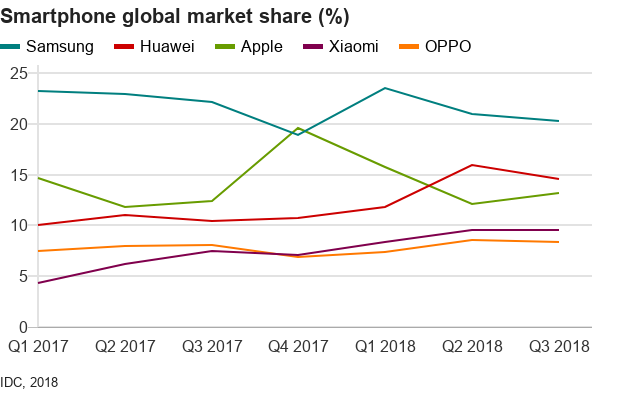
From aspiring to be a company like Apple, it now sells more smartphones than Apple.

But shadows have continued to loom over Huawei’s international success.

Ren and Huawei’s links to the Chinese Communist Party have raised suspicions that the company owes its meteoric rise to its powerful political connections in China. The US has accused Huawei of being a tool of the Chinese government.

It’s an accusation which Ren denies. “Please don’t think that Huawei has become what it is today because we have special connections,” he says. “Even 100% state-owned companies have failed. Do good connections mean you will succeed then? Huawei’s success is still very much due to our hard work.”

The case against

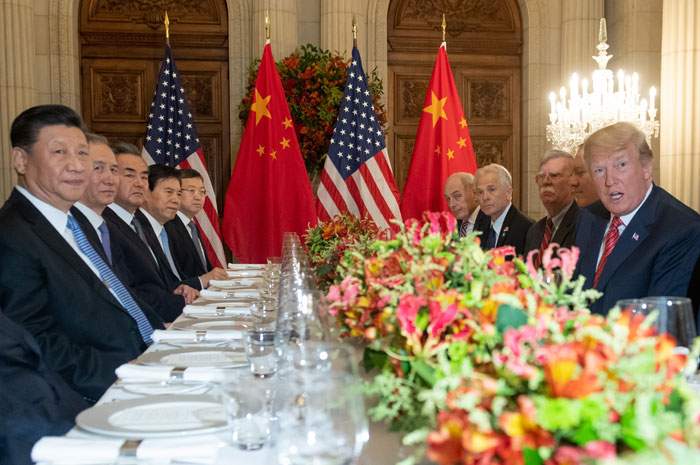
It was 1 December 2018. US President Donald Trump and China’s President Xi Jinping were dining on grilled sirloin followed by caramel rolled pancakes at the G20 summit in Buenos Aires.

They had a lot to discuss. The US and China were in the middle of a trade war – imposing tariffs on each other’s goods – and growth forecasts for both countries had recently been cut as a result. This was adding to the fear of a slowing global economy.

In the event, the two leaders agreed a truce in the trade war, with Donald Trump tweeting that “Relations with China have taken a BIG leap forward!”

Xi Jinping and Donald Trump at dinner, December 2018

Xi Jinping and Donald Trump at dinner, December 2018

But thousands of kilometres north in Canada, an arrest was taking place that would throw doubt on this rapprochement.

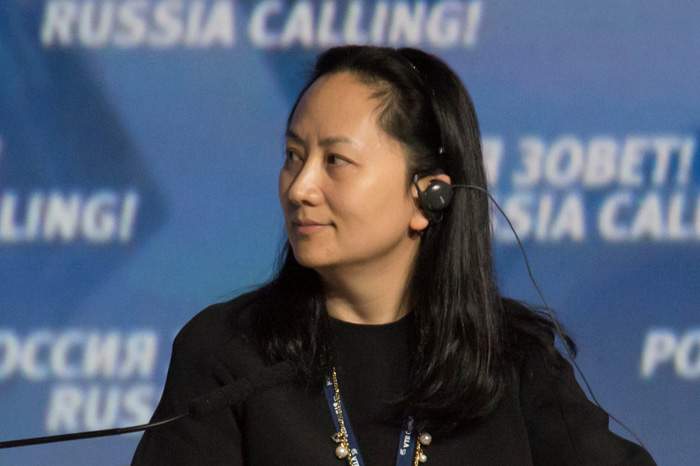
Meng Wanzhou, Huawei’s chief financial officer and Ren Zhengfei’s eldest daughter, had been detained by Canadian officials while transferring between flights at Vancouver airport.

The arrest had come at the request of the US, who accused her of breaking sanctions against Iran.

“When she was detained, as her father, my heart broke,” says Ren, visibly emotional. “How could I watch my child suffer like this? But what happened, has happened. We can only depend on the law to solve this problem.”

Meng Wanzhou being driven to court in Canada

Meng Wanzhou being driven to court in Canada

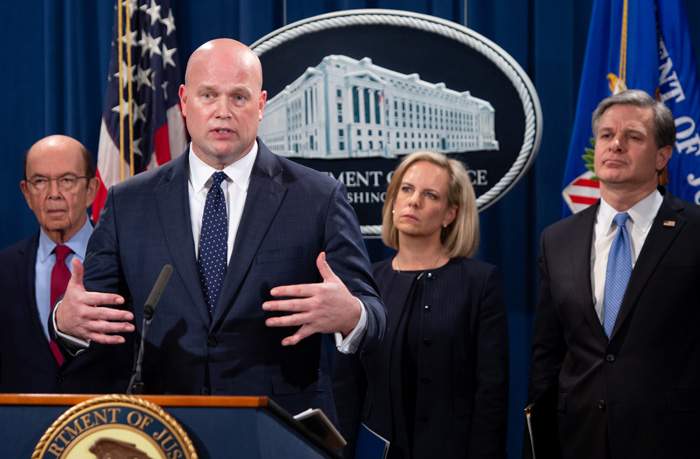
Huawei’s problems were just beginning. Nearly two months later, the US Department of Justice filed two indictments against Huawei and Ms Meng.

Under the first indictment, Huawei and Ms Meng were charged with misleading banks and the US government about their business in Iran.

The second indictment – against Huawei – involved criminal charges including obstruction of justice and the attempted theft of trade secrets.

Both Huawei and Ms Meng deny the charges.

January 2019: Acting US attorney general Matthew Whittaker announces charges against Huawei and Meng Wanzhou

January 2019: Acting US attorney general Matthew Whittaker announces charges against Huawei and Meng Wanzhou

The charge of stealing trade secrets centres on a robotic tool – developed by T-Mobile – known as Tappy.

According to legal documents, Huawei had tried to buy Tappy, a device which mimicked human fingers by tapping mobile phone screens rapidly to test responsiveness.

T-Mobile was in partnership with Huawei at the time, but it rebuffed the Chinese firm’s offers, fearing it would use the technology to make phones for T-Mobile’s competitors.

It’s alleged that one of Huawei’s US employees then smuggled Tappy’s robotic arm into his satchel so that he could send its details to colleagues in China.

After the alleged theft was discovered, the Huawei employee claimed that the arm had mistakenly fallen into his bag.

Huawei claimed that the employee had been acting alone, and the case was settled out of court in 2014. But the latest case is built on email trails between managers in China and the company’s US employees, linking Huawei management to the alleged theft.

The indictment also details evidence of a bonus scheme from 2013, offering Huawei employees financial rewards for stealing confidential information from competitors.

Huawei has denied any such scheme exists.

Meng Wanzhou, photographed in 2014

Meng Wanzhou, photographed in 2014

This is not the first time that Huawei has been accused of stealing trade secrets. Over the years companies like Cisco, Nortel and Motorola have all pointed the finger at the Chinese firm.

But US fears about Huawei are about much more than industrial espionage. For more than a decade, the US government has seen the company as little more than an arm of the Chinese Communist Party.

These concerns have been brought to the fore with the advent of “fifth generation” or 5G mobile internet, which promises download speeds 10 or 20 times faster than at present, and much greater connectivity between devices.

As the world’s biggest telecoms infrastructure provider, Huawei is one of the companies best placed to build new 5G networks. But the US has warned its intelligence partners that awarding contracts to Huawei would be tantamount to allowing the Chinese spy on them.

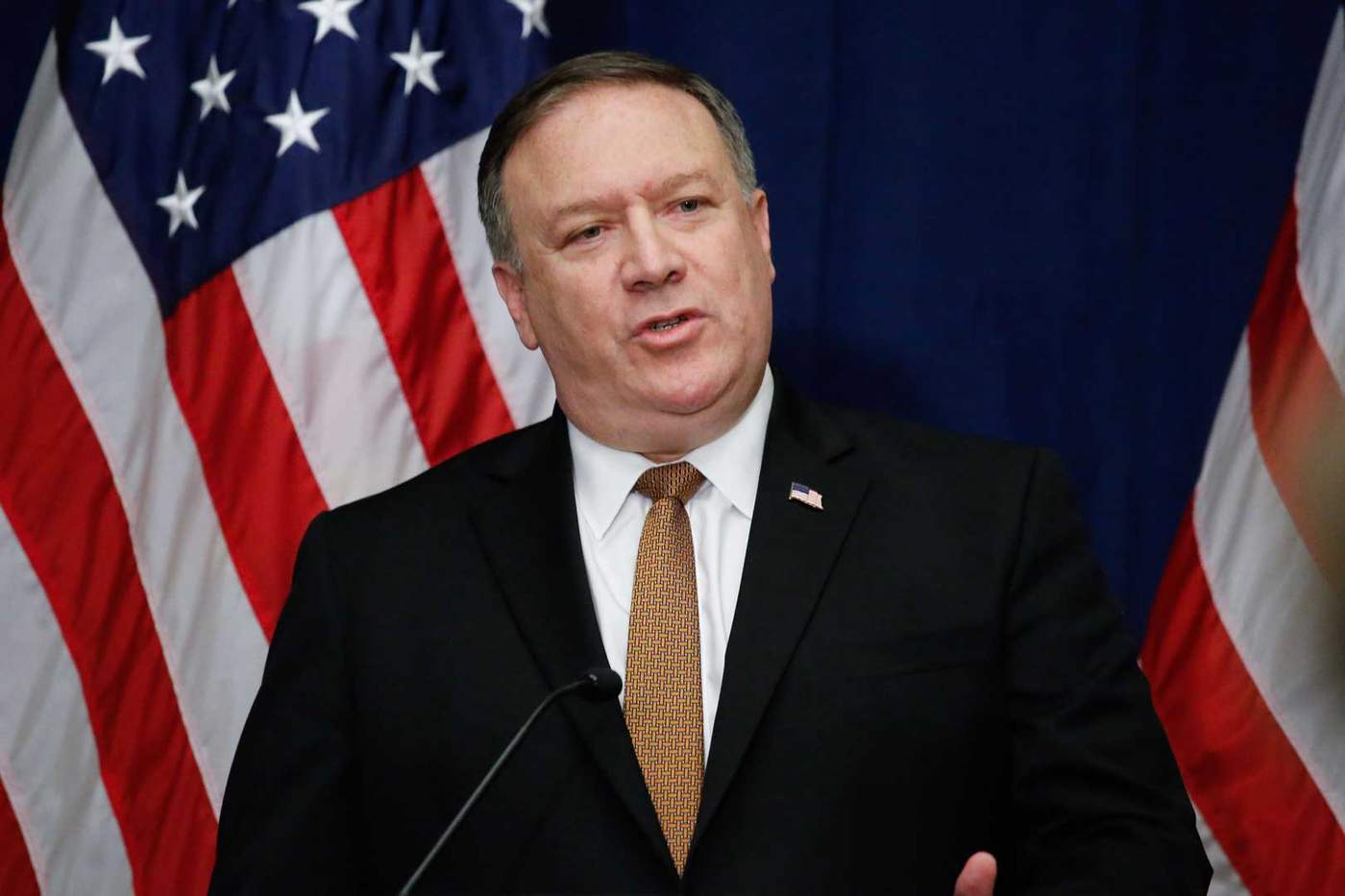
US Secretary of State Mike Pompeo recently cautioned against Huawei, saying, “If a country adopts this and puts it in some of their critical information systems, we won’t be able to share information with them.”

US Secretary of State Mike Pompeo

US Secretary of State Mike Pompeo

The UK, Germany and Canada are reviewing whether Huawei’s products pose a security threat.

Australia went a step further last year, and banned equipment suppliers “likely to be subject to extrajudicial directions from a foreign government”.

Huawei was not mentioned by name, but Danielle Cave of the Australian Strategic Policy Institute says the company posed a national security risk because of its government links.

She cites an article in Chinese law that makes it impossible for any company to refuse to help the Chinese Communist Party in intelligence gathering.

“Admittedly, what is missing from this debate is the smoking gun,” she says.

“For the average person who has a Huawei smartphone it’s not a big deal. But if you’re a Western government that has key national security to protect – why would you allow this access to a company that is in the political system that China is in?”

For his part, Ren says that Huawei’s resources have never and would never be used to spy for the Chinese government.

“The Chinese government has clearly said that it won’t ask companies to install backdoors,” he says. A “backdoor” is a term used to describe a secret entry point in software or a computer system that gives access to the person or entity who installed it to the inner workings of the system.

“Huawei will not do it either,” he continues. “Our sales revenues are now hundreds of billions of dollars. We are not going to risk the disgust of our country and our customers all over the world because of something like that. We will lose all our business. I’m not going to take that risk.”

Xi’s China

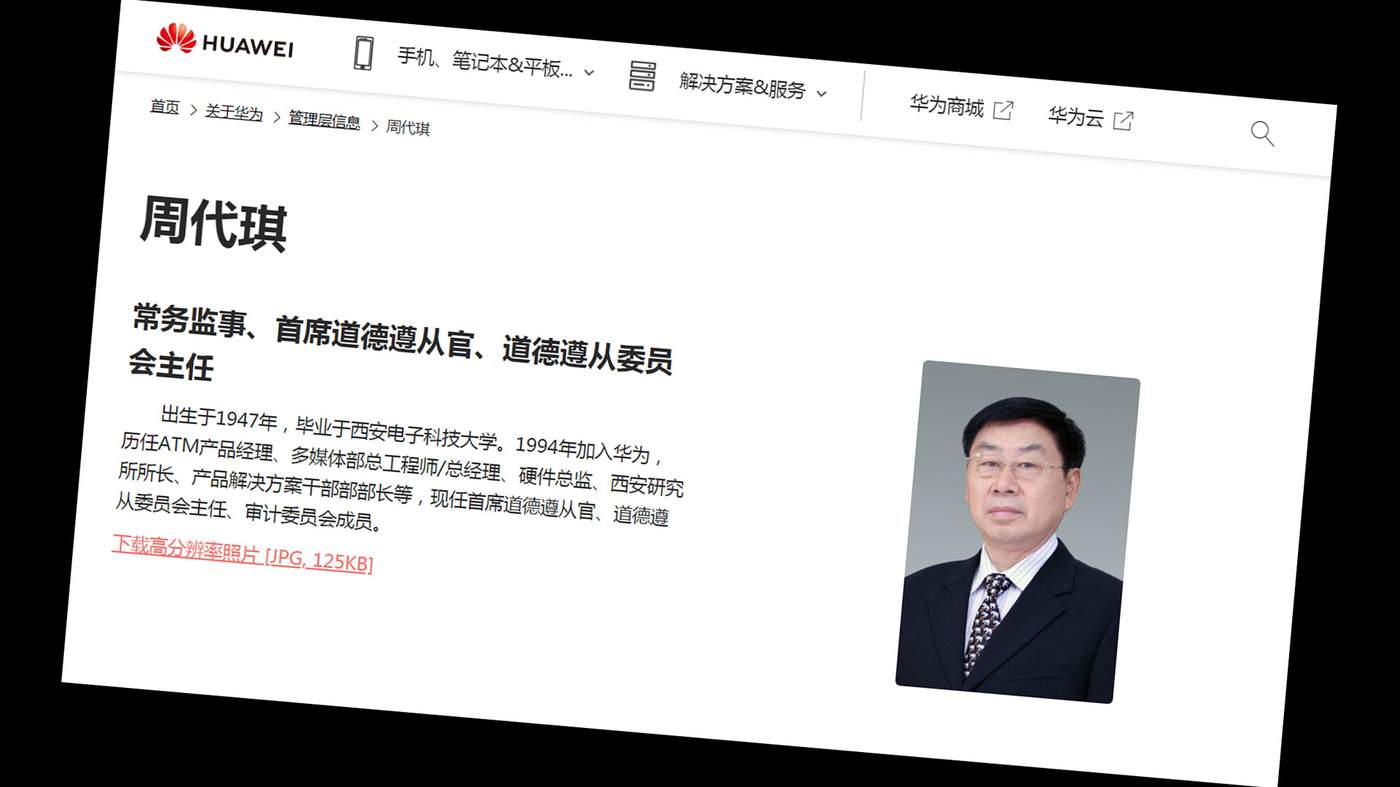
Zhou Daiqi is Huawei’s chief ethics and compliance officer.

He’s been with the company for nearly 25 years, in a number of different positions – chief engineer, director of the hardware department, head of the research centre in Xi’an, according to his biography on the company’s website. He is also understood to combine his high-ranking executive duties with another role – party secretary of Huawei’s Communist Party committee.

All companies in China are required by law to have a Communist Party committee.

Zhou Daiqi's profile on Huawei's website

Zhou Daiqi’s profile on Huawei’s website

The official line is that they exist to ensure that employees uphold the country’s moral and social values. Representatives of the committee are also often tasked with helping workers with financial problems.

But critics of China’s one-party system argue that they allow the state to exert control on corporate China. And they say the level of this control has increased in recent years.

“[President] Xi Jinping is exerting greater control over the business community in China,” says Elliott Zaagman, who regularly advises Chinese companies on their PR strategy. “As these companies gain power and influence overseas, the party doesn’t want to lose control over them.”

Ren, however, argues that the role of Huawei’s Communist Party committee is far less important than many in the West believe.

“[It] serves only to educate its employees,” he says. “It is not involved in any business decisions.”

In China, most chief executives are Communist Party members.

Every year, they dutifully turn up to the National People’s Congress along with local and national party chiefs, officials and chief executives.

It’s where the big economic decisions are voted on – although no proposal is put forward which hasn’t already been agreed upon.

Still, big CEOs come to show their commitment to the party, and to contribute to working papers that are meant to help the government understand the concerns of the business community.

Being a member of the party is very much a networking opportunity – in the way one would join a business association.

Elliott Zaagman argues that this is a system that demands loyalty.

“There is no separation from the party and the state,” he says.

“The system in China encourages the lack of transparency in companies like Huawei.”

The worry is that these close links mean that if the Communist Party asked a company to do something, they would have no choice but to comply.

And if that company is one that is involved in sensitive global telecoms infrastructure projects, it’s easy to see why Western observers would be worried.

There is no evidence to indicate that Huawei is in any way under the orders of the Chinese government, or that Beijing has any plans to dictate business plans and strategy at Huawei – particularly when it comes to spying.

But the way in which the Chinese Communist Party has robustly defended Huawei has raised questions about how independent the company is of its influence.

For example, Beijing stated that Ms Meng’s detention was a rights abuse .

And while her extradition case to the US was moving forward, China detained two Canadian citizens and accused them of stealing state secrets. Critics say the detentions are linked to Ms Meng’s arrest.

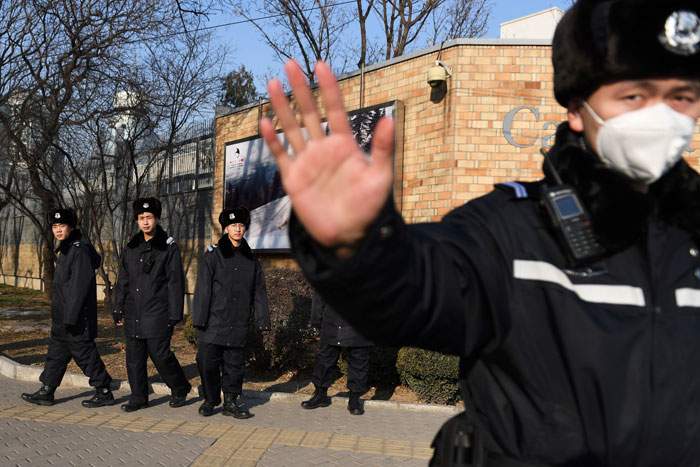
December 2018: Chinese police patrol outside Canada's embassy in Beijing

December 2018: Chinese police patrol outside Canada’s embassy in Beijing

While not commenting on the arrest of the Canadians, Ren says China’s defence of Huawei is understandable.

“It is the Chinese government’s duty to protect its people,” he says. “If the US attempts to gain competitive edge by undermining China’s most outstanding hi-tech talent, then it is understandable if the Chinese government, in turn, protects its hi-tech companies.”

Over the past few years, there have been signs of a bigger push by the government to get private companies, and in particular tech firms, to cooperate with party rules – even when they are firmly resistant.

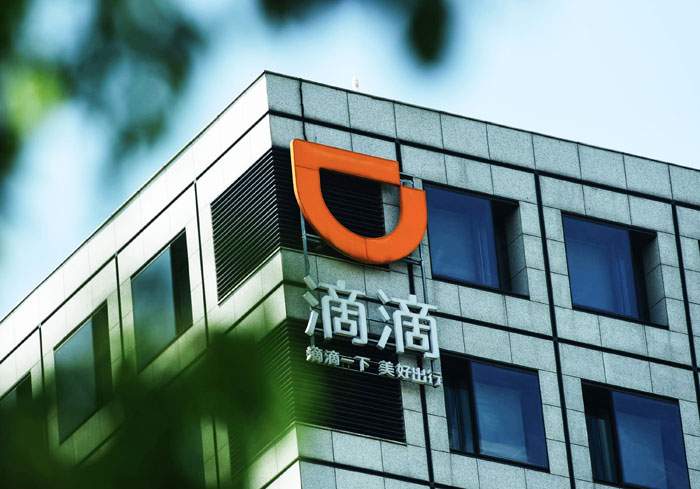
 A Didi Chuxing logo adorns a building in Hangzhou, China

 A Didi Chuxing logo adorns a building in Hangzhou, China

China’s ride-hailing giant Didi Chuxing’s troubles are an example of the struggles Chinese firms face when they try to uphold their independence in the face of government pressure.

Chinese attitudes to data collection and data privacy are different to those in the West – many people don’t care if businesses have access to their data, arguing that it adds to the convenience of life and work.

Government access to data in China is not the free-for-all that many outside of China assume it to be

Samm Sacks, CSIS

So it wasn’t unusual when, after the murders of two of its passengers by Didi drivers, regulators used the scandal to force Didi to share more corporate data with the government. But Didi resisted – citing customer privacy. Under Chinese law, it had no choice but to comply.

When it did, it handed over “three boxes of data printed on paper, including 95 hard copies for authorities to review”.

According to Samm Sacks of the Center for Strategic and International Studies (CSIS), the case demonstrates that “government access to data in China is not the free-for-all that many outside China assume it to be”.

She says this indicates that there appears to be “a kind of tug of war between the government and companies over data”.

How this plays out will determine how Chinese companies are viewed by foreign governments when they do business overseas.

Companies like Huawei have grown up in a system where to survive and thrive they needed strong links to the Chinese government – there was and is no other choice. But these links could harm their reputation abroad.

“It’s two different systems,” says Zaagman. “Think of it like an electrical outlet. China’s plug doesn’t fit in to the outlets we have in the West.”

What’s at stake

“Basically you want to connect to everything that can be connected.”

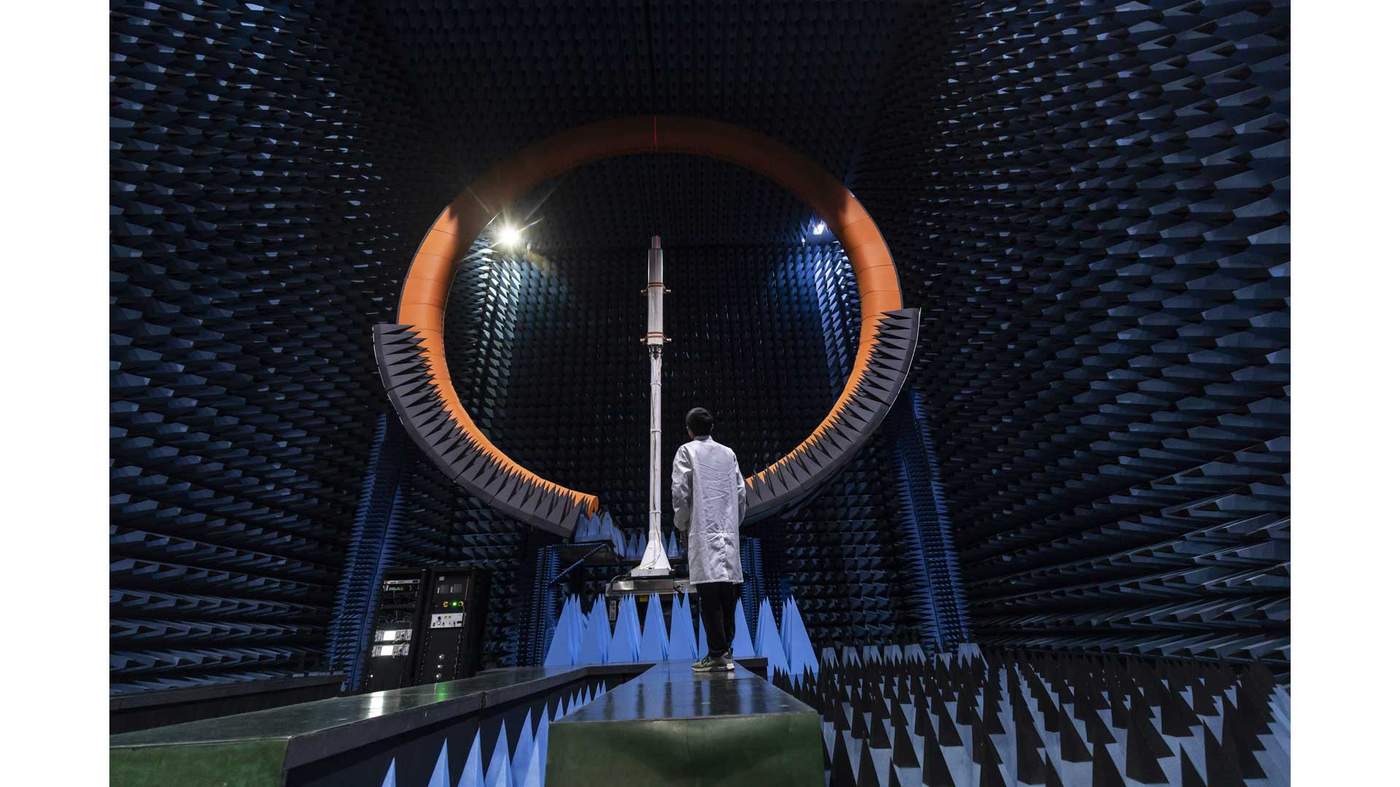
Zhu Peiying, head of Huawei’s 5G wireless labs, is showing off devices that can connect to the new technology. From a smart toothbrush that collects data about how well you brush your teeth, to a smart cup that reminds you when you should drink some water, this is a world where everything you can think of is being measured and analysed.

At its most sophisticated, everything in entire cities would be connected – driverless cars, the temperature of buildings, the speed of public transport – the list is endless.

Huawei is thought to be a year ahead of its competitors in terms of its technological expertise and what it can offer customers, according to industry sources.

It’s also thought that the company can offer prices that are about 10% cheaper than its competitors, although critics claim this is because of state support.

Ren dismisses this, saying that Huawei doesn’t receive government subsidies.

He says the real reason behind the US resistance to Huawei is its superior technology.

“There’s no way the US can crush us,” he says. “The world needs Huawei because we are more advanced. Even if they persuade more countries not to use us temporarily we could just scale things down a bit.”

Many analysts say that Huawei’s exclusion from US networks could actually cause the US to fall behind in its 5G capabilities.

“It would mean we wouldn’t be able to participate in any blended network [using Huawei] in Europe or Asia,” says Samm Sacks of CSIS. “That would put us at a significant disadvantage.”

What this would mean in reality is a world of two internets – or what analysts are calling a “digital iron curtain” – dividing the world into parts that do business with Chinese companies like Huawei, and those that don’t.

Because of US pressure on its allies, Huawei has been on an aggressive public relations campaign to win over customers and government stakeholders.

In recent days, Vodafone’s boss Nick Read called on the US to share any evidence it has about Huawei, while Andrus Ansip, the European Commission’s vice president for the digital single market, said in a tweet that he had met with Huawei’s rotating CEO to discuss the importance of being open and transparent, as they explored ways of working together.

But suspicions about Huawei remain.

One security firm reports a sharp rise in inquiries by Asian government clients about Huawei.

“Some have asked us how much they should worry about whether Huawei is really a liability,” says an analyst who consults to Asian governments, on condition of anonymity.

Ren is sanguine about such concerns.

“For countries who believe in them [suspicions about Huawei] we will hold off,” he says. “For countries who feel Huawei is trustworthy, we may move a little faster. The world is so big. We can’t walk across every corner of it.”

But this is about more than just one company or one CEO and his family.

Increasingly, this is perceived as a battle between two world orders, and which one is the future.

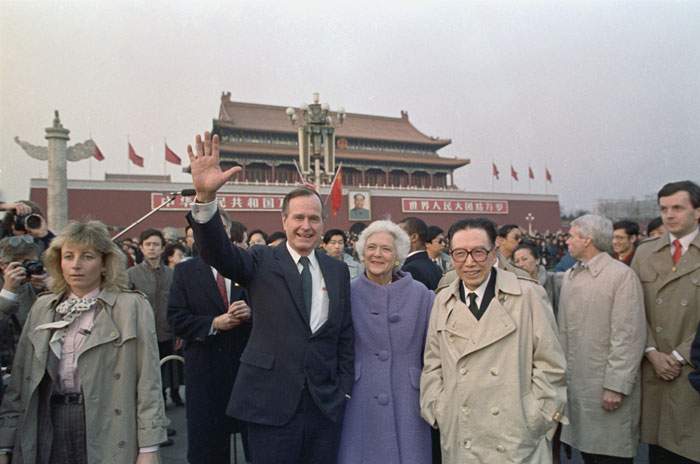
In the early days of China opening up, US presidents like George HW Bush espoused the merits of engagement.

“No nation on Earth has discovered a way to import the world’s goods and services while stopping foreign ideas at the border,” he said in a 1991 speech. “Just as the democratic idea has transformed nations on every continent, so, too, change will inevitably come to China.”

1989: George HW Bush in Beijing - he encouraged economic engagement with China

1989: George HW Bush in Beijing – he encouraged economic engagement with China

Previous US administrations believed that economic engagement in China would lead to China following a freer, more “liberal” path.

There’s no denying China has made remarkable strides in the past 40 years. The economy grew by an annual average of 10% for three decades, helping to lift 800 million people out of poverty. It is now the second-largest economy in the world, only surpassed by the US.

Some estimates put China’s economy ahead of America’s by 2030.

It achieved this while maintaining one-party rule and the supremacy of the Communist Party.

But its success has raised concerns that it is only possible with a huge amount of government control over the country’s companies. The fear is that control could be used to achieve the Communist Party’s goals – which are at this point unclear.

“It’s a double-edged sword for China,” says Danielle Cave. “[Because of its laws] the Chinese Communist Party has made it virtually impossible for Chinese companies to expand without attracting understandable and legitimate suspicion.”

Added to this, China has become more authoritarian under Xi Jinping’s rule.

President Xi Jinping 

President Xi Jinping 

“Xi is systematically undermining virtually every feature that made China so distinct and helped it work so well in the past,” writes Jonathan Tepperman, editor in chief of Foreign Policy.

“His efforts may boost his own power and prestige in the short term and reduce some forms of corruption. On balance, however, Xi’s campaign will have disastrous long-term consequences for his country and the world.”

But Ren dismisses this, insisting that China is more open than ever before.

“If this meeting took place 30 years ago,” he says of our interview, “it would have been very dangerous for me. Today, I can be straightforward when answering difficult questions. This shows that China has a more open political environment.”

Still, Ren is hopeful of the direction China will take in the future.

“China has more or less tried to close itself off from the outside world for 5,000 years,” he says. “Yet we had found ourselves poor, lagging behind other nations. It was only in the past 30 years since Deng Xiaoping opened China’s doors to the world that China has become more prosperous. Therefore, China must continue to move forward on the path of reform and opening-up.”

In one of Huawei’s vast campus sites across Shenzen, lies a man-made lake. Swimming in these serene waters are two black swans.

There is a story that Ren put the birds here to remind employees of “black swan” events – unpredictable and catastrophic financial eventualities that are impossible to prepare for. He dismisses this as an urban myth, but it’s hard not to read something into it.

For Huawei, and Ren, these are highly uncertain times with no way of telling what lies ahead.

Source: The BBC
Law of Unintended Consequences

continuously updated blog about China & India

ChiaHou's Book Reviews

continuously updated blog about China & India

What's wrong with the world; and its economy

continuously updated blog about China & India