Archive for ‘Central Military Commission (CMC)’

28/10/2019

Military World Games of “historic” and “peace” close in Wuhan

(SP)CHINA-WUHAN-7TH MILITARY WORLD GAMES-CLOSING CEREMONY

Xu Qiliang, president of the 2019 Military World Games organizing committee and also vice chairman of China’s Central Military Commission, declares the 7th CISM Military World Games close during the closing ceremony of the Games in Wuhan, capital of central China’s Hubei Province, Oct. 27, 2019. (Xinhua/Xiao Yijiu)

WUHAN, Oct. 27 (Xinhua) — Xu Qiliang, president of the 2019 Military World Games organizing committee, also vice chairman of China’s Central Military Commission, declared the Games close on Sunday in Wuhan, central China, to wrap up the biggest ever “Olympics for the military”.

Chinese Vice Premier Sun Chunlan, also president of the Wuhan Military World Games organizing committee, thinks highly of the organization of the Games and the performances of worldwide athletes.

“We have experienced a successful, wonderful and unforgettable military games in the lastest 10 days. This is a military gala of sharing friendship and safeguarding peace,” said Sun at the closing ceremony.

“This Games have showcased the spirits of the military personnel, which uphold perseverance, challenging limits and striving for better. This Games are full of wonders and achievements and are set to leave China’s marks in its history,” she added.

According to Sun, seven world records had been set and 85 International Military Sports Commission (CISM) affiliated records had been broken here in the tournament, as athletes rated it as a high-level international event, which featured 67 Olympic and world champions.

After 10-day competitions, host China collected 133 golds and 239 medals in total, the first time for a country to grab 100 plus golds. The traditional powerhouse Russia obtained 51 golds and 161 medals in all as an evident runner-up in medal tally, followed by Brazil, the host for 2011 Games, with 21 golds and 88 medals. France, Poland and Germany lined up from fourth to sixth places, all clinching 10 plus golds.

Herve Piccirillo, CISM president, hailed the Games as great success and tagged it with two key words “historic” and “peace” on Friday, lauding its material and spiritual legacy to the host city and the world.

“These are games that will mark the history of military competitions and develop new practices in the future,” said Piccirillo in an interview with Xinhua.

The president picked the word “historic” for its history-making participation of nearly 10,000 military personnel, investment for games organization, mobilization of volunteers and passion from Chinese people.

Explaining the word “peace”, he said, “because the message that is carried by a whole people, because beyond the games, it is all the Chinese people who are spreading this message of solidarity and peace, which corresponds to ‘friendship through sport’, the motto of the CISM.”

The 52-year-old Frenchman repeated his praise on the Games on Sunday at the closing ceremony, saying “the Military World Games leaves Wuhan unparalleled tangible and intangible heritage for the future generations.”

Piccirillo applauded the Athletes’ Village and sports facilities built for the Games. “Athletes’ Village represents the effectiveness of the city government’s effort to balance between urban development and environmental protection,” said he. “The multiple sports venues built in line with highest standards in the world can serve any future international sports event that Wuhan may step up to host.”

It’s the first time all competitions for the Games had been staged in a single city. The size of the host city, as well as its diversified terrain and abundant water resources, made it possible in Wuhan, where 35 sports venues were built or renovated to meet international standards.

A 30-building Village was built to accommodate the athletes and coaches, which is also the first attempt in the Games’ 24-year history.

Piccirillo expressed his sincere thanks to the organizers and volunteers for their contributions and services to the promotion of military sports, commenting “you have completed your jobs excellently.”

“I would like to thank the governments of China, Hubei province, and Wuhan city for enabling us all, valid and disabled, to share the common value of the military under the banner of inclusiveness, equality, universal love and sharing, and this is the greatest success of the event,” said Piccirillo.

“All these will not have been possible without the conscientious efforts of the organizing committee. The volunteers have made our stay in Wuhan better, easier and more convenient.”

Ma Guoqiang, Party secretary of Wuhan city, paid tributes to the participants across the world, saying they have been “writing down a brand-new page in the history of world military sports,” and honored their performances at the event.

“Military athletes from 109 countries have come here and given their full and best plays in the competitions. They have not only demonstrated excellent sports skills, but also showed high morale,” said Ma at the ceremony.

He also praised the athletes with disabilities, noting they have exemplified the military dignity and showcased the power of life with their firm determination and great perseverance.

Ma underlined the theme of “peace” delivered from the Games and the sign of goodwill from China. “Peace is an eternal theme and a shared aspiration of the human society, as well as an unremitting pursuit of the Chinese people,” said Ma.

“This Games, as a sign of goodwill from the Chinese government, the Chinese armed forces, and the Chinese people, convey our yearning and blessing for peace. We hope the Games, like bright sunshine, can dispel the darkness of war and build a bridge of friendship to promote exchanges between civilizations.”

The 2019 Games has attracted the largest number of athletes and presented the most sports in history. Nearly 10,000 soldiers from 109 nations have competed for 329 gold medals in events from athletics, football, swimming, and basketball to parachuting, lifesaving, aeronautical and naval pentathlons.

It’s the first time the Games are open to the public, instead of being confined to barracks. Over 600,000 tickets had been sold, according to the Games executive committee, with men’s basketball, women’s volleyball, swimming and diving in highest demand.

The Games will also leave Wuhan with huge benefits to infrastructure improvements, new subway lines, and environmental upgrades. Over the past three years, the city renovated 1,300 kilometers of its urban roads and saw its metro network reach 330 kilometers in total length. Meanwhile, a total of 360,000 trees were planted.

First held in 1995 in Rome, the Military World Games are a multi-sports event for military personnel organized by the CISM.

Source: Xinhua
28/09/2019

China’s National Day parade to showcase advances in nuclear deterrence

  • Military experts say PLA modernisation brought about during Xi Jinping’s presidency will be the main focus of October 1 celebration in Beijing
  • It’s necessary for China to ‘show some of its muscle’ amid the trade dispute with the US, observer says
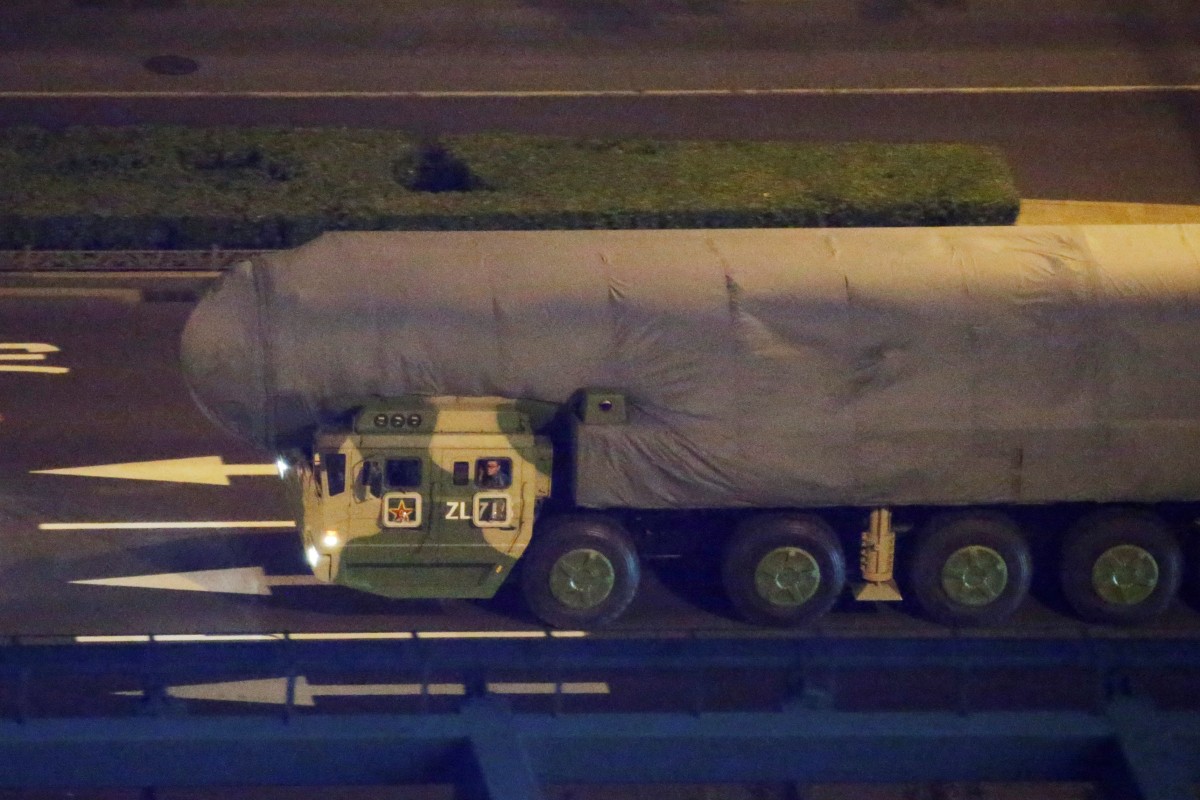
China’s land-based DF-41 intercontinental ballistic missile will be among the military hardware on show on October 1. Photo: Reuters

China plans to show off its most advanced active weapon systems at the upcoming National Day parade, which will be the biggest of the 14 such events it has held over the past seven decades.

The parade, to be held on October 1 to mark the 70th anniversary of the founding of the People’s Republic, will highlight the military modernisation – particularly in nuclear deterrence – that has taken place since President Xi Jinping came to power in late 2012, according to military experts.

The People’s Liberation Army (PLA) offered a glimpse of those weapons during rehearsals for the parade in downtown Beijing from September 14.

As part of the celebrations, Xi, who also chairs the Central Military Commission, will inspect 48 squads on the ground and more than a dozen airborne squadrons, according to a military insider involved in support services for the parade.

More than a dozen airborne squadrons will take part in the National Day parade. Photo: Kyodo

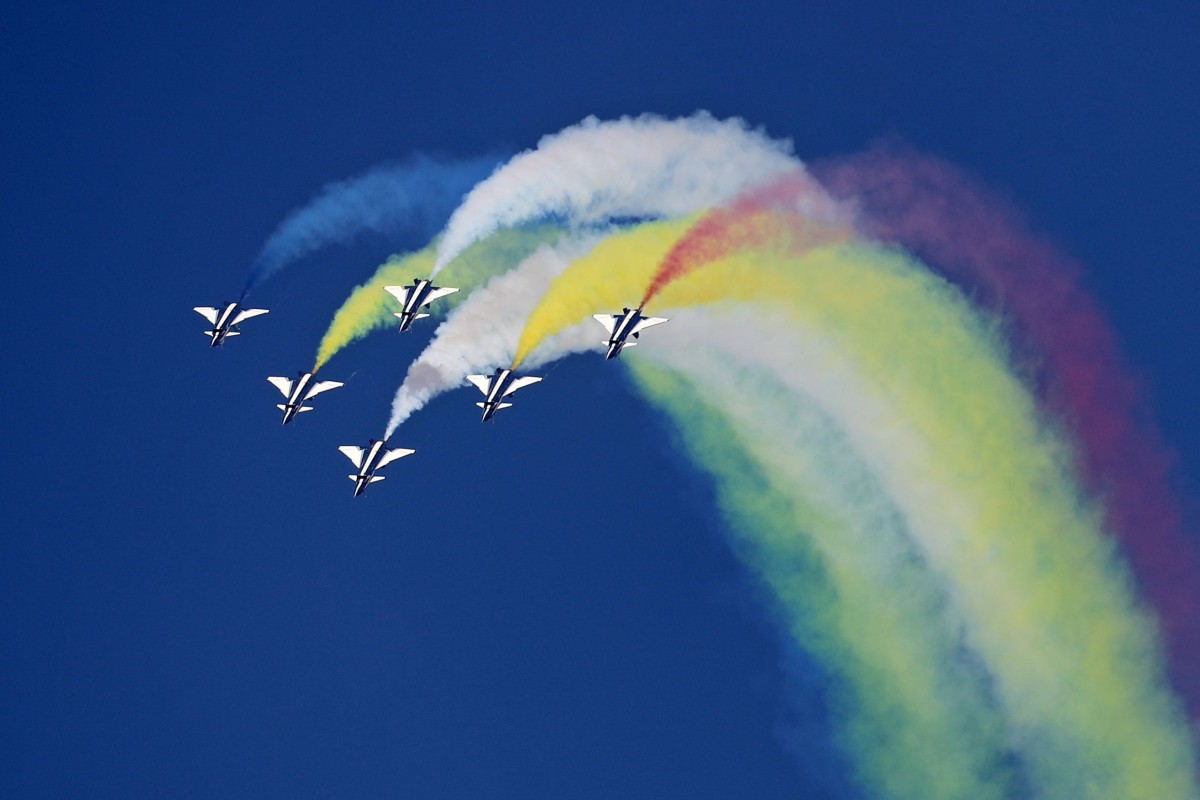
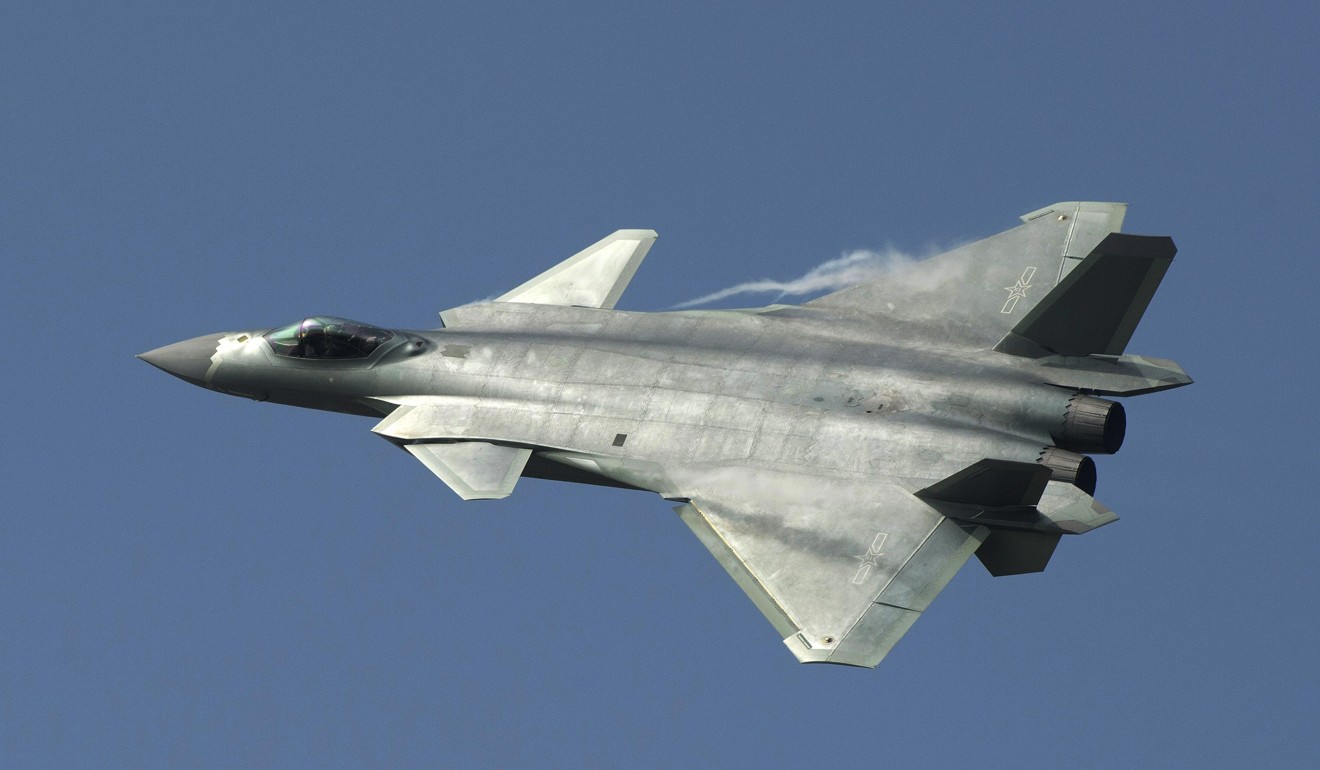
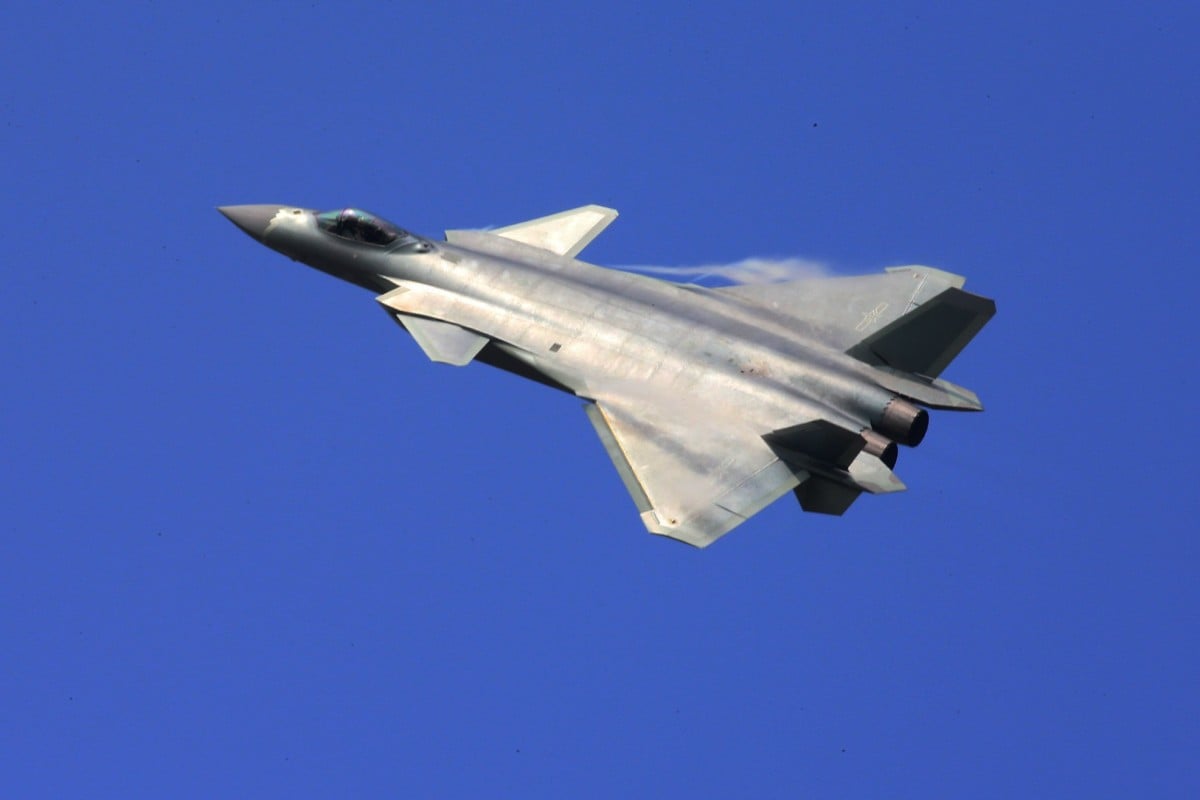
The squadrons will include the air force’s first stealth fighter, the J-20; the main active warplanes such as the J-10 and J-11B; and armed helicopters like the Z-20. However, the J-8 fighter jet would not appear this year, the source said, confirming that the first interceptor built in China has been formally retired.

“The ground march will be led by several hero forces from the five theatre commands, which is different from previous squads selected from the ground forces, air force and navy,” said the insider, who requested anonymity because of the sensitivity of the matter.

“The main goal of this year’s parade is to promote the military modernisation of the PLA under President Xi’s leadership over the past seven years, with the military overhaul being one of the key achievements.”

Thirty-three of the 48 squads would be “weapon squads”, while the 13 others would be made up of infantry troops from the five theatre commands, the source said.

National Day fireworks in Hong Kong cancelled over safety fears

As part of the PLA’s sweeping military reforms, the army’s previous seven military commands were reshaped into five theatre commands, while the four former general headquarters were dissolved and replaced by 15 small functional departments.

In September 2015, Xi announced the PLA would shed 300,000 troops, cutting its size to 2 million, a move aimed at turning the PLA into a more nimble and combat-ready fighting force on a par with international standards.

Xi also split the former Second Artillery Corps into the Rocket Force and the Strategic Support Force, with the latter backing up the military’s electronic warfare units in cyberspace and outer space.

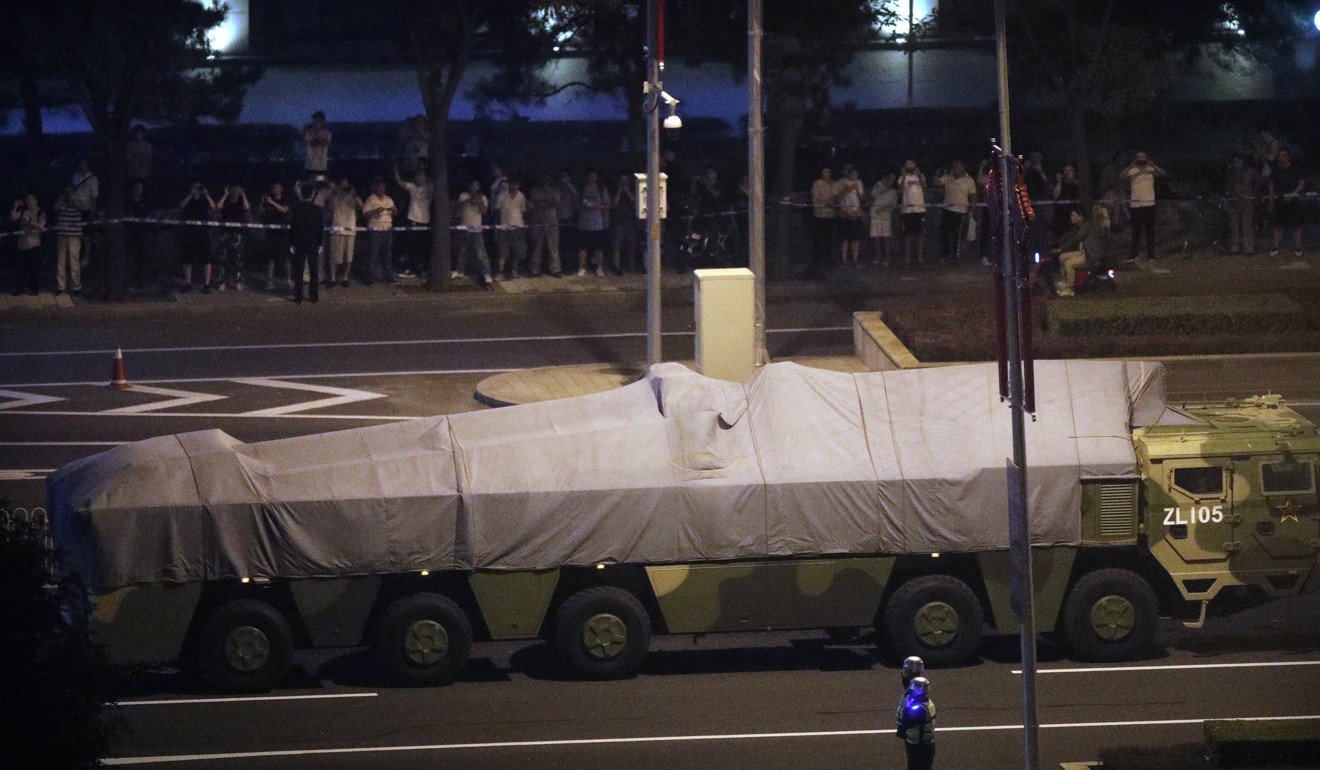
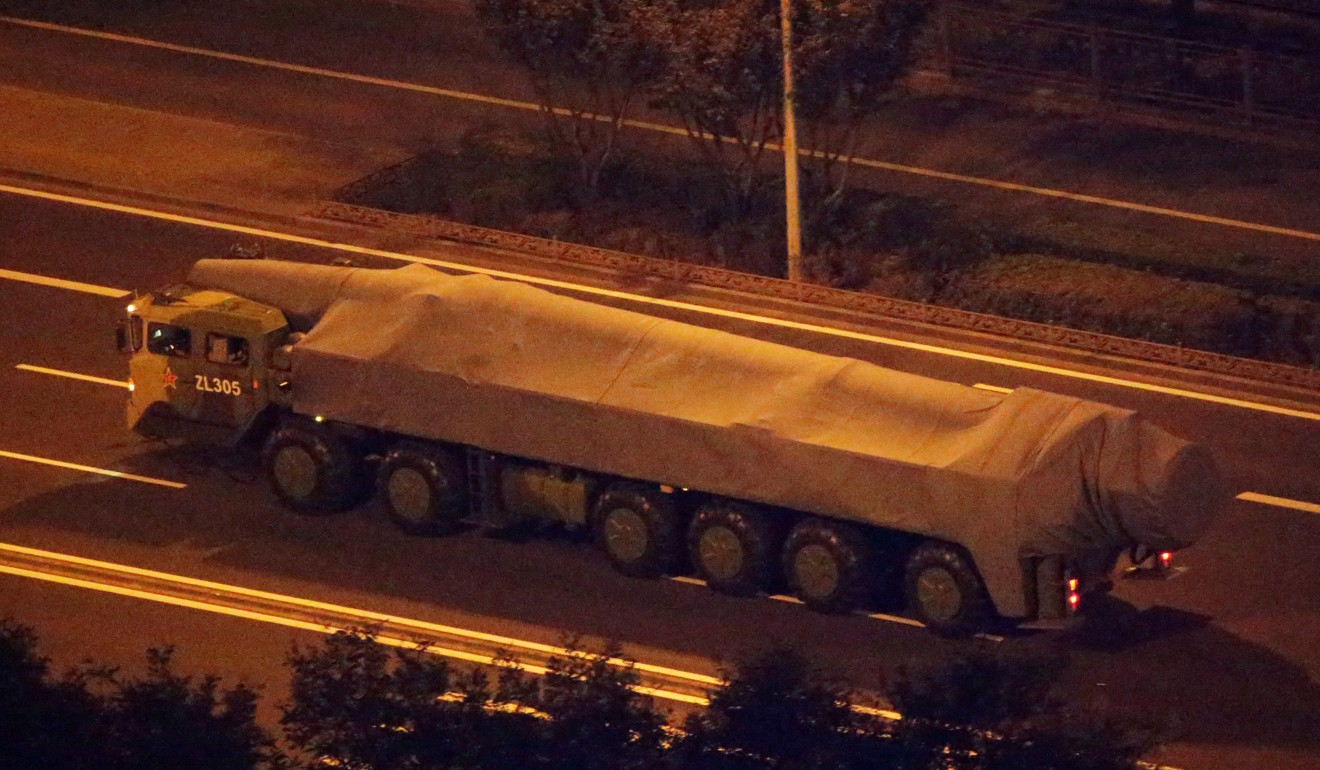
Among the 33 weapon squads, the highlights are expected to be the PLA’s strategic nuclear missiles such as the Rocket Force’s land-based DF-41 intercontinental ballistic missile (ICBM), the DF-21D anti-ship ballistic missile, the DF-17 hypersonic missile and the sea-launched JL-2, or Big Wave-2.

Adam Ni, a researcher at Macquarie University in Australia, said that showing off different types of missiles on land and sea indicated that the PLA was improving its nuclear deterrence capabilities by perfecting a three-pronged military force structure, or the so-called nuclear triad.

The DF-17 hypersonic ballistic missile will be one of the highlights of the parade. Photo: AP

The DF-41 is capable of carrying multiple warheads and many decoys, making it harder to detect than silo-based systems and better able to survive a first strike.

Ni said the DF-41 was China’s next-generation cutting-edge weapon.

“It’s actually an advanced ICBM and has a range to hit practically anywhere in the world, including the continental United States,” Ni said.

“The DF-41 is the ultimate symbol of the destructive potential of Chinese armed forces, just as nuclear weapons are similar symbols of the US and Russia.”

The JL-2 – which has a shorter range of 7,000km (4,350 miles) and can be launched by the PLA Navy’s Type 094 submarines – is unable to hit anywhere on the American continent when launched from submarines in the South China Sea and coastal areas of China.

China tests new warships in live-fire drills near Vietnam

However, China is developing the JL-3, which has a range of about 9,000km; the upgraded version of the JL-2, with a flight test conducted in June, though it is still less than the 12,000km range of the American Trident II.

“China is stepping up its military modernisation, which includes a number of aspects; the land-based aspect is introducing more mobile and survivable missile systems,” Ni said.

“The game change will happen when China is able to hit the whole US continent with its missile submarines in Chinese coastal waters.”

In military terms, survivable refers to the ability to remain mission capable after a single engagement.

The DF-17 is a land-to-land short-range strategic missile capable of delivering both nuclear and conventional payloads. The US intelligence community has estimated that it will reach initial operational capability by 2020. But if the missile is displayed in the parade, that means it is active already.

China conducted two tests of the DF-17 in November 2017, with the first launched from the Jiuquan Space Launch Centre in Inner Mongolia.

An insider said the main goal of this year’s parade is to promote the military modernisation of the PLA. Photo: Reuters

Hong Kong-based military commentator Song Zhongping said the nuclear weapons that would go on show in the parade would all be strategic missiles designed to improve China’s deterrent capabilities.

The show comes after the PLA delivered a national defence white paper in July stressing its goal to “maintain national strategic security by deterring other countries from using or threatening to use nuclear weapons against China”.

Unlike in the past, this year’s report stated that the US and China were now competing superpowers, and that the PLA’s growing forces were developing to the point that they could challenge the US.

Zhou Chenming, a Beijing-based military observer, said it was also necessary for the PLA to “show some of its muscle” amid the ongoing trade dispute between Beijing and Washington.

“To prevent misunderstanding, most of the weapons are just strategic equipment, not tactical arms, because Beijing still doesn’t want to irritate Washington,” he said.

About 280,000 people were involved in the rehearsals for the parade and related support services, according to Xinhua.

Source: SCMP

22/09/2019

Chinese fighter jets seen in skies over Beijing as preparations for National Day parade step up

  • October 1 event is intended to be a showcase for military’s progress under Xi Jinping, with J-20 stealth fighters set to take pride of place
  • Domestically developed weapons are main focus of event despite long-standing problems in building  aircraft engines
Chinese J-10 jets perform at the Dubai air show in 2017. Photo: AFP

China has stepped up intensive rehearsals for the upcoming National Day parade, which military insiders say is designed to showcase the achievements of Chinese President Xi Jinping’s modernisation drive.

The parade on October 1 will mark the 70th anniversary of the founding of the People’s Republic and will focus on weapons developed since Xi came to power in late 2012, despite long-standing problems in aircraft engine development.

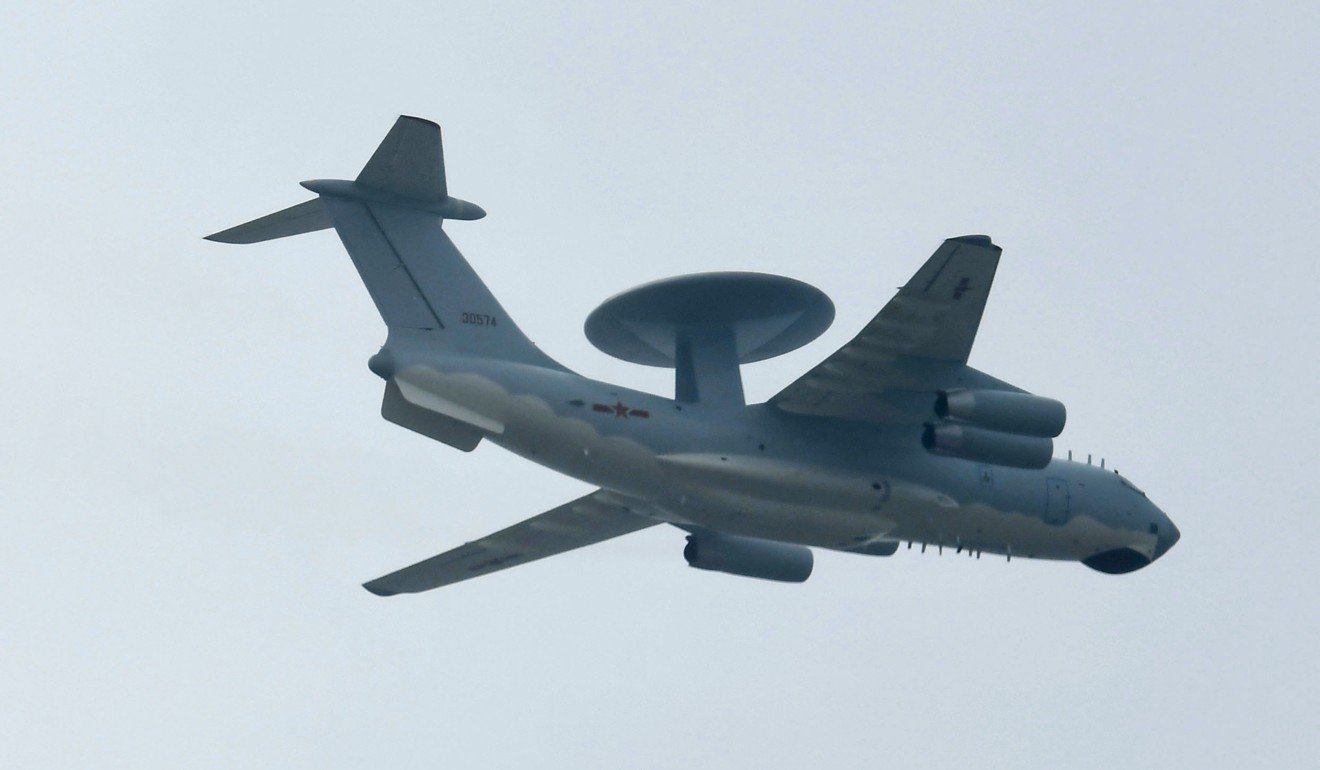
Video clips circulating on mainland social media in recent days have shown at least seven types of aircraft – including the KJ-2000 airborne early warning and control aircraft and J-10 and J-11B fighter jets – taking part in rehearsals over the countryside  around Beijing.

A military insider said the country’s first stealth fighter jet, the J-20, had been rehearsing over the western suburbs of the capital since April.

“There will be up to seven J-20 displayed in the military parade, which is the largest formation since its formal deployment to the Chinese air force in 2017,” the military insider said.

“The J-20 has entered mass production. So far at least 70 J-20s have been made, even though all of them are still equipped with Russian AL-31 engines.”

Earlier this month, the People’s Liberation Army Air Force released a video of a flight of seven J-20s, the largest formation seen so far, suggesting that the fifth-generation warplane has gone into mass production as an arms race with the United States mounts in the region.

The second-largest J-20 formation was shown in an air force video for PLA Day on August 1, when five of the jets were shown.

China has been forced to deploy the J-20 ahead of its schedule since the US has increased the deployment of its fifth-generation stealth fighter jets like the F-22 and F-35s in the Asia-Pacific region.

The US and its allies, including Japan and South Korea, will have more than 200 F-35s by 2025, which means China also needs a similar number of stealth fighters.

To meet demand, China has been working on the development of a purpose-built thrust engine for its stealth fighter since the early 2000s, but has yet to achieve international quality control standards due to problems that include single-crystal turbine blade technology.

China’s air force spreads its wings in 70th anniversary video

Hong Kong-based military commentator Song Zhongping said aircraft engine development had been a long-standing shortcoming but it would not affect the practical fighting capacity of the J-20, which currently uses Russian engines.

“The J-20 hasn’t used the domestic engines so far because it wants a better one, and it still has time,” Song said.

“Other [Chinese-developed] warplanes like the J-10, J-11 and multipurpose attack helicopters are all modified and advanced types, indicating comprehensive achievements amid China’s military modernisation over the past years.”

A Chinese J-20 stealth fighter has entered mass production. Photo: EPA-EFE

Besides the domestically developed aircraft, Beijing is going to display its strategic nuclear missiles, such as the DF-41 intercontinental ballistic missile and the JL-2 submarine-launched ballistic missile, as centrepieces of its National Day military parade, according to a Beijing-based military source.

Xi, who also chairs the powerful Central Military Commission, inspected the country’s biggest military parade at the Zhurihe Combined Tactics Training Base in Inner Mongolia in 2017 to celebrate the 90th anniversary of the PLA, but the source said the weapons displayed in Zhurihe had been developed under the leadership of Xi’s predecessor, Hu Jintao.

“Xi needs to highlight his personal achievements in his era, that’s why this year’s parade has political aims more than military significance,” the source said.

The source also highlighted the significance of the People’s Republic marking its 70th anniversary because the Soviet Union did not survive for that length of time.

“Xi is attempting to tell the outside world that Chinese communist regime has been consolidated under his leadership.”

Source: SCMP

22/09/2019

China’s National Day parade to showcase advances in nuclear deterrence

  • Military experts say PLA modernisation brought about during Xi Jinping’s presidency will be the main focus of October 1 celebration in Beijing
  • It’s necessary for China to ‘show some of its muscle’ amid the trade dispute with the US, observer says
China’s land-based DF-41 intercontinental ballistic missile will be among the military hardware on show on October 1. Photo: Reuters

China plans to show off its most advanced active weapon systems at the upcoming National Day parade, which will be the biggest of the 14 such events it has held over the past seven decades.

The parade, to be held on October 1 to mark the 70th anniversary of the founding of the People’s Republic, will highlight the military modernisation – particularly in nuclear deterrence – that has taken place since President Xi Jinping came to power in late 2012, according to military experts.

The People’s Liberation Army (PLA) offered a glimpse of those weapons during rehearsals for the parade in downtown Beijing from September 14.

As part of the celebrations, Xi, who also chairs the Central Military Commission, will inspect 48 squads on the ground and more than a dozen airborne squadrons, according to a military insider involved in support services for the parade.

More than a dozen airborne squadrons will take part in the National Day parade. Photo: Kyodo

The squadrons will include the air force’s first stealth fighter, the J-20; the main active warplanes such as the J-10 and J-11B; and armed helicopters like the Z-20. However, the J-8 fighter jet would not appear this year, the source said, confirming that the first interceptor built in China has been formally retired.

“The ground march will be led by several hero forces from the five theatre commands, which is different from previous squads selected from the ground forces, air force and navy,” said the insider, who requested anonymity because of the sensitivity of the matter.

“The main goal of this year’s parade is to promote the military modernisation of the PLA under President Xi’s leadership over the past seven years, with the military overhaul being one of the key achievements.”

Thirty-three of the 48 squads would be “weapon squads”, while the 13 others would be made up of infantry troops from the five theatre commands, the source said.

National Day fireworks in Hong Kong cancelled over safety fears

As part of the PLA’s sweeping military reforms, the army’s previous seven military commands were reshaped into five theatre commands, while the four former general headquarters were dissolved and replaced by 15 small functional departments.

In September 2015, Xi announced the PLA would shed 300,000 troops, cutting its size to 2 million, a move aimed at turning the PLA into a more nimble and combat-ready fighting force on a par with international standards.

Xi also split the former Second Artillery Corps into the Rocket Force and the Strategic Support Force, with the latter backing up the military’s electronic warfare units in cyberspace and outer space.

Among the 33 weapon squads, the highlights are expected to be the PLA’s strategic nuclear missiles such as the Rocket Force’s land-based DF-41 intercontinental ballistic missile (ICBM), the DF-21D anti-ship ballistic missile, the DF-17 hypersonic missile and the sea-launched JL-2, or Big Wave-2.

Adam Ni, a researcher at Macquarie University in Australia, said that showing off different types of missiles on land and sea indicated that the PLA was improving its nuclear deterrence capabilities by perfecting a three-pronged military force structure, or the so-called nuclear triad.

The DF-17 hypersonic ballistic missile will be one of the highlights of the parade. Photo: AP

The DF-41 is capable of carrying multiple warheads and many decoys, making it harder to detect than silo-based systems and better able to survive a first strike.

Ni said the DF-41 was China’s next-generation cutting-edge weapon.

“It’s actually an advanced ICBM and has a range to hit practically anywhere in the world, including the continental United States,” Ni said.

“The DF-41 is the ultimate symbol of the destructive potential of Chinese armed forces, just as nuclear weapons are similar symbols of the US and Russia.”

The JL-2 – which has a shorter range of 7,000km (4,350 miles) and can be launched by the PLA Navy’s Type 094 submarines – is unable to hit anywhere on the American continent when launched from submarines in the South China Sea and coastal areas of China.

China tests new warships in live-fire drills near Vietnam
However, China is developing the JL-3, which has a range of about 9,000km; the upgraded version of the JL-2, with a flight test conducted in June, though it is still less than the 12,000km range of the American Trident II.
“China is stepping up its military modernisation, which includes a number of aspects; the land-based aspect is introducing more mobile and survivable missile systems,” Ni said.
“The game change will happen when China is able to hit the whole US continent with its missile submarines in Chinese coastal waters.”
In military terms, survivable refers to the ability to remain mission capable after a single engagement.
The DF-17 is a land-to-land short-range strategic missile capable of delivering both nuclear and conventional payloads. The US intelligence community has estimated that it will reach initial operational capability by 2020. But if the missile is displayed in the parade, that means it is active already.
China conducted two tests of the DF-17 in November 2017, with the first launched from the Jiuquan Space Launch Centre in Inner Mongolia.
An insider said the main goal of this year’s parade is to promote the military modernisation of the PLA. Photo: Reuters

Hong Kong-based military commentator Song Zhongping said the nuclear weapons that would go on show in the parade would all be strategic missiles designed to improve China’s deterrent capabilities.

The show comes after the PLA delivered a national defence white paper in July stressing its goal to “maintain national strategic security by deterring other countries from using or threatening to use nuclear weapons against China”.

Unlike in the past, this year’s report stated that the US and China were now competing superpowers, and that the PLA’s growing forces were developing to the point that they could challenge the US.

Zhou Chenming, a Beijing-based military observer, said it was also necessary for the PLA to “show some of its muscle” amid the ongoing trade dispute between Beijing and Washington.

“To prevent misunderstanding, most of the weapons are just strategic equipment, not tactical arms, because Beijing still doesn’t want to irritate Washington,” he said.

About 280,000 people were involved in the rehearsals for the parade and related support services, according to Xinhua.

Source: SCMP

08/09/2019

Serbian president pledges to advance ties with China to new levels

SERBIA-BELGRADE-ZHANG YOUXIA-SERBIAN PRESIDENT-MEETING

Serbian President Aleksandar Vucic(4th R) meets with Zhang Youxia(3rd L), a member of the Political Bureau of the Communist Party of China (CPC) Central Committee and vice chairman of the Central Military Commission in Belgrade, Serbia on Sept. 6, 2019. (Photo by Li Xiaowei/Xinhua)

BELGRADE, Sept. 7 (Xinhua) — Serbia hopes to enhance mutually beneficial cooperation with China in various fields, including military, to advance bilateral relations to new levels, Serbian President Aleksandar Vucic has said.

Vucic made the remarks on Friday when meeting with visiting vice chairman of China’s Central Military Commission, Zhang Youxia.

Vucic said that history has proved that China is Serbia’s most reliable friend. The Serbian government, people and military support the “one-China” policy as well as China’s stance and proposition in many other issues concerning China’s core interests.

Vucic added that the Belt and Road Initiative has brought many opportunities to the development of Serbia. He said he hopes that the two sides will continue to deepen mutually beneficial cooperation in various fields, including military, to advance bilateral relations to new levels.

Zhang, who is also a member of the Political Bureau of the Communist Party of China Central Committee, said that the traditional friendship between China and Serbia is profound.

He said that China is ready to work with Serbia to consolidate the all-weather friendship between the two countries, promote the quality of their bilateral relations and accelerate the growth of their ties.

Zhang also called for the militaries of the two countries to implement consensus reached between the heads of state of China and Serbia, deepen strategic mutual trust and enhance exchanges and cooperation in bids to promote their links to new height.

During his visit, Zhang also met with Serbian Defense Minister Aleksandar Vulin, and witnessed the signing of a memorandum of understanding on the establishment of a Chinese medicine center in the Serbian Military Medical Academy.

Source: Xinhua

02/09/2019

Chinese schools, military prepare for better military training of students

BEIJING, Sept. 1 (Xinhua) — As the autumn semester started Sunday, Chinese education departments, schools and military authorities have geared up for military training programs for students.

The Ministry of Education and three departments of the Central Military Commission jointly issued a directive earlier this week underlining adequate preparation of trainers, careful design of training programs and proper security management.

Freshman college students across the country and entrants to middle schools in many places are required to attend a short military training program mostly on campus but sometimes at training camps.

The military should select competent servicemen to be trainers and provide them with adequate training on teaching policies and skills, according to the directive.

Civilian and military authorities were also asked to introduce more interactive and creative training models and design courses that suit students’ physical and psychological conditions.

Source: Xinhua

30/08/2019

China Focus: China to grandly celebrate 70th National Day

BEIJING, Aug. 29 (Xinhua) — Chinese President Xi Jinping will attend a grand gathering to celebrate the 70th anniversary of the founding of the People’s Republic of China (PRC) on Oct. 1.

Xi, also general secretary of the Communist Party of China (CPC) Central Committee and chairman of the Central Military Commission, will deliver an important speech at the event, said Wang Xiaohui, executive deputy head of the Publicity Department of the CPC Central Committee, at a press conference held Thursday.

A military parade and mass pageantry will be held following the gathering, Wang said.

At a grand evening gala in Tian’anmen Square on National Day, Party and state leaders will join the public to watch performances and a fireworks show.

Xi will also present the Medals of the Republic, Medals of Friendship and national titles of honor to outstanding individuals at an award ceremony to be held at the Great Hall of the People in Beijing.

On Sept. 30, the country’s Martyrs’ Day, people from various sectors, including Party and state leaders, will present flowers to deceased national heroes at the Monument to the People’s Heroes at Tian’anmen Square.

A National Day reception will be held at the Great Hall of the People and President Xi will give an important speech.

BROAD PARTICIPATION

“The 70th anniversary of the PRC is a festival shared by Chinese people of all ethnic groups, which is why the celebrations will highlight the participation of the people,” Wang said.

According to him, more than 100,000 ordinary citizens will take part in the mass pageantry on Oct. 1 and about 60,000 will attend the evening gala on the same day, while about 30,000 members of the public will be invited to observe the gathering and military parade.

Among the guests of the gathering and military parade, there will be people who made outstanding contributions to the republic’s founding and development together with their families as well as about 1,500 role models including outstanding Party members, model civil servants and workers.

MILITARY PARADE

The military parade is an important part of the National Day celebrations and is not aimed at any other countries or specific situations, Cai Zhijun, deputy head of the office of the leading group for the military parade, said at the press conference.

The scale of the parade will be greater than the ones commemorating the 50th and 60th founding anniversary of the PRC, as well as the V-Day military parade in 2015, he said.

The military parade is expected to showcase China’s achievements in building its national defense and armed forces in the past 70 years and reflect the outcomes of the reform of the people’s armed forces, according to Cai.

RICH CELEBRATION

“There will be rich and colorful celebrations spanning various sectors and regions,” Wang said.

An evening gala featuring music and dance will be held in the Great Hall of the People. From September, the Beijing Exhibition Center will host a large-scale exhibition on the achievements of the PRC in the past seven decades.

The CPC Central Committee, the State Council and the Central Military Commission will jointly issue medals in commemoration of the 70th anniversary of the PRC as part of the celebrations.

Commemorative coins and stamps will be issued and a documentary will be made.

The celebrations will also be carefully budgeted and avoid extravagance, Wang said.

Source: Xinhua

28/08/2019

China’s navy ‘set to pick J-20 stealth jets for its next generation carriers’

  • Military insiders say the aircraft appears to have beaten the FC-31 in the race to become the PLA Navy’s fighter of the future
  • A military source close said it would be almost impossible to develop both aircraft over the next few years given the risk of an economic downturn
The J-20 stealth fighter is likely to be modified to serve on China’s next generation aircraft carriers. Photo: Xinhua

China’s military is likely to pick the country’s first active stealth fighter, the J-20, for its next generation aircraft carriers, according to military sources and a recent report on state media.

The J-20, made by the Chengdu Aerospace Corporation (CAC),  appears to have a won a head-to-head contest with the FC-31, a fighter made by another company which is still undergoing testing.

A military insider told the South China Morning Post that the Central Military Commission, the People’s Liberation Army’s top decision-making body, now favoured adapting the J-20 for its new carriers.

“The Chengdu Aerospace Corporation will announce some new products, which will include a new version of their J-20. You can guess what type it will be,” the military insider, who requested anonymity because of the sensitivity of the subject, said.

The FC-31 was independently developed by CAC’s sister company Shenyang Aircraft Corporation (SAC), which also produced the J-15 – the jets currently in use on the country’s only active aircraft carrier, the Liaoning.

Both aerospace firms are subsidiaries of the state-owned giant Aviation Industry Corporation of China, which specialises in designing and developing military aircraft, and were set up to ensure benign competition between manufacturers.

However, the SAC has faced criticism from some military leaders and experts for being too conservative and failing to innovate because of its bureaucratic structure.

A recent programme aired by the state broadcaster China Central Television also suggests the J-20 will be chosen.

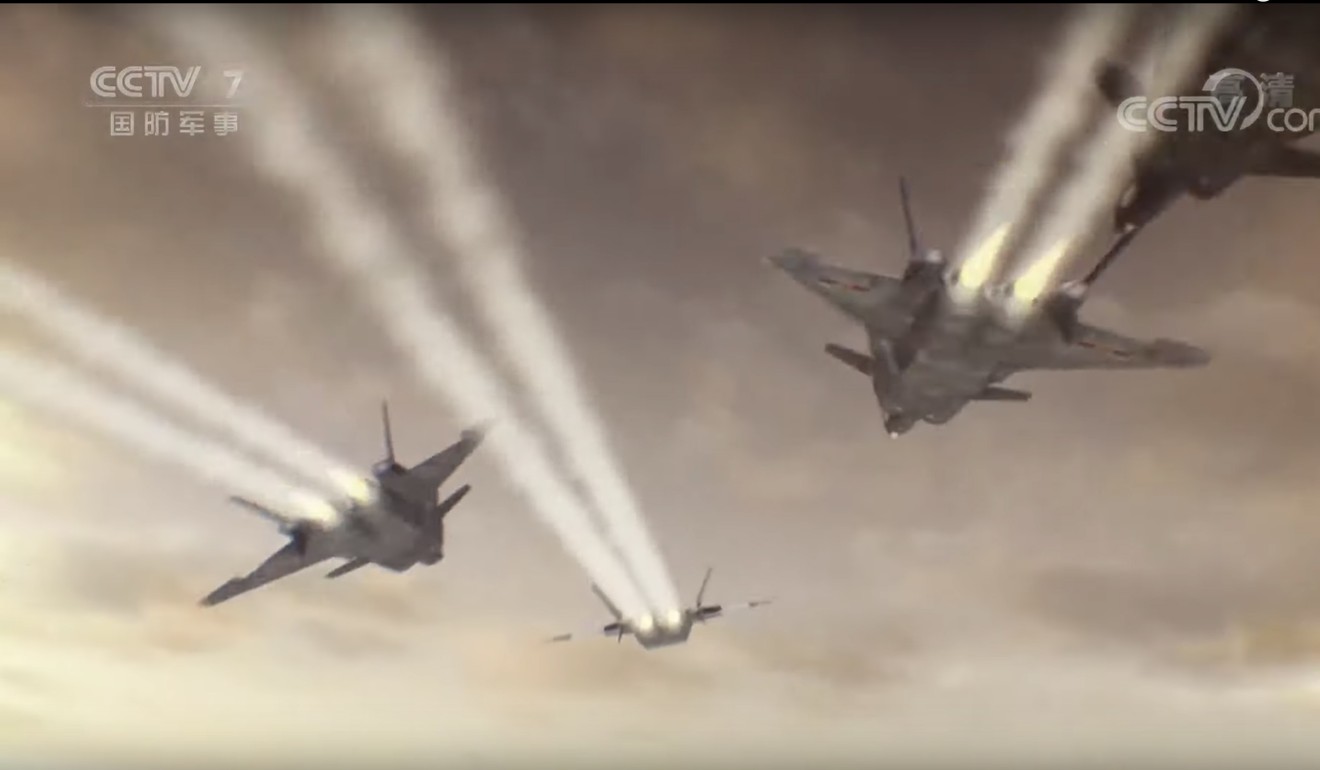
An episode of Military Documentary shown on August 16 reported how the PLA Navy was selecting candidates for pilot training and illustrated the feature with a mock-up of jets that looked like J-20s taking off from a carrier.

Ground-based J-20s – also known as Powerful Dragons – entered service with the PLA Air Force in 2017. 

Mass production of the stealth fighters began late last year

as China stepped up its efforts to counter the deployment of American F-22s and F-35s in the Asia-Pacific region.

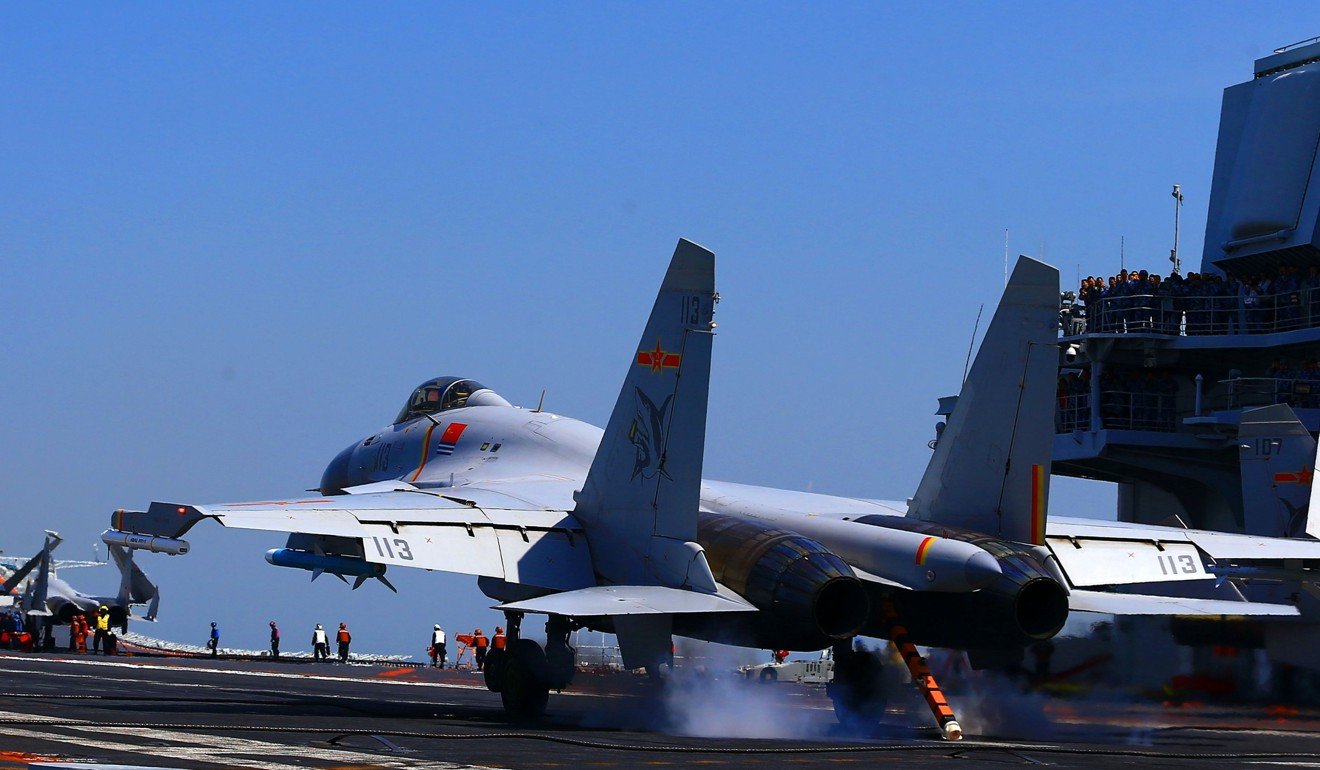
A J-15 fighter lands on the Liaoning. Photo: AFP

If the selection of the J-20 is confirmed it will mark the end of a lengthy debate between its supporters and advocates of the FC-31 as to which would make a better carrier-based fighter.

Those who favoured the J-20 said it was more advanced and reliable than the FC-31, but its supporters said it was more light and nimble.

“Both the J-20 and FC-31 have their advantages. The size of the J-20 is similar to the J-15 since both are powerful heavy fighters,” Song Zhongping, a military commentator for Hong Kong-based Phoenix Television, said.

Song said the lighter FC-31 could be developed into a medium-sized carrier fighter that would complement the J-20 in future.

But another military source close to the PLA Navy said it would be almost impossible to develop both aircraft over the next few years given the risk of an economic downturn as the trade war with the US continues to escalate.

A video simulation broadcast on state television earlier this month showed fighters that resembled the J-20 taking off from a carrier. Photo: CCTV

The source said China’s next generation aircraft carriers would be with equipped electromagnetic catapults similar to those used on the US Navy’s Ford-class supercarriers.

These enable the use of heavier fighters because they are more powerful than the older diesel systems used on older carriers.

“The key problem of the J-20 is not weight, but length. If it wants to be a carrier-based fighter jet, it needs to be made shorter.”

Military insiders have previously said that CAC engineers are working to produce a shorter version of the J-20 that will work with the new launch system.

At present both the J-20 and F-31 still rely on Russian engines. The WS-15 engine that has been purpose built for the J-20 has undergone hundreds of hours of testing but has yet to meet reliability targets while the F-31 prototype does not have a purpose-built engine.
China’s navy plans to build at least four carrier battle groups by 2030, three of which will be active at any given time.
Military analysts say China will need at least a decade to develop its new generation carrier-based fighters, so the J-15 will remain in service for at least a decade, if not two.
The J-15 made its maiden flight in 2009 and has been in service since 2012. They are the only fighters based on the Liaoning and will be used by its sister ship the Type 001A when it enters service, probably later this year.
Source: SCMP
31/07/2019

Xi signs orders to honor soldier, three military units

CHINA-BEIJING-CMC-SOLDIER-MILITARY UNITS-HONOR-CEREMONY (CN)

Xi Jinping (C), chairman of the Central Military Commission (CMC), poses for a group photo with a soldier and representatives of three military units during a CMC ceremony in Beijing, capital of China, July 31, 2019. Xi has signed orders to honor a soldier and three military units. At the ceremony on Wednesday, Xi hung a medal around the neck of Du Fuguo, who was awarded the title “Heroic Demining Soldier”, and presented him with a certificate, and went on to confer honorary banners to representatives of the three units. (Xinhua/Li Gang)

BEIJING, July 31 (Xinhua) — Xi Jinping, chairman of the Central Military Commission (CMC), has signed orders to honor a soldier and three military units.

The title “Heroic Demining Soldier” was awarded to Du Fuguo, who in an operation last year lost his eyesight and both hands trying to protect his fellow soldiers from a landmine explosion.

The three military units honored are an air force group, an astronautical ground station and a scientific research office.

At a CMC ceremony on Wednesday, Xi hung a medal around Du’s neck and presented him with a certificate, and went on to confer honorary banners to representatives of the three units.

Xi took a group photo with them.

Source: Xinhua

30/06/2019

No joy for corrupt officials as China announces amnesty to mark nation’s 70th anniversary

  • Veterans of Sino-Japanese war – which ended 74 years ago – among those likely to be set free, state media says
  • Nine categories of convicts will be pardoned, but actual numbers will not be disclosed until cases have been reviewed by the courts
China’s amnesty will be no benefit to people like Bo Xilai, the former Chongqing party boss who was sentenced to life imprisonment for corruption in 2013. Photo: AFP
There will be no pardons for people jailed under President Xi Jinping’s sweeping anti-corruption campaign, Chinese state media said late Saturday after Beijing announced a prisoner amnesty as part of its celebrations for the 70th anniversary of the founding of the People’s Republic of China, which falls on October 1.
While the report did not give any indication of how many people would be set free – the cases must first be reviewed by the courts – it said the amnesties would be granted to those who fell into one of nine categories.
These include convicts aged 75 and above who are suffering from a physical disability, people who fought in the Sino-Japanese war – which ended in 1945 – or in the Chinese civil war, which ended in 1949 and led to the creation of modern-day China.

Other categories include prisoners sentenced as minors to terms of not more than three years, and those who were convicted of a crime while acting in self-defence and, again, sentenced to a maximum of three years.

The Communist Party declared a “crushing victory” in Xi’s war on corruption. Photo: EPA-EFE

Anyone convicted of a serious or violent crime, including murder, rape, kidnapping, corruption, arson and drug trafficking is ineligible for the amnesty, the report said. This group also encompasses those who refused to confess to their crimes or show remorse, and anyone deemed still a threat to society.

The amnesty is the second of Xi’s presidency and ninth in the country’s history. The previous seven were all during Mao Zedong’s leadership.

China considers prisoner amnesty for 70th anniversary
In 2015, about

31,000 convicts were pardoned

to commemorate the 70th anniversary of the end of the Sino-Japanese war, which also marked the end of World War II. Though, as will be the case this time around, none of them were serving prison terms for corruption.

A spokesperson for the National People’s Congress, which approved the amnesty, was quoted by Xinhua as saying that Beijing hoped the pardons would have a positive political, legal and social impact.

“Considering the fight against corruption remains a challenge, and in order to maintain the pressure of the crackdown, it would be inappropriate to grant amnesties to corruption convicts,” the spokesperson said.

In December, the Communist Party declared a “crushing victory” in Xi’s war on corruption, which since 2012 has seen more than 1.3 million party officials – from powerful “tigers” to low-ranking “flies” – rounded up and convicted.

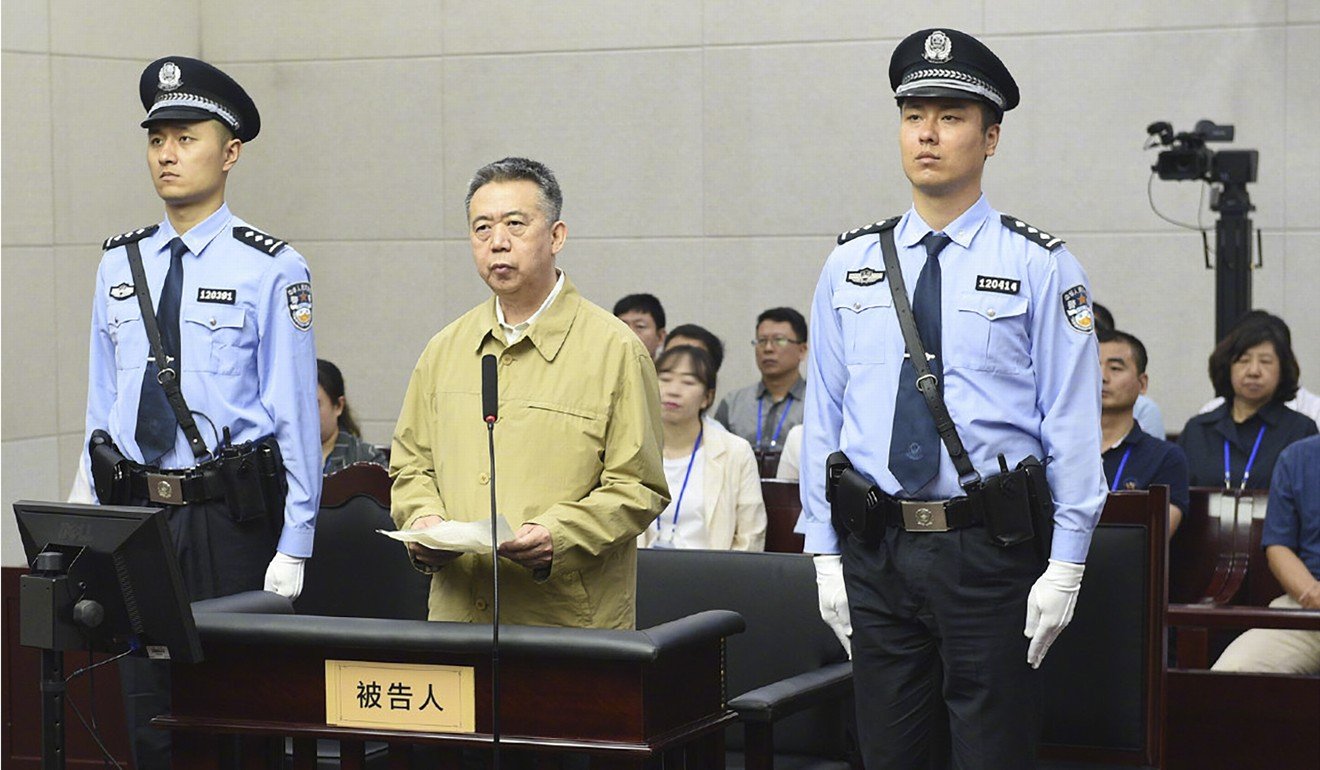
Meng Hongwei, the former president of Interpol, pleaded guilty earlier this month to taking bribes totalling more than US$2 million.
Among the most high profile officials to have been snared are former Politburo Standing Committee member and domestic security tsar

Zhou Yongkang

, former Politburo member

Sun Zhengcai

, and former vice-chairman of the Central Military Commission

Guo Boxiong

.

Former Politburo member and Chongqing party boss 
Bo Xilai

, who was detained just months before Xi rose to power in 2012, is also serving a life sentence for taking millions of US dollars in bribes.

Meng Hongwei

, the former president of Interpol, looks set to become the latest senior official to join the convicts’ club after pleading guilty in court earlier this month to taking bribes totalling more than 14 million yuan (US$2 million).

Source: SCMP
Law of Unintended Consequences

continuously updated blog about China & India

ChiaHou's Book Reviews

continuously updated blog about China & India

What's wrong with the world; and its economy

continuously updated blog about China & India