Chindia Alert: You’ll be Living in their World Very Soon
aims to alert you to the threats and opportunities that China and India present. China and India require serious attention; case of ‘hidden dragon and crouching tiger’.
Without this attention, governments, businesses and, indeed, individuals may find themselves at a great disadvantage sooner rather than later.
The POSTs (front webpages) are mainly 'cuttings' from reliable sources, updated continuously.
The PAGEs (see Tabs, above) attempt to make the information more meaningful by putting some structure to the information we have researched and assembled since 2006.
China is facing mounting criticism over a planned security law for Hong Kong which would make it a crime to undermine Beijing’s authority in the territory.
The UK and US said at a private session of the UN Security Council that the law would curtail the city’s freedoms.
China, which blocked a formal meeting, warned them to “stop interfering”.
Hong Kong’s autonomy is guaranteed by the 1997 agreement under which it was returned to China from the UK.
It enjoys some freedoms – of the press and association – unseen in mainland China.
But there are fears the proposed law – which has sparked a wave of anti-mainland protests – could end Hong Kong’s unique status.
There are 350,000 BNO passport holders in Hong Kong who currently have the right to visit the UK for up to six months without a visa.
On Friday, the UK Home Office confirmed the new rights could be given to up to three million people with BNO status – as long as they applied for and were granted a passport.
China says all BNO passport holders are Chinese nationals, and if the UK changes this practice, it would violate international law.
Australia, Canada and the EU have also criticised the security law and its implications for Hong Kong.
Taiwan’s parliament has backed a plan to offer sanctuary to people who want to flee Hong Kong, but China – which considers Taiwan to be part of its own territory – has warned the island not to get involved.
On Friday, Chinese Foreign Ministry spokesperson Zhao Lijian urged other countries to stop interfering in the matter.
“We will take necessary measures to resolutely counter the wrong acts of external forces interfering in Hong Kong affairs”, he said.
What might the US do?
On Wednesday, US Secretary of State Mike Pompeo told Congress that Hong Kong no longer merited special treatment under US law, potentially paving the way for it to be stripped of trading privileges such as lower tariffs than mainland China.
He is expected to make an announcement later on Friday.
The EU has warned that imposing sanctions would not solve the crisis.
“Our relationship with China is based on mutual respect and trust… but this decision calls this into question and I think that we have to raise the issue in our continued dialogue with China”, EU High Representative for Foreign Affairs Josep Borrell said after talks with foreign ministers on Friday.
Media caption Police arrested dozens of people in Causeway Bay on Wednesday
Hong Kong’s justice secretary Teresa Cheng told the BBC’s Chinese service that any threat of sanctions was unacceptable.
“Are the sanctions being imposed with a view to coerce another state to change their policy…? Any such sanctions are not going to benefit anyone”.
China’s parliament has backed the security legislation, which would make it a crime to undermine Beijing’s authority in Hong Kong.
The resolution – which now passes to China’s senior leadership – could also see China installing its own security agencies in the region for the first time.
Full details about exactly what behaviour will be outlawed under the new security law are not yet clear. It is due to be enacted before September.
Image copyright AFPImage caption President Xi Jinping and other senior figures applauded when the security law was passed
However, it is expected to criminalise:
secession – breaking away from China
subversion – undermining the power or authority of the central government
terrorism – using violence or intimidation against people
activities by foreign forces that interfere in Hong Kong
Experts say they fear the law could see people punished for criticising Beijing – as happens in mainland China. For example, Nobel Laureate Liu Xiaobo was jailed for 11 years for subversion after he co-authored a document calling for political reform.
China’s foreign ministry in Hong Kong described US criticism of the new draft law as “utterly imperious, unreasonable and shameless”.
TAIPEI (Reuters) – Taiwan cannot accept becoming part of China under its “one country, two systems” offer of autonomy , President Tsai Ing-wen said on Wednesday, strongly rejecting China’s sovereignty claims and likely setting the stage for an ever worsening of ties.
China responded that “reunification” was inevitable and that it would never tolerate Taiwan’s independence.
In a speech after being sworn in for her second and final term in office, Tsai said relations between Taiwan and China had reached an historical turning point.
“Both sides have a duty to find a way to coexist over the long term and prevent the intensification of antagonism and differences,” she said.
Tsai and her Democratic Progressive Party won January’s presidential and parliamentary elections by a landslide, vowing to stand up to China, which claims Taiwan as its own and says it would be brought under Beijing’s control by force if needed.
“Here, I want to reiterate the words ‘peace, parity, democracy, and dialogue’. We will not accept the Beijing authorities’ use of ‘one country, two systems’ to downgrade Taiwan and undermine the cross-strait status quo. We stand fast by this principle,” Tsai said.
China uses the “one country, two systems” policy, which is supposed to guarantee a high degree of autonomy, to run the former British colony of Hong Kong, which returned to Chinese rule in 1997. It has offered it to Taiwan, though all major Taiwanese parties have rejected it.
China’s Taiwan Affairs Office, responding to Tsai, said Beijing would stick to “one country, two systems” – a central tenet of Chinese President Xi Jinping’s Taiwan policy – and “not leave any space for Taiwan independence separatist activities”.
“Reunification is a historical inevitability of the great rejuvenation of the Chinese nation,” it said. “We have the firm will, full confidence, and sufficient ability to defend national sovereignty and territorial integrity.”
China views Tsai as a separatist bent on formal independence for Taiwan. Tsai says Taiwan is an independent state called the Republic of China, its official name, and does not want to be part of the People’s Republic of China governed by Beijing.
TAIWAN OPEN TO DIALOGUE
China has stepped up its military drills near Taiwan since Tsai’s re-election, flying fighter jets into the island’s air space and sailing warships around Taiwan.
Tsai said Taiwan has made the greatest effort to maintain peace and stability in the narrow Taiwan Strait that separates the democratic island from its autocratic neighbour China.
“We will continue these efforts, and we are willing to engage in dialogue with China and make more concrete contributions to regional security,” she added, speaking in the garden of the old Japanese governor’s house in Taipei, in front of a socially-distanced audience of officials and diplomats.
Taiwan has become a rising source of friction between China and the United States, with the Trump administration strongly backing Taiwan even in the absence of formal diplomatic ties.
U.S. Secretary of State Mike Pompeo sent his congratulations to Tsai on Tuesday, praising her “courage and vision in leading Taiwan’s vibrant democracy”, in a rare high-level message from Washington direct to Taiwan’s government.
China’s Foreign Ministry condemned Pompeo’s remarks, and said the government would take “necessary countermeasures”, though did not elaborate.
China cut off a formal talks mechanism with Taiwan in 2016 after Tsai first won election.
Yao Chia-wen, a senior adviser to Tsai, told Reuters the chance of talks with China were small given ongoing tensions.
“We are ready to engage with them any time, but China is unlikely to make concessions to Taiwan,” he said. “In the next four years there’s little chance for the cross-strait relationship to improve.”
Embassy says those flown back must pay for themselves, and praises the US health system, in a departure from the war of words with Washington
More than a million Chinese students remain overseas, but China is on alert against the threat of imported infections
China has drastically cut flights to try to prevent people who arrive from abroad importing the coronavirus. Photo: AFP
Chinese students could be flown home from coronavirus hotspots such as the United States but will have to pay their own expenses, amid efforts by Beijing to persuade some to remain overseas rather than risk bringing the infection with them.
A statement posted on the website of China’s Washington embassy on Monday said that the Chinese government was aware that many school and university students had encountered difficulties in travelling back to China and was taking steps to arrange charter flights for those who needed to return urgently.
With the initial coronavirus outbreak appearing to have been largely contained in mainland China, some Chinese students have travelled home despite soaring air ticket prices and the requirement that those who have been overseas enter quarantine.
Students brought back on charter flights would still need to pay for the ticket and the costs of the mandatory 14-day quarantine upon arrival in China.
Trump says US approaching a ‘horrendous’ time as coronavirus death toll rises
More than 1.6 million Chinese are studying overseas, including about 410,000 in the US. At least 1.42 million Chinese students remained overseas, vice foreign minister Ma Zhaoxu said on Thursday.
Having initially boasted of its success in stopping the virus, Beijing has become notably cautious in recent weeks about welcoming overseas students back home, especially with imported cases continuing to rise.
China’s foreign ministry and its overseas missions have urged students considering travelling home to exercise caution. The embassy in the US issued a notice on Friday speaking highly of the American medical system and its response to the pandemic, in a marked departure from Beijing’s narrative, which has included pinning the blame for the pandemic on the United States.
Friday’s embassy notice also dismissed rumours that Chinese students had been targeted because of the coronavirus during the closures of universities, and pledged help if students had trouble communicating with universities about campus accommodation.
China advises foreign diplomats to stay away from Beijing until May 15
3 Apr 2020
Ma said that most overseas students had heeded his government’s advice and chosen not to go back to China, but an online survey late last month that was cited by Caixin magazine on Saturday showed nearly 60 per cent of Chinese students in the US wanted to return home.
Most of the 4,000 students polled said they were unable to make the trip because of concerns about contracting the coronavirus during the journey and air fares that had more than doubled recently. Both China and the US have drastically cut back long-haul international flights.
After weeks stranded in Peru, 65 Hongkongers return home
6 Apr 2020
Students under 18 years of age who want to return to China are required by the embassy to register online.
The initial evacuation plan announced on Monday proposed to prioritise school-age children whose parents were not in the US with them. The proposed arrangement appeared to include students from Hong Kong, Macau and Taiwan.
BEIJING (Reuters) – Tens of thousands of ethnic Uighurs were moved to work in conditions suggestive of “forced labor” in factories across China supplying 83 global brands, and Australian think tank said in a report released on Sunday.
The Australian Strategic Policy Institute (ASPI) report, which cited government documents and local media reports, identified a network of at least 27 factories in nine Chinese provinces where more than 80,000 Uighurs from the western region of Xinjiang have been transferred.
“Under conditions that strongly suggest forced labor, Uighurs are working in factories that are in the supply chains of at least 83 well-known global brands in the technology, clothing and automotive sectors, including Apple, BMW, Gap, Huawei, Nike, Samsung, Sony and Volkswagen,” the think-tank said in the introduction to its report.
The ASPI report said the transfers of labor were part of a state-sponsored program.
It says the workers “lead a harsh, segregated life,” are forbidden to practice religion, and are required to participate in mandarin language classes.
It also says the Uighurs are tracked electronically and restricted from returning to Xinjiang.
China’s Foreign Ministry on Monday said reports the government had violated the Uighurs’ rights were untrue.
“This report is just following along with the U.S. anti-China forces that try to smear China’s anti-terrorism measures in Xinjiang,” spokesman Zhao Lijian at a regular press briefing on Monday.
The United Nations estimates over a million Muslim Uighurs have been detained in camps in Xinjiang over recent years as part of a wide-reaching campaign by Chinese officials to stamp out terrorism.
The mass detentions have provoked a backlash from rights groups and foreign governments, which say the arbitrary nature of the detentions violates human rights.
China has denied the camps violate the rights of Uighurs and say they are designed to stamp out terrorism and provide vocational skills.
“Those studying in vocational centers have all graduated and are employed with the help of our government,” said the Foreign Ministry’s Zhao, “They now live a happy life.”
The 83 global brands mentioned in ASPI’s report either work directly with the factories or source materials from the factories, it said, citing public supplier lists and the factories’ own information.
One of the factories, O-Film Technology Co Ltd, which has manufactured cameras for Apple Inc’s (AAPL.O) iPhones, received 700 Uighur laborers as part of the program in 2017, a local media article cited by the report said.
Apple referred Reuters to an earlier statement that said “Apple is dedicated to ensuring that everyone in our supply chain is treated with the dignity and respect they deserve. We have not seen this report but we work closely with all our suppliers to ensure our high standards are upheld.”
The other companies mentioned in the introduction to ASPI’s report – BMW (BMWG.DE), Gap Inc (GPS.N) , Huawei Technologies Co Ltd, Nike Inc (NKE.N), Samsung and Sony Corp (6758.T) did not respond to requests for comment on Monday.
O-Film Technology did not respond to a request for a comment either.
Volkswagen told Reuters in a statement that none of the listed companies is a direct supplier. It said the company holds “direct authority” in all parts of its business and “respects minorities, employee representation and social and labor standards.”
The report said a small number of the brands, including Abercrombie & Fitch Co [ANF.N], advised vendors to terminate their relationships with these companies in 2020, and others denied direct contractual relationships with the suppliers.
ASPI describes itself as an independent think-tank whose core aim is to provide insight for the Australian government on matters of defense, security and strategic policy.
Evacuation plan outlined in email as diplomats look for ways to protect foreign nationals
Paris earlier reports three cases on its soil – the first to be identified in Europe
The French consulate in Wuhan is planning to evacuate French nationals from the city to escape the deadly coronavirus. Photo: AFP
Foreign diplomats in Wuhan are scrambling to assess the situation in the coronavirus
-plagued city, with French officials planning to evacuate French nationals trapped by the Chinese government’s lockdown.
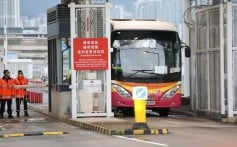
The plan would allow French people who want to leave Wuhan, the capital of Hubei province, to travel by bus to Changsha in neighbouring Hunan province, according to an email seen by the South China Morning Post.
“The consulate general, in collaboration with local authorities, plans to set up a bus service to allow French nationals … and their Chinese and foreign spouses and children to travel from Wuhan to Changsha,” it said.
The email, sent by the French consulate, also asked anyone who received it to pass the notice on to other French nationals. It was not clear which bodies received the email and the date of the planned evacuation was not specified.
The consulate could not be reached for comment on Saturday.
France, the United States, Britain and South Korea all have consulates in Wuhan, according to China’s foreign ministry.
The South Korean consulate said in a post on its website that it would suspend all visa applications “indefinitely until further notice”.
A diplomatic source said several foreign embassies in China were considering plans to evacuate their nationals from Wuhan.
First coronavirus case ‘had no links to seafood market’
25 Jan 2020
It is not known how many foreigners remain in the city, which has a population of about 11 million and has been under a government-imposed lockdown since Thursday morning.
French Foreign Minister Jean-Yves Le Drian said in a statement on Friday that Paris was monitoring the crisis and “can increase the power [to respond] if necessary”.
There have so far been three confirmed cases of the new coronavirus in France, in Paris and Bordeaux.
French Foreign Minister Jean-Yves Le Drian said on Friday that Paris was monitoring the crisis in China. Photo: AFP
The US said earlier that most of its consulate staff and their families had been pulled out of Wuhan.
An emailed inquiry to the British consulate in the city received only an automated reply, saying: “Wuhan is now in crisis mode. We may not be able to answer your emails for some time.”
The consulate would be closed for the Lunar New Year holiday until January 31, it said.
Meanwhile, British citizen Kharn Lambert told the BBC on Thursday how he had been “trapped” in Wuhan.
The PE teacher said he was afraid to leave his house for fear of catching the deadly virus.
“If you saw the street behind me at night time where I normally live … if I show you out there now, it’s dead,” he said.
More than 1,280 confirmed cases have been reported across China, of which more than 700 were in Hubei, according to local government figures released on Saturday.
The death toll in Hubei stands at 39, with two other fatalities reported in the provinces of Hebei and Heilongjiang.
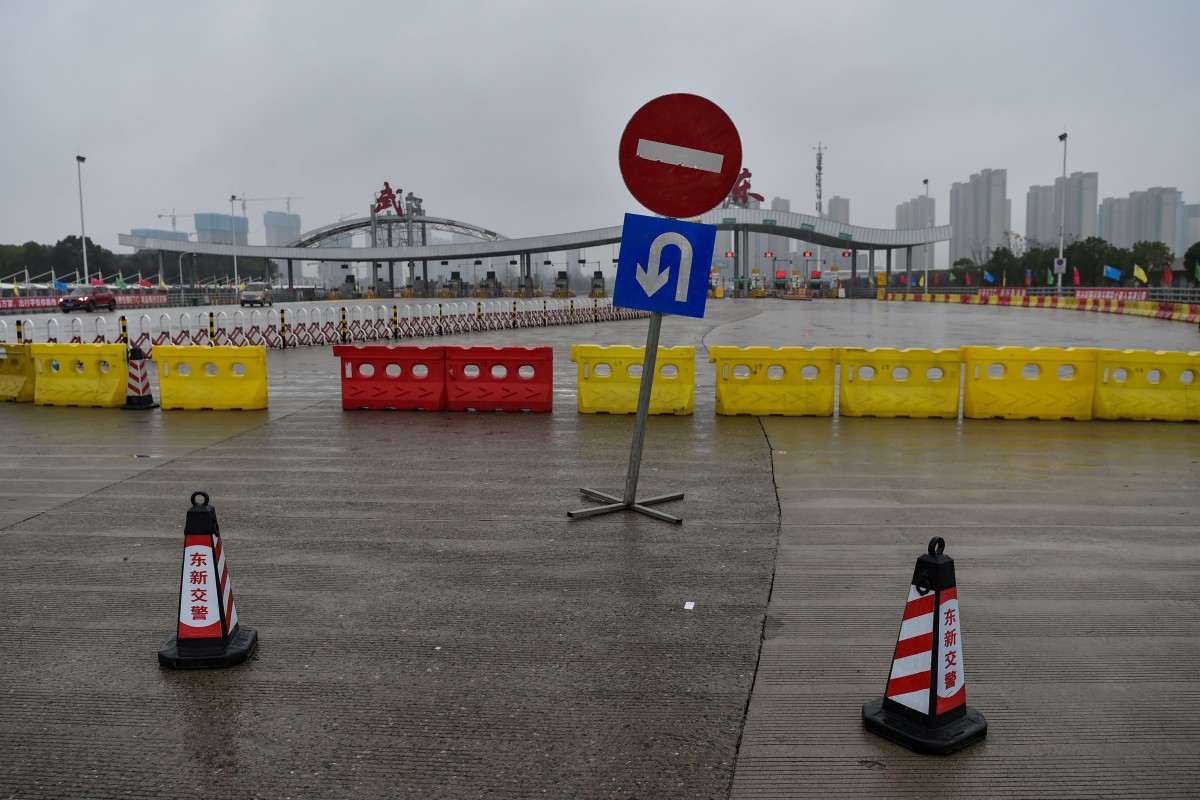
Tens of millions of people in Hubei are effectively on lockdown since a travel ban was imposed on most of the province.
Flights, trains, buses and ferries connecting Wuhan to other cities in Hubei have been suspended. Rail authorities in Wuhan, which is a hub for several major high-speed lines, said operations at 61 stations and more than 400 train services had been suspended until further notice.
NEW YORK (Reuters) – China and the Pacific island state of Kiribati restored diplomatic ties on Friday after the former diplomatic ally of Taiwan abandoned Taipei.
A poor but strategic country which is home to a mothballed Chinese space tracking station, Kiribati announced last week that it was cutting relations with self-ruled Taiwan in favour of China, which claims Taiwan as a wayward province with no right to state-to-state ties.
China and Kiribati had ties until 2003, when Tarawa established relations with Taipei, causing China to break off diplomatic relations.
Up until that time, China had operated a space tracking station in Kiribati, which played a role in tracking China’s first manned space flight.
The Chinese government’s top diplomat State Councillor Wang Yi and Kiribati’s President Taneti Maamau signed a communique on restoring diplomatic relations at the Chinese mission to the United Nations in New York.
“We highly prize this important and the correct decision,” Wang told a news conference. “Let’s hope for our friendship to last forever. We will work together to grow together towards a bright and prosperous future.”
Speaking alongside Wang, Maamau said there was much to learn from China.
“I do believe that there is much to learn and gain from the People’s Republic of China and the re-establishment of our diplomatic relations is just the beginning,” he said.
There was no mention of the space tracking station at the news conference, nor in the joint communique between the two countries released by China’s Foreign Ministry.
China’s space programme is overseen by the military.
China’s Defence Ministry this week declined comment on the Kiribati facility.
Last week was difficult for Taiwan, as the Solomon Islands also ditched it for Beijing. The Solomon Islands foreign minister signed a deal on diplomatic ties in China last Saturday.
Both the Solomon Islands and Kiribati are small developing nations but lie in strategic waters that have been dominated by the United States and its allies since World War Two. China’s moves to expand its influence in the Pacific have angered Washington.
A former Taiwanese ambassador to Kiribati, Abraham Chu, told Taiwan’s Central News Agency last weekend that China had never fully removed the tracking station in Kiribati and that it “could come back at any time”.
Taiwan now has formal relations with just 15 countries, mostly small and poor nations in Latin America and the Pacific, including Nauru, Tuvalu and Palau. China has signalled it is coming for the rest of Taiwan’s allies.
TOKYO (Reuters) – China’s growing military might has replaced North Korean belligerence as the main security threat to Japan, Tokyo’s annual defence review indicated on Thursday, despite signs that Pyongyang could have nuclear-tipped ballistic missiles.
The document’s security assessment on China comes after a section on Japan’s ally, the United States, the first time Beijing has achieved second place in the Defence White Paper and pushing North Korea into third position.
Russia, deemed by Japan as its primary threat during the Cold War, was in fourth place.
“The reality is that China is rapidly increasing military spending, and so people can grasp that we need more pages,” Defence Minister Taro Kono said at a media briefing.
“China is deploying air and sea assets in the Western Pacific and through the Tsushima Strait into the Sea of Japan with greater frequency.”
China’s Foreign Ministry expressed displeasure with the report.
China will not accept Japan’s “groundless criticism” of its normal national defence and military activities, spokesman Geng Shuang said at a press briefing in Beijing.
Japan has raised defence spending by a tenth over the past seven years to counter military advances by Beijing and Pyongyang, including defences against North Korean missiles which may carry nuclear warheads, the paper said.
North Korea has conducted short-range missile launches this year that Tokyo believes show Pyongyang is developing projectiles to evade its Aegis ballistic missile defences.
To stay ahead of China’s modernising military, Japan is buying U.S.-made stealth fighters and other advanced weapons.
In its latest budget request, Japan’s military asked for 115.6 billion yen ($1.1 billion) to buy nine Lockheed Martin (LMT.N) F-35 stealth fighters, including six short take-off and vertical landing (STOVL) variants to operate from converted helicopter carriers.
The stealth jets, U.S.-made interceptor missiles and other equipment are part of a proposed 1.2% increase in defence spending to a record 5.32 trillion yen in the year starting April 1.
By comparison, Chinese military spending is set to rise this year by 7.5% to about $177 billion from 2018, more than three times that of Japan. Beijing is developing weapons such as stealth fighters and aircraft carriers that are helping it expand the range and scope of military operations.
Once largely confined to operating close to the Chinese coast, Beijing now routinely sends its air and sea patrols near Japan’s western Okinawa islands and into the Western Pacific.
China has frequently rebuffed concerns about its military spending and intentions, including an increased presence in the disputed South China Sea, and says it only desires peaceful development.
The Defence White Paper said Chinese patrols in waters and skies near Japanese territory are “a national security concern”.
The paper downgraded fellow U.S. ally, South Korea, which recently pulled out of an intelligence sharing pact with Japan amid a dispute over their shared wartime history. That could weaken efforts to contain North Korean threats, analysts said.
Other allies, including Australia, the Association of Southeast Asian Nations (ASEAN) and India, feature more prominently in the defence paper.
South Korean government officials took issue with the White Paper’s reference to ownership of an island in the Sea of Japan that is also claimed and controlled by South Korea. The outcrop is known as Dokdo in Seoul and Takeshima in Tokyo.
“Our government strongly protests Japan’s repeated claim. The Japanese government should acknowledge that it is not helpful for bilateral relations,” South Korea’s foreign ministry said.
It follows Beijing’s decision earlier this month to turn down an application for two US Navy ships to visit Hong Kong
The countries have traded barbs about the handling of anti-government protests in the city
The US has had port visits denied by Chinese authorities twice this month. Photo: Alamy
A US Navy warship was denied a port visit to the eastern Chinese city of Qingdao on Sunday, the US Indo-Pacific Command said on Wednesday.
The request denial comes at a time of heightened tensions between China and the United States, with the countries engaged in a prolonged trade dispute and a war of words over anti-government protests in Hong Kong.
“The PRC [People’s Republic of China] denied the US Navy’s request to visit the Qingdao Port,” Commander Reann Mommsen, public affairs officer for the US Seventh Fleet, said in a statement on Wednesday.
Mommsen declined to name the warship denied entry or when the request was refused, referring questions about the reasons to Beijing.
The blocked visit was first reported by Reuters, which cited an anonymous US defence official as saying that China had denied the request for the destroyer before the intended visit on Sunday.
It is the second time in a month that China has prevented US Navy vessels making a port call.
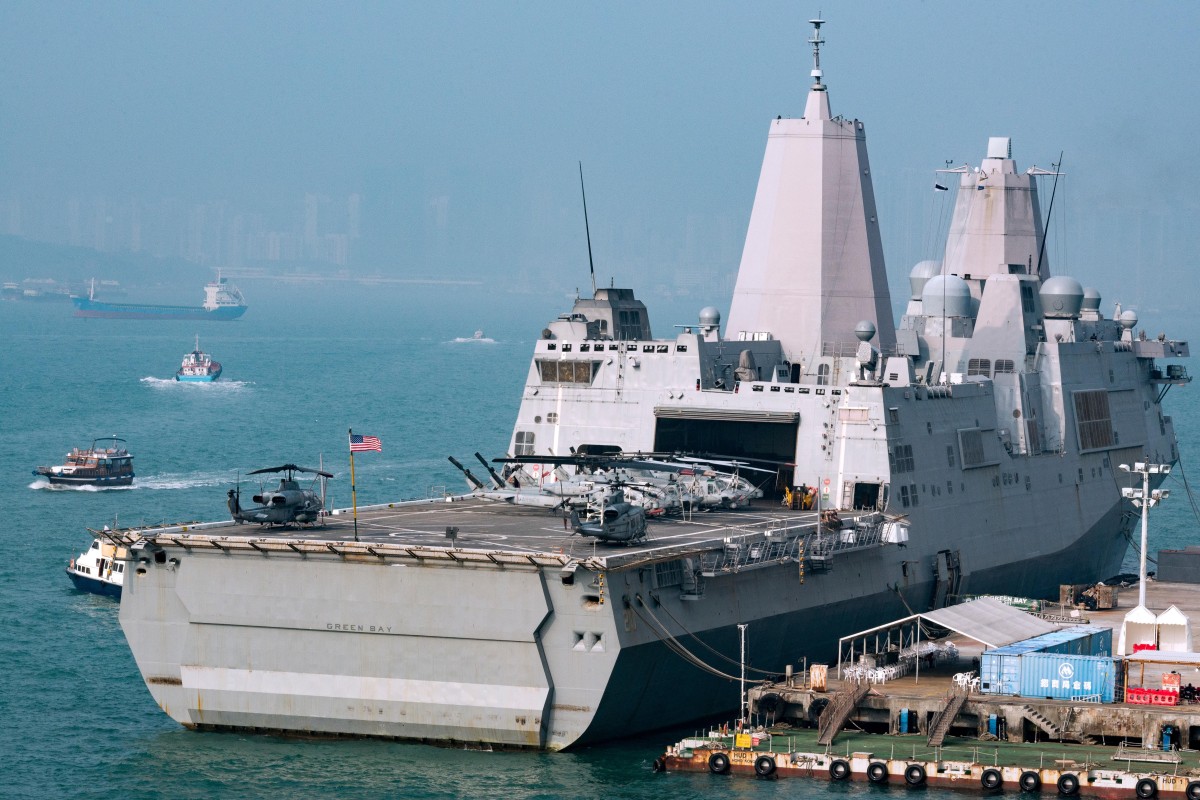
On August 13, the United States Pacific Fleet said China had denied requests for two US Navy ships to visit Hong Kong.
The USS Green Bay, an amphibious dock landing ship, had been due to make a port call in Hong Kong on August 17, and the guided missile cruiser USS Lake Erie was scheduled to visit next month, according to Nate Christensen, deputy spokesman for the Pacific Fleet.
A source close to the Chinese navy confirmed the Qingdao rejection, saying it was “normal practice” based on the current China-US relationship.
“Hasn’t the [US’] application to visit Hong Kong just been rejected?” the source asked.
Hong Kong has seen 12 weeks of anti-government protests, triggered by a now-shelved
that would have allowed criminal suspects to be transferred to mainland China.
Beijing has increasingly suggested
the protests are being funded by the West, a claim the US has called “ludicrous”
.
Zhou Chenming, a Beijing-based military expert, said the refusal was a natural result of the worsening bilateral ties between China and the US.
“Many bilateral exchanges are bound to deteriorate when countries’ ties worsen, such as during the China-US trade war. And now coupled with the Hong Kong unrest, many exchanges [between China and the US] have been downgraded,” Zhou said.
Liu Weidong, from the Chinese Academy of Social Sciences, echoed Zhou’s view and said a visit from the US warship would be meaningless at present.
“Now the US is very provocative … so China doesn’t want to welcome its warship,” Liu said.
Doubt has been cast on whether trade talks between the two countries are set to resume, with Beijing’s foreign ministry contradicting US President Donald Trump’s claim that China had sought a return to the negotiating table.
The countries had been due to speak on Tuesday, according to a previous statement from China’s Ministry of Commerce after their last telephone call on August 13. But there has been no announcement so far from either side on whether such a conversation took place.
Last week, China said it would levy retaliatory tariffs of 5 to 10 per cent on US$75 billion worth of US goods. The Trump administration responded by announcing a tariff increase from 25 to 30 per cent on US$250 billion of Chinese goods, and from 10 to 15 per cent on US$300 billion worth of Chinese products.
The US also designated Beijing as a currency manipulator, raising fears of an economic cold war between the two countries.
BEIJING (Reuters) – China has received a briefing from the United States on the latest meeting between U.S. President Donald Trump and North Korean leader Kim Jong Un, China’s Foreign Ministry said on Saturday, in a call between two senior diplomats.
Trump became the first sitting U.S. president to set foot in North Korea on Sunday when he met Kim in the Demilitarized Zone (DMZ) at Panmunjom between the two Koreas and agreed to resume stalled nuclear talks.
Chinese Vice Foreign Minister Luo Zhaohui and U.S. Special Representative for North Korea Stephen Biegun discussed that meeting in a telephone call on Friday, China’s Foreign Ministry said in a short statement.
“Biegun introduced the meeting between the U.S. and North Korean leaders at Panmunjom, and said the U.S. side is willing to strengthen communication and coordination with the Chinese side on the peninsula issue,” the ministry added.
Luo told Biegun the recent “positive interactions” on the North Korean issue by all parties had important meaning for the peace talks process, the ministry said.
“China supports U.S.-North Korea exchanges and dialogue and hopes that the two sides will meet each other halfway and follow the consensus of the leaders of the two countries to resume consultations at the working level as soon as possible,” it added.
Trump’s meeting with Kim came around a week after Chinese President Xi Jinping met Kim himself during a state visit to Pyongyang.
While China has not officially announced it, Luo is likely China’s new special envoy for the North Korea issue, after predecessor Kong Xuanyou became China’s new ambassador in Tokyo in late May.
Luo was also involved in a briefing to Chinese reporters on Xi’s visit to North Korea before Xi went, according to state media.
Luo is an urbane career diplomat who speaks good English, according to diplomats who have met him.
He previously served as China’s ambassador in Canada, Pakistan and India, and also worked in the Chinese embassy in Washington from 1996-2000.


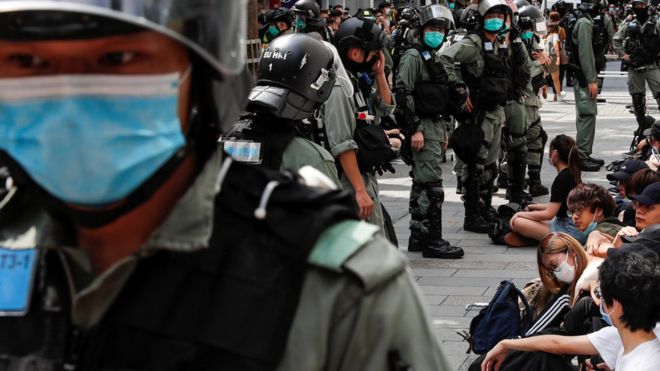 Image copyright REUTERS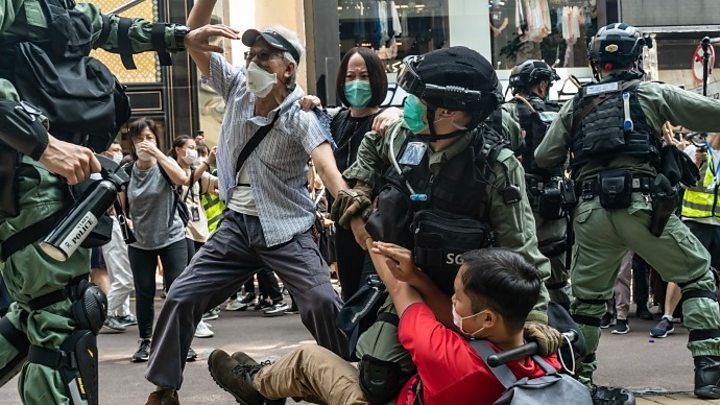
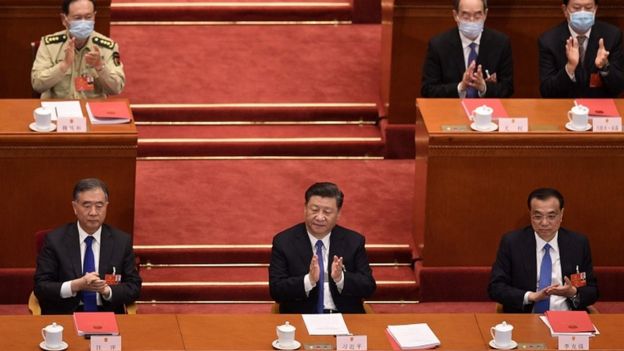 Image copyright AFP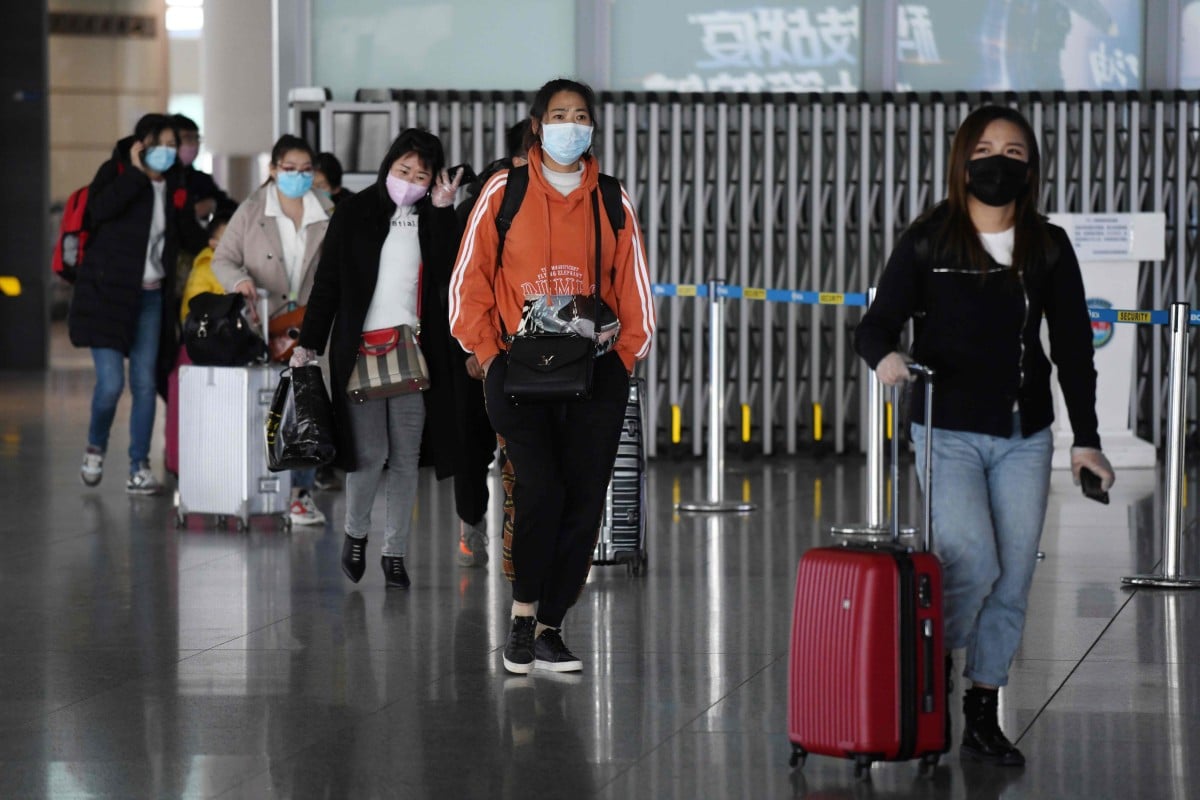



 CHINDIA ALERT: You'll be living in their world, very soon