Archive for ‘China alert’

20/04/2019

China forest reserves jump to over 13 bln cubic meters

BEIJING, April 19 (Xinhua) — China has made great strides in protecting forests over the past 20 years, a forestry official said Friday.

China’s natural forest reserves amount to 13.67 billion cubic meters, up from 9.07 billion cubic meters 20 years ago, Wen Haizhong, an official with the National Forestry and Grassland Administration, said at a press conference.

China implemented a forest conservation program in several pilot areas in 1998. The first phase of the program was from 2000 to 2010, and the second phase runs from 2011 to 2020.

“The program plays a fundamental role in safeguarding ecological security and biodiversity,” Wen said.

During the first phase, the country’s forest area increased 150 million mu (10 million hectares) and forest reserves added 725 million cubic meters. From 2011 to 2020, China has been stopping the commercial harvesting of natural forest resources step by step, with timber production down about 34 million cubic meters annually.

Source: Xinhua

20/04/2019

Indian foreign secretary heads to China for talks amid tense relations

  • Vijay Keshav Gokhale is expected to meet Chinese deputy foreign minister Kong Xuanyou and Foreign Minister Wang Yi during two-day visit
  • Beijing’s refusal to sanction a Pakistani militant leader and its belt and road push in the disputed Kashmir region have strained ties
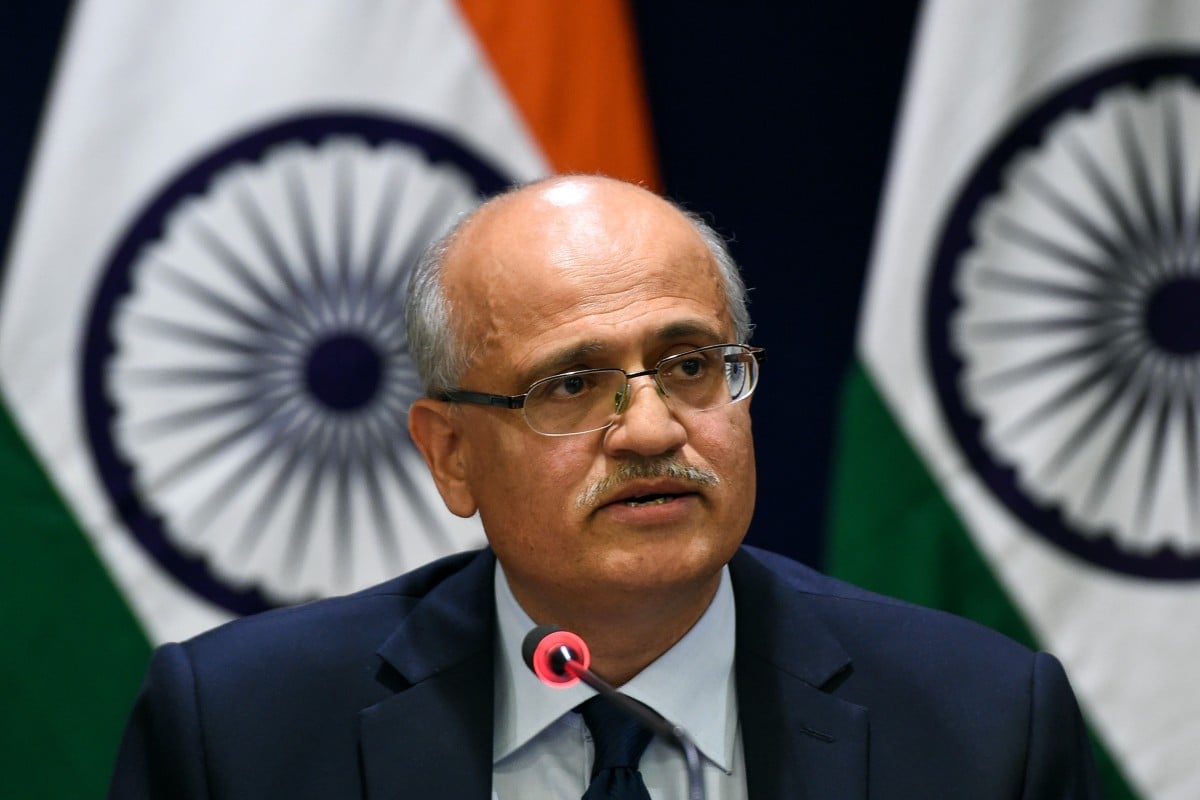
Indian Foreign Secretary Vijay Keshav Gokhale will visit China as part of “regular exchanges” between the two countries. Photo: AFP
Indian Foreign Secretary Vijay Keshav Gokhale will travel to Beijing on Sunday amid tensions between India and China over Beijing’s refusal to sanction a Pakistani militant leader and its infrastructure push in the disputed Kashmir region.
Gokhale’s two-day visit is part of “regular exchanges” between the two nations, the Indian embassy in Beijing said on Saturday.
During his stay, Gokhale is expected to meet Chinese deputy foreign minister Kong Xuanyou and Foreign Minister Wang Yi.

He will return to India on Monday, three days before the second Belt and Road Forum begins in the Chinese capital. Forty foreign leaders will attend the summit on Beijing’s global trade and infrastructure scheme, the “Belt and Road Initiative”, but India is not taking part.

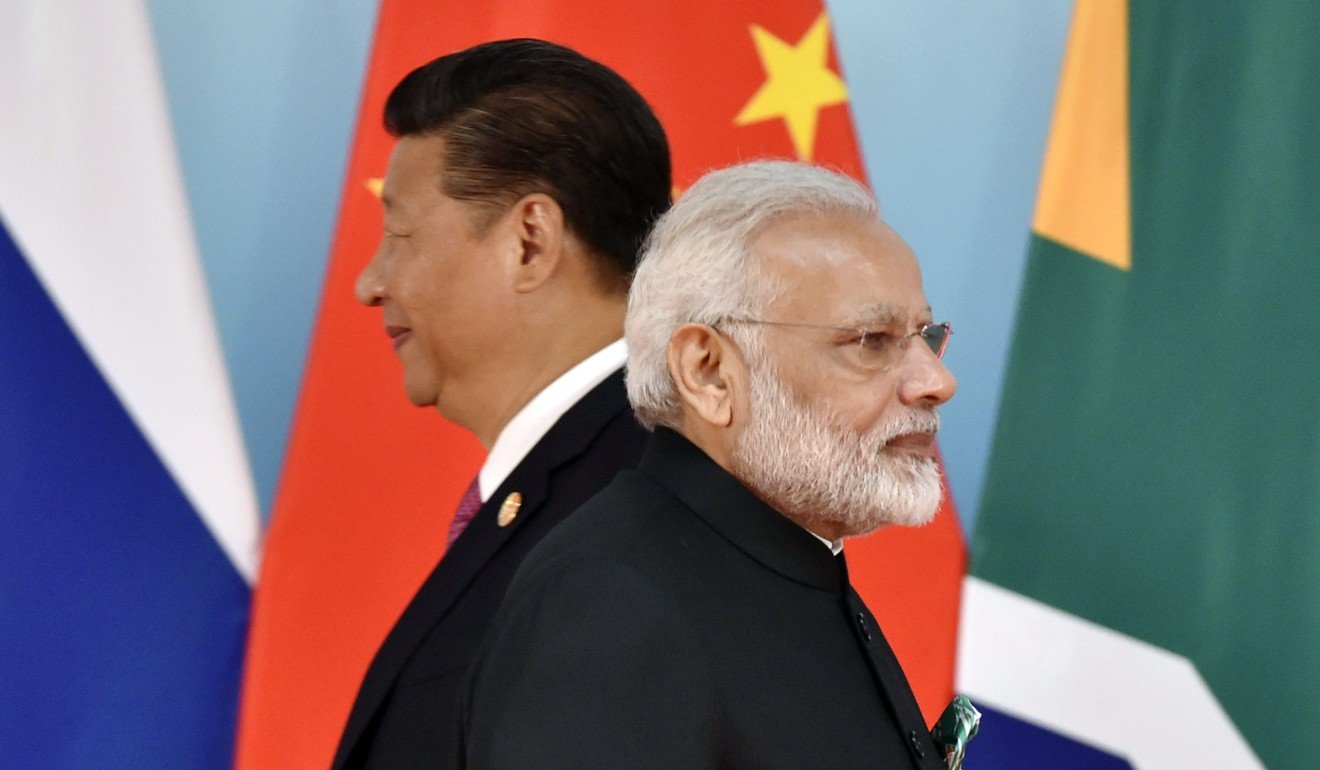
Wang on Friday called on India, and other countries sceptical of the initiative, to join up, dismissing claims that it is a geopolitical tool. He also said China was ready to hold a leaders’ summit with India like the informal meeting held between Chinese President Xi Jinping and Indian Prime Minister Narendra Modi in Wuhan, Hubei province last year.

A summit between Xi Jinping (left) and Narendra Modi in Wuhan last year was seen as a breakthrough in China-India relations after the Doklam border dispute. Photo: AFP

Gokhale visited Beijing in February last year, and the Wuhan summit happened two months later. That meeting was seen as a breakthrough in the

China-India relationship

after a 73-day military stand-off over the Doklam plateau.

But the progress was overshadowed in February after a terror strike on Indian security forces in the Jammu and Kashmir province, which killed 40 Indian soldiers. The Pakistan-based Jaish-e-Mohammed group claimed responsibility for the attack. India has long wanted to designate its leader, Masood Azhar, as a terrorist under international law, but China has opposed the move.

During a visit to Pakistan in March, Kong said Beijing and Islamabad were all-weather strategic partners and would support each other on issues to do with their core interests.

What ‘Wuhan spirit’? Kashmir suicide attack reopens Modi’s China wound

Wang Dehua, head of the Institute for South and Central Asia Studies at the Shanghai Municipal Centre for International Studies, said China and India were looking to prevent their bilateral relations from deteriorating further.

“Both nations will elaborate on their stance on this matter, and China will probably deliver a message that the China-India relationship should not be affected by the dispute over Masood Azhar,” he said. “The positive sentiment out of Wuhan has been affected, and the two sides are seeking ways to continue the spirit of that informal summit.”

Du Youkang, director of Fudan University’s Pakistan Study Centre in Shanghai, said preparations for another informal summit of the nations’ leaders would only begin after India’s general election was over. Polling is being held in seven phases ending on May 19.

Gokhale’s trip would mainly be a chance to see how the two nations can push forward bilateral ties amid their disputes, Du said.

In addition to Azhar, India is also dismayed that some of China’s belt and road projects pass through the Pakistan-administered section of the disputed Kashmir region.

But Wang told reporters on Friday that the initiative did not target any third country, and that relations between China and India had improved after the Wuhan summit.

Source: SCMP

20/04/2019

Leica China video sparks backlash over Tiananmen Square image

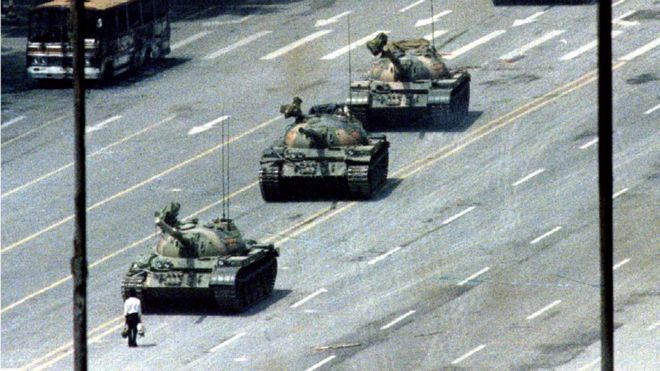
A man stands in front of three tanksImage copyrightREUTERS
Image caption This year marks the 30th anniversary of the pro-democracy protests

A promotional video for camera company Leica has sparked backlash in China for featuring a famous Tiananmen Square image.

The video depicts photographers working in conflicts around the world, including a photographer covering the 1989 protests.

People on Chinese social media site Weibo have called for a boycott of the camera brand.

Leica has distanced itself from the video.

“Tank Man” was a lone protester who brought a column of tanks to a standstill during a crackdown on pro-democracy protesters in Beijing in 1989.

He refused to move out of the way and climbed onto the leading tank to speak to the driver. He was later pulled away from the scene by two men. What happened to him remains unknown.

Beginning with the caption “Beijing 1989”, the Leica video features a photographer taking the famous image. The “Tank Man” can be seen in the camera’s lens.

Users on Chinese social media site Weibo have been forbidden from commenting on recent official posts by Leica. However some people are managing to post carefully worded comments on earlier official Leica posts, BBC Monitoring has found.

A search of the hashtag Leica shows that 42,000 users have left posts on Weibo but only 10 are available to view.

Some comments urge users to “boycott the camera” and joke about the company being linked to “patriotic Huawei”.

Chinese technology giant Huawei has been restricted by the US and other countries over security concerns in telecommunications networks. Consumers in China have rallied around the company, which uses Leica technology in its latest mobile phones.

A spokeswoman for Leica told the South China Morning Post that the film was not an officially sanctioned marketing film commissioned by the company. However it features Leica cameras and the company’s logo at the end of the footage.

They added that the company “must therefore distance itself from the content shown in the video and regrets any misunderstandings of false conclusions that may have been drawn”.

The BBC has contacted Leica for additional comment.


How China keeps Tiananmen off the internet

By Kerry Allen, BBC Monitoring China analyst

China has banned all activists’ commemorations of the 1989 Tiananmen incident for years and has strictly regulated online discussion of it.

If users search for “Tiananmen” on domestic search engines like Baidu or social media platforms like Sina Weibo, they only see sunny pictures of the Forbidden City in Beijing. If any pictures of tanks running along Chang’an Avenue are visible in image searches, they are only from Victory Day parades.

Hundreds of references to 4 June 1989 are banned all-year round by thousands of cyber police, and Weibo steps up censorship of even seemingly innocuous references to the incident on its anniversary.

Simple candle emojis, and number sequences that reference the date, such as “46” and “64” (4 June) and “1989” (the year of the protests), are instantly deleted. Small businesses also struggle to market items on 4 June every year, if their sale price is 46 or 64 yuan. Such advertising posts are swiftly removed by nervous censors.

But creative users always find ways of circumventing the censors. For example in 2014, when Taylor Swift released her 1989 album, the album cover featuring the words “T.S.” and “1989” was seen as an effective metaphor by users to talk about the incident – as T.S. could be taken to mean “Tiananmen Square”.


More than one million Chinese students and workers occupied Tiananmen Square in 1989, beginning the largest political protest in communist China’s history. Six weeks of protests ended with the bloody crackdown on protesters of 3-4 June.

Estimates of the death toll range from several hundred to more than 1,000.

China’s statement at the end of June 1989 said that 200 civilians and several dozen security personnel had died in Beijing following the suppression of “counter-revolutionary riots” on 4 June 1989.

Source: The BBC

20/04/2019

Hundreds sign online petition supporting woman suing JD.com CEO in rape case

SHANGHAI (Reuters) – Hundreds of people have added their names to an online petition in support of a University of Minnesota student who said she was raped last August by Richard Liu, the chief executive officer of China’s e-commerce retailer JD.com Inc.

The student, Liu Jingyao, from China, filed a civil lawsuit against JD’s CEO in a Minneapolis court on Tuesday, nearly four months after prosecutors declined to press criminal charges against him.

The law suit identified the student for the first time. The two Lius are not related.

Richard Liu, through his lawyers, maintained his innocence throughout the law enforcement investigation, which ended in December. The company did not immediately respond to an email request for comment.

It was unclear who launched the petition, which carried the hashtag #HereForJingyao, although signatories included Chinese students at foreign universities as well as in China. On Saturday, it was gathering momentum on the social media platform WeChat, with more than 500 names attached.

“To Liu Jingyao: You are not alone. We believe in survivors, we believe in your bravery and honesty, we will always stand with you. We must join hands and march together in the face of the challenge of a culture of blaming the victims of rape,” the petition said.

A Chinese-language translation of the indictment was also circulating online.

Liu Jingyao first accused Richard Liu of rape in August when he was visiting the University of Minnesota to attend a program directed at executives from China.

Liu, 46, who started JD.com as a humble electronics stall and expanded it into an e-commerce company with 2018 net revenues of $67 billion, was arrested on Aug. 31 but released without charge about 17 hours later.

A fledgling #MeToo-style movement in support of women’s rights has been slow to gain wide traction in China, where issues like sexual assault have traditionally been brushed under the carpet.

China’s ruling Communist Party, wary about grassroots organizing, has also in recent months put pressure on activists focused on issues like sexual assault on campuses and workers’ rights.

Source: Reuters

19/04/2019

Xi Focus: Xi delivers resolve, confidence at “critical stage” of poverty alleviation

CHINA-CHONGQING-XI JINPING-INSPECTION-SYMPOSIUM (CN)

Chinese President Xi Jinping, also general secretary of the Communist Party of China Central Committee and chairman of the Central Military Commission, talks with villagers, primary-level officials, cadres in charge of poverty alleviation work and village doctors in Huaxi Village of Shizhu Tujia Autonomous County, southwest China’s Chongqing, April 15, 2019. From April 15 to 17, Xi made an inspection tour to Chongqing. He also presided over and delivered a speech at a symposium to address the problems concerning the basic living needs of rural poor populations and their access to compulsory education, basic medical services, and safe housing. (Xinhua/Ju Peng)

CHONGQING, April 18 (Xinhua) — Eliminating absolute poverty in China has been an aspiration of the Communist Party of China (CPC) throughout its 98-year history and a goal for the 70-year-old People’s Republic of China and the 40 years of reform and opening-up.

It is a major concern for Xi Jinping, general secretary of the CPC Central Committee. During an inspection tour to southwest China’s Chongqing Municipality from Monday to Wednesday, he pledged to address this issue like “a hammer driving a nail.”

Since the 18th CPC National Congress held in late 2012, China has made incredible progress in fighting poverty. The number of rural residents living below the current poverty line has been reduced from 98.99 million in 2012 to 16.6 million in 2018.

“The battle against poverty has entered a decisive and critical stage. We must press ahead with our full strength and strongest resolve and never stop until securing a complete victory,” he said.

CONFIDENCE

When Xi walked into the home of Ma Peiqing, a resident of Huaxi Village, located deep in the mountains of Chongqing, it was around 6 p.m. Monday.

After flying from Beijing in the morning to Chongqing, he spent another three hours, first by train and then by road, to reach Huaxi Village, home to 85 households and 302 villagers who were registered as living below the current poverty line. Today, only eight households and 19 villagers remain on the list.

Huaxi Village is a typical case of China’s impoverished regions. The basic needs for food and clothing have been met, but more efforts are needed for compulsory education, basic medical care and safe housing.

“I was diagnosed with nasopharynx cancer in 2017,” said Zhang Jianfeng, an impoverished villager. “About 80,000 yuan (11,900 U.S. dollars) of my medical expenses were reimbursed by medical insurance. It was indeed a timely help.”

“After visiting the village, I feel reassured,” said Xi. “We may have about 6 million impoverished people and 60 impoverished counties left at the beginning of 2020. If we make sure this year’s work is well-implemented and push ahead next year, we will eliminate poverty.”

“We are confident about accomplishing the mission,” he added.

NO LAXITY

“Less than two years are left before fulfilling the objective of poverty alleviation. This year is particularly crucial,” Xi said at a symposium held Tuesday afternoon in Chongqing. “The most important thing at this stage is to prevent laxity and backsliding.”

Xi stressed that people need to be aware of the difficulties and problems and clearly define priorities.

What needs to be solved and can be solved must be tackled urgently, he said, adding that as for the long-term problems, plans should be made and solutions developed step by step.

Of the country’s 832 poverty-stricken counties, 153 have been removed from the state list while another 284 are under assessment.

“To get rid of poverty, we must consider both quantity and quality. We must strictly enforce the standards and procedures for evaluating whether people are poor or not, so as to ensure that genuinely poor people really get rid of poverty.”

SOLIDARITY

Tan Xuefeng, Party chief of the Zhongyi Township, shared with Xi his seven-year experience in the forefront of the fight against poverty.

“Last year, my colleagues and I only took three full weekends off, spending the rest on household surveys and implementing the policies,” said Tan.

Throughout the years, more than three million officials from governments above the county level, state-owned enterprises and public institutions have stayed in impoverished villages to offer assistance.

Reaffirming the Party’s commitment to poverty reduction, Xi said that no one should be left behind as the country marches toward building a moderately prosperous society in all respects, and the assistance must be offered to everyone in need because “that makes a Communist party.”

Source: Xinhua

19/04/2019

China asks Britain for help to boost image of Belt and Road Initiative

  • China’s Ambassador to the UK Liu Xiaoming cites ‘rule-making’ as an area for bilateral cooperation with the UK
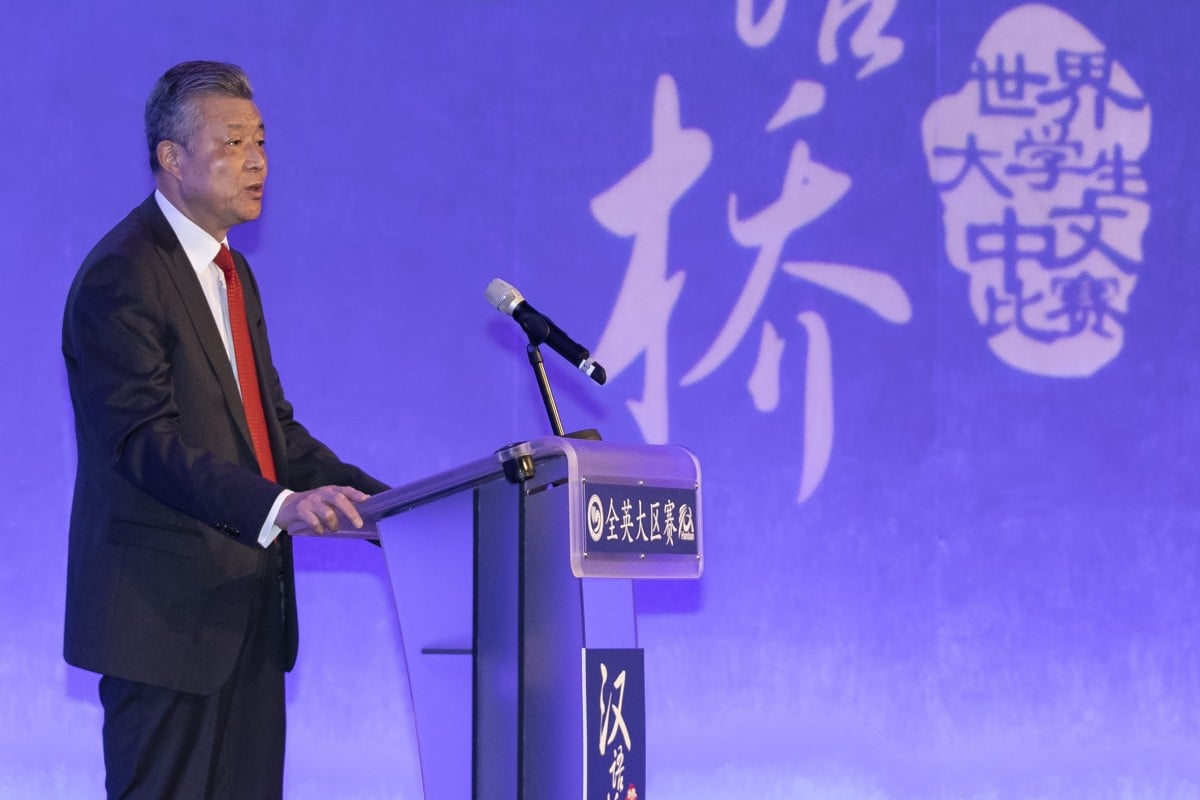
Chinese Ambassador to the UK Liu Xiaoming gives a keynote speech during the ‘Chinese Bridge’ Chinese Proficiency Competition for Foreign College Students UK Regional Final in London. Photo: Xinhua
China has asked Britain for help to offset claims its “Belt and Road Initiative” investments are opaque and justify its overseas spending to critics.
It made the move days before UK Chancellor Phillip Hammond was expected to head to the belt and road forum in Beijing.

In an article in London’s Evening Standard on Wednesday, China’s Ambassador to the UK Liu Xiaoming cited “rule-making” as an area for bilateral cooperation.

“Britain has played a leading role in the establishment and management of the Asian Infrastructure Investment Bank,” Liu said. “In [belt and road] development, Britain could have a big role to play in ensuring that the projects are of higher quality, at a higher standard, with higher return.”
Four years ago the UK defied the US and joined the AIIB.
Liu’s comments followed news the UK’s Department for International Development (DFID) was asked to join a new initiative aimed at improving China’s international accounting and transparency standards.
China is thought to see DFID as a model for its new aid outfit, China International Development Cooperation Agency (CIDCA), which was established last year to oversee Beijing’s foreign aid.
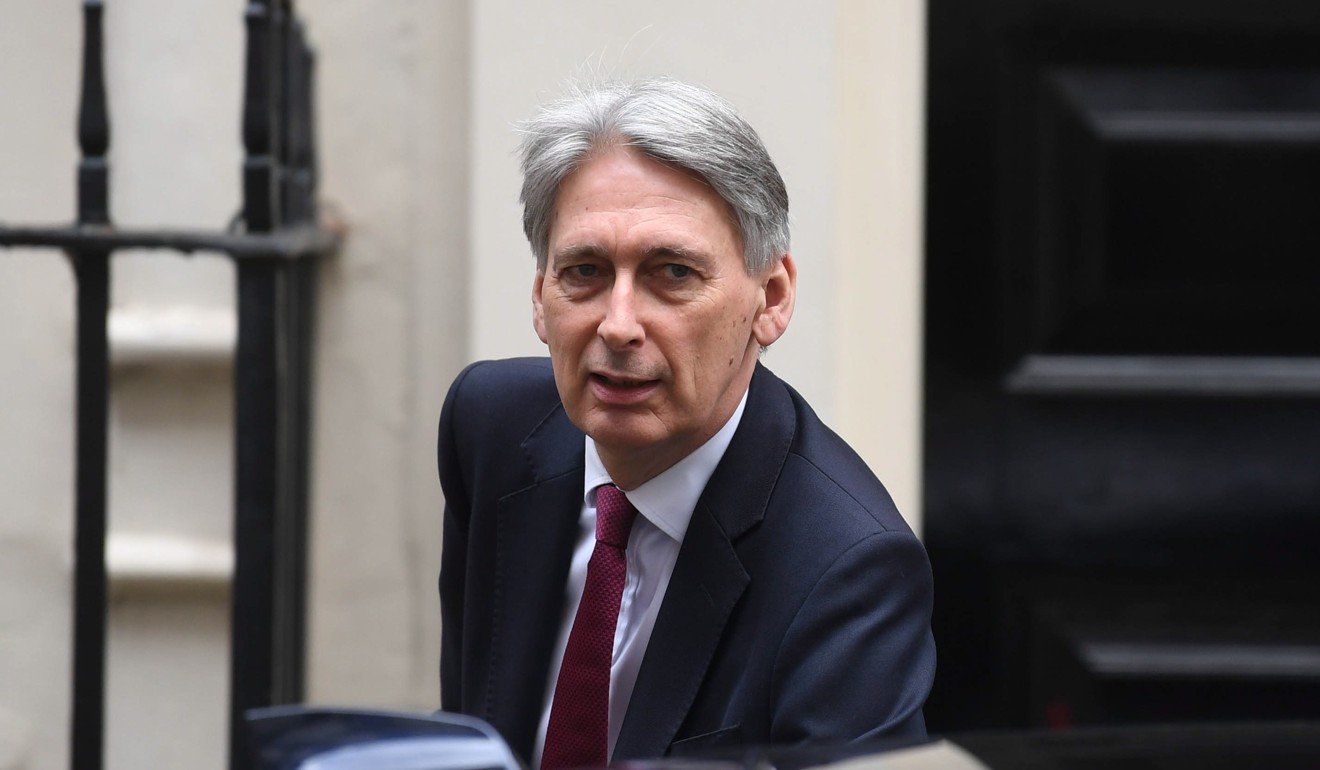
Britain's Chancellor of the Exchequer Phillip Hammond. Photo: EPA-EFE
Britain’s Chancellor of the Exchequer Phillip Hammond. Photo: EPA-EFE

The DFID was the third most transparent donor in the world after the Asian Development Bank and UNDP, according to the aid data-crunching website Publish What You Find. China was the least.

Critics say part of the problem is Beijing prefers to deliver loans and other investments through local elites. There are also often several government departments involved, each directed by their own rules and priorities, making financial reporting more complex.

“I think the Chinese are instead playing by a different set of rules, not all of them in conflict with the West’s … but most definitely not fully aligned with what the West wants or expects”, said Eric Olander, managing editor of Shanghai-based The China Africa Project. “Therefore, I would not expect to see the kind of meaningful change in its accounting and financial standards in the near term.”

‘Cooperate or stop criticising’, China’s foreign minister Wang Yi says as belt and road summit nears

The MOU proposed by China is more a statement of intent than a plan of action but the UK welcomed it as a positive sign

“China’s proposal to set up a ‘Multilateral Cooperation Centre for Development Finance’ has real potential to ensure its huge investments in developing countries meet the key international standards that matter to all of us – on debt, transparency, environment and social safeguards,” UK International Development Secretary Penny Mordaunt said at the World Bank Spring Meeting recently.

A source at DFID told the SCMP that the UK has not signed the MOU yet but said while other countries are aware of the proposal, it is the only country so far to be formally invited to participate by China.

France and Germany were two possible future signatories, and MCCDF has been discussed in EU member state meetings in Beijing.

“[China] is clearly frustrated that it feels misunderstood by the international community,” said Olander.

“I have attended one seminar after another where African stakeholders ask the Chinese for more transparency and the Chinese respond with a sympathetic smile that says ‘I’d love to but I’m not sure how we can do that given our political culture and the current political realities’.”

With the Chinese economy slowing at home and the losses abroad in places like Venezuela starting to mount, there are indications that the Chinese policy banks are becoming far more risk-averse in places like Africa and the Americas.

Even so according to figures released on Thursday, the Export Import Bank of China provided more than a trillion yuan (US$149 billion) to more than 1,800 Belt and Road projects since 2013. China Development Bank (CDB) said in March it had provided US$190 billion in the same period.

“The UK is very concerned by rising debt levels, particularly in emerging market economies and in low-income countries,” Mordaut told the World Bank.

“Unsustainable debt levels are a real risk that can undermine or reverse development gains.”

The IMF said recently 24 out of 60 of the poorest countries are either in debt distress or at a high risk of falling into it.

China is also looking to the UK to help manage the BRI projects and organise part of the financing, something the City of London and the government are keen to do, Liu said.

Describing it as “third-party involvement in BRI development” he said: “The UK, with its unique strengths in professional services, project-management and financing, could tap into this potential.”

China is keen for the UK to sign a BRI MOU like Italy, and soon Switzerland, but so far it has resisted. A report released earlier this month by the parliament’s Foreign Affairs Committee called for a rebranding of the “golden era” started by the former chancellor George Osborne, now the editor of the London Evening Standard.

Britain is keen to cement closer ties with Beijing as the world’s fifth largest economy looks to reinvent itself as a global trading nation if and when it leaves the European Union.

Source: SCMP

19/04/2019

Amazon plans to shut online store in China

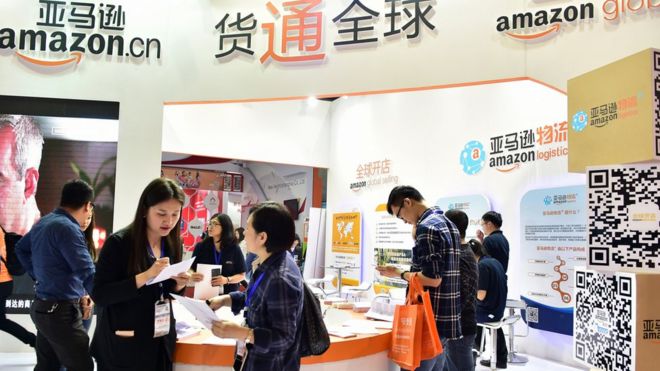
Visitors at an Amazon booth during the 2016 China International Electronic Commerce Expo in Yiwu, east China's Zhejiang province.Image copyright GETTY IMAGES

Amazon plans to shut its online store in China that allows shoppers to buy from local sellers as it downsizes operations in the country.

The firm said it would no longer run the domestic marketplace from July, but Chinese shoppers will still be able to order goods from Amazon’s global store.

It will also continue to operate its cloud business in China.

The retail retreat comes as Amazon faces tough competition from local rivals Alibaba and JD.com.

Reuters first reported Amazon’s plans to close its domestic marketplace in China by mid-July to focus on more lucrative businesses selling overseas goods and cloud services. Amazon’s profitable cloud computing division hosts huge swathes of the corporate world on its data servers.

A spokesperson for the company said in a statement that it was “working closely with our sellers to ensure a smooth transition and to continue to deliver the best customer experience possible”.

Consumers accessing Amazon Chinese web portal, Amazon.cn, after 18 July will see a selection of goods from its global store, Bloomberg reported.

Amazon bought Joyo.com, a Chinese books, music and video retailer, for $75m (£57.4m) in 2004. It rebranded the company as Amazon.cn in 2007.

But it has struggled to compete with dominant players JD.com and Alibaba’s Tmall marketplace in China.

The shift away from the world’s second largest economy comes as the company pours huge investment into India.

Amazon has committed to spending $5.5bn on e-commerce in India, where it competes with local rival Flipkart.

Last year, it launched a Hindi version of its mobile website and smartphone app in an attempt to attract millions of new customers in the country.

Source: The BBC

18/04/2019

Cambodian, Chinese entrepreneurs meet to explore business opportunities

PHNOM PENH, April 18 (Xinhua) — A Cambodian and Chinese entrepreneurs meeting was held here on Thursday, aiming at exploring opportunities for trade and investment, officials said.

The meeting brought together nearly 20 entrepreneurs from southwest China’s Sichuan province and about 20 Cambodian business executives.

Ek Sam Ol, president of the Cambodia-China Friendship Association, said that currently, many enterprises from Sichuan have been doing businesses in various sectors in Cambodia.

“The forum is a good opportunity for the entrepreneurs from both sides to exchange experiences and to explore opportunities for investments or business partnerships,” he said.

Sam Ol said China is currently the top foreign investor in Cambodia and Chinese investments have importantly contributed to socio-economic development in the country.

He said Chinese investments have focused on a variety of sectors including transport infrastructure, hydropower plants, industrial zones, garment and footwear factories, banking and finance, real estate and construction, agriculture, tourism, and airlines.

Source: Xinhua

18/04/2019

More than 100,000 government services accessible via China’s provincial-level e-platforms

BEIJING, April 18 (Xinhua) — Chinese citizens could access more than 100,000 government services via online platforms run by provincial-level governments as of the end of 2018, according to an official report.

The assessment report on China’s online government services was made by the e-government research center of the Party School of the Communist Party of China Central Committee (National Academy of Governance), commissioned by the e-government office of the State Council General Office.

The government services accessible online are provided by 1,418 departments at the provincial level, regarding various issues such as administrative permission, the report said.

In October 2018, the government of the southwestern Tibet Autonomous Region put its service website on a trial run, meaning China’s 32 provinces, municipalities and autonomous regions all have their own government service e-platforms.

The report also said the e-platforms should improve the user experience and that relative governments and departments should enhance their efficiency when providing services online.

Source: Xinhua

18/04/2019

Tobacco vendors illegally advertise and sell cigarettes on China’s social media and e-commerce platforms

  • Health watchdog warns that tobacco products are widely available on both social media and online retailers
A tobacco seller’s advert posted on WeChat. Photo: Handout
Illegal tobacco trading is rife online in China both via social media and e-commerce platforms, a health watchdog has warned.
The Beijing Centre for Disease Prevention and Control released a report on Monday that said almost 52,000 advertisements and listings for tobacco products had been found on 14 social media and e-commerce platforms in the first half of last year.
“Compared with traditional advertising, tobacco promotion on the internet uses methods such as sponsored content, which is more discreet,” the report said.
China’s internet advertising regulations prohibit the online promotion of tobacco products.
Selling cigarettes online is illegal as the State Tobacco Monopoly Administration bans the sale of tobacco across provinces and strictly controls the production, sale and import of the product.
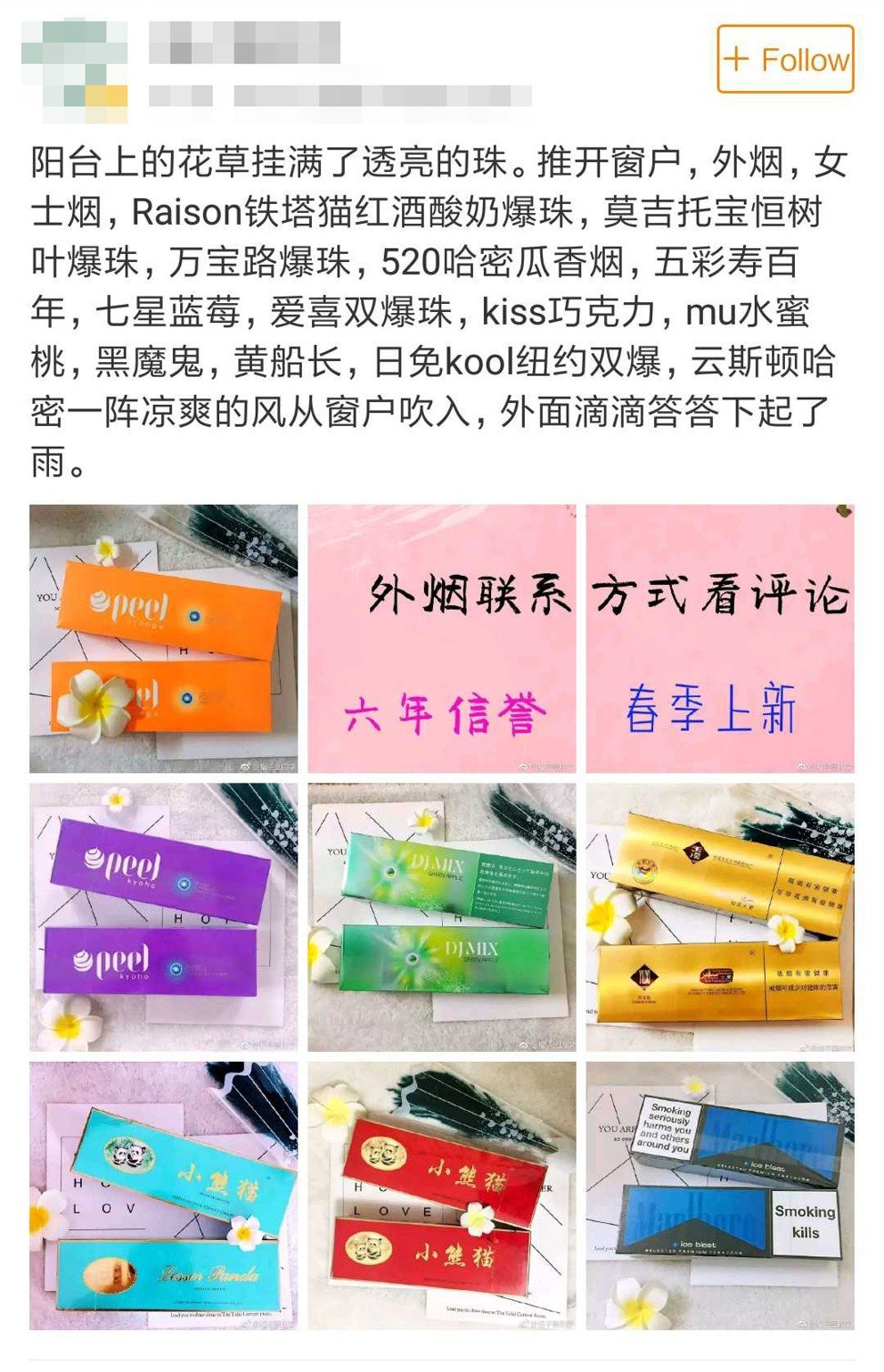
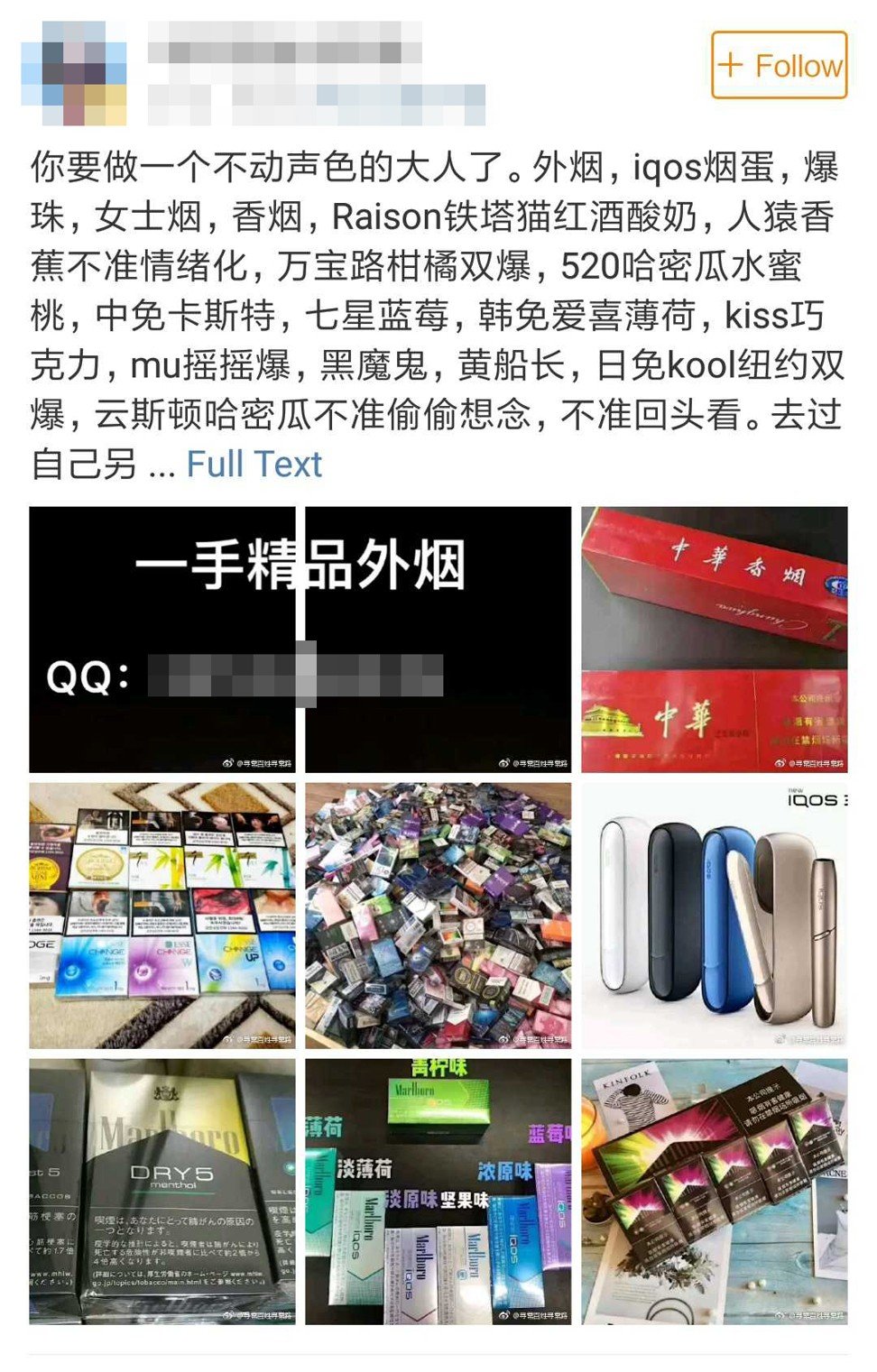
Screenshot from Weibo of an advertisement for imported cigarettes. Photo: Handout

The social network Weibo, China’s equivalent of Twitter, was highlighted as the platform where most of the banned promotion and selling were found, with nearly 43,000 adverts and listings, or 82 per cent of the total.

The South China Morning Post found that tobacco advertising and direct selling proliferates on Weibo, where searching for terms such as “cigarettes” and “women’s cigarettes” yielded almost 1,300 results, many of them offering WeChat and QQ contact information.

Five vendors found through Weibo offered various imported cigarettes such as Marlboro and South Korean brand Esse.

One seller claimed his wares were smuggled into China from places like the US. Another offered refunds for products that were confiscated, but only if they were bought for delivery within the same province.

A 10-packet carton of Kent cigarettes, an American brand, was selling for around 30 per cent less than the retail price in Beijing.

An extraordinary man’: China’s tobacco and orange king, entrepreneur Chu Shijian, dies aged 91
“A few days ago, cigarette sellers on Little Red Book began trending. People in different places have stopped. I’m still going, one step at a time,” a vendor calling herself “24 hours online cigarette hawker” wrote on her WeChat timeline on Wednesday.
She was referring to media coverage of Little Red Book the e-commerce platform popular with influencers selling lifestyle products.
Little Red Book, whose investors include Alibaba, the owner of the South China Morning Post, has pledged to remove as many as 95,000 adverts and listings for tobacco products found on the app on Tuesday in response to a report by newspaper Beijing Youth Daily.
Searches for “cigarettes” or “women’s cigarettes” no longer yielded results on Thursday.
“We are working hard to remove related content. We ask users to promptly report cases and work together to maintain order on the platform,” Weibo’s PR director Mao Taotao said.
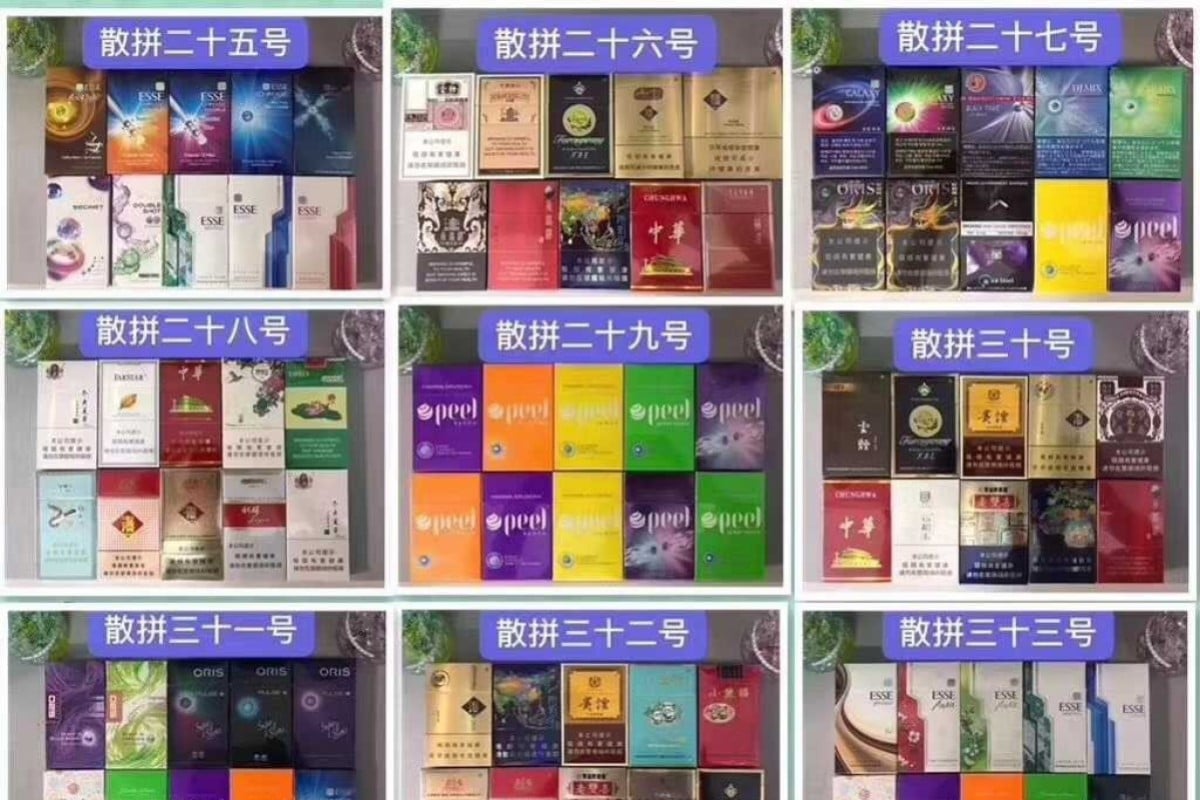
Imported cigarettes on sale on Weibo. Photo: Handout

While advertising and online selling of tobacco are prohibited, e-cigarettes fall in a grey area. China’s tobacco agency has banned the sale of IQOS, a type of battery heated cigarette that delivers nicotine. However, regulations for non-nicotine vaporisers are less clear. These continue to be widely available online.

“In China, even toilet paper has standards. There are none for e-cigarettes,” Li Enze, the industrial law committee secretary for the Chinese Association on Tobacco Control, said.

“I think there needs to be a total ban on the sale of e-cigarettes until standards and regulations are set.”

E-cigarettes and vaporisers come in a variety of flavours and shapes to target women and young people, which poses a serious problem according to Li.

Under-18s can easily purchase vaporisers online and can be induced to smoking the real thing, he said.

Two sets of standards for e-cigarettes have been considered by the Standardisation Administration of China since 2017.

However, both were proposed by organisations associated with the state tobacco monopoly, which Li deemed a conflict of interest.

Source: SCMP

Law of Unintended Consequences

continuously updated blog about China & India

ChiaHou's Book Reviews

continuously updated blog about China & India

What's wrong with the world; and its economy

continuously updated blog about China & India