Archive for ‘China alert’

24/02/2019

China to further enhance physical education in primary, secondary schools

BEIJING, Feb. 24 (Xinhua) — China will further enhance physical activities in primary and secondary schools and promote students’ interests, said the Ministry of Education Friday.

Provincial-level regions in China have clearly included physics as a subject scored in senior high school entrance exam, according to the ministry.

Details to evaluate the subject of physics are based on local conditions, it said, adding swimming is used to assess the score in certain regions.

In 2016, the ministry released a guideline aiming to establish a senior high school entrance exam system based on both academic performance and comprehensive quality by 2020.

Source: Xinhua

24/02/2019

Electricians dispatched to repair high voltage wire to ensure post-holiday travel peak in China’s Wuhan

CHINA-WUHAN-ELECTRICIAN-RUSH REPAIR (CN)

Aerial photo taken on Feb. 12, 2019 shows emergency worker Dong Jinbing (L) inspecting the high voltage wire with his workmate Wang Wensheng on the power transmission tower in the mountain area of Wuhan, capital of central China’s Hubei Province.

A team of electricians was dispatched to repair a high voltage wire that was broken due to thick layer of ice accumulation. After one day’s work on the over 40-meter-high power transmission tower in bad weather condition, the team succeeded in fixing the failed power system that lowered the trains’ speed causing delay during the post-holiday travel peak. This year’s Spring Festival travel rush started on Jan. 21 and will last till March 1, with railway trips expected to hit 413 million in total, up 8.3 percent. (Xinhua/Xiao Yijiu)

24/02/2019

China’s military build-up just starting – a lot more to come, expert warns

  • Military watchers can expect ‘something new’ at this year’s National Day parade in October, Professor Jin Canrong tells forum in Hong Kong
  • As tensions rise over Taiwan, Beijing is building a naval and missile force as powerful as any in the world, he says

Beijing’s military build-up just starting – a lot more to come, expert warns

24 Feb 2019

Submarine arms race seen heating up in Indo-Pacific amid China ‘threat’

16 Feb 2019

The US could send more nuclear attack submarines, such as the Virginia-class, to the region. Photo: AFP
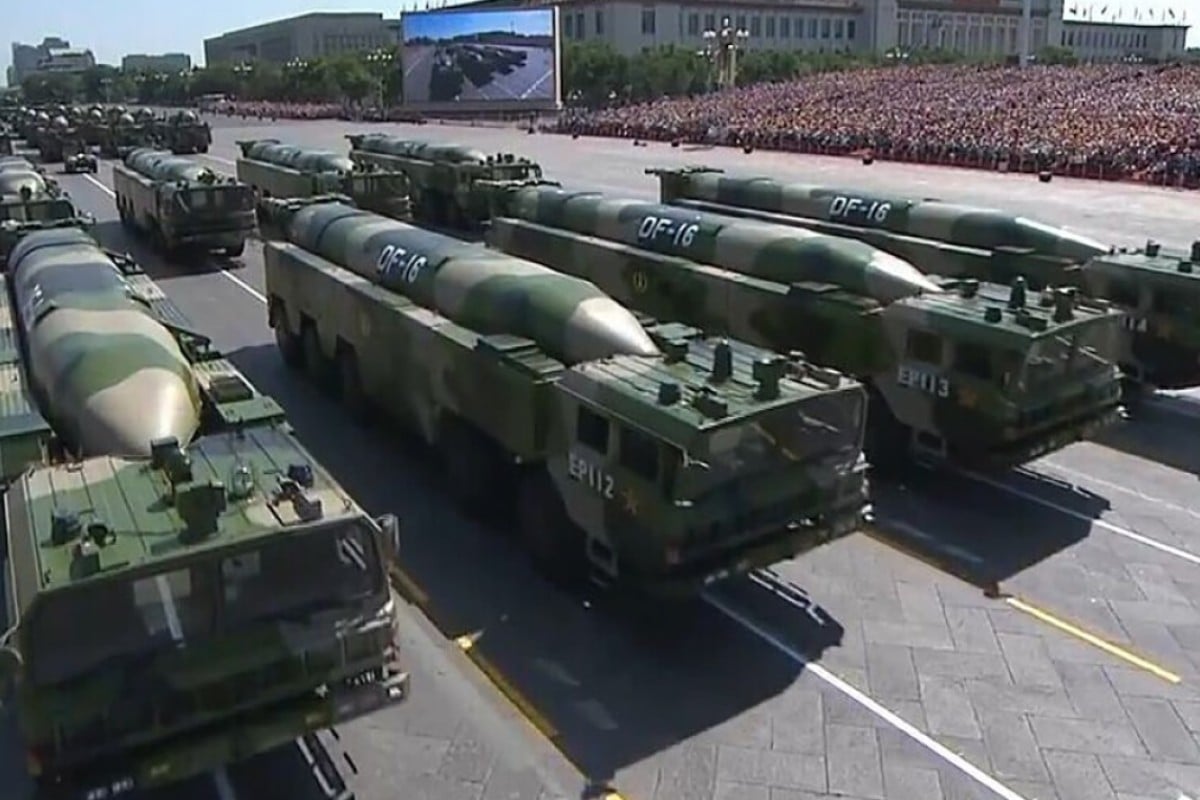
Military vehicles carrying DF-16 ballistic missiles take part in China’s National Day parade. Taiwan says Beijing has such missiles trained on the self-ruled island. Photo: Handout

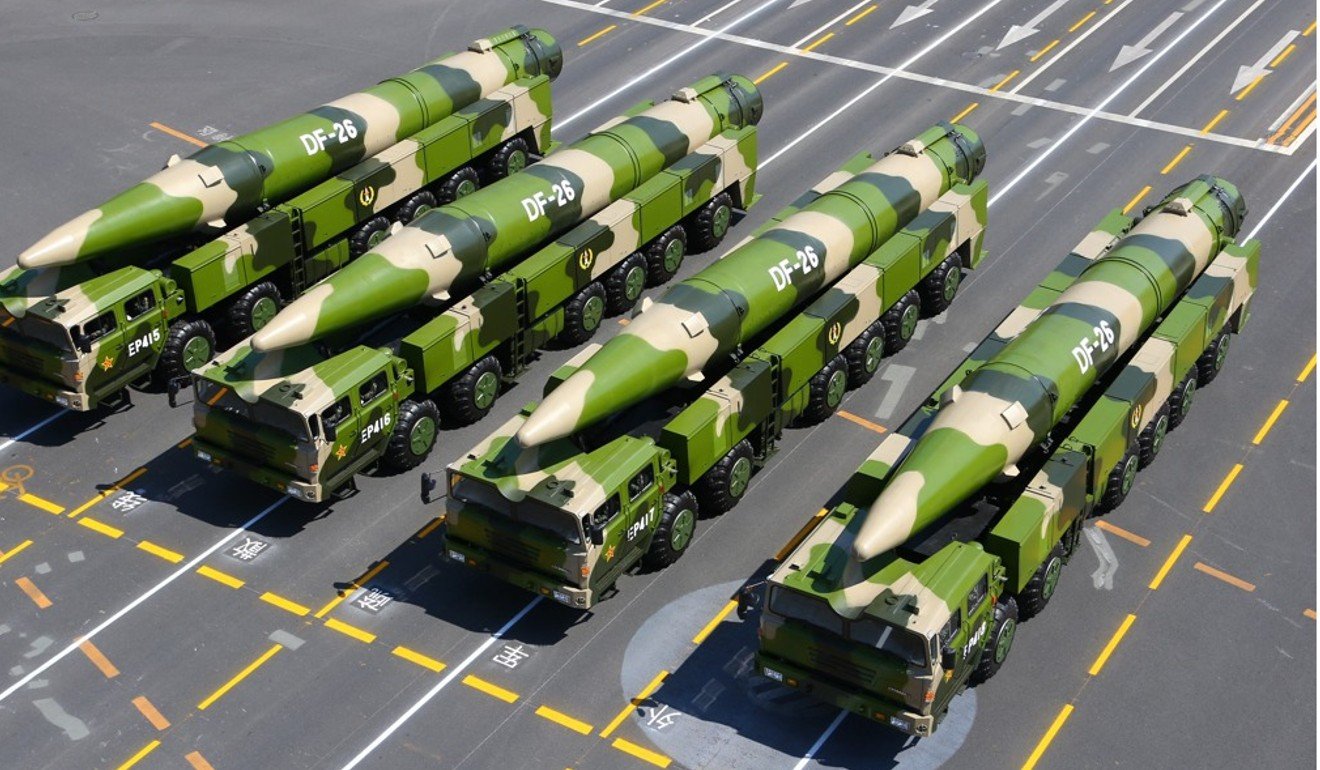
Beijing will show the world “something new” when it rolls out its arsenal of short- to medium-range ballistic missiles at its National Day military parade in October, according to a Chinese expert on international relations.

Speaking at a seminar at the University of Hong Kong on Saturday, Professor Jin Canrong, associate dean of the school of international studies at Renmin University in Beijing, said China had made great strides in expanding its military capability, but there was a lot more to come.

US commander pushes for more funding to counter China’s influence in Indo-Pacific

While he did not elaborate on what the “something new” might be, he said the country was gearing up for a possible conflict over Taiwan, the self-ruled island that Beijing regards as a wayward province awaiting reunification.

Over the next five or 10 years, Taiwan could provide the “biggest uncertainty” for Beijing, he said, especially if the United States decided to “ignite” the situation.

Known for being outspoken on sensitive issues, Jin said that while Beijing wanted a peaceful reunification, it was wary of “pro-independence factions [on the island] and right-wing American [politicians] creating trouble”.

In a speech on January 2 to mark the 40th anniversary of Beijing’s call to end military confrontation across the Taiwan Strait, Chinese President Xi Jinping said that “the political division across the strait … cannot be passed on from generation to generation”, apparently signalling his determination to bring it to an end.

Xi said China would not abandon the use of force in reunifying Taiwan, but stressed the military would target only external elements and those seeking independence for the island.

In 2017, Taipei said that it had detected the deployment of DF-16 ballistic missiles on the mainland that were aimed at Taiwan.

Jin said China was rapidly expanding its missile capabilities. The People’s Liberation Army had already stockpiled about 3,000 short- and medium-range missiles, he said, even though it had been using just 15 per cent of its production capacity.

“Just imagine if we were running at 100 per cent,” he said.

Beijing will show the world “something new” when it rolls out its ballistic missiles at its National Day military parade in October, an expert says. Photo: Xinhua

Under its plan for military modernisation China had achieved “great advancements in space, electronics and cyberwarfare”, the academic said, but its achievements to date were only the beginning.

As well as the expansion of its missile force, Beijing was investing heavily in its navy, he said.

Is China about to abandon its ‘no first use’ nuclear weapons policy?

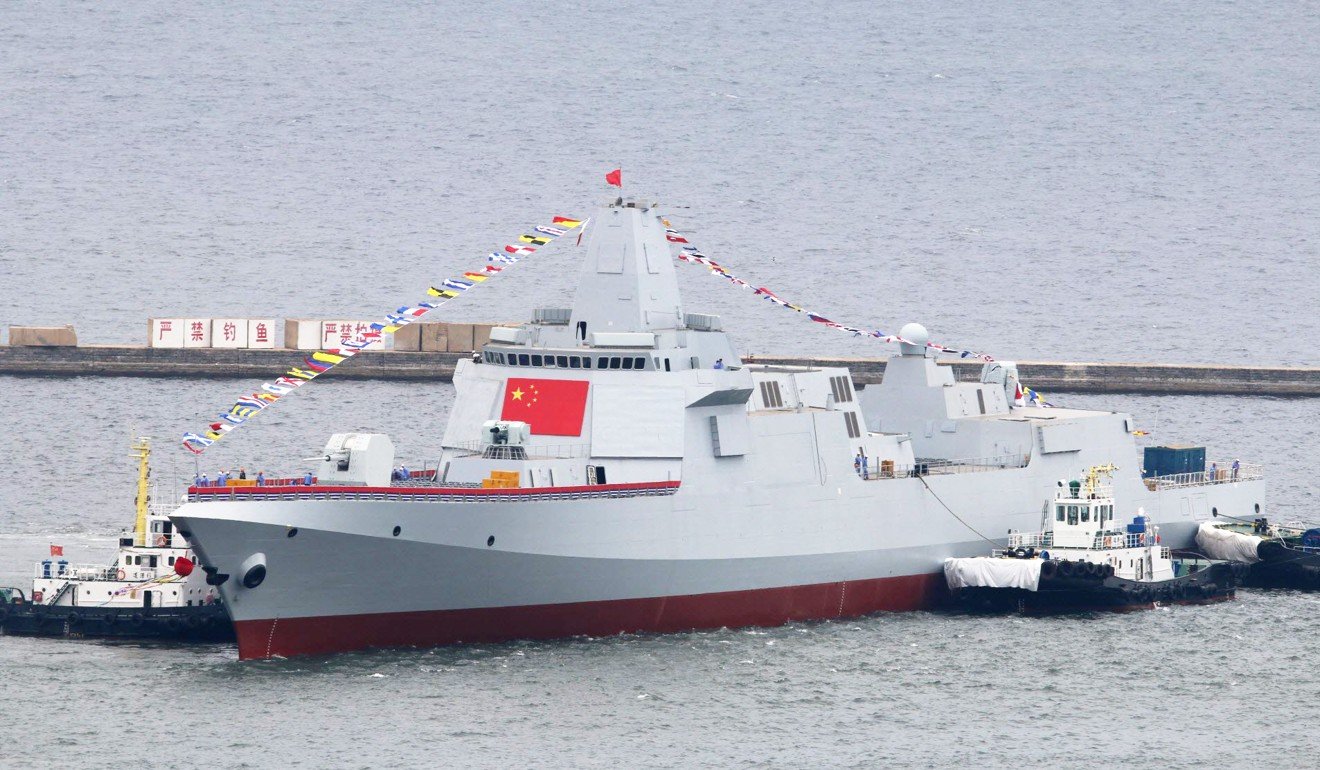
With the deployment of the new Type 055 guided-missile destroyer – which some Chinese military experts have said is as good as anything in the US Navy – the balance of power was shifting, he said.

“For the first time in 500 years, the East has combat equipment that is at least as good as the West’s.”

With the deployment of the new Type 055 guided-missile destroyer, the balance of power between China and the US is shifting, according to Jin Canrong. Photo: Handout

And as the navy continued to modernise and expand, the US might be forced to rethink its position in the region, he said.

“When we have dozens of destroyers and four or five [aircraft] carriers the US will not be able to meddle in Taiwan.”

China’s first aircraft carrier may become test bed for electromagnetic warplane launcher

Jin said that China would also soon have all the scientific, academic and research personnel it needed to achieve its military ambitions.

“China had nearly 30 million university students in 2018, which is twice as many as the US. More than half of them are studying science or engineering,” he said.

“Every year we produce about 4 million science and engineering graduates, while America produces just 440,000.”

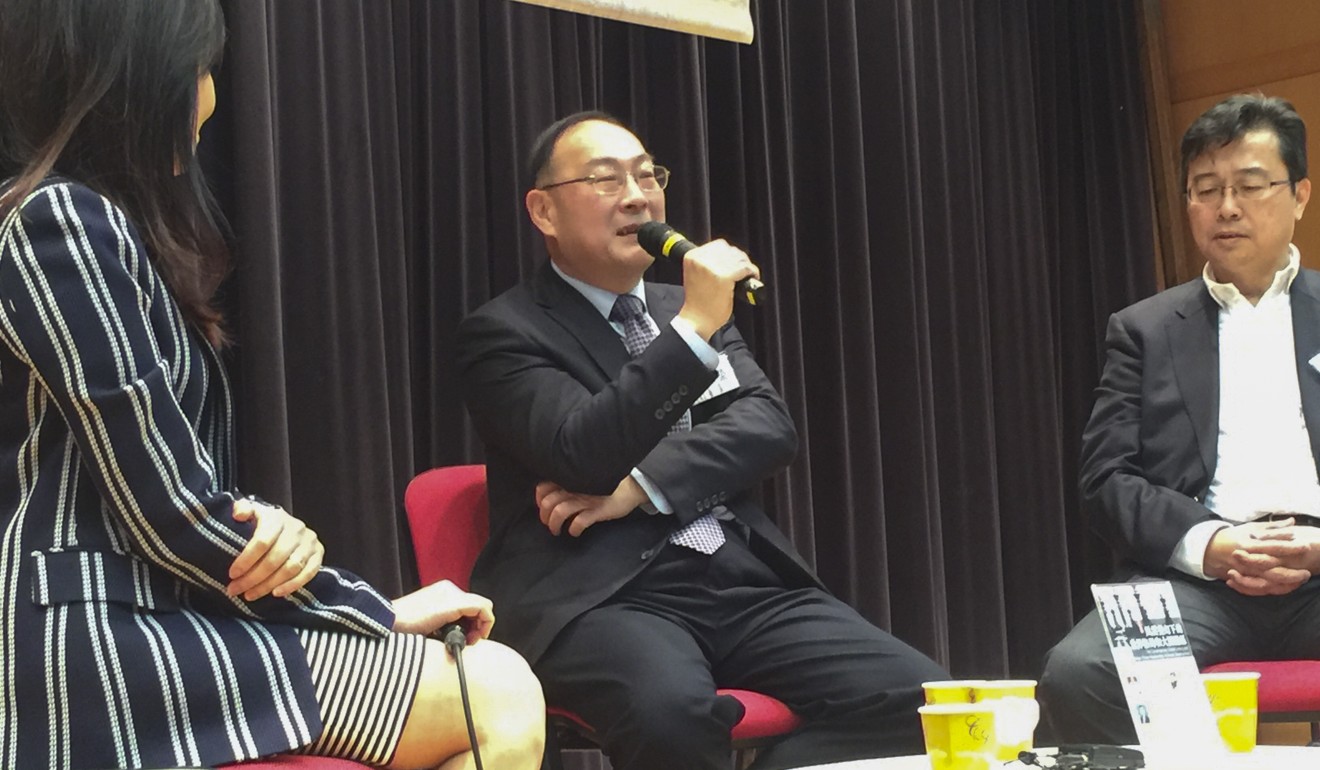
Professor Jin Canrong speaks at a forum in Hong Kong. Photo: Handout

Beijing also had the money to support its plans, Jin said. Based on his own calculations, he said China allocated about 1.4 per cent of its gross domestic product to military spending, which was lower than “Germany’s 1.5 per cent”, and less than half the “3 per cent in Britain and France”.

“The tax paid by Chinese smokers is more than enough to cover [the country’s] military expenses,” Jin said.

According to figures from Nato, Britain spent 2.1 of its GDP on defence in 2017, France 1.8 per cent and Germany 1.2 per cent. Both the World Bank and the United Nations put China’s military spending in 2017 at 1.9 per cent of its GDP.

Source: SCMP

24/02/2019

North Korea’s Kim on his way by train to summit with Trump in Vietnam

SEOUL/HANOI (Reuters) – North Korean leader Kim Jong Un made his way across China by train on Sunday, media reported, bound for a high-stakes second nuclear summit with U.S. President Donald Trump in Vietnam’s capital of Hanoi.

Few details of Kim’s trip have been announced but he left Pyongyang by train on Saturday afternoon for the Feb. 27-28 summit accompanied by senior North Korean officials as well as his influential sister, North Korea’s state media reported.

Trump and Kim will meet in Hanoi eight months after their historic summit in Singapore, the first between a sitting U.S. president and a North Korean leader, where they pledged to work towards the complete denuclearisation of the Korean peninsula.

With little progress since then, the two leaders are expected to focus on what elements of North Korea’s nuclear programme it might begin to give up, in exchange for U.S. concessions.

In rare, revealing coverage of Kim’s travel, while it is still going on, the North’s Rodong Sinmun newspaper featured photographs of him getting a red-carpet send-off in Pyongyang and waving from a train carriage door while holding a cigarette.


He was accompanied by top officials also involved in the Singapore summit, including Kim Yong Chol, a former spy chief and Kim’s top envoy in negotiations with the United States, as well as senior party aide Ri Su Yong, Foreign Minister Ri Yong Ho and defence chief No Kwang Chol.

The North Korean leader’s sister, Kim Yo Jong, who acted as a close aide in Singapore, is again part of the delegation, the North’s KCNA news agency reported. It made no mention of his wife, Ri Sol Ju.

The extensive coverage in the secretive North’s official media was a contrast to the limited reporting that has traditionally prevailed during his foreign trips.

Other senior officials, such as his de facto chief of staff Kim Chang Son and Kim Hyok Chol, negotiations counterpart to U.S. envoy Stephen Biegun, were already in Hanoi to prepare for the summit.

With scant progress since the June summit, the two leaders are likely to try to build on their personal connection to push things forward in Hanoi, even if only incrementally, analysts said.

Both sides are under pressure to forge more specific agreements than were reached in Singapore, which critics, especially in the United States, said lacked detail.


“They will not make an agreement which breaks up the current flow of diplomacy. (President Trump) has mentioned that they’ll meet again; even if there is a low-level agreement, they will seek to keep things moving,” said Shin Beom-chul, a senior fellow at the Asan Institute for Policy Studies.

LEARNING FROM VIETNAM

The Trump administration has pressed the North to give up its nuclear weapons programme, which, combined with its missile capabilities, poses a threat to the United States, before it can expect any concessions.

North Korea wants an easing of punishing U.S.-led sanctions, security guarantees and a formal end of the 1950-1953 Korean War, which ended in a truce, not a treaty.

Few details of summit arrangements have been released.

Some lamp posts on Hanoi’s tree-lined streets are decked with North Korean, U.S. and Vietnamese flags fluttering above a handshake design, and security has been stepped up at locations that could be the summit venue, or where the leaders might stay.

It could take Kim at least 2-1/2 days to travel to Vietnam by train.

Some carriages of a green train were spotted at Beijing’s station on Sunday, but it was not confirmed it was Kim’s.

South Korea’s Yonhap news agency said Kim’s train had passed through a station in China’s port city of Tianjin, southeast of Beijing, at around 1 p.m. (0500 GMT).

China has given no details of his trip. Its foreign ministry did not immediately respond to a request for comment.

Two top North Korean officials who were not in Singapore but will be in Hanoi are Kim Phyong Hae and O Su Yong, vice chairmen of the party’s Central Committee, respectively in charge of personnel management and industrial affairs, KCNA reported.

O is a former minister of electronics and vice minister of metals and machine building. He might try to learn about Vietnam’s development of manufacturing, analysts said.

Kim Jong Un may tour some economic facilities while in Vietnam.

Vietnam, like North Korea, fought a war against the United States and keeps tight control over its people and economy. It has been touted as a model for North Korea’s development.

Vietnamese media reported that a North Korean cargo plane arrived on Sunday carrying personnel who appeared to be Kim’s security guards and state media workers. They were driven under police escort to a downtown hotel.

Source: Reuters

23/02/2019

Over 30 mln elderly people benefit from subsidies, allowances

BEIJING, Feb. 23 (Xinhua) — Subsidies and allowances have brought benefits to more than 30 million elderly people, with allowance systems for the elderly established in all provinces nationwide, according to a Ministry of Civil Affairs statement.

Currently, subsidy systems for elderly care services have been built in 30 provinces and nursing subsidy systems in 29 provinces, said the statement.

The ministry has made continuous efforts to improve the service quality of elderly care homes. Checks in 2018 found 163,000 safety hazards and other problems, and 90 percent of them have been solved, it read.

People now have more elderly care choices. As of the end of 2018, there were nearly 30,000 elderly care institutions with 7.5 million beds across the country, it added.

In the future, the ministry will continue optimizing services of elderly care homes, push forward elderly care services in downtown areas of big cities and initiate renovation and upgrading of elderly care homes in rural areas, especially those in poverty-stricken areas, it read.

Source: Xinhua

23/02/2019

Job fairs held across China

CHINA-QINGDAO-JOB FAIR (CN)

Photo taken on Feb. 23, 2019 shows a scene of a job fair held in Licang District, Qingdao, east China’s Shandong Province. Several job fairs were held in Qingdao on Saturday. (Xinhua/Li Ziheng)

23/02/2019

China Airlines pilot punished after he’s filmed sleeping in cockpit

  • Middle-aged man seen taking a nap mid-flight said to be senior pilot with the Taiwanese carrier
  • His co-pilot who took the video has also been reprimanded

China Airlines pilot punished after he’s filmed sleeping in cockpit

23 Feb 2019

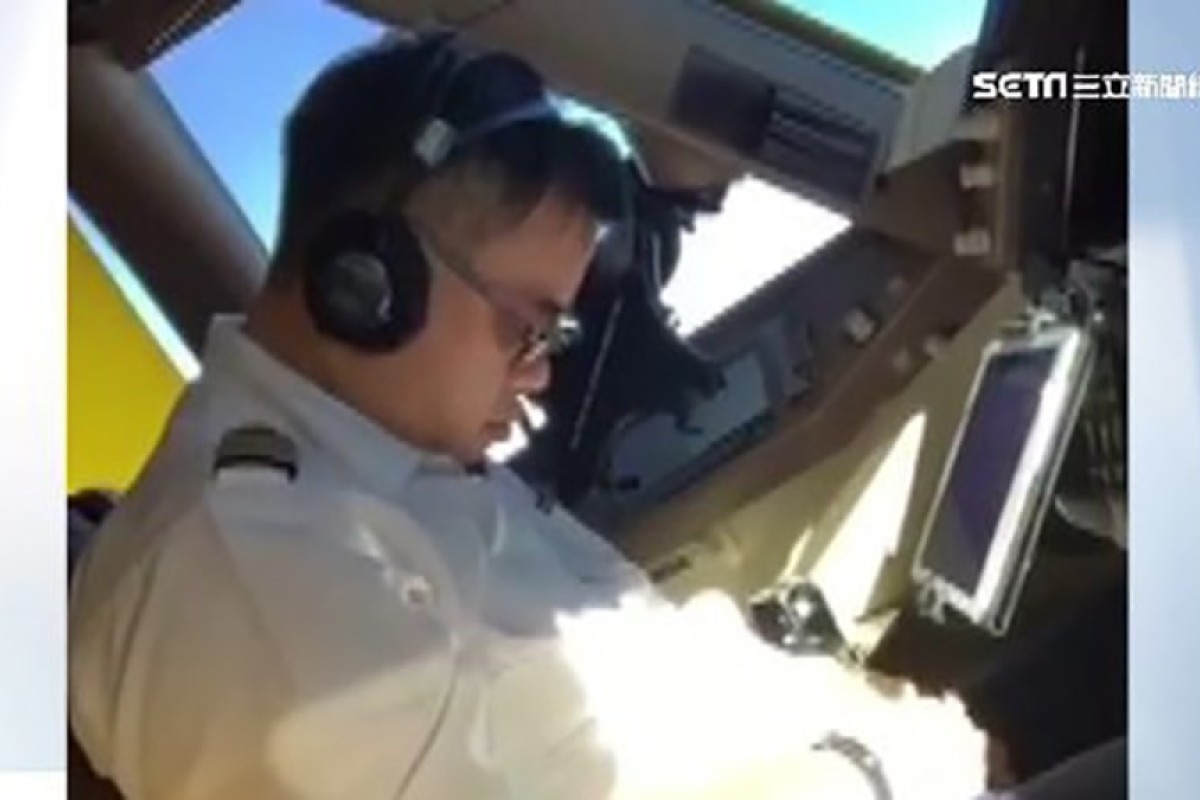
The video shows the pilot in the cockpit with his head down and eyes closed. Photo: setn.com

China Airlines, Taiwan’s biggest carrier, says it has punished a pilot after a video of him taking a nap in the cockpit mid-flight was posted online.

His co-pilot, who filmed the incident, has also been reprimanded, local television station SETN reported.

In the video, a middle-aged man in a pilot uniform and headphones appears to be asleep with his head down and eyes closed while in the cockpit of a Boeing 747.

The footage drew attention after it was shown in a report on Taiwanese TV network EBC on Wednesday. The man was identified as Weng Jiaqi, a senior pilot with almost 20 years of experience who was promoted to chief pilot last year.

Chinese airline Donghai suspends and fines pilot for allowing wife in cockpit

It was unclear when or on which flight the video was filmed, but the airline confirmed that Weng had reported his behaviour and been punished while his co-pilot had been reprimanded for “improper behaviour”, SETN reported.

Weng, who also supervises training, is a short-haul pilot to cities including Hong Kong, Shanghai, Beijing, Guangzhou, Tokyo, Okinawa and Seoul, according to the EBC report.

The China Airlines pilots went on strike on February 8, during the Lunar New Year holiday season. Photo: EPA-EFE
The incident comes after the airline last week reached a deal with the pilots’ union to

end a seven-day strike

over working conditions and benefits that forced the cancellation of more than 200 flights.

But China Airlines told EBC that the video was filmed before the pilots walked off the job.

The Taoyuan Union of Pilots began the industrial action on February 8, stranding close to 50,000 passengers and inflicting over NT$500 million (US$16.2 million) in losses on the carrier.

Under a deal signed on February 14, the union agreed not to strike again in the next 3½ years. In return, China Airlines agreed to the union’s main demand to increase the number of pilots on various flights to combat fatigue and improve safety.

Chinese pilots, cabin crew told no more smoking in cockpits on domestic flights

The carrier will roster three pilots on flights of more than eight hours – up from the present two – and will have four pilots on flights over 12 hours, up from three.

China Airlines president Hsieh Shih-chien said the staffing increases were expected to sharply add to the cost of the company’s operations, but the carrier agreed to the terms in the interest of safety.

Source: SCMP

23/02/2019

Australia seeks clarification on China coal import ‘block’

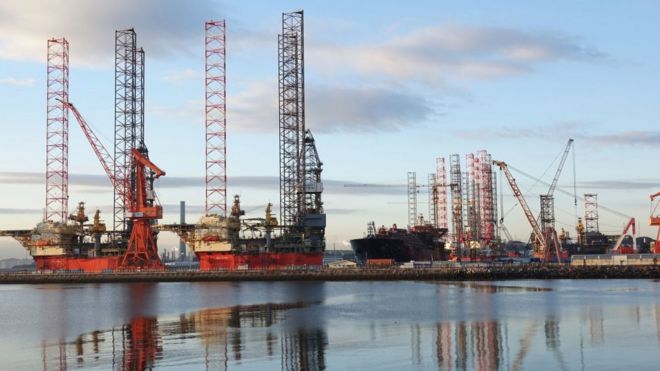
Ships and containers at a port in Dalian, ChinaImage copyrightGETTY IMAGES
Image captionOne of China’s biggest ports is reported to have halted Australian coal imports

The Australian government says it is seeking an “urgent” clarification from Beijing over reports that a major Chinese port has halted imports of Australian coal.

Australia is a top supplier of coal to China, its biggest export market.

Beijing has not confirmed the reported halt in the port of Dalian, but called changes in such arrangements “normal”.

Canberra sought to play down speculation on Friday that the matter may be linked to bilateral tensions.

Australian officials said there was “confusion” over the situation, and they were consulting their Chinese counterparts.

“I wouldn’t jump to conclusions. The Australia-China trading relationship is exceptionally strong,” Treasurer Josh Frydenberg told the Australian Broadcasting Corporation.

Fears about the issue have prompted a fall in the Australian dollar.

What has happened?

On Thursday, Reuters reported that China’s Dalian port region would not allow Australian coal to pass through customs.

The news agency quoted officials as saying that only Australian coal had been affected, with no limits placed on Indonesian and Russian shipments.

It said other Chinese ports had delayed Australian coal shipments in recent months.

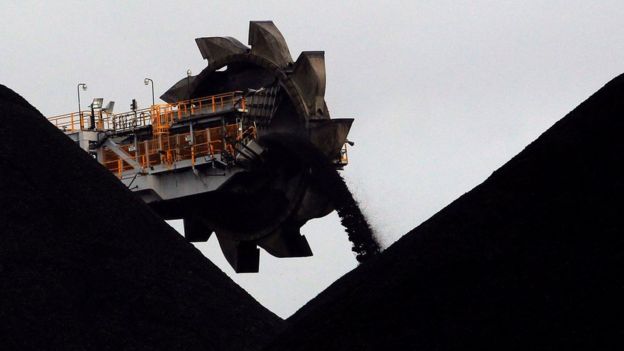
A machine places coal in stockpiles at a coal port in Newcastle, AustraliaImage copyrightREUTERS
Image captionCoal is Australia’s biggest export commodity

Australian trade officials said they had been notified of recent industry concerns about market access.

When asked about the reported halt, Chinese Foreign Ministry spokesman Geng Shuang offered general comments that authorities sought “to safeguard the rights and interests of Chinese importers and protect the environment”.

What else is being debated?

Some security analysts in Australia have suggested it could be a tit-for-tat move by China, after Australia blocked tech giant Huawei from providing 5G technology.

“The banning of those coal shipments is a form of coercion against Australia. It’s punishment against states that resist China’s pressure,” said Dr Malcolm Davis, from the Australian Strategic Policy Institute.

Other recent tensions have emerged over allegations – denied by Beijing – of Chinese interference in Australian politics and society.

However others, including the head of the Reserve Bank of Australia, have suggested that China’s concerns about its own coal industry may be behind any such halts.

Blocking “a couple of months of coal exports” would not hurt the Australian economy, said Philip Lowe.

“If it were to be the sign of a deterioration in the underlying political relationship between Australia and China then that would be more concerning,” he said.

Mr Frydenberg said: “We can see these occasional interruptions to the smooth flow but that doesn’t necessarily translate to some of the consequences that aspects of the media might seek to leap to.”

Source: The BBC

23/02/2019

Trump says he’s inclined to extend China trade deadline and meet Xi soon

WASHINGTON (Reuters) – President Donald Trump said on Friday there was “a very good chance” the United States would strike a deal with China to end their trade war and that he was inclined to extend his March 1 tariff deadline and meet soon with Chinese President Xi Jinping.

“I think that we both feel there’s a very good chance a deal will happen,” Trump said.

Liu agreed there had been “great progress”.

“From China, we believe that (it) is very likely that it will happen and we hope that ultimately we’ll have a deal. And the Chinese side is ready to make our utmost effort,” he said at the White House.

The Republican president said he probably would meet with Xi in March in Florida to decide on the most important terms of a trade deal.


Optimism that the two sides will find a way to end the trade war lifted stocks, especially technology shares. The S&P 500 stock index reached its highest closing level since Nov. 8. Oil prices rose to their highest since mid-November, with Brent crude reaching a high of $67.73 a barrel. [.N] [O/R]

CURRENCY AGREEMENT

Trump and Treasury Secretary Steven Mnuchin said the two sides had reached an agreement on currency. Trump declined to provide details, but U.S. officials long have expressed concerns that China’s yuan is undervalued, giving China a trade advantage and partly offsetting U.S. tariffs.

Announcement of a pact aimed at limiting yuan depreciation was putting “the currency cart before the trade horse,” but would likely be positive for Asian emerging market currencies, said Alan Ruskin, global head of currency strategy at Deutsche Bank in New York.

“How can you agree to avoid excessive Chinese yuan depreciation or volatility if you have not made an agreement on trade that could have huge FX implications?” Ruskin asked in a note to clients.

In a letter to Trump read aloud by an aide to Liu at the White House, Xi called on negotiators to work hard to strike a deal that benefits both country.

Trump said a deal with China may extend beyond trade to encompass Chinese telecommunications companies Huawei Technologies and ZTE Corp.

The Justice Department has accused Huawei of conspiring to violate U.S. sanctions on Iran and of stealing robotic technology from T-Mobile US Inc.

Chinese peer ZTE was last year prevented from buying essential components from U.S. firms after pleading guilty to similar charges, crippling its operations.

MEMORANDUMS NO MORE

Trump appeared at odds with his top negotiator, U.S. Trade Representative Robert Lighthizer, on the preliminary terms that his team is outlining in memorandums of understanding for a deal with China. Trump said he did not like MOUs because they are short term, and he wanted a long-term deal.

“I don’t like MOUs because they don’t mean anything,” Trump said. “Either you are going to make a deal or you’re not.”

Lighthizer responded testily that MOUs were binding, but that he would never use the term again.

Reuters reported exclusively on Wednesday that the two sides were drafting the language for six MOUs covering the most difficult issues in the trade talks that would require structural economic change in China.

Negotiators have struggled this week to agree on specific language within those memorandums to address tough U.S. demands, according to sources familiar with the talks. The six memorandums include cyber theft, intellectual property rights, services, agriculture and non-tariff barriers to trade, including subsidies.

An industry source briefed on the talks said both sides have narrowed differences on intellectual property rights, market access and narrowing a nearly $400 billion U.S. trade deficit with China. But bigger differences remain on changes to China’s treatment of state-owned enterprises, subsidies, forced technology transfers and cyber theft of U.S. trade secrets.

Lighthizer pushed back when questioned on forced technology transfers, saying the two sides made “a lot of progress” on the issue, but did not elaborate.

The United States has said foreign firms in China are often coerced to transfer their technology to Chinese firms if they want to operate there. China denies this.

The U.S. Chamber of Commerce on Friday urged the U.S. government to ensure the deal was comprehensive and addressed core issues, rather than one based on more Chinese short-term purchases of goods.

China has pledged to increase purchases of agricultural produce, energy, semiconductors and industrial goods to reduce its trade surplus with the United States.

China committed to buying an additional 10 million tonnes of U.S. soybeans on Friday, U.S. Agriculture Secretary Sonny Perdue said on Twitter. China bought about 32 million tonnes of U.S. soybeans in 2017. The commitments are a “show of good faith by the Chinese” and “indications of more good news to come,” Perdue wrote.

China was the top buyer of U.S. soybeans before the trade war, but Beijing’s retaliatory tariffs on U.S. soybeans slashed business that had been worth $12 billion annually.

Source: Reuters

22/02/2019

China hails Putin’s remarks on China-Russia ties

BEIJING, Feb. 21 (Xinhua) — China highly appreciates Russian President Vladimir Putin’s positive remarks on China-Russia ties as he delivered a state of the nation address, Foreign Ministry spokesperson Geng Shuang said on Thursday.

In the annual address, Putin described the relations of Russia and China as important “stable forces” of the international community.

Geng said the rapid development of China-Russia relations under the strategic guidance of the two heads of state gained not only fruitful achievement at the bilateral level but also injected positive energy in maintaining global strategic stability.

This year marks the 70th anniversary of the two countries’ establishment of diplomatic ties. Geng said that the two countries should take the opportunity to continuously deepen strategic coordination, push for further development of bilateral ties and better benefit the two peoples and safeguard the security and the stability of the world.

Source: Xinhua

Law of Unintended Consequences

continuously updated blog about China & India

ChiaHou's Book Reviews

continuously updated blog about China & India

What's wrong with the world; and its economy

continuously updated blog about China & India