Chindia Alert: You’ll be Living in their World Very Soon
aims to alert you to the threats and opportunities that China and India present. China and India require serious attention; case of ‘hidden dragon and crouching tiger’.
Without this attention, governments, businesses and, indeed, individuals may find themselves at a great disadvantage sooner rather than later.
The POSTs (front webpages) are mainly 'cuttings' from reliable sources, updated continuously.
The PAGEs (see Tabs, above) attempt to make the information more meaningful by putting some structure to the information we have researched and assembled since 2006.
WASHINGTON (Reuters) – U.S. President Donald Trump said on Wednesday he was in no rush to complete a trade pact with China and insisted that any deal include protection for intellectual property, a major sticking point between the two sides during months of negotiations.
Trump and Chinese President Xi Jinping had been expected to hold a summit at the president’s Mar-a-Lago property in Florida later this month, but no date has been set for a meeting and no in-person talks between their trade teams have been held in more than two weeks.
Bloomberg reported on Thursday that a meeting between the two was more likely to take place in April at the earliest.
A person familiar with the matter told Reuters that there “were rumblings” in Washington about a possible meeting in late April.
The president, speaking to reporters at the White House, said he thought there was a good chance a deal would be made, in part because China wanted one after suffering from U.S. tariffs on its goods.
But he acknowledged Xi may be wary of coming to a summit without an agreement in hand after seeing Trump end a separate summit in Vietnam with North Korean leader Kim Jong Un without a peace deal.
“I think President Xi saw that I’m somebody that believes in walking when the deal is not done, and you know there’s always a chance it could happen and he probably wouldn’t want that,” Trump said.
China has not made any public comment confirming Xi is considering going to meet Trump in Florida or elsewhere.
The president, who likes to emphasize his own deal-making abilities, said an agreement to end a months-long trade war could be finished ahead of a presidential meeting or completed in-person with his counterpart.
“We could do it either way. We could have the deal completed and come and sign, or we could get the deal almost completed and negotiate some of the final points. I would prefer that,” he said.
Trump decided last month not to increase tariffs on Chinese goods at the beginning of March, giving a nod to the success of negotiations so far.
But hurdles remain, and intellectual property is one of them. Washington accuses Beijing of forcing U.S. companies to share their intellectual property and transfer their technology to local partners in order to do business in China. Beijing denies it engages in such practices.
Asked on Wednesday if intellectual property had to be included in a trade deal, Trump said: “Yes it does.”
He indicated that from his perspective, a meeting with Xi was still likely.
“I think things are going along very well – we’ll just see what the date is,” Trump told reporters at the White House.
“I’m in no rush. I want the deal to be right. … I am not in a rush whatsoever. It’s got to be the right deal. It’s got to be a good deal for us and if it’s not, we’re not going to make that deal.”
‘MAINTAINING CONTACT’
China’s Foreign Ministry said on Tuesday that Xi had previously told Trump that he is willing to “maintain contacts” with the U.S. president.
Trump says he’s ‘in no rush’ to reach a trade deal with China
Over the weekend, Vice Commerce Minister Wang Shouwen, who has been deeply involved in the trade talks with the United States, did not answer questions from reporters on whether Xi would go to Mar-a-Lago.
Two Beijing-based diplomatic sources, familiar with the situation, told Reuters that Xi would not be going to Mar-a-Lago, at least in the near term.
One said there had been no formal approach from the United States to China about such a trip, while the second said the problem was that China had realized a trade agreement was not going to be as easy to reach as they had initially thought.
“This is media hype,” said the first source, of reports Xi and Trump could meet this month in Florida.
Though Trump said he is not in a hurry, a trade deal this spring would give him a win to cite as an economic accomplishment as he advances his 2020 re-election campaign. The trade war has hurt the global economy and hung over stock markets, which would likely benefit from an end to the tensions.
In addition to smoothing over sticking points on content, the United States is eager to include a strong enforcement mechanism in a deal to ensure that Beijing can be held accountable if it breaks any of its terms.
U.S. Trade Representative Robert Lighthizer, who has spearheaded the talks from the American side, said on Tuesday that U.S. officials hoped they were in the final weeks of their talks with China but that major issues remained to be resolved.
The bonhomie witnessed between India and China over the last one year after the informal summit between Prime Minister Narendra Modi and Chinese President Xi Jinping in Wuhan April last year has clearly evaporated following the Chinese action
Even as China asserted on Thursday that the ‘Wuhan Spirit’ was still on, there is a sense of betrayal in New Delhi over Beijing’s decision to stand by its ‘all-weather friend’ Pakistan by blocking the designation of JeM chief Masood Azhar as a global terrorist by the UN Security Council.
The bonhomie witnessed between India and China over the last one year after the informal summit between Prime Minister Narendra Modi and Chinese President Xi Jinping in Wuhan April last year has clearly evaporated following the Chinese action.
Amid the growing clamour in India for boycotting China after it used its veto power to block listing of Masood Azhar as a global terrorist, New Delhi has expressed disappointment over Beijing’s move while reaffirming its determination to pursue all avenues to bring the JeM chief to justice for terror attacks in different parts of India.
A number of reasons, including the significant role Pakistan plays in China’s ties with the Islamic world and Beijing’s anxiety over spill-over effect of a ban on Azhar in China’s own restive Muslim-dominated Xinjiang region, could have played a role in Beijing deciding to yet again stonewall any action by the UNSC against the JeM chief, observers say.
Despite its burgeoning trade relationship with India, China has never hidden the fact that it needed Pakistan more than any other country for achieving its geo-strategic goals in the region. Pakistan’s importance for China has increased manifold in recent years in view of the heavy economic and manpower investments it has made in the China-Pakistan Economic Corridor (CPEC) as part of President Xi’s signature Belt and Road Initiative (BRI).
Sources said it was quite clear to New Delhi over the past few days that China was adopting double standards in the global fight against terrorism only to shield Pakistan. China, they said, could no longer take shelter under ‘lame excuses’ like India had not provided any ‘updated material’ on Azhar’s terrorist activities in India which could compel Beijing to reconsider its position on the JeM chief.
Sources pointed out that India had submitted to China and other key nations ‘clinching and irrefutable’ evidence linking JeM to terror attacks in India, including the Pulwama attack. All other members of the UNSC, including those in the non-permanent category, solidly backed India’s effort to get the JeM chief banned but China put a spanner in their works yet again, they regretted.
The US, meanwhile, said responsible UNSC members might be forced to other actions at the Security Council if Beijing continued to block Masood’s designation.
China’s veto against banning Masood Azhar has once again highlighted the deep-rooted suspicion and mistrust between India and China on strategic issues, particularly the fight against terrorism. Despite pledging to work with India in combating terror, China has done precious little to assuage India’s concerns over terrorism emanating from Pakistan.
China has, in fact, praised Pakistan on many occasions for its role in the global war against terrorism. Beijing’s contention has been that Pakistan itself has been one of the main victims of terrorism and it must be supported in combating the menace.
There is also a feeling in Chinese circles that the situation in Jammu and Kashmir is the prime reason for terrorism in India. The argument being advanced by them is that while Kashmir is a disputed territory, Xinjiang is a province of China and, therefore, a comparison can not be drawn between the two regions.
Chinese President Xi Jinping, also general secretary of the Communist Party of China (CPC) Central Committee and chairman of the Central Military Commission, meets with deputies from the People’s Liberation Army (PLA) and armed police before attending a plenary meeting of the delegation of the PLA and armed police at the second session of the 13th National People’s Congress (NPC) in Beijing, capital of China, March 12, 2019. Xi delivered an important speech at the meeting on Tuesday. (Xinhua/Li Gang)
BEIJING, March 12 (Xinhua) — President Xi Jinping on Tuesday stressed fulfilling the set targets and tasks of national defense and military development as scheduled.
Xi, also general secretary of the Communist Party of China Central Committee and chairman of the Central Military Commission, made the remarks when attending a plenary meeting of the delegation of the People’s Liberation Army (PLA) and armed police force at the second session of the 13th National People’s Congress, China’s national legislature.
This year is the key year for completing the building of a moderately prosperous society in all respects.
The entire armed forces must clearly understand the importance and urgency of implementing the 13th Five-Year Plan for military development, firm up their resolve, intensify the sense of mission, forge ahead with a pioneering spirit, and go all out to carry out the plan so as to ensure that the set targets and tasks are fulfilled as scheduled, he said.
Xi called on the whole army to adhere to the guidance of the thought on socialism with Chinese characteristics for a new era, fully implement the Party’s thinking on strengthening the military for the new era and the military strategy for new conditions, concentrate on war preparedness, and intensify reform and innovation.
On implementation of the plan, Xi stressed that it is imperative to strengthen overall planning and coordination, as well as make breakthroughs in key areas.
Xi pointed out that it is necessary to take into consideration the overall situation and coordinate the task plans, resources, and management procedures to ensure orderly advancement of various projects.
Focusing on the overall layout of the plan, the military should give prominence to key projects including urgent necessities for military preparedness, crucial support for combat systems, and coordinated projects for the reform of national defense and armed forces, he noted.
Xi stressed the formulation of the 14th Five-Year Plan for military development should serve the demands of the national development, security and military strategies, and should take into account both the actual condition and long-term development needs.
JINAN, March 13 (Xinhua) — Transport authorities in east China’s Shandong Province announced that it plans to invest 162.2 billion yuan (about 24.2 billion U.S. dollars) on roads, railways, ports and airports this year.
The investment is aimed at building an integrated infrastructure network in the province, said Jiang Cheng, head of the provincial transport department.
Last year, fixed asset investment in Shandong’s transportation sector reached 160 billion yuan, among which 115.8 billion yuan was spent on roads, highways and waterways, up 28 percent year on year.
This year, 61 percent of the investment will be on roads, Jiang said.
Shandong has set a target for its expressway mileage to reach 7,400 km by 2020. By the end of this year, the total will hit 6,400 km, he said.
More roads, bridges, and stations will be built in rural areas, he added.
About 10 railway projects are under construction in the province this year, with a total planned investment of 32 billion yuan (4.7 billion dollars). Upon completion, the province will be better connected with big cities such as Beijing, Shanghai and Tianjin.
Shandong had a permanent population of 100.4 million at the end of 2018. It is one of the most populous provinces in China. An improved infrastructure network will better meet economic and social needs.
HAIKOU, March 13 (Xinhua) — China’s southernmost island province of Hainan requires all new vehicles for official business to use clean energy from 2019.
The provincial government offices administration said Wednesday that all government vehicles in Hainan, except cars providing special services, are scheduled to use clean energy by 2028.
The administration said 10 percent official cars in the province would use clean energy by 2020. The proportion will reach 70 percent by 2025.
Qiu Yu, deputy director of the administration, said Hainan had carried out more stringent policies to promote the use of clean energy in government vehicles, which included all-electric vehicles and hydrogen fuel cell electric vehicles.
The local finance department has budgeted for clean energy government vehicles purchase and relevant facilities. The government offices administration will be in charge of the construction and installation of charging facilities in government agencies’ parking areas.
Hainan has previously announced the ban of oil-fueled automobile sales throughout the province by 2030.
The province had 37,100 clean energy vehicles by the end of 2018, accounting for about 2.9 percent of the province’s total, among which 22,800 were NEVs. More than 4,500 charging facilities for electric cars have been built.
NANJING, March 13 (Xinhua) — The space-tracking ship Yuanwang-3 is sailing to the Pacific Ocean from a port in east China’s Jiangsu Province Wednesday for upcoming monitoring missions.
This year, the ship will carry out two maritime space monitoring missions, which will last about two months.
The mission members have conducted a series of training programs and tests before the voyage, to increase emergency response.
Yuanwang-3, which entered service in the mid-1990s, is China’s second-generation space tracking ship. Sailing more than 650,000 nautical miles, it has completed 80 missions, including maritime tracking of the Shenzhou spacecraft, Chang’e lunar probe and BeiDou satellites.
SHANGHAI (Reuters) – Smartphone shipments to China in February fell to their lowest in six years, market data indicated, as consumers continued to put off handset purchases amid a slowing economy.
Shipments to the world’s biggest smartphone market totaled 14.5 million units, down 19.9 percent from a year ago, according to data from the China Academy of Information and Communications Technology, a government-affiliated research institute.
That is the lowest since February 2013, when shipments to the China totaled 20.7 million.
Overall consumer purchases typically slow during February as the Chinese spend much of the month with family celebrating the Lunar New Year. But shipments this year fell more than usual as a slowing economy, exacerbated by a Sino-U.S. trade war, hurt demand for gadgets across the board.
Apple cited slowing iPhone sales in China when it took the rare step of cutting its sales forecast earlier this year. The firm then teamed up with China’s Ant Financial and local banks to offer interest-free iPhone financing in its first such move in the country as it looked to boost waning sales.
Several third-party retailers have also offered iPhones at discounted prices.
With smartphone sales expected to stay weak, companies like Chinese market leader Huawei Technologies have aimed to launch more expensive models to corner higher margins.
In 2018, Huawei’s market share of China’s $500-$800 device segment rose to 26.6 percent from 8.8 percent, according to Counterpoint Research. Apple’s share fell to 54.6 percent from 81.2 percent as it launched devices cracking the $1,000 price point, while others released competitive devices for less.
In the run-up to the Indian election, which gets under way on 11 April, BBC Reality Check is examining claims and pledges made by the main political parties.
One of the most dramatic actions taken by the ruling BJP was the withdrawal in 2016 of all high-value banknotes from circulation, almost overnight.
This effectively removed 85% of all cash notes from the economy.
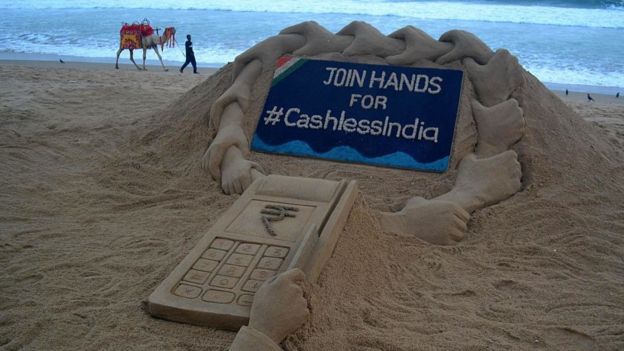
It also said it would help move India towards an economy less dependent on cash.
However, Reality Check has found that there’s little evidence the ban has helped root out illegally held assets.
And compared with other emerging economies, the level of cash in circulation in India has remained high.
What actually happened?
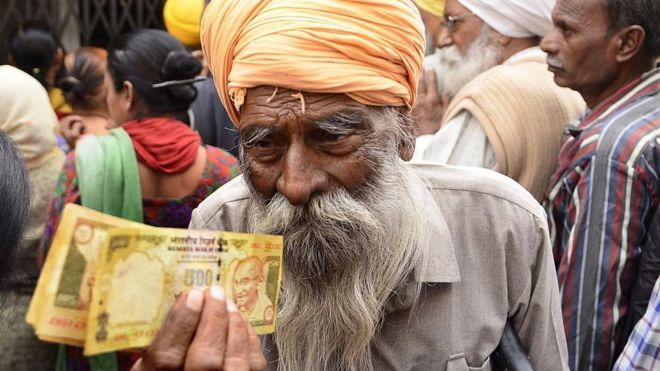
In November 2016, the two highest notes in circulation – 500 and 1,000 Indian rupees (£11) – were scrapped.
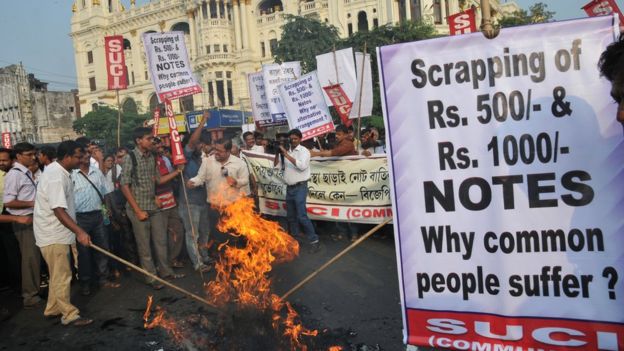
The surprise move – referred to in India as “demonetisation” – caused widespread confusion and led to street protests.
Image copyrightGETTY IMAGES
For a limited period only, the withdrawn notes could be exchanged for legal currency at banks – but there was a limit of 4,000 rupees per person.
What impact did it have?
Critics said the policy severely disrupted the economy, badly affecting the poor and rural communities that relied on cash.
The government said it was targeting illegal wealth held outside the formal economy, which fuelled corruption and other illegal activity and had not been declared for tax purposes.
It was assumed that those with large amounts of such cash would now find it difficult to exchange for legal tender.
But by August 2018, a report published by India’s central bank said that more than 99% of the old banknotes in circulation prior to the ban had been accounted for.
It was suggested that there had not been much unaccounted for wealth held in cash in the first place – or if there had been, the owners had found ways to convert it to legal tender.
Image copyrightGETTY IMAGES
Did the policy achieve the objective of exposing counterfeit currency?
Not really, according to India’s central bank.
The number of fake 500 and 1,000 rupee notes found after the ban was only marginally higher than the amount from the previous year.
In the two years before the currency withdrawal, tax collection growth rates had been in single digits.
Then in 2016-17, the amount of direct taxes collected increased by 14.5% over the previous year.
The following year, collections rose by 18%.
But the rate of growth in collecting direct taxes had seen a similar increase between 2008-09 and 2010-11, when the Congress party was in power.
And it’s likely that other policies – such as an income tax amnesty in 2016 and a new goods and services tax the following year – may have contributed as much to the growing tax take as demonetisation.
What about a cashless society?
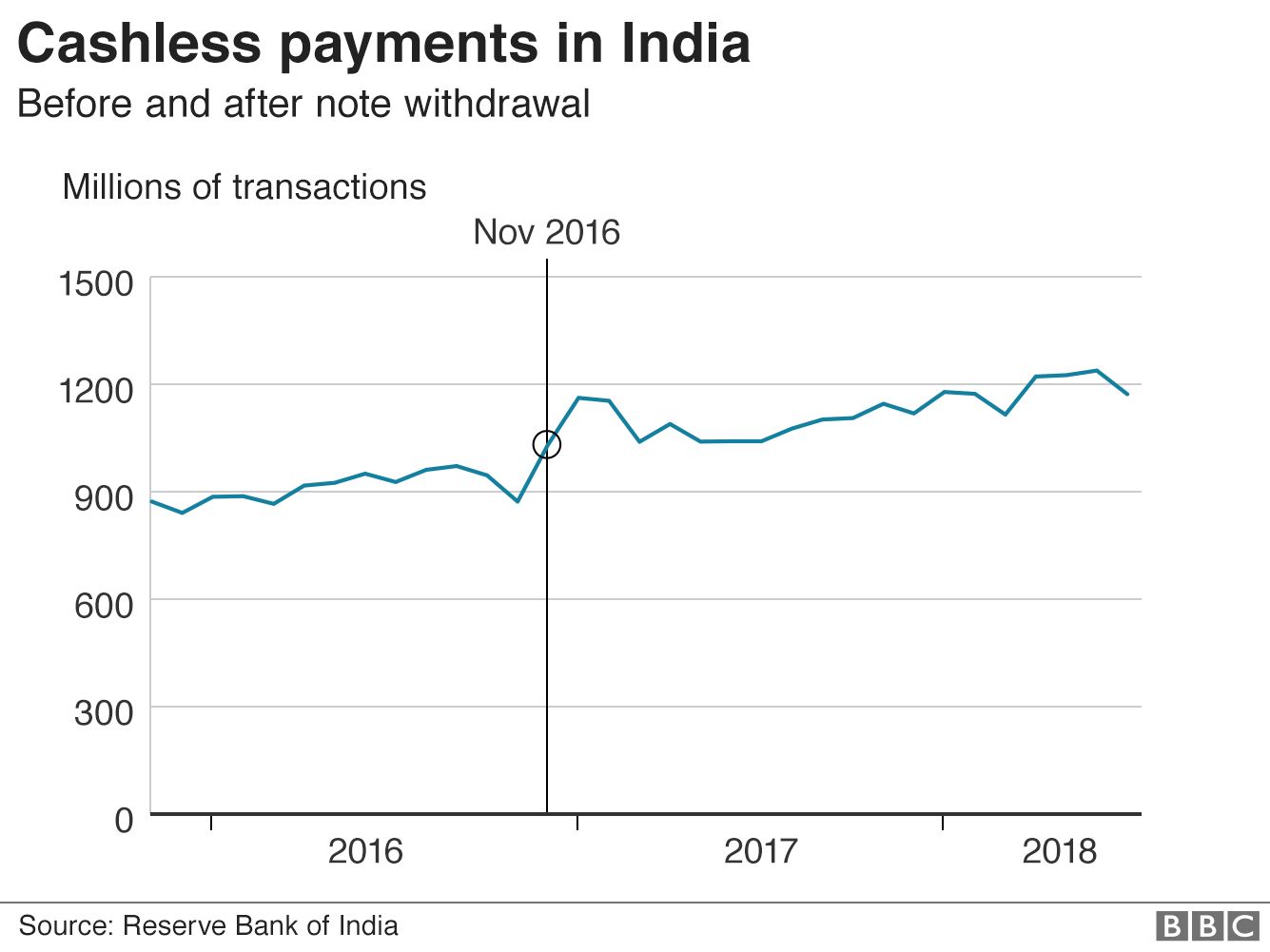
Against a long-term trend of a gradual rise in cashless payments, there is a significant jump at the end of 2016, when the notes were withdrawn.
But this reverted soon afterwards to the steady rising trend.
The overall increase over time may have less to do with government policy and more to do with changing technology and easier cashless payments.
As to whether the overall amount of cash in the economy has fallen, we can look at India’s currency to gross domestic product (GDP) ratio over time.
This is a measure of the amount of currency in circulation in proportion to the total value of goods and services produced.
This took a sharp dive immediately following the withdrawal of the 500 and 1,000 rupee notes – but by the following year, currency in circulation had reverted to pre-2016 levels.
NEW DELHI (Reuters) – India’s main opposition Congress party will reserve a third of federal government jobs for women if it comes into power, its chief Rahul Gandhi said on Wednesday, in a sign women’s rights are rising up the political agenda for next month’s election.
Over the last week, two powerful parties from eastern India said they would field women in a third of parliamentary races, putting pressure on Prime Minister Narendra Modi’s ruling Bharatiya Janata Party (BJP) and other big parties to follow suit.
India ranks at 149 out of 193 countries – worse than neighbouring Afghanistan, Bhutan, Bangladesh and Pakistan – for the percentage of women in national parliaments, according to the Inter-Parliamentary Union, an independent organisation promoting democracy.
“…Frankly, I don’t see enough women in leadership positions. I don’t see them leading enough companies, I don’t see them leading enough states, I don’t see enough of them in the Lok Sabha and the Vidhan Sabhas,” Gandhi said in the southern city of Chennai, referring to India’s lower house of parliament and state legislatures.
Federal government jobs in India are already subject to numerous quotas, including one passed in January that reserves 10 percent of openings for people outside high income brackets.
Gandhi also said that Congress would pass the Women’s Reservation Bill this year if it came to power. The bill, which reserves 33 percent of the seats in national and state assemblies for women, has been on hold for two decades despite being championed by Congress and the BJP at different points.
The BJP, which says it has empowered women through nationwide schemes including clean fuel and sanitation, questioned how the Congress jobs plan would be implemented.
“For how many generations have people talked about reservation in party positions, reservation for elections, reservation in jobs? But it doesn’t seem to happen,” BJP spokesperson Shaina N.C. said.
There are currently 66 women out of a total 543 elected members in India’s lower house of parliament. At 12 percent, this is the highest ever proportion of women in the Lok Sabha.
Women make up nearly half of all voters in the country of 1.3 billion people, according to the Election Commission of India. Based on recent state polls, women will likely head to voting stations in droves for the elections due by May, surpassing male turnout, analysts predict.
On Tuesday, Mamata Banerjee, chief minister of West Bengal state, said her All India Trinamool Congress party would field 17 women candidates across 42 seats.
Earlier, on Sunday, the Biju Janata Dal, which rules Odisha state in eastern India, said it would reserve seven of 21 seats it is contesting for women candidates.
“33% reservation in parliament will give them bigger role in highest policy making body,” Naveen Patnaik, leader of the BJD and Odisha’s chief minister, said in a tweet.
“Women of our nation rightfully deserve this from all of us.”