Chindia Alert: You’ll be Living in their World Very Soon
aims to alert you to the threats and opportunities that China and India present. China and India require serious attention; case of ‘hidden dragon and crouching tiger’.
Without this attention, governments, businesses and, indeed, individuals may find themselves at a great disadvantage sooner rather than later.
The POSTs (front webpages) are mainly 'cuttings' from reliable sources, updated continuously.
The PAGEs (see Tabs, above) attempt to make the information more meaningful by putting some structure to the information we have researched and assembled since 2006.
Documentary puts China’s literary hero into context: there is Dante, there’s Shakespeare, and there’s Du Fu
Theatrical legend Sir Ian McKellen brings glamour to beloved verses in British documentary
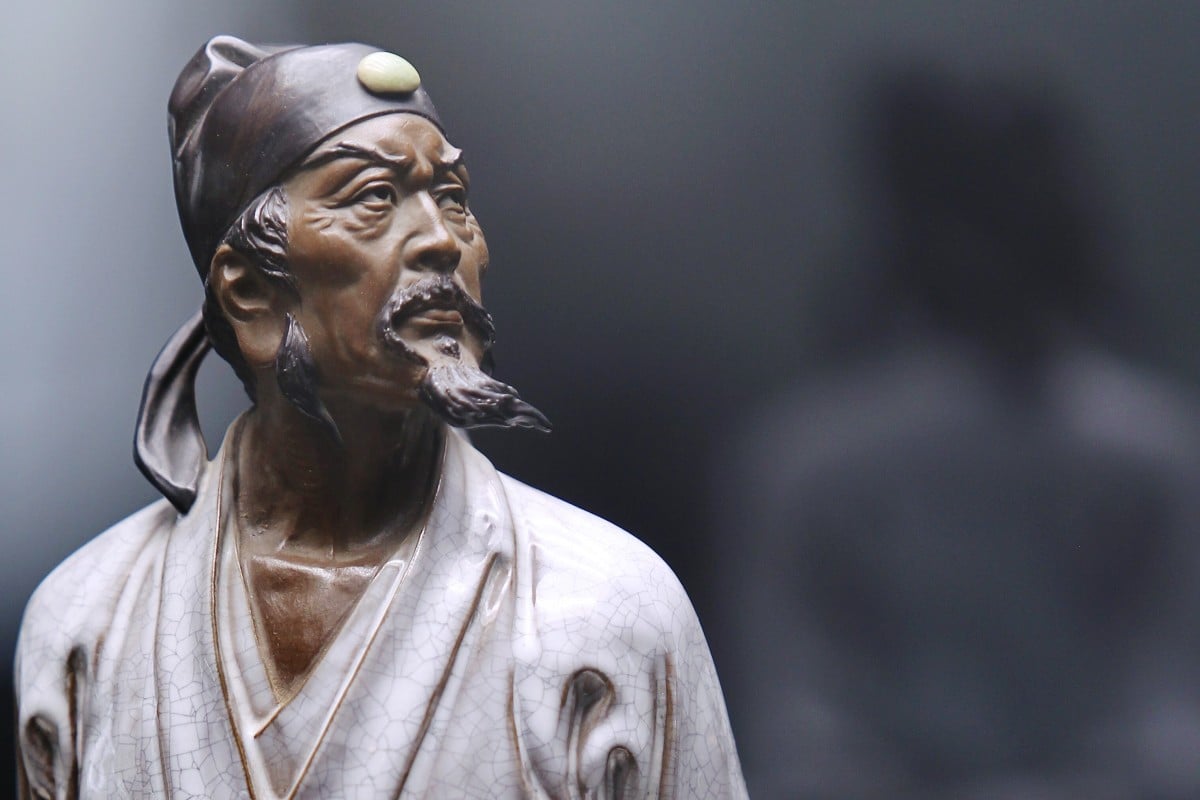
A ceramic figurine of Du Fu, a prominent Chinese poet of the Tang dynasty. Du is the subject of a new BBC documentary, thrilling devotees of his poetry. Photo: Simon Song
The resonant words of an ancient Chinese poet spoken by esteemed British actor Sir Ian McKellen have reignited in China discussion about its literary history and inspired hope that Beijing can tap into cultural riches to help mend its image in the wake of the coronavirus pandemic.
The BBC documentary Du Fu: China’s Greatest Poet has provoked passion among Chinese literature lovers about the poetic master who lived 1,300 years ago.
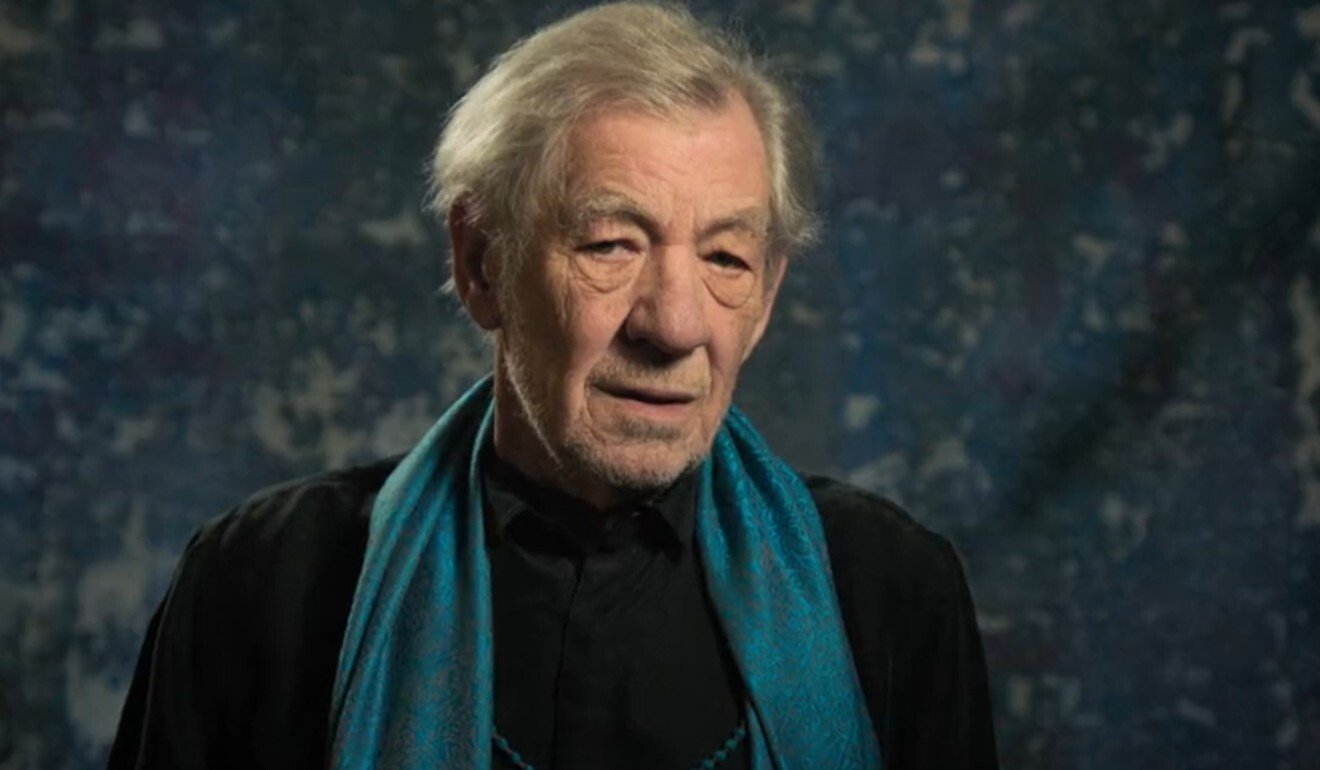
Sir Ian Mckellen read works of ancient Chinese poet Du Fu in Du Fu: China’s Greatest Poet. Photo: BBC Four / MayaVision International
The one-hour documentary by television historian Michael Wood was broadcast on television and aired online for British viewers this month but enthusiasm among Chinese audiences mean the trailer and programme have been widely circulated on video sharing websites inside mainland China, with some enthusiasts dubbing Chinese subtitles.
The documentary has drawn such attention in Du’s homeland that even the Communist Party’s top anti-graft agency has discussed it in its current affairs commentary column. Notably, Wood’s depiction of Du’s life from AD712 to 770 barely mentioned corruption in the Tang dynasty (618-907) government.
“I couldn’t believe it!!” Wood said in an email. “I’m very pleased of course … most of all as a foreigner making a film about such a loved figure in another culture, you hope that the Chinese viewers will think it was worth doing.”
Often referred to as ancient China’s “Sage of Poetry” and the “Poet Historian”, Du Fu witnessed the Tang dynasty’s unparalleled height of prosperity and its fall into rebellion, famine and poverty.
Writer, historian and presenter Michael Wood followed the footsteps of the ancient Chinese poet Du Fu in Yangtze River gorges. Photo: BBC Four / MayaVision International
Wood traced Du’s footsteps to various parts of the country. He interviewed Chinese experts and Western sinologists, offering historical and personal contexts to introduce some of Du’s more than 1,400 poems and verses chronicling the ups and downs of his life and China.
The programme used many Western reference points to put Du and his works into context. The time Du lived in was described as around the as the Old English poem Beowulf was composed and the former Chinese capital, Changan, where Xian is now, was described as being in the league of world cities of the time, along with Constantinople and Baghdad.
Harvard University sinologist Stephen Owen described the poet’s standing as such: “There is Dante, there’s Shakespeare, and there’s Du Fu.”
The performance of Du’s works by Sir Ian, who enjoyed prominence in China with his role as Gandalf in the Lord of the Rings movie series, attracted popular discussion from both media critics and general audiences in China, and sparked fresh discussion about the poet.
“To a Chinese audience, the biggest surprise could be ‘Gandalf’ reading out the poems! … He recited [Du’s poems] with his deep, stage performance tones in a British accent. No wonder internet users praised it as ‘reciting Du Fu in the form of performing a Shakespeare play,” wrote Su Zhicheng, an editor with National Business Daily.
A stone sculpture at Du Fu Thatched Cottage in Chengdu city, China. Photo: Handout
On China’s popular Weibo microblog, a viewer called Indifferent Onlooker commented on Sir Ian’s recital of Du’s poem My Brave Adventures: “Despite the language barrier, he conveyed the feeling [of the poet]. It’s charming.”
Some viewers, however, disagreed. At popular video-sharing website Bilibili.com, where uploads of the documentary could be found, a viewer commented: “I could not appreciate the English translation, just as I could not grasp Shakespeare through his Chinese translated works in school textbooks.”
Watching the documentary amid the coronavirus pandemic, some internet users drew comparisons of Du to Fang Fang, a modern-day award-winning poet and novelist who chronicled her life in Wuhan during the Covid-19 lockdown.
Shanghai pictured in April. Devastation wrought by the coronavirus pandemic has brought about a new suspicion of China. Photo: Bloomberg
The pandemic has infected more than 2.5 million people and killed more than 170,000. It has put the global economy in jeopardy, fuelling calls for accountability. British Foreign Secretary Dominic Raab last week called for a “deep dive” review and the asking of “hard questions” about how the coronavirus emerged and how it was not stopped earlier.
Steve Tsang, director of the SOAS China Institute at University of London, said the British establishment and wider public had changed its perception of Beijing as questions arose about outbreak misinformation and the political leverage of personal protective gear supply.
“The aggressive propaganda of the Chinese government is getting people in the UK to look more closely at China and see that it is a Leninist party-state, rather than the modernising and rapidly changing society that they want to see in China,” Tsang said.
On Sunday, a writer on the website of the National Supervisory Commission, China’s top anti-corruption agency, claimed – without citing sources – that the Du Fu documentary had moved “anxious” British audience who were still staying home under social distancing measures.
“If anyone wants to put the fear of the coronavirus behind them by understanding the rich Chinese civilisation, please watch this documentary on Du Fu,” it wrote, adding that promoting Du’s poems overseas could help “healing and uniting our shattered world”.
English-language state media such as CGTN and the Global Times reported on the documentary last week and some Beijing-based foreign relations publications have posted comments about the film on Twitter.
Wood said he had received feedback from both Chinese and British viewers that talked about “the need, especially now, of mutual understanding between cultures”.
“It is a global pandemic … we need to understand each other better, to talk to each other, show empathy: and that will help foster cooperation. So even in a small way, any effort to explain ourselves to each other must be a help,” Wood said.
He said the idea for producing a documentary about Du Fu started in 2017, after his team had finished the Story of China series for BBC and PBS.
Du Fu: China’s Greatest Poet first aired in Britain on April 7 on BBC Four, the cultural and documentary channel of the public broadcaster. It is a co-production between the BBC and China Central Television.
Wood said a slightly shorter 50-minute version would be aired later this month on CCTV9, Chinese state television’s documentary channel.
The film was shot in China in September, he said.
“I came back from China [at the] end of September, so we weren’t affected by the Covid-19 outbreak, though of course it has affected us in the editing period. We have had to recut the CCTV version in lockdown here in London and recorded two small word changes on my iPhone!” Wood said.
Faced with a backlash from the West over its handling of the early stages of the pandemic, Beijing has been quietly gaining ground in Asia
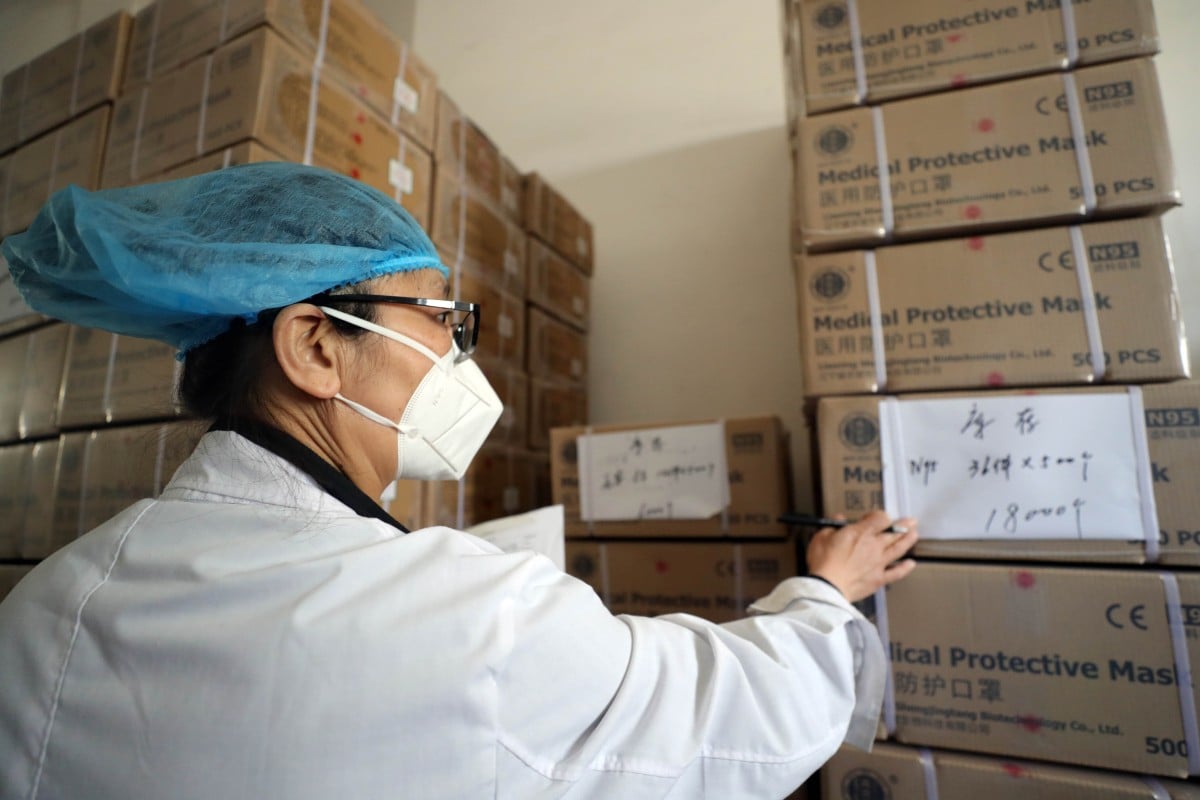
Teams of experts and donations of medical supplies have been largely welcomed by China’s neighbours
Despite facing some criticism from the West, China’s Asian neighbours have welcomed its medical expertise and vital supplies. Photo: Xinhua
While China’s campaign to mend its international image in the wake of its handling of the coronavirus health crisis has been met with scepticism and even a backlash from the US and its Western allies, Beijing has been quietly gaining ground in Asia.
Teams of experts have been sent to Cambodia, the Philippines, Myanmar, Pakistan and soon to Malaysia, to share their knowledge from the pandemic’s ground zero in central China.
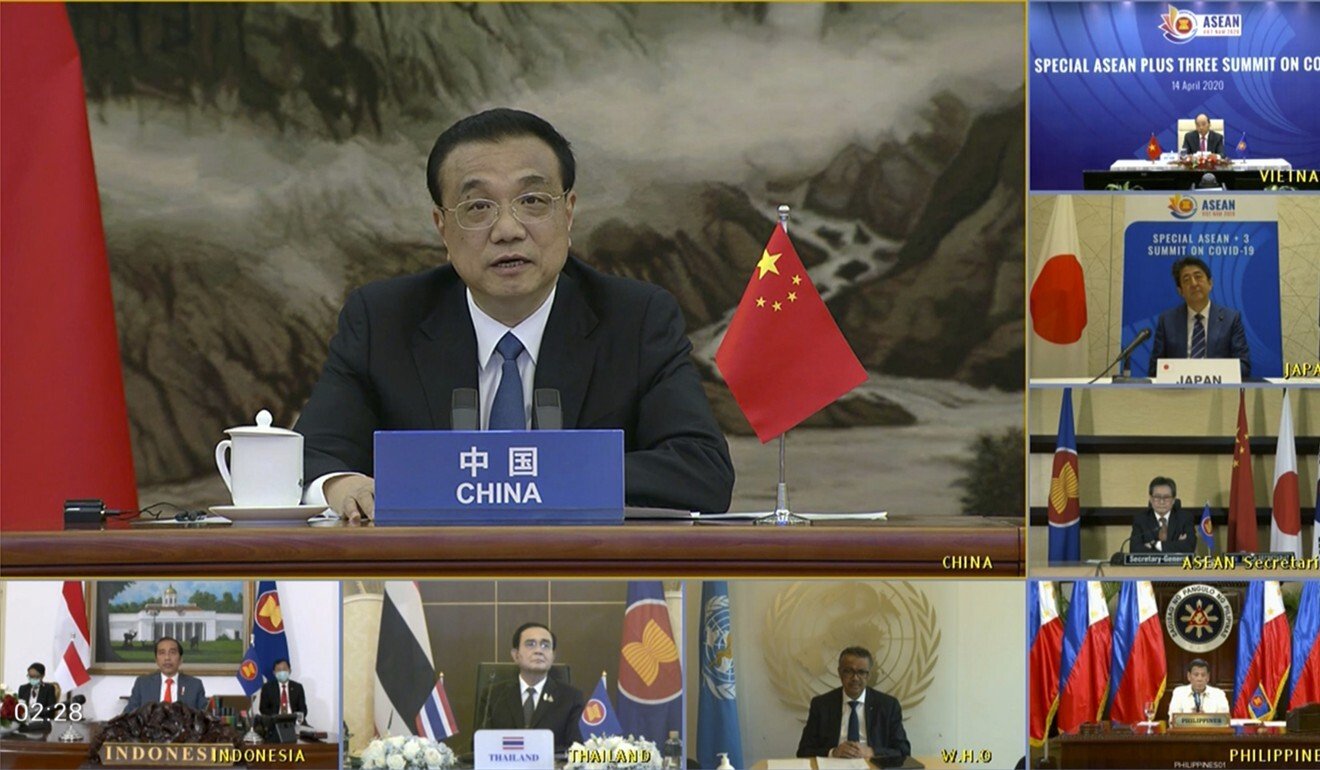
China has also held a series of online “special meetings” with its Asian neighbours, most recently on Tuesday when Premier Li Keqiang discussed his country’s experiences in combating the disease and rebooting a stalled economy with the leaders of the Association of Southeast Asian Nations (Asean), Japan and South Korea.
Chinese Prime Minister Li Keqiang speaks to Asean Plus Three leaders during a virtual summit on Tuesday. Photo: AP
Many Western politicians have publicly questioned Beijing’s role and its subsequent handling of the crisis but Asian leaders – including Philippine President Rodrigo Duterte and Japanese Prime Minister Shinzo Abe – have been reluctant to blame the Chinese government, while also facing criticism at home for not closing their borders with China soon enough to prevent the spread of the virus.
An official from one Asian country said attention had shifted from the early stages of the outbreak – when disgruntled voices among the public were at their loudest – as people watched the virus continue its deadly spread through their homes and across the world.
“Now everybody just wants to get past the quarantine,” he said. “China has been very helpful to us. It’s also closer to us so it’s easier to get shipments from them. The [medical] supplies keep coming, which is what we need right now.”
The official said also that while the teams of experts sent by Beijing were mainly there to observe and offer advice, the gesture was still appreciated.
Another Asian official said the tardy response by Western governments in handling the outbreak had given China an advantage, despite its initial lack of transparency over the outbreak.
“The West is not doing a better job on this,” he said, adding that his government had taken cues from Beijing on the use of propaganda in shaping public opinion and boosting patriotic sentiment in a time of crisis.
“Because it happened in China first, it has given us time to observe what works in China and adopt [these measures] for our country,” the official said.
Experts in the region said that Beijing’s intensifying campaign of “mask diplomacy” to reverse the damage to its reputation had met with less resistance in Asia.
Why China’s ‘mask diplomacy’ is raising concern in the West
29 Mar 2020
“Over the past two months or so, China, after getting the Covid-19 outbreak under control, has been using a very concerted effort to reshape the narrative, to pre-empt the narrative that China is liable for this global pandemic, that China has to compensate other countries,” said Richard Heydarian, a Manila-based academic and former policy adviser to the Philippine government.
“It doesn’t help that the US is in lockdown with its domestic crisis and that we have someone like President Trump who is more interested in playing the blame game rather than acting like a global leader,” he said.
Shahriman Lockman, a senior analyst with the foreign policy and security studies programme at Malaysia’s Institute of Strategic and International Studies, said that as the US had withdrawn into its own affairs as it struggled to contain the pandemic, China had found Southeast Asia a fertile ground for cultivating an image of itself as a provider.
China’s first-quarter GDP shrinks for the first time since 1976 as coronavirus cripples economy
Beijing’s highly publicised delegations tasking medical equipment and supplies had burnished that reputation, he said, adding that the Chinese government had also “quite successfully shaped general Southeast Asian perceptions of its handling of the pandemic, despite growing evidence that it could have acted more swiftly at the early stages of the outbreak in Wuhan”.
“Its capacity and will to build hospitals from scratch and put hundreds of millions of people on lockdown are being compared to the more indecisive and chaotic responses seen in the West, especially in Britain and the United States,” he said.
Coronavirus droplets may travel further than personal distancing guidelines
16 Apr 2020
Lockman said Southeast Asian countries had also been careful to avoid getting caught in the middle of the deteriorating relationship between Beijing and Washington as the two powers pointed fingers at each other over the origins of the new coronavirus.
“The squabble between China and the United States about the pandemic is precisely what Asean governments would go to great lengths to avoid because it is seen as an expression of Sino-US rivalry,” he said.
“Furthermore, the immense Chinese market is seen as providing an irreplaceable route towards Southeast Asia’s post-pandemic economic recovery.”
Aaron Connelly, a research fellow in Southeast Asian political change and foreign policy with the International Institute for Strategic Studies in Singapore, said Asian countries’ dependence on China had made them slow to blame China for the pandemic.
“Anecdotally, it seems to me that most Southeast Asian political and business elites have given Beijing a pass on the initial cover-up of Covid-19, and high marks for the domestic lockdown that followed,” he said.
“This may be motivated reasoning, because these elites are so dependent on Chinese trade and investment, and see little benefit in criticising China.”
China and Vietnam ‘likely to clash again’ as they build maritime militias
12 Apr 2020
The cooperation with its neighbours as they grapple with the coronavirus had not slowed China’s military and research activities in the disputed areas of the South China Sea – a point of contention that would continue to cloud relations in the region, experts said.
Earlier this month an encounter in the South China Sea with a Chinese coastguard vessel led to the sinking of a fishing boat from Vietnam, which this year assumed chairmanship of Asean.
And in a move that could spark fresh regional concerns, shipping data on Thursday showed a controversial Chinese government survey ship, the Haiyang Dizhi 8, had moved closer to Malaysia’s exclusive economic zone.
The survey ship was embroiled in a months-long stand-off last year with Vietnamese vessels within Hanoi’s exclusive economic zone and was spotted again on Tuesday 158km (98 miles) off the Vietnamese coast.
BEIJING (Reuters) – China’s Hubei province where the coronavirus pandemic originated will lift travel restrictions on people leaving the region as the epidemic there eases, but other regions will tighten controls as new cases double due to imported infections.
The Hubei Health Commission announced it would lift curbs on outgoing travellers starting March 25, provided they had a health clearance code.
The provincial capital Wuhan, where the virus first appeared and which has been in total lockdown since since Jan. 23, will see its travel restrictions lifted on April 8.
RELATED COVERAGE
China health commission says virus transmission risks remain
China’s Hubei province to remove travel bans starting March 25
However, the risk from overseas infections appears to be on the rise, prompting tougher screening and quarantine measures in major cities such as the capital Beijing.
China had 78 new cases on Monday, the National Health Commission said, a two-fold increase from Sunday. Of the new cases, 74 were imported infections, up from 39 imported cases a day earlier.
The Chinese capital Beijing was the hardest-hit, with a record 31 new imported cases, followed by southern Guangdong province with 14 and the financial hub of Shanghai with nine. The total number of imported cases stood at 427 as of Monday.
Only four new cases were local transmissions. One was in Wuhan which had not reported a new infection in five days.
Wuhan residents will soon be allowed to leave with a health tracking code, a QR code, which will have an individual’s health status linked to it.
In other parts of the country, authorities have continued to impose tougher screening and quarantine and have diverted international flights from Beijing to other Chinese cities, but that has not stemmed the influx of Chinese nationals, many of whom are students returning home from virus-hit countries.
Beijing’s city government tightened quarantine rules for individuals arriving from overseas, saying on Tuesday that everyone entering the city will be subject to centralised quarantine and health checks.
The southern city of Shenzhen said on Tuesday it will test all arrivals and the Chinese territory of Macau will ban visitors from the mainland, Hong Kong and Taiwan.
The number of local infections from overseas arrivals – the first of which was reported in the southern travel hub of Guangzhou on Saturday – remains very small.
On Monday, Beijing saw its first case of a local person being infected by an international traveller arriving in China. Shanghai reported a similar case, bringing the total number of such infections to three so far.
CONCERNS ABOUT NEW WAVE OF INFECTIONS
The rise in imported cases and the lifting of restrictions in some cities to allow people to return to work and kickstart the battered Chinese economy has raised concerns of a second wave of infections.
A private survey on Tuesday suggested that a 10-11% contraction in first-quarter gross domestic product in the world’s second largest economy “is not unreasonable”.
The epidemic has hammered all sectors of the economy – from manufacturing to tourism. To persuade businesses to reopen, policymakers have promised loans, aids and subsidies.
In the impoverished province of Gansu, government officials are each required to spend at least 200 yuan (24.31 pounds) a week to spur the recovery of the local catering industry.
The official China Daily warned in an editorial on Tuesday that maintaining stringent restrictions on people’s movements would “now do more harm than good”.
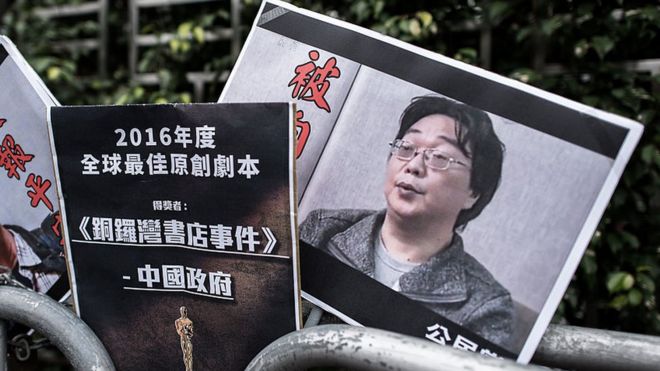
Image copyright GETTY IMAGESImage caption Mr Gui has been in and out of Chinese detention for years
A Chinese court has sentenced Hong Kong bookseller Gui Minhai to 10 years in jail for “illegally providing intelligence overseas”.
Mr Gui, who holds Swedish citizenship, has been in and out of Chinese detention since 2015, when he went missing during a holiday in Thailand.
He is known to have previously published books on the personal lives of Chinese Communist Party members.
Rights groups condemned the “harsh sentence” and called for his release.
He was one of five owners of a small bookstore in Hong Kong who went missing in 2015. It later emerged that they had been taken to China. Four were later freed, but Mr Gui remained in Chinese detention.
In delivering its verdict, the Ningbo Intermediate People’s Court said that his Chinese citizenship had been reinstated in 2018. China does not recognise dual citizenship.
Sweden’s foreign minister on Tuesday called for Mr Gui’s release, referring to him a “citizen”.
“We have not had access to the trial,” said Ann Linde in a tweet. “[We] demand that Gui be released and that we have access to our citizens to provide consular support.”
But according to a Reuters report, a Chinese foreign ministry spokesman said consular arrangements had been put on hold because of the latest coronavirus outbreak, and would be restored once the health problem was “resolved”.
Zhao Lijian added that Mr Gui’s “rights and interests… [had] been fully guaranteed”.
Human rights group Amnesty International on Tuesday also called for Mr Gui to be released immediately and said the charges were “completely unsubstantiated”.
A forced confession?
Mr Gui first made headlines in 2015 when he vanished from Thailand and resurfaced in China.
After his disappearance, there were allegations that he had been abducted by Chinese agents. Chinese officials, however, say Mr Gui and the four other men all went to China voluntarily.
The bookseller ultimately confessed to being involved in a fatal traffic accident more than a decade earlier – a confession supporters say was forced.
He served two years in prison but he was arrested months after his release while he was travelling to the Chinese capital of Beijing with two Swedish diplomats.
China later released a video interview featuring Mr Gui. In it, he accused Sweden of “sensationalising” his case. It is not uncommon for Chinese criminal suspects to appear in “confessional” videos.
Earlier in 2019, Sweden recalled its ambassador to China Anna Lindstedt, who was accused of brokering an unauthorised meeting between Angela Gui – the daughter of Mr Gui – and two Chinese businessmen.
Ms Gui – who has been vocal in campaigning for her father’s release – said one of the men had pressured her to accept a deal where her father would go to trial and might be sentenced to “a few years” in prison, and in return she would stop all publicity around her father’s detention.
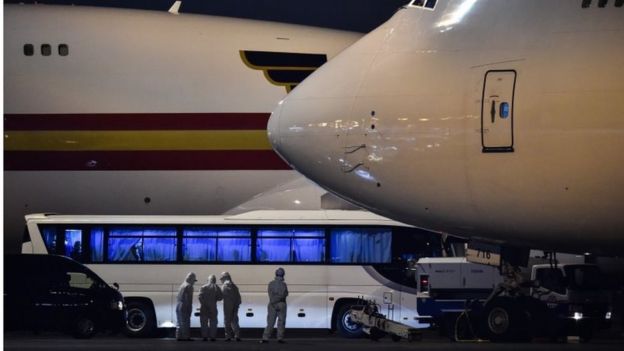
Media caption Americans are taken from the docked ship to Haneda airport in Tokyo
Two planes carrying hundreds of US citizens from a coronavirus-hit cruise ship have left Japan, officials say.
One plane has landed at a US Air Force air base in California, and its passengers will be isolated at military facilities for 14 days.
There were some 400 Americans on board the Diamond Princess. The ship with some 3,700 passengers and crew has been in quarantine since 3 February.
Meanwhile, China reported a total of 2,048 new cases on Monday.
Of those new cases, 1,933 were from Hubei province, the epicentre of the outbreak.
More than 70,500 people across China have been infected by the virus. In Hubei alone, the official number of cases stands at 58,182, with 1,692 deaths. Most new cases and deaths have been reported in Wuhan, Hubei’s largest city.
In other developments:
In Japan, a public gathering to celebrate the birthday of new Emperor Naruhito later this week has been cancelled, due to concerns over the spread of the virus while organisers of the Tokyo marathon due to take place on 1 March are considering whether to cancel the amateur part of the race, reports say
In China, the National People’s Congress standing committee said it would meet next week to discuss a delay of this year’s Congress – the Communist Party’s most important annual gathering – because of the outbreak
At the weekend, an American woman tested positive for the virus in Malaysia after leaving a cruise liner docked off the coast of Cambodia
A Russian court has ordered a woman who escaped from a quarantine facility to go back and stay there until she is confirmed to be disease-free, Fontanka news agency reports. Alla Ilyina has until Wednesday to return
What’s happening on the Diamond Princess?
The cruise ship was put in quarantine in Japan’s port of Yokohama after a man who disembarked in Hong Kong was found to have the virus.
On Monday, Japanese officials said there were 99 new cases of infections on board the ship, bringing the total to 454 confirmed cases. It is the largest cluster of cases outside China.
A Russian woman who was on board and tested positive is thought to be the first Russian national to contract the virus after the two previous cases found in Russia were Chinese nationals, Reuters news agency reports.
She will be taken to a hospital for treatment, the Russian embassy in Japan said.
At least 40 US citizens who were on board are infected and will be treated in Japan, Dr Anthony Fauci, Director of the National Institute of Allergy and Infectious Diseases told US broadcaster CBS.
Image copyright AFPImage caption Those bound for the US left from Tokyo’s Haneda Airport
The two aircraft chartered by the US government left Tokyo’s Haneda Airport in the early hours of Monday. The second flight was due to land at another base in Texas.
More than 300 passengers are being repatriated voluntarily, the US state department said. Fourteen of them were reported during transit to have tested positive for the virus and were being kept separate from the other passengers, it said.
we would like to just finish the quarantine on the ship as planned, decompress in a non-quarantine environment in Japan for a few days, then fly back to the U.S. pursuant to our own arrangements. What’s wrong with that?
The smartphones were distributed so people could use an app, created by Japan’s health ministry, which links users with doctors, pharmacists and mental health counsellors. Phones registered outside of Japan are unable to access the app.
Other evacuation flights have been arranged to repatriate residents of Israel, Hong Kong and Canada. On Monday, Australia announced that it would evacuate 200 of its citizens too.
What is happening in China?
According to official figures for 16 February, 100 people died from the virus in Hubei, down from 139 on Saturday.
The Chinese authorities are tightening curbs on movement to combat the outbreak. People in Hubei province, which has 60 million people, have been ordered to stay at home, though they will be allowed to leave in an emergency.
In addition, a single person from each household will be allowed to leave the building or compound they live in every three days to buy food and essential items.
On housing estates, one entrance will be kept open. It will be guarded to ensure that only residents can enter or leave.
All businesses will stay closed, except chemists, hotels, food shops and medical services.
“The effects of epidemic prevention and control in various parts of the country can already be seen.”
The proportion of infected patients considered to be in a “serious condition” has dropped nationwide from more than 15% to just over 7%, according to China’s State Council.
Taiwan has reported a death from the illness – a taxi driver, 61, who had not travelled abroad recently but had diabetes and hepatitis B, Health Minister Chen Shih-chung said.
The minister said many of his passengers had come from China.
Outside China, there have been more than 500 cases in nearly 30 countries. Four others have died outside mainland China – in France, Hong Kong, the Philippines and Japan.
Meanwhile, a plane carrying 175 evacuated Nepalis, mostly students, has arrived in Kathmandu from Wuhan.
Elderly resident says he can’t recall this happening in his city before, not even during the Cultural Revolution
Outbreak is expected to deal a heavy blow to businesses, especially smaller eateries, with some already forced to close
Like many elderly Chinese in Guangzhou, He Zhijian was shocked when he heard there was a ban on eating in restaurants, as authorities try to curb the spread of the coronavirus.
The 73-year-old has spent his entire life in the southern city, where gathering for dim sum is an important weekly family ritual.
“My wife and I … are used to having dim sum, tea and Cantonese dishes at the local restaurants every week. From memory, this [type of ban] has never happened in Guangzhou before – not even during the Cultural Revolution,” He said, referring to the decade of social and political upheaval from 1966, when food was in short supply.
The ban took effect at 9pm on Wednesday and is part of measures to contain the outbreak of the virus, which causes a disease officially known as Covid-19, and is believed to have started in Wuhan in December. The pneumonia-like illness has so far
Residents can still get takeaway meals in Guangzhou, but they have been encouraged to order online and have them delivered. Photo: He Huifeng
Guangzhou is home to more than 15 million people and a busy trading port, and has been known as China’s most open city since the 1600s. For locals, going to restaurants for yum cha, or “drinking tea”, and dining on dim sum is an important part of the city’s history and culture – a tradition that has been carried through many generations.
“Even in the ‘three years of natural disasters’ [from 1959 to 1961, when China was in the grip of a famine] I remember there were still restaurants open,” He said. “I was really shocked [by the ban]. I guess the epidemic situation must be severe, otherwise Guangzhou definitely wouldn’t introduce this measure.”
China’s Hubei province reports huge spike in coronavirus cases, rising 10-fold from previous day
Many people in Guangzhou and across the country went back to work on Monday after an extended Lunar New Year break – another measure to try to stop the virus from spreading – with the government keen for businesses to return to normal operations.
The ban on dining in applies to restaurants, but employees can continue to have meals at their company canteens. And while residents can still get takeaways from restaurants, they have been encouraged to do this online, and have their meals delivered, rather than collecting their orders.
Group gatherings have also been banned in the city, and according to Nanfang Daily, some 126 banquets that would have involved more than 90,000 people have been cancelled by authorities already. The authorities did not say how long the measures would be in place.
Guangzhou is not the only city in Guangdong province to bring in a ban on dining in restaurants – Futian district in Shenzhen, Xiangzhou in Zhuhai, Foshan and Zhongshan have all taken the same step.
Beijingers gradually return to work as China’s fight against deadly coronavirus continues
In Guangzhou, while residents try to adapt, businesses are expecting to take a hit. One of the city’s top hotels said the virus outbreak could have a severe impact on the industry.
“Now we will focus on promoting takeaways for local customers. They can order our meals through apps providing online takeaway ordering services,” said Fion Liang, director of sales and marketing at The Garden Hotel. “As for guests staying in the hotel we will deliver meals to their rooms.”
To work or not to work: the difficult coronavirus question facing China
13 Feb 2020
She said the outbreak did not have a big impact on the hotel’s business in January, because the situation only became severe at the end of the month.
“The impact was definitely much bigger in February. If the epidemic continues to be severe throughout February, the occupancy rate of our rooms will be in the single digits this month,” Liang said. “[Most] hotels in Guangzhou are in the same situation.”
The outbreak is expected to deal a heavy blow to restaurants in the city, especially smaller eateries, and some have already been forced to close. June Zhao, the owner of dumpling restaurant Xi Xi, decided to shut down on Wednesday – the day the eat-in ban was announced.
Prospects had been good for the restaurant – it also sold books and alcohol in the evenings, and its trendy decor drew a young crowd.
“We had just started making money last winter and we were looking forward to earning more over the Lunar New Year holiday. But then the coronavirus came, our turnover fell to several hundred yuan a day, and we lost hope,” she said. “The new ban makes this situation worse – takeaway is not a good choice for dumplings, especially in winter. The losses will continue if we stay open.”
Coronavirus: major cities given power to seize private property
13 Feb 2020
The ban has also interrupted daily routines. Freelance cameraman Cony Yu, 28, usually spends some of his working day at cafes, but that is no longer possible. “[Now] I don’t have a comfortable place to sit aside from my home – even the parks have all been closed,” Yu said.
China disinfects entire cities to fight coronavirus outbreak, some twice a day
In the southern tech hub of Shenzhen, dining in has also been banned in central Futian district. Zhu Hao, a financial analyst based in the district, has been working from home for a week and ordering takeaway food every day. But he has to collect it from the gate at his residential compound, where security staff check the temperature of anyone entering or leaving.
He is losing patience with the restrictions. “I want to eat out. I want beef hotpot, coconut chicken, Korean barbecue and seafood,” he said.
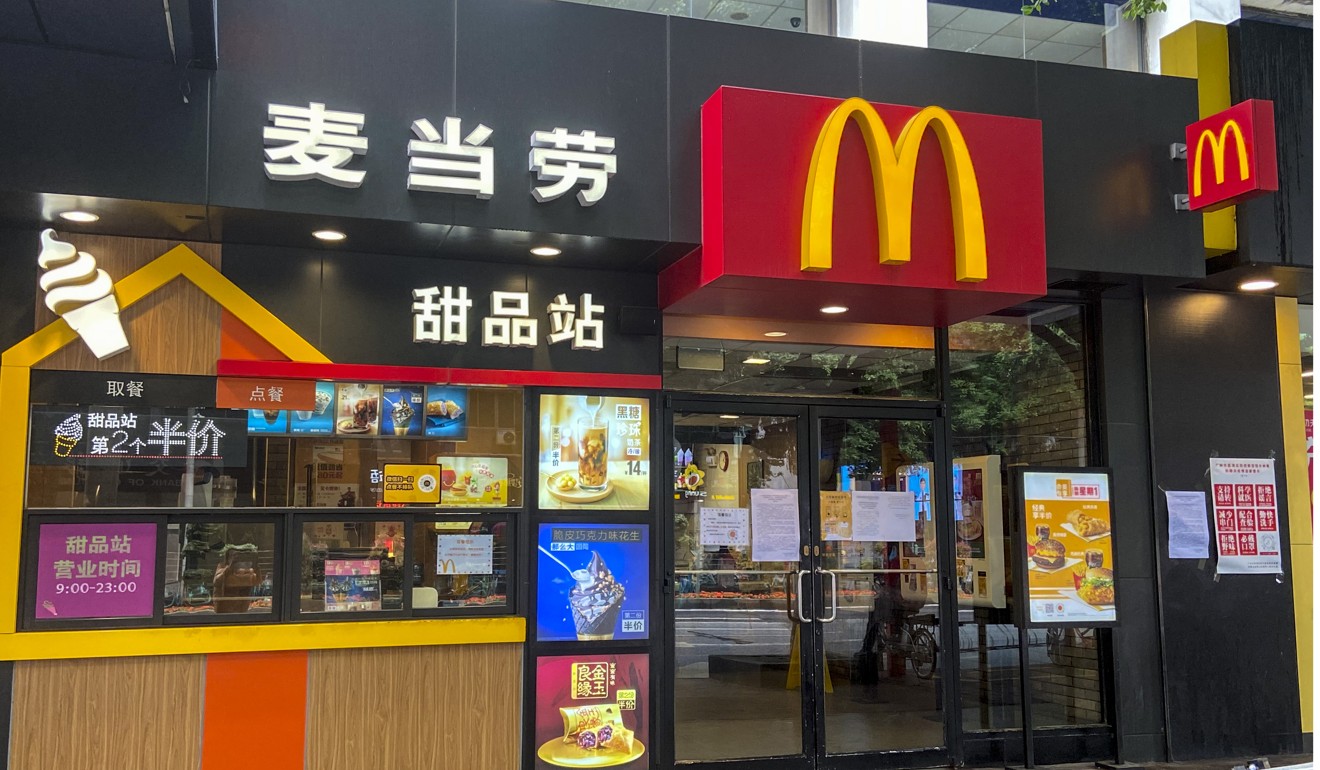
In other Shenzhen districts, many restaurants and shopping centres have been temporarily closed or can only provide takeaway meals – including fast food chains such as McDonald’s and Starbucks.
Other places have strict rules for customers. At a bread shop, customers must register their ID and phone numbers and have their temperatures checked before they can enter. And for now, all hotpot restaurants have been closed.
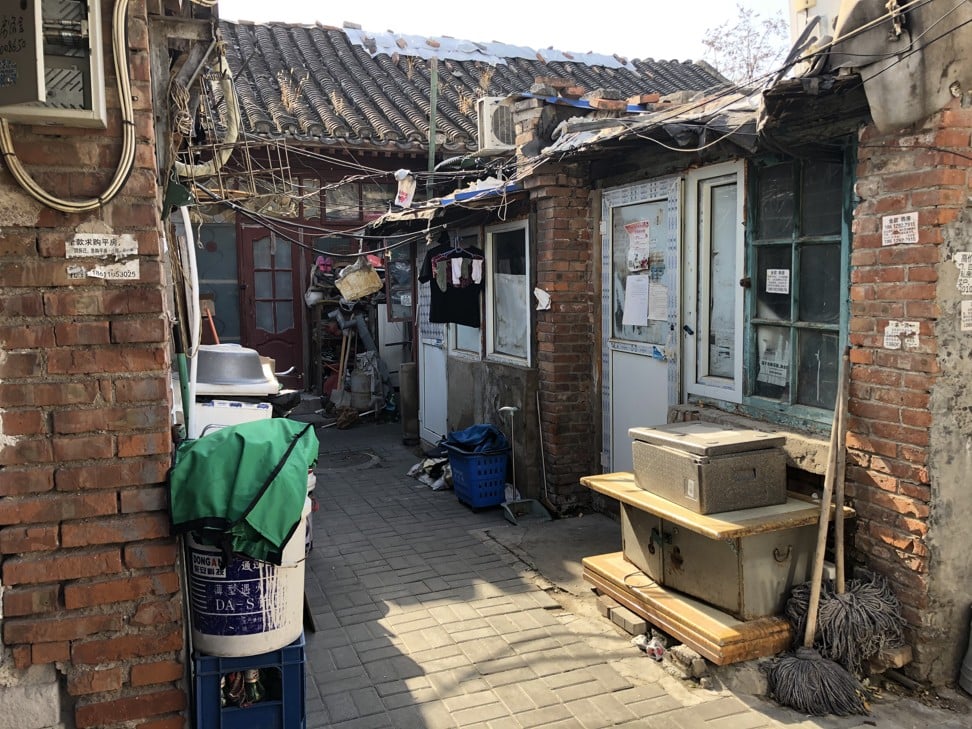
Unit 121 on Lanman Hutong, about 10 minutes’ drive from Tiananmen Square and the Forbidden City, changed hands last month for 1.28 million yuan
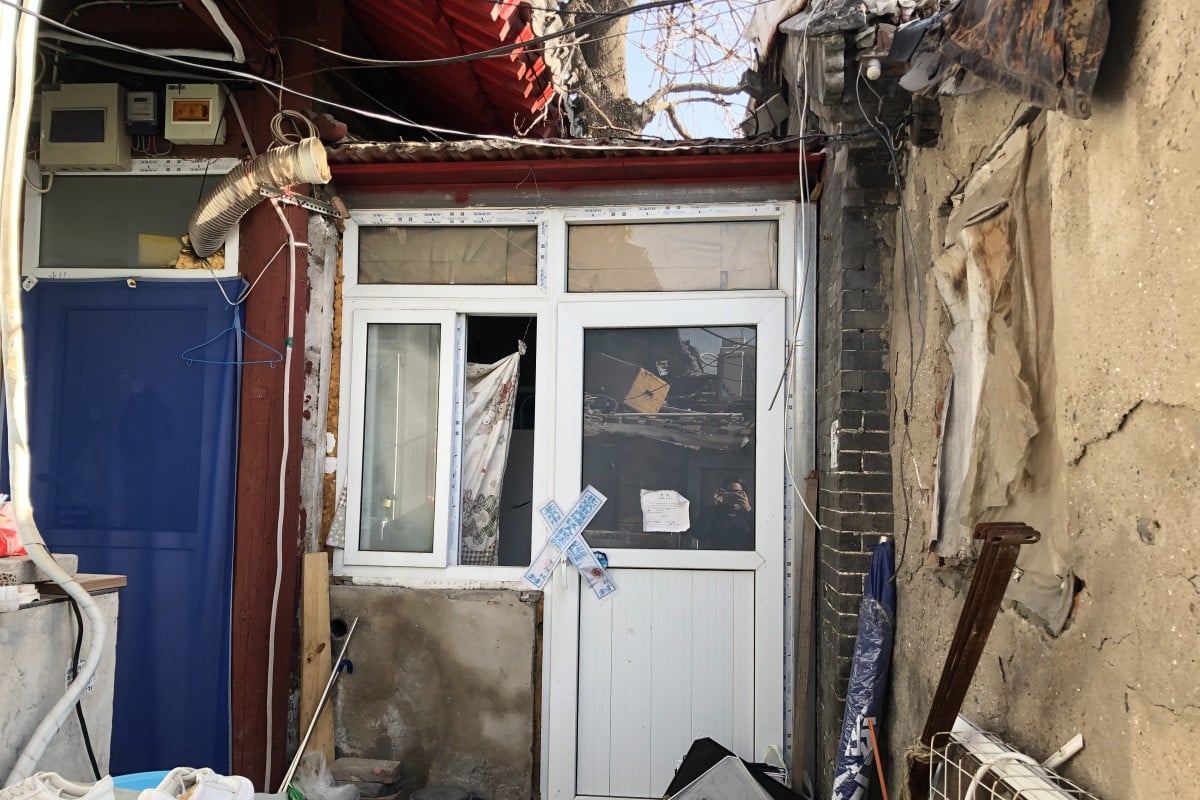
The new owner bought a 5.6-square metre (72 square feet) cubicle covered in bathroom tiles large enough to fit a bunk bed, with standing room only
A view of the 5.6 square metre cubicle-size home in Beijing on 15 November 2019. The home sold for 1.28 million yuan at auction. Photo: Louise Moon
A subdivided home in a run-down alley in Beijing recently sold for a record price at auction, as eager buyers piled in to get hold of its much sought-after address to gain access to some of the Chinese capital’s best schools.
A subdivided unit at No. 121 Lanman Hutong, about 10 minutes’ drive from Tiananmen Square and the Forbidden City, changed hands on November 11 for 1.28 million yuan (US$182,400) after 136 rounds of furious bidding during an auction in Beijing.
For 230,000 yuan per square metre (HK$23,850 per square foot), the new owner bought a 5.6-square metre (72 square feet) cubicle covered in bathroom tiles large enough to fit a bunk bed, with standing room only. That’s smaller than even Hong Kong’s notorious micro-apartments – also known derisively as shoebox flats or nano flats – which average about 200 square feet. A standard car parking space measures 126 square feet.
What the dilapidated space does have is an address that entitles its owner to a hukou, the household registration that is the prerequisite for access to schools, homes, civil service jobs, public health care and almost every aspect of daily life in the Chinese capital.
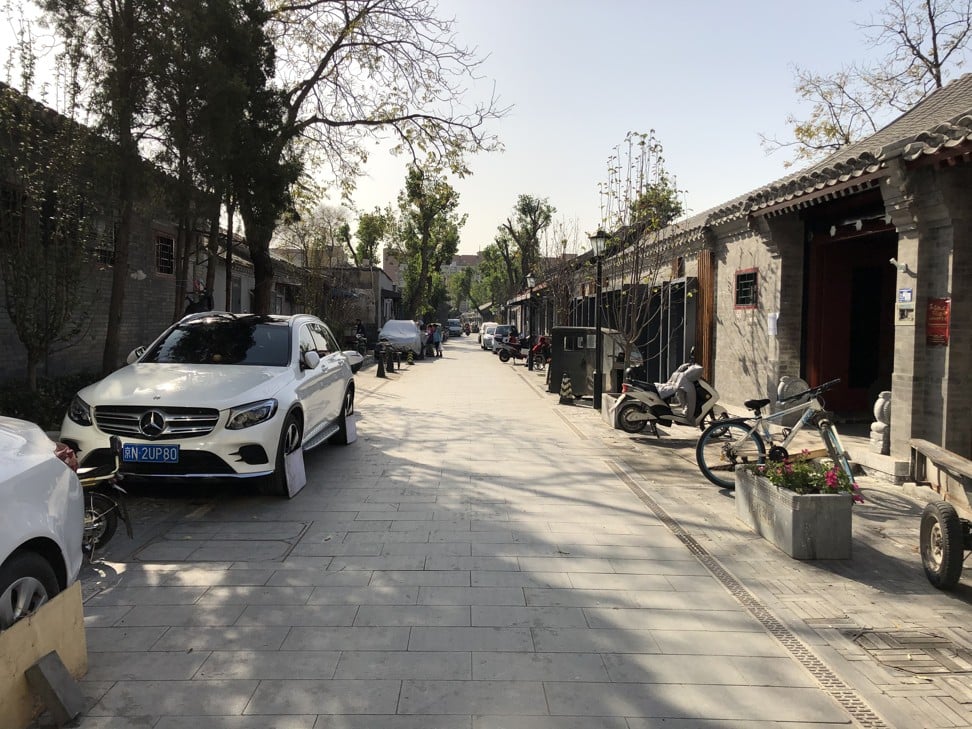
The alley on which No. 121 Lanman Hutong sits in Beijing on 15 November 2019. Photo: Louise Moon
Lanman Hutong, or the Alley of the Brilliant Drapes, sits in Xicheng district, a chequerboard neighbourhood criss-crossed with hundreds of alleyways that boasts three of the five highest-ranked schools in the city.
According to Beijing’s real estate regulations, one square metre entitles the owner a hukou. That fuelled the rush by parents to buy property in the area to qualify for sending their children to such eminent schools as the Beijing No. 4 High School, whose alumni include former Chongqing Commissar Bo Xilai, former China Development Bank president Chen Yuan and Citic’s chairman Kong Dan. Most of these bolt holes are now unoccupied after they have served their purposes, local residents said.
Lanman Hutong, or the Alley of the Brilliant Drapes, in the Xicheng district of Beijing, about 10 minutes drive from the Tiananmen Square and the Forbidden City, on 15 November 2019. Photo: Louise Moon
The auction result offers a peek into the growing speculative bubble in Beijing’s property market, a development that has defied more than two years of policymakers’ attempts to control. The average price of newly built homes rose 4.3 per cent in October to 60,894 yuan per square metre in Beijing, according to China’s statistics bureau data and Lianjia, a major real estate broker.
“Beijing’s homes have always been expensive, [particularly so] in Xicheng, where only the ultra-wealthy can afford to stay,” said Midland Beijing’s analyst Zhao Jia. “A million yuan is not expensive at all, to find space that close to the Forbidden City.”
Beijing’s average home price is equivalent to 24.9 years of the city’s median net income, excluding expenditures, according to data by E-House China Research and Development Institution. Hong Kong, the world’s most expensive urban centre to live and work in, requires 21 years of average income to affordable the average abode, according to the Demographia International Housing Affordability Study, as the city also boasts of a higher income and lower tax rate.
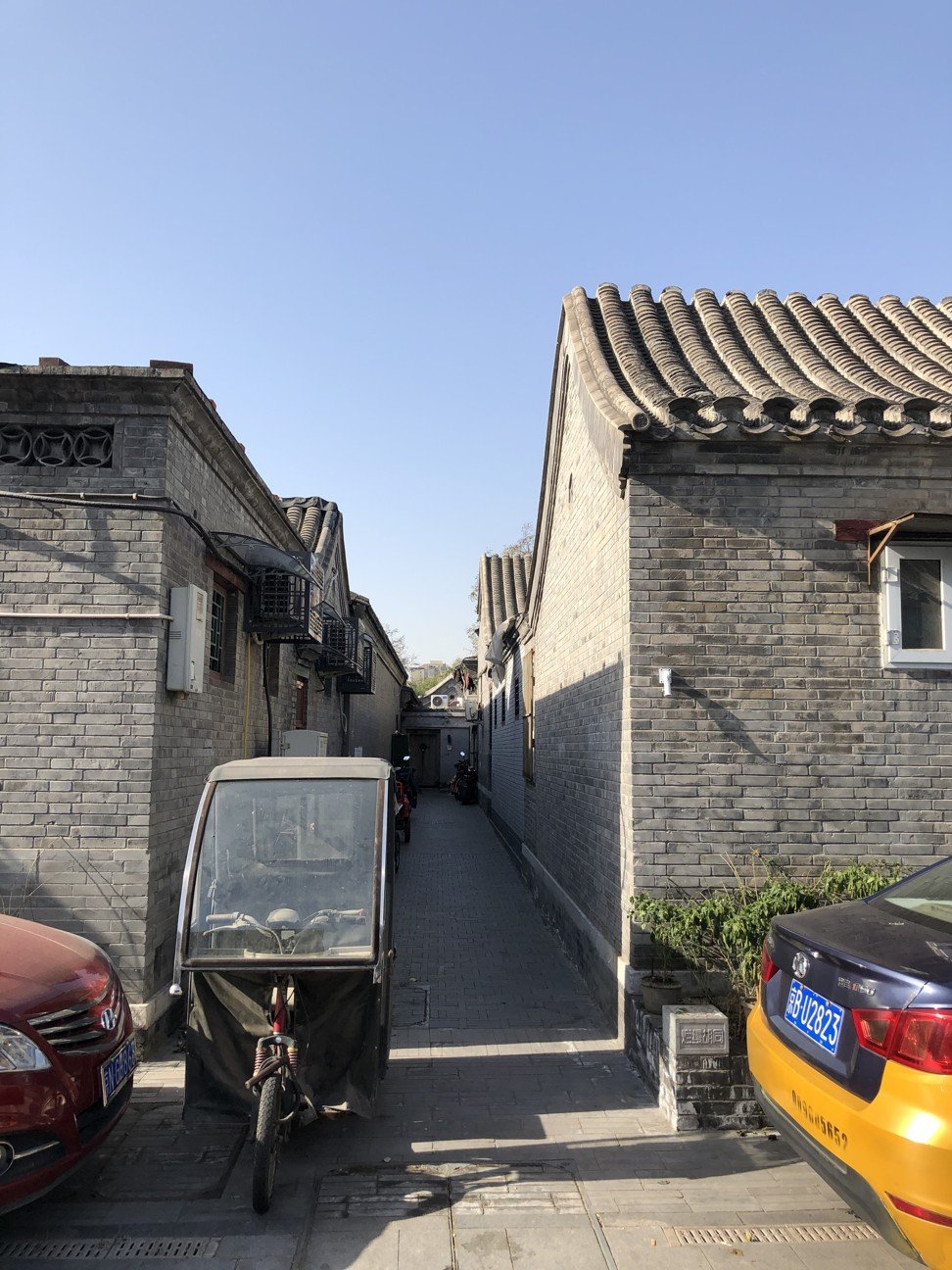
A tiny alleyway leading to No. 121 Lanman Hutong, which sold earlier this week for 1.28 million yuan in Beijing. Photo: Louise Moon
“It is not that easy for the average person to own property in Beijing,” said Midland’s Zhao. “For most homes in the city, 1 million yuan is only enough for a down payment.”
Unit 121 on Lanman Hutong is located among a cluster of siheyuan, as Beijing’s traditional courtyard homes are called. Bicycles, old washing machines and other household junk are piled along the maze of alleyways leading to the ground-floor unit.
Its auction drew 29 bidders starting from 470,000 yuan. The final winning bid prices the Lanman cubicle 35 per cent higher than a 100-million yuan villa with view of the Summer Palace in Beijing’s outskirts, on a per square foot basis.
To be sure, the unidentified buyer of the unit may be speculating for a quick flip, when the property is torn down, said Zhang Dawei, an analyst at Centaline Property Agency.
“This is more like a gamble, betting on the unit being demolished,” Zhang said. “If the odds are good, the buyer can pocket the [compensation], which could be several times what he bought it for. Even if it is not demolished in the short term, it is not bad to have some asset in the heart of Beijing.”
BEIJING, Oct. 27 (Xinhua) — Beijing Daxing International Airport, a new aviation hub in the Chinese capital, started international flight operation Sunday, joining the country’s expanding airport network to serve outbound and inbound travelers.
During winter and spring, a total of 570,000 passenger trips are expected to be made via 15 overseas flight routes at the airport, which boasts fast customs clearance services thanks to smart technologies.
Airports across China are seeing flights to and from a growing number of overseas destinations, as domestic and international airlines race to tap the booming international aviation market.
China’s international aviation market is small compared with some countries, but enjoys fast growth and huge potential, said Zhao Wei, a professor with the Civil Aviation Management Institute of China, at the 2019 China Aviation and Tourism Forum.
The steady expansion of the outbound tourism market and the large number of individuals who are yet to enjoy air travel will drive the sector’s rise, Zhao said.
China is the world’s largest outbound tourism market. About 81.29 million overseas trips were made during the first half of this year, up 14 percent year on year. The total for the whole year might grow 12 percent year on year to reach about 168 million trips, the China Tourism Academy predicted.
The country’s airports saw 126 million cross-border passenger trips made in 2018, up 13 percent over 2017. The McKinsey Global Institute foresaw threefold growth in the number of people in China able to afford airline travel in the next 10 years, with the upper strata of China’s fast-growing middle class poised to become the principal engine of air-travel spending.
With the outbound travel market booming, the number of overseas airlines and destinations entering the Chinese market continues to increase, observed Brenda He, managing director with tourism marketing and sales services provider Travel Link Group, which saw growing market demand from overseas airlines and tourism authorities.
To improve international air travelers’ experience, aviation services should be developed in coordination with tourism development and destinations promotion, He said.
Li Xiaoping, senior vice president with China’s largest online travel agency Ctrip, said airports need to upgrade their infrastructure and services to improve travelers’ experience by meeting their diversifying consumption and entertainment demands.
Future airports will become social-networking and cultural venues, Li said. “An airport can become a sightseeing spot in its own right.”
Visually spectacular and with the latest technology, the Chinese capital’s second international airport is open for business
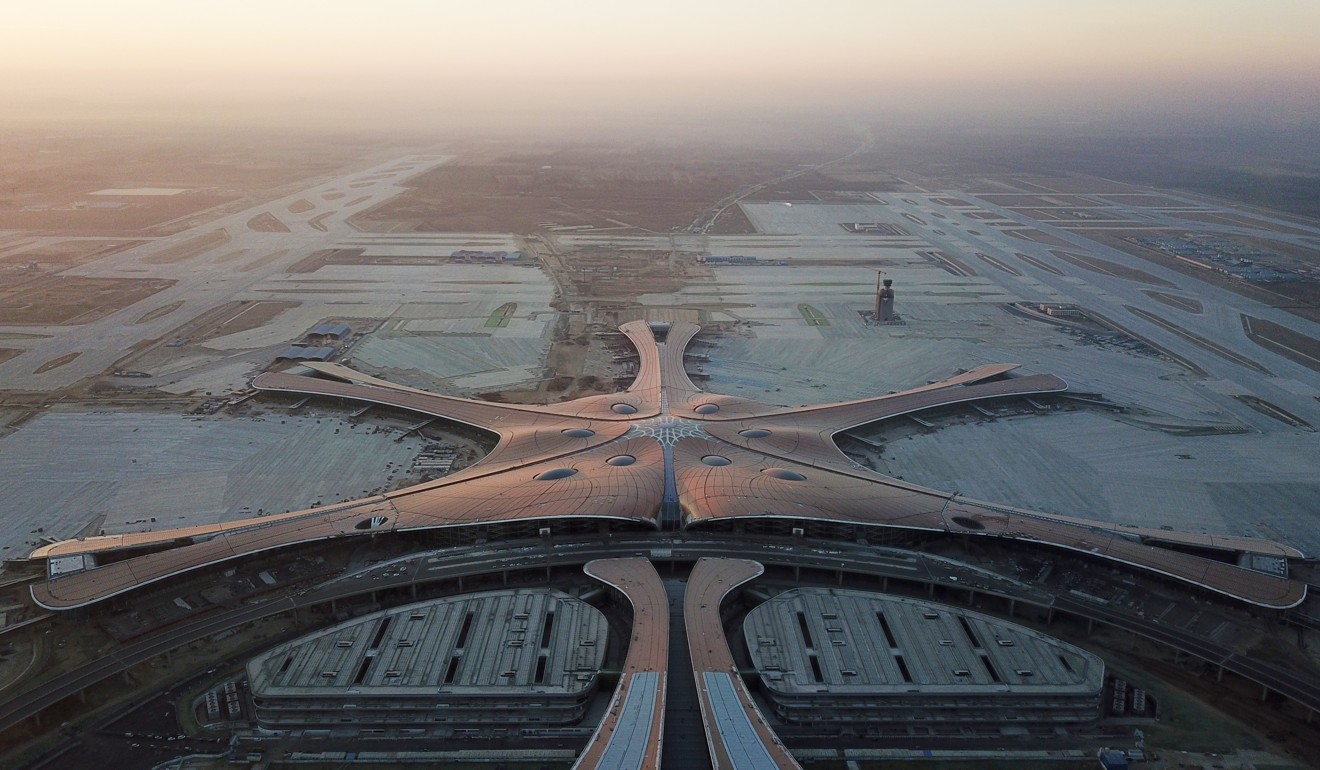
The terminal building at Beijing Daxing International Airport, which has officially opened. Photo: Xinhua
At 4.23pm on Wednesday a China Southern Airlines A380 left Beijing for Guangzhou – on the first commercial flight out of the world’s latest and largest airport terminal at Daxing, five years after construction began on the ambitious project.
The 80 billion yuan (US$11 billion) Beijing Daxing International Airport was officially opened by Chinese President Xi Jinping on Wednesday morning.
China Southern Airlines, the mainland’s largest carrier, has 40 per cent of the flight slots at the new airport. It is one of 16 airlines which will be operating out of Beijing Daxing International Airport, the visually spectacular new facility at the southern end of the Chinese capital.
Six other flights, including China Eastern Airlines for Shanghai and Air China for Chengdu, took off before 5pm in the afternoon. These domestic airlines will have part of their operations moving to Daxing for the upcoming winter-spring season, according to the mainland’s aviation authority. No Hong Kong airlines were listed.
British Airways has announced its whole operation will be moved to Daxing, while some foreign airlines, such as Ethiopian Airlines, Polish Airlines, Malaysia Airlines, Royal Air Maroc and Finnair, will operate at both airports.
Spanning 47 sq km (18 square miles) – almost 50 per cent larger than the city of Macau – Daxing, with its 700,000 square metre (7.5 million sq ft) terminal is a spectacular sight. Its futuristic shape, resembling a giant hexagonal starfish or – as some internet users have dubbed it – an alien base, not only handles more aircraft, it also keeps passengers’ walks
From the centre of the security check to the furthest end gate in each wing is about 600 metres (1,970 feet), or less than an eight-minute walk.
Beijing’s new 7-runway, star-shaped Daxing airport opened by Xi Jinping
According to Xinhua, more than 70 restaurants, tea shops and coffee houses will operate in the airport, along with 36 international brands, including Louis Vuitton, Gucci and Bottega Veneta.
Daxing is designed to take pressure off the overcrowded Beijing Capital International Airport (BCIA) and, by 2021, is expected to handle 45 million passengers a year, rising to 72 million by 2025.
Located at the south of the capital, 46km (28.5 miles) from the central Tiananmen Square, the airport was once frowned upon for its less than optimal location, with its southern end at the border with Hebei province. But it may not be as time-consuming for travellers as originally thought.
The design of the airport means passengers will walk a much shorter distance to the check-in and security check.Hu Haiqing, China Southern Airlines
Hu Haiqing, deputy general manager of China Southern Airlines’ operation control centre, told Global Times that “although Daxing is further away from downtown Beijing than the Capital airport, there are still some advantages, especially for our airline”.
With most of its bases in the south of the country, China Southern Airlines flights to Daxing will be 10 to 15 minutes shorter than to the Capital airport. A further 15 to 20 minutes taxiing time will also be saved, thanks to its position in the new airport.
“The design of the airport also means passengers, once they leave their car or train, will walk a much shorter distance to the check-in and security check,” Hu said.
According to Xinhua, Daxing’s design also makes transit much quicker, with transfers between international and domestic flights up to 90 minutes shorter than from the Capital airport.
The futuristic shape of Daxing airport not only handles more aircraft, it also keeps passengers’ walks to a minimum. Photo: Xinhua
Public transport will be the quickest way to reach the new airport from downtown Beijing – 20 minutes from West Beijing railway station once the Beijing-Xiongan high-speed rail officially opens. The airport express service will also take passengers from Caoqiao station to the airport in 19 minutes.
There is no underground rail service or airport express connecting the Capital airport in the north with Daxing, but passengers can change trains at Caoqiao for downtown Beijing or other stations which connect with BCIA’s airport express service.
Waiting times at the new airport will be greatly reduced by the use of facial recognition technology for self-service check-in and smart security checks, according to Wang Hui, manager of Daxing’s terminal management department.
The technology does away with the need for a paper boarding pass and passengers can check-in, with or without luggage, and go through the security check by themselves.
Beijing is the window for China to go global … Daxing airport makes it possible to open more global routes.China Eastern Airlines pilot
“The airport has more than 400 self-service check-in kiosks, which means more than 80 per cent of check-ins will be self-service. That shortens each passenger’s queuing time to no more than 10 minutes,” Wang told Global Times.
“The smart security check channels are able to handle 260 passengers per hour, 40 per cent faster than using traditional means,” he said.
The opening of Daxing Airport could be a great boost for the mainland – and even the global – aviation industry by easing pressure on the Capital airport and making new routes possible, said a veteran China Eastern Airlines pilot who declined to be named.
5 things we know about Beijing’s new Daxing International Airport
Opening new flight routes from BCIA was almost impossible, he pointed out, because the centre of Beijing was a no-fly zone for security reasons. Daxing airport’s location at the southern end of the city, however, avoided the problem of planes having to bypass the restricted space, leaving room to open more routes for domestic and international flights.
“Beijing is the window for China to go global but the Capital airport’s schedule is saturated and unable to open new routes. Daxing airport makes it possible to open more global routes,” the pilot said.
He said the runway design at Daxing also meant fewer delays, because the four runways of phase one – more than any other airport in China – included one which was perpendicular to the other three, allowing flights to land and take off regardless of wind direction.










 CHINDIA ALERT: You'll be living in their world, very soon