Chindia Alert: You’ll be Living in their World Very Soon
aims to alert you to the threats and opportunities that China and India present. China and India require serious attention; case of ‘hidden dragon and crouching tiger’.
Without this attention, governments, businesses and, indeed, individuals may find themselves at a great disadvantage sooner rather than later.
The POSTs (front webpages) are mainly 'cuttings' from reliable sources, updated continuously.
The PAGEs (see Tabs, above) attempt to make the information more meaningful by putting some structure to the information we have researched and assembled since 2006.
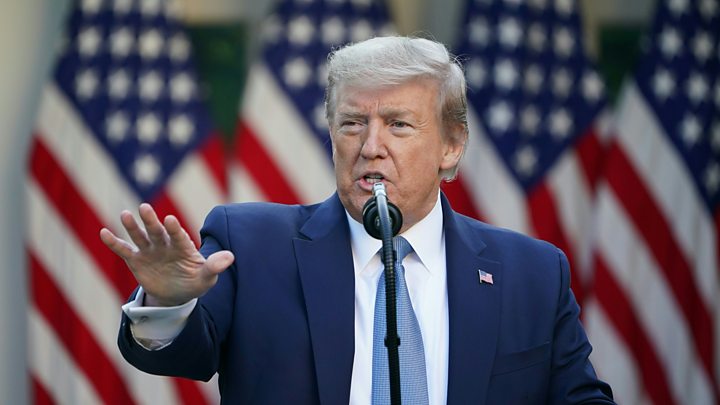
WASHINGTON (Reuters) – U.S. President Donald Trump signaled a further deterioration of his relationship with China over the coronavirus outbreak, saying he has no interest in speaking to President Xi Jinping right now and going so far as to suggest he could even cut ties with the world’s second largest economy.
In an interview with Fox Business Network broadcast on Thursday, Trump said he was very disappointed with China’s failure to contain the disease and that the pandemic had cast a pall over his January trade deal with Beijing, which he has previously hailed as a major achievement.
“They should have never let this happen,” Trump said. “So I make a great trade deal and now I say this doesn’t feel the same to me. The ink was barely dry and the plague came over. And it doesn’t feel the same to me.”
Trump’s pique extended to Xi, with whom the U.S. president has said repeatedly he has a good relationship.
“But I just – right now I don’t want to speak to him,” Trump said in the interview, which was taped on Wednesday.
Trump was asked about a Republican senator’s suggestion that U.S. visas be denied to Chinese students applying to study in fields related to national security, such as quantum computing and artificial intelligence.
RELATED COVERAGE
U.S. says it condemns China-linked ‘cyber actors’ trying to steal COVID research
“There are many things we could do. We could do things. We could cut off the whole relationship,” he replied.
“Now, if you did, what would happen? You’d save $500 billion,” Trump said, referring to estimated U.S. annual imports from China, which he often refers to as lost money.
Chinese foreign ministry spokesman Zhao Lijian told reporters in Beijing on Friday that maintaining a steady bilateral relationship served the interests of both peoples and would be beneficial for world peace and stability.
“Both China and the U.S. should now be cooperating more on fighting the virus together, to cure patients and resume economic production, but this requires the U.S. to want to work with us on this,” Zhao said.
Trump’s remarks drew ridicule from Hu Xijin, editor in chief of China’s influential Global Times tabloid, who referred to the president’s much-criticized comments last month about how COVID-19, the disease caused by the coronavirus, might be treated.
“This president once suggested COVID-19 patients inject disinfectants,” Hu said on Twitter. “Remember this and you won’t be surprised when he said he could cut off the whole relationship with China.”
CONCERNED, REVIEWING OPTIONS
U.S. Treasury Secretary Steven Mnuchin told Fox Business Network China needed to provide a lot more information about the coronavirus and Trump was reviewing his options.
“The president is concerned. He’s reviewing all his options. Obviously, we’re very concerned about the impact of this virus on the economy, on American jobs, the health of the American public and the president is going to do everything to protect the economy and protect American workers,” Mnuchin said.
“It’s a difficult and complex matter and the president has made very clear, he wants more information. They didn’t let us in, they didn’t let us understand what was going on.”
Trump and his Republican backers have accused Beijing of failing to alert the world to the severity and scope of the coronavirus outbreak and of withholding data about the earliest cases. The pandemic has sparked a sharp global recession and threatened Trump’s November re-election chances.
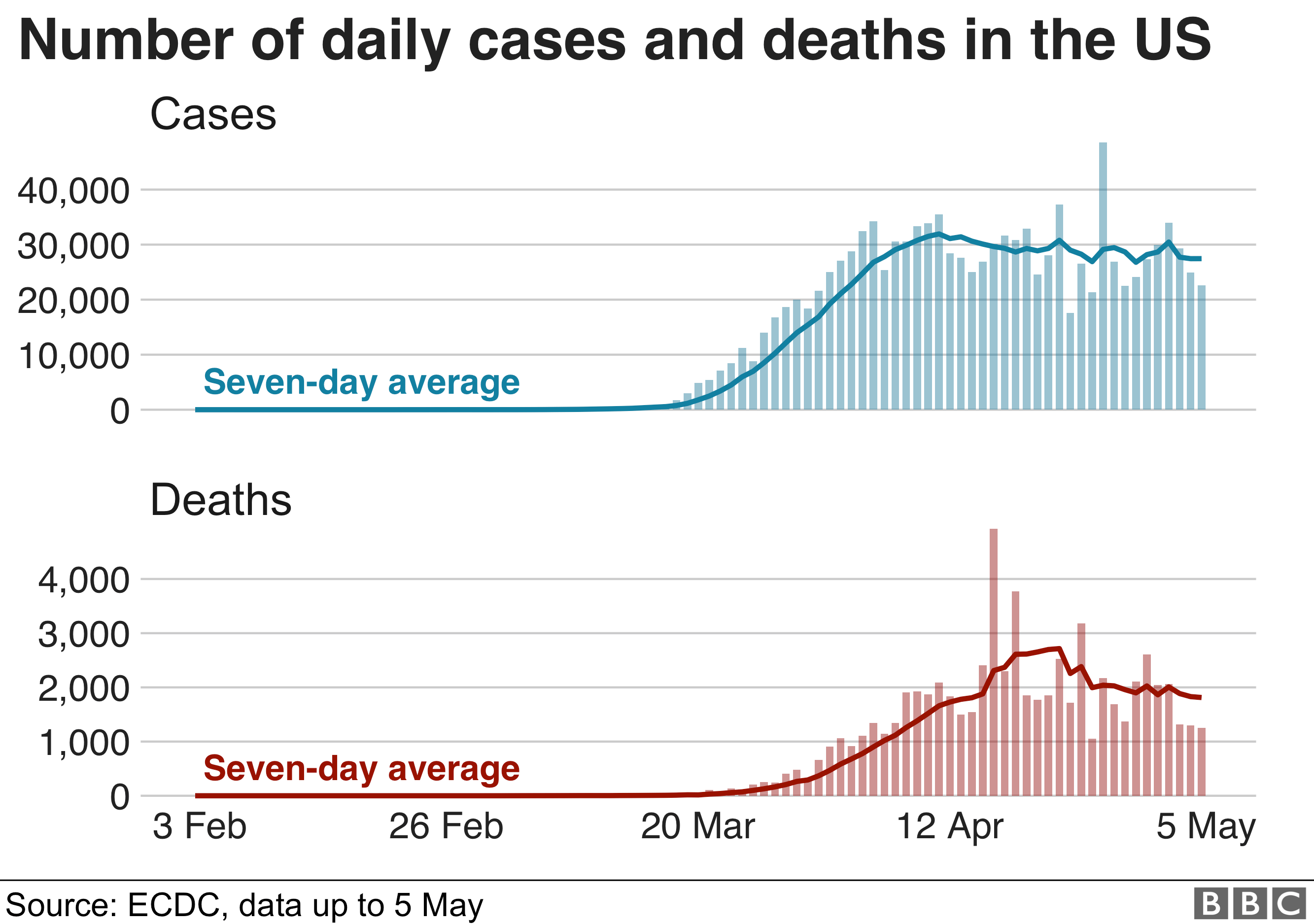
The United States has been hardest hit by the pandemic, according to official data.
China insists it has been transparent, and, amid increasingly bitter exchanges, both sides have questioned the future of the trade deal.
Opponents of Trump have said that while China has much to answer for over the outbreak, he appears to be seeking to deflect attention from criticism over his response to the crisis.
Scott Kennedy of Washington’s Center for Strategic and International Studies think tank called Trump’s remarks “dangerous bravado.”
“Avoiding communication is not an effective strategy for solving a crisis that requires global cooperation. And cutting off the economic relationship would badly damage the American economy,” he said.
Michael Pillsbury, a China analyst who has worked as an outside adviser to Trump, told Reuters he believed the president was concerned that China not only wanted to re-negotiate the Phase 1 deal, but also had not been meeting goals in purchasing from United States.
He said that according to figures cited by the China Daily, China’s purchases of U.S. products in the first four months of this year were 3% less than during the same period last year.
“It’s not good news for reducing the trade deficit or helping our economy recover from the coronavirus crisis,” he said.
China took some additional steps towards the Phase 1 goals on Thursday, buying U.S. soybean oil for the first time in nearly two years and issued customs notices allowing imports of U.S. barley and blueberries.
An executive from Chinese state agriculture trading house COFCO said China was set to speed up purchases of U.S. farm goods to implement the Phase 1 deal.
While U.S. intelligence agencies have said the coronavirus does not appear manmade or genetically modified, Trump said in his interview that China should have stopped it at its source.
“Whether it came from the lab or came from the bats, it all came from China, and they should have stopped it,” he said.
Calgary Zoo to ship pair back home after pandemic upends delivery of essential fresh produce
Er Shun and Da Mao refuse to eat some of the centre’s locally sourced supplies
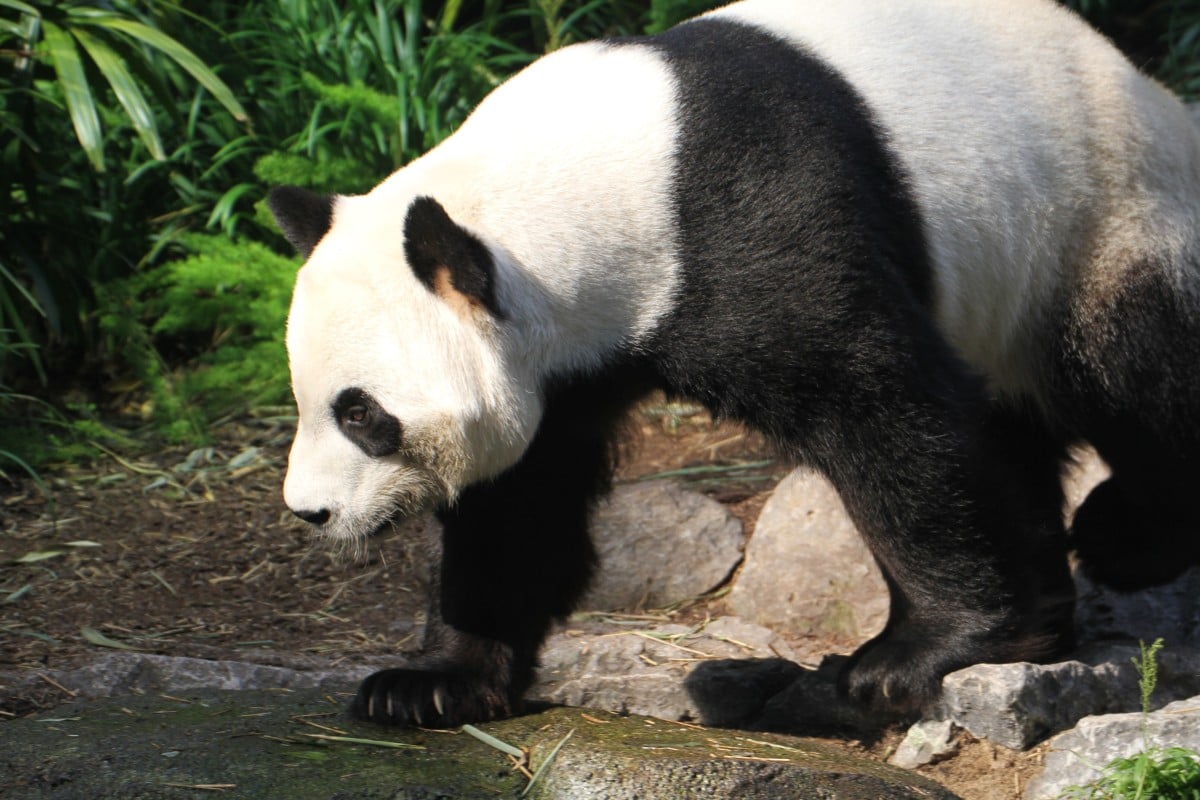
The Calgary Zoo cannot guarantee supplies of fresh bamboo for its giant pandas.Photo: Calgary Zoo
A Canadian zoo has decided to send two adult giant pandas back to China because the
coronavirus pandemic has disrupted essential deliveries of fresh bamboo.
The Calgary Zoo said it previously had bamboo flown in from China directly, but was forced to switch to domestic supplies after flights were cancelled.
The pandas had refused to eat some of the local product, which had been degraded by longer delivery times, and the supplies could be disrupted without warning, the zoo said.
“Knowing a second wave of Covid-19 is likely, and the bamboo supply chain challenges will continue to negatively impact the zoo’s ability to bring bamboo to the giant pandas, the Calgary Zoo feels it’s critical to move the beloved giant pandas back to China where there are abundant local sources of bamboo as soon as possible,” the zoo said on Tuesday.
Giant pandas in Hong Kong mate naturally for the first time in a decade
Giant pandas feed almost exclusively on fresh bamboo and each adult chews through about 40kg (88 pounds) of the plant every day.
“We believe the best and safest place for Er Shun and Da Mao to be during these challenging and unprecedented times is where bamboo is abundant and easy to access,” Calgary Zoo president and chief executive Clément Lanthier said, referring to the two pandas. “This was an incredibly difficult decision to make but the health and well-being of the animals we love and care for always comes first.”
Er Shun and Da Mao arrived in Canada in 2014 as part of a 10-year agreement between Canada and China. They spent five years at the Toronto Zoo and arrived in Calgary in March 2018 with their cubs, Jia Panpan and Jia Yueyue.
It is unclear whether the cubs will be sent to China as well.
The zoo said the pandas would be deeply missed by staff, volunteers, donors and visitors from around the world. Although in-person farewells were not possible during the zoo’s temporary closure, the public could see the pandas online through PandaCam, it said.
In all, 58 giant pandas in 17 countries are on loan from China, according to the Chengdu Research Base of Giant Panda Breeding in Sichuan province.
Finland is the most recent recipient, taking delivery of a pair in January 2018, while
Sales in April hit 2.07 million units in the world’s biggest car market, up 4.4 per cent from a year earlier, according to the country’s largest industry association
The number of new energy vehicles (NEVs) sold fell for a tenth straight month to
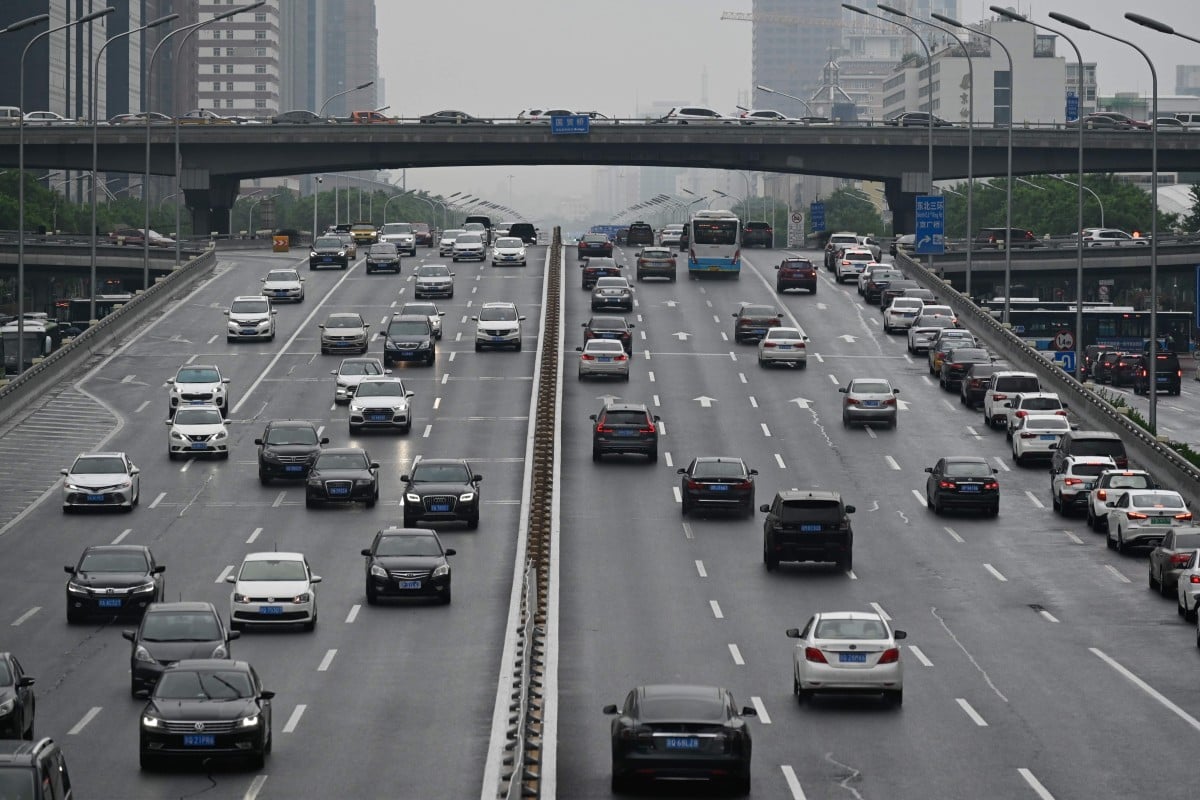
The global industry has been hit hard by the health crisis, but there is growing optimism of improvement in business in China as the country has largely contained the outbreak and started easing lockdown measures. Photo: AFP
China’s monthly car sales rose for the first time in almost two years in April, industry data showed, as more customers visited showrooms after the economy began to open up and authorities loosened coronavirus-related travel restrictions.
Sales in April hit 2.07 million units in the world’s biggest car market, up 4.4 per cent from a year earlier, according to data from the China Association of Automobile Manufacturers, the country’s largest industry association.
as the pandemic pummelled demand. Monthly sales in China last rose in June 2018.
The number of new energy vehicles (NEVs) sold fell for a tenth straight month to 72,000 units, the data showed. NEVs include battery-powered electric, plug-in hybrid and hydrogen fuel-cell vehicles.
The global industry has been hit hard by the health crisis, but there is growing optimism of improvement in business in China as the country has largely contained the outbreak and started easing lockdown measures.
Volkswagen reported positive China sales in April, while General Motors’ China ventures saw double-digit year-on-year growth last month.
— As the continued global spread of COVID-19 is weighing on the world economy, China’s foreign trade is under considerable downward pressure.
— Many export-oriented companies in China are turning to the domestic market for a lifeline while grappling with dropping overseas orders as major markets remain in the grip of the pandemic.
by Xinhua writers Zhang Yizhi, Li Huiying, Hu Guanghe, Xu Ruiqing
FUZHOU, May 9 (Xinhua) — Walking back and forth between shelves of neatly stacked shoes, some 20 live streamers dashed at the instructions of their followers on the phone, grabbing a shoe now and then from the shelves for a close-up in front of the camera.
At around eight o’clock every night, the supply chain platform 0594 in the city of Putian, east China’s Fujian Province, springs to life as live streamers flock to the exhibition area to sell shoes produced by the local manufacturers, many of which are troubled by the cancellations or delays of overseas orders amid the global coronavirus pandemic.
“To get rid of the excess inventory, many manufacturers in Putian are turning to live streaming to explore the domestic market,” said Chen Xing, general manager of 0594. “We are now cooperating with over 40 manufacturers and there will be more of them joining us in the future.”
The platform is also building an internet celebrity incubator and has so far organized seven rounds of influencer training courses enrolling more than 200 attendees.
Huang Huafang, 39, signed up for the two-day crash course in late March and soon after started her first live streaming session. She works from around 2 p.m. to 10 p.m., attracting over 500 followers and selling more than 20 pairs of shoes every day.
Though she is not a well-known live streamer, she is optimistic about the future. “There is a long way to go, but I believe live streaming is a trend. It is an essential skill for anyone who wants to market online,” said Huang.
A staff sells shoes through live streaming at an e-commerce warehouse in Putian, southeast China’s Fujian Province, May 7, 2020. (Xinhua/Lin Shanchuan)
According to Chen, the platform 0594 sold almost 130,000 pairs of shoes in April alone. As the domestic economic outlook continues to pick up, the sales target of May has been set at 200,000 pairs.
Like manufacturers in Putian, a city with a large number of export-oriented enterprises, many Chinese factories are turning to the domestic market for a lifeline, while grappling with dropping overseas orders as major markets remain in the grip of the pandemic.
ADAPT OR DIE
With decades of experience in manufacturing and developing products for overseas clients, some export-oriented companies in China are rolling out products catering to the domestic market.
After months of gloomy business, Wu Songlin, general manager of Putian-based Hsieh Shun Footwear Co., Ltd., heaved a sigh of relief as trucks loaded with therapeutic shoes tailored to the home market left his factory.
It was the first shipment for the domestic market since Wu and his partners started the company in 2010. In the past, his company only had two clients, one from Europe and the other from Japan. Business used to run smoothly and life was good.
But his factory was on the brink of a shutdown in March when the coronavirus pandemic started to ravage the global economy. No new orders came in and shipments of existing orders were requested to be delayed until June.
People work in a footwear workshop in Putian, southeast China’s Fujian Province, April 27, 2020. (Xinhua/Lin Shanchuan)
“Orders were canceled after completion of production, and our capital flow is stuck in our inventory. The pressure is mounting to keep the factory running,” Wu said. “By the end of June, workers would be left with no work to do as soon as we complete the existing orders.”
After losing almost all their orders from overseas clients, the desperate shoemaker turned to the domestic market. He called one of his old business partners and secured an order for massage footwear, which is selling like hot cakes in the domestic market as health tops the agenda in the time of the novel coronavirus.
The factory produced 10,000 pairs of massage shoes in April, and the number is expected to reach 30,000 in May, enough to keep the production lines running.
Thanks to the company’s quick adaptation, about 200 workers kept their jobs in the factory, while 20 percent were furloughed and the remaining workers were arranged to work in other companies as part of the city’s employee sharing program.
“If domestic orders keep coming in, our operation will hopefully get back to normal by September when the monthly output of massage shoes will reach 90,000,” Wu said. “By then the company will live and thrive without any orders from overseas customers.”
A woman works in a workshop of Hsieh Shun Footwear Co., Ltd. in Putian, southeast China’s Fujian Province, May 7, 2020. (Xinhua/Lin Shanchuan)
But switching to another market is not easy, explained Wu. In the past, export-oriented factories were only in charge of manufacturing, while brands would take care of sales, promotion as well as customer support.
“If you are selling to the domestic market, you need to have your own brand and marketing capacity,” he said. “Working with e-commerce platforms could be one way out, but it’s more important to understand domestic consumers and meet their needs.”
CUSTOMIZE THE FUTURE
For years, many export-focused manufactures have been trying to climb up the value chain and tap the uncharted waters of the domestic market. As the pandemic continues to spread, there is a strong push for them to embrace customized manufacturing.
In an experience store located in downtown Putian, customers line up waiting to have their feet measured on a smart device. After a few seconds, they get their readings on the phone, and a few swipes and clicks later, they place their orders with unique features, colors, and shapes.
Adjacent to the experience store, there is a flexible manufacturing workshop, which gives quick responses to orders and produces shoes following the customized demands of individual buyers.
SEMS, a longstanding sports footwear manufacturer that has established a partnership with several international brands, started to adopt flexible manufacturing years ago in an effort to adapt to the evolving domestic market.
A customer has her feet measured on a smart device in sports footwear manufacturer SEMS in Putian, southeast China’s Fujian Province, May 8, 2020. (Xinhua/Lin Shanchuan)
Customization gives consumers the benefit of products that fit their needs, and at the same time allows factories to utilize improved workflows and technology to maintain high output and omit the process of inventory and distribution, said Zhu Yizhen, the executive vice president of the company.
“Currently we only sell over 100 pairs of customized shoes a day, but we are at the dawn of a new era,” Zhu said. “We hope more companies awaken to the developing trend and join in the practice of mass customization.”
Customer to manufacturer, or C2M, which allows consumers to place orders directly to factories for customized products, has become a buzzword among export-oriented manufacturers hoping to reach domestic consumers amid the pandemic.
Li Junjie, who runs a ceramic flowerpot plant in Fujian’s Dehua County, one of the manufacturing centers of ceramics in China, did not sell a single pot to his overseas customers since the coronavirus outbreak in late January.
The factory used to export 30 percent of its flowerpots to the United States and Spain, but Li managed to make up for the lost deals by selling on domestic e-commerce platforms. Instead of bulk orders placed by foreign clients, domestic consumers tend to purchase customized products in small amounts.
Photo shows the automatic production line of a customized workshop in sports footwear manufacturer SEMS in Putian, southeast China’s Fujian Province, May 8, 2020. (Xinhua/Lin Shanchuan)
With the big data provided by e-commerce platforms, Li can tell which items will be a hit so as to increase their production and develop new products based on a thorough analysis of different consumer groups.
“Our online sales almost doubled over the past year, and we have sold over 100,000 customized pots this year, thanks to the C2M business model,” Li said.
Li’s company is one of many Chinese small and medium-sized enterprises (SMEs) that have benefited from the e-commerce giant Alibaba’s Spring Thunder Initiative, which is aimed at helping export-focused SMEs expand into new markets.
The initiative will also help some SMEs to transform and develop their business in the Chinese market through measures such as resource support, fee reductions, and fast-track processing.
In his “verbal message of thanks”, Mr Xi said he highly appreciated Mr Kim’s support during China’s outbreak and “showed his personal attention to the situation of the pandemic and people’s health” in North Korea, according to state media.
Mr Xi called for more efforts to strengthen co-operation in preventing the spread of the coronavirus, and said China was “willing to continue to provide assistance within its own capacity for [North Korea] in the fight against Covid-19”.
On Friday, North Korean state media reported that Mr Kim had sent a verbal message to the president that “congratulated him, highly appreciating that he is seizing a chance of victory in the war against the unprecedented epidemic”.
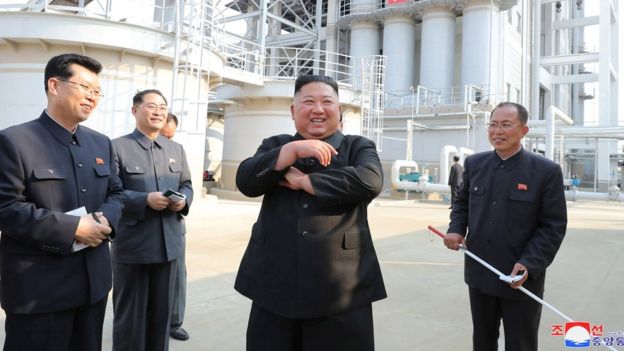
Image copyright REUTERSImage caption Kim Jong-un disappeared from public view for 20 days, before visiting a factory on 2 May
Mr Kim recently went 20 days without appearing in public, and missed the celebration of his grandfather’s birthday – one of the biggest events of the year.
Some media reports claimed he was “gravely ill”, or even dead.
But he then appeared at a fertiliser factory on 2 May – apparently in good health.
On Wednesday, South Korea’s National Intelligence Service told a parliamentary committee that there had been no signs the health rumours were true.
“He was performing his duties normally when he was out of the public eye,” a member of the committee, Kim Byung-kee, told reporters afterwards.
The lawmaker said the North Korean leader’s absence could have been down to a Covid-19 outbreak that the authorities in Pyongyang had not reported.
Analysis
By Celia Hatton, Asia Pacific Editor, BBC World Service
For months, North Korea-watchers have questioned Pyongyang’s claims that it has managed to isolate itself from Covid-19.
Admittedly, North Korea was the first country to suspend travel in response to the virus. There are unconfirmed reports that North Korean guards have been ordered to shoot at those who try to cross the lengthy border the North shares with China. However, it will be difficult to completely seal that dividing line for long. North Korea’s underground economy relies on illicit trade with Chinese entrepreneurs.
Beijing has a few good reasons for wanting to help North Korea. On a practical level, China needs to suppress a possible Covid-19 outbreak there if it wants to keep its own population healthy. Beijing also worries about what might happen inside North Korea if the virus takes hold. The North’s decrepit health system would quickly be overwhelmed by an outbreak of Covid-19, and that could threaten the fragile Kim Jong-un regime. Beijing has been Pyongyang’s biggest aid donor for decades, and it will continue to do what it can to keep Mr Kim in power. The alternatives to Kim Jong-un are much riskier for China, which does not want change on its doorstep.
China’s global political interests are also at play. Diplomatically, Mr Xi’s public exchange with Kim Jong-un underlines the seemingly close ties between China and North Korea. Pyongyang has been slow to accept public offers of help from the United States, and peace talks with Washington have stalled. If North Korea appeared to accept Beijing’s help, China would reassert itself as North Korea’s “true” ally in a time of need.
South Korea itself reported 18 new confirmed cases of Covid-19 on Saturday.
Seventeen of them are linked to a 29-year-old man who tested positive after spending time at five nightclubs and bars in Seoul’s Itaewon leisure district last weekend, the Yonhap news agency said.
Mayor Park Won-soon ordered nightclubs, bars and hostess venues across the capital to suspend business in response.
“Carelessness can lead to an explosion in infections – we clearly realised this through the group infections seen in the Itaewon club case,” Mr Park said.
Health officials have urged people who have visited the five venues in Itaewon to self-isolate and get tested to prevent additional transmissions. At least 1,500 people signed their entry logs, according to Yonhap.
The new infections brought the nationwide total to 10,840, while the death toll remained unchanged at 256.
People’s Liberation Army has officially recorded no infections but disease fears have delayed recruitment, training and operations
Analysts say Sars experience guided military’s prompt response, but combat effectiveness has been affected
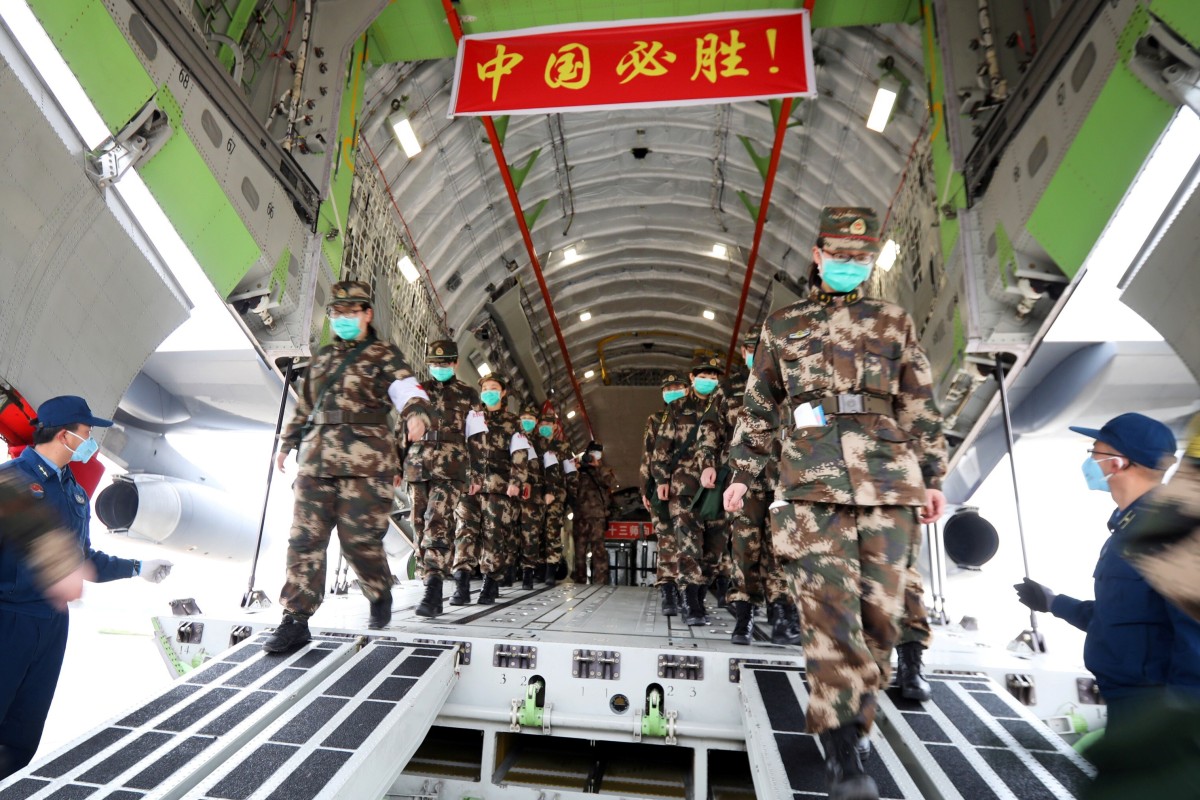
Chinese military medical personnel arriving in Wuhan in February to assist with the coronavirus outbreak response to the February. Photo: Reuters
China’s military may have been spared any coronavirus infections, but the global health crisis has slowed the progress of Chinese President Xi Jinping’s plan to transform the People’s Liberation Army into a modern fighting force capable of long-range power-projecting operations, experts say.
According to China’s defence ministry, the world’s largest armed force – with about 2.3 million personnel – has had zero confirmed cases of Covid-19. In contrast, the US and Russian militaries, ranked second- and third-largest in the world, have reported more than 4,000 and 1,000 respectively.
But the PLA has been affected in other ways by the disease, which was first reported in Wuhan in December before going on to infect 3.9 million people around the world to date.
Safety concerns delayed its annual spring recruitment programme – it has been rescheduled for August – while the PLA Navy was forced to change its training arrangements, switching to classroom study of military theory and tactics, according to Xinhua.
“The PLA is still a conscription army and, given its large turnover of soldiers every year and the late recruitment and training plan this year, the coronavirus pandemic has already affected combat effectiveness,” said Adam Ni, director of the China Policy Centre, an independent, non-profit research organisation based in Canberra, Australia.
China’s military budget will still rise despite coronavirus, experts predict
3 May 2020
The navy’s operations, in particular, would have been affected, according to Charlie Lyons Jones, a researcher from the Australian Strategic Policy Institute’s defence and strategy programme.
“The Chinese navy, short of highly effective disease control measures, is unlikely to avoid similar outbreaks of the novel coronavirus on board its warships,” he said.
“Therefore, even if the PLA Navy currently has zero personnel infected by the novel coronavirus, its position as a navy that can operate effectively in a period of higher-than-normal tension remains precarious at best,” Jones said. He also questioned Beijing’s claims that the military was virus-free.
“The PLA played an important role in China’s response to the coronavirus outbreak in Wuhan … The idea that none of these personnel working on the front lines in Wuhan became infected by the novel coronavirus would be inconsistent with the experiences of countries from around the world,” he said.
More than 4,000 military medical workers were sent to Wuhan as part of China’s effort to contain the outbreak at ground zero – which included the rapid-built emergency field facility, the Huoshenshan hospital – and their efforts were highlighted in a documentary screened recently by state broadcaster CCTV.
China opens coronavirus hospital built in 10 days
At the time, rumours were rampant that the Chinese military had been affected by the coronavirus, fuelled by a report on February 17 by the official PLA Daily that some soldiers had been placed in quarantine and Yu Qiusong, captain of the Changzhou type 054A frigate, was isolating in a guest house. The news report did not mention why the personnel were in quarantine.
But analysts said that whether the official numbers were accurate, the PLA’s closed management, fast response and past experience with severe acute respiratory syndrome (Sars) gave China’s military an advantage in keeping the coronavirus at bay.
Zhou Chenming, a Beijing-based military observer, said a key reason for the less serious hit to the PLA compared to other forces was its speed in recognising the severity of the situation.
“What’s more, the PLA has its own logistic support system that can help minimise its contact with the outside world, thus reducing the possibility of contracting the virus,” he said.
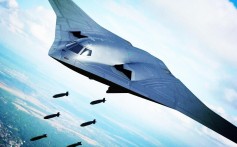
China’s long-range stealth bomber could make its debut this year
4 May 2020
According to Xinhua, the PLA’s Centre for Disease Control and Prevention drew up an emergency response plan and mobilisation arrangements on January 20, the same day Xi issued an instruction to the public that the virus must be “resolutely contained”.
Timothy Heath, a senior international defence research analyst with the Rand Corporation, a US think tank, said China’s military had benefited from its less international role, compared to US forces.
“The US is a globally distributed force while the Chinese military largely operates on the mainland. The US thus faces challenges in containing the disease that the Chinese military does not have to face … and the US military has a large range of missions and tasks it carries out to counter threats to its allies and partners, as well as to US security. This complicates efforts by the US military to carry out disease control measures,” he said.
Pou Chen makes footwear for the likes of Nike and Adidas, but says it has suffered from a lack of orders as global value chains strain under the impact from the virus
Chinese workers moved to Vietnam to help set-up new factories as the company expand its production, but have now become expendable
With the likes of Nike and Adidas closing retail stores around the world to comply with social distancing requirements, analysts also said orders plummeted 50 per cent in the second quarter, although the company declined to comment on the media reports. Photo: Bloomberg
A group of 150 Chinese workers believe the world’s largest maker of trainers used the coronavirus as an excuse to fire them, having helped Taiwanese firm Pou Chen successfully expand its production into Vietnam for more than a decade.
Pou Chen, which makes footwear for the likes of Nike and Adidas, informed the group in late April that they would no longer be needed as they were unable to return to
from their hometowns in China due to the coronavirus lockdowns.
“We believe we contributed greatly to the firm’s relocation process, copying the production line management experience and successful model of China’s factories to Vietnamese factories,” said Dave Zhang, who started working for Pou Chen in Vietnam in 2003.
“Now, when the factories over there have matured, and there is a higher automation level in production, our value has faded in the management’s eyes and we got laid off, in the name of the automation level.”
Rush hour chaos returns to Vietnam’s streets as coronavirus lockdown lifted
The group claims the firm began to fire Chinese employees several years ago, with the total number dropping from over 1,000 at its peak to around 400 last year.
“We 150 employees were the first batch of Chinese employees to be laid off this year. We are all pessimistic and expect more will be cut,” added Zhang.
In its email on April 27, Pou Chen said it was forced to terminate the contracts of the Chinese employees across five of its factories due to an unprecedented decline in orders and financial losses.
The Chinese employees, many of whom have been working for the shoemaker for decades, said the compensation offered was unfair and below the levels required by labour law in both Vietnam and China.
In a further statement to the South China Morning Post, Pou Chen stood by the move as the coronavirus pandemic had reduced demand for footwear products and so required an “adjustment of manpower.”
“[The dismissals were] in accordance with the relevant labour laws of the country of employment … and employee labour contracts,” added the statement from Pou Chen, which employs around 350,000 people worldwide.
Company data showed Pou Chen’s first quarter revenues tumbled 22.4 per cent year-on-year to NT$59.46 billion (US$1.99 billion), the weakest in six years.
With the likes of Nike and Adidas closing retail stores around the world to comply with social distancing requirements, analysts also said orders plummeted 50 per cent in the second quarter, although the company declined to comment on the media reports.
Last month, the company was also mulling pay cuts and furloughs that would affect 3,000 employees in Taiwan and officials based in its overseas factories, according to the Taipei Times.
Andy Zeng, who had worked for the firm since 1995, said the group were “very upset” when they received the news last month as the impact of the coronavirus pandemic began to reverberate around the world, disrupting global value chains.
“Most of us joined Pou Chen in the 1990s when we were in our late teens or early 20s, when the Taiwan-invested company started investing and setting up factories in mainland China. Now more than two decades have passed,” he said.
Zeng was among the first generation of skilled workers in China as Pou Chen developed rapidly, enjoying the benefits of cheap labour, although the workers themselves were rewarded with regular pay rises.
The company needed a group of skilled Chinese workers to go to its new factories in Vietnam. I said yes because I thought it was a good opportunity to see the outside world – Andy Zeng
“I worked at the Dongguan branch of Pou Chen for 11 years from 1995.” Zeng added “In the 1990s and early 2000s, the company expanded rapidly in Dongguan with a growing number of large orders, and every worker had to work hard around the clock. I remember I earned 300 yuan (US$42) a month in 1995, and my monthly salary rose to 1,000 yuan (US$141) in 1998.”
Zeng’s salary eventually rose to over 3,000 yuan in 2005 as China’s economy boomed, leading Pou Chen to seek alternative production sites in Vietnam and Indonesia where labour and land were even cheaper. However, in the early 2000s, the new locations lacked skilled shoe manufacturing workers like Zeng.
“The company needed a group of skilled Chinese workers to go to its new factories in Vietnam. I said yes because I thought it was a good opportunity to see the outside world and the offer of US$700 per month was not bad.” Zeng said.
“We actively cooperated with their plans. Over the past decade, we have been away from our families and hometowns, and followed the company’s strategy to work hard in Vietnam.
With no deaths and cases limited to the hundreds, Vietnam’s Covid-19 response appears to be working
“In 2005, the company sent me to its newly-built factory in Vietnam. This year was my 14th year in Dong Nai in Vietnam. I have witnessed the company’s production capacity in Vietnam become larger and larger. When I arrived, there were only a few production lines, and now there are at least dozens of them, employing more than 10,000 workers in each factory.”
According to a report in the Taipei Times on April 14, citing both Reuters and Bloomberg, Pou Chen was ordered to temporarily shut down one of its units in Vietnam over coronavirus concerns, according to Vietnamese state media.
The company was forced to suspend production for two days after failing to meet local rules on social distancing, Tuoi Tre newspaper reported.
“We Chinese employees actually were pathfinders for the company’s relocation from China to Vietnam,” said Zhang, who was in charge of a 1,700-worker factory producing 1.7 million shoe soles per month.
What our Chinese employees have done in Vietnam for more than a decade can be said to be very simple but very difficult – Dave Zhang
“We were sent to resolve any ‘bottlenecks’ in the production lines that were slowing down the rest of the plant, because during the launch of every new production line, Vietnamese workers would strike and get into disputes. As far as I know, there were over a thousand Chinese employees managing various aspects of the production lines in the company’s Vietnamese factories.
“In fact, what our Chinese employees have done in Vietnam for more than a decade can be said to be very simple but very difficult. That is to teach Vietnamese workers our experience of working on a production line, improve the productivity of the Vietnamese workers, and help the factories become localised.”
Overall, Pou Chen says it produces more than 300 million pairs of shoes per year, accounting for around 20 per cent of the combined wholesale value of the global branded athletic and casual footwear market.
“Because of cultural shock and great pressure to expedite orders, Vietnamese workers were not used to the management style of Taiwan factories,” Zhang added.
“Many of our Chinese employees were beaten by Vietnamese workers [due to cultural differences about work]. During anti-China protests in Vietnam, we were still under great pressure to keep the local production lines operating.”
US President Donald Trump has described the coronavirus pandemic as the “worst attack” ever on the United States, pointing the finger at China.
Mr Trump said the outbreak had hit the US harder than the Japanese bombing of Pearl Harbor in World War Two, or the 9/11 attacks two decades ago.
His administration is weighing punitive actions against China over its early handling of the global emergency.
Beijing says the US wants to distract from its own response to the pandemic.
Since emerging in the Chinese city of Wuhan in December, the coronavirus is confirmed to have infected 1.2 million Americans, killing more than 73,000.
Speaking to reporters in the Oval Office of the White House on Wednesday, Mr Trump said: “We went through the worst attack we’ve ever had on our country, this is worst attack we’ve ever had.
“This is worse than Pearl Harbor, this is worse than the World Trade Center. There’s never been an attack like this.
“And it should have never happened. Could’ve been stopped at the source. Could’ve been stopped in China. It should’ve been stopped right at the source. And it wasn’t.”
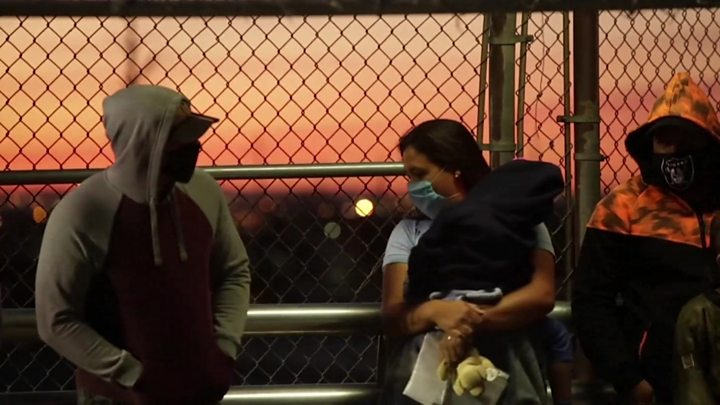
Media caption Life for asylum seekers in lockdown on the US-Mexico border
Asked later by a reporter if he saw the pandemic as an actual act of war, Mr Trump indicated the outbreak was America’s foe, rather than China.
“I view the invisible enemy [coronavirus] as a war,” he said. “I don’t like how it got here, because it could have been stopped, but no, I view the invisible enemy like a war.”
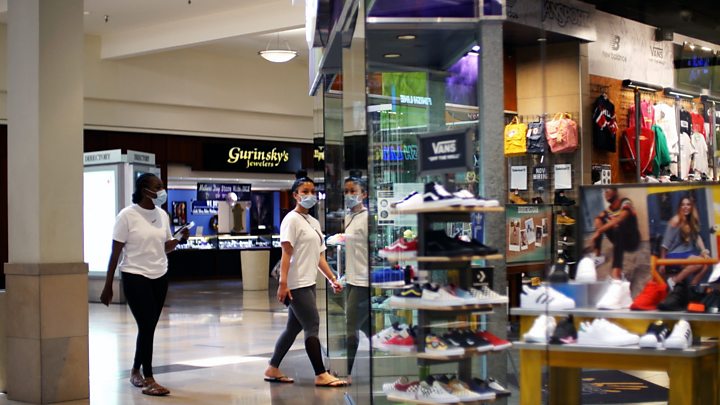
Media caption US shopping centres re-open: ‘This is the best day ever’
Who else in Trump’s team is criticising China?
The deepening rift between Washington and Beijing was further underscored on Wednesday as Secretary of State Mike Pompeo renewed his rhetoric against China, accusing it of covering up the outbreak.
He stuck by his so far unsubstantiated charge that there is “enormous evidence” the coronavirus hatched in a Chinese laboratory, even while acknowledging there is still uncertainty about its origins.
“Those statements are both true,” America’s top diplomat told the BBC. “We don’t have certainty and there is significant evidence that it came from a lab.”
One of the most trusted US public health experts has said the best evidence indicates the virus was not made in a lab.
Dr Anthony Fauci, a member of Mr Trump’s coronavirus task force, said on Monday the illness appeared to have “evolved in nature and then jumped species”.
Why is the US blaming China?
President Trump faces a tough re-election campaign in November, but the once humming US economy – which had been his main selling point – is currently in a coronavirus-induced coma.
As Mr Trump found his management of the crisis under scrutiny, he began labelling the outbreak “the China virus”, but dropped that term last month days before speaking by phone with Chinese President Xi Jinping.
Both Mr Trump and his likely Democratic challenger, Joe Biden, appear to be fastening on to China’s unpopularity as an election issue, with each accusing the other of being a patsy for America’s primary economic competitor.
As the coronavirus began spreading in the US back in January, Mr Trump signed phase one of a trade deal with China that called a truce in their tariff war. The US president’s hopes of sealing a more comprehensive phase two deal are now in limbo because of the pandemic.
Most rides and attractions will be back in action from Monday, but social distancing means there’ll be no night-time parades or selfies with the cartoon stars
Disney CEO says visitor numbers will initially be kept below the 30 per cent cap set by China’s central government
Disneyland Shanghai is reopening but not all of the magic will be back immediately. Photo: DPA
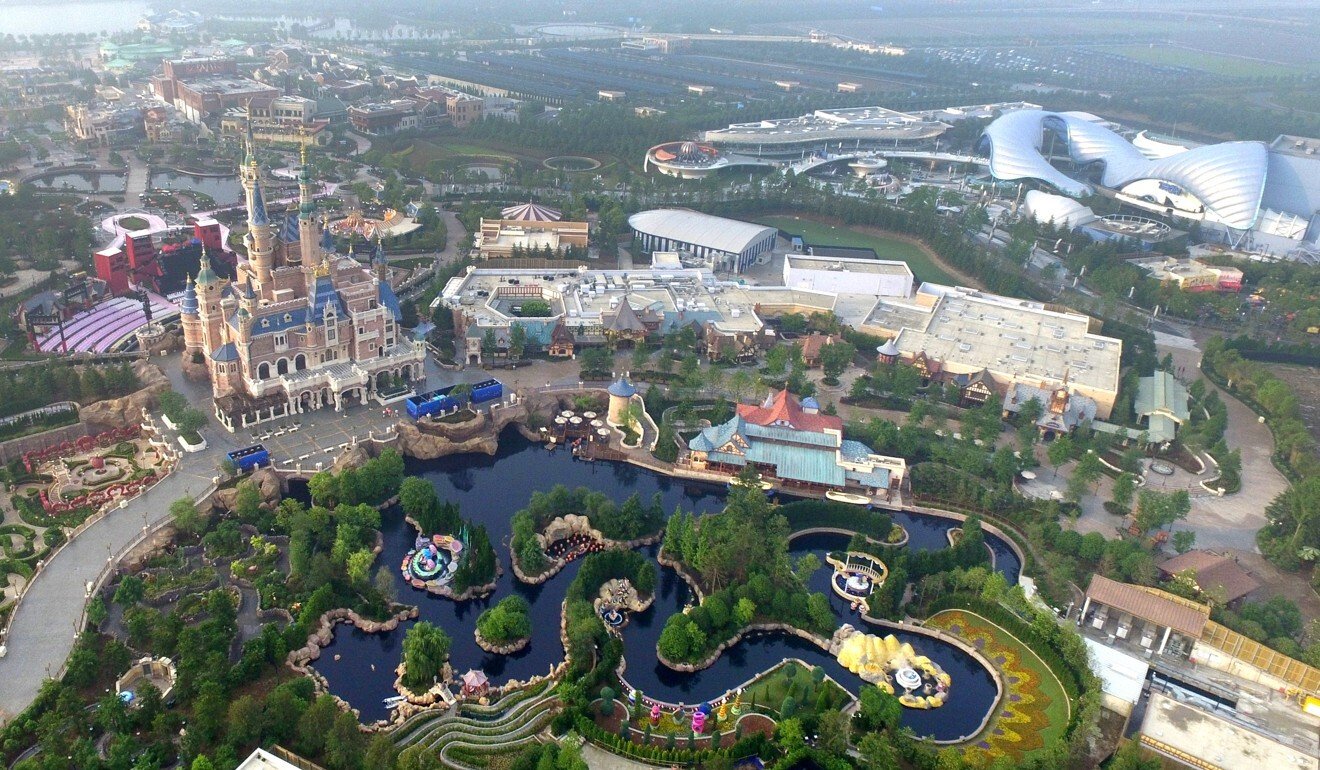
Shanghai Disneyland has announced it will reopen on Monday, but with some adjustments to its usual operations as China continues its re-emergence from the
While most of the park’s rides and attractions, including all of its shops, cafes and restaurants, will be open, several theatre shows and children’s play areas will remain closed, the company said.
To prevent large groups gathering, parades and night-time “spectaculars” will also remain on hold for the time being, and visitors will be prohibited from engaging in close interaction, including, taking selfies with the cartoon characters, it said.
China’s central government ruled earlier that tourist attractions can reopen but only if they cap visitor numbers at 30 per cent of their capacity.
Walt Disney’s new chief executive Bob Chapek told investors in the United States on Tuesday that the park had capacity for 80,000 visitors a day, which meant it would be restricted to 24,000 under Beijing’s rules.
However, the park would initially allow even fewer people through its gates, and only slowly build up to the cap, he said.
All guests will be required to wear face masks for the duration of their stay, except when dining, the company said.
Public areas will be cleaned more regularly than normal and hand sanitiser will be provided throughout the park, it said.
Tickets will be available online only from Friday, and all customers are required to submit their personal information when making a purchase.
Disneyland Shanghai has been closed since January 25. Photo: Xinhua
Disneyland Shanghai closed its doors on January 25 as the Covid-19 epidemic was reaching its peak in China. The decision to reopen came after the successful relaunch in March of the company’s Disneytown commercial zone, Wishing Star Park and Shanghai Disneyland Hotel, all of which neighbour the park.
Shanghai will be the first of six Disneylands to reopen since the onset of the Covid-19 pandemic, which has so far sickened close to 3.7 million people around the world and killed more than 256,000. Mainland China reported two new infections on Wednesday, both of which were imported.
The park opened in June 2016 and received more than 13 million visitors in its first 14 months of operation.
Hong Kong Disneyland has been closed since January 26, while the operators of Tokyo Disneyland said a decision on when it might reopen would be taken in the middle of May.
On Tuesday, Disney reported a US$1.4 billion cut in profits for the latest quarter, mainly due to disruptions to its theme parks caused by the coronavirus pandemic.
During the Labour Day holiday in mainland China, which fell on the first five days of May, more than 115 million trips were made in the country, down from 195 million a year earlier, according to the Ministry of Culture and Tourism.
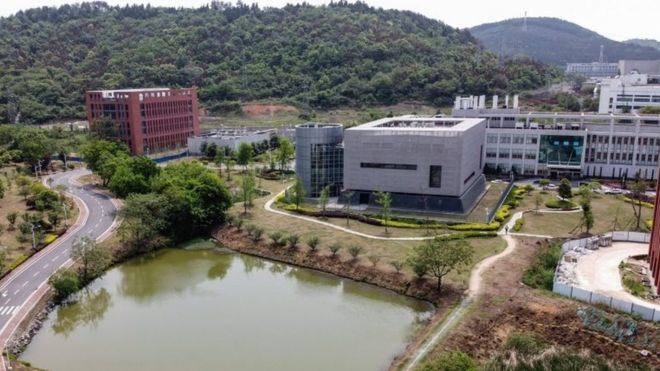
Image copyright AFP / GETTYImage caption The P4 laboratory (centre) in Wuhan is among a handful around the world cleared to handle viruses that pose a high risk of person-to-person transmission
Chinese state media has accused US Secretary of State Mike Pompeo of lying, after he said there was “enormous evidence” the coronavirus emanated from a laboratory in Wuhan.
Mr Pompeo made the claim on Sunday, without going into specifics.
In an editorial on Tuesday, the hawkish Global Times newspaper said Mr Pompeo was “degenerate”.
The World Health Organization says the US claims are “speculative”, and that it has seen no “specific evidence”.
What did Chinese media say?
Editorials in Chinese state media often given an insight into the direction of government thinking, but there has been no official response to Mr Pompeo’s comments as yet.
“Pompeo aims to kill two birds with one stone by spewing falsehoods,” it said.
“First, he hopes to help Trump win re-election this November…second, Pompeo hates socialist China and, in particular, cannot accept China’s rise.”
Media caption “The Chinese Communist Party has refused to co-operate with world health experts” – Mike Pompeo
The editorial admitted there were “initial problems” in China’s response to the outbreak, but claimed “the overall performance is bright enough to outweigh the flaws”.
It also said it was “conceivable that the virus first contacted humans in other places [than Wuhan]”.
The Global Times is not the only Chinese outlet to take aim at Mr Pompeo and the US.
The People’s Daily said Mr Pompeo had “no evidence”, while a piece on the CCTV site accused US politicians of “nefarious plotting”.
What did Mike Pompeo say?
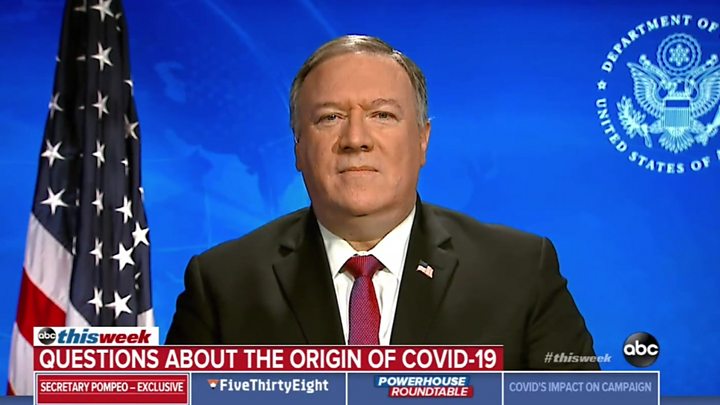
In an interview with ABC on Sunday, Mr Pompeo said there was “enormous evidence” that the virus had emerged from the Wuhan Institute of Virology.
“Remember, China has a history of infecting the world, and they have a history of running sub-standard laboratories,” he said.
Mr Pompeo – a former director of the Central Intelligence Agency (CIA) – said he did not think the virus was man-made or genetically modified.
The Wuhan laboratory is known to study coronaviruses in bats. In April, President Trump was asked whether “lax safety protocols” allowed such a virus to escape via an intern and her boyfriend.
Mr Trump did not confirm the theory, but said: “More and more we’re hearing the story.”
Media caption Donald Trump was recently asked if the virus emanated in a laboratory, rather than a market
Last week, he was asked if he had seen evidence that gave him a “high degree of confidence” that the virus emerged in the Wuhan laboratory.
“Yes I have,” he replied – but said he could not go into specifics.
On Monday, World Health Organization emergencies director Michael Ryan said it had received “no data or specific evidence” from the US about the virus origins.
“So from our perspective, this remains speculative,” he said.
Last week, the US intelligence community said it “concurred” that the virus “was not man-made or genetically modified”.
But it said it would “continue to examine” whether the outbreak began via “contract with infected animals, or if it was the result of an an accident at a laboratory in Wuhan”.
Australian Prime Minister Scott Morrison said on Tuesday that the most likely source of the virus was a wildlife market. However he said he would not rule out the theory that it originated in a lab.
“What’s really important is that we have a proper review, an independent review which looks into the sources of these things in a transparent way so we can learn the lessons,” he told reporters.
Meanwhile, Western “intelligence sources” have told several news outlets there is “no evidence” to suggest the virus leaked from a laboratory.







 CHINDIA ALERT: You'll be living in their world, very soon
Coronavirus: Chinese workers in Vietnam cry foul after being fired by Taiwanese firm making shoes for Nike, Adidas
A group of 150 Chinese workers believe the world’s largest maker of trainers used the coronavirus as an excuse to fire them, having helped Taiwanese firm Pou Chen successfully expand its production into Vietnam for more than a decade.
Pou Chen, which makes footwear for the likes of Nike and Adidas, informed the group in late April that they would no longer be needed as they were unable to return to
from their hometowns in China due to the coronavirus lockdowns.
“We 150 employees were the first batch of Chinese employees to be laid off this year. We are all pessimistic and expect more will be cut,” added Zhang.
In its email on April 27, Pou Chen said it was forced to terminate the contracts of the Chinese employees across five of its factories due to an unprecedented decline in orders and financial losses.
The Chinese employees, many of whom have been working for the shoemaker for decades, said the compensation offered was unfair and below the levels required by labour law in both Vietnam and China.
“[The dismissals were] in accordance with the relevant labour laws of the country of employment … and employee labour contracts,” added the statement from Pou Chen, which employs around 350,000 people worldwide.
Company data showed Pou Chen’s first quarter revenues tumbled 22.4 per cent year-on-year to NT$59.46 billion (US$1.99 billion), the weakest in six years.
With the likes of Nike and Adidas closing retail stores around the world to comply with social distancing requirements, analysts also said orders plummeted 50 per cent in the second quarter, although the company declined to comment on the media reports.
Andy Zeng, who had worked for the firm since 1995, said the group were “very upset” when they received the news last month as the impact of the coronavirus pandemic began to reverberate around the world, disrupting global value chains.
“Most of us joined Pou Chen in the 1990s when we were in our late teens or early 20s, when the Taiwan-invested company started investing and setting up factories in mainland China. Now more than two decades have passed,” he said.
Zeng was among the first generation of skilled workers in China as Pou Chen developed rapidly, enjoying the benefits of cheap labour, although the workers themselves were rewarded with regular pay rises.
The company needed a group of skilled Chinese workers to go to its new factories in Vietnam. I said yes because I thought it was a good opportunity to see the outside world – Andy Zeng
What our Chinese employees have done in Vietnam for more than a decade can be said to be very simple but very difficult – Dave Zhang
Posted in 50 per cent, accordance, Adidas, adjustment of manpower, around the world, automation level, below the levels, Bloomberg, boomed, bottlenecks, Chaos, cheaper, China, China’s economy, Chinese employees, Chinese workers, closing, comment, Company, compensation, comply, contributed, cooperated, coronavirus, coronavirus lockdowns, Covid-19 response, cry foul, cultural shock, deaths, decade, decline, declined, dismissals, disputes, Dong Nai, Dongguan, employee labour contracts,, expand, expendable, factories, families, financial losses, fired, footwear, furloughs, higher, hometowns, impact, Indonesia, Labour law, lack of orders, land, Mainland China, making, management experience, management style, media reports, Nike, opportunity, orders, pay cuts, pessimistic, plans, plummeted, Pou Chen, production, production line, relocation process, requirements, retail stores, returns, Reuters, Rush hour, second quarter, set up, shoe manufacturing, shoes, skilled, Social distancing, south china morning post, strain under, streets, strike, Taipei Times, Taiwan, Taiwan-invested, Taiwanese firm, Uncategorized, unfair, unprecedented, Vietnam, Vietnamese, Virus, workers, world’s largest maker of trainers | Leave a Comment »