Chindia Alert: You’ll be Living in their World Very Soon
aims to alert you to the threats and opportunities that China and India present. China and India require serious attention; case of ‘hidden dragon and crouching tiger’.
Without this attention, governments, businesses and, indeed, individuals may find themselves at a great disadvantage sooner rather than later.
The POSTs (front webpages) are mainly 'cuttings' from reliable sources, updated continuously.
The PAGEs (see Tabs, above) attempt to make the information more meaningful by putting some structure to the information we have researched and assembled since 2006.
People work at a construction site of a utility tunnel in Wuhan, central China’s Hubei Province, April 30, 2020. (Xinhua/Xiao Yijiu)
BEIJING, May 1 (Xinhua) — China is getting the world’s largest workforce back to work as the nationwide battle against COVID-19 has secured major strategic achievements.
The unprecedented fight has nurtured new trends in the workplace. For example, more attention is being paid to public health and e-commerce to boost consumption and emerging sectors brought by new applications based on the country’s rapid new infrastructure development of 5G networks and data centers.
In this aerial photo taken on April 29, 2020, representatives of frontline health workers fighting COVID-19 attend a bell-ringing ceremony at the Yellow Crane Tower, or Huanghelou, a landmark in Wuhan, central China’s Hubei Province. (Xinhua/Xiao Yijiu)
ANGELS OF PUBLIC HEALTH
Ye Man, head nurse of gastrointestinal department of Hubei General Hospital East District, one of the five remaining COVID-19 designated hospitals in Wuhan, is taking her first weeklong vacation since January.
The 34-year-old mother of two started to take a week off on Monday, one day after her hospital cleared all remaining confirmed COVID-19 patients. The nine ICU wards in her hospital had been kept occupied over the past several months.
Friday marked International Workers’ Day, and the start of China’s five-day public holiday. Ye said she planned to visit urban parks with her family during the holiday.
At her busiest point, she and her colleagues took care of a ward filled with 40 COVID-19 patients.
“It was a really tough time,” she recalled. She had to wear a protective gown and a mask for nine hours a day and be separated from her family to avoid possible cross-infections.
Wuhan, capital of central China’s Hubei Province and once hard hit by COVID-19, cleared all confirmed cases in hospitals on April 26. Over 42,000 medical workers mobilized nationwide to aid Hubei have contributed to achieving a decisive outcome in the fight to defend Hubei and Wuhan.
In an inspection tour to Wuhan on March 10, President Xi Jinping, also general secretary of the Communist Party of China Central Committee and chairman of the Central Military Commission, lauded medical workers as “the most beautiful angels” and “messengers of light and hope.”
To reward brave and dedicated medics, major tourist sites in Hubei are offering free entry to medical staff over the following two years.
Chinese President Xi Jinping, also general secretary of the Communist Party of China Central Committee and chairman of the Central Military Commission, learns about development of the black fungus industry in Jinmi Village of Xiaoling Township in Zhashui County, Shangluo City, northwest China’s Shaanxi Province, April 20, 2020. (Xinhua/Xie Huanchi)
LIVESTREAMING ANCHORS
“We have a new batch of supplies today. Those who did not get the goods should hurry to buy now,” said Li Xuying, a livestreaming anchorwoman selling agaric mushrooms in Zhashui, a small county deep in the Qinling Mountains in northwest China’s Shaanxi Province.
Li has been prepared for a boom of online shopping in the holiday, because online buyers rushed to her livestreaming website to place orders, after Xi inspected the county and chatted with her in the village of Jinmi during a recent tour to Shaanxi.
“I used to sell goods worth about 50,000 yuan (7,070 U.S. dollars) on average after a six-hour livestreaming session. Now the sales are 10 times that,” she said.
Li was one of the 10 sales staff sent by the local agricultural e-commerce firm to Chinese e-commerce platform Taobao’s headquarters for livestreaming training. She said livestreaming is effective in bridging buyers and farmers, through which viewers can watch planting and harvesting online.
With the number of netizens in China reaching 904 million in March, e-commerce has been one of the popular means of promoting the sale of farm produce and helping farmers shake off poverty. Despite the impact of COVID-19, the country is determined to eradicate absolute poverty by the end of this year.
Workers work at the construction site of a 5G base station at Chongqing Hi-tech Zone in Chongqing, southwest China, April 15, 2020. (Xinhua/Wang Quanchao)
HI-TECH WORKERS IN “NEW INFRASTRUCTURE” BUILDING
As an elasticity calculation engineer of Alibaba Cloud, Zhao Kun and his colleagues always stay on alert for high data flow, for example, brought by the anticipated online shopping spike during the holiday.
“The profession, which may sound obscure, is actually closely connected to everyone’s life, as cloud computing is the infrastructure supporting high-tech applications of artificial intelligence and blockchain,” said Zhao.
The Chinese leadership has underscored expediting “new infrastructure” development to boost industrial and consumption upgrading and catalyze new growth drivers.
Seizing the opportunities of industrial digitization and digital industrialization, China needs to expedite the construction of “new infrastructure” projects such as 5G networks and data centers, and deploy strategic emerging sectors and industries of the future including the digital economy, life health services and new materials, President Xi has said.
During the epidemic, Zhao and his colleagues expanded more than 100,000 cloud servers to ensure the stable operation of “cloud classrooms” and “cloud offices” for millions of people working and studying from home.
In the “new infrastructure” building, people like Zhao contribute to constructing the virtual infrastructure of an ecosystem, which enables e-commerce, e-payment, online teaching and the digital transformation of manufacturing and supply chain management.
In early April, China released a plan on promoting the transformation of enterprises toward digitalization and intelligence by further expanding the application of cloud and data technologies, to nurture new business models of the digital economy.
An antibody engineered from the animal’s immune system was found to neutralise the virus that causes Covid-19
American and Belgian researchers hope the discovery may help protect humans from the deadly illness
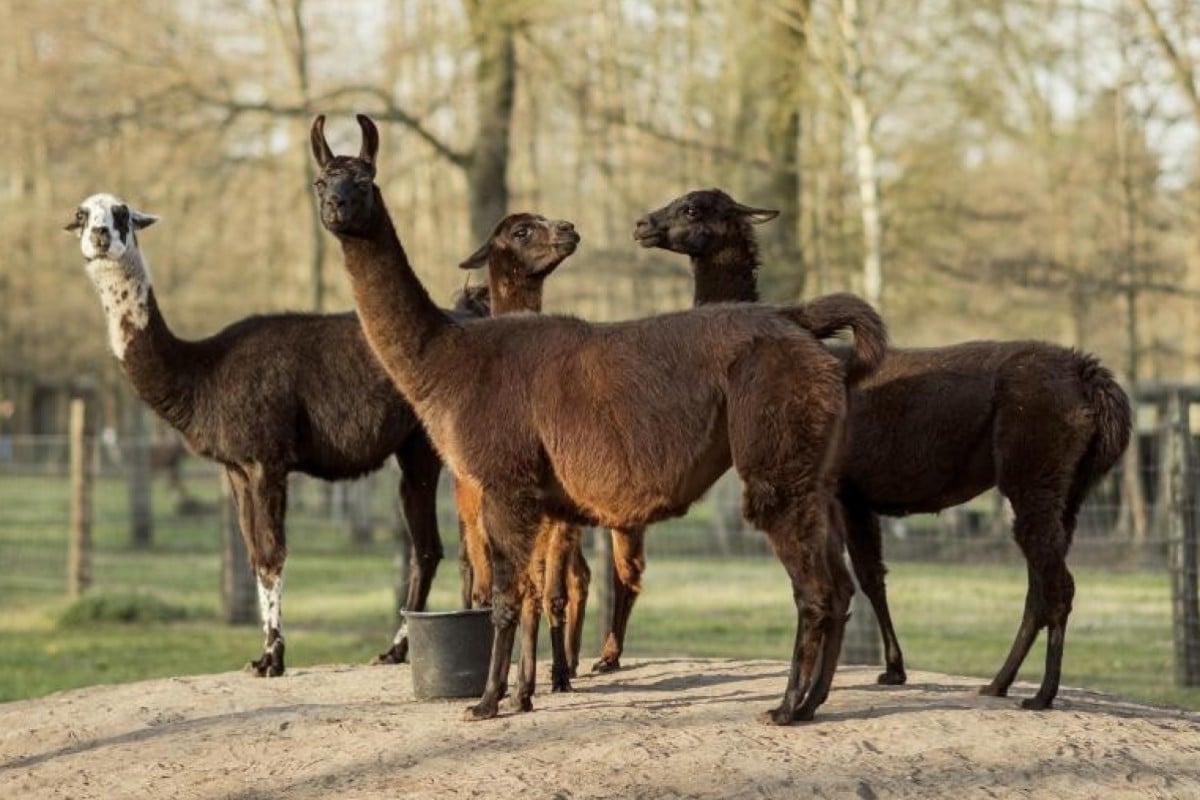
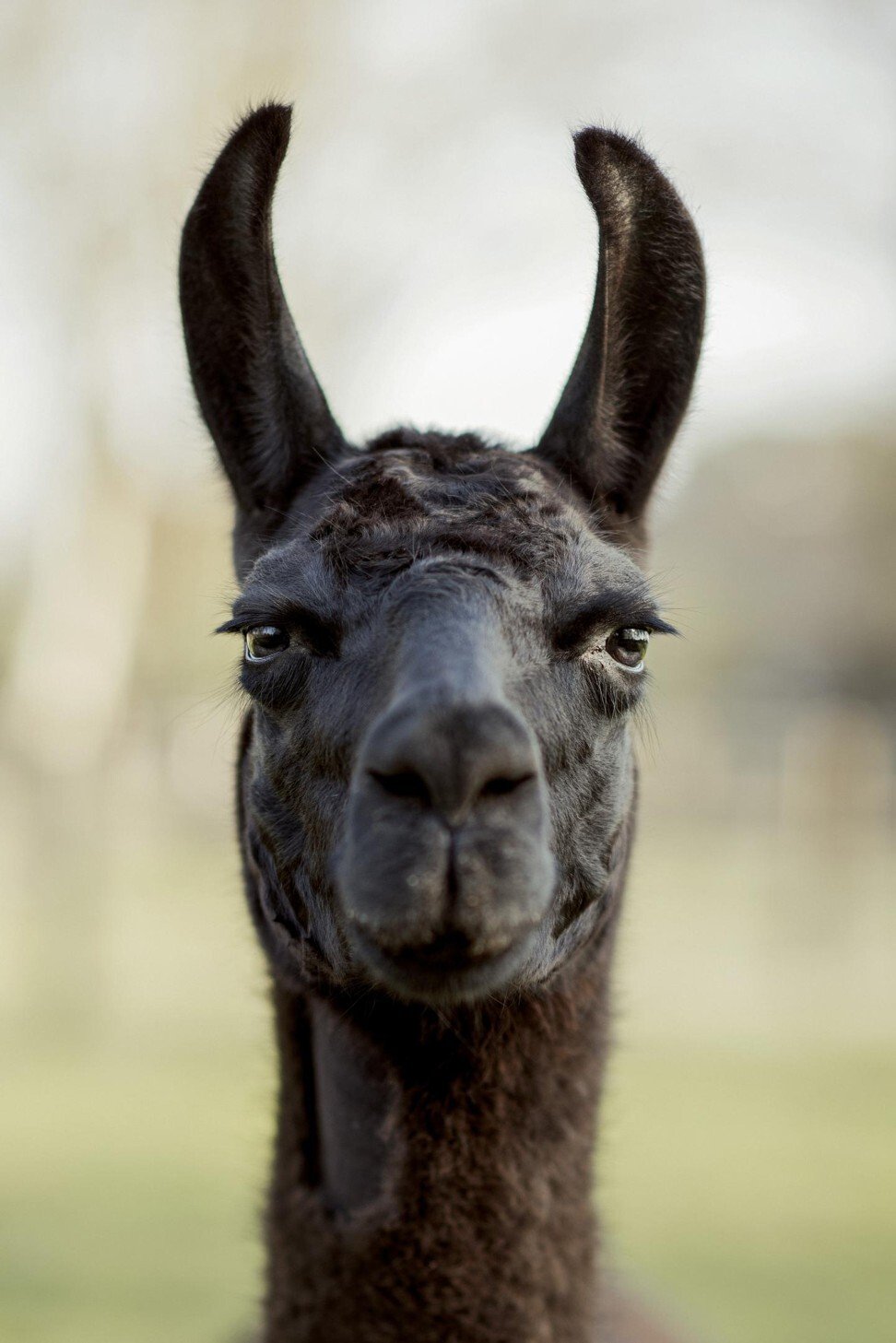
Winter the llama (front) lives on a farm operated by Ghent University’s Vlaams Institute for Biotechnology. Photo: Tim Coppens
A Belgian llama could hold the key to producing an antibody that neutralises the coronavirus that causes Covid-19.
More studies and clinical trials are needed to see if it can be used in humans to treat Covid-19, but the team of American and Belgian scientists who engineered the antibody said they were encouraged by their preliminary findings, which will be published in the journal Cell next week.
Jason McLellan, from the University of Texas at Austin and co-author of the study, described it as one of the “first antibodies known to neutralise Sars-CoV-2”, the official name for the virus.
“With antibody therapies, you’re directly giving somebody the protective antibodies and so, immediately after treatment, they should be protected,” he wrote in a press release.
“The antibodies could also be used to treat somebody who is already sick to lessen the severity of the disease.”
Winter the llama produced antibodies that proved effective against the Sars-CoV-2 virus. Photo: Tim Coppens
The scientists have been working on coronaviruses – including severe acute respiratory syndrome (Sars) and Middle East respiratory syndrome (Mers) – for years.
In 2016 they injected the llama, named Winter, with Sars and Mers in the hope of developing a treatment for the diseases.
“I thought this would be a small side project,” said Dorien De Vlieger from Ghent University in Belgium, who helped to isolate antibodies against coronaviruses from the llamas.
China’s race for a Covid-19 vaccine hits a hurdle – no outbreak at home
1 May 2020
“Now the scientific impact of this project became bigger than I could ever expect. It’s amazing how unpredictable viruses can be.”
A llama’s immune system produces two types of antibodies when it detects pathogens, one similar to human antibodies and one that is about a quarter of the size.
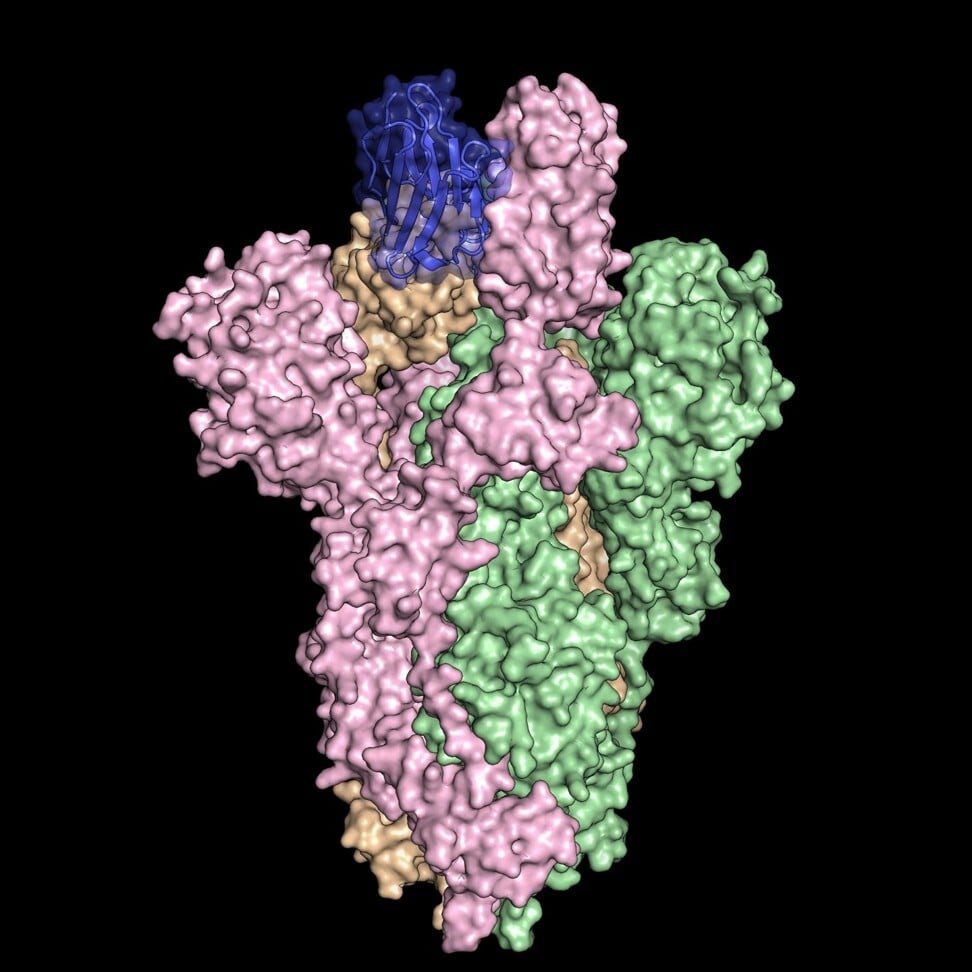
The antibodies produced by Winter were found to be effective in targeting the Sars virus’s spike protein, which allows it to bind to human cells.
Chinese firm ready to make 100 million Coronavirus vaccine doses if trials are successful
This year they decided to test the antibodies Winter had produced during the Sars experiment to see if it could prove effective against Covid-19.
Although it did bind itself to the Sars-CoV-2 virus it did so “weakly”, so the team then linked two copies of the antibody together to make it bind more effectively.
Oxford vaccine effective in monkeys, heading for mass production in India
30 Apr 2020
“That was exciting to me because I’d been working on this for years. But there wasn’t a big need for a coronavirus treatment then. This was just basic research,” said Daniel Wrapp from the University of Texas, a co-author of the study.
The smaller type of antibodies produced by llamas, called single-domain antibodies or nanobodies, can be used in an inhaler, according to Wrapp.
“That makes them potentially really interesting as a drug for a respiratory pathogen because you’re delivering it right to the site of infection,” said Wrapp.
Researchers created an antibody dubbed VHH-72Fc (blue) that binds tightly to the Sars-CoV-2 spike protein (pink, green and orange), blocking the virus from infecting cells. Photo: University of Texas at Austin
The researchers are preparing for more trials with hamsters or primates to further test the antibody, before taking it to human trials.
The main subject of the study, Winter the llama, is now four years old and lives on a farm operated by Ghent University’s Vlaams Institute for Biotechnologym which said it has around 130 other llamas and alpacas at the facility.
WUHAN, April 30 (Xinhua) — No asymptomatic cases of COVID-19 in the hard-hit Wuhan turned into confirmed cases in the three weeks after the city lifted its 76-day lockdown, local health authorities said Thursday.
From April 8 to 29, more than 1.03 million nucleic acid tests were conducted in the capital city of central China’s Hubei Province, with 499 asymptomatic cases reported, said the Wuhan municipal health commission.
Meanwhile, none of the 2,250 close contacts of the asymptomatic cases had developed into confirmed or asymptomatic cases, it said.
To avoid crowding and guard against risks of potential infection, the provincial culture and tourism bureau said Thursday that tourists should make bookings before visiting local scenic sites, and tourist flow should be limited to no more than 30 percent of the maximum tourist capacity.
GUANGZHOU, April 30 (Xinhua) — The United Nations World Food Program (WFP) has launched a global humanitarian hub in the southern Chinese city of Guangzhou to help the global fight against COVID-19.
Established earlier this month, the hub will support the global COVID-19 emergency response for the international community, including the UN, national governments and other humanitarian partners, according to the WFP.
It will provide strategic sourcing and stock consolidation services, facilitate the movement of life-saving humanitarian cargo, and operate aviation services to transport humanitarian workers.
The first consignment of humanitarian cargo consisting of COVID-19 medical supplies has arrived at the Guangzhou hub, from where it will be shipped to other UN hubs worldwide as well as directly to virus-affected countries and regions,
“With its leading manufacturing industry, supply chain expertise and technological innovations, China is uniquely advantaged to host this global humanitarian hub which will play a catalytic role in responding to COVID-19,” said WFP’s Country Director in China Qu Sixi.
As one of WFP’s global network of humanitarian hubs, the one in Guangzhou is supported by Alibaba Group’s Cainiao Smart Logistics Network.
“We will fully leverage our global logistics resources to support WFP in facilitating the safe and fast delivery of humanitarian goods,” said James Zhao, general manager of Cainiao Global Supply Chain.
SYDNEY (Reuters) – The Australian government said on Friday it would meet a week ahead of schedule to decide whether to ease social distancing restrictions, as the numbers of new coronavirus infections dwindle and pressure mounts for business and schools to reopen.
Australia has reported about 6,700 cases of the new coronavirus and 93 deaths, well below the levels reported in the United States and Europe. Growth in new infections has slowed to less 0.5% a day, compared to 25% a month ago.
Prime Minister Scott Morrison said it was imperative to lift social distancing restrictions as early as possible as 1.5 million people were now on unemployment benefits and the government forecast the unemployment rate to top 10% within months.
“We need to restart our economy, we need to restart our society. We can’t keep Australia under the doona,” Morrison said, using an Australian word for quilt.
Morrison’s government has pledged spending of more than 10% of GDP to boost the economy but the central bank still warns the country is heading for its worst contraction since the 1930s.
With less than 20 new coronavirus cases discovered each day, Morrison said state and territory lawmakers would meet on May 8 – a week earlier than expected – to determine whether to lift restrictions.
“Australians deserve an early mark for the work that they have done,” Morrison told reporters in Canberra.
Australia attributes its success in slowing the spread of COVID-19 to social distancing restrictions imposed in April, including the forced closures of pubs, restaurants and limiting the size of indoor and outdoor gatherings.
Morrison said 3.5 million people had downloaded an app on their smartphones designed to help medics trace people potentially exposed to the virus, though the government is hoping for about 40% of the country’s 25.7 million population to sign up to ensure it is effective.
Cabinet will also decide next week how to restart sport across the country, the prime minister said.
The government says any resumption of sport should not compromise the public health, and recommends a staggered start beginning with small groups that play non-contact contact sport outdoors.
The recommendations suggests Australia’s National Rugby League (NRL) competition may not get permission to restart its competition as soon as many in the sports-mad country would like.
Carrier targets return of daily services to major Asian cities and more frequent long-haul services
Airline to monitor global situation and adjustments may be made ‘as necessary’
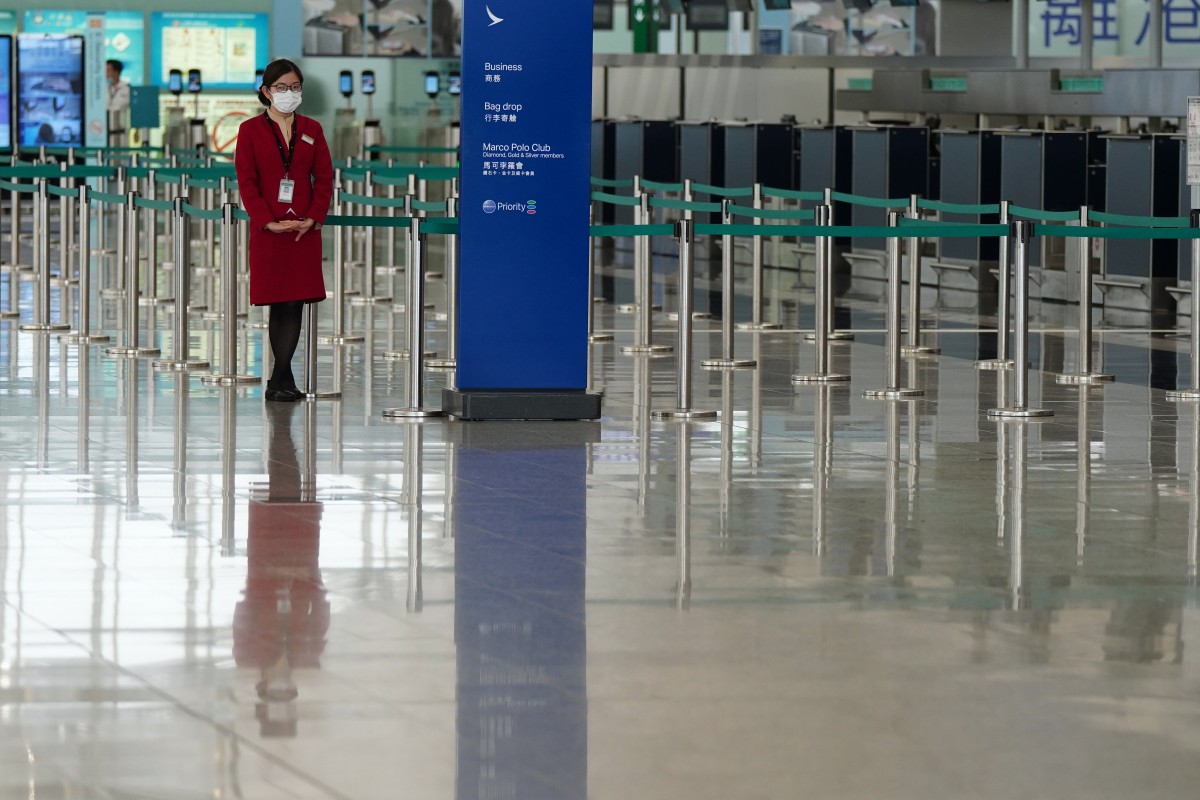
A Cathay Pacific employee stands near the check-in desks at a virtually deserted Hong Kong International Airport. Photo: Sam Tsang
Cathay Pacific Airways has signalled its intent to start reversing its near-total grounding of aircraft because of the coronavirus pandemic, and plans to start increasing its number of passenger flights in the last week of June.
The airline said it hoped to add more long-haul destinations, make flights more frequent, and reinstate some major Asian cities to its daily schedule for the first time in several months, “subject to government travel restrictions”.
Cathay scaled its operations back to a skeleton schedule of 3 per cent of services in early April, and that was extended until June 20. The newly announced increases would take that up to 5 per cent.
Tracking the massive impact of the Covid-19 pandemic on the world’s airline industry in early 2020 Singapore Airlines, another of Asia’s major carriers, said last week it would maintain a 96 per cent reduction in flights until the end of June.
Cathay, which has 236 aircraft, currently operates long-haul flights to London Heathrow, Los Angeles, Vancouver and Sydney twice a week, but will increase that to five times a week.
On top of that, Amsterdam, Frankfurt, San Francisco and Melbourne are among the long-haul destinations set to return three times a week.
With regional routes currently operating three times a week, including Tokyo Narita, Taipei, Beijing and Singapore, Asian routes will increase to a daily service. Osaka and Seoul would also return to the network, too.
“We will continue to monitor the developing situation and further adjustments may be made as necessary,” the airline said.
Coronavirus: ban on non-residents leaves Hong Kong airport virtually deserted
Earlier this month, Cathay’s budget unit HK Express extended its total grounding until June 18, having been on hiatus since March 23.
Meanwhile, Boeing has added to warnings of a very slow recovery in air travel, with Dave Calhoun, its CEO, saying demand may not return to 2019 levels for two to three years.
Cathay Pacific’s daily passenger volume has collapsed from regular previous peaks of 100,000 to less than 1,000 in April. Over the past two months, the company has been running more than 250 extra pairs of cargo-only passenger flights to maintain air freight capacity, much of which is accounted for by passenger services.
In a bid to cut costs, most of the Cathay Pacific Group’s 34,200 staff have taken three weeks of unpaid leave. Also, 433 cabin crew in the US and Canada were told they would be laid off, while about 200 pilots in the UK, Australia have been furloughed.
The International Air Transport Association, which revised down pandemic-related revenue losses for the global sector to US$314 billion (HK$2.4 trillion) two weeks ago, said last week the Hong Kong aviation market would take a US$7.5 billion hit this year, a 27 per cent increase on the previous estimate. That equates to a 59 per cent decline in air travel demand, or a loss of almost 31 million passengers, in 2020.
BOCOM International, a financial services company, forecast in a report on Monday that the city’s aviation sector would lose HK$65.2 billion in revenue in 2020, yet Cathay Pacific could emerge as a winner if it survived largely unscathed, given the weakness of rivals at home and in the region plus its dominant position in Hong Kong.
“Hong Kong aviation is at the most critical juncture in its history. Though calamitous, Covid-19 is set to reshape Hong Kong’s aviation industry for the years, possibly decades, to come,” said transportation analyst Luya You.
“Covid-19’s sweeping blows now offer a blank slate for remaining players to regain lost leadership or gain new markets. If [Cathay Pacific] can survive intact from Covid, the carrier could enjoy winner-takes-all growth trajectory in the years following [2020].”
Researchers conclude that the virus was circulating undetected in France in February
Findings highlight the difficulties governments face in tracing the source of coronavirus outbreaks
Researchers in France have carried out genetic analysis and found that the dominant types of the viral strains in the country did not come from China or Italy. Photo: AP
The coronavirus outbreak in France was not caused by cases imported from China, but from a locally circulating strain of unknown origin, according to a new study by French scientists at the Institut Pasteur in Paris.
Genetic analysis showed that the dominant types of the viral strains in France belonged to a clade – or group with a common ancestor – that did not come from China or Italy, the earliest hotspot in Europe.
“The French outbreak has been mainly seeded by one or several variants of this clade … we can infer that the virus was silently circulating in France in February,” said researchers led by Dr Sylvie van der Werf and Etienne Simon-Loriere in a non-peer reviewed paper released on bioRxiv.org last week.
The Covid-19 pandemic has infected more than 128,000 people in France and caused more than 23,000 deaths.
France detected the virus in late January, before any other country in Europe. A few patients with a travel history that included China’s Hubei province were sampled on January 24 and tested positive.
The Covid-19 pandemic has infected more than 128,000 people in France and caused more than 23,000 deaths. Photo: AFP
The French government took quick and decisive measures to trace contacts of the infected people and shut down the chance of further infection.
However, these strains were not found in patients tested after the initial imported cases, suggesting “the quarantine imposed on the initial Covid-19 cases in France appears to have prevented local transmission”, the researchers said.
The Pasteur institute collected samples from more than 90 other patients across France and found the strains all came from one genetic line. Strains following this unique path of evolution had so far only been detected in Europe and the Americas.
Singapore Covid-19 cases to rise as not all migrant workers being tested
28 Apr 2020
The earliest sample in the French clade was collected on February 19 from a patient who had no history of travel and no known contact with returned travellers.
Several patients had recently travelled to other European countries, the United Arab Emirates, Madagascar and Egypt but there was no direct evidence that they contracted the disease in these destinations.
To the researchers’ surprise, some of the later strains collected were genetically older – or closer to the ancestral root – than the first sample in this clade.
Spanish official cries reading names of health workers killed by coronavirus
A possible explanation, according to the authors, was that local transmission had been occurring in France for some time without being detected by health authorities.
The French government may have missed detecting the transmission. According to the researchers, a large proportion of those patients might have had mild symptoms or none at all.
The researchers also found that three sequences later sampled in Algeria were closely related to those in France, suggesting that travellers from France might have introduced the virus to the African country and caused an outbreak.
China says US politicians are lying as Trump calls for Covid-19 damages
29 Apr 2020
Benjamin Neuman, professor and chair of biological sciences with the Texas A&M University-Texarkana, said the French strains might have come from Belgium, where some sequences most closely related to the original strain from China were clustered.
“Since the earliest European strains of [the coronavirus] Sars-CoV-2 seem to be associated with Belgium, the idea that the virus spread from Belgium to both Italy and France at around the same time seems plausible, as this paper contends,” he said.
France is the latest in a growing number of countries and areas where no direct link between China and local outbreaks could be established.
The dominant strains in Russia and Australia, for instance, came from Europe and the United States, respectively, according to some studies.
These findings have drawn fire from some politicians who have tried to deflect domestic anger over their handling of the crisis by blaming China.
Is this the next big hotspot for the ‘little flu’?
28 Apr 2020
“So now the Fake News @nytimes is tracing the CoronaVirus origins back to Europe, NOT China. This is a first!” he tweeted on April 11, referring to a story about the studies in the The New York Times’ science section.
The findings also highlight the difficulties governments face in tracing the source of coronavirus outbreaks.
Less-developed countries may never know where their strains came from due to inadequate testing and sequencing capability.
India, for example, has released the genetic sequence of fewer than 40 samples to the public so far, a small number considering its huge population.
Most of the strains sampled in 35 early cases came from clades that could be traced to Italy and Iran, with only a few from China, according to a recent study. But researchers were not able to track further because of the lack of data.
A scientist on the study, Dr Mukesh Thakur, of the Zoological Survey of India, said it was too early to rule out China as the source of outbreaks in India because the number of samples at hand was limited.
A 20-year-old student studying medicine in Wuhan, for instance, might have come in contact with many people on the way home before she was tested positive on January 30.
Thakur said local media reported that the Indian government quarantined 3,500 people possibly linked to three positive cases imported from Wuhan.
“God knows how many of them tested positive in the subsequent stages,” Thakur said in an email response to the Post’s queries on Tuesday.
Some prominent scientists, including Francis Collins, director of the US National Institutes of Health, said the virus might have been spreading quietly in humans for years, or even decades, without causing a detectable outbreak.
The virus had thus adapted well to the human body. Some genes regulating its binding to host cells were similar, or even identical, to those found in some other highly infectious human viruses, such as HIV and Ebola.
According to some estimates, the ancestor of Sars-CoV-2, the virus causing Covid-19, might have left bats between 50 and 70 years ago. A recent study by a team of geneticists in Oxford University estimated the first outbreak of the current pandemic could have occurred as early as September last year.
They found that the dominant strains circulating in China and Asia were genetically younger than some popular strains in the United States.
Six animals inoculated with vaccine candidate then exposed to virus did not catch Covid-19 after 28 days
Up to 60 million doses could be produced by Serum Institute of India this year
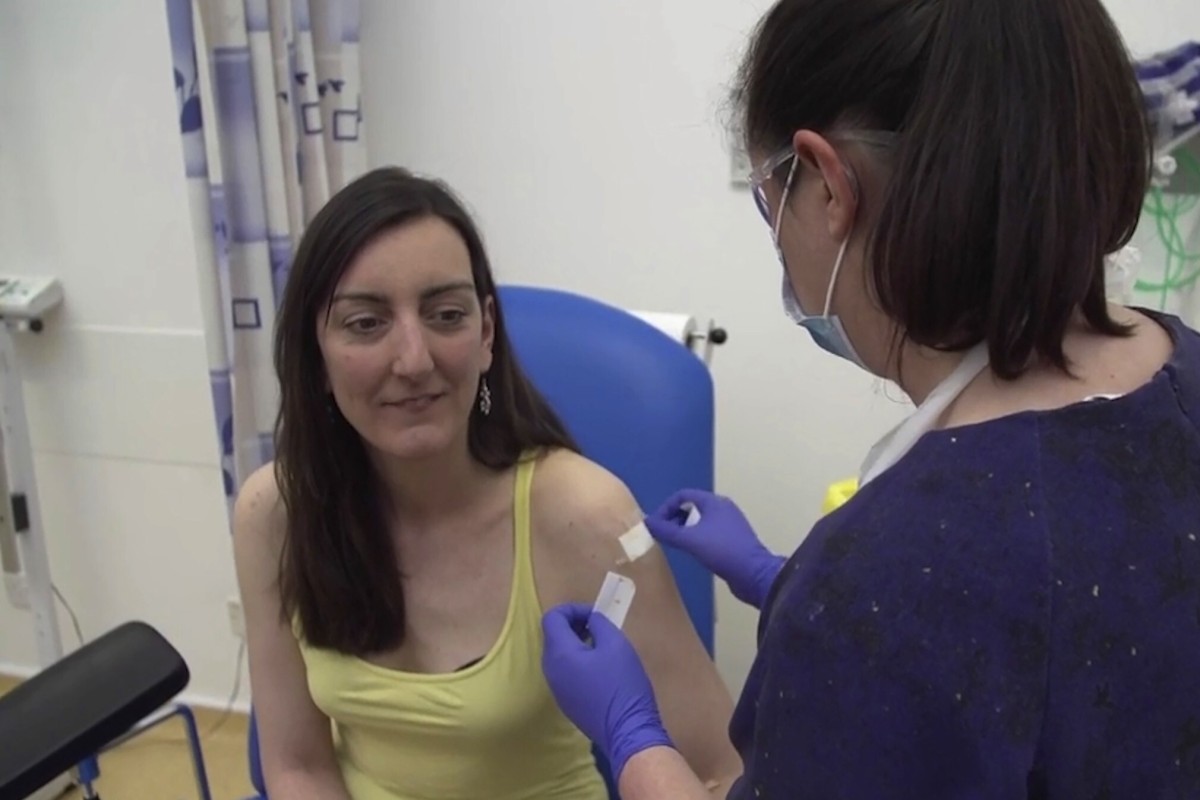
Microbiologist Elisa Granato gets an injection on Thursday as part of the first human trials in Britain for a potential coronavirus vaccine. Photo: University of Oxford via AP
A leading candidate for a Covid-19 vaccine has shown promising results in animal trials, and is expected to see mass production in India within months.
The Serum Institute of India, the world’s largest maker of vaccines by volume, said on Tuesday that it plans this year to produce up to 60 million doses of a potential vaccine developed by the University of Oxford, which is under clinical trial in Britain.
While the vaccine candidate, called “ChAdOx1 nCoV-19”, is yet to be proven to work against Covid-19, Serum decided to start manufacturing it as it had shown success in animal trials and had progressed to tests on humans, Serum Chief Executive Adar Poonawalla said.
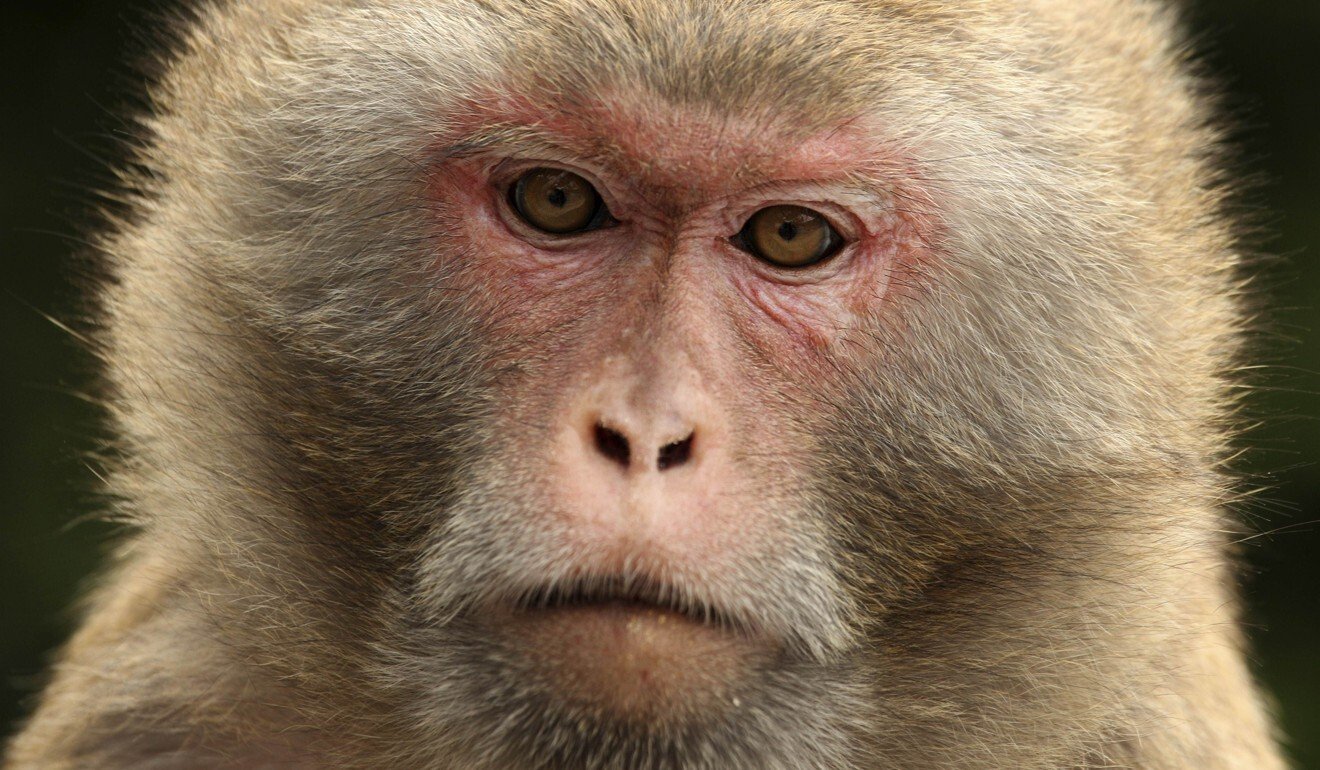
Six rhesus macaque monkeys were inoculated with the vaccine candidate at the National Institutes of Health’s Rocky Mountain Laboratory in Montana last month, according to The New York Times.
Covid-19 vaccine trial starts in Oxford, but remdesivir treatment reportedly flops in China tests
The subjects were exposed afterwards to large quantities of the novel coronavirus, but all six remained healthy after more than 28 days, the newspaper reported, citing researcher Vincent Munster, who conducted the test.
More than 3 million people have been reported to be infected globally and over 210,000 have died from Covid-19, the respiratory disease caused by the coronavirus.
“They are a bunch of very qualified, great scientists [at Oxford] … That’s why we said we will go with this and that’s why we are confident,” Poonawalla told Reuters in a phone interview.
“Being a private limited company, not accountable to public investors or bankers, I can take a little risk and sideline some of the other commercial products and projects that I had planned in my existing facility,” Poonawalla said.
Bill Gates hopes his virus vaccine ‘manufacturing within a year’
27 Apr 2020
As many as 100 potential Covid-19 candidate vaccines are now under development by biotech and research teams around the world, and at least five of these are in preliminary testing in people in what are known as phase one clinical trials.
Poonawalla said he hoped trials of the Oxford vaccine, due to finish in about September, would be successful. Oxford scientists said last week the main focus of initial tests was to ascertain not only whether the vaccine worked but that it induced good immune responses and no unacceptable side effects.
Serum, owned by the Indian billionaire Cyrus Poonawalla, plans to make the vaccine at its two manufacturing plants in the western city of Pune, aiming to produce up to 400 million doses next year if all goes well, Poonawalla said.
“A majority of the vaccine, at least initially, would have to go to our countrymen before it goes abroad,” he said, adding that Serum would leave it to the Indian government to decide which countries would get how much of the vaccine and when.
Rhesus macaque monkeys are often used in animal testing because of their similarity to humans. Photo: AFP
Serum envisages a price of 1,000 rupees (US$14.70) per vaccine, but governments would give it to people without charge, he said.
He said Prime Minister Narendra Modi’s office was “very closely” involved in the vaccine production and the company is hoping the government will help foot the cost of making it.
Over roughly the next five months, Serum will spend some 300 million to 400 million rupees (US$4.4 million to US$5.9 million) on making around 3-5 million doses per month, he said. “[The government] are very happy to share some risk and fund something with us, but we haven’t really pencilled anything down yet,” Poonawalla said.
Coronavirus: clinical trial begins on third vaccine candidate in China
22 Apr 2020
Serum has also partnered with the US biotech firm Codagenix and Austria’s Themis on two other Covid-19 vaccine candidates and plans to announce a fourth alliance in a couple of weeks, he said.
Serum’s board last week also agreed to invest roughly 6 billion rupees (US$8.8 billion) on making a new manufacturing unit to solely produce coronavirus vaccines, Poonawalla said.
BEIJING (Reuters) – China announced on Wednesday that its parliament will open a key annual session on May 22, signalling that Beijing sees the country returning to normal after being reduced to a near-standstill for months by the COVID-19 epidemic.
During the gathering of the National People’s Congress in the capital, delegates will ratify major legislation, and the government will unveil economic targets, set defence spending projections and make personnel changes. The ruling Communist Party also typically announces signature policy initiatives.
The session was initially scheduled to start on March 5 but was postponed due to COVID-19, which has infected nearly 83,000 people and killed more than 4,600 on the mainland after emerging late last year in the central city of Wuhan.
As the epidemic has subsided, economic and social life gradually returned to normal, making it possible for the congress to convene, the official Xinhua news agency quoted the standing committee of the NPC, the legislature’s top decision-making body, as saying.
The committee also appointed Huang Runqiu as the new minister for ecology and environment, a post vacated when predecessor Li Ganjie became deputy Communist Party chief for Shandong province earlier this month, Xinhua reported.
Tang Yijun was also named as the new justice minister to replace Fu Zhenghua, who has reached the retirement age of 65 for ministers.
The Chinese People’s Political Consultative Conference (CPPCC), an advisory body to parliament, has proposed starting its annual session a day before the parliamentary session opens.
Analysts expect China to roll out additional fiscal stimulus in order to cushion the blow from COVID-19, which has developed in to a worldwide pandemic that some fear will trigger a severe global recession.
China’s economy contracted for the first time on record during the January-March period, when the government imposed severe travel and transport restriction to curb the spread of the epidemic.
Parliament is also expected to discuss the anti-government protests in Hong Kong, amid growing speculation that Beijing take steps to strengthen its grip on the city.
It is unclear how long parliament and its advisory body will meet for this time, and people familiar with the matter have told Reuters that this year’s annual sessions could be the shortest in decades due to COVID-19 concerns. Usually more than 5,000 delegates descend on Beijing from all over China for at least 10 days.
Beijing city plans to ease quarantine rules as early as Thursday, two sources familiar with the situation told Reuters, ahead of the key political meetings.
People arriving in the capital from other parts of China will no long have to be quarantined for two weeks unless they come from high-risk areas such as Heilongjiang in the north and some parts of Guangdong in the southeast, the sources said.
BEIJING, April 28 (Xinhua) — China’s youth organizations awarded May Fourth Medals to 94 individuals and 34 groups Tuesday for their great contributions to the country.
The medals, which are awarded annually, are the top honor for young Chinese. The Central Committee of the Communist Youth League and the All-China Youth Federation released the list of winners.
Medical teams assisting Hubei Province to combat the novel coronavirus disease (COVID-19) epidemic are among the groups awarded.
Covering a wide range of sectors, the individual winners include firefighters, military personnel, scholars, teachers, engineers, workers and medical staff.
Among the list, 34 were honored posthumously, including those who sacrificed their lives in the fight against COVID-19.









 CHINDIA ALERT: You'll be living in their world, very soon