Chindia Alert: You’ll be Living in their World Very Soon
aims to alert you to the threats and opportunities that China and India present. China and India require serious attention; case of ‘hidden dragon and crouching tiger’.
Without this attention, governments, businesses and, indeed, individuals may find themselves at a great disadvantage sooner rather than later.
The POSTs (front webpages) are mainly 'cuttings' from reliable sources, updated continuously.
The PAGEs (see Tabs, above) attempt to make the information more meaningful by putting some structure to the information we have researched and assembled since 2006.
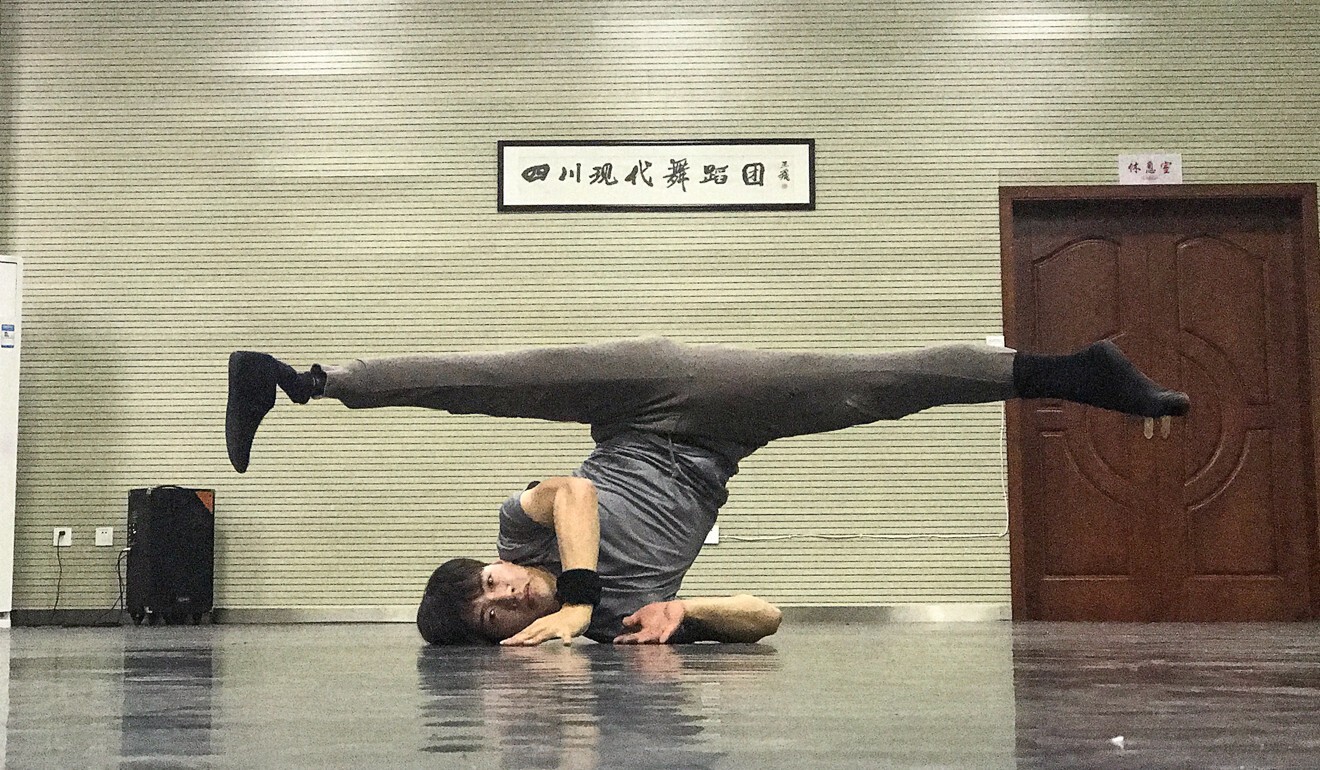
Xie Haifeng’s story is one of luck and resilience and he has made it his mission to help others through adversity
Professional dancer owes part of his success to the city of Hong Kong and one of its doctors who helped survivors through recovery
Xie Haifeng was 15 when he lost his leg in one of modern China’s most devastating disasters. Photo: Handout
When the rumbling began, Xie Haifeng thought someone was shaking his bed. Perhaps one of the other 800 children in the school dormitory was being naughty. Or maybe it was a small quake. Then came the unmistakable sound of screams.
Xie, then a 15-year-old pupil at Muyi Town Middle School in the southwestern Chinese province of Sichuan, started running. He fell as the dorm building collapsed around him. When he tried to stand up, he realised something was missing. His left leg was gone.
What Xie thought was a small quake turned out to be one of the most devastating disasters in modern Chinese history.
The Sichuan earthquake of May 2008 left at least 87,000 people dead and shook the country to its core. It was less than three month before Beijing would host its first Olympic Games, an opportunity to show the world its strength and ambition.
Instead, 7,444 schools had crumbled like tofu in an area known to be seismically active. Their rubble was a stark demonstration of the weak foundation of China’s progress and its tragic consequences. At Xie’s school, the shoddily built walls and ceilings crushed 600 children. Only 300 survived.
It still frightens me to recall the earthquake.Xie Haifeng, dancer
Xie considers himself lucky. “If I had run just one second more slowly, I would have been dead. If I had run one second faster, I would have been completely fine. But anyway, I am lucky to be alive,” he said. A dozen years later, his story is also one of resilience. Defying all the odds, Xie is now a professional dancer for a troupe in Sichuan and has made it his mission to help others through adversity.
The journey from his hospital bed to the stage was long and difficult and even though many years have passed, “it still frightens me to recall the earthquake”. But, he said: “I have forgiven fate and accepted the reality that I have only one leg.”
Xie’s trauma was a particularly difficult blow to his family. His older sister was already handicapped, after injuring her arm in an accident. When his mother, a migrant worker in the northwestern province of Gansu, arrived at the hospital a few days after the earthquake, she had no idea of the extent of Xie’s condition.
“When I woke up in the evening, I saw my mother weeping beside my bed. I told myself I should be strong,” Xie said, adding that his mother initially thought he had suffered only bruises. He was sent for treatment to a hospital in the prosperous southern city of Shenzhen, along with other survivors who had been left with disabilities by the earthquake.
Defying all the odds, Xie Haifeng is now a professional dancer. Photo: Handout
It was there that Xie was inspired to make the most of his life. A team of athletes visited the hospital and he was shocked to see one of them, a volleyball player, walking on a prosthetic leg.
Xie began to wear a prosthesis and after rehabilitation training returned to his hometown in 2009 where he was admitted to Qingchuan High School. At first, he was self-conscious and felt inferior to his peers. He did not dare to wear shorts in summer and said he seldom talked to the other students.
The following year he was introduced to members of the Chengdu Disabled People’s Art Troupe, where he found a new and welcoming home. Xie quit school and joined the troupe, despite his parents’ opposition. They were convinced study was the only way for rural students like their son to get out of poverty.
Xie learned Sichuan opera and was soon performing its art of bian lian, or
– a skill that requires rapid mask changes in a dazzling sleight of hand – on stage until the troupe was disbanded in 2011, leaving him unemployed for six months.
China marks 10-year anniversary of Sichuan earthquake
But the misfortune led to an improbable opportunity when he was hired by the Sichuan Provincial Disabled People’s Art Troupe and trained to dance. At 19, and with no experience, Xie found the training far more difficult than those who had started at the more usual age of five or six.
His body was too stiff, he said, and in the first months he spent 10 hours each day just stretching and building flexibility. It was just the beginning of a long and often arduous process.
“That agony is too much to be described,” Xie said about the pain of dancing on a prosthetic leg. “During the first six months’ training, I broke three artificial legs.”
More than once, he wondered whether he had chosen the right path. But, ultimately, his gruelling effort paid off and Xie has performed in Singapore, Hong Kong and Macau. In 2013, he won a gold medal at a national dancing competition for people with disabilities.
“My dances won me applause and recognition from the audience. I feel relieved and I think my heart belongs to the stage,” he said.
Xie broke three artificial legs during his first six months of dance training. Photo: Handout
Xie said he owed part of his success to Hong Kong which in 2008 donated HK$20 billion (US$2.5 billion) in aid to Sichuan and sent doctors to treat the injured. Among the volunteers was Poon Tak-lun, a Hong Kong orthopaedist who flew to Sichuan every two weeks from 2008 to 2013 to treat patients.
At a gala show in 2013 to express gratitude from the people of Sichuan to Hong Kong, Xie met Poon and the two became good friends, thanks to their common interest in the arts.
“Dr Poon promised to pay for all the costs of installing and repairing my artificial leg in the future. He told me to focus on dancing without worrying about the leg’s costs,” Xie said.
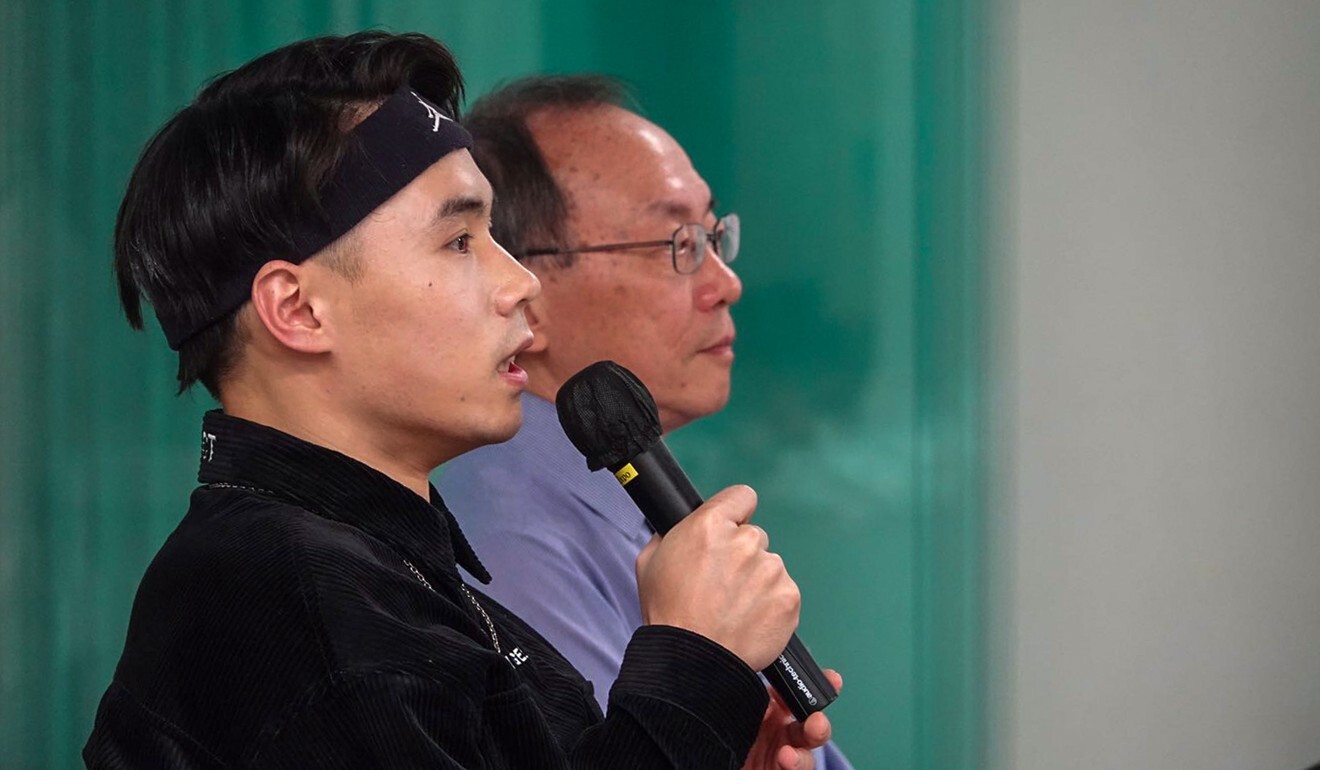
Xie Haifeng (pictured left with friend Poon Tak-lun) gives a speech to students in Hong Kong. Photo: Handout
Grateful for the help he received from Poon and Hong Kong, Xie has sought to return the favour by doing what he does best.
“I have no other skills except dancing and performing. So I thought of sharing my experience to encourage young students in Hong Kong,” he said.
Xie travels to Hong Kong about twice a year to perform and visit schools. In 2019, he visited the city four times, performing dances and Sichuan opera, and giving speeches at more than 10 primary and secondary schools.
“I encourage them to study hard. I said there are many people in this world who have more difficulties than them but still insist on pursuing their dreams, so they should not give up their dreams,” Xie said.
When he is not dancing and giving inspirational speeches, Xie said he lived a life like everyone else – climbing mountains, swimming and proudly walking on the leg he gained after almost losing everything in Sichuan’s deadly earthquake.
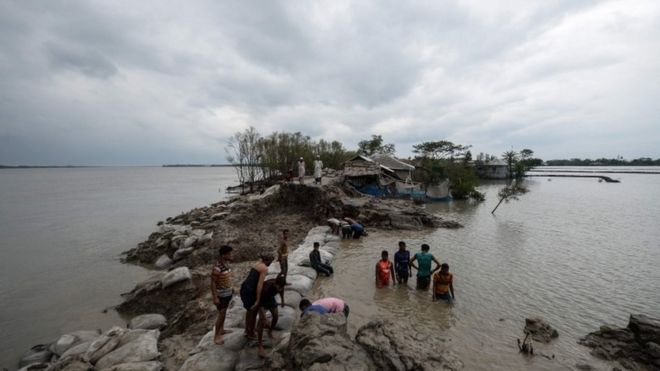
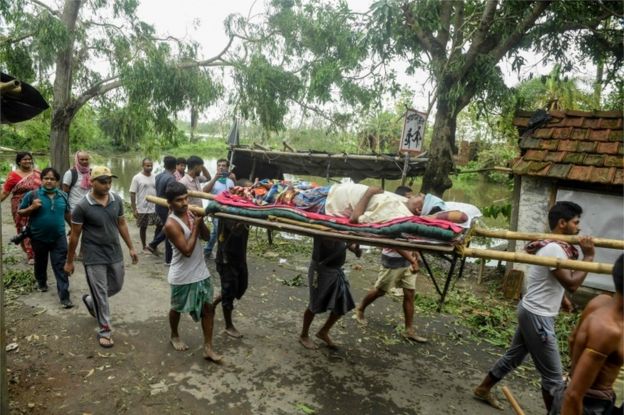
Image copyright AFPImage caption Embankments have been washed away in Bangladesh
Millions of people across Bangladesh and eastern India are taking stock of the devastation left by Cyclone Amphan.
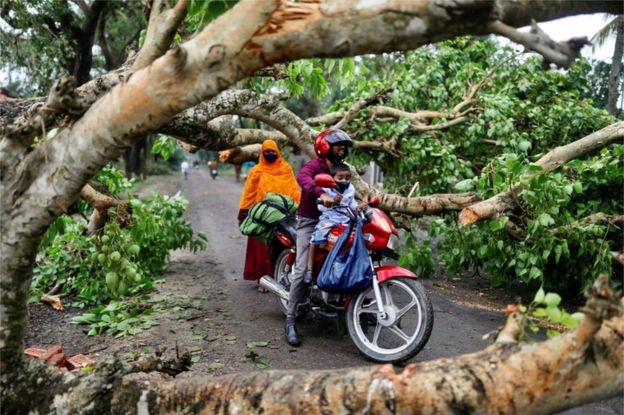
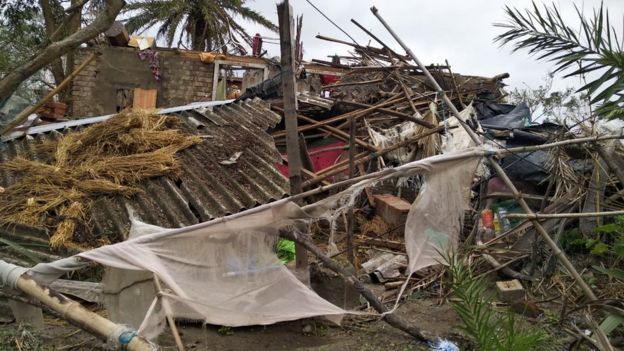
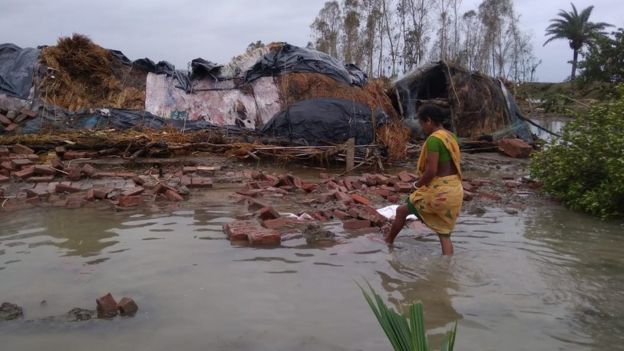
A massive clean-up operation has begun after the storm left 84 dead and flattened homes, uprooted trees and left cities without power.
India’s Prime Minister Narendra Modi has arrived in West Bengal state to conduct an aerial survey.
Authorities in both countries had evacuated millions of people before the storm struck.
Covid-19 and social-distancing measures made mass evacuations more difficult, with shelters unable to be used to full capacity.
Officials also said people were afraid and reluctant to move to shelters for fear of contracting the virus.
The cyclone arrived with winds gusting up to 185km/h (115mph) and waves as high as 15ft.
Image copyright REUTERSImage caption Roads have been blocked by falling trees in BangladeshImage copyright AFPImage caption Many people have been injured in wall collapses in Bengal
It is the first super cyclone to form in the Bay of Bengal since 1999. Though its winds had weakened by the time it struck, it was still classified as a very severe cyclone.
Three districts in India’s West Bengal – South and North 24 Parganas and East Midnapore – were very badly hit.
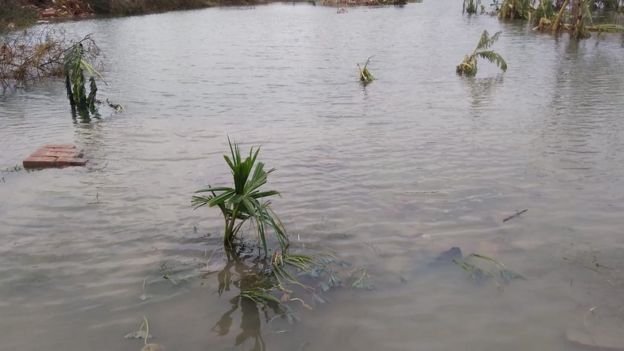
In Bangladesh, there are reports of tens of thousands of homes damaged or destroyed and many villages submerged by storm surges in low-lying coastal areas like Khulna and Satkhira.
The affected areas include the Sunderbans, mangroves spread over an area of more than 10,000 square kilometres that spans both India and Bangladesh – the swampy islands are home to more than four million of the world’s poorest people.
Image copyright MUKTIImage caption Many homes, built of brick and mud, have been washed away
Those in the Sunderbans say it is too early to estimate casualties in the area, which is now cut-off from the mainland by the storm.
“There are houses which have collapsed and people could be trapped in them but we don’t know yet,” Debabrat Halder, who runs an NGO in one of the villages, told the BBC.
He recalls cyclone Bulbul in November 2019, which was followed by a huge incidence of fever, diarrhoea and flu, and is afraid that that the same may happen again.
And worse, he adds, is that the flooding from contaminated sea water, has likely destroyed the soil.
“Nothing will grow in this soil,” he says, adding that it will likely take years to convert it into fertile land again.
Image copyright MUKTIImage caption The Sunderbans delta is frequently hit by severe stormsImage copyright MUKTIImage caption Crops have all been destroyed by the flooding
Kolkata, the capital of West Bengal, and one of India’s biggest cities has been devastated. Its roads are flooded and the city was without power for more than 14 hours.
The state’s chief minister, Mamata Banerjee, said the devastation in Kolkata was “a bigger disaster than Covid-19”.
But assessment of the damage is being hampered by blocked roads and flooding in all these areas.
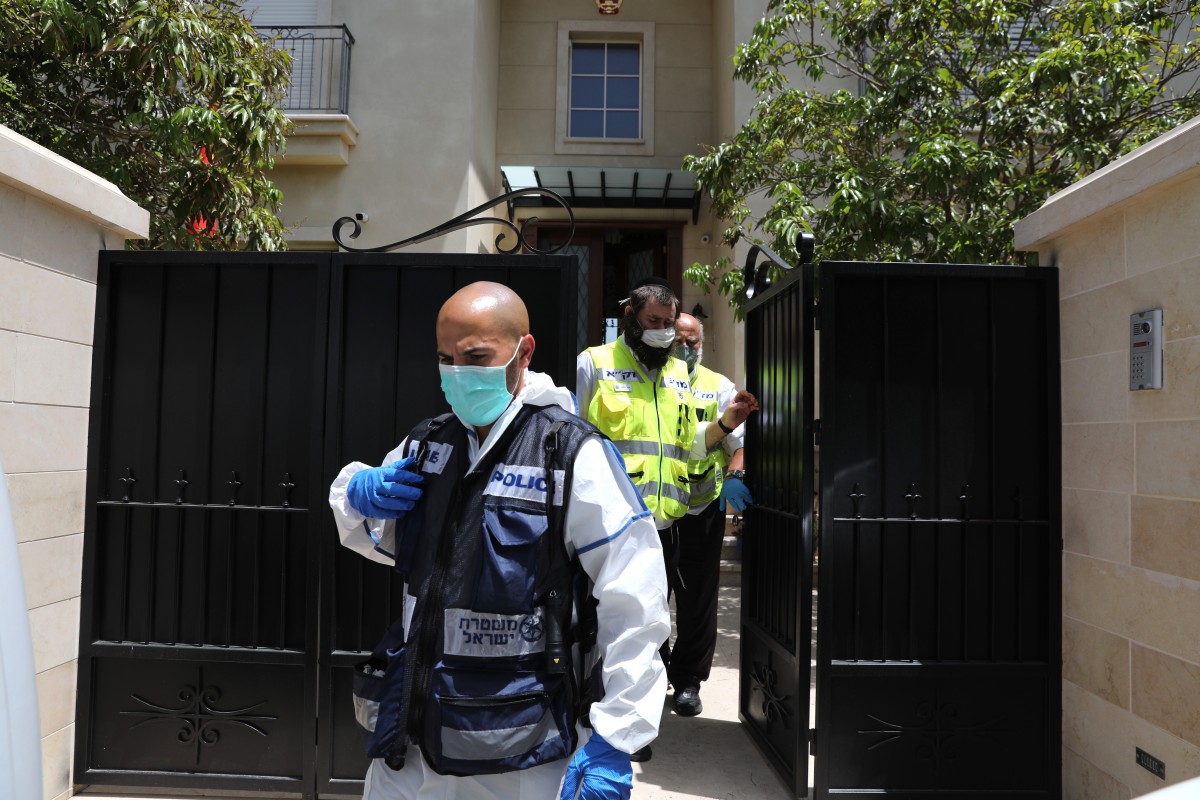
The team, accompanied by a member of Du’s family, was due to travel on Monday, and will handle arrangements for the remains, as well as conducting its own internal investigation, according to Israeli newspaper Haaretz.
Israel’s foreign ministry said its director general Yuval Rotem had spoken with deputy ambassador Dai Yuming to express his condolences. Local police are continuing to investigate at Du’s residence in a suburb of Herzliya, near Tel Aviv.
Details from the Chinese side have been scant. China’s foreign ministry provided a statement to AFP on Sunday which said the preliminary verdict was that Du, 57, had died unexpectedly for health reasons, and details awaited further confirmation. AFP also reported that Du’s wife and son were not with him in Tel Aviv.
“As far as I know, China’s ambassador to Israel Du Wei passed away in ambassador’s residence in Tel Aviv this morning for physical reasons. It happened abruptly,” said Hu Xijin, editor-in-chief of state media tabloid Global Times in a tweet late on Sunday night.
Du was last seen in public on Tuesday in a video conference with an official from Israel’s foreign affairs ministry, according to the embassy website.
James Dorsey, senior fellow at the S. Rajaratnam School of International Studies in Singapore, said Du’s untimely death should be seen as a personal, rather than a political, tragedy for the growing relationship between China and Israel, but he said it came at an important moment for the two countries because of rising US-China tensions.
Dorsey said Israel’s increasing hi-tech cooperation with China, as well as continuing US hostility to Iran – which has close ties with China – were potentially problematic for relations between the two countries.
“I’m not sure that the China-Israel relationship can be seen as independent of the Israel-US relationship. One could argue that the Chinese may be well advised to very quickly replace him soon,” Dorsey said. “Israel could find itself on the fault line of deepening US-China decoupling,” he added.
Israel’s ambassador to China in quarantine after ‘infected’ flight to Seoul
28 Feb 2020
Following a brief trip to Jerusalem on Wednesday – his first foreign visit since March – US Secretary of State Mike Pompeo renewed warnings about China-Israel ties in an interview with Israeli state-owned media outlet Kan News.
“We do not want the Chinese Communist Party to have access to Israeli infrastructure, Israeli communication systems, all of the things that put Israeli citizens at risk,” he said.
China’s embassy in Tel Aviv blasted Pompeo’s comments as “absurd” and “ill-intentioned”. However, the embassy statement was not written by Du, but by a spokesperson.
Du had only served in Israel since February. Just before his arrival, the Chinese embassy had to issue an apology after then-acting ambassador Dai denounced Israel’s tightened restrictions on Chinese visitors by comparing them to the Holocaust.
During his brief tenure, Du gave frequent interviews to local media, speaking mainly about China’s virus control measures, US-China tensions, and friendship between China and the Jewish people.
Du had worked as a career diplomat since entering China’s foreign service in 1989. Before his appointment in Tel Aviv, he served as China’s ambassador to Ukraine from 2016-2019.
In his “verbal message of thanks”, Mr Xi said he highly appreciated Mr Kim’s support during China’s outbreak and “showed his personal attention to the situation of the pandemic and people’s health” in North Korea, according to state media.
Mr Xi called for more efforts to strengthen co-operation in preventing the spread of the coronavirus, and said China was “willing to continue to provide assistance within its own capacity for [North Korea] in the fight against Covid-19”.
On Friday, North Korean state media reported that Mr Kim had sent a verbal message to the president that “congratulated him, highly appreciating that he is seizing a chance of victory in the war against the unprecedented epidemic”.
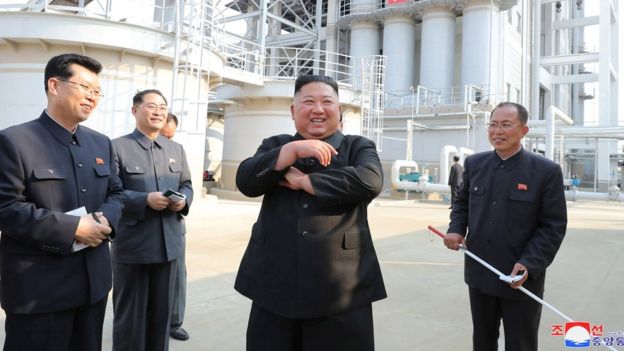
Image copyright REUTERSImage caption Kim Jong-un disappeared from public view for 20 days, before visiting a factory on 2 May
Mr Kim recently went 20 days without appearing in public, and missed the celebration of his grandfather’s birthday – one of the biggest events of the year.
Some media reports claimed he was “gravely ill”, or even dead.
But he then appeared at a fertiliser factory on 2 May – apparently in good health.
On Wednesday, South Korea’s National Intelligence Service told a parliamentary committee that there had been no signs the health rumours were true.
“He was performing his duties normally when he was out of the public eye,” a member of the committee, Kim Byung-kee, told reporters afterwards.
The lawmaker said the North Korean leader’s absence could have been down to a Covid-19 outbreak that the authorities in Pyongyang had not reported.
Analysis
By Celia Hatton, Asia Pacific Editor, BBC World Service
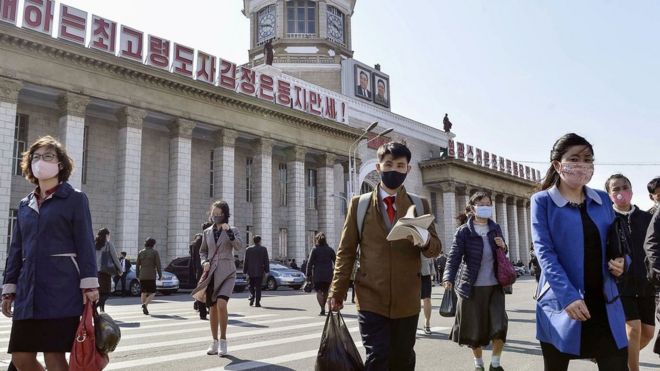
For months, North Korea-watchers have questioned Pyongyang’s claims that it has managed to isolate itself from Covid-19.
Admittedly, North Korea was the first country to suspend travel in response to the virus. There are unconfirmed reports that North Korean guards have been ordered to shoot at those who try to cross the lengthy border the North shares with China. However, it will be difficult to completely seal that dividing line for long. North Korea’s underground economy relies on illicit trade with Chinese entrepreneurs.
Beijing has a few good reasons for wanting to help North Korea. On a practical level, China needs to suppress a possible Covid-19 outbreak there if it wants to keep its own population healthy. Beijing also worries about what might happen inside North Korea if the virus takes hold. The North’s decrepit health system would quickly be overwhelmed by an outbreak of Covid-19, and that could threaten the fragile Kim Jong-un regime. Beijing has been Pyongyang’s biggest aid donor for decades, and it will continue to do what it can to keep Mr Kim in power. The alternatives to Kim Jong-un are much riskier for China, which does not want change on its doorstep.
China’s global political interests are also at play. Diplomatically, Mr Xi’s public exchange with Kim Jong-un underlines the seemingly close ties between China and North Korea. Pyongyang has been slow to accept public offers of help from the United States, and peace talks with Washington have stalled. If North Korea appeared to accept Beijing’s help, China would reassert itself as North Korea’s “true” ally in a time of need.
South Korea itself reported 18 new confirmed cases of Covid-19 on Saturday.
Seventeen of them are linked to a 29-year-old man who tested positive after spending time at five nightclubs and bars in Seoul’s Itaewon leisure district last weekend, the Yonhap news agency said.
Mayor Park Won-soon ordered nightclubs, bars and hostess venues across the capital to suspend business in response.
“Carelessness can lead to an explosion in infections – we clearly realised this through the group infections seen in the Itaewon club case,” Mr Park said.
Health officials have urged people who have visited the five venues in Itaewon to self-isolate and get tested to prevent additional transmissions. At least 1,500 people signed their entry logs, according to Yonhap.
The new infections brought the nationwide total to 10,840, while the death toll remained unchanged at 256.
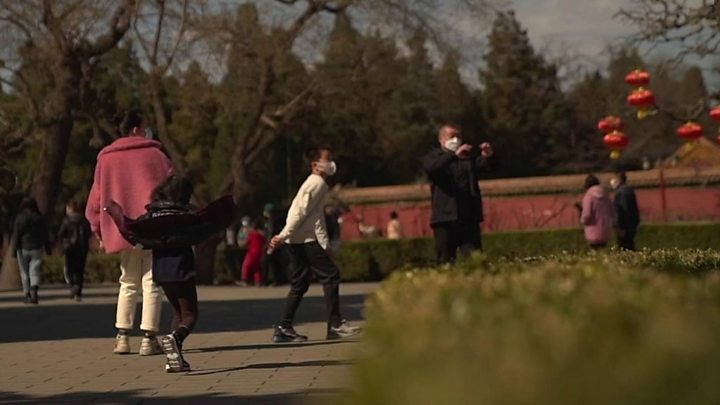
BEIJING, April 6 (Xinhua) — Bike riding, bird watching, or simply enjoying the natural scenery against the blue sky. A wild duck lake wetland in suburban Beijing has attracted urbanites during the traditional Qingming festival.
The park imposes a daily limit of 1,680 visitors and workers take body temperatures for visitors and ask them to show their health codes, which are common preventive measures in many scenic spots.
“Our tickets sold out one day in advance on the Internet, “said Liu Xuemei, a park management official. “Through the online booking of tickets, we strictly control the flow of tourists to protect wild birds as it is a season of bird migration.”
Besides paying tribute to the dead, outing is another tradition among Chinese during Tomb-sweeping Day, also known as Qingming Festival which fell on Saturday. Citizens enjoy a three-day holiday for the festival.
As China’s domestic COVID-19 situation continues its improving trend, more parks and scenic sites have reopened across the country, providing places for citizens to have spring outings amid tight prevention measures.
On Saturday, the Juyongguan section of the Great Wall and the Ming Tombs in Beijing reopened to the public after two months of closure in the prevention and control of COVID-19.
The famous Badaling section of the Great Wall in Beijing, which partly opened on March 24, hosted 12,000 tourists on Sunday alone.
Beijing’s major parks, which partly opened to the public, also adopted strict measures to control the number of tourists while cancelling some traditional spring activities such as enjoying flowers to avoid gathering.
Data from several domestic travel companies such as Qunar and Trip.com show that the domestic tourism industry is recovering and the booking volume of tickets for travel, hotels and scenic spots is on the rise.
Since March, some of the business activities of travel agencies have resumed in more than 10 provinces and municipalities. Tours around cities and 1-hour high-speed trips are popular, according to the travel platforms.
“I haven’t been out during the epidemic. It’s fine today. I brought my daughter to the mountain area to breathe fresh air and relax,” said a female tourist surnamed Liu, in the city of Wuhu, east China’s Anhui Province. Liu went to the suburban area of Wuhu with her daughter for an outing on Saturday and said she felt the epidemic prevention measures were reassuring.
At the Balihe scenic area in Yingshang County, Anhui, the number of tourists rose from 1,000 after it reopened on March 15 to about 8,000 per day during the Qingming holiday.
The scenic area implements online real-name booking. Its tourist service center has a body temperature detection area and provides wash-free disinfectant. Staff members wear masks and gloves, according to Wang Longtao, deputy general manager of a company in charge of the Balihe tourism development.
“I am optimistic about the recovery of domestic tourism. People have accumulated a strong desire to consume,” said Liang Jianzhang, co-founder and chairman of Trip.com Group.
Huangshan Mountain, a UNESCO world heritage site in Anhui Province, saw 20,000 tourists on Saturday and Sunday, as pictures of crowded tourists triggered concerns over epidemic prevention.
The scenic area authorities said Monday they increased 20 transfer buses and mobilized a total of 160 buses to prevent overcrowding.
Industry experts warn that as the COVID-19 epidemic has not ended domestically and the pressure of imported cases is growing, scenic spots should make people’s safety and health the top priority and take targeted measures as they reopen.
US$2 trillion rescue package passes US Senate, heads to House
Malaysia’s king and queen in ‘self-quarantine’ after staff test positive
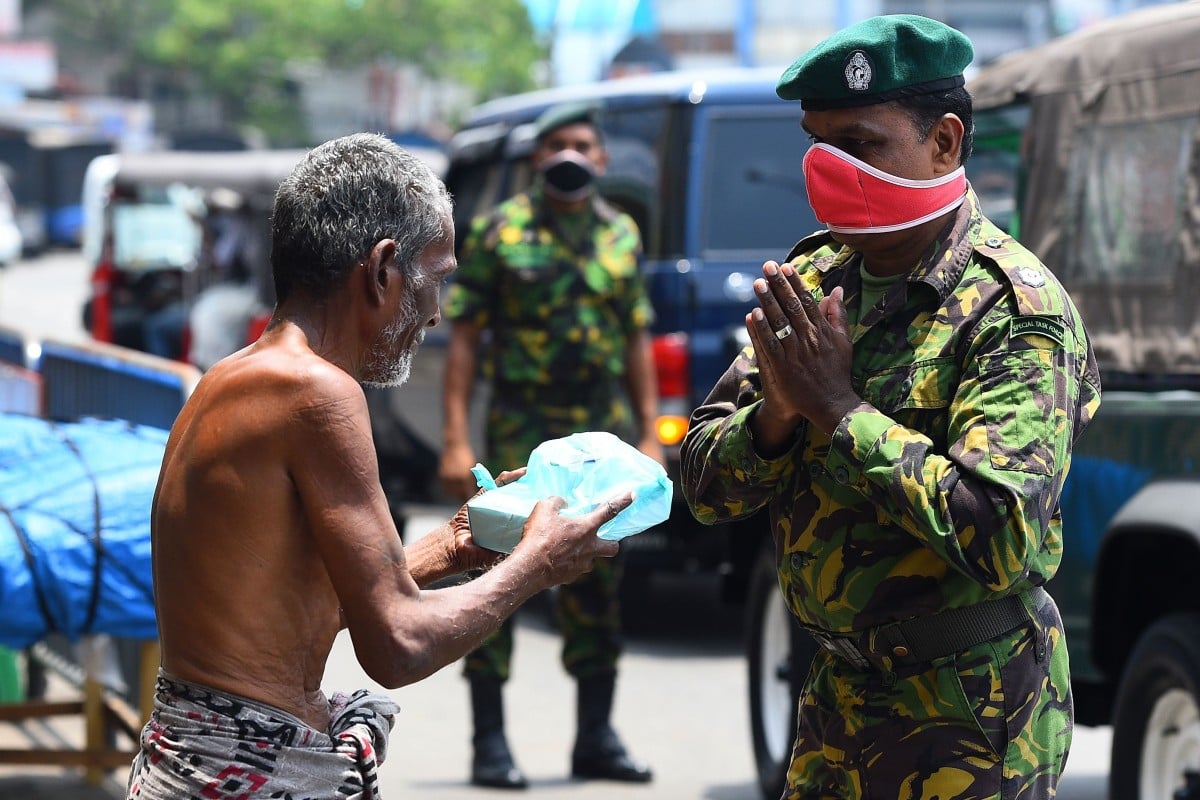
Police commandos in Sri Lanka hand out food to homeless people during a nationwide curfew against the spread of coronavirus. Photo: AFP
More than three billion people are living under lockdown measures as soaring death tolls in Europe and the US underlined a United Nations warning that the coronavirus, which has now infected nearly half a million people globally, threatens all of humanity.
The global death toll from the virus now stands at more than 21,000, with Spain joining Italy in seeing its number of fatalities overtake China, where the virus first emerged just three months ago.
“Covid-19 is threatening the whole of humanity – and the whole of humanity must fight back,” UN Secretary General Antonio Guterres said, launching an appeal for US$2 billion to help the world’s poor.
“Global action and solidarity are crucial. Individual country responses are not going to be enough.”
The G20 major economies will hold an emergency videoconference on Thursday to discuss a global response to the crisis, as will the 27 leaders of the European Union, the outbreak’s new epicentre.
The economic damage of the virus – and the lockdowns – could also be devastating, with fears of a worldwide recession worse than the financial meltdown more than a decade ago.
Here are the developments:
US$2 trillion rescue package passes US Senate
The US Senate passed the nation’s largest-ever rescue package late Wednesday, a US$2 trillion lifeline to suffering Americans, depleted hospitals and an economy all ravaged by a rapidly spreading coronavirus crisis.
The monster deal thrashed out between Republicans, Democrats and the White House includes cash payments to American taxpayers and several hundred billion dollars in grants and loans to small businesses and core industries. It also buttresses hospitals desperately in need of medical equipment and expands unemployment benefits.
The measure cleared the Senate by an overwhelming majority and was headed next to the House of Representatives, which must also pass it before it goes to President Donald Trump for his signature.
US President Donald Trump has voiced hope the US will be “raring to go” by mid-April, but his optimism appeared to stand almost alone among world leaders.
Unemployment benefit filings by Americans workers to surge to 3.3 million last week – the highest number ever recorded, the Labour Department reported on Thursday.
The normally routine report is at the front lines of the economic crisis caused by the outbreak, which has forced widespread closures of restaurants, shops and hotels, and brought airline travel to a virtual halt, prompting the stunning increase in people filing for benefits nationwide in the week ending March 21.
Nearly every state cited Covid-19 for the jump in initial jobless claims, with heavy impacts in food services, accommodation, entertainment and recreation, health care and transport, the report said.
Malaysia’s king and queen in quarantine after staff test positive
The official residence of Malaysia’s monarchy on Thursday confirmed seven of its staff have tested positive for Covid-19 and are currently receiving treatment at the Kuala Lumpur Hospital.
Malaysia’s king, Sultan Abdullah Sultan Ahmad Shah and queen, Tunku Azizah, have also been tested, but their results showed a clean bill of health, a spokesman for the Istana Negara said in a statement.
“Nevertheless, Their Majesties are now observing a 14-day self-quarantine, starting yesterday, ” he said.
Meanwhile, Prime Minister Muhyiddin Yassin, along with all federal ministers and their deputies, announced they will take a two-month pay cut, with the savings to be donated to Putrajaya’s Covid-19 fund.
The Prime Minister’s Office said the decision was made during a cabinet meeting and showed the government’s sincerity in helping those affected by the pandemic.
“The Covid-19 fund was launched on March 11 as part of the government’s efforts to help those who were affected by the disease outbreak,” the office said, adding that 8.5 million ringgit (US$1.97 million) has been collected, including government grants.
Malaysia on Wednesday announced a two-week extension of a national lockdown as part of stepped-up measures to contain the coronavirus outbreak.
The “movement control order,” which requires people to stay home and was originally set to expire on March 31, will now continue until April 14.
Moscow monitors people in coronavirus quarantine with 100,000 ‘under the skin’ surveillance cameras
Russia to ground international flights
Russia will halt all international flights from midnight on Friday under a government decree listing new measures against the coronavirus outbreak.
The decree published on Thursday orders aviation authorities to halt all regular and charter flights, with the exception of special flights evacuating Russian citizens from abroad.
The announcement came after Russia on Wednesday recorded its biggest daily spike in confirmed coronavirus infections so far, with 163 new cases for a total of 658 across the country.
Denis Protsenko, head doctor of Moscow’s new hospital treating coronavirus patients, told President Vladimir Putin that Russia needed to be ready for an “Italian scenario”, referring to what is now the hardest-hit country in the world in terms of deaths.
Singapore boosts stimulus package to 11 per cent of GDP
Singapore reported 52 new coronavirus cases on Thursday, taking its tally to 683 infections.
The health ministry said that out of the 52, 28 were imported while 24 were locally transmitted.
Drawing on national reserves for the first time since the global financial crisis to support an economy heading for recession, the additional spending will push up the government’s virus-related relief to almost S$55 billion, or 11 per cent of gross domestic product, Finance Minister Heng Swee Keat said in a speech in parliament Thursday. It also will widen the budget deficit for the financial year starting April 1 to 7.9 per cent of GDP, from a previous target of 2.1 per cent.
“This extraordinary situation calls for extraordinary measures,” Heng said. “We have saved up for a rainy day. The Covid-19 pandemic is already a mighty storm, and is still growing.”
Coronavirus: Italy’s slowing infection rate boosts case for lockdowns
26 Mar 2020
‘If you catch it, don’t spread it to others’, 1949 flu advice still applies to coronavirus pandemic
Imported cases rise in China
Mainland China reported a second consecutive day of no new local coronavirus infections as the epicentre of the epidemic Hubei province opened its borders, but imported cases rose as Beijing ramped up controls to prevent a resurgence of infections.
A total of 67 new cases were reported as of end-Wednesday, up from 47 a day earlier, all of which were imported, China’s National Health Commission said in a statement on Thursday.
The total number of cases now stands at 81,285.
The commission reported a total of 3,287 deaths at the end of Wednesday, up six from the previous day.
All of the new patients were travellers who came to China from overseas, with the mainland reporting no locally transmitted infections on Wednesday.
Fearing a new wave of infections from imported cases, authorities have ramped up quarantine and screening measures in other major cities including Beijing, where any travellers arriving from overseas must submit to centralised quarantine.
Coronavirus could become seasonal
There is a strong chance the new coronavirus could return in seasonal cycles, a senior US scientist said Wednesday, underscoring the urgent need to find a vaccine and effective treatments.
Anthony Fauci, who leads research into infectious diseases at the National Institutes of Health, told a briefing the virus was beginning to take root in the southern hemisphere, where winter is on its way.
“What we’re starting to see now … in southern Africa and in the southern hemisphere countries, is that we’re having cases that are appearing as they go into their winter season,” he said.
“And if, in fact, they have a substantial outbreak, it will be inevitable that we need to be prepared that we’ll get a cycle around the second time.
“It totally emphasises the need to do what we’re doing in developing a vaccine, testing it quickly and trying to get it ready so that we’ll have a vaccine available for that next cycle.”
There are currently two vaccines that have entered human trials -one in the US and one in China – and they could be a year to a year-and-a-half away from deployment.
British Columbia is testing for Covid-19 faster per head than South Korea
27 Mar 2020
Spain extends emergency by two weeks
Spain’s parliament has voted in favour of the government’s request to extend the state of emergency by two weeks that has allowed it to apply a national lockdown in hopes of stemming its coronavirus outbreak.
The parliamentary endorsement will allow the government to extend the strict stay-at-home rules and business closings for a full month. The government declared a state of emergency on March 14. It will now last until April 11.
Spain’s government solicited the two-week extension after deaths and infections from the Covid-19 virus have skyrocketed in recent days. Spain 47,600 total cases. Its 3,434 deaths only trail Italy’s death toll as the hardest-hit countries in the world.
The parliament met with fewer than 50 of its 350 members in the chamber, with the rest voting from home to reduce the risk of contagion.
Greece locks down Muslim towns
Greek authorities have quarantined a cluster of Muslim-majority towns and villages in the country’s northeast after several cases and a death from the new coronavirus in the area.
The area in Xanthi prefecture was placed in lockdown as of Wednesday evening as nine people in the region overall have tested positive for the virus over the past six days, civil protection deputy minister Nikos Hardalias told reporters.
“All residents have been temporarily confined at home. No exceptions are allowed,” Hardalias said.
The centre of the outbreak appears to be the small Pomak town of Ehinos, a community of about 2,500.
“Ehinos residents will be provided with food and medicine,” Hardalias said.
Police were deployed on Thursday on a bridge leading into town to enforce the lockdown, television footage showed.
One 72-year-old Ehinos man has died from the virus, local mayor Ridvan Deli Huseyin told Antenna television.
“It’s better to take some measures now than to cry about this later,” said Huseyin, the mayor of the local administrative centre of Miki.
The Pomaks are a Muslim group of Slavic origin who live mainly in neighbouring Bulgaria.
They make up part of Greece’s roughly 110,000-strong Muslim minority in the country’s northeast bordering Turkey.
Many of them work as migrant industrial workers in other European countries.
Economy seats go for business-class fares as travellers flee
27 Mar 2020
Colombia goes into lockdown, Chile extends schools closures
Countries across Latin America tightened measures on Wednesday to halt the spread of the deadly novel coronavirus, with more lockdowns, border closings and school closures as well as increased aid to the region’s poorest.
As cases of Covid-19 cases continue to rise – more than 7,400 and 123 deaths up to now – Bolivia and Colombia became the latest countries to impose a total lockdown, while Chile extended its schools closures until the end of April.
Brazil’s President Jair Bolsonaro has warned of possible “chaos” and the “looting” of supermarkets if state shutdowns ordered by the governors of Sao Paulo and Rio de Janeiro aren’t ended.
Bolsonaro, who has repeatedly scoffed at the severity of the deadly pandemic, had previously criticised the closing of schools and businesses in Sao Paulo and Rio states, two of the country’s most populous states.
Germany ramps up testing, approves huge bailout
Germany has boosted its coronavirus test rate to 500,000 a week, Christian Drosten, who heads the Institute of Virology at Berlin’s Charite University Hospital, said on Thursday, adding that early detection has been key in keeping the country’s death rate relatively low.
Drosten also highlighted Germany’s dense network of laboratories spread across its territory as a factor contributing to early detection.
The news came after Chancellor Angela Merkel’s government secured emergency spending, unlocking a historic rescue package designed to cushion the blow of the coronavirus pandemic.
A majority of lawmakers in the Bundestag voted on Wednesday to allow additional borrowing to combat the crisis, according to the legislature’s president. The Bundesrat, or upper house of parliament, will vote on Friday.
The extraordinary authorisation is part of a packet of legislation aimed at protecting German jobs and businesses. The new borrowing of €€156 billion (US$169 billion) is equivalent to half of the country’s normal annual spending.
The country, which tightened lockdown measures this week, has about 32,700 cases and more than 150 deaths.
Trump and Widodo back chloroquine treatment, but fake news is deadly
25 Mar 2020
Ukraine declares ‘emergency situation’
Ukraine on Wednesday declared a month-long “emergency situation” to slow the coronavirus outbreak, as the number of confirmed cases jumped to 113.
Ukraine has already closed schools, universities and public spaces to stem the spread of the disease, but the measures were due to expire at the beginning of April.
The emergency situation announced on Wednesday effectively extends existing measures for 30 days until April 24, a government spokesperson said.
“We are extending quarantine and imposing an emergency situation in Ukraine,” Prime Minister Denys Shmygal said.
Unlike an official state of emergency, the initiative announced by the prime minister does not have to be rubber stamped by both the parliament and president. Ukraine has confirmed 113 cases of Covid-19 and four deaths, according to official statistics.
Prince Charles tests positive for coronavirus
Mexican governor says poor are ‘immune’
The governor of a state in central Mexico is arguing that the poor are “immune” to the new coronavirus, even as the federal government suspends all non-essential government activities beginning Thursday in a bid to prevent the spread of the virus.
Puebla Governor Miguel Barbosa’s comment on Wednesday was apparently partly a response to indications that the wealthy have made up a significant percentage of Mexicans infected to date, including some prominent business executives.
Officials say three-quarters of Mexico’s 475 confirmed cases are related to international travel, and the poor do not make many international trips. Some people apparently caught the virus on ski trips to Italy or the United States. The country has seen six deaths so far.
“The majority are wealthy people. If you are rich, you are at risk. If you are poor, no,” Barbosa said of the coronavirus. “We poor people, we are immune.”
Barbosa also appeared to be playing on an old stereotype held by some Mexicans that poor sanitation standards may have strengthened their immune systems by exposing them to bacteria or other bugs.
There is no scientific evidence to suggest the poor are in any way immune to the virus that is causing Covid-19 disease around the world.
No agreement on ‘Wuhan virus’ name as G7 spars over infection source
26 Mar 2020
Japan belatedly bans entry from Europe, Iran
Japanese Prime Minister Shinzo Abe has established a task force under the country’s revised emergency law to deal with the global rise in coronavirus infections and deaths.
In Tokyo on Thursday, Abe said it was necessary for people to act as one to overcome what can be described as a national crisis.
Japan will ban entry from 21 European countries as well as Iran, to take effect from Friday, he added.
The country has already begun asking visitors and its nationals arriving from some countries in Southeast Asia, the Middle East and Africa to self-quarantine for 14 days.
Arrivals from a total of seven Southeast Asian countries and four in the Middle East and Africa are also asked to refrain from using public transport.
Similar steps are in place for visitors from China, South Korea, most of Europe and the United States.
Malaysia to lock down two communities to curb spread
Malaysia on Thursday announced that 3,570 residents in two communities in the country’s south will be placed under complete lockdown due to their high coronavirus infection rates.
Defence Minister Ismail Sabri Yaakob said in a statement that the residents in Kluang district of Johor state are banned from leaving home for two weeks beginning Friday, to enable the health authorities to conduct door-to-door screening.
The tough measure was taken after 73 per cent of the 83 infection cases found in the district were traced to the two small communities of Kampung Dato Ibrahim Majid and Bandar Baru Dato Ibrahim Majid.
Ismail said the residents cannot leave home, not even to buy food, as the welfare department will supply them with two weeks’ worth of food. All businesses must close and all access into the two areas will be sealed. The police and army have been deployed to ensure compliance.
The Australian government scrapped a time limit on haircuts following a backlash.
The government had imposed a rule on hairdressers and barbers on Tuesday that haircuts should take less than 30 minutes, as part of social distancing restrictions to deal with the coronavirus outbreak.
The restriction put around 40,000 hairdressers at risk, the Australian Hairdressing Council said in response.
“This decision is outrageous,” the council’s chief executive Sandy Chong said in a statement.
“Whilst many barbers can do a male haircut within that time frame, it really isn’t feasible for a majority of hairdressing salons.”
Australian Prime Minister Scott Morrison issued a statement Thursday saying the policy would be reversed with immediate effect.
But salons and barbers must still strictly observe new rules that there may only be one person per four square metres within the premises, Morrison said.
India unveils US$22.6 billion stimulus package
India’s government announced a 1.7 trillion rupee (US$22.6 billion) stimulus package, as it stepped up its response to the coronavirus pandemic.
The measures will include cash transfers as well as steps on food security, Finance Minister Nirmala Sitharaman said in New Delhi on Thursday, adding that the package will benefit migrant workers.
Asia’s third-largest economy joins countries from the US to Germany that have pledged spending to contain the economic fallout of the pandemic. India is on a total lockdown for three weeks from Wednesday in the world’s biggest isolation effort, as Prime Minister Narendra Modi seeks to prevent the virus from spreading locally.
The government will also provide an insurance cover of 5 million rupees to medical workers, Sitharaman said.
Image copyright EPAImage caption Wuhan has been sealed off since mid-January
The lockdown in Wuhan, the Chinese city where the global coronavirus outbreak began, will be partially lifted on 8 April, officials say.
Travel restrictions in the rest of Hubei province, where Wuhan is located, will be lifted from midnight on Tuesday – for residents who are healthy.
A single new case of the virus was reported in Wuhan on Tuesday following almost a week of no reported new cases.
Countries around the world have gone into lockdown or imposed severe curbs.
The UK is getting to grips with sweeping new measures to tackle the spread of coronavirus, including a ban on public gatherings of more than two people and the immediate closure of shops selling non-essential goods.
Image copyright AFPImage caption The WHO has urged the G20 group of nations to boost production of protective equipment
Meanwhile, health experts say Americans must limit their social interactions or the number of infections will overwhelm the health care system in the US.
Spanish soldiers helping to fight the coronavirus pandemic have found elderly patients in retirement homes abandoned and, in some cases, dead in their beds, the defence ministry has said.
An ice rink in Madrid is to be used as a temporary mortuary for Covid-19 victims.
The World Health Organization (WHO) has warned that the pandemic is accelerating, with more than 300,000 cases now confirmed. It is urging countries to adopt rigorous testing and contact-tracing strategies.
Wuhan has been shut off from the rest of the world since the middle of January. But officials now say anyone who has a “green” code on a widely used smartphone health app will be allowed to leave the city from 8 April.
Earlier, the authorities reported a new case of coronavirus in Wuhan, ending a five-day run of no reported new cases in the city.
Media caption Coronavirus: People in Beijing begin to head outdoors
It comes after health officials there confirmed that they were not counting cases of people who were positive but had not been admitted to hospital or did not show any symptoms of the disease.
Official government figures say there have been 78 new cases reported on the Chinese mainland in the last 24 hours. All but four of them were caused by infected travellers arriving from abroad.
This so-called “second wave” of imported infections is also affecting countries like South Korea and Singapore, which had been successful in stopping the spread of disease in recent weeks.
South Korea has been seeing a drop in its daily tally of new cases. On Tuesday it reported its lowest number since 29 February.
China looks to repair its reputation
By Robin Brant, BBC News, Shanghai
China considers itself to be – very nearly – a “post corona” country.
In the last week we’ve heard Wuhan medics warning the UK and others that they need to do more to protect frontline health workers, citing the mistakes they made early on when some treated patients without wearing proper protective clothing.
But there’s also been reporting in state media of the reported death toll in Italy surpassing that in China. This has been combined with some commentary from prominent media figures that has appeared distasteful, almost triumphalist.
At the same time there is a panic about the threat of a second wave from imported cases – travellers arriving from abroad. This has fuelled the view – right or wrong – that some other countries aren’t taking the threat seriously because they aren’t doing what China did. (Almost all the cases in Beijing that have been made public are of Chinese nationals returning home).
Meanwhile, well away from senior leaders, there are some high-profile diplomatic figures using international-facing social media to spread theories that the US may have weaponised and dumped the virus in China. Or that Italy had cases that may have been Covid-19 earlier than China. China is sowing seeds of doubt and questioning assumed truths as it looks to repair its reputation.
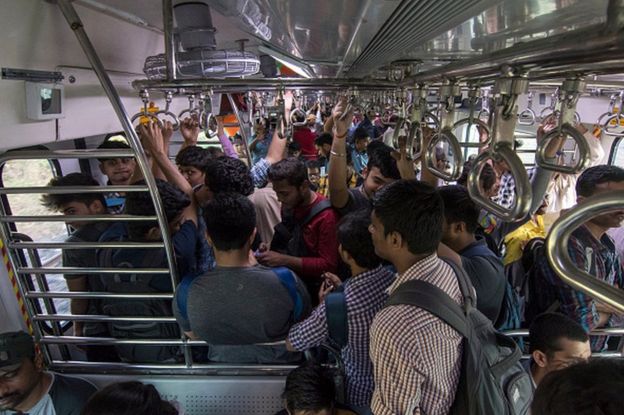
Almost all of India with its 1.3bn people is under lockdown. Buses, trains and other forms of public transport are suspended. On Monday, the authorities said domestic flights would also stopped. The country has reported 485 cases and nine people have died. Prime Minister Narendra Modi will address the nation again this evening.
Image copyright GETTY IMAGESImage caption Mumbai’s suburban train network carries eight million passengers a day
Neighbouring Pakistan has almost twice as many confirmed cases – 878 as of Monday evening. Sweeping restrictions are in place although the government has stopped short of imposing a nationwide lockdown. However, several provinces have announced them independently. The army is being brought in to help enforce the restrictions.
Bangladesh, which has reported 33 cases and three deaths, is also deploying its armed forces to help maintain social distancing and boost Covid-19 preventive measures. The soldiers will also monitor thousands of quarantined expatriate returnees. Across South Asia, there are concerns that the actual number of cases could be much higher than is being reported.
Indonesia, which has 49 confirmed Covid-19 deaths – the highest in South-East Asia – has converted an athlete’s village built for the 2018 Asian Games into a makeshift hospital for coronavirus patients. A state of emergency was declared in Jakarta on Monday.
In Thailand, a month-long state of emergency which will include curfews and checkpoints will begin on Thursday. The government has been criticised for failing to take strong action so far. Four people have died and nearly 900 tested positive.
Talks between the Japanese PM and the International Olympic Committee are expected this evening.
The most populous country that was without a case until now – Myanmar – has announced two cases.
Europe’s battle against virus intensifies
UK Prime Minister Boris Johnson announced on Monday night that, with immediate effect, “people will only be allowed to leave their home…for very limited purposes”. They include shopping for basic necessities, taking one form of exercise per day, fulfilling any medical need, or travelling to work if working from home is impossible.
Media caption Reality Check tackles misleading health advice being shared online
The number of people who have died in the UK rose to 335 on Monday.
In Italy, the worst-hit country in the world, the authorities said 602 people with Covid-19 had died in the past 24 hours, bringing the total death toll there to 6,077.
But the daily increase in cases was the smallest since Thursday, raising hope that the stringent restrictions imposed by the government were starting to have an effect.
Spain, however, said on Tuesday that its death toll had risen by 514 to 2,696. Nearly 40,000 are infected, about 5,400 of them healthcare workers.
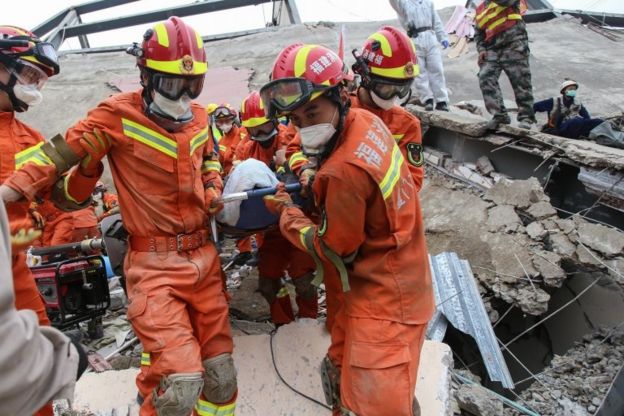
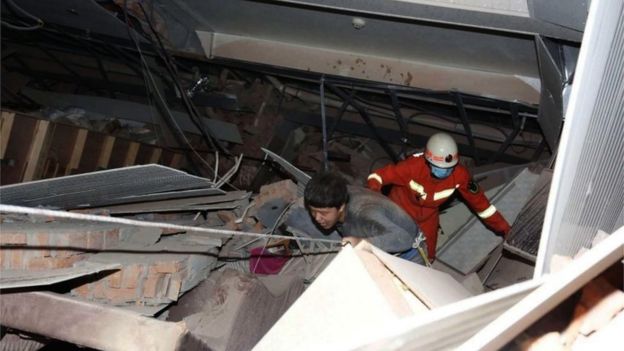
At least six people are dead and 28 remain missing after a hotel being used as a coronavirus quarantine facility in the Chinese city of Quanzhou collapsed on Saturday.
Rescue workers are still searching the rubble of the five-storey Xinjia Hotel in the southern province of Fujian.
Seventy-one people were in the building when it collapsed and dozens have been rescued, authorities say.
It is not clear what caused the collapse on Saturday evening.
Image copyright GETTY IMAGESImage caption Rescue workers continued to search for survivors on Sunday
State media say the hotel was being used as a quarantine facility monitoring people who had had close contact with coronavirus patients. It’s reported 58 of the 71 people in the building were under quarantine.
The building’s first floor had been undergoing renovation since before the Lunar New Year, the official Xinhua news agency said, adding that police had summoned the building’s owner.
The hotel reportedly opened in 2018 and had 80 guest rooms.
The city of Quanzhou has recorded 47 cases of the virus, which first emerged in the city of Wuhan, about 1,000km away.
Image copyright EPAImage caption The hotel reportedly had 80 guest rooms
One woman told the Beijing News website that relatives including her sister had been under quarantine there.
“I can’t contact them, they’re not answering their phones,” she said.
“I’m under quarantine too [at another hotel] and I’m very worried, I don’t know what to do. They were healthy, they took their temperatures every day, and the tests showed that everything was normal.”
As of Friday, Fujian province had 296 confirmed cases of coronavirus. Meanwhile 10,819 people have been placed under observation because they have been in close contact with someone infected.
The number of new reported cases in China dropped on Saturday to 44, down from 99 the previous day.
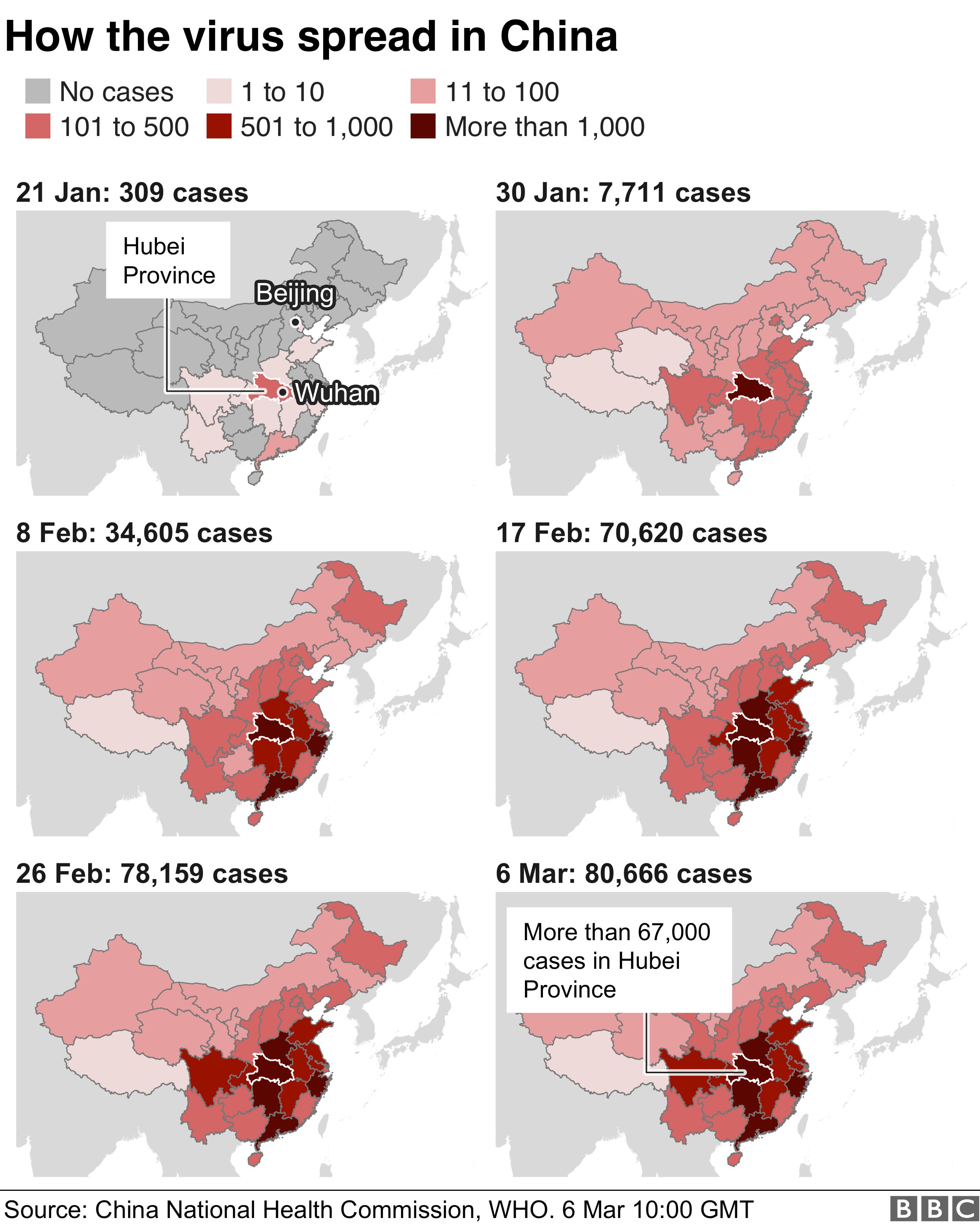
The World Health Organization says more than 101,000 people worldwide have now contracted the virus. More than 80,000 of them are in China.
About 3,500 people have died – the majority in the Chinese province of Hubei where the outbreak originated.
Image copyright GETTY IMAGESImage caption A model displays a car at the annual Indian Auto Expo
Chinese attendees are not welcome at India’s Auto Expo next week due to concerns about the coronavirus.
Chinese guests are prevented from attending the show because of “government policy” an Indian Society of Automobile Manufacturers (SIAM) spokeswoman said.
Yet Chinese cars will be on display.
Other events across Asia will be missing the large delegations that usually come from Chinese firms because of travel restrictions.
Changing car markets
India and China have much at stake in spurring domestic car sales as well as exports, making such industry events vital to drum up business.
New Indian car sales fell 16% last year and China, the world’s largest car market, saw an 8% dip as both markets saw increased turnover in used cars. However there is interest in newer models in the electric vehicle segment, according to Chinese market consultancy LMC Automotive and SIAM figures.
India’s Tata Motors, owner of the Land Rover and Jaguar brands, has developed electric car models for sale at home and abroad, while China’s SAIC Motor and Great Wall Motor also offer electric vehicles for the domestic and export markets. That makes auto shows like the one in India next week important venues to showcase the newest models.
Ripple effect
With hotels and conference fees paid in advance and lunch and dinner meetings arranged months earlier, missing a big industry show has a major ripple effect on economic activity. Events like the Auto Expo in suburban New Delhi, or the Singapore air show due to take place next week draw thousands of out-of-town guests.
In China, the conference circuit has come to a standstill with over 20,000 infections and more than 420 people dead as the virus spreads from the epicentre of the city of Wuhan.
In the case of the Singapore Airshow organisers have faced cancellations by vendors from China, including aircraft maker Comac, and reduced attendance by companies from elsewhere in the world concerned about the spread of the virus outside of China. Singapore has reported 24 cases. India to date has seen three coronavirus cases.
To mitigate the impact, both events have highlighted plans to screen throngs of guests for fever and ensure thorough sanitation measures as well as access to medical care to ensure they can carry on even at reduced attendance.
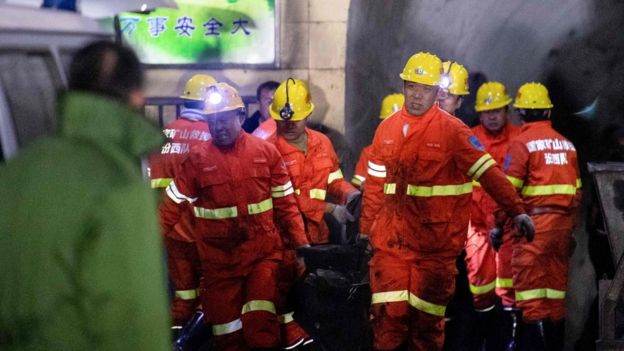
At the time, officials said the accident was caused by “broken laws and regulations”.
In October, two people were killed in a blast in a mine in Shandong province in eastern China.
The poor safety record and high accident rate in China’s mining sector led to the government in November ordering a “crackdown” on safety issues, said the AFP news agency.
But – despite the string of deadly accidents – mine safety is generally improving.
Last year, 333 people died in Chinese mines – a decrease of 13% on the year before. Meanwhile, the “death per million tons of coal mined” fell to below 0.1 for the first time.
China mined three billion tonnes of coal over the first 10 months this year, according to official data cited by Reuters – up 4.5% from the same period in 2018.
















 CHINDIA ALERT: You'll be living in their world, very soon