Archive for ‘deal’

29/04/2020

Exclusive: Amazon turns to Chinese firm on U.S. blacklist to meet thermal camera needs

NEW YORK/SAN FRANCISCO (Reuters) – Amazon.com Inc (AMZN.O) has bought cameras to take temperatures of workers during the coronavirus pandemic from a firm the United States blacklisted over allegations it helped China detain and monitor the Uighurs and other Muslim minorities, three people familiar with the matter told Reuters.

China’s Zhejiang Dahua Technology Co Ltd (002236.SZ) shipped 1,500 cameras to Amazon this month in a deal valued close to $10 million, one of the people said. At least 500 systems from Dahua – the blacklisted firm – are for Amazon’s use in the United States, another person said.

The Amazon procurement, which has not been previously reported, is legal because the rules control U.S. government contract awards and exports to blacklisted firms, but they do not stop sales to the private sector.

However, the United States “considers that transactions of any nature with listed entities carry a ‘red flag’ and recommends that U.S. companies proceed with caution,” according to the Bureau of Industry and Security’s website. Dahua has disputed the designation.

The deal comes as the U.S. Food and Drug Administration warned of a shortage of temperature-reading devices and said it wouldn’t halt certain pandemic uses of thermal cameras that lack the agency’s regulatory approval. Top U.S.-based maker FLIR Systems Inc (FLIR.O) has faced an up to weeks-long order backlog, forcing it to prioritize products for hospitals and other critical facilities.

Amazon declined to confirm its purchase from Dahua, but said its hardware complied with national, state and local law, and its temperature checks were to “support the health and safety of our employees, who continue to provide a critical service in our communities.”

The company added it was implementing thermal imagers from “multiple” manufacturers, which it declined to name. These vendors include Infrared Cameras Inc, which Reuters previously reported, and FLIR, according to employees at Amazon-owned Whole Foods who saw the deployment. FLIR declined to comment on its customers.

Dahua, one of the biggest surveillance camera manufacturers globally, said it does not discuss customer engagements and it adheres to applicable laws. Dahua is committed “to mitigate the spread of the COVID-19” through technology that detects “abnormal elevated skin temperature — with high accuracy,” it said in a statement.

The U.S. Department of Commerce, which maintains the blacklist, declined comment. The FDA said it would use discretion when enforcing regulations during the public health crisis as long as thermal systems lacking compliance posed no “undue risk” and secondary evaluations confirmed fevers.

Dahua’s thermal cameras have been used in hospitals, airports, train stations, government offices and factories during the pandemic. International Business Machines Corp (IBM.N) placed an order for 100 units, and the automaker Chrysler placed an order for 10, one of the sources said. In addition to selling thermal technology, Dahua makes white-label security cameras resold under dozens of other brands such as Honeywell, according to research and reporting firm IPVM.

Honeywell said some but not all its cameras are manufactured by Dahua, and it holds products to its cybersecurity and compliance standards. IBM and Chrysler’s parent Fiat Chrysler Automobiles NV (FCHA.MI) did not comment.

The Trump Administration added Dahua and seven other tech firms last year to the blacklist for acting against U.S. foreign policy interests, saying they were “implicated” in “China’s campaign of repression, mass arbitrary detention, and high-technology surveillance against Uighurs, Kazakhs, and other members of Muslim minority groups.”

More than one million people have been sent to camps in the Xinjiang region as part of China’s campaign to root out terrorism, the United Nations has estimated.

Dahua has said the U.S. decision lacked “any factual basis.” Beijing has denied mistreatment of minorities in Xinjiang and urged the United States to remove the companies from the list.

A provision of U.S. law, which is scheduled to take effect in August, will also bar the federal government from starting or renewing contracts with a company using “any equipment, system, or service” from firms including Dahua “as a substantial or essential component of any system.”

Amazon’s cloud unit is a major contractor with the U.S. intelligence community, and it has been battling Microsoft Corp (MSFT.O) for an up to $10 billion deal with the Pentagon.

Top industry associations have asked Congress for a year-long delay because they say the law would reduce supplies to the government dramatically, and U.S. Secretary of State Mike Pompeo said last week that policies clarifying the implementation of the law were forthcoming.

FACE DETECTION & PRIVACY

The coronavirus has infected staff from dozens of Amazon warehouses, ignited small protests over allegedly unsafe conditions and prompted unions to demand site closures. Temperature checks help Amazon stay operational, and the cameras – a faster, socially distant alternative to forehead thermometers – can speed up lines to enter its buildings. Amazon said the type of temperature reader it uses varies by building.

To see if someone has a fever, Dahua’s camera compares a person’s radiation to a separate infrared calibration device. It uses face detection technology to track subjects walking by and make sure it is looking for heat in the right place.

An additional recording device keeps snapshots of faces the camera has spotted and their temperatures, according to a demonstration of the technology in San Francisco. Optional facial recognition software can fetch images of the same subject across time to determine, for instance, who a virus patient may have been near in a line for temperature checks.

Amazon said it is not using facial recognition on any of its thermal cameras. Civil liberties groups have warned the software could strip people of privacy and lead to arbitrary apprehensions if relied on by police. U.S. authorities have also worried that equipment makers like Dahua could hide a technical “back door” to Chinese government agents seeking intelligence.

In response to questions about the thermal systems, Amazon said in a statement, “None of this equipment has network connectivity, and no personal identifiable information will be visible, collected, or stored.”

Dahua made the decision to market its technology in the United States before the FDA issued the guidance on thermal cameras in the pandemic. Its supply is attracting many U.S. customers not deterred by the blacklist, according to Evan Steiner, who sells surveillance equipment from a range of manufacturers in California through his firm EnterActive Networks LLC.

“You’re seeing a lot of companies doing everything that they possibly can preemptively to prepare for their workforce coming back,” he said.

Source: Reuters
18/04/2020

Ukraine court rejects Chinese appeal in aerospace deal opposed by United States

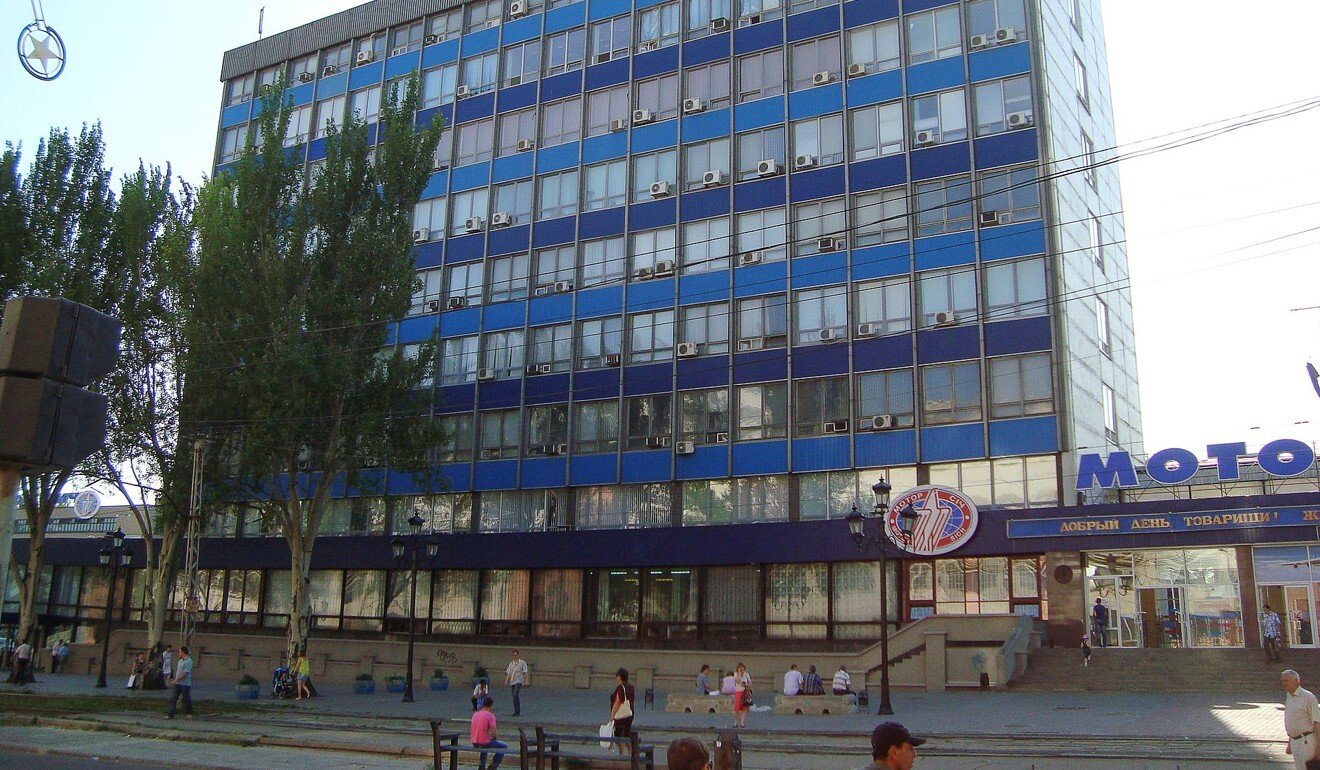
  • China’s Skyrizon Aircraft Holdings bought a majority stake in Motor Sich, but the shares were frozen in 2017 pending an investigation by Ukraine’s security service
  • Washington and Beijing have competed for influence in Ukraine since its relations with Moscow soured when Russia annexed the Crimea peninsula in 2014
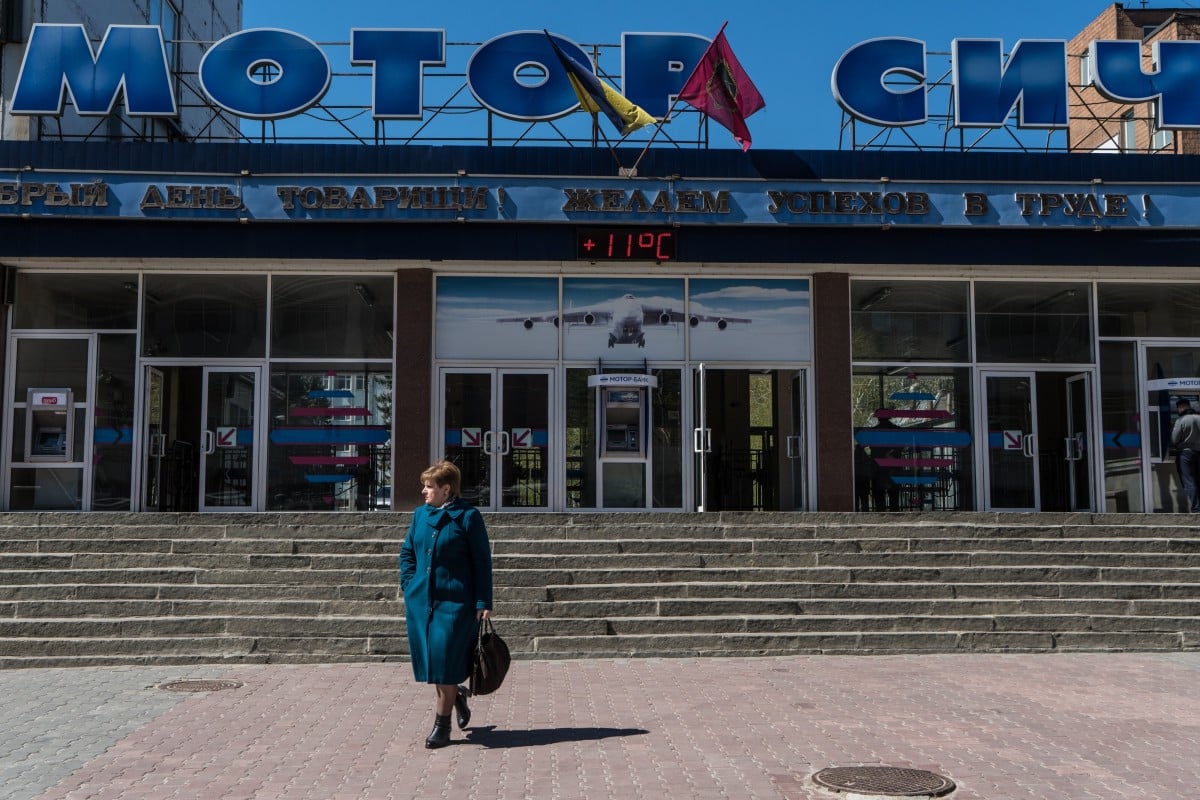
Chnia’s Skyrizon says it will appeal a Kiev court’s decision to block its purchase of Ukrainian aircraft engine maker Motor Sich. Photo: Getty Images

A court in Kiev has rejected an appeal by Chinese investors to unfreeze the shares of a Ukrainian aircraft engine maker, a setback for the Chinese company that sought to buy the Ukrainian firm in a deal opposed by the United States.

China’s Skyrizon Aircraft Holdings bought a majority stake in Motor Sich, but the shares were frozen in 2017 pending an investigation by Ukraine’s security service (SBU). Washington wants the deal scrapped.

The US and China have competed for influence in Ukraine since its relations with Moscow soured when Russia annexed the Crimea peninsula in 2014.

In its ruling, the court kept the shares frozen, citing the SBU investigation into whether selling Motor Sich sabotages national security by allowing sensitive technology into foreign hands. The ruling was dated March 13, shared with the parties this week.

Skyrizon plans further appeals, said a lawyer involved in the case, speaking anonymously due to the political sensitivity of the case. Zelensky’s office, the US embassy and the Chinese embassy did not respond to requests for comment. Motor Sich and the SBU declined to comment.

Motor Sich severed ties with Russia after the annexation of Crimea. Photo: Wikipedia
Motor Sich severed ties with Russia, its biggest client, after the annexation of Crimea. The wrangle over its future has held up efforts to find new markets, and supporters of a quick resolution say it is now operating at less than half capacity.

“Motor Sich has become a hostage to the geopolitical situation,” former prime minister Anatoliy Kinakh, chairman of an industrial union which has called for the government to resolve the dispute quickly, said.

The state’s anti-monopoly committee has launched its own investigation and says it is waiting to receive more documents before deciding whether to sanction the sale.

President Volodymyr Zelensky’s administration has had to balance strengthening ties to Beijing with keeping the United States, its biggest military aid donor, onside. In recent weeks, Beijing and Washington have both offered aid to Ukraine to fight the coronavirus.

At the moment it is a very difficult task when we have the biggest powers in the world and their interests are in conflict in Ukraine,” Oleksandr Danylyuk, a former top security official under Zelensky, said.

Source: SCMP

29/02/2020

Afghan conflict: US and Taliban sign deal to end 18-year war

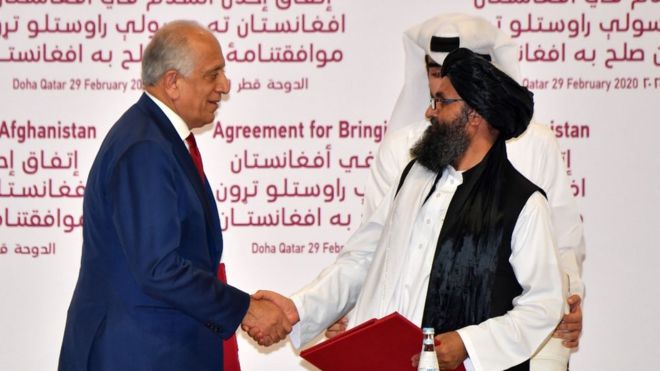
US Special Representative for Afghanistan Reconciliation Zalmay Khalilzad and Taliban co-founder Mullah Abdul Ghani Baradar shake hands after signing a peace agreementImage copyright AFP
Image caption US envoy Zalmay Khalilzad and the Taliban’s Mullah Abdul Ghani Baradar shook hands on the deal

The US and the Taliban have signed an agreement aimed at paving the way towards peace in Afghanistan after more than 18 years of conflict.

The US and its Nato allies have agreed to withdraw all their troops from the country within 14 months if the militants uphold the deal.

US Secretary of State Mike Pompeo and Taliban leaders attended the signing ceremony in Doha in Qatar.

Talks between the Afghan government and the Taliban are due to follow.

Under the agreement signed in Doha, the militants also agreed not to allow al-Qaeda or any other extremist group to operate in the areas they control.

The US invaded Afghanistan weeks after the September 2001 attacks in New York by the Afghanistan-based al-Qaeda group.

More than 2,400 US troops have been killed during the conflict. About 12,000 are still stationed in the country. President Trump has promised to put an end to the conflict.

What happened in Doha?

The deal was signed by US special envoy Zalmay Khalilzad and Taliban political chief Mullah Abdul Ghani Baradar with Mr Pompeo as a witness.

In a speech, Mr Pompeo urged the militant group to “keep your promises to cut ties with al-Qaeda”.

Meanwhile US Defence Secretary Mark Esper was in the Afghan capital Kabul alongside Afghanistan’s President Ashraf Ghani – whose government did not take part in the US-Taliban talks.

Mr Esper said: “This is a hopeful moment, but it is only the beginning. The road ahead will not be easy. Achieving lasting peace in Afghanistan will require patience and compromise among all parties.” He said the US would continue to support the Afghan government.

What’s in the agreement?

Within the first 135 days of the deal the US will reduce its forces in Afghanistan to 8,600, with allies also drawing down their forces proportionately.

The move would allow US President Donald Trump to show that he has brought troops home ahead of the US presidential election in November.

The deal also provides for a prisoner swap. Some 5,000 Taliban prisoners and 1,000 Afghan security force prisoners would be exchanged by 10 March, when talks between the Taliban and the Afghan government are due to start.

The US will also lift sanctions against the Taliban and work with the UN to lift its separate sanctions against the group.

Presentational grey line

Landmark deal rife with uncertainties

Analysis box by Lyse Doucet, chief international correspondent

This historic deal has been years in the making, as all sides kept seeking advantage on the battlefield.

The agreement is born of America’s determination to bring troops home and a recognition, at least by some Taliban, that talks are the best route to return to Kabul.

It’s a significant step forward, despite deep uncertainty and scepticism over where it will lead. When the only alternative is unending war, many Afghans seem ready to take this risk for peace.

Taliban leaders say they’ve changed since their harsh rule of the 1990s still seared in the memory of many, and most of all Afghan women.

This process will test the Taliban, but also veteran Afghan leaders of the past, and a new generation which has come of age in the last two decades and is hoping against hope for a different future.

Presentational grey line

How did US-Taliban talks come about?

Since 2011, Qatar has hosted Taliban leaders who have moved there to discuss peace in Afghanistan. It has been a chequered process. A Taliban office was opened in 2013, and closed the same year amid rows over flags. Other attempts at talks stalled.

In December 2018, the militants announced they would meet US officials to try to find a “roadmap to peace”. But the hard-line Islamist group continued to refuse to hold official talks with the Afghan government, whom they dismissed as American “puppets”.

Media caption The view from Lashkar Gah province on whether peace with the Taliban is possible

Following nine rounds of US-Taliban talks in Qatar, the two sides seemed close to an agreement.

Washington’s top negotiator announced last September that the US would withdraw 5,400 troops from Afghanistan within 20 weeks as part of a deal agreed “in principle” with Taliban militants.

Days later, Mr Trump said the talks were “dead”, after the group killed a US soldier. But within weeks the two sides resumed discussions behind the scenes.

A week ago the Taliban agreed to a “reduction of violence” – although Afghan officials say at least 22 soldiers and 14 civilians have been killed in Taliban attacks over that period.

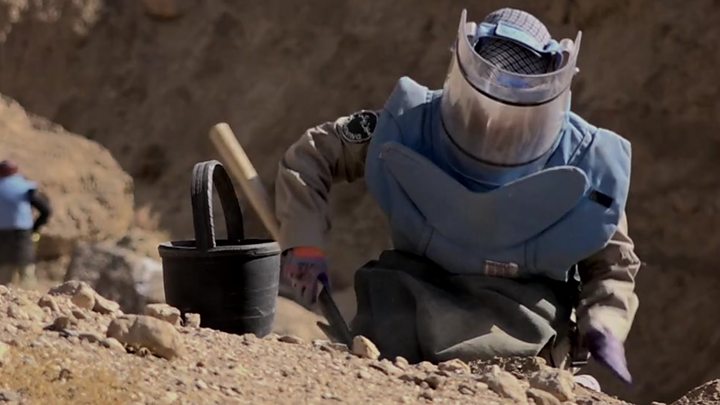
Media caption Meet Fatima and Fiza, some of the women removing landmines in Afghanistan

What’s the background to the Afghan war?

It began when the US launched air strikes one month following the 11 September 2001 attacks and after the Taliban had refused to hand over the man behind them, Osama bin Laden.

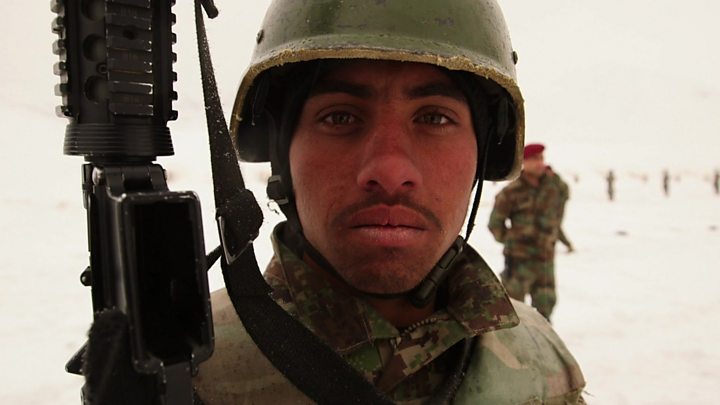
Media caption Tens of thousands of Afghan soldiers have been killed and injured. This is their story

The US was joined by an international coalition and the Taliban were quickly removed from power. However, they turned into an insurgent force and continued deadly attacks, destabilising subsequent Afghan governments.

The international coalition ended its combat mission in 2014, staying only to train Afghan forces. But the US continued its own, scaled-back combat operation, including air strikes.

The Taliban has however continued to gain momentum and last year the BBC found they were active across 70% of Afghanistan.

Media caption Zan TV presenter Ogai Wardak: “If the Taliban come, I will fight them”

Nearly 3,500 members of the international coalition forces have died in Afghanistan since the 2001 invasion.

The figures for Afghan civilians, militants and government forces are more difficult to quantify. In a February 2019 report, the UN said that more than 32,000 civilians had died. The Watson Institute at Brown University says 58,000 security personnel and 42,000 opposition combatants have been killed.

Why has the war lasted so long?

There are many reasons for this. But they include a combination of fierce Taliban resistance, the limitations of Afghan forces and governance, and other countries’ reluctance to keep their troops for longer in Afghanistan.

At times over the past 18 years, the Taliban have been on the back foot. In late 2009, US President Barack Obama announced a troop “surge” that saw the number of American soldiers in Afghanistan top 100,000.

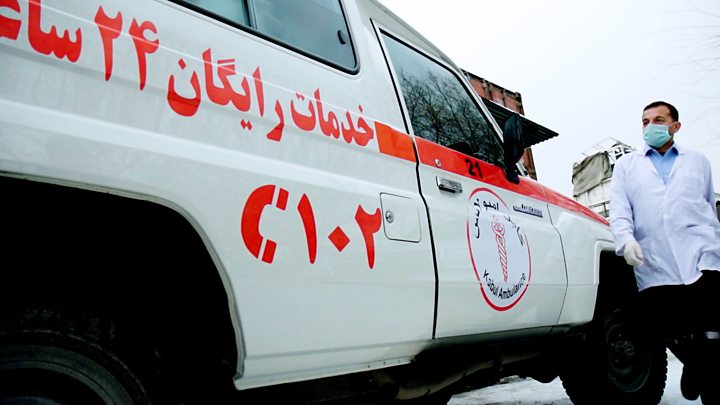
Media caption The BBC was given exclusive access to spend a week with ambulance workers in Afghanistan.

The surge helped drive the Taliban out of parts of southern Afghanistan, but it was never destined to last for years.

The BBC World Service’s Dawood Azami says there are five main reasons the war is still going on now. They include:

  • a lack of political clarity since the invasion began, and questions about the effectiveness of the US strategy over the past 18 years
  • the fact each side is trying to break what has become a stalemate – and that the Taliban have been trying maximise their leverage during peace negotiations
  • an increase in violence by Islamic State militants in Afghanistan – they’ve been behind some of the bloodiest attacks recently

There’s also the role played by Afghanistan’s neighbour, Pakistan.

Source: The BBC

11/11/2019

China’s Jingye Group agrees outline deal to rescue British Steel

BEIJING/LONDON (Reuters) – China’s Jingye Group said on Monday it has reached a provisional deal to buy British Steel and promised to invest 1.2 billion pounds ($1.5 billion) over the next decade and save thousands of jobs.

An agreement is of major political significance as Britain prepares to elect a new government on Dec. 12. The lack of opportunities in northern England, where British Steel is based, is an election issue, as the social gap between north and south widens.

The deal has yet to be finalised, but Business Minister Andrea Leadsom said in a video clip she was optimistic it would be.

Jingye Group Chairman Li Ganpo said the ambition was to create a world-class group.

“We believe that this combination will create a powerful, profitable and sustainable business that will ensure the long-term future of thousands of jobs while producing the innovative high-quality steel products that the world needs,” he said in a statement.

The value of the deal was not disclosed. Earlier a BBC report saying a deal was imminent gave a figure of 70 million pounds ($90 million), while sources close to the talks said the price was likely closer to 50 million pounds.

Uncertainty over the future of British Steel has hung over its workforce for much of the year. It was put into compulsory liquidation in May after Greybull Capital, which bought it for one pound from Tata Steel (TISC.NS) in 2016, failed to secure funding to continue its operations.

Its closure would impact 5,000 jobs in Scunthorpe and a further 20,000 jobs in the supply chain.

British Steel, which makes high-margin, long steel products used in construction and rail, would give Jingye access to Europe’s large infrastructure market.

But it could face challenges as the European steel industry grapples with weak demand, high costs for energy and labor and exacting environmental standards.

British Steel did not respond to requests for comment.

A previous deal, announced in August, with Turkey’s military pension fund OYAK fell apart and on Monday the fund said the purchase was not commercially viable.

British commodities tycoon Sanjeev Gupta’s Liberty Steel Group has also expressed interest in buying British Steel.

EMBRACE CHINA

Henri Murison, director of the Northern Powerhouse Partnership, set up to boost the economy in the north of England, said a rescue, if finalised, would be “very welcome news”.

He said it was time to embrace cooperation with China, which is extending its international reach through its Belt and Road global development strategy. Chinese companies also own a steel plant in Serbia and its sole copper mine.

Leading trade union Unite welcomed the prospect of Chinese ownership, but cautioned there had been “a series of false dawns” for the company.

Jingye, which also operates hotels and real estate, employs 23,500 and has registered capital of 39 billion yuan ($5.58 billion), giving it the financial clout to invest.

Under the terms of the agreement, Jingye would acquire certain assets of British Steel from the Official Receiver, subject to regulatory approvals.

The assets include the steelworks at Scunthorpe and Teesside in northern England, as well as its European units FN Steel in the Netherlands and British Steel France.

Chinese ownership may be contentious, especially in the steel industry. The European Union (EU), which does not include Serbia, has agreed safeguards to protect its own steel industry from competition from cheap imports from China and elsewhere.

Britain has said it will leave the EU but has yet to agree a deal on its departure from the political and economic bloc.

John Cullen,  business recovery partner  at accountancy firm Menzies LLP, said selling the whole British Steel business “in the current trading climate would be no mean feat”.

Source: Reuters

22/07/2019

Cambodia denies deal to allow armed Chinese forces at its naval base

WASHINGTON (Reuters) – China will be able to place armed forces at a Cambodian naval base under a secret pact between the two nations, the Wall Street Journal said on Sunday, although Cambodian officials denied such a deal had been struck.

The agreement, reached this spring but not made public, gives China exclusive access to part of Cambodia’s Ream Naval Base on the Gulf of Thailand, the Journal said, citing U.S. and allied officials familiar with the matter.

Such an arrangement would boost China’s ability to assert contested territorial claims and economic interests in the South China Sea, challenging U.S. allies in Southeast Asia.

Chinese and Cambodian officials denied such a pact existed, the Journal said.

“This is the worst-ever made up news against Cambodia,” Cambodian Prime Minister Hun Sen told the pro-government news site Fresh News on Monday.

“No such thing could happen because hosting foreign military bases is against the Cambodian constitution.”

Cambodian defence ministry spokesman Chhum Socheat told Reuters the report was “made up and baseless”.

In Beijing, foreign ministry spokesman Geng Shuang said, “As I understand it, the Cambodia side denied this.”

But he declined to respond to repeated questions whether China also denied the report.

“China and Cambodia are traditionally friendly neighbours,” Geng told a news briefing.

“We have cooperated in various areas. Our cooperation is open, transparent, and mutually beneficial and equal. I hope the relevant parties do not overinterpret it.”

Hun Sen’s strongest regional ally, China has poured billions of dollars in development assistance and loans into Cambodia through two-way frameworks and its Belt and Road initiative.

The initiative, unveiled by Chinese President Xi Jinping in 2013, aims to bolster a sprawling network of land and sea links throughout Asia, the Middle East, Europe and Africa.

It has attracted a flood of Chinese commercial ventures in Cambodia, including casinos and special economic zones.

This month the U.S. Defense Department suggested China may be attempting to gain a military foothold in Cambodia, in a letter to Cambodia asking why the nation had turned down an offer to repair a naval base.

In a statement, the State Department urged Cambodia to reject such an arrangement, saying the nation had a “constitutional commitment to its people to pursue an independent foreign policy”.

It added, “We are concerned that any steps by the Cambodian government to invite a foreign military presence in Cambodia would threaten the coherence and centrality of the Association of Southeast Asian Nations in coordinating regional developments, and disturb peace and stability in Southeast Asia.”

Cambodia denied reports last November that China had been lobbying it since 2017 for a naval base that could host frigates, destroyers and other vessels of the People’s Liberation Army Navy.

Source: Reuters

Law of Unintended Consequences

continuously updated blog about China & India

ChiaHou's Book Reviews

continuously updated blog about China & India

What's wrong with the world; and its economy

continuously updated blog about China & India