Archive for ‘destroyed’

22/05/2020

Cyclone Amphan: Survivors return to face destruction left by storm

cyclone bangladeshImage copyright AFP
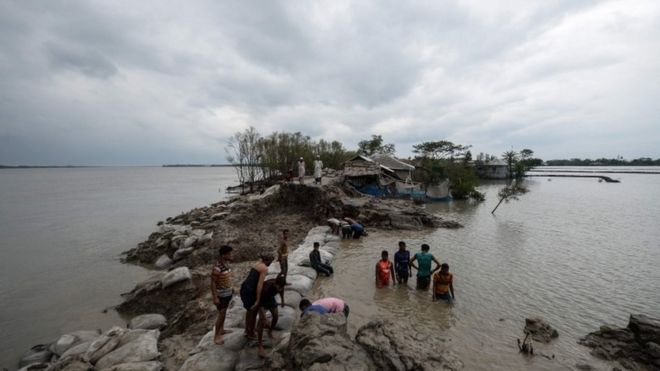
Image caption Embankments have been washed away in Bangladesh

Millions of people across Bangladesh and eastern India are taking stock of the devastation left by Cyclone Amphan.

A massive clean-up operation has begun after the storm left 84 dead and flattened homes, uprooted trees and left cities without power.

India’s Prime Minister Narendra Modi has arrived in West Bengal state to conduct an aerial survey.

Authorities in both countries had evacuated millions of people before the storm struck.

Covid-19 and social-distancing measures made mass evacuations more difficult, with shelters unable to be used to full capacity.

Officials also said people were afraid and reluctant to move to shelters for fear of contracting the virus.

The cyclone arrived with winds gusting up to 185km/h (115mph) and waves as high as 15ft.
cyclone bangladeshImage copyright REUTERS
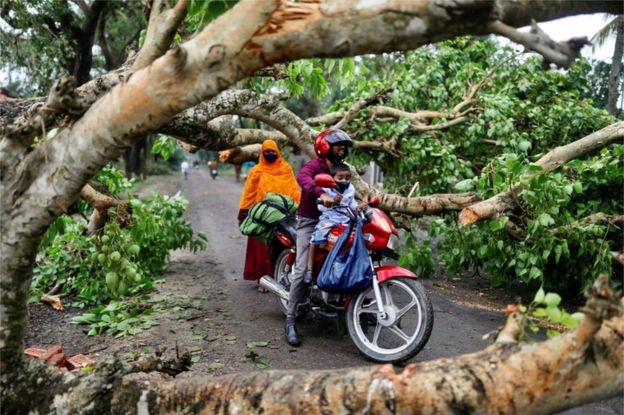
Image caption Roads have been blocked by falling trees in Bangladesh
Presentational white space
cyclone west bengalImage copyright AFP
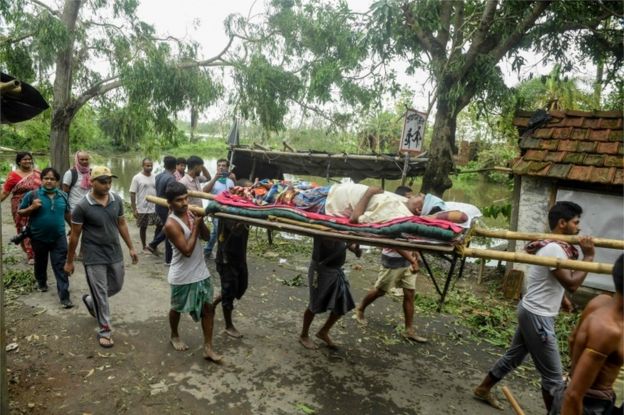
Image caption Many people have been injured in wall collapses in Bengal

It is the first super cyclone to form in the Bay of Bengal since 1999. Though its winds had weakened by the time it struck, it was still classified as a very severe cyclone.

Three districts in India’s West Bengal – South and North 24 Parganas and East Midnapore – were very badly hit.

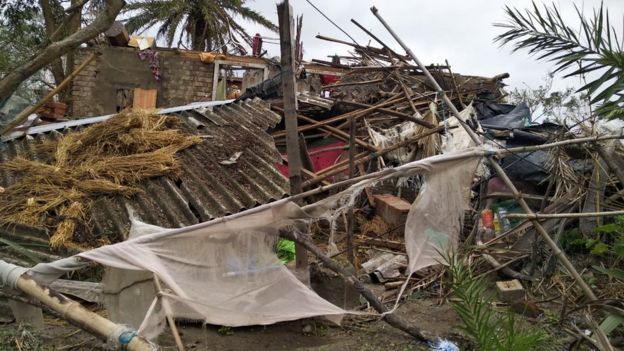
In Bangladesh, there are reports of tens of thousands of homes damaged or destroyed and many villages submerged by storm surges in low-lying coastal areas like Khulna and Satkhira.

The affected areas include the Sunderbans, mangroves spread over an area of more than 10,000 square kilometres that spans both India and Bangladesh – the swampy islands are home to more than four million of the world’s poorest people.
Cyclone leaves a trail of destruction in the SundarbansImage copyright MUKTI
Image caption Many homes, built of brick and mud, have been washed away

Those in the Sunderbans say it is too early to estimate casualties in the area, which is now cut-off from the mainland by the storm.

“There are houses which have collapsed and people could be trapped in them but we don’t know yet,” Debabrat Halder, who runs an NGO in one of the villages, told the BBC.

He recalls cyclone Bulbul in November 2019, which was followed by a huge incidence of fever, diarrhoea and flu, and is afraid that that the same may happen again.

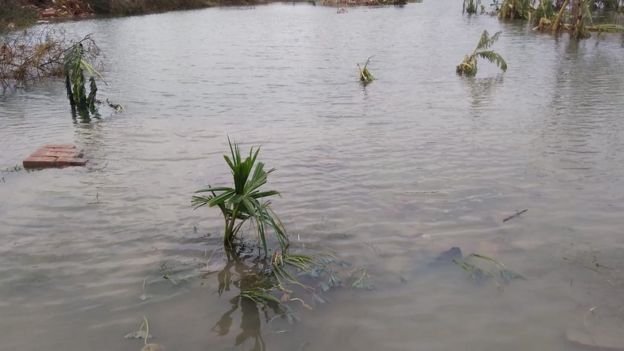
And worse, he adds, is that the flooding from contaminated sea water, has likely destroyed the soil.

“Nothing will grow in this soil,” he says, adding that it will likely take years to convert it into fertile land again.
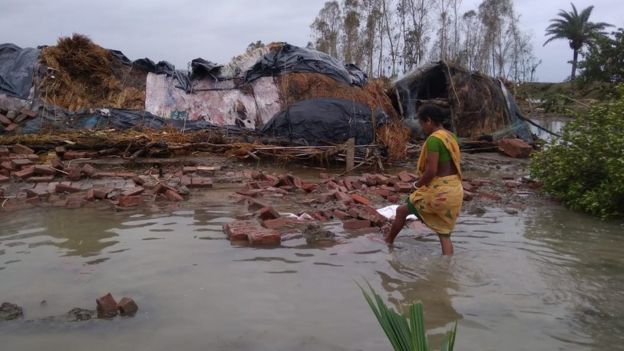
Cyclone Amphan has destroyed many houses in the regionImage copyright MUKTI
Image caption The Sunderbans delta is frequently hit by severe storms
Presentational white space
Flooding from contaminated sea water, has likely destroyed the soil.Image copyright MUKTI
Image caption Crops have all been destroyed by the flooding

Kolkata, the capital of West Bengal, and one of India’s biggest cities has been devastated. Its roads are flooded and the city was without power for more than 14 hours.

The state’s chief minister, Mamata Banerjee, said the devastation in Kolkata was “a bigger disaster than Covid-19”.

But assessment of the damage is being hampered by blocked roads and flooding in all these areas.

Source: The BBC

16/10/2019

Ayodhya dispute: The complex legal history of India’s holy site

In this file photograph taken on December 6, 1992 Hindu youths clamour atop the 16th century Muslim Babri Mosque five hours before the structure was completely demolished by hundreds supporting Hindu fundamentalist activists.Image copyright AFP
Image caption The dispute turned to violence in 1992 when a Hindu mob destroyed a mosque at the site

The Ayodhya dispute, which stretches back more than a century, is one of India’s thorniest court cases and goes to the heart of its identity politics.

Hindus believe that Ayodhya, a city in the northern state of Uttar Pradesh, is the birthplace of one of their most revered deities, Lord Ram.

But Muslims say they have worshipped there for generations.

A court case pertaining to the ownership of the land has been dragging on in the Supreme Court for years, but a verdict is expected next month.

The court concluded its final hearing into the case on Wednesday.

What is the row actually about?

At the centre of the row is a 16th Century mosque that was demolished by Hindu mobs in 1992, sparking riots that killed nearly 2,000 people.

Many Hindus believe that the Babri Masjid was actually constructed on the ruins of a Hindu temple that was demolished by Muslim invaders.

Muslims say they offered prayers at the mosque until December 1949 when some Hindus placed an idol of Ram in the mosque and began to worship the idols.

Over the decades since, the two religious groups have gone to court many times over who should control the site.

Since then, there have been calls to build a temple on the spot where the mosque once stood.

The case currently being heard by five judges in the top court is to determine who the land in question belongs to.

A verdict is expected between 4 and 15 November.

Hinduism is India’s majority religion and is thought to be more than 4,000 years old. India’s first Islamic dynasty was established in the early 13th Century.

Who is fighting the case?

The long and complicated property dispute has been dragging in various courts for more than a century.

This particular case is being fought between three main parties – two Hindu groups and the Muslim Waqf Board, which is responsible for the maintenance of Islamic properties in India.

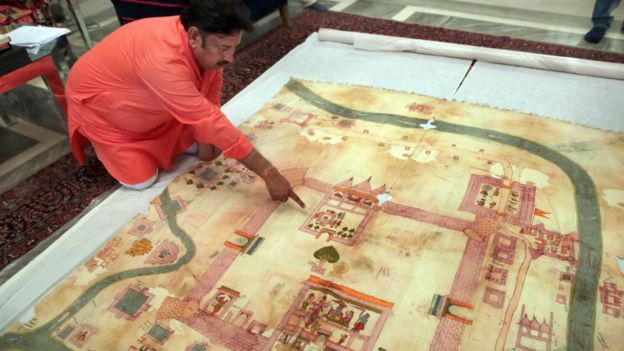
Ramu Ramdev, OSD at the City Palace, points out Lord Ramas birth place in an old dilapidated map of Ayodhya depicting the birthplace of Lord Rama, being taken out from archives of erstwhile royal family of Jaipur, at City Palace, on August 11, 2019 in Jaipur, India.Image copyright GETTY IMAGES

The Hindu litigants are the Hindu Mahasabha, a right-wing political party, and the Nirmohi Akhara, which is a sect of Hindu monks.

They filed a title dispute in the Allahabad High Court in 2002, a decade after the mosque was demolished.

A verdict in that case was pronounced in September 2010 – it determined that the 2.77 acres of the disputed land would be divided equally into three parts.

The court ruled that the site should be split, with the Muslim community getting control of a third, Hindus another third and the Nirmohi Akhara sect the remainder. Control of the main disputed section, where the mosque once stood, was given to Hindus.

The judgement also made three key observations.

It affirmed the disputed spot was the birthplace of Lord Ram, that the Babri Masjid was built after the demolition of a Hindu temple and that it was not built in accordance with the tenets of Islam.

The Supreme Court suspended this ruling in 2011 after both Hindu and Muslim groups appealed against it.

What are the other important legal developments?

In 1994 the Supreme Court, which was ruling on a related case, remarked that the concept of a mosque was “not integral to Islam”. This has bolstered the case made by Hindus who want control of the entire site.

In April 2018, senior lawyer Rajeev Dhavan filed a plea before the top court, asking judges to reconsider this observation.

But a few months later the Supreme Court declined to do so.

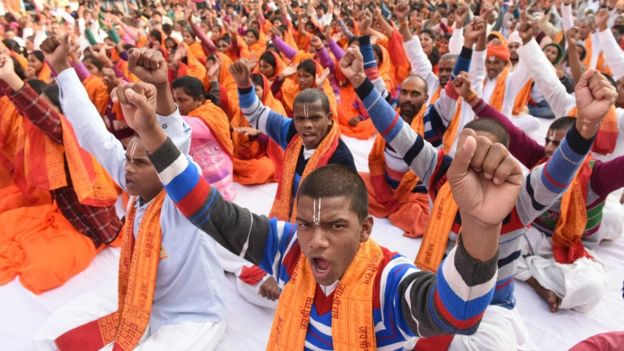
VHP saints at Karsevak Puram taking park in Hindu Swabhiman Sammelan organized by the VHP to mark 25th anniversary Babri Masjid demolition, on December 6, 2017 in AyodhyaImage copyright GETTY IMAGES
Image caption Hindu activists are demanding the construction of the Ram Temple

Have religious tensions eased in India in recent years?

Ever since the Narendra Modi-led Hindu nationalist BJP first came to power in 2014, India has seen deepening social and religious divisions.

The call for the construction of a Hindu temple in Ayodhya has grown particularly loud, and has mostly come from MPs, ministers and leaders from the BJP since it took office.

Restrictions on the sale and slaughter of cows – considered a holy animal by the majority Hindus – have led to vigilante killings of a number of people, most of them Muslims who were transporting cattle.

An uninhibited display of muscular Hindu nationalism in other areas has also contributed to religious tension.

Most recently, the country’s home minister Amit Shah said he would remove “illegal migrants” – understood to be Muslim – from the country through a government scheme that was used recently in the north-eastern state of Assam.

Source: The BBC

26/09/2019

Sichuan earthquake survivor ready to join his airborne heroes at China’s 70th anniversary parade

  • Cheng Qiang was just 12 when a magnitude 8 tremor destroyed his village, but he never forgot the heroism of the soldiers sent to help and swore one day to join their ranks
  • Now a squad leader, on October 1 he will also be part of the National Day celebrations in Tiananmen Square
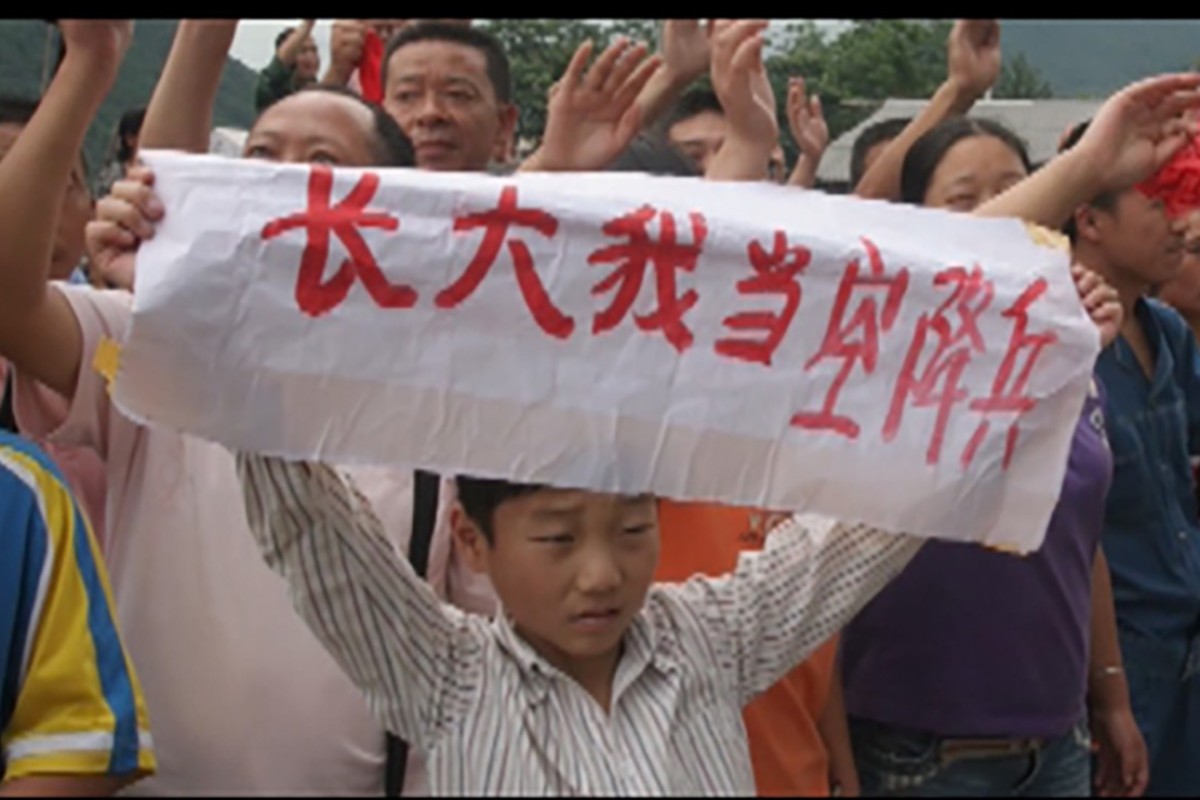
Cheng Qiang was just 12 when his home in Sichuan was hit by a massive earthquake and airborne troops were sent to help. Photo: People.cn
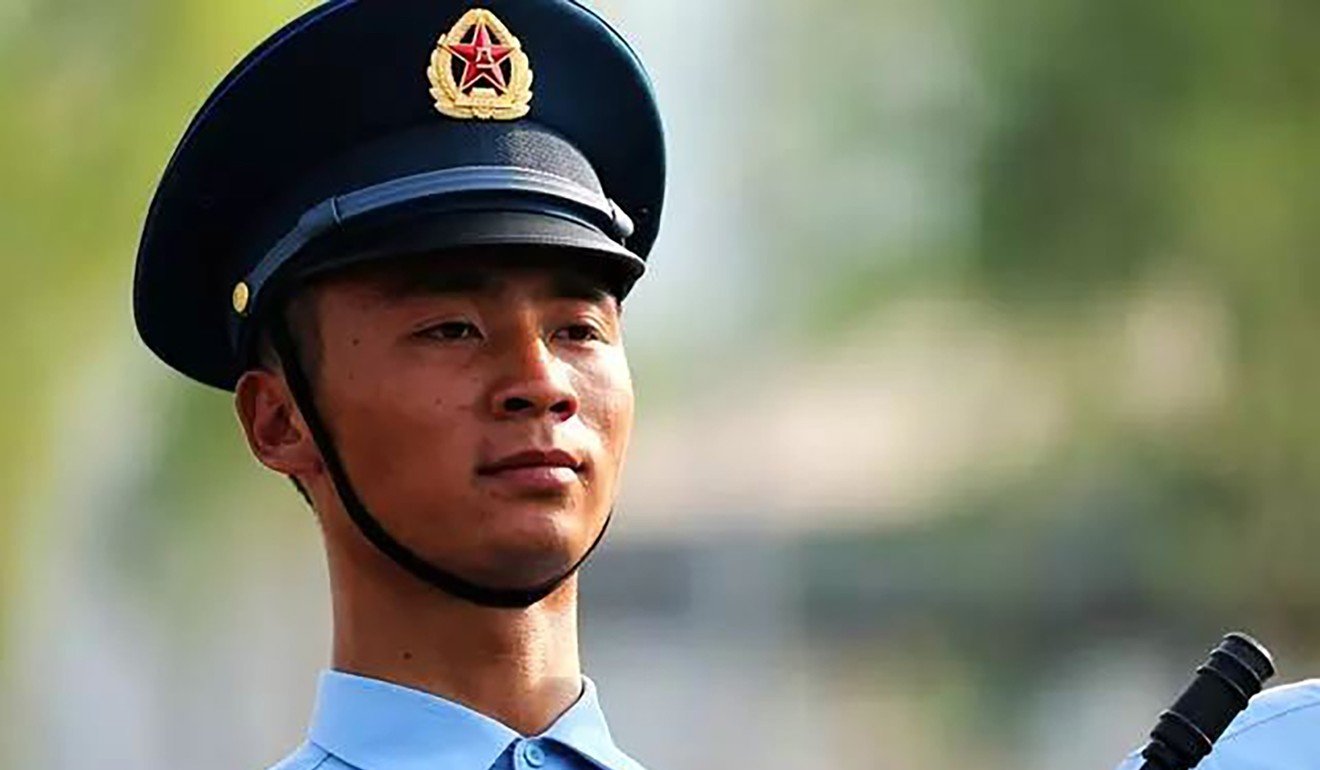
A young man who survived the devastating Sichuan earthquake and vowed to one day join the ranks of the soldiers who spent months rescuing people from the rubble will on Tuesday lead his very own squad of airborne troops in Tiananmen Square as part of the celebrations for the country’s 70th anniversary.
Now 23, Cheng Qiang was just 12 when on May 12, 2008 he and a group of friends played truant from school to go swimming in a local river, Xinhua reported on Thursday.
When the boys had finished their fun they returned to their village in the township of Luoshui to find their school and many other buildings had been razed to the ground. The death toll from the magnitude 8 quake would eventually rise to 87,000, with 370,000 people injured.
Cheng says he is ready to “continue the glory of the airborne troops” at Tuesday’s parade. Photo: Thepaper.cn
In the days and weeks that followed the devastation, tens of thousands of people from around China and the world descended on towns and villages across Sichuan to help with the rescue effort.
But the ones who impressed Cheng the most were the soldiers from the People’s Liberation Army (PLA) with the word “Airborne” printed on the helmets.

“Sometimes they had to remove the debris with their bare hands which were already covered in blood,” he said.

“But they just carried on and eventually pulled dozens of people out of the rubble. I knew then that I wanted to be one of them.”

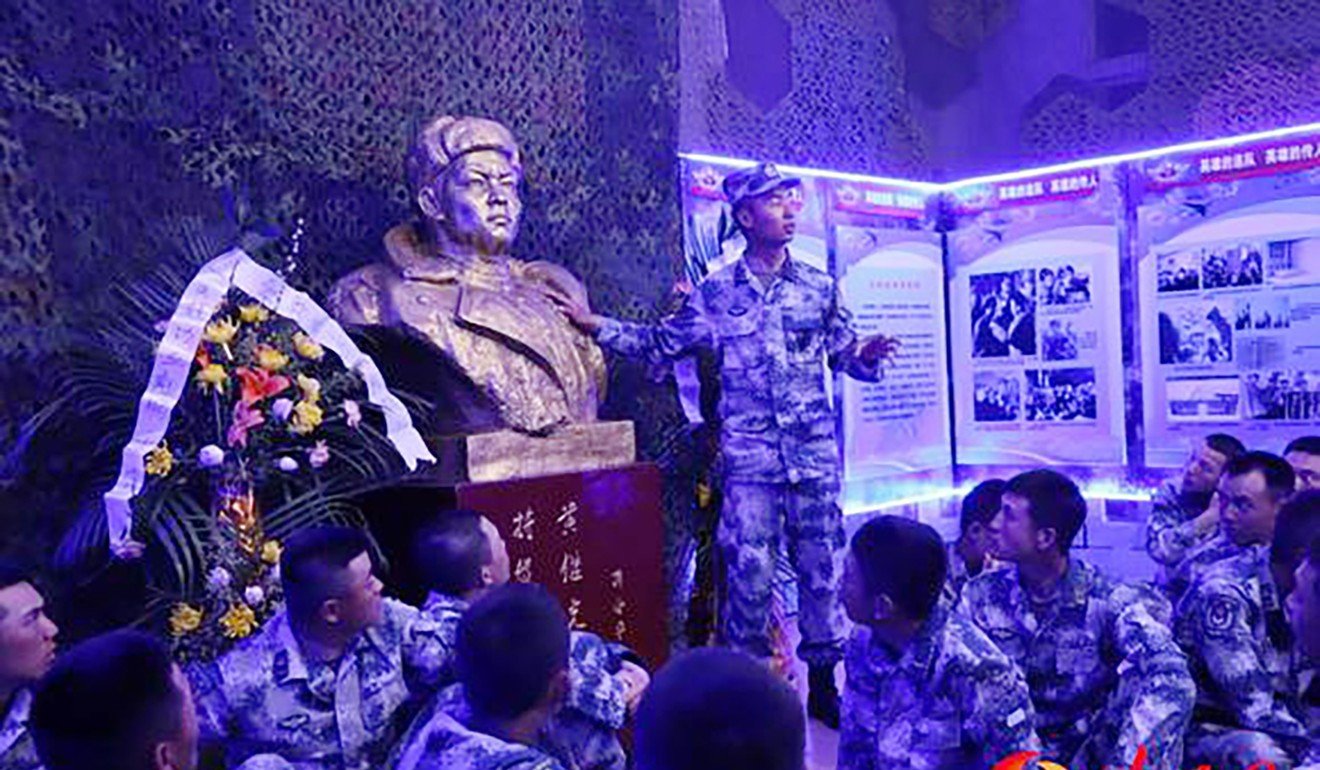
Chnag said that after the quake having the troops in his village made him feel safe. Photo: People.cn
Cheng said that after the quake having the troops in his village made him feel safe. Photo: People.cn

Having the troops in his village made Cheng feel safe, he said, and he spent his days following them around and doing what he could to help.

Three months later, when the soldiers had completed their work and were preparing to pull out, Cheng said he was determined to show his new heroes just how grateful he was to them.

As the villagers gathered at the roadside to bid farewell to the men who had become their saviours, the young boy held up a handwritten sign. It said simply: “I want to be an airborne soldier when I grow up.”

The moment was captured on camera by a press photographer, and the image soon became a symbol of the gratitude felt by the people who had seen their lives and communities shattered but knew they had not been forsaken.

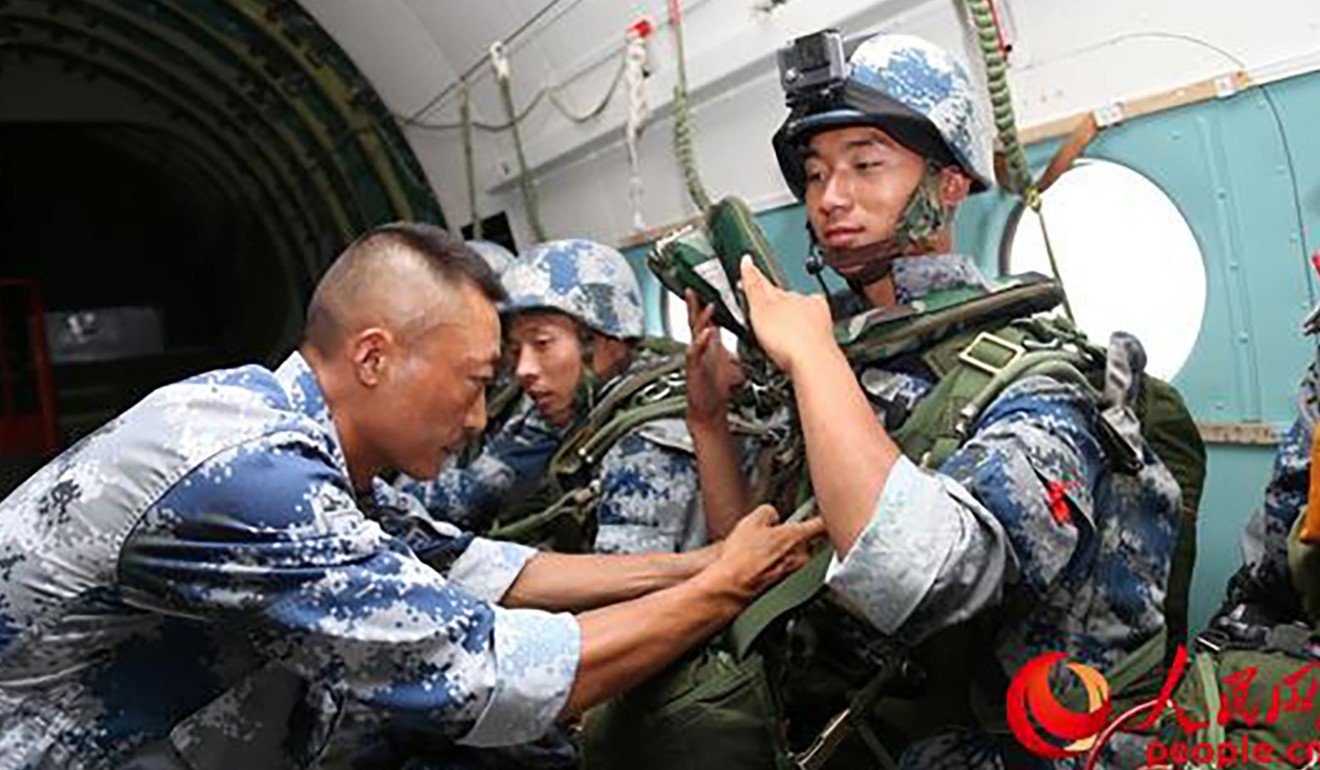
Cheng said he felt dizzy when he first jumped out of a plane. Photo: People.cn

Five years after the troops rolled out, Cheng was preparing to go to college when he heard the PLA was recruiting and that there were places available with the airborne division.

The teenager did not need a second invitation, and after securing a place on a training course and successfully completing it he joined the ranks of his heroes in 2013.

Not that everything was plain sailing, however.

“When I first jumped out of a plane I felt very dizzy and didn’t really know what was going on,” he said.

Thankfully Cheng managed to overcome his vertigo and went on to become a squad leader.

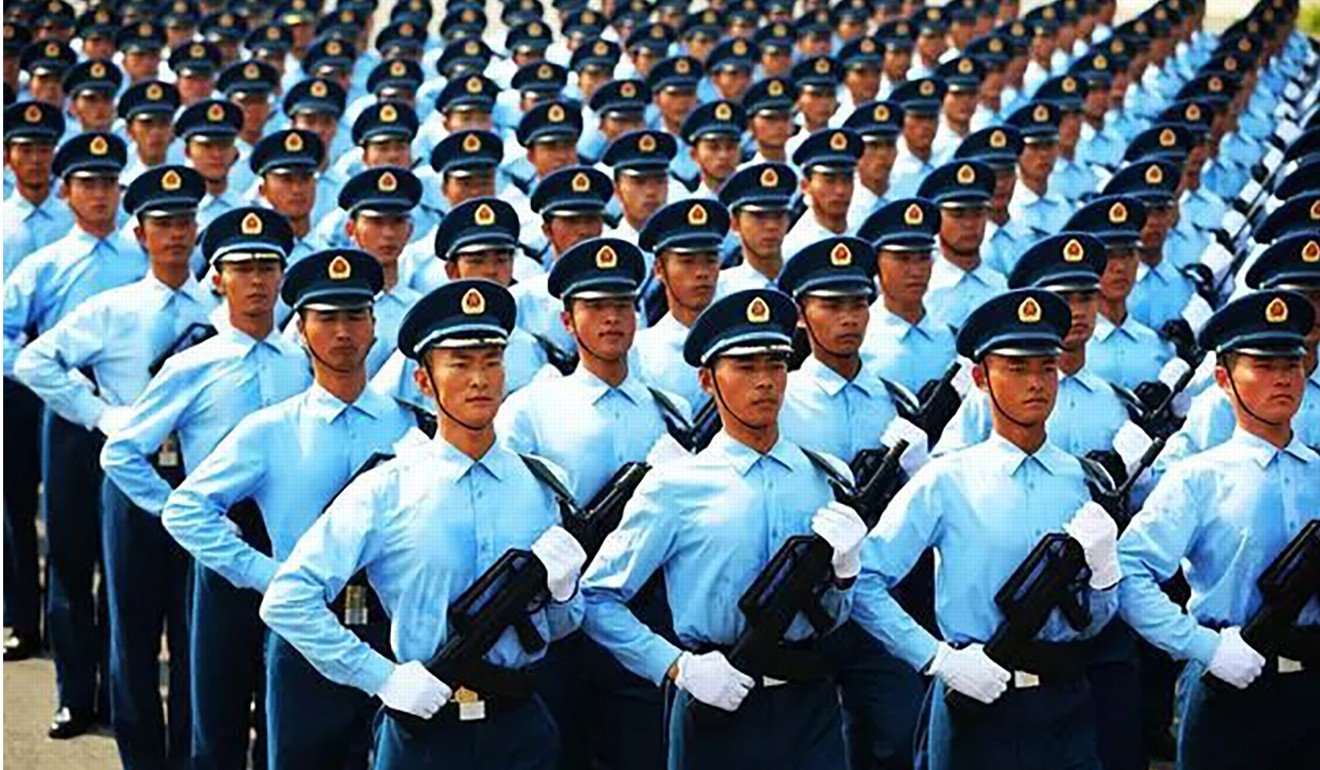
Tens of thousands of troops will take part in China’s National Day parade on October 1. Photo: Thepaper.cn

When the preparations were being made for next week’s anniversary celebrations in Beijing, Cheng said he and his squad were chosen to take part.

He said that during the rehearsals for the grand parade, he was repeatedly reprimanded by his trainer for not keeping his knees close enough together, for lifting his feet too high and for letting his gun slip off shoulder.

But he was determined to get it right, and after weeks of hard work and 11 years on from the tragedy that devastated his world, he said he was now ready to put his best foot forward.

“The nightmare of earthquake has long gone,” he said. “I am here to continue the glory of the airborne troops. I am ready for inspection.”

Source: SCMP

Law of Unintended Consequences

continuously updated blog about China & India

ChiaHou's Book Reviews

continuously updated blog about China & India

What's wrong with the world; and its economy

continuously updated blog about China & India