Chindia Alert: You’ll be Living in their World Very Soon
aims to alert you to the threats and opportunities that China and India present. China and India require serious attention; case of ‘hidden dragon and crouching tiger’.
Without this attention, governments, businesses and, indeed, individuals may find themselves at a great disadvantage sooner rather than later.
The POSTs (front webpages) are mainly 'cuttings' from reliable sources, updated continuously.
The PAGEs (see Tabs, above) attempt to make the information more meaningful by putting some structure to the information we have researched and assembled since 2006.
Police say woman told toddler to use a rubbish bin when he needed to go to the toilet then got into argument with driver after he called her ‘uncivilised’
Security camera footage shows her bashing on compartment door and grabbing the man’s coat as he is driving
Mother detained over bus driver attack after letting son urinate on bus
4 Mar 2019
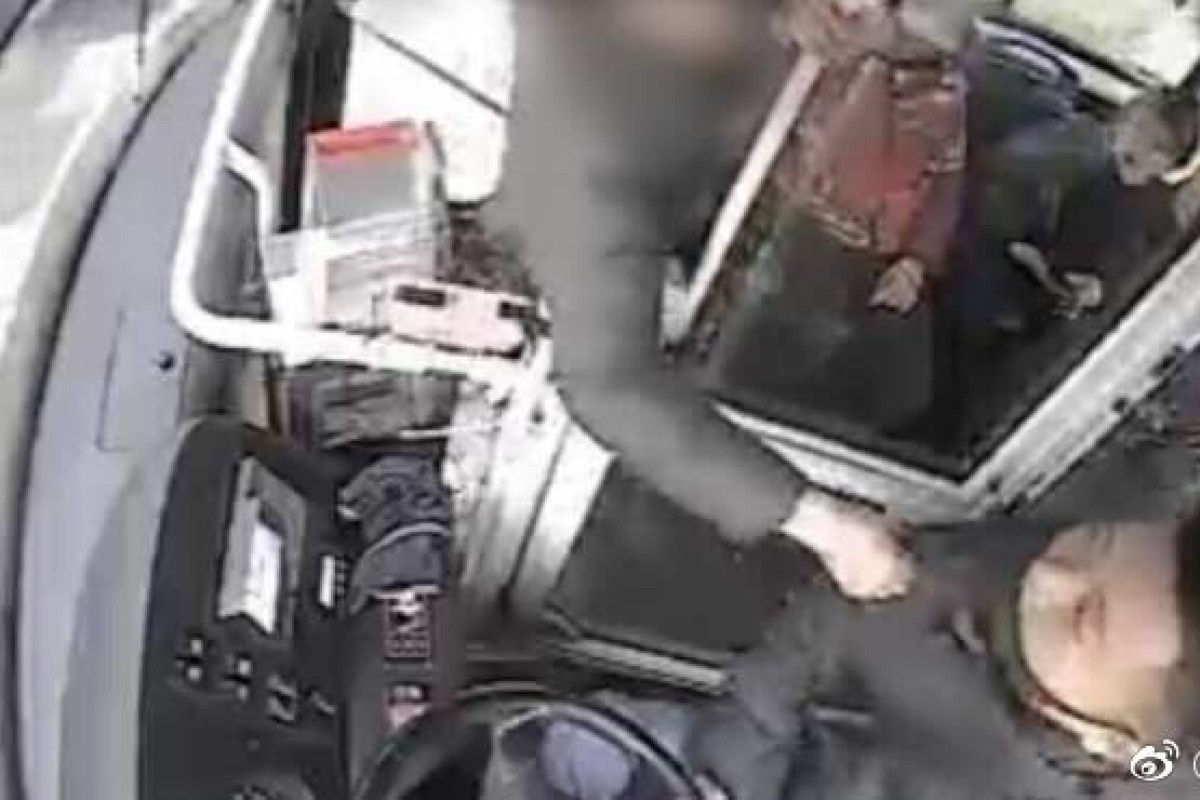
The woman is seen in security camera footage grabbing the bus driver’s coat while he is behind the wheel. Photo: Weibo
A mother in central China has been detained after she allowed her two-year-old son to urinate in a rubbish bin on a bus then attacked the driver when he told her she was “uncivilised”.
Security camera footage of the incident in Dazhi, Hubei province on Saturday shows the woman supporting the toddler by the bin on the floor of the bus while he urinates in front of the other passengers.
She is then seen rushing up to the driver and arguing with him after he complains about her behaviour, bashing on the compartment door and grabbing the man’s coat as he is driving.
A police officer told news website PearVideo on Sunday that the woman, identified only by her surname Chen, said the boy needed to go to the toilet while they were on the bus so she took him over to the bin.
“The driver saw them and said she was uncivilised, and they got into an argument over it,” the officer said. “Chen became agitated – she hit the driver’s compartment door and reached around to attack him while he was driving.”
The driver, who was not identified, is seen in the security footage calmly pulling over and calling the police while the woman is attacking him.
Chen has been placed under criminal detention for posing a threat to public security and Dazhi police are investigating the case, according to the report.
It comes after a series of recent attacks on bus drivers in China, including an accident in October when an angry passenger who missed her stop assaulted the driver, causing the bus to veer off a bridge and crash into the Yangtze River in Chongqing, killing all 15 people on board.
A police investigation found that the 48-year-old woman had been fighting with the driver as he tried to steer the bus when the crash happened.
Reacting to the latest case, some social media users said they understood the mother’s situation, but it has angered others, who say she should have used a diaper or got off the bus at the next stop.
“Anyone might need to use the toilet [on a bus], especially a kid, but parents should take heed of the criticism – she was clearly in the wrong,” one person wrote on Weibo, China’s Twitter.
There have been other cases in recent years of Chinese parents sparking anger for letting their children urinate in public – on the mainland and elsewhere. Last month, photos of a Chinese tourist allowing her son to pee on the floor of the Forbidden City in Beijing triggered a strong reaction on social media, with many people criticising the woman.
SRINAGAR (Reuters) – Five people were killed in a gun battle between members of a Pakistani militant group and Indian security forces in disputed Kashmir on Sunday as India intensified a security
Indian authorities have killed at least eight JeM militants and detained around 50 militants, sympathizers and their relatives since the bomb attack, which also sparked the roundup of separatists which India says is needed to head off trouble ahead of a general election to be held by May.
Most of those rounded up over the last two days were linked to the Islamist party Jamaat-e-Islami (JeI).
“Since JeI has a wider network across Kashmir and they are mobilising anti-India protests, their arrest could help in curbing such protests ahead of elections,” the senior police officer said.
One well-known separatist leader, Abdul Gani Bhat, was placed under house arrest, according to his political party.
Separatists called a strike to protest against the detentions. Many shops, petrol stations, and businesses closed, with few people and vehicles on streets in sensitive areas, except for troop patrols.
In some areas of the main city of Srinagar, the government limited the movement of people and vehicles.
“The restrictions have been imposed as a precautionary measure to avoid any untoward incident,” the police said.
FUEL SUPPLIES LOW
The government of Jammu and Kashmir said fuel rationing had been introduced in the Kashmir Valley where there was only enough gasoline for one day, diesel for four days and no liquefied petroleum gas (LPG).
The government said it would seek to increase supplies to the region and that shortages are the result of road blockages after the suicide bomb attack.
Indian paramilitary troops in riot gear arrived in strength at first light, said Shakeel Ahmad, a resident of Nowhatta in the Srinagar district.
“At places, they have blocked the main roads with steel barricades and concertina wire,” he said.
State Governor Satya Pal Malik called on residents not to believe “rumours of any extreme nature”. The government said an increase in police numbers was to prevent candidates and voters from being intimidated into not standing or voting in the general election.
Separatist leader Mirwaiz Umar Farooq, who chairs the Hurriyat Conference of separatist groups, said arbitrary arrests and jailing of leaders, activists and young people for their political beliefs had happened across Kashmir for 30 years.
“Intimidating activists and leadership will not deter them from their path, nor will it stop people from demanding the resolution of the Kashmir dispute through self-determination,” he said.
Reuters’ telephone calls to the Indian home ministry to seek comment went unanswered.
TENSIONS RAISED
The suicide bomb attack has raised tensions between India and Pakistan which both claim Kashmir in full but rule it in part. India blames Pakistan for harbouring militant groups operating in Kashmir, which Pakistan denies.
After the attack, India dropped trade privileges for Pakistan and prepared to send as many as 10,000 more troops to the contested area, according to a home ministry letter seen by Reuters.
The Indian army said that early on Sunday evening Pakistan violated the two nations’ ceasefire at the Rajouri area of the border, through shelling from mortars and small arms fire. Defence spokesman Lieutenant Colonel Devender Anand said the Indian army was “retaliating strongly and effectively”.
Ceasefire violations are not unusual along the border.
A Pakistani security official said Pakistani forces had not initiated any action but had responded to Indian firing.
Kashmir is likely to be a key issue in India’s election, distracting from concerns about how Prime Minister Narendra Modi and his Bharatiya Janata Party have managed the economy.
Modi has promised a strong response to the attack, saying in a monthly radio broadcast on Sunday that it had caused anguish to all of India.
Modi added that the army had vowed to destroy the militants and those who helped them.
Islamabad has warned it would respond with “full force” if attacked. On Sunday, Foreign Minister Shah Mehmood Qureshi called on India to show restraint or it would put “the entire region’s peace and security at stake”.
India’s Supreme Court will hear a case this week seeking to drop a constitutional provision that bars non-residents from moving to the state of Jammu and Kashmir that encompasses the Muslim-majority region.
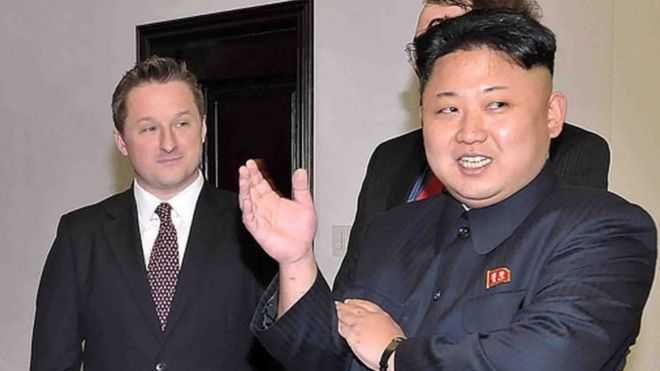
Michael Spavor is a businessman based in Dandong, near the Chinese border with North Korea. He has deep ties to the North Korean government.
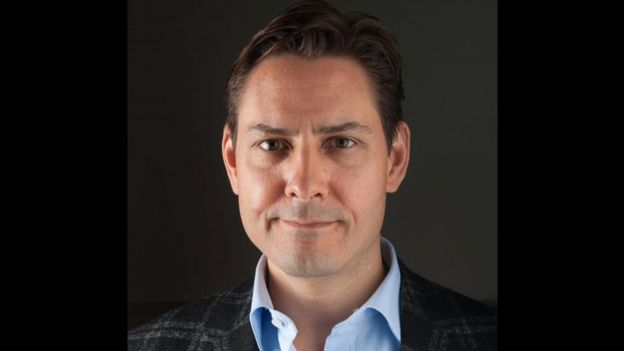
Ex-diplomat Michael Kovrig currently works for a think tank, the International Crisis Group (ICG), which has said it is concerned for his health and safety.
Timeline of events
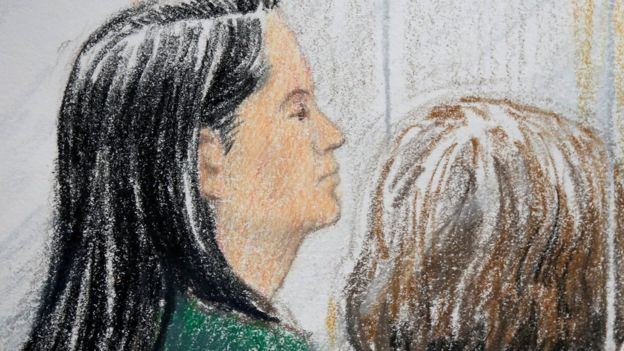
1 December: Meng Wanzhou arrested in Canadian city of Vancouver at the request of the US as part of an inquiry into alleged sanctions-busting by her company Huawei
10 December: Canadian former diplomat Michael Kovrig arrested in Beijing “on suspicion of engaging in activities that harm China’s state security”
11 December: Meng Wanzhou released on bail but still faces the prospect of extradition to the US
12 December: China confirms the detention of businessman Michael Spavor for “activities that endanger China’s national security”, saying the investigation began on 10 December
He is being held officially “on suspicion of engaging in activities that harm China’s state security”.
Image copyrightAFPImage captionMichael Kovrig was working for a think tank that focuses on conflict reduction research
However, a Chinese foreign ministry spokesman, Lu Kang, suggested another reason, saying the ICG had not been registered as a non-governmental organisation in China and therefore it was unlawful for its staff to work there.
Canadian Foreign Minister Chrystia Freeland has said Mr Kovrig’s case was raised directly with Chinese officials.
Foreign ministry spokesman Guillaume Bérubé confirmed that Mr Spavor had contacted them earlier in the week because “he was being asked questions by Chinese authorities”.
Canada is working hard to determine Mr Spavor’s whereabouts, Mr Bérubé said.
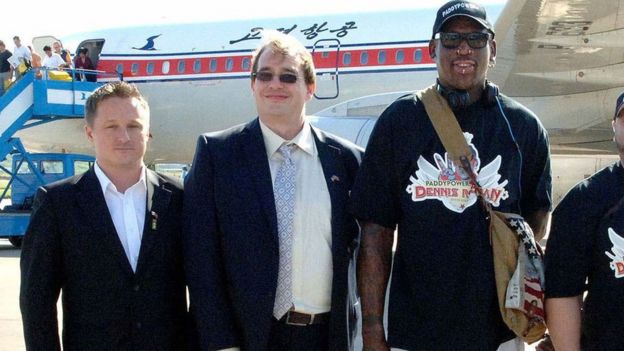
Image copyrightAFPImage captionMichael Spavor (left) helped arrange ex-NBA star Dennis Rodman’s trip to North Korea in 2013
China state media confirmed on Thursday that, as with the previous arrest, Mr Spavor was under investigation on suspicion of “engaging in activities that endanger China’s national security”.
Mr Spavor runs an organisation called Paektu Cultural Exchange, which organises business, culture and tourism trips to North Korea.
He is a regular visitor to North Korea and regularly comments in the media on Korean issues. He is particularly well known for helping to arrange the visit by former NBA star Dennis Rodman to North Korea in 2013.
Rodman is a personal friend of North Korean leader Kim Jong-un.
The US has been investigating Huawei, one of the world’s largest smartphone makers, since 2016, believing that it used a subsidiary to bring US manufacturing equipment and millions of dollars in transactions to Iran illegally.
The Supreme Court of British Columbia was told Ms Meng had used a Huawei subsidiary called Skycom to evade sanctions on Iran between 2009 and 2014.
She had allegedly misrepresented Skycom as being a separate company.
Ms Meng faces up to 30 years in prison in the US if found guilty of the charges, the Canadian court heard.
Are the arrests in China an act of retaliation?
After the detention of Mr Kovrig, Canada said there was no “explicit indication” of any link to the Meng case but China experts doubted that it was just a coincidence.
Speaking on condition of anonymity, a Western diplomat in China told Reuters news agency: “This is a political kidnapping.”
Asked if the detention of the two Canadians was in response to Ms Meng’s arrest, China’s foreign ministry spokesman described it as an “operation taken by China’s relevant national security authorities in accordance with the laws”.
Lu Kang said Ms Meng’s arrest was “wrong practice”, adding: “I can point out that, since the Canadian government took the wrong action at the request of the US and took Meng Wanzhou into custody, many Chinese are wondering if their trips to Canada are safe.”
Three kindergarten teachers in northeast China have been detained on suspicion of physically abusing pupils in their care, including stabbing them with toothpicks, according to local media reports.
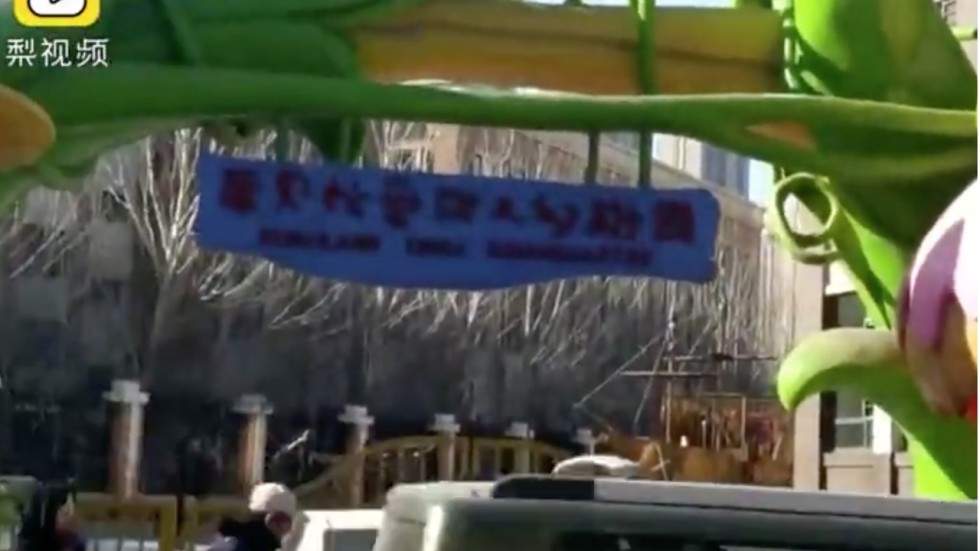
Police in Shenyang, Liaoning province, launched an investigation into the Kubeiland Emile International Kindergarten after receiving complaints from parents that at least 15 of its pupils had been abused by staff.
“They [pupils] would be pricked if they couldn’t finish their meal, or moved during nap time or didn’t dance well,” one parent was quoted as saying by China Business Journal.
The youngsters were even warned that if they spoke out about the punishments they received there would be worse to come, another parent said.
Several parents had medical records and photographs showing multiple prick marks on their children’s hands, legs, bottoms and abdomens, the report said.
Another parent said the school even tried to cover up the abuse by sending children who bled after being pricked to the school clinic to have their wounds cleaned up and sterilised.
In a report by video news website Pear Video, a mother was quoted as saying that she became suspicious after catching her son stabbing other children with a toothpick. When she challenged him about it, the boy said he was copying his teacher.
A father of another of the pupils echoed the claim that the children were warned not to report the abuse.
“He [the man’s son] said a teacher told them she could see and hear them talking to their parents, so they must not tell.”
The police officer in charge of the case said that three people had been detained pending a full investigation into the allegations.
However, Su Ning, the kindergarten’s legal representative, dismissed claims children had been abused and said the school had provided footage from its surveillance cameras that would invalidate the charges.
Accusations of child abuse in schools are not uncommon in China. Last month, eight teachers from a nursery in Shanghai were sentenced to prison terms of up to 18 months for roughly handling young children and force feeding them mustard.






 CHINDIA ALERT: You'll be living in their world, very soon

COMMENTS: