Archive for ‘Djibouti’

01/10/2019

Military advances and Xi Jinping’s supreme status among the themes as Beijing celebrates National Day

  • 70th anniversary of the founding of the People’s Republic of China marked by its biggest ever military parade and huge civilian parade
  • Xi says no force can stop China ‘marching forward’ and vows to protect the long-term stability of Hong Kong
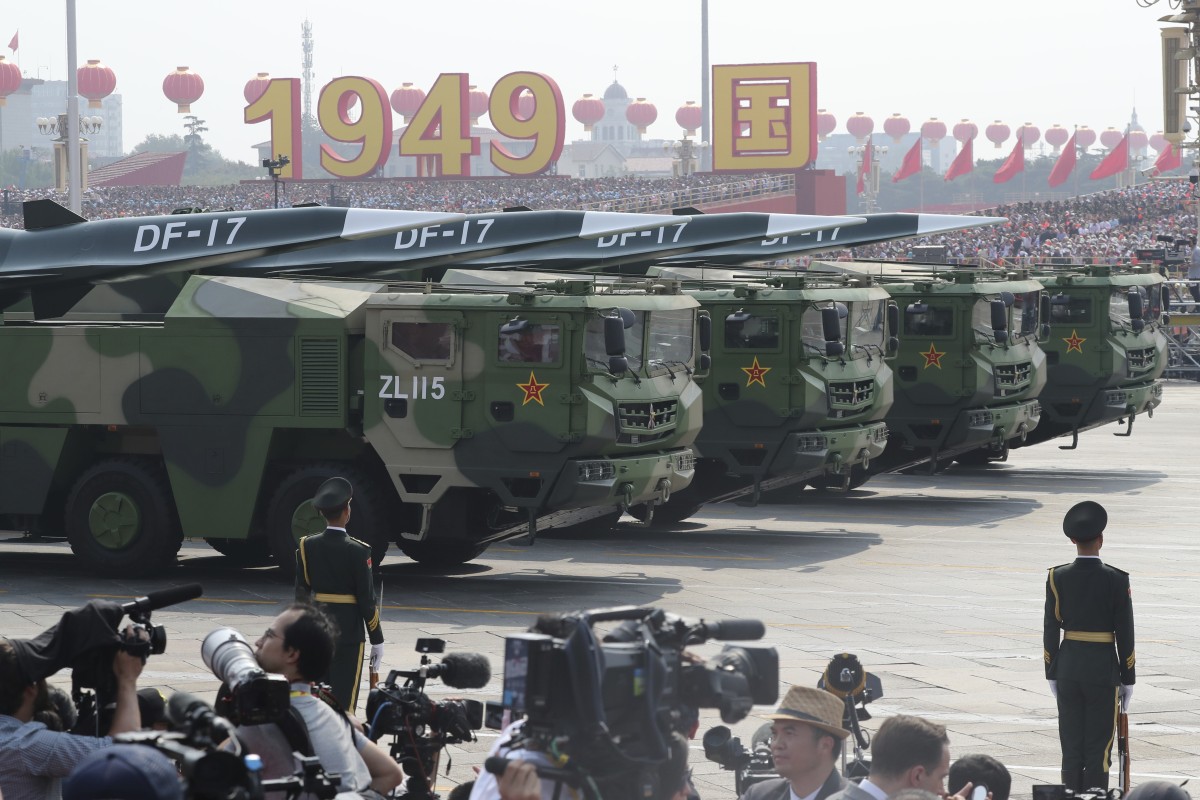
Military vehicles carry DF-17 missiles capable of reaching the US mainland during the parade to mark 70 years of the People’s Republic. Photo: AP
China staged a massive military parade in Beijing on Tuesday to mark the 70th anniversary of the founding of the People’s Republic, with much of the smog-shrouded capital city under a security lockdown.
President Xi Jinping inspected over 15,000 troops, more than 160 aircraft and 580 weapon systems in a show of the country’s growing military might and his drive to modernise the People’s Liberation Army.
He also delivered a bullish eight-minute speech hailing the accomplishments of seven decades of Communist rule and pledging to achieve his vision of a “Chinese dream” of national rejuvenation and global prominence.

Here are some of the key takeaways from a day of celebration in Beijing:

A show of unity

Xi presided over the ceremony in Tiananmen Square flanked by his predecessors Jiang Zemin and Hu Jintao, along with other retired and present party elders.

The rare appearance of Jiang and Hu – on the rostrum of the Gate of Heavenly Peace, where the country’s founding father Mao Zedong declared Communist rule on October 1, 1949 – was clearly aimed at projecting unity and solidarity in the face of daunting domestic and international challenges.

China’s National Day parade, as it happened
Hu had been absent from the funeral of former premier Li Peng in late July, although the ailing Jiang attended.

Former vice-president Zeng Qinghong and Song Ping, the oldest party elder in attendance, also appeared on the rostrum.
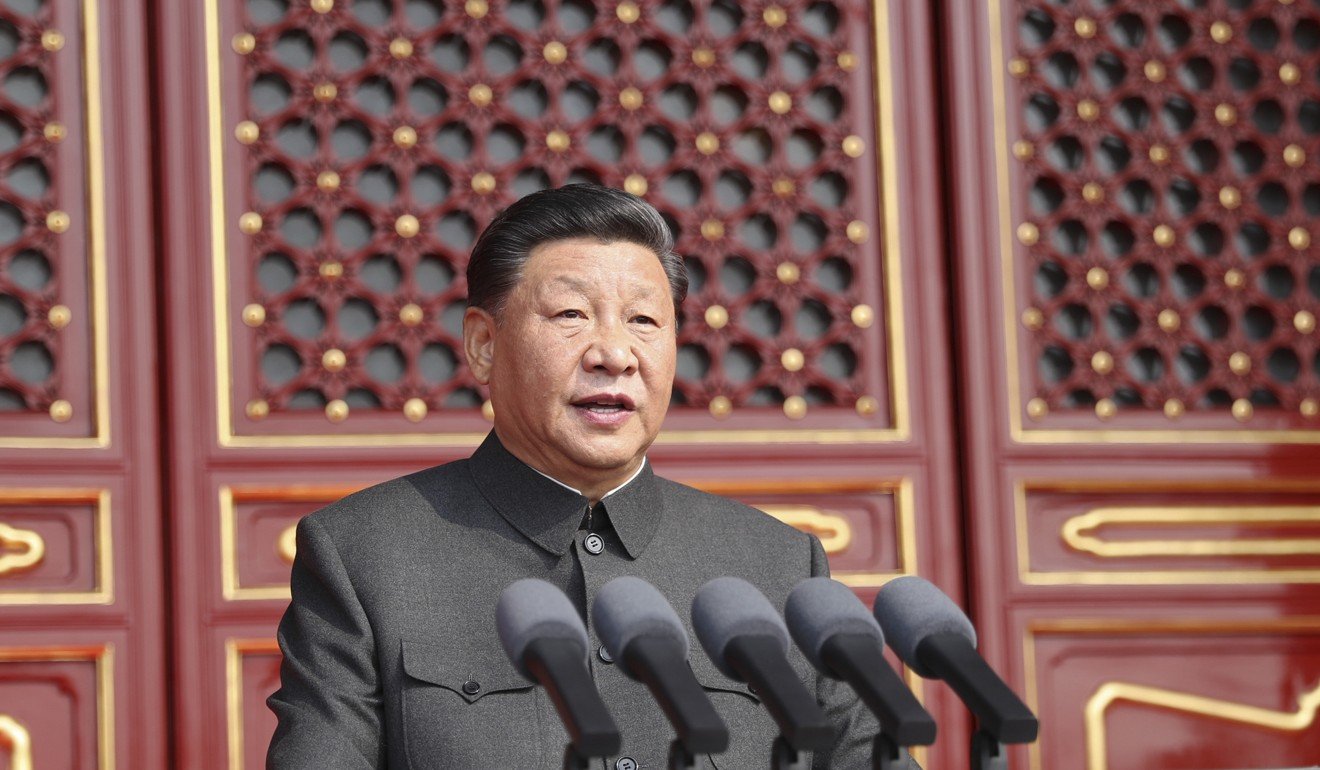
President Xi Jinping speaks in Tiananmen Square during Tuesday’s celebrations. Photo: Xinhua

But notably, while former premier Wen Jiabao was present, his predecessor Zhu Rongji was not.

‘No force can shake China’

Dressed in a Mao suit, Xi’s nationally televised speech invoked China’s “century of humiliation” and praised the achievements of its people, saying there was no force that could stop it forging ahead.

“No force can shake the status of our great motherland, and no force can stop the Chinese people and the Chinese nation from marching forward,” he said.
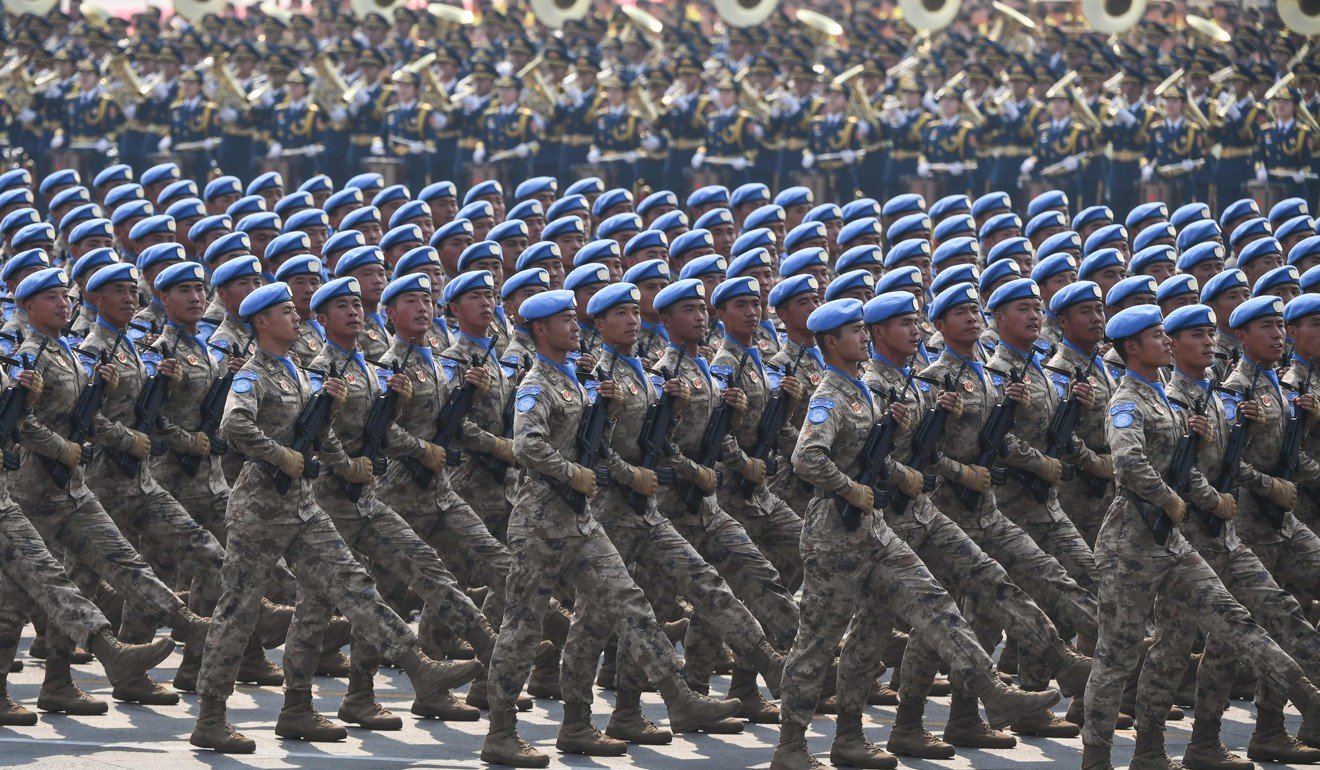
Chinese troops take part in the Republic’s largest ever military parade. Photo: AFP
“The People’s Liberation Army [PLA] will serve its purpose in safeguarding the sovereignty, security and development interests of the country, and world peace,” he said, at a time when Beijing has expanded its military footprint globally, including with its first overseas military base in Djibouti.
Xi called on the Communist Party and the country to unite and continue to fight for the realisation of what he called the “Chinese dream” – the nation’s rejuvenation.
One country, two systems
Amid escalating unrest in Hong Kong, which has plunged the city into a deepening crisis and threatened to overshadow the National Day celebrations, Xi vowed that the central government would uphold “one country, two systems”.
He said the central government would protect the long-term stability of Hong Kong and Macau, and stressed the goal of “peaceful reunification” with the self-ruling Taiwan, repeating a message frequently used by his predecessors, including Deng Xiaoping, Jiang and Hu.

The theme of one country, two systems later appeared in a National Day parade for the first time, with placards forming the words: “Hong Kong’s tomorrow will be better.”
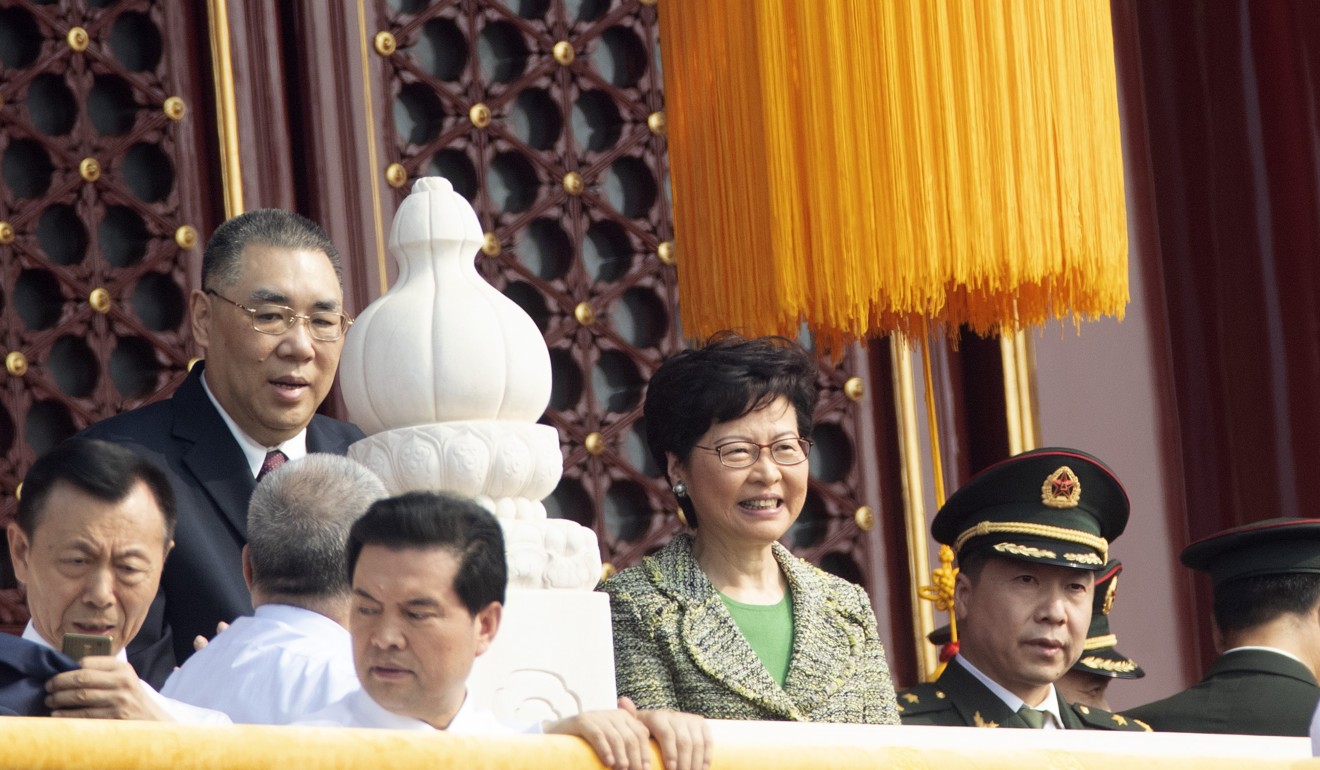
Hong Kong Chief Executive Cheng Yuet-ngor attended the ceremony, as did 10 Hong Kong police officers involved in suppressing anti-government protests in the city.
Showing off new weapons
China’s advancement in military weaponry was on full display, with almost half of the items featured being shown to the public for the first time.
Hong Kong leader Carrie Lam was among the guests in Beijing on Tuesday. Photo: AP

The morning’s celebrations included an 80-minute military parade – the biggest since the founding of the People’s Republic – in an apparent effort to showcase the prowess of the PLA, the world’s biggest military with 2 million personnel.

Among the weapons shown were DF series missiles, including the DF-17, a nuclear-capable glider that has the capacity to strike the US mainland, and the DF-41, which has a range of up to 15,000km, making it the world’s longest-range military missile.

Signalling Xi’s status

A 100,000-strong civilian parade featuring huge portraits of Xi and predecessors including Mao, Deng, Jiang and Hu wrapped up the morning celebration.

The procession was divided into three parts, representing three eras of the People’s Republic: the Mao era, Deng’s reform and opening up, and Xi’s era, which seeks global prominence on a par with that of the United States.

Xi appeared keen to project his supreme status in the party, reinforced since he abolished the constitutional term limit a year ago, allowing him potentially to remain leader for life.

He waved at his own portrait, unveiled alongside a sign reading “Carry out Xi Jinping Thought on Socialism with Chinese Characteristics for a New Era”.

Source: SCMP
17/08/2019

Are Chinese infrastructure loans putting Africa on the debt-trap express?

  • Beijing has lent billions of dollars to countries on the continent to build railways, highways and airports but critics say the borrowings are unsustainable
  • Chinese officials say the projects will pay off in the long run and host nations are well aware of their limits and needs
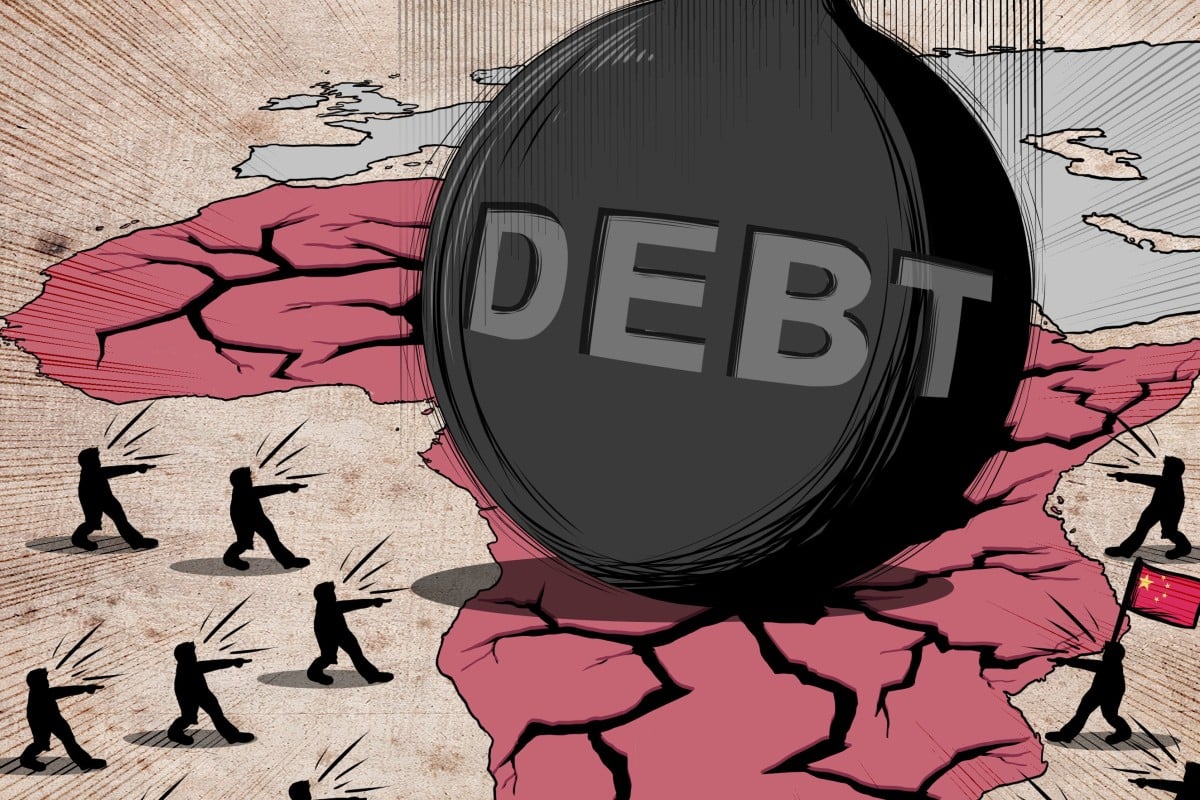
Illustration: Lau Kakuen
When Clement Mouamba went to Beijing last year, he had two main tasks.
The prime minister of the Republic of Congo needed to find out exactly how much his country owed to China, a number the struggling, oil-rich central African nation had until then not been able to provide the International Monetary Fund (IMF) to qualify for a bailout. He also needed to convince Beijing to restructure its debt to ensure sustainability.
The IMF had put talks for further loans on hold until Mouamba’s administration could say exactly how much it had to repay to the country’s external creditors, including China – the republic’s single largest bilateral lender – and oil multinationals such as Glencore and Trafigura.
The country, which heavily depends on oil revenue, turned to China and private oil majors for funding to run the government when in 2014 oil prices fell from a high of US$100 per barrel to as low as US$30.

Critics say countries on the continent are being burdened with unrealistic levels of debt for inviable infrastructure backed and built by China without adequate transparency and scrutiny.

The biggest concern is that several African countries will be left with huge debts and grandiose infrastructure that they cannot maintain and run profitably. I liken it to borrowing money to buy a Tesla when you don’t have adequate access to electricity: Obert Hodzi of the University of Helsinki in Finland

But Chinese observers say the West must take some of the blame for the countries’ debt problems and that the support China offers will benefit the host countries in the long run.

In the early 1990s, when China began to embrace Africa again after years of isolation from the outside world, the aspiring manufacturer was at a serious disadvantage in the race for raw materials and markets for its industrial goods.

The former colonial powers of the West had already sewn up deals for many of the continent’s most lucrative and readily exploitable reserves, from fossil fuels to minerals.

China needed new strategies to convince African governments to allow it access raw materials for its industries and markets for its products to a largely unfamiliar partner.

China also wanted to challenge the dominance of the US in global trade and politics so it courted allies in Africa to help it push for political legitimacy in international institutions.

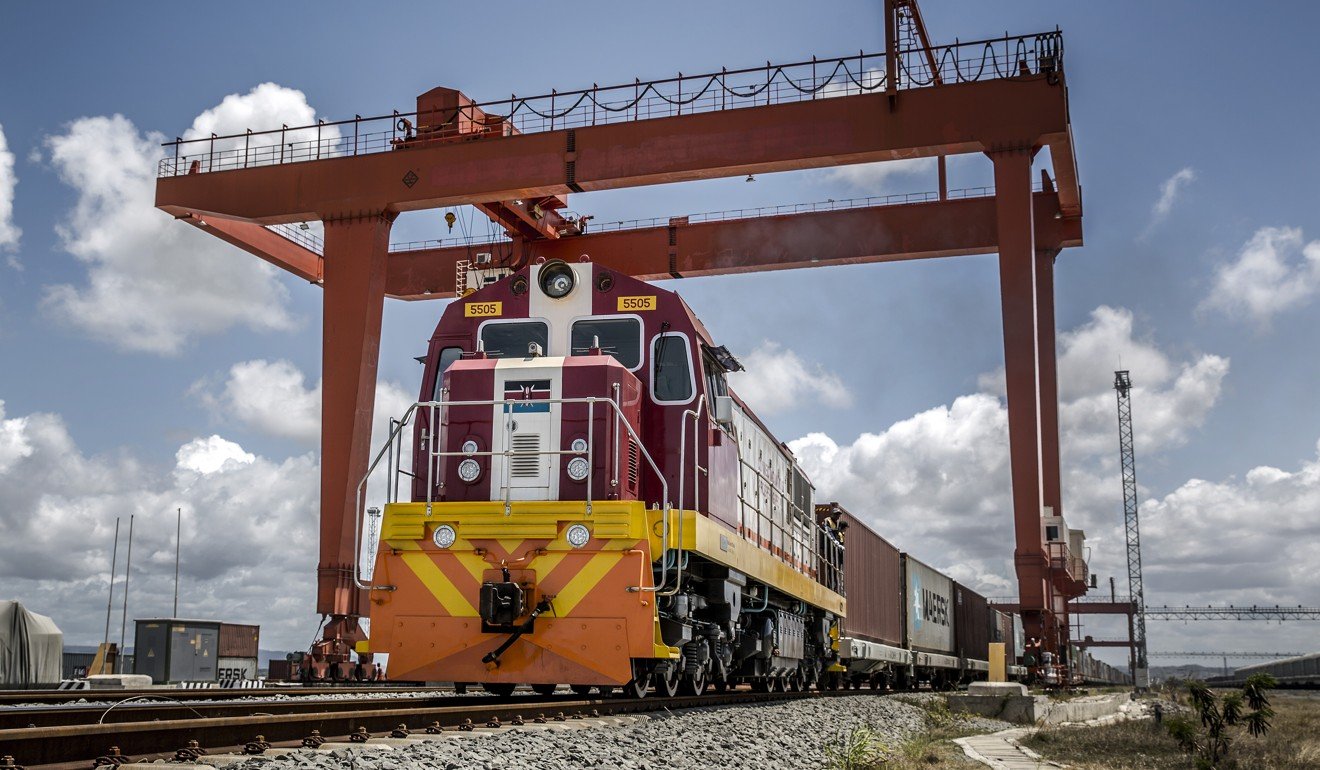
A Kenya Railways freight train leaves the port station on the Mombasa-Nairobi railway in Mombasa, Kenya, a huge project backed by China. Photo: Bloomberg

At the time, many African leaders were under fire to liberalise their economies. China’s approach was to promise not to meddle in individual country’s internal affairs and assure African countries that they could get billions in exchange for future delivery of minerals through resource-backed deals.

Beijing sold its policies that it had no conditions attached to its development finance. In the drive to drum up business, China promised affordable loans for African countries to build roads, bridges, highways, airports and power dams.

Is Kenya’s Chinese-built railway a massive white elephant?

But Beijing also pursued tied finance, ensuring that countries borrowing from China used Chinese contractors to implement the projects rather than open them up to outside bids.

In addition, many of the deals were built on weak financial, technical and environmental conditions, with Chinese state firms conducting the technical feasibility, environmental impact assessment and financial viability studies for free for projects that they also build.

For example, in Kenya, the China Road and Bridge Corporation conducted a free feasibility study that was used in the construction of the railway.

The same company was handed the contract to implement the project and is operating both the passenger and cargo train service for a fee.

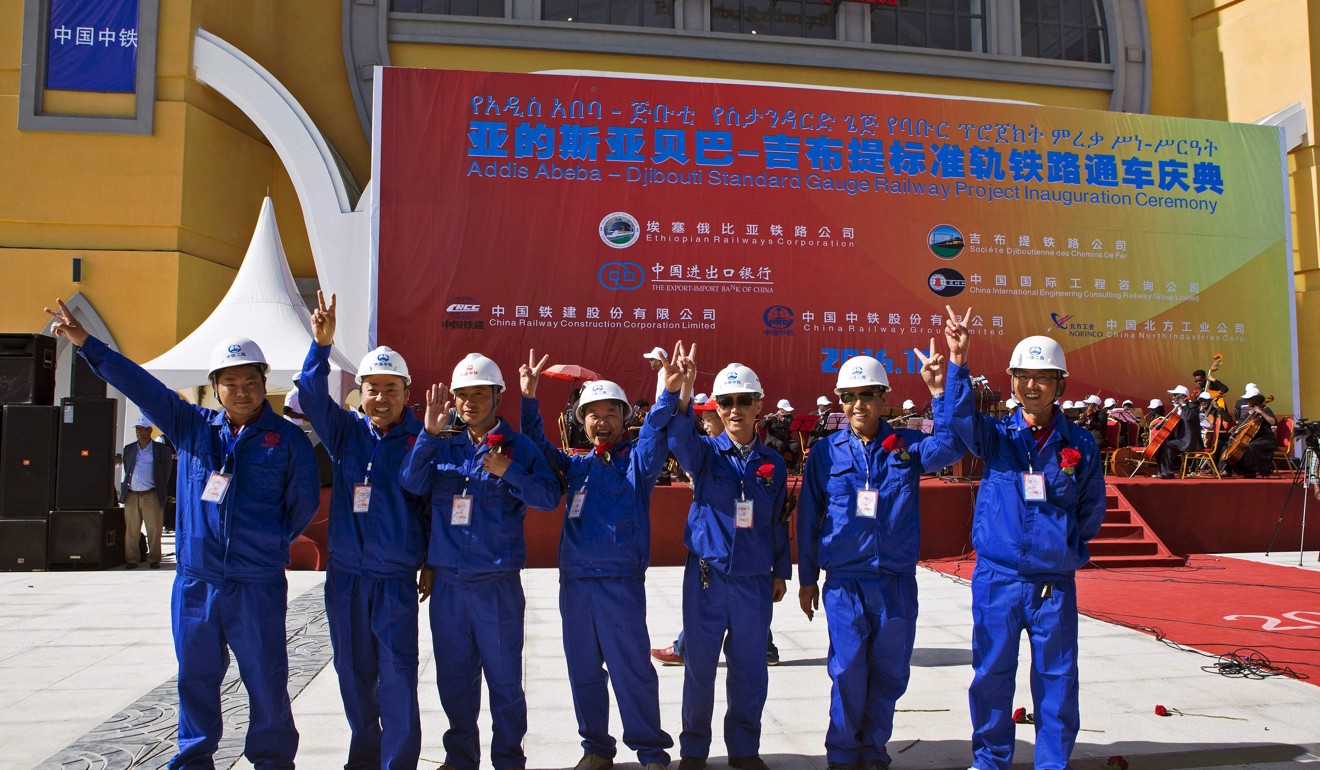
Chinese companies were responsible for the construction of a rail line between Addis Ababa and Djibouti. Photo: AFP

In contrast, the World Bank and its partner institution, the IMF, demand that such studies be done by an independent consultant and not by the company that implements the project.

According to data compiled by the China-Africa Research Initiative, at the Johns Hopkins University School of Advanced International Studies, Beijing has advanced loans worth US$143 billion to African countries since 2000, levels that some critics say are unsustainable for the borrowers.

China meets resistance over Kenya coal plant, in test of its African ambitions

For many of China’s new African partners, these arrangements – from easy lending terms, to non-competitive bidding and opaque contract details – have led to new problems – problems that corrupt or poorly managed governments now share substantial responsibility.

Some critics, both in the West and in host countries, suggest there is a “debt-trap strategy” at the heart of Beijing’s push for international business and influence, but there is no evidence that China deliberately pushes other countries into debt to seize their assets or gain sway.

However, the drive for overseas contracts and big business has led some countries into difficulties with new debts, and there are question marks over the viability of many of the projects the money is funding.

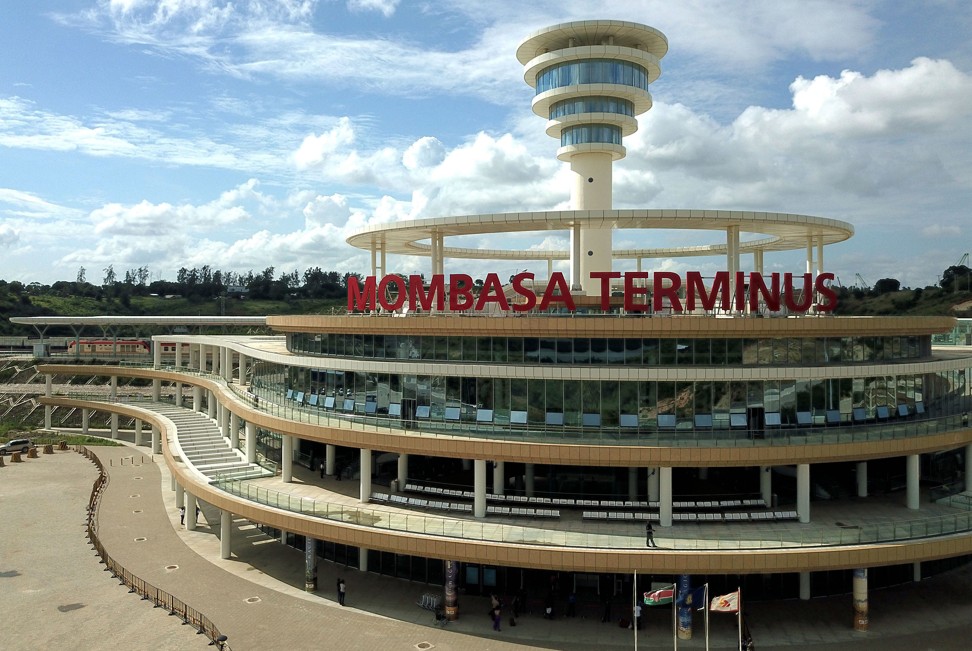
Obert Hodzi, an international relations expert at the University of Helsinki in Finland, said the Addis Ababa-Djibouti railway and the Mombasa-Nairobi railway were good examples of huge projects that were financed by easy borrowing terms from China but were not sustainable and that had in turn forced the African partners to seek further Chinese help.

“The biggest concern is that several African countries will be left with huge debts and grandiose infrastructure that they cannot maintain and run profitably,” Hodzi said. “I liken it to borrowing money to buy a Tesla when you don’t have adequate access to electricity.”

Ken Opalo, a Kenyan scholar at Georgetown University in Washington, said the key issue was the inability of African countries to design projects that were actually needed for the local economies.

A road is not just a means of transport but an economic belt or corridor that will catalyse the development of the whole region: Huang Xueqing, spokeswoman for the Chinese embassy in Nairobi

“Most African countries have been willing to accept projects designed, financed, and implemented by Chinese firms,” Opalo said.
“It would be better to decouple the feasibility studies and design phases of projects from the financing. That way African governments can ensure that they are truly getting value for money.”
But Chinese officials said Beijing had invested in infrastructure largely at the request of the host countries, adding that it could take time to yield returns on the projects.

Huang Xueqing, spokeswoman for the Chinese embassy in Nairobi, said the projects were valid assets with value that would grow in time.

“So, in the long run, it is beneficial to the host countries. Just like when young people buy a house with a mortgage, they may take some debts, but they have a place to live in and have their own assets,” Huang said.

“Underdeveloped infrastructure is the bottleneck that has been holding back Africa’s development. Up to today, many African countries, although in the same continent, are not connected with direct flights, railways or even roads. You have to fly to Paris or Zurich in order to get to some African countries.

“A road is not just a means of transport but an economic belt or corridor that will catalyse the development of the whole region.”

Huang said Beijing had advised the countries to act within their means and not to overstretch themselves when they considered projects that might not be in line with local conditions.

“When making investment decisions, the Chinese side, along with the recipient countries, carry out rigorous feasibility studies and evaluations. We do things according to our ability,” she said.

China’s leadership has also said it is paying close attention to the fiscal and financial difficulties faced by some African countries.

“As a good friend and good brother … the Chinese side is willing to lend a helping hand when needed by the African people to help them overcome temporary difficulties,” State Councillor and Foreign Minister Wang Yi said in January while on a trip to Ethiopia, adding that the debt situation in Africa is also a legacy issue.

China must allay any debt-trap fears in its dealings with Africa

“The African debt issue does not come up today, still less is it caused by the Chinese side. The African people know who are the initiators of African debt.”

The West should take a lot of the blame for worsening debt problems in some African countries, according to Li Anshan, from Peking University’s Centre for African Studies.

He cited the cases of Liberia and the Democratic Republic of Congo, two countries that have had close relations with the West for many years but remain ravaged by war and poverty despite immense natural resources.

“China-Africa relations have been going on for quite some time. Is there any African country which has got poorer because of its deal with China?” Li said.

Gyude Moore, a former Liberian minister of public works whose department oversaw construction and maintenance of various public infrastructure funded and built by China, said it would be difficult to imagine that China would knowingly ensnare its partners in debt.

“China attempts to differentiate itself from Western donors by limiting non loan-related conditionality. China also practices non-interference, so how a country manages its resources, treats its people or deploy its finances were considered ‘internal’,” he said.

“So, Chinese loans are negotiated faster and place less emphasis on public financial management.”

Moore, now a visiting fellow at the Centre for Global Development, said there were trade-offs in such situations.

China focuses on sustainable projects to dismiss fears of African debt trap

“If the loans are going to be fast – the due diligence will not be as rigorous. Chinese project selection mixes political with economic considerations. So, while a project may not make as much economic sense, it may pay political dividends,” he said.

He said non-transparent processes would invite abuse, be they Chinese, Western or African.

Other observers say the question of opacity is more directly related to China’s own economic system.

Howard French, author of China’s Second Continent: How a Million Migrants are Building a New Empire in Africa, said China has very limited transparency and public accountability in its own domestic processes.

The Mombasa railway station is seen in Mombasa, Kenya, in 2018. Photo: Xinhua

“So it would be unusual to expect that China would introduce greater transparency and accountability in its dealings with African countries than it is used to at home – that is, unless African governments insist on it,” French said.

“And this is where African governance comes in. African states should insist on contract transparency but often don’t do so because that offers leaders plentiful opportunities for graft.”

David Shinn, professor of international relations at George Washington University in Washington, agreed that China’s lack of loan transparency was a huge problem and increased the risk of corruption on both the African and Chinese sides. But he also said that in some cases, African governments might have negotiated poorly.

“This is, however, the responsibility of the African government. I don’t think China is purposely trying to encourage African debts in order to gain leverage,” Shinn said.

“In fact, China is becoming more careful about its lending because it is concerned it has made too much credit available to some African countries.”

China ‘ready to talk’ about trade deal with East Africa bloc

Huang Hongxiang, director of China House, a Nairobi-based consultancy that helps Chinese in Africa integrate better, agreed, saying the Chinese government needs to communicate more about projects in Africa but African countries also have a bigger part to play in ensuring better deals.

“On commercial viability, accountability, transparency and governance, I believe the responsibility does not lie with China, the US or the West but in the hands of African countries,” he said.

Wherever the fault lies, one thing is clear when money is wasted on ill-designed projects that have little to no economic return, according to Opalo.

“The lack of planning and transparency creates default risks … [and] African taxpayers will be left holding the bag.”

This article is the third in a series examining the local impact of Chinese investment and infrastructure projects in Africa. Read part one  here and part two

 here

.

The next report will examine whether African countries can speak with one voice in relations with China.
Source: SCMP
14/08/2019

China is building world’s most powerful laser radar to study Earth’s solar shield

  • New facility is designed to help scientists study particles that help deflect cosmic rays in the high atmosphere
  • Despite scepticism among some scientists, those familiar with the project insist radar will have a range about 10 times greater than existing ones
When completed the new laser radar will be used to study the high atmosphere. Photo: Handout
China has started building the world’s most powerful laser radar designed to study the physics of the Earth’s high atmosphere, according to state media reports and scientists informed of the project.
It is described as having a detection range of 1,000km (600 miles) – 10 times that of existing lasers – and will be used to study atmospheric particles that form the planet’s first line of defence against hostile elements from outer space such as cosmic rays and solar winds.
The facility, to be built on a site that remains classified, is expected to be up and running within four years and will form part of an ambitious project to reduce the risk from abnormal solar activities.
The radar will use a high-energy laser beam that can pierce through clouds, bypass the International Space Station and reach the outskirts of the atmosphere, beyond the orbiting height of most Earth observation satellites.
Lasers help tell ghostly story of doomed Nazi submarine U-576 and its entombed crew

There, the air becomes so thin that scientists will be able to count the number of gas atoms found within a radius of several metres.

These high-altitude observations could greatly expand our knowledge of a part of the atmosphere that has been little studied because the distances involved mean no one has been able to make direct observations from the ground.

“The large-calibre laser radar array will achieve the first detection of atmospheric density of up to 1,000km in human history,” said a statement posted on the website of the Chinese Academy of Sciences on Tuesday, a day after the launch of the project.

But the claim has been greeted with some scepticism in the scientific world.

“I think the 1,000km is a misprint!” professor Geraint Vaughan, director of observations at the National Centre for Atmospheric Science in the UK, replied when asked about the project.

Vaughan, who is also a Fellow of the Royal Meteorological Society, said that while he thought the Chinese announcement was “very interesting”, it did not seem possible with existing technology.

At present, the effective range of atmospheric lasers is about 100 kilometres.

Some other senior scientists in China and overseas also expressed doubt about the project, although they requested anonymity due to the sensitivity of the issue.

US warns airmen to beware of laser attacks near China’s military base in Djibouti
“There are other approaches, such as launching a satellite. Building such a huge, expensive machine on the ground does not make sense,” said a Beijing-based laser scientist.
But several researchers told the South China Morning Post that the project did exist, and insisted that 1,000km range was not a mistake.
Hua Dengxin, a professor at Xian University of Technology and a lead scientist in China’s laser radar development programmes, said: “I have heard of the project, yes. But I cannot speak about it.”
Powerful telescopes will pick up the signals reflected back to earth. Photo: Handout

According to publicly available information, the facility will use several large optical telescopes to pick up the faint signals reflected by the high-altitude atoms when the laser is fired at them.

The project is part of the Meridian Space Weather Monitoring Project, an ambitious programme that started in 2008 to build one of the largest, most advanced observation networks on Earth to monitor and forecast solar activities.

By 2025 Meridian stations containing some of the world’s most powerful radar systems will be established across the world – with facilities in Arctic and Antarctic, South China Sea, the Gobi desert, the Middle East, Central Asia and South America.

China in race for counter-drone tech and laser weapons as it tries to catch up with US

The purpose of the Meridian project, according to the Chinese government, is to reduce the risk abnormal solar activities pose to a wide range of Chinese assets including super-high voltage power grids, wireless communication, satellite constellations, space stations or even a future base on the Moon.

Chinese laser scientists have developed some of the world’s most sophisticated systems in recent years, including ranging stations that can track the movement of satellites and space debris, which the Pentagon has claimed have temporarily blinded some American scientists.

Last year researchers based in Xian, the capital of Shaanxi province, announced that they had developed a “ laser AK-47” that could set fire to target from a distance of 800 metres.

The Chinese government is also funding the development of a laser satellite that can penetrate seawater to a depth of 500 metres from space to detect the waves generated by submarines.

The use of such a powerful laser raises concerns that passing objects such as planes, satellites or spacecraft – to say nothing of birds – may be at risk from its beams.

But Professor Qiao Yanli, engineer in chief at the Anhui Institute of Optics and Fine Mechanics, part of the Chinese Academy of Sciences, said there was an “extremely low” risk of this happening.

“The sky is enormous. Getting hit by a tiny beam is almost impossible,” he said.

Some much smaller laser radars, such as those installed in auto-driving test vehicles, have reportedly damaged digital cameras by burning a few pixels on sensor.

But spacecraft such as earth observation satellites, according to Qiao, usually have some protection mechanisms, such as a warning system, to avoid permanent damage caused by an accidental laser hit.

‘Laser AK-47’? Chinese developer answers sceptics with videos of gun being tested

Professor Li Yuqiang, a researcher at the Yunnan Observatories in Kunming, whose team has measured the distance between the Earth and the Moon by shooting lasers at a reflector placed on the lunar surface during the US Apollo 15 mission, said detecting atom-sized targets on the fringes of the atmosphere posed many technical challenges.

“The number of photons [particles of light] reflected by the sparse gas particles will be very small. Even if they can be picked up by large telescopes on the ground, the analysis will require some very good algorithms to separate the useful signals from the noise,” Li said.

“How that can be achieved is beyond the scope of my knowledge.”

Source: SCMP

20/04/2019

Xi to address Belt and Road forum next week: FM

CHINA-BEIJING-BRF-PRESS BRIEFING (CN)

Chinese State Councilor and Foreign Minister Wang Yi (C) speaks during a press briefing for the second Belt and Road Forum for International Cooperation (BRF) in Beijing, capital of China, April 19, 2019. The second Belt and Road Forum for International Cooperation will be held from April 25 to 27 in Beijing, Wang Yi announced Friday. (Xinhua/Zhai Jianlan)

BEIJING, April 19 (Xinhua) — Chinese President Xi Jinping will deliver a keynote speech at the second Belt and Road Forum for International Cooperation (BRF) to be held from April 25 to 27 in Beijing, State Councilor and Foreign Minister Wang Yi announced Friday.

Leaders including heads of state and government from 37 countries will attend the forum’s roundtable summit, Wang told a press briefing.

Wang said 12 thematic forums and a CEO conference would be held on April 25, the opening ceremony and a high-level meeting on April 26, and the leaders’ roundtable on April 27.

Xi will attend the opening ceremony and deliver a keynote speech. He will also chair the leaders’ roundtable and brief media from home and abroad about the outcomes after the roundtable, Wang said, adding that Xi and his wife Peng Liyuan will also hold a welcoming banquet for the leaders and representatives.

According to Wang, the 37 countries are Austria, Azerbaijan, Belarus, Brunei, Cambodia, Chile, Cyprus, Czech Republic, Djibouti, Egypt, Ethiopia, Greece, Hungary, Indonesia, Italy, Kazakhstan, Kenya, Kyrgyzstan, Laos, Malaysia, Mongolia, Mozambique, Myanmar, Nepal, Pakistan, Papua New Guinea, the Philippines, Portugal, Russia, Serbia, Singapore, Switzerland, Tajikistan, Thailand, the United Arab Emirates, Uzbekistan and Vietnam.

The secretary-general of the United Nations and the managing director of the International Monetary Fund will attend the forum, Wang said, adding that senior representatives of France, Germany, Britain, Spain, Japan, the Republic of Korea and the European Union will also participate.

Noting that the BRF is the top-level platform for international cooperation under the framework of the Belt and Road Initiative, Wang said the conference next week would be of landmark significance.

The theme of the second BRF is “Belt and Road Cooperation, Shaping a Brighter Shared Future.” Wang said the main purpose is to promote the high-quality development of Belt and Road cooperation, which is the common aspiration of countries participating in the initiative.

Speaking highly of the fruitful results yielded since the initiative was launched in 2013, Wang said the second BRF was greatly welcomed worldwide with some 5,000 participants from more than 150 countries and 90 international organizations having confirmed their attendance, covering areas from five continents and different walks of life such as government, civil society, business and academia.

According to Wang, this year’s forum will have 12 thematic forums, twice of that during the first forum in 2017, and the CEO conference will be held for the first time. A joint communique will be released after the leaders’ roundtable and other consensus reached during the forum will be issued in a report.

The Belt and Road Initiative, proposed by Xi in 2013, aims at enhancing all-around connectivity through infrastructure construction, exploring new driving force for the world economic growth, and building a new platform for world economic cooperation, according to Wang.

Stressing that Xi and leaders from other countries blueprinted the initiative in 2017, Wang said the progress in the past two years shows that the initiative conforms to the trend of the times featuring peace, development, cooperation and win-win and accords with the common aspiration of openness and joint development of all countries.

“As the host country, we will maintain close communication and coordination with all parties to prepare for the forum with openness, inclusiveness and transparency, upholding the principle of consultation and cooperation for shared benefits,” Wang said.

He said the forum would voice the firm support for multilateralism and an open world economy, enrich the principles of cooperation of the Belt and Road Initiative, build a network of partnership, and establish more mechanisms for high-quality development.

Bilateral, trilateral and multilateral cooperation has been reinforcing each other under the initiative, laying a solid foundation for a closer and more wide-ranging partnership, he said.

Wang said China will showcase the outcomes and introduce the measures of its reform and opening-up to the world, adding that this will allow China to share the dividends of its economic growth, promote the Belt and Road Initiative, and bring more opportunities to the development of all countries as well as the building of the Belt and Road.

“I believe that the forum will inject stronger impetus into the world economy, open even broader horizon for the development of the countries, and contribute to the building of a community with a shared future for humanity, ” said Wang.

Source: Xinhua

09/01/2019

Chinese, Djibouti presidents exchange congratulations on 40th anniversary of ties

BEIJING, Jan. 8 (Xinhua) — Chinese President Xi Jinping on Tuesday exchanged congratulatory messages with Djibouti President Ismail Omar Guelleh to mark the 40th anniversary of bilateral relations.

In his message, Xi said that in the past 40 years, China and Djibouti have seen a healthy and stable development of their relations, with mutual understanding and support on issues of great concern to or concerning the core interests of each other, in addition to plentiful fruits of cooperation in various fields.

Xi recalled the top-level exchanges that included Guelleh’s state visit to China in November 2017 when they together announced the establishment of a bilateral strategic partnership; and their exchange in September 2018 when they reached a new consensus on further ties and witnessed the signing of a memorandum of understanding on pushing forward the Belt and Road construction.

Xi said he highly values the development of China-Djibouti relations, and is willing to work with Guelleh and take the opportunity of the 40th anniversary of bilateral diplomatic ties to consolidate the mutual political trust, deepen the cooperation in co-building the Belt and Road, and implement the results from the Forum on China-Africa Cooperation (FOCAC) Beijing Summit, so as to lift the bilateral strategic partnership to new heights.

In his message to Xi, Guelleh said he is satisfied with and proud of the smooth development of bilateral ties over the 40 years since his country and China established a diplomatic relationship.

The November 2017 decision to lift bilateral relations to a strategic partnership showed the two countries’ resolve to forge closer ties while providing the direction for their economic and trade cooperation, he said.

Guelleh thanks the Chinese government and people for the help and support to Djibouti. He said Djibouti will continue adhering to the one-China policy.

Guelleh added that he is willing to join Xi in the efforts to push bilateral relations further forward.

Law of Unintended Consequences

continuously updated blog about China & India

ChiaHou's Book Reviews

continuously updated blog about China & India

What's wrong with the world; and its economy

continuously updated blog about China & India