20/04/2020
BEIJING, April 20 (Xinhua) — China has resumed construction of major water conservancy projects amid its further containment of the novel coronavirus disease (COVID-19) epidemic.
Construction has resumed so far on 143 of the 172 major water conservancy projects, with the scale of investment under construction reaching over 1 trillion yuan (around 141 billion U.S. dollars), according to the Ministry of Water Resources.
The ministry said 30 conservancy projects have completed construction and produced benefits.
As the situation of epidemic control and prevention continues to improve, China is speeding up construction on major infrastructure projects to mitigate the economic impact of the novel coronavirus epidemic.
Construction has resumed on about 85 percent of the housing and urban infrastructure projects in China as of April 1, with about 158,700 housing and urban infrastructure projects across the country cranking up work, according to the Ministry of Housing and Urban-Rural Development.
Source: Xinhua
Posted in according, amid, Beijing, benefits, billion, China, completed, Construction, containment, continues, COVID-19, economic impact, epidemic, epidemic control and prevention, further, housing, improve, infrastructure projects, Investment, Major, ministry, Ministry of Housing and Urban-Rural Development, Ministry of Water Resources, mitigate, novel coronavirus disease, novel coronavirus epidemic, percent, produced, projects, reaching, resumes, scale, situation, speeding up, trillion yuan, U.S. dollars, Uncategorized, urban, water conservancy |
Leave a Comment »
20/04/2020
BEIJING, April 19 (Xinhua) — China will step up efforts to expedite technological research on the construction and application of digital infrastructure, according to the Ministry of Industry and Information Technology (MIIT).
More support should be provided to the research and development of 5G enhancement technology and 6G technology, while the accurate matching of innovation, industrial, capital and policy chains should be promoted, said Chen Zhaoxiong, vice minister of the MIIT.
Chen also stressed the importance of emphasizing the huge demand for digital transformation and improving new digital infrastructure to facilitate economic and social upgrade of the country.
The MIIT will take a string of measures to optimize industrial development, such as expediting construction of 5G and industrial internet connecting people, machine and things, developing new types of intelligent computing facilities, advancing orderly construction and application of large data centers while upgrading micro and small data centers, enriching application scenarios and building a network security system.
Source: Xinhua
Posted in 5G, 5G enhancement technology, 6G technology, accelerate, according, accurate, advancing, application, application scenarios, Beijing, Building, capital, China, connecting, Construction, Country, developing, digital infrastructure, digital transformation, Economic, efforts, emphasizing, enriching, expedite, expediting, facilitate, huge demand, importance, improving, industrial, industrial development,, industrial internet, innovation, intelligent computing facilities, large data centers, machine, matching, measures, micro and small data centers, Ministry of Industry and Information Technology (MIIT), network security system, new types, Official, optimize, orderly construction, People, policy chains, promoted, provided, research, Research and development, social upgrad, step up, stressed, string, support, technological research, Technology, things, Uncategorized, upgrading, vice minister, while |
Leave a Comment »
19/04/2020
URUMQI, April 18 (Xinhua) — A medical team of eight experts who aided Pakistan’s fight against COVID-19 returned Friday night to Urumqi, capital of northwest China’s Xinjiang Uygur Autonomous Region.
The team, consisting of experts in various fields including respiratory, critical care and traditional Chinese medicine (TCM), arrived in Pakistan on March 28 and visited cities of Islamabad, Lahore and Karachi.
The Chinese experts communicated with the Pakistani federal government, national and local health authorities, hospitals and medical schools, as well as the Red Crescent.
The team members shared their experience through several video conferences and offered practical, specific suggestions to their Pakistani peers concerning the diagnosis, clinical treatment and epidemiologic study of COVID-19, and the application of TCM, hospital infection control and the construction of temporary hospitals.
The team also assisted with improving Pakistan’s guidelines on diagnosis and treatment of COVID-19 to help build an efficient epidemic prevention and control system in Pakistan and enhance its screening and testing capabilities.
Meanwhile, the experts carried out epidemic prevention guidance and popular science education for the Chinese embassy in Pakistan, Chinese enterprises, overseas Chinese and Chinese students in the country.
Source: Xinhua
Posted in 28, after, against, aid mission, aided, application, arrived, assisted, Ürümqi, capabilities, capital, carried out, China's, Chinese, Chinese embassy, Chinese enterprises, Chinese experts, Chinese students, cities, clinical treatment, communicated, concerning, Construction, Country, COVID-19, critical care, diagnosis, education, efficient, eight, enhance, epidemic, epidemiologic study, experts, federal government, fields, fight, Friday, guidelines, health authorities, hospital infection control, hospitals, improving, including, Islamabad, Karachi, Lahore, local, March, Meanwhile, medical schools, Medical team, National, night, northwest, Overseas Chinese, Pakistan, Pakistan’s, Pakistani, peers, popular, practical, prevention and control system, prevention guidance, Red Crescent, respiratory, returned, returns, Science, SCREENING, specific, suggestions, TCM, temporary, testing, traditional Chinese medicine (TCM), treatment, Uncategorized, video conferences, visited, Xinjiang Uygur Autonomous Region |
Leave a Comment »
27/03/2020

Chinese Vice Premier Han Zheng, also a member of the Standing Committee of the Political Bureau of the Communist Party of China Central Committee, addresses a teleconference on the construction of major projects and stabilizing investment in Beijing, capital of China, March 26, 2020. (Xinhua/Ding Lin)
BEIJING, March 26 (Xinhua) — Chinese Vice Premier Han Zheng on Thursday called for efforts to advance the construction of major projects and give full play to investment in stabilizing economic growth.
Accurate measures should be taken to solve the problems of labor shortage, transportation and supply of raw materials to accelerate the normal operation of key projects, Han said while addressing a teleconference on the construction of major projects and stabilizing investment.
Han said financial support such as local special bonds should prioritize key areas and major projects. The construction of “new infrastructure” projects such as 5G networks should be strongly encouraged to ramp up new business modes such as the digital economy.
He also urged efforts to ensure the use of land and sea of key projects, streamline project approval procedures and strengthen project management.
More work should be done to implement key foreign-funded projects, speed up the introduction of policies for further opening-up and continue optimizing the business environment, he added.
Source: Xinhua
Posted in "new infrastructure" projects, 5G networks, Chinese Vice Premier Han Zheng, Construction, Economic growth, Investment, Labor shortage, major projects, stabilizing, supply, teleconference, transportation, Uncategorized |
Leave a Comment »
12/03/2020
- In response to the 2008 global financial crisis, China pumped a 4 trillion yuan (US$575 billion) into its economy but it led to a mountain of local government debt
- Various early indicators suggest China’s economy will slow in the first quarter of 2020, with some suggestions it will suffer a first contraction since 1976
President Xi Jinping said China must accelerate construction of “new infrastructures such as 5G networks and data centres” on top of speeding up “key projects and major infrastructure construction” in response to the economic impact caused by the coronavirus outbreak. Photo: Xinhua
China should not try to bolster its coronavirus-hit economy by again resorting to a massive debt-fuelled fiscal and monetary stimulus programme, according to a group of government advisers.
Various early indicators suggest China’s economy will slow in the first quarter of 2020, with some even suggesting it will suffer a first contraction since the end of the Cultural Revolution in 1976.
This raises the question if China will miss its key 2020 growth target, with voices on both sides of the debate discussing what stimulus policies are needed to offset the deep impact of the coronavirus.
China is already leaning towards some additional stimulus, with Premier Li Keqiang ordering the central bank pump additional money into the banking system, while President Xi Jinping has announced the need for more spending on “new infrastructure”.
Are there other ways out for China except stimulus policies?Liu Shijin
“Are there other ways out for China except stimulus policies?” rhetorically asked Liu Shijin, who previously worked closely with Vice-Premier Liu He, the top economic aide to Xi, at the Development Research Centre, the think tank attached to the State Council.
“If it really works, why can’t Japan and the United States reach a 5 per cent growth rate?”
It is believed China will need to achieve an average 5.6 per cent growth in 2020 to achieve its goal of doubling the size of its economy from 2010, which is a key goal for
of creating a “comprehensively well-off” society.
China’s economy grew by
6.1 per cent in 2019, and while it was the slowest in 29 years, the US economy only grew 2.3 per cent, with Japan’s estimated to grow by 0.9 per cent.
What is gross domestic product (GDP)?
Liu Shijin, who is now a deputy head of the China Development Research Foundation and a policy adviser to the People’s Bank of China, argued that a growth rate averaging 5 per cent over the next decade is sufficient for China to meet its development goals.
Growth in 2020, though, may well be below 5 per cent given that the impact of the coronavirus is “unprecedented” and larger than both severe acute respiratory syndrome (Sars) in 2003 and the 2008 global financial crisis.
Xi said earlier this month that China must accelerate construction of “new infrastructures such as
5G networks and data centres” on top of speeding up “key projects and major infrastructure construction already included in state plans” like additional high-speed railway lines in response to the economic impact caused by the coronavirus outbreak.
But as this will mainly rely on corporate and private investment, Liu Shijin feels it will be too small to engineer a major rebound in the growth rate.
When encountering challenges, we should first push forward new reform measures to unleash growth potential. Now is the right timeLiu Shijin
“It’s a different thing compared to real [government-led] economic stabilisation,” Liu Shijin told a web seminar hosted by Peking University’s National School of Development on Wednesday.
“When encountering challenges, we should first push forward new reform measures to unleash growth potential. Now is the right time.”
Instead, to support longer-term growth, China should put its efforts into the development of its “city clusters”, which could lead to higher spending on housing construction, urban infrastructure and manufacturing, added Liu Shijin, which would increase the growth rate by up to an additional percentage point over the next decade.
China has so far refrained from the massive stimulus programme it adopted in 2008 in response to the global financial crisis, which included a 4 trillion yuan (US$575 billion) plan that pumped cheap money into government-backed projects but also created a mountain of local government debt.
Trump bans travel from Europe to the US as coronavirus pandemic hits actor Tom Hanks and the NBA
Zhang Bin, a senior researcher at the Chinese Academy of Social Sciences, said infrastructure construction will remain an important part of any plan to support growth.
“If the funding [for the 4 trillion yuan stimulus] had come solely from treasury bonds or local government bonds [rather than risky lending], there wouldn’t be so much shadow banking, unmanageable credit expansion, high leverage, implicit liabilities or financial risks,” he said.
“If the balance sheets of corporations, households and local governments can’t be repaired, it might lead to insufficient demand and a decline into a vicious [downward] cycle.”
Zhang, like Liu Shijin, is a key member of the China Finance 40 Forum, a group of state economists who advocate more structural reforms to support the Chinese economy. In particular, Zhang has set sights on reforms that would boost consumption, which accounted for 58 per cent of Chinese growth last year.
“The biggest weak link of the Chinese economy is that 200 to 300 million
migrant workers can’t [legally] settle in big cities,” he said. “Only if they are able to settle in the city that China can be called a real well-off society. It will also boost the economy, lift demand for manufactured goods and unleashed consumption potential.”
Currently, most large Chinese cities only provide social services including health care and schooling to residents who have a legal permit, or hukou. Most migrant workers who come to the big cities for jobs are blocked from obtaining a hukou, meaning they have to travel back to their rural hometowns to have access to basic social services, so often do not settle in their adopted city.
In response to this idea, Xu Yuan, a professor at Peking University, called for the government to build 10 million affordable housing units annually to accommodate new urban citizens, which would address short-term economic pain and serve the nation’s long-term development.
China will release its annual growth target as well as other key goals, including the fiscal deficit ratio and local bond quota, at the National People’s Congress, although the annual parliamentary convention, previously scheduled for March 5, has been postponed, with a new date yet to be announced.
Source: SCMP
Posted in 1976, 2020 growth target, 5G networks, affordable housing units, China, China Development Research Foundation, China Finance 40 Forum, Chinese Academy of Social Sciences, Construction, coronavirus, data centres, Development Research Centre, Economic, economic slowdown, Health care, hukou, Japan, legal permit, massive stimulus, migrant workers, National People’s Congress, National School of Development, new infrastructures, overcome, Peking University, Peking University’s, People’s Bank of China (PBOC), President Xi Jinping, schooling, Severe Acute Respiratory Syndrome (SARS), slowdown, social services, State Council, Uncategorized, United States, unprecedented, urban citizens, Xinhua |
Leave a Comment »
31/01/2020
JIUJIANG, China (Reuters) – People are leaving and entering China’s Hubei province by foot over a bridge spanning the Yangtze river, despite a virtual lockdown on vehicle traffic due to a coronavirus epidemic that has killed more than 200 people.The Yangtze divides Jiujiang in Jiangxi province and Huanggang in neighbouring Hubei, one of the cities hardest hit by the coronavirus outbreak and now sealed off from the rest of China to try to contain it.
But the foot traffic over the Yangtze shows gaps in the lockdown, adding to doubts over its effectiveness and providing a glimpse of life inside the epicentre of what the World Health Organization (WHO) has called a global emergency.
Wu Minzhou, a 40-year-old business owner who was fishing near the bridge on the Jiangxi side, said he was worried about exceptions being made for people leaving Hubei.
“Because there’s an … incubation period at play here, if they head out, for example, to cities in the north of China, then it’s highly possible they will infect those areas too,” he said.
While vehicles are not allowed over the bridge, it is open to some pedestrians. Police explained that people were still entering Hubei and they could still get out, but only in “special circumstances”.
Those included people who were in Hubei but booked train tickets to leave from Jiujiang before the Lunar New Year.
“Everyone’s panicking right now, but I think things are not that bad,” migrant worker Guan, 45, told Reuters after crossing from Hubei.
A 40-year-old woman, who only gave her surname as Li, said she was heading back to her home in Huizhou, Guangdong province, with her son.
She had to show their train tickets at the checkpoint and get their temperatures taken on the Hubei side of the bridge before being allowed to make the long trek into Jiangxi.
Another man told Reuters that he had driven to the bridge from Jiujiang with his friend, who was going the other way home to Hubei, a province of about 60 million people.
“But once you get back you cannot come out again,” said the man, who gave his surname as Tian. “You have to stay there, stay at home. You can’t come out.”
The epidemic, believed to have originated in a seafood market in the Hubei provincial capital of Wuhan, prompted the WHO to declare a global emergency on Thursday, only the sixth time it has done so.
Trains and other public transportation have been suspended, roads have been sealed off and checkpoints established at tollgates around Wuhan. The special measures have been extended to other cities in Hubei province.
Though Jiujiang itself has not officially been locked down, its streets were mostly deserted and its tourist sites closed on what was officially the last day of China’s Lunar New Year celebrations on Thursday.
“This year … we are all just following what the government has asked us to do. That is, we’re at home almost all the time,” said local taxi driver Guo Dongbo, 59. “We don’t go out and nobody else is out on the streets either.”
In one of the residential areas of Jiujiang, a city of nearly five million people, a man carried a loudspeaker playing a recorded message ordering anyone who has been to Hubei recently to go and register with the local residents’ committee.
By Friday, the city had 42 confirmed cases of infection.
Elsewhere, shops were mostly shuttered, and the few restaurants that remained open were nearly empty.
“Normally at this time of year a lot of people come here. Now there’s nobody,” said a vegetarian restaurant owner near the Donglin Buddhist temple in Jiujiang.
Source: Reuters
Posted in "global emergency", beat, Bridge, China, coronavirus outbreak, Donglin Buddhist temple, hubei province, Jiangxi Province, lockdown, travellers, Uncategorized, Virus, World Health Organization (WHO), Yangtze |
Leave a Comment »
02/12/2019
- World’s largest coal consumer shows little sign of ending its dependency even though it is also the biggest market for renewable energy sources
- UN climate summit is meeting to discuss ways to limit future warming, but hopes are fading that China will commit to further curbs on emissions
China now accounts for around 30 per cent of the world’s carbon emissions. Photo: AP
As world leaders gather in Spain to discuss how to slow the warming of the planet, the spotlight has fallen on China – the top emitter of greenhouse gases.
China burns about half the coal used globally each year. Between 2000 and 2018, its annual carbon emissions nearly tripled, and it now accounts for about 30 per cent of the world’s total.
Yet it is also the leading market for solar panels, wind turbines and electric vehicles, and it manufactures about two-thirds of solar cells installed worldwide.
“We are witnessing many contradictions in China’s energy development,” said Kevin Tu, a Beijing-based fellow with the Centre on Global Energy Policy at Columbia University. “It’s the largest coal market and the largest clean energy market in the world.”
That apparent paradox is possible because of the sheer scale of China’s energy demands.
Pollution alarm as tourism businesses contaminate home of China’s hairy crab
But as China’s economy slows to the lowest level in a quarter century – around 6 per cent growth, according to government statistics – policymakers are doubling down on support for coal and other heavy industries, the traditional backbones of China’s energy system and economy. At the same time, the country is reducing subsidies for renewable energy.
At the annual United Nations climate summit, this year in Madrid, government representatives will put the finishing touches on implementing the 2015 Paris Agreement, which set a goal to limit future warming to 1.5 to 2 degrees Celsius above pre-industrial levels.
Nations may decide for themselves how to achieve it.
China had previously committed to shifting its energy mix to 20 per cent renewables, including nuclear and hydroelectric energy.
Climate experts generally agree that the initial targets pledged in Paris will not be enough to reach the goal, and next year nations are required to articulate more ambitious targets.
Hopes that China would offer to do much more are fading.
Recent media reports and satellite images suggest that China is building or planning to complete new coal power plants with total capacity of 148 gigawatts – nearly equal to the entire coal-power capacity of the European Union within the next few years, according to an analysis by Global Energy Monitor, a San Francisco-based non-profit.
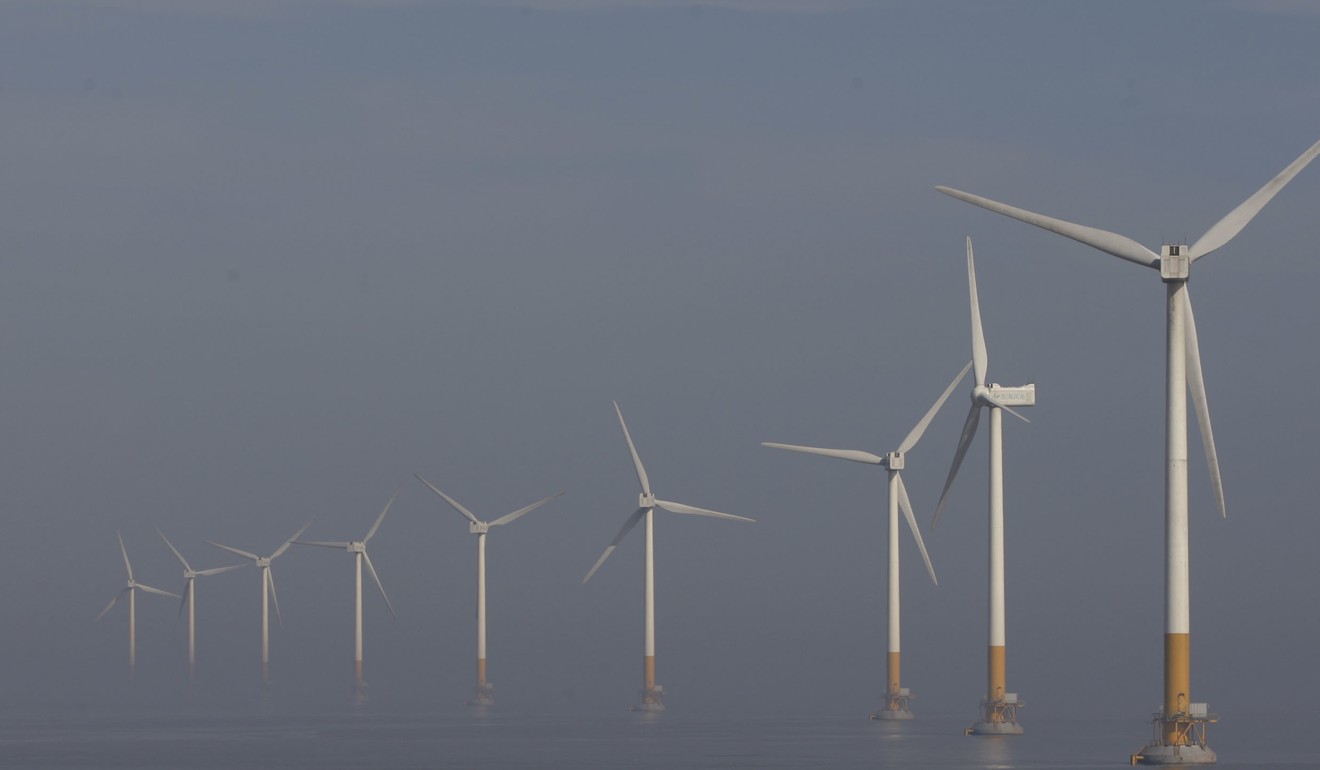
China is the world’s leading market for wind turbines and other renewables – but is still a major source of emissions. Photo: Chinatopix via AP
Meanwhile, investment in China’s renewable energy dropped almost 40 per cent in the first half of 2019 compared with the same period last year, according to Bloomberg New Energy Finance, a research organisation. The government slashed subsidies for solar energy.
Last week in Beijing, China’s vice-minister of ecology and environment told reporters that non-fossil-fuel sources already account for 14.3 per cent of the country’s energy mix. He did not indicate that China would embrace more stringent targets soon.
“We are still faced with challenges of developing our economy, improving people’s livelihood,” Zhao Yingmin said.
As a fast-growing economy, it was always inevitable that China’s energy demands would climb steeply. The only question was whether the country could power a sufficiently large portion of its economy with renewables to curb emissions growth.
Many observers took hope from a brief dip in China’s carbon emissions between 2014 and 2016. Today the country’s renewed focus on coal comes as a disappointment.
“Now there’s a sense that rather than being a leader, China is the one that is out of step,” said Lauri Myllyvirta, lead analyst at the Centre for Research on Energy and Clean Air in Helsinki.
He notes that several developed countries – including Germany, South Korea and the United States – are rapidly reducing their reliance on coal power.
After climbing sharply for two decades, China’s emissions stalled around 2013 and then declined slightly in 2015 and 2016, according to Global Carbon Budget, which tracks emissions worldwide.
This dip came as Chinese leaders declared a “war on pollution” and suspended the construction of dozens of planned coal power plants, including some in Shanxi.
Pollution scandal near China nature reserve at Tengger desert’s edge
At the same time, the government required many existing coal operators to install new equipment in chimneys to remove sulphur dioxide, nitrous oxide and other hazardous substances. About 80 per cent of coal plants now have scrubbers, said Alvin Lin, Beijing-based China climate and energy policy director for the Natural Resources Defence Council, a non-profit.
As a result, the air quality in many Chinese cities, including Beijing, improved significantly between 2013 and 2017. Residents long accustomed to wearing face masks and running home air-filter machines enjoyed a reprieve of more “blue sky days,” as low-pollution days are known in China.
In the past three years, China’s carbon emissions have begun to rise again, according to Global Carbon Budget.
The coming winter in Beijing may see a return of prolonged smog, as authorities loosen environmental controls on heavy industry – in part to compensate for other slowing sectors in the economy.
The UN Climate Change Conference is taking place in Madrid this month. Photo: AFP
Permits for new coal plants proliferated after regulatory authority was briefly devolved from Beijing to provincial governments, which see construction projects and coal operations as boosts to local economies and tax bases, said Ted Nace, executive director of Global Energy Monitor.
“It’s as though a boa constrictor swallowed a giraffe, and now we’re watching that bulge move through the system,” said Nace. In China, it takes about three years to build a coal plant.
The world has already warmed by 1 degree Celsius. All scenarios envisioned by the Intergovernmental Panel on Climate Change for holding planetary warming to around 1.5 degrees Celsius involve steep worldwide reductions in coal-power generation.
In that effort, other countries rely on Chinese manufacturing to hold down prices on solar panels. wind turbines and lithium-ion batteries.
“China has a really mixed record. On the one hand, it’s seen rapidly rising emissions over the past two decades,” said Jonas Nahm, an energy expert at Johns Hopkins University.
“On the other hand, it’s shown it’s able to innovate around manufacturing – and make new energy technologies available at scale, faster and cheaper.”
Source: SCMP
Posted in against, “blue sky days,, battle, Beijing, Bloomberg New Energy Finance, boa constrictor, boa constructor, Centre for Research on Energy and Clean Air, Centre on Global Energy Policy, China’s, coal, coal plants, Coal Power, Columbia University, Construction, demands, electric vehicles, emissions, energy, European Union, Germany, giraffe, global, Global Carbon Budget, Global Energy Monitor, global warming, greenhouse gases, heavy industry, Helsinki, Intergovernmental Panel on Climate Change, Johns Hopkins University, leading market, Madrid, Natural Resources Defence Council, new, paradox, plans, plants, Reliance, renewables, Risk, Shanxi, Solar Energy, solar panels, source, South Korea, suspended, swallowed, Tengger desert, top emitter, UN Climate Change Conference, UN climate summit, Uncategorized, undermining, United States, war on pollution, warming, wind turbines |
Leave a Comment »
23/11/2019
BEIJING (Reuters) – German chemical giant BASF (BASFn.DE) has begun construction of its $10-billion (£7.8 billion) integrated petrochemicals project in China’s southern province of Guangdong, the company said in a statement on Saturday.
The project based in the city of Zhanjiang will be China’s first wholly foreign-owned chemicals complex, for which a framework agreement was signed in January.
It will primarily produce engineering plastics and thermoplastic polyurethane (TPU), and some petrochemical products widely used in automotive, electronics and new energy vehicles industries.
The project’s first phase is expected to be launched in 2022, with production capacity of 60,000 tonnes per year (tpy), taking BASF’s total capacity of engineering plastics and TPU to 290,000 tpy in the Asia-Pacific region.
The entire project is planned to be completed by 2030, the company said, making it the third-largest BASF site worldwide, following Ludwigshafen in Germany and Antwerp in Belgium.
BASF plans to employ a comprehensive smart manufacturing concept at the project, deploying automated packaging, high-tech control systems and automated guided vehicles, it added.
“(The project) will form a solid foundation for a world-class industrial cluster in Zhanjiang and establish stronger business connections between South China and other Asian countries,” Stephan Kothrade, a BASF regional official in China, said in the statement.
The project is “a signal showing China’s efforts of further opening-up are taking effect,” Chinese Premier Li Keqiang said, according to a central government website.
China would treat enterprises with all types of ownership structures, as well as domestic and foreign firms, equally and without discrimination, he added.
Source: Reuters
Posted in Antwerp, automotive, Belgium, Building, chemical giant, China alert, Chinese premier Li Keqiang, Construction, Electronics, engineering plastics, German, Germany's, Guangdong, industries, integrated, Ludwigshafen, new energy vehicles, petrochemical, produce, products, project, starts, thermoplastic polyurethane (TPU), Uncategorized |
Leave a Comment »
19/11/2019
VIENTIANE, Nov. 18 (Xinhua) — Chinese top political advisor Wang Yang on Monday inspected the construction of the China-Laos Railway at ancient Lao capital Luang Prabang, some 220 km north of Vientiane.
Wang, chairman of the National Committee of the Chinese People’s Political Consultative Conference, inspected the construction of a major bridge crossing the Mekong River, which is an important node of the 414.3-km railway.
He was also briefed on the construction of the China-Laos Railway, met with representatives from the company that constructs the railway and delivered a speech.
On behalf of the Central Committee of the Communist Party of China (CPC) and the Chinese people, Wang expressed warm greetings to the staff participating in the construction of the China-Laos Railway and sent his heartfelt thanks to those who cared and supported the construction of the railway.
Wang said the railway is a major project of the China-Laos Economic Corridor and an important platform and carrier of the implementation on building a community with a shared future for China and Laos.
Hailing the railway’s important significance in improving Laos’ infrastructure and boosting local economic and social development, Wang said top leaders of the two countries have attached great importance to the railway and have made explicit requirements of the construction on different occasions.
Wang called on builders of the railway to note the importance of the railway from the overall and strategic height, uphold the principle of quality and safety first, enhance project management, fulfill social responsibilities and work on to build a model, competitive and clean project, so as to contribute to the China-Laos friendship.
The China-Laos Railway is a strategic docking project between the China-proposed Belt and Road Initiative and Laos’ strategy to convert from a landlocked country to a land-linked hub.
The railway, with 198-km tunnels and 62-km bridges, will run from Boten border gate in northern Laos, bordering China, to Vientiane with an operating speed of 160 km per hour.
The project started in December 2016 and is scheduled to be completed and opened to traffic in December 2021.
Source: Xinhua
Posted in ancient, Belt and Road Initiative, Belt and Road Initiative (BRI), Boten border gate, Central Committee of the Communist Party of China (CPC), chairman of the National Committee of the Chinese People's Political Consultative Conference (CPPCC), China-Laos Economic Corridor, China-Laos friendship, China-Laos railway, Chinese top political advisor Wang Yang, Construction, Country, inspected, land-linked hub, landlocked, Lao capital, Laos' strategy, Luang Prabang, major bridge crossing, Mekong River, Uncategorized, Vientiane |
Leave a Comment »
15/11/2019
BEIJING, Nov. 15 (Xinhua) — China has signed 197 Belt and Road (B&R) cooperation documents with 137 countries and 30 international organizations by the end of October, the country’s top economic planner said Friday.
Apart from developing and developed economies, a number of companies and financial institutions from developed countries have collaborated with China to expand the third-party market as well, Meng Wei, a spokesperson for the National Development and Reform Commission (NDRC), told a news conference.
The construction of the China-Laos railway, China-Thailand railway, Jakarta-Bandung High-Speed Railway and Hungary-Serbia railway are making solid headway while projects including the Gwadar Port, Hambantota Port, Piraeus Port and Khalifa Port have gone smoothly, the NDRC said.
Meanwhile, the building of the China-Belarus industrial park, China-UAE Industrial Capacity Cooperation Demonstration Zone and China-Egypt Suez Economic and Trade Cooperation Zone is also forging ahead.
From January to September, China’s trade with B&R countries totaled about 950 billion U.S. dollars, and its non-financial direct investment in these countries topped 10 billion dollars, Meng said.
She noted that China has made bilateral currency swap arrangements with 20 B&R countries and established RMB clearing arrangements with seven countries.
In addition, the country has also made achievements with B&R countries in other sectors including technology exchange, education cooperation, culture and tourism, green development and foreign aid.
Source: Xinhua
Posted in Belt and Road (B&R) cooperation, China alert, China-Belarus industrial park, China-Egypt Suez Economic and Trade Cooperation Zone, China-Laos railway, China-Thailand railway, China-UAE Industrial Capacity Cooperation Demonstration Zone, Construction, Culture, education cooperation, foreign aid, green development, Hambantota Port, Hungary-Serbia railway, Jakarta-Bandung High-Speed Railway, Khalifa Port, National Development and Reform Commission (NDRC), Piraeus port, technology exchange, Tourism, Uncategorized |
Leave a Comment »


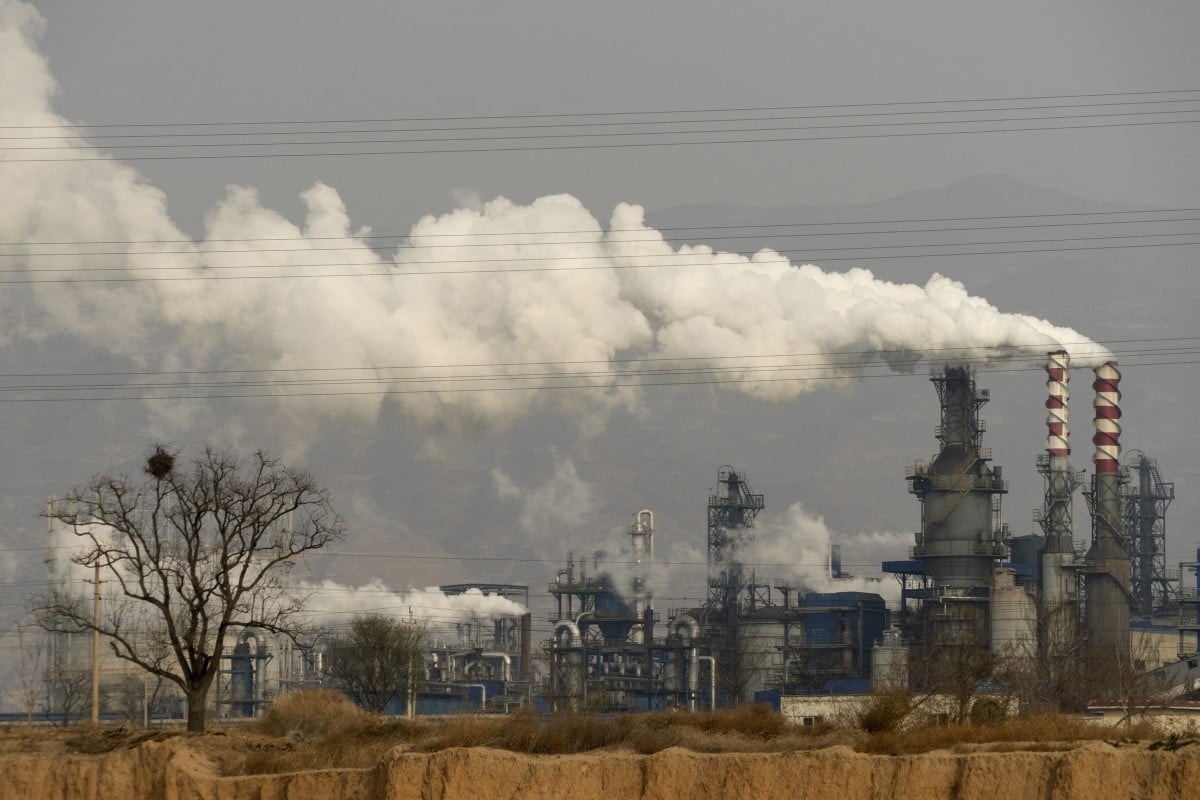

 CHINDIA ALERT: You'll be living in their world, very soon