Archive for ‘Economics’

10/07/2012

It is only natural that the world’s number two in GDP should sooner rather than later take number two spot in Fortune 500.

See also: G2

10/07/2012

* 5m greener vehicles on the Chinese streets by 2020

China Daily: “China has set a target of producing and selling 500,000 energy-efficient and alternative-energy vehicles a year by 2015, and five million vehicles by 2020.

The blueprint, announced by the State Council on Monday, has outlined generous subsidies to consumers and producers of the new generation of greener vehicles, as it aims to ease the country’s heavy dependence on imported oil, cut emissions, and speed up the restructuring of its automobile sector into a more environmentally sustainable model.

According to the details, there will be heavy government investment in the core technology needed to build a strong and globally competitive new-energy vehicle industry.

The short-term emphasis will be on developing pure electric and plug-in hybrid vehicles, as well as wider usage of hybrid vehicles and energy-saving combustion engine automobiles.

The world’s largest auto market has set an accumulated production and sales target of 500,000 units of pure electric and plug-in hybrid vehicles by 2015, and that will be increased tenfold to more than 5 million units by 2020.”

via 5m greener vehicles on the streets by 2020 |Economy |chinadaily.com.cn.

Continuing on the path to a ‘greener’ China – https://chindia-alert.org/economic-factors/greening-of-china/

10/07/2012

* Chinese Firm Pursues Hawker

WSJ: “A Chinese bidder is in advanced talks to buy the bulk of aerospace company Hawker Beechcraft Inc.’s businesses for $1.79 billion, an approach that could raise political concerns given U.S. sensitivities about previous Chinese attempts to buy American assets.

Superior Aviation Beijing Co. will have an exclusive right for 45 days to negotiate to buy Hawker’s corporate jet and propeller plane operations, the U.S. company said. If a deal is reached, Superior would serve as the opening bidder in a bankruptcy auction in which other suitors could try to top its offer.

Hawker Beechcraft filed for bankruptcy protection in May. Above, an employee shown last year working on a jet at its Wichita, Kan., plant.

Superior, which has ownership ties to Beijing’s municipal government, won’t be bidding on Hawker’s defense unit because of potential U.S. national-security concerns about foreign purchases of such assets.

Hawker’s defense business houses military technology and sells military training and light attack aircraft to U.S. and foreign governments. The business, called Hawker Beechcraft Defense Co., will continue to operate and could later be sold separately. If sold, Hawker said, the company would refund as much as $400 million of Superior’s $1.79 billion purchase price.

A winning bid by Superior would further the ambitions of China’s aerospace industry to move deeper into jet production, as well as give Superior itself a bigger role in the industry. Makers of small aircraft have been looking to China recently as a key source of demand as the market for business jets shrinks.”

via Chinese Firm Pursues Hawker – WSJ.com.

This is in line with our analysis of Chinese acquisitions: https://chindia-alert.org/2012/02/13/pattern-of-chinese-overseas-investments/

04/07/2012

* China Says No More Shark Fin Soup at State Banquets

NY Times: “China said Tuesday that it would prohibit official banquets from serving shark fin soup, an expensive and popular delicacy blamed for a sharp decline in global shark populations.

Fishermen displayed their sharks for sale at a market in Banda Aceh, Indonesia, in 2011. Rapid economic growth across Asia has increased the demand for shark fin soup.

The ban, reported by Xinhua, the state-run news agency, could take as many as three years to take effect, and it remains unclear how widely it will be adhered to across a sprawling nation where orders issued by Beijing are often shrugged off by officials in faraway regions and provinces.

Still, the decision to stop serving shark fin soup at official functions was welcomed by environmental campaigners. Experts have long cautioned that soaring demand for the soup over the past two decades has imperiled shark populations around the globe.

“This is a very positive step forward,” said Andy Cornish, director of conservation at W.W.F. in Hong Kong. “It is the first time that the Chinese central government has expressed a decision to phase out shark fin from banquets funded by taxpayers’ money.” He said the move would send an important signal to consumers in China, the largest market for the fins.”

via China Says No More Shark Fin Soup at State Banquets – NYTimes.com.

Maybe the Japanese will stop killing whales!

03/07/2012

* China factory construction halted amid violent protests

BBC News: “Chinese officials have halted the construction of a copper alloy plant in Sichuan province following violent protests by local residents.

Local officials said large crowds of residents gathered on Sunday and Monday in Shifang city to protest against the plant on environmental grounds.

Both police and residents were injured in the clashes as bottles were thrown and cars damaged, they said.

Officials said they would now consult residents on the project.

Local authorities said hundreds of residents and students were involved in the protests, while state-run Global Times, quoting an unnamed police officer, said “several thousand” took part.

A statement on the incident on the city’s Sina Weibo account said the government would not restart the project “until the majority of people support it”.

This is not the first time that protests over the environmental impact of heavy industry plants have broken out in China.

In recent years, the public has become more aware of its rights – and more vocal when it comes to issues of public health.

While China has achieved astonishing economic growth in the past few decades, it has come at a huge environmental cost.

The country’s growing middle class worry about air and water pollution. They are concerned about the impact it will have on their children and are increasingly prepared to protest.

Last year, the authorities were forced to close a chemical plant in the north-eastern city of Dalian following similar protests.

Authorities face a huge challenge – they must balance the demand for continued economic growth against rising public anger over pollution.

“Work teams will be sent to all communities and schools to listen to people’s opinions and suggestions,” they added.”

via BBC News – China factory construction halted amid violent protests.

See also: 

Tags: ,
02/07/2012

* India to launch $75m mission to forecast rains

BBC News: “India is launching a $75m (£48m) scheme using computer models to understand the south-west monsoonand forecast the rains more accurately, officials say.

Rains have come down pretty heavily this monsoon

Rains have come down pretty heavily this monsoon (Photo credit: Wikipedia)

India receives 80% of its annual rainfall during the summer monsoon between June and September.

A significant shortfall in rain can trigger drought, which can cause great damage to India’s 235 million farmers.

There have been reports that this year’s monsoon has been poor.

“Understanding the monsoon will be a major priority of the government for the next five years,” says Shailesh Nayak, a senior official in the ministry of earth sciences.

He said efforts will be made to understand the rains using computer models developed by the UK and the US and gathering fresh data.

Forecasting the monsoon is a tricky task, as India’s meteorologists have discovered time and again.

Last year they predicted a bad monsoon, but in the end the rains turned out to be in excess of what was forecast.

The Indian Meteorological Department (IMD) admitted later that it was “not very accurate” in its forecasts.

In its 137-year history the IMD has never been able to predict a drought or a flood – the two extremes of a monsoon season – successfully.

Experts say scientists all over the world struggle to forecast weather patterns.

They say the IMD does a “commendable job, putting its reputation on the block” by making monsoon forecasts every year.

Monsoon watchers like Prof J Srinivasan from the Indian Institute of Science says seasonal forecasts for drought and floods are relatively accurate for the Sub-Saharan region in Africa, but no agency in the world has ever been able to predict a drought or flood for the Indian region.”

via BBC News – India to launch $75m mission to forecast rains.

28/06/2012

* Chinese Migrant Workers Unrest Flares

NY times: “A fight between a teenager from a migrant worker family and a local boy in southern China escalated into rioting and protests this week.

The unrest, which followed the teenagers’ fight on Monday and the subsequent beating of the migrant boy by local villagers, occurred in the area of Shaxi in Guangdong Province. Migrant protesters smashed storefront windows and overturned cars, including police vehicles and ambulances, according to photographs of the rioting posted on the Internet. Caijing, a Chinese news organization, also reported that hundreds of riot police officers clashed with villagers in the Foshan area of Guangdong on Tuesday after the villagers protested illegal land seizures.”

via China – Migrant Unrest Flares – NYTimes.com.

See also: Have not’s patience

26/06/2012

More power to BRICS (less to the US Dollar).

See also – Ascendancy of Yuan over Dollar:

26/06/2012

* Chinese in Talks to Fund U.S. Homes

WSJ: “Lennar Corp., one of the U.S.’s largest home builders, is in talks with the China Development Bank for approximately $1.7 billion in capital to jump-start two long-delayed San Francisco projects that would transform two former naval bases into large-scale housing developments, according to people familiar with the discussions.
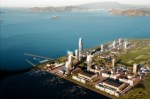
The negotiations aren’t final and the financing arrangement could still fall through. But if completed, the deal would reflect a changing dynamic between the U.S. and Chinese economies, as an American company turns to China for help funding a long-delayed and partially publicly funded project that otherwise wouldn’t get done.

The developments, Treasure Island and Hunters Point Shipyard, also have the potential to alter San Francisco’s housing market by providing nearly 20,000 new homes, a sports arena and millions of square feet of office and retail space in a market that is land-constrained and has had limited new construction. The city has committed hundreds of millions of dollars, in the form of tax-increment bonds, to the projects, which in total are expected to cost $10.5 billion over the next few decades.

In recent years, Chinese state money—in large part provided by CDB and its counterpart the Export-Import Bank of China—has been pivotal in funding major infrastructure and resource projects around the world, but the bulk of that activity has been in developing countries in Africa, South America and Asia.

That has resulted in the construction of dams, airports, railways, highways and sports arenas that otherwise wouldn’t get built, primarily in developing countries. Funding is typically conditional upon Chinese developers and contractors being used to build the projects. And in order to keep costs down, and in many cases to ensure the necessary expertise, at least a portion of the workforce is flown in from China.

This would be difficult or impossible in San Francisco, where local regulations and deals cut with local governments generally require developers to use local labor and pay prevailing wages.

The CDB and the Lennar partnership have been in discussions to include China Railway Construction Corp., a state-run contractor, in the development of Treasure Island and Hunters Point, according to people familiar with the matter. While it is unclear what CRCC’s role would be, the company could serve as an adviser or in an consulting role, or could possibly even invest in a local construction company that employs U.S. workers, these people said.

With Chinese firms increasingly eyeing opportunities in the U.S. and other developed markets, CDB will likely find itself being approached to fund more deals in the U.S. People familiar with the negotiations said CDB was using the Treasure Island and Hunters Point projects—which both include “green” building and affordable housing components that are of interest to Chinese builders—as a test case to become familiar with what’s required for doing such deals in the U.S.”

via Chinese in Talks to Fund U.S. Homes – WSJ.com.

See also: 

Law of Unintended Consequences

continuously updated blog about China & India

ChiaHou's Book Reviews

continuously updated blog about China & India

What's wrong with the world; and its economy

continuously updated blog about China & India