Chindia Alert: You’ll be Living in their World Very Soon
aims to alert you to the threats and opportunities that China and India present. China and India require serious attention; case of ‘hidden dragon and crouching tiger’.
Without this attention, governments, businesses and, indeed, individuals may find themselves at a great disadvantage sooner rather than later.
The POSTs (front webpages) are mainly 'cuttings' from reliable sources, updated continuously.
The PAGEs (see Tabs, above) attempt to make the information more meaningful by putting some structure to the information we have researched and assembled since 2006.
Image copyright GETTY IMAGESImage caption India wants to move to 30% electric cars by 2030
India is making a big push for electric vehicles, signalling a turning point in its clean energy policy, writes energy writer Vandana Gombar.
In 2017, Transport Minister Nitin Gadkari shocked the automobile industry (and the world) when he announced that he intended for India to move to 100% electric cars by 2030.
“I am going to do this, whether you like it or not. And I am not going to ask you. I will bulldoze it,” he said at an industry conference.
That was an ambitious target given that even the UK and France were hoping to phase out conventional combustion-engine cars only by 2040.
Mr Gadkari and his Bharatiya Janata Party or BJP-led government eventually diluted their plans for electric passenger cars – from 100% the target is now down to 30%.
Image copyright GETTY IMAGESImage caption India has some of the world’s most polluted cities, including Delhi
A pushback by the industry and the fear of job losses were among the reasons for the government to do so.
The government has now decided to focus on the segment below cars: two-wheelers, where sales are much higher, and three-wheelers (largely auto-rickshaws).
In the financial year that ended in March, about 3.4 million passenger cars were sold in the country against 21.2 million two-wheelers, according to data released by Indian automobile manufacturers. The number of three-wheelers sold totalled 0.7 million.
The new proposal is to have only electric three-wheelers operating in the country by 2023, and only electric two-wheelers by 2025.
The government seems to have two dominant objectives – to control pollution and take the lead in an emerging industry.
Media caption How an electric car can make money
India wants to become a “global hub of manufacturing of electric vehicles”, Finance Minister Nirmala Sitharaman said in her budget speech earlier this month. The Economic Survey, a government forecast, released a day before the budget envisaged an Indian city possibly emerging as the “Detroit of electric vehicles” in the future.
But it will be a challenge to create a competitive advantage in electric vehicle manufacturing, or even a market for them, given that India does not have the infrastructure or deep pockets that the world’s current leader in electric mobility, China, has.
The American electric carmaker, Tesla, is setting up a manufacturing plant in Shanghai that is expected to be operational by the end of 2019.
India can perhaps learn a few lessons from China. The authorities there spurred sales partly by placing caps on the number of conventional combustion vehicles that can be sold in its most congested and polluted cities. Beijing has also limited the number of electric vehicles that can be sold. Further, car manufacturers now have to ensure that a specified share of their production is of so-called zero emission vehicles.
Another inspiration for India could be Norway, where electric vehicles accounted for half of last year’s total car sales. A phase-out of combustion vehicles in the country is planned by 2025.
Media caption Why is Norway the land of electric cars?
But there are many encouraging signs in India too.
For one, charging stations are being built at government offices, malls and even within neighbourhoods. Government-owned power companies such as Bharat Heavy Electricals and Energy Efficiency Services plan to begin rolling out charging stations soon. The latter is looking at 10,000 stations over the next two years.
Second, electric vehicle models are proliferating. Hyundai launched its electric Kona car in India in July and Nissan is expected to launch its Leaf model soon. Indian carmakers Mahindra & Mahindra and Tata Motors both sell electric cars.
There are already several models of electric two-wheelers, and bike-sharing companies like Bounce are also going electric. Electric buses too can be spotted in many cities, partly fuelled by incentives. India’s capital, Delhi, is expected to have 1,000 electric buses running on its roads soon.
Even taxi-hailing apps and home delivery services have taken to ferrying parcels and passengers on electric bikes. After a pilot run with electric cabs, Indian ride-hailing giant Ola is now focussing on electric bikes and three-wheelers.
Instead of charging batteries, which could be a time-consuming task, it intends to opt for a battery swapping model where a fully charged battery would quickly replace the discharged one at swapping stations. Bounce too is experimenting with battery swaps.
Image copyright GETTY IMAGESImage caption India sold 3.4 million passenger cars this past financial year
The government is also planning to offer incentives for manufacturing electric vehicles and batteries to boost economic growth and encourage local manufacturing under its Make in India initiative.
The falling cost of batteries could boost India’s electric mobility plans, and make it that much easier for electric vehicles to be competitive with those running on other fuels. And there is the added bonus of cleaner air.
That would push India towards electric mobility in its own unique style and at its own unique pace.
Chinese State Councilor and Foreign Minister Wang Yi (R) meets with Minister of Foreign Affairs and International Cooperation of the United Arab Emirates (UAE) Sheikh Abdullah bin Zayed Al Nahyan in Beijing, capital of China, July 21, 2019. (Xinhua/Yan Yan)
BEIJING, July 21 (Xinhua) — Chinese State Councilor and Foreign Minister Wang Yi met with Sheikh Abdullah Bin Zayed Al Nahyan, minister of Foreign Affairs and International Cooperation of the United Arab Emirates (UAE), here Sunday.
Hailing the UAE as China’s important and reliable partner in the Middle East, Wang said China stands ready to work with the UAE to implement the consensus reached by the two countries’ leaders, deepen their partnership under the Belt and Road Initiative, promote cooperation in various fields, enhance people-to-people exchanges, strengthen cooperation on anti-terrorism and law enforcement, and bring the China-UAE comprehensive strategic partnership to higher levels.
Sheikh Abdullah said the UAE is willing to strengthen cooperation with China in trade, investment, energy, culture, education and third-market cooperation, and to work for closer coordination within the United Nations and in regional affairs.
City’s richest person was ‘very pleased’ to have bumped into group of youngsters in Hokkaido, mother says on social media
Li has a personal fortune of US$31.7 billion and is known for his charitable acts
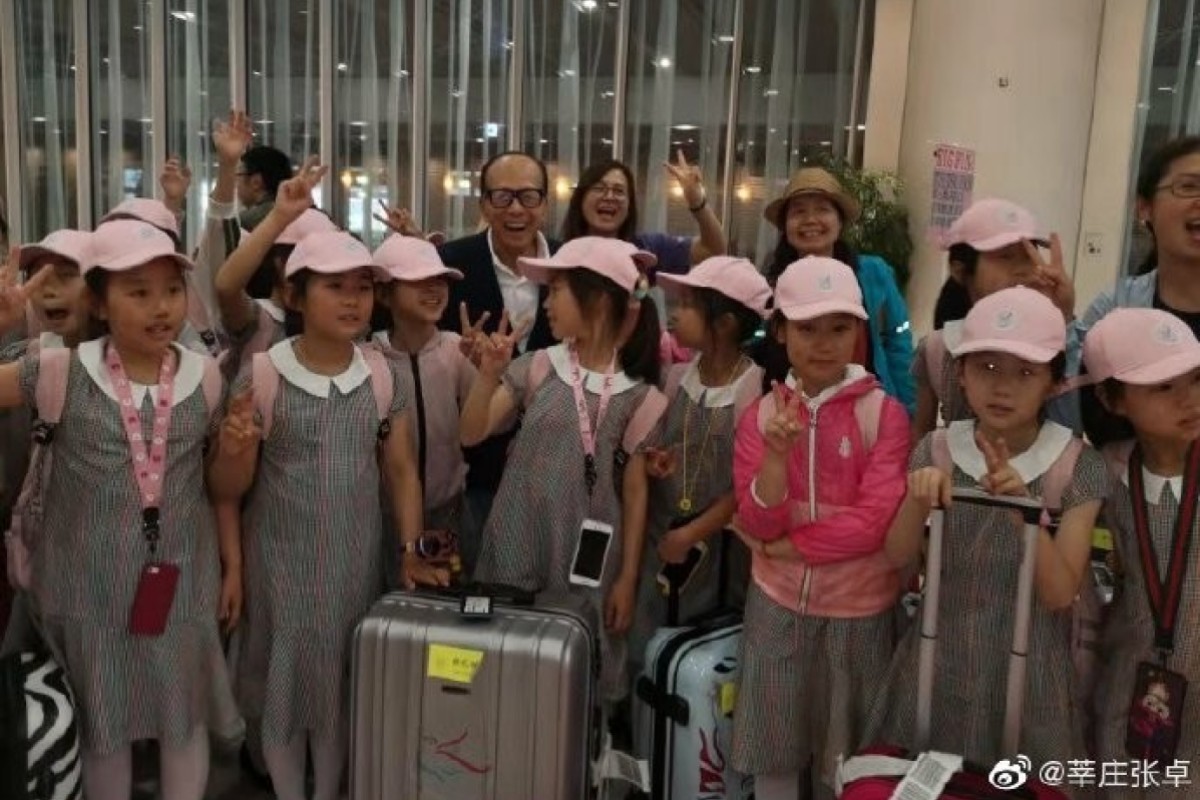
The youngsters from Shanghai got a wonderful surprise when they met billionaire Li Ka-shing at an airport in Japan. Photo: Weibo
Christmas came early for a group of children from Shanghai on Tuesday when they met Hong Kong billionaire Li Ka-shing at an airport in Japan while en route to a dance competition and he offered to pay for their trip … and buy them each a gift.
The 45 youngsters and their teachers from the Little Pigeon Dancing Group in the east China metropolis were passing through New Chitose Airport in Hokkaido, the northernmost of Japan’s main islands, when the serendipitous meeting happened, according to social media posts.
“The children bumped into Mr Li Ka-shing at the airport, who looked very pleased and volunteered to take pictures with the children,” Zhang Zhuo wrote on Weibo – China’s Twitter-like platform – on Thursday, adding that she was the mother of one of the dancers.
“Today a staff member from the Li Ka Shing Foundation contacted the dance group and offered to sponsor the trip to Japan,” she said. “The children shot a video to wish him good health,” she said.
Li met the youngsters from the Little Pigeon Dancing Group in Hokkaido. Photo: Weibo
One of the dance teachers wrote on Weibo that Li was “so pleased after seeing the children at the airport that he decided to sponsor for the trip”.
“So rich and generous, charitable and loving,” she said.
It was not clear exactly how much Li donated, but based on a post by another of the teachers, the cost of the trip was 18,840 yuan (US$2,700) per child, so it would appear to have been in excess of US$120,000.
As part of the offer, the foundation said also that the children should treat themselves to a gift.
Zhang said her daughter treated herself to an eraser, as it was something she wanted to buy before the trip.
“It is not about how expensive the gift is. It’s happiness that counts. We must know to be grateful and moderate,” she wrote.
Li’s influence at Shantou University under threat
Born in 1928 near Shantou in south China’s Guangdong province, Li moved to Hong Kong as a child. According to the latest Forbes list he is richest person in Hong Kong and 28th richest in the world, with a personal fortune of US$31.7 billion.
In 1981 he helped to establish Shantou University and since then the Li Ka Shing Foundation has donated more than 10 billion yuan to support its development.
Last month, the university announced that starting this autumn, for the next four years all new intakes will have the entire cost of their university education paid for by the foundation – a donation of about 100 million yuan a year.
Some 150,000 residents of Baishizhou have to leave by the end of September to make way for malls, hotels and high-end residential projects
They worry about finding affordable housing in the city, and their children’s education
Urban villages like Baishizhou provide affordable housing, mostly for migrant workers. Photo: Phoebe Zhang
As their eviction deadline nears, all Chen Jian can think about is the wrecking ball – and where his family is going to go. He often dreams about the negotiations – with officials, real estate developers, landlords. On other nights, he cannot sleep at all.
“I’m mostly worried about my daughter – she starts secondary school in September,” said Chen, 41, who works as a quality supervisor for a foreign trading company.
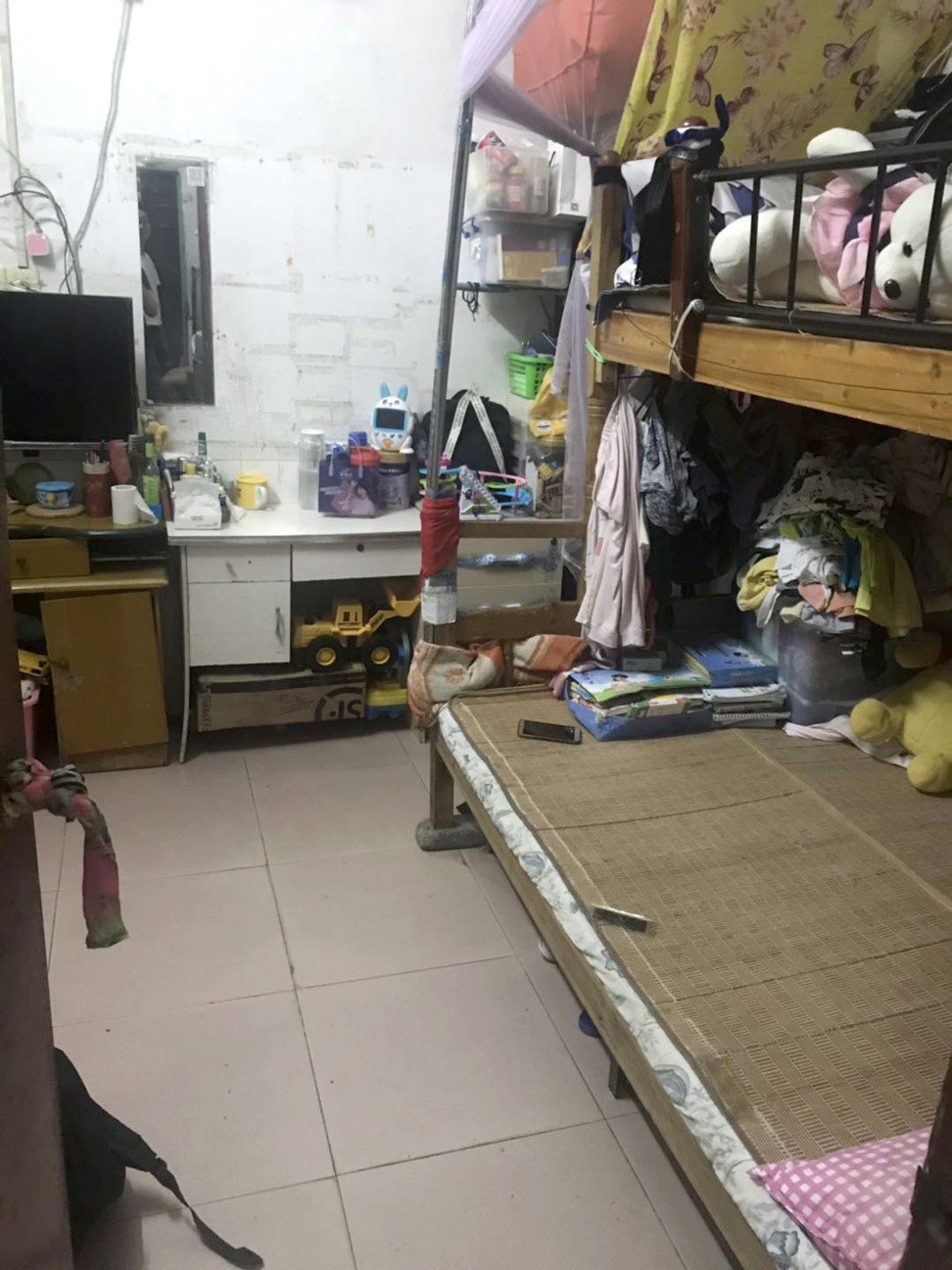
His family of four lives in a cheap one-bedroom flat in Baishizhou, one of the last standing chengzhongcun, or “urban villages”, in the flourishing commercial zones of southern Chinese city Shenzhen.
The villages provide affordable housing – costing from a few hundred to a few thousand yuan per month – to a mostly migrant worker population that provides services and labour.
But Baishizhou, in the Nanshan district, will not be standing for much longer. Many tenants in the area have received eviction notices since June, telling them to move out before the end of September to make way for a real estate project led by Shenzhen-based developer LVGEM Group.
The developer bought the land and buildings from their landlords, and it plans to knock them down and replace them with malls, hotels, high-end residential projects and skyscrapers.
Some 150,000 people are affected, mostly migrant workers, and they will have to find new homes, change jobs or even move back home at short notice.
Chen Jian lives in a one-bedroom flat in Baishizhou with his wife, daughter and son. Photo: Phoebe Zhang
For Chen and more than 2,000 other families, their children’s education is the most urgent issue. He said they could move somewhere else nearby, but the rent would be more than four times higher. A cheaper area would mean a long walk to school for his daughter from the nearest subway station.
As the breadwinner, Chen’s monthly income of 12,000 yuan (US$1,750) has to cover the whole family. His wife takes care of their three-year-old son and their daughter, 12.
“If I were here by myself, I would just pack up my bags and go,” said Chen, who moved to Shenzhen from Henan province. “But I can’t – I have children, I would do anything for my children.”
Families who’ve lived in old Chinese town for generations being kicked out to make way for tourists
Urban villages are a phenomenon that grew from China’s rapid development. In the 1980s, soon after Shenzhen became the country’s first special economic zone, the local government expropriated mostly vacant land from villagers and allowed developers to build commercial properties there.
The locals invested the large sums of money they received into new living spaces in their villages, which they rented out to the migrant workers that flowed into the city amid a manufacturing boom.
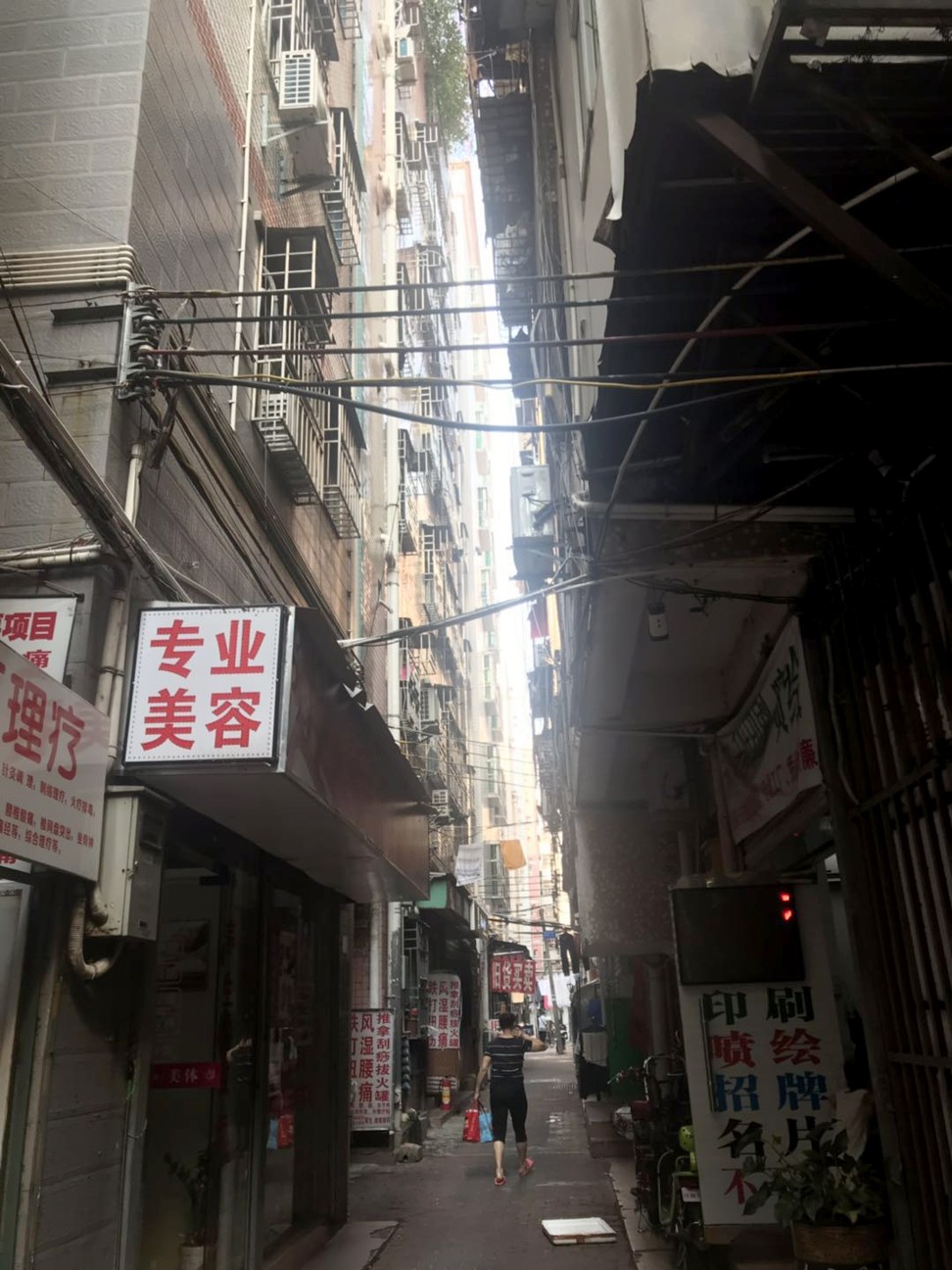
These chengzhongcun emerged as a tangle of damp alleyways, where electricity and telephone wires hang like spiderwebs. They bustle with fruit carts, soy milk shops, cobblers, karaoke parlours, short-stay love hotels and hair salons offering massage services. The “handshake buildings” where people live are packed together so tightly that residents could reach out of the window and shake their neighbour’s hand in the opposite flat.
“I call this ‘voluntary urbanisation’,” said Duan Peng, an architect based in the city. Since he moved to Shenzhen in 2001, Duan has spent many days and nights in Baishizhou. He said its development was in line with the government’s urban planning policy, since it allowed migrant workers to live in a relatively prosperous area in the city centre rather than on its periphery.
“Handshake buildings”, where residents can shake their neighbours’ hands through the windows, are a feature of China’s urban villages. Photo: Phoebe Zhang
Chen moved to Shenzhen with his wife in 2000, and both their children were born there. They moved to Baishizhou in 2008 after he was introduced to his landlord, who is from Chen’s hometown and rented him the flat for 650 yuan a month.
The rent has gone up by just 300 yuan in the 11 years they have lived there. They have watched as new developments sprang up around them – amusement parks, a golf course, malls and an area that is home to some of the country’s top tech companies including Huawei, Tencent and DJI.
How the eviction of Beijing’s migrant workers is tearing at the fabric of the city’s economy
But away from the shiny new developments, 150,000 migrant workers from all over the country are packed into 2,500 buildings in Baishizhou, where rents and services are affordable.
The urban village is full of people like Chen. Small business owner Wang Fang came to Shenzhen from northeast China in 2003 and has lived in Baishizhou ever since. Six months ago, she signed a three-year lease on a commercial space and opened a dumpling restaurant, but she is worried about the future.
“I can’t go back home, I already have a Shenzhen hukou,” she said, referring to the household registration document that gives access to public services. “I don’t have land there any more and can’t make a living there [as a farmer].”
She has not been told she has to leave the restaurant, but Wang and her two sons have until the end of September – when the building’s water and electricity will be cut off – to vacate their flat.
“It’s only a matter of time before the business is shut down as well,” she said.
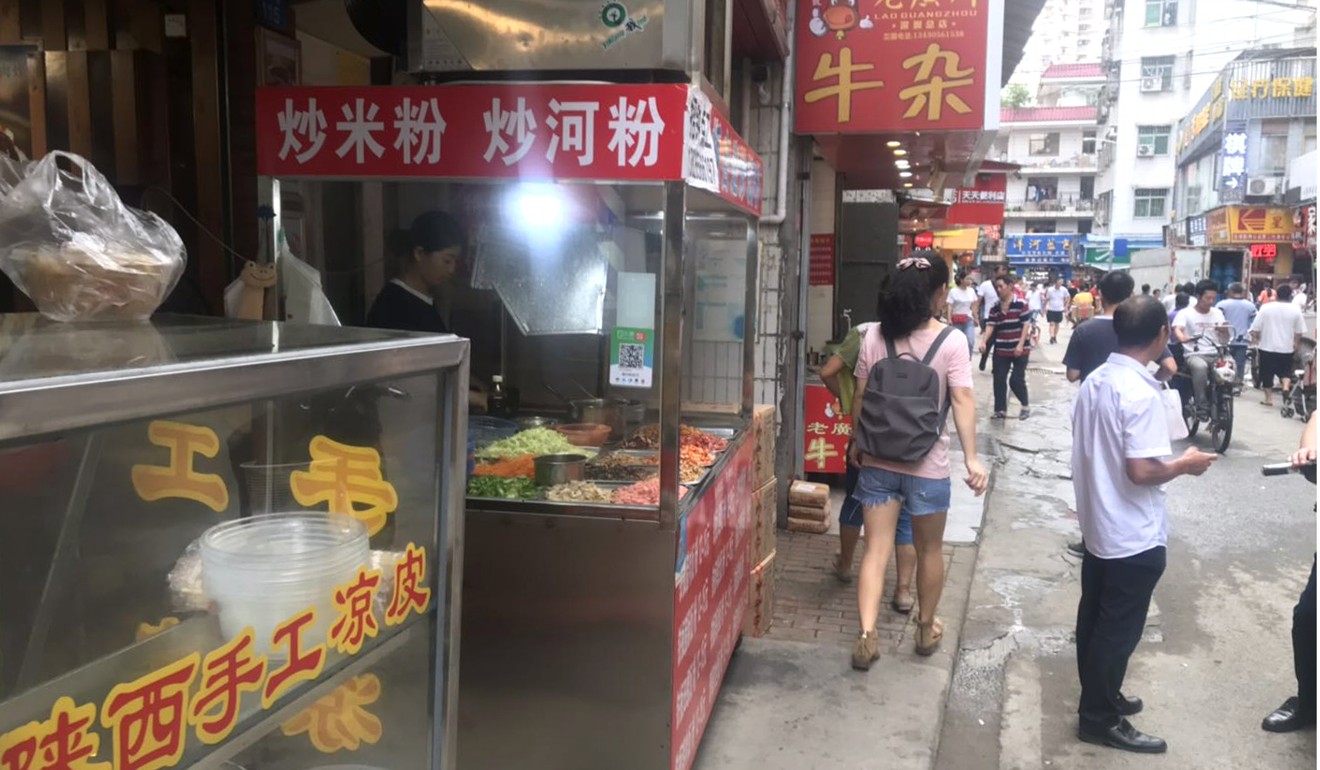
Small shops and street vendors line Baishizhou’s bustling alleyways. Photo: Phoebe Zhang
According to an online poll of 1,031 Baishizhou residents this week, about half said they may have to find another job, and more than 600 were concerned about their children’s education. The survey, conducted by Shenzhen University urban planning professor Chen Zhu, also found that 70 per cent of those polled planned to find another flat in the city, while 28 per cent would leave.
Duan said the evictions and redevelopment would inevitably affect the surrounding areas, as well as the residents.
“The prices of services in the neighbourhood will increase, because many of the workers [now providing those services] will move far away, and rents will increase as well,” he said.
But for many such redevelopments, while the government, landlords and village officials might be consulted, the tenants are left out.
“Most of these residents, their voices and their interests aren’t on the negotiating table – their losses aren’t calculated in the real estate developer’s demolition costs,” Duan said.
A receptionist at LVGEM said he was not aware of any complaints about the redevelopment, while emails to the company went unanswered.
Meanwhile the developer’s partner, Baishizhou Corporation, told Southern Metropolis Daily it would provide legal services, rentals support and school buses for tenants who will be displaced.
But it is not enough for migrant workers like Chen. Like many of those facing eviction, he fears he will have to pay more rent, and there may not be a school bus service in his area.
He mentions a slogan plastered on walls in the city, “Once you come, you’re a Shenzhener” – part of a government campaign to lure talent and investors.
Chen said he worried that Shenzhen wanted only hi-tech workers and luxury residential compounds in the city, leaving little room for low-income workers.
“Despite what the slogan says, you ask yourself, are you really a Shenzhener?” he said.
WASHINGTON (Reuters) – China will be able to place armed forces at a Cambodian naval base under a secret pact between the two nations, the Wall Street Journal said on Sunday, although Cambodian officials denied such a deal had been struck.
The agreement, reached this spring but not made public, gives China exclusive access to part of Cambodia’s Ream Naval Base on the Gulf of Thailand, the Journal said, citing U.S. and allied officials familiar with the matter.
Such an arrangement would boost China’s ability to assert contested territorial claims and economic interests in the South China Sea, challenging U.S. allies in Southeast Asia.
Chinese and Cambodian officials denied such a pact existed, the Journal said.
“This is the worst-ever made up news against Cambodia,” Cambodian Prime Minister Hun Sen told the pro-government news site Fresh News on Monday.
“No such thing could happen because hosting foreign military bases is against the Cambodian constitution.”
Cambodian defence ministry spokesman Chhum Socheat told Reuters the report was “made up and baseless”.
In Beijing, foreign ministry spokesman Geng Shuang said, “As I understand it, the Cambodia side denied this.”
But he declined to respond to repeated questions whether China also denied the report.
“China and Cambodia are traditionally friendly neighbours,” Geng told a news briefing.
“We have cooperated in various areas. Our cooperation is open, transparent, and mutually beneficial and equal. I hope the relevant parties do not overinterpret it.”
Hun Sen’s strongest regional ally, China has poured billions of dollars in development assistance and loans into Cambodia through two-way frameworks and its Belt and Road initiative.
The initiative, unveiled by Chinese President Xi Jinping in 2013, aims to bolster a sprawling network of land and sea links throughout Asia, the Middle East, Europe and Africa.
It has attracted a flood of Chinese commercial ventures in Cambodia, including casinos and special economic zones.
This month the U.S. Defense Department suggested China may be attempting to gain a military foothold in Cambodia, in a letter to Cambodia asking why the nation had turned down an offer to repair a naval base.
In a statement, the State Department urged Cambodia to reject such an arrangement, saying the nation had a “constitutional commitment to its people to pursue an independent foreign policy”.
It added, “We are concerned that any steps by the Cambodian government to invite a foreign military presence in Cambodia would threaten the coherence and centrality of the Association of Southeast Asian Nations in coordinating regional developments, and disturb peace and stability in Southeast Asia.”
Cambodia denied reports last November that China had been lobbying it since 2017 for a naval base that could host frigates, destroyers and other vessels of the People’s Liberation Army Navy.
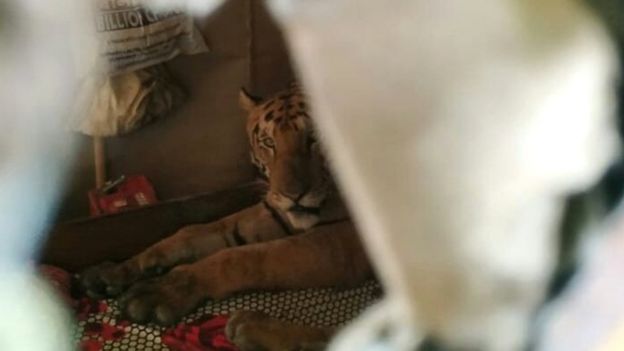
Image copyright WTIImage caption The tiger was seen relaxing in a bed in Assam state
A female tiger which fled a wildlife park in India’s flood-ravaged state of Assam was found relaxing on a bed inside a local resident’s house.
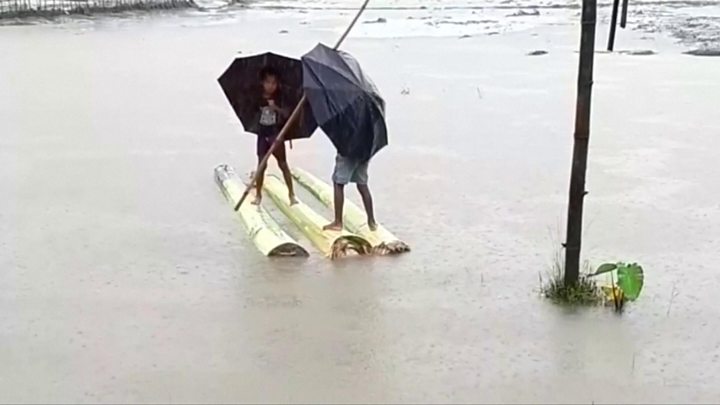
She is believed to have fled the Kaziranga National Park, where 92 animals have died in recent days amid heavy flooding.
Officials from a wildlife conservation group arrived at the house and created a safe escape route for her.
She was guided in the direction of the jungle.
According to the Wildlife Trust of India (WTI), the tigress was first spotted next to a highway on Thursday morning, some 200 metres away from the national park.
She was likely to have been disturbed by the busy road and ended up seeking refuge in the house, which is located near the highway, it said.
Image copyright WTIImage caption The house owner fled as soon as he saw the tiger
Rathin Barman, who led the rescue operation, said the tigress entered the house – which is next to a shop – at 07:30 local time (02:00 GMT) and slept throughout the day.
“She was very exhausted and had a nice day-long nap,” he told the BBC.
The house owner, Motilal, who also owns the adjoining shop, fled the house along with his family members as soon as they saw the tiger walking in.
“The great thing was that nobody disturbed her so she could rest. There’s a lot of respect for wildlife in this region,” Mr Barman said.
“[Motilal] says he will preserve the bed sheet and pillow on which the tiger rested.”
WTI officials were later called to the scene and began preparing a safe escape route for her.
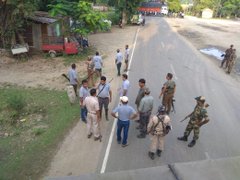
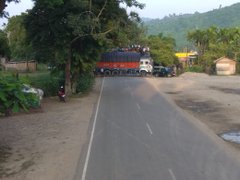
They blocked traffic on the highway for an hour and set off firecrackers to wake the animal up. She eventually left the house at 17:30 local time, crossed the highway and went in the direction of the forest.
Media caption Floods cause death and destruction in north India
Mr Barman said it was not clear if she had actually entered the forest or if she had just “walked off into an adjoining area”.
The Unesco-recognised Kaziranga National Park is home to 110 tigers, but none of them have died in the flooding.
Animals killed in the park include 54 hog deer, seven rhinos, six wild boars and one elephant.
Settlements along the route linking Europe and Asia thrived by providing accommodation and services for countless traders
Formally established during the Han dynasty, it was a 19th-century German geographer who coined the term Silk Road
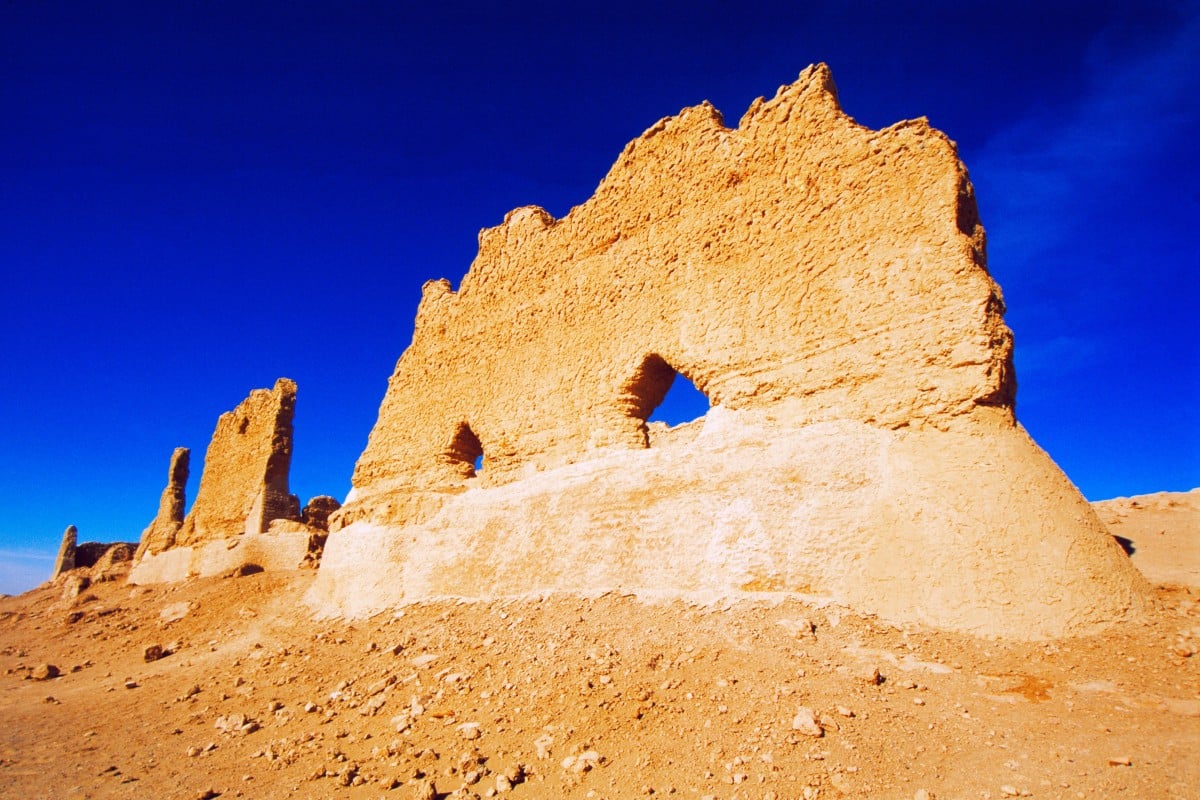
The ruins of a fortified gatehouse and customs post at Yunmenguan Pass, in China’s Gansu province. Photo: Alamy
We have a German geographer, cartographer and explorer to thank for the name of the world’s most famous network of transcontinental trade routes.
Formally established during the Han dynasty, in the first and second centuries BC, it wasn’t until 1877 that Ferdinand von Richthofen coined the term Silk Road (historians increasingly favour the collective term Silk Routes).
The movement of merchandise between China and Europe had been taking place long before the Han arrived on the scene but it was they who employed troops to keep the roads safe from marauding nomads.
Commerce flourished and goods as varied as carpets and camels, glassware and gold, spices and slaves were traded; as were horses, weapons and armour.
Merchants also moved medicines but they were no match for the bubonic plague, which worked its way west along the Silk Road before devastating huge swathes of 14th century Europe.
What follows are some of the countless kingdoms, territories, (modern-day) nations and cities that grew rich on the proceeds of trade, taxes and tolls.
China
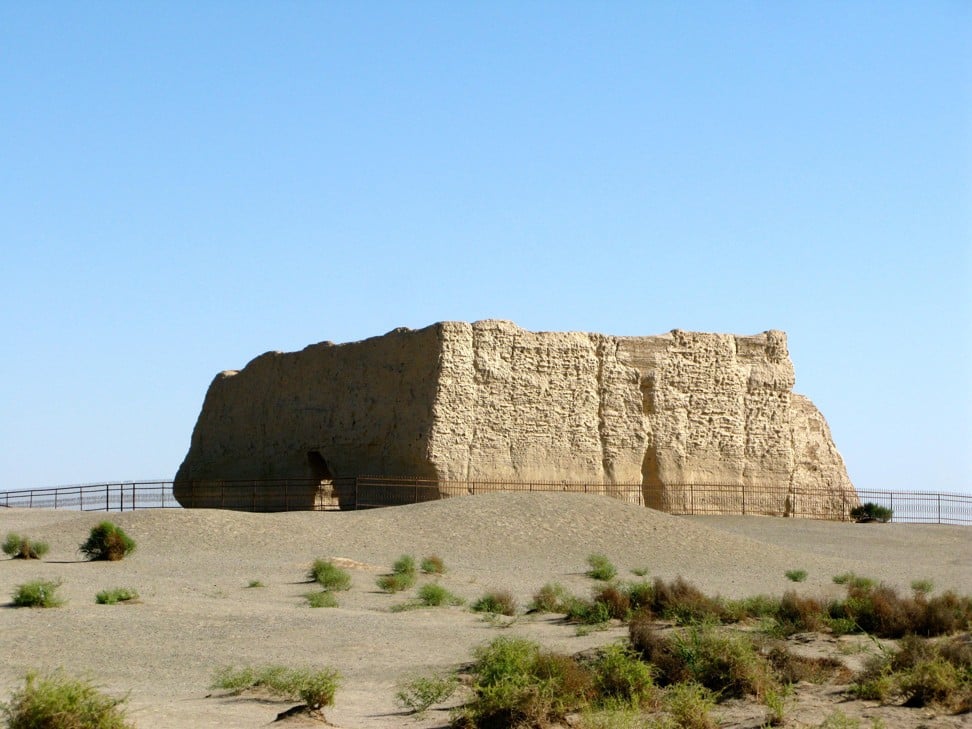
A watchtower made of rammed earth at Dunhuang, a desert outpost at the crossroads of two major Silk Road routes in China’s northwestern Gansu province. Photo: Alamy
Marco Polo worked in the Mongol capital, Khanbaliq (today’s Beijing), and was struck by the level of mercantile activity.
The Venetian gap-year pioneer wrote, “Every day more than a thousand carts loaded with silk enter the city, for a great deal of cloth of gold and silk is woven here.”
Light, easy to transport items such as paper and tea provided Silk Road traders with rich pickings, but it was China’s monopoly on the luxurious shimmering fabric that guaranteed huge profits.
So much so that sneaking silk worms out of the empire was punishable by death.
The desert outpost of Dunhuang found itself at the crossroads of two major Silk Road trade arteries, one leading west through the Pamir Mountains to Central Asia and another south to India.
Built into the Great Wall at nearby Yunmenguan are the ruins of a fortified gatehouse and customs post, which controlled the movement of Silk Road caravans.
Also near Dunhuang, the Mogao Caves contain one of the richest collections of Buddhist art treasures anywhere in the world, a legacy of the route to and from the subcontinent.
Afghanistan
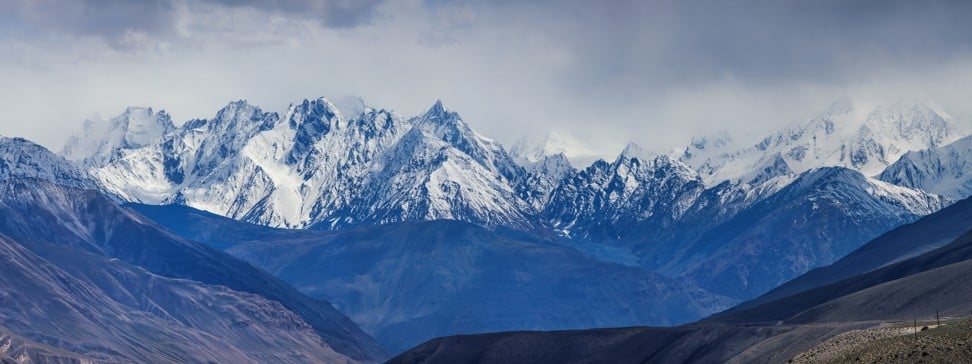
Afghanistan’s mountainous terrain was an inescapable part of the Silk Road, until maritime technologies would become the area’s undoing. Photo: Shutterstock
For merchants and middlemen hauling goods through Central Asia, there was no way of bypassing the mountainous lands we know today as Afghanistan.
Evidence of trade can be traced back to long before the Silk Road – locally mined lapis lazuli stones somehow found their way to ancient Egypt, and into Tutankhamun’s funeral mask, created in 1323BC.
Jagged peaks, rough roads in Tajikistan, roof of the world
Besides mercantile exchange, the caravan routes were responsible for the sharing of ideas and Afghanistan was a major beneficiary. Art, philosophy, language, science, food, architecture and technology were all exchanged, along with commercial goods.
In fact, maritime technology would eventually be the area’s undoing. By the 15th century, it had become cheaper and more convenient to transport cargo by sea – a far from ideal development for a landlocked region.
Iran
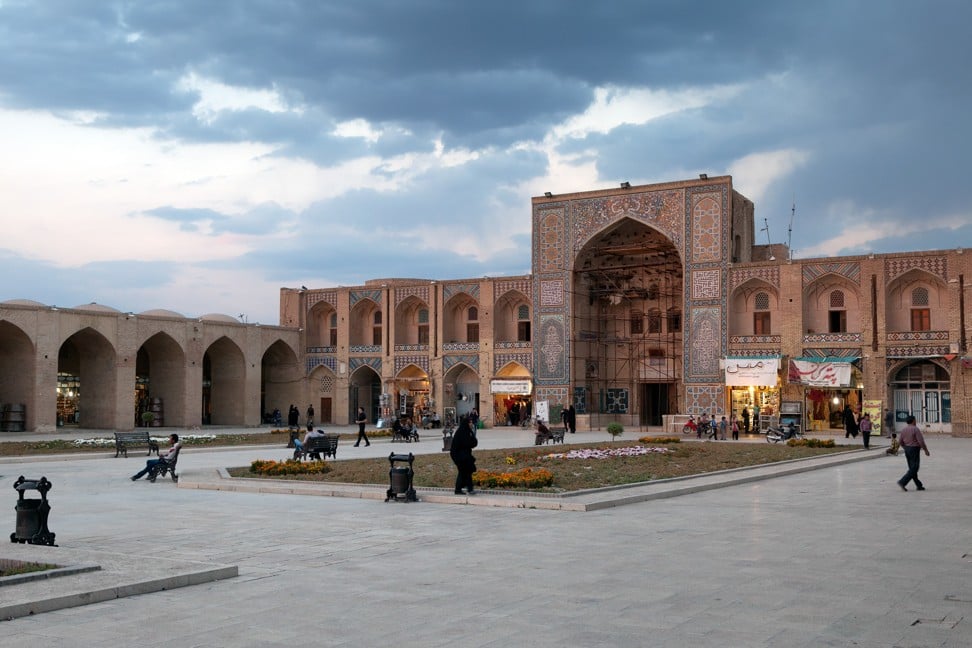
The Ganjali Khan Complex, in Iran. Photo: Shutterstock
Thanks to the Silk Road and the routes that preceded it, the northern Mesopotamian region (present-day Iran) became China’s closest trading partner. Traders rarely journeyed the entire length of the trail, however.
Merchandise was passed along by middlemen who each travelled part of the way and overnighted in caravanserai, fortified inns that provided accommodation, storerooms for goods and space for pack animals.
The good, bad and ugly sides to visiting Chernobyl and Kiev
With so many wheeler-dealers gathering in one place, the hostelries developed into ad hoc marketplaces.
Marco Polo writes of the Persian kingdom of Kerman, where craftsmen made saddles, bridles, spurs and “arms of every kind”.
Today, in the centre of Kerman, the former caravanserai building forms part of the Ganjali Khan Complex, which incorporates a bazaar, bathhouse and mosque.
Uzbekistan
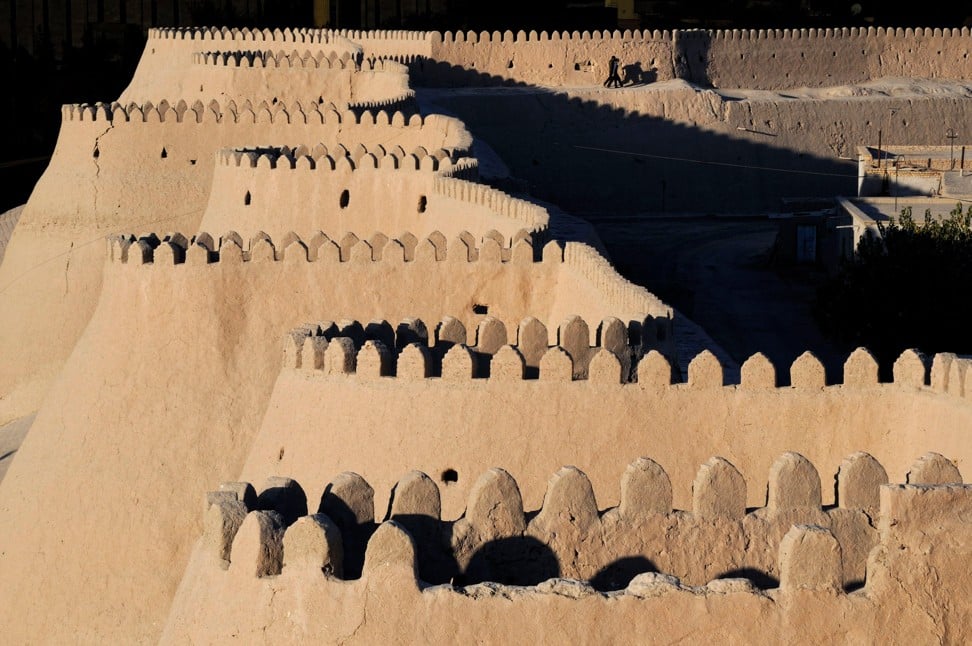
A fort in Khiva, Uzbekistan. Photo: Alamy
The double-landlocked country boasts some of the Silk Road’s most fabled destinations. Forts, such as the one still standing at Khiva, were built to protect traders from bandits; in fact, the city is so well-preserved, it is known as the Museum under the Sky.
The name Samarkand is also deeply entangled with the history of the Silk Road.
The earliest evidence of silk being used outside China can be traced to Bactria, now part of modern Uzbekistan, where four graves from around 1500BC-1200BC contained skeletons wrapped in garments made from the fabric.
Three thousand years later, silk weaving and the production and trade of textiles remain one of Samarkand’s major industries.
Georgia
A street in old town of Tbilisi, Georgia. Photo: Alamy
Security issues in Persia led to the opening up of another branch of the legendary trade route and the first caravan loaded with silk made its way across Georgia in AD568.
Marco Polo referred to the weaving of raw silk in “a very large and fine city called Tbilisi”.
Today, the capital has shaken off the Soviet shackles and is on the cusp of going viral.
Travellers lap up the city’s monasteries, walled fortresses and 1,000-year-old churches before heading up the Georgian Military Highway to stay in villages nestling in the soaring Caucasus Mountains.
Public minibuses known as marshrutka labour into the foothills and although the vehicles can get cramped and uncomfortable, they beat travelling by camel.
Jordan
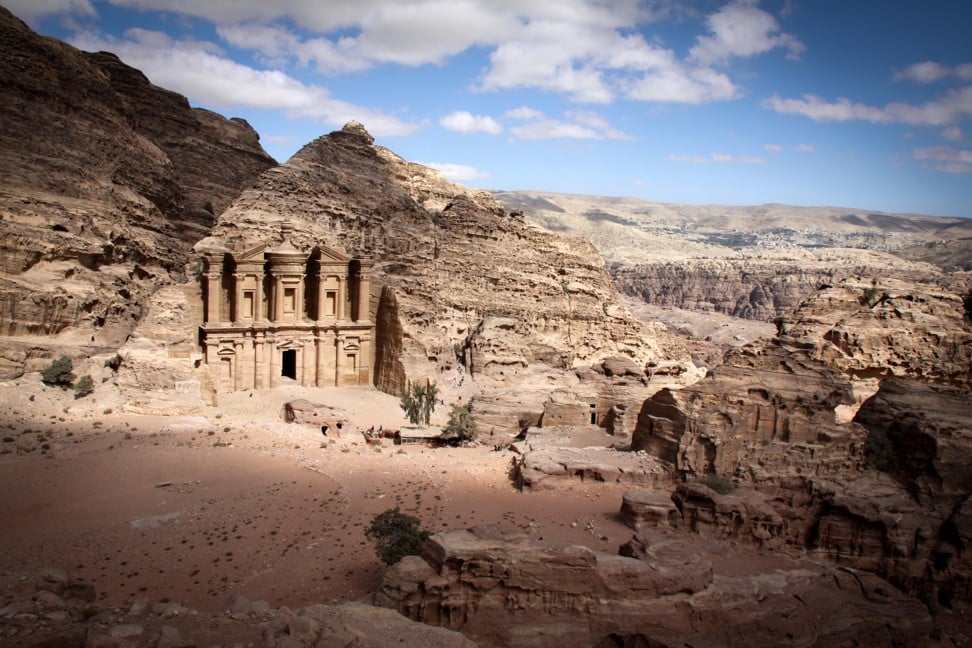
Petra, in Jordan. Photo: Alamy
The location of the Nabataean capital, Petra, wasn’t chosen by chance.
Savvy nomadic herders realised the site would make the perfect pit-stop at the confluence of several caravan trails, including a route to the north through Palmyra (in modern-day Syria), the Arabian peninsula to the south and Mediterranean ports to the west.
Huge payments in the form of taxes and protection money were collected – no wonder the most magnificent of the sandstone city’s hand-carved buildings is called the Treasury.
The Red Rose City is still a gold mine – today’s tourists pay a hefty
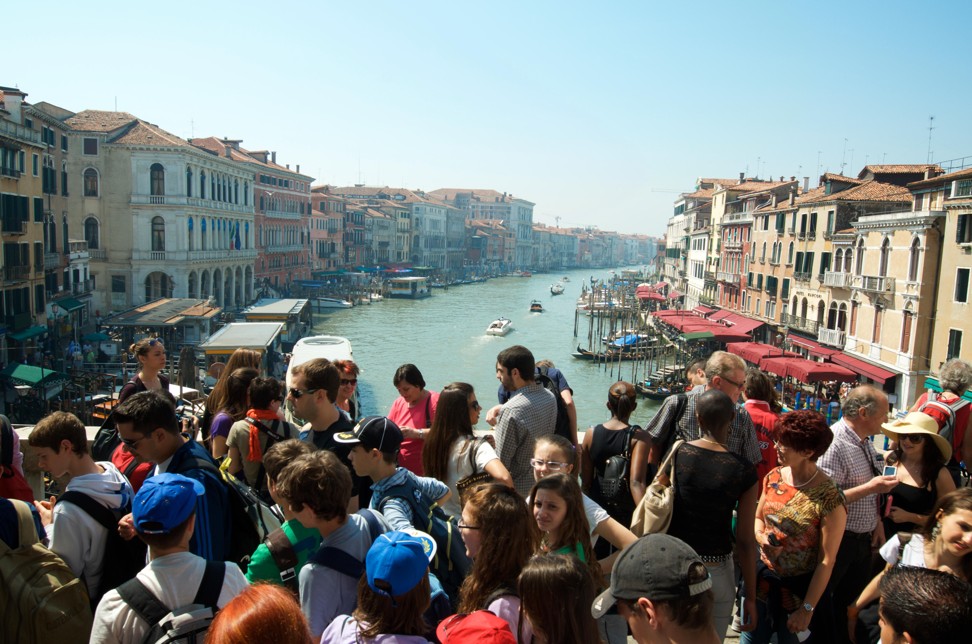
Trade enriched Venice beyond measure, helping shape the Adriatic entrepot into the floating marvel we see today.
Besides the well-documented flow of goods heading west, consignments of cotton, ivory, animal furs, grapevines and other goods passed through the strategically sited port on their way east.
Ironically, for a city built on trade and taxes, the biggest problem Venice faces today is visitors who don’t contribute enough to the local economy.
A lack of spending by millions of day-tripping tourists and cruise passengers who aren’t liable for nightly hotel taxes has prompted authorities to introduce a citywide access fee from January 2020.
Two thousand years ago, tariffs and tolls helped Venice develop and prosper. Now they’re needed to prevent its demise.
Compact plants proposed to ease pollution but backers must win over wary public
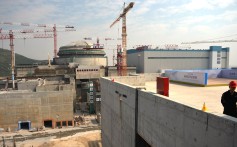
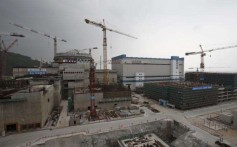
China is exploring the idea of using small nuclear power plants to phase out coal- and gas-fired heating generators in smog-afflicted northern China. Photo: Reuters
China plans to build a pilot small-scale nuclear reactor that could replace coal or gas to heat towns and cities in its colder northern regions, an official with the state-owned developer in charge of the project said on Monday.
The small heating reactor was planned for the city of Jiamusi in northeastern Heilongjiang province, one of two proposed units with a combined capacity of 400 megawatts, Wang Xujia, a senior engineer with the State Power Investment Corp, said on the sidelines of an industry conference.
“The project is still under central government review for approval,” Wang said, adding that the developer aimed to put the project into operation by 2024.
China has been exploring the use of small nuclear reactors – less than a fifth of the size of a standard reactor – as alternative heating systems in smog-prone northern regions.
The state provides heating throughout northern China from November to March, using predominantly coal- or gas-fired boilers.
State-owned China National Nuclear Corp (CNNC) has already conducted trial runs for a “district heating reactor” (DHR) design, which it says can supply heat to 200,000 urban households.
China-built nuclear reactors may enjoy home advantage as delays and costs stymie foreign competitors
The DHR model consists of a reactor core immersed in a water-filled tank. It is estimated to require investment of 1.5 billion yuan (US$217 million) and take three years to build, making it cheaper and quicker to construct than conventional reactors.
However, while the various designs will use only a fraction of the radioactive material of a conventional nuclear plant, officials acknowledge the biggest challenge is convincing the public the reactors are safe and reliable.
“The planned project in Jiamusi will be located in a remote area of the city which undermines its economic efficiency, but since it is just a demonstration project we just want to complete one first and show it to the public,” Wang said.
China aims to raise total nuclear capacity to 58 gigawatts by the end of next year, but it has not launched any new conventional reactors in more than three years.
China expected to miss target for 2020 nuclear capacity
After Japan’s Fukushima accident in 2011, China conducted a root-and-branch safety review and decided it would only use the most advanced “third generation” technology for any new projects.
However, those technologies – including Westinghouse’s AP1000 and the Areva-developed EPR – have proved to be expensive, complex and prone to long construction delays.
In a bid to broaden its options, the country is developing smaller units and plans to launch its first “small modular reactor” on the island province of Hainan at the end of this year.
China also planned to launch floating nuclear reactors with the aim of developing a fleet of ship-mounted nuclear generators that could be deployed on islands in Southeast Asia, Song Danrong, a reactor designer at CNNC, told Monday’s conference.
This article appeared in the South China Morning Post print edition as: Pilot nuclear reactor may replace coal in north
After brief pause, China rushes to build more nuclear power plants
China General Nuclear Power and rival China National Nuclear plan to build four more reactors on mainland
Under draft rules, nuclear power projects in China will need local support
Senior industry official Wang Shoujun predicts up to 30 reactors could be built over next decade
Calls for more financial and policy support for sector to optimise export trade
A Hualong One ZH-65 steam generator, part of China’s home-grown nuclear technology which it is hoping to export as part of its Belt and Road Initiative. Photo: Xinhua
As many as 30 nuclear reactors could be built by China over the next decade as part of the Belt and Road Initiative, a senior industry official told a meeting of the country’s top political advisory body this week.
Wang Shoujun, a standing committee member of the China People’s Political Consultative Conference, told delegates on Wednesday that China needed to take full advantage of the opportunities provided by the belt and road plan and give more financial and policy support to its nuclear sector.
China-built reactors may have advantage over foreign competitors
“‘Going out’ with nuclear power has already become a state strategy, and nuclear exports will help optimise our export trade and free up domestic high-end manufacturing capacity,” he said, according to a report on the CPPCC’s official website.
Wang said China needed to improve research and development, localise the production of key nuclear components, and grow both the domestic and foreign nuclear markets to give full play to the country’s “comprehensive advantages” in costs and technology.
Wang, also the former chairman of the state-owned China National Nuclear Corp, said nuclear projects under the belt and road plan could earn Chinese firms as much as 1 trillion yuan (US$145.52 billion) by 2030, according to more details of his speech published by BJX.com.cn, a Chinese power industry news portal.
He said 41 nations taking part in the belt and road plan already had nuclear power programmes or were planning to develop them, and China only needed to secure a 20 per cent market share to create five million new jobs in the sector, according to the news portal.
The CPPCC did not immediately respond to a request for comment.
China is in the middle of a reactor building programme which it hopes will serve as a shop window to promote its home-grown designs and technologies overseas, especially its own third-generation reactor design known as Hualong One.
But the pace of construction at home has slowed amid technological problems and delays at some key projects, as well as a suspension of new approvals that lasted more than three years.
Wang, according to BJX.com.cn, said there was overcapacity among local nuclear manufacturers, but the domestic market value for nuclear equipment could reach more than 48 billion yuan a year within two years. He did not say how much it was worth currently.
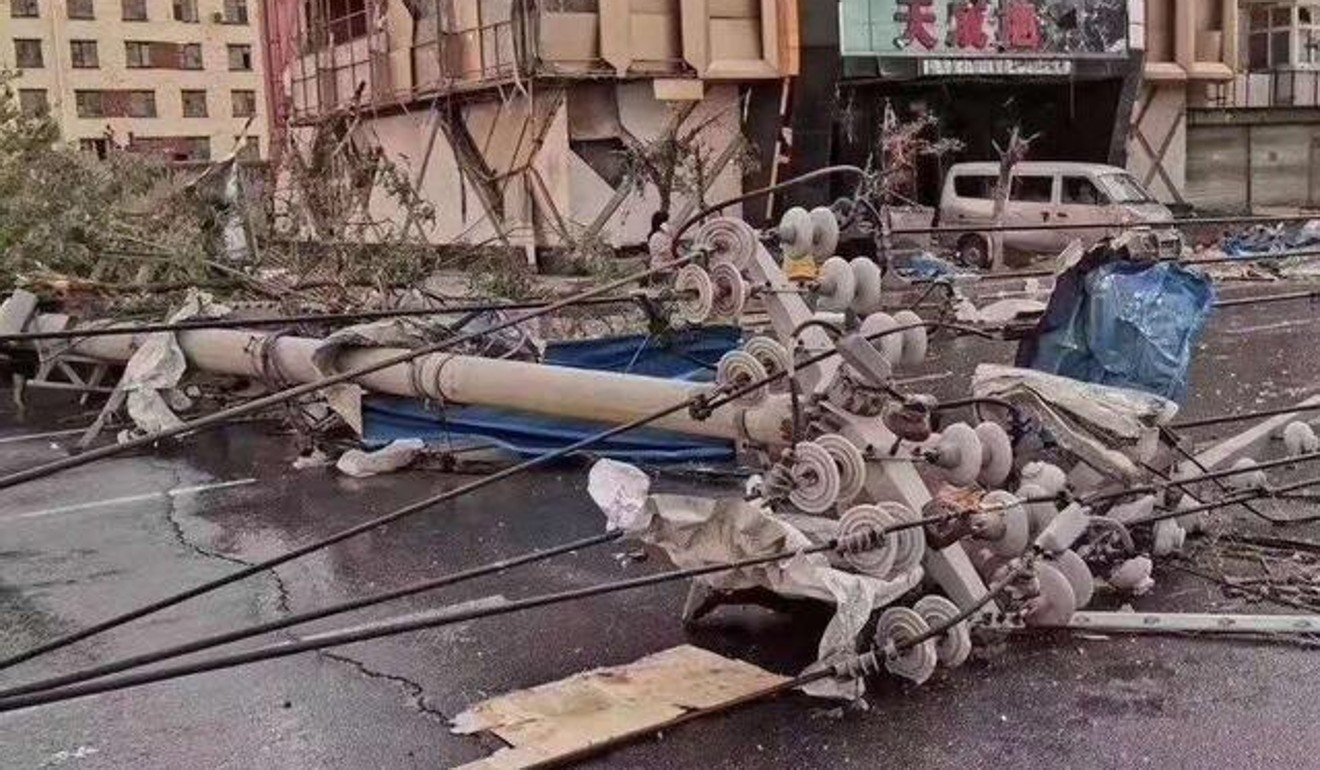
Homes destroyed and trees uprooted as destructive forces rips area apart in 15 minutes
Residents try to pick up the pieces after a deadly tornado destroyed homes and factories in Kaiyuan, Liaoning province, on Wednesday afternoon. Photo: Weibo
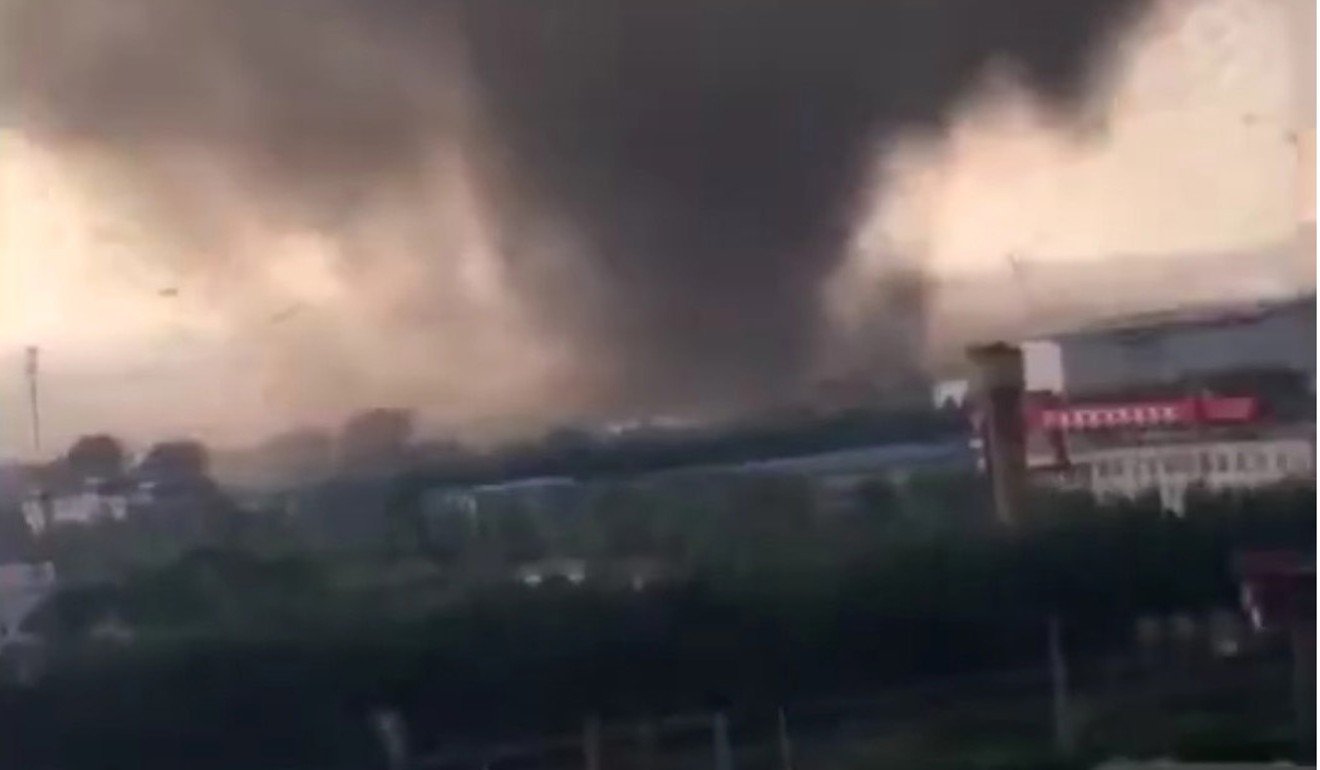
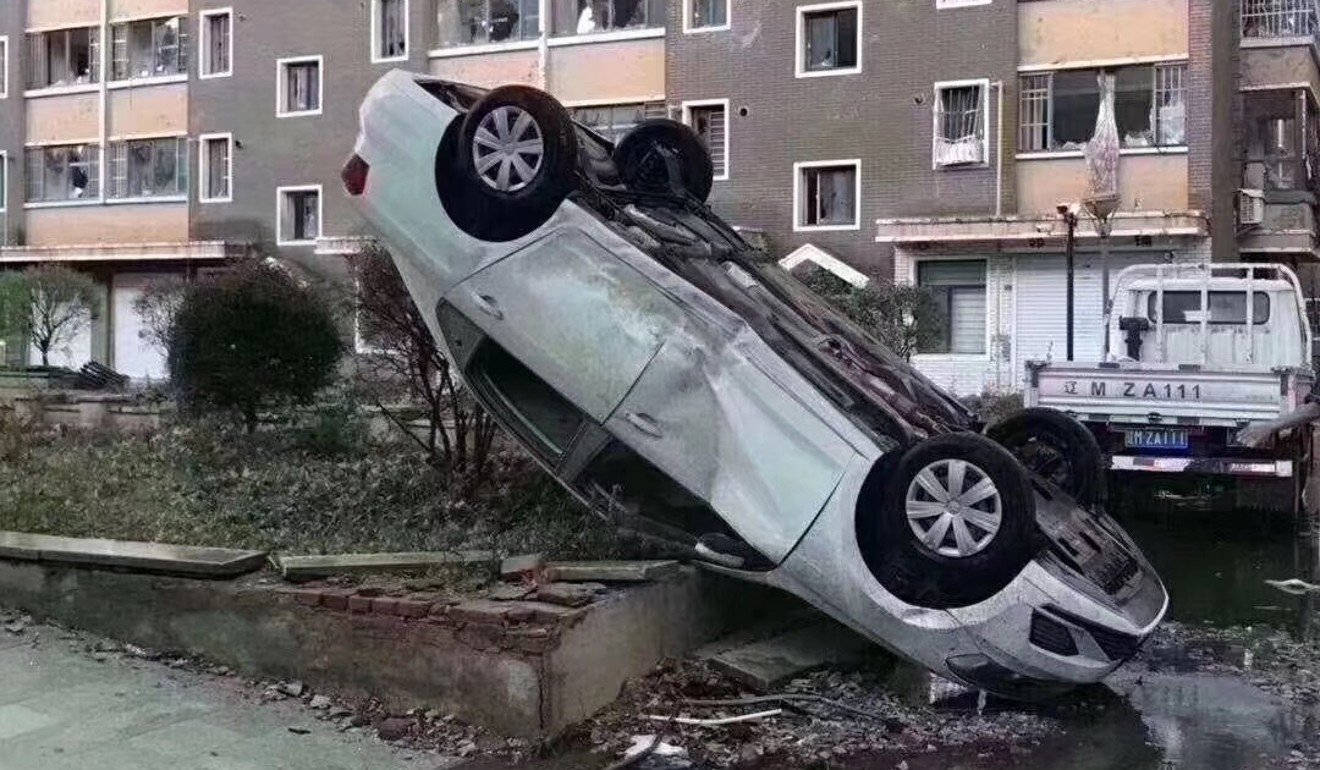
At least six people died and 190 were injured when a tornado struck a city in northeastern China on Wednesday, according to police.
The freak tornado formed in Jingouzi township in Kaiyuan, Liaoning province, at about 5pm, reaching speeds of about 23 metres per second before weakening after roughly 15 minutes, state news agency Xinhua reported.
A tornado carves a path of destruction through Kaiyuan in Liaoning province on Wednesday. Photo: Xinhua
It tore through the township, demolishing homes, uprooting trees, and stripping factories of cladding in the city’s economic development zone, according to a Beijing News video posted online.
The Beijing Times website quoted a resident as saying that she saw at least one car tossed into the air and buildings smashed by the tornado.
Kaiyuan in Liaoning province is counting the toll of destruction from a deadly tornado on Wednesday. Photo: Weibo
“Power went off in surrounding areas as the tornado went by. About two or three minutes later there was thunder and then it hailed,” Red Star News quoted a high school student as saying.
Kaiyuan issued an emergency alert and sent about 800 police officers, firefighters and medical personnel to the area.
Two children killed as bouncy castle destroyed by tornado in China
By Thursday, about 210 people had been rescued and some 1,600 evacuated, The Beijing News said. About 10,000 people were also “displaced”.
“There are 63 people in hospital now with 15 in critical condition,” Beijing Times quoted Yu Shuxin, director of Kaiyuan’s emergency management bureau, as saying.
“Communication systems have recovered in most areas. Electricity infrastructure was severely damaged but we’ll try our best to get the power supply back up.”
The wild weather brought down power lines and cut communications in some areas. Photo: Weibo
Tornadoes are so rare in China, particularly the country’s north, that it does not have a specific alarm for it, according to a website backed by the China Meteorological Administration.
In 2016, 99 people died and more than 800 others were injured in a tornado in Funing county, Jiangsu province.


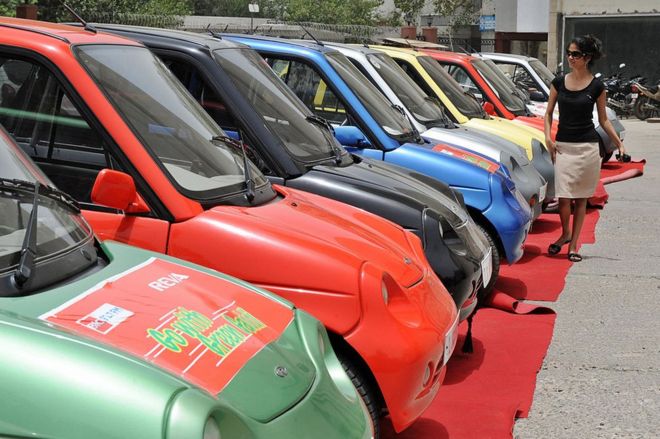 Image copyright GETTY IMAGES
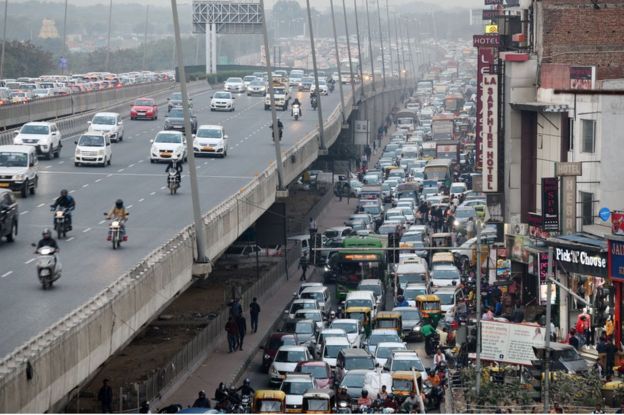 Image copyright GETTY IMAGES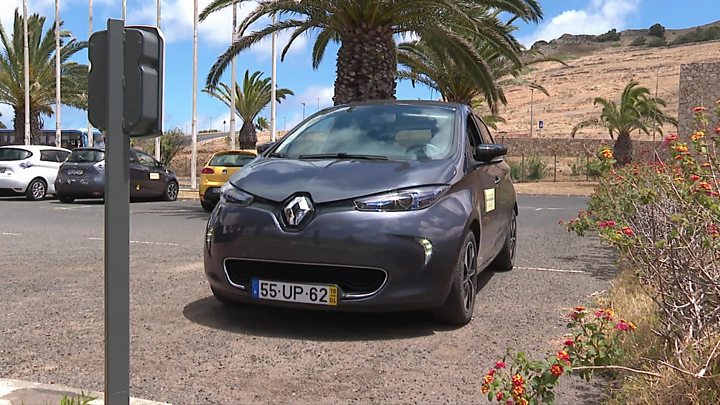


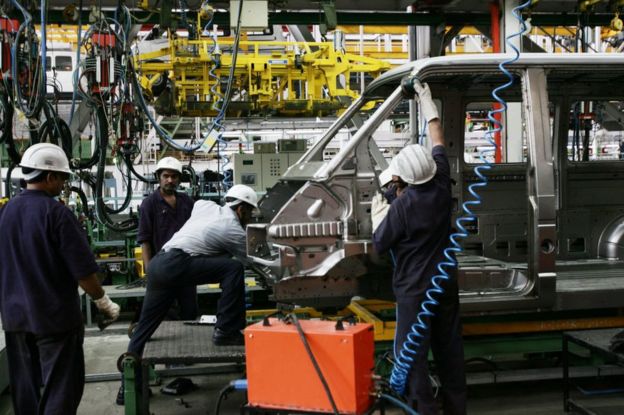 Image copyright GETTY IMAGES










 CHINDIA ALERT: You'll be living in their world, very soon