Archive for ‘Economics’

06/01/2017

The high economic costs of India’s demonetisation | The Economist

MOST economists might hazard a guess that voiding the bulk of a country’s currency overnight would dent its immediate growth prospects. On November 8th India took this abstruse thought experiment into the real world, scrapping two banknotes which made up 86% of all rupees in circulation. Predictably, the economy appears indeed to have been hobbled by the sudden “demonetisation”. Evidence of the measure’s costs is mounting, while the benefits look ever more uncertain.

At least the new year has brought a semblance of monetary normality. For seven weeks queues had snaked around banks, the main way for Indians to exchange their old notes for new ones or deposit them in their accounts. That is over, largely because the window to exchange money closed on December 30th. The number of fresh notes that can be withdrawn from ATMs or bank counters is still curtailed, but the acute cash shortage is abating, at least in big cities.

As data trickle through, so is evidence of the economic price paid for demonetisation. Consumers, companies and investors all wobbled in late 2016. Fast-moving consumer goods, usually a reliable growth sector, retrenched by 1-1.5% in November, according to Nielsen, a research group. Bigger-ticket items seem to have been hit harder. Year-on-year sales at Hero Motocorp, the biggest purveyor of two-wheelers, slid by more than a third in December.AdvertisementA survey of purchasing managers in manufacturing plunged from relative optimism throughout 2016 to the expectation of mild contraction. Firms’ investment proposals fell from an average of 2.4trn rupees ($35bn) a quarter to just 1.25trn rupees in the one just ended, according to Centre for Monitoring Indian Economy, a data provider. As a result, corporate-credit growth, already anaemic, has reached its lowest rate in at least 30 years (see chart).

All this amounts to “a significant but not catastrophic” impact, says Shilan Shah of Capital Economics, a consultancy. Annual GDP growth forecasts for the fiscal year ending in March have slipped by around half a percentage point, to under 7%, from an actual rate of 7.3% in the last full quarter before demonetisation. Other factors, such as the rise in the oil price and the surge in the value of the dollar after the election of Donald Trump, are also at play.

Whether the costs of the exercise justify the benefits depends, of course, on what those benefits are. In his speech announcing the measure, Narendra Modi, the prime minister, highlighted combating corruption and untaxed wealth. Gangsters and profiteers with suitcases full of money would be left stranded. But reports suggest that nearly 15trn rupees of the 15.4trn rupees taken out of circulation are now accounted for. So either the rich weren’t hoarding as much “black money” as was supposed, or they have proved adept at laundering it. The Indian press is full of tales of household staff paid months in advance in old notes, or of bankers agreeing to exchange vast sums illegally.

Fans of demonetisation point to three beneficial outcomes.

First, banks, laden with fresh deposits, will lend this money out and so boost the economy. Big banks cut lending rates this week (quite possibly nudged by government, the largest shareholder of most of them). But their lending recently has not been constrained by a lack of deposits, so much as by insufficient shareholder capital to absorb potential losses, and by the over-borrowed balance-sheets of many industrial customers.

Second, Indians will move from living cash in hand into the taxed formal economy. Mr Modi has recently promoted the idea of a cashless, or “less-cash”, India (not something mentioned at the outset), as one reason for demonetisation. Progress towards getting Indians to pay for things electronically is indeed being made, but from an abysmally low base.

The third upshot is the most controversial. Now that the demonetised bank notes are worthless, the government is intent on in effect appropriating the proceeds. The procedure requires trampling on the credibility of the Reserve Bank of India (RBI), the central bank, which must first agree to dishonour the promise, on all banknotes, to “pay the bearer” the value. If it does so, “extinguishing” the notes and its liability for them, it can transfer an equivalent amount to the government budget.

With so much cash handed in at banks, the amount remitted to government by the RBI might amount to perhaps 0.2-0.3% of GDP. Proceeds from a tax-amnesty scheme for cash-hoarders may swell the figure. Even so, it will not be enough to justify the costs of demonetisation—or even, perhaps, the damage to the reputation of the RBI, which is already facing questions about its independence. But having imposed the costs, Mr Modi will be keen to trumpet whatever benefits he can find.

Source: The high economic costs of India’s demonetisation | The Economist
04/01/2017

India’s double first in climate battle – BBC News

Two world-leading clean energy projects have opened in the south Indian state of Tamil Nadu.

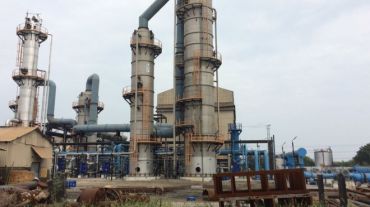
A £3m industrial plant is capturing the CO2 emissions from a coal boiler and using the CO2 to make valuable chemicals. It is a world first.

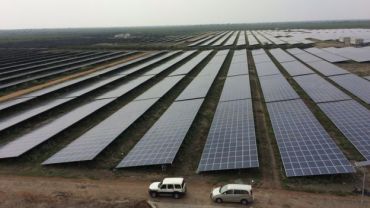
And just 100km away is the world’s biggest solar farm, making power for 150,000 homes on a 10 sq km site.

The industrial plant appears especially significant as it offers a breakthrough by capturing CO2 without subsidy.

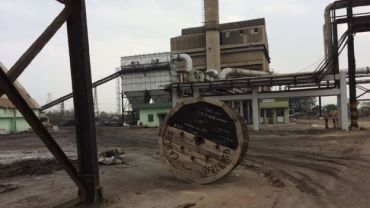
Built at a chemical plant in the port city of Tuticorin, it is projected to save 60,000 tonnes of CO2 emissions a year by incorporating them into the recipes for baking soda and other chemicals.

Here’s how it works:

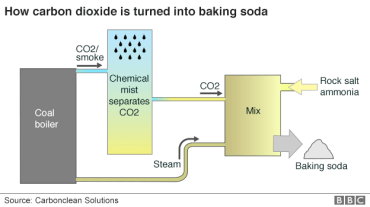
The plant operates a coal-fired boiler to make steam for its chemical operations.CO2 emissions from the boiler’s chimney are stripped out by a fine mist of a new patented chemical.

A stream of CO2 is fed into the chemicals plant as an ingredient for baking soda and other compounds with many uses, including the manufacturing of glass, detergents and sweeteners.

Zero emissions

The owner of the chemicals plant, Ramachadran Gopalan, told a BBC Radio 4 documentary: “I am a businessman. I never thought about saving the planet. I needed a reliable stream of CO2, and this was the best way of getting it.”

He says his operation has now almost zero emissions. He hopes soon to install a second coal boiler to make more CO2 to synthesise fertiliser.

The chemical used in stripping the CO2 from the flue gas was invented by two young Indian chemists. They failed to raise Indian finance to develop it, but their firm, Carbonclean Solutions, working with the Institute of Chemical Technology at Mumbai and Imperial College in London, got backing from the UK’s entrepreneur support scheme.

Their technique uses a form of salt to bond with CO2 molecules in the boiler chimney. The firm says it is more efficient than typical amine compounds used for the purpose.

The plant is projected to save 60,000 tonnes of CO2 emissions a year

They say it also needs less energy, produces less alkaline waste and allows the use of a cheaper form of steel – all radically reducing the cost of the whole operation.

The firm admits its technology of Carbon Capture and Utilisation won’t cure climate change, but says it may provide a useful contribution by gobbling up perhaps 5-10% of the world’s emissions from coal.

Lord Oxburgh, former chairman of Shell, and now director and head of the UK government’s carbon capture advisory group, told the BBC: “We have to do everything we can to reduce the harmful effects of burning fossil fuels and it is great news that more ways are being found of turning at least some of the CO2 into useful products.”

Solar farm

Meanwhile, the nearby giant Kamuthi solar plant offers a marker for India’s ambition for a rapid expansion in renewables.

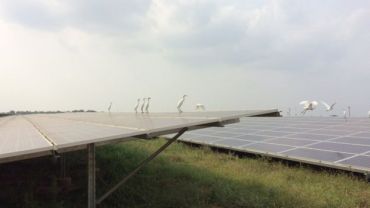
The world’s largest solar farm at Kamuthi in southern IndiaIt is truly enormous; from the tall observation tower, the ranks of black panels stretch almost to the horizon.Prime Minister Modi is offering subsidies for a plan to power 60 million homes with solar by 2022 and aims for 40% of its energy from renewables by 2030.

For large-scale projects, the cost of new solar power in India is now cheaper than coal. But solar doesn’t generate 24/7 on an industrial scale, so India has adopted a “more of everything” approach to energy.

The firm behind the solar plant, Adani, is also looking to create Australia’s biggest coal mine, which it says will provide power for up to 100 million people in India. Renewables, it says, can’t answer India’s vast appetite for power to lift people out of poverty.

Will India stick to its renewables promises with Donald Trump as US president?And questions have been raised recently as to whether India will stick to its renewables promises now President-elect Donald Trump may be about to scrap climate targets for the US.

At the recent Marrakech climate conference, China, the EU and many developing countries pledged to forge ahead with emissions-cutting plans regardless of US involvement. But India offered no such guarantee.

Some environmentalists are not too worried: they think economics may drive India’s clean energy revolution.

Source: India’s double first in climate battle – BBC News

04/01/2017

‘China freight train’ in first trip to Barking – BBC News

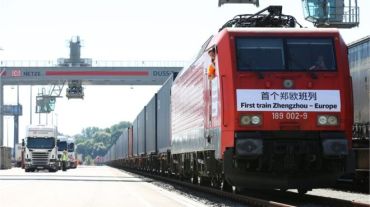
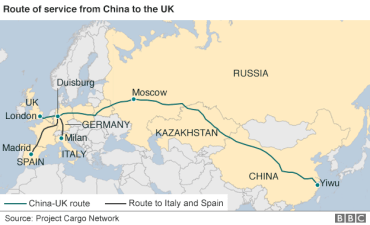
China has launched a direct rail freight service to London, as part of its drive to develop trade and investment ties with Europe.China Railway already runs services between China and other European cities, including Madrid and Hamburg.

The train will take about two weeks to cover the 12,000 mile journey and is carrying a cargo of clothes, bags and other household items.

It has the advantage of being cheaper than air freight and faster than sea.

The first China-Europe Block Train for Madrid left Yiwu Railway Freight Station in November 2014The proliferation of routes linking China and Europe is part of a strategy launched in 2013 aimed at boosting infrastructure links with Europe along the former Silk Road trading routes.London will become the 15th European city to join what the Chinese government calls the New Silk Route.

The service will pass through Kazakhstan, Russia, Belarus, Poland, Germany Belgium and France before arriving at Barking Rail Freight Terminal in East London, which is directly connected to the High Speed 1 rail line to the European mainland.

Because of the different railway gauges involved, a single train cannot travel the whole route and the containers need to be reloaded at various points.

The Chinese government is keen to boost its economy in the face of slowing export and economic growth.

Source: ‘China freight train’ in first trip to Barking – BBC News

04/01/2017

What can we expect in China in 2017? | McKinsey & Company

Provided geopolitical movement doesn’t derail his best laid predictions, Gordon Orr sees a year of slowing economic growth, headaches for multinationals, demographic anxiety, and buyer’s remorse for soccer tycoons.

My base case for China’s outlook this year assumes increased trade friction with the United States, with tariffs raised on specific product categories (such as steel and some agricultural goods), and, while I don’t expect across-the-board disruptions, a few high-profile companies will be forced to choose between accommodating the demands of the Chinese or US government.

Of course, if recent statements from US politicians translate into sweeping action on trade, 2017 could develop very differently. Tit-for-tat moves on specific companies and sectors could easily escalate, with many multinationals’ global supply chains caught in the middle and consumers around the world facing product shortages and, when products are available, material price increases. China’s government could implement sweeping actions to sustain employment, restrict further capital outflows, and stimulate the domestic economy. Market-oriented restructuring and reform would be off the table. Economic nationalism, food and energy security, and social stability would be paramount.

But if globally we continue with something recognizably close to current trade arrangements, how will China fare this year? And, most important for a country that regards economic growth as of paramount importance (the centerpiece of China’s 13th five-year plan remains to double GDP and household income in the decade to 2020), can 2016’s GDP growth in the ballpark of 6.5 percent be replicated?

Matching 2016’s economic growth will be a struggle

Where will China’s growth come from this year? It is unlikely to come from exports—even ignoring potential protectionist moves in major export markets, there’s nothing that would significantly increase the world’s demand for Chinese goods. What about currency depreciation to make exports more competitive? That will be quickly offset by rising wages. Could growth come from consumers? Will they feel good enough to increase spending another 8 to 10 percent this year? They will likely spend a lot less on buying property and fitting it out (because of government action to restrain prices and restrict access to mortgage financing) and less on cars if the current tax break expires. Moreover, real salary increases are likely to be the lowest since the Lehman crisis, and with house prices expected to be flat, there won’t be a repeat of last year’s wealth effect. The stimulation of e-commerce making goods available in smaller cities for the first time may help, but technology displacing jobs in services, not just manufacturing, certainly won’t. In fact, its impact is becoming more and more visible, leading more and more consumers to not only worry about losing their jobs but also actually see them eliminated. The impact of technology on creating jobs in fields such as medical and education services will benefit the privileged few with the skills to take advantage, but it will not offset the near-term job losses.

Source: What can we expect in China in 2017? | McKinsey & Company

Tags: ,
31/12/2016

5 Billionaire Families From India’s Powerful Parsi Minority – Briefly – WSJ

India’s Parsis are one of the most successful minority and migrant groups in the world. They make up less than 0.005% of India’s population but three out of the country’s top 10 billionaires.They fled Iran and settled in India in the 10th century and have since played an outsized role in the evolution of India’s economy as pioneers of trade and industry.

For centuries, prominent Parsis have shared their success through philanthropy – their religion encourages wealth creation as well as charity–so the names of top Parsi traders and industrialists are plastered on the hospitals, schools, libraries and streets of Mumbai and other cities.

A Wall Street Journal article looks at how the battle for control of the $100 billion Tata Group–which was founded and headed by Parsis – has caused a lot of stress and soul searching in the proud community. Three of the richest Parsi families – the Tatas, the Mistrys and the Wadias – are involved in the unusually ugly and public brawl which has now shifted to the courts.

Here are snapshots of those three Parsi families and two others that have made billions building the backbone of Indian industry.

1 Tata Head: Ratan Tata

Net worth:  $570 Million

Established: 1868

Industries: Software, steel, autos, hospitality, airlines

Companies: Tata Consultancy Services, Tata Motors, Jaguar Land Rover, Tetley Tea

2 Mistry Head: Pallonji Mistry (father of Cyrus Mistry)

Net worth:  $15 billion

Established: 1865

Industries: Property development, construction, energy

Companies: SP Real Estate, SP Infra, Eureka

3 Wadia Current leader: Nusli Wadia

Net worth:  $3 billion

Established: 1736

Industries: Textiles, property, food, health

Companies: Bombay Dyeing, Britannia, Go Airlines

4 Godrej Current leader: Adi Godrej

Net worth: $12 billion

Established: 1897

Industries: Consumer durables, retail, property

Companies: Godrej Consumer Products, Godrej Properties, Gorej Industries

5 Poonawalla Head: Cyrus Poonawalla

Net worth: $12 billion

Established: 1966

Industries: Biotech, vaccines

Companies: Serum Institute of India, Poonawalla Stud Farms

Source: 5 Billionaire Families From India’s Powerful Parsi Minority – Briefly – WSJ

Tags:
22/12/2016

Are India and Pakistan set for water wars? – BBC News

India is stepping up efforts to maximise its water use from the western rivers of the Indus basin, senior officials have told the BBC.

The move would involve building huge storage facilities and canals.

The three rivers flow through Indian-administered Kashmir but most of the water is allotted to Pakistan under an international treaty.

Experts say Delhi is using the water issue to put pressure on Pakistan in the dispute over Kashmir.Relations have deteriorated since a deadly militant attack on an Indian base in September. Pakistan denies any link to the attack.

Why India’s water dispute with Pakistan matters

Kashmir: Why India and Pakistan fight over it

Kashmir profiled

Indian Prime Minister Narendra Modi has said a government taskforce is finalising details of the water project, which he has made a priority.

“The ball has started rolling and we will see some results soon, most of them will be about building new storages in the basin,” one top official said on condition of anonymity.

Another senior official said: “We are quite familiar with the terrain as we have already built a number of structures there.

But he added: “We are talking about few years here.

“How much water is at stake?

India wants to “maximise” its use of water from the Indus, Chenab and Jhelum rivers. Millions of people in both countries depend on water in the rivers.

An official with India’s water resources ministry insisted that this action would be “well within” the terms of the Indus Water Treaty (IWT).

India began reviewing the treaty after the militant attack in Indian-administered Kashmir in September in which 19 soldiers were killed.Delhi accused Islamabad of being behind the attack and relations have plummeted, leading to a rise in cross-border tensions.

The IWT was signed in 1960 and allocated the three eastern rivers – the Ravi, Beas and Sutlej – of the Indus basin to India, while 80% of the three western ones – the Indus, Jhelum and Chenab – was allotted to Pakistan.

India says it has not fully utilised the 20% of water given to it in the three western rivers. Pakistan disputes this.

Officials in Delhi said the IWT allows India to irrigate 1.4 million acres of land using water from those rivers.

But they say only 800,000 acres are irrigated at present.

They added that the building of hydropower projects would also be accelerated.

India currently generates around 3,000MW of hydroelectricity from the western rivers, but the Indus basin is said to have a potential of nearly 19,000 MW.

How safe is the water treaty?


Pakistan is watching India’s moves closely.

India shares a heavily militarised international border with Pakistan

Speaking in an open debate of the United Nations Security Council on “water, peace and security” last month, Pakistan’s ambassador to the UN, Maleeha Lodhi, denounced any use of water as an “instrument of coercion and war”.

“The IWT is equally a good case study of what could go wrong if such agreements are not honoured or threatened by one of the state parties to be abrogated altogether.

“Water experts say the treaty seems to have at least survived because India is not talking about withdrawing from it.

But, they believe, maximising use of water from the western rivers in the Indus basin can still fuel tensions.

Islamabad is already unhappy with some of India’s existing water projects.It has asked the World Bank, which brokered the signing of the treaty between the two countries, for a court of arbitration to consider two Indian hydropower projects in the Indus basin.

India has objected to this move, prompting the bank to pause the dispute process while it tries to persuade the two countries to resolve their disagreements, fearing that otherwise the treaty itself could be in peril.

In 1987, Delhi suspended the Tulbul navigation project on the Jhelum river after Pakistan objected to it.But sources within India’s Water Resources Ministry say this project could now be revived.

“The decision to review the suspension signalled the Modi government’s intent to revive it irrespective of Pakistan’s protests,” the Times of India newspaper wrote.

“As an implication, India gets to control Jhelum water, impact Pakistan’s agriculture.

“What else could India do?

Some experts say India could also demand a review of the IWT.

“The review can be used to demand more rights over the western rivers,” says Himanshu Thakkar, a regional water resources expert with South Asian Network on Dams, Rivers and People.

Some water resources analysts believe Delhi will also have to be mindful of China before making any major move.

In September, Tibet blocked a tributary of the Yarlung Zangbo river (known as the Bramhaputra in India) as part of its most expensive hydro project, Chinese state-run news agency Xinhua reported.

The news came just when Indian media were suggesting that Delhi could pull out of the IWT.

“We need to remember that China is an upper riparian country in Indus and Bramhaputra basins and it is also Pakistan’s closest ally,” said Mr Thakkar.

Many experts agree that completing such huge and complex infrastructure projects may not be as swift as some Indian officials suggest.

Source: Are India and Pakistan set for water wars? – BBC News

22/12/2016

China Sends Carbon Fight Into Orbit – China Real Time Report – WSJ

As the climate-change community watches whether President-elect Donald Trump will retreat from U.S. greenhouse-gas commitments, China signaled it is charging ahead, launching a satellite to monitor rising levels of carbon in the atmosphere.

The move comes after a week when a thick blanket of smog hung over much of northern China, forcing the government to shut schools and businesses.

The launch of the satellite known as TanSat, reported early Thursday by state media, marks a renewed effort by the world’s biggest emitter to better understand and track the effects of greenhouse gas emissions. It also reflects the bigger role China aims to play in shaping the global response to climate change at a time the incoming U.S. administration voices skepticism about the Paris accord enacted this year to control and reduce carbon emissions.

“It’s a significant step in terms of being an indicator of China investing large amounts of resources and energy to understand the science behind climate change and carbon emissions,” said Ranping Song, a climate expert at the World Resources Institute in Washington.

The 1,400 pound satellite will orbit more than 400 miles above the earth for the next three years, said Yin Zengshan, the TanSat project’s chief designer, according to Xinhua News Agency, and follows similar projects by the U.S. and Japan to track global carbon levels from monitoring in space.

The satellite—in development for nearly six years—collects independent carbon data. Loaded with sensitive equipment that reads changes in atmospheric CO2 levels to within 1%, TanSat will take carbon readings every 16 days.

As a result, it could help “double check” emissions data reported by countries world-wide, said Mr. Song. Emissions accounting today still largely relies on estimates from energy-consumption statistics. The satellite readings would be a source of independent data for Chinese policy makers.

China has been trying to raise its image in the global climate-change debate, wanting to appear active in aiding global efforts to reduce greenhouse gas emissions, rather than serving as an obstacle. It has already pledged to peak and begin reducing its carbon emissions by 2030 as part of a deal reached with the U.S. in 2014. Yet it also comes against a more complicated backdrop today, with Mr. Trump’s incoming administration promising to boost production of polluting fossil fuels including coal.

Mr. Trump’s pledge ahead of the election to “cancel” the U.S. commitment to the global climate pact that entered force this year has worried Chinese officials. Xie Zhenhua, China’s special representative for climate-change affairs, has urged Mr. Trump to adhere to what China views as a global trend toward cutting emissions.

Under Mr. Trump, many in the U.S. environmental community fear funding for climate-change research could be hacked. In California, Gov. Jerry Brown has even vowed to launch the state’s own monitoring satellite if budgets get chopped.

“If Trump turns off the satellite,” Mr. Brown said this month, “California will launch its own damn satellite. We’re going to collect the data.”

In effect, the Chinese satellite could help add more “eyes in the sky” for monitoring carbon levels in the atmosphere, and serve as a complement to the existing data already being collected by the U.S. and Japan. Xinhua quoted officials as saying China was prepared to share its new data with researchers world-wide.

“Since only the United States and Japan have carbon-monitoring satellites, it is hard for us to see firsthand data,” Xinhua quoted Zhang Peng, vice director of China’s National Satellite Meteorological Center, as saying. “The satellite has world-wide scope and will improve data collection.”

Source: China Sends Carbon Fight Into Orbit – China Real Time Report – WSJ

16/12/2016

More Trump-Branded Projects Set to Sprout Up Across India – India Real Time – WSJ

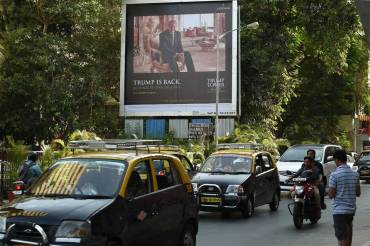
India is set to get more Trump-branded projects as local developers seek to capitalize on the brand.

A story from The Wall Street Journal Friday took a look at the many projects around the world connected to the U.S. President-elect Donald Trump, including those in India.

Unimark Group, a developer based in Kolkata, has tied up to rebrand a previously planned residential apartment building in the eastern city into a Trump-branded project.

The project is being redesigned to make it better and more luxurious to fit with Trump standards, said Dipanjan Ray, head of marketing at Unimark.

He said the project is still in planning stage, so they aren’t marketing it yet. When they do, he doesn’t doubt Mr. Trump’s election as the next U.S. president will help sales as it has elevated brand awareness in India.

“People were not so aware of Mr. Trump,” a year ago, Mr. Ray said. “He is well known to everybody right now.”

The Trump Organization has also signed up with developer M3M India Pvt. Ltd., to build a residential building in the bustling New Delhi suburb of Gurgaon, according to two people familiar with the matter. The deal was done prior to Mr. Trump’s election, according to both people, but has yet to be formally announced.

In April, Trump announced a tie-up with another developer Ireo to build an office building in Gurgaon. A spokesman for Ireo wouldn’t comment on the status of that project.

Panchshil Realty, a developer in the western Indian town of Pune, finished building the first Trump Towers in India earlier this year. The price tag for the fancy flats: $2.2 million and some are still available.

The developer had been planning another project with the Trump brand name. Sagar Chordia, a director at Panchshil, told The Wall Street Journal in November that he was planning to meet with officials at The Trump Organization to discuss a new residential project, named Trump Riverwalk.

Mr. Chordia met with Mr. Trump in the U.S. after his election, but said that they didn’t discuss any business. He wouldn’t discuss the latest status of Trump Riverwalk but said it doesn’t have plans to launch any new projects at the moment as the property market in India is a bit soft.In Mumbai, developer Lodha Group is building a 75-story Trump Towers which has three-and four-bedroom apartments with options for indoor Jacuzzis and automatic toilets. The flats are listed at around $1.3 million onward, and some are still unsold.

Source: More Trump-Branded Projects Set to Sprout Up Across India – India Real Time – WSJ

15/12/2016

Trump and China: 5 Views From Beijing – China Real Time Report – WSJ

Stephen Sestanovich, a professor at Columbia University and senior fellow at the Council on Foreign Relations, is the author of “Maximalist: America in the World From Truman to Obama.” He is on Twitter: @SSestanovich.

When the Chinese Foreign Ministry expresses “serious concern” about things Donald Trump has said about Taiwan—and a party-controlled newspaper calls him “as ignorant as a child”—it’s clear that Beijing is alarmed. Yet after spending last week in China, I came away struck by the overall complacency of Chinese attitudes toward the president-elect. From officials (and former officials), entrepreneurs, journalists, NGO leaders, and think-tankers, I heard five different reasons for not worrying too much about how Mr. Trump could affect U.S.-China relations.

1. China is powerful.

Sure, a new administration might want to rethink the relationship between Beijing and Washington, but that can’t be the end of the story, I heard. China has so many ways to push back. Soon enough the Americans would come to their senses.

2. The U.S. is constrained.

Standing up to China is expensive, I was reminded. As one former trade official told me, “America may decide it wants to patrol the South China Sea more often, but that costs money.” (I pointed out to people I talked to that Mr. Trump was committed to a big increase in the Pentagon budget—but everyone knows there are a lot of claims on those dollars, and many would have no impact on China.)

3. Businessmen are practical people.

China’s economic surge, now more than three decades old, was premised on an abandonment of ideology. As a successful businessman, Mr. Trump—I was told—must be a pragmatist at heart. One journalist I talked to thought it might help the president-elect to cultivate a Nixon-style “mad man” reputation, but most of my interlocutors seemed confident this was all for show.

4. Bureaucratic and interest-group politics.

The Chinese have seen previous presidents campaign on anti-Chinese themes only to abandon them in office. Why, they ask, does this happen? Their answer: the institutions of the U.S. government know how to bury new ideas. Someone like Mr. Trump, with no prior experience in Washington, will find it difficult to ignore Congress and the federal bureaucracy.

5. Habit and mutual benefit.

Chinese of all outlooks believe that, in the 45 years since Henry Kissinger first visited Beijing, a relationship has been created from which both sides derive obvious benefits. “Win-win” seems to be a favorite buzz phrase in China, and the idea that it would be questioned evokes a certain incredulity.The status quo has a powerful hold on people’s imaginations everywhere. Still, the Chinese assumption of policy continuity—after everything that has happened this year!—was a surprise for me. I told the people I spoke to that Mr. Trump had convinced many voters that he is determined to scrap outmoded policies. One person, who knows the U.S. well, had an interesting response: “You mean ‘win-win’ could be one of them?”

Source: Trump and China: 5 Views From Beijing – China Real Time Report – WSJ

13/12/2016

Can jet engines clean up Delhi’s foul air? – BBC News

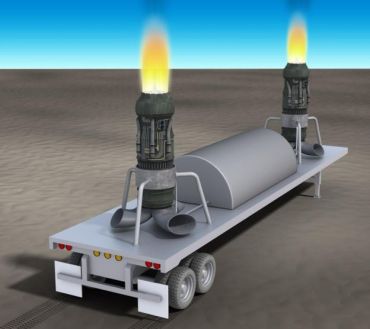
Sometime next year, if all goes well, a retired jet engine will be mounted on a flatbed trailer and taken to a coal-fired power plant in Delhi.

With the exhaust nozzle pointed at the sky, the engine will be placed near the smokestack and turned on.

As the engine roars to life, it will generate a nozzle speed of 400 metres per second (1,440km/h; 900mph), which is more or less the speed of sound.

The exhaust will create powerful updrafts that will, to put it simply, blast the emissions from the plant to higher altitudes, above a meteorological phenomenon called temperature inversion, where a layer of cold air is held in place by a warmer “lid” trapping smog.

The jet exhaust will act as a “virtual chimney”, drawing in and transporting the smog, which makes Delhi’s air some of the most toxic in the world. A single jet engine can deal with emissions from a 1,000 megawatt power plant.

Temperature inversion

Can Delhi ever clean up its foul air?

So can jet engines help clean up Delhi’s foul air? A team of researchers from the US, India and Singapore believes so.

“This could lead to a successful implementation of a new technology for smog mitigation all over the world,” the lead researcher, Moshe Alamaro, an aeronautical engineer and atmospheric scientist at the Massachusetts Institute of Technology, tells me.

“The programme could use retired and commercial engines and has the possibility of adding value to numerous retired propulsion systems available.”

Delhi is an ideal candidate for this experiment. The widespread use of festival fireworks, the burning of rubbish by the city’s poor, plus farm waste from around the city, vehicular emissions and construction dust, all contribute to the city’s thick “pea-soup” fogs.

The jet engines will be mounted on a flatbed trailer

Things get worse in winter: last month, schools were shut, construction and demolition work suspended, people wore face masks and were asked to work from home.

The move came after levels of PM2.5 – tiny particles that can affect the lungs – soared to over 90 times the level considered safe by the World Health Organization and 15 times the federal government’s norms.

Carrying out the jet engine experiment outside a coal-fired electricity plant makes sense as coal accounts for more than 60% of India’s power generation. In two years, the country could surpass China as the biggest importer of thermal coal.

Coal-fired energy may be linked to more than 100,000 premature deaths and millions of cases of asthma and respiratory ailments. Also, emissions from a 1,000-megawatt coal-fired plant are equivalent to emissions from roughly 500,000 cars.

Scientists say that jet engines were used in the Soviet Union 45 years ago to enhance rainfall.

“They achieved some success,” says Dr Alamaro. “As far as I know nobody tried using jet engines for smog mitigation.”

Noise concerns

Farmers have also rented helicopters to hover over their fields to “agitate and disrupt the inversions” to protect their crops.

Next month, Dr Alamaro will join some of India’s top scientists and collaborators from government agencies at a workshop to plan the experiment.

There are concerns: noise from the jet engine, for example.”In the beginning,” he says, “the jet engine will be tested in remote location and not necessarily near a power plant, to observe the jet properties and for optimisation.”

The scientists say that fears about emissions from jet engines fouling the air are unfounded as their emissions “are much cleaner than that of the power plant per unit of power”.

There are reportedly offers of retired jet engines from air forces in India and the US for the experiment.

Scientists are talking to Tata Group, a private power producer, to use one of their plants for a site for the experiment.

Before the test, meteorological data on the area, along with information on frequency of smog will be essential. Drones will be used before and after the experiment.

Coal-powered thermal power plants meet most of India’s energy needs

Critics of the planned experiment doubt whether the jet exhausts will be powerful enough to create a virtual chimney and blow out the smog, and question whether expensive jet engines can be used on a large scale to control air pollution in a vast city such as Delhi.

But Dr Alamaro is optimistic.

“Each new technology should start with the least resistant path for success,” he says.”The concentration of emission from coal is very high near the power plant.”

So a jet engine that elevates this emission is more effective near the power plant than somewhere else in the city that is plagued by smog.

“That said, we also plan to try to elevate the less concentrated smog in and around the city by jet systems.”

For example, the jet system can be placed near highways where vehicle emission is high, so the jet is more effective than somewhere else in the city.

If successful, Dr Alamaro says, this method can be used “anywhere and anytime, away from a power plant and during normal atmospheric conditions” to control air pollution.

Fairly soon, we may know if jet engines can really help to clean Delhi’s foul air.

Source: Can jet engines clean up Delhi’s foul air? – BBC News

Law of Unintended Consequences

continuously updated blog about China & India

ChiaHou's Book Reviews

continuously updated blog about China & India

What's wrong with the world; and its economy

continuously updated blog about China & India