Chindia Alert: You’ll be Living in their World Very Soon
aims to alert you to the threats and opportunities that China and India present. China and India require serious attention; case of ‘hidden dragon and crouching tiger’.
Without this attention, governments, businesses and, indeed, individuals may find themselves at a great disadvantage sooner rather than later.
The POSTs (front webpages) are mainly 'cuttings' from reliable sources, updated continuously.
The PAGEs (see Tabs, above) attempt to make the information more meaningful by putting some structure to the information we have researched and assembled since 2006.
Image copyright ANIImage caption Millions of people across India have been stranded by the lockdown
The first train carrying migrant workers stranded by a nationwide lockdown in India has left the southern state of Telangana.
The 24-coach train, carrying 1,200 passengers, is travelling non-stop to eastern Jharkhand state.
Earlier this week, India said millions of people stranded by the lockdown can return to their home states.
The country has been in lockdown to curb the spread of coronavirus since 24 March.
However, the movement of people will be only possible through state government facilitation, which means people cannot attempt to cross state borders on their own.
This train is a “one-off special train” to transport the workers on the request of the Telangana state government, Rakesh Ch, the chief public relations officer of South-Central Railways, told the BBC.
The train left Lingampally, a suburb of the southern city of Hyderabad, early on Friday and is expected to reach Hatia in Jharkhand on Saturday.
Mr Rakesh said that adequate social distancing precautions had been taken and food was being served to the passengers.
Image copyright ANIImage caption Railways officials said that adequate social distancing precautions had been taken and food was being served to the passengers.
He said each carriage was carrying 54 passengers instead of its 72-seat capacity.
“The middle berth is not being used in the sleeper coaches and only two people are sitting in the general coaches,” Mr Rakesh said.
Before the train pulled out of the station, all the passengers were screened for fever and other symptoms.
They had all been employed at a construction site at the Indian Institute of Technology, a top engineering school, in Hyderabad city.
The workers had earlier protested at the site against the non-payment of wages by their contractor.
Senior official M Hanumantha Rao said the contractor was asked to pay their salaries and arrangement made to send them back home.
The journey was organised at “very short notice”, senior police official S Chandra Shekar Reddy told BBC Telugu.
“We screened them at the labour camp itself and transported them to the railway station in buses,” he said.
India’s migrant workers are the backbone of the big city economy, constructing houses, cooking food, serving in eateries, delivering takeaways, cutting hair in salons, making automobiles, plumbing toilets and delivering newspapers, among other things.
Image copyright ANIImage caption Before the train pulled out of the station, all the passengers were screened for fever and other symptoms.
Most of the country’s estimated 100 million migrant workers live in squalid conditions.
When industries shut down overnight, many of them feared they would starve.
For days, they walked – sometimes hundreds of kilometres – to reach their villages because bus and train services were shut down overnight. Several died trying to make the journey.
Some state governments tried to facilitate buses, but these were quickly overrun. Thousands of others have been placed in quarantine centres and relief camps.
Most of the relief fund earmarked to subsidise employees’ wages in affected industries
Lam and ministers slash their salaries following controversy over chief executive’s pay
Many businesses have been forced to close because of the coronavirus outbreak. Photo: Winson Wong
More than 1 million Hong Kong workers will have part of their wages paid for by the government under a HK$137.5 billion package of measures to help businesses and residents struggling during the Covid-19 crisis, while the city’s leader and her ministers have vowed to take a pay cut, the Post has learned.
Revealing the massive relief fund on Wednesday, Chief Executive Carrie Lam Cheng Yuet-ngor said HK$80 billion would go towards the wage scheme, targeting coronavirus-hit industries over six months with individual payments capped at 50 per cent of salaries, up to HK$9,000 a month. The employers receiving the lifeline must pledge not to lay off workers, she added.
Hong Kong records 25 new cases, including two-month-old baby; tally at 960
8 Apr 2020
Lam said the package, together with other recent pledges of financial relief, would cost a total of HK$287.5 billion, causing the budget deficit to surge from HK$139.1 billion this financial year to HK$276.6 billion, which is equivalent to 9.5 per cent of gross domestic product.
The relief deal is equivalent in size to 4.6 per cent of the city’s GDP.
Meanwhile, Lam’s monthly salary will fall to HK$390,000 after rising to HK$434,000 last July.
Lam and her 16 ministers had voluntarily agreed to a 10 per cent pay reduction for a year, the chief executive told the press conference.
The HK$137.5 billion deal – which was given the green light by her Executive Council earlier in the day – aims to safeguard employment and ease the woes of businesses, with the number of confirmed Covid-19 cases in the city reaching 960 on Wednesday.
A source said: “The scheme is aimed at coping with the economic hardship brought by the pandemic in the next six months. More than 1 million employees from various sectors, on top of those directly affected by the government’s social-distancing measures, will benefit.”
Staff affected by the latest social-distancing rules – including businesses forced to close – will benefit from the wage scheme, along with employees in sectors such as tourism and construction, two other sources said.
Some businesses set to benefit would be those related to education, such as tutorial centres, school bus operators and PE coaches contracted from outside, according to one.
‘Lost faith’: EU’s top scientist quits over Covid-19 response
8 Apr 2020
“The government is drawing reference from the British government’s recent practice of paying 80 per cent of salaries of employees in affected industries, although the percentage and cap are lower in Hong Kong,” one source said.
In an unprecedented step announced last month, the UK government said the state would pay grants covering up to 80 per cent of salaries if companies kept workers on the payroll rather than laying them off.
In Singapore, the government has offered to pay 75 per cent of workers’ April wages, capped at S$4,600 (HK$25,000) per person.
The Japanese government on Tuesday approved its largest-ever economic relief package, which includes grants of up to 2 million yen (US$18,350), for small and medium-sized businesses whose revenues had more than halved.
Hongkonger recalls weeks of lockdown in Wuhan, China, the first epicentre of the Covid-19 pandemic
With the Hong Kong government sitting on reserves of more than HK$1.1 trillion, the Professional Commons think tank said the authorities should spend HK$200 billion on businesses and workers, including handing HK$7,500 a month over six months to sacked staff and covering 80 per cent of salaries up to a monthly maximum of HK$25,000 for workers at struggling firms and the self-employed.
(Reuters) – China has raised the wages of government workers by at least 31 percent, according to a document seen by Reuters on Tuesday, as part of efforts to combat corruption and lift the spending power of millions as the country seeks to increase consumption.
The basic salaries of some civil servants would be almost tripled, according to the document distributed to China’s cabinet and dated Jan. 12. It said the increases would be effective from Oct. 1, 2014.
The change is part of a broad effort by Beijing to reform the compensation levels of government workers to improve efficiency, reduce graft and hold officials more accountable for their own performance.
Executives at some Chinese state-owned companies, notorious for their inefficiency, suffered pay cuts this month.
“The pay hike indicates Beijing’s goal of improving the quality of life for the average Chinese,” Nomura economists said in a note. They said it was the first wage rise in eight years for central government workers.
Reuters: “Wearing a floral brocade cardigan and toting a Huawei smartphone, Guo Qian, 22, gushes over her latest purchases on Taobao, China’s largest e-commerce platform. As an administrative worker, Guo makes only 3,000 yuan a month and spends most of it.
Not only does she spend nearly all of her own money, Guo also fritters away most of her father’s 1,000 yuan monthly pension on trinkets and clothes on Taobao. “Sometimes I feel guilty using his money, so I buy him some clothes.”
Guo, a Zhengzhou native, already owns an apartment – her parents helped finance the purchase last year – and is on the upward climb to join China’s burgeoning middle class.
As Beijing tries to engineer a crucial macroeconomic shift– toward more consumption and less investment, the crucial “rebalancing” China’s new leadership is committed to, and the rest of the world is counting on — it is young consumers like Guo Qian who may hold the key to the transition.
Raised in an era of unprecedented prosperity, Guo, like many other members of what is known as the `post-80s’ generation (anyone born after 1980) has a very different answer than her parents when it comes to a central economic question: whether to spend the money she has, or save it?
“I don’t save at all,” she told Reuters. ” Why should I?”
Her “spend it if you’ve got it” attitude, some economists argue, may help unlock the surge in consumption that China urgently needs to rebalance its economy over the next decade, ending an era of lopsided, investment driven growth.
“This 18-35 group, for a variety of reasons, are much more optimistic and more open to risk, because they haven’t yet experienced bad times at all,” says Benjamin Cavender associate principal analyst with China Market Research. “They tend to have high disposable income relative to their earning power, and they tend not to be saving heavily.”
This generational change in mindset, harnessed to the sheer number of people growing more prosperous in once poor provinces throughout the country – such as Guo’s native Henan – is recasting China’s economic landscape: both the composition of growth, and its geography, are about to change significantly.”
WSJ: “China is losing its competitive edge as a low-cost manufacturing base, new data suggest, with makers of everything from handbags to shirts to basic electronic components relocating to cheaper locales like Southeast Asia.
The shift—illustrated in weakened foreign investment in China—has pluses and minuses for an economy key to global growth. Beijing wants to shift to higher-value production and to see incomes rise. But a de-emphasis on manufacturing puts pressure on leaders to make sure jobs are created in other sectors to keep the worlds No. 2 economy humming.
Total foreign direct investment flowing into China fell 3.7% in 2012 to $111.72 billion, the Ministry of Commerce said Wednesday, the first annual decline since the fallout from the global financial crisis in 2009.
Then, a 13% fall in foreign investment into China reflected dire conditions for business in the U.S. and Europe, and global risk aversion, which choked off capital flows. Economists say the drop in 2012 is partly cyclical, driven by slowing overall growth in China and Europe’s prolonged debt crisis.
But it also is the result of a long-term trend of rising wages and other costs that have made China less attractive, especially for basic manufacturing, economists say.
By contrast, foreign direct investment into Thailand grew by about 63% in 2012, and Indonesia investment was up 27% in the first nine months of last year.
Coronet SpA, an Italian maker of synthetic leather with production in the southern Chinese province of Guangdong, plans a new factory in Vietnam to take advantage of lower labor costs and to be closer to its customers in the shoe and handbag businesses, many of which have already moved there.
The Times: “We can’t compete with China on wages and are living beyond our means. We must retrench before we grow again
Two numbers — $135 and $12 — explain why Britain’s and Europe’s economies are stagnant or shrinking. Pundits and economists have lined up with suggestions about how to stimulate our economy: more quantitative easing; clever schemes such as “funding for lending”; while others say enough of austerity, let’s stop the cuts. But all that assumes that growth is the natural order of things.
None of these proposals will solve our problems because they ignore the two numbers $135 and $12. The first is what the average worker in the West earns per day; the second what the average worker in urban China earns.
This inequality in pay is the main reason our economy is in peril. What entitles the rich world’s 500 million workers to salaries ten times greater than the 1.1 billion workers in urban bits of the developing world who toil and study so much harder, let alone nearly 100 times greater than the 1.3 billion adults who live in rural poverty?
In the global marketplace it is now impossible to preserve well-paid jobs for Westerners. Many of those jobs have gone or are going south or east. In the 1950s the most successful company by market capitalisation was General Motors. In 1955 it employed nearly half a million Americans and 80,000 foreigners. Today Apple, the world’s biggest company, employs 4,000 Americans and more than 700,000 overseas contractors. And in jobs that have not moved, wages are under severe downward pressure: US high- school dropouts now earn less in real terms than their dropout grandfathers.
It was not always like that. For 55 years after the Second World War annual growth in jobs in Western economies was about 2 per cent and real wages grew by about 3 per cent year after year. The idea that we would all earn more without having to work harder, and that there would be jobs for our children, became a democratic “right”. But this right is now broken because, starting in 1990, developing nations ditched the failed socialist and Marxist policies that kept them poor. Since 2000 China’s economy has quintupled — while jobs, wages and GDP growth over the cycle for Western economies was, with few exceptions, negative.
For the first time in centuries we have to compete on a level playing field. We cannot compete on wages. Do we have other advantages that will protect our living standards? Aren’t Europe’s workers better educated? More creative? No: 10,000 science PhDs graduated from Chinese universities last year. In 1995, global patents granted to China amounted to 0.5 per cent of the total; in 2010 it had reached 9 per cent and is rising exponentially. Our best universities are educating many future business leaders and scientists of developing countries. Our advantage in physical and intellectual capital is eroding fast. What the developing world does not create, it can steal; the global value of counterfeit and pirated goods is forecast to rise by $1.5 trillion by 2015.
Most importantly, we consume more and invest less. China’s investment levels (however misdirected some of those investments may be) have risen to almost half of GDP, while the West is at about 15 per cent and falling. The truth is that Western nations have been living beyond their means. Our build-up in total debt — corporate, individual and government — has now become an enormous overhang. The UK is more indebted than Greece, Spain or Italy and only Japan and Ireland’s total debt per head is greater than ours.
So how do we get out of this mess?
…”
By Jon Moynihan, , 15 August 2012 | PA Consulting Group
NYTimes: “Etched into the base of Google’s new wireless home media player that was introduced on Wednesday is its most intriguing feature. On the underside of the Nexus Q is a simple inscription: “Designed and Manufactured in the U.S.A.”
The Google executives and engineers who decided to build the player here are engaged in an experiment in American manufacturing. “We’ve been absent for so long, we decided, ‘Why don’t we try it and see what happens?’ ” said Andy Rubin, the Google executive who leads the company’s Android mobile business.
Google is not saying a lot about its domestic manufacturing, declining even to disclose publicly where the factory is in Silicon Valley. It also is not saying much about the source of many of its parts in the United States. And Mr. Rubin said the company was not engaged in a crusade.
Still, the project will be closely watched by other electronics companies. It has become accepted wisdom that consumer electronics products can no longer be made in the United States. During the last decade, abundant low-cost Chinese labor and looser environmental regulations have virtually erased what was once a vibrant American industry.
Since the 1990s, one American company after another, including Hewlett-Packard, Dell and Apple, has become a design and marketing shell, with production shifted to contract manufacturers in Shenzhen and elsewhere in China.
Now that trend may be showing early signs of reversing.
It’s a trickle, but some American companies are again making products in the United States. While many of those companies have been small, like ET Water Systems, there have also been some highly visible moves by America’s largest consumer and industrial manufacturers. General Electric and Caterpillar, for example, have moved assembly operations back to the United States in the last year. (Airbus, a European company, is said to be near a deal to build jets in Alabama.)
There is no single reason for the change. Rising labor and energy costs have made manufacturing in China significantly more expensive; transportation costs have risen; companies have become increasingly aware of the risks of the theft of intellectual property when products are made in China; and in a business where time-to-market is a competitive advantage, it is easier for engineers to drive 10 minutes on the freeway to the factory than to fly for 16 hours.
That was true for ET Water Systems, a California company. “You need a collaboration that is real time,” said Pat McIntyre, chief executive of the maker of irrigation management systems, which recently moved its manufacturing operation from Dalian, China, to Silicon Valley. “We prefer local, frankly, because sending one of our people to China for two weeks at a time is challenging.”
Harold L. Sirkin, a managing director at Boston Consulting Group, said, “At 58 cents an hour, bringing manufacturing back was impossible, but at $3 to $6 an hour, where wages are today in coastal China, all of a sudden the equation changes.”
The firm reported in April that one-third of American companies with revenue greater than $1 billion were either planning or considering to move manufacturing back to the United States. Boston Consulting predicted that the reversal could bring two million to three million jobs back to this country.”
This cost difference is continuing to erode away as China has been increasing its basic wages by between 10-15% per annum for the last 10 years and intends to continue doing so in order to improve the standard of living of the working person thereby passing on the benefits of the improving GDP.
Xinhua: “The average annual salaries of urban Chinese workers at non-private companies hit 42,452 yuan (6,717 U.S. dollars) in 2011, up 14.3 percent year on year, statistical authorities announced Tuesday. After taking inflation into account, wages actually grew by about 8.5 percent, according to data from the National Bureau of Statistics NBS.
Meanwhile, the annual salaries of workers at privately-owned businesses in urban regions grew 12.3 percent after deducting factor of inflation to 24,556 yuan in 2011, NBS data showed. The data was based on a survey of 1.48 million non-privately owned organizations and 620,000 private companies, the NBS said.
Wages for workers in the nation’s more developed eastern regions and major cities were the highest, while the central provinces of Anhui, Henan and Hubei ranked lowest, according to the NBS. The finance, telecommunication, computer service and software development sectors offered the highest salaries, the NBS said.”
Chinese wages have risen higher than GDP consistently for over five years. The accusation of low-wages beating foreign competition is becoming less true each year. So much so that reverse outsourcing is beginning to happen for some companies and countries.


 Image copyright ANI
 Image copyright ANI
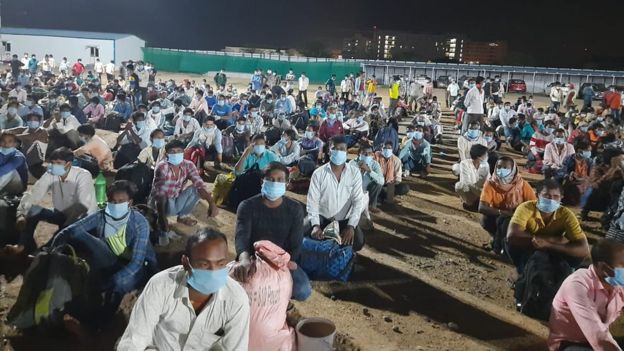 Image copyright ANI


 The shift—illustrated in weakened


 CHINDIA ALERT: You'll be living in their world, very soon