13/05/2020

Chinese President Xi Jinping, also general secretary of the Communist Party of China Central Committee and chairman of the Central Military Commission, checks the ecological protection work of the Fenhe River in Taiyuan, capital city of north China’s Shanxi Province, May 12, 2020. (Xinhua/Li Xueren)
BEIJING, May 13 (Xinhua) — Chinese President Xi Jinping attaches great importance to ecological conservation and environmental protection. He has spoken of the issue on many occasions. The following are some highlights of his quotes.
— Lucid waters and lush mountains are invaluable assets.
— Ecological conservation and environmental protection are contemporary causes that will benefit many generations to come.
— A sound ecological environment is the basic foundation for the sustainable development of humanity and society.
— We should adhere to the integrated protection and restoration of mountains, rivers, forests, farmlands, lakes and grasslands, and coordinate efforts to strengthen ecological and environmental protection in river basins with efforts to promote an energy revolution, green production and lifestyle, and economic transformation and development.
— A good ecological environment is the fairest public product and the most accessible welfare for the people.
— The quality of the eco-environment is the key to building a moderately prosperous society in all respects.
— Economic development should not be achieved at the cost of the ecology. The ecological environment itself is the economy. Protecting the environment is developing productivity.
— We shall protect ecosystems as preciously as we protect our eyes, and cherish them as dearly as we cherish our lives.
— The history of civilizations shows that the rise or fall of a civilization is closely tied to the quality of the ecological environment.
Source: Xinhua
Posted in basic foundation, Beijing, benefit, Building, Capital city, Chairman of the Central Military Commission, checks, Chinese President Xi Jinping, civilization, closely tied, contemporary causes, eco-environment, ecological conservation, ecological environment, ecological protection work, Ecology, economic transformation, energy revolution, Environmental protection, farmlands, Fenhe River, forests, general secretary of the Communist Party of China Central Committee, generations, grasslands, green production, history of civilizations, humanity, integrated protection, invaluable assets, lakes, Lifestyle, lucid waters, lush mountains, moderately, mountains, north China's, our eyes, preciously, prosperous society, quality, Quotable Quotes, restoration, rise or fall, river basins, rivers, shanxi province, society, Sustainable development, Taiyuan, Uncategorized |
Leave a Comment »
29/04/2020
BEIJING, April 28 (Xinhua) — China has achieved much progress in environmental protection and taken the lead in green development in recent years.
The efforts have exemplified Chinese President Xi Jinping’s proposal of “working together for a green and better future for all” made a year ago in his speech at the opening ceremony of the International Horticultural Exhibition 2019 Beijing.
In the keynote speech, Xi proposed a five-point initiative on promoting green development, namely pursuing harmony between man and nature, pursuing the prosperity based on green development, fostering a passion for nature-caring lifestyle, pursuing a scientific spirit in ecological governance, and joining hands to tackle environmental challenges.
China’s hard work on environment protection has paid off.
The ecological environment has improved significantly. People are enjoying more days of blue sky, cleaner water, and fertile land.
China has achieved the goal of zero growth of desertified land by 2030 set by the United Nations ahead of time. Besides, forest stock volume increased by 4.56 billion cubic meters compared with that of 2005.
Carbon dioxide emissions per unit of GDP in 2018 fell by 45.8 percent compared with that of 2005, exceeding the target set for the year.
After more than 30 years of hard work, the seventh largest desert in China, the Kubuqi Desert in Inner Mongolia Autonomous Region, once known as the “sea of death” difficult for birds to fly across, has turned into a green valley.
In January 2020, in a letter in reply to the student representatives of the Global Alliance of Universities on Climate, the Chinese president mentioned his thoughts about ecological civilization in his youth.
“Over four decades ago, I lived and worked for many years in a small village on the Loess Plateau in western China. Back then, the ecology and environment there was seriously damaged due to over-development and the local people were trapped in poverty as a result,” Xi wrote.
“This experience taught me that man and nature are a community of life and that the damage done to nature will ultimately hurt mankind,” said Xi.
China’s progress and achievements are recognized worldwide.
The ecological civilization and green development advocated by China are actually an endeavor to find a way to balance economic development and environmental protection, said John Cobb, Jr., the founding president of the Institute for Postmodern Development of China and member of the American Academy of Arts and Sciences.
Noting that the endeavor is a remarkable exploration, he expressed his hope that it will succeed.
China is on the right path in dealing with global climate change and achieving sustainable development, said Borge Brende, president of the World Economic Forum.
In addition to making efforts at home, China has also rolled out a series of measures to support the global combat against climate change.
In September 2015, ahead of the Paris climate change conference, Xi pledged a 20-billion-yuan (3-billion-U.S. dollars) China South-South Climate Cooperation Fund, which was dedicated to help other developing countries combat climate change.
China has also been fulfilling the obligations of the United Nations Framework Convention on Climate Change and the Paris Agreement, and achieved the goal of its intended nationally determined contributions submitted to the secretariat of the Climate Change Convention as scheduled.
UN Secretary-General Antonio Guterres expressed his appreciation for China’s important contributions to addressing the climate change and building a green “Belt and Road,” and said he expects China to continue to play a leading role in addressing the climate change and other issues.
“Lucid waters and lush mountains are invaluable assets,” a concept put forward by Xi in 2005 when he visited Yucun Village in southeast China’s Zhejiang Province as the party chief of the province, has become the motto of the Lao Ministry of Natural Resources and Environment.
In March 2020, when Xi returned to Yucun, he said that economic development should not be achieved at the expense of the ecological environment. To protect the ecological environment is to develop the productive forces, he said.
The history of civilizations shows that the rise or fall of a civilization is closely tied to its relationship with nature, Xi said at the International Horticultural Exhibition last year.
Only by joining hands can the humankind advance a global ecological civilization and march towards the bright future of building a community with a shared future for mankind.
Source: Xinhua
Posted in "lucid waters and lush mountains are invaluable assets.", "sea of death", "working together for a green and better future for all", 2005, 2015, 2018, 2019, 2020, 2030, 30, achieved, addressing, advance, ago, ahead of time, American Academy of Arts and Sciences, appreciation, Beijing, Belt and Road, Besides, between, billion cubic meters, blue sky, bright future, Building, carbon dioxide emissions, China, China South-South Climate Cooperation Fund, Chinese president, Chinese President Xi Jinping's, civilization, cleaner water, climate change, Climate Change Convention, closely tied, combat climate change, community, community of life, compared, concept, concrete actio, damaged, decades, dedicated, desertified land, developing countries, difficult, ecological civilization, ecological environment, ecological governance, Ecology, Economic development, efforts, enjoying, Environment, environmental challenges, Environmental protection, exceeding, exemplified, expense, experience, fell by, fertile land, five-point initiative, for birds to fly across, forest stock volum, fostering, four, GDP, global, Global Alliance of Universities on Climate, global combat, global ecological civilization, goal, green development, green valley, hard work, has improved, history of civilizations, humankind, hurt, important contributions, increased, inner mongolia autonomous region, Institute for Postmodern Development of China, International Horticultural Exhibition, January, joining hands, keynote speech, Kubuqi Desert, Lao Ministry of Natural Resources and Environment., last year, leads, lived, local people, Loess Plateau, man and nature, mankind, many years, March, mentioned, more days, motto, nature, nature-caring lifestyle, opening ceremony, over-development, Paris Agreement, Paris climate change conference, party chief, passion, People, per unit, percent, pledged, poverty, progress, proposal, prosperity, province, pursuing, pursuing harmony, put forward, recent years, relationship, result, rise or fall, scheduled, scientific spirit, September, seriously, seventh largest desert, shared future, significantly, small village, southeast China's, speech, taught, thoughts, to help, to tackle, trapped, turned into, ultimately, Uncategorized, United Nations, United Nations Framework Convention on Climate Change, Western China, with, worked, World Economic Forum, Xi, year ago, years, Youth, Yucun, zero growth, zhejiang province |
Leave a Comment »
12/04/2020
- Between January 20 and April 4, PM2.5 levels across the country fell by more than 18 per cent, according to the environment ministry
- But observers say that as soon as the nation’s factories and roads get back to normal, so too will the air pollution levels
Blue skies were an unexpected upside of locking down cities and halting industrial production across China. Photo: AFP
China’s air quality has improved dramatically in recent weeks as a result of the widespread city lockdowns and strict travel restrictions introduced to contain the
. But experts say the blue skies could rapidly disappear as factories and roads reopen under a government stimulus plan to breathe new life into a stalled economy.
According to the Ministry of Ecology and Environment, between January 20 and April 4 the average concentration of PM2.5 – the tiny particles that pose the biggest risk to health – fell by 18.4 per cent from the same period of last year.
Meanwhile, the average number of days with good air quality – determined as when the air pollution index falls below 100 – rose by 7.5 per cent, it said.
Satellite images released by Nasa and the European Space Agency showed a dramatic drop in nitrogen dioxide emissions in major Chinese cities in the first two months of 2020, compared with a year earlier.
According to Nasa, the changes in Wuhan – the central China city at the epicentre of the initial coronavirus outbreak – were particularly striking, while nitrogen dioxide levels across the whole of eastern and central China were 10 to 30 per cent lower than normal.
The region is home to hundreds of factories, supplying everything from steel and car parts to microchips. Wuhan, which has a population of 11 million, was placed under lockdown on January 23, but those
restrictions were lifted on Wednesday
.
Air pollution is likely to return to China’s cities once the lockdowns are lifted. Photo: Reuters
Nitrogen dioxide is produced by cars, power plants and other industrial facilities and is thought to exacerbate respiratory illnesses such as asthma.
The space agency said the decline in air pollution levels coincided with the restrictions imposed on transport and business activities.
That was consistent with official data from China’s National Development and Reform Commission, which recorded a 25 per cent fall in road freight volume and a 14 per cent decline in the consumption of oil products between January and February.
Guangzhou cases prompt shutdown in ‘Little Africa’ trading hub
Liu Qian, a senior climate campaigner for Greenpeace based in Beijing, said the restrictions on industry and travel were the primary reasons for the improvement in air quality.
According to official data, in February, the concentrations of PM2.5, nitrogen dioxide and sulphur dioxide – a toxic gas that comes mostly from industrial burning of coal and other fossil fuels – all fell, by 27 per cent, 28 per cent and 23 per cent, respectively.
“The causes of air pollution are complicated, but the suspension of industrial activity and a drop in public transport use will have helped to reduce levels,” Liu said.
As the epicentre of the Covid-19 pandemic has shifted to the
United States and
, human and industrial activity in China is gradually picking back up, and so is air pollution.
Lauri Myllyvirta, lead analyst with the Centre for Research on Energy and Clean Air in Helsinki, said that levels of nitrogen dioxide pollution, measured both by Nasa satellites and official stations in China, started inching back up in the middle of March and had returned to normal levels by the end of the month.
That coincided with the centre’s findings – published on Carbon Brief, a British website on climate change – that coal consumption at power plants and oil refineries across China returned to their normal levels in the fourth week of March.
How the Wuhan experience could help coronavirus battle in US and Europe
Ma Jun, director of the Institute of Public & Environmental Affairs, a Beijing-based charity, said a stimulus plan to kick-start the economy would have a significant impact on air pollution.
“Once industrial production is fully resumed, so are the emission levels,” he said. “Unless another outbreak happens and triggers another lockdown, which would be terrible, the improvement achieved under the pandemic is unstable and won’t last long.”
After the 2008 financial crisis, Beijing launched a 4 trillion yuan (US$567.6 billion) stimulus package that included massive infrastructure investment, but also did huge damage to the environment. In the years that followed, air pollution rose to record highs and sparked a public backlash.
Even before the
Covid-19 outbreak, China’s economy was slowing – it grew by 6.1 per cent in 2019, its slowest for 29 years – and concerns are now growing that policymakers will go all out to revive it.
“Local governments have been under huge pressure since last year, and there are fears that environmental regulations will be sidelined [in the push to boost economic output],” Ma said.
But Beijing had the opportunity to get it right this time by investing more in green infrastructure projects rather than high-carbon projects, he said.
“A balance between economic development and environmental protection is key to achieving a green recovery, and that is what China needs.”
Source: SCMP
Posted in 20, 2020, 4, air pollution, air quality, April, Asthma, ‘Little Africa’, back, balance, Beijing, blue skies, brought, business activities, car parts, Carbon Brief, cars, charity, China, China’s economy, Chinese cities, climate campaigner, Coal, concentrations, consumption, coronavirus epidemic, coronavirus outbreak, COVID-19, COVID-19 outbreak, Covid-19 pandemic, decline, drop, eastern and central China, environment ministry, Environmental protection, environmental regulations, epicentre, Europe, European Space Agency, everything, exacerbate, expect, factories, February, fossil fuels, get back, green infrastructure projects, green recovery, Greenpeace, Guangzhou, Helsinki, high-carbon projects, Home, Human, hundreds, improvement, industrial activity, industrial burning, industrial facilities, industry, Institute of Public & Environmental Affairs, January, last, levels, local governments, lockdowns, March, microchips, months, NASA, National Development and Reform Commission, Nitrogen dioxide, oil products, PM2.5, PM2.5 levels, policymakers, power plants, primary reasons, public transport, region, respiratory illnesses, restrictions, road freight, roads, shifted, sidelined, slowing, so too, space agency, Steel, supplying, suspension, tiny particles, to normal, toxic gas, trading hub, Transport, travel, Uncategorized, United States, Wednesday, Wuhan |
Leave a Comment »
29/03/2020
BEIJING, March 28 (Xinhua) — Clean energy is becoming the mainstream of global energy supply and interconnection is the mainstream of energy allocation, according to the Global Energy Interconnection Development and Cooperation Organization (GEIDCO).
Over the years, China is active in clean energy development and power grid interconnection with neighboring countries, and has achieved significant breakthroughs in UHV grids, smart grids, and clean energy, GEIDCO spokesperson told a press conference via live stream on Friday.
GEIDCO remains committed to promoting the energy interconnection to meet global power demand with clean and green alternatives, making idea dissemination, planning and research, international cooperation and project promotion the focus of its work, said the spokesperson.
The 2020 Global Energy Interconnection & China-Asia Energy and Power Conference is expected to be held in Beijing in November to discuss and strengthen cooperation on sustainable development in the energy industry.
Founded in March 2016, GEIDCO so far had 860 members from 115 countries, covering fields including energy, electricity, information, finance, consultation, science and technology, and environmental protection.
The global energy interconnection is a platform that connects grids around the world to facilitate development, deployment and utilization of clean energy, with ultra-high voltage transmission as the backbone.
Source: Xinhua
Posted in 2020 Global Energy Interconnection & China-Asia Energy and Power Conference, backbone, Beijing, clean energy, Consultation, deployment, development, Electricity, energy, Environmental protection, Finance, GEIDCO, Global Energy Interconnection Development and Cooperation Organization (GEIDCO), global energy supply, information, mainstream, science and technology, ultra-high voltage transmission, Uncategorized, utilization |
Leave a Comment »
09/12/2019
Attendants from China and Japan exchange documents of cooperation projects at the 13th China-Japan Comprehensive Forum on Energy Saving and Environmental Protection in Tokyo, Japan, Dec. 8, 2019. Officials, entrepreneurs, experts and scholars from China and Japan discussed cooperation and inked agreements on 26 cooperation projects at the 13th China-Japan Comprehensive Forum on Energy Saving and Environmental Protection here on Sunday. (Xinhua/Du Xiaoyi)
TOKYO, Dec. 8 (Xinhua) — Officials, entrepreneurs, experts and scholars from China and Japan discussed cooperation and inked agreements on 26 cooperation projects at the 13th China-Japan Comprehensive Forum on Energy Saving and Environmental Protection here on Sunday.
Some 800 people attended the forum co-organized by the National Development and Reform Commission, Ministry of Commerce, Chinese embassy in Japan, and Japan’s Ministry of Economy, Trade and Industry, and the Japan-China Economic Association.
Deputy Director of the National Development and Reform Commission Zhang Yong briefed the attendants about China’s achievements in recent years in energy saving, emission reduction and development of environment-friendly industries.
Noting that this year marks the 70th anniversary of the founding of the People’s Republic of China, Zhang said China will continue to open up to the outside world at a higher level and improve the quality of the ecological environment at a new historical starting point.
He urged Japanese enterprises and institutions to take an active part in China’s energy conservation and environmental protection and work together to promote green and sustainable development.
China and Japan should strengthen policy communication and coordination, deepen bilateral practical cooperation, jointly explore the international market and boost people-to-people exchanges and cooperation, so as to deepen cooperation in energy conservation and environmental protection, he added.
Attendants held discussions on energy saving, circular economy, development of intelligent vehicle and new energy vehicle, clean coal technology and coal-fired power generation, as well as China-Japan long-term trade.
The two sides inked 26 cooperation projects in various areas, including energy saving, circular economy, pollution prevention and control, hydrogen energy and green technology innovation.
The China-Japan Comprehensive Forum on Energy Saving and Environmental Protection, first held in 2006, has seen agreement achieved on a total of nearly 400 cooperation projects and provides a good platform for enterprises, research organizations and local governments of the two countries to enhance cooperation.
Source: Xinhua
Posted in 13th China-Japan Comprehensive Forum on Energy Saving and Environmental Protection, China alert, Chinese embassy, cooperation, deals, energy saving, Environmental protection, Japan, Japan-China Economic Association, Ministry of Commerce, Ministry of Economy, Trade and Industry, National Development and Reform Commission, sign, Tokyo, Uncategorized |
Leave a Comment »
04/11/2019
Chinese Vice Premier Han Zheng, also a member of the Standing Committee of the Political Bureau of the Communist Party of China Central Committee, meets with Kazakhstan’s First Deputy Prime Minister Alikhan Smailov, who also co-chaired the 9th meeting of the China-Kazakhstan Cooperation Committee, in Beijing, capital of China, Nov. 4, 2019. (Xinhua/Yan Yan)
BEIJING, Nov. 4 (Xinhua) — Chinese Vice Premier Han Zheng met with Kazakhstan’s First Deputy Prime Minister Alikhan Smailov Monday in Beijing, who also co-chaired the 9th meeting of the China-Kazakhstan Cooperation Committee.
Han, also a Standing Committee member of the Political Bureau of the Communist Party of China Central Committee, said the development of bilateral ties had been healthy and steady to become a model of relations between neighboring countries.
Earlier this year, China and Kazakhstan upgraded their relations to a permanent comprehensive strategic partnership, which Han said marked a new phase of bilateral relations.
The China-Kazakhstan Cooperation Committee, as an intergovernmental mechanism, makes overall planning for, coordinates and guides bilateral cooperation.
Han said since the last meeting of the committee, the two countries had deepened the synergy of their development strategies, accelerated trade, investment and industrial cooperation, strengthened financial cooperation, and continuously enhanced cooperation in security, environmental protection, energy, technology and mining.
Noting the solid foundation, huge potential and broad prospects of bilateral cooperation, Han said the two countries should promote cooperation in industrial capacity, transportation, agriculture and energy.
He called on the two sides to jointly implement the synergy between the Silk Road Economic Belt and Kazakhstan’s “Bright Road” new economic policy, strengthen innovation-driven cooperation and carry out digital industry, blockchain and biotechnology cooperation to create new growth points.
He said the two sides should carry out more facilitation measures to constantly optimize the business environment and guarantee the rights and interests of enterprises from both countries.
Smailov said Kazakhstan is ready to work with China to promote cooperation in trade, finance, energy, agriculture, transportation, logistics and infrastructure to benefit the two peoples.
Source: Xinhua
Posted in "Bright Road", agriculture, Alikhan Smailov, Beijing, biotechnology, blockchain, China-Kazakhstan Cooperation Committee, Chinese Vice Premier Han Zheng, digital industry, energy, Environmental protection, Finance, First Deputy Prime Minister, industrial capacity, Infrastructure, Kazakhstan, logistics, mining, security, Standing Committee member of the Political Bureau of the Communist Party of China Central Committee, Technology, Trade, transportation, Uncategorized |
Leave a Comment »
24/09/2019
- Observers say domestic issues prompted Kremlin to tighten environmental protection around the lake in Siberia, but Chinese activities also played a part
- Businesses catering to growing number of visitors from China may be easy scapegoats as they are ‘among the most visible because they are foreign’
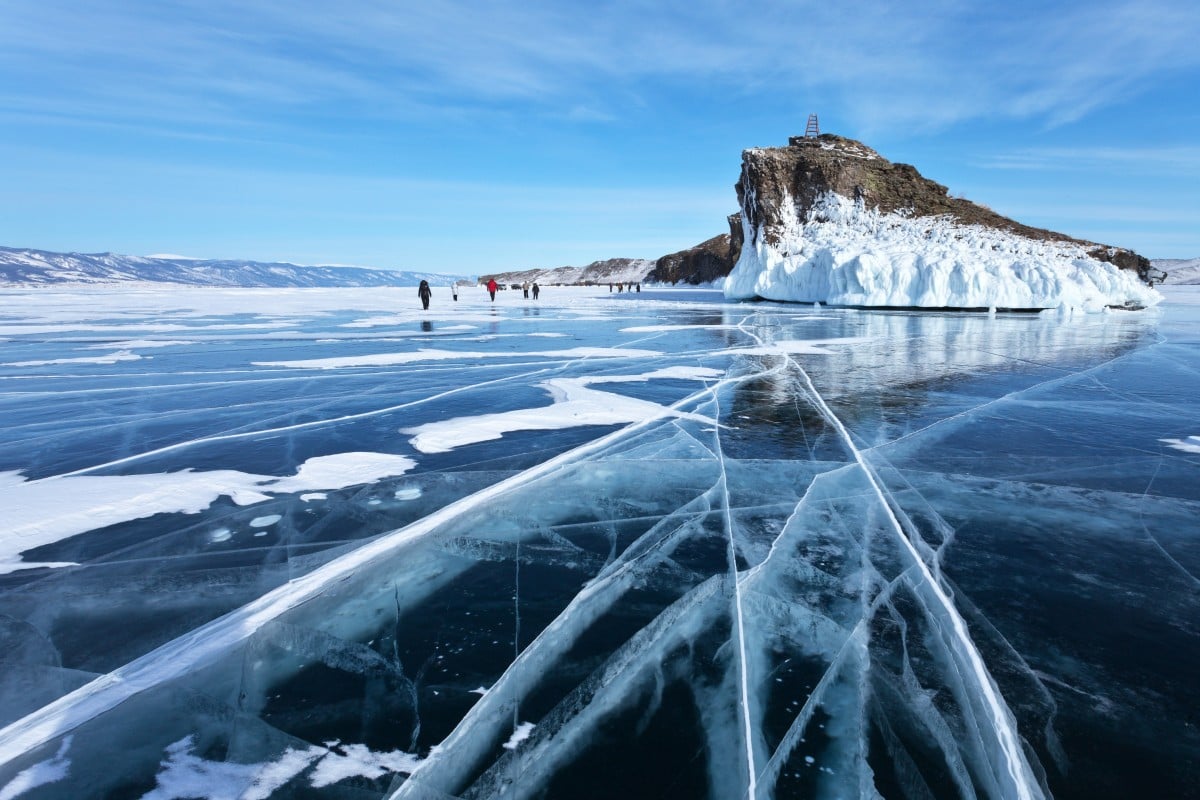
A growing number of Chinese tourists are visiting Lake Baikal in Siberia. Photo: Shutterstock
Russia has tightened environmental protection around Lake Baikal amid growing concerns over degradation, with Chinese development and tourism at the heart of recent debates on the nationally treasured Siberian lake.
New protocols signed by President Vladimir Putin on September 12 clarify how authorities will monitor “compliance with the law on Lake Baikal’s conservation and environmental rehabilitation”.
They also call for improved state environmental monitoring of the lake’s unique ecosystem, aquatic animal and plant life; prevention of and response to risks; analysis of the pressure from fishing on its biological resources; as well as measures to conserve those unique aquatic resources.
Observers say domestic issues – including a backlash over the government’s hand in accelerating environmental damage – prompted the Kremlin to act, but concerns over Chinese activities in the area also played a part.
Eugene Simonov, coordinator of the Rivers Without Boundaries International Coalition, said the protocols were a bid by Moscow to show it was concerned about the lake, where mismanagement and relaxed standards had damaged water quality and the ecosystem – drawing concern from Unesco, which has designated it a World Heritage Site.
But it was also related to local concerns that an influx of Chinese money and tourists in the region was making matters worse.
“One of the leading causes of problems on Lake Baikal is the development of the lake shore for tourism these days, which, at least in the Irkutsk region, is greatly driven by Chinese business,” said Simonov, who has worked extensively on the area’s environmental issues.
He pointed to the “not legal” hotels opened by local and Chinese businesses that cater to the increasing number of tourists from China, saying they stood out as easy scapegoats.
“The real driving force is the desire of locals to privatise the lake shore, illegally, but the Chinese demand is one of the reasons they want to privatise it, while Chinese businesses are among the most visible because they are foreign,” he said.
Public opposition to a water bottling plant being built by a Chinese-owned company pushed local authorities to halt the project in March. Photo: Weibo
Some 186,000 Chinese tourists visited the region last year, up 37 per cent from 2017, according to official Irkutsk figures. But while they accounted for about two-thirds of foreign visitors to the Irkutsk region, they made up only about 10 per cent of the 1.7 million tourists who visited last year.
Concern about Chinese investment and development in the region reached a crescendo in March, when public opposition pushed local authorities to halt the construction of a water bottling plant operated by AquaSib, a Russian firm owned by a Chinese company called Lake Baikal Water Industry, based in China’s Heilongjiang province.
The Irkutsk government acted after more than a million people – more than the city’s population – signed a petition calling for the “Chinese plant” to be halted.
Adventures in the frozen wilderness: a Hong Kong man’s trek across icy Lake Baikal
“There were at least 10 problems [around Lake Baikal] that were much more important at that moment, but it was the Chinese plan that was the focus,” Simonov said, noting the nationalism surrounding the lake as a Russian point of pride.
Paul Goble, a Eurasia specialist who has been tracking the issues at Lake Baikal, said stirring up resentment over Chinese encroachment in Siberia and the country’s Far East had long been a government tactic to quell dissent and unite popular opinion.
But he said the new protocols showed Moscow realised that locals – facing the effects of a deteriorating environment including deforestation driven by China’s domestic market demand – may not be satisfied with that explanation.
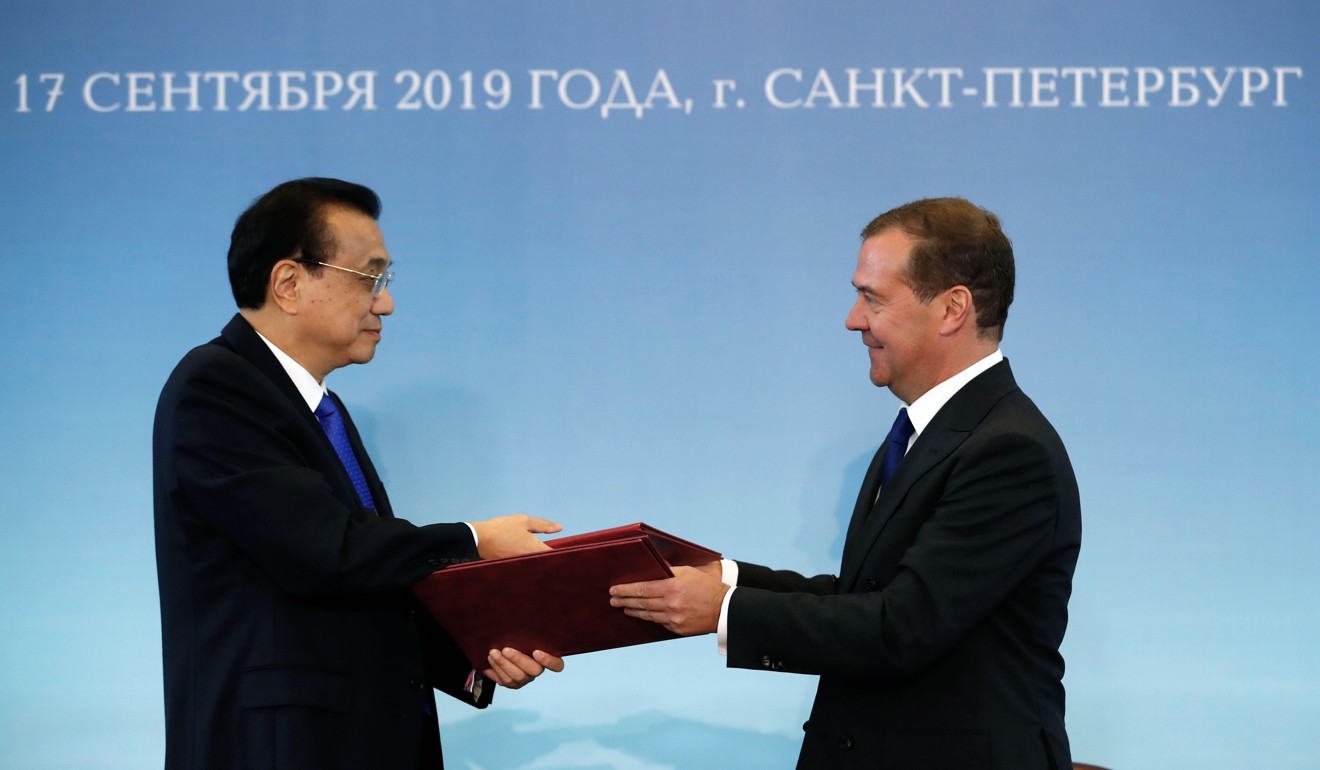
Chinese Premier Li Keqiang and Russian Prime Minister Dmitry Medvedev exchange documents after talks in St Petersburg on Tuesday. Photo: AFP
“People are angry not at China, as might have been the case a year ago or more, but they are angry at Moscow for not standing up to China and what it’s doing,” he said, pointing to this as the reason the Kremlin tightened environmental controls on the lake.
Concerns about the impact of Chinese activities on Russia’s environment come as the two neighbours are playing up closer diplomatic and economic ties. One of the outcomes of a
between Chinese Premier Li Keqiang and Russian heads of state last week was an agreement to increase bilateral trade to more than US$200 billion over the next five years.
But how that investment could be sustainable for Russia – a key supplier of raw materials needed by China such as oil, gas and timber – remained to be seen, observers said.
Are Chinese tourists the greatest threat to Lake Baikal?
“Our great relationship is going well, but we have not seen the accompanying rise in Chinese foreign direct investment into Russia – that remains very small, despite all the talk,” said Artyom Lukin, an associate professor with the School of Regional and International Studies at Far Eastern Federal University in Vladivostok.
“Russia is not satisfied with that, they would like to see more Chinese money, more Chinese greenfield investment coming into Russia, into more productive areas of the Russian economy, not just into the extraction sector like oil, timber or coal,” he said.
Lake Baikal has been seen as an area that could draw a lot of Chinese investment. Back in 2016 there were reports of a tourism development deal, worth up to US$11 billion, between Russian operator Grand Baikal and a consortium of Chinese firms, according to Russian state media reports.
But so far most development from Chinese businesses has remained at the small and medium scale.
The reasons for that, according to experts, range from the difficulty of competing with powerful local rivals and the need to tread carefully around anti-China sentiment.
However, the burden and liability of complying with environmental standards also kept operations at a smaller scale.
China and Russia: a fool’s errand for Trump to try to come between them
“It’s simpler and easier to operate smaller businesses and facilities, and it’s easier to monitor and manage them,” said Vitaly Mozharowski, a partner at Bryan Cave Leighton Paisner in Moscow, who specialises in environmental law, noting that concerns included management of waste water and garbage.
Meanwhile, big complexes were obvious targets for scrutiny, and that would only increase with the new protocols in place, Mozharowski said. “Any large-scale initiatives would be considered from the very top of the Russian establishment,” he said.
Source: SCMP
Posted in anger, AquaSib, aquatic animal, China and Russia, Chinese development, Chinese investment and development, Chinese premier Li Keqiang, chinese tourists, concerns, ecosystem, Environmental protection, Far Eastern Federal University, fishing, fool’s errand, Heilongjiang province, hotels, Irkutsk government, Kremlin, Lake Baikal, Lake Baikal Water Industry, Moscow, plant life, President Trump, president vladimir putin, protect, protocols, Rivers Without Boundaries International Coalition, Russia, russian president vladimir putin, Russian Prime Minister Dmitry Medvedev, scapegoats, School of Regional and International Studies, Siberia, St Petersburg, Uncategorized, Vladivostok, water bottling plant |
Leave a Comment »
08/09/2019
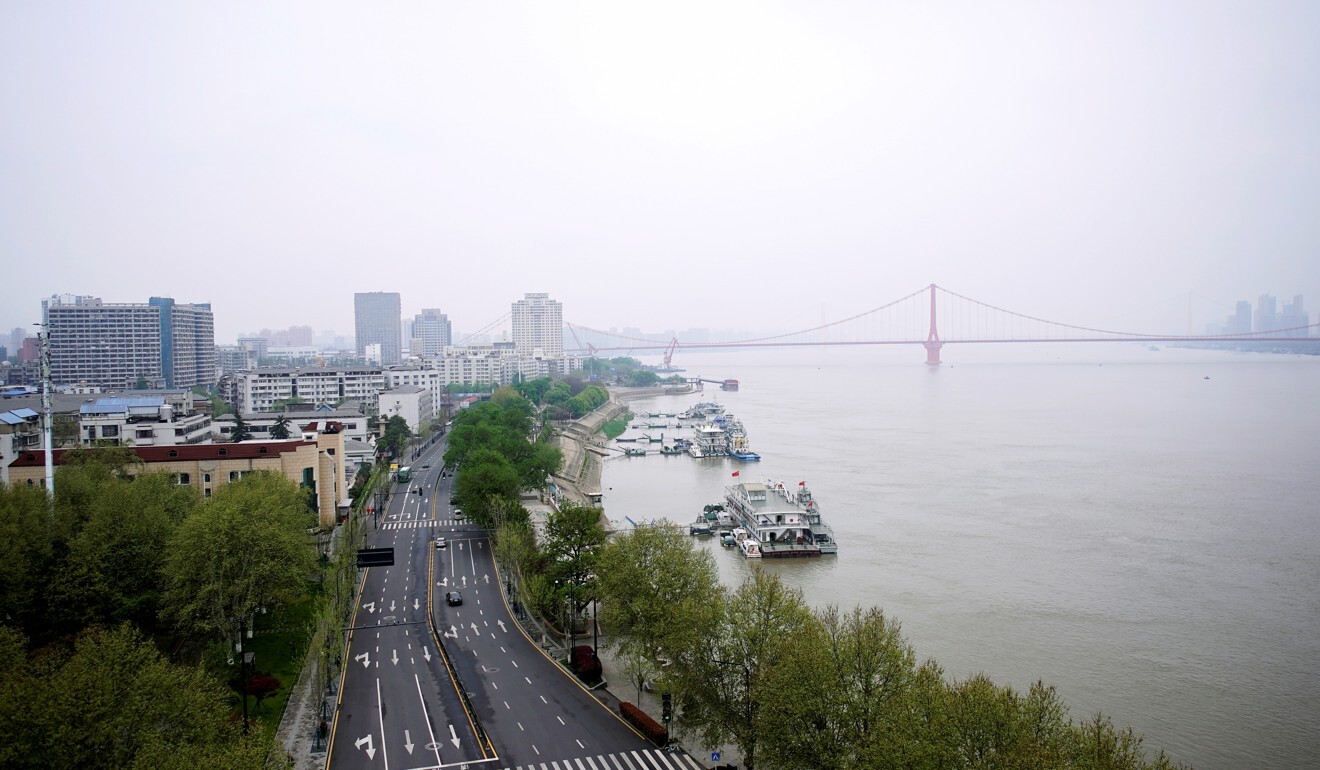
German Chancellor Angela Merkel visits Wuhan Yangtze River Bridge in Wuhan, capital city of central China’s Hubei Province, Sept. 7, 2019. German Chancellor Angela Merkel visited Wuhan on Saturday. (Xinhua/Xiao Yijiu)
WUHAN, Sept. 7 (Xinhua) — Angela Merkel Saturday visited central China’s Wuhan during her 12th trip to the country as German Chancellor since 2005.
Before Wuhan, capital city of Hubei province, Merkel had visited a number of cities besides Beijing during her China trips in the past.
When talking with students of Huazhong University of Science and Technology, Merkel highlighted the importance of international cooperation in the era of globalization, and called on the students to be participants.
Saying that a nation’s prosperity is part of the prosperity of the whole world, she voiced her hope that students should shoulder common responsibilities to combat global challenges.
In the speech, Merkel reviewed her past trips to China. In Shenyang, she witnessed economic upgrading. In Chengdu she learned about development of western China. In Shenzhen she saw remarkable progress brought by the reform and opening-up.
She said quite a few noted German companies including Siemens, and small and medium-sized innovation enterprises are operating business in Wuhan. Wuhan and Duisburg became the first pair of sister cities between China and Germany in 1982.
Merkel exchanged views with students on internet, artificial intelligence, intelligent manufacturing, and environmental protection.
Before wrapping up her trip, Merkel also visited a local hospital and a factory of the German company Webasto.
Source: Xinhua
Posted in Angela Merkel, Artificial intelligence, artificial intelligence (AI), Beijing, Chengdu, Duisburg, Environmental protection, Factory, German Chancellor, German companies, German company, globalization, Hospital, Huazhong University of Science and Technology, hubei province, intelligent manufacturing, Internet, Shenyang, Siemens, Uncategorized, Webasto, Wuhan |
Leave a Comment »
22/08/2019
Chinese President Xi Jinping, also general secretary of the Communist Party of China Central Committee and chairman of the Central Military Commission, inspects the Babusha Forest Farm, an afforestation program in a desert area of Gansu, where he learns about the latest developments in desertification control and environmental protection, in Gulang County of Wuwei City, northwest China’s Gansu Province, Aug. 21, 2019. (Xinhua/Xie Huanchi)
LANZHOU, Aug. 21 (Xinhua) — Xi Jinping, general secretary of the Communist Party of China Central Committee, visited a rural community and an afforestation area in northwest China’s Gansu Province Wednesday.
Xi visited a new community in Gulang County, which is home to rural residents relocated out of ecological concerns, and inquired about their livelihoods and progress on poverty relief.
He also inspected an afforestation program in a desert area of Gansu, where he learned about the latest developments in desertification control and environmental protection.
Source: Xinhua
Posted in afforestation area, Chinese President Xi Jinping, desertification control, Environmental protection, Gansu Province, general secretary of the Communist Party of China Central Committee, Gulang County,, inspects, rural community, Uncategorized, Village, visited |
Leave a Comment »
19/05/2019
Li Zhanshu, chairman of the Standing Committee of the National People’s Congress (NPC), meets with Norwegian King Harald V in Oslo, Norway, May 16, 2019. China’s top legislator Li Zhanshu paid an official friendly visit to Norway from May 15 to 18, expecting to promote the development of Sino-Norwegian ties to score more progress. (Xinhua/Huang Jingwen)
OSLO, May 18 (Xinhua) — China’s top legislator Li Zhanshu paid an official friendly visit to Norway from May 15 to 18, expecting to promote the development of Sino-Norwegian ties to score more progress.
During the stay in Norway, Li, chairman of the Standing Committee of the National People’s Congress (NPC), met with Norwegian King Harald V, Norwegian Prime Minister Erna Solberg and President of the Norwegian parliament Storting Tone Wilhelmsen Troen.
When meeting with Norwegian King Harald V, Li conveyed the greetings of Chinese President Xi Jinping to the King, and expressed congratulations on the Norwegian National Day, which falls on May 17.
Li said during the King’s successful visit to China last year, the two heads of state made strategic plans for the development of bilateral relations in the new era. As this year marks the 65th anniversary of the establishment of diplomatic relations between China and Norway, the two sides are expected to seize the opportunity to cement friendship and expand cooperation on the basis of mutual respect and treating each other equally, so as to realize better development of bilateral relations.
Harald V expressed gratitude to China’s friendliness to the Norwegian side, saying Norway admires China’s tremendous development achievements. He said Norway is ready to strengthen cooperation with China in such fields as winter sports, and will make efforts to help China successfully host the 2022 Beijing Winter Olympics.
When meeting with Solberg, Li said although Sino-Norwegian relations have experienced ups and downs, friendship and cooperation has always been the main theme of the ties. As both countries share common interests on safeguarding current global mechanism, building an open world economy, the two sides should jointly support multilateralism and free trade. Moreover, the two countries have similar development concepts and share strong economic complementarities, so the outlook of bilateral cooperation is very broad.
Norway is welcome to actively participate in the construction of the Belt and Road Initiative. And bilateral cooperation on economy, trade, environmental protection, science and technology, people-to-people exchanges and tourism is expected to be forged ahead, said China’s top legislator.
“China hopes the Norwegian side provides a fair, just and non-discriminatory business environment for Chinese enterprises’ investment and operation in Norway,” said Li.
Solberg said bilateral cooperation has maintained sound momentum since the normalization of bilateral ties, expecting the two sides to push forward talks on inking a free trade deal and deepen cooperation in such areas as maritime affairs, shipping, fishery and environmental protection. She also voiced the will to advance communication and collaboration with China on issues concerning the United Nations, coping with the climate change and Arctic affairs.
When respectively meeting with Troen and members of the parliament’s standing committee on foreign affairs and defense, Li introduced China’s development path and political system.
“The reasons why China continues to make new development achievements are that we have embarked on a development path that suits our national conditions. This is the path of socialism with Chinese characteristics,” said Li, stressing that the Chinese people will unswervingly follow this path.
He said that the NPC of China is willing to work with the Norwegian parliament to implement the important consensus reached by the leaders of the two countries, strengthen friendly exchanges at all levels, enhance understanding and trust through frank dialogues, and create a favorable environment for pragmatic cooperation.
Troen said that this visit is of great significance as Li’s tour marks the first visit of a Chinese leader since the normalization of bilateral relations in 2016. The Norwegian parliament is willing to carry out all-round exchanges and cooperation with the NPC of China, and make positive contributions to the development of state-to-state ties.
The two legislators also exchanged views on jointly safeguarding multilateral trade system, sustainable development and other issues of common concerns.
On May 16, Li attended the economic and trade conference in commemoration of the 65th anniversary of Norway-China diplomatic relations. He said in a speech that President Xi’s proposal of the high-quality development of jointly building the Belt and Road and the policy of China’s further expansion of opening up have provided new opportunities for the common development of all countries. The two countries’ enterprises are expected to seize the opportunity, tap cooperation potentials, so as to translate the desire for strong cooperation into more practical results.
During the tour, Li visited the Chinese skiers who were training in Norway and encouraged them to train hard and carry out bilateral friendship.
He also visited a local ecological agriculture project, an oil gas processing plant, and met with local officials in Norway’s southwestern county of Rogaland and its southern city of Stavanger.
Norway is the first lag of Li’s ten-day tour in Europe, which will also take him to Austria and Hungary.
Source: Xinhua
Posted in Arctic affairs, Austria, bilateral ties, chairman of the Standing Committee of the National People's Congress (NPC), China's top legislator, Chinese President Xi Jinping, climate change, Environmental protection, Erna Solberg, fishery, Harald V, Hungary, Li Zhanshu, maritime affairs, Norway, Norway-China diplomatic relations, Norwegian King, Norwegian National Day, Norwegian Prime Minister, President of the Norwegian parliament, promote, Rogaland, shipping, Sino-Norwegian ties, Storting Tone Wilhelmsen Troen, Uncategorized, United Nations, visits |
Leave a Comment »








 CHINDIA ALERT: You'll be living in their world, very soon