Chindia Alert: You’ll be Living in their World Very Soon
aims to alert you to the threats and opportunities that China and India present. China and India require serious attention; case of ‘hidden dragon and crouching tiger’.
Without this attention, governments, businesses and, indeed, individuals may find themselves at a great disadvantage sooner rather than later.
The POSTs (front webpages) are mainly 'cuttings' from reliable sources, updated continuously.
The PAGEs (see Tabs, above) attempt to make the information more meaningful by putting some structure to the information we have researched and assembled since 2006.
Image copyright GETTY IMAGESImage caption Within a week of reopening, India has seen a sharp spike in cases
India is roaring – rather than inching – back to life amid a record spike in Covid-19 infections. The BBC’s Aparna Alluri finds out why.
On Saturday, India’s government announced plans to end a national lockdown that began on 25 March.
This was expected – the roads, and even the skies, have been busy for the last 10 days since restrictions started to ease for the first time in two months. Many businesses and workplaces are already open, construction has re-started, markets are crowded and parks are filling up. Soon, hotels, restaurants, malls, places of worship, schools and colleges will also reopen.
But the pandemic continues to rage. When India went into lockdown, it had reported 519 confirmed cases and 10 deaths. Now, its case tally has crossed 173,000, with 4,971 deaths. It added nearly 8,000 new cases on Saturday alone – the latest in a slew of record single-day spikes.
Image copyright GETTY IMAGESImage caption Fast food chains like McDonald’s have begun reopening outlets in parts of India.
So, why the rush to reopen?
The lockdown is simply unaffordable
“It’s certainly time to lift the lockdown,” says Gautam Menon, a professor and researcher on models of infectious diseases.
“Beyond a point, it’s hard to sustain a lockdown that has gone on for so long – economically, socially and psychologically.”
From day one, India’s lockdown came at a huge cost, especially since so many of its people live on a daily wage or close to it. It put food supply chains at risk, cost millions their livelihood, and throttled every kind of business – from car manufacturers to high-end fashion to the corner shop selling tobacco. As the economy sputtered and unemployment rose, India’s growth forecast tumbled to a 30-year-low.
Raghuram Rajan, an economist and former central bank governor, said at the end of April that the country needed to open up quickly, and any further lockdowns would be “devastating”.
The opinion is shared by global consultant Mckinsey, whose report from earlier this month said India’s economy must be “managed alongside persistent infection risks”.
Image copyright GETTY IMAGESImage caption As restrictions ease, Indians are slowly getting used to the new normal
“The original purpose of the lockdowns was to delay the spike so we can put health services and systems in place, so we are able handle the spike [when it comes],” says Dr N Devadasan, a public health expert. “That objective, to a large extent, has been met.”
In the last two months, India has turned stadia, schools and even train coaches into quarantine centres, added and expanded Covid-19 wards in hospitals, and ramped up testing as well as production of protective gear. While grave challenges remain and shortages persist, the consensus seems to be that the government has bought as much time as possible.
“We have used the lockdown period to prepare ourselves… Now is the time to revive the economy,” Delhi Chief Minister Arvind Kejriwal said last week.
The silver lining
For weeks, India’s relatively low Covid-19 numbers baffled experts everywhere. Despite the dense population, disease burden and underfunded public hospitals, there was no deluge of infections or fatalities. Low testing rates explain the former, but not the latter.
In fact, India made global headlines not for its caseload but for its botched handling of the lockdown – millions of informal workers, largely migrants, were left jobless overnight. Scared and unsure, many tried to return home, often desperate enough to walk, cycle or hitchhike across hundreds of kilometres.
Perhaps the choice – between a virus that didn’t appear to be wreaking havoc yet, and a lockdown that certainly was – seemed obvious to the government.
But that is changing quickly as cases shoot up. “I suspect we will keep finding more and more cases, but they will mostly be asymptomatic or will have mild symptoms,” Dr Devadasan says.
The hope – which is also encouraging the government to reopen – is that most of India’s undetected infections are not severe enough to require hospitalisation. And so far, except in Mumbai city, there has been no dearth of hospital beds.
The government, for instance, has been touting India’s mortality rate as a silver lining – at nearly 3%, it’s among the lowest in the world.
But some are unconvinced by that. Dr Jacob John, a prominent virologist, says India has never had, and still doesn’t have, a robust system for recording deaths – in his view, the government is certainly missing Covid-19 deaths because they have no way of knowing of every fatality.
Image copyright GETTY IMAGESImage caption Indians are venturing out again but it’s unclear how many of them are asymptomatic.
And, he says, “what we must aim for is flattening the mortality curve, not necessarily the epidemic curve”.
Dr John, like several other experts, also predicts a peak in July or August, and believes the country is reopening so quickly because the “government realised the futility of such leaky lockdowns”.
A shift in strategy
So is the government gearing up for another lockdown when the peak comes?
While Dr Menon believes the lockdown was well-timed, he says it was too focused on cases coming from abroad.
“There was a hope that by controlling that, we could prevent epidemic spread, but how effective was our screening [at airports]?”
Now, he adds, is the time for “localised lockdowns”.
Media caption Coronavirus: Death and despair for migrants on Indian roads
The federal government has left it to states to decide where, how and to what extent to lift the lockdown as the virus’ progression varies wildly across India.
Maharashtra alone accounts for more than a third of India’s active cases. Add Tamil Nadu, Gujarat and Delhi, and that makes up 67% of the national total.
But other states – such as Bihar – are already seeing a sharp uptick as migrant workers return home.
“Initially, most of your cases were in the cities,” Dr Devadasan says. “But we kept the migrant workers in cities and didn’t allow them to go home. Now, we are sending them back. We have facilitated transporting the virus from urban areas to rural areas.”
While the government has said how many infections have been avoided – up to 300,000 – and lives saved – up to 71,000 – by the lockdown, there is no indication of what lies ahead.
There is only advice: The day the government began to ease restrictions, Mr Kejriwal tweeted, urging people to “follow discipline and control the coronavirus disease” as it was their “responsibility”.
Image copyright GETTY IMAGESImage caption Social distancing will prove to be India’s biggest post-lockdown challenge
Because the alternative – of curfews and constant policing – is unsustainable.
“My worry is more the circumstances of people – it’s not as though they have an option to practise social distancing,” Dr Menon says.
And they don’t – not in joint family homes or one-room hovels packed together in slums, not in crowded markets or busy streets where jostling is second nature, or in temples, mosques, weddings or religious processions where more is always merrier.
The overwhelming message is that the virus is here to stay, and we have to learn to live with it – and the only way to do that, it appears, is to let people live with it.
NEW YORK/SAN FRANCISCO (Reuters) – Amazon.com Inc (AMZN.O) has bought cameras to take temperatures of workers during the coronavirus pandemic from a firm the United States blacklisted over allegations it helped China detain and monitor the Uighurs and other Muslim minorities, three people familiar with the matter told Reuters.
China’s Zhejiang Dahua Technology Co Ltd (002236.SZ) shipped 1,500 cameras to Amazon this month in a deal valued close to $10 million, one of the people said. At least 500 systems from Dahua – the blacklisted firm – are for Amazon’s use in the United States, another person said.
The Amazon procurement, which has not been previously reported, is legal because the rules control U.S. government contract awards and exports to blacklisted firms, but they do not stop sales to the private sector.
However, the United States “considers that transactions of any nature with listed entities carry a ‘red flag’ and recommends that U.S. companies proceed with caution,” according to the Bureau of Industry and Security’s website. Dahua has disputed the designation.
The deal comes as the U.S. Food and Drug Administration warned of a shortage of temperature-reading devices and said it wouldn’t halt certain pandemic uses of thermal cameras that lack the agency’s regulatory approval. Top U.S.-based maker FLIR Systems Inc (FLIR.O) has faced an up to weeks-long order backlog, forcing it to prioritize products for hospitals and other critical facilities.
Amazon declined to confirm its purchase from Dahua, but said its hardware complied with national, state and local law, and its temperature checks were to “support the health and safety of our employees, who continue to provide a critical service in our communities.”
The company added it was implementing thermal imagers from “multiple” manufacturers, which it declined to name. These vendors include Infrared Cameras Inc, which Reuters previously reported, and FLIR, according to employees at Amazon-owned Whole Foods who saw the deployment. FLIR declined to comment on its customers.
Dahua, one of the biggest surveillance camera manufacturers globally, said it does not discuss customer engagements and it adheres to applicable laws. Dahua is committed “to mitigate the spread of the COVID-19” through technology that detects “abnormal elevated skin temperature — with high accuracy,” it said in a statement.
The U.S. Department of Commerce, which maintains the blacklist, declined comment. The FDA said it would use discretion when enforcing regulations during the public health crisis as long as thermal systems lacking compliance posed no “undue risk” and secondary evaluations confirmed fevers.
Dahua’s thermal cameras have been used in hospitals, airports, train stations, government offices and factories during the pandemic. International Business Machines Corp (IBM.N) placed an order for 100 units, and the automaker Chrysler placed an order for 10, one of the sources said. In addition to selling thermal technology, Dahua makes white-label security cameras resold under dozens of other brands such as Honeywell, according to research and reporting firm IPVM.
Honeywell said some but not all its cameras are manufactured by Dahua, and it holds products to its cybersecurity and compliance standards. IBM and Chrysler’s parent Fiat Chrysler Automobiles NV (FCHA.MI) did not comment.
The Trump Administration added Dahua and seven other tech firms last year to the blacklist for acting against U.S. foreign policy interests, saying they were “implicated” in “China’s campaign of repression, mass arbitrary detention, and high-technology surveillance against Uighurs, Kazakhs, and other members of Muslim minority groups.”
More than one million people have been sent to camps in the Xinjiang region as part of China’s campaign to root out terrorism, the United Nations has estimated.
Dahua has said the U.S. decision lacked “any factual basis.” Beijing has denied mistreatment of minorities in Xinjiang and urged the United States to remove the companies from the list.
A provision of U.S. law, which is scheduled to take effect in August, will also bar the federal government from starting or renewing contracts with a company using “any equipment, system, or service” from firms including Dahua “as a substantial or essential component of any system.”
Amazon’s cloud unit is a major contractor with the U.S. intelligence community, and it has been battling Microsoft Corp (MSFT.O) for an up to $10 billion deal with the Pentagon.
Top industry associations have asked Congress for a year-long delay because they say the law would reduce supplies to the government dramatically, and U.S. Secretary of State Mike Pompeo said last week that policies clarifying the implementation of the law were forthcoming.
FACE DETECTION & PRIVACY
The coronavirus has infected staff from dozens of Amazon warehouses, ignited small protests over allegedly unsafe conditions and prompted unions to demand site closures. Temperature checks help Amazon stay operational, and the cameras – a faster, socially distant alternative to forehead thermometers – can speed up lines to enter its buildings. Amazon said the type of temperature reader it uses varies by building.
To see if someone has a fever, Dahua’s camera compares a person’s radiation to a separate infrared calibration device. It uses face detection technology to track subjects walking by and make sure it is looking for heat in the right place.
An additional recording device keeps snapshots of faces the camera has spotted and their temperatures, according to a demonstration of the technology in San Francisco. Optional facial recognition software can fetch images of the same subject across time to determine, for instance, who a virus patient may have been near in a line for temperature checks.
Amazon said it is not using facial recognition on any of its thermal cameras. Civil liberties groups have warned the software could strip people of privacy and lead to arbitrary apprehensions if relied on by police. U.S. authorities have also worried that equipment makers like Dahua could hide a technical “back door” to Chinese government agents seeking intelligence.
In response to questions about the thermal systems, Amazon said in a statement, “None of this equipment has network connectivity, and no personal identifiable information will be visible, collected, or stored.”
Dahua made the decision to market its technology in the United States before the FDA issued the guidance on thermal cameras in the pandemic. Its supply is attracting many U.S. customers not deterred by the blacklist, according to Evan Steiner, who sells surveillance equipment from a range of manufacturers in California through his firm EnterActive Networks LLC.
“You’re seeing a lot of companies doing everything that they possibly can preemptively to prepare for their workforce coming back,” he said.
URUMQI, April 18 (Xinhua) — A medical team of eight experts who aided Pakistan’s fight against COVID-19 returned Friday night to Urumqi, capital of northwest China’s Xinjiang Uygur Autonomous Region.
The team, consisting of experts in various fields including respiratory, critical care and traditional Chinese medicine (TCM), arrived in Pakistan on March 28 and visited cities of Islamabad, Lahore and Karachi.
The Chinese experts communicated with the Pakistani federal government, national and local health authorities, hospitals and medical schools, as well as the Red Crescent.
The team members shared their experience through several video conferences and offered practical, specific suggestions to their Pakistani peers concerning the diagnosis, clinical treatment and epidemiologic study of COVID-19, and the application of TCM, hospital infection control and the construction of temporary hospitals.
The team also assisted with improving Pakistan’s guidelines on diagnosis and treatment of COVID-19 to help build an efficient epidemic prevention and control system in Pakistan and enhance its screening and testing capabilities.
Meanwhile, the experts carried out epidemic prevention guidance and popular science education for the Chinese embassy in Pakistan, Chinese enterprises, overseas Chinese and Chinese students in the country.
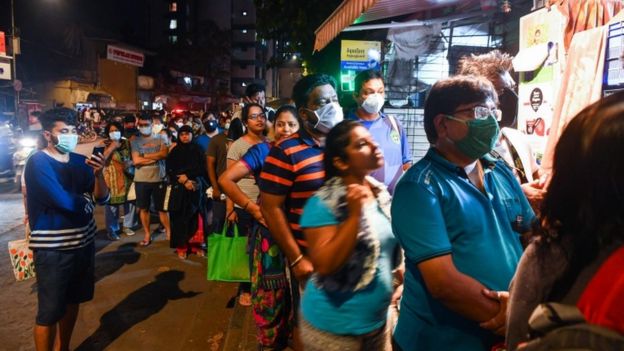
But in Delhi and the financial capital, Mumbai, people fearing shortages quickly thronged shops and pharmacies.
“I have never witnessed such a chaos in my life,” the owner of one store in the Shakarpur district of Delhi said, quoted by the Press Trust of India.
“All our stocks, including rice, flour, bread, biscuits, edible oils, have been sold out.”
Police in the busy city of Ghaziabad, in Uttar Pradesh state, patrolled the streets with megaphones to tell residents to stay indoors.
Image copyright AFPImage caption People in Mumbai rushed to stock up on essentials following Mr Modi’s address
Under the new measures, all non-essential businesses will be closed but hospitals and other medical facilities will continue to function as normal. Schools and universities will remain shut and almost all public gatherings will be banned.
Anyone flouting the new rules faces up to two years in prison and heavy fines.
In his address, Prime Minister Modi also:
Stressed that the 21-day lockdown was “very necessary to break the chain of coronavirus”
Emphasised the seriousness of the situation and said that even developed countries had faced problems in combating it
Said that “social distancing was the only way to stop” the virus spreading
Announced that nearly $2bn (£1.8bn) would be made available to boost the country’s health infrastructure
Called on people not to “spread rumours” and to follow instructions
His announcement came after several Indian states introduced measures of their own, such as travel restrictions and the closure of non-essential services.
India has already issued a ban on international arrivals and grounded domestic flights. The country’s rail network has also suspended most passenger services.
Many parts of India, including cities such as Delhi and Mumbai, are already under tight restrictions. But this move extends those provisions to every corner of the country.
An earlier one-day curfew, which was seen as a trial, was flouted by many.
Mr Modi called on Indians to clap and cheer the emergency services from their balconies on Sunday. But many misunderstood the call and congregated in the streets as they danced and chanted.
“It’s impossible to fathom the cost that India may have to pay if such irresponsible behaviour continues,” Mr Modi warned at the time. “Social distancing is the only option to combat coronavirus.”
The implications of a total lockdown in India are huge, not just economically, but socially.
This is a nation where community is everything. Going to worship at a temple, mosque or church is an essential part of daily life for so many.
This is a seismic cultural shift but – like the rest of the world facing similar restrictions – a necessary one.
What’s the latest from around Asia?
Neighbouring Pakistan has almost twice as many confirmed cases – 878 as of Monday evening. Sweeping restrictions are in place although the government has stopped short of imposing a nationwide lockdown. However, several provinces have announced them independently. The army is being brought in to help enforce the restrictions
Bangladesh, which has reported 33 cases and three deaths, is also deploying its armed forces to help maintain social distancing and boost Covid-19 preventive measures. The soldiers will also monitor thousands of quarantined expatriate returnees. Across South Asia, there are concerns that the actual number of cases could be much higher than is being reported.
Indonesia, which has 49 confirmed Covid-19 deaths – the highest in South East Asia – has converted an athlete’s village built for the 2018 Asian Games into a makeshift hospital for coronavirus patients. A state of emergency was declared in Jakarta on Monday
In Thailand, a month-long state of emergency which will include curfews and checkpoints will begin on Thursday. The government has been criticised for failing to take strong action so far. Four people have died and nearly 900 tested positive
The most populous country that was without a case until now – Myanmar – has announced two cases
And what about the rest of the world?
Elsewhere, governments are continuing to work to stem the spread of the virus which has now affected more than 190 countries worldwide
More than 2.6 billion people are in lockdown now India has introduced its new measures, according to a tally by the AFP news agency
Media caption Reality Check tackles misleading health advice being shared online
Europe remains at the epicentre of the pandemic. On Tuesday, the death toll jumped by 514 in a single day in Spain and other European countries also reported sharp increases
Italy is the worst affected country in the world in terms of deaths. The virus has killed almost 7,000 people there over the past month
The World Health Organization (WHO) has warned that the US has the potential to become the new epicentre of the pandemic
In other developments, Japanese Prime Minister Shinzo Abe said the International Olympic Committee has agreed that the 2020 Tokyo Olympics should be postponed by a year
Image copyright MUKHTAR ZAHOORImage caption Muneeb Ul Islam can no longer afford to work as a journalist in Kashmir
Journalists in Indian-administered Kashmir are struggling to make ends meet amid a months-long communications blockade that has only partially been lifted. The BBC’s Priyanka Dubey visited the region to find out more.
Muneeb Ul Islam, 29, had worked as a photo-journalist in Kashmir for five years, his pictures appearing in several publications in India and abroad.
But the young photographer’s dream job vanished almost overnight in August last year, when India’s federal government suspended landline, mobile and internet services in Kashmir.
The government’s move came a day before its announcement that it was revoking the region’s special status – a constitutionally-guaranteed provision, which gave Kashmir partial autonomy in matters related to property ownership, permanent residency and fundamental rights.
The controversial decision catapulted the Muslim-majority valley into global news – but local journalists like Mr Islam had no way to report on what was going on. And worse, they had to find other things to do because journalism could no longer pay the bills.
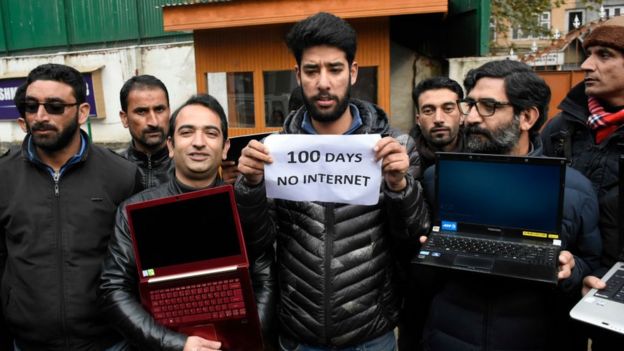
By January, the region had not had access to the internet for more than 150 days, India’s longest such shutdown.
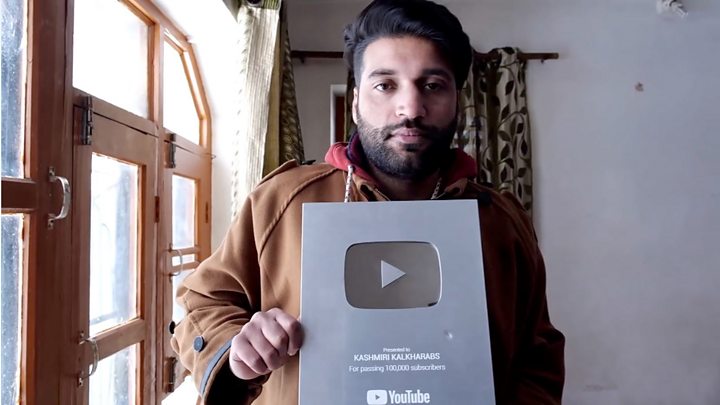
Media caption The silenced YouTube stars of Indian-administered Kashmir
“I chose journalism because I wanted to do something for my people,” Mr Islam explains. “I covered this conflict-ridden region with dedication until the loss of Kashmir’s special status put a full stop on my journey.”
In January, the government eased restrictions and allowed limited broadband service in the Muslim-majority valley, while 2G mobile coverage resumed in parts of the neighbouring Jammu region. But mobile internet and social media are still largely blocked.
India says this is necessary to maintain law and order since the region saw protests in August, and there has also been a long-running insurgency against Indian rule. But opposition leaders and critics of the move say the government cannot leave these restrictions in place indefinitely.
Meanwhile, journalists like Mr Islam are struggling.
Image copyright GETTY IMAGESImage caption Kashmiri journalists protested after 100 days of no internet in the region
For months, Mr Islam says, he kept trying to report and file stories and photos.
In September, he even spent 6,000 rupees ($84; £65) of his own money to make two trips to the capital, Srinagar, for a story. But he soon ran out of funds and had to stop.
He then tried to file his stories on a landline phone: he would call and read them aloud to someone on the other side who could type it out. But, as he found out, his stories didn’t earn him enough money to cover the cost of travelling for hours in search of a working landline.
And Mr Islam was desperate for money because his wife was ill. So he eventually asked his brother for help, finding work carrying bricks on a construction site in his neighbourhood in Anantnag city. It pays him 500 rupees a day.
Mr Islam is not the only journalist in Kashmir who has been forced to abandon their career for another job.
Another journalist, who did not want to reveal his name, says he had been working as a reporter for several years, but quit the profession in August. He now plans to work in a dairy farm.
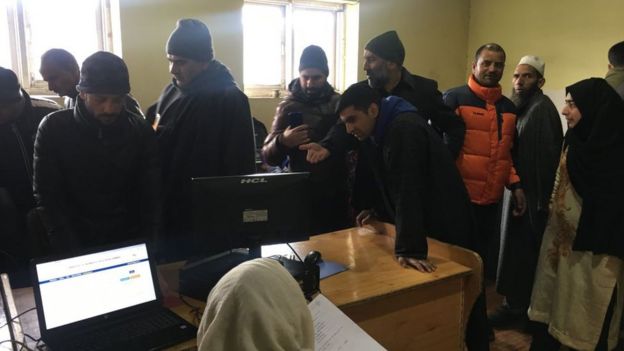
Image copyright MUKHTAR ZAHOORImage caption Internet is available in some government offices
Yet another reporter, who also also wished to remain anonymous, says he used to earn enough to comfortably provide for his family. Now, he barely has money to buy petrol for his motorcycle.
“I have no money because I have not been able to file any story in the last six months,” a third reporter, who spoke to the BBC on the condition of anonymity, says. “My family keeps telling me to find another job. But what else can I do?”
In December, people were given limited access to the internet at a government office in Anantnag, but this hasn’t helped local journalists. The office, Mr Islam says, is always crowded and there are only four desktops for a scrum of officials, students and youngsters who want to log on to respond to emails, fill exam forms, submit job applications or even check their social media.
“We have access for only for a few minutes and the internet speed is slow,” he explains. “We are barely able to access email, forget reading the news.”
What’s more, Mr Islam says those who work at the office often ask customers to show them the contents of emails. “This makes us uncomfortable, but we don’t have a choice.”
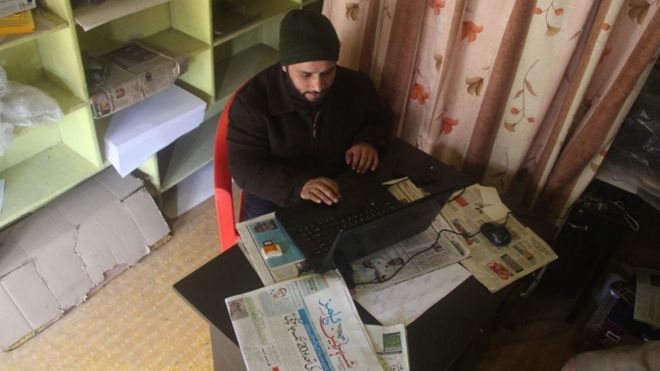
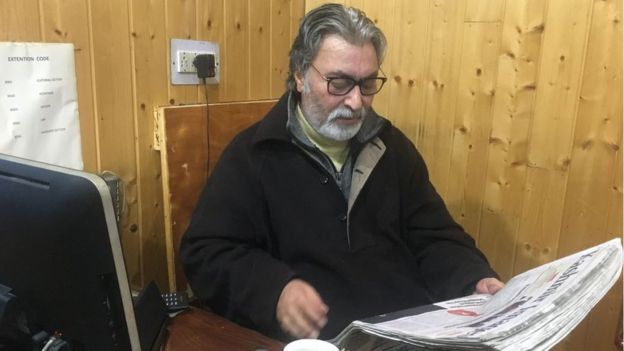
Image copyright MUKHTAR ZAHOORImage caption Basheer Manzar runs Kashmir Images, a local newspaper
Many journalists say that they have been completely cut off from their contacts for months now, making it hard to to maintain their networks or sources.
They also speak of how humiliating it is to beg for wi-fi passwords and hotspots at the cramped media centre in Srinagar, which has less than two dozen computers for hundreds of journalists.
This has left publishers in the lurch too. “My reporters and writers are not able to file,” says Basheer Manzar, the editor of Kashmir Images.
He still publishes a print edition, he says, because if he doesn’t do so for a certain number of days in the month, he will lose the license.
But the website continues to struggle, he adds, because most of the readers in Indian-administered Kashmir have no access to the internet.
“I know what is happening in New York through news on the TV, but I don’t know what’s happening in my hometown.”
India has formally divided the state of Jammu and Kashmir into two new federally-administered territories.
In the new arrangement, Jammu and Kashmir is one territory, and Ladakh, which borders China, is separate.
The two new union territories are now ruled directly from the capital Delhi.
It’s part of a controversial move announced in August to tighten the Indian government’s control over the part of Kashmir it administers.
R K Mathur and Girish Chandra Murmu were sworn in as lieutenant governors of Ladakh and Jammu and Kashmir respectively on Thursday.
“Now the real participation of co-operative federalism will be seen. New highways, new railway lines, new schools, new hospitals will take the development of the people of Jammu and Kashmir to new heights,” Prime Minister Narendra Modi said at a public rally in the western state of Gujarat.
Union territories have far less autonomy from the federal government than states do.
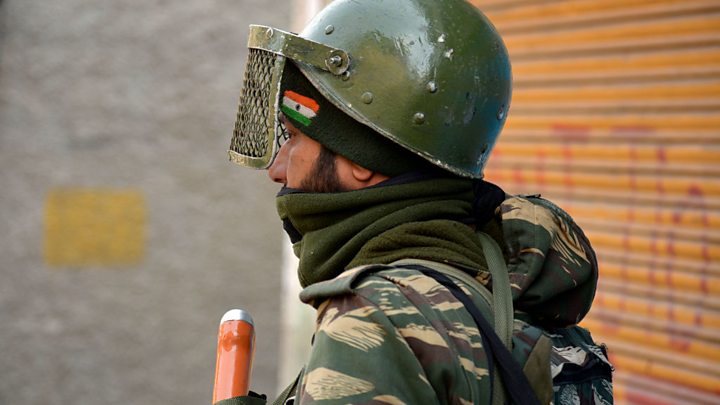
The former state has long been one of the world’s most dangerous flashpoints and is a highly militarised area.
India and Pakistan both claim Kashmir in full, but control only parts of it.
How does this affect the people there?
Almost 98% of the state’s population will be in the union territory of Jammu and Kashmir, comprising two regions – the Muslim-majority Kashmir valley, which has about eight million people, and the Hindu-majority Jammu, which has about six million.
The third region, the newly created union territory of Ladakh, is a high-altitude desert inhabited by 300,000 people, with almost equal numbers of Muslims and Buddhists.
Workers from the previous state government will continue to retain their jobs in the new territories, the government said.
What’s the background?
On 5 August, the government revoked Kashmir’s special status, sparking protests in the Muslim-majority valley.
Article 370, as the constitutional provision guaranteeing special status was known, allowed the region a certain amount of autonomy, including special privileges in property ownership, education and jobs. This provision had underpinned India’s often fraught relationship with Kashmir.
Before the Bharatiya Janata Party-led government announced its decision to scrap the special status, it put the region under lockdown – mobile phone networks, landlines and the internet were cut off; and regional political leaders were placed under house arrest.
Media caption The children being ‘tortured’ in Kashmir
The region also witnessed protests where security forces often clashed with civilians. Thousands of activists and others were believed to have been picked up from their homes in the days that followed the surprise move.
Almost three months later, the situation is still far from normal.
On Tuesday, militants killed five migrant labourers in Kulgam district. Just a day before, a truck driver from outside the region was killed in Anantnag district.
Earlier this month, the Indian government restored mobile services 72 days after they were suspended.
But internet services continue to be suspended and most businesses remain closed – some in protest against the government, and others for fear of reprisals from militants opposed to Indian rule.
NEW DELHI (Reuters) – India is set to impose a nationwide ban on plastic bags, cups and straws on Oct. 2, officials said, in its most sweeping measure yet to stamp out single-use plastics from cities and villages that rank among the world’s most polluted.
Prime Minister Narendra Modi, who is leading efforts to scrap such plastics by 2022, is set to launch the campaign with a ban on as many as six items on Oct. 2, the birth anniversary of independence leader Mahatma Gandhi, two officials said.
These include plastic bags, cups, plates, small bottles, straws and certain types of sachets, said the officials, who asked not to be identified, in line with government policy.
“The ban will be comprehensive and will cover manufacturing, usage and import of such items,” one official said.
India’s environment and housing ministries, the two main ministries leading the drive, did not respond to emails from Reuters to seek comment.
In an Independence Day speech on Aug. 15, Modi had urged people and government agencies to “take the first big step” on Oct. 2 towards freeing India of single-use plastic.
Concerns are growing worldwide about plastic pollution, with a particular focus on the oceans, where nearly 50% of single-use plastic products end up, killing marine life and entering the human food chain, studies show.
The European Union plans to ban single-use plastic items such as straws, forks, knives and cotton buds by 2021.
China’s commercial hub of Shanghai is gradually reining in use of single-use plastics in catering, and its island province of Hainan has already vowed to completely eliminate single-use plastic by 2025.
India lacks an organized system for management of plastic waste, leading to widespread littering across its towns and cities.
The ban on the first six items of single-use plastics will clip 5% to 10% from India’s annual consumption of about 14 million tonnes of plastic, the first official said.
Penalties for violations of the ban will probably take effect after an initial six-month period to allow people time to adopt alternatives, officials said.
Some Indian states have already outlawed polythene bags.
The federal government also plans tougher environmental standards for plastic products and will insist on the use of recyclable plastic only, the first source said.
It will also ask e-commerce companies to cut back on plastic packaging that makes up nearly 40% of India’s annual plastic consumption, officials say.
Cheap smartphones and a surge in the number of internet users have boosted orders for e-commerce companies, such as Amazon.com Inc (AMZN.O) and Walmart Inc’s (WMT.N) Flipkart, which wrap their wares – from books and medicines to cigarettes and cosmetics – in plastic, pushing up consumption.
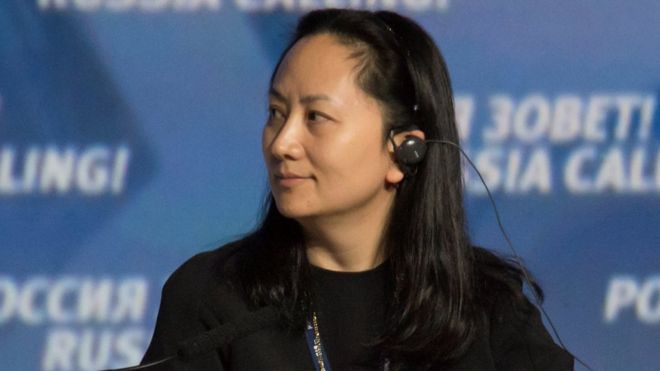
China has attacked Ms Meng’s arrest and the extradition process as a “political incident”. She denies all the charges against her.
What does Ms Meng’s lawsuit say?
Ms Meng’s claim – filed in British Columbia’s Supreme Court on Friday – seeks damages against the Royal Canadian Mounted Police (RCMP), Canadian Border Services Agency (CBSA) and the federal government for allegedly breaching her civil rights under Canada’s Charter of Rights and Freedoms.
She says CBSA officers held, searched and questioned her at the airport under false pretences before she was arrested by the RCMP.
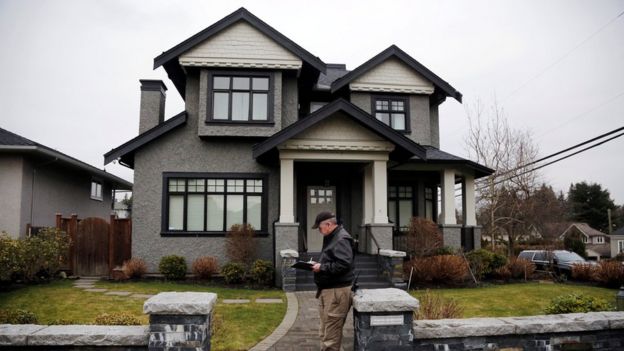
Image copyrightREUTERSImage caption Ms Meng has a property in Vancouver and is currently out on bail
Her detention was “unlawful” and “arbitrary”, the suit says, and officers “intentionally failed to advise her of the true reasons for her detention, her right to counsel, and her right to silence”.
Where are we in the extradition process?
Ms Meng, 47, will next appear in court on Wednesday, when it will be confirmed that Canada has issued a legal writ over her extradition to the US. A date for an extradition hearing will be set.
But this is still the early stages. A judge must authorise her committal for extradition and the justice minister would then decide whether to surrender her to the US.
There will be chances for appeal and some cases have dragged on for years.
The Meng Wanzhou case – how did we get here?
1 December: Ms Meng, the daughter of Huawei’s founder, is arrested while changing planes at Vancouver airport
7 December: Ms Meng first appears in court in Vancouver, where it is revealed she is accused of breaking US sanctions on Iran. China demands her release
10 December: Canadian citizens Michael Kovrig and Michael Spavor are arrested in China
11 December: Ms Meng is released on bail
28 January: US formally charges Ms Meng with fraud and Huawei with circumventing US sanctions on Iran and stealing technology from T Mobile
2 March: Canada says Ms Meng’s extradition can move forward but the process is expected to be long
What is Huawei accused of?
The US alleges Huawei misled the US and a global bank about its relationship with two subsidiaries, Huawei Device USA and Skycom Tech, to conduct business with Iran.
US President Donald Trump’s administration has reinstated all sanctions on Iran removed under a 2015 nuclear deal and recently imposed even stricter measures, hitting oil exports, shipping and banks.
It also alleges Huawei stole technology from T Mobile used to test smartphone durability, as well as obstructing justice and committing wire fraud.
In all, the US has laid 23 charges against the company.
Some Western nations are reviewing business with the firm over spying concerns, although Huawei has always maintained it acts independently.
How has China reacted?
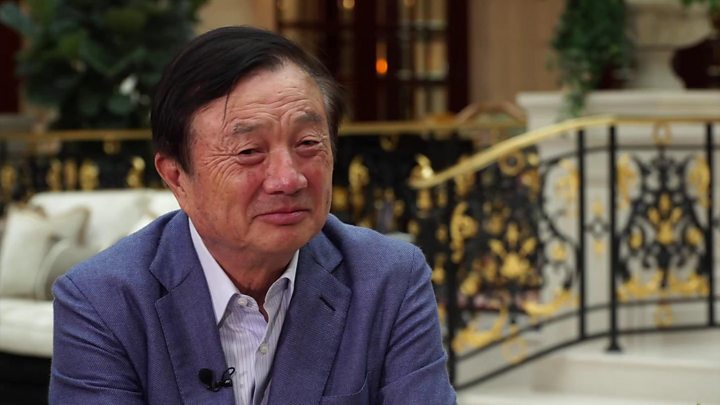
Media caption – Huawei founder Ren Zhengfei on the arrest of his daughter
The arrest has seriously strained relations between China, and the US and Canada.
Beijing says it is an “abuse of the bilateral extradition treaty” between Canada and the US, and has expressed its “resolute opposition” and “strong dissatisfaction” with the proceedings.
China also says the accusations against Huawei, the world’s second biggest smartphone maker by volume, are a “witch-hunt”.
Two Canadian citizens are thought to have been detained in China in retaliation for the arrest.
China and the US are also engaged in tough trade negotiations to end a major tariff dispute.
NEW DELHI (Reuters) – India’s Jammu and Kashmir state withdrew the security details for 18 separatist leaders and 155 other opposition figures on Wednesday after an Islamist suicide bomber killed 40 paramilitary troopers last week.
The restive mountain state is currently administered by India’s federal government after Prime Minister Narendra Modi’s Bharatiya Janata Party walked out a coalition with a major Kashmiri party.
The separatist leaders had been allocated security personnel to protect them from militants after they entered talks with the federal government.
In a statement, the Jammu and Kashmir state government said it “felt that providing security to these separatist leaders is a wastage of scarce state resources which could be better utilized elsewhere”.
Besides the separatist leaders, the security of 155 political figures and activists – some from mainstream opposition parties – was also withdrawn, the statement said.
“Through this (step), over 1,000 police personnel and over 100 vehicles are freed to do regular police work,” it said.
Both India and Pakistan lay claim to Kashmir and have twice gone to war over it since independence from Britain in 1947. India accuses Pakistan of fomenting decades of sporadic insurgency in its only Muslim-majority state.
Pakistan denies that, saying it only offers political support to the Kashmiri people.


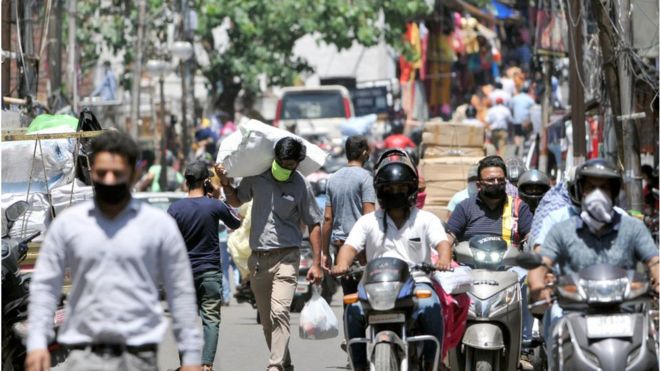 Image copyright GETTY IMAGES
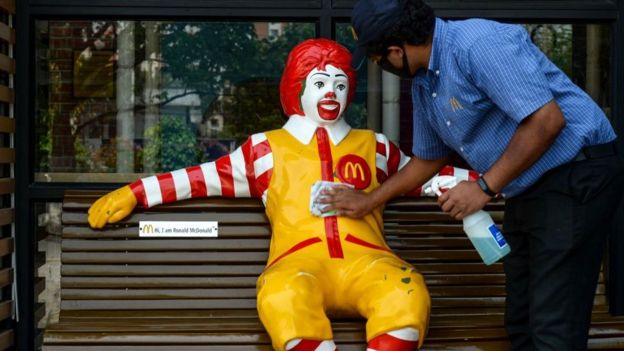 Image copyright GETTY IMAGES
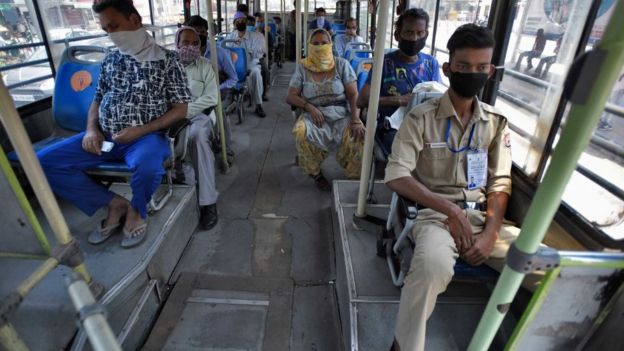 Image copyright GETTY IMAGES
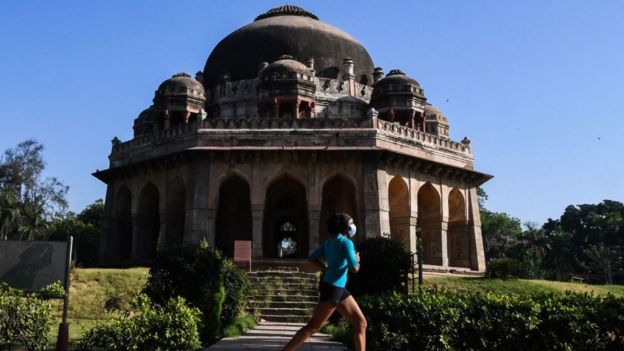 Image copyright GETTY IMAGES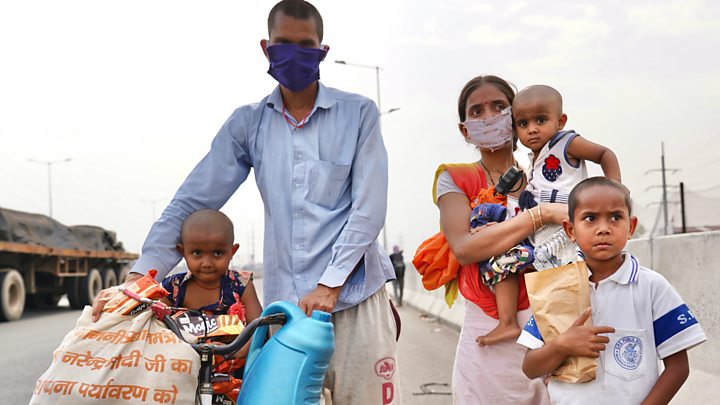
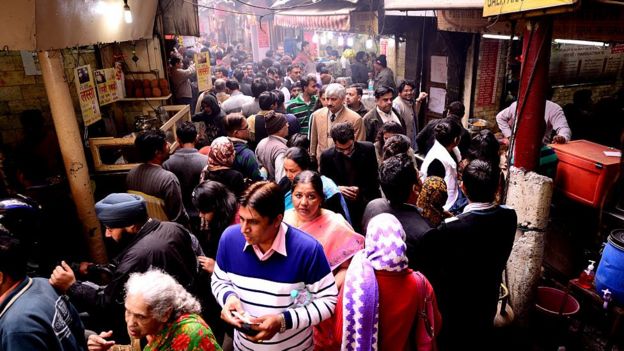 Image copyright GETTY IMAGES







 CHINDIA ALERT: You'll be living in their world, very soon