Archive for ‘financial capital’

21/04/2020

India coronavirus: Can the Covid-19 lockdown spark a clean air movement?

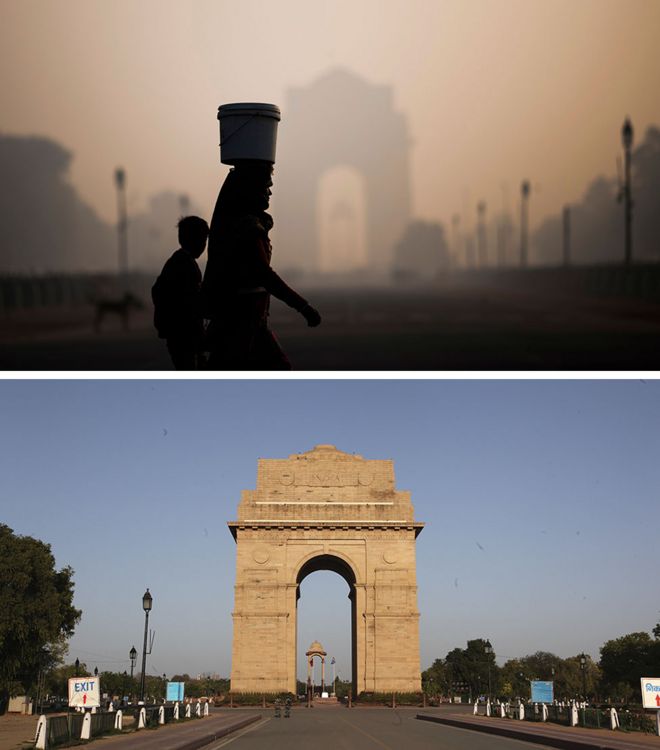
Delhi before and after the lockdownImage copyright GETTY IMAGES
Image caption Delhi’s air quality has improved remarkably during the shutdown

When India shut down last month and suspended all transport to contain the spread of coronavirus, the skies over its polluted cities quickly turned an azure blue, and the air, unusually fresh.

As air pollution plummeted to levels unseen in living memory, people shared pictures of spotless skies and even Himalayan peaks from cities where the view had been obscured by fog for decades.

On one social messaging group, a resident of the capital, Delhi, which regularly records some of the foulest air in the world, celebrated the city’s “alpine weather“. Politician and author Shashi Tharoor wrote that the “blissful sight of blue skies and the joy of breathing clean air provides just the contrast to illustrate what we are doing to ourselves the rest of the time”.
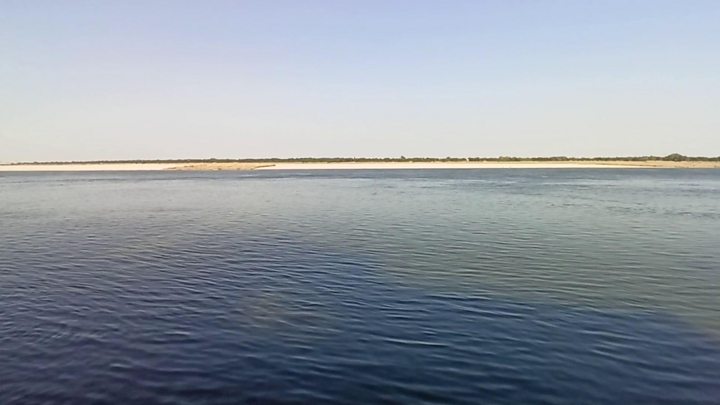
Media caption India coronavirus lockdown cleans up Ganges river

Less than six months ago, Delhi was gasping for breath. Authorities said air quality had reached “unbearable levels”. Schools were shut, flights were diverted, and people were asked to wear masks, avoid polluted areas and keep doors and windows closed.

Delhi and 13 other Indian cities feature on a list of the world’s 20 most polluted. It is estimated that more than a million Indians die every year because of air pollution-related diseases. Industrial smoke, vehicular emissions, burning of trash and crop residue, and construction and road dust are the major contributors.

As urban Indians gazed at the skies and breathed clean air inside their homes, researchers hunkered down to track data on how the grinding lockdown – now extended to 3 May – was impacting air pollution across the country.
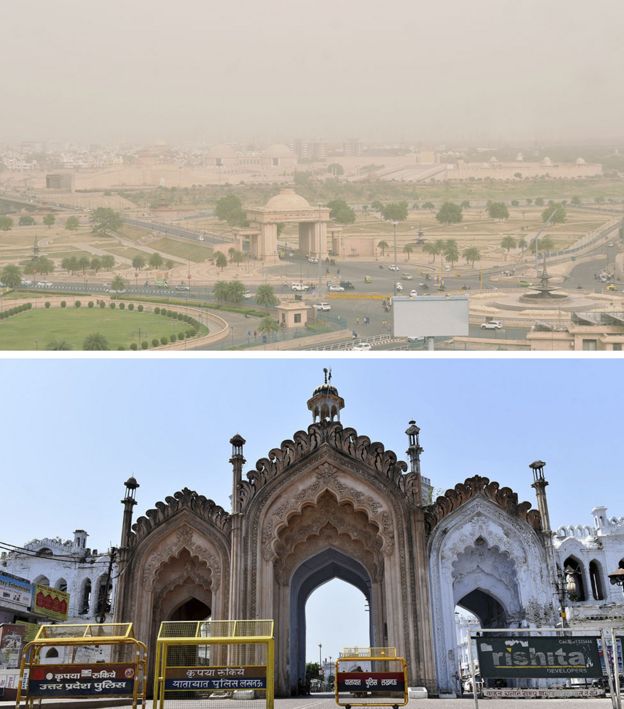
LucknowImage copyright GETTY IMAGES
Image caption Lucknow is another city on the top 20 world’s most polluted list

“This was an unprecedented opportunity for us to take a close look at how air pollution levels have responded to an extraordinary development,” Sarath Guttikunda, who heads Urban Emissions, an independent research group that provides air quality forecasts, told me.

Federal pollution control authorities quickly reported a marked improvement in air quality levels in 85 cities.

Dr Guttikunda and his team of researchers looked at the data spewed out by the 100-odd air quality monitoring stations all over India. They decided to concentrate on the capital Delhi and its suburbs – a massive sprawl called the National Capital region, where more than 20 million people live. Last winter, air pollution here had reached more than 20 times the World Health Organization’s safe limit.
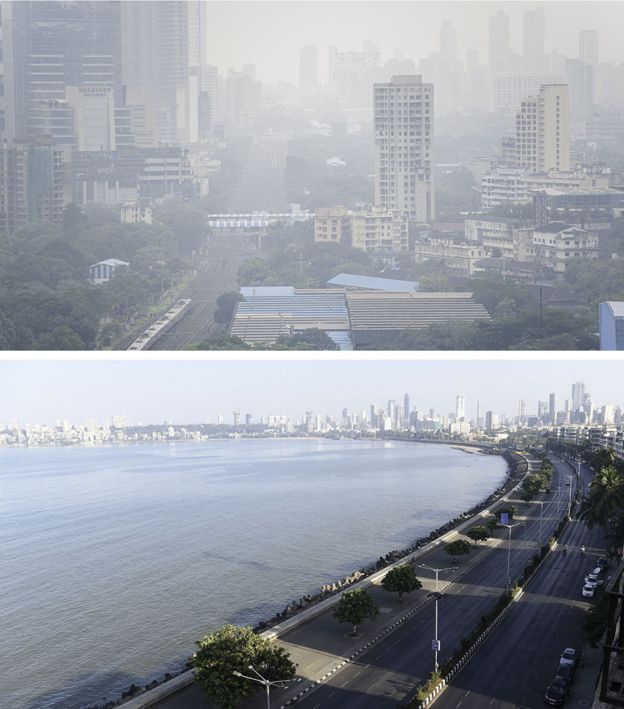
Mumbai before and after the lockdownImage copyright HINDUSTAN TIMES
Image caption The financial capital Mumbai also seems very different

The deadliest particle in Delhi’s foul air is the tiny but deadly PM 2.5, which increases the likelihood of respiratory and cardiovascular diseases. They primarily come from combustion – fires, automobiles and power plants.

Urban Emissions found the levels of PM 2.5 in Delhi during the lockdown plummeted to 20 micrograms per cubic metre with a 20-day average of 35.

To put this into context, between 2017 and 2019, the monthly average of PM 2.5 in the capital was up to four times higher. (The national standard is set at 40, and the WHO has an annual average guideline of just 10 micrograms per cubic metre.)

“If 35 is the average lowest available PM2.5 with limited local emissions, it means that at least 70% of the pollution is locally generated,” Mr Guttikunda told me.

Media caption India coronavirus lockdown cleans up Ganges river

His study also found a marked dip in PM 10, caused mainly by road and construction dust, and nitrogen dioxide, which comes mainly from vehicular emissions, and nearly 90% of vehicles are off the road.

“The current crisis has shown us that clear skies and breathable air can be achieved very fast if concrete action is taken to reduce burning of fossil fuels,” says Sunil Dahiya, of the Centre for Research on Energy and Clean Air, which has also been tracking air pollution levels during the lockdown.

But will this prompt change? After all, urban Indians’ and the media’s panic and outrage during the deadly winter pollution every year soon gets lost in the fog of summer heat and concerns over monsoon rains and droughts.

“We don’t yet have a democratic demand for clean air,” Arunabha Ghosh, Chief Executive Officer of the Council on Energy, Environment and Water, a leading climate think tank, told me. Orders to clean up the air have almost always come from the courts, responding to pleas by NGOs.
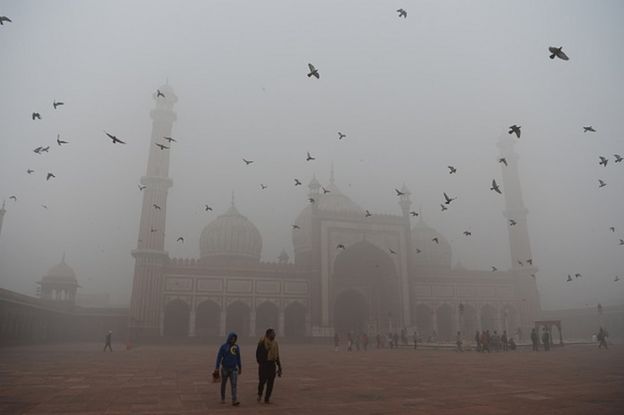
Delhi pollutionImage copyright GETTY IMAGES
Image caption Pollution in Delhi peaks during winter

However, Dr Ghosh still hopes that “the experience of blue skies and fresh air could be a trigger to create a democratic demand for clean air in India”.

Crises often trigger life changing reforms. A fatal four-day “pea-souper” that engulfed London in 1952 and killed thousands provoked the passing of the Clean Air Act to reduce the use of smoky fuels.

China tried to clean up its air several times before hosting marquee international events – like the Beijing Olympics in 2008, the World Expo in Shanghai and the Guangzhou Asian Games in 2010 – before sliding back to grey, smoky skies.

But many believe the 2014 Apec meeting in Beijing, when China hosted 21 heads of Asia-Pacific economies, was a turning point. The rare blue skies over Beijing spawned the phrase ‘Apec blue‘. In a rush to clean its air, China introduced a set of far-reaching measures. Over the next four years, this resulted in a 32% drop in average pollution across major Chinese cities.

So could a lockdown to prevent the spread of a pandemic, which has imperilled the health and livelihoods of millions, trigger similar policy changes to clean up India’s air?
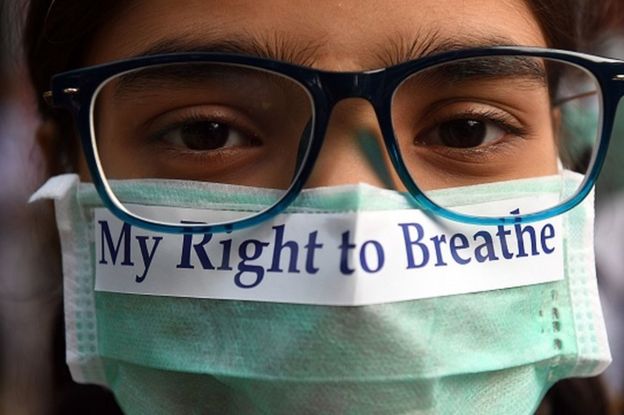
pollution campaignImage copyright GETTY IMAGES
Image caption The movement for clean air has been sporadic and mainly pushed by NGOs

Could it move to a shift in reducing traffic on the road by asking people to work from home in shifts now that millions have experienced clean air for the first time in years? (Facing energy shortages after the loss of the Fukushima nuclear power plant, Japan unleashed a Cool Biz campaign to cut down air conditioning in workplaces and reduce carbon emissions by asking office workers to shed their suits.)

Or can India use some of the money from an inevitable stimulus to help kick-start the economy go towards helping green industries? Renewables, experts say, creates more jobs than coal: India has already created nearly 100,000 jobs in solar and wind energy firms.

Can the country use the windfall revenues accruing from the steep decline in oil prices – most of India’s oil is imported – to provide rebates to polluting factories to set up much-needed emission control equipment?

“We have to learn lessons to deploy the economic recovery from the pandemic. We need growth, jobs and sustainable development,” says Dr Ghosh. Cleaning up the air could be the key. For too long, India – and Indians – have ignored their right to breathe easy.

What’s more, if China can reduce air pollution by 32% in four-and-a-half years, why can’t India pledge to reduce pollution by 80% in 80 cities by 2027, which is our 80th anniversary of Independence? asks Dr Ghosh.

It’s a good question.

Source: The BBC
09/04/2020

Coronavirus: Why India cannot afford to lift its lockdown

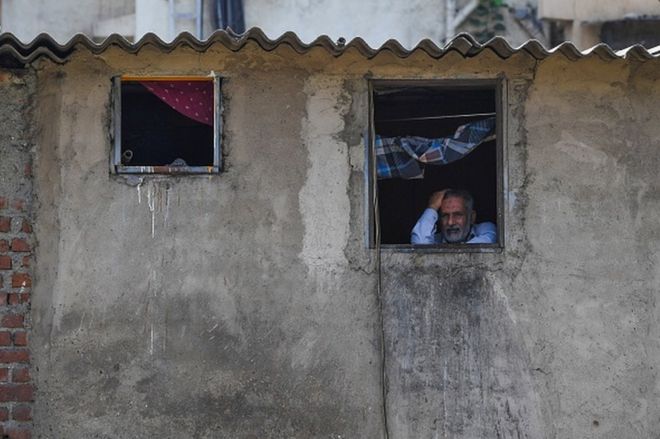
India man during lockdownImage copyright GETTY IMAGES
Image caption More than a billion people have been staying at home during the lockdown

Will India extend its rigorous 21-day lockdown to slow the spread of coronavirus beyond its end date next week? By all accounts, yes.

On 24 March, India shut its $2.9 trillion economy, closing its businesses and issuing strict stay-at-home orders to more than a billion people. Air, road and rail transport systems were suspended.

Now, more than two months after the first case of Covid-19 was detected in the country, more than 5,000 people have tested positive and some 150 people have died. As testing has ramped up, the true picture is emerging. The virus is beginning to spread through dense communities and new clusters of infection are being reported every day. Lifting the lockdown could easily risk triggering a fresh wave of infections.

A harsh lockdown is certain to slow down the disease. Virologists I spoke to believe India is still at an early stage of the infection. The country still doesn’t have enough data on the transmissibility of the virus or even how many people could have been infected and recovered to develop adequate herd immunity. (It is slowly beginning finger prick blood tests to look at the presence of protective antibodies.)

More than 250 of India’s 700-odd districts have reported the infection. Reports say at least seven states have a third of all infections, and want the lockdown extended. Six states have reported clusters of rapidly growing infections – from the capital Delhi in the north to Maharashtra in the west and Tamil Nadu in the south.

Economic fallout

Not surprisingly, the lockdown is already hurting the economy. Many of the early hotspots are economic growth engines and contribute heavily in revenues to the exchequer. Mumbai, India’s financial capital and Maharashtra’s main city, accounts for more than a third of overall tax collection. The densely populated city has reported more than 500 cases and 45 deaths, and numbers are steadily rising. Authorities say the infection is now spreading through the community. Mumbai has made wearing face masks mandatory.

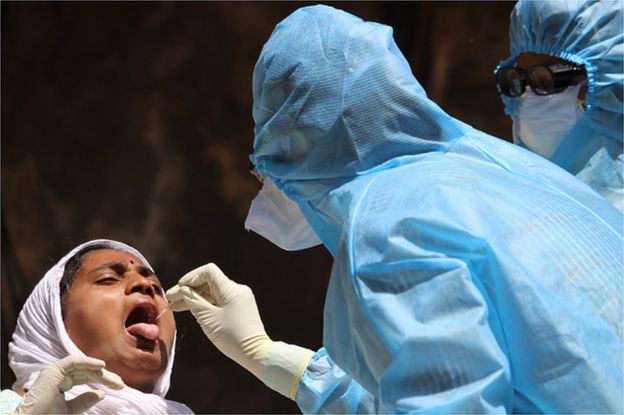
Testing in IndiaImage copyright GETTY IMAGES
Image caption India has ramped up testing during the lockdown

Many of these hotspot clusters are also thriving manufacturing bases. The spread of infection means that they will be under lockdown for a longer period of time.

The services industry, which generates almost half of India’s GDP, is also likely to remain shut for some more time. Construction, which employs a bulk of migrant workers, will remain similarly suspended. The unemployment rate may have already climbed to more than 20% after the lockdown, according to a report by the Center for Monitoring Indian Economy.

For the moment, economists say, the government will have to prioritise farming over everything else to ensure the livelihoods of millions and secure the country’s future food supplies.

Half of India’s labour force work on farms. The lockdown happened at a time when a bumper winter crop had to be harvested and sold, and the rain-fed summer crop had to be sowed. The immediate challenge is to harvest and market the first crop, and secure the second.

Moving trucks to pick up produce and take them to markets, with adequate social distancing and hand washing will be something the government will have to move on quickly.

“The immediate challenge is to ensure that rural India is not hit,” says Rathin Ray, an economist. “Realistically, a complete lockdown cannot be continuously maintained beyond early May. We don’t have a choice but to reopen gradually after that.”

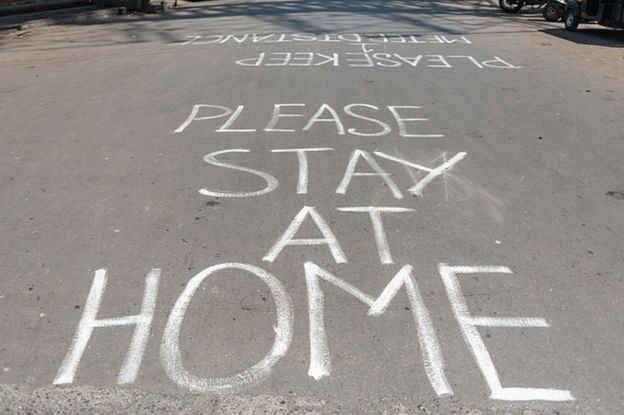
Mumbai street signImage copyright GETTY IMAGES
Image caption India has been under a lockdown from 24 March

There is little doubt about that. For his part, SK Sarin, who heads a government advisory panel on combating the disease, says the lockdown can be only eased in a “graded manner in areas that are not hotspots” and that the hotspots remained cordoned off.

Like other affected countries, India will have to prepare itself for what Gabriel Leung, an infectious disease epidemiologist and dean of medicine at the University of Hong Kong, describes as several rounds of “suppress and lift” cycles.

During these periods “restrictions are applied and relaxed, applied again and relaxed again, in ways that can keep the pandemic under control but at an acceptable economic and social cost.”

Also, Dr Leung observes, “how best to do that will vary by country, depending on its means, tolerance for disruption and its people’s collective will. In all cases, however, the challenge essentially is a three-way tug of war between combating the disease, protecting the economy and keeping society at an even keel”.

It is now clear that shutdowns need to continue until transmission has slowed down markedly, and testing and health infrastructure has been scaled up to manage the outbreak.

Experts from the southern state of Kerala, a striking outlier that is containing the infection thanks to a transparent government and a robust public health system, say it isn’t time to lift the lockdown yet and have recommended a three-phase relaxation.

For most countries, easing the lockdown is a tricky policy choice. It sparks fears of triggering a fresh wave of infection and presents the inevitable trade-off between lives and livelihoods. French Prime Minister Edouard Phillipe, says relaxing the lockdown in his country is going to be “fearsomely complex”. In a crisis like this, according to his Dutch counterpart Mark Rutte, leaders have to “make 100% of the decisions with 50% of the knowledge, and bear the consequences.”

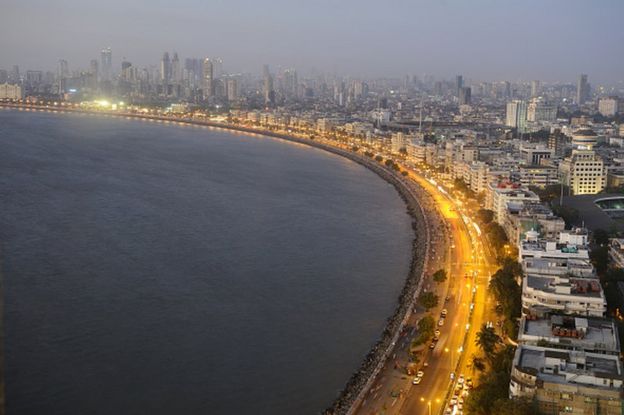
MumbaiImage copyright GETTY IMAGES
Image caption India’s financial capital, Mumbai, is emerging as a hotspot

It is going to be tougher for India with its vast size, densely packed population and enfeebled public health system. Also, no country in the world possibly has so much inter-state migration of casual workers, who are the backbone of the services and construction industries.

How will India manage to return these workers to their work places – factories, farms, building sites, shops – without a substantial easing of public transport at a time when crowded trains and buses can be a vector of transmission and easily neutralise the gains of the lockdown? Even allowing restricted mobility – allowing social distancing, temperature checks and passenger hygiene – would put considerable pressure on the public transport system.

The policy choices are fiendishly tough, and the answers are far from easy. India bungled the lockdown by not anticipating the exodus of millions of migrant workers from cities. The weeks ahead will tell whether the fleeing men, women and children carried the infection to their villages. The country simply cannot afford to make similar mistakes again while trying to relax the lockdown. Nitin Pai of The Takshashila Institution, a think tank, believes states should be left to decide on easing restrictions, and decisions “should be based on threat [of infection], which should be determined by extensive testing”.

This week Prime Minister Narendra Modi said that the “situation in the country is akin to a social emergency”. His government now needs make sure that the looming threat to the nation’s health and economic progress is tackled skilfully.

Source: The BBC

22/02/2020

Trump in India: A brief history of US presidents’ trips

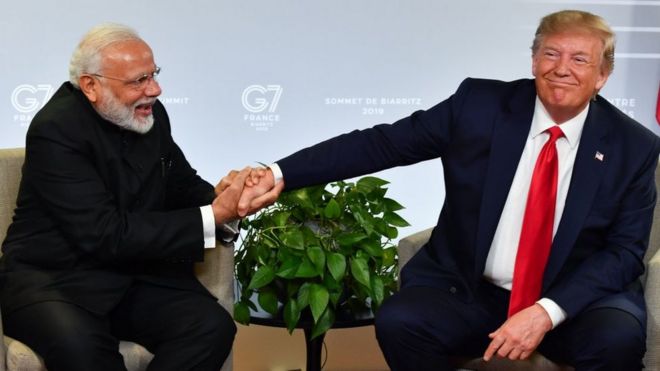
Indian Prime Minister Narendra Modi (L) and US President Donald Trump shakes hands as they speak during a bilateral meeting in Biarritz, south-west France on August 26, 2019.Image copyright GETTY IMAGES
Image caption Mr Trump is making his first official visit to India

US President Donald Trump is expecting a raucous welcome on his first official state visit to India on Monday and Tuesday.

He follows a long line of leaders who have made the journey. Some of his predecessors were greeted enthusiastically; others stumbled through diplomatic gaffes; one even had a village named after him.

Can history be a guide to how this diplomatic tryst might go? Here’s a brief look at past visits, ranked in order of how they went.

The good: President Eisenhower

Let’s begin at the beginning.

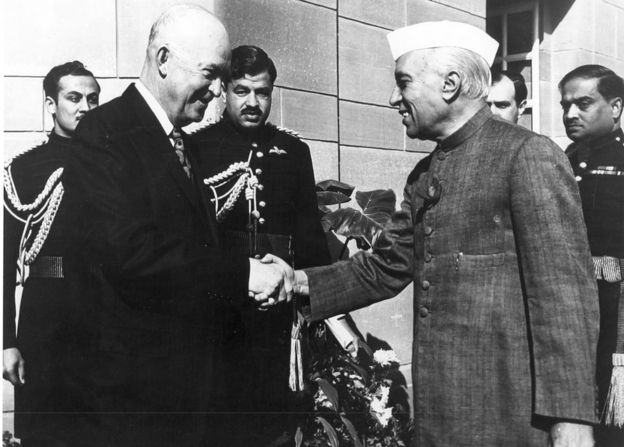
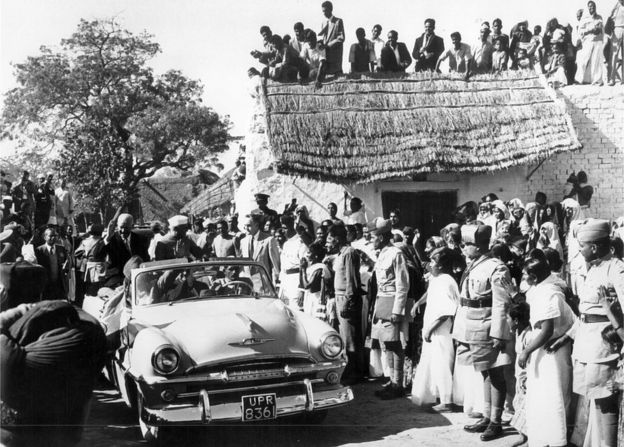
Dwight D Eisenhower, the first US president to visit India, was greeted with a 21-gun salute when he landed in the national capital, Delhi, in December 1959. Huge crowds lined the streets to catch a glimpse of the World War Two hero in his open-top car – Mr Trump is expecting a similar reception in Ahmedabad city, where he will be doing a road show.

President Eisenhower (L) with Prime Minister Jawaharlal NehruImage copyright US EMBASSY ARCHIVES
Image caption Dwight D Eisenhower, pictured with Prime Minister Jawaharlal Nehru, was the first US president to make the trip

The warmth between President Eisenhower and Indian Prime Minister Jawaharlal Nehru helped during what was a rocky phase in US-India ties. This was early in the Cold war, when the US and Pakistan had become become close allies, and India insisted on staying neutral or “non-aligned”. Like today, relations with China were at the core of the India-US equation, with Washington pressuring Delhi to take an aggressive stance with Beijing on the issue of Tibet.

But, on the whole, Eisenhower’s four-day trip was billed a success. And nearly every US president on a state visit to India has emulated his itinerary: he laid flowers at Mahatma Gandhi’s memorial, took in the splendour of the Taj Mahal, addressed parliament and spoke at Delhi’s iconic Ramlila grounds, which, according to one news report, attracted one million people.

When he left, Nehru said he had taken with him “a piece of our heart”.

President Eisenhower drove in open car to small village to get a glimpse of rural India on December 13, 1959.Image copyright US EMBASSY ARCHIVES
Image caption President Eisenhower was greeted by large crowds
Presentational white spaceThe game-changer: Bill Clinton

If there was a game-changing visit, it would be Bill Clinton’s in March 2000 with Prime Minister Atal Bihari Vajpayee. Mr Clinton’s arrival came after a two-decade lull – neither Ronald Reagan nor George Bush Snr made the journey East. It came at a tricky time as Washington had imposed sanctions on Delhi following its 1999 test of a nuclear bomb.

But, according to Navtej Sarna, a former Indian Ambassador to the US, the five-day trip was “a joyous visit”. It included stops in Hyderabad, a southern city that was emerging as a tech hub, and Mumbai, India’s financial capital. “He came and saw the economic and cyber potential of India, and democracy in action,” says Mr Sarna.

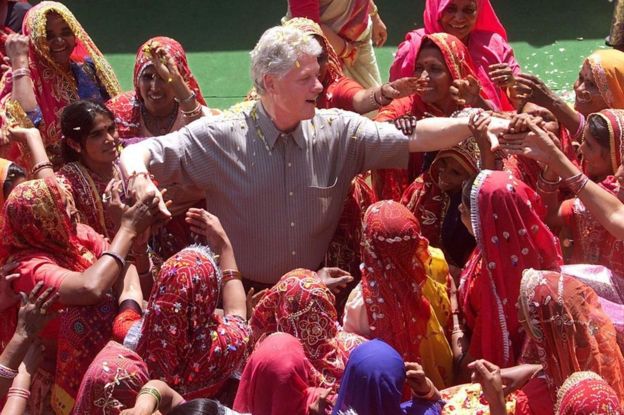
US President Bill Clinton shakes hands with local villagers after touring Nayla Village 23 March 2000.Image copyright GETTY IMAGES
Image caption Bill Clinton’s visit was described as “joyous”
Mr Clinton also danced with villagers, took a tiger safari and sampled Delhi’s famously creamy black dal (lentils) at a luxury hotel that has since been associated with the president.

The country’s reaction is perhaps best expressed in this New York Times headline: “Clinton fever – a delighted India has all the symptoms.”

The nuclear deal: George W Bush

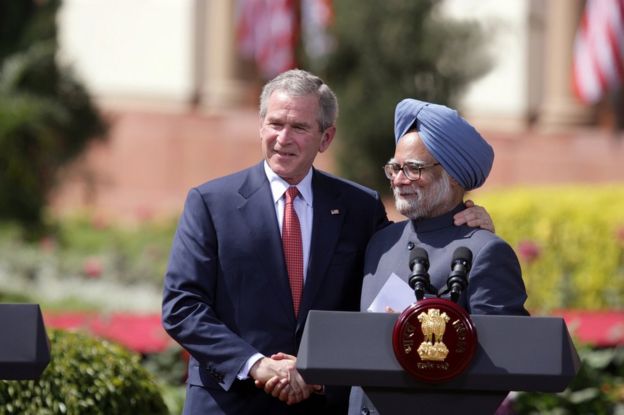
George W Bush, as Forbes magazine once put it, was the “best US president India’s ever had”. His three-day visit in March 2006 was a highlight in the two countries’ strategic relationship – especially in matters of trade and nuclear technology, subjects they have long wrangled over. His strong personal dynamic with Prime Minister Manmohan Singh was hard to miss – after he left office, Mr Bush, a keen artist, even painted a portrait of Mr Singh.

The two leaders are credited for a historic but controversial nuclear deal, which was signed during Mr Bush’s visit. It brought India, which had for decades refused to sign the Nuclear Non-Proliferation Treaty (NPT), out of isolation. Energy-hungry India got access to US civil nuclear technology in exchange for opening its nuclear facilities to inspection.

George W Bush (L) with Manmohan Singh (R)Image copyright US EMBASSY ARCHIVES
Image caption George W Bush and Manmohan Singh had a very good relationship
However, while the visit was substantive, it was not as spectacular as others – there was no trip to the Taj, nor an address to parliament. But the timing was important. Anti-US sentiment over the invasion of Iraq was running high – left-wing MPs had staged a protest against Mr Bush’s visit, and there were demonstrations in other parts of India.

Double visit: Barack Obama

Barack Obama was the only president to make two official visits. First, in 2010 with Prime Minister Manmohan Singh, and then in 2015 with Prime Minister Narendra Modi.

On his first visit – in a break from the past – he landed in Mumbai, instead of Delhi, with a large trade delegation. This was not just about economic ties but a show of solidarity following the Mumbai terror attacks of 2008, which killed 166 people. Mr and Mrs Obama even stayed at the Taj Mahal hotel, one of the main targets.

It was significant that the US president declared support for India to join a reformed and expanded UN Security Council, says Alyssa Ayres, a former US deputy assistant secretary of state for South Asia. “That all these years later nothing has changed in the UN system is another matter, but that was a major policy shift for the United States.”

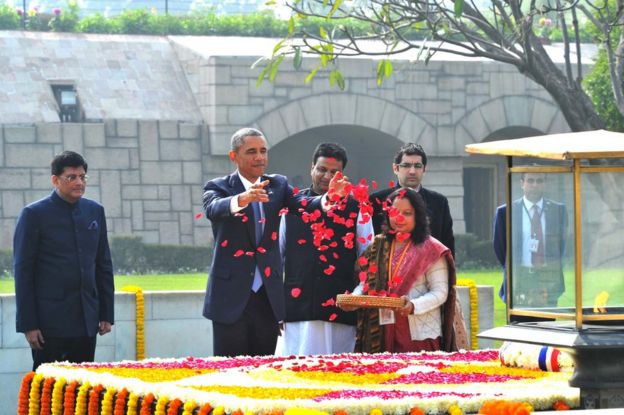
US President Barack Obama paying floral tributes at the samadhi of Mahatma Gandhi at Rajghat in Delhi.Image copyright US EMBASSY ARCHIVES
Image caption Barack Obama visited India twice
Mr Obama returned in 2015 as chief guest at India’s Republic Day celebrations, at PM Modi’s invitation. Trade, defence and climate change were at the heart of the talks. The trip also emphasised an Indo-Pacific strategy, where both leaders expressed unease over Beijing’s provocations in the South China Sea.

The not-so-good: Jimmy Carter

Although Jimmy Carter’s two-day visit in 1978 was a thaw in India-US relations, it was not free of hiccups.

With some 500 reporters in tow, Carter followed a packed itinerary: he met Prime Minister Morarji Desai, addressed a joint session of parliament, went to the Taj Mahal, and dropped by a village just outside Delhi.

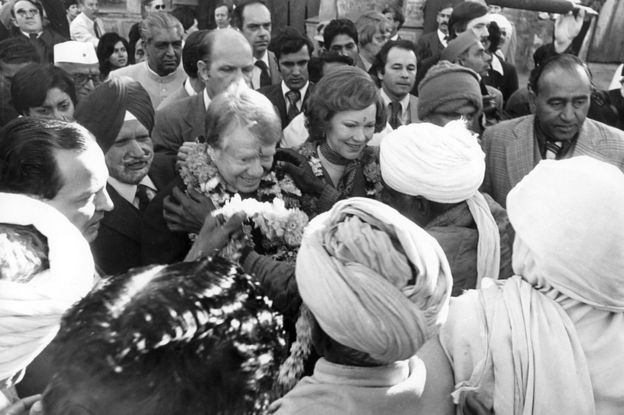
The village, Chuma Kheragaon, had a personal connection: Carter’s mother, Lillian, had visited here when she was in India as a member of the Peace Corps in the late 1960s. So when Carter and his wife, Rosalynn, made the trip, they gave the village money and its first television set. It was even renamed “Carterpuri”, a moniker it still holds.

Jimmy Carter being greeted by villagers of 'Carterpuri'Image copyright US EMBASSY ARCHIVES
Image caption Jimmy Carter being greeted by villagers of ‘Carterpuri’
But beyond the photo-ops, India and the US were sparring. India was building its nuclear programme, and had conducted its first test in 1974. The US wanted India to sign the NPF, which sought to stop the spread of nuclear weapons. But India refused, saying the agreement discriminated against developing countries.

In a leaked conversation that made headlines and threatened to derail the visit, Mr Carter promised his Secretary of State, Cyrus Vance, a “very cold and very blunt” letter to Desai. The two leaders signed a declaration, promising greater global co-operation, but Carter left India without the assurances he had hoped for.

The ugly: Richard Nixon

Richard Nixon was no stranger to India when he arrived in August 1969 for a day-long state visit. He had been here as vice-president in 1953, and before that on personal trips. But, by all accounts, he wasn’t a fan.

“Nixon disliked Indians in general and despised [Prime Minister] Indira Gandhi,” according to Gary Bass, author of Blood Telegram: Nixon, Kissinger and a Forgotten Genocide. And, he adds, the feeling was said to be mutual.

This was also at the height of the Cold War, and India’s non-alignment policy “appalled” American presidents. Mr Bass says that under Gandhi, India’s neutrality had turned into a “noticeably pro-Soviet foreign policy”.

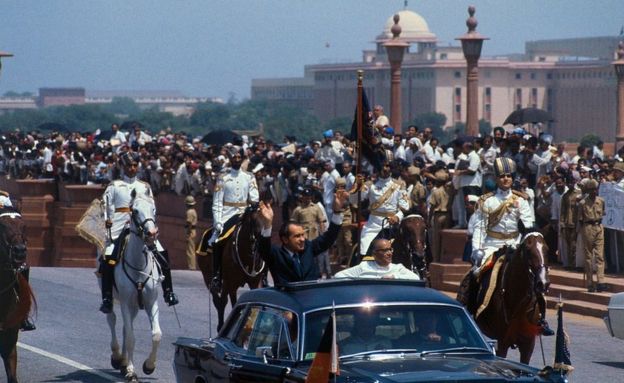
President Richard Nixon waves to crowds as he rides in open car with the acting president of India, Mohammad Hidyatullah, in motorcade from airport upon arrival here July 31.Image copyright GETTY IMAGES
Image caption Richard Nixon waves to the crowds alongside Mohammad Hidyatullah, India’s acting president
The relationship only turned frostier after the trip as India backed Bangladesh (then East Pakistan) in its fight for independence from Pakistan, a close American ally. The differences were laid bare when Gandhi visited the White House in 1971. Declassified state department cables later revealed that Nixon referred to her as an “old witch”.

And the future: Donald Trump

The US and India have certainly had their ups and downs, but during the last official visit in 2015, Mr Obama and Mr Modi signed a declaration of friendship: “Chalein saath saath (Let’s move forward together)…” it began.

President Trump’s visit will take the relationship forward, but it’s unclear how.

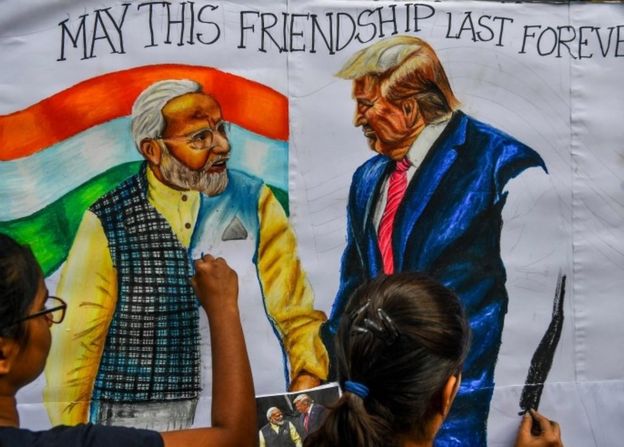
Students paint on canvas faces of US President Donald Trump (R) and India"s Prime Minister Narendra Modi, in the street in Mumbai on February 21, 2020, ahead of the visit of US President in IndiaImage copyright AFP

His arrival in Ahmedabad, the main city in PM Modi’s home state of Gujarat, followed by a big arena event, is expected to draw a massive crowd. It will echo President Eisenhower’s rally in Delhi years ago, perhaps cementing the personal ties between the two leaders.

But while Mr Trump’s trip will be packed with pageantry, it could be light on policy. Unlike other presidential visits, this one is not expected to yield concrete agreements, with the trade deal Mr Trump so badly wants looking unlikely.

Source: The BBC

11/08/2019

India floods: At least 95 killed, hundreds of thousands evacuated

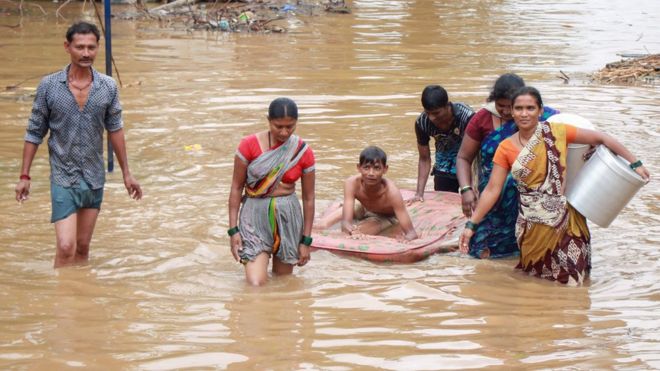
People wade through floodwaters to reach higher ground following heavy rains in Karnataka state on 8 AugustImage copyright AFP
Image caption India is affected by seasonal monsoon rains between June and September

At least 95 people have been killed by monsoon flooding in southern and western India, while hundreds of thousands have been evacuated from their homes, according to reports.

More than 40 of those killed were in the south-western state of Kerala.

The flooding and landslides caused by the heavy seasonal rainfall have left some areas cut off.

Officials have called on those affected to try to seek shelter on higher ground.

India is affected by monsoon rains between June and September. While crucial to replenishing water supplies, the heavy rainfall also results in death and destruction each year.

Disaster management officials said more than 100,000 people in Kerala had been evacuated into emergency relief camps, while more than 40 had been killed.

“There are around 80 places where flood and rains have triggered mudslides, which we cannot reach,” state police spokesman Pramod Kumar told AFP news agency.

With the rains predicted to continue there in the coming days, the military is attempting to airlift food to stranded villages.

Last year, more than 200 people were killed in Kerala in what was described as the state’s worst flooding in 100 years.

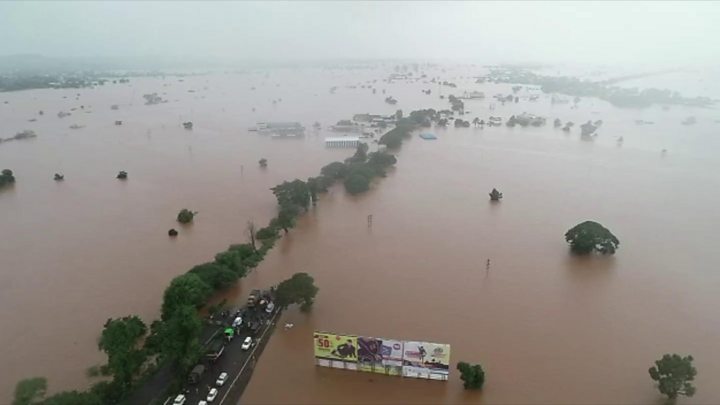
Media caption Aerial shots of flood-hit Indian states

The south-western state of Karnataka and western state of Maharashtra – which is home to India’s financial capital Mumbai – are also experiencing heavy rains, with dozens of fatalities reported and hundreds of thousands of people evacuated.

India’s National Disaster Management Authority issued warnings on Saturday for “heavy” to “extremely heavy” rainfall in several parts of the country, as well as strong winds.

Source: The BBC

10/08/2019

Typhoon Lekima: 13 dead and a million evacuated in China

At least 13 people have been killed and more than a million forced from their homes as Typhoon Lekima hit China.

Sixteen people were also missing after a landslide was triggered by the storm, state media reported.

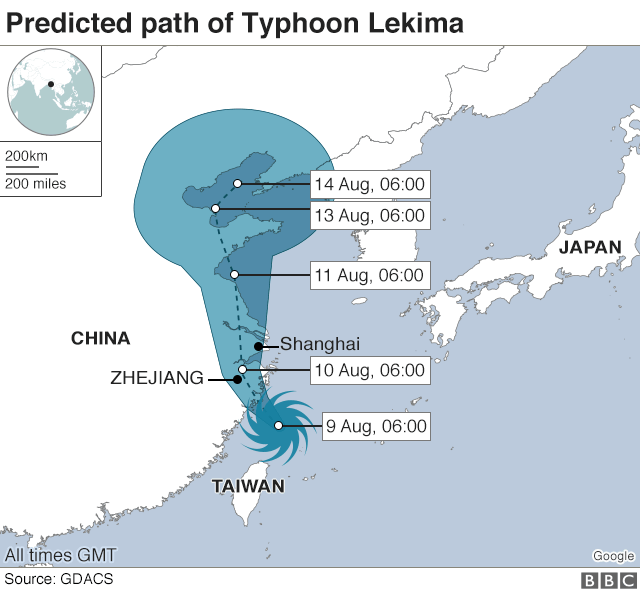
Lekima made landfall in the early hours of Saturday in Wenling, between Taiwan and China’s financial capital Shanghai.

The storm was initially designated a “super typhoon”, but weakened slightly before landfall – when it still had winds of 187km/h (116mph).

The fatal landslide happened when a dam broke in Wenzhou, near where the storm made landfall, state media said.

Lekima is now slowly winding its way north through the Zhejiang province, and is expected to hit Shanghai, which has a population of more than 20 million.

Emergency crews have battled to save stranded motorists from floods. Fallen trees and power cuts are widespread.

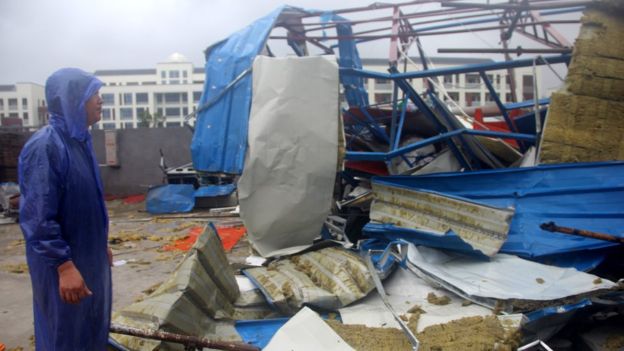
A worker searches for his belongings in a shelter brought down by Typhoon Lekima at a construction site in Wenling, Zhejiang province, China, 10 August 201Image copyright EPA
Image caption A worker looks for his belongings at a construction site shelter collapsed by the storm

Authorities have cancelled more than a thousand flights and cancelled train services as the city prepares for the storm.

It is expected to weaken further by the time it reaches Shanghai, but will still bring a high risk of dangerous flooding.

Predicted path of Typhoon Lekima
The city evacuated some 250,000 residents, with another 800,000 in the Zhejiang province also being taken from their homes.

An estimated 2.7 million homes in the region lost power as power lines toppled in the high winds, Chinese state media said.

It is the ninth typhoon of the year, Xinhua news said – but the strongest storm seen in years. It was initially given China’s highest level of weather warning but was later downgraded to an “orange” level.

Media caption Typhoon Lekima inches towards China

Chinese weather forecasters said the storm was moving north at just 15km/h (9mph).

It earlier passed Taiwan, skirting its northern tip and causing a handful of injuries and some property damage.

Coming just a day after a magnitude six earthquake, experts warned that the combination of earth movement and heavy rain increased the risk of landslides.

Lekima is one of two typhoons in the western Pacific at the moment.

Further east, Typhoon Krosa is spreading heavy rain across the Northern Mariana Islands and Guam. It is moving north-west and could strike Japan some time next week, forecasters said.

Source: The BBC

02/07/2019

Heavy rains in India kill 27, cripple financial capital

MUMBAI (Reuters) – Monsoon rains caused wall collapses that killed 27 people in India on Tuesday, as a second day of bad weather disrupted rail and air traffic in the financial capital Mumbai, prompting officials to shut schools and offices, though markets were open.

During every monsoon season, which runs from June to September, India experiences fatal incidents of building and wall collapses as rainfall weakens the foundations of poorly-built structures.
Heavy rain brought a wall crashing down on shanties built on a hill slope in Malad, a western suburb of Mumbai, a fire brigade official said, killing 18 people.
“Rescue work is still going on,” the official added. “So far we have rescued more than two dozen people.”
Three people died when a school wall collapsed in the city of Kalyan, 42 km (26 miles) north of Mumbai.
In the nearby western city of Pune, six people were killed in a wall collapse on Tuesday, a fire brigade official said, after a similar incident on Saturday killed 15.
Mumbai is looking to turn itself into a global financial hub but large parts of the city struggle to cope with annual monsoon rains, as widespread construction and garbage-clogged drains and waterways make it increasingly vulnerable to chaos.
More than 300 mm (11.8 inches) of rain fell over 24 hours in some areas of Mumbai, flooding streets and railway tracks, forcing the suspension of some suburban train services, which millions of commuters ride to work each day.
About 1,000 people stranded in low-lying areas of the city were rescued after a swollen river began to overflow, municipal authorities said.
As weather officials forecast intermittent heavy showers and isolated extremely heavy rainfall, authorities called a holiday for government offices and educational institutions.
“Rain is expected to remain intense even today,” city authorities said on Twitter. “We request you to stay indoors unless there’s an emergency.”
Financial markets were open on Tuesday, though trading volumes were expected to be lower than normal. Many firms asked employees to work from home.
The main runway at Mumbai airport, India’s second biggest, was closed from midnight after a SpiceJet flight overshot the runway while landing, an airport spokeswoman said.
The secondary runway is operational, but 55 flights were diverted and another 52 were cancelled due to bad weather, she said.
In 2005, floods killed more than 500 people in Mumbai, the majority in shantytown slums home to more than half the city’s population.
Source: Reuters
15/02/2019

Fire alarms “faulty” at Delhi blaze hotel, prompting mass reinspections

NEW DELHI (Reuters) – A hotel that caught fire in the Indian capital on Tuesday, killing 17 people, passed safety checks 14 months ago, but an investigation has revealed breaches of regulations, such as faulty alarms, prompting a mass reinspection of other hotels.

Poorly enforced regulations lead to thousands of deaths in fires across India every year and officials in New Delhi say an overstretched fire service is hampering safety efforts.

The Hotel Arpit Palace passed a fire safety check in December 2017, but a copy of the initial police investigation seen by Reuters showed several breaches of fire regulations, including a lack of signs to guide guests to exits and fire alarms that did not work.

Delhi’s fire service, which is responsible for safety inspections as well as fighting fires, is now reviewing certificates issued to more than 1,500 hotels in one of India’s tourist hubs, a senior fire official told Reuters.

“Fire officers have to do a lot of work,” said Vipin Kental, Delhi’s chief fire officer. “We have to be inspectors and fight fires. We do not have the manpower.”

The city has around 1,700 firefighters, he said, which is less than an eighth of the number in New York, a city with less than half of Delhi’s population.

PREVENTABLE TRAGEDY

The fire is believed to have begun on the hotel’s first floor, spreading quickly through wood-panelled corridors, police say. Among the dead were members of a wedding party from Kerala and a two Buddhist pilgrims from Myanmar.

“From the outside, the building looked intact, but inside everything was completely charred,” a police officer told Reuters.

Two of the 17 died after jumping out of windows in desperation after failing to find emergency exits, added the officer, who declined to be named as he is not authorised to talk to the media.

“Fire preparedness is a matter of shockingly low priority in most parts of the country,” said an editorial in the Indian Express, one of the country’s leading newspapers.

A 2018 study by India’s home ministry that found the country had just 2,000 of more than 8,500 fire stations it needs.

More than 17,000 people died in fires in 2015, according to data from the ministry, the last year for which figures are available, one of the largest causes of accidental death in India.

Fire safety is an issue for shanty towns and some of the country’s most expensive real estate.

A day after the Arpit Palace disaster, more than 250 makeshift homes were destroyed in a slum in Paschim Puri, a poor area of New Delhi, though no one was killed.

In 2017, 14 people were killed during a birthday party at a high-end bar in India’s financial capital Mumbai.

In several upscale neighbourhoods in Delhi, police shut hundreds of shops and restaurants last year for trading on floors meant for residential use, though many continue to operate illegally, residents say.

By the boarded-up Arpit Palace in the Karol Bagh area of New Delhi, wires from adjacent hotels still trail across the street, though staff there told Reuters they were complying with fire regulations.

Adding to the safety problems, poorly paid staff in the hotel and restaurant industries are often unable to help guests when fires break out, Kental said.

“They are not trained. They don’t know what to do in the event of a fire,” he said.

Source: Reuters

Law of Unintended Consequences

continuously updated blog about China & India

ChiaHou's Book Reviews

continuously updated blog about China & India

What's wrong with the world; and its economy

continuously updated blog about China & India