Archive for ‘Fireworks’

01/11/2019

Millions of masks distributed to students in ‘gas chamber’ Delhi

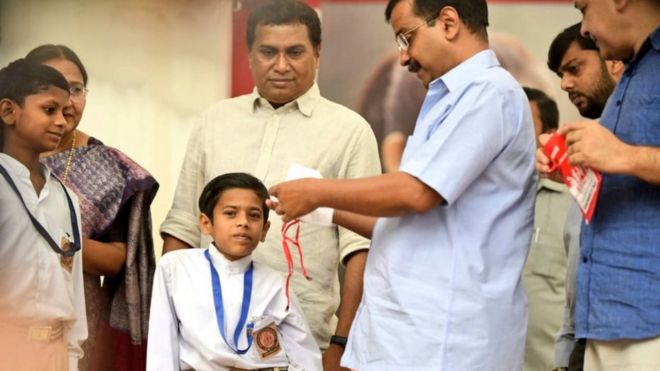
Delhi Chief Minister Arvind Kejriwal distributing masks to studentsImage copyright TWITTER/@ARVINDKEJRIWAL
Image caption Delhi Chief Minister Arvind Kejriwal has been handing out masks to school students

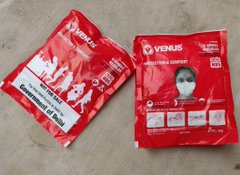
Five million masks are being distributed at schools in India’s capital, Delhi, after pollution made the air so toxic officials were forced to declare a public health emergency.

A Supreme Court mandated panel imposed several restrictions in the city and two neighbouring states, as air quality deteriorated to “severe” levels.

All construction has been halted for a week and fireworks have been banned.

The city’s schools have also been closed until at least next Tuesday.

Delhi’s Chief Minister Arvind Kejriwal said Delhi had been turned into a “gas chamber”.

The masks are being handed out to students and their parents, and Mr Kejriwal has asked people to use them as much as possible.

The levels of tiny particulate matter (known as PM2.5) that enter deep into the lungs are 533 micrograms per cubic metre in the city. The WHO recommends that the PM2.5 levels should not be more than 25 micrograms per cubic metre on average in 24 hours.

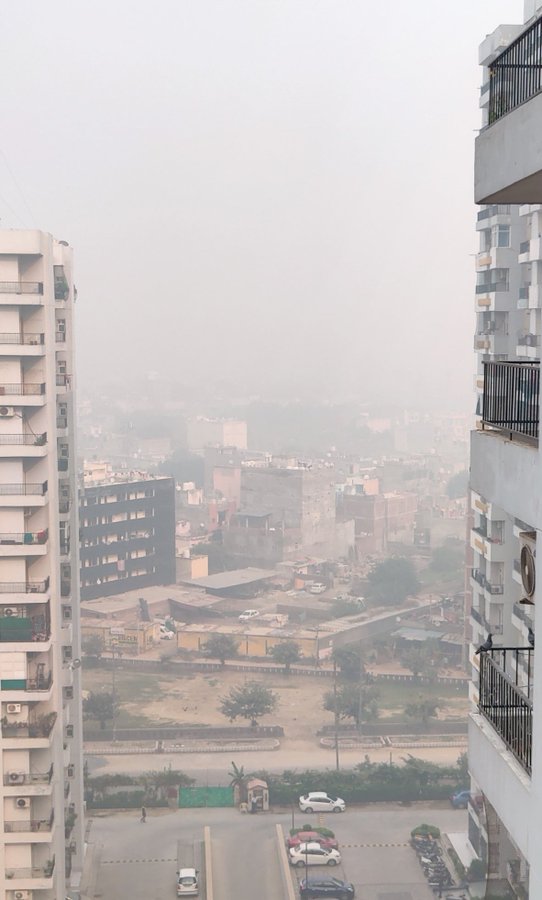
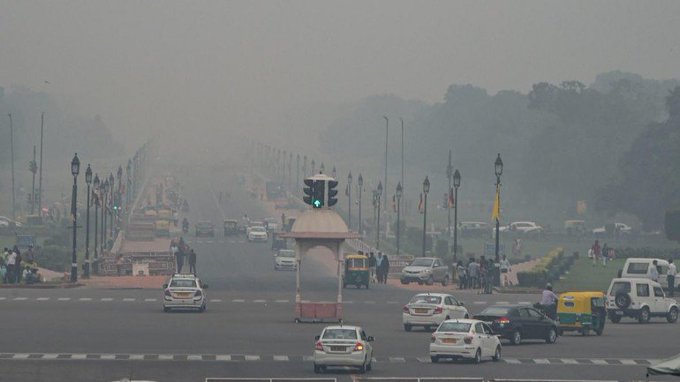
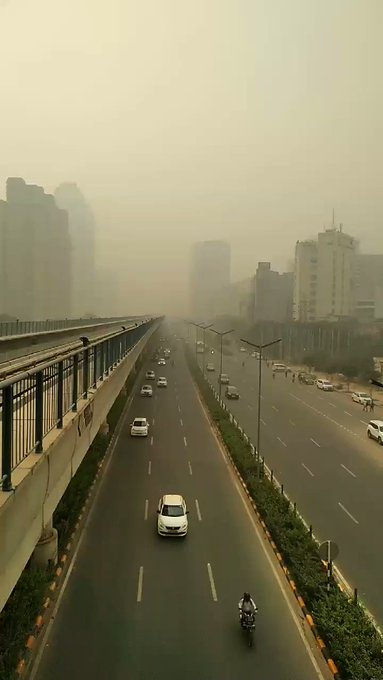
As thick white smog blanketed the city, residents started tweeting pictures of their surroundings. Many are furious that the situation remains the same year after year.

The hashtags #DelhiAirQuality and #FightAgainstDelhiPollition are trending on Twitter.

Skip Twitter post by @vishmlondhe
One of the main reasons for air quality in the city worsening every year in November and December is that farmers in the neighbouring states of Punjab and Haryana burn crop stubble to clear their fields. It’s made worse by the fireworks during the Hindu festival of Diwali.

There are other reasons too, including construction dust, factory and vehicular emissions, but farm fires remain the biggest culprit.
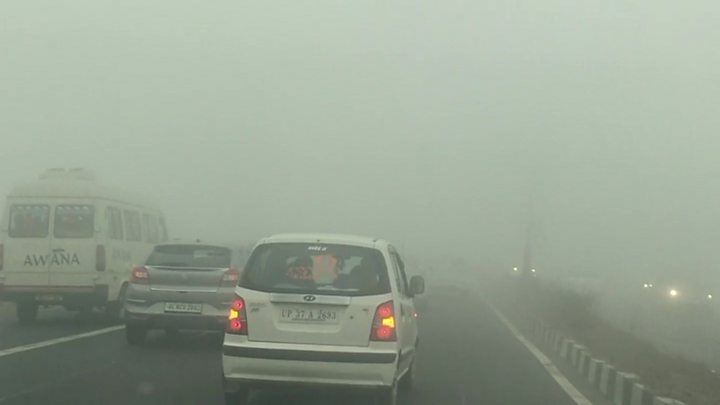
Media caption A hair-raising drive through the Delhi smog

More than two million farmers burn 23 million tonnes of crop residue on some 80,000 sq km of farmland in northern India every winter.

The stubble smoke is a lethal cocktail of particulate matter, carbon dioxide, nitrogen dioxide and sulphur dioxide.

Using satellite data, Harvard University researchers estimated that nearly half of Delhi’s air pollution between 2012 and 2016 was due to stubble burning.

The burning is so widespread that it even shows up in satellite photos from Nasa.


What are PM 2.5 particles?
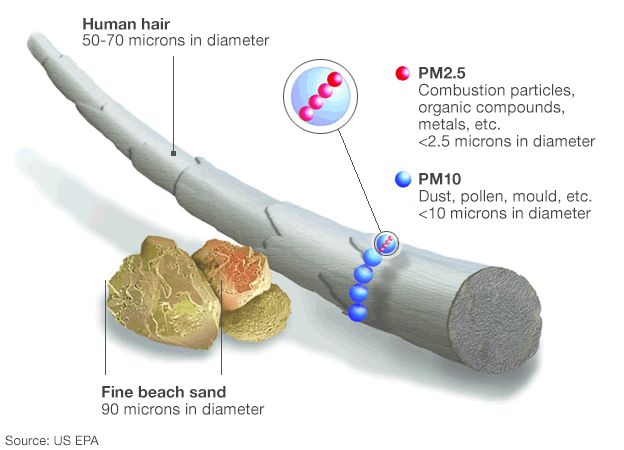
Infographic
  • Particulate matter, or PM, 2.5 is a type of pollution involving fine particles less than 2.5 microns (0.0025mm) in diameter
  • A second type, PM 10, is of coarser particles with a diameter of up to 10 microns
  • Some occur naturally – e.g. from dust storms and forest fires, others from human industrial processes
  • They often consist of fragments that are small enough to reach the lungs or, in the smallest cases, to cross into the bloodstream as well

Source: The BBC

07/10/2019

Chinese celebrate National Day with birthday noodles, films

BEIJING, Oct. 6 (Xinhua) — While fireworks and festivities drew the largest crowds during this year’s National Day holiday, many Chinese chose to celebrate the occasion with a bowl of patriotic noodles and homegrown films.

This year marks the 70th anniversary of the People’s Republic of China which was founded on Oct. 1, 1949. The weeklong National Day holiday, introduced in 1999 by the State Council, or China’s cabinet, saw “National Day noodles” become a popular choice among some Chinese this year.

Birthday noodles are to Chinese people what birthday cakes are to Westerners. In accordance with the Chinese custom, people enjoy a bowl of noodles on their birthday as a symbol of longevity. Many restaurants will prepare a bowl of birthday noodles for free if there is a diner celebrating their birthday.

Beijing Huatian Catering Group, a leading catering company in Beijing that has more than 20 time-honored brands, sold more than 25,000 bowls of National Day noodles and gave away more than 120 bowls of birthday noodles, according to a Saturday report by Beijing Daily.

Beijing Honghua Dahaiwan Catering Group said that it has sold 3,800 bowls of noodles during the first three days of the National Day holiday, up 25 percent compared to the same period of last year.

Moviegoers meanwhile got their fill of National Day celebrations in an entirely different manner.

“My People, My Country,” “The Climbers” and “The Captain” were all set for theatrical release on the Chinese mainland on Sept. 30, a day ahead of the weeklong National Day holiday, according to the China Film Distribution and Exhibition Association.

Featuring seven short stories from seven directors, “My People, My Country” draws on important historical moments since the founding of the PRC, aiming to awaken the shared memories of Chinese around the world.

“The Climbers” dramatizes the real-life expedition of Chinese mountaineers to ascend Mount Qomolangma in 1960 and 1975.

“The Captain” is a cinematic portrayal of a real-life event that occurred on May 14, 2018, when a captain of Sichuan Airlines managed a successful emergency landing after the windshield of his plane broke in the air, safely bringing home the 119 passengers and nine crew members on board.

According to the real-time statistics of MaoYan Movie, the leading online movie ticketing platform in China, the three movies ranked as the top three films at the box office over the holiday. “My People, My Country” has raked in more than 2 billion yuan (around 279.8 million U.S. dollars) as of Sunday, “The Captain,” 1.7 billion yuan, and “The Climbers,” 743 million yuan.

Source: Xinhua

25/09/2019

China Focus: China completes world’s longest cross-sea road-rail bridge

CHINA-FUJIAN-CROSS-SEA ROAD-RAIL BRIDGE-COMPLETION (CN)

Aerial photo taken on Sept. 21, 2019 shows a steel girder being lifted by a crane at the construction site of the Pingtan Strait Road-rail Bridge in southeast China’s Fujian Province. China on Wednesday completed the main structure of the world’s longest cross-sea road-rail bridge in Fujian. The last steel girder, weighing 473 tonnes, was bolted on the Pingtan Strait Road-rail Bridge, another mega project in China, on Wednesday morning. With a staggering span of 16.34 km, the bridge connects Pingtan Island and four nearby islets to the mainland of Fujian Province. (Xinhua/Lin Shanchuan)

FUZHOU, Sept. 25 (Xinhua) — China on Wednesday completed the main structure of the world’s longest cross-sea road-rail bridge in its southeastern province of Fujian.

The last steel truss girder, weighing 473 tonnes, was bolted on the Pingtan Strait Road-rail Bridge, another mega project in China, on Wednesday morning.

Hundreds of bridge builders clad in orange overalls, as well as government officials, hailed the completion on the bridge deck, with several rounds of fireworks being set off to celebrate the moment.

With a staggering span of 16.34 km, the bridge connects Pingtan Island and four nearby islets to the mainland of Fujian Province.

The bridge, which is expected to open to traffic next year, can help shorten travel time from two hours to half an hour between Fuzhou, capital city of Fujian Province and Pingtan, a pilot zone set up to facilitate trade and cultural exchanges across the Taiwan Strait.

“Of all the bridges being built across the world, this is no doubt the most challenging,” said Wang Donghui, chief engineer of the project, adding that it is China’s first and the world’s longest cross-sea road-rail bridge.

The project has attracted worldwide attention from the start of construction in 2013 as it spans an area off the coast of southeast China long seen as a “no-go zone” for bridge-building.

The region has strong gales and high waves for most of the year and is known as one of the world’s three most perilous seas along with Bermuda and the Cape of Good Hope.

Workers had to battle the notoriously strong winds, choppy waters and rugged seabed in the region to drill 1,895 piles into the ocean.

MORE THAN MEGA PROJECT

The road-rail bridge has a six-lane highway on the top and a high-speed railway at the bottom, which is designed to support bullet trains traveling as fast as 200 km per hour. It is a part of the 88-km Fuzhou-Pingtan railway.

In the past, Pingtan was a backwater island of humble fisheries. It did not even have a bridge connecting it to the mainland until 2010 when the Strait Bridge began operating for cars only.

In 2010, China established the Pingtan Comprehensive Pilot Zone to facilitate cross-Strait exchange and cooperation, ramping up its efforts to improve the island’s infrastructure.

Today, skyscrapers are popping up all along the shoreline, with the glow of construction work filling the night sky. Meanwhile, thousands of Taiwan residents swarm into the booming island to live and start businesses.

The island has accommodated more than 1,000 shops and companies set up by Taiwan residents, according to government statistics.

Chen Chien-hsiang, a 29-year-old man who moved from Taiwan to Pingtan two years ago, believes that the new bridge will help attract more businesses to the island and further boost its economic development.

“The new bridge means more than a mere mega project,” Chen said. “It also promises a brighter future for people from Taiwan who chose to live and work here.”

INFRASTRUCTURE MANIAC

Huang Zhiwei, 22, found himself making history by lifting the last piece of the bridge girder from a ship about 80 meters below the bridge deck, an undertaking that he had never expected when he joined the project a year ago as an intern.

His parents, unhappy about their son’s career choice, felt relieved after several video chats during which their son showed them his working and living conditions at the construction site.

“With so many advanced technologies and safety measures, I am convinced that we will accomplish the mission, and I am very proud of my contribution,” said the young operator.

More than 1.24 million tonnes of steel have been used for the bridge, enough to build 190 Eiffel Towers, and 2.97 million cubic meters of cement, nine times the amount of cement used to build the Burj Khalifa towers in Dubai, the world’s tallest skyscraper.

“We could not possibly have realized the construction 15 years ago for lack of advanced construction technologies and equipment such as the drilling machine and ship cranes we have developed today,” said Xiao Shibo, an engineer of the China Railway Major Bridge Engineering Group Co., Ltd. The bridge has made history in many aspects, Xiao added.

China is dubbed as an “infrastructure maniac” for countless dazzling megaprojects, with the Chinese builders breaking their own world records.

China is home to the world’s highest bridge, longest cross-sea bridge and 90 out of the 100 highest bridges built this century.

From 2015 to 2020, China’s transportation investment is expected to exceed 15 trillion yuan (2.1 trillion U.S. dollars), with a substantial portion reserved for bridge construction.

Source: Xinhua

24/09/2019

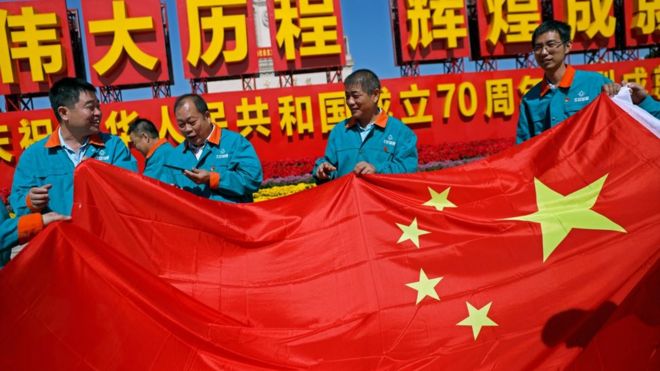
China 70th anniversary: Pigeon ban and lockdowns as countdown begins

Chinese workers with Chinese flagImage copyright EPA
Image caption China is getting dressed up for its big birthday party

One week from now, the People’s Republic of China will mark its 70th anniversary with celebrations on a scale not seen in China in decades.

Beijing is pulling out all stops and 1 October will be flush with fireworks, fanfare and a huge military parade.

To ensure it goes smoothly, authorities have been ramping up security in the capital – and online – for weeks.

But with yet more protests expected in Hong Kong, the territory might just rain on China’s parade.

What is it all about?

The birth of modern China was declared on 1 October 1949, after the communists under Mao Zedong won the civil war that followed World War Two.

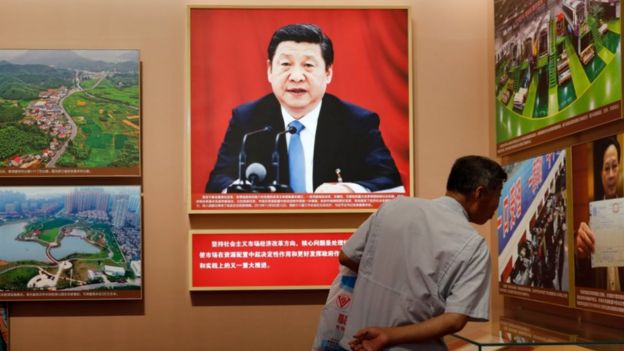
Portrait of Xi JinpingImage copyright EPA
Image caption Exhibitions are highlighting the achievements of the Communist Party

The date is marked every year, but celebrations for this 70th anniversary are expected to eclipse previous events.

It’s the first big anniversary since China has emerged as a global power. While 10 years ago China was a superpower in the making, it is now the world’s second largest economy, almost eye-to-eye with the United States.

What to expect?

The main celebrations will take place in the capital, Beijing, where there will be a grand military parade with “advanced weapons” on display, followed by a “mass pageant”.

President Xi Jinping – considered the most powerful Chinese leader since Mao – will address the Chinese people. His speech is expected to celebrate China’s rapid growth and which will be closely watched for any indication of the country’s direction in the coming years.

The president will also hand out honours for contributions to the country and in the evening there will be a grand gala and fireworks show.

All official Chinese celebrations are carefully choreographed and the success of this one is particularly important to the government.

The Dos and Don’ts

The parade – open to invited guests only – will take place around Tiananmen Square in central Beijing. The surrounding area will be practically under lockdown, and in fact has been so several times already.

During rehearsals leading up to the big day, hotels near Tiananmen Square told guests that for several hours each day, no-one would be able to leave the hotel or return to it should they be out, leading to much travel chaos and rebookings.

Many shops and restaurants in the centre are also closed or have shortened hours and some subway stations are temporarily shut.

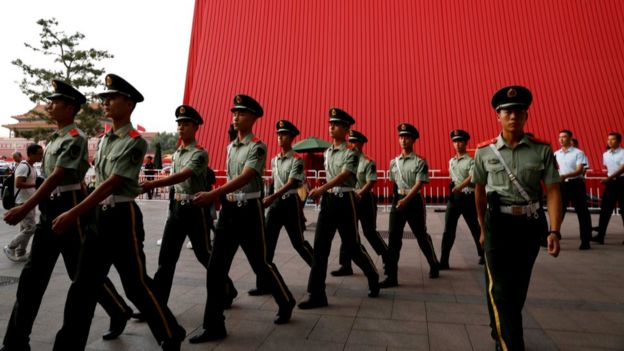
Chinese paramilitary policeImage copyright EPA
Image caption Security is tight ensure the party goes to plan

Trains to Beijing are running numerous safety checks on their passengers and vehicles going into the city are also being tightly watched.

On the big day itself, areas around Tiananmen Square will be blocked and guarded. Local residents will need to identify themselves if they want to pass.

To ensure the sun will shine brightly on the celebration in notoriously polluted Beijing, several coal plants and construction sites in and around the city have been ordered to stop work for the duration.

There’s also a ban on any low-flying aerial vehicles in place. That means anything from light aircraft to drones, balloons and even racing pigeons.

Censorship galore

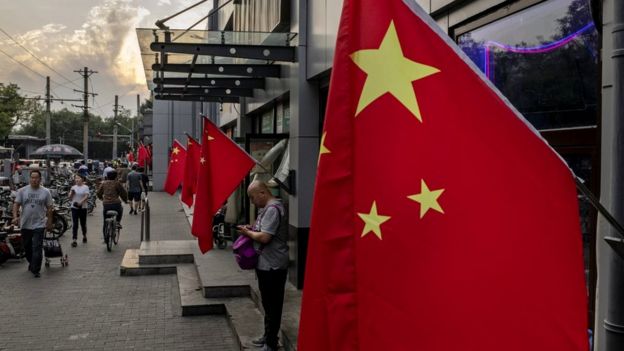
Across much of the city centre, there are national flags set up at every door. Voluntary inspectors are monitoring the streets and locals have told the BBC they’re being questioned after having even brief conversations with foreigners

One person said she was asked by an inspector: “Who were those foreigners? Why were they here?”

The tight control naturally extends online as well. Popular social media platform Weibo said it was deleting content that “distorts” or “insults” the country’s history ahead of the anniversary.

Chinese flags outside a row of shopsImage copyright GETTY IMAGES
Image caption Every house and every shop is sporting a national flag

Chinese journalists are always expected to toe the party line anyway, but starting in October they will have to pass an extra test to prove they are versed particularly in Xi Jinping’s teachings, officially called Xi Jinping Thought on Socialism with Chinese Characteristics, which has been written into the constitution.

Whether or not they pass the exam will then determine whether they’ll be accredited as journalists.

“The fundamental point with this ‘training’ and indoctrination process isn’t so much about the content,” David Bandurski of China Media Watch told the BBC.

“It is about reinforcing the message and understanding among journalists that they work, first and foremost, for the Chinese Communist Party, and serve its agenda.”

So not only will the events be choreographed – the domestic coverage of them will also be tightly guarded.

What about Hong Kong?

Despite Beijing’s determination to let its achievements shine on 1 October, there’s a good chance Hong Kong will pull focus.

Anti-Beijing protests always take place in Hong Kong on China’s National Day, but this time, the activists know that the world is watching.

Anti-government protests have rocked the city for months and the situation shows no sign of dying down.

Clashes between police and activists have been becoming increasingly violent, with police using tear gas and activists storming parliament.

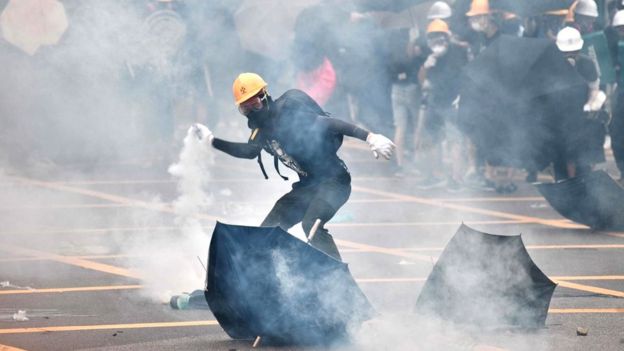
Protester throwing a tear gas can back at the policeImage copyright AFP
Image caption The protests have often escalated into violent clashes

That means two things for 1 October: official celebrations in the territory are being toned down to avoid clashes – the annual fireworks display has been cancelled – while at the same time, activists are planning to step up their protests.

On Sunday 29 September, a “Global Anti Totalitarianism March” is scheduled to take place at various locations around the world in support of Hong Kong.

On 1 October itself, a march in central Hong Kong is planned with everyone asked to wear black.

If the past weeks’ demonstrations are anything to go by, the smiles and celebrations in Beijing will be competing for media space with pictures of tear gas and angry young protesters in Hong Kong.

Source: The BBC

03/03/2019

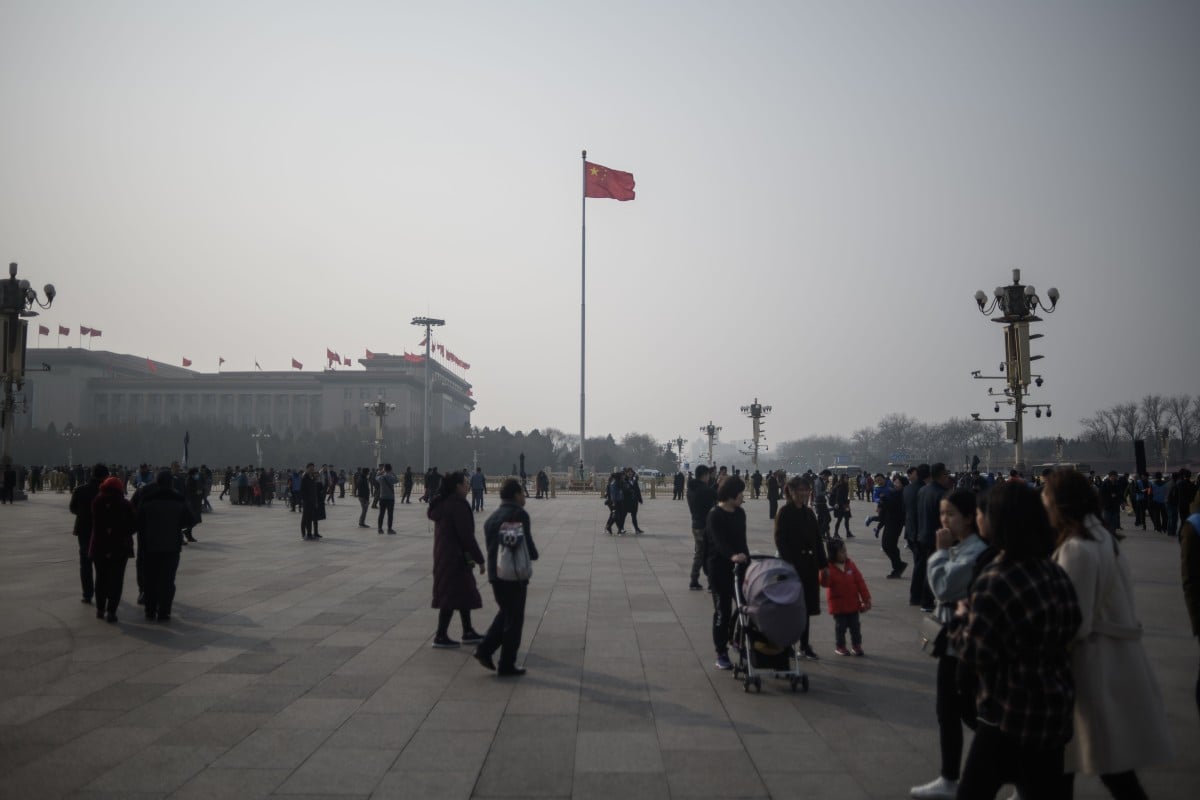
Beijing chokes on dense smog as China’s political heavyweights meet

  • Capital issues orange alert as delegates arrive for one of the year’s biggest gatherings
  • All construction must stop, and elderly and children advised to stay indoors

News

Beijing chokes on dense smog as China’s political heavyweights meet

3 Mar 2019

An orange pollution alert will stay in place in Beijing throughout Sunday and Monday. Photo: AFP

Heavy smog blanketed Beijing on Sunday as thousands of delegates started arriving in the Chinese capital for one of the annual highlights on the country’s political calendar.

The pollution descended on Friday night, prompting authorities on Saturday to issue an orange alert, the second-highest smog warning in the four-tier system.

The alert – which advises elderly people and children to stay indoors – will remain in place throughout Sunday, the first day of the Chinese People’s Political Consultative Conference (CPPCC), and Monday.

Conditions are expected to improve by Tuesday, when the National People’s Congress starts.

“Due to bad weather, there will be heavy regional pollution in the Beijing-Tianjin-Hebei region that will persist and affect a large area,” the Beijing Municipal Environmental Monitoring Centre said.

Under the orange alert, all construction work in the city must stop, some factories have to halt production, and all fireworks and outdoor barbecues are banned.

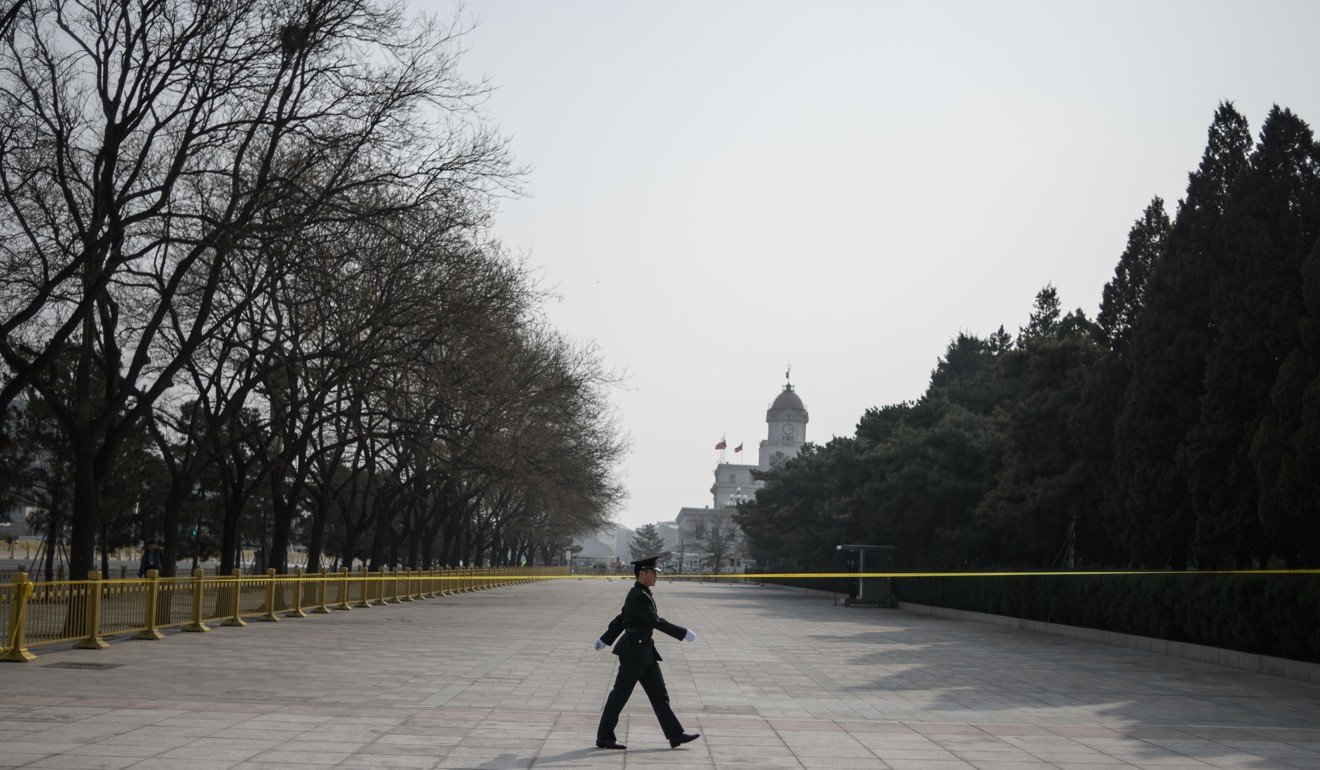
A Chinese paramilitary police officer patrols in front of the Great Hall of the People on Saturday on the eve of the opening session of the Chinese People’s Political Consultative Conference in Beijing. Photo: AFP
Source: SCMP
19/02/2019

Air rescue relieves China from forest fires during Spring Festival

BEIJING, Feb. 18 (Xinhua) — Emergency air rescue has played a key role in relieving southern China from frequent forest fires during the Spring Festival, according to the emergency management authorities Monday.

During the week-long Spring Festival holidays from Feb. 4 to 10, helicopters were dispatched 91 times to fight forest fires in southern China, according to the Ministry of Emergency Management.

In a total of 170 flight hours, they carried a 735 tonnes of water with hanging buckets to fight eight forest fires with a total range of 25,000 kilometers.

The Spring Festival has been a key time for forest fire control in southern China due to the warmer weather and more frequent outdoor fire use during the holiday, especially during tomb sweeping and when setting off fireworks.

Emergency air rescue is playing a more important role in fighting forest fires in China, especially in southern regions with high-altitude mountains or rough terrain.

Aerial extinguishing teams take firefighters, equipment and water closer to the sites with fire fighting helicopters, allowing them to control the fire more quickly.

China is making efforts to strengthen emergency air emergency rescue capabilities by introducing new equipment, cultivating professionals and improving infrastructure, according to Ministry of Emergency Management.

Source: Xinhua

07/02/2019

Hong Kong holds fireworks show to celebrate Lunar New Year

CHINA-HONG KONG-SPRING FESTIVAL-FIREWORKS (CN)


Fireworks illuminate the sky over the Victoria Harbour in Hong Kong, south China, Feb. 6, 2019, to celebrate the Spring Festival. (Xinhua/Li Gang)

HONG KONG, Feb. 6 (Xinhua) — Spectacular flower patterns of fireworks roared above Victoria Harbor, followed by patterns of green “8” and yellow golden ingots, sending traditional blessings to locals.

It was the opening scene of the fireworks show in China’s Hong Kong Special Administrative Region. The show started at 8:00 p.m. local time Wednesday, the second day of the first month of the Chinese lunar calendar.

A total of 23,888 fireworks lightened up the sky during the 23-minute show.

In one scene, a lot of fireworks went across the harbor with a racing speed effect, as if playing hide-and-seek.

“The scene symbolizes that we should set our goals for the new year and work hard towards goals with faith. Eventually, we will achieve the targets,” said Wilson Mao, CEO of a multi-media production company which designed the firework show.

Another scene echoed the approaching Valentine’s day. It displayed miscellaneous shades of strobes and waterfall-like movements to create heart-thumping effects and send blessings of everlasting love bond.

In the last scene, dazzling fireworks filled the sky with high intensity and lasted for 25 seconds, bringing the show to an end.

A Hong Kong resident surnamed Lo said he enjoyed the show, especially the powerful sounds of the fireworks.

Sharing his wishes for the lunar new year, Lo said he hoped “Hong Kong continues to prosper, and people have good jobs and stay healthy.”

Source: Xinhua

Law of Unintended Consequences

continuously updated blog about China & India

ChiaHou's Book Reviews

continuously updated blog about China & India

What's wrong with the world; and its economy

continuously updated blog about China & India