Chindia Alert: You’ll be Living in their World Very Soon
aims to alert you to the threats and opportunities that China and India present. China and India require serious attention; case of ‘hidden dragon and crouching tiger’.
Without this attention, governments, businesses and, indeed, individuals may find themselves at a great disadvantage sooner rather than later.
The POSTs (front webpages) are mainly 'cuttings' from reliable sources, updated continuously.
The PAGEs (see Tabs, above) attempt to make the information more meaningful by putting some structure to the information we have researched and assembled since 2006.
Hungarian Foreign Minister Peter Szijjarto tells Chinese counterpart, Wang Yi, that his country ‘always upholds the one China principle’
Wang also speaks to foreign ministers of Estonia and Bosnia and Herzegovina ahead of World Health Assembly, which starts on Monday
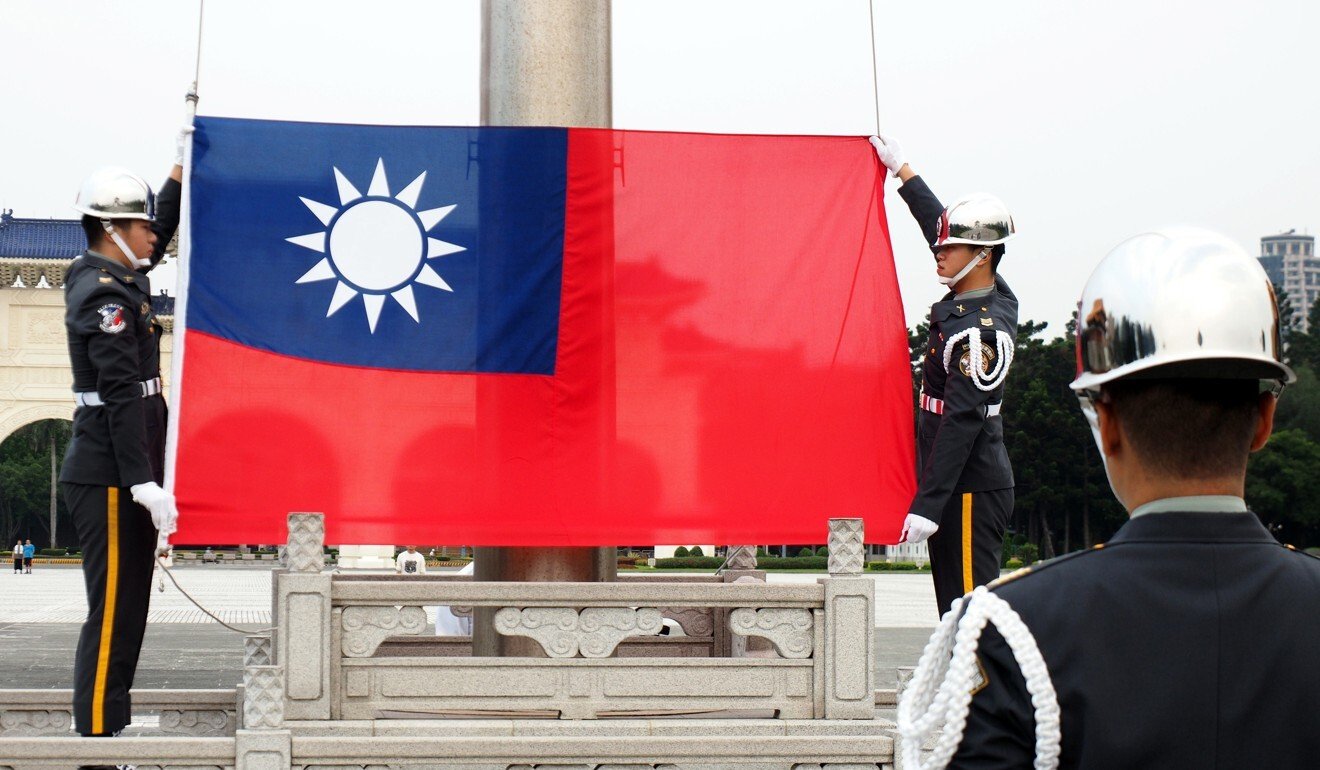
Chinese Foreign Minister Wang Yi spoke to three European foreign ministers on Thursday. Photo: AP
Hungary supports Beijing’s efforts to prevent Taiwan taking part in the upcoming World Health Assembly (WHA), according to a Chinese statement issued after a telephone conversation between the two countries’ foreign ministers.
China’s Foreign Minister Wang Yi called his European counterpart, Peter Szijjarto, on Thursday, the foreign ministry in Beijing said.
During the call, Szijjarto told Wang that Budapest would not support Taiwan’s accession to the World Health Organisation (WHO) ahead of the annual gathering of health ministers from around the world that starts in Geneva on Monday and which Taipei is keen to attend.
Hungary “always upholds the one China principle”, Szijjarto was quoted as saying.
A report about the ministers’ call by the Hungarian foreign ministry, however, made no mention of Taiwan.
It said that Szijjarto thanked Wang for the medical supplies China had sent to Hungary board 121 flights since the start of the Covid-19 pandemic.
The pair also discussed cooperation on 5G and the development of a rail project between Budapest and the Serbian capital, Belgrade, it said.
Beijing opposes Taiwan’s involvement in the WHO. Photo: EPA-EFE
As well as speaking to Szijjarto, Wang called the foreign ministers of Estonia and Bosnia and Herzegovina on Thursday to discuss the Covid-19 pandemic, but Taiwan was not mentioned, the Chinese statement said.
Taipei donated 80,000 face masks to Estonia in April, and last week, Urmas Paet, an Estonian member of the European parliament urged Budapest to support Taiwan’s membership of the WHO and “not allow itself to be manipulated by China”.
Taiwan has long campaigned to regain observer status at the WHO and has ramped up those efforts since the start of the global health crisis. Despite the devastation caused by Covid-19, Taiwan has reported just 440 confirmed cases and seven deaths.
Taiwan attended the WHA meetings as an observer between 2009 and 2016, unopposed by Beijing as at the time the island was led by president Ma Ying-jiu from the mainland-friendly Kuomintang.
However, relations between Taipei and Beijing have soured since 2016 and the election of President Tsai Ing-wen, from the pro-independence Democratic Progressive Party, who won a second term of office in January.
WHO put nations at risk by excluding Taiwan from knowledge sharing, US report says
13 May 2020
Taiwan has not been alone in its campaign to regain its WHO status, with the United States, Australia, New Zealand, Canada and several European countries backing the move.
Last week, US Secretary of State Mike Pompeo called on all nations to support Taipei’s participation as an observer at the WHA, and urged WHO director general Tedros Adhanom Ghebreyesus to allow it.
Despite the support, Taiwan’s Vice-Premier Chen Chien-jen said on Thursday that because of the pressure from Beijing there was now little chance of Taiwan attending the WHA.
China’s foreign ministry spokesman Zhao Lijian said last week it was “resolutely opposed” to New Zealand’s support for Taiwan.
In his calls to Europe, Wang also said that cooperation between Beijing and 17 central and eastern European nations – under the “17+1” banner – would not be affected by the health crisis and that further talks would be held once it had been brought under control.
GENEVA (Reuters) – World Health Organization officials on Wednesday denied that the body was “China-centric” and said that the acute phase of a pandemic was not the time to cut funding, after U.S. President Donald Trump said he may put contributions on hold.
The United States is the top donor to the Geneva-based body which Trump said had issued bad advice during the new coronavirus outbreak.
RELATED COVERAGE
WHO head dismisses suggestions he’s too close to China
U.S. contributions to WHO in 2019 exceeded $400 million, almost double the 2nd largest country donor, according to figures from the U.S. State Department. China contributed $44 million, it said.
“We are still in the acute phase of a pandemic so now is not the time to cut back on funding,” Dr Hans Kluge, WHO regional director for Europe, told a virtual briefing when asked about Trump’s remarks.
Trump told a news conference on Tuesday that the United States was “going to put a hold on money spent to the WHO,” however, he appeared to backtrack later when in response to questions he said: “We’re going to look at it.”
It was not immediately clear how Trump could “block” funding for the organization. Under U.S. law, Congress, not the president, decides how federal funds are spent.
Dr Bruce Aylward, senior advisor to the WHO Director-General, also defended the U.N. agency’s relationship with China, saying its work with Beijing authorities was important to understand the outbreak which began in Wuhan in December.
“It was absolutely critical in the early part of this outbreak to have full access to everything possible, to get on the ground and work with the Chinese to understand this,” he told reporters.
“This is what we did with every other hard-hit country like Spain and had nothing to do with China specifically.”
Aylward, who led a WHO expert mission to China in February, defended WHO recommendations to keep borders open, saying that China had worked “very hard” to identify and detect early cases and their contacts and ensure they did not travel.
“China worked very, hard very early on, once it understood what it was dealing with, to try and identify and detect all potential cases to make sure that they got tested to trace all the close contacts and make sure they were quarantined so they actually knew where the virus was, where the risk was,” he said.
“Then they made it very clear that these people would not and could not travel within the country, let alone internationally,” he added.
WHO Director-General Tedros Adhanom Ghebreyesus has been lavish in his praise of China from early in the outbreak, praising President Xi Jinping’s “rare leadership”.
David Heymann, a professor at the London School of Hygiene & Tropical Medicine who led WHO’s response to the 2003 SARS outbreak, said that any U.S. funding cut would be a huge blow.
“If the WHO loses its funding it cannot continue to do its work. It works on a shoe-string budget already,” Heymann said in London. “Of course it would be disastrous for the WHO to lose funding.”
Image copyright EPAImage caption The world’s second-most populous country has reported about 182 infections
“We have a simple message to all countries – test, test, test,” World Health Organisation (WHO) head Tedros Adhanom Ghebreyesus told reporters in Geneva earlier this week.
He was alluding to the coronavirus outbreak, which has killed more than 10,000 people and infected nearly 250,000 in at least 159 countries.
“All countries should be able to test all suspected cases, they cannot fight this pandemic blindfolded,” he said.
With 182 reported infections and four deaths so far, is India taking this advice seriously? Is the world’s second-most populous country testing enough?
The jury is out on this one. India had tested some 14,175 people in 72 state-run labs as of Thursday evening – one of the lowest testing rates in the world. The reason: the country has limited testing. So, only people who have been in touch with an infected person or those who have travelled to high-risk countries, or health workers managing patients with severe respiratory disease and developing Covid-19 symptoms are eligible for testing.
Why is a densely populated country with more than a billion people testing so little? The official assumption is the disease has still not spread in the community. As early “evidence” health authorities say 826 samples collected from patients suffering from acute respiratory disease from 50 government hospitals across India between 1 and 15 March tested negative for coronavirus. Also, hospitals have not yet reported a spike in admissions of respiratory distress cases.
“It is reassuring that at the moment there is no evidence of community outbreak,” says Balram Bhargava, director of the Indian Council of Medical Research (ICMR). He believes Mr Ghebreyesus’s advice is “premature” for India, and it would only “create more fear, more paranoia and more hype”.
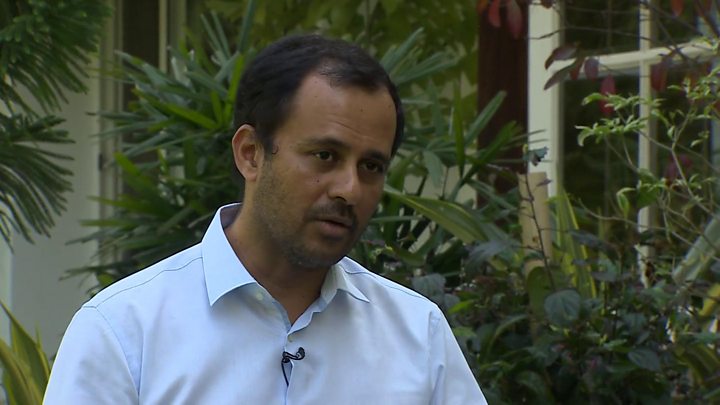
Media caption Dr Ramanan Laxminarayan: “India’s going to be the next hot spot for this epidemic”
But experts are not so sure.
Many of them believe India is also testing below scale because it fears that its under-resourced and uneven public health system could be swamped by patients. India could be buying time to stock up on testing kits and add isolation and hospital beds. “I know mass testing is not a solution, but our testing appears to be too limited. We need to quickly expand to restrict community transmission,” K Sujatha Rao, former federal health secretary and author of But Do We Care: India’s Health System, told me.
On the other hand, say virologists, random, on-demand testing will create panic and completely strain the feeble public health infrastructure. Increased and targeted “sentinel screening” of patients suffering from influenza and diagnoses in hospitals across the country can provide a better idea of whether there is community transmission, they say. “We need focused testing. We cannot do a China or Korea because we simply don’t have the capacity,” a senior virologist told me.
In many ways, it is all about India trying to battle a pandemic with limited resources. Experts talk about the country’s success in defeating polio, combating small pox, successfully controlling the spread of HIV/Aids, and more recently H1N1 with rigorous surveillance, sharp identification of vulnerable people, targeted intervention, and an early engagement with the private sector to prevent disease spread.
Yet, coronavirus is one of the deadliest transmissible viruses in recent history. Every day lost in effective response means the looming danger of a surge in infections. India spends a paltry 1.28% of its GDP on health care, and that may begin to bite if there’s a full-blown outbreak. Partial lockdowns in many cities – shutting schools, colleges, businesses and suspending some rail transport – proves that the government fears that community transmission of the virus might have begun.
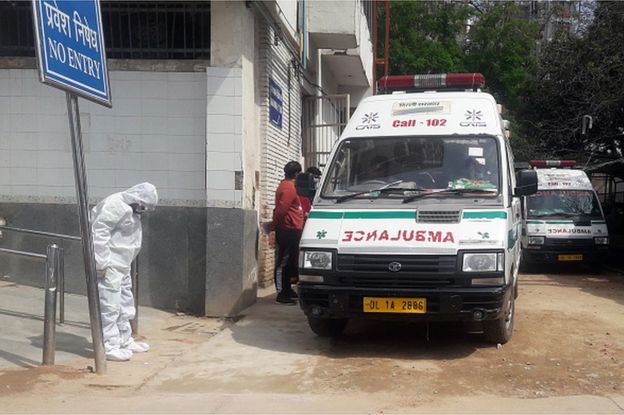
Image copyright GETTY IMAGESImage caption The official assumption is the disease has still not spread in the community
Bracing for the inevitable, India is scaling up testing. Officials say existing labs are able to provide results in six hours and each lab has the capacity to test 90 samples a day which can be doubled. Fifty more state labs are expected to begin testing samples by the end of the week, bringing the total number of testing facilities to 122. Authorities claim that together, the labs will be able to test 8,000 samples a day – a significant scaling up. In addition, the government is planning to allow around 50 private labs to start testing, but they will take up to 10 days to procure kits. (Testing at state-run labs is free, and it is unclear whether the private labs will charge.)
Two rapid testing labs, capable of doing 400 tests a day, are expected to be operational by the end of the week. India has also placed orders for a million test kits, and will be possibly asking the WHO for a million more.
“On testing, the government response has been proportionate, taking into account scope, need and capacity,” Henk Bekedam, WHO Representative to India told me. “We recognise that laboratory networks are expanding the scope and testing and they now include patients with severe acute respiratory infection and influenza-like illness detected through the surveillance system. It would also be important to look at ‘atypical pneumonia’ cases. If they are without any distinctive cause, then they need to be considered for testing.”
Image copyright GETTY IMAGESImage caption India could be buying time to stock up on testing kits and add isolation and hospital beds
The weeks and months ahead will show whether these steps have been enough. “We cannot say India has escaped community transmission,” Mr Bhargava says candidly. And if and when there is an explosion of infections and more sick people require hospitalisation, India will face formidable challenges.
India has eight doctors per 10,000 people compared to 41 in Italy and 71 in Korea. It has one state-run hospital for more than 55,000 people. (Private hospitals are out of reach for most people). The country has a poor culture of testing, and most people with flu symptoms do not go to doctors and instead try home remedies or go to pharmacies. There’s a scarcity of isolation beds, trained nursing staff and medics, and ventilators and intensive care beds.
India’s influenza cases peak during the monsoon season, and there is no reason why the coronavirus will not make a second coming, virologists say. “Given the way it is progressing in India, it seems it is about two weeks behind Spain and three weeks behind Italy. But that’s the number of known cases. And without sufficient testing and shutting down large gatherings, the numbers could be a lot worse,” Shruti Rajagopalan, economist and a Senior Research Fellow at the Mercatus Center at George Mason University, told me.
India’s traditional neglect of public healthcare will begin to bite if the disease spreads to its teeming small towns and villages. “This is a very unique and real public health challenge,” says Ms Rao. And it’s early days yet.
SHANGHAI/SEOUL (Reuters) – Asia reported hundreds of new coronavirus cases on Wednesday, including a U.S. soldier stationed in South Korea, as the United States warned of an inevitable pandemic and outbreaks in Italy and Iran spread to other countries.
World stocks tumbled for the fifth day on fears of prolonged disruption to global supply chains, while safe-haven gold rose back toward seven-year highs and U.S. bond yields held near record lows.
Stock markets globally have wiped out $3.3 trillion of value in the past four trading sessions, as measured by the MSCI all-country index.
The disease is believed to have originated in a market selling wildlife in the central Chinese city of Wuhan late last year and has infected about 80,000 people and killed more than 2,700, the vast majority in China.
RELATED COVERAGE
Trump returns to U.S. as country warily eyes spread of coronavirus
Facebook to ban misleading ads about coronavirus
The U.S. Centers for Disease Control and Prevention urged Americans to prepare, saying that while the immediate risk there was low the global situation suggested a pandemic was likely.
“It’s not a question of if. It’s a question of when and how many people will be infected,” the CDC’s principal deputy director, Anne Schuchat, said on Tuesday.
World Health Organization (WHO) chief Tedros Adhanom Ghebreyesus, however, advised against referring to a pandemic.
“We should not be too eager to declare a pandemic without a careful and clear-minded analysis of the facts,” Tedros said in remarks to Geneva-based diplomats.
“Using the word pandemic carelessly has no tangible benefit, but it does have significant risk in terms of amplifying unnecessary and unjustified fear and stigma, and paralyzing systems. It may also signal that we can no longer contain the virus, which is not true.”
‘DON’T WAIT’
The United States has reported 57 cases of the virus. U.S. President Donald Trump, back in Washington after a visit to India, said on Twitter that he would meet U.S. officials for a briefing on the coronavirus on Wednesday.
Dr Bruce Aylward, head of a joint WHO-Chinese mission on the outbreak, told reporters on his return to Geneva that countries’ preparations should not wait.
“Think the virus is going to show up tomorrow. If you don’t think that way, you’re not going to be ready,” he said. “This a rapidly escalating epidemic in different places that we have got to tackle super-fast to prevent a pandemic.”
Aylward said China’s “extraordinary mobilization” showed how an aggressive public health policy could curb its spread.
The WHO says the outbreak peaked in China around Feb. 2, after authorities isolated Hubei province and imposed other containment measures.
China’s National Health Commission reported another 406 new infections on Wednesday, down from 508 a day earlier and bringing the total number of confirmed cases in mainland China to 78,064. Its death toll rose by 52 to 2,715.
The WHO said only 10 new cases were reported in China on Tuesday outside Hubei.
South Korea, which with 1,261 cases has the most outside China, reported 284 new ones including a U.S. soldier, as authorities readied an ambitious plan to test more than 200,000 members of a church at the center of the outbreak.
Of the new cases, 134 were from Daegu city, where the virus is believed to have been passed among members of the Shincheonji Church of Jesus, the Korea Centers for Disease Control and Prevention said.
The U.S. military said a 23-year-old soldier based in Camp Carroll, about 20 km (12 miles) from Daegu, had been infected and was in self-quarantine at home.
OLYMPIC WORRIES
In Japan, Prime Minister Shinzo Abe called for sports and cultural events to be scrapped or curtailed for two weeks to stem the virus as concern mounted for the 2020 Tokyo Olympics.
Japan’s professional baseball teams would play matches without spectators until March 15 due to virus concerns, Kyodo news agency reported.
Japan has nearly 170 virus cases, besides the 691 linked to a cruise ship that was quarantined of its coast this month. Six people have died in Japan, including four from the ship.
There have been nearly 50 deaths outside China, including 11 in Italy and 19 in Iran, the most outside China, according to a Reuters tally.
Iran’s deputy health minister – seen mopping his brow at a televised news conference – was among its 139 coronavirus infections. Cases linked to Iran have been reported across the region.
Kuwait said six new coronavirus cases, all linked to travel to Iran, took its tally to 18, while Bahrain said its infections had risen to 26 after three new ones on a flight from Iran.
The United Arab Emirates, which has reported 13 coronavirus cases, is prepared for “worst case scenarios” as it spreads in the Middle East, a government official said.
In Europe, Italy has become a front line in the global outbreak with 322 cases. Italians or people who had recently visited the country, have tested positive in Algeria, Austria, Croatia, Romania, Spain and Switzerland.
Two hotels, one in Austria and one in Spain’s Canary Islands, were also locked down after cases emerged linked to Italy. Spain also reported its first three cases on the mainland.
Excluded from the World Health Organisation on mainland China’s objections, Taipei said it dealt directly with organisation on outbreak
Beijing and the WHO say they ensured Taiwan was kept up to date with virus developments
Taiwan says it dealt directly with the WHO over the virus outbreak and did not need mainland China’s permission to do so. Photo: Getty Images
Taiwan’s presence at a World Health Organisation (WHO) meeting this week on the coronavirus outbreak that started in mainland China was the result of direct talks between the island and the body, and did not require Beijing’s permission, Taipei
said on Wednesday.
Its exclusion from WHO membership because of Chinese objections has been an increasingly sore point for Taiwan during the outbreak. It complained that it was unable to get timely information from the WHO and accused Beijing of passing incorrect information about Taiwan’s total virus case numbers, which stand at 18.
But in a small diplomatic breakthrough for the island – which mainland China regards as a wayward province – its health experts were this week allowed to attend an online technical meeting on the virus.
The Chinese foreign ministry said that was because Beijing gave approval for Taiwan’s participation. Taiwan foreign ministry spokeswoman Joanne Ou said China was trying to take credit for something it did not deserve.
Coronavirus: Taiwan restricts travellers from Hong Kong and Macau amid outbreak crisis
“The participation of our experts at this WHO forum was an arrangement made by our government and the WHO directly. It did not need China’s approval,” Ou said.
Taiwan’s experts took part in a personal capacity to avoid political disputes, and did not give their nationality when joining the online forum, she said.
Coronavirus: Everything you need to know in a visual explainer
Taiwan’s WHO exclusion became another point of contention between China and the United States last week, after the US ambassador to the UN in Geneva told the WHO’s executive board that the agency should deal directly with Taipei.
Mainland China, which said Beijing adequately represents Taiwan at the WHO, accused the US of a political “hype-up” about the issue.
Beijing and the WHO said they had ensured Taiwan was kept up to date with virus developments and that communication with the island was smooth.
Beijing insists that Taiwan cannot be part of the World Health Organisation as the island is part of “one China”. Photo: AFP
Taipei said that it alone had the right to represent the island’s 23 million people, that it has never been a part of the People’s Republic of China, and that it has no need to be represented by it.
The new coronavirus has been declared a global emergency by the World Health Organization, as the outbreak continues to spread outside China.
“The main reason for this declaration is not what is happening in China but what is happening in other countries,” said WHO chief Tedros Adhanom Ghebreyesus.
The concern is that it could spread to countries with weaker health systems.
Meanwhile, the US has told its citizens not to travel to China.
The state department issued a level four warning – having previously urged Americans to “reconsider” travel to China – and said any citizens in China “should consider departing using commercial means”.
China has said it will send charter plans to bring back Hubei province residents who are overseas “as soon as possible”.
A foreign ministry spokesman said this was because of the “practical difficulties” Chinese citizens have faced abroad. Hubei is where the virus emerged.
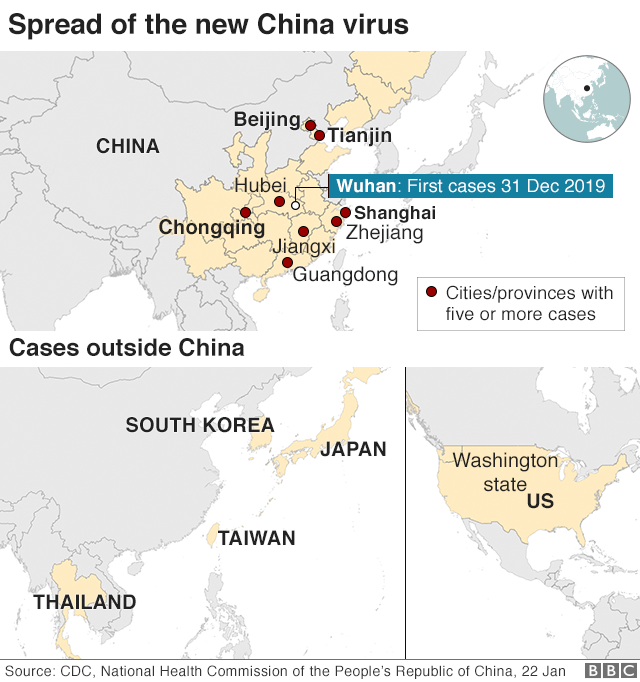
At least 213 people in the China have died from the virus, mostly in Hubei, with almost 10,000 cases nationally.
The WHO said there had been 98 cases in 18 other countries, but no deaths.
Most international cases are in people who had been to Wuhan in Hubei.
However in eight cases – in Germany, Japan, Vietnam and the United States – patients were infected by people who had travelled to China.
Getty Coronavirus outbreak outside China
18 The number of countries with cases
14 Cases in Thailand and Japan
13 Singapore
11 South Korea
8 Australia and Malaysia
5 France and USA
Source: WHO and local authorities
Speaking at a news conference in Geneva, Dr Tedros described the virus as an “unprecedented outbreak” that has been met with an “unprecedented response”.
He praised the “extraordinary measures” Chinese authorities had taken, and said there was no reason to limit trade or travel to China.
The US Commerce Secretary, Wilbur Ross, has said the outbreak could “accelerate the return of jobs to North America”.
Preparing other countries
What happens if this virus finds its way into a country that cannot cope?
Many low- and middle-income countries simply lack the tools to spot or contain it. The fear is it could spread uncontrollably and that it may go unnoticed for some time.
Remember this is a disease which emerged only last month – and yet there are already almost 10,000 confirmed cases in China.
The 2014 Ebola outbreak in West Africa – the largest in human history – showed how easily poorer countries can be overwhelmed by such outbreaks.
And if novel coronavirus gets a significant foothold in such places, then it would be incredibly difficult to contain.
We are not at that stage yet – 99% of cases are in China and the WHO is convinced the country can control the outbreak there.
But declaring a global emergency allows the WHO to support lower- and middle-income countries to strengthen their disease surveillance – and prepare them for cases.
How unusual is this declaration?
The WHO declares a Public Health Emergency of International Concern when there is “an extraordinary event which is determined… to constitute a public health risk to other states through the international spread of disease”.
It has previously declared five global public health emergencies:
Swine flu, 2009 – The H1N1 virus spread across the world in 2009, with death toll estimates ranging from 123,000 to 575,400
Polio, 2014 – Although closer than ever to eradication in 2012, polio numbers rose in 2013
Zika, 2016 – The WHO declared Zika a public health emergency in 2016 after the disease spread rapidly through the Americas
Ebola, 2014 and 2019 – The first emergency over the virus lasted from August 2014 to March 2016 as almost 30,000 people were infected and more than 11,000 died in West Africa. A second emergency was declared last year as an outbreak spread in DR Congo
Media caption Inside the US laboratory developing a coronavirus vaccine
How is China handling the outbreak?
A confirmed case in Tibet means the virus has reached every region in mainland China. According to the country’s National Health Commission, 9,692 cases have tested positive.
The central province of Hubei, where nearly all deaths have occurred, is in a state of lockdown. The province of 60 million people is home to Wuhan, the heart of the outbreak.
The city has effectively been sealed off and China has put numerous transport restrictions in place to curb the spread of the virus.
People who have been in Hubei are also being told to work from home until it is considered safe for them to return.
The virus is affecting China’s economy, the world’s second-largest, with a growing number of countries advising their citizens to avoid all non-essential travel to the country.
How is the world responding?
Voluntary evacuations of hundreds of foreign nationals from Wuhan are under way.
The UK, Australia, South Korea, Singapore and New Zealand are expected to quarantine all evacuees for two weeks to monitor them for symptoms and avoid contagion.
Australia plans to quarantine its evacuees on Christmas Island, 2,000km (1,200 miles) from the mainland in a detention centre that has been used to house asylum seekers.
In other recent developments:
Italy suspended flights to China after two Chinese tourists in Rome were diagnosed with the virus; earlier 6,000 people on board a cruise ship were temporarily barred from disembarking
In the US, Chicago health officials have reported the first US case of human-to-human transmission. Around 200 US citizens have been flown out of Wuhan and are being isolated at a Californian military base for at least 72 hours
Russia has decided to close its 4,300km (2,670-mile) far-eastern border with China
Two flights to Japan have already landed in Tokyo. Japan has now raised its infectious disease advisory level for China
Some 250 French nationals have been evacuated from Wuhan
India has confirmed its first case of the virus – a student in the southern state of Kerala who was studying in Wuhan
Israel has barred all flight connections with China
Papua New Guinea has banned all visitors from “Asian ports”
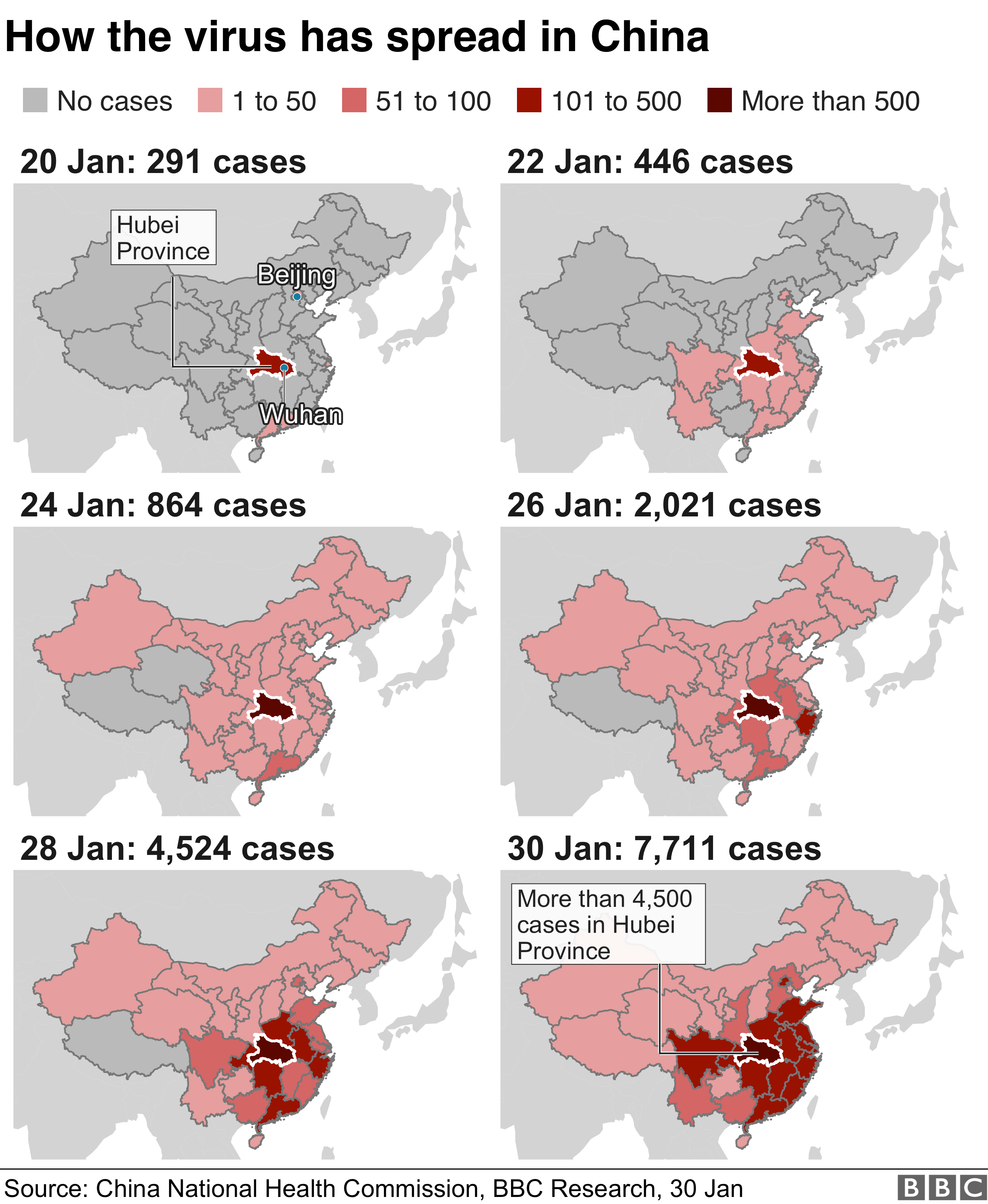
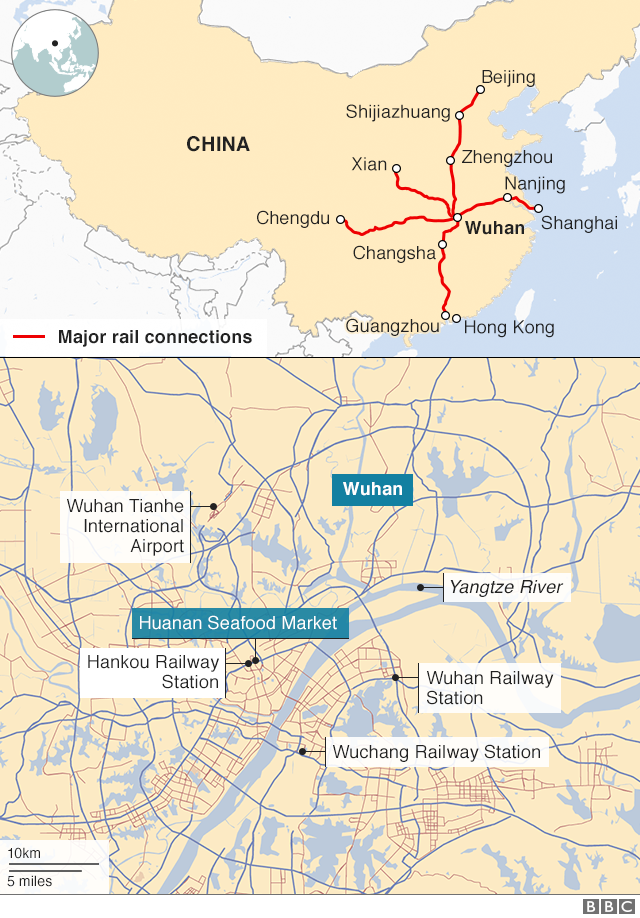
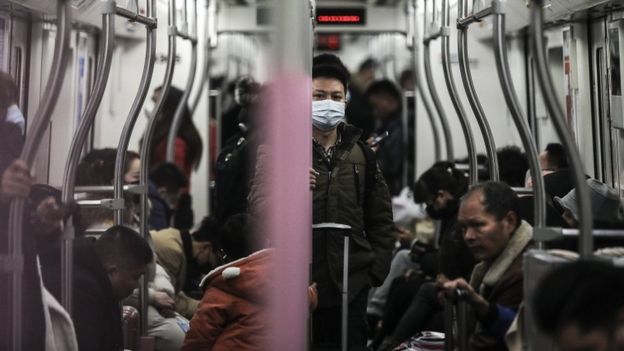
Wuhan, a Chinese city of eleven million people, has temporarily shut down its public transport as it tries to halt the outbreak of a new strain of virus.
Those living in the city have been advised not to leave, in a week when millions of Chinese are travelling for the upcoming Lunar New Year holiday.
The respiratory illness has spread to other parts of China, with some cases in other countries including the US.
There are more than 500 confirmed cases and 17 people have died.
Known for now as 2019-nCoV, the virus is understood to be a new strain of coronavirus not previously identified in humans. The Sars (severe acute respiratory syndrome) virus that killed nearly 800 people globally in the early 2000s was also a coronavirus, as is the common cold.
All the fatalities so far have been in Hubei, the province around Wuhan.
Meanwhile, after a day of discussions in Geneva, the World Health Organization’s (WHO) emergency committee has announced it will not yet declare a “global emergency” over the new virus.
Director general Dr Tedros Ghebreyesus said more information was needed about the spread of the infection. The committee of health experts will meet again on Thursday.
A global emergency is the highest level of alarm the WHO can sound and has previously been used in response to swine flu, Zika virus and Ebola.
What measures have been announced?
From Thursday, all flights and passenger train services out of Wuhan have been stopped.
Bus, subway and ferry services all shut down from 10:00 local time (02:00 GMT).
A special command centre in Wuhan set up to contain the virus said the move was meant to “resolutely contain the momentum of the epidemic spreading”.
Those living in Wuhan had already been told to avoid crowds and minimise public gatherings.
State news agency Xinhua said tourist attractions and hotels in the city had been told to suspend large-scale activities while libraries, museums and theatres were cancelling exhibitions and performances.
A Lunar New Year prayer-giving ceremony at the city’s Guiyuan Temple, which attracted 700,000 people last year, has also been cancelled.
The hashtag “Wuhan is sealed off” was trending on Chinese social media website Weibo.
One user said worries about food and disinfectant made it feel like “the end of the world”, while another said they were on the “verge of tears” when Chinese officials announced the shut-down.
The WHO’s Dr Ghebreyesus described the latest measures as “very strong” and said they would “not only control the outbreak, they will minimise spread internationally”.
Chinese officials said the country was now at the “most critical stage” of prevention and control.
“Basically, do not go to Wuhan. And those in Wuhan please do not leave the city,” said National Health Commission vice-minister Li Bin in one of the first public briefings since the beginning of the outbreak.
Like shutting down London before Christmas
By James Gallagher, BBC health and science correspondent
Wuhan is starting to look like a city in quarantine.
Officials had already warned residents not to leave the city and visitors not to come.
Now the reported public transport ban – which includes flights – slams many of the routes in and out of the city shut.
Image copyright GETTY IMAGESImage caption Subways in Wuhan will be temporarily shut
It is a significant attempt to stop the spread of this new virus, which we now know can spread from person to person.
Limiting transport will cut the chance of the virus reaching other cities in China and other countries around the world.
This all comes just as millions of people are travelling across China for the week-long holiday that is Lunar New Year.
If you’re struggling for context – imagine shutting down London in the week before Christmas.
The big question left is the roads – and whether any of Wuhan’s 11 million inhabitants will be able to simply drive away.
The patient in Macau is said to be a businesswoman who arrived from Wuhan over the weekend.
The first US case was confirmed on Tuesday. President Donald Trump said the situation was “totally under control” and that he trusted the information being provided by Chinese authorities.
There have been three cases in Thailand, one in Korea, one in Japan and one in Taiwan.
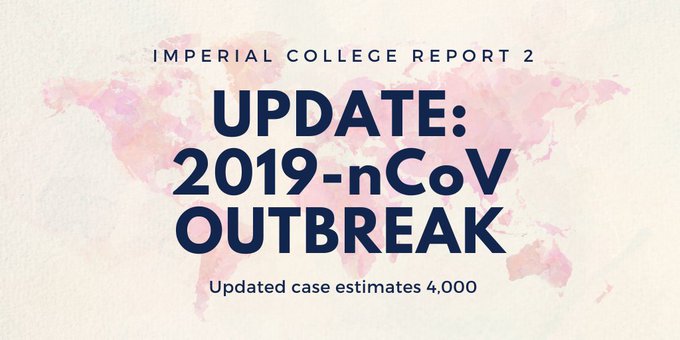
Although only about 500 cases have been confirmed, calculations by scientists at the MRC Centre for Global Infectious Disease Analysis at Imperial College London suggest there are 4,000 people sick with the virus in Wuhan.
Our estimate at 4,000 cases is more than double the past estimate due to increase of number of cases outside China. This should not be interpreted as implying the outbreak has doubled in size.
The virus originated in a seafood market in Wuhan that “conducted illegal transactions of wild animals”, authorities said. The market has since been shut down.
GENEVA (Reuters) – A World Health Organisation panel of experts on the new coronavirus met on Thursday to evaluate whether the outbreak, which has spread from China to several countries, constitutes an international emergency.
The 16 independent experts in disease control, virology, epidemiology and vaccine development were holding a second closed-door meeting at the U.N. agency’s headquarters in Geneva after not reaching a decision on Wednesday.
Didier Houssin, an adviser to France’s national health security agency, is serving as chair. Chinese health authorities made a presentation by teleconference and have allowed a WHO team into the country who are due to report back to the panel.
A news conference was expected later in the day.
Here are some facts about WHO Emergency Committees:
– Director general Tedros Adhanom Ghebreyesus announced on Monday that the WHO had called an Emergency Committee to assess the outbreak of the novel coronavirus (2019-nCoV) that began in the Chinese city of Wuhan at the end of last year.
– Declaration of a Public Health Emergency of International Concern – known as a “PHEIC” in WHO jargon – is rare.
– The WHO panel’s recommendations, after assessing any evidence of human-to-human transmission and other factors, would be put to Tedros, who would decide whether to declare an emergency.
– Only five emergencies have been declared in the past decade: the H1 virus that caused an influenza pandemic (2009), West Africa’s Ebola outbreak, polio (2014), Zika virus (2016), and the ongoing Ebola outbreak in the Democratic Republic of Congo (2019).
– The WHO’s criteria, laid out in the 2005 International Health Regulations, define a PHEIC as “an extraordinary event which is determined to constitute a public health risk to other states through the international spread of disease and to potentially require a coordinated international response”.
– Such situations are “serious, sudden, unusual or unexpected”, carry cross-border implications and may require immediate international action, its rules say.
– A declaration would lead to boosting public health measures, funding and resources to prevent and reduce international spread.
– It could include recommendations on trade and travel, including airport screening of passengers, although the WHO generally aims to avoid disruptive trade restrictions.
International watchdog to vote on whether to extend restrictions to southern African countries that are the biggest exporters
If passed, China may find it hard to buy elephants from Africa
An elephant is hoisted into Chongqing zoo in southwestern China, on loan from another Chinese zoo. Photo: Reuters
China, one of the leading buyers of African elephants, could face difficulty in acquiring the mammals if a widening of a ban on their sale to zoos is ratified next week by the global regulator of wildlife trade.
A motion further restricting the sale of live elephants was on Sunday supported by 46 countries at the committee stage of the Convention on International Trade in Endangered Species of Wild Fauna and Flora (Cites) in Geneva. It will go to a final vote on August 28.
The sale of elephants from West, Central and East Africa is already banned – but there is a lower level of protection for them in southern African countries such as South Africa, Namibia and Zimbabwe, which are the top three exporters of wild elephants to overseas zoos, according to Cites.
Keeping elephants caught from the wild in zoos is considered cruel by conservation and animal rights groups.
Conservationists criticised Zimbabwe’s capture of 35 baby elephants that were exported to a Chinese zoo in February. There was also uproar from activists in 2015 when a video filmed in a Chinese zoo showed two dozen elephants bought from Zimbabwe exhibiting signs of distress.
Zimbabwe was among 18 countries that opposed the potential ban at the committee stage, along with the United States – another leading buyer of elephants from Africa. China was one of 19 countries that abstained, while the European Union’s 28 countries did not vote.
If the motion is passed, China and the US – both known to be buying elephants from Africa and keeping them in so-called captive facilities or zoos – may find it hard to source the animals from the continent. Zimbabwe has come under global scrutiny
for its capture and sale of elephants to captive facilities including zoos and safari parks in China and the US.
Peter Knights, founder and chief executive of WildAid, an environmental organisation in San Francisco, explained that Cites still allowed the movement of live elephants for on-site conservation efforts such as moving the animals back into the wild or to a national park where they had been depleted.
“This is not primarily a conservation issue but more about animal welfare,” he said. “As highly social, intelligent animals, African elephants do not usually do well in captivity, requiring very large areas, and often developing behavioural problems in captivity and not usually reproducing successfully – indicating far from ideal housing.”
According to Humane Society International, which promotes animal welfare, Zimbabwe has sold more than 100 baby elephants to zoos in China since 2012, with a further 35 reportedly awaiting export.
On Monday, 55 elephant specialists protested to the US wildlife management agency about plans for the country’s zoos to import juvenile elephants caught in the wild from Zimbabwe. They asked the agency to prohibit imports of wild-caught elephants for captivity in US facilities.
“We are vehemently opposed to the proposed imports,” the experts wrote in a letter to the agency. “Young elephants are dependent on their mothers and other family members to acquire necessary social and behavioural skills. Male calves only leave their natal families at 12 to 15 years old and females remain for life. Disruption of this bond is physically and psychologically traumatic for both the calves and remaining herds and the negative effects can be severe and lifelong.”
The letter said that eSwatini, formerly Swaziland, had sold a total of 11 wild elephants to two American zoos in 2003, and a further 18 to three US zoos in 2016.
‘Hundreds’ of elephants are being poached each year in Botswana
Concerns about keeping elephants in zoos come at a time when the animals remain under threat in Africa from poachers who kill them for ivory.
Southern African countries such as Botswana, Namibia, Zimbabwe and Zambia are pushing to reopen the trade in ivory. Zambia is seeking to have the classification of its elephants downgraded to allow commercial trade in registered raw ivory with approved trading partners.
Other countries, including Kenya, Nigeria and Gabon, are seeking the highest possible levels of protection for all of Africa’s elephants.
Two previous attempts at regulating the ivory trade failed to curb poaching, which has caused elephant numbers to dwindle over the past two decades. A 2016 study estimated that 30,000 to 40,000 elephants were being killed every year, with about 400,000 remaining in total.
Knights, of WildAid, said that between 1975 and 1989 – the first period in which the ivory trade was regulated – half of Africa’s elephants were lost. During the second attempt at regulation between 2008 and 2017, participating countries claimed to have addressed the problem but poaching increased.
“It is clear that we cannot control ivory trade and that legal trade stimulates poaching and demand for ivory, rather than substituting for it as some countries suggest. The price fell by two-thirds when China banned domestic sales,” Knights said, adding that demand for ivory came primarily from Asia.
“Most seized shipments are en route to China. It has banned all sales and is making a great effort to crack down on illegal trade.”
GENEVA, July 27 (Xinhua) — Ambassadors from 50 countries to the United Nations Office at Geneva (UNOG) have co-signed a letter to the President of the UN Human Rights Council (HRC) and the High Commissioner for Human Rights to voice their support for China’s position on issues related to its Xinjiang Uygur Autonomous Region.
Earlier on July 12, a number of ambassadors in Geneva sent the joint letter to show their support for China, and as of Friday evening, more ambassadors had joined, the Chinese Mission to the UNOG revealed.
In a statement issued on Friday night, the Chinese mission said that some other countries had also expressed their support in separate letters or press statements.
In the joint letter, the ambassadors commend China for its economic and social progress, effective counter-terrorism and de-radicalization measures, and strong guarantee of human rights.
They appreciate the opportunities provided by China for diplomatic envoys, officials of international organizations, and media professionals to visit Xinjiang, and point to the contrast between Xinjiang in the eyes of those who have visited it and the one portrayed by some western media.
The ambassadors also urge a certain group of countries to stop using uncorroborated information to make unfounded accusations against China.
“I was surprised that some people call these vocational training and education centers concentration or internment camps,” Vadim Pisarevich, deputy permanent representative of Belarus to the UNOG, told Xinhua.
“They’re nothing of the kind. They look like ordinary educational facilities and even I said that they are more than this because they provide life skills training to the students,” Pisarevich said.
They are “very useful institutions for addressing the problems of terrorism, extremism and separatism,” he said.
“Terrorism and extremism are an intractable challenge across the world. In the face of its grave threat, Xinjiang Uygur Autonomous Region responded with a number of lawful steps, including setting up vocational education and training centers, to prevent and combat terrorism and extremism,” the Chinese Mission to the UNOG said in its statement.
“Facts speak louder than words, and justice cannot be overshadowed. The great diversity of countries co-signing the letter — from Asia, Africa, Latin America, and Europe, especially the OIC (Organization of Islamic Cooperation) — makes it clear that the international community has drawn a fair conclusion about Xinjiang’s human rights achievement and counter-terrorism and de-radicalization outcome,” the statement said.
“Those that seek to use human rights as an excuse to slander and pressure China have only themselves to deceive,” it added.
“We oppose any attempt to use human rights issues as a cover for interference in a country’s internal affairs. We urge those who are doing so to change course, refrain from politicization and double standards, and stop interfering in the internal affairs of other countries under the pretext of human rights,” it said.
At a press conference on Friday, China’s Ambassador to the UNOG Chen Xu also rebuked some Western nations for slandering China over Xinjiang, noting that China doesn’t accept these “groundless accusations.”
Jamshed Khamidov, head of Tajikistan’s mission in Geneva, said his government opposes any attempts to use the Human Rights Council for particular political purposes, and efforts should be made to avoid any politicization of the Human Rights Council.
“We know the situation in the Xinjiang region. We know how much the government of China is doing … and what kind of measures were implemented in this region to support its peace, security and development,” he said.
In visits to the vocational training and education centers in Xinjiang’s Urumqi and Kashi, Zenon Mukongo Ngay, head of the Democratic Republic of Congo’s mission in Geneva, said he was impressed with the “level of development” in Xinjiang and how the people in the centers receive education for getting a job.
The Chinese mission also said that together with all parties, China is committed to promoting the healthy development of the international human rights cause by encouraging multilateral human rights institutions to stick to the purpose and principles of the UN Charter, handle human rights issues in an objective, impartial and non-selective manner, and engage in constructive dialogues and cooperation.












 CHINDIA ALERT: You'll be living in their world, very soon