Archive for ‘guangdong province’

22/10/2019

Chinese icebreakers set sail for Antarctic rendezvous that will herald ‘new era of polar exploration’

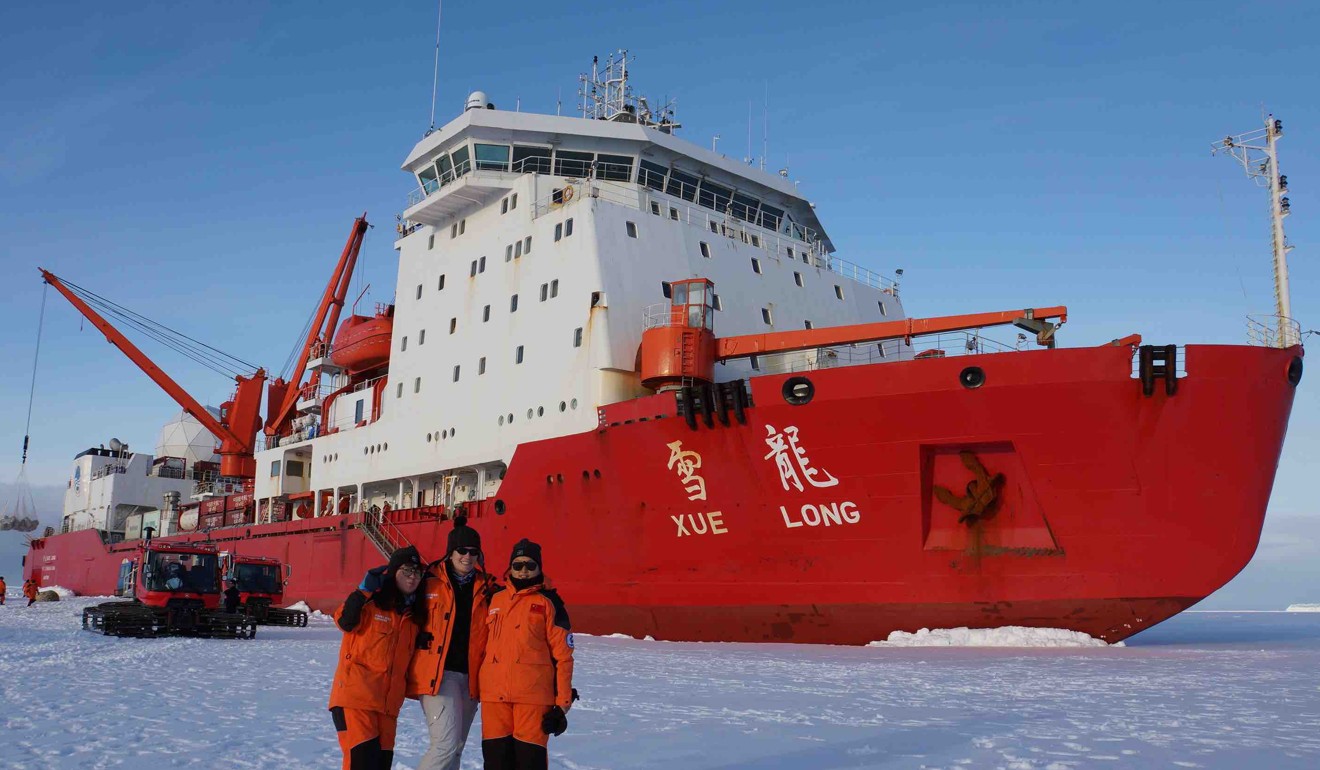
  • ‘Snow Dragons’ Xuelong and Xuelong II leave on China’s 36th Antarctic expedition
  • Mission to resource-rich continent carries great scientific and economic weight
A ceremony is held for the maiden voyage of China’s home-built polar icebreaker Xuelong II in Shenzhen, Guangdong province. Photo: Xinhua
China has sent two icebreakers to the Antarctic in its most ambitious polar expedition to the Earth’s resource-rich southernmost continent yet.
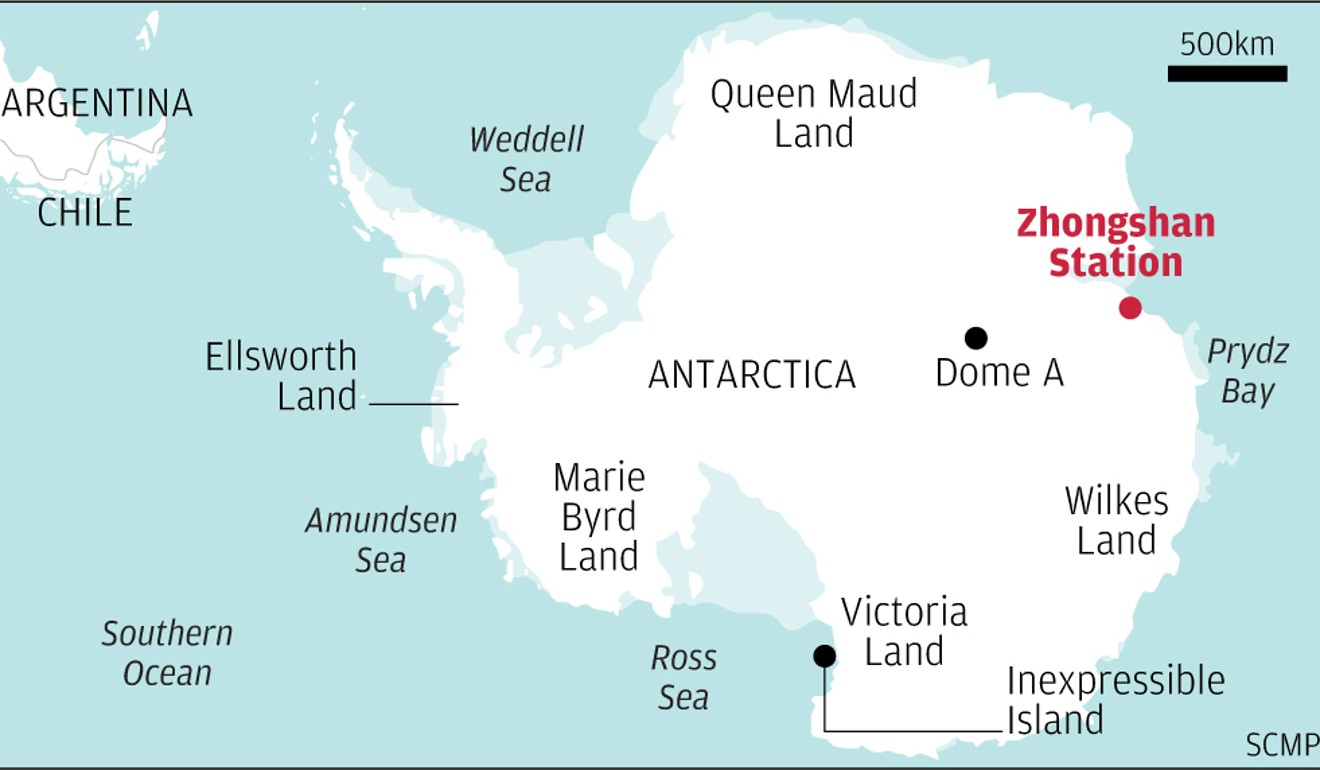
The Xuelong, or Snow Dragon, left Shanghai on Tuesday morning with a crew of 107 and 1,450 tonnes of supplies on board. It is expected to meet another icebreaker, Xuelong II, at Zhongshan Station on Prydz Bay in East Antarctica in late November before the ships carry out separate missions in the region.
This will be the 36th official Antarctic expedition for China, and the first involving two research icebreakers. Xuelong II, the first Chinese-built vessel of its kind, was commissioned in July and left for its maiden Antarctic journey last week. The ships will be back in China by late spring next year.
The voyages have been hailed by state media as “the start of China’s new era of polar exploration”. Zhao Yanping, the captain of Xuelong II, was quoted by the Science Daily website as saying that experts believed the ships could significantly expand Chinese science missions in the polar regions.
China’s Xuelong icebreaker was bought from Ukraine in 1994. Photo: Handout

Xuelong II, with propellers at bow and stern, can make up to 15 knots (28km/h) in open water and three knots (5.6km/h) when breaking ice. Observers said it could pave the way for a nuclear-powered icebreaker.

Xuelong, the country’s first polar research vessel, bought from Ukraine in 1994, is to carry out surveys in the Amundsen and Ross seas.

A report by The Beijing News said that Xuelong’s crew would also visit Inexpressible Island in Terra Nova Bay on the Ross Sea to help in construction work on China’s fifth Antarctic scientific station, which is expected to be operational in 2022.

How Chinese access to Chilean port could give Antarctic exploration activities a boost

Since it joined the Antarctic Treaty in June 1983, China has steadily increased its stakes in a region that contains vast, untapped natural resources, including oil, gas and minerals.

Last year, China announced it would begin building its first permanent airfield on Antarctica – a 1,500 metre strip to be located on an ice cap about 28 kilometres from Zhongshan Station.

Meanwhile, Chinese businesses have taken an interest in the region. Food companies have been among the largest players in fishing krill – tiny, protein-rich shrimp-like creatures that are abundant in Antarctic waters. Tourists from China now account for 16 per cent of the total number of travellers to the world’s last great untouched wilderness, second to visitors from the United States, according to the International Association of Antarctica Tour Operators.

While Beijing said its engagement in the Antarctic would be “peaceful” and the focus of its expeditions was on protecting the environment, its growing presence there has raised concerns in the West, particularly among established explorers such as Australia and the US.

Australia said at the annual meeting of the Commission for the Conservation of Antarctic Marine Living Resources in Hobart, Tasmania, this week, that despite opposition from China and Russia, it would push for the creation of marine reserves off East Antarctica.

China’s new icebreaker Snow Dragon II ready for Antarctica voyage later this year
China and Australia have also been at odds over Beijing’s proposal to establish a code of conduct for the region around Dome A on the Antarctic Plateau, an area on the top of the ice sheet ideal for space and satellite observation. Canberra rejected the proposal, saying that Dome A is inside its territory.
Source: SCMP
19/10/2019

China’s door will ‘only open wider’, Xi Jinping tells delegates at Qingdao Multinationals Summit

  • ‘Only when China is good, can the world get better,’ president says in congratulatory letter read out at launch of event to promote global trade
  • Summit opens two weeks after South Korean giant Samsung closes its last factory in mainland China with the loss of thousands of jobs
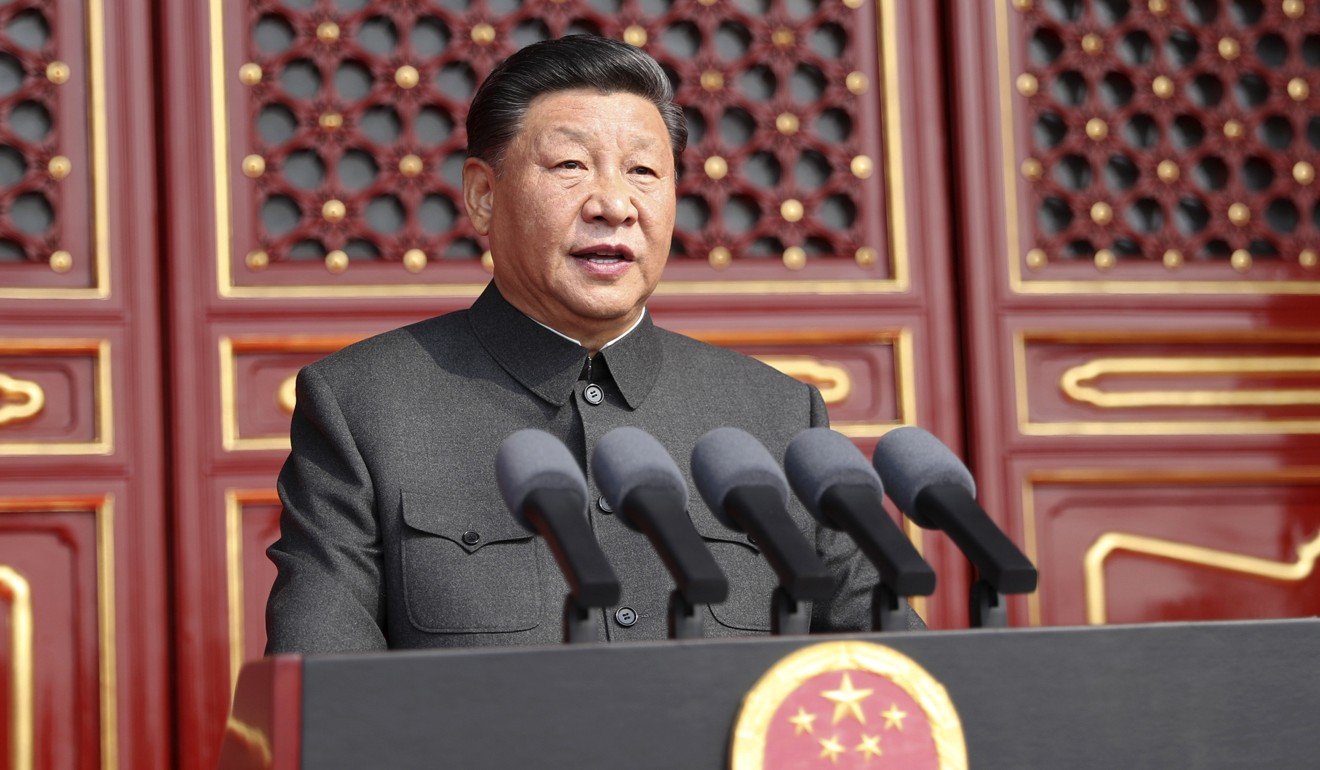
Xi Jinping has praised multinational companies for the role they have played in China’s opening up over the past four decades. Photo: AFP
Just a day after China reported its slowest ever quarterly economic growth,

President Xi Jinping

on Saturday reiterated his promise to keep opening up the nation’s markets to companies and investors from around the world.

“The door of China’s opening up will only open wider and wider, the business environment will only get better and better, and the opportunities for global multinational companies will only be more and more,” he said in a congratulatory letter read out by Vice-Premier Han Zheng at the inaugural Qingdao Multinationals Summit in the east China city.
The two-day event, which ends on Sunday, was organised by China’s commerce ministry and the provincial government of Shandong with the aim, according to its website, of giving multinational companies “the opportunity to articulate their business values and vision” and “promote cooperation with host countries”.

In his letter, Xi praised multinational companies for the role they had played in China’s opening up and reform over the past four decades, describing them as “important participants, witnesses and beneficiaries”.

China was willing to continue opening up to benefit not only itself but the world as a whole, he said.

“Only when the world is good, China is good. Only when China is good, can the world get better.”

Despite its upbeat tone, Xi’s message comes as Beijing is facing intense scrutiny from the international business community over its state-led economic model – one of the main bones of contention in its trade war with the US – and its attempts to prevent foreign firms from speaking out on issues it deems too sensitive, from Hong Kong to human rights.
Foreign firms have also long complained about the barriers they face when trying to access China’s markets and the privileged treatment it gives to state-owned enterprises. Even though Beijing has promised to reform its state sector, foreign businesses have complained of slow progress, and just last month the European Union Chamber of Commerce urged the EU to take more defensive measures against China’s “resurgent” state economy.
Xi promised “more and more” opportunities for global firms. Photo: AP

Sheman Lee, executive director of Forbes Global Media Holding and CEO of Forbes China, said at the Qingdao summit that foreign firms were facing a difficult trading environment in the world’s second-largest economy.

“Multinationals have seen their growth in China slow in recent years because of the growing challenge from local firms, a gradually saturating market and rising operation costs,” he said.

Craig Allen, president of the US-China Business Council, said that many multinational companies were reluctant to release their best products in China out of fear of losing their intellectual property.

China still not doing enough to woo foreign investment

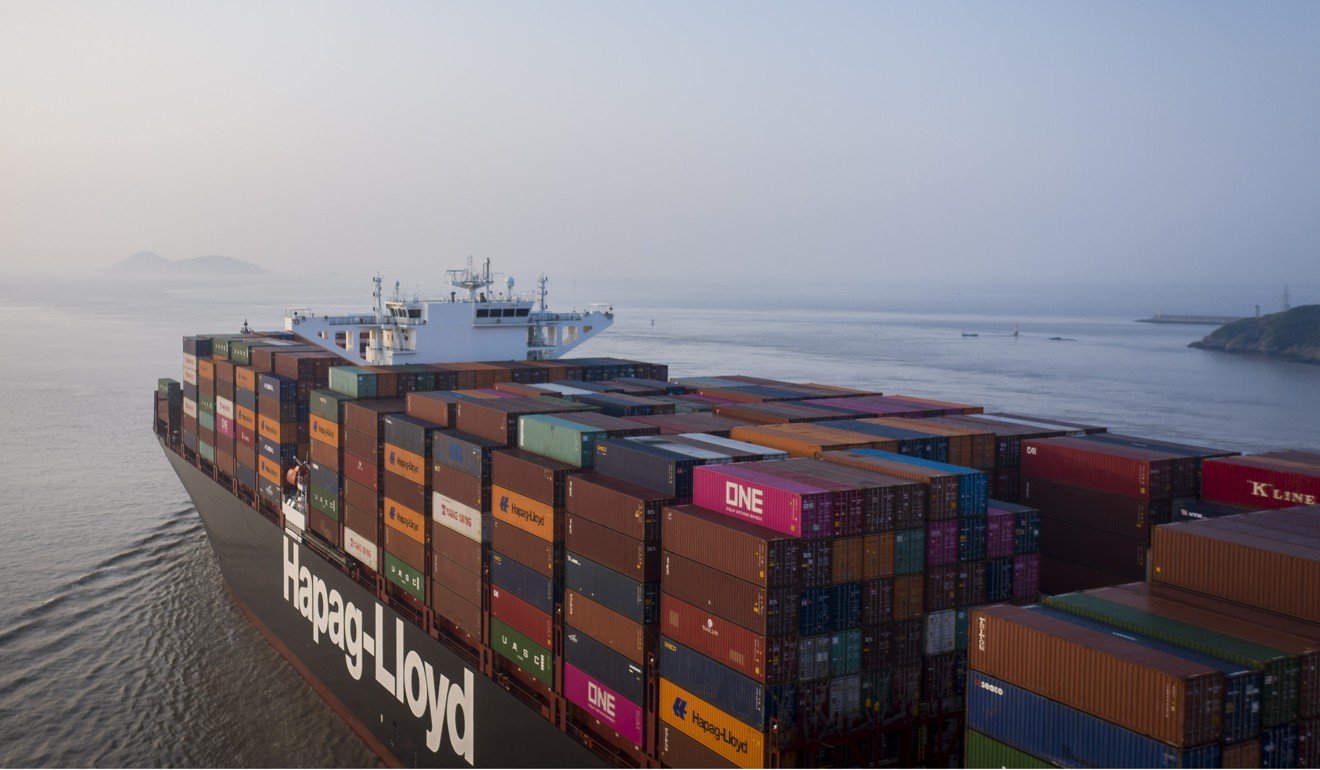
In his letter, Xi said that over the next 15 years, the value of China’s annual imports of goods would rise beyond US$30 trillion, while the value of imported services would surpass US$10 trillion a year, creating major opportunities for multinational companies.

China would also reduce tariffs, remove non-tariff barriers and speed up procedures for customs clearance, he said.

Commerce Minister Zhong Shan said at the opening ceremony that China would also continue to improve market access and intellectual property protection.

The country supported economic globalisation and would safeguard the multilateral trade system, he said, adding that it was willing to work with the governments of other countries and multinational corporations to promote economic globalisation.

Xi Jinping says the value of China’s annual goods imports will rise beyond US$30 trillion over the next 15 years. Photo: Bloomberg
The promise to continue to open up China’s markets came after the State Council
– the nation’s cabinet – made exactly the same pledge at its weekly meeting on Wednesday.
After the latest round of trade war negotiations in Washington, Beijing said it had achieved “substantive progress” on intellectual property protection, trade cooperation and technology transfers, all of which have been major bones of contention for the United States.
Despite its pledge to welcome multinational companies into its market, China is in the process of creating a list of “unreliable foreign entities” it considers damaging to the interests of Chinese companies. The roster, which is expected to include FedEx, is seen as a response to a similar list produced earlier by the United States.
Xi’s gesture would also appear to have come too late for South Korean multinational 
Samsung Electronics

, which announced on October 4 it had ended the production of smartphones at its factory in Huizhou, Guangdong province – its last in China – with the loss of thousands of jobs.

Source: SCMP
19/10/2019

China expected to ramp up South Pacific push at economic forum in Samoa

  • Vice-Premier Hu Chunhua will lead delegation at two-day summit that is expected to be attended by 400 officials and 200 businesspeople
  • Observers say it is Beijing’s latest effort to regain momentum in the region and will be closely watched in the US
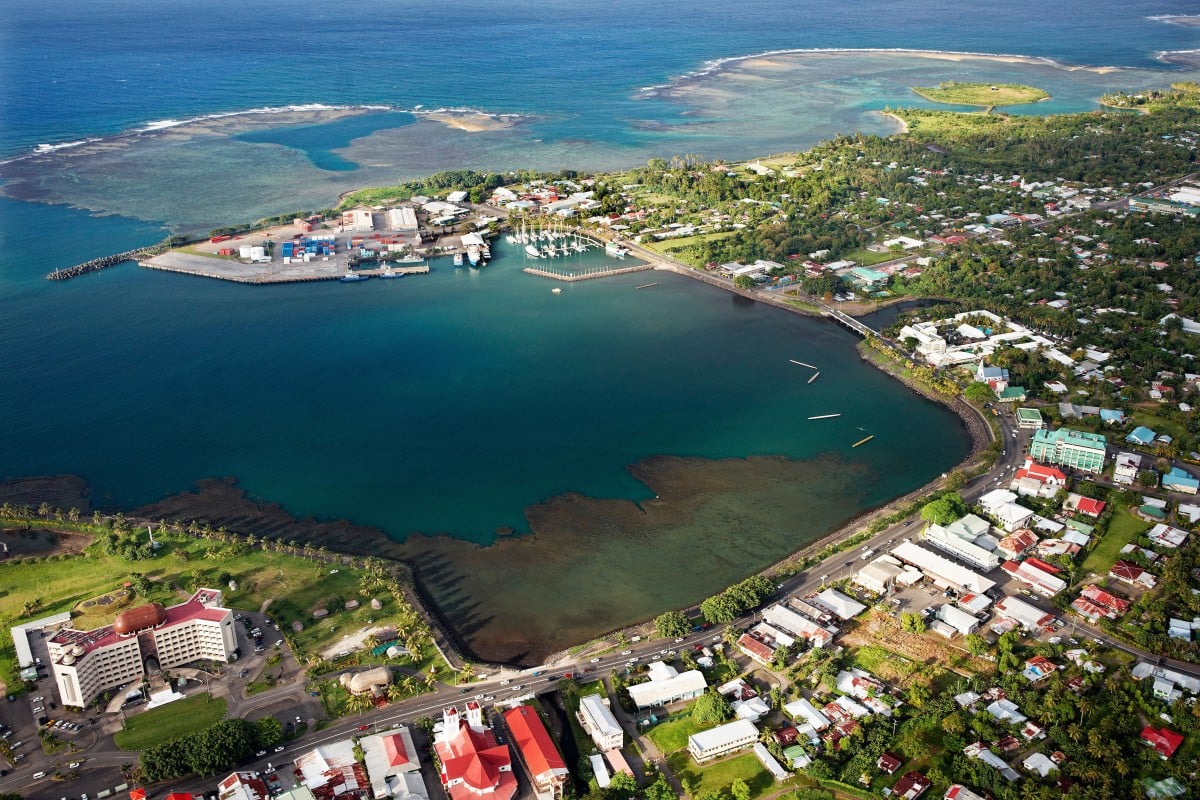
Samoan capital Apia will host the third China-Pacific Island Countries Economic Development Cooperation Forum, which begins on Sunday. Photo: Alamy

China will seek to expand its economic and diplomatic influence in the South Pacific at a forum this weekend, amid growing concern from the US and its allies over Beijing’s push in the strategically important region.

Vice-Premier Hu Chunhua will lead the Chinese delegation at the third China-Pacific Island Countries Economic Development Cooperation Forum in the Samoan capital Apia, which begins on Sunday. It is expected to be attended by 400 officials and more than 200 businesspeople.

Hu, the former Communist Party chief of China’s manufacturing powerhouse Guangdong who now overseas commercial and agricultural affairs, is expected to deliver a keynote speech at the opening ceremony.

Beijing sees the two-day forum as “timely” and “a good opportunity to deepen mutually beneficial cooperation between China and the Pacific”, a commerce ministry spokesperson told the official Economic Daily newspaper.

Trade, agriculture and fisheries, as well as tourism, infrastructure and climate change were at the top of the agenda for the forum, the spokesperson said.

Leaders of all the Pacific nations – except the four that do not have formal diplomatic ties with Beijing – are expected to attend the forum. Australia, which has “observer status” at the summit, will send Ewen McDonald, deputy secretary of the Department of Foreign Affairs and Trade and the head of its Pacific office.

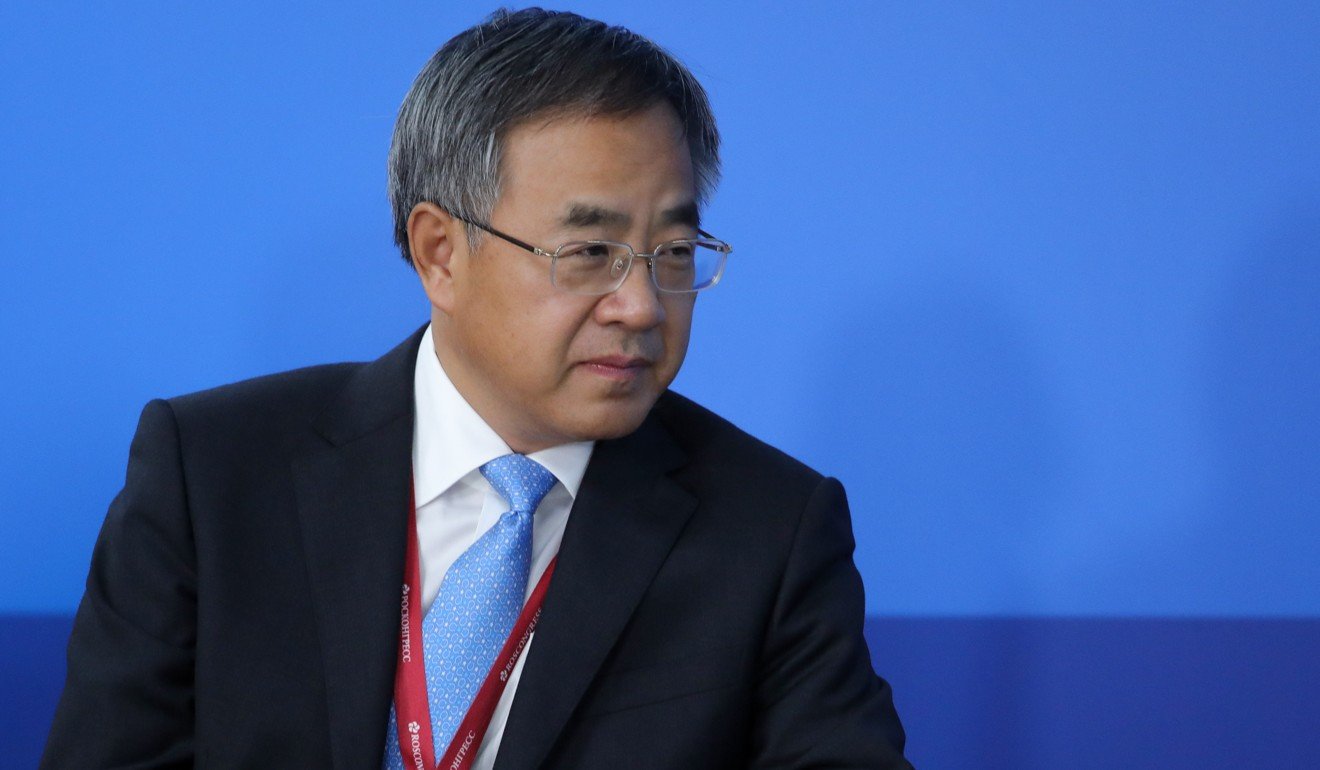
Vice-Premier Hu Chunhua will lead the Chinese delegation at the forum. Photo: EPA-EFE

The forum comes after China hailed a “new breakthrough” in the region following the decision last month by the Solomon Islands and then Kiribati – despite warnings from the US – to cut diplomatic ties with Taipei and switch to Beijing.

They are the latest of Taipei’s allies to be poached by Beijing as it ramps up pressure on the self-ruled island that it sees as a renegade province to be reunited with the mainland, by force if necessary.
Observers said this weekend’s forum was Beijing’s latest effort to regain momentum in the Pacific.

“Having one of China’s top 25 officials visit the region so soon after [Chinese President] Xi Jinping spent close to three days in Papua New Guinea last November is certainly significant,” said Jonathan Pryke, director of the Pacific Islands programme at the Lowy Institute in Sydney, referring to Hu’s position in the 25-member Politburo.

“It shows clearly China’s attempt to recapture momentum after the West, and in particular Australia, have redoubled their efforts in maintaining and building relationships in the Pacific,” he said.

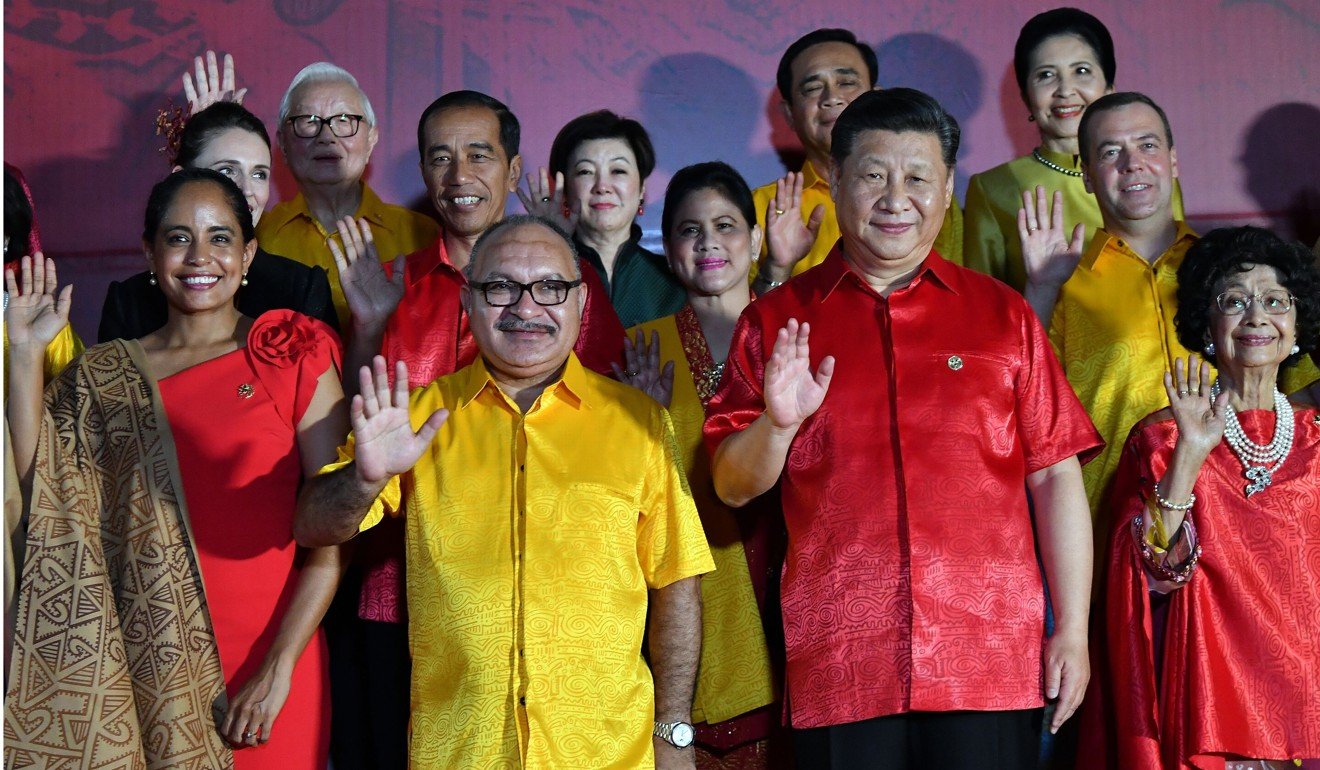
Papua New Guinea’s Prime Minister Peter O’Neill (second from left) and Chinese President Xi Jinping (second from right) pose for a photo during Xi’s visit in November. Photo: AFP

First held in Fiji in 2006, the forum is part of China’s efforts to expand its reach in the resource-rich region.

Back then, premier Wen Jiabao announced 3 billion yuan of concessional loans to Pacific nations and promised to facilitate more trade, medical aid and tourism with the countries. Chinese capital has been pouring into the region – particularly from the mining and fisheries sectors – ever since.

Of note was a 440 million yuan investment, supported by loans from the Export-Import Bank of China, to build a central business centre at Nuku’alofa, the capital of Tonga.

US and allies sideline China in PNG’s Bougainville by helping fund independence vote

As China’s influence grows, the South Pacific – a region traditionally under US hegemony, and on Australia’s doorstep – has “increasingly become a major power that cannot be neglected” and “an important part of China’s greater strategic landscape”, according to Shi Chunlin, an associate professor at Dalian Maritime University.

Trade has increased between China and the eight Pacific nations that have diplomatic ties with Beijing, rising to a combined US$4.32 billion last year – up 25 per cent from 2017.

China has also become the largest trading partner of new ally the Solomons, the second-largest to Papua New Guinea and Fiji, and the third-largest to Samoa.

China’s direct investment in the region has also jumped, reaching US$4.53 billion last year, a more than fourfold increase from the US$900 million of 2013.

Pryke said Beijing was expected to offer new support and loans to the Pacific nations.

“But the Pacific are much more picky about how they want to engage with all partners than they were a decade ago,” he added.

Returning from a trip to China earlier this month, Solomon Islands Prime Minister Manasseh Sogavare confirmed Beijing would provide a US$74 million grant to build a new stadium for the 2023 Pacific Games in the capital Honiara – something its former ally Taipei had committed to fund.

China Sam Group also reportedly signed an agreement on September 22 to lease the island of Tulagi in the Solomons, the site of a former Japanese naval base. The agreement mentioned the development of a refinery on the island, but critics said it could also potentially be used as a military base.

China is now the second-largest donor in the region, only after Australia, which has viewed Beijing’s financial largesse with suspicion.

Last year, in an apparent effort to counter China’s rising influence in the region, Australian Prime Minister Scott Morrison announced that Pacific countries would be offered up to US$2.18 billion in grants and cheap loans to build infrastructure.

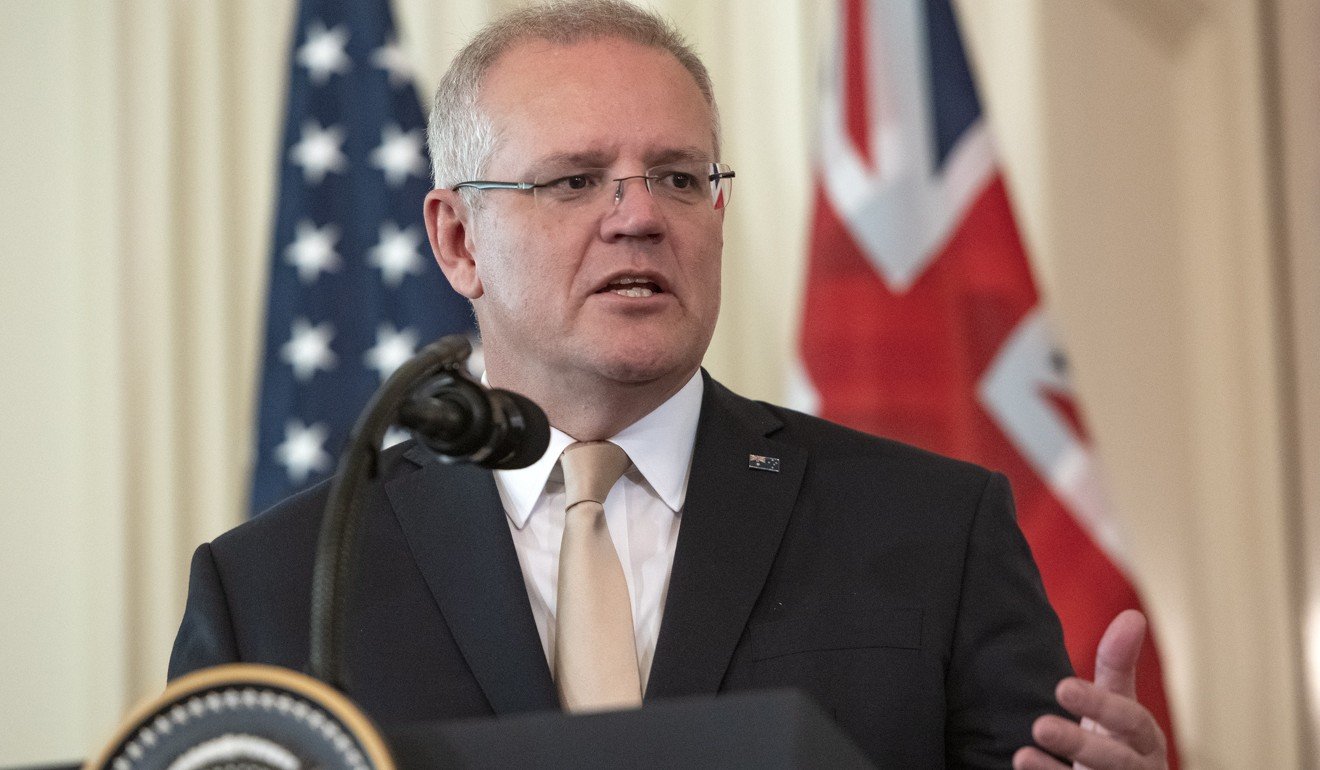
Australian Prime Minister Scott Morrison last year announced up to US$2.18 billion in grants and cheap loans for infrastructure in Pacific nations. Photo: EPA-EFE

The US, meanwhile, has also been wary of China’s push in the Pacific, amid an escalating geopolitical competition between the world’s two largest economies across many fronts – from trade to tech supremacy and security. The US has long maintained exclusive defence access in the region through its Guam military base and security pacts with the Federated States of Micronesia, the Marshall Islands and Palau.

Derek Grossman, a senior defence analyst with the US-based Rand Corporation, said this year’s forum in Samoa was likely to be higher profile than previous years after Beijing lured away two more diplomatic allies from Taipei.

He said it would be “closely watched in the US for how Beijing continues to leverage sweet economic deals via its Belt and Road Initiative to potentially entice others to switch”.

“The US, along with close friends Australia, Japan and New Zealand, are becoming increasingly concerned over the prospects for China to one day curry enough influence in these small island states to gain port access that could be used for new naval bases,” he said.

The most important issue at the forum, he said, would be “whether the West assesses that China is making further inroads with these states”.

“The likely answer will be that it is, suggesting that the US and its partners will have to compete with China in this region to ensure that it remains ‘free and open’, per the US Indo-Pacific strategy,” he said.

Source: SCMP

13/10/2019

Vice premier stresses education, healthcare for Greater Bay Area

BEIJING, Oct. 12 (Xinhua) — Chinese Vice Premier Sun Chunlan has called for efforts to boost social causes such as education and healthcare in south China’s Guangdong Province to better serve the Guangdong-Hong Kong-Macao Greater Bay Area.

Sun, also a member of the Political Bureau of the Communist Party of China Central Committee, made the remarks during a three-day research tour in Guangdong that ended Saturday.

She visited major higher education and medical institutions in the province and presided over a symposium in Shenzhen, asking local departments to make more specific policies and measures to serve the construction of the Greater Bay Area, enhance their coordination and help push the development of the area to a new level.

Sun urged efforts to optimize the structure of higher education of the Greater Bay Area and encouraged universities in Guangdong to open up their resources in scientific research to universities and research institutes in Hong Kong and Macao.

She also asked for further cooperation and exchanges of talent in medical care within the Greater Bay Area, better implementation of the policies that grant Hong Kong and Macao’s medical institutions and doctors access to the mainland, and deeper cooperation in traditional Chinese medicine.

Li Xi, a member of the Political Bureau of the CPC Central Committee and secretary of the CPC Guangdong Provincial Committee, attended the events along the tour.

Source: Xinhua

06/10/2019

Xinhua Headlines: China’s Greater Bay Area busy laying foundation for innovation

As China aims to develop its Greater Bay Area into an international innovation and technology hub, innovation and entrepreneurship resources are shared in the area to provide more opportunities for young Hong Kong and Macao entrepreneurs.

The provincial government of Guangdong has stepped up efforts to improve basic research capability, considered the backbone of an international innovation and technology hub, by building large scientific installations and launching provincial labs.

by Xinhua writers Liu Yiwei, Quan Xiaoshu, Wang Pan, Jing Huaiqiao

GUANGZHOU, Oct. 5 (Xinhua) — Hong Kong man Andy Ng was surprised his shared workspace Timetable was rented out completely only six months after it had started operation in Guangzhou, capital of south China’s Guangdong Province.

While studying economics at City University of Hong Kong, Ng set up his first business, developing an online education platform, but soon realized the Hong Kong market was too small. After earning a master’s degree in the UK in 2017, Ng returned to China and chose Guangzhou as his new base.

Timetable is now accumulating popularity and even fans in Dianping.com, China’s major online consumer guide. Ng feels lucky that his business caught the implementation of the Guangdong-Hong Kong-Macao Greater Bay Area (GBA) development plan.

The bay area, covering 56,000 square km, comprises Hong Kong and Macao, as well as nine cities in Guangdong. It had a combined population of about 70 million at the end of 2017, and is one of the most open and dynamic regions in China.

Aerial photo taken on July 11, 2018 shows the Hong Kong-Zhuhai-Macao Bridge in south China. (Xinhua/Liang Xu)

In July 2017, a framework agreement on the development of the bay area was signed. On February 18 this year, China issued the more specific Outline Development Plan for the Guangdong-Hong Kong-Macao Greater Bay Area. One of its major aims is to develop the area into an international innovation and technology hub.

OPPORTUNITIES FOR YOUTH

The plan proposes that innovation and entrepreneurship resources be shared in the bay area to provide more opportunities for young Hong Kong and Macao entrepreneurs.

An incubator for entrepreneurship, Timetable is home to 52 companies, including 15 from Hong Kong and Macao, such as Redspots, a virtual reality company that won the Hong Kong Information and Communications Technology (ICT) Awards 2019.

“I persuaded them one by one to come here,” Ng said. “I told them of my own experience that the GBA is a great stage for starting a business with ever-upgrading technologies, ever-changing consumer tastes and a population 10 times that of Hong Kong.”

Timetable is a startup base of the Guangzhou Tianhe Hong Kong and Macao Youth Association, which has assisted 65 enterprises founded by Hong Kong and Macao young people since its establishment in October 2017.

The association and its four bases provide a package of services from training and registering to policy and legal consultation, said Chen Jingzhan, one of the association founders.

Tong Yat, a young Macao man who teaches children programming, is grateful the association encouraged him to come to Guangdong, where young people enjoy more preferential policies to start their own businesses.

“The GBA development not only benefits us, but paves the way for the next generation,” Tong said. “If one of my students were to become a tech tycoon in the future and tell others that his first science and technology teacher was me, I would think it all worthwhile.”

In the first quarter of this year, there were more than 980 science and technology business incubators in Guangdong, including more than 50 for young people from Hong Kong and Macao, said Wu Hanrong, an official with the Department of Science and Technology of Guangdong Province.

INNOVATION HIGHLAND

As the young entrepreneurs create a bustling innovative atmosphere, the Guangdong government has stepped up efforts to improve basic research capability, considered the backbone of an international innovation and technology hub, by building large scientific installations and launching provincial labs.

Several large scientific facilities have settled in Guangdong. China Spallation Neutron Source (CSNS) operates in Dongguan City; a neutrino observatory is under construction in Jiangmen City; a high intensity heavy-ion accelerator is being built in Huizhou City.

Aerial photo taken on June 23, 2019 shows the construction site of the Jiangmen Underground Neutrino Observatory (JUNO) in Jiangmen, south China’s Guangdong Province. (Xinhua/Liu Dawei)

Guangdong also plans to build about 10 provincial labs, covering regenerative medicine, materials, advanced manufacturing, next-generation network communications, chemical and fine chemicals, marine research and other areas, said Zhang Yan, of the provincial department of science and technology.

Unlike traditional universities or research institutions, the provincial labs enjoy a high degree of autonomy in policy and spending. A market-oriented salary system allows them to recruit talent from all over the world, and researchers from other domestic organizations can work for the laboratories without giving up their original jobs, Zhang said.

The labs are also open to professionals from Hong Kong and Macao. Research teams from the universities of the two special administrative regions have been involved in many of the key programs, Zhang said.

For example, the provincial lab of regenerative medicine and health has jointly established a regenerative medicine research institute with the Chinese University of Hong Kong, a heart research center with the University of Hong Kong, and a neuroscience research center with the Hong Kong University of Science and Technology (HKUST).

Photo taken on July 24, 2019 shows a rapid cycling synchrotron at the China Spallation Neutron Source (CSNS) in Dongguan, south China’s Guangdong Province. (Xinhua/Liu Dawei)

Guangdong has been trying to break down institutional barriers to help cooperation, encouraging Hong Kong and Macao research institutions to participate in provincial research programs, exploring the cross-border use of provincial government-sponsored research funds, and shielding Hong Kong researchers in Guangdong from higher mainland taxes.

NANSHA FOCUS

Located at the center of the bay area, Guangzhou’s Nansha District is designed as the national economic and technological development zone and national free trade zone, and is an important pivot in building the area into an international innovation and technology hub.

The construction of a science park covering about 200 hectares started on Sept. 26. Gong Shangyun, an official with the Nansha government, said the park will be completed in 2022.

Jointly built by the Guangzhou government and the Chinese Academy of Sciences (CAS), the science park will accommodate CAS research institutes from around Guangzhou, including the South China Sea Institute of Oceanology, the South China Botanical Garden (SCBG) and the Guangzhou Institute of Energy Conversion.

Ren Hai, director of the SCBG, is looking forward to expanding the research platforms in Nansha. “We will build a new economic plant platform serving the green development of the Pearl River Delta, a new botanical garden open to the public, and promote the establishment of the GBA botanical garden union.”

Wang Ying, a researcher with the SCBG, said the union will help deepen the long cooperation among its members and improve scientific research, science popularization and ecological protection. “Predecessors of our botanical garden have helped the Hong Kong and Macao counterparts gradually establish their regional flora since the 1950s and 1960s.”

HKUST also started to build a new campus in Nansha the same day as the science park broke ground. “Located next to the high-speed rail station, the Guangzhou campus is only a 30-minute journey from the Hong Kong campus. A delegation from the HKUST once paid a visit to the site and found it very convenient to work here,” Gong said.

Chief Executive of the Hong Kong Special Administrative Region (HKSAR) Carrie Lam hoped the new campus would help create a new chapter for the exchanges and cooperation on higher education between Guangzhou and Hong Kong, and cultivate more talents with innovative capabilities.

Nansha’s layout is a miniature of the provincial blueprint for an emerging international innovation and technology hub.

“We are seeking partnership with other leading domestic research institutions and encouraging universities from Hong Kong and Macao to set up R&D institutions in Guangdong,” said Zhang Kaisheng, an official with the provincial department of science and technology.

“We are much busier now, because research institutes at home and abroad come to talk about collaboration every week. The GBA is a rising attraction to global scientific researchers,” Zhang said.

Source: Xinhua

04/10/2019

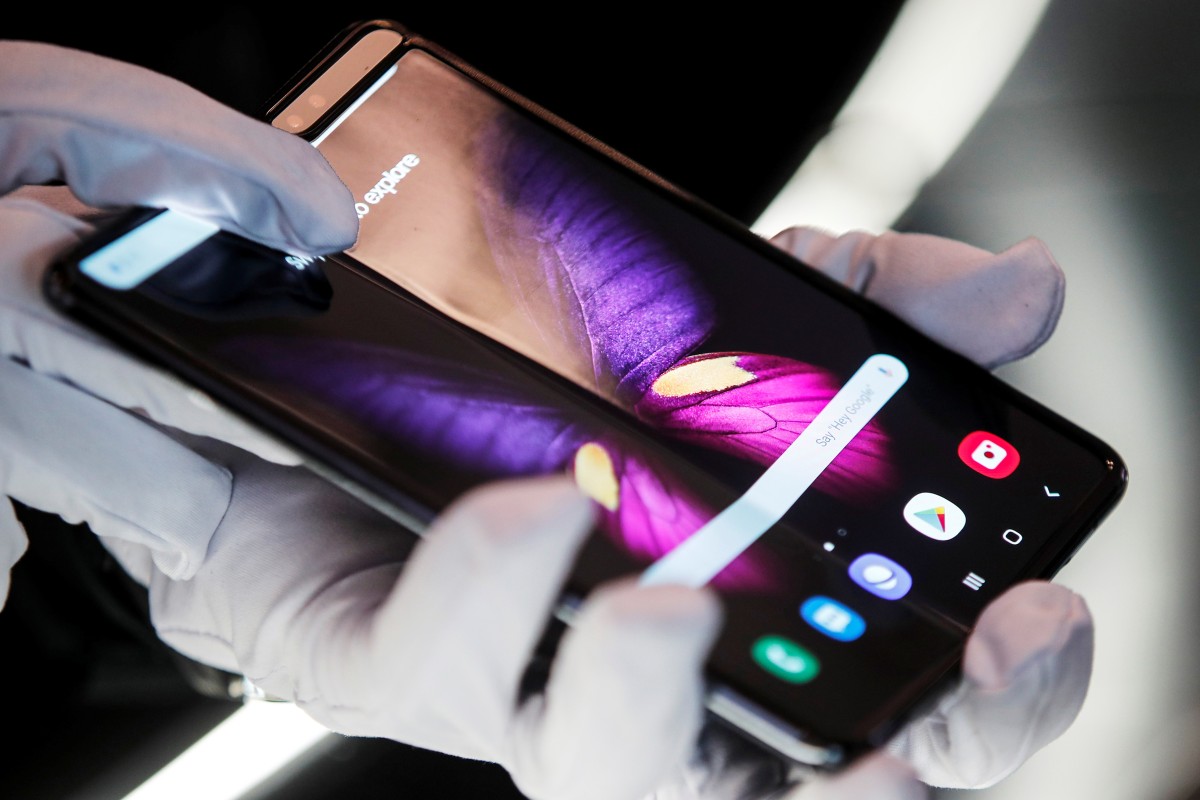
Have scientists discovered why China is so rich in rare earth elements the world’s smartphones need?

Chinese geologists think they have formula that could help to increase control of market in the elements hi-tech industries depend upon

  • Simple combination of clay mined for porcelain production, granite bedrock and acid rain could point to lucrative sources of rare earths
China has 80 per cent of the reserves of rare earth elements the world needs to keep talking on its smartphones, and geologists in Guangzhou think they know why. Photo: EPA
Geologists in southern China say they have isolated a series of critical factors that could make it easier to find rare earth elements used in hi-tech consumer goods such as smartphones.
China has more than 80 per cent of the world’s reserves of heavy rare earths such as terbium, dysprosium and holmium concentrated in a few provinces to the south of the country.
The reason for the concentration is one of the biggest puzzles in geology, but researchers at the Guangzhou Institute of Geochemistry in Guangdong province say the answer may be found in a combination of clay deposits, acid rain and granite that is distinctive to southern China.

Professor He Hongping and his colleagues came to the conclusion by testing the interaction between rare earths and different types of clay. Through their research they found that kaolinite – or china clay – was the best at absorbing rare earths from water.

The clay, named after Gaoling village near Jingdezhen, a centuries-old ceramic production centre in east China’s Jiangxi province, is a raw material for porcelain production.

While kaolinite is found in many countries, those places do not have rare earth deposits – probably because of the lack of acid rain, He said.

“You need the right environment.”

He said that rocks that contained tiny amounts of rare earth elements weathered faster in an acid environment, but the acidity could not be too high or the rare earth might run off before it could be captured by the clay.

Why Beijing cut tax rate on rare earths amid trade war

Rainwater with the right natural acidity often occurred in areas around 20 degrees latitude, such as southern China, he said.

The last step was to locate the source rock. Granite formed in volcanic eruptions between 100 million and 200 million years ago is considered to be the main source of rare earths.

He said that part of the Pacific tectonic plate containing rare elements might have been forced under the Eurasian Plate and was pushed to the surface as magma that formed rocks.

Other countries could learn from the Chinese experience, said He, whose team submitted their findings to the research journal Chemical Geology.

Recent discoveries in Vietnam, Australia and North Carolina in the United States conformed to the Guangzhou team’s theory, but there was still more research to do, he said.

“Rare earth deposits are quite unlike minerals such as copper. Sometimes they occur in this mountain but not in another nearby with almost the same geological features.

Sometimes they occur in one half of the mountain but not in the other.”

With China and the US engaged in a trade war, and Beijing cutting taxes on mining companies looking for these elements, the pressure was on to unlock the secrets of China’s abundant rare earth deposits, he said.

Does China’s dominance in rare earths hold leverage in trade war?

Dr Huang Fan, associate researcher with the China Geological Survey, said the Guangzhou discovery would help geologists to find more rare earths.

Most rare earth mines were located along the borders between provinces such as Guangdong and Jiangxi, but recently there were discoveries on a plateau in Yunnan province, where few geologists believed rare earths could be found, he said.

“There are many more rare earth deposits out there waiting for us.”

Source: SCMP

04/10/2019

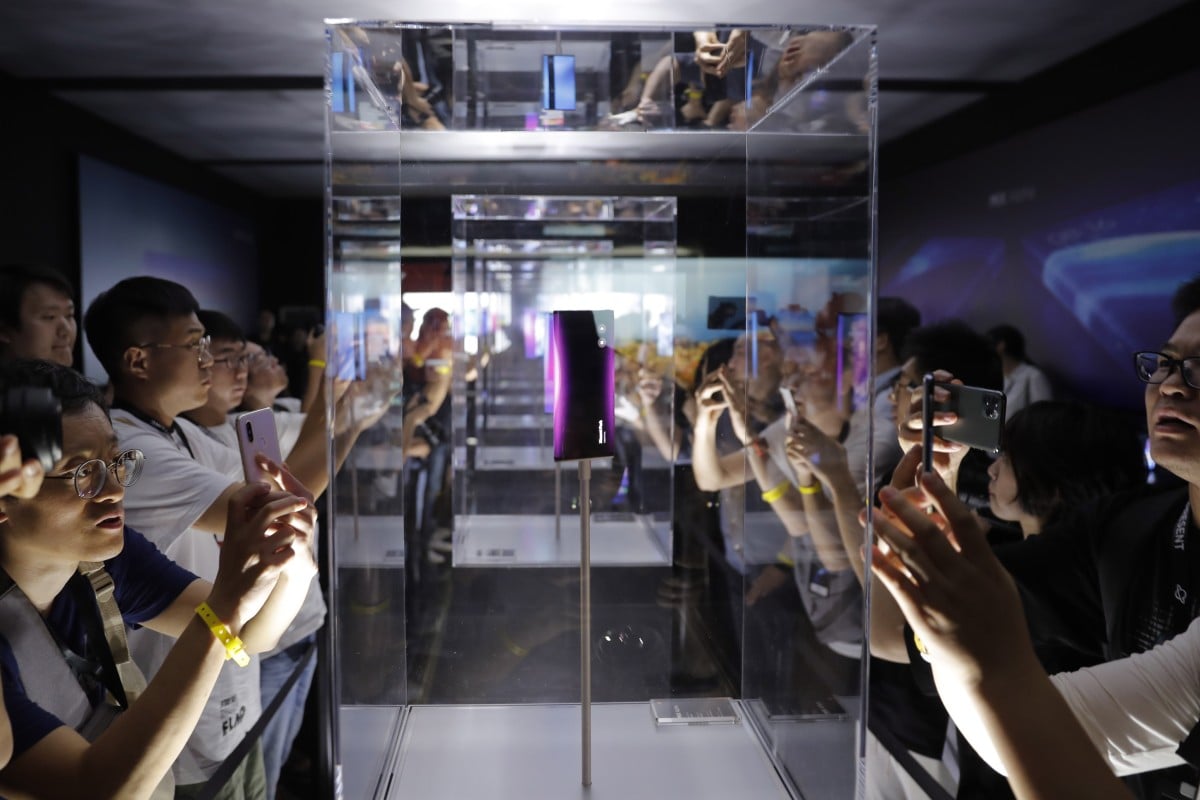
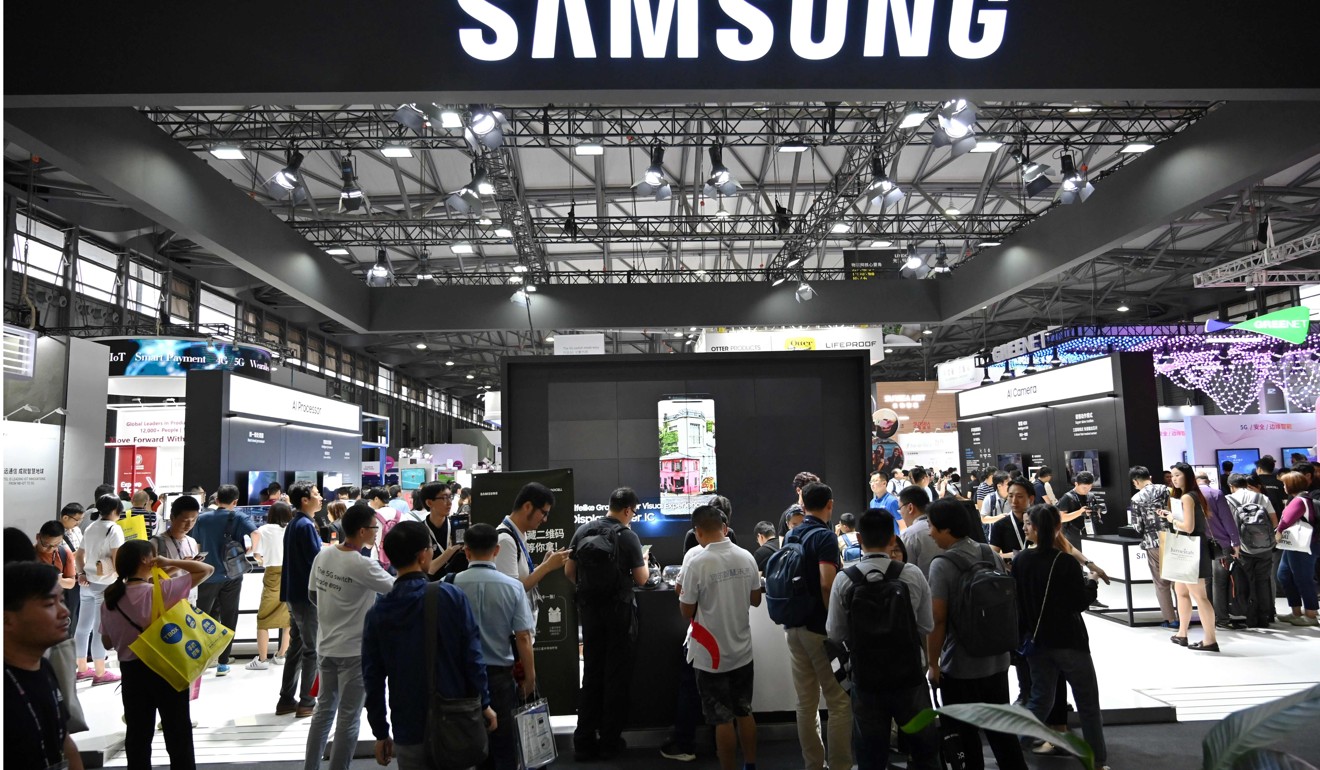
South Korea’s Samsung closes its last smartphone factory in China

  • ‘Difficult decision to cease operations’ at plant in Huizhou taken to ‘enhance efficiency’, company says
  • Firm’s market share in China has dwindled to near insignificance as competitors like Huawei and Xiaomi have taken upper hand
Samsung said operations at its last factory in China ended last month. Photo: Reuters
Samsung Electronics

said on Friday it has ended the production of smartphones in its last factory in China.

Operations at the plant in the south China city of Huizhou, Guangdong province, ended last month, it said in an email.
The company made “the difficult decision to cease operations of Samsung Electronics Huizhou” in order “to enhance efficiency” in its manufacturing, it said.
Samsung’s market share in China has dwindled to near insignificance as competitors like Huawei and Xiaomi have taken the upper hand. It once had 15 per cent of China’s smartphone market.
Samsung once had a 15 per cent share of China’s smartphone market. Photo: AFP
The South Korean giant has moved a large share of its smartphone production to Vietnam and closed a factory in northeastern China’s Tianjin last year.

“The production equipment will be reallocated to other global manufacturing sites depending on our global production strategy based on market needs,” the statement said.

Samsung is the world’s biggest manufacturer of semiconductors and smartphones and a major producer of display screens. But the flagship of South Korea’s largest conglomerate is currently weathering a spell of slack demand for computer chips.

Like other South Korean electronics makers, it also is facing the impact of tightened Japanese controls on exports of hi-tech materials used in semiconductors and displays.

On Wednesday, Sony said it was closing its Beijing smartphone plant and would only make smartphones in Thailand.

But Apple still makes major products in China.

“In China, people buy low-priced smartphones from domestic brands and high-end phones from Apple or Huawei,” Park Sung-soon, an analyst at Cape Investment & Securities, said.

“Samsung has little hope there to revive its share.”

Samsung’s factory in Huizhou was built in 1992, according to the company. South Korean media said it employed 6,000 workers and produced 63 million units in 2017.

Samsung manufactured 394 million handsets around the world in 2107, according to its annual report.

Source: Reuters

26/09/2019

Can catering robots plug labour shortfall in China with ability to juggle hundreds of orders and not complain?

  • An increasing proportion of young people no longer willing to wait tables in China as restaurant owners look to new technology for answers
Catering robots developed by Pudu Tech, the three-year-old Shenzhen start-up, have been adopted by thousands of restaurants in China, as well as some foreign countries including Singapore, Korea, and Germany. Photo: Handout

Two years ago, Bao Xiangyi quit school and worked as a waiter in a restaurant for half a year to support himself, and the 19 year-old remembers the time vividly.

“It was crazy working in some Chinese restaurants. My WeChat steps number sometimes hit 20,000 in a day [just by delivering meals in the restaurant],” said Bao.

The WeChat steps fitness tracking function gauges how many steps you literally take and 20,000 steps per day can be compared with a whole day of outdoor activity, ranking you very high in a typical friends circle.

Bao, now a university student in Hangzhou, Zhejiang province, quit the waiter job and went back to school.

“I couldn’t accept that for 365 days a year every day would be the same,” said Bao.
“Those days were filled with complete darkness and I felt like my whole life would be spent as an inferior and insignificant waiter.”
Olivia Niu, a 23-year-old Hong Kong resident, quit her waiter job on the first day. “It was too busy during peak meal times. I was so hungry myself but I needed to pack meals for customers,” said Niu.

Being a waiter has never been a top career choice but it remains a big source of employment in China. Yang Chunyan, a waitress at the Lanlifang Hotel in Wenzhou in southeastern China, has two children and says she chose the job because she needs to make a living.

Catering robots developed by Pudu Tech, the three-year-old Shenzhen start-up. Photo: Handout

Today’s young generation have their sights on other areas though. Of those born after 2000, 24.5 per cent want careers related to literature and art. This is followed by education and the IT industry in second and third place, according to a recent report by Tencent QQ and China Youth Daily.

Help may now be at hand though for restaurants struggling to find qualified table staff who are able to withstand the daily stress of juggling hundreds of orders of food. The answer comes in the form of robots.

Japan’s industrial robots industry becomes latest victim of the trade war
Shenzhen Pudu Technology, a three-year-old Shenzhen start-up, is among the tech companies offering catering robots to thousands of restaurant owners who are scrambling to try to plug a labour shortfall with new tech such as machines, artificial intelligence and online ordering systems. It has deployed robots in China, Singapore, Korea and Germany.
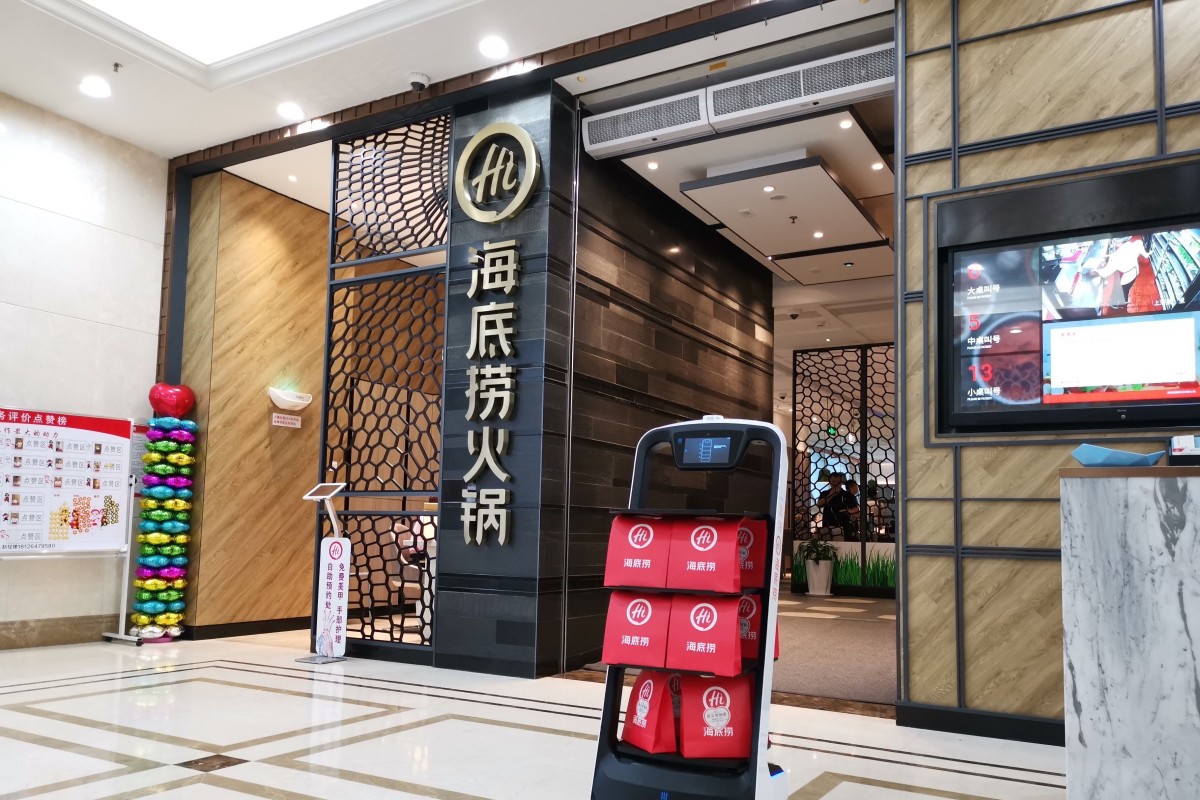
With Pudu’s robot, kitchen staff can put meals on the robot, enter the table number, and the robot will deliver it to the consumer. While an average human waiter can deliver 200 meals per day – the robots can manage 300 to 400 orders.
“Nearly every restaurant owner [in China] says it’s hard to recruit people to [work as a waiter],” Zhang Tao, the founder and CEO of Pudu tech said in an interview this week. “China’s food market is huge and delivering meals is a process with high demand and frequency.”
Pudu’s robots can be used for ten years and cost between 40,000 yuan (US$5,650) and 50,000 yuan. That’s less than the average yearly salary of restaurant and hotel workers in China’s southern Guangdong province, which is roughly 60,000 yuan, according to a report co-authored by the South China Market of Human Resources and other organisations.
As such, it is no surprise that more restaurants want to use catering robots.
According to research firm Verified Market Research, the global robotics services market was valued at US$11.62 billion in 2018 and is projected to reach US$35.67 billion by 2026.
Haidilao, China’s top hotpot restaurant, has not only adopted service robots but also introduced a smart restaurant with a mechanised kitchen in Beijing last year. And in China’s tech hub of Shenzhen, it is hard to pay without an app as most of the restaurants have deployed an online order service.
Can robots and virtual fruit help the elderly get well in China?
China’s labour force advantage has also shrank in recent years. The working-age population, people between 16 and 59 years’ old, has reduced by 40 million since 2012 to 897 million, accounting for 64 per cent of China’s roughly 1.4 billion people in 2018, according to the national bureau of statistics.
By comparison, those of working age accounted for 69 per cent of the total population in 2012.
Other Chinese robotic companies are also entering the market. SIASUN Robot & Automation Co, a hi-tech listed enterprise belonging to the Chinese Academy of Sciences, introduced their catering robots to China’s restaurants in 2017. Delivery robots developed by Shanghai-based Keenon Robotics Co., founded in 2010, are serving people in China and overseas markets such as the US, Italy and Spain.
Pudu projects it will turn a profit this year and it is in talks with venture capital firms to raise a new round of funding, which will be announced as early as October, according to Zhang. Last year it raised 50 million yuan in a round led by Shenzhen-based QC capital.
To be sure, the service industry is still the biggest employer in China, with 359 million workers and accounting for 46.3 per cent of a working population of 776 million people in 2018, according to the national bureau of statistics.
And new technology sometimes offers up new problems – in this case, service with a smile.

“When we go out for dinner, what we want is service. It is not as simple as just delivering meals,” said Wong Kam-Fai, a professor in engineering at the Chinese University of Hong Kong and a national expert appointed by the Chinese Association for Artificial Intelligence. “If they [robot makers] can add an emotional side in future, it might work better.”

Technology companies also face some practical issues like unusual restaurant layouts.

“Having a [catering robot] traffic jam on the way to the kitchen is normal. Some passageways are very narrow with many zigzags,” Zhang said. “But this can be improved in future with more standardised layouts.”

Multi-floor restaurants can also be a problem.

Dai Qi, a sales manager at the Lanlifang Hotel, said it is impossible for her restaurant to adopt the robot. “Our kitchen is on the third floor, and we have boxes on the second, third, and fourth floor. So the robots can’t work [to deliver meals tdownstairs/upstairs],” Dai said.

But Bao says he has no plans to return to being a waiter, so the robots may have the edge.

“Why are human beings doing something robots can do? Let’s do something they [robots] can’t,” Bao said.

Source: SCMP

26/09/2019

Crocodile shock for security guard at Chinese beauty spot

  • Police investigation reveals animal had escaped from a nearby restaurant
The escaped crocodile was captured by police officers and taken to the local station. Photo: Handout

A security guard at a beauty spot in eastern China was shocked to discover a 2-metre (6ft 6in) crocodile while on his rounds in the early hours of Monday morning.

The animal was lying motionless on a road at Xinlonghu Park in Changzhou, Jiangsu province, with its jaws tied by a strip of cloth, when it was spotted by the security guard, who immediately called the police, according to the Modern Express newspaper.

It took a number of officers to capture the crocodile and take it to the local police station, where an investigation revealed the animal had escaped from a nearby restaurant. The animal was returned and the restaurant owner was “criticised” by police, who urged that a close eye be kept on the animal, the report said.

“They bought it from a farm somewhere as a food material to attract customers. It has been killed for crocodile meat dishes,” an officer told the South China Morning Post on Wednesday.

Crocodiles were once vegetarians – but it was just a phase
Police said it was fortunate that the crocodile had been caught before it had entered the park’s lake or caused any danger to people.

It is unclear what species the crocodile belonged to but China permits the commercial breeding and use of the critically endangered Siamese crocodile, as well as saltwater and Nile crocodiles, which are listed as least concern species.

A staff member of the restaurant, called No. 1 Lakeside, told the Post stewed crocodile meat was on the menu for 168 yuan (US$23.60) a serving, while stewed crocodile claw was also available at 258 yuan.

Crocodile appears in ancient Chinese medicine books as a treatment for respiratory illnesses and the meat has long been regarded as a delicacy, especially in southern China, such as Guangdong province. Crocodile skin also remains a popular material for luxury handbags and other leather goods.

In June, another crocodile, measuring about 1.5 metres, was found in a road puddle during a heavy rain in Wuhan, in the central province of Hubei, where many restaurants have crocodile meat on their menus, the Chutian Metropolis Daily reported.

In that incident it took three officers to capture the animal which was sent to a wildlife centre where a physical check-up showed it had been bred in captivity, most likely for food.

Source: SCMP

20/09/2019

Chinese city offers 400 teachers US$39,500 a year in bid to attract best graduates

  • As well as earning three times the industry average, successful candidates are promised 165 days’ leave
  • Social media posts linked to story attract more than 60 million views
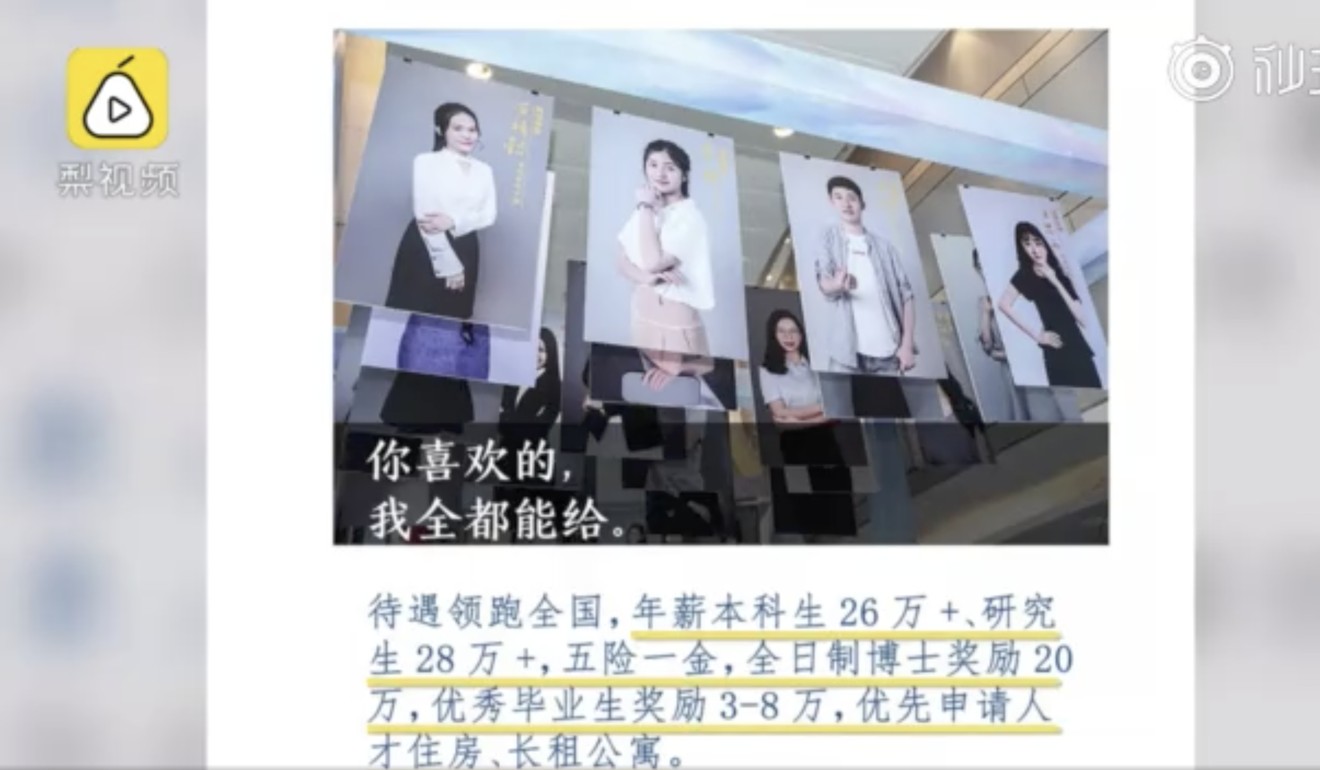
Authorities in Shenzhen are offering three times the national average salary to attract more teachers. Photo: Weibo

A recruitment advertisement offering schoolteachers in southern China the chance to earn up to 280,000 yuan (US$39,500) a year – more than three times the industry average – has sparked a massive response on social media.

Published by the Longhua district education bureau in Shenzhen, Guangdong province, the advert said it was looking for 400 high, middle and primary schoolteachers. As well as an annual salary of between 260,000 yuan and 280,000 yuan, depending on qualifications, the very best candidates would receive a bonus of between 30,000 and 80,000 yuan, it said.

New recruits would also be entitled to 165 days’ leave per year, though the advert – published on Tuesday on WeChat, China’s most popular messaging platform – did not make clear if that included weekends.

The Longhua district education bureau says it is looking for 400 new teachers. Photo: Weibo
The hashtag “Shenzhen middle schoolteachers are being recruited for almost 300,000 yuan a year” racked up almost 60 million views on Weibo, China’s Twitter-like platform.
While some people praised the authority for trying to attract the best possible candidates – it said itself that hundreds of teachers currently working in the district were graduates of China’s top universities, including Peking and Beijing Normal – others said that even with a sky-high salary most young professionals would find it hard to get by in Shenzhen.

“Do you know how expensive houses are in Shenzhen?” one person wrote on Weibo. “You need to wait several years after graduation before buying a house, unless you already have money.”

“Even if your starting salary is 200,000 yuan or 300,000 yuan, you’ll still need to wait 10 years before you’ve saved up enough to buy a house,” said another.

The advert said the new teachers will be get 165 days’ leave per year. Photo: Xinhua

The education bureau has not released any additional information about the recruitment campaign and calls to its offices on Friday went unanswered.

However, it said in a recent Q&A on its website that teachers’ salaries were in line with those of civil servants in the district, and had been steadily rising under a reform of the pay system.

Longhua is not the first district in Shenzhen to offer attractive salary packages, however. In May, 21st Century Business Herald reported that authorities in Yantian district had recruited 20 teachers from Beijing with the offer of between 290,000 yuan and 330,000 yuan a year.

According to central government figures released in May, teachers in China’s public schools earned an average of 92,383 yuan last year.

While Shenzhen has grown from a once sleepy fishing village to a vast metropolis, and is now slated to become a model city for China, its education facilities have failed to keep pace with other areas of development. It also faces competition from more established centres, like Beijing and Shanghai.
Despite having a population of about 15 million, the city has just 344 primary schools. By comparison, the provincial capital Guangzhou, which has a similar population, has 961 primary schools and about 17,000 more primary schoolteachers.
According to official figures, of the nearly 80,000 students who applied for places at public secondary schools in Shenzhen last year, just 35,000 were accepted. That left the parents of the remainder having no option but to pay for places at private schools in the city or, in some cases, send their children overseas to study.
The problem is set to get worse as Shenzhen’s preschool system is already straining under the pressure of the city’s high birth rate.
Source: SCMP
Law of Unintended Consequences

continuously updated blog about China & India

ChiaHou's Book Reviews

continuously updated blog about China & India

What's wrong with the world; and its economy

continuously updated blog about China & India