Archive for ‘Guizhou Province’

02/07/2019

China Focus: China marks 98th anniversary of CPC’s founding

BEIJING, July 1 (Xinhua) — Monday marks the 98th anniversary of the founding of the Communist Party of China (CPC). Across the country, various types of events — book readings, concerts, visits to memorials, and renewing vows — have been held to mark the occasion.

Founded in 1921, the CPC has grown from a small party of about 50 members into the world’s largest ruling party, with more than 90 million members.

A brick-and-wood building on Xingye Road in Shanghai, where the CPC held its first national congress, has been packed with visitors in days leading to the anniversary.

In 1921, delegates representing about 50 CPC members nationwide convened the first national congress in the building, though they later had to move to a boat on Nanhu Lake in Jiaxing of east China’s Zhejiang Province due to harassment by local police.

The historic building has been open to the public as a museum since 1952.

Near Nanhu Lake, hundreds of members of the public gathered on a city square to present a chorus to wish the CPC a happy birthday. A relay run was held on Monday to commemorate the occasion.

Zhang Xianyi, the curator of the Nanhu Lake Revolution Museum, said the museum has become increasingly popular. On average, 11,000 people visit the museum and the boat every day. Last year, over 1.25 million people paid visits to the sites, he said.

Also on Monday, Li Jian, deputy manager-in-general of a private electronics maker in Zhengzhou, capital city of central Henan Province, had a new title. He was elected as head of a seven-member CPC branch in the company.

Li works in the Henan branch of the China Communication Technology Co., Ltd., a private company headquartered in Shenzhen.

Over the past decades, a growing number of private companies have set up CPC branches.

“By establishing a CPC branch, I hope the organizational life of CPC members can facilitate progress in achieving company goals,” Li said.

“As a CPC member myself, I hope I can play a leading role in guiding our staff forward,” he added.

Zhao Lei, an employee of the company and also a CPC member, said the spirit of Party building is in line with the entrepreneurial spirit in that it strengthens the sense of responsibility, innovation, attention to details and persistent learning.

“A strong CPC organization attracts people to the company and lends a competitive edge to it,” he said.

“Establish a CPC branch — only a good company actively seeks to do such a thing, if you ask me. This company has been an honest one. We have complaints, and it responds to them,” said company driver Su Nanju, who is not a CPC member.

Across the country, an education campaign on the theme of “staying true to our founding mission” has been launched throughout the Party in which members are called on to keep firmly in mind the fundamental purpose of whole-heartedly serving the people and its historic mission of realizing national rejuvenation.

In southwest China’s Guizhou Province, a conference was held on Monday to commend outstanding CPC members in the battle against poverty. China vows to eradicate absolute poverty by 2020. In areas still perplexed by impoverishment, dedicated CPC members are leading the people to exert transformational changes.

“People say if you have a daughter, never marry her to someone from Qinggangba, because she would have nothing to eat but pickled vegetables,” said Leng Chaogang, Party chief of the Qinggangba village at the conference.

“But now, people here have become rich thanks to good policies of the Party, dedicated work of the cadres, and the relentless strength of the people. We will continue to work harder to make our lives better,” he said.

Source: Xinhua

01/07/2019

Why West means best for middle-class parents fleeing the Chinese education system

  • International schools and companies offering extracurricular services have sprung up to prepare children to study overseas
  • Families disenchanted with exam-based classes and intense competition for tertiary places look offshore for alternatives
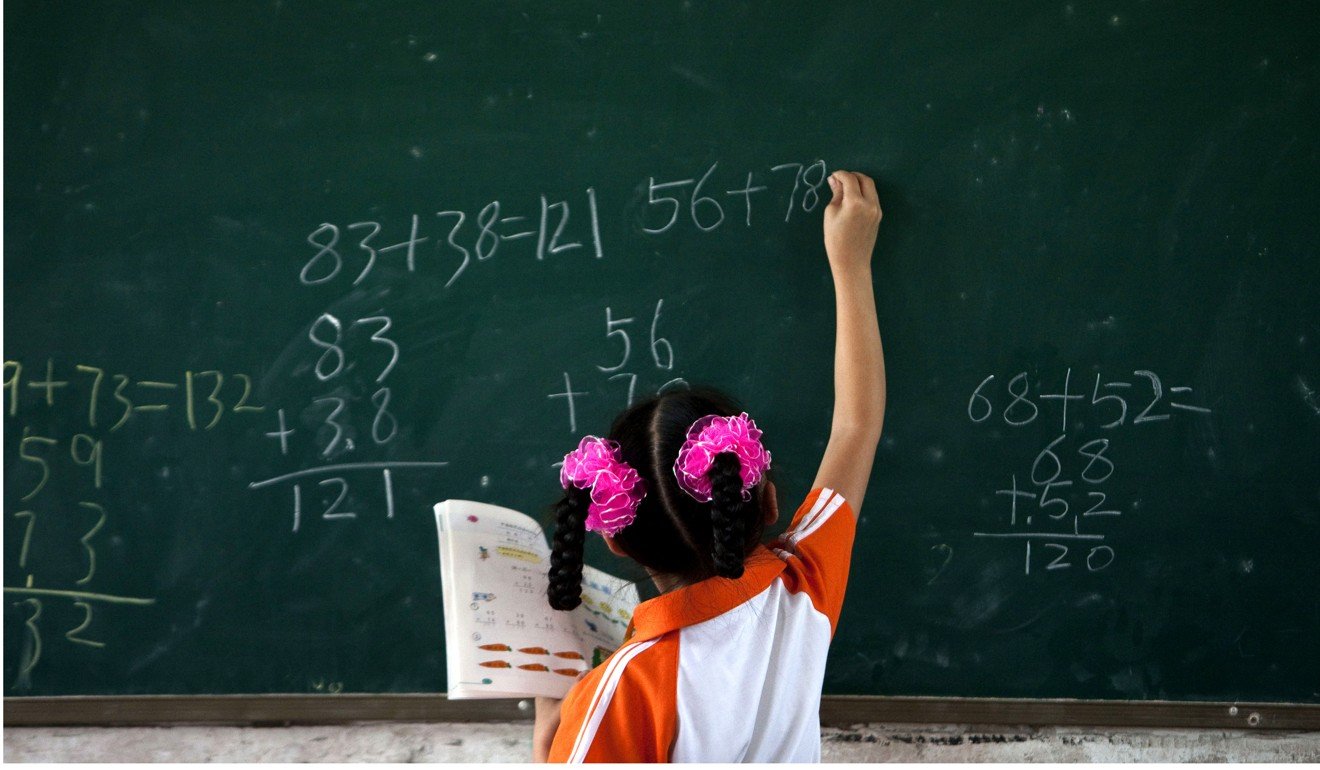
A group of young Chinese students tour the University of Cambridge in England. Photo: Alamy
On a sunny summer’s day, 24 schoolchildren head off on a four-day field trip to Guizhou province in southwestern China.
The children, aged eight to 16, have gone into the far reaches of the mountainous province not to see its picturesque Huangguoshu waterfall or to meet people from the ethnic Miao minorities. Instead, they are there to see the Five-hundred-metre Aperture Spherical Telescope, or Fast – the world’s biggest radio telescope, built in 2016.
The trip was organised by All in One Education, a Shenzhen-based company offering extracurricular classes and educational trips for Chinese students who aim to study abroad.
The agency has organised similar trips to Hebei and Yunnan provinces, catering to parents who want to expand their children’s horizons.
“This kind of experience is not usually available to students who follow the traditional Chinese education model, but it does appeal to those who go to international schools and schools that emphasise exploration,” Zhang Yong, the teacher leading the field trip, said.

Zhang said other agencies in China arranged educational trips abroad, including to universities such as Harvard and Oxford.

Many Chinese parents want their children to have a broader education than they get in the public schools system. Photo: Reuters

The companies are part of an industry targeting an ever-growing market of parents who have high expectations for their children and who are anxious to ensure their children go to the best schools they can afford.

The services are also aimed at parents who see studying abroad as a way to avoid the intense competition and discipline of the Chinese education system.

Crunch time as gaokao exam season starts for China’s university hopefuls

An overseas education has long been reserved for the privileged few in China but it is becoming more of an option as people become more affluent and more services open up to cater to the demand to give the best to the next generation.

According to the Ministry of Education, 662,100 people studied abroad last year, 53,700 more than in 2017.

For Shanghai parent Iris Wang the best means a Western university. She said that not only were Western universities better than their Chinese equivalents but she had also lost faith in China’s secondary education system.

With her daughter starting at an international middle school in September, Wang is now planning for the child to go overseas for experience and study.

She said that although the teachers working in public schools in China were responsible, the system itself was too rigid.

“In summer, the pupils have to take naps at noon, and teachers write down the names of those who don’t sleep and tell their parents,” she said. “And even if you don’t want to take nap, you are not allowed to take a walk or talk; you must rest your heads and arms on the table.”

Many middle-class Chinese parents are seeking alternatives to the public education system. Photo: AP

Such rules are common in Chinese public schools and meant to instil a sense of discipline among the pupils.

“But educating kids is not the same as making a product on an assembly line,” Wang said.

By withdrawing her daughter from the public system, Wang has forfeited her child’s chance to go to a Chinese high school or university.

It’s a route more Chinese parents are taking, according to a report released in April by the Social Sciences Academic Press and the 21st Century Education Research Institute, a Beijing-based think tank. In 2018, there were 821 international schools in China, up 12 per cent from a year earlier.

Wang has not just sent her daughter to an international school but has also begun researching the next steps, convinced that her daughter should leave China early to better adapt to university abroad.

“She will need to learn the language, develop a different learning mindset, as well as adapt to the lifestyle there,” Wang said.

China’s infamous gaokao university entrance exam

Shenzhen mother Yao Li has also decided that an early exit from the Chinese education system would be good for her daughter, who is still in primary school.

Yao plans to send her daughter to an international secondary school so she can receive a Western education and eventually apply to schools abroad.

Compared with the traditional Chinese education, which focused on exams as measures of excellence, an international education could give a child more possibilities, she said.

“The competition in China for a good education is so fierce that my child will not have sufficient room for development if she stays here,” she said. “We hope that she can become more international and have more diverse abilities as well.”

Why did one of China’s elite universities need to offer big money to get the best students?

Yao has already signed her daughter up for extracurricular classes such as English, art and public speaking, hoping that she can develop a diverse set of skills instead of focusing on academic results alone.

Zhang, the teacher at All In One Education, said there was a huge market in China catering to parents who are interested in such classes.

“The reason is simple, the university entrance examination in China is very difficult,” Zhang said. “So parents in areas like Shenzhen who are doing well will send their children abroad to study instead.”

But making the decision to send a child to an international school is just the start. For the middle-class parents who are preparing their children early, there are many more decisions to make, many more classes to attend and many more tests to take.

“We will have to think about which country to send her to in a year or so,” Wang from Shanghai said. “The options are different and so are the preparations – even the language tests required are different, one is TOEFL, one is IELTS.”

Source: SCMP

23/06/2019

Caohai Lake in China’s Guizhou recovers original size

CHINA-GUIZHOU-WEINING-CAOHAI NATIONAL NATURE RESERVE (CN)

Photo taken on June 20, 2019 shows scenery at Caohai National Nature Reserve in Weining County, southwest China’s Guizhou Province. Caohai Lake, a major wetland in southwest China and an important wintering place for black-necked cranes, has recovered its original size. The lake once shrank sharply due to pollution and farming practices. (Xinhua/Tao Liang)

Source: Xinhua

30/05/2019

Chinese education officials sacked for investigating four-year-olds in anti-mafia crackdown

  • Parents in Jiangsu province were shocked by a form that said a kindergarten class had been investigated and ‘no pupils were found to be involved in organised crime’
  • Officials fired or disciplined for ‘causing serious negative publicity’
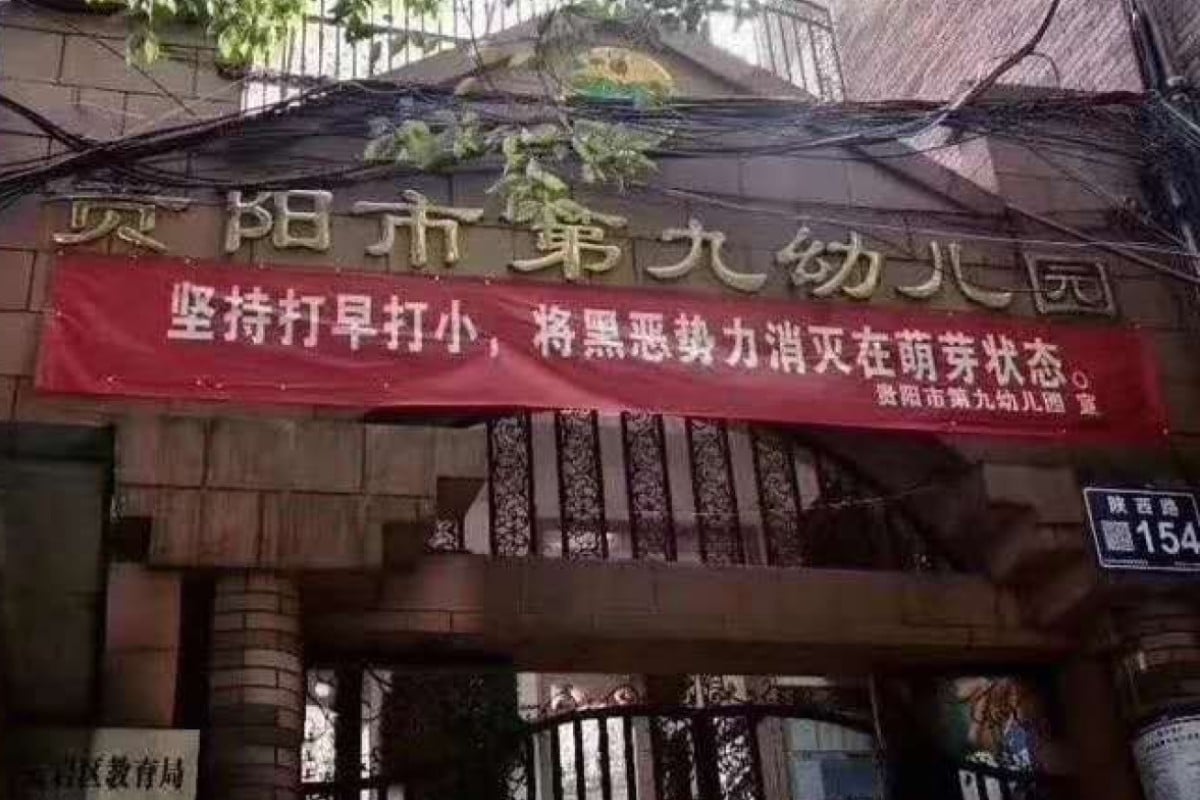
A kindergarten in Guiyang put up a banner on its entrance that read: “Crack down early and crack down young. Eliminate the dark and evil forces when they are still budding”. It was later removed. Photo: Weibo
Education officials in eastern China have been sacked or disciplined after targeting kindergarten pupils in a crackdown on organised crime.
Residents in Wuxi, a city in Jiangsu province, were shocked when a note saying that 35 pupils aged four and five at Xinguang Kindergarten had been investigated as part of the wider crackdown on mafia-style gangs was leaked online.
The form, signed by two teachers, concluded: “No pupils were found to be involved in organised crime”.
Copies of the document started circulating on social media, triggering a widespread backlash and ridicule.
Some social media users accused the kindergarten of box-ticking and questioned whether staff would have been capable of discovering whether any parents were involved in organised crime.
China’s war on organised crime, corrupt officials sees 79,000 people detained

One said that if officials really wanted to nip criminal tendencies in the bud, they were starting too late, adding: “Why not start when they are in the womb and crack down in the maternity hospital?”

An unidentified staff member from the Wuxi Education Bureau confirmed that schools were being targeted in the crackdown on organised crime, telling Chengdu Economic Daily: “Banners are hung everywhere inside and outside the school premises”.However, they insisted: “There was no wrongdoing by the kindergarten. We are mainly targeting teachers and parents for the publicity.”

But on Thursday the Wuxi government backed down and criticised education officials in Xishan district for misinterpreting the crackdown on organised crime and “putting on an unrealistic show”.

Three senior officials from the Xishan district authority were disciplined for their roles in “causing serious negative publicity”.

China’s fentanyl firms back crackdown on opioid

Feng Dongyan, the chief and party secretary of Xishan district education bureau, was given a party warning.

Wang Zhaoyu, director of the bureau’s general office, and Lu Zhongxian, the director in charge of education inspection of the bureau, lost their jobs and were given a serious party disciplinary warning.

Beijing started the campaign targeting grass-roots criminal organisations and their “protective umbrellas” last year.

More than 3,000 people have been punished so far, but the campaign has also been ridiculed for taking aim at the wrong targets.

Last month a kindergarten in Guiyang in Guizhou province put up a banner at its entrance reading: “Crack down early and crack down young. Eliminate the dark and evil forces when they are still budding”.

The kindergarten said the banner was “meant for the public” but took it down after an online backlash.

Source: SCMP

21/05/2019

China’s green efforts hit by fake data and corruption among the grass roots

  • Local officials have devised creative ways to cover up their lack of action on tackling pollution
  • Falsified monitoring information risks directing clean-up efforts away from where they are needed most
China’s efforts to cut pollution are being hampered by local officials who use creative methods to hide their lack of action. Photo: Simon Song
China’s notoriously lax local government officials and polluting companies are finding creative ways to fudge their environmental responsibilities and outsmart Beijing’s pollution inspectors, despite stern warnings and tough penalties.
Recent audit reports covering the past two years released by the environment ministry showed its inspectors were frequently presented with fake data and fabricated documents, as local officials – sometimes working in league with companies – have devised multiple ways to cheat and cover up their lack of action.
Local governments have been under pressure to meet environmental protection targets since Chinese President Xi Jinping made it one of his top three policy pledges in late 2017.
The performance of leading local officials is now partly assessed by how good a job they have done in cleaning up China’s much depleted environment.
According to the reports released this month by the Ministry of Ecology and Environment, pollution inspectors have found evidence in a number of city environmental protection bureaus of made-up meeting notes and even instructions to local companies to forge materials.
Cao Liping, director of the ministry’s ecology and environment law enforcement department, said many of the cases uncovered were the result of officials failing to act in a timely manner.
“In some places, local officials didn’t really do the rectification work. When the inspections began, they realised they didn’t have enough time, so they made up material,” he said.
China ‘still facing uphill struggle in fight against pollution’

While some officials are covering up their inaction, others are actively corrupt. According to Guangzhou’s Southern Weekend, since 2012 there have been 63 cases involving 118 people in the environment protection system involved in corruption.

In the southwest province of Sichuan, 32 current and former employees of Suining city’s environmental protection bureau were found to be corrupt, raking in illicit income of 6.32 million yuan (US$900,000).

Fabricated notes

The party committee of Bozhou district in Zunyi, Guizhou province in southern China, was found to have fabricated notes for 10 meetings – part of the work requirement under the new environmental targets – in a bid to cheat the inspectors.

The case was flagged by the environment ministry in a notice issued on May 10, which said party officials in Bozhou lacked “political consciousness … the nature of this case is very severe”.
Watering down results
Environmental officials in Shizuishan, in the northwest region of Ningxia, tried to improve their results in December 2017 by ordering sanitation workers to spray the building of the local environmental protection bureau with an anti-smog water cannon.
The intention was to lower the amount of pollutant particles registered by the building’s monitoring equipment.
The scheme may have gone undetected if the weather had been warmer but the next day a telltale layer of ice covered the building and the chief and deputy chief of the environmental station in the city’s Dawokou district were later penalised for influencing the monitoring results.
1 million dead, US$38 billion lost: the price of China’s air pollution
Similar tactics were deployed in Linfen, in the northern province of Shanxi in March 2017, when former bureau chief Zhang Wenqing and 11 others were found to have altered air quality monitoring data during days of heavy pollution.
The monitoring machine was blocked and sprayed with water to improve the data and Zhang was also found to have paid another person to make sure the sabotage was not captured by surveillance camera.
According to the environment ministry, six national observation stations in Linfen were interfered with more than 100 times between April 2017 and March 2018. In the same period, monitoring data was seriously distorted on 53 occasions.
Zhang was sentenced to two years in prison in May last year for destroying information on a computer.
Bad company
A ministry notice on May 11 flagged collusion by local officials and businesses in Bozhou in southeast China’s Anhui province. Companies were given advance notice of environmental inspections, with instructions to make up contracts and temporarily suspend production in a bid to deceive inspectors.
In Henan province, central China, inspectors found a thermal power company had been using a wireless mouse to interfere with the sealed automatic monitoring system. They were able to remotely delete undesirable data, eliminating evidence of excessive emissions, and only provided selective data to the environment bureau.
Officials in Shandong reprimanded for failing to cut pollution
In another case, from 2017, an environmental inspection group in Hubei province, central China, found a ceramics company had been working with the data monitoring company to alter automatically collected data on sulphur dioxide emissions.
Criminal offence
Cao said that while the cheating by grass-roots officials was serious, the involvement of companies in falsifying data was a major issue that made the work of inspectors even harder.
“Some fraudulent methods are hidden with the help of high technology, so it’s hard for us to obtain evidence. Besides, the environment officials are not totally familiar with these technologies,” he said.
The environment ministry was working on solutions to the problems, he said, adding that falsifying monitoring data was now a criminal offence.
Fake data was particularly serious, he said, because it could directly influence his department’s decisions about where to deploy resources.

Wang Canfa, an environmental law expert at the China University of Political Science and Law, said the problem of fake data could damage the government’s credibility but also prevent it from taking measures in time.

“If the water pollution or air pollution is severe in one place but the local government has said it’s not a big deal, then the investment needed to control the situation might go to other places,” he said.

Zhou Ke, a professor of environment and resources law at Renmin University, said there was an incentive for local officials to cheat because the inspection results were directly related to their career prospects.

Officials ended up cheating or forging materials to protect local interests or their own political achievements, he said.

Source: SCMP

29/04/2019

China’s quest for clean energy heats up with groundbreaking ‘artificial sun’ project

    • Fusion reactor built by Chinese scientists in eastern Anhui province has notched up a series of research firsts
    • There are plans to build a separate facility that could start generating commercially viable fusion power by 2050, official says
    The Experimental Advanced Superconducting Tokamak (EAST) device – or “artificial sun” – in Hefei, Anhui province. Photo: AFP/Chinese Academy of Sciences
    The Experimental Advanced Superconducting Tokamak (EAST) device – or “artificial sun” – in Hefei, Anhui province. Photo: AFP/Chinese Academy of Sciences
    A groundbreaking fusion reactor built by Chinese scientists is underscoring Beijing’s determination to be at the core of clean energy technology, as it eyes a fully functioning plant by 2050.
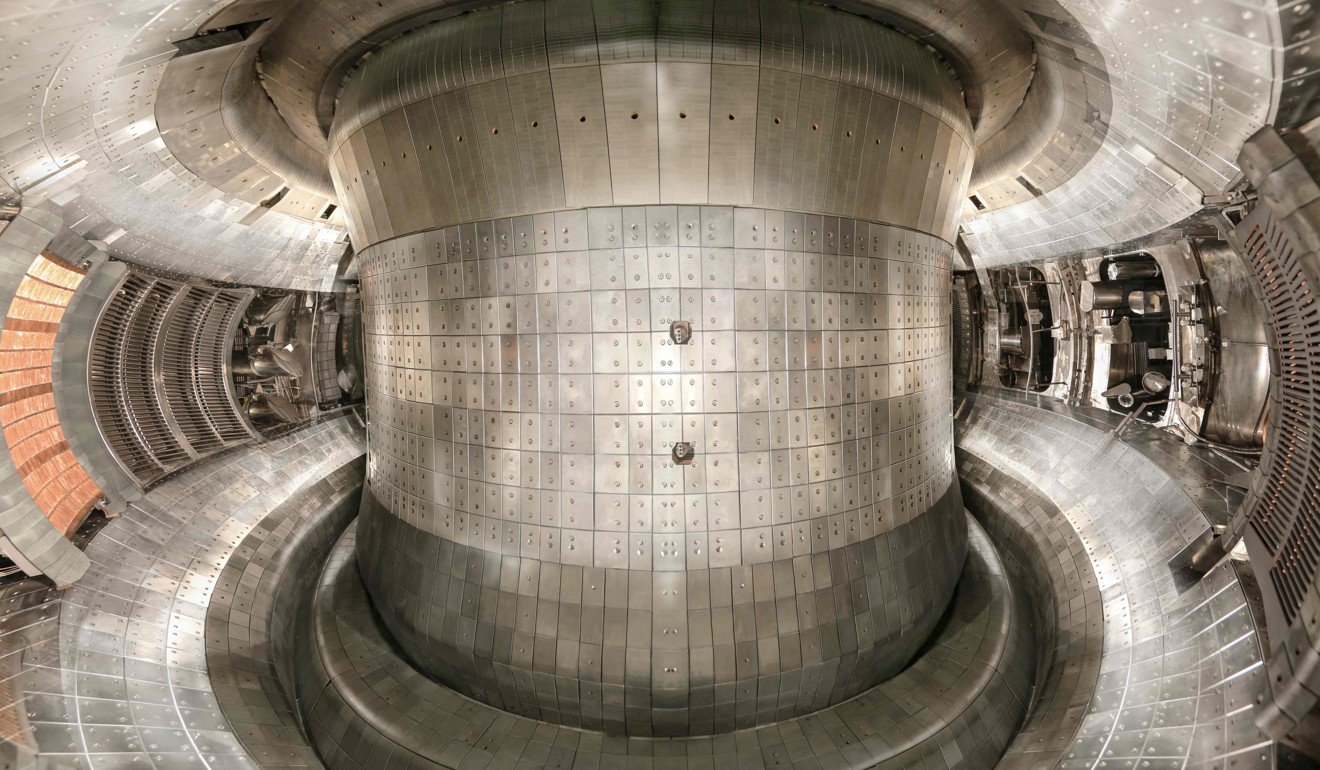
    Sometimes called an “artificial sun” for the sheer heat and power it produces, the doughnut-shaped Experimental Advanced Superconducting Tokamak (EAST) that juts out on a spit of land into a lake in eastern Anhui province, has notched up a succession of research firsts.
    In 2017 it became the world’s first such facility to sustain certain conditions necessary for nuclear fusion for 
    longer than 100 seconds

    , and last November hit a

    personal-best temperature

    of 100 million degrees Celsius (212 million Fahrenheit) – six times as hot as the sun’s core.

    Such mind-boggling temperatures are crucial to achieving fusion reactions, which promise an inexhaustible energy source.

    EAST’s main reactor stands within a concrete structure, with pipes and cables spread outward like spokes connecting to a jumble of censors and other equipment encircling the core. A red Chinese flag stands on top of the reactor.

    A vacuum vessel inside the fusion reactor, which has achieved a temperature of 100 million degrees Celsius – six times as hot as the sun’s core. Photo: AFP/Chinese Academy of Sciences
    A vacuum vessel inside the fusion reactor, which has achieved a temperature of 100 million degrees Celsius – six times as hot as the sun’s core. Photo: AFP/Chinese Academy of Sciences

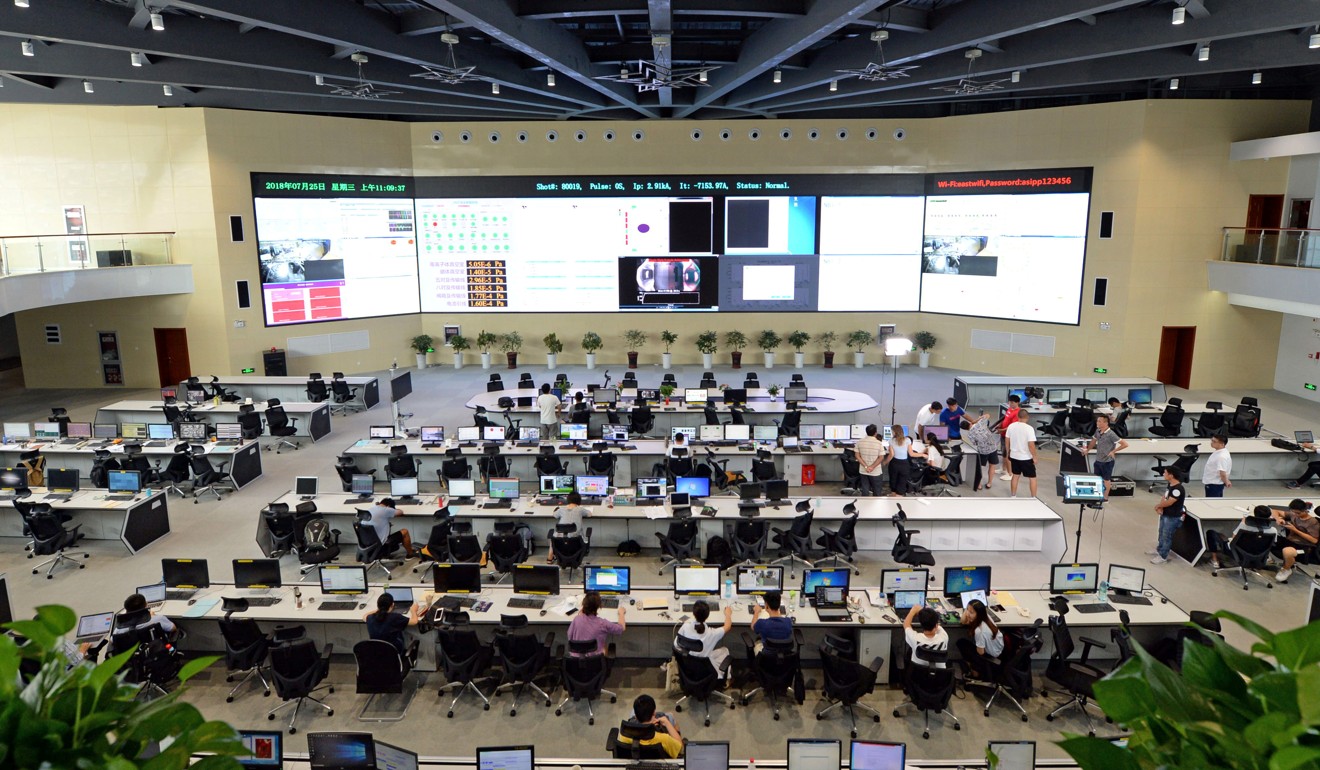
    “We are hoping to expand international cooperation through this device [EAST] and make Chinese contributions to mankind’s future use of nuclear fusion,” said Song Yuntao, a top official involved in the project, on a recent tour of the facility.

    China is also aiming to build a separate fusion reactor that could begin generating commercially viable fusion power by mid-century, he added.

    Some 6 billion yuan (US$891.5 million) has been promised for the ambitious project.

    EAST is part of the International Thermonuclear Experimental Reactor (ITER) project, which seeks to prove the feasibility of fusion power.

    Funded and run by the European Union, India, Japan, China, Russia, South Korea and the United States, the multibillion-dollar project’s centrepiece will be a giant cylindrical fusion device, called a tokamak.

    Now under construction in Provence in southern France, it will incorporate parts developed at the EAST and other sites, and draw on their research findings.

    China is “hoping to expand international cooperation” through EAST. Photo: Reuters
    China is “hoping to expand international cooperation” through EAST. Photo: Reuters

    Fusion is considered the Holy Grail of energy and is what powers our sun.

    It merges atomic nuclei to create massive amounts of energy – the opposite of the fission process used in atomic weapons and nuclear power plants, which splits them into fragments.

    Unlike fission, fusion emits no greenhouse gases and carries less risk of accidents or the theft of atomic material.

    But achieving fusion is both extremely difficult and prohibitively expensive – the total cost of ITER is estimated at 20 billion (US$22.3 billion).

    Wu Songtao, a top Chinese engineer with ITER, conceded that China’s technical capabilities on fusion still lag behind more developed countries, and that US and

    Japanese tokamaks have achieved more valuable overall results.

    But the Anhui test reactor underlines China’s fast-improving scientific advancement and its commitment to achieve yet more.

    China’s capabilities “have developed rapidly in the past 20 years, especially after catching the ITER express train”, Wu said.

    In an interview with state-run Xinhua news agency in 2017, ITER’s director general Bernard Bigot lauded China’s government as “highly motivated” on fusion.

    “Fusion is not something that one country can accomplish alone,” Song said.

    “As with ITER, people all over the world need to work together on this.”

Source: SCMP

11/04/2019

Guizhou strives to develop clean, efficient electricity industry

GUIYANG, April 10 (Xinhua) — Southwest China’s Guizhou Province will strive to develop a clean and efficient electricity industry, the provincial energy administration said Wednesday.

The province said that it aims to achieve 200 billion yuan (30 billion U.S. dollars) of output value in this field.

To promote the development of clean and efficient power industry, Guizhou will improve the efficiency of existing coal power facilities, speed up energy conservation and emission reduction, and accelerate the development of both coal and power industries.

In 2019, Guizhou will attempt to upgrade 1.8 million kW of coal-fired facilities to realize ultra-low emissions, while 3 million kW of coal-fired facilities are expected to accept energy-saving reconstruction.

The administration said the province would speed up the development of hydropower projects and increase the province’s hydropower capacity.

In addition to hydropower, Guizhou will further develop renewable energy, including wind and solar power. The province aims to add more than 500,000 kW of power in 2019 produced by non-hydro renewable energy.

Source: Xinhua

Law of Unintended Consequences

continuously updated blog about China & India

ChiaHou's Book Reviews

continuously updated blog about China & India

What's wrong with the world; and its economy

continuously updated blog about China & India