Archive for ‘Huawei’

21/02/2019

Chinese schools under fire after demanding parents pay for tablets

  • Students at one middle school were told they could join an ‘experimental class’ if they paid US$590 for a designated device
  • That class was later scrapped because of a lack of interest, while the principal of the other school clarified that its plan was not compulsory

Chinese schools under fire after demanding parents pay for tablets

21 Feb 2019

Parents took to social media asking why they had to buy a new tablet when they already had one, and questioning why a specific model was needed. Photo: Alamy
Two schools in northern China have come under fire from parents after they were asked to spend thousands of yuan on tablets for their children’s studies, with one forced to cancel its plan for an “experimental class” due to a lack of interest.

At that school, paying for the device would have given a student a place in a top class where they had access to the best resources.

Earlier this week, Yuying School in Yongnian county, Hebei province demanded 3,000 yuan (US$450) from parents of Year Seven students so that tablets could be bought to assist their studies, Red Star News reported on Wednesday.

They were told via a message on social network WeChat from one of the teachers. It said students should bring the money on Thursday – the first day of the new term – because the private school wanted to “teach using tablets to improve classroom efficiency”. Screenshots of the message have been circulating on social media.

Chinese high school students create daring sex education game, earning positive reviews on Steam

But some parents were against the idea, asking on the WeChat group why they had to buy a new tablet when they already had one, and questioning why a specific model was needed.

“We have several tablets at home – can’t my child use one of them at school?” one parent asked.

Another wrote: “I’m just wondering if this tablet is really worth 3,000 yuan.”

The reaction prompted school principal Li Jinxi to clarify on Wednesday that the tablet purchase was not mandatory, and staff had “misunderstood the policy”, according to the report.

“There could be some minor impact for those students who don’t buy the tablet but it won’t be a big deal because we will also continue to use traditional teaching methods,” he was quoted as saying.

Meanwhile, at Gongyi No 1 Senior High school in Henan province, students were told they could join an “experimental class” if they paid 3,980 yuan for a designated tablet, according to a report on news app Kuaibao on Tuesday.

The school had contacted some of its top students to take part in its “smart class cloud teaching experiment”, the report said.

But the Gongyi education bureau later posted a statement on Weibo, saying only about 70 of the school’s 520 students had signed up for the plan so the school had decided to scrap the idea and would refund the money to parents.

Huawei video in Chinese school exam sparks product placement row

The school was not the first in China to give students a chance to enter a top class if they bought tablets. In 2015, a school in Longkou, Shandong province told students that those who did not pay for a tablet would end up in “ordinary classes”. After the move caused uproar, the school ended up offering a free three-month trial of the devices, with students then able to choose whether to buy one or not – a decision that would not affect which class they got put in.

Source: SCMP
19/02/2019

The US cannot crush us, says Huawei founder

The founder of Huawei has said there is “no way the US can crush” the company, in an exclusive interview with the BBC.

Ren Zhengfei described the arrest of his daughter Meng Wanzhou, the company’s chief financial officer, as politically motivated.

The US is pursuing criminal charges against Huawei and Ms Meng, including money laundering, bank fraud and stealing trade secrets.

Huawei denies any wrongdoing.

Mr Ren spoke to the BBC’s Karishma Vaswani in his first international broadcast interview since Ms Meng was arrested – and dismissed the pressure from the US.

“There’s no way the US can crush us,” he said. “The world cannot leave us because we are more advanced. Even if they persuade more countries not to use us temporarily, we can always scale things down a bit.”

However, he acknowledged that the potential loss of custom could have a significant impact.

What else did Mr Ren say about the US?

Last week, US Secretary of State Mike Pompeo warned the country’s allies against using Huawei technology, saying it would make it more difficult for Washington to “partner alongside them”.

Australia, New Zealand, and the US have already banned or blocked Huawei from supplying equipment for their future 5G mobile broadband networks, while Canada is reviewing whether the company’s products present a serious security threat.

Mr Ren warned that “the world cannot leave us because we are more advanced”.

“If the lights go out in the West, the East will still shine. And if the North goes dark, there is still the South. America doesn’t represent the world. America only represents a portion of the world.”

What did Mr Ren say about investment in the UK?

The UK’s National Cyber Security Centre has decided that any risk posed by using Huawei technology in UK telecoms projects can be managed.

Many of the UK’s mobile companies, including Vodafone, EE and Three, are working with Huawei to develop their 5G networks.

They are awaiting a government review, due in March or April, that will decide whether they can use Huawei technology.

Commenting on the possibility of a UK ban, Mr Ren said Huawei “won’t withdraw our investment because of this. We will continue to invest in the UK.

“We still trust in the UK, and we hope that the UK will trust us even more.

“We will invest even more in the UK. Because if the US doesn’t trust us, then we will shift our investment from the US to the UK on an even bigger scale.”

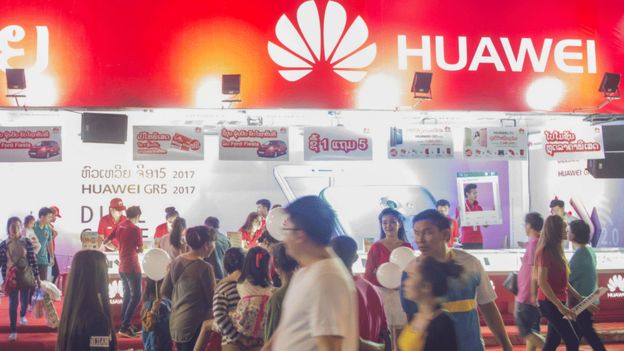
Huawei boothImage copyrightGETTY IMAGES
Image captionHuawei has denied that it poses any risk to the UK or any other country

What does Mr Ren think about his daughter’s arrest?

Mr Ren’s daughter Meng Wanzhou, Huawei’s chief financial officer, was arrested on 1 December in Vancouver at the request of the US, and is expected to be the subject of a formal extradition request.

In total, 23 charges are levelled against Huawei and Ms Weng. The charges are split across two indictments by the US Department of Justice.

The first covers claims Huawei hid business links to Iran – which is subject to US trade sanctions. The second includes the charge of attempted theft of trade secrets.

Mr Ren was clear in his opposition to the US accusations.

“Firstly, I object to what the US has done. This kind of politically motivated act is not acceptable.

“The US likes to sanction others, whenever there’s an issue, they’ll use such combative methods.

“We object to this. But now that we’ve gone down this path, we’ll let the courts settle it.”

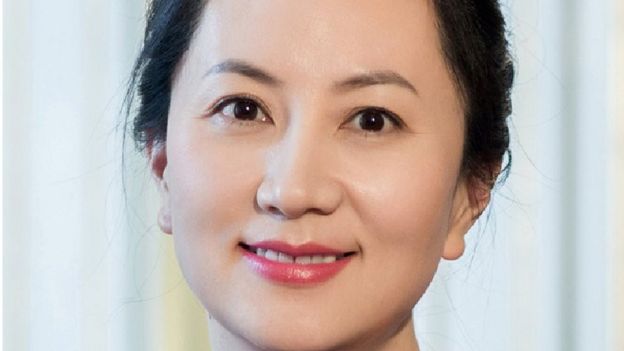
Meng Wanzhou, Huawei Technologies Co Ltd"s chief financial officer (CFO), is seen in this undated handout photo obtained by Reuters December 6, 2018.Image copyrightREUTERS
Image captionMeng Wanzhou was arrested in Vancouver last December

What did Mr Ren say about Chinese government spying?

Huawei, which is China’s largest private company, has been under scrutiny for its links to the Chinese government – with the US and others expressing concern its technology could be used by China’s security services to spy.

Under Chinese law, firms are compelled to “support, co-operate with and collaborate in national intelligence work”.

But Mr Ren said that allowing spying was a risk he wouldn’t take.

“The Chinese government has already clearly said that it won’t install any backdoors. And we won’t install backdoors either.

“We’re not going to risk the disgust of our country and of our customers all over the world, because of something like this.

“Our company will never undertake any spying activities. If we have any such actions, then I’ll shut the company down.”

Presentational grey line

Is Huawei part of the Chinese state?

Analysis – Karishma Vaswani, BBC Asia business correspondent – Shenzhen

For a man known as reclusive and secretive, Ren Zhengfei seemed confident in the conviction that the business he’s built for the last 30 years can withstand the scrutiny from Western governments.

Mr Ren is right: the US makes up only a fraction of his overall business.

But where I saw his mood change was when I asked him about his links to the Chinese military and the government.

He refused to be drawn into a conversation, saying only that these were not facts, simply allegations.

Still, some signs of close links between Mr Ren and the government were revealed during the course of our interview.

He also confirmed that there is a Communist Party committee in Huawei, but he said this is what all companies – foreign or domestic – operating in China must have in order to abide by the law.

Source: The BBC

18/02/2019

Britain does not support total Huawei network ban – sources

(Reuters) – British security officials do not support a full ban of Huawei from national telecoms networks despite U.S. allegations the Chinese firm and its products could be used by Beijing for spying, people with knowledge of the matter said.

Huawei, the world’s biggest producer of telecoms equipment, faces intense scrutiny in the West over its relationship with the Chinese government and allegations of enabling state espionage, with the United States calling for its allies not to use its technology.

Although no evidence has been produced publicly and Huawei has denied the claims, the allegations have led several Western countries to restrict its access to their markets.

“We don’t favour a complete ban. It’s not that simple,” one of the sources told Reuters on Monday after a Financial Times report on Sunday said that Britain had decided it could mitigate the risks of using Huawei equipment in 5G networks.

The FT cited two sources familiar with what it said was a conclusion by the government’s National Cyber Security Council (NCSC), which last year said technical and supply-chain issues with Huawei’s equipment had exposed national telecom networks to new security risks. Huawei had no immediate comment.

Any decision to allow Huawei to participate in building next-generation 5G networks would be closely watched by other nations, because of Britain’s membership of the Five Eyes intelligence-sharing group with the United States.

Britain is an important market for Huawei and last month Vodafone, the world’s second-largest mobile operator, said it was “pausing” the deployment of its equipment in core networks until Western governments give the Chinese firm full security clearance.

Other operators in Europe, including Britain’s BT and France’s Orange have already removed Huawei’s equipment or taken steps to limit its future use.

Two sources said the NCSC did not think it was necessary to completely bar Huawei from British networks, believing it could continue to manage any risks by testing the products at a special laboratory overseen by intelligence officials.

Both sources, who spoke on condition of anonymity because of the sensitivity of the matter, said the position was consistent with public statements made by the NCSC and British officials.


“As was made clear in July’s HCSEC oversight board, the NCSC has concerns around Huawei’s engineering and security capabilities. We have set out the improvements we expect the company to make, an NCSC spokeswoman said on Monday.

CONFIDENCE MEASURES

People with knowledge of the matter said the next NCSC report on Huawei’s position in Britain will criticise its slow response to issues raised in last year’s report and detail tense relations with British officials.

The report, which is expected to be released in coming weeks, does not itself set government policy.

The results of a government review of British telecoms infrastructure is expected later in the year and will include recommendations on managing security risks, including in future 5G networks.

Fellow Five Eyes member Australia has banned Huawei from supplying 5G equipment, while New Zealand said on Monday it would make its own independent assessment of the risk of using Huawei equipment in 5G networks.

Huawei has set up security labs in Britain and Germany aimed at building confidence that its equipment does not contain “back doors” for Chinese intelligence services.

It has also offered to build a cyber-security centre in Poland, where authorities have arrested a Chinese Huawei employee along with an ex-Polish security official.

Source: Reuters

15/02/2019

Seizing on Huawei’s troubles, Samsung bets big on network gear

SEOUL (Reuters) – Samsung Electronics is pouring resources into its telecom network equipment business, aiming to capitalize on the security fears hobbling China’s Huawei, according to company officials and other industry executives.

Those efforts include moving high-performing managers and numerous employees to the network division from its handset unit, two Samsung sources said.
Potential customers are taking notice of Samsung’s efforts to reinvent itself as a top-tier supplier for 5G wireless networks and bridge a big gap with market leader Huawei and industry heavyweights Ericsson and Nokia.
French carrier Orange’s chief technology officer, Mari-Noëlle Jégo-Laveissière, visited Japan last year and was impressed with the pace of 5G preparations using alternative equipment makers including Samsung, a company representative told Reuters.

Orange, which operates in 27 markets and counts Huawei as its top equipment supplier, will run its first French 5G tests with Samsung this year.

Underscoring the growing importance of the business, South Korean Prime Minister Lee Nak-yeon visited Samsung’s network division in January. In a closed-door meeting during that visit, Samsung heir Jay Y. Lee asked for government help with recruiting high-level engineers.
Huawei is battling allegations by the United States and some other Western countries that its equipment could enable Chinese spying and should not be used in 5G networks, which will offer higher speeds and a host of new services.
Australia and New Zealand have joined the United States in effectively barring Huawei from 5G, and many other countries, especially in Europe, are considering a ban. Huawei denies that its gear presents any security risk.
Its woes have presented Samsung with a rare opportunity. Telecom firms would ordinarily stick with their 4G providers for 5G upgrades as they can use existing gear to minimize costs, but many firms may now be under political pressure to switch.

“We’re bolstering our network business to seize market opportunities arising at a time when Huawei is the subject of warnings about security,” said one of the Samsung sources.

The sources, who did not disclose specific figures for the employee moves, declined to be identified as they were not authorized to speak on the matter.

Keen to seek new growth, particularly as sales of its mainstay chips and smartphones have begun to drop, Samsung plans to invest $22 billion in 5G mobile technology and other fields over three years. It declined to break down how much will go to 5G and the other areas – artificial intelligence, biopharma and automotive electronic parts.

“Samsung is focused on building trust with our partners and leading the global 5G markets, regardless of other companies,” it said in an emailed statement to Reuters.

Asked about Samsung’s big push into network equipment, Huawei said in a statement that it welcomed competition in the market.

INDIA OPPORTUNITY

In India, Samsung is now in talks with Reliance Jio to upgrade its network to 5G, looking to build on what has perhaps been its biggest network success – becoming the key supplier for the upstart carrier.

“We don’t think 5G is far away in India,” a Samsung official with direct knowledge of the matter told Reuters. He declined to be named due to the sensitivity of the matter.

Samsung’s clients include U.S. firms AT&T Inc, Verizon Communications Inc and Sprint Corp and it has 5G network contracts with all three, though it was not clear how extensive those contracts are. It also sells to South Korean carriers and has partnered with Japanese mobile carriers to test its 5G equipment.

In many cases, Samsung supplies only small pieces of networks. According to market tracker Dell’Oro Group, the South Korean firm holds just 3 percent of the global telecom infrastructure market compared with 28 percent for Huawei.

Its network business made 870 billion won ($775 million) in operating profit last year, according to Eugene Investment & Securities. Filings show Nokia’s network business made about 1.2 billion euros ($1.4 billion) while Ericsson’s network operations made 19.4 billion Swedish crowns ($2.1 billion). Figures for Huawei were not available.

FINDING THE PEOPLE

One major hurdle for Samsung will be attracting talent amid a dearth of software engineers in South Korea.

“We need more software engineers and want to work with the government to find that talent,” Lee was quoted as saying by government officials at his meeting with the prime minister.

Samsung’s network business unit employs roughly 5,000 people, according to a government official in the southern city of Gumi where Samsung operates its manufacturing plants.

Kim Young-woo, an analyst at SK Securities, expects Samsung to hire 1,000-1,500 people for 5G network equipment this year. Samsung declined to comment on network employee levels and hiring plans.

But Samsung’s bet remains risky as the long-term nature of telecom network investment means change comes slowly.

Sweden’s Ericsson and Finland’s Nokia, which acquired the remnants of once-powerful network equipment companies Alcatel-Lucent and Nortel, have as yet seen little sales growth from Huawei’s problems, company executives said.

Both are in cost-cutting mode, even in the face of the 5G opportunity and the problems confronting their biggest rival.

Indeed, some network operators in Europe are warning that a Huawei ban – now under consideration in France, the UK, Germany and other countries – could push back deployment of 5G by as much as three years.

Others warn Samsung may struggle to develop a global sales and support organization.

“The way telcos purchase products and services from their suppliers demand a lot of time and resources, which is why Ericsson and Nokia have around 100,000 employees and Huawei almost twice as many,” said Bengt Nordstrom, CEO of telecom consultancy Northstream.

But Samsung is taking the long view. In December, it agreed to extend its Olympic partnership with the International Olympic Committee through to 2028 and expand its sponsorship to 5G technology.

The company did not want to leave its sponsorship spot open to Chinese rivals, a separate source with knowledge of the matter said.

“If Samsung dropped the top mobile sponsorship for the Olympic games beyond 2020, then who would have taken that spot? It would only have been China, Huawei.”

($1 = 1,122.8000 won)

Source: Reuters

13/02/2019

China, UK should handle differences properly, enhance strategic mutual trust: Ambassador

LONDON, Feb. 12 (Xinhua) — China and UK should keep the long-term interests and larger picture in mind, look at each other’s development as opportunities, respect each other’s sovereignty, security and right to development, handle our differences properly and enhance strategic mutual trust, Chinese Ambassador to Britain Liu Xiaoming has said.

The Chinese diplomat made the remarks while attending the Chinese New Year Dinner by the Cities of London and Westminster Conservative Association on Monday night.

“If we compare China-UK relations to a building, it could not stand tall without a solid foundation. This foundation is the mutual confidence between our two countries,” he said.

Recalling that the world economy is under downward pressure, with surging protectionism and unilateralism making things doubly difficult. Against this situation, Liu said it is all the more important that China and the UK advocate free trade, oppose protectionism and promote open cooperation.

“We hope that the UK would continue to provide a fair, transparent and non-discriminatory business environment for Chinese companies. We hope you will make successful Chinese companies such as Huawei feel welcome here in Britain, and convince them that the UK is a trustworthy place to put their money,” said the Chinese ambassador.

Liu said both China and the UK are known for their profound cultural heritage and important contribution to the progress of human civilization.

“I hope that in the new year our two countries will continue to enhance cultural and people-to-people exchanges, and deepen mutual understanding and strengthen friendship.”

The ambassador also hoped that people from all walks of life in both China and UK will join hands to cement the foundation for a solid and magnificent edifice of bilateral relations.

British Prime Minister Theresa May sent a congratulatory message to the event, saying that it is an important moment to recognize the contribution of the Chinese community in London and across the whole of the United Kingdom.

“The Chinese community’s expanding business expertise, scientific inquiry and cultural heritage and traditions are of immense value to our country – not least here in London, where the vibrancy of Chinatown stands as a strong beacon for the Chinese community and a reminder of all that they have contributed to our society,” she said.

Source: Xinhua

27/01/2019

Trudeau fires Canada’s ambassador to China amid Huawei controversy

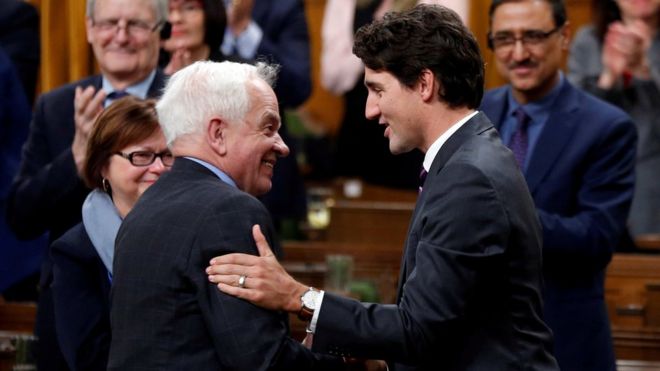
Canada's Prime Minister Justin Trudeau (R) shakes hands with former Immigration Minister John McCallumImage copyrightREUTERS
Image captionJustin Trudeau (R) appointed John McCallum ambassador to China in 2017

Prime Minister Justin Trudeau has fired Canada’s ambassador to China, John McCallum.

It follows controversial comments Mr McCallum made about an extradition case involving a senior executive from the Chinese telecoms giant Huawei.

Mr Trudeau said in a statement he had asked John McCallum to step down, but did not offer a reason.

The detention of Meng Wanzhou, at the request of the US, angered China and soured Canada’s relations with Beijing.

Ms Meng, Huawei’s chief financial officer, is accused by the US of evading sanctions on Iran. Both she and Huawei deny those allegations.

What did Justin Trudeau say?

In a statement, the Canadian prime minister said: “Last night I asked for and accepted John McCallum’s resignation as Canada’s ambassador to China.”

The veteran diplomat, Mr Trudeau added, had served Canadians honourably and with distinction with many positions in cabinet.

He also thanked the diplomat and his family for their service.

What about the ambassador’s remarks?

Mr McCallum caused controversy on Tuesday when he publicly argued that the US extradition request for Ms Meng was seriously flawed.

The next day he issued a statement saying that he “misspoke” and regretted that his comments had created “confusion”.

But on Friday he was quoted as saying it would be “great for Canada” if the US dropped the request.

Mr McCallum was appointed Canada’s ambassador to China in 2017, stepping down as the immigration minister.

Canadian media say he was eager to take over the posting because of his strong personal connection to China.

Mr McCallum’s wife is ethnically Chinese, and he had a large Chinese-Canadian population in his former constituency in Ontario.

Mr McCallum also served as Canada’s defence minister in 2002-03.

What’s the latest on Meng Wanzhou’s case?

She was arrested on 1 December in Canada’s western city of Vancouver at the request of the US.

She was later granted a C$10m (£5.7m; $7.6m) bail by a local court. But she is under surveillance 24 hours a day and must wear an electronic ankle tag.

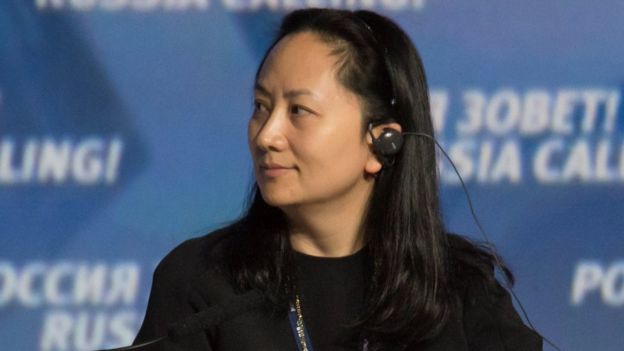
Huawei's Meng WanzhouImage copyrightREUTERS
Image captionMeng Wanzhou denies all the allegations against her

Earlier this month, US officials confirmed they planned to pursue the extradition of Ms Wanzhou.

Washington has 60 days to file a formal demand for extradition, a deadline that will be reached 30 January.

China’s foreign ministry has urged US officials to withdraw the arrest order and refrain from moving ahead with the extradition request.

Ms Meng’s case has led to rising diplomatic tensions between Canada and China.

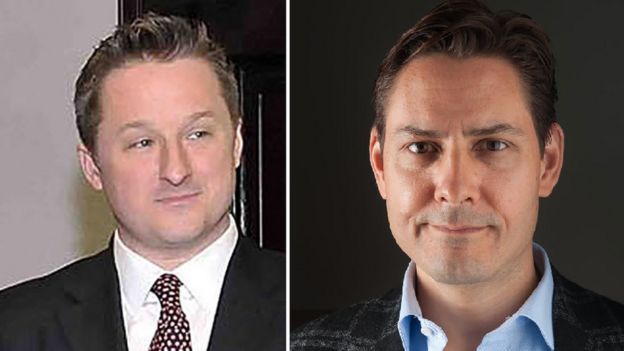
Michael Spavor (L) and Michael Kovrig (composite image)Image copyrightAFP
Image captionCanadian nationals Michael Spavor (left) and Michael Kovrig have been put under “compulsory measures”

Earlier this month, a Canadian man was sentenced to death in China after a court said a jail term of 15 years was too lenient.

Two other Canadians – businessman Michael Spavor and former diplomat Michael Kovrg – were arrested following the detention of Ms Meng.

Some China analysts believe that the arrests were a tit-for-tat response to her detention, a claim Chinese officials have denied.

Source: The BBC

26/01/2019

Huawei’s treatment by foreign countries ‘unfair and immoral’, China’s foreign minister say

  • Boycott of Chinese telecom giant’s products has ‘obvious political intentions’, Wang Yi says
  • Comments come as Britain’s Vodafone becomes latest Western firm to suspend purchases
PUBLISHED : Saturday, 26 January, 2019, 4:20pm
UPDATED : Saturday, 26 January, 2019, 4:20pm

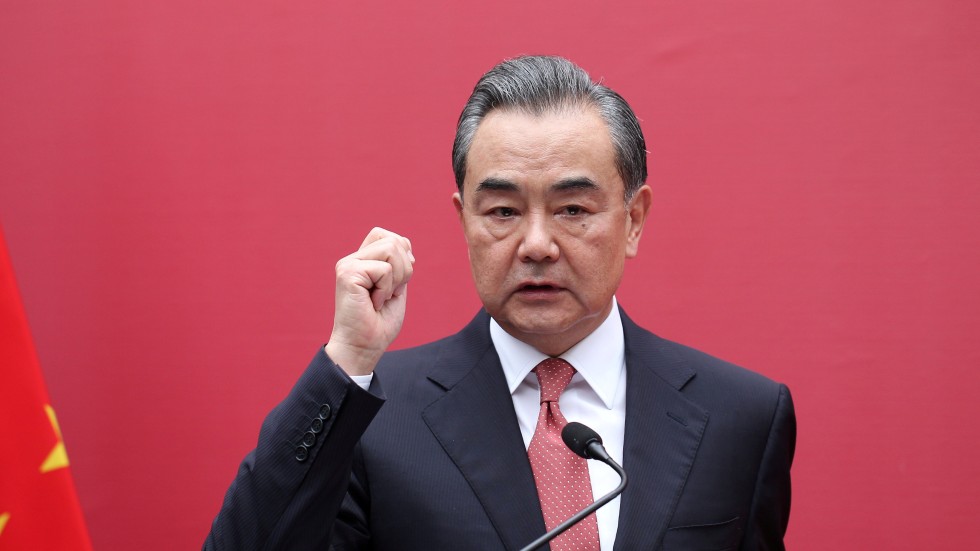
The use of state power to smear or discredit a legitimate business is “not only unfair but also immoral”, China’s Foreign Minister Wang Yi said in Rome on Friday when asked to comment on the recent problems faced by Huawei Technologies.

“Considering the obvious political intentions and manipulation behind it, it is even more unacceptable,” he said, without naming the Chinese telecom equipment giant.

“I believe that all countries should be vigilant and resist this unreasonable practice, and such bullying,” he told reporters from China’s state media at the end of a three-day trip to France and Italy, according to an article on the ministry’s website.

“Of course, every country is entitled to protect their right to maintain information security, but they cannot use security as an excuse to damage or even strangle legitimate business operations,” he said.

“Companies are just companies, and the survival and development of companies must ultimately be determined by market competition. What governments have to do is to provide them with a fair, just and transparent business environment.”

Wang’s comments came after Vodafone Group became the latest Western company to boycott Huawei products. The British telecom conglomerate said on Friday it had suspended its purchases of the Chinese firm’s equipment for the core of its wireless networks.

Huawei is the world’s largest telecom equipment supplier and has been the subject of intense international scrutiny since its chief financial officer Sabrina Meng Wanzhou was arrested in Canada on December 1, pending extradition to the United States.

The US has sought to persuade its allies, including Japan, Australia and New Zealand, not to use Huawei products in their fifth-generation wireless networks, on the grounds Beijing could use them for spying. The telecom giant has denied any such links to the Chinese government.

During his low-key European tour, Wang met French President Emmanuel Macron on Wednesday before attending a ceremony with his opposite number Jean-Yves Le Drian to mark the 55th anniversary of the two countries establishing diplomatic ties on Thursday.

Wang ended his trip on Friday with a meeting in Rome with Italian Prime Minister Giuseppe Conte.

Source: SCMP

25/01/2019

Alibaba slams U.S. treatment of Huawei, efforts to curb China’s rise

HONG KONG (Reuters) – A senior Alibaba executive slammed the United States’ treatment of China’s Huawei Technologies [HWT.UL] as “extremely unfair”, saying measures by the country to curb the firm’s access to their markets was “very politically motivated”.

Joe Tsai, the e-commerce giant’s executive vice-chairman, also sharply criticised what he called an attempt by the U.S. government to curb China’s rise via a trade war.

He struck an optimistic note about China’s economy, saying it remained fundamentally strong despite a slowdown, and added that stimulus such as tax cuts needed to be imposed to prop it up even as it battles U.S. efforts to dent its businesses.

U.S. President Donald Trump’s administration has not only slapped crippling tariffs on Chinese imports, it has also stepped up scrutiny of Chinese investments in the country and torpedoed many deals citing national security concerns.

Huawei, the world’s biggest network equipment maker, has been caught up in the crosshairs, with the United States alleging its products could be used by Beijing for espionage.

SPONSORED

Huawei has repeatedly denied the allegation.

“I think what the American government and together with the Five Eyes Alliance – what they’re trying to do with Huawei – is a bit unfair, there’s definitely a political agenda behind it,” Tsai said at a Reuters BreakingViews event in Hong Kong.

The United States and its allies, Australia and New Zealand, have restricted Huawei’s access to their markers, while Canada and the United Kingdom are reviewing whether to curb access.

Last month, Meng Wanzhou, Huawei’s finance chief, was arrested in Canada, sparking a diplomatic row between Canada and China. She faces extradition to the United States.

Tsai, a Canadian passport holder, said he hoped the relationship between Canada and China would improve.

“I love Canadians, they’re great,” Tsai joked when asked about Meng’s arrest, calling it a politically charged question.

“ANTI-CHINA PROBLEM”

Relations between Washington and Beijing have deteriorated rapidly amid a tit-for-tat escalation in tariffs that has roiled financial markets and raised fears over the impact on global supply chains and investment plans.

“President Trump may have started it focussing on the trade deficit itself … but over the course of the last nine months it was blown into a bigger anti-China problem,” Tsai said, adding the trade war has spurred anti-China sentiment.

“It worries everybody.”

Alibaba has been previously critical of the trade war as well, with founder Jack Ma calling the spat the “most stupid thing in the world.”

The company, which promised in 2017 to create a million U.S. jobs, backed out last year, blaming the trade war.

Tsai said U.S. regulators had made it very difficult for Alibaba to make investments in the country, adding that the company would look at other parts of the world for investment.

Just last year, a U.S. government panel rejected a bid by Ant Financial, which Ma owns together with Alibaba executives, to buy U.S. money transfer company MoneyGram International Inc on national security concerns.

Among the most high-profile Chinese deals to be scuttled under the Trump administration, the $1.2 billion deal’s failure was a major blow for Ma, who was looking to expand Ant’s footprint amid fierce competition back home from rival Tencent Holdings Ltd’s WeChat.

CHINA OPTIMISM

Brushing aside the pains of the trade war, Tsai said people were over worried about China’s economy. Chinese consumers are still fundamentally very strong and consumption in China is going to grow over the next 5-10 years, he said.

Comments from Tsai come at a time when China’s economic growth has slowed to its weakest pace in nearly three decades amid faltering domestic demand and bruising U.S. tariffs.

Growth is expected to ease further this year.

Tsai said Alibaba will continue to invest aggressively despite the uncertain business environment.

Asia’s second most valuable public company has been investing heavily in offline retail and rural e-commerce to win new customers as China’s urban market shows signs of saturation.

24/01/2019

China blasts U.S. “technology bullying” with Huawei CFO extradition

BEIJING, Jan. 23 (Xinhua) — China on Wednesday said the U.S. plan to extradite Meng Wanzhou, Huawei chief financial officer, from Canada did not comply with international law or have legitimacy.

The remarks came as Foreign Ministry spokesperson Hua Chunying reiterated China’s position on the Meng Wanzhou case at a press briefing.

Hua said the U.S. request for Meng’s extradition was essentially related to U.S. sanctions against Iran.

“Huawei has stated for many times that it has complied with all laws and regulations of the country in which it operates,” Hua said.

She stressed that China had consistently opposed the U.S. unilateral sanctions against Iran and unilateral sanctions against Iran outside the framework of the UN Security Council, which are not in line with international law and are opposed by the world, including U.S. allies.

“Canada is also opposed to this issue,” Hua said. “The U.S. act is highly political which is essentially technology bullying, and its purpose is to do everything in its power to suppress Chinese high-tech enterprises and contain China’s legitimate development rights.”

She said people of insight and a sense of justice in the international community should resolutely oppose it.

Source: Xinhua

22/01/2019

U.S. to formally seek extradition of Huawei executive Meng Wanzhou – Globe and Mail

(Reuters) – The United States will proceed with the formal extradition from Canada of Huawei executive Meng Wanzhou, Canada’s ambassador to the United States told the Globe and Mail, as Beijing vowed to respond to Washington’s actions.

The deadline for filing is Jan. 30, or 60 days after Meng was arrested on Dec. 1 in Vancouver.

Meng, the daughter of Huawei Technologies Co Ltd founder Ren Zhengfei, was arrested at the request of the United States over alleged violations of U.S. sanctions on Iran. She was released on bail last month and is due in court in Vancouver on Feb. 6.

Relations between China and Canada turned frosty after the arrest, with China detaining two Canadian citizens and sentencing to death a Canadian man previously found guilty of drug smuggling.

Beijing has not tied any of the three Canadians’ cases to Meng’s arrest, but has warned of severe consequences if she was not immediately released. Western and former Canadian diplomats have said they have no doubt the cases are linked.

Huawei, the world’s biggest maker of telecommunications equipment, said it had no comment on ongoing legal proceedings when contacted by Reuters on Tuesday. A U.S. Justice Department spokesman said: “We will comment through our filings.”

The Canadian Justice Department did not immediately respond to a request for comment outside regular business hours.

China’s Foreign Ministry on Tuesday reiterated calls for Meng’s immediate release and said her case clearly was “not a regular judicial case”.

Anyone with fair judgment would determine that Canada made a “serious mistake” in this matter, ministry spokeswoman Hua Chunying told a regular news briefing.

“Canada and the United States arbitrarily abused their bilateral extradition treaty to seriously infringe upon a Chinese citizen’s security and legal rights,” Hua said.

China “strongly urges” the United States to correct its “mistake”, cancel the arrest order for Meng, and not make a formal extradition request, she added.

Asked if China would retaliate against the United States if Meng is extradited, Hua said, “China will, of course, respond to U.S. actions.” She did not elaborate.

“PAYING THE PRICE”

Canada is one of over 100 countries with which the United States has extradition treaties.

Once a formal request is received, a Canadian court must determine within 30 days if there is sufficient evidence to support extradition, and Canada’s Minister of Justice must give a formal order.

In an article published on Monday, a former Canadian spy chief said Canada should ban Huawei from supplying equipment for next-generation telecoms networks, while Canada’s government is studying any security implications.

Some of Canada’s allies such as the United States and Australia have already imposed restrictions on using Huawei equipment, citing the risk of it being used for espionage.

Huawei has repeatedly said such concerns are unfounded, while China’s ambassador to Canada last week said there would be repercussions if Ottawa blocked Huawei.

In Monday’s interview, MacNaughton said he had complained to the United States that Canada was suffering from Chinese revenge for an arrest made at the U.S.’s request.

“We don’t like that it is our citizens who are being punished,” the Globe and Mail cited MacNaughton as saying. “(The Americans) are the ones seeking to have the full force of American law brought against (Ms. Meng) and yet we are the ones who are paying the price. Our citizens are.”

Canadian Prime Minister Justin Trudeau previously said China was arbitrarily using the death penalty and called on world leaders to raise concerns about the detained Canadians.

Source: Reuters

Law of Unintended Consequences

continuously updated blog about China & India

ChiaHou's Book Reviews

continuously updated blog about China & India

What's wrong with the world; and its economy

continuously updated blog about China & India