04/05/2020
BEIJING (Reuters) – Tang Yue, a 27-year-old teacher from the city of Guilin in southwest China, steam-presses a blue dress and takes dozens of photographs before picking one to clinch her 200th online sale.
For a growing number of Chinese like Tang, hit by job losses, furloughs and salary cuts, the consumer economy has begun to spin in reverse. They are no longer buying – they are selling.
Instead of emerging from the coronavirus epidemic and returning to the shopping habits that helped drive the world’s second-largest economy, many young people are offloading possessions and embracing a new-found ethic for hard times: less is more.
With Tang’s monthly salary of about 7,000 yuan ($988), the self-described shopaholic said she has bought everything from Chanel lipsticks to Apple’s (AAPL.O) latest iPad in the past three years.
But the adrenaline rush that comes with binge-shopping is gone, said Tang, whose wages have been slashed with the suspension of all the classes on tourism management she usually teaches.
“The coronavirus outbreak was a wake-up call,” she said. “When I saw the collapse of so many industries, I realised I had no financial buffer should something unfortunate happen to me.”
There is no guarantee that the nascent minimalist trend will continue once the coronavirus crisis is fully over, but if it does, it could seriously damage China’s consumer sector and hurt thousands of businesses from big retailers to street-corner restaurants, gyms and beauty salons.
To be sure, there are signs that pent-up demand will drive a rush of spending as authorities reopen malls, leisure venues and tourist spots. In South Korea, the first major economy outside of China to be hit by the virus, people thronged malls this weekend to go “revenge shopping” to make up for time lost in lockdown.,
There are some signs that a similar trend will take hold in China, where some upscale malls are starting to get busy, although luxury firm Kering SA (PRTP.PA) – which owns Gucci, Balenciaga and other fashion brands – has said it is hard to predict how or when sales in China might come back.
A recent McKinsey & Co survey showed that between 20% and 30% of respondents in China said they would continue to be cautious, either consuming slightly less or, in a few cases, a lot less.
“The lockdown provided consumers with a lot of time and reasons to reflect and consider what is important to them,” said Mark Tanner, managing director at Shanghai-based research and marketing consultancy China Skinny.
“With much more of their days spent in their homes, consumers also have more time and reasons to sort through things they don’t feel they need – so they’re not living around clutter that is common in many apartments.”
#DITCHYOURSTUFF
Tang made a spreadsheet to keep track of her nearly 200 cosmetic products and hundreds of pieces of clothing. She then marked a few essentials in red that she wanted to keep. In the past two months, she has sold items worth nearly 5,000 yuan on second-hand marketplaces online.
Bargain-hunting online has become a new habit for some Chinese as the stigma that once hung over second-hand goods has begun to fade.
Idle Fish, China’s biggest online site for used goods, hit a record daily transaction volume in March, its parent company Alibaba (BABA.N) told Reuters.
Government researchers predict that transactions for used goods in China may top 1 trillion yuan ($141 billion) this year.
Posts with the hashtag #ditchyourstuff have trended on Chinese social media in recent weeks, garnering more than 140 million views.
Jiang Zhuoyue, 31, who works as an accountant at a traditional Chinese medicine company in Beijing – one of the few industries that may benefit from the health crisis – has also decided to turn to a simpler life.
“I used to shop too much and could be easily lured by discounts,” said Jiang. “One time Sephora offered 20% off for all goods, I then bought a lot of cosmetics because I feel I’m losing money if I don’t.”
Jiang, the mother of a 9-month-old baby, said she recently sold nearly 50 pieces of used clothing as the lockdown gave her the opportunity to clear things out. “It also offered me a chance to rethink what’s essential to me, and the importance of doing financial planning,” she said.
Eleven Li, a 23-year-old flight attendant, said she used to spend her money on all manner of celebrity-endorsed facial masks, snacks, concert tickets and social media activity, but now has no way to fund her spending.
“I just found a new job late last year, then COVID-19 came along, and I haven’t been able to fly once since I joined, and I’ve gotten no salary at all,” said Li, who said she was trying to sell her Kindle.
Some are even selling their pets, as they consider leaving big cities like Beijing and Shanghai where the high cost of living is finally catching up with them.
NO RETURN TO OLD WAYS?
As the coronavirus comes under control in China, the government is gradually releasing cities from lockdown, easing transport restrictions and encouraging consumers to venture back into malls and restaurants by giving out billions-worth of cash vouchers, worth between 10 yuan and 100 yuan.
But many people say they are still worried about job security and potential wage cuts because of the struggling economy. Nationwide retail sales have plunged every month so far this year.
Xu Chi, a Shanghai-based senior strategic analyst with Zhongtai Securities, said some Chinese consumers may prove the ‘21 Day Habit Theory,’ a popular scientific proposition that it only takes that long to establish new habits.
“We believe people’s spending patterns follow the well-known theory, which means most people in China, having been cooped-up at home for more than a month and not having binge-shopped, may break the habit and not return to their old ways,” Xu said.
Jiang said she was determined not to return to her free-spending ways and planned to cook more at home.
“I’ll turn to cheaper goods for some luxury brands,” she said. “I’ll choose Huawei’s smartphone, because (Apple’s) iPhone has too much brand premium.”
Tang, who has recently used 100 yuan of shopping coupons to stock up on food, is going to hold the purse strings even tighter.
“I’ve set my monthly budget at 1,000 yuan,” she said. “Including one – and just one – bottle of bubble tea.”
Source: Reuters
Posted in #ditchyourstuff, 1,000 yuan, 200th, accountant, adrenaline, Alibaba (BABA.N), apartments, Apple’s, Apple’s (AAPL.O), authorities, ‘21 Day Habit Theory,’, “revenge shopping”, Balenciaga, Bargain-hunting, beauty salons, Beijing, big cities, big retailers, biggest online site, binge-shopping, blue dress, bottle, bought, brand premium, bubble tea, businesses, buying, cash vouchers, cautious, celebrity-endorsed, Chanel, China, China Skinny, China's, China’s, Chinese, Chinese social media, City, classes, collapse, Company, concert tickets, Consumer economy, consumer sector, coronavirus crisis, coronavirus epidemic, coronavirus outbreak, cosmetic products, cost of living, COVID-19, daily, damage, Dozens, drive, economy, embracing, emerging, essentials, establish, ethic, every month, everything, facial masks, fashion brands, financial buffe, Flight attendant, Food, furloughs, garnering, Government, growing, guarantee, Guilin, gyms, hard times, hashtag, health crisis, helped, high, hit by, how or when, Huawei's, hurt, Idle Fish, industries, iPad, IPhone, job losses, Job security, Kering SA (PRTP.PA), Kindle, leisure venues, less is more, lipsticks, lockdown, luxury firm, Major, make up, malls, March, McKinsey & Co, minimalist, monthly budget, monthly salary, nascent, nationwide, new-found, number, offloading, online sale, outside, owns, parent company, pent-up demand, People, pets, photographs, picking, pieces of clothing, plunged, popular, possessions, posts, predict, proposition, prove, purse strings, realised, recent, record, red, reopen, research and marketing consultancy, researchers, respondents, restaurants, retail sales, returning, Reuters, reverse, rush, salary cuts, scientific, second-hand goods, second-hand marketplaces, self-described, selling, senior, Shanghai, Shanghai-based, shopaholic, shopping coupons, shopping habits, slashed, smartphone, snacks, so far, social media activity, South Korea, Southwest China, spenders, spending, spreadsheet, sputters, steam-presses, stigma, strategic analyst, street-corner, survey, suspension, teacher, teaches, this year, Thousands, thronged, time lost, to clinch, to spin, tourism management, tourist spots, Traditional Chinese medicine, transaction, trend, trended, trillion yuan, Uncategorized, unfortunate, used goods, views, Virus, volume, wage cuts, wages, weekend, weeks, world’s second-largest economy, young, yuan |
Leave a Comment »
29/04/2020
BEIJING, April 28 (Xinhua) — China has achieved much progress in environmental protection and taken the lead in green development in recent years.
The efforts have exemplified Chinese President Xi Jinping’s proposal of “working together for a green and better future for all” made a year ago in his speech at the opening ceremony of the International Horticultural Exhibition 2019 Beijing.
In the keynote speech, Xi proposed a five-point initiative on promoting green development, namely pursuing harmony between man and nature, pursuing the prosperity based on green development, fostering a passion for nature-caring lifestyle, pursuing a scientific spirit in ecological governance, and joining hands to tackle environmental challenges.
China’s hard work on environment protection has paid off.
The ecological environment has improved significantly. People are enjoying more days of blue sky, cleaner water, and fertile land.
China has achieved the goal of zero growth of desertified land by 2030 set by the United Nations ahead of time. Besides, forest stock volume increased by 4.56 billion cubic meters compared with that of 2005.
Carbon dioxide emissions per unit of GDP in 2018 fell by 45.8 percent compared with that of 2005, exceeding the target set for the year.
After more than 30 years of hard work, the seventh largest desert in China, the Kubuqi Desert in Inner Mongolia Autonomous Region, once known as the “sea of death” difficult for birds to fly across, has turned into a green valley.
In January 2020, in a letter in reply to the student representatives of the Global Alliance of Universities on Climate, the Chinese president mentioned his thoughts about ecological civilization in his youth.
“Over four decades ago, I lived and worked for many years in a small village on the Loess Plateau in western China. Back then, the ecology and environment there was seriously damaged due to over-development and the local people were trapped in poverty as a result,” Xi wrote.
“This experience taught me that man and nature are a community of life and that the damage done to nature will ultimately hurt mankind,” said Xi.
China’s progress and achievements are recognized worldwide.
The ecological civilization and green development advocated by China are actually an endeavor to find a way to balance economic development and environmental protection, said John Cobb, Jr., the founding president of the Institute for Postmodern Development of China and member of the American Academy of Arts and Sciences.
Noting that the endeavor is a remarkable exploration, he expressed his hope that it will succeed.
China is on the right path in dealing with global climate change and achieving sustainable development, said Borge Brende, president of the World Economic Forum.
In addition to making efforts at home, China has also rolled out a series of measures to support the global combat against climate change.
In September 2015, ahead of the Paris climate change conference, Xi pledged a 20-billion-yuan (3-billion-U.S. dollars) China South-South Climate Cooperation Fund, which was dedicated to help other developing countries combat climate change.
China has also been fulfilling the obligations of the United Nations Framework Convention on Climate Change and the Paris Agreement, and achieved the goal of its intended nationally determined contributions submitted to the secretariat of the Climate Change Convention as scheduled.
UN Secretary-General Antonio Guterres expressed his appreciation for China’s important contributions to addressing the climate change and building a green “Belt and Road,” and said he expects China to continue to play a leading role in addressing the climate change and other issues.
“Lucid waters and lush mountains are invaluable assets,” a concept put forward by Xi in 2005 when he visited Yucun Village in southeast China’s Zhejiang Province as the party chief of the province, has become the motto of the Lao Ministry of Natural Resources and Environment.
In March 2020, when Xi returned to Yucun, he said that economic development should not be achieved at the expense of the ecological environment. To protect the ecological environment is to develop the productive forces, he said.
The history of civilizations shows that the rise or fall of a civilization is closely tied to its relationship with nature, Xi said at the International Horticultural Exhibition last year.
Only by joining hands can the humankind advance a global ecological civilization and march towards the bright future of building a community with a shared future for mankind.
Source: Xinhua
Posted in "lucid waters and lush mountains are invaluable assets.", "sea of death", "working together for a green and better future for all", 2005, 2015, 2018, 2019, 2020, 2030, 30, achieved, addressing, advance, ago, ahead of time, American Academy of Arts and Sciences, appreciation, Beijing, Belt and Road, Besides, between, billion cubic meters, blue sky, bright future, Building, carbon dioxide emissions, China, China South-South Climate Cooperation Fund, Chinese president, Chinese President Xi Jinping's, civilization, cleaner water, climate change, Climate Change Convention, closely tied, combat climate change, community, community of life, compared, concept, concrete actio, damaged, decades, dedicated, desertified land, developing countries, difficult, ecological civilization, ecological environment, ecological governance, Ecology, Economic development, efforts, enjoying, Environment, environmental challenges, Environmental protection, exceeding, exemplified, expense, experience, fell by, fertile land, five-point initiative, for birds to fly across, forest stock volum, fostering, four, GDP, global, Global Alliance of Universities on Climate, global combat, global ecological civilization, goal, green development, green valley, hard work, has improved, history of civilizations, humankind, hurt, important contributions, increased, inner mongolia autonomous region, Institute for Postmodern Development of China, International Horticultural Exhibition, January, joining hands, keynote speech, Kubuqi Desert, Lao Ministry of Natural Resources and Environment., last year, leads, lived, local people, Loess Plateau, man and nature, mankind, many years, March, mentioned, more days, motto, nature, nature-caring lifestyle, opening ceremony, over-development, Paris Agreement, Paris climate change conference, party chief, passion, People, per unit, percent, pledged, poverty, progress, proposal, prosperity, province, pursuing, pursuing harmony, put forward, recent years, relationship, result, rise or fall, scheduled, scientific spirit, September, seriously, seventh largest desert, shared future, significantly, small village, southeast China's, speech, taught, thoughts, to help, to tackle, trapped, turned into, ultimately, Uncategorized, United Nations, United Nations Framework Convention on Climate Change, Western China, with, worked, World Economic Forum, Xi, year ago, years, Youth, Yucun, zero growth, zhejiang province |
Leave a Comment »
05/09/2019
- Researchers will conduct tests at site in Gansu to see whether it will make a viable facility to store highly radioactive waste safely
- Scientists say China has the chance to become a world leader in this field but has to find a way to ensure it does not leak
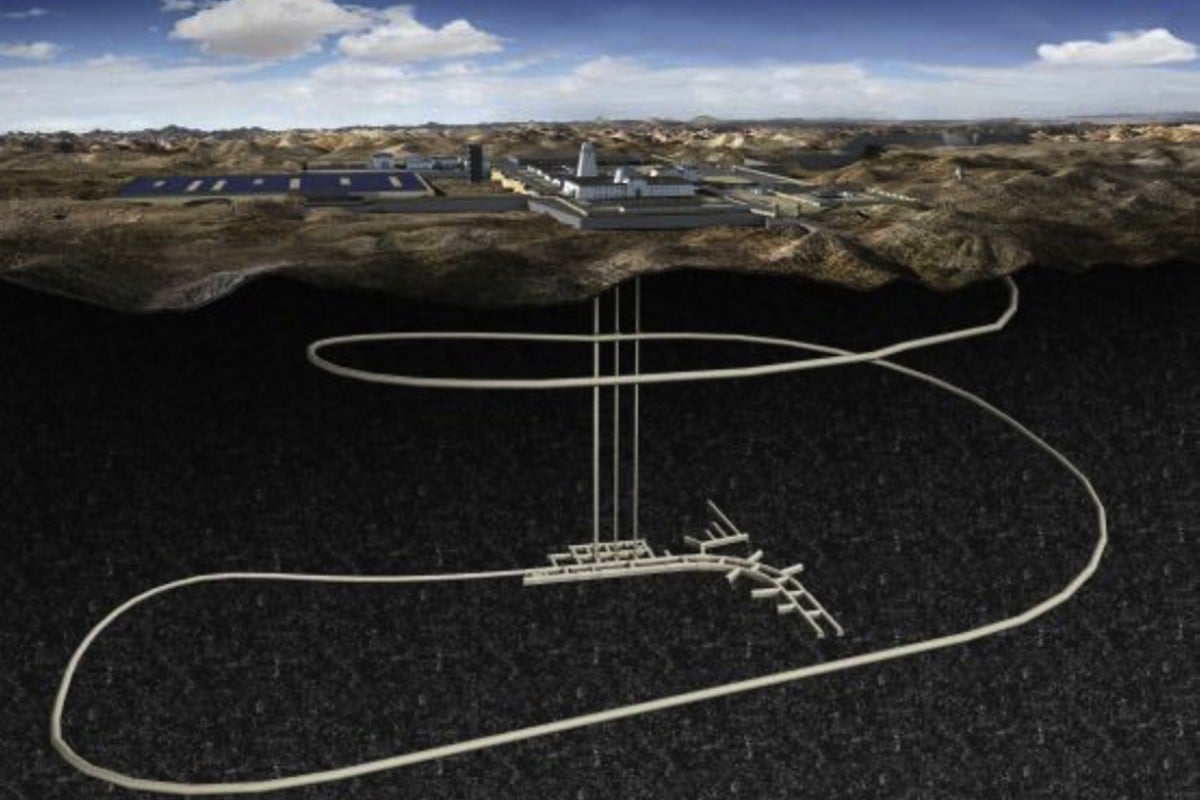
A preliminary design for the Beishan Underground Research Laboratory. Photo: Handout
China has chosen a site for an underground laboratory to research the disposal of highly radioactive waste, the country’s nuclear safety watchdog said on Wednesday.
Officials said work will soon begin on building the Beishan Underground Research Laboratory 400 metres underground in the northwestern province of Gansu.
Liu Hua, the head of the Chinese National Nuclear Safety Administration, said work would be carried out to determine whether it would be possible to build a repository for high-level nuclear waste deep underground.
“China sees radioactive waste disposal as a very important part [of the development nuclear energy],” said Liu. “To develop nuclear energy, we must have safe storage and disposal of nuclear waste.”
China condemns US blacklisting of nuclear firms and says American companies could be hurt as a result
The Chinese authorities see nuclear power an important source of energy that will help to curb carbon emissions and pollution as well as reducing its dependence on fuel imports.
But while the country has made great strides in the development of nuclear power, it needs to find a safe and reliable way of dealing with its growing stockpiles of nuclear waste.
Liu said the Gansu site had been identified as a possible location for a deep nuclear waste store after years of searching.
Once the laboratory is built, scientists and engineers will start experiments to confirm whether it will make a viable underground storage facility.
“Based on the data of the experiments, we can then decide if we are going to pick this as the final site,” he added.
China ‘actively promoting’ nuclear fuel processing plant with French Areva
Chinese officials usually stay tight-lipped about how nuclear waste is disposed of mainly because of fears that any discussion of the topic would trigger safety fears, although in recent years more efforts have been made to inform the public to win support.
Scientists say that nuclear waste can be divided into three categories depending on the level of radioactivity.
Low-level waste consists of minimally radioactive materials such as mop heads, rags, or protective clothing used in nuclear plants, while intermediate-level waste covers things such as filters and used reactor components.
High-level waste, however, is generated by the reprocessing of spent nuclear fuel and scientists generally agree that the safest way to dispose of it is to bury it deep underground in areas where the geology means it will have a minimal impact on the environment while it decays over thousands of years.
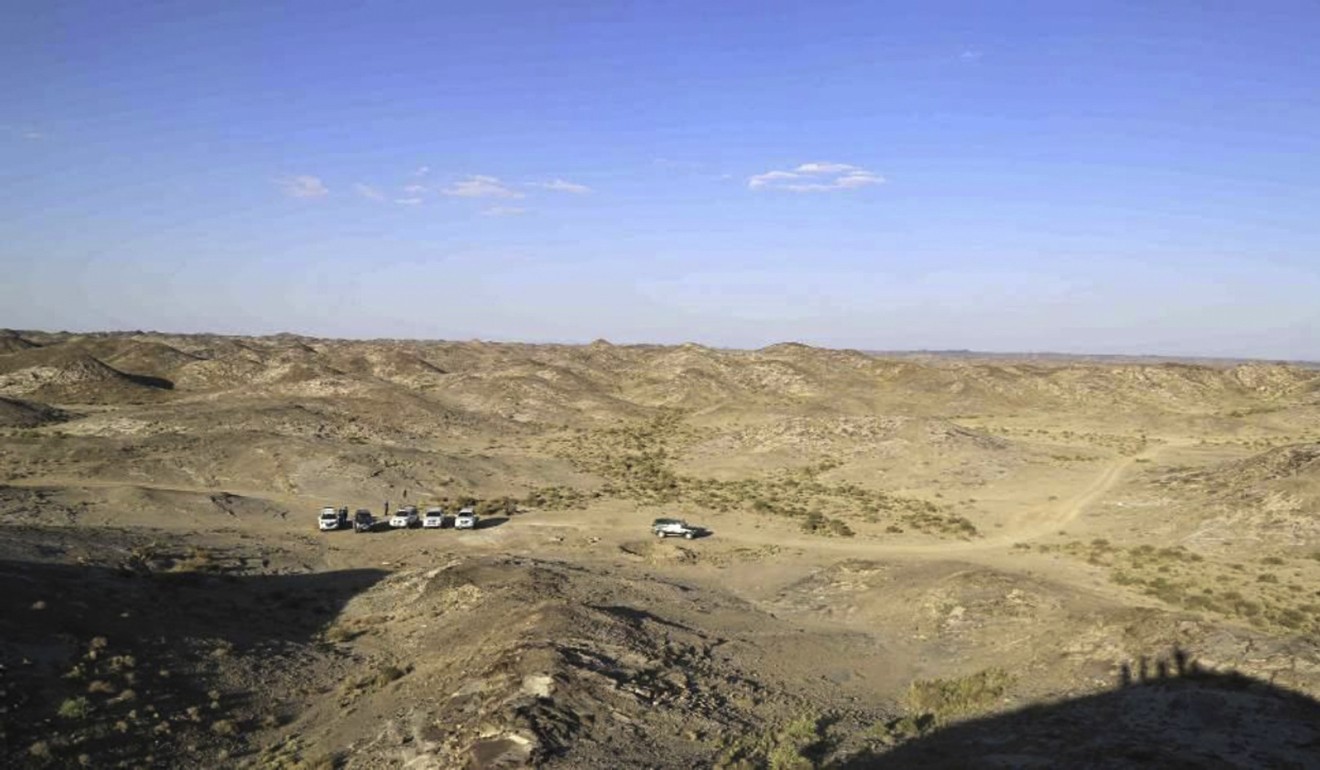
The facility will be built in a remote part of Gansu province. Photo: Handout
Some Chinese scientists said the country had the chance to lead the world in this area of research but others have expressed concerns about safety.
Jiang Kejun, a senior researcher at the Energy Research Institute of China’s National Development and Reform Commission, said that very few countries in the world are studying this form of nuclear waste disposal.
“It gives China an opportunity to be a leader in research in this area, plus China has the technology and financial means,” he said.
About a dozen countries including France, Switzerland, Japan, and the United States have carried out research in this area, but in recent years most have abandoned or scaled back their programmes.
At present there are storage sites operating in Finland and the US, but other countries such as Germany have abandoned plans to build similar facilities.
Washington blacklists Chinese nuclear firms for ‘helping military acquire US technology’
But despite broad scientific support for underground disposal, some analysts and many members of the public remain sceptical about whether it is really safe.
Lei Yian, an associate professor at the School of Physics at Peking University, said there was no absolute guarantee that the repositories would be safe when they are come into operation.
“Leakage has happened in [repositories] in the US and the former Soviet Union … it’s a difficult problem worldwide,” he said. “If China can solve it, then it will have solved a global problem.”
China is also building more facilities to dispose of low and intermediate level waste. Officials said new plants were being built in Zhenjiang, Fujian and Shandong, three coastal provinces that currently lack disposal facilities.
At present, two disposal sites for low and intermediate-level waste are in operation in Gansu and Guangdong provinces.
Source: SCMP
Posted in American companies, Beishan Underground Research Laboratory, blacklists, bury it deep, carbon emissions, China alert, chinese authorities, Chinese National Nuclear Safety Administration, Chinese nuclear firms, Chinese officials, coastal provinces, condemns, conduct, Country, deep underground, difficult problem, disposal facilities, earmarks, Energy Research Institute, Environment, filters, Finland, France, French Areva, fuel imports, Fujian, Gansu Province, geology, Germany, global problem, great strides, helping military acquire, High-level waste, highly radioactive waste, hurt, intermediate-level waste, Japan, lack, Leakage, Low-level waste, mop heads, National Development and Reform Commission, National Development and Reform Commission (NDRC), nuclear energy, nuclear firms, nuclear fuel processing plant, Nuclear power, nuclear safety watchdog, nuclear waste, Peking University, Pollution, protective clothing, rags, repositories, repository, reprocessing of spent nuclear fuel, researchers, result, safely, School of Physics, scientists, shandong province, site, source of energy, Soviet Union, stockpiles, store, Switzerland, tests, Uncategorized, underground, underground disposal, United States, US, US blacklisting, US technology, used reactor components, viable facility, Washington, world leader, worldwide, Zhenjiang |
Leave a Comment »



 CHINDIA ALERT: You'll be living in their world, very soon