Archive for ‘imported cases’

10/05/2020

Update: Chinese mainland reports 14 new confirmed COVID-19 cases

A customer buys products at a time-honored food store in east China’s Shanghai Municipality, April 26, 2020. (Xinhua/Wang Xiang)

Twelve cases were domestically transmitted, with 11 reported in Jilin Province and the other one in Hubei Province.

BEIJING, May 10 (Xinhua) — Chinese health authority said Sunday that it received report of 14 new confirmed COVID-19 cases on the Chinese mainland Saturday, of which two were imported cases reported in Shanghai.

Twelve cases were domestically transmitted, with 11 reported in Jilin Province and the other one in Hubei Province, the National Health Commission said in a daily report.

One new suspected case imported from abroad was reported in the Inner Mongolia Autonomous Region.

No deaths were reported Saturday on the mainland, according to the commission.

On Saturday, 74 people were discharged from hospitals after recovery, while the number of severe cases decreased by two to 13.

As of Saturday, the overall confirmed cases on the mainland had reached 82,901, including 148 patients who were still being treated, and 78,120 people who had been discharged after recovery.

Altogether 4,633 people had died of the disease, the commission said.

By Saturday, the mainland had reported a total of 1,683 imported cases. Of the cases, 1,568 had been discharged from hospitals after recovery, and 115 remained hospitalized with three in severe conditions. No deaths from the imported cases had been reported.

The commission said four people, all from overseas, were still suspected of being infected with the virus.

According to the commission, 5,840 close contacts were still under medical observation after 427 people were discharged from medical observation Saturday.

Also on Saturday, 20 new asymptomatic cases were reported on the mainland. One case was re-categorized as a confirmed case, and 61 asymptomatic cases, including 16 from overseas, were discharged from medical observation, according to the commission.

The commission said 794 asymptomatic cases, including 48 from overseas, were still under medical observation.

By Saturday, 1,044 confirmed cases including four deaths had been reported in the Hong Kong Special Administrative Region (SAR), 45 confirmed cases in the Macao SAR, and 440 in Taiwan including six deaths.

A total of 967 patients in Hong Kong, 40 in Macao, and 361 in Taiwan had been discharged from hospitals after recovery.

Source: Xinhua

26/04/2020

Wuhan declared free of Covid-19 as last patients leave hospital after months-long struggle against coronavirus

  • City at centre of outbreak finally able to declare itself clear of disease after months in lockdown and thousands of deaths
  • Risk of infection remains, however, with some patients testing positive for coronavirus that causes disease without showing symptoms
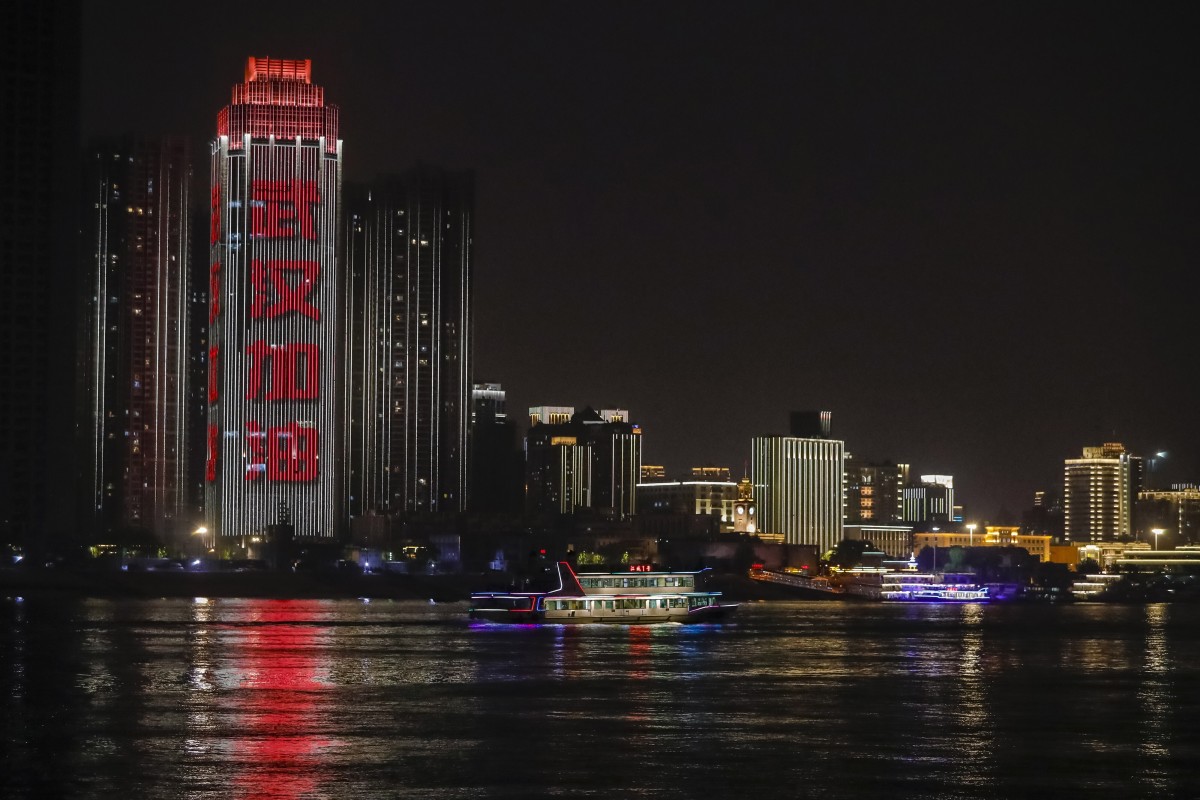
Ferries and other public transport services resumed in Wuhan last week. Photo: Xinhua

The city of Wuhan, the initial epicentre of the coronavirus pandemic, no longer has any Covid-19 patients in hospital after the last 12 were discharged on Sunday.

Their release ended a four-month nightmare for the city, where the disease was first detected in December. The number of patients being treated for Covid-19, the disease caused by a new coronavirus, peaked on February 18 at 38,020 – nearly 10,000 of whom were in severe or critical condition.

“With the joint efforts of Wuhan and the national medical aid given to Hubei province, all cases of Covid-19 in Wuhan were cleared as of April 26,” Mi Feng, a spokesman for the National Health Commission said on Sunday afternoon.

The announcement came only one day after the city discharged the last patient who had been in a severe condition. That patient also was the last severe case in Hubei province.

The last patient discharged from Wuhan Chest Hospital, a 77-year-old man surnamed Ding, twice tested negative for Sars-CoV-2, the virus that causes Covid-19, and was released at noon on Sunday.

“I missed my family so much!” Ding told Changjing Daily.

Another unidentified patient exclaimed as he left the hospital: “The air outside is so fresh! The weather is so good today!”

Wuhan faced a long journey to bring its patient count down to zero.

The city of 11 million, the capital of Hubei province and a transport hub for central China, was put under a strict lockdown on January 23 that barred anyone from entering or exiting the city without official approval for 76 days until it was officially lifted on April 8.

Coronavirus: Wuhan, Los Angeles officials discuss getting back to work after lockdown

22 Apr 2020

Residents were ordered to stay in their apartments as the city stopped public transport and banned private cars from city streets. As the epidemic worsened, more than 42,000 medical staff from across the country were sent to the city and to Hubei province to help ease the burden on the local health care system.

Wuhan was the hardest hit city in China, accounting for 50,333 of the 82,827 locally transmitted Covid-19 cases recorded in China. More than 4,600 died in the country from the disease.

On March 13, the city reported for the first time that there were no new suspected cases of the infection, and five days later there were no confirmed cases.

The number of discharged patients bottomed out at 39.1 per cent at the end of February, gradually climbing to 92.2 per cent by last Thursday.

“Having the patients in the hospital cleared on April 26 marks a major achievement for the city’s Covid-19 treatment,” the Wuhan Health Commission said in a statement.

However, having no severe cases in hospital does not mean all the discharged patients will require no further treatment as they may still need further care.

“Clearing all the severe cases marks a decisive victory for the battle to safeguard Wuhan,” health minister Ma Xiaowei told state broadcaster China Central Television on Saturday.

“Some patients who have other conditions are being treated in specialised hospitals. It has been properly arranged.”

Coronavirus: Chinese writer hit by nationalist backlash over diary about Wuhan lockdown

18 Apr 2020

Ten patients aged between 42 and 85 who have been declared coronavirus-free are still in intensive care at the city’s Tongji Hospital where they are being treated for kidney problems and other complications arising from Covid-19. Some still need ventilators to help them breathe.

These 10 patients are under 24-hour care, with 190 nurses on four-hour rotations. There are other patients in a similar condition in two other hospitals in Wuhan, according to the Hubei Broadcasting and Television Network.

However, the discharge of the last batch of Covid-19 patients does not mean that the risk of infection is gone.

The city reported 20 new cases of people testing positive for Sars-CoV-2, the official name for the coronavirus that causes the disease, but who do not yet show symptoms.

There are 535 such carriers under medical observation. Past data shows some of these asymptomatic carriers will develop symptoms, and so will be counted as Covid-19 patients under China’s diagnosis and treatment plan.

China’s coronavirus infection curve has flattened out with about 694 imported cases of Covid-19 on top of about 800 locally transmitted ones now under treatment.

The national health commission spokesman warned that people still need to be on high alert as the virus is continuing to spread around the globe, with no sign yet of a slowdown.

“[We] must not drop our guard and loosen up. [We] must discover cases in time and deal with them quickly,” Mi said, citing the continued pressure from cases imported by people returning from overseas.

“The next step will be to implement the requirements of the central government and continue to guard against imported cases and a rebound of domestic transmitted cases.”

Source: SCMP

13/04/2020

Russian border becomes China’s frontline in fight against second virus wave

SUIFENHE, China (Reuters) – China’s northeastern border with Russia has become a frontline in the fight against a resurgence of the coronavirus epidemic as new daily cases rose to the highest in nearly six weeks – with more than 90% involving people coming from abroad.

Having largely stamped out domestic transmission of the disease, China has been slowly easing curbs on movement as it tries to get its economy back on track, but there are fears that a rise in imported cases could spark a second wave of COVID-19.

A total of 108 new coronavirus cases were reported in mainland China on Sunday, up from 99 a day earlier, marking the highest daily tally since March 5.

Imported cases accounted for a record 98. Half involved Chinese nationals returning from Russia’s Far Eastern Federal District, home to the city of Vladivostok, who re-entered China through border crossings in Heilongjiang province.

“Our little town here, we thought it was the safest place,” said a resident of the border city of Suifenhe, who only gave his surname as Zhu.

“Some Chinese citizens – they want to come back, but it’s not very sensible, what are you doing coming here for?”

The border is closed, except to Chinese nationals, and the land route through the city had become one of few options available for people trying to return home after Russia stopped flights to China except for those evacuating people.

Streets in Suifenhe were virtually empty on Sunday evening due to restrictions of movement and gatherings announced last week, when authorities took preventative measures similar to those imposed in Wuhan, the central Chinese city where the pandemic ripping round the world first emerged late last year.

The total number of confirmed cases in mainland China now stands at 82,160 as of Sunday, and at the peak of the first wave of the epidemic on Feb 12 there were over 15,000 new cases.

Though the number of daily infections across China has dropped sharply from that peak, China has seen the daily toll creep higher after hitting a trough on March 12 because of the rise in imported cases.

Chinese cities near the Russian frontier are tightening border controls and imposing stricter quarantines in response.

Suifenhe and Harbin, the capital of Heilongjiang, are now mandating 28 days of quarantine as well as nucleic acid and antibody tests for all arrivals from abroad.

In Shanghai, authorities found that 60 people who arrived on Aeroflot flight SU208 from Moscow on April 10 have the coronavirus, Zheng Jin, a spokeswoman for the Shanghai Municipal Health Commission, told a press conference on Monday.

Residents in Suifenhe said a lot of people had left the city fearing contagion, but others put their trust in authorities’ containment measures.

“I don’t need to worry,” Zhao Wei, another Suifenhe resident, told Reuters. “If there’s a local transmission, I would, but there’s not a single one. They’re all from the border, but they’ve all been sent to quarantine.”

Source: Reuters

12/04/2020

African ambassadors in China complain to government over ‘discrimination’

JOHANNESBURG (Reuters) – African ambassadors in China have written to the country’s foreign minister over what they call discrimination against Africans as the country seeks to prevent a resurgence of the coronavirus.

Several African countries have separately also demanded that China address their concerns that Africans, in particular in the southern city of Guangzhou, are being mistreated and harassed.

Having brought under control the original outbreak centred on the city of Wuhan, China is now concerned about imported cases and is stepping up scrutiny of foreigners coming into the country and tightening border controls. It has denied any discrimination.

In recent days Africans in Guangzhou have reported being ejected from their apartments by their landlords, being tested for coronavirus several times without being given results and being shunned and discriminated against in public. Such complaints have been made in local media, and on social media.

The ambassadors’ note said such “stigmatisation and discrimination” created the false impression that the virus was being spread by Africans.

“The Group of African Ambassadors in Beijing immediately demands the cessation of forceful testing, quarantine and other inhuman treatments meted out to Africans,” it said.

The note was sent to China’s top diplomat, Wang Yi, copying the chair of the African Union, South African President Cyril Ramaphosa and all African foreign ministers.

The Chinese foreign ministry’s International Press Centre did not immediately respond to a request for comment on the note, sent outside of business hours.

The Chinese embassy in South Africa also did not respond.

Foreign affairs official Liu Baochun told a news conference on Sunday that Guangzhou is enforcing anti-virus measures on anyone who enters the city from across the national border, regardless of nationality, race or gender.

The Chinese embassy in Zimbabwe on Saturday dismissed the accusation that Africans were being deliberately targeted.

“It is harmful to sensationalize isolated incidents,” it said in a tweeted statement. “China treats all individuals in the country, Chinese and foreign alike, as equals.”

DISAPPOINTMENT

The ambassadors’ note highlighted a number of reported incidents, including that Africans were being ejected from hotels in the middle of the night, the seizure of passports, and threats of visa revocation, arrest or deportation.

On Saturday, Ghana’s foreign minister of affairs Shirley Ayorkor Botchwey said she had summoned the Chinese ambassador to express her disappointment and demand action.

Kenya’s foreign ministry has also “officially expressed concern”, adding the government is working with Chinese authorities to address the matter.

On Friday, Nigerian legislator Akinola Alabi tweeted a video of a meeting between the leader of Nigeria’s lower house of parliament, Femi Gbajabiamila, and Chinese Ambassador Zhou Pingjian. In it, Gbajabiamila demanded an explanation from the diplomat after showing Zhou a video of a Nigerian complaining about mistreatment in China.

The ambassador said in response to the questions from the house leader that he took the complaints “very seriously” and promised to convey them to the authorities back home.

Source: Reuters

02/04/2020

Coronavirus latest: more than 21,000 dead as UN warns of threat to ‘whole of humanity’

  • US$2 trillion rescue package passes US Senate, heads to House
  • Malaysia’s king and queen in ‘self-quarantine’ after staff test positive
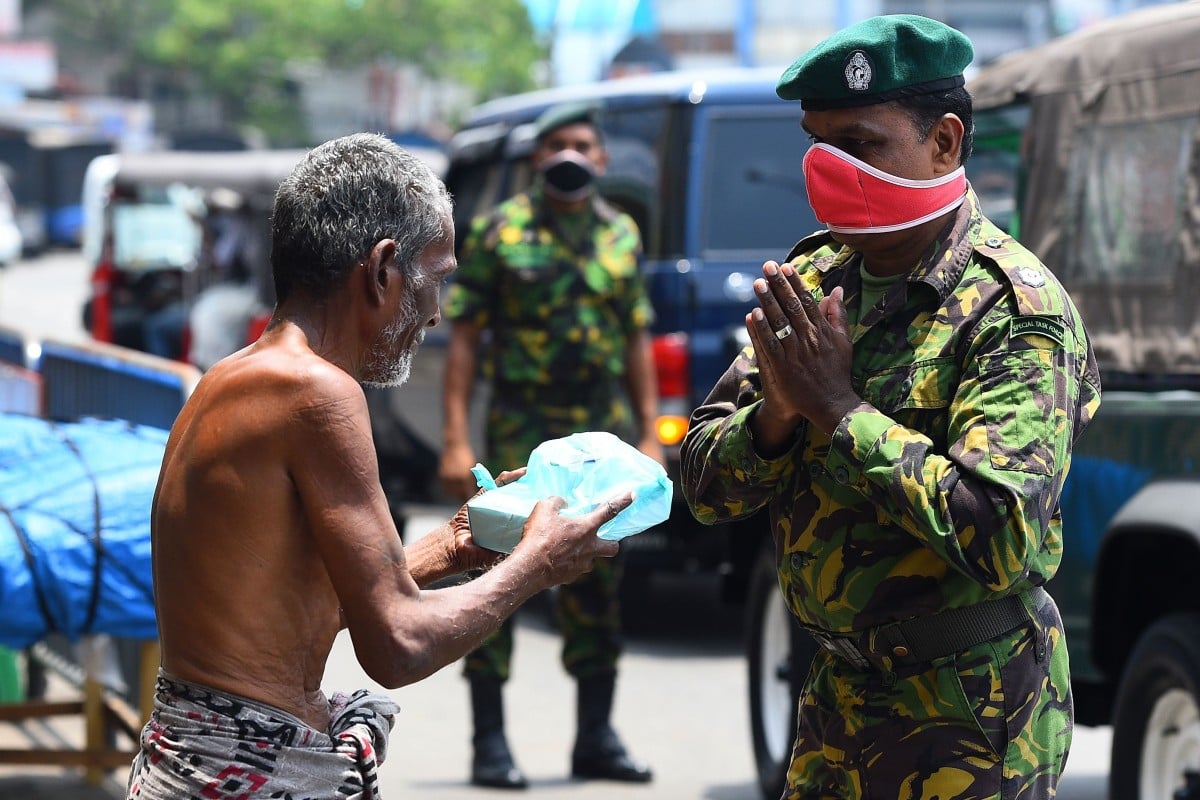
Police commandos in Sri Lanka hand out food to homeless people during a nationwide curfew against the spread of coronavirus. Photo: AFP

More than three billion people are living under lockdown measures as soaring death tolls in Europe and the US underlined a United Nations warning that the coronavirus, which has now infected nearly half a million people globally, threatens all of humanity.

The global death toll from the virus now stands at more than 21,000, with Spain joining Italy in seeing its number of fatalities overtake China, where the virus first emerged just three months ago.

“Covid-19 is threatening the whole of humanity – and the whole of humanity must fight back,” UN Secretary General Antonio Guterres said, launching an appeal for US$2 billion to help the world’s poor.

“Global action and solidarity are crucial. Individual country responses are not going to be enough.”

The G20 major economies will hold an emergency videoconference on Thursday to discuss a global response to the crisis, as will the 27 leaders of the European Union, the outbreak’s new epicentre.

The economic damage of the virus – and the lockdowns – could also be devastating, with fears of a worldwide recession worse than the financial meltdown more than a decade ago.

Here are the developments:

US$2 trillion rescue package passes US Senate

The US Senate passed the nation’s largest-ever rescue package late Wednesday, a US$2 trillion lifeline to suffering Americans, depleted hospitals and an economy all ravaged by a rapidly spreading coronavirus crisis.

The monster deal thrashed out between Republicans, Democrats and the White House includes cash payments to American taxpayers and several hundred billion dollars in grants and loans to small businesses and core industries. It also buttresses hospitals desperately in need of medical equipment and expands unemployment benefits.

The measure cleared the Senate by an overwhelming majority and was headed next to the House of Representatives, which must also pass it before it goes to President Donald Trump for his signature.

US President Donald Trump has voiced hope the US will be “raring to go” by mid-April, but his optimism appeared to stand almost alone among world leaders.

Unemployment benefit filings by Americans workers to surge to 3.3 million last week – the highest number ever recorded, the Labour Department reported on Thursday.

The normally routine report is at the front lines of the economic crisis caused by the outbreak, which has forced widespread closures of restaurants, shops and hotels, and brought airline travel to a virtual halt, prompting the stunning increase in people filing for benefits nationwide in the week ending March 21.

Nearly every state cited Covid-19 for the jump in initial jobless claims, with heavy impacts in food services, accommodation, entertainment and recreation, health care and transport, the report said.

Malaysia’s king and queen in quarantine after staff test positive

The official residence of Malaysia’s monarchy on Thursday confirmed seven of its staff have tested positive for Covid-19 and are currently receiving treatment at the Kuala Lumpur Hospital.

Malaysia’s king, Sultan Abdullah Sultan Ahmad Shah and queen, Tunku Azizah, have also been tested, but their results showed a clean bill of health, a spokesman for the Istana Negara said in a statement.

“Nevertheless, Their Majesties are now observing a 14-day self-quarantine, starting yesterday, ” he said.

Meanwhile, Prime Minister Muhyiddin Yassin, along with all federal ministers and their deputies, announced they will take a two-month pay cut, with the savings to be donated to Putrajaya’s Covid-19 fund.

The Prime Minister’s Office said the decision was made during a cabinet meeting and showed the government’s sincerity in helping those affected by the pandemic.

“The Covid-19 fund was launched on March 11 as part of the government’s efforts to help those who were affected by the disease outbreak,” the office said, adding that 8.5 million ringgit (US$1.97 million) has been collected, including government grants.

Malaysia on Wednesday announced a two-week extension of a national lockdown as part of stepped-up measures to contain the coronavirus outbreak.

The “movement control order,” which requires people to stay home and was originally set to expire on March 31, will now continue until April 14.

Moscow monitors people in coronavirus quarantine with 100,000 ‘under the skin’ surveillance cameras

Russia to ground international flights

Russia will halt all international flights from midnight on Friday under a government decree listing new measures against the coronavirus outbreak.
The decree published on Thursday orders aviation authorities to halt all regular and charter flights, with the exception of special flights evacuating Russian citizens from abroad.
The announcement came after Russia on Wednesday recorded its biggest daily spike in confirmed coronavirus infections so far, with 163 new cases for a total of 658 across the country.
Denis Protsenko, head doctor of Moscow’s new hospital treating coronavirus patients, told President Vladimir Putin that Russia needed to be ready for an “Italian scenario”, referring to what is now the hardest-hit country in the world in terms of deaths.

Singapore boosts stimulus package to 11 per cent of GDP

Singapore reported 52 new coronavirus cases on Thursday, taking its tally to 683 infections.

The health ministry said that out of the 52, 28 were imported while 24 were locally transmitted.

The city state earlier on Thursday unveiled more than $30 billion in new measures to help businesses and households fight the coronavirus pandemic that threatens to push the bellwether economy into a deep recession.

Drawing on national reserves for the first time since the global financial crisis to support an economy heading for recession, the additional spending will push up the government’s virus-related relief to almost S$55 billion, or 11 per cent of gross domestic product, Finance Minister Heng Swee Keat said in a speech in parliament Thursday. It also will widen the budget deficit for the financial year starting April 1 to 7.9 per cent of GDP, from a previous target of 2.1 per cent.

“This extraordinary situation calls for extraordinary measures,” Heng said. “We have saved up for a rainy day. The Covid-19 pandemic is already a mighty storm, and is still growing.”

Coronavirus: Italy’s slowing infection rate boosts case for lockdowns

26 Mar 2020
‘If you catch it, don’t spread it to others’, 1949 flu advice still applies to coronavirus pandemic

Imported cases rise in China

Mainland China reported a second consecutive day of no new local coronavirus infections as the epicentre of the epidemic Hubei province opened its borders, but imported cases rose as Beijing ramped up controls to prevent a resurgence of infections.

A total of 67 new cases were reported as of end-Wednesday, up from 47 a day earlier, all of which were imported, China’s National Health Commission said in a statement on Thursday.

The total number of cases now stands at 81,285.

The commission reported a total of 3,287 deaths at the end of Wednesday, up six from the previous day.

All of the new patients were travellers who came to China from overseas, with the mainland reporting no locally transmitted infections on Wednesday.

Fearing a new wave of infections from imported cases, authorities have ramped up quarantine and screening measures in other major cities including Beijing, where any travellers arriving from overseas must submit to centralised quarantine.

Coronavirus could become seasonal

There is a strong chance the new coronavirus could return in seasonal cycles, a senior US scientist said Wednesday, underscoring the urgent need to find a vaccine and effective treatments.

Anthony Fauci, who leads research into infectious diseases at the National Institutes of Health, told a briefing the virus was beginning to take root in the southern hemisphere, where winter is on its way.

“What we’re starting to see now … in southern Africa and in the southern hemisphere countries, is that we’re having cases that are appearing as they go into their winter season,” he said.

“And if, in fact, they have a substantial outbreak, it will be inevitable that we need to be prepared that we’ll get a cycle around the second time.

“It totally emphasises the need to do what we’re doing in developing a vaccine, testing it quickly and trying to get it ready so that we’ll have a vaccine available for that next cycle.”

There are currently two vaccines that have entered human trials -one in the US and one in China – and they could be a year to a year-and-a-half away from deployment.

British Columbia is testing for Covid-19 faster per head than South Korea
27 Mar 2020

Spain extends emergency by two weeks

Spain’s parliament has voted in favour of the government’s request to extend the state of emergency by two weeks that has allowed it to apply a national lockdown in hopes of stemming its coronavirus outbreak.

The parliamentary endorsement will allow the government to extend the strict stay-at-home rules and business closings for a full month. The government declared a state of emergency on March 14. It will now last until April 11.

Spain’s government solicited the two-week extension after deaths and infections from the Covid-19 virus have skyrocketed in recent days. Spain 47,600 total cases. Its 3,434 deaths only trail Italy’s death toll as the hardest-hit countries in the world.

The parliament met with fewer than 50 of its 350 members in the chamber, with the rest voting from home to reduce the risk of contagion.

Greece locks down Muslim towns

Greek authorities have quarantined a cluster of Muslim-majority towns and villages in the country’s northeast after several cases and a death from the new coronavirus in the area.

The area in Xanthi prefecture was placed in lockdown as of Wednesday evening as nine people in the region overall have tested positive for the virus over the past six days, civil protection deputy minister Nikos Hardalias told reporters.

“All residents have been temporarily confined at home. No exceptions are allowed,” Hardalias said.

The centre of the outbreak appears to be the small Pomak town of Ehinos, a community of about 2,500.

“Ehinos residents will be provided with food and medicine,” Hardalias said.

Police were deployed on Thursday on a bridge leading into town to enforce the lockdown, television footage showed.

One 72-year-old Ehinos man has died from the virus, local mayor Ridvan Deli Huseyin told Antenna television.

“It’s better to take some measures now than to cry about this later,” said Huseyin, the mayor of the local administrative centre of Miki.

The Pomaks are a Muslim group of Slavic origin who live mainly in neighbouring Bulgaria.

They make up part of Greece’s roughly 110,000-strong Muslim minority in the country’s northeast bordering Turkey.

Many of them work as migrant industrial workers in other European countries.

Economy seats go for business-class fares as travellers flee
27 Mar 2020

Colombia goes into lockdown, Chile extends schools closures

Countries across Latin America tightened measures on Wednesday to halt the spread of the deadly novel coronavirus, with more lockdowns, border closings and school closures as well as increased aid to the region’s poorest.

As cases of Covid-19 cases continue to rise – more than 7,400 and 123 deaths up to now – Bolivia and Colombia became the latest countries to impose a total lockdown, while Chile extended its schools closures until the end of April.

Brazil’s President Jair Bolsonaro has warned of possible “chaos” and the “looting” of supermarkets if state shutdowns ordered by the governors of Sao Paulo and Rio de Janeiro aren’t ended.

Bolsonaro, who has repeatedly scoffed at the severity of the deadly pandemic, had previously criticised the closing of schools and businesses in Sao Paulo and Rio states, two of the country’s most populous states.

Germany ramps up testing, approves huge bailout

Germany has boosted its coronavirus test rate to 500,000 a week, Christian Drosten, who heads the Institute of Virology at Berlin’s Charite University Hospital, said on Thursday, adding that early detection has been key in keeping the country’s death rate relatively low.

Drosten also highlighted Germany’s dense network of laboratories spread across its territory as a factor contributing to early detection.

The news came after Chancellor Angela Merkel’s government secured emergency spending, unlocking a historic rescue package designed to cushion the blow of the coronavirus pandemic.

A majority of lawmakers in the Bundestag voted on Wednesday to allow additional borrowing to combat the crisis, according to the legislature’s president. The Bundesrat, or upper house of parliament, will vote on Friday.

The extraordinary authorisation is part of a packet of legislation aimed at protecting German jobs and businesses. The new borrowing of €156 billion (US$169 billion) is equivalent to half of the country’s normal annual spending.

The country, which tightened lockdown measures this week, has about 32,700 cases and more than 150 deaths.

Trump and Widodo back chloroquine treatment, but fake news is deadly

25 Mar 2020

Ukraine declares ‘emergency situation’

Ukraine on Wednesday declared a month-long “emergency situation” to slow the coronavirus outbreak, as the number of confirmed cases jumped to 113.

Ukraine has already closed schools, universities and public spaces to stem the spread of the disease, but the measures were due to expire at the beginning of April.

The emergency situation announced on Wednesday effectively extends existing measures for 30 days until April 24, a government spokesperson said.

“We are extending quarantine and imposing an emergency situation in Ukraine,” Prime Minister Denys Shmygal said.

Unlike an official state of emergency, the initiative announced by the prime minister does not have to be rubber stamped by both the parliament and president. Ukraine has confirmed 113 cases of Covid-19 and four deaths, according to official statistics.

Prince Charles tests positive for coronavirus

Mexican governor says poor are ‘immune’

The governor of a state in central Mexico is arguing that the poor are “immune” to the new coronavirus, even as the federal government suspends all non-essential government activities beginning Thursday in a bid to prevent the spread of the virus.

Puebla Governor Miguel Barbosa’s comment on Wednesday was apparently partly a response to indications that the wealthy have made up a significant percentage of Mexicans infected to date, including some prominent business executives.

Officials say three-quarters of Mexico’s 475 confirmed cases are related to international travel, and the poor do not make many international trips. Some people apparently caught the virus on ski trips to Italy or the United States. The country has seen six deaths so far.

“The majority are wealthy people. If you are rich, you are at risk. If you are poor, no,” Barbosa said of the coronavirus. “We poor people, we are immune.”

Barbosa also appeared to be playing on an old stereotype held by some Mexicans that poor sanitation standards may have strengthened their immune systems by exposing them to bacteria or other bugs.

There is no scientific evidence to suggest the poor are in any way immune to the virus that is causing Covid-19 disease around the world.

No agreement on ‘Wuhan virus’ name as G7 spars over infection source

26 Mar 2020

Japan belatedly bans entry from Europe, Iran

Japanese Prime Minister Shinzo Abe has established a task force under the country’s revised emergency law to deal with the global rise in coronavirus infections and deaths.

In Tokyo on Thursday, Abe said it was necessary for people to act as one to overcome what can be described as a national crisis.

Japan will ban entry from 21 European countries as well as Iran, to take effect from Friday, he added.

The country has already begun asking visitors and its nationals arriving from some countries in Southeast Asia, the Middle East and Africa to self-quarantine for 14 days.

Arrivals from a total of seven Southeast Asian countries and four in the Middle East and Africa are also asked to refrain from using public transport.

Similar steps are in place for visitors from China, South Korea, most of Europe and the United States.

Malaysia to lock down two communities to curb spread

Malaysia on Thursday announced that 3,570 residents in two communities in the country’s south will be placed under complete lockdown due to their high coronavirus infection rates.

Defence Minister Ismail Sabri Yaakob said in a statement that the residents in Kluang district of Johor state are banned from leaving home for two weeks beginning Friday, to enable the health authorities to conduct door-to-door screening.

The tough measure was taken after 73 per cent of the 83 infection cases found in the district were traced to the two small communities of Kampung Dato Ibrahim Majid and Bandar Baru Dato Ibrahim Majid.

Ismail said the residents cannot leave home, not even to buy food, as the welfare department will supply them with two weeks’ worth of food. All businesses must close and all access into the two areas will be sealed. The police and army have been deployed to ensure compliance.

Australia scraps haircut time limit

The Australian government scrapped a time limit on haircuts following a backlash.

The government had imposed a rule on hairdressers and barbers on Tuesday that haircuts should take less than 30 minutes, as part of social distancing restrictions to deal with the coronavirus outbreak.

The restriction put around 40,000 hairdressers at risk, the Australian Hairdressing Council said in response.

“This decision is outrageous,” the council’s chief executive Sandy Chong said in a statement.

“Whilst many barbers can do a male haircut within that time frame, it really isn’t feasible for a majority of hairdressing salons.”

Australian Prime Minister Scott Morrison issued a statement Thursday saying the policy would be reversed with immediate effect.

But salons and barbers must still strictly observe new rules that there may only be one person per four square metres within the premises, Morrison said.

India unveils US$22.6 billion stimulus package

India’s government announced a 1.7 trillion rupee (US$22.6 billion) stimulus package, as it stepped up its response to the coronavirus pandemic.

The measures will include cash transfers as well as steps on food security, Finance Minister Nirmala Sitharaman said in New Delhi on Thursday, adding that the package will benefit migrant workers.

Asia’s third-largest economy joins countries from the US to Germany that have pledged spending to contain the economic fallout of the pandemic. India is on a total lockdown for three weeks from Wednesday in the world’s biggest isolation effort, as Prime Minister Narendra Modi seeks to prevent the virus from spreading locally.

The government will also provide an insurance cover of 5 million rupees to medical workers, Sitharaman said.

Source: SCMP

01/04/2020

Chinese province bars citizens from leaving the country to stop coronavirus spread

  • Authorities in Yunnan limit land and river ports to cargo traffic, locking down border communities
  • Province on alert for imported cases of Covid-19
Yunnan is on alert for imported cases of the coronavirus. Photo: Xinhua
The southwestern province of Yunnan has banned Chinese citizens from leaving the country via its more than 30 land and river ports to stop the spread of the coronavirus epidemic through returning nationals.
Yunnan, which borders Vietnam, Laos and Myanmar, had restricted its 19 land ports and 14 river ports to cargo, the provincial government said on Tuesday.
The authorities said that from Tuesday night, all departures by Chinese citizens via the checkpoints would be suspended, with exemptions granted for approved foreign aid, technical support or emergency medical workers.
China closed its borders to foreign travellers and residency holders

on Saturday. But non-Chinese residents of border areas who have permits to cross into Yunnan could still enter the province, according to a previous report by China News Service.

Those permit holders can still cross into Yunnan but will be discouraged from doing so. Under the new restrictions, they will need to test negative for two nucleic acid tests and one antibody test before being put in seven days of centralised isolation and another seven days of home isolation, all at their own expense.

Coronavirus: Decoding Covid-19
Residents in border cities and counties will be restricted to the village and community level to prevent entry and exit of outsiders. They would also be encouraged to report illegal immigrants, the government said.
Yunnan, which recorded 174 local coronavirus cases including two deaths, said all patients in its initial wave were discharged by March 14. The province is now on alert for imported cases, with eight patients who travelled to the province from overseas being treated as of Tuesday.

Xiao Xian, a professor of international relations from Yunnan University, said some permit holders could be deterred from crossing into Yunnan by the cost of tests and quarantine.

Xiao also said that banning Chinese citizens from crossing the border would affect border trade and tourism, but it was necessary to stop transmission of the coronavirus.

“The need to prevent the spread of an infectious disease outweighs trade and tourism. It is understandable since it is the country’s top priority now,” Xiao said.

Source: SCMP

27/03/2020

Coronavirus travel: China bars foreign visitors as imported cases rise

A queue at a fever clinic in Hubei province on FridayImage copyright AFP / GETTY
Image caption A queue at a fever clinic in Hubei province on Friday

China has announced a temporary ban on all foreign visitors, even if they have visas or residence permits.

The country is also limiting Chinese and foreign airlines to one flight per week, and flights must not be more than 75% full.

Although China reported its first locally-transmitted coronavirus case for three days on Friday, almost all its new cases now come from abroad.

There were 55 new cases across China on Thursday – 54 of them from overseas.

What are the new rules?

The Chinese Foreign Ministry said it was “suspending the entry of foreign nationals” because of the “rapid spread of Covid-19 across the world”.

The suspension applies to people with visas and residence passes, but not to diplomats or those with C visas (usually aircraft crew).

People with “emergency humanitarian needs” or those working in certain fields can apply for exceptions.

Although the rules seem dramatic, many foreign airlines had already stopped flying to China – and a number of cities already had restrictions for arrivals.

Last month, for example, Beijing ordered everyone returning to the city into a 14-day quarantine.

What is the coronavirus situation in China?

Although the virus emerged in China, it now has fewer cases than the US and fewer deaths than Italy and Spain.

There have been 81,340 confirmed cases in China and 3,292 deaths, the National Health Commission said on Friday.

In total, 565 of those confirmed cases were classed as “imported” – either foreigners coming into China, or returning Chinese nationals.

In Hubei – the province where the outbreak began – there were no new confirmed or suspected cases on Thursday.

The lockdown in provincial capital Wuhan, which began in January, will be eased on 8 April.

Media caption Stephen McDonell met people in Beijing heading out after the lockdown

Source: The BBC

Law of Unintended Consequences

continuously updated blog about China & India

ChiaHou's Book Reviews

continuously updated blog about China & India

What's wrong with the world; and its economy

continuously updated blog about China & India