Chindia Alert: You’ll be Living in their World Very Soon
aims to alert you to the threats and opportunities that China and India present. China and India require serious attention; case of ‘hidden dragon and crouching tiger’.
Without this attention, governments, businesses and, indeed, individuals may find themselves at a great disadvantage sooner rather than later.
The POSTs (front webpages) are mainly 'cuttings' from reliable sources, updated continuously.
The PAGEs (see Tabs, above) attempt to make the information more meaningful by putting some structure to the information we have researched and assembled since 2006.
AHMEDABAD, India (Reuters) – U.S. President Donald Trump will be shielded from the sight of slums by a newly built wall when he visits the city of Ahmedabad during a visit to India this month.
A senior government said the wall was being built for security reasons, not to conceal the slum district.
But the contractor building it told Reuters the government “did not want the slum to be seen” when Trump passes by on the ride in from Ahmedabad’s airport.
“I’ve been ordered to build a wall as soon as possible, over 150 masons are working round-the-clock to finish the project,” the contractor said, speaking on condition of anonymity.
The government official conceded that the wall was part of a “beautification and cleanliness” drive.
Whatever the reason, the 400-meter-long and seven-feet-high wall will prevent the U.S. leader from getting a glimpse of a slum district that houses an estimated 800 families.
Trump, who has made his pledge to build a wall along the United States’ border with Mexico a feature of his presidency, will visit India on Feb. 24-25 to reaffirm strategic ties that have been buffeted by trade disputes.
He is expected to attend an event dubbed “Kem Chho Trump” (“How are you, Trump”) at a stadium in Ahmedabad along the lines of the “Howdy Modi” extravaganza he hosted for Indian Prime Minister Narendra Modi in Houston last September.
Speaking at the White House on Tuesday, Trump quoted Modi as saying “millions and millions of people” would attend the rally.
The event provides Trump, who was impeached in December, with the opportunity to woo the support of hundreds of thousands of Indian-American voters ahead of the U.S. presidential election in November.
But some slum dwellers whose homes will be cordoned off by the wall in Ahmedabad – the largest city in Modi’s home state of Gujarat – said the government was wasting tax-payer money to hide the poor.
“Poverty and slums are the reality of our life, but Modi’s government wants to hide the poor,” said Parvatbhai Mafabhai, a day worker who has lived there with his family for more than three decades.
BEIJING, Feb. 12 (Xinhua) — China highly appreciates a BRICS chairmanship statement in support of China’s fight against the novel coronavirus epidemic, Foreign Ministry Spokesperson Geng Shuang said Wednesday at an online press briefing.
Russia, holding this year’s chairmanship of the emerging-market bloc that groups Brazil, Russia, India, China and South Africa, on Tuesday issued the statement representing the BRICS countries to support the “firm commitment and decisive efforts of the Chinese government” to combat the epidemic.
The statement also called for international cooperation and coordination within the World Health Organization framework to protect regional and global public health security, and underlined the importance of avoiding discrimination, stigmatization and overreaction while responding to the outbreak.
Calling other BRICS countries as important partners for China, Geng said this statement delivered positive and constructive messages, voiced support for China’s efforts and called for greater international cooperation in safeguarding public health security.
“This demonstrates the BRICS spirit of helping each other during difficult times. It also epitomizes the support China has received from the international community. We highly appreciate it,” he said.
“We will continue to work with the international community including the BRICS countries to combat the epidemic and safeguard regional and global public health security,” said the spokesperson.
Chinese President Xi Jinping, also general secretary of the Communist Party of China (CPC) Central Committee and chairman of the Central Military Commission, inspects the center for disease control and prevention of Chaoyang District in Beijing, capital of China, on Feb. 10, 2020. (Xinhua/Liu Bin)
WHO Spokesperson Fadela Chaib said that the visit has sent a very important signal to both China and the international community.
BEIJING, Feb. 12 (Xinhua) — The international community have spoke highly of Chinese President Xi Jinping’s inspection tour of the epidemic prevention and control work in Beijing, saying it has injected enormous confidence into the battle against the novel coronavirus pneumonia (NCP).
Xi, also general secretary of the Communist Party of China Central Committee and chairman of the Central Military Commission, visited a residential community, a hospital and a district center for disease control and prevention in Beijing on Monday.
The World Health Organization (WHO) has expressed firm support for China’s fight against the NCP and spoken highly of Xi’s field visit. WHO Spokesperson Fadela Chaib said that the visit has sent a very important signal to both China and the international community.
Chinese President Xi Jinping, also general secretary of the Communist Party of China (CPC) Central Committee and chairman of the Central Military Commission, inspects the novel coronavirus pneumonia prevention and control work in Beijing, capital of China, on Feb. 10, 2020. (Xinhua/Ju Peng)
Stephen Perry, chairman of Britain’s 48 Group Club, told Xinhua that through his inspection visit, Xi has shown his concern for the people and strong determination to fight against the epidemic.
The government has carried out anti-epidemic steps with great accuracy, and the whole population of China has united behind the government to carry out the steps necessary in different areas, Perry said.
Subhomoy Bhattacharjee, a consultant at India’s Research and Information System for Developing Countries based in India, said that Xi’s inspection visit has greatly encouraged the medical staff there and sent a positive signal to citizens and investors about the health of the society and economy.
Thai former Deputy Prime Minister Pinij Charusombat said that Xi’s field visit at this crucial moment has shown that the government truly put the people’s lives on top priority, sending out a message to the international community that the Chinese people united as one will get through the difficulties with joint efforts.
Chinese President Xi Jinping, also general secretary of the Communist Party of China (CPC) Central Committee and chairman of the Central Military Commission, checks the treatment of hospitalized patients at the monitoring center and talks to medical staff on duty via a video link at Beijing Ditan Hospital in Beijing, capital of China, on Feb. 10, 2020. (Xinhua/Ju Peng)
Oh Ei Sun, principal advisor for Malaysia’s Pacific Research Center, said Xi’s visit to the residential community has shown the Chinese government’s concern for the people, focus on the people’s voice and understanding of the people’s needs in the fight against epidemic.
Xi’s remarks during the inspection sent out a positive signal that scientific prevention and control measures and targeted policies are needed in the fight against the epidemic, Oh Ei Sun said.
Abdalmuhdi Abumotawi, director of Egypt’s Middle East Forum for Strategic Studies & National Security, said that as China has now entered a critical stage in the fight against the NCP epidemic, President Xi gave everyone more confidence by inspecting the relevant sites in Beijing.
The measures taken by the Chinese government and the response and interaction of the Chinese people confirm once again that China has the ability to eliminate the virus, the Egyptian expert added.
NEW DELHI (Reuters) – India’s ruling party was projected to lose a key state election on Tuesday, the vote count showed, in its first electoral test since deadly anti-government protests erupted nearly two months ago.
The Hindu-nationalist Bharatiya Janata Party (BJP) led by Prime Minister Narendra Modi won a bigger majority in a general election in May, but it has lost a string of state elections since then.
The protests, in which at least 25 people have been killed, erupted across the country in mid-December, after the BJP passed a new citizenship law critics say violates India’s secular constitution and discriminates against minority Muslims.
In counting for state polls held in India’s capital New Delhi, data from India’s Election Commission showed the liberal Aam Aadmi Party, led by the city’s chief minister, Arvind Kejriwal, leading 57 out of 70 seats.
The BJP ran a campaign accusing protesters of supporting India’s arch-rival Pakistan and was projected to win 13 seats, up from three in 2015 but far below its own expectations. The party’s local chief Manoj Tiwari had predicted it would win a majority.
AAP activists in distinctive white boat-shaped caps danced outside party headquarters in New Delhi as the result became clear, TV channels showed.
Neelanjan Sircar, an assistant professor at Ashoka University near New Delhi, said that local issues, including delivery of basic services like education and health, appeared to sway voters towards the AAP, even as the BJP ran a polarising campaign on the back of Modi’s image.
“Modi is a larger than life character at the national level, which obviously gives the BJP a huge advantage in national politics,” Sircar said.
“But it doesn’t translate to state level politics, where the BJP often doesn’t have a charismatic face.”
Bespectacled former bureaucrat Kejriwal, 51, formed AAP in 2012 amid an anti-corruption movement that swept India.
The party won a stunning victory in 2015 state elections in the capital, wiping out the BJP and Congress, the party that has ruled India for half its post-independence history.
The Congress – the main opposition at national level – was projected to win no seats in Delhi on Tuesday, data showed, reflecting the deep decline in its fortunes.
LUCKNOW (Reuters) – U.S. and European defence firms backed Indian Prime Minister Narendra Modi’s military modernisation drive at a defence exhibition on Friday, despite a lengthy procurement process running into years and limited funds.
Airbus SE (AIR.PA) and U.S.-based Lockheed Martin Corp (LMT.N) and Boeing Co. (BA.N) are eying multi-billion dollar deals under Modi’s aim to upgrade an ageing fleet of aircraft and enhance local arms manufacturing to cut imports.
“I feel encouraged overall,” Anand Stanley, President and managing director of Airbus India and South Asia, told Reuters.
“Every year the government is doing capital allocation. They are spending,” he said.
The military is also looking to buy submarines, warships and battlefield communication systems. But these have made little headway.
Airbus is offering to set up an assembly line in India in partnership with the Tata Group to produce the C295W military transport aircraft as a replacement for Indian Air Force’s Avro fleet.
The 120 billion rupee Avro replacement programme has been in the pipeline for almost a decade.
Airbus on Thursday signed a memorandum of understanding (MoU) with India’s Adani Aerospace and Defence, part of the diversified Adani Group, for aircraft services in India and South Asia.
Boeing, which has pitched its F/A-18 Block III Super Hornet fighter for the India air force and navy and is competing with Lockheed Martin’s F-21, said it plans to push India’s armed forces’ drive for modernisation through a suite of five products – the Super Hornet, KC-46 tanker, P-8I aircraft, AH-64E Apache and CH-47(I) Chinook helicopters.
The company said it wants to build a global defence and aerospace ecosystem “that creates jobs and industrial capacity with Make in India,” said Salil Gupte, president, Boeing India in a statement during the exhibition.
Boeing and Lockheed will be competing with Sweden’s Saab AB (SAABb.ST) with its Gripen fighter and France’s Dassault Aviation SA (AVMD.PA) Rafale and Russian fighter aircraft.
Lockheed Martin, as part of its fighter jet F-21 proposal for the Indian Air Force, signed an MoU with Bharat Electronics Ltd (BAJE.NS) on Friday to explore industrial opportunities around the F-21 fleet, which is essentially building up a spare and supply ecosystem.
The three aerospace giants, with huge displays at the Defence Expo 2020 held in the northern city of Lucknow, displayed miniaturised versions of the latest aircraft and helicopters that they have pitched to India.
Another French defence firm, Dassault (DAST.PA), which recently delivered its first Rafale aircraft to the government in October under a contract to supply 36 units, said it is developing its facility in central India to make the Rafale jets in the subcontinent.
Hong Kong and Thailand are likely to suffer most from the novel coronavirus outbreak because of close their economic ties with China
A drop in Chinese tourist arrivals and imports, as well as supply chain disruptions are likely to weigh on regional economy
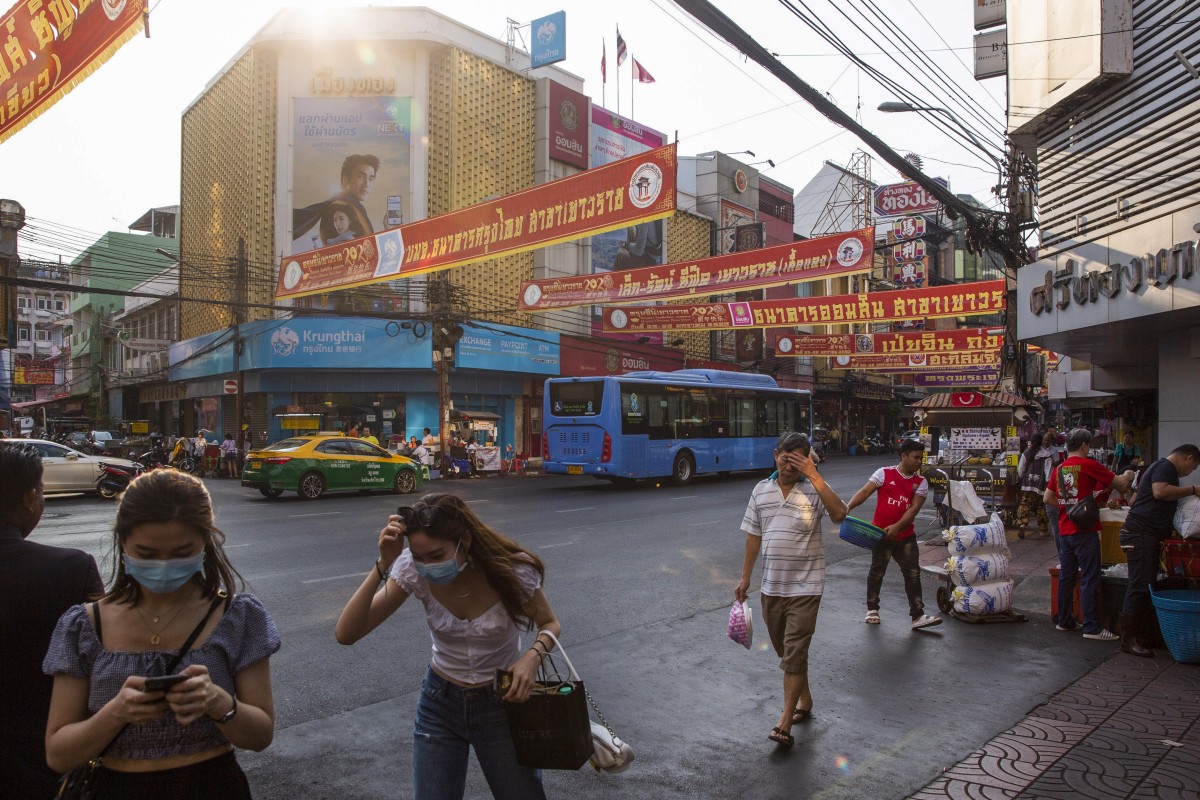
Thailand’s economy could be one of the most affected by the coronavirus outbreak due to its close ties with China, especially in the tourism sector. Photo: Bloomberg
Hong Kong and Thailand are likely to be the hardest hit Asian economies outside mainland China from the deadly coronavirus outbreak, according to analysts.
The 2019-nCoV, which had claimed the lives of nearly 640 people and infected more than 31,000 in mainland China by Friday, is viewed as even more damaging than the severe acute respiratory syndrome (Sars) epidemic in 2002-2003 because of prolonged factory closures and transport restrictions that have locked down many Chinese cities.
China has become more closely integrated with the rest of Asia since the Sars outbreak, meaning the disruptions to China’s industrial and export sectors, combined with a sharp drop in economic activity in the first quarter, will have significant repercussions across the region, particularly through tourism and trade, analysts said.
“A collapse in tourism arrivals from China will be the first shock wave for the rest of the region,” said Gareth Leather, senior Asia economist at Capital Economics. “Factory closures in China will affect the rest of the region by disrupting regional supply chains.”
A collapse in tourism arrivals from China will be the first shock wave for the rest of the region. Factory closures in China will affect the rest of the region by disrupting regional supply chainsGareth Leather
Hong Kong would likely be the most affected because of its status as a trade hub, its tight linkages to the Chinese economy and the sharp decline in tourism expenditure that is expected, UBS economist William Deng noted.
“Due to the risk of infection, domestic households significantly reduced such activities as dining out, shopping and entertainment,” Deng wrote in a recent note. He cut Hong Kong’s gross domestic product (GDP) growth forecast to minus 1.8 per cent for 2020, against his previous projection of a 0.5 per cent drop.
A community outbreak spread by human-to-human transmission has started in the city, said Professor Yuen Kwok-yung, a top microbiologist at the University of Hong Kong on Wednesday.
Thailand could be the next most affected due to its dependence on Chinese tourism. Outside Hong Kong and Macau, the country has the highest exposure to China as a share of GDP in the region.
China locks down Hangzhou, mega-city far from epicentre of coronavirus outbreak
ANZ Bank’s head of Asia research Khoon Goh said that the novel coronavirus could knock US$760 million from Thailand’s economy in the first quarter. Hong Kong could could see losses of US$1.4 billion. Travel services as a share of GDP were 11.2 per cent in Thailand and 9.4 per cent in Hong Kong.
“The Thai economy would expand at a slower rate in 2020 than previously forecast and much further below its potential due to the outbreak of coronavirus,” Bank of Thailand said in a statement after it slashed interest rates to a record low on Wednesday.
South Korean and Taiwanese businesses will also have negative spillover effects from the coronavirus outbreak because of supply chain disruptions and weaker consumer sentiment inside and outside China, analysts said.
South Korean car and tech companies that rely on parts from Chinese suppliers are exposed to potential production disruptions stemming from factory closures and the evacuation of Korean workers from China-based production lines, said Sean Hwang, corporate finance group analyst at Moody’s Investors Group.
Coronavirus: here are the places and airlines restricting travel to China
For instance, Hyundai Motor Company closed some if its South Korea-based plants on February 4 because of a shortage of wiring harnesses.
Korean customers are also limiting their trips to bricks-and-mortar retail stores such as E Mart and Lotte Shopping to avoid crowds amid the outbreak, potentially leading to a significant decline in revenue and earnings, Hwang said.
Although Singapore is not as closely tied to China as Hong Kong, the city state could still see a knock-on effect from China’s expected near-term downturn, as its economy has become much more integrated with the world’s second largest economy since the Sars outbreak.
The number of Chinese tourists rose six times from 568,000 in 2003 to 3.4 million in 2018, said Irvin Seah, senior economist at DBS Bank.
Coronavirus outbreak: global businesses shut down operations in China
“We expect a decline of about 1 million tourists or about SGD1 billion (US$722 million) of lost tourism receipts for every three months of travel ban,” Seah said. “We have lowered our full-year GDP growth forecast to 0.9 per cent, down from 1.4 per cent previously.”
Taiwan has banned Chinese visitors as well as foreigners who have visited Hong Kong and Macau from entering the island due the coronavirus. International cruise ships are also unable to dock on the island, which will lead to at least 112 liner visits cancelled by the end of March, affecting around 144,000 passengers, said the Taiwan International Ports Corporation.
Capital Economics’ Leather said the economic impact on Taiwan from 2019-nCoV could stand out from the rest of Asia, as it had the most exposure in value-added, intermediate exports to China – 18 per cent of GDP.
20 coronavirus infections confirmed on cruise ship in Japan, as thousands remain under quarantine
Elsewhere, Malaysia’s commodity driven trade growth this year has been threatened by the almost 20 per cent fall in crude oil prices, a decline triggered by fears that the coronavirus outbreak would dampen China’s imports. Malaysia’s purchasing managers’ index, a survey of manufacturers, dropped to 48.8 in January from 50.0 the prior month prior, data released this week showed. The drop was blamed on slowing output, with new orders dropping the most since September amid a decline in exports.
“The Bank Negara Malaysia’s surprising policy rate cut at the last meeting on 22 January, just around the time the coronavirus started to dominate headlines, tells us that the central bank is ahead of the curve in recognising the risk,” said Prakash Sakpal, Asia economist at ING Bank said.
India and Indonesia will be the least affected given the small contribution the tourism sector makes to their economies, and the low share of visitors from China, ANZ’s Goh said.
We can’t know a definitive overall number as the virus spreads across China, but to give an idea of the scale of the demand, let’s start by looking at the situation in Hubei province, the epicentre of the outbreak.
Just dealing with medical staff alone, there are an estimated 500,000 across the province.
Medical advice in China is to change face masks regularly, as often as four times a day for medical teams, which would require two million masks each day.
This is the procedure being followed in one of the main hospitals in Wuhan, the largest city in Hubei province.
We don’t have a breakdown for the numbers of medical staff in other significantly affected provinces, but it would be reasonable to assume a similar pattern of usage, as coronavirus infections spread.
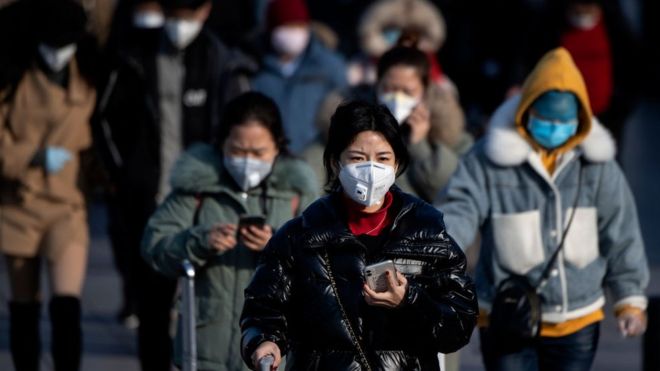
Then there’s the widespread use of face masks among the ordinary population, whether or not they’ve been instructed to do so by the authorities.
More than half a million staff working on public transport in China have been told to use masks
There are reports that some shops, businesses and other public premises have told people to use masks if they want to enter
It’s also important to say that culturally, it’s quite common for people in China to wear face masks, both as general protection and if they feel they are getting ill.
So, although we can’t know overall numbers of masks needed, it’s clear there’s already a huge demand which is only going to increase across China, particularly as people head back to work in mid-February after the New Year holiday.
How many is China producing?
Under normal circumstances, China produces around twenty millions masks each day. That’s estimated to be around half of all masks made globally.
However, Chinese production has currently been cut to around 10 million, both because of the New Year holiday as well as the impact of the virus itself.
That’s clearly not sufficient to meet even the current demand in China.
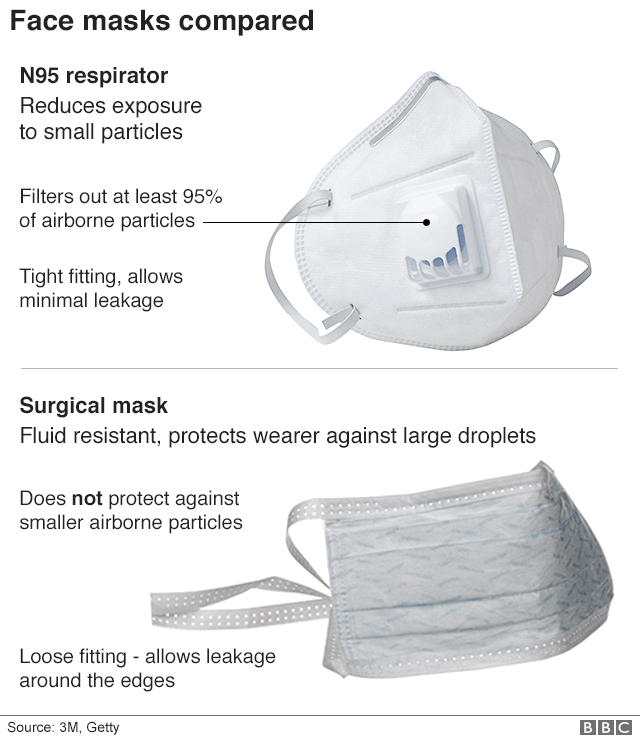
In addition, it’s the higher-quality masks which are most effective, and most needed.
One type, known as the N95 respirator, is designed to filter at least 95% of airborne particles, and is more effective than an ordinary surgical or medical mask, which also needs to be changed more frequently.
China currently produces each day around 600,000 of these high-quality masks, according to figures from the Ministry of Industry.
One province, Zhejiang, reported on 27 January that they needed a million of these masks each day, and other provinces have said they are only just able to meet demand for these high-quality masks.
In addition, hospitals don’t have large stockpiles of these masks – in most cases, only enough to last two weeks.
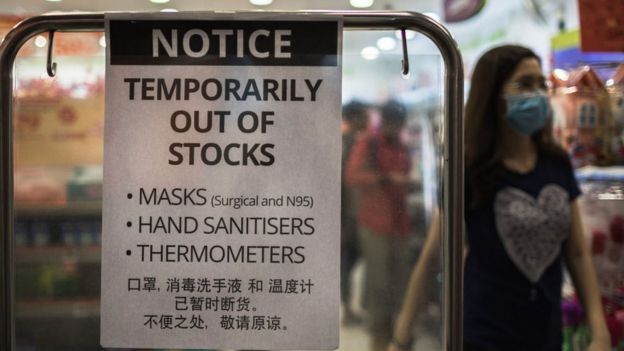
Across China, there have been reports of shortages and soaring prices, as people have rushed to buy masks.
To give an idea of this demand, the Chinese online shopping site Taobao says than in just two days in January, they sold more than 80 million masks.
Can China get masks from abroad?
China bought 220 million face masks between 24 January and 2 February, with South Korea one of the countries supplying them.
Since the beginning of February, the authorities have also removed tariffs and duties on imported medical supplies.
The US firm, 3M, which is a major producer of high-quality face masks, says the company is increasing production to meet global demand.
The UK-based Cambridge Mask Company, which makes high-quality respirator masks, says it has faced unprecedented demand, and has completely sold out.
Image copyright GETTY IMAGESImage caption A pharmacy in Singapore: Supplies have been bought up in countries outside China
Some countries, such as Taiwan and India, have banned the export of protective clothing such as face masks.
Taiwan says it wants to prioritise the protection of its own citizens, and has announced a rationing system for buying face masks.
There have also been reports of shortages in countries outside China because of panic buying, as fears grow about the global spread of the coronavirus.
Image copyright GETTY IMAGESImage caption A model displays a car at the annual Indian Auto Expo
Chinese attendees are not welcome at India’s Auto Expo next week due to concerns about the coronavirus.
Chinese guests are prevented from attending the show because of “government policy” an Indian Society of Automobile Manufacturers (SIAM) spokeswoman said.
Yet Chinese cars will be on display.
Other events across Asia will be missing the large delegations that usually come from Chinese firms because of travel restrictions.
Changing car markets
India and China have much at stake in spurring domestic car sales as well as exports, making such industry events vital to drum up business.
New Indian car sales fell 16% last year and China, the world’s largest car market, saw an 8% dip as both markets saw increased turnover in used cars. However there is interest in newer models in the electric vehicle segment, according to Chinese market consultancy LMC Automotive and SIAM figures.
India’s Tata Motors, owner of the Land Rover and Jaguar brands, has developed electric car models for sale at home and abroad, while China’s SAIC Motor and Great Wall Motor also offer electric vehicles for the domestic and export markets. That makes auto shows like the one in India next week important venues to showcase the newest models.
Ripple effect
With hotels and conference fees paid in advance and lunch and dinner meetings arranged months earlier, missing a big industry show has a major ripple effect on economic activity. Events like the Auto Expo in suburban New Delhi, or the Singapore air show due to take place next week draw thousands of out-of-town guests.
In China, the conference circuit has come to a standstill with over 20,000 infections and more than 420 people dead as the virus spreads from the epicentre of the city of Wuhan.
In the case of the Singapore Airshow organisers have faced cancellations by vendors from China, including aircraft maker Comac, and reduced attendance by companies from elsewhere in the world concerned about the spread of the virus outside of China. Singapore has reported 24 cases. India to date has seen three coronavirus cases.
To mitigate the impact, both events have highlighted plans to screen throngs of guests for fever and ensure thorough sanitation measures as well as access to medical care to ensure they can carry on even at reduced attendance.
MOSCOW (Reuters) – Russia will begin delivering S-400 surface-to-air missile systems to India by the end of 2021, agency RIA Novosti on Wednesday quoted a Russian official as saying.
India signed a $5 billion deal for S-400 missiles in 2018, drawing warnings from the United States that such an acquisition would trigger sanctions as part of a wider programme against Russia.
“The contract is being implemented on schedule. The first shipment is due by the end of 2021,” Deputy Director of the Federal Service for Military-Technical Cooperation (FSMTC), Vladimir Drozhzhov, said at Defence Expo 2020 in Lucknow, India, according to RIA.
In November, the same agency cited the general director of Russian state arms exporter Rosoboronexport, Alexander Mikheev, as saying deliveries would start in September 2021.
The new coronavirus has been declared a global emergency by the World Health Organization, as the outbreak continues to spread outside China.
“The main reason for this declaration is not what is happening in China but what is happening in other countries,” said WHO chief Tedros Adhanom Ghebreyesus.
The concern is that it could spread to countries with weaker health systems.
Meanwhile, the US has told its citizens not to travel to China.
The state department issued a level four warning – having previously urged Americans to “reconsider” travel to China – and said any citizens in China “should consider departing using commercial means”.
China has said it will send charter plans to bring back Hubei province residents who are overseas “as soon as possible”.
A foreign ministry spokesman said this was because of the “practical difficulties” Chinese citizens have faced abroad. Hubei is where the virus emerged.
At least 213 people in the China have died from the virus, mostly in Hubei, with almost 10,000 cases nationally.
The WHO said there had been 98 cases in 18 other countries, but no deaths.
Most international cases are in people who had been to Wuhan in Hubei.
However in eight cases – in Germany, Japan, Vietnam and the United States – patients were infected by people who had travelled to China.
Getty Coronavirus outbreak outside China
18 The number of countries with cases
14 Cases in Thailand and Japan
13 Singapore
11 South Korea
8 Australia and Malaysia
5 France and USA
Source: WHO and local authorities
Speaking at a news conference in Geneva, Dr Tedros described the virus as an “unprecedented outbreak” that has been met with an “unprecedented response”.
He praised the “extraordinary measures” Chinese authorities had taken, and said there was no reason to limit trade or travel to China.
The US Commerce Secretary, Wilbur Ross, has said the outbreak could “accelerate the return of jobs to North America”.
Preparing other countries
What happens if this virus finds its way into a country that cannot cope?
Many low- and middle-income countries simply lack the tools to spot or contain it. The fear is it could spread uncontrollably and that it may go unnoticed for some time.
Remember this is a disease which emerged only last month – and yet there are already almost 10,000 confirmed cases in China.
The 2014 Ebola outbreak in West Africa – the largest in human history – showed how easily poorer countries can be overwhelmed by such outbreaks.
And if novel coronavirus gets a significant foothold in such places, then it would be incredibly difficult to contain.
We are not at that stage yet – 99% of cases are in China and the WHO is convinced the country can control the outbreak there.
But declaring a global emergency allows the WHO to support lower- and middle-income countries to strengthen their disease surveillance – and prepare them for cases.
How unusual is this declaration?
The WHO declares a Public Health Emergency of International Concern when there is “an extraordinary event which is determined… to constitute a public health risk to other states through the international spread of disease”.
It has previously declared five global public health emergencies:
Swine flu, 2009 – The H1N1 virus spread across the world in 2009, with death toll estimates ranging from 123,000 to 575,400
Polio, 2014 – Although closer than ever to eradication in 2012, polio numbers rose in 2013
Zika, 2016 – The WHO declared Zika a public health emergency in 2016 after the disease spread rapidly through the Americas
Ebola, 2014 and 2019 – The first emergency over the virus lasted from August 2014 to March 2016 as almost 30,000 people were infected and more than 11,000 died in West Africa. A second emergency was declared last year as an outbreak spread in DR Congo
Media caption Inside the US laboratory developing a coronavirus vaccine
How is China handling the outbreak?
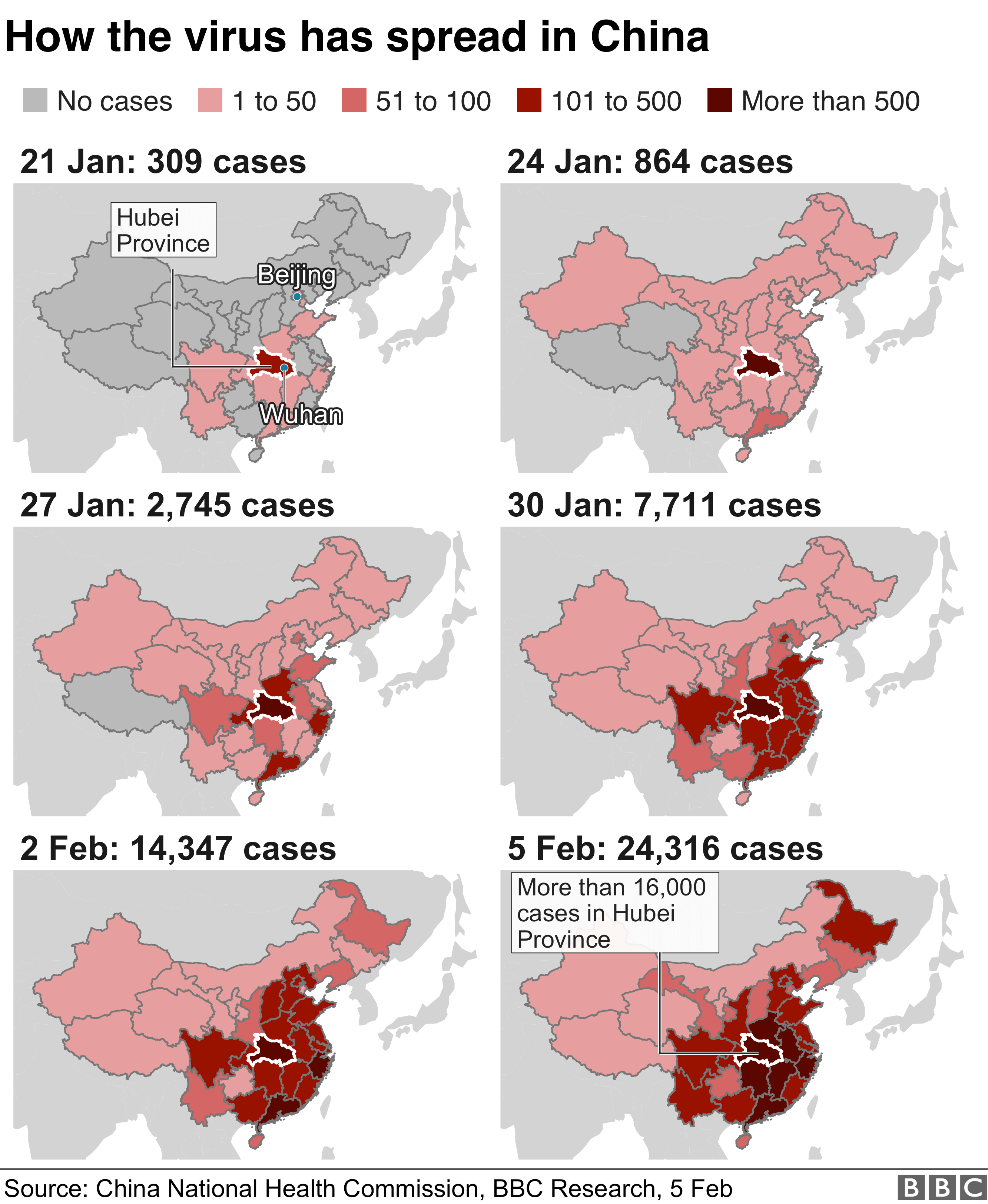
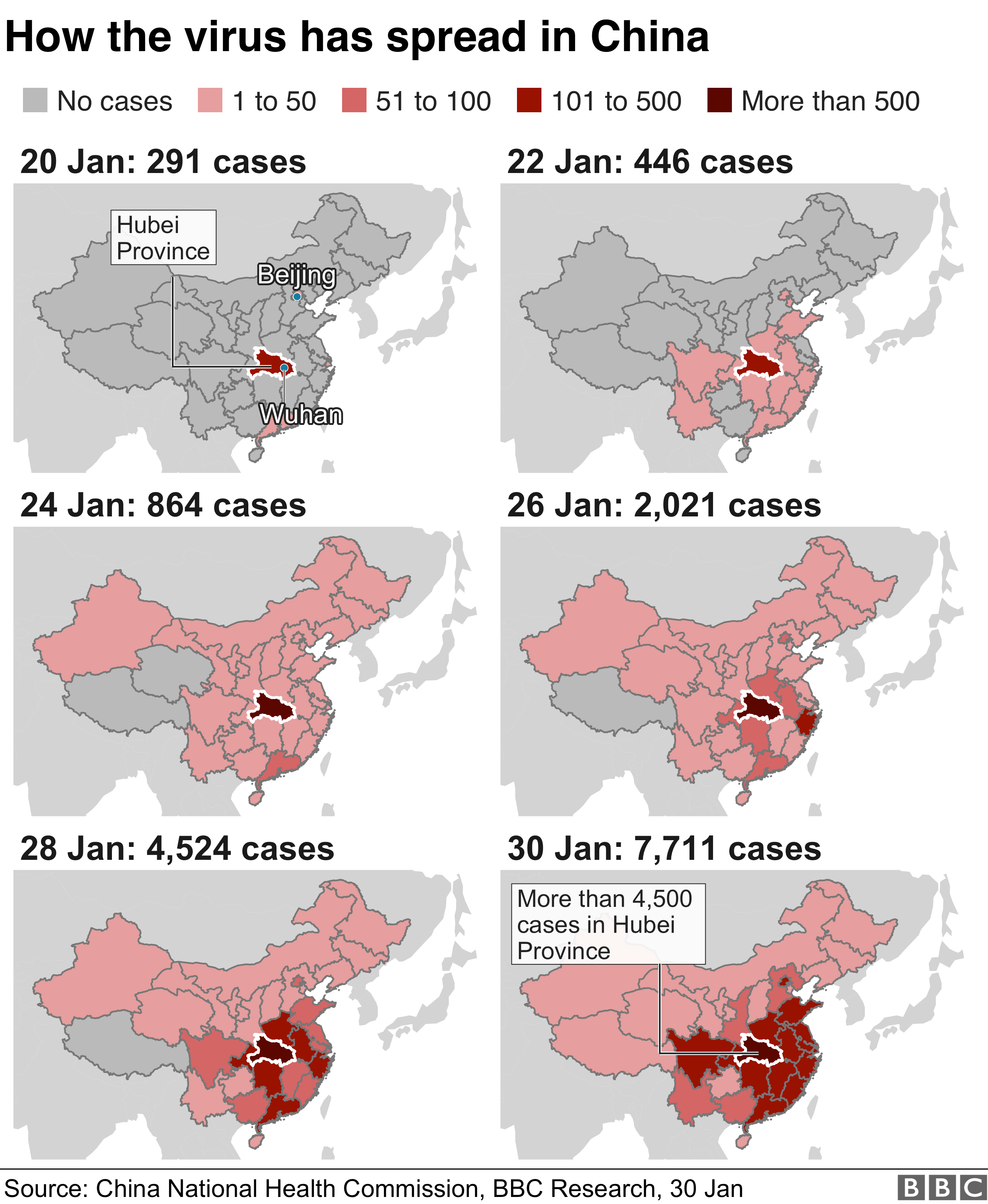
A confirmed case in Tibet means the virus has reached every region in mainland China. According to the country’s National Health Commission, 9,692 cases have tested positive.
The central province of Hubei, where nearly all deaths have occurred, is in a state of lockdown. The province of 60 million people is home to Wuhan, the heart of the outbreak.
The city has effectively been sealed off and China has put numerous transport restrictions in place to curb the spread of the virus.
People who have been in Hubei are also being told to work from home until it is considered safe for them to return.
The virus is affecting China’s economy, the world’s second-largest, with a growing number of countries advising their citizens to avoid all non-essential travel to the country.
How is the world responding?
Voluntary evacuations of hundreds of foreign nationals from Wuhan are under way.
The UK, Australia, South Korea, Singapore and New Zealand are expected to quarantine all evacuees for two weeks to monitor them for symptoms and avoid contagion.
Australia plans to quarantine its evacuees on Christmas Island, 2,000km (1,200 miles) from the mainland in a detention centre that has been used to house asylum seekers.
In other recent developments:
Italy suspended flights to China after two Chinese tourists in Rome were diagnosed with the virus; earlier 6,000 people on board a cruise ship were temporarily barred from disembarking
In the US, Chicago health officials have reported the first US case of human-to-human transmission. Around 200 US citizens have been flown out of Wuhan and are being isolated at a Californian military base for at least 72 hours
Russia has decided to close its 4,300km (2,670-mile) far-eastern border with China
Two flights to Japan have already landed in Tokyo. Japan has now raised its infectious disease advisory level for China
Some 250 French nationals have been evacuated from Wuhan
India has confirmed its first case of the virus – a student in the southern state of Kerala who was studying in Wuhan
Israel has barred all flight connections with China
Papua New Guinea has banned all visitors from “Asian ports”







 CHINDIA ALERT: You'll be living in their world, very soon