Chindia Alert: You’ll be Living in their World Very Soon
aims to alert you to the threats and opportunities that China and India present. China and India require serious attention; case of ‘hidden dragon and crouching tiger’.
Without this attention, governments, businesses and, indeed, individuals may find themselves at a great disadvantage sooner rather than later.
The POSTs (front webpages) are mainly 'cuttings' from reliable sources, updated continuously.
The PAGEs (see Tabs, above) attempt to make the information more meaningful by putting some structure to the information we have researched and assembled since 2006.
BEIJING (Reuters) – Tang Yue, a 27-year-old teacher from the city of Guilin in southwest China, steam-presses a blue dress and takes dozens of photographs before picking one to clinch her 200th online sale.
For a growing number of Chinese like Tang, hit by job losses, furloughs and salary cuts, the consumer economy has begun to spin in reverse. They are no longer buying – they are selling.
Instead of emerging from the coronavirus epidemic and returning to the shopping habits that helped drive the world’s second-largest economy, many young people are offloading possessions and embracing a new-found ethic for hard times: less is more.
With Tang’s monthly salary of about 7,000 yuan ($988), the self-described shopaholic said she has bought everything from Chanel lipsticks to Apple’s (AAPL.O) latest iPad in the past three years.
But the adrenaline rush that comes with binge-shopping is gone, said Tang, whose wages have been slashed with the suspension of all the classes on tourism management she usually teaches.
“The coronavirus outbreak was a wake-up call,” she said. “When I saw the collapse of so many industries, I realised I had no financial buffer should something unfortunate happen to me.”
There is no guarantee that the nascent minimalist trend will continue once the coronavirus crisis is fully over, but if it does, it could seriously damage China’s consumer sector and hurt thousands of businesses from big retailers to street-corner restaurants, gyms and beauty salons.
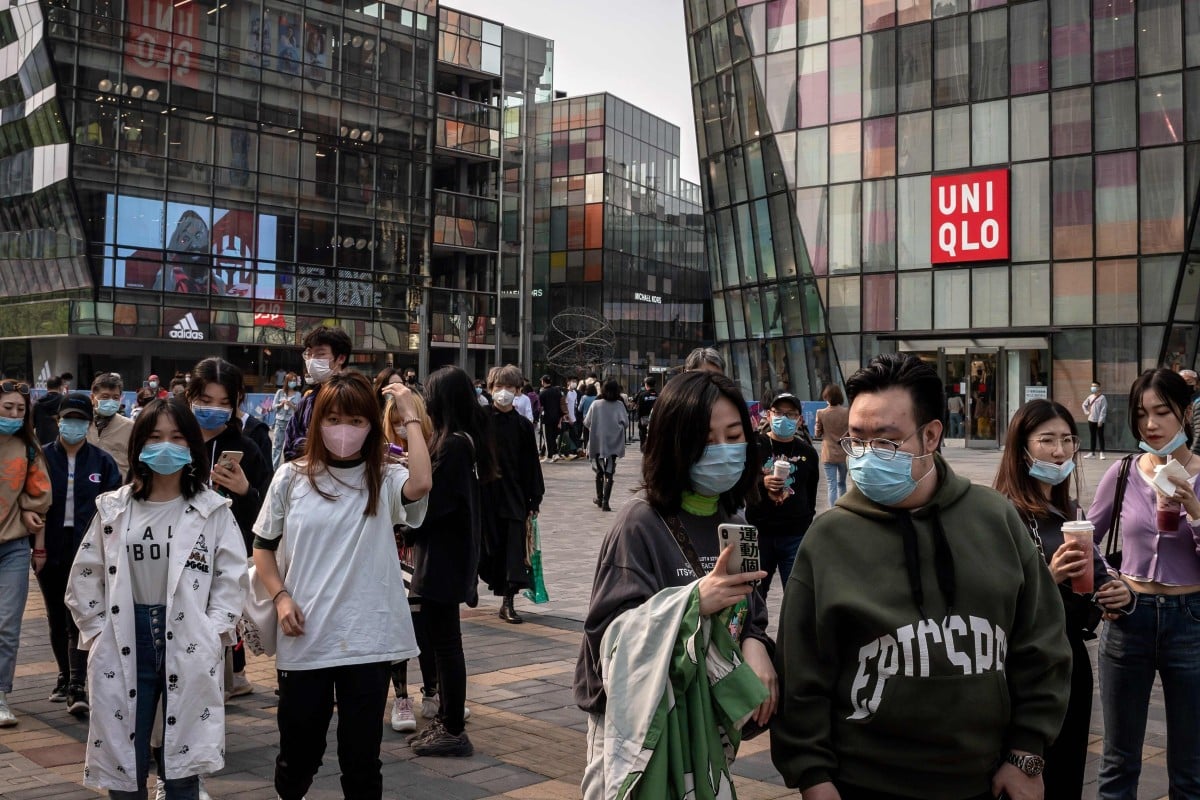
To be sure, there are signs that pent-up demand will drive a rush of spending as authorities reopen malls, leisure venues and tourist spots. In South Korea, the first major economy outside of China to be hit by the virus, people thronged malls this weekend to go “revenge shopping” to make up for time lost in lockdown.,
There are some signs that a similar trend will take hold in China, where some upscale malls are starting to get busy, although luxury firm Kering SA (PRTP.PA) – which owns Gucci, Balenciaga and other fashion brands – has said it is hard to predict how or when sales in China might come back.
A recent McKinsey & Co survey showed that between 20% and 30% of respondents in China said they would continue to be cautious, either consuming slightly less or, in a few cases, a lot less.
“The lockdown provided consumers with a lot of time and reasons to reflect and consider what is important to them,” said Mark Tanner, managing director at Shanghai-based research and marketing consultancy China Skinny.
“With much more of their days spent in their homes, consumers also have more time and reasons to sort through things they don’t feel they need – so they’re not living around clutter that is common in many apartments.”
#DITCHYOURSTUFF
Tang made a spreadsheet to keep track of her nearly 200 cosmetic products and hundreds of pieces of clothing. She then marked a few essentials in red that she wanted to keep. In the past two months, she has sold items worth nearly 5,000 yuan on second-hand marketplaces online.
Bargain-hunting online has become a new habit for some Chinese as the stigma that once hung over second-hand goods has begun to fade.
Idle Fish, China’s biggest online site for used goods, hit a record daily transaction volume in March, its parent company Alibaba (BABA.N) told Reuters.
Government researchers predict that transactions for used goods in China may top 1 trillion yuan ($141 billion) this year.
Posts with the hashtag #ditchyourstuff have trended on Chinese social media in recent weeks, garnering more than 140 million views.
Jiang Zhuoyue, 31, who works as an accountant at a traditional Chinese medicine company in Beijing – one of the few industries that may benefit from the health crisis – has also decided to turn to a simpler life.
“I used to shop too much and could be easily lured by discounts,” said Jiang. “One time Sephora offered 20% off for all goods, I then bought a lot of cosmetics because I feel I’m losing money if I don’t.”
Jiang, the mother of a 9-month-old baby, said she recently sold nearly 50 pieces of used clothing as the lockdown gave her the opportunity to clear things out. “It also offered me a chance to rethink what’s essential to me, and the importance of doing financial planning,” she said.
Eleven Li, a 23-year-old flight attendant, said she used to spend her money on all manner of celebrity-endorsed facial masks, snacks, concert tickets and social media activity, but now has no way to fund her spending.
“I just found a new job late last year, then COVID-19 came along, and I haven’t been able to fly once since I joined, and I’ve gotten no salary at all,” said Li, who said she was trying to sell her Kindle.
Some are even selling their pets, as they consider leaving big cities like Beijing and Shanghai where the high cost of living is finally catching up with them.
NO RETURN TO OLD WAYS?
As the coronavirus comes under control in China, the government is gradually releasing cities from lockdown, easing transport restrictions and encouraging consumers to venture back into malls and restaurants by giving out billions-worth of cash vouchers, worth between 10 yuan and 100 yuan.
But many people say they are still worried about job security and potential wage cuts because of the struggling economy. Nationwide retail sales have plunged every month so far this year.
Xu Chi, a Shanghai-based senior strategic analyst with Zhongtai Securities, said some Chinese consumers may prove the ‘21 Day Habit Theory,’ a popular scientific proposition that it only takes that long to establish new habits.
“We believe people’s spending patterns follow the well-known theory, which means most people in China, having been cooped-up at home for more than a month and not having binge-shopped, may break the habit and not return to their old ways,” Xu said.
Jiang said she was determined not to return to her free-spending ways and planned to cook more at home.
“I’ll turn to cheaper goods for some luxury brands,” she said. “I’ll choose Huawei’s smartphone, because (Apple’s) iPhone has too much brand premium.”
Tang, who has recently used 100 yuan of shopping coupons to stock up on food, is going to hold the purse strings even tighter.
“I’ve set my monthly budget at 1,000 yuan,” she said. “Including one – and just one – bottle of bubble tea.”
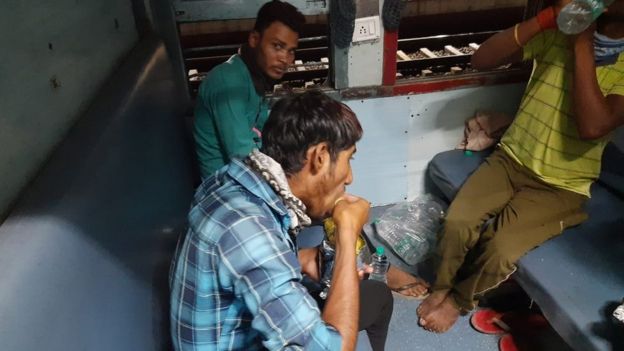
Image copyright ANIImage caption Millions of people across India have been stranded by the lockdown
The first train carrying migrant workers stranded by a nationwide lockdown in India has left the southern state of Telangana.
The 24-coach train, carrying 1,200 passengers, is travelling non-stop to eastern Jharkhand state.
Earlier this week, India said millions of people stranded by the lockdown can return to their home states.
The country has been in lockdown to curb the spread of coronavirus since 24 March.
However, the movement of people will be only possible through state government facilitation, which means people cannot attempt to cross state borders on their own.
This train is a “one-off special train” to transport the workers on the request of the Telangana state government, Rakesh Ch, the chief public relations officer of South-Central Railways, told the BBC.
The train left Lingampally, a suburb of the southern city of Hyderabad, early on Friday and is expected to reach Hatia in Jharkhand on Saturday.
Mr Rakesh said that adequate social distancing precautions had been taken and food was being served to the passengers.
Image copyright ANIImage caption Railways officials said that adequate social distancing precautions had been taken and food was being served to the passengers.
He said each carriage was carrying 54 passengers instead of its 72-seat capacity.
“The middle berth is not being used in the sleeper coaches and only two people are sitting in the general coaches,” Mr Rakesh said.
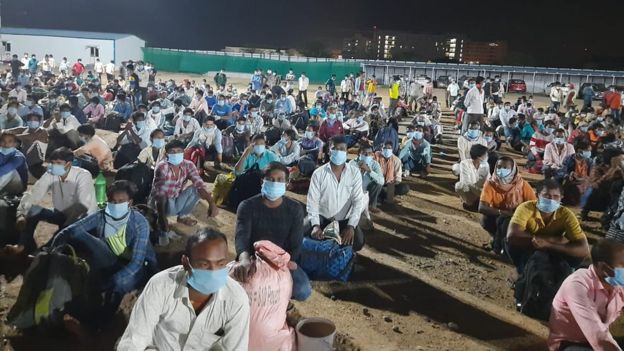
Before the train pulled out of the station, all the passengers were screened for fever and other symptoms.
They had all been employed at a construction site at the Indian Institute of Technology, a top engineering school, in Hyderabad city.
The workers had earlier protested at the site against the non-payment of wages by their contractor.
Senior official M Hanumantha Rao said the contractor was asked to pay their salaries and arrangement made to send them back home.
The journey was organised at “very short notice”, senior police official S Chandra Shekar Reddy told BBC Telugu.
“We screened them at the labour camp itself and transported them to the railway station in buses,” he said.
India’s migrant workers are the backbone of the big city economy, constructing houses, cooking food, serving in eateries, delivering takeaways, cutting hair in salons, making automobiles, plumbing toilets and delivering newspapers, among other things.
Image copyright ANIImage caption Before the train pulled out of the station, all the passengers were screened for fever and other symptoms.
Most of the country’s estimated 100 million migrant workers live in squalid conditions.
When industries shut down overnight, many of them feared they would starve.
For days, they walked – sometimes hundreds of kilometres – to reach their villages because bus and train services were shut down overnight. Several died trying to make the journey.
Some state governments tried to facilitate buses, but these were quickly overrun. Thousands of others have been placed in quarantine centres and relief camps.
KUNMING, April 25 (Xinhua) — Kunming, capital of southwest China’s Yunnan Province announced Friday it will issue e-vouchers worth 100 million yuan (about 14.12 million U.S. dollars) to promote consumption.
According to the Kunming Municipal Bureau of Commerce, the e-vouchers can be used for consumption in tourism, catering, and sports. The city will also issue special e-vouchers to groups of needy people.
The e-vouchers will be issued through an app online from April 28 to 30. Citizens can use the e-vouchers from May 1 to 31.
Industries in the city including tourism, catering and sports were seriously affected by the COVID-19 epidemic in the last few months.
Israeli medical equipment firm IceCure Medical, with an initial US$4 million sales and marketing effort, will open its first Chinese office in Shanghai
English shopping outlet company Value Retail sees the chance to lure consumers who have been under lockdowns aimed at halting the spread of the coronavirus
Foreign firms, including Israeli medical equipment maker IceCure Medical and English shopping outlet company Value Retail, still see opportunities in China despite the coronavirus. Photo: AFP
Not only has the coronavirus pandemic not watered down one company’s expansion plans for China, it has given it even greater reason to push forward into the Chinese market.
Israeli company IceCure Medical is forging ahead with opening its first Chinese office in Shanghai, with plans to spend up to US$4 million for the initial sales and marketing effort for its non-surgical breast cancer treatments.
Chief executive Eyal Shamir said he has seen an uptick in Chinese interest in the company’s ProSense product, which allows the freezing of tumours outside a hospital environment, because it can free up facilities badly needed for Covid-19 patients.
The government approval of the company’s Chinese subsidiary is now only days away following a successful product console registration, according to Shamir, and it has already sold two units to the Fudan University Shanghai Cancer Centre for a clinical study.
World Health Organisation warns the ‘worst still ahead’ in coronavirus pandemic
“We are planning a full launch of the product in China for both breast cancer and breast benign tumours as well as other organs,” Shamir said.
“Post Covid-19, there will be a backlog of many surgeries and not only for breast cancer patients.”
IceCure Medical, though, is not the only foreign company eyeing expansion into China despite the risk of secondary outbreaks of coronavirus.
West of Shanghai, English shopping outlet company Value Retail is also expanding its retail space, banking on Chinese shoppers re-emerging from lockdowns to begin
After being cooped at home for weeks, people want to be outdoors to enjoy the beautiful spring weather – Value Retail
Value Retail is proceeding with plans to enlarge its Suzhou Village shopping centre from 35,000 square metres (378,000 sq ft) to over 50,000 square metres, while also increasing the number of shops from 120 to 200, which will make it the largest of the 11 venues its controls globally.
It is working closely with the Yang Cheng Lake Peninsula government on a date for construction to start, after seeing a surprising increase in retail sales at its centres in early April. The company’s Chinese subsidiary, Value Retail China, attributed the rise to an increasing number of consumers wanting to “get outside” of their homes after being isolated for several weeks.
Suzhou Village sales have increased 40 per cent each week since the start of April, the company said.
“Thanks to the positive recovery [in spending] over the past several weeks, we are going ahead with the Suzhou Village expansion,” the company said in a statement. “After being cooped at home for weeks, people want to be outdoors to enjoy the beautiful spring weather. We provide a shopping experience for guests in an outdoor environment … the motivation for such an experience after isolation is huge. [Being] outdoors is seen as a luxury now.”
In addition, customers are flocking to both its Suzhou and Shanghai Village centres as a form of domestic tourism because of the curb on overseas travel, Value Retail China said.
Despite the economic destruction that the coronavirus pandemic has caused in China, it also is opening up expansion opportunities for entrepreneurial firms in several industries, such as e-commerce and online delivery, life sciences and infrastructure construction, said EY Asia-Pacific transaction advisory services leader Harsha Basnayake.
However, while businesses within Asia-Pacific expressed a desire for opportunistic expansions, most companies still held a pessimistic view of economic recovery that would drag on into 2021.
American companies already operating in China were even less optimistic with over 70 per cent of businesses surveyed by the American Chamber of Commerce in March saying they were reluctant about expanding in the coming year.
Although it is too early to say if retail property will rise – particularly when we are seeing new habits forming, going from shopfronts to online and how far this new behaviour will stick. China will gives us lots of lessons on this. – Harsha Basnayake
“We are expecting opportunities in real estate, particularly in commercial property and logistics, and we think industries in life sciences, some parts of health care and infrastructure will be interesting,” Basnayake said.
“Although it is too early to say if retail property will rise – particularly when we are seeing new habits forming, going from shopfronts to online and how far this new behaviour will stick. China will gives us lots of lessons on this.”
The Chinese government’s move to increase infrastructure spending to boost the economy will also benefit certain industries, such as cement production.
Despite suffering a 24 per cent drop in sales in the first quarter due to virus-related delays in construction activities, China’s largest cement manufacturer, Anhui Conch Cement, is likely to move forward with plans to expand in part due to its participation in the Belt and Road Initiative, according to analysts at S&P Global.
Though no one would be able to tell exactly what will happen when the Covid-19 uncertainties are not completely gone, signs of recovery in China have brought encouragement to us – Justin Channe
Desires to expand are also not limited to these industries, and even the hard-hit hotel industry is starting to show green shoots.
International hotel chain IHG said that the coronavirus would not derail its new Regent-branded hotel project in Chengdu, which is expected to start construction later this year.
“Though no one would be able to tell exactly what will happen when the Covid-19 uncertainties are not completely gone, signs of recovery in China have brought encouragement to us,” said Regent Hotels & Resorts managing director Justin Channe.
“While we saw business pickup across China over the past Qing Ming Festival holiday, Chengdu and its nearby destinations were among the leading ones. In the long run, we stay confident of the outlook for the China hotel industry, including the luxury segment.”
Analysing how coronavirus broke China’s historic economic growth run
Beyond the crisis, there will be ample opportunities for new merger and acquisitions (M&A) amid business restructures and failures, particularly in China, Basnayake added.
A new EY survey found 52 per cent of Asia-Pacific businesses planned on pursuing M&A in the next year.
“While the crisis is having a severe impact on M&A sentiment, there’s evidence from the survey that M&A activity intentions remain steady in the long term. There are many who recognise this is a time where valuations will be reset, and there will be stressed and distressed acquisition opportunities,” Basnayake said.
“For example, from our interviews with corporations in China, a majority said that Covid-19 has not impacted their M&A strategies, noting that the situation has not led to any cancellations or withdrawals from deals, but only in delays in closing deals.”
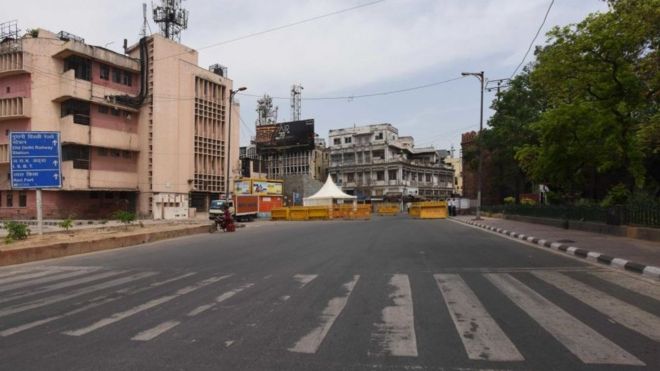
Image copyright GETTY IMAGESImage caption An empty stretch of the road and Delhi Police barricades to screen commuters during lockdown, at Delhi Gate on April 16, 2020 in New Delhi, India.
India has eased some restrictions imposed as part of a nationwide lockdown to curb the spread of the coronavirus.
Most of the new measures are targeted at easing pressure on farming, which employs more than half the nation’s workforce.
Allowing farms to operate again has been seen as essential to avoid food shortages.
But some other measures announced last week, will not be implemented.
This includes the delivery of non-essential items such as mobile phones, computers, and refrigerators by e-commerce firms – the government reversed its decision on that on Sunday.
And none of the restrictions will be lifted in areas that are still considered “hotspots” for the virus – this includes all major Indian cities.
Domestic and international flights and inter-state travel will also remain suspended.
So what restrictions are being eased?
Most of the new measures target agricultural businesses – farming, fisheries and plantations. This will allow crops to be harvested and daily-wagers and others working in these sectors to continue earning.
To restore the supply chain in these industries, cargo trucks will also be allowed to operate across state borders to transport produce from villages to the cities.
Essential public works programmes – such as building roads and water lines in rural areas – will also reopen, but under strict instructions to follow social distancing norms. These are a huge source of employment for hundreds of thousands of daily-wage earners, and farmers looking to supplement their income.
Banks, ATMs, hospitals, clinics, pharmacies and government offices will remain open. And the self-employed – such as plumbers, electricians and carpenters – will also be allowed to work.
Some public and even private workplaces have been permitted to open in areas that are not considered hotspots.
But all businesses and services that reopen are expected to follow social distancing norms.
Who decides what to reopen?
State governments will decide where restrictions can be eased. And several state chief ministers, including Delhi’s Arvind Kejriwal, have said that none of the restrictions will be lifted in their regions.
Mr Kejriwal said the situation in the national capital was still serious and the decision would be reviewed after one week.
India’s most populous state, Uttar Pradesh, will also see all restrictions in place, as will the southern states of Andhra Pradesh, Telangana and Karnataka.
The southern state of Kerala, which has been widely acknowledged for its success in dealing with the virus, has announced a significant easing of the lockdown in areas that it has demarcated as “green” zones.
This includes allowing private vehicular movement and dine-in services at restaurants, with social distancing norms in place. However, it’s implementing what is known as an “odd-even” scheme – private cars with even and odd number plates will be allowed only on alternate days, to limit the number of people on the road.
BEIJING (Reuters) – China’s factory gate prices fell the most in five months in March, with deflation deepening and set to worsen in coming months as the economic damage wrought by the coronavirus outbreak at home and worldwide shuts down many countries.
The world’s second-largest economy is trying to restart its engines after weeks of near paralysis to contain the pandemic that had severely restricted business activity, flow of goods and the daily life of people.
Friday’s data from the National Bureau of Statistics suggested a durable recovery was some way off, with China’s producer price index (PPI) falling 1.5% from a year earlier, the biggest decline since October last year. It compared with a median forecast of a 1.1% fall tipped by a Reuters poll of analysts and a 0.4% drop in February.
Headline consumer inflation also eased somewhat last month, partly led by government control measures, while core prices remained benign, leaving more room for monetary easing, some analysts said.
RELATED COVERAGE
China’s auto sales fall at a slower rate in March; industry expects second-half pick-up
China March new loans surge to $405 billion as coronavirus stimulus kicks in
The overall decline in the factory gate gauge was exacerbated by a slump in global oil and commodities prices, which filtered through to crude oil, steel and non-ferrous metal industries, the statistics bureau said in a statement accompanying the data.
“The issue of having more supply than demand, and persistently low oil prices, will intensify deflationary pressures,” said Yang Yewei, a Beijing-based analyst with Southwest Securities.
“Work resumptions on the production side are faster than the repair in demand. Downstream demand is recovering slowly and still remains weak,” he said.
The oil and gas extraction sector had the biggest year-on-year price fall of 21.7%, among the 40 major industrial sectors surveyed, deteriorating sharply from a 0.4% drop in the previous month.
The stringent travel and transport curbs have now been lifted across much of the country including Wuhan, the epicentre of the outbreak where the virus first emerged in late 2019. So far the virus has killed more than 3,300 and infected over 81,000 people in the country.
Analysts expect a deep first-quarter economic contraction in China and have grown increasingly pessimistic about the country’s prospects for 2020 due to the pandemic’s sweeping global impact.
Many economists and policymakers are forecasting a steep global recession this year as numerous countries are forced into lockdowns to contain the spread of the coronavirus, severely curtailing business activity in a major blow to jobs and incomes.
Worldwide, the virus has killed around 95,000 people and infected more than 1.5 million. Policymakers globally have responded to the crisis by launching an unprecedented package of stimulus measures, injecting trillions of dollars to backstop their economies that have been brought to a virtual standstill.
Beijing has also rolled out a series of fiscal and monetary support steps, and sources have told Reuters that policymakers are readying more stimulus in the coming months to stabilise growth and prevent mass unemployment.
China’s consumer prices rose 4.3% from a year earlier in March, compared with a 4.8% gain tipped by a Reuters poll and a 5.2% increase in February, as logistics and transport conditions improved and government price control measures kicked in.
But food prices still rose over 18% from a year earlier, led by a 116.4% jump in pork prices, the data showed. The virus outbreak has pushed up prices of some food items, such as pork and vegetables.
Core inflation – which excludes food and energy prices – remained benign last month at 1.2%,but it still edged up from 1% in February.
Most of the relief fund earmarked to subsidise employees’ wages in affected industries
Lam and ministers slash their salaries following controversy over chief executive’s pay
Many businesses have been forced to close because of the coronavirus outbreak. Photo: Winson Wong
More than 1 million Hong Kong workers will have part of their wages paid for by the government under a HK$137.5 billion package of measures to help businesses and residents struggling during the Covid-19 crisis, while the city’s leader and her ministers have vowed to take a pay cut, the Post has learned.
Revealing the massive relief fund on Wednesday, Chief Executive Carrie Lam Cheng Yuet-ngor said HK$80 billion would go towards the wage scheme, targeting coronavirus-hit industries over six months with individual payments capped at 50 per cent of salaries, up to HK$9,000 a month. The employers receiving the lifeline must pledge not to lay off workers, she added.
Hong Kong records 25 new cases, including two-month-old baby; tally at 960
8 Apr 2020
Lam said the package, together with other recent pledges of financial relief, would cost a total of HK$287.5 billion, causing the budget deficit to surge from HK$139.1 billion this financial year to HK$276.6 billion, which is equivalent to 9.5 per cent of gross domestic product.
The relief deal is equivalent in size to 4.6 per cent of the city’s GDP.
Meanwhile, Lam’s monthly salary will fall to HK$390,000 after rising to HK$434,000 last July.
Lam and her 16 ministers had voluntarily agreed to a 10 per cent pay reduction for a year, the chief executive told the press conference.
The HK$137.5 billion deal – which was given the green light by her Executive Council earlier in the day – aims to safeguard employment and ease the woes of businesses, with the number of confirmed Covid-19 cases in the city reaching 960 on Wednesday.
A source said: “The scheme is aimed at coping with the economic hardship brought by the pandemic in the next six months. More than 1 million employees from various sectors, on top of those directly affected by the government’s social-distancing measures, will benefit.”
Staff affected by the latest social-distancing rules – including businesses forced to close – will benefit from the wage scheme, along with employees in sectors such as tourism and construction, two other sources said.
Some businesses set to benefit would be those related to education, such as tutorial centres, school bus operators and PE coaches contracted from outside, according to one.
‘Lost faith’: EU’s top scientist quits over Covid-19 response
8 Apr 2020
“The government is drawing reference from the British government’s recent practice of paying 80 per cent of salaries of employees in affected industries, although the percentage and cap are lower in Hong Kong,” one source said.
In an unprecedented step announced last month, the UK government said the state would pay grants covering up to 80 per cent of salaries if companies kept workers on the payroll rather than laying them off.
In Singapore, the government has offered to pay 75 per cent of workers’ April wages, capped at S$4,600 (HK$25,000) per person.
The Japanese government on Tuesday approved its largest-ever economic relief package, which includes grants of up to 2 million yen (US$18,350), for small and medium-sized businesses whose revenues had more than halved.
Hongkonger recalls weeks of lockdown in Wuhan, China, the first epicentre of the Covid-19 pandemic
With the Hong Kong government sitting on reserves of more than HK$1.1 trillion, the Professional Commons think tank said the authorities should spend HK$200 billion on businesses and workers, including handing HK$7,500 a month over six months to sacked staff and covering 80 per cent of salaries up to a monthly maximum of HK$25,000 for workers at struggling firms and the self-employed.
Zunyi, a former revolutionary base of the Communist Party of China in southwest China’s Guizhou Province, has cast off poverty.
Thanks to burgeoning industries, improving infrastructure and distinctive cultural tours, more than eight million people in Zunyi are living better lives.
By Xinhua writers Zhong Qun, Wang Li, Li Jingya and Liu Zhiqiang
GUIYANG, March 3 (Xinhua) — Riding on the fast development of industries, improving infrastructure and distinctive cultural tours, a former revolutionary site of the Communist Party of China (CPC) has formally cast off poverty in China’s southwestern mountains.
On Tuesday, the government of Guizhou Province announced that Zheng’an County in the province has shaken off poverty. The county is under the jurisdiction of the city of Zunyi, where the CPC conducted its early revolutionary activities. The announcement means that more than 8 million people in the entire city of Zunyi have officially bid farewell to poverty.
A view of Huamao Village of Fengxiang Township in Zunyi City, southwest China’s Guizhou Province, Feb. 28, 2020. (Xinhua/Tao Liang)
Over the years, Zunyi has taken a variety of measures in answer to China’s campaign to eradicate absolute poverty in 2020.
Major industries such as guitar-making and tea plantations powered Zunyi’s economic growth, while roads, water projects and the revolution-themed tourism also put the city, once mired in grinding poverty, on a fast track toward modernization.
GUITARS STRIKE A CHORD IN REVOLUTIONARY HEARTLAND
When Zheng Chuanjiu decided to build a guitar-making factory in Zunyi’s Zheng’an County in 2013, he was a little nervous.
“There were no raw materials, and transportation was bad,” said Zheng, 42. “But the county had advantages in land and labor and there was government support.”
Zheng, a native of the county, had found success in the guitar industry in Guangzhou, capital of south China’s Guangdong Province. He and his brother established the Guangzhou Shenqu Musical Instruments, a Guangzhou-based guitar-making company, after years of hard work in the southern metropolis.
“The county government of my hometown wanted to develop the guitar-making industry after they found many local migrant workers were working in the industry in Guangzhou,” Zheng said. “They established an industrial park and we were the first to join.”
An employee works at the workshop of Guangzhou Shenqu Musical Instruments, a Guangzhou-based guitar-making company, in Zheng’an County of Zunyi City, southwest China’s Guizhou Province, March 28, 2017. (Xinhua/Tao Liang)
The government put forward a variety of preferential policies in rents, financing and taxes, to support guitar-making companies like Zheng’s and allow the sector to prosper.
Today, Zheng’s company in the county has grown into one with an annual production value of more than 30 million U.S. dollars. One of the country’s top five guitar makers, it employs more than 500 local farmers and more than 100 poverty-stricken residents.
Zheng’s company is part of a bigger picture. The company’s success has led many to jump on the bandwagon. After years of growth, the county is now home to 64 companies specializing in guitar-related fields, churning out about 7 million guitars a year to more than 30 countries and regions across the world and employing more than 15,000 locals.
The guitar industry forms part of the government’s efforts to develop local industries. Thanks to geological advantages, the county also saw the emergence of tea gardens and traditional Chinese medicine plantations. All these sectors drove local economic growth.
A group of children trying tea-picking at Hetaoba Village in Meitan County of Zunyi City, southwest China’s Guizhou Province, April 1, 2018. (Xinhua/Yang Wenbin)
BETTER INFRASTRUCTURE, BETTER LIVES
Given the mountainous landscape in Guizhou, authorities in Zunyi knew the importance of improving infrastructure projects if they wanted to bring the local economy to the next level. So they started building new roads to facilitate transportation.
Last year, Guizhou built 8,116 km of roadways. The Guizhou provincial government spent 29.34 billion yuan (4.2 billion U.S. dollars) building the roadways, including 7,386 km in rural areas, according to the provincial highway bureau. The province also upgraded many old roadways.
The construction site of Tuanjie Grand Bridge of Renhuai-Zunyi Highway, which has resumed construction amid strict prevention measures against the novel coronavirus, in southwest China’s Guizhou Province, Feb. 27, 2020. (Xinhua/Tao Liang)
In the county of Zheng’an, for example, several major highways not only enhanced logistics to bring specialties out of town but also allowed outside investment to flow to the county tucked in the lush green mountains.
“Thanks to improved transportation conditions, our guitars can easily reach many areas in the country and around the world,” said Zheng Chuanjiu.
In Huanglian Village, rural family inns have mushroomed, as more visitors come as more roads were built. Many tourists come to enjoy the countryside scenes during the holidays.
In addition, water projects also began, bringing safe drinking water to local households.
“We used to depend on the weather for water,” said Zunyi resident Zeng Fanyun. “Now we have clean water from the taps.”
For areas deemed inhabitable, authorities moved people out.
Statistics show that Guizhou relocated 1.88 million people from inhospitable areas in 2019.
RED TOURS, GOLDEN OPPORTUNITIES
As many cities in China scramble to modernize and adopt the latest technology to power growth, Zunyi seems to have found a new way to develop itself by looking to the past.
In January 1935, an enlarged meeting of the Political Bureau of the CPC Central Committee took place in Zunyi during the Long March.
The meeting focused on rectifying the left-leaning errors in military and organizational affairs and established the correct leadership of the new Central Committee, as represented by Mao Zedong.
The Zunyi Meeting is regarded as a crucial turning point of the Long March, leading to the ultimate success of the Chinese revolution.
Since then, Zunyi has become a sacred place for generations of CPC members, and the footprints of the Red Army are forever imprinted on the city’s culture and spirit.
Today, local authorities are promoting “red tours” in the locality, aiming to bolster the tourism sector as part of economic growth.
Tourists are seen at the Memorial of Zunyi Meeting in Zunyi, southwest China’s Guizhou Province, Oct. 16, 2018. (Xinhua/Tao Liang)
Yang Zhirong started a family homestay in the county of Tongzi in Zunyi. The homestay is called “The Red Army Road Inn,” because it is close to the command center of a famous battle during the 1930s.
“During the summer holidays, there are barely enough rooms to accommodate all the tourists,” Yang said. “Because the Red Army used to walk near here, the visitors feel they could sense history by staying here.”
Last year, Zunyi received more than 46 million visitors for red tours, generating a revenue of about 35.5 billion yuan, up 24.1 percent year on year, according to official figures.
The red tours also prompted sales of local cultural products, such as handmade soap, wallets and fragrances, all featuring Red Army themes. Forums, hiking and even marathons feature red themes as well in Zunyi.
“Zunyi serves as a good example of the CPC’s ability and responsibility to help people live prosperous lives,” said Zheng Dongsheng, a professor with the Party School of the Guizhou Provincial Committee of the CPC. “Zunyi’s success to cast off poverty highlights the Long March spirit in the modern era.”
BEIJING, Dec. 21 (Xinhua) — Ask the silver-haired residents of the elderly care community Yinheyuan in central Beijing what they know about artificial intelligence (AI), and they will probably throw the question to the smart speakers within their reach.
These smart speakers, capable of interacting with users with voice-recognition technologies, are also part of the answer. Via voice command, senior residents can control lights, TVs and other home appliances, order food or ask for help.
AI is no longer a technical term used exclusively by professionals in China. Both young and old are enjoying the benefits of the growing smart economy.
After personal computers (PC), PC internet and mobile internet, the growth focus of China’s digital economy is shifting to smart technologies like AI, said Baidu Chairman and CEO Robin Li at the World Internet Conference in October.
In the smart economy era, Li predicted a declining reliance on cellphones and a rising popularity of other smart devices. AI chips, cloud computing services, among others, would become the new digital infrastructure, while innovative businesses will flourish as transport, health, education and other sectors go smart.
Wearable devices, smart home appliances, autonomous driving and smart cities are among the fastest-growing fields in the smart economy.
China is the largest smart speaker market in the world, accounting for 36 percent of global shipments in the third quarter of 2019, according to global market firm Strategy Analytics. It found in a July and August survey that 63 percent of Chinese people without a smart speaker planned to buy one within the following year. Another 22 percent planned to make a purchase later on.
Chinese firms are stepping up investment in 5G, AI and the Internet of Things to gain a foothold in the emerging field. By end-June, China had over 1,200 AI-related enterprises, according to the Ministry of Industry and Information Technology.
Baidu launched its autonomous driving open platform ApollBo in 2017 to coordinate cross-sector efforts in this field. It has launched several L4 autonomous driving vehicles in partnership with leading automobile companies, and a fleet of Apollo-powered robotaxis are now taking test runs in central China’s Changsha.
Nurturing a smart economy is also on the government agenda. China has passed a guideline to boost the integration of AI and the real economy this year, and plans to build some 20 national AI innovative development pilot zones by 2023.
The country’s AI sector is forecast to be worth more than 160 billion yuan (about 22.83 billion U.S. dollars) in 2020, spurring related sectors to exceed 1 trillion yuan, said Lin Nianxiu, deputy director with the National Development and Reform Commission, citing industrial data.
Lin said China would focus on 100 firms dedicated to AI technologies and relevant applications, improve the industrial ecosystem, facilitate the deep integration of AI and the real economy, and intensify its international collaboration on AI technology, standards, industries, laws and regulations and ethics.
BEIJING (Reuters) – German chemical giant BASF (BASFn.DE) has begun construction of its $10-billion (£7.8 billion) integrated petrochemicals project in China’s southern province of Guangdong, the company said in a statement on Saturday.
The project based in the city of Zhanjiang will be China’s first wholly foreign-owned chemicals complex, for which a framework agreement was signed in January.
It will primarily produce engineering plastics and thermoplastic polyurethane (TPU), and some petrochemical products widely used in automotive, electronics and new energy vehicles industries.
The project’s first phase is expected to be launched in 2022, with production capacity of 60,000 tonnes per year (tpy), taking BASF’s total capacity of engineering plastics and TPU to 290,000 tpy in the Asia-Pacific region.
The entire project is planned to be completed by 2030, the company said, making it the third-largest BASF site worldwide, following Ludwigshafen in Germany and Antwerp in Belgium.
BASF plans to employ a comprehensive smart manufacturing concept at the project, deploying automated packaging, high-tech control systems and automated guided vehicles, it added.
“(The project) will form a solid foundation for a world-class industrial cluster in Zhanjiang and establish stronger business connections between South China and other Asian countries,” Stephan Kothrade, a BASF regional official in China, said in the statement.
The project is “a signal showing China’s efforts of further opening-up are taking effect,” Chinese Premier Li Keqiang said, according to a central government website.
China would treat enterprises with all types of ownership structures, as well as domestic and foreign firms, equally and without discrimination, he added.





 CHINDIA ALERT: You'll be living in their world, very soon